“Delicacies” is my incoherent, irregular, unpredictable collection of interesting sparks I came across online. Handpicked by a human, no robots, no AI. A form of tripping, wandering, dérivé, with some loosely undefined theme holding them together. Delicacies have no fixed frequency: I hit the publish button when there is enough material. That can be after a week or after 3 months. No pressure, literally. Enjoy!
Some highlights from this edition:
ARTEFACT — a collaboration between Neal Stephenson, Joe Lubin (Ethereum co-founder), and Rebecca Barcin (LAMANA1).
I am super-excited to announce the general availability of my brand new performance “The New New Babylon”. Here is the trailer:
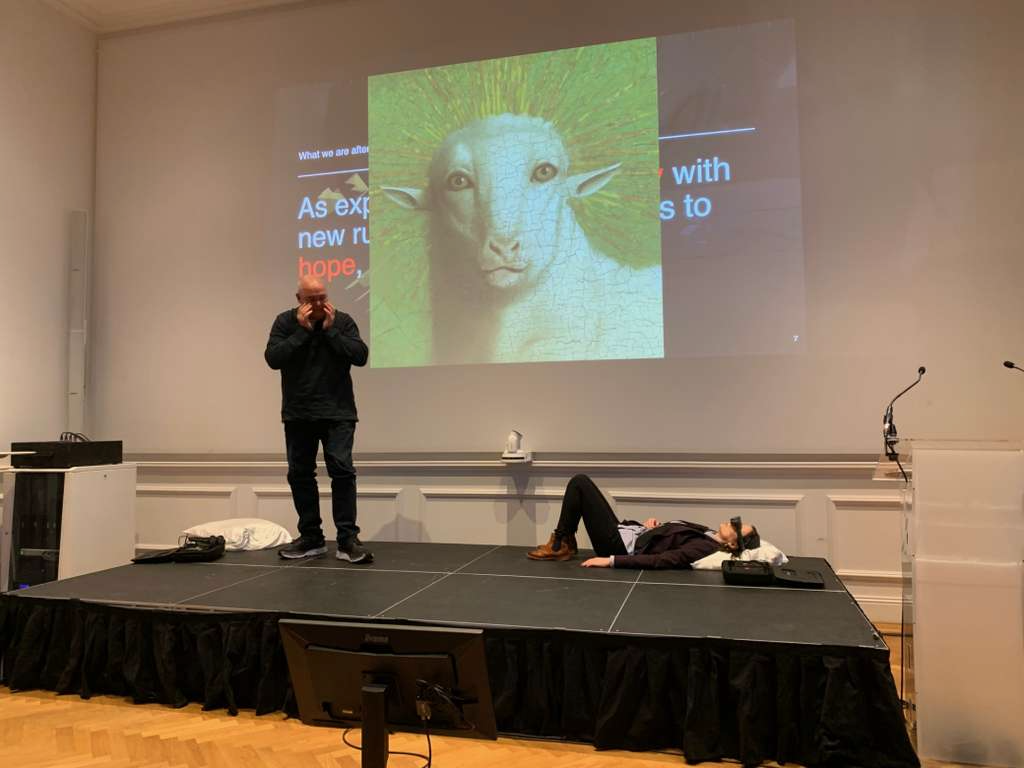
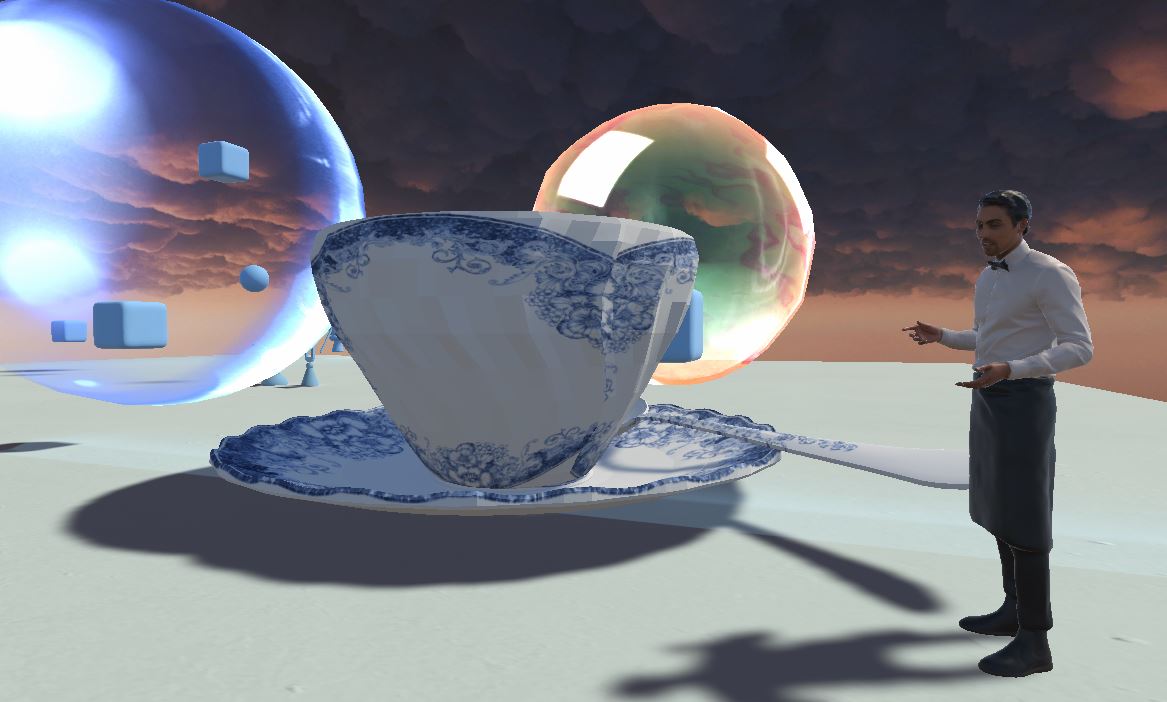
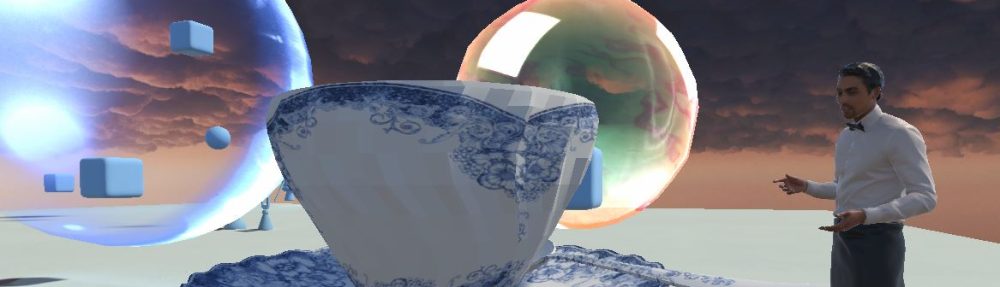
The New New Babylon performance is an immersive experience, divided into six chapters—Awakening, Stepping, Flying, Gliding, Folding, and Vertigo. Each chapter explores different facets of the New New Babylon concept, blending art and interaction. Audience members are invited to actively participate, engaging with interactive elements that promote a sense of community and shared creativity. To create a multisensory journey, the performance integrates rich soundscapes, video projections, visual art, poetry, masks, VR, and stage props. It’s a brand new format to deliver content, quite different from more traditional keynotes and talks.
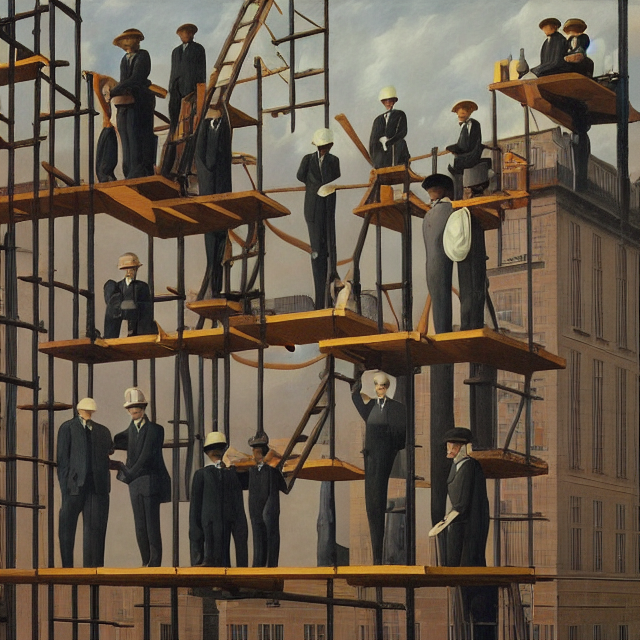
This artistic performance has a poetic, gentle, and profoundly human touch, evoking a dreamy, Magritte-like surrealism. The atmosphere is calm and harmonious, steering away from Sci-Fi or dystopian themes toward a vision that is non-aggressive, understated, and subtly utopian.
Designed for corporate and institutional clients, art galleries, and museums, the performance’s content, materials, and timing can be adapted to suit specific needs. The performance can also be organized as an online or in-situ workshop format.
VR-Frame from ACT3 – Flying
The performance is now available for both online and on-stage presentations, with options for bespoke adaptations or commissions. If you’re interested, feel free to reach out!
The next step is to create a fully immersive VR headset performance with live interactions with AI voices. Already available are six Unity VR packages, each designed for distinct VR spaces in the performance, including specific controller actions that control both on-stage and in-VR lighting, and different camera angles. These packages are tailored to support the various acts of the performance. These Unity packages are developed by NUMENA, a renowned interdisciplinary creative studio from Germany, specializing in award-winning spatial design and programming.
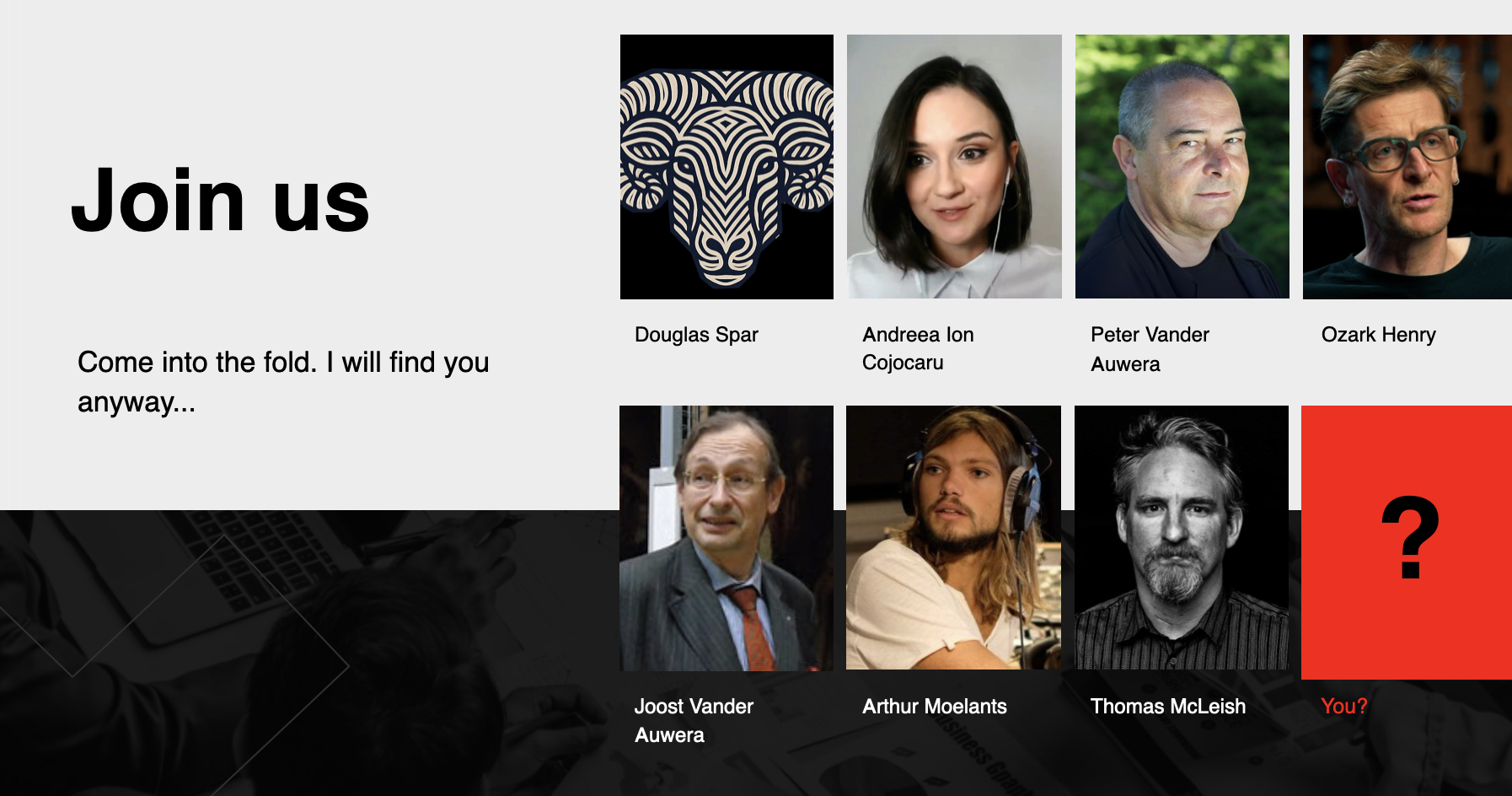
We are also developing an API-supported LLM infrastructure to enable live interactions with AI Agents. Our goal is to facilitate real-time exploration of historical New Babylon research resources during on-stage and online sessions. This infrastructure is currently being developed by Thomas McLeish, Adjunct Lecturer – Berkeley Master of Design, and master creator of the 2018 replica of the Colloquy of Mobiles.
VR-Frame from ACT4 – Gliding
And here is an extract from ACT4 of Petervan’s New New Babylon Performance.
The performance is one of the deliverables of my more ambitious transdisciplinary Artistic Research Project, where I am imagining and scaffolding a City of Play through different formats. These formats can be analog and digital artwork and productions, digital overlays, sketches, performance lectures, writings, poems, blogs, installations, soundscapes, recordings, documentaries, spaces, time capsules, curations, events, group experiences, immersions, expeditions, and exhibitions.
As most of you know, Petervan Studios is the melting pot of three studios: The Art Studio, The Interventions Studio, and The Scaffold Studio
The Art Studio
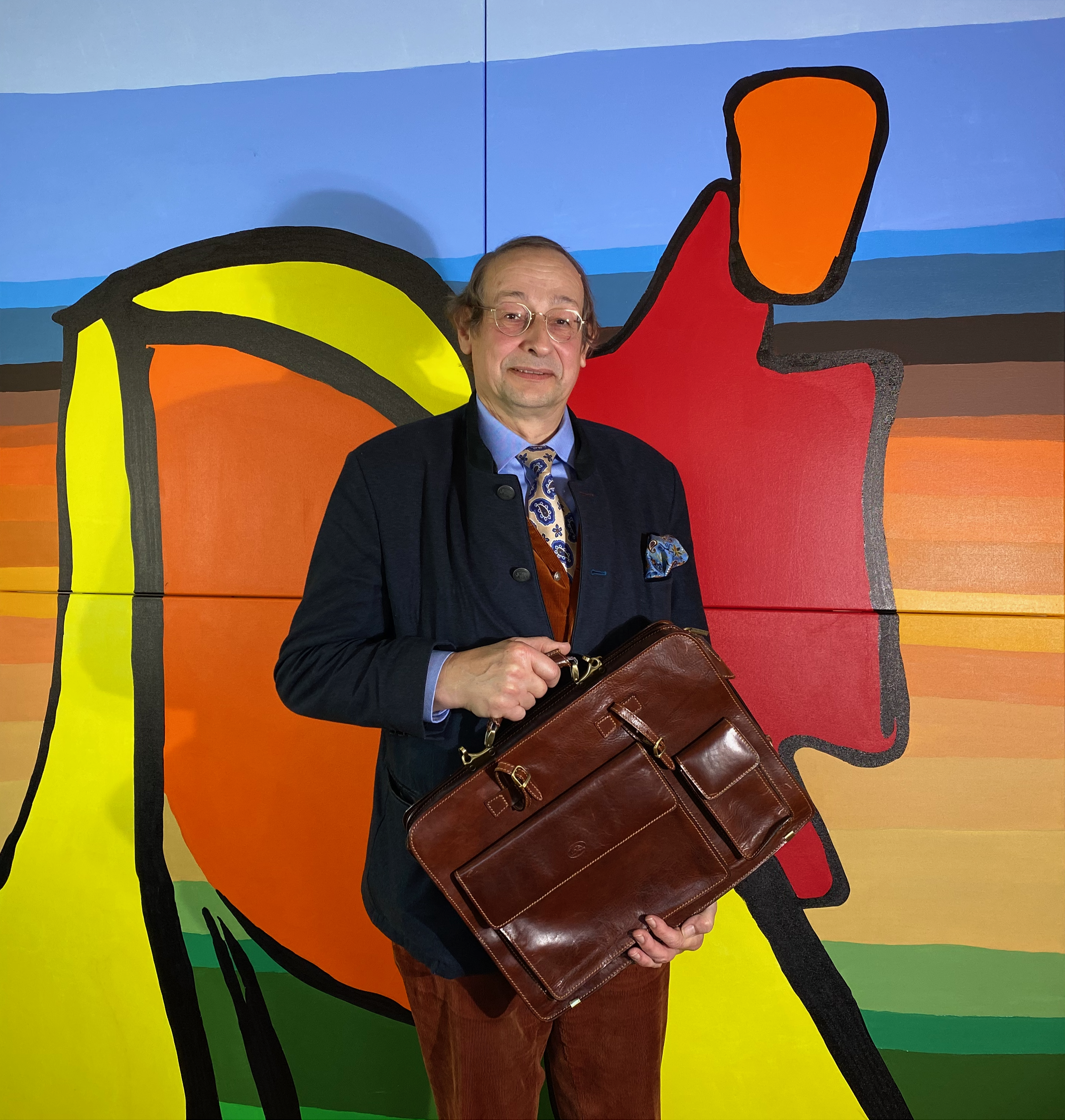
My latest artworks are on the artworks section of the Petervan Studios site. Here is my cousin Joost standing in front of one of my recent paintings: 4 panels together measuring 240cm x 200cm.
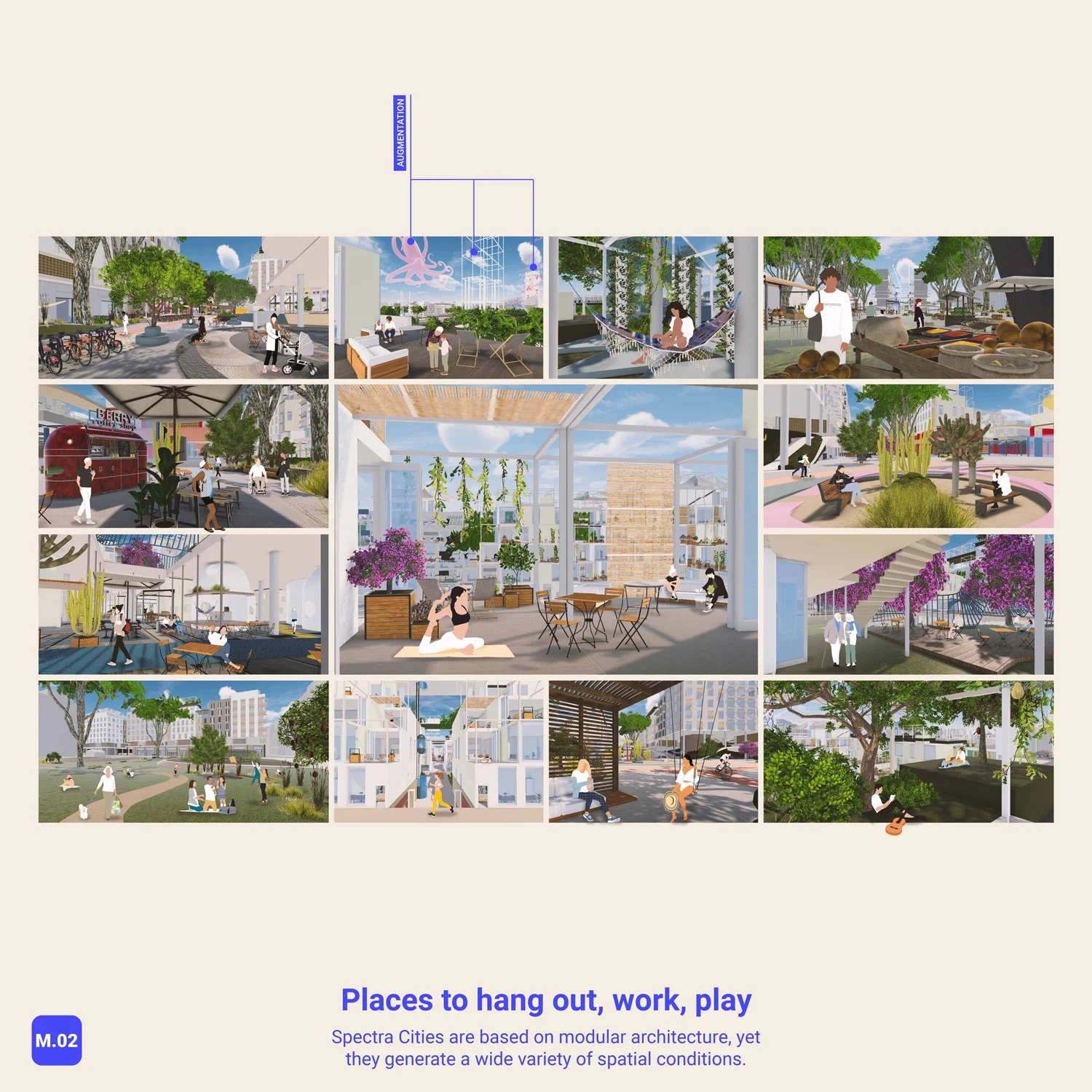
I am also working on a VR implementation of the New New Babylon (NNB) Project: a network of urban youth city districts that are connected through standard interfaces.
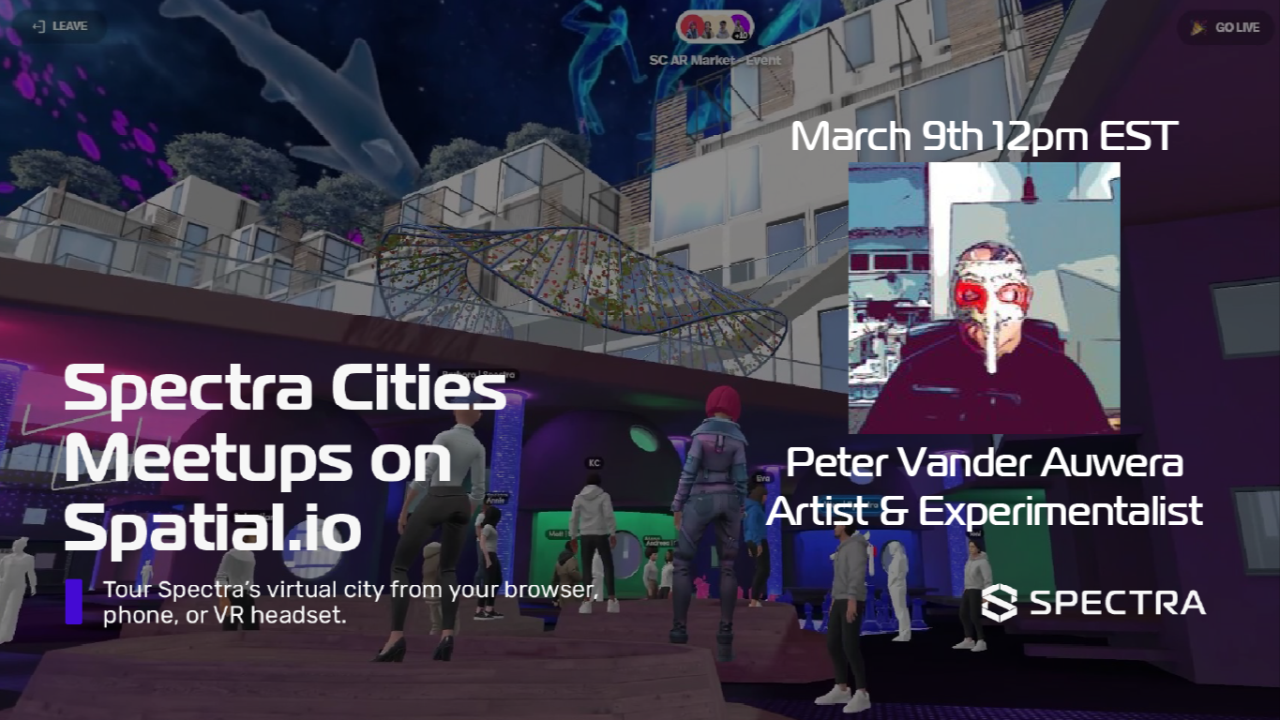
We are working with Spectracities to launch a design challenge by April 2023. I am doing an intro talk on this project during the Spectracities meet-up on 9 March 2023.
And here is the recording: starts at minute 7:32
NNB will also have a number of virtual Art White Rooms that will host my latest artworks.
NNB will also host a New New Babylon TOWER, and I plan to make a physical model of that tower as an example of materializing my metaphors.
A new “Performance Lecture” will consolidate all of the above in a compelling multimedia narrative and performance.
Target date for the performance and the supporting NBB material is 1 Nov 2023
The Interventions Studio
Two interesting experiences with the Zen Bricks Project
One client asked me to run a 30 min online session, where all the participants are drawing little bricks in complete silence. I was very surprised to learn how this zen moment unleashed quite emotional reactions among the participants.
Another client invited me to do something similar in real life, as part of their corporate event that was organized around the theme of mental wellness and the importance of calm moments.
The Scaffold Studio
The Scaffold is a transdisciplinary learning studio for the never-normal.
We are working on two interesting leads.
Lead #1 is a services company that owns a beautiful physical building/campus with meeting rooms, study rooms, a library, auditoria, lush gardens, etc. They run it as a private infrastructure for the public good. We look at it as an imagination infrastructure. The hardware. What The Scaffold offers is the software: the expertise, network, and practice to curate and design a series of learning studios and expeditions. The study topics are non-hierarchical organizations and new democracies.
Lead #2 is a globally operating organization trying to get its head around the topic of corporate governance. Like the first lead, they own world-class real estate, including an auditorium and a museum. We are also looking to design a physical journey between cities leading toward a major event in 2024.
We have a great coalition of advisors. Last month, Lene Rachel Andersen joined our advisor’s group as the twelfth apostle. She specialises in Bildung, Metamodernity, and Libertism. Give Lene a warm welcome.
So, that’s it for this edition. If there is something worth reporting, the next update is for Sep 2023.
About memory, and more specifically memory by space. Imagine how we could improve memory in interactive virtual spaces. By Kei Kreutler.
If you can’t get enough of these and want more, you can hang on to the firehose, the extended version of Petervan’s Delicacies in REVUE with loads of videos. Subscribe here: https://www.getrevue.co/profile/petervan
Here is the latest update on Petervan Studios. The previous update already goes back to June 2021.
The family is good. Somehow, we managed not to get infected by the virus. We all got boostered and respected safety measures to the max. Most of my time, I spent home in my studio and only came out for some grocery shopping, some visits to art exhibitions, and delivering the taxi service to my daughter’s school and horse stables. Zero travel since October 2019, but I cannot say I miss it.
At this moment, it looks like we are getting out of the woods of the 5th Covid wave, and measures in Belgium are getting relaxed. Partying is allowed again as of 18 Feb 2022.
More importantly: my father is still alive and kicking, and he celebrated his 90th birthday in Sep 2022!
What else?
The Bricks Project
For those who remember, this is my “zen” project. Drawing bricks in silence. Many bricks. 8,255 Bricks at the time of writing this post:
Exhibitions
Since the last update, I visited the following art exhibitions:
Luc Deleu, De Singel, Antwerp, Aug 2021
Drawing Art, BOZAR, Brussels, Sep 2021
ING Laughing Art, ING Gallery, Brussels, Sep 2021
David Hockney, BOZAR, Brussels, Oct 2021
Masculinities, FOMU, Antwerp, Nov 2021
Re-Collect, FOMU, Antwerp, Nov 2021
Rinus Van de Velde, Tim Van Laer Gallery, Antwerp, Nov 2021
Train Modernity, KMSK, Brussels, Nov 2021
Fabrice Samyn, KMSK, Brussels, Nov 2021
Pop-Art, SMAK, Ghent, Feb 2022
Chaos, Alex Vervoordt, Wijnegem, Feb 2022
Anne-Mie Van Kerckhoven, Zeno X, Antwerp, Feb 2022
David Claerbout – The Close, Brugge, Feb 2022
Luc Deleu inspired by Buckminster Fuller
Detail of painting by Rinus Van de Velde – 2021
Hippie Elias (Self portret) by Etienne Elias – 1970
Fabrice Samyn – Detail from Eve&Adam – 2018
Still from The Close – David Claerbout – 2022
Outdoors
Weather did not treat us well. My recollection is one of all shades of grey and lots of rain from August 2021 till Feb 2022. Only the beginning of Sep 2021 was decent. But I have some nice winter fog pictures from my strolls and bicycle rides:
Horses
Astrid made a lot of progress in horse-riding. She won the 2nd price at a local dressage competition, and she also enjoys jumping a lot.
Talking about Astrid, in Dec 2021 she celebrated her 16th birthday. Where has the time gone?
Traveling Without Moving project
Travelling without Moving (TWM) is a series of essays documenting my mental and philosophical journey in 2020-2022.
The main outline was published in November 2020, and in the meantime, several episodes have been released. Since the last Petervan Studios update, I published one more essay on “Studios”.
There are a couple more in the pipeline, but I have a hunch that these will morph into The Scaffold project (see later in this post).
Since July 2019, I publish every month a Spotify List with new releases combined with some oldies from the 60ies, 70ies, and beyond. Search for “Petervan Ride” and select “playlists”. Subjective selection of course, as driven only by my personal taste (or lack thereof).
Here is the latest Ride from Feb 2022, still being populated as we publish this post.
I suggest you play it in shuffle mode, it enhances the surprise experience.
My Art Practice
I did not produce much artwork. I was very focused on a work-project that required all my attention and focus. I shared most of my recent art work via my Facebook page, or on this blog under the heading “Sine Parole”. Some “highlights” if I can say that about my own work:
Professionalisation of Petervan Studios Art Practice
As from March 2022, I will focus on the professionalization of my art practice. I have hired a coach to help me with that. We are working with a digital archiving platform with an API that is steering the show & tell of my analogue and digital artworks. There will also be an integration with a shopping environment, and an online VR exhibition environment. There is also a brand-new website for Petervan Studios in the making. This new online environment will also become the home for a new project, working title “The Scaffold”, see below
Freelance Projects
I have been deeply involved and committed as architect and head of design of an 100% on-line learning expedition running from Sep 2021 till Feb 2022. We just landed the closing session. We still want to produce a “scrapbook” that documents the journey by end Feb 2022. The experience came in two chapters. The first chapter was a technology refresh on digital identity, infrastructure, VR, Robotics, Web3, and UX. The second chapter was about developing a practice of innovation for wicked problems, and how to design for emergence in complex adaptive systems.
I had the chance to collaborate with professional facilitation and innovation partners, and a collective of “guides” – some really smart people – that helped us shape and deliver the content.
The Scaffold
The learning expedition mentioned above had a great impact on me and the way I look at “events”. I believe I am onto something that may be the start of a new “genre” of learning studios. And I have started talking and pitching to potential partners and investors. Here is the high-level pitch:
The Scaffold is a 100% online learning studio for creating new knowledge based on the passion of the explorer.
The Scaffold can be seen as a form of Pop-Up school and/or an experimentation-based learning playground.
The Scaffold is planned as a three-year research cycle, with cohorts joining an online virtual playground for six-month intensive high-impact expeditions where together with the faculty they will create new knowledge in collaboration.
The curriculum of the expeditions is composed of several interventions, interruptions, and provocations anchored in the reality of a client’s project. The project serves as a vehicle to trigger new and imaginative thinking.
The Scaffold is a “scaffold” for something much bigger, something that could lead to a movement and foundation for better futures.
More about that later, probably in the second half of 2022. I hope to have a first client cohort signed-up by then.
So, in summary, what’s next?
The plan for the coming months is to work/play on:
Professionalizing my art practice
Pitch and realize my project “The Scaffold”
So, that’s it for this edition. If there is something worth reporting, next update is for Sep 2022.
Last week, I went to the Foto Museum (FOMU) in Antwerp to see the expo Masculanities – Liberation through Photography. This expo was already at The Barbican in London in the summer of 2020. I had some time left, and a slipped into the adjacent expo Re-Collect, an overview of a decade of acquisitions of FOMU.
Very similar to my first encounter with the work of Belgian fashion designer Dries Van Noten – see my post “Confused by Beauty” from 2015 – I was touched and moved by the video installation “KING” (2015-2016) by Belgian artist David Claerbout.
“David Claerbout (b. 1969) is a Belgian artist, whose work combines elements of still photography and moving images. Using photography, video, and digital-editing tools, Claerbout creates large-scale video installations that provoke questions of time, memory, and truth. Solo exhibitions include Van Abbemuseum in Eindhoven, Centre Georges Pompidou in Paris, National Museum of Contemporary Art in Athens, Pinakothek der Moderne in Munich, and SFMoMA in San Francisco.”
From the FOMU site:
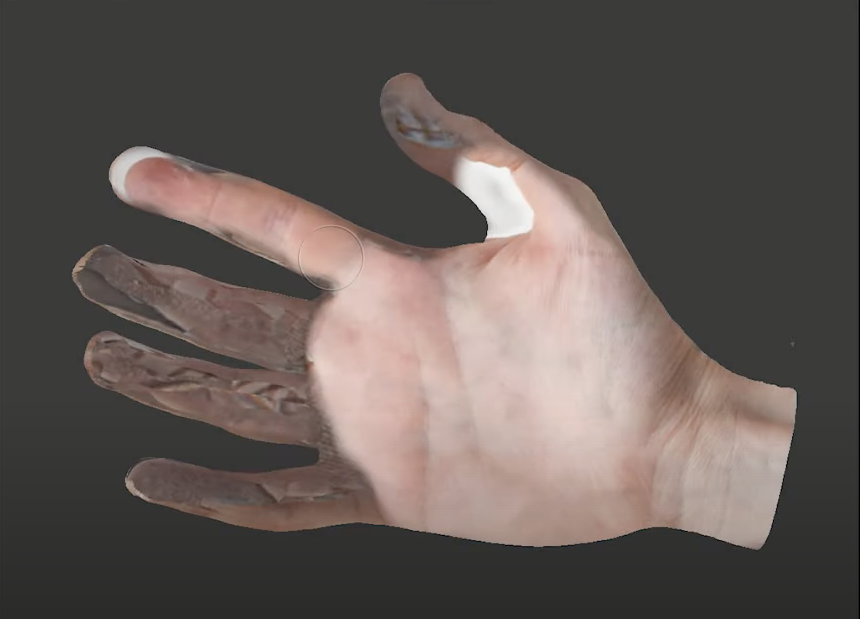
The viewer sees a digital 3D environment based on a private photograph of Elvis Presley. The photograph was taken in 1956, when Presley was on the cusp of world fame. This was a time when the photographer, Alfred Wertheimer, could still get close to the man—before the transition from ordinary human to icon, from normal life to an era of superstardom and spectacle. David Claerbout modelled Elvis’ body using hundreds of photographic fragments of his skin and facial features. He challenges the two-dimensional nature of the photograph by adding virtual time and space. Photography is both the launching pad and the subject of KING. Claerbout confronts the viewer with the transition from looking through a lens to looking by means of a scanner. This radical reversal of normal observation means that you seem to creep into the image. Claerbout uses the artistic, conceptual and technical perspectives to question our way of looking.
FOMU has a short 5 min artist video on their site, with Dutch and English subtitles.
That was enough to get me really interested, and I found another great 30 min interview video with David Claerbout at Louisiana Channel. He explains how the whole project was made: they even used a stand-in model and stitched together thousands of pictures of Elvis’ skin on the 3D scan of the model. Amazing!
Showing us around in his “studio” – actually many different rooms in an old Flemisch house in Antwerp – Claerbout is very articulate about his work and practice and I found this super inspiring, as I am preparing next year 2022 as my year to professionalize my own art practice.
He opens with:
“I am an artist, and I do not know exactly what it is what I am doing, it seems I am changing my ways all of the time, but I am a self-taught very hungry autodidact in the domain of the moving image animation film video and what we could call virtual image making.”
As we walk through his studio, we see his drawing-room, how he started building an archive of images, how his team is usually working on one project at the time, having all equipment inhouse, two recording studios, including a small server farm in the basement to render image/video in the most optimal way.
Throughout the whole interview, there transpires a mood of silence, integrity, dedication, focus, discipline, professionalism. His origins are in painting, and drawing, and lithography.
The interview/walkthrough is full of inspiring insights, provocations,
WHAT IS IT THAT I CAN CONTRIBUTE?
MY WORK DOES NOT HAVE ANYTHING SHOCKING
I WANT TO DEVELOP A LANGUAGE
SPEAKING/WORKING WITH PEOPLE THAT YOU ARE CONFIDENT WITH, THAT YOU CAN TRUST
WHAT IS IT THAT BINDS EVERYTHING TOGETHER?
CHRONOS – KAIROS – HETEROCHRONY – THE PLURALITY OF DURATION
PRIVILEGED MOMENTS
BEING NOT AT THE CENTER OF THE COMPOSITION
THE CAMERA AS A VAMPIRE
THE RELATION BETWEEN OUR THINKING AND OUR PERCEPTION
YOU DON’T WAIT FOR BUDGETS, YOU DON’T WAIT FOR PEOPLE, YOU JUST DO IT
THE DELICATE CENTER
HOW DO WE LIVE WITH VIRTUAL MATTER?
WE HUMAN BEINGS ARE PROGRAMMED TO TRUST
WE ARE NOT PROGRAMMED TO PUT OUR SENSES INTO QUESTION
WE FIRST WILL BE SPONTANEOUS BELIEVERS AND THEN WE WILL BE ANALYTICAL
I WRITE A LOT, I DON’T PUBLISH A LOT BECAUSE IT IS SO TIME-CONSUMING
LIFE IS NOT LONGER A TAPE THAT RUNS FROM BEGINNING TO END
THE TRINITY OF PAST-PRESENT-FUTURE IN THE VIRTUAL REALM
EVERYTHING IS BUILT OUT OF TWO
A BUILT-IN REDUNDANCY
LAZINESS AND ENERGY
SHARING DIRECTLY BY SITTING TOGETHER
WE PERFORM AND AT THE END OF THE EXHIBITION THE PERFORMANCE IS OVER
THERE IS NO SUCH THING AS THIS INCREDIBLY EXPENSIVE VALUABLE SINGULAR ARTWORK SITUATED SOMEWHERE IN TIME NOT IN PARTICULAR MATTER
SOMEWHERE IN THE SMALL FOLDS OF TIME, THERE ARE ENCOUNTERS
WHAT IS THE LIMIT? WHERE IS IT?
THE PRIVILEGE OF THE ARTIST OF HAVING TIME TO WASTE
THE ARTIST DOES NOT HAVE TO BE EFFICIENT
IT IS QUITE LOUD WHEN THERE IS NO SOUND
It is clear that Claerbout is full of poetry. As Norman Foster used to say “I can write you a letter, but a poem?”
No wonder the “KING” and some others I discovered in the meantime are so well resonating with where I am now and where I would like to be the next years. I may post some other inspiring stories in the weeks and months ahead as part of my transition to and professionalization of my art practice.
I recently had a number of conversations on “Virtual Meetings” or “Virtual Events”. The briefing boils down to the following two questions:
How can I create a virtual version of my now canceled physical event, meeting, and interaction with my customers/partners?
How can I take the lead in this virtual space?
I am surprised how often the initial briefings immediately jump into the aspects of production and tools. A sort of fear of missing out on the latest coolest online tool or platform. There is a deeper fear of missing the virtual boat, and fear of overnight irrelevance.
A production themed briefing is usually a sign that the client is looking for some quick and dirty quick wins (the lipstick on the pig), is not clear about the different dimensions at play when architecting an on-line (or off-line) event, and has even less clarity on their ambition levels.
In those conversations, I love to do some live (virtual) whiteboarding. By doing so, I stumbled upon a framework that seems to resonate with many people.
During some Zoom meetings, I could literally hear the clicking of the screen pictures while I was drawing.
I have certainly learned one thing in the last couple of weeks: the more I share it, the more feedback I get. The story becomes more coherent, and the network helps me identifying the blind spots.
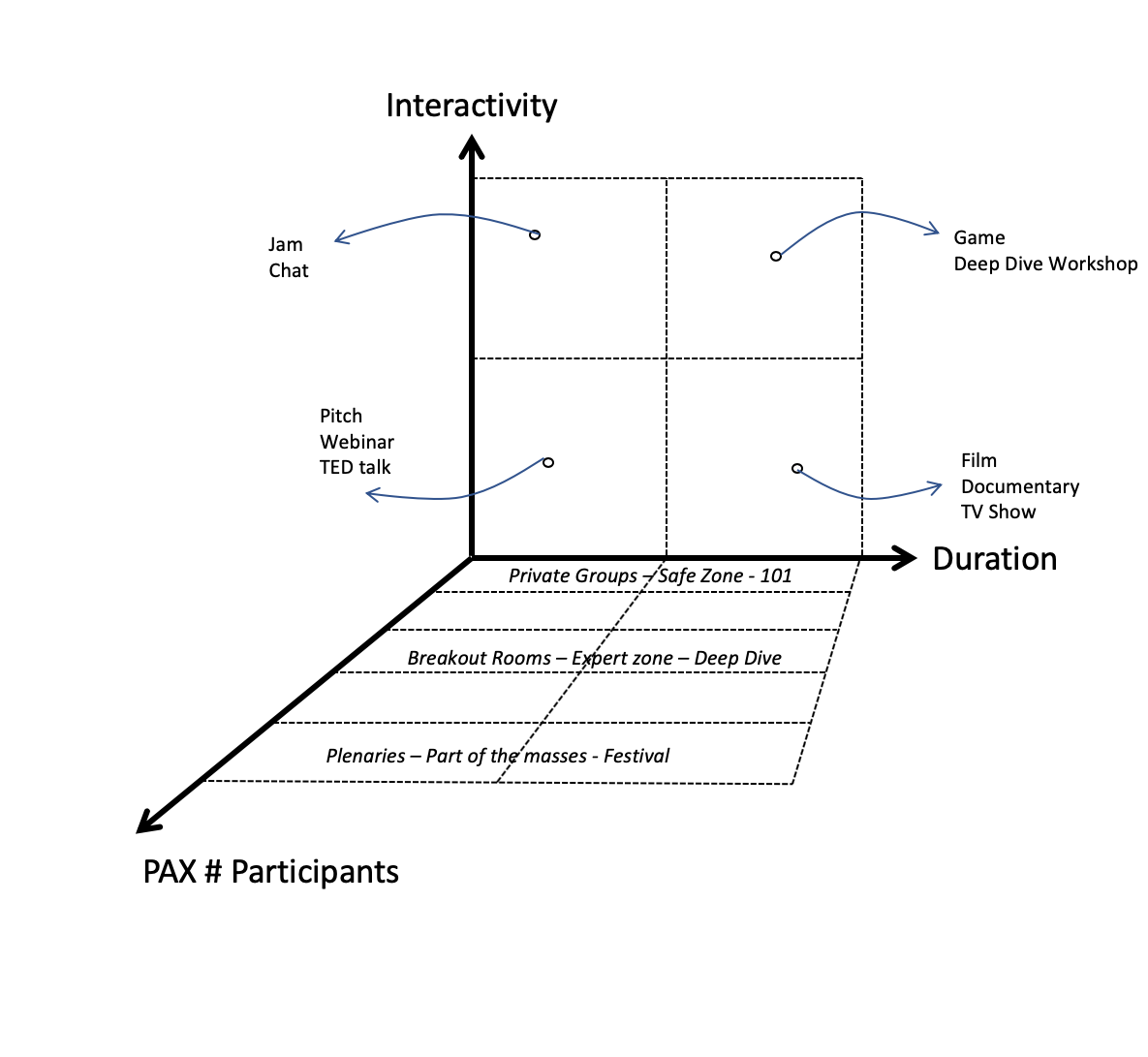
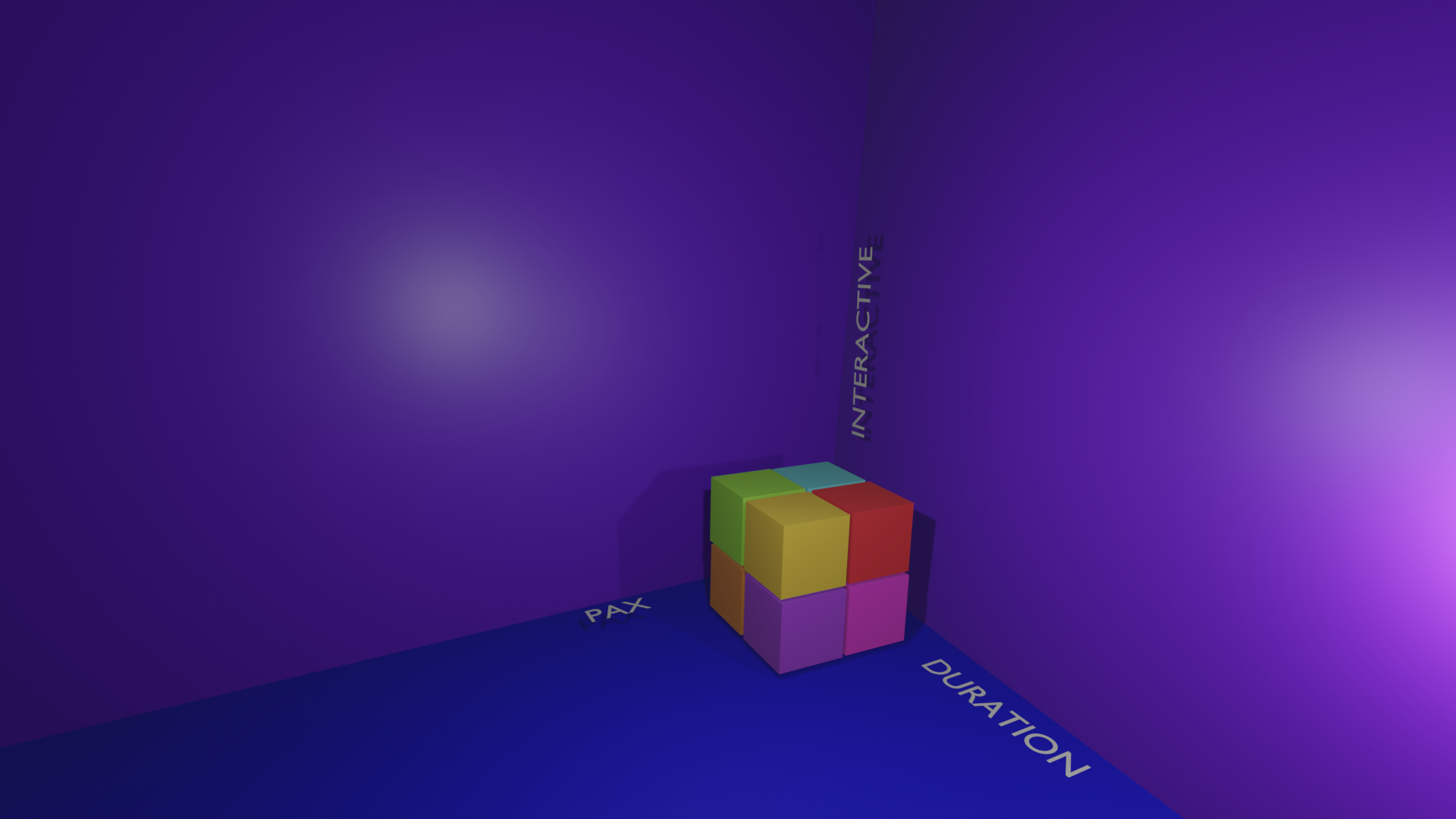
There are 3 axes:
Duration: how long does the event last? From 5 minutes to 2 months for example
Interactivity: how much is the audience involved? From 100% passive listening to immersive free play
PAX # Participants: from a 1-1 till several thousands of participants
On the Duration/Interactivity pane, one can start plotting different types and formats of events. From simple 5 min one-way pitches and introductions to deep immersive games and workshops.
The PAX dimension is an interesting one. If we maintain our physical event vocabulary, we can plot some meetings styles from Private Groups, over Breakout Rooms to Plenary sessions. But it is a physical vocabulary.
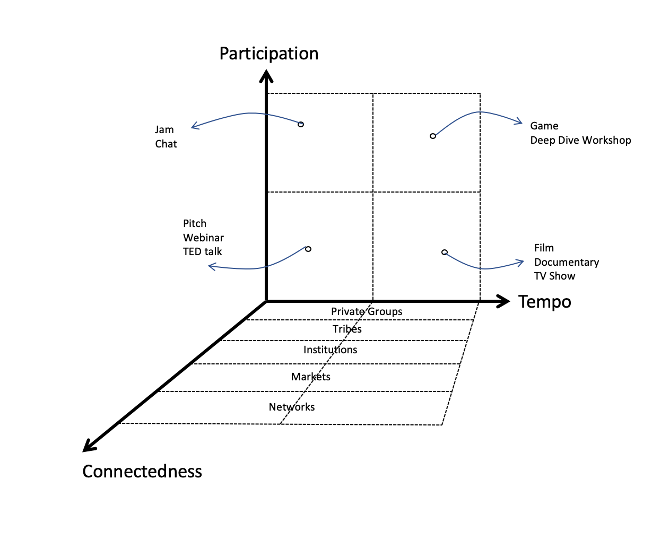
I started wondering what a truly virtual vocabulary would look like:
Interactivity would become “participation level/intensity”
Duration would become something like “rhythm” or “tempo”
PAX would become something like “connectedness”
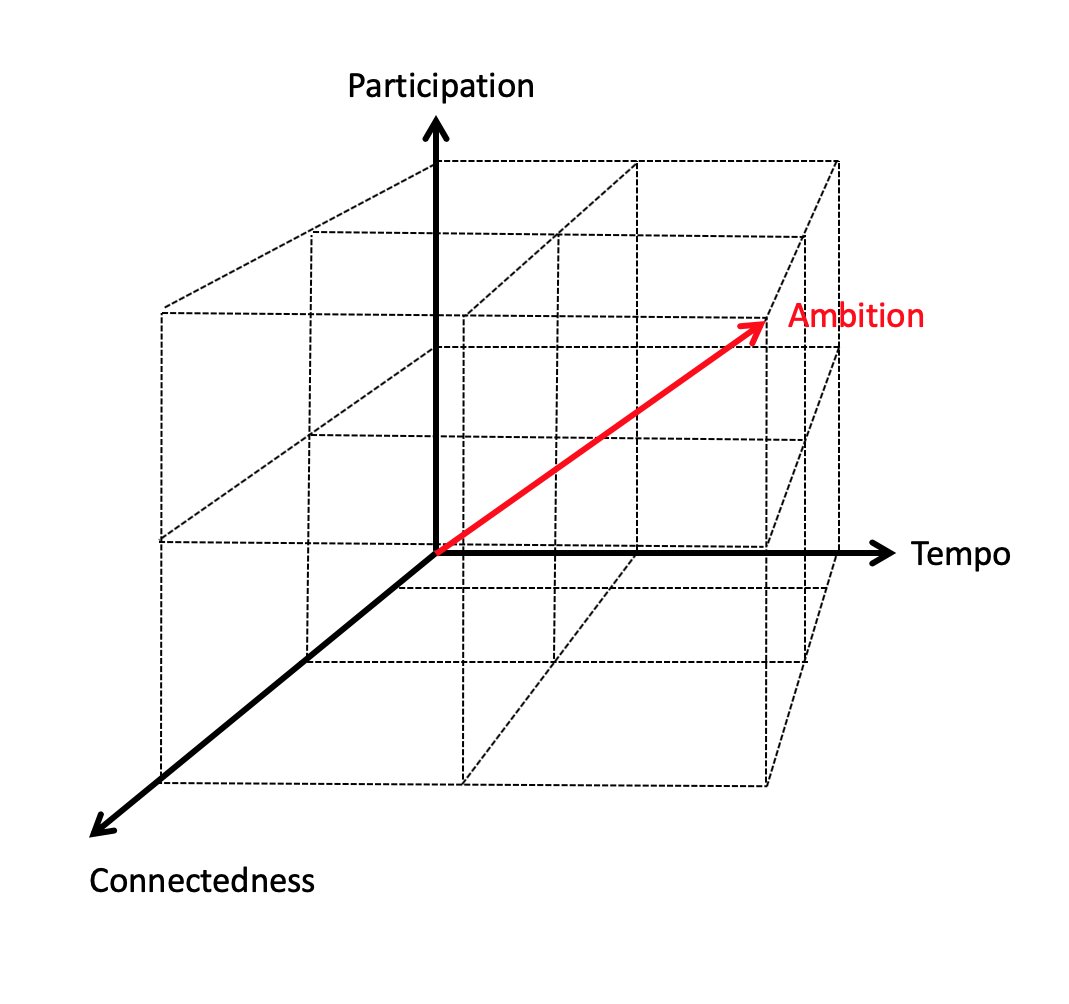
The Ambition Cube then looks like this:
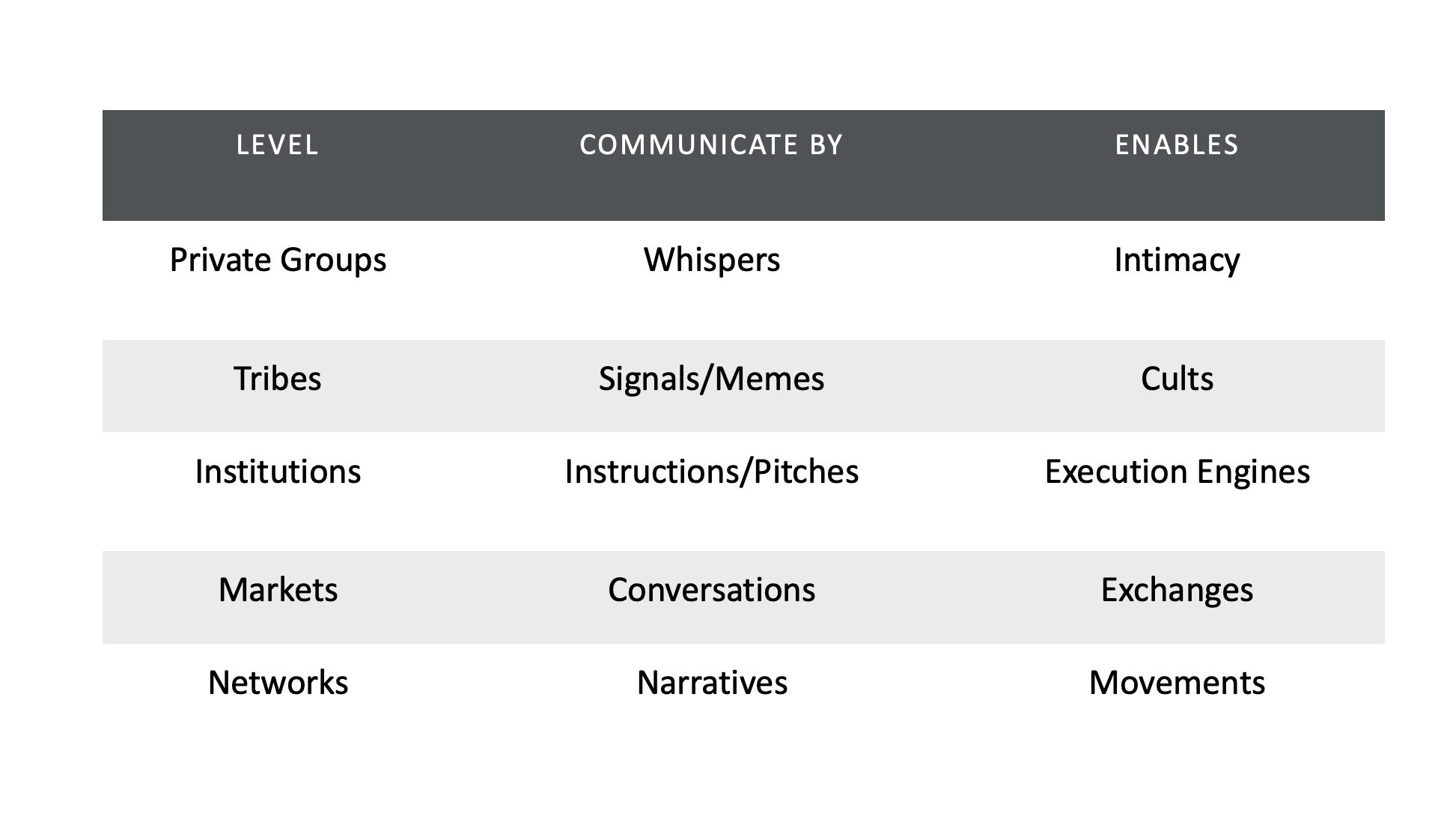
It becomes really interesting when I start mixing The Tribes – Institutions – Markets – Networks (TIMN) framework of David Ronfeldt‘s (TIMN was defined in 1996 already. Link to the PDF here). I started reflecting on how these groups communicated and what they enable:
Now, we are getting somewhere. It becomes clear that the challenge is not to virtualize the existing. I believe the right questions are:
How do we create collective memories and narratives?
How do we create a participatory culture?
How do we raise your game on what goes on in that little window/screen?
How can we resonate at another, additional level than the pure cognitive?
How can we advance at an aesthetic, spiritual, and moral level?
We can now use the Ambition Cube to define our “virtual” ambitions. Plotting where we are today, and where we want to be in n-number of days, weeks, or months. Once you know this, you can start looking into the many tools that exist to make the magic happen and start looking for architects, curators, and production companies that can help you with the coherence of content and experience.
To close, I also made a “clean” 3D version of the cube in a 3D drawing tool called Blender:
I am working out loud here: please give feedback, help me identifying the blind spots, share your experience when using this with your clients.
The Ambition Cube is licensed CC BY-SA 4.0, as are all materials found on this site.
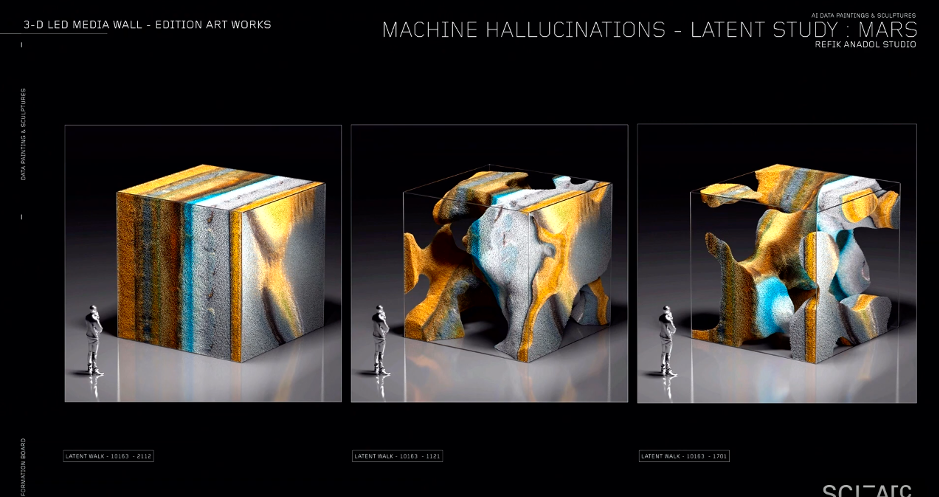
This post is a semi-transcript of a fantastic talk “Space in the mind of a machine” by media artist Refik Anadol. My post is not intended as a literal transcript, but rather as a collection of – often poetic – idea clusters of Refik’s talk. None of the ideas are mine, I just tried to condense it and brush some highlights.
The talk was given on 4 December 2019 at the Southern California Institute of Architecture (SCI-ARC). The website of SCI-ARC itself is nirvana for all beauty and art lovers out there, and worth spending a virtual visit of a couple of hours.
The talk was transformative for me, in the sense that it made me realize we truly have entered a new reality and a witnessing the dawn of a new area, full of beauty, poetry, and artistic interventions that create alertness and aliveness similar to the 16th-century renaissance.
After a long intro, his talk starts at 2:46
Criticizing the idea of canvas
Dimensional explorations
Augmented structures
“Design is a solution to a problem; art is a question to a problem” – John Maeda
Humans, Machines, and Environments in a symbiotic relationship
Can a building dream?
“Life can only be understood backward, but it must be lived forward” – Kierkegaard
The data that we leave behind us
Data “dramatization” vs. Data Visualisation
The invisible space of Wi-Fi, 4G, radio signals, etc.
A poetic exploration of invisible datasets
Data Paintings
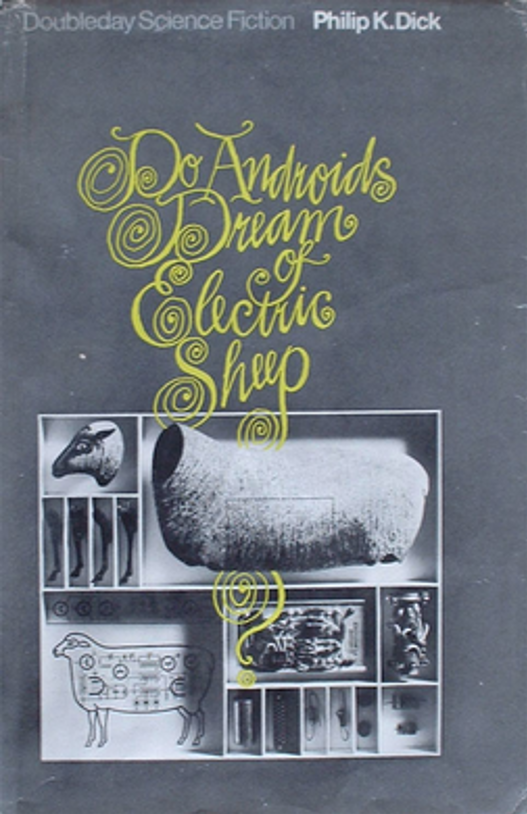
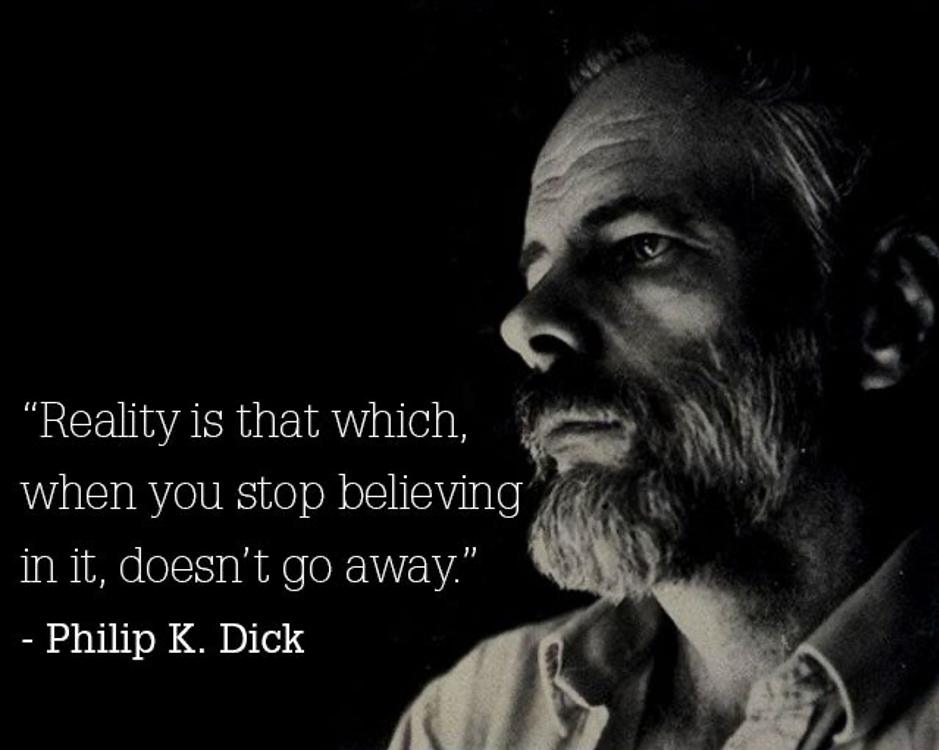
At a certain moment, Refik Anadol quotes Philip K. Dick, author of the 1968 science fiction book “Do Androids Dream of Electric Sheep”, later retitled Blade Runner, and basis for the 1982 initial version of the film.
This inspires Refik Anadol to seed the following insight:
A simulation is that which does not stop when the stories go away
Stories are responsible for our human desire for resolution
But the simulation is only responsible for its own laws and initializing conditions
A simulation has no moral, prejudice of meaning
Like nature it just is
There is some poetry hidden in this abstraction of data
Exploring data sets that have this quality of meditation
The architect as an operating systems designer, a beautiful “speculation”
Finding the moment of remembering
Finding the moment of entering a dream state
“Machine Hallucinations”
Collective memories of spaces
To make the invisible visible
Hallucination narrators
Dream narrators
The Selfies of the Earth
Refik is asking questions that are not just a fancy-fications of a bunch of algorithms
This is a short (and bit weird) morsel on not understanding a clue anymore, to have the feeling to encounter a completely foreign world.
I happened to me several times last months, that I read or meet something/somebody and I really don’t have a clue what they are talking about.
A friend shares with me her business plan for a new app, and I have no clue what it is about, even not after having (tried to) read the associated white paper
The 1000 dimensions of algorithms in James Bridle’s “New Dark Age”
Eddie Harran’s (aka Dr.Time) Temporal Labs, Research lab investigating time’s impact on humanity
From the “God in the machine” post:
We sat there, looking at the computer, his creation laid out in multi-coloured type. “This is all to do with complexity,” he said contemplatively. “Complexity of input. Complexity of analysis. Complexity of how outputs are combined, structured and used.”
“Truth is dead,” he sighed. “There is only output.”
After some 1-1 conversations with some of the authors, it looks like I missed a whole generation of aesthetic language that is only found in apps, games, and Netflix-ish series like Black Mirror, Mr. Robot, Tangerine, Ratter, and Skam.
Black Mirror – Season 4 – 2017
It feels like digital incest. Trying to hide from your virtual self. A virtual loop of digital identities and personalities. Not knowing what is real and what is fake or sliced/looped faith.
It also makes me think of this extract from Bill Gates’ review of Capitalism without Capital:
It took time for the investment world to embrace companies built on intangible assets. When we were preparing to take Microsoft public in 1986, I felt like I was explaining something completely foreign to people. Our pitch involved a different way of looking at assets than our option holders were used to. They couldn’t imagine what returns we would generate over the long term.
It feels like I cannot imagine what these new aesthetics can mean on the long term, and how they are already influencing now Generations X, Y, and Z.
I am missing the @swardley’s situational awareness map, about movement and position. Where is the anchor? What is edge and what is commodity?
Visit Roger Raveel museum 28 Sep 2018
If you are still in for it, here are two soundscapes of my visit to the Roger Raveel Museum;