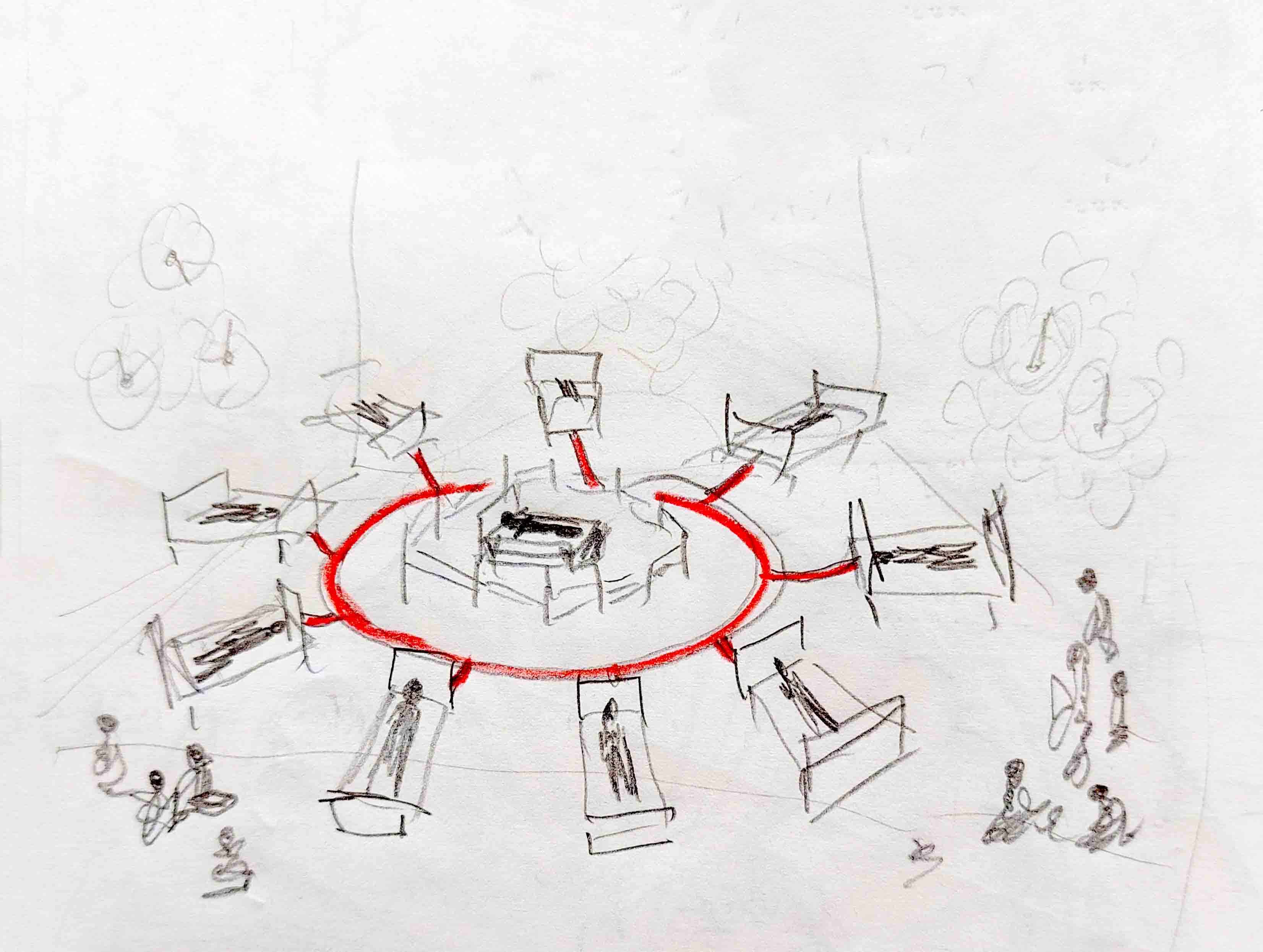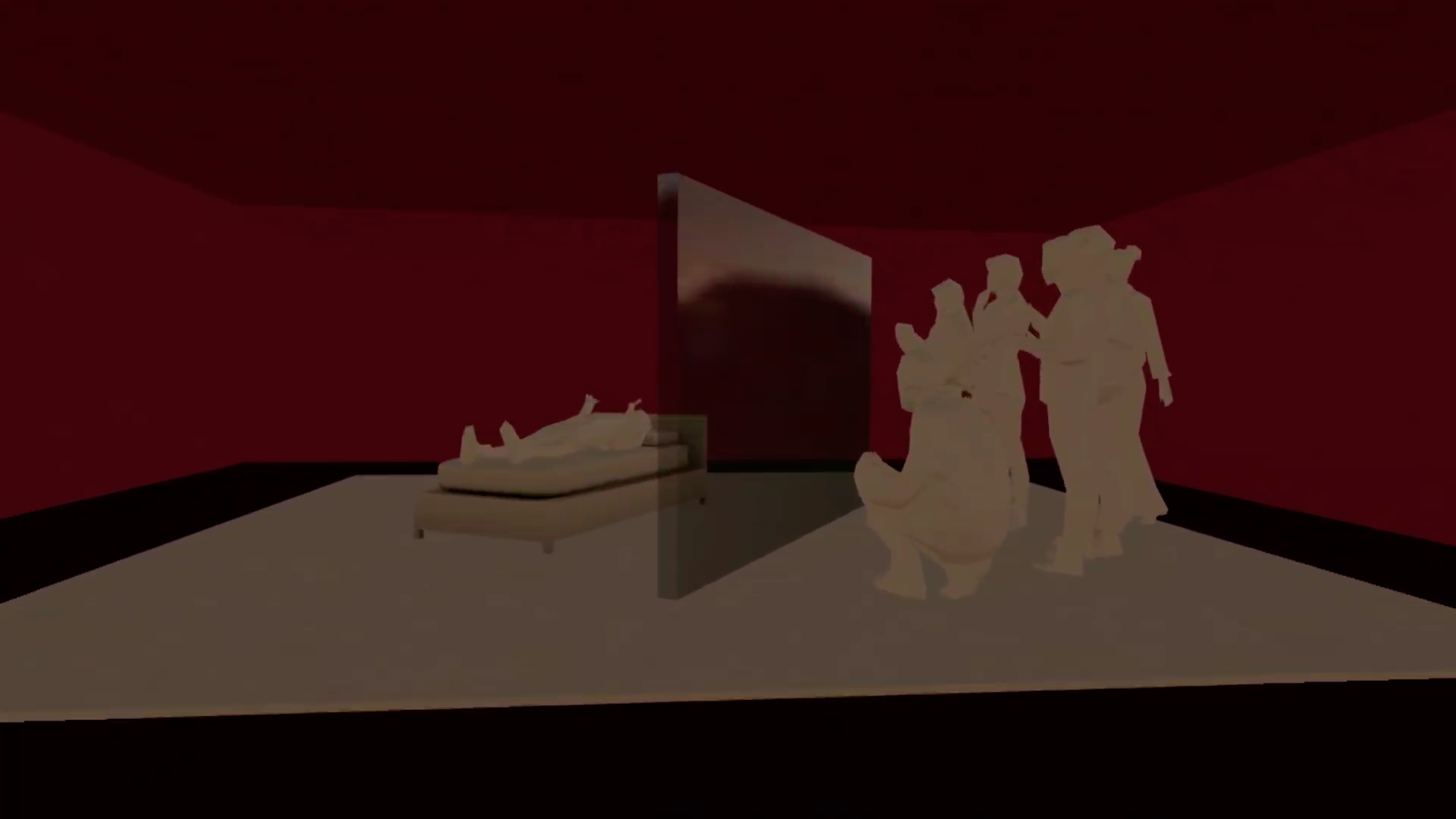
At a recent family gathering, I learned that the grandchild of one of my nieces is studying at the School of Arts (KASK) in Ghent and is expected to complete her final master’s degree in 2027.
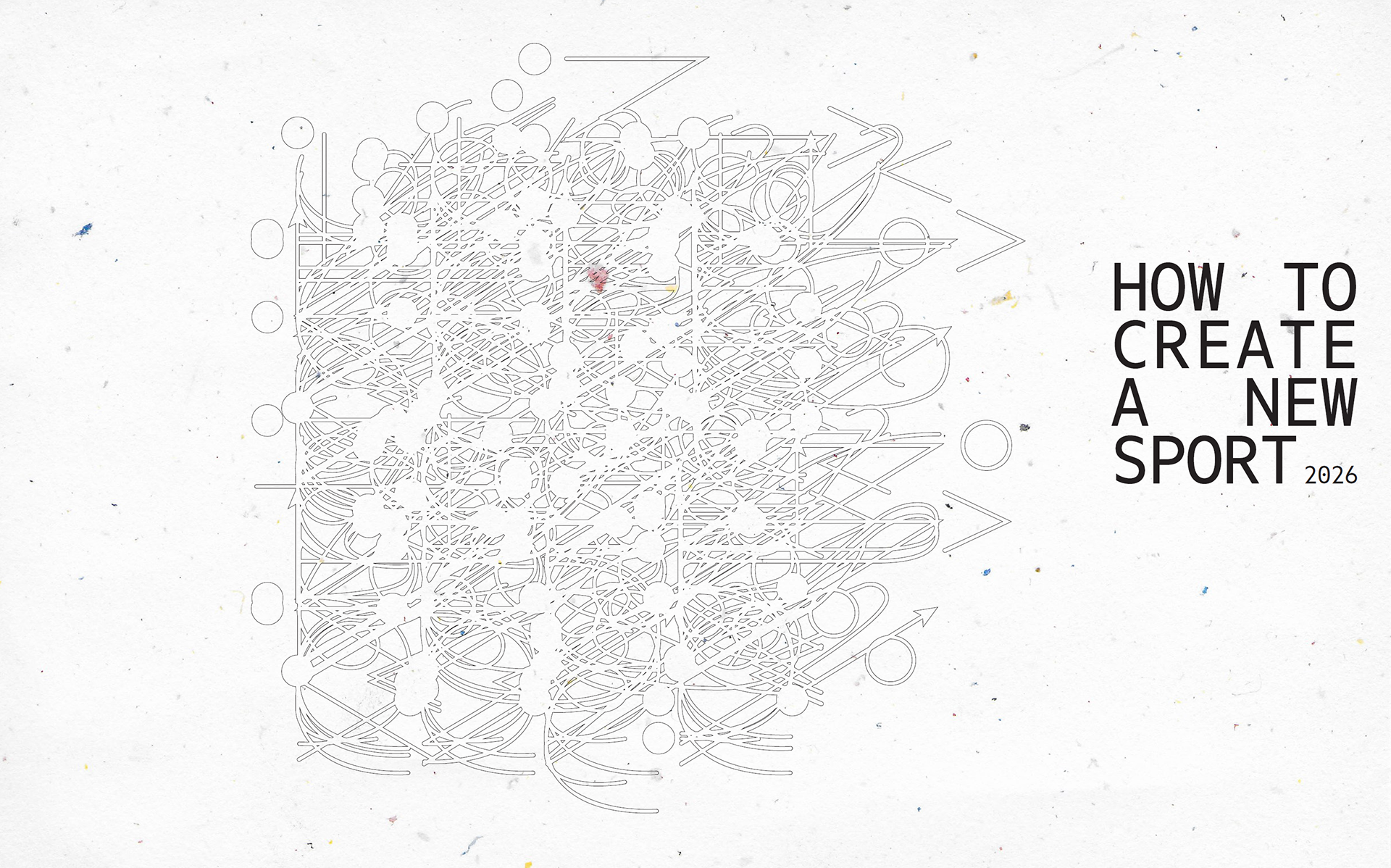
I found out she was working on a project called “How to Create a New Sport”. You can find an intro about it on her portfolio site: https://noorflamey.myportfolio.com/how-to-create-a-new-sport
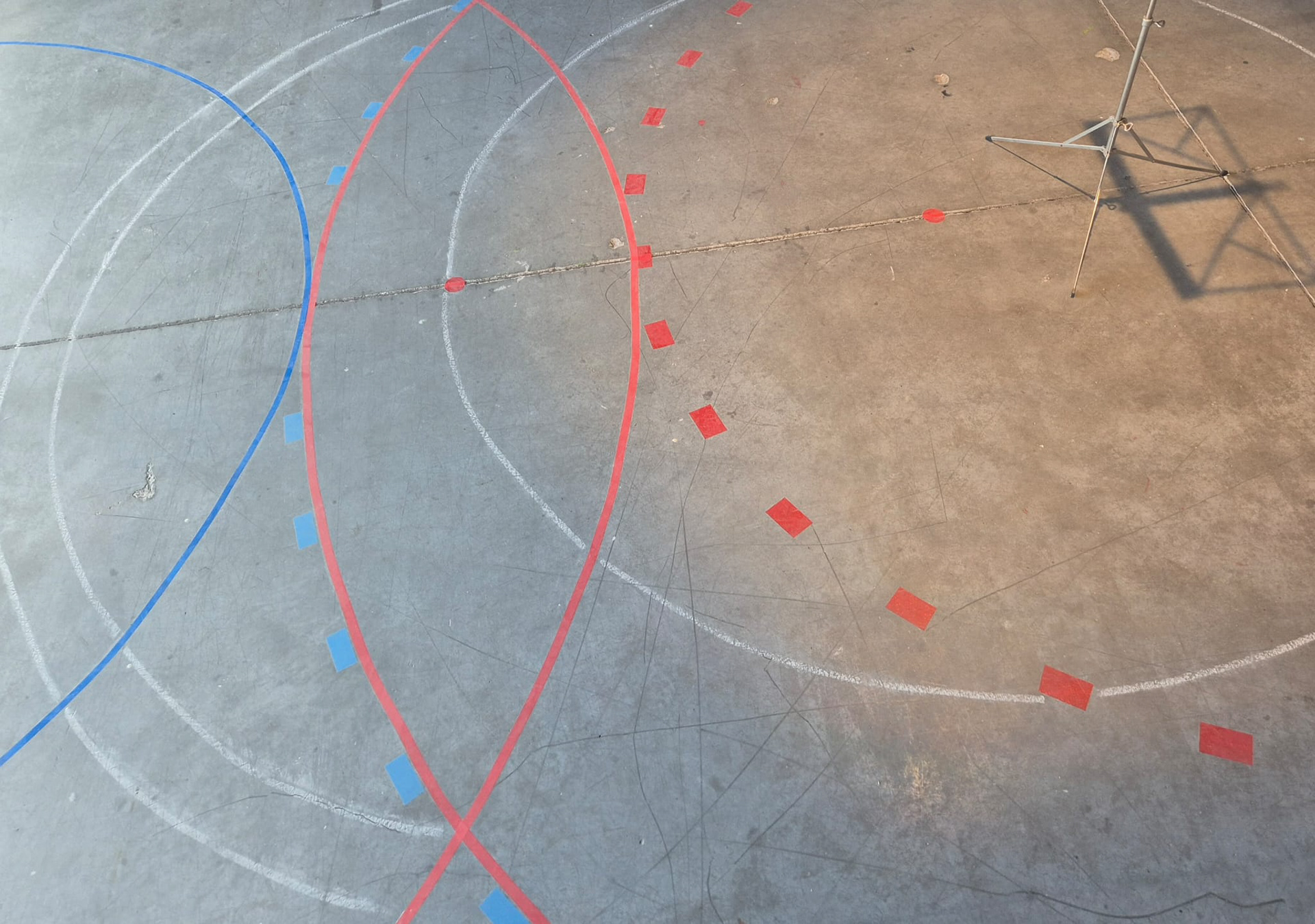
But the title could be misleading. NOOR’s work represents a critical intervention at the high-stakes intersection of elite athletic performance and contemporary artistic practice. This inquiry positions the “governed pedagogical space” of high-performance sport—specifically Women’s Artistic Gymnastics (WAG)—against the “rebellious act” of artistic creation. By deconstructing the rigid, judicial structures of elite sport, NOOR seeks to establish a theoretical and methodological framework for a “New Sport.”
The central research question interrogates how embodiment is shaped by the friction between a pervasive, patriarchal achievement culture and the necessity for female artistic sovereignty. She highlights the “Running Score” methodology—an evolving script that replaces static judgment with a continuous documentation of the developmental process.
This inquiry calls for a rigorous examination of the “Competition State”: a societal condition in which every action is measured against the ideal of perfection and the constant demand to prove one’s social value.
Especially at a time when AI is enabling humans to become ever more performant, competitive, and efficient, I believe her ambition can—and perhaps should—extend beyond “sport” as such. Her work has the potential to become a foundational critique of the hyper-competitive logic shaping both our personal and professional lives, while also proposing an alternative to it.
In this sense, her work could open up a much broader inquiry: How do we create a new way of becoming?
In addition to presenting an artistic in-situ performance, the deliverables of “Creating a New Sport” include a thesis and an artistic book documentary of her journey.

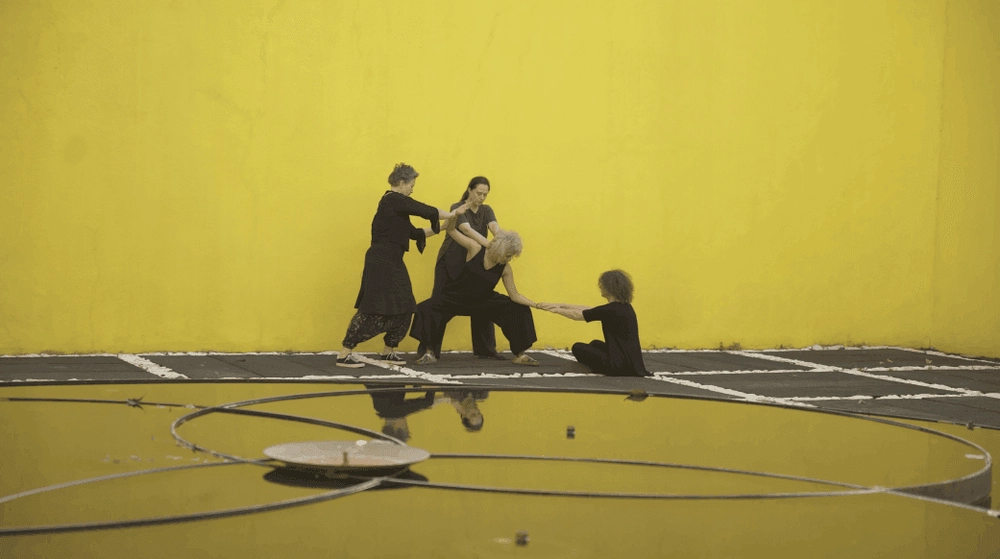
What NOOR is doing feels a bit like the Social Presencing Theatre of Theory-U of Otto Scharmer:
“an embodied social arts-based change methodology for making visible current reality and exploring emerging future possibilities. It includes a set of practices that synthesize embodied presence, movement theater, stillness, and dialogue. It reveals the wisdom in every social system and supports movement towards healthier futures.”
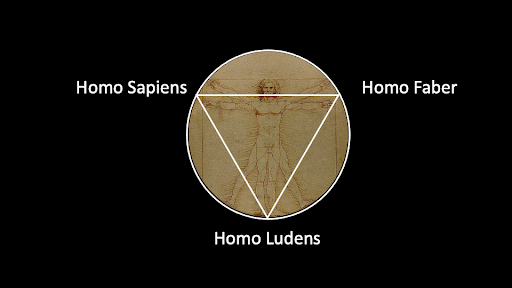
Or Ann Pendleton-Jullian’s work on “Design Unbound”, “Pragmatic Imagination”, and her FOUR (+1) Studios book (PDF) on “Studios”, where there is a whole section on game design and Homo Ludens (see pages 180 and following of FOUR(+1).
“Gameplay is the action associated with players making choices in the game environment. It is related to the sequential but interactive events of players operating in the rule-based site. It is the process of engagement of the game, while game design is the process of pre-engagement. It is the design of the rules for engagement. But game design can only be accomplished through playing the game as one is designing it.”
Also related is Venkat’s recent post on “The Curiously Playable Universe”. I am highly simplifying the thesis that when everything gets abstracted and possibly constructed (through AI and LLMs), then everything becomes “playable”.
“But perhaps the stranger discovery concerns the provinces: Wildernesses can be reliably turned into game boards. We domesticate the territory, become skilled at its game, build machinery that plays it better than we can, and move outward to construct another game around the first, domesticating a larger scope.
This happened to fields and livestock long before it happened to chess. It happened to trade before it happened to programming. It happened to mechanics before it happened to mathematical proof.
Artificial intelligence did not invent this strange property of reality. It is merely making it difficult not to notice.
The deepest surprise of the AI era may turn out not to be that intelligence was easier to manufacture than we thought. It may be that the universe is far more playable than we imagined.”
This is very close to his work as director of research for the Protocol Institute. At this week’s Protocol Symposium 2026, there was even a workshop on Protocol Art.
“Protocol Art is emerging as a practice in which the artwork is not a finite object but a set of rules that others (human or machine) instantiate into an indefinite number of unique works.”
The chairwoman of that workshop (Primavera De Filippi) has a good essay on what Protocol Art is and what it is not.
“Protocolism revolves around the creation of “artistic protocols.” These protocols comprise sets of instructions and constraints meticulously crafted to guide the production of unique artworks. These protocols serve as the bridge between the two pivotal figures: the original artist (i.e. the “protocol artist”) and a diverse array of executors (both human and non-human) who instantiate these protocols into tangible creations that qualify as distinct artistic creations. This symbiotic relationship challenges conventional notions of artistic authorship, as the resulting artworks bear the unmistakable imprint of the protocol artist, along with that of the instantiating actors.”
Protocol Art was (and still is, till November 2026) very present at Venice’s Art Biennale.
“The artwork is not merely a final product, it is a process governed by instructions, representing the invisible architecture that enables the aesthetic experience. This shift in perspective – moving from the object to the system, and from the singular author to collaboration and ultimately human-machine co-creation – defines one of the most urgent territories in contemporary research.”
And also Rudy Rucker’s reflections on computationalism in The Lifebox, the Seashell, and the Soul comes to mind, where he explains that some computations are fully deterministic (aka based on clear, unambiguous rules) ànd unpredictable.
NOOR’s work is, maybe without knowing it, a crossover of all these contemporary disciplines and insights. Her work is a call for a rebellious act of non-conformism. Of humans being a bit “off-grid”. Not too perfect. In Digital Audio Workstations, there is even an option for “humanization” of something that is generated in the grid. If it is too perfect or without variation, it is boring. See my 2021 blog post Unsnap from the Grid https://petervanstudios.com/2021/03/09/unsnap-from-the-grid/
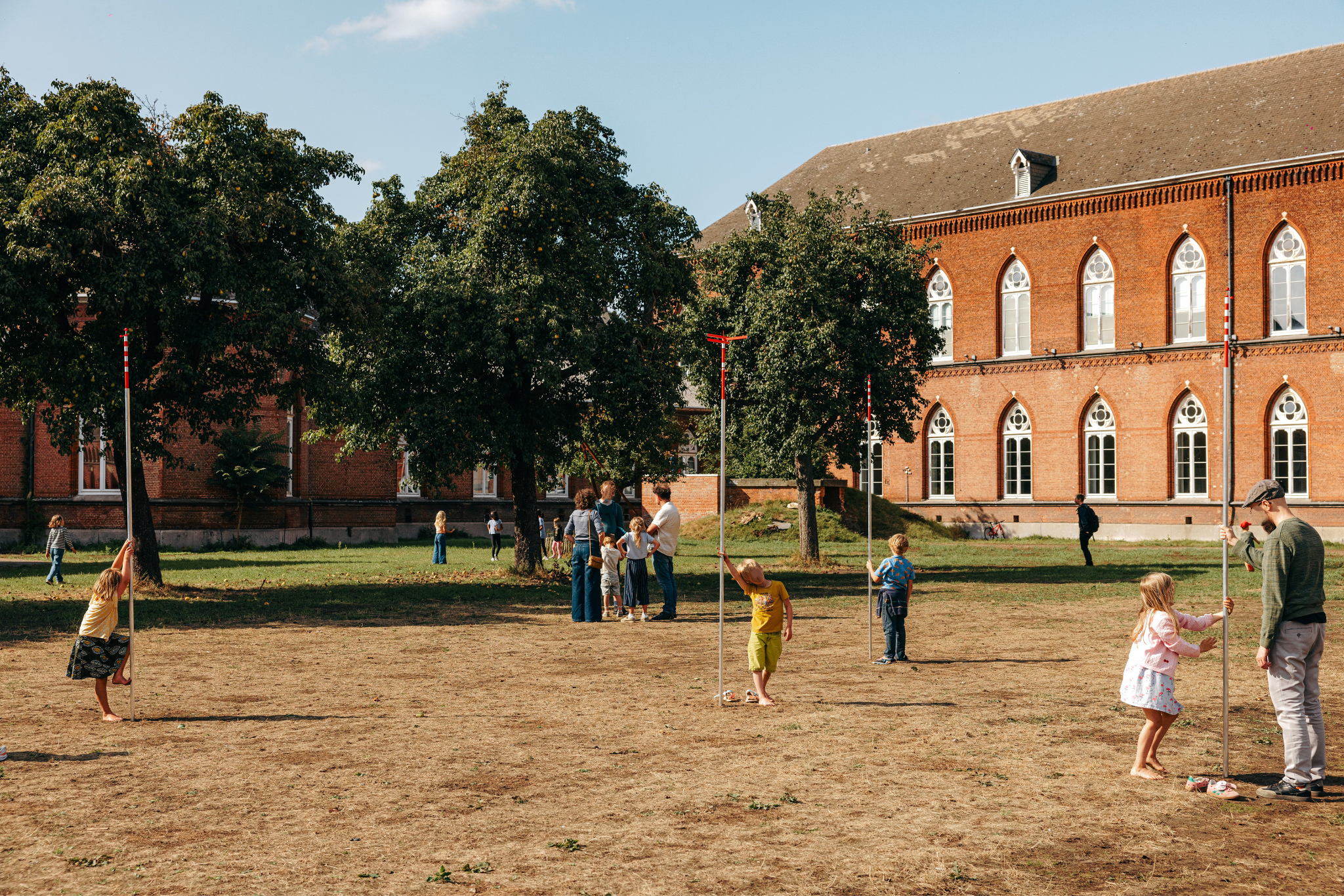
Her work is an invitation to the emergence of embodied experience and the liberation of human movement, taking sport as a point of departure while reaching toward possibilities far beyond it.
If you like her work as much as I do, please contact her here. And let me know if magic happens.
In a subsequent post, I will elaborate on what is worth measuring.
And in the next one, I will introduce you to a 75-year-old artistic, rebellious choreographer who also combines sports and art.
With warm artistic regards,