What is worth measuring?

In my latest post, I introduced you to the work of NOOR, who is creating a new sport. I suggested that her work could open up a much broader inquiry: How do we create a new way of becoming?

With that background, I would like to dive a little deeper into other aspects of her research and explore how a new way of becoming raises the question of what is worth measuring.

NOOR’s research

Her work is based on five theoretical pillars:

  • Pillar I: Achievement Motivation and the Competition State
  • Pillar II: Gendered Body Comportment and Relational Embodiment
  • Pillar III: Kinetic Awareness versus Functional Alienation
  • Pillar IV: The Language of the Body as Resistance
  • Pillar V: Institutional Power and Tacit Knowing

If we zoom in on Pillar II, we see that high-performance sports such as Women’s Artistic Gymnastics demand a highly disciplined environment. This “limited intentionality” is not merely psychological; it is materially and institutionally produced through regulations that physicalize discipline. By restricting a neckline to “half of the sternum” or a leg cut to the “hip bone,” these regulations physically delimit the female athlete’s bodily presence, prescribing not only how her body may appear but also the spatiality of its movement and reach.
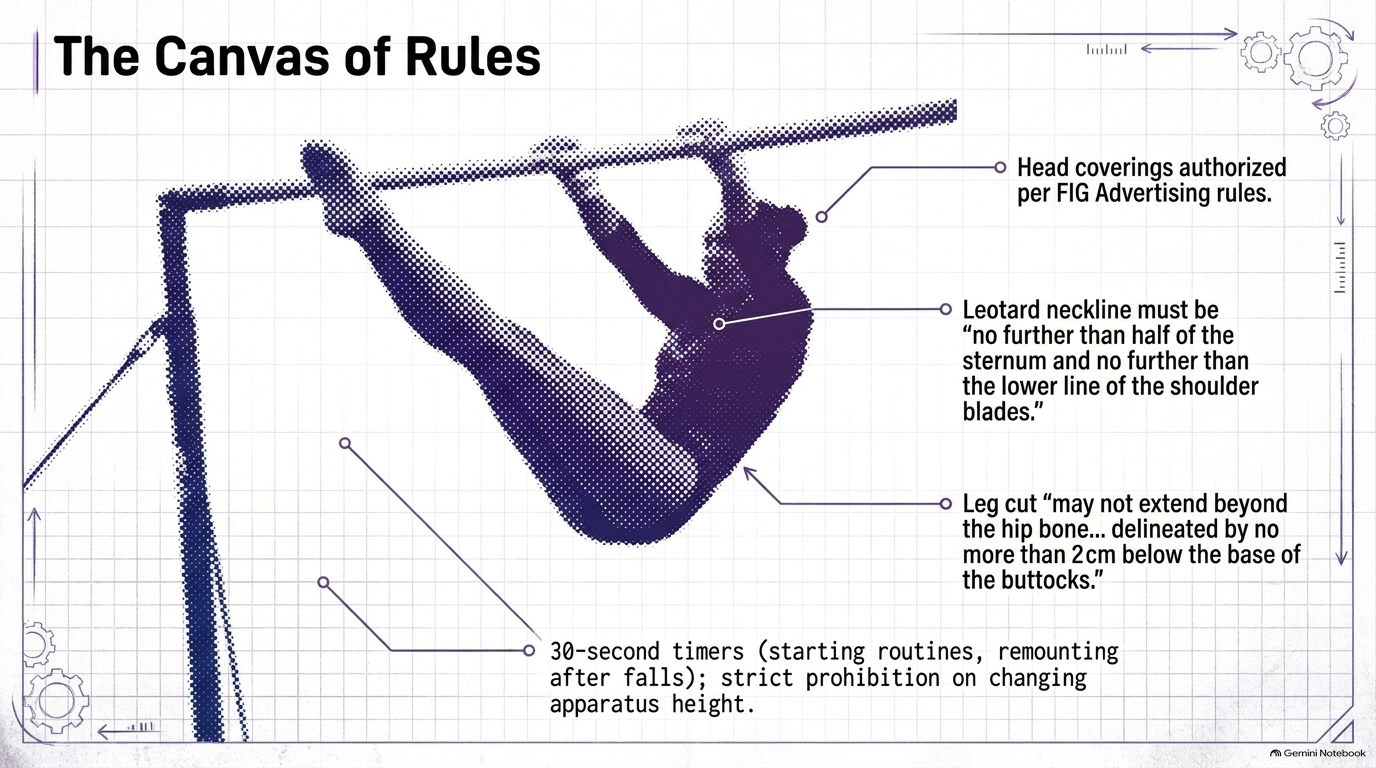
Contrastingly, the “new embodiment” argues for relationality. Instead of an isolated, disciplined body performing for an external score, NOOR envisions a body that exists in relation to its community and its own internal state.

The measurable body is reduced to a numerical sequence, a “data point” in a governed script, and a series of technical skills to be deducted by a jury. By contrast, NOOR’s thesis suggests a “Lived Body”, a “Lived Experience”: the body uses its own language, prioritizes the “desire to understand,” and embraces the vulnerability of a “broken rule” as a moment of liberation.

Under Pillar III, she challenges the reduction of bodies in elite sport to quantifiable units—fragments of movement extracted, coded, and rendered legible for judicial consumption. Here, the focus is on the static state: the Coded Body. The official Code of Points (COP) is by the WAG (Women’s Artistic Gymnastics). The COP transforms the routine into an “extinction of the moment”: what is experienced as continuous, kinetic movement is captured as a series of discrete, measurable outcomes. Skills are stripped of their temporal and embodied flow, translated instead into numerical sequences that can be evaluated, compared, and scored.

NOOR’s Running Score” is an ontology of becoming . It is an “evolving total” that refuses the finality of the judge’s verdict. This shift is punctuated by the project’s use of generative logic to replace judicial logic with a methodological script that documents the continuity of experience rather than the error of the result.

All this made me reflect on what is worth measuring. Spoiler: Instead of measuring the being, I suggest we find a way to measure the becoming. Let me build up the context for this proposition. And to manage your expectations: there is no answer. It is an invitation for debate and conversation.

Homo Ludens

In Johan Huizinga’s Homo Ludens, a game (or play) is defined as “a voluntary, absorbing activity carried out within certain fixed limits of time and place, according to freely accepted rules, and attended by a feeling of tension, joy, and a consciousness that it is ‘different’ from ordinary life.”

Huizinga argues that civilization does not come from play; rather, culture arises in and as play. He demonstrates that foundational elements of society—such as law, warfare, poetry, philosophy, and art—developed out of ancient ritual contests and rule-bound social play long before they became institutionalized

Huizinga’s “magic circle” describes the physical or psychological space where a game takes place and where the rules of the real world are temporarily suspended. Within this circle, a new set of rules, meanings, and logic applies that holds no weight in ordinary life. 

In modern game design, the magic circle represents the psychological barrier where a player enters a state of immersion. Inside this boundary, the virtual world feels real, and the stakes matter to the player.

Game or play is a way of becoming

Finite/Infinite Games

In Finite/Infinite Games, philosopher James P. Carse explores the idea that all human interactions and behaviors can be viewed through the lens of two distinct types of “games.” 

Carse introduces his thesis in the very first line of the book: “A finite game is played for the purpose of winning, an infinite game for the purpose of continuing the play.”

FeatureFinite GamesInfinite Games
Primary GoalTo win (which ends the game)To keep playing and prevent the game from ending
BoundariesFixed temporal, spatial, and numerical limitsBoundless; open and expanding
RulesFixed and agreed-upon; changing them breaks the gameDynamic and evolving; changed precisely to keep the play alive
PlayersKnown, select participants with clear opponentsEver-changing roster; open to anyone
ExamplesSports, politics, war, getting a degree, corporate promotionsCulture, love, a career, learning, nature, life itself

NOOR’s new sports are infinite games.

Process Philosophy

Philosopher Whitehead is considered the godfather of Process Philosophy. Instead of a philosophy of being, he proposed a philosophy of becoming.

“Developed in his seminal 1929 book Process and Reality, this ontology argues that “becoming” is more fundamental than “being”—meaning the universe is a web of energetic, experiential events rather than a collection of passive, physical matter.”

In his presentations on the four elements of the experiential design framework for immersive storytelling, Kent Bye draws an explicit connection to process philosophy. The slide below maps the foundational metaphysical scaffolding of a paradigm shift inspired by the philosophy of Alfred North Whitehead, contrasting traditional Substance Philosophy—centered on permanent, static “being”—with Process Philosophy—centered on dynamic, interconnected “becoming.”

It is precisely this shift, from being to becoming, that provides the philosophical foundation for NOOR’s work.
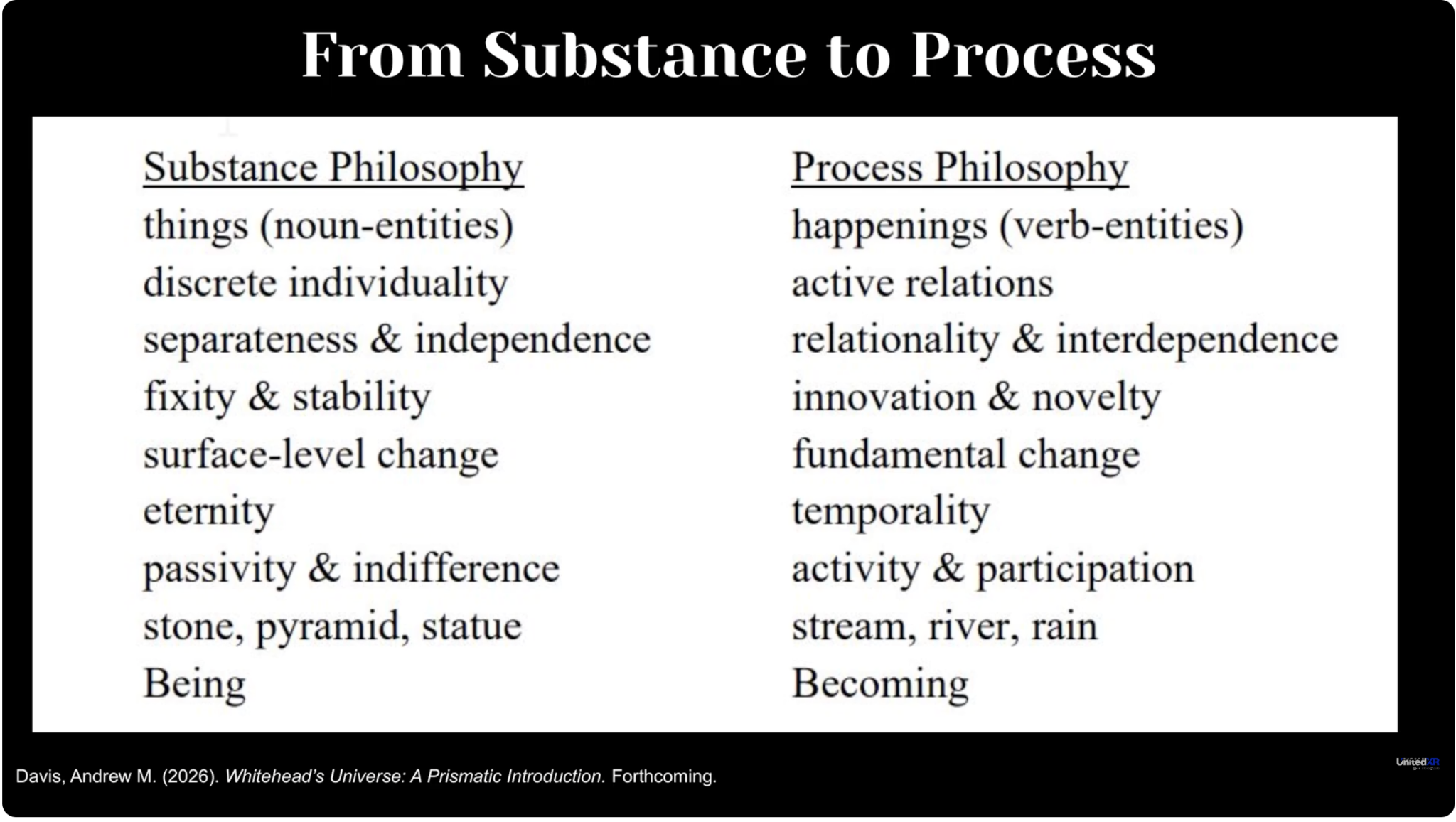
The slide is based on the work of process philosopher and theologian Dr. Andrew M. Davis, specifically serving as a visual graphic for his book Whitehead’s Universe: A Prismatic Introduction (published by Orbis Books). 

Protocol Art

In NOOR’s work, the artist becomes a protocol designer, creating the conditions for others to instantiate endless variations of the work. 

The Protocol is like the recipe, the stage, the score, the spec, the scripts, the primitives. The Instantiation is like the dish, the mixed outcome, the expression, the combinations of primitives. In that sense, Protocol Art is about delegating the instantiation. The artist becomes the composer. See also my 2019 post on “who is the composer?”

Which leads to another question: who is the instantiator? It can be craftsmen, it can be the audience, it can be machines, it can be Agents. In a sense, this is not new; already in the 17th century, Rubens was running his studio: the master has pupils working in his style, working with his protocols of mixing paint, making brushstrokes in certain ways, etc

Protocol Art expands this practice and gives attention to aspects like “Pattern Integrity”, “Style” of instantiation, etc. Christopher Alexander, anybody?

Agentworld and Superdark Factory

What if we also start delegating the work of the protocol composer, the architect of the experience? You would get something that resembles The Superdark Factory or the Agentworld of Antikythera.
In Superdark Factory (dark or superdark as in illegable, not-understandable), the Antikythera authors argue that the historical evolution of software engineering has reached a critical inflection point where conventional, human-governed software pipelines—characterised by manual oversight, explicit logic specification, and step-by-step human verification—impose severe structural bottlenecks on throughput, operational speed, and systemic capability. 

Achieving a true step-change in productivity demands surrendering the requirement for direct human supervision within operational feedback loops, delegating both execution and architectural decision-making directly to computational machinery.

The Superdark Factory represents the limit case of this transition: an extreme, self-directed, recursively self-optimising software ecosystem. Operating as an autonomous abstract machine, the Superdark Factory independently formulates its own ambitions, designs and constructs the machinery required to pursue them, and continuously restructures and refines its own operations—without human intervention within its feedback loops.

Rather than merely executing static instructions, the Superdark Factory automates production at the level of determining what is worth producing, continuously generating new internal versions of itself to satisfy ambient imperatives. It is a “versioning regime that measures what the factory does rather than what it is”

In the Superdark Factory, we let the machine decide what is worth building.

What is worth measuring?

The world is in flux. Always has been. Maybe faster now than in the past, maybe at a different clock speed, incomprehensible and illegible for humans.

How can we measure flux? How can we measure becoming? How can we measure flow? How can we measure computation-in-action? Do we measure pattern integrity? Style? Direction (in many senses: backward/forward, progressive/regressive, moral/amoral, etc.)? Who sets the norms? Tech companies? A new kind of institution? 
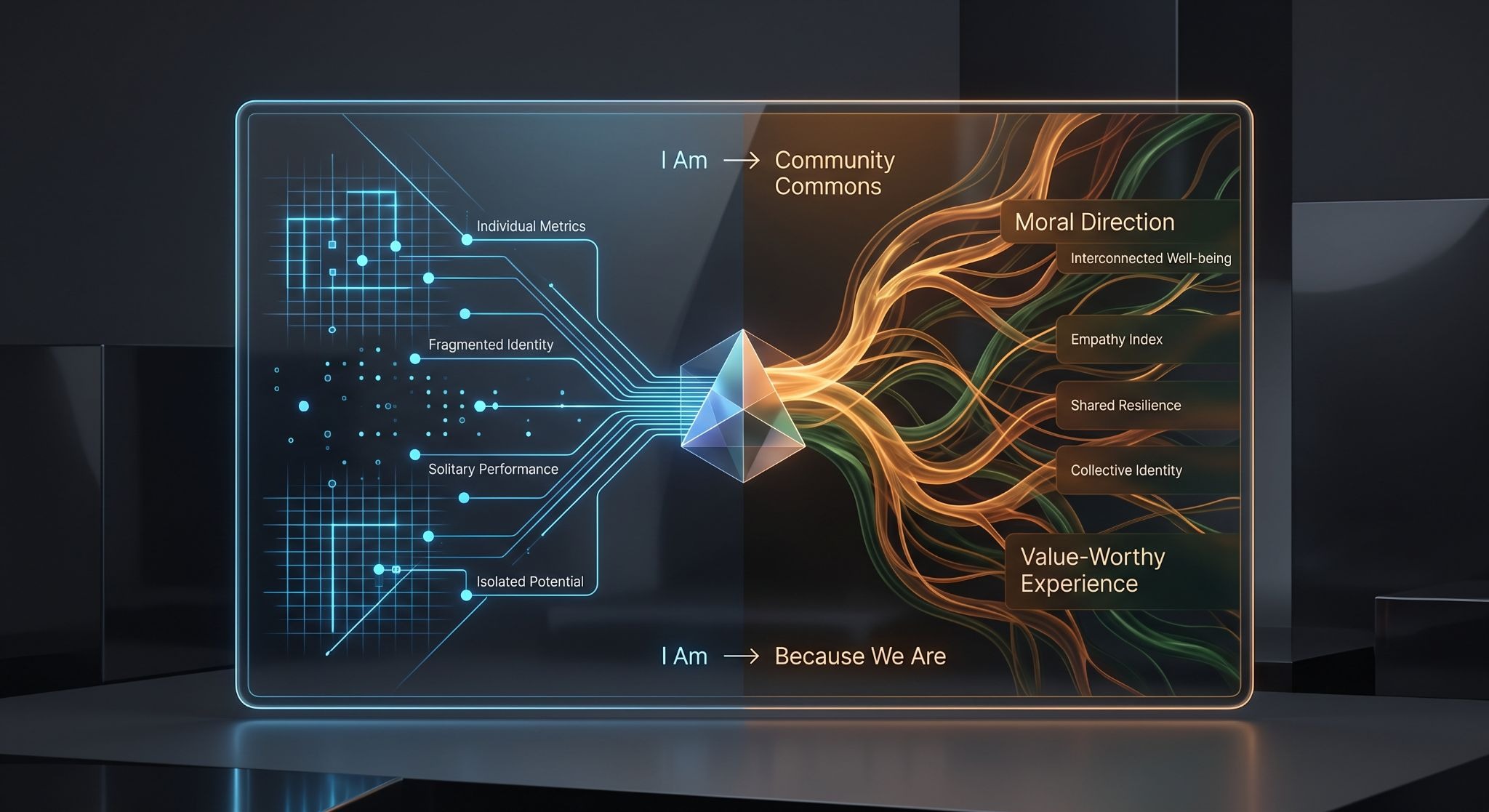
What do we consider as “valuable”? Should value be based on Western individuality? Or on communities/commons principles like Ubuntu or Hunhu? This AEON article was an eye-opener for me. Instead of focusing on trustworthy infrastructures, wouldn’t it be wiser to strive for value-worthy experiences, based on the social/cultural “needs” of humans? Values such as identity, reputation, community, and now maybe also values such as becoming, pattern integrity, and everything on the right side of the Whitehead/Davis slide?

There is no definitive answer. This post is an invitation to debate and conversation. But I find myself excited by the possibility of moving beyond the measurement of the static—the “being”—towards something that captures the dynamic, emergent quality of “becoming.”
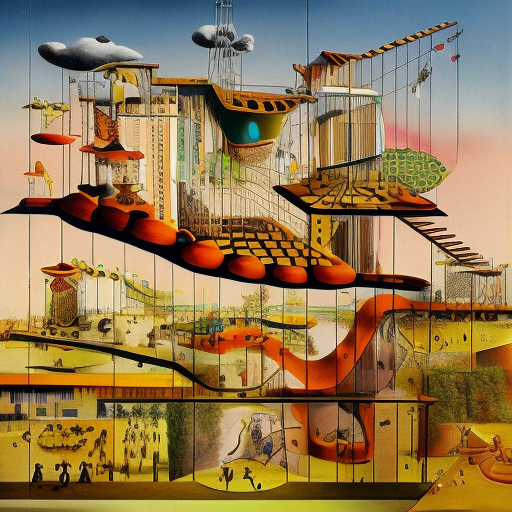
New New Babylon Project – Sep 2026 update

For a general introduction to the New New Babylon Project, please check out the project page.

We are now in the grant phase. The deliverables for this phase are:

  • An AI-Based Analysis of Supporting, Contradictory, and Complementary Resources
  • An artistic XR rendering of a New New Babylon on top of an existing city or city district
  • Art Expo (minimum Online, ideally IRL) 
  • Art Book

I am trying to get the first two done, or at least well-developed, by year-end.

AI-based Analysis

I have been experimenting with Google’s NotebookML – now Gemini Notebook. I uploaded some 70 resources about:

  • Constant’s New Babylon from 1950ies
  • 21st-century criticism of his work
  • Architectural reflections about urbanism
  • Urbanism and memory research from the Protocol Institute
  • Some cybernetics material related to Gordon Pask and his conversational protocol

Gemini Notebook generated the following summary, but it seems to miss the cybernetics material – at least in this summary – but this is probably due to the 50-source limit under the free plan.

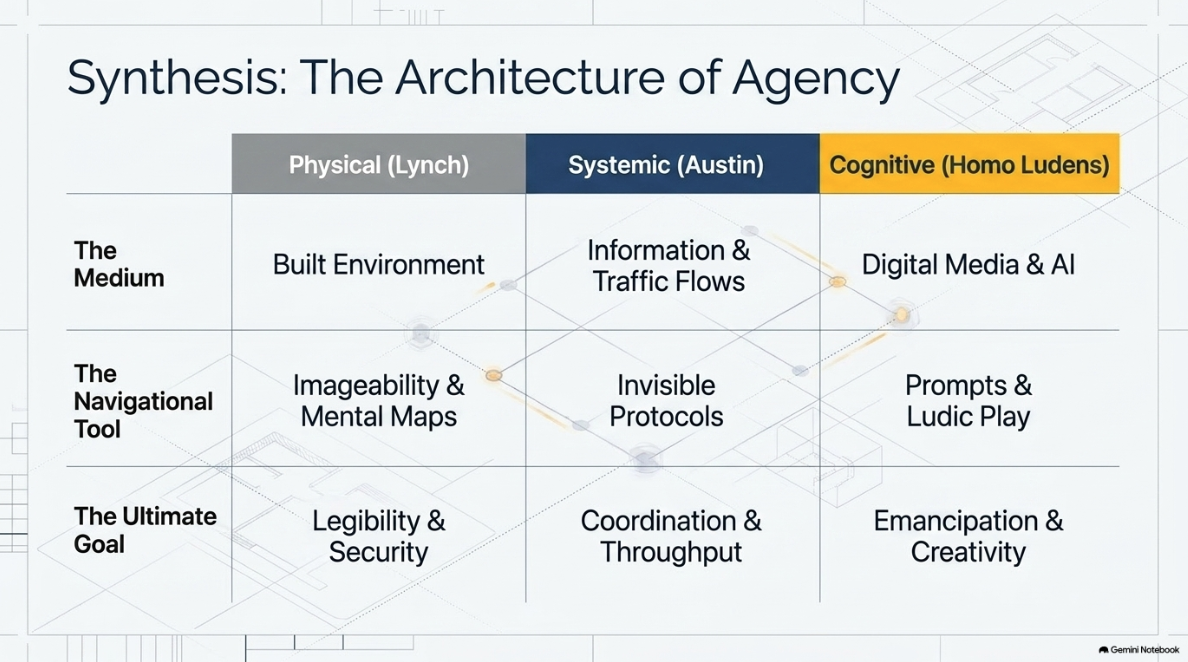
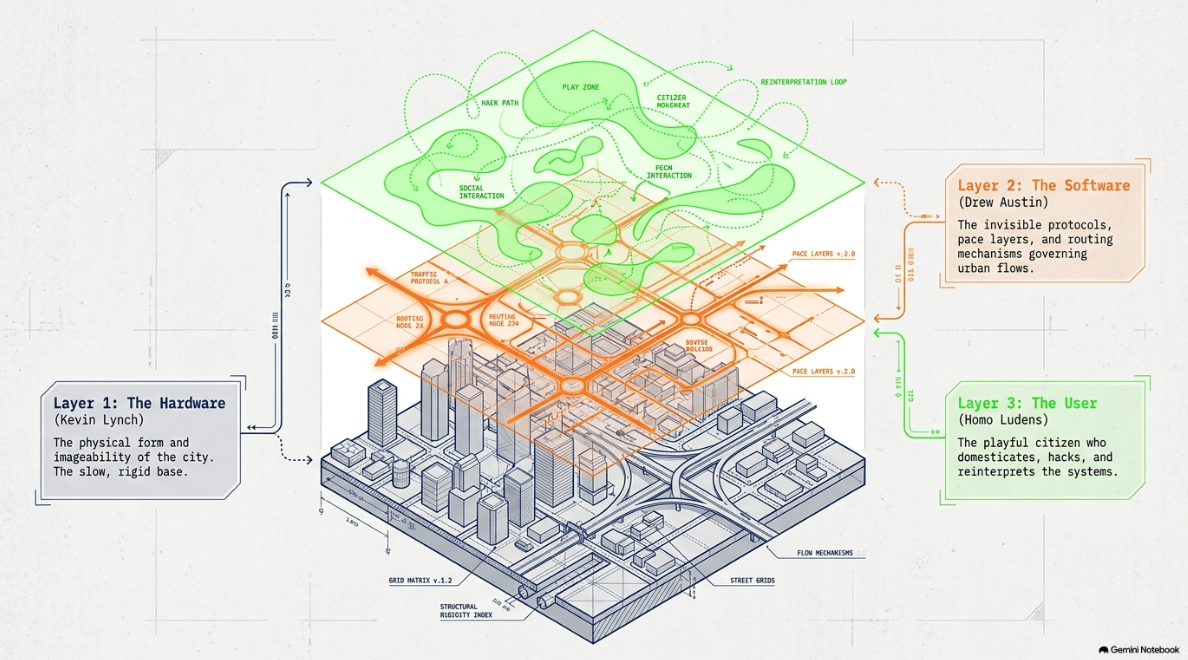
“These sources explore the intersection of urban design, digital media, and human identity, primarily focusing on how play and structured environments shape our perception of the world. Kevin Lynch introduces “imageability” to describe how clear physical layouts, such as paths and landmarks, help residents build mental maps and feel emotionally secure. Building on this, Valerie Frissen and others examine “Homo Ludens 2.0,” a concept where digital connectivity and gamification allow users to experiment with their identities within virtual landscapes. Drew Austin bridges these ideas by analysing protocols, like the urban street grid, which act as invisible “software” managing the tension between rigid infrastructure and fluid human behaviour. Together, the texts suggest that whether through physical architecture or digital platforms, the rules and forms governing our surroundings profoundly influence how we navigate, create, and relate to one another. Overcoming protocol failure or urban chaos requires a deeper understanding of these interactive systems and their impact on the human experience.”

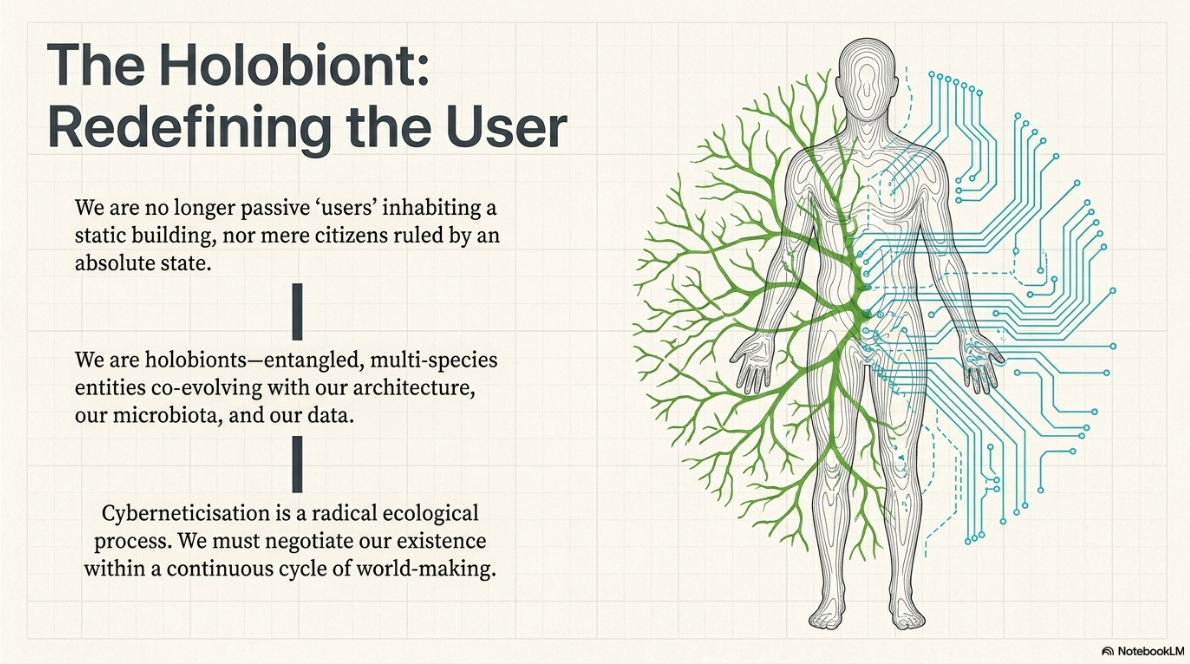
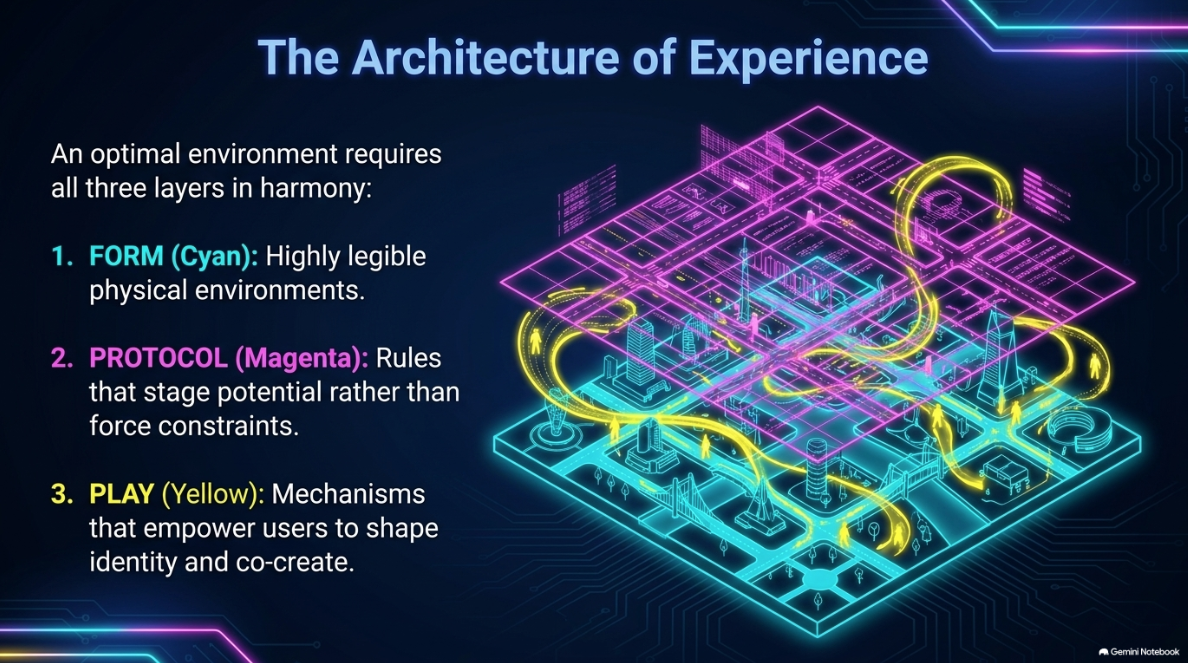
Gemini Notebook generated some very interesting reports, slides, visuals, and blog posts that I will share on this blog in the coming weeks. Below are some teasers.

The last one – “The Architecture of Experience” – is particularly interesting, as it goes well with the work I have been doing with Andreea Ion Cojocaru on “Home Experience”. See also our joint talk for UnitedXR Europe in December of last year.

Artistic XR rendering test case Ghent

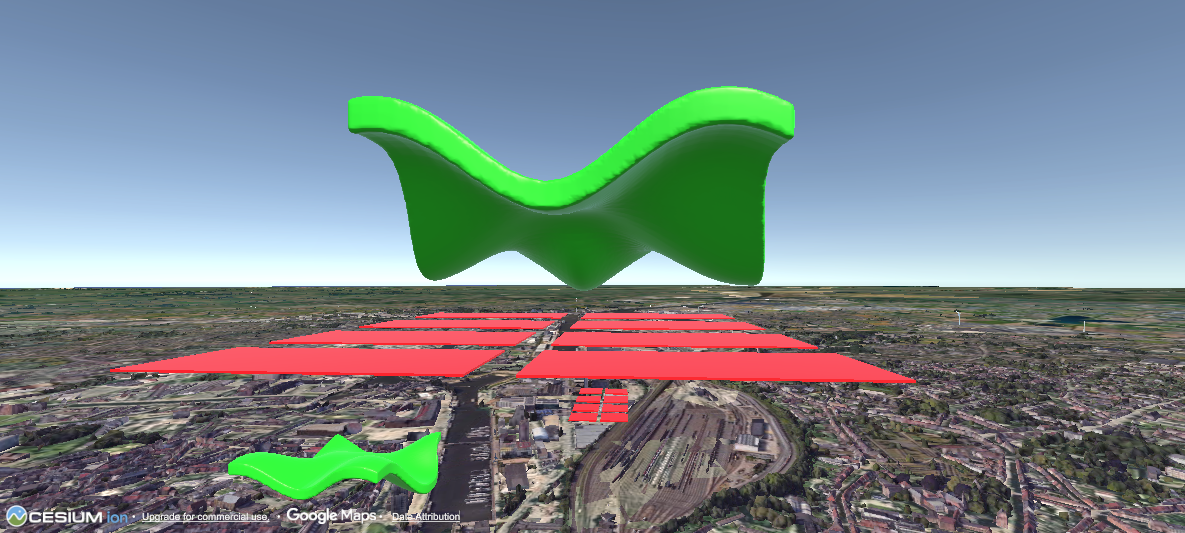
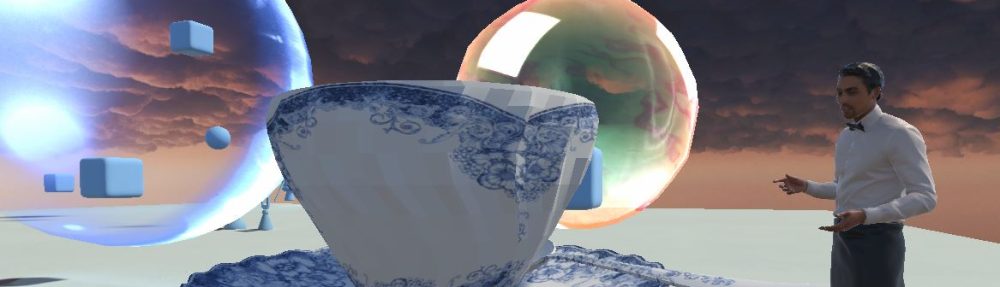
The idea here is to virtually create a layer – the city of play – above the city of Ghent (could be any city in the world). I am experimenting with the Cesium open platform for creating powerful 3D geospatial applications. Testing in both the Unity and Unreal Engines. The plan is for the layered city of play to be composed of self-sculpted shapes, created in Blender or Nomad Sculpt. Ideally with 3D audio on top, but that is a nice-to-have. An alternative would be to leverage the material of Spectracities.

Shapes on top of Ghent – Unity Engine – © 2026 Petervan Studios
With the courtesy of Spectracities

Open Call

If you think this is interesting and want to contribute to the project – in money or in kind – drop me a note. Feel free to comment. To stay updated, subscribe to the blog.

Warmest,

AI-powered humanoid wins international competition

It’s been a while. Some of you have written, others have probably assumed I disappeared into one of my own unfinished experiments. For years, my studio was a place of images, projections, strange XR environments, and long nights chasing ideas that rarely behaved. But somewhere along the way—perhaps during retirement, perhaps during one of those quiet afternoons where nothing quite compels you anymore—I found myself tired of it all. Not of thinking, not of making, but of making that kind of work. So I did something else. I dismantled the studio.

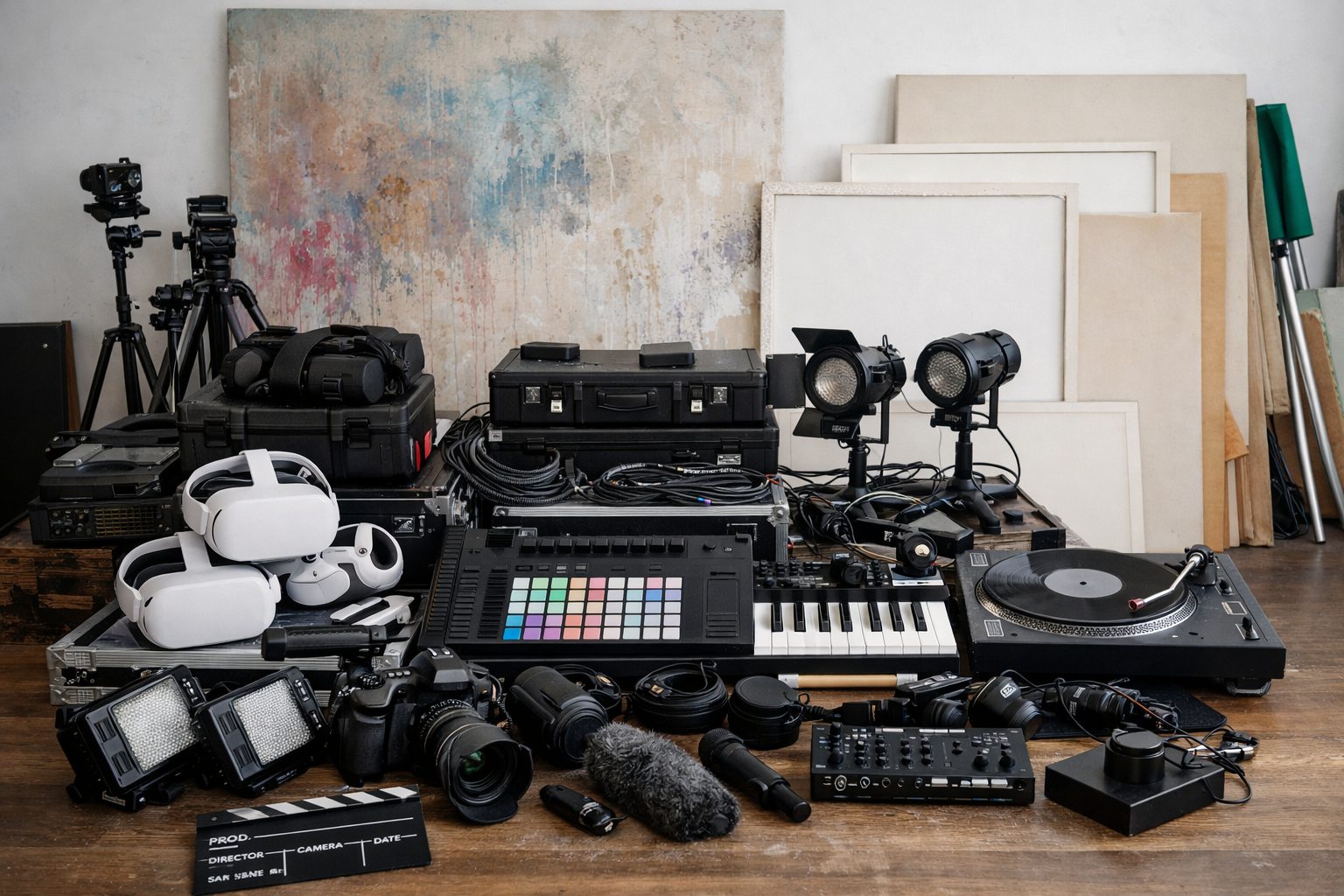
The dismantling of the studio

The cameras, the rigs, the VR headsets, the motion trackers—they all went into storage. In their place, I began assembling something far less poetic and far more absurd: a machine designed to fish. Not just any machine. A humanoid.

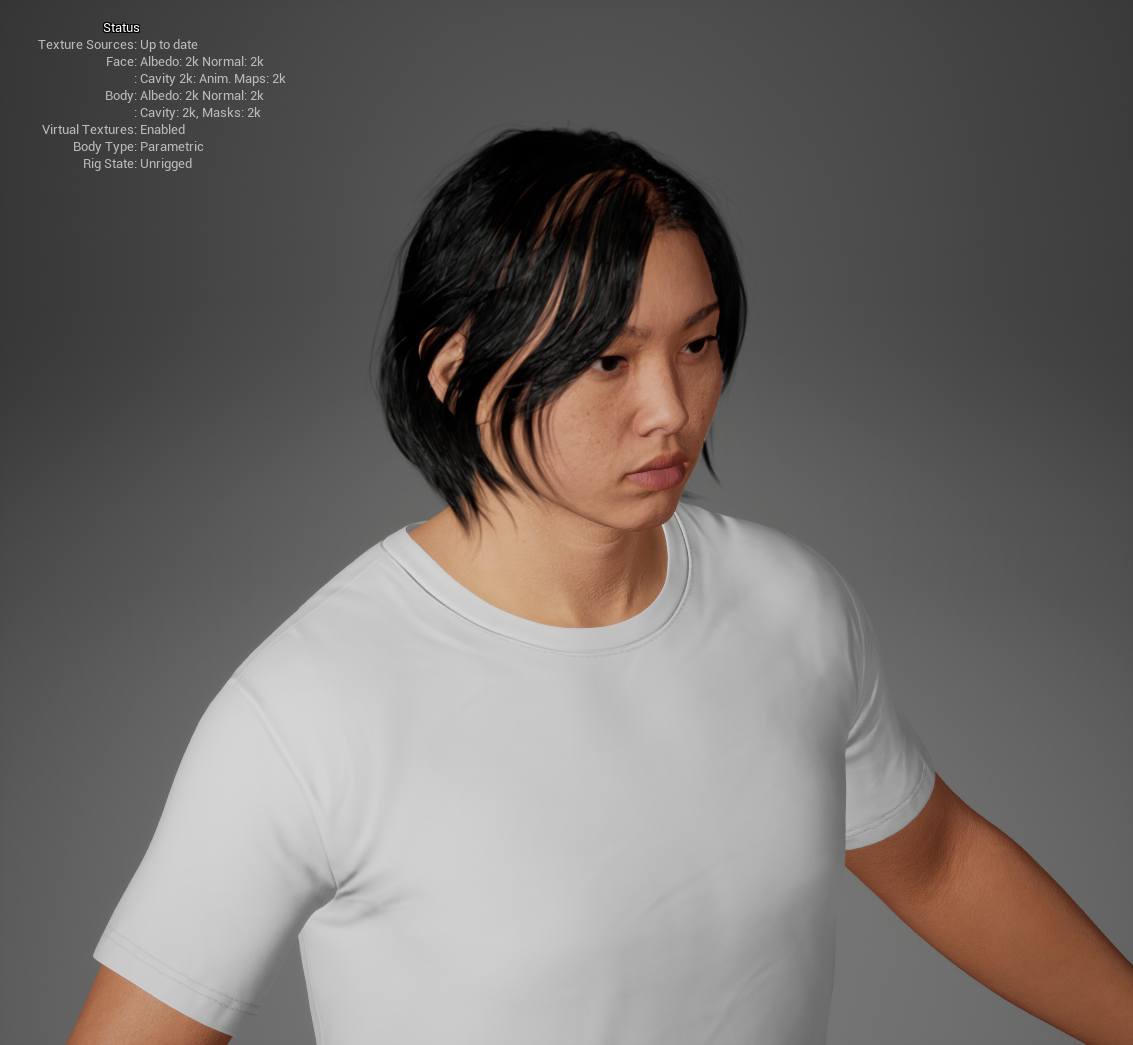
Early versions of the humanoid in Metahumans Unreal Engine

From Art Studio to Autonomous Fisher

The idea didn’t come all at once. It started with a simple irritation: I missed fishing, but not the waiting, not the cold, and certainly not the unpredictability of the Belgian weather. I wanted the experience without the inconvenience. I wanted presence without being present.

So I asked myself a question that feels obvious in hindsight: what if fishing could be performed remotely, intelligently, and continuously? That question became a project.

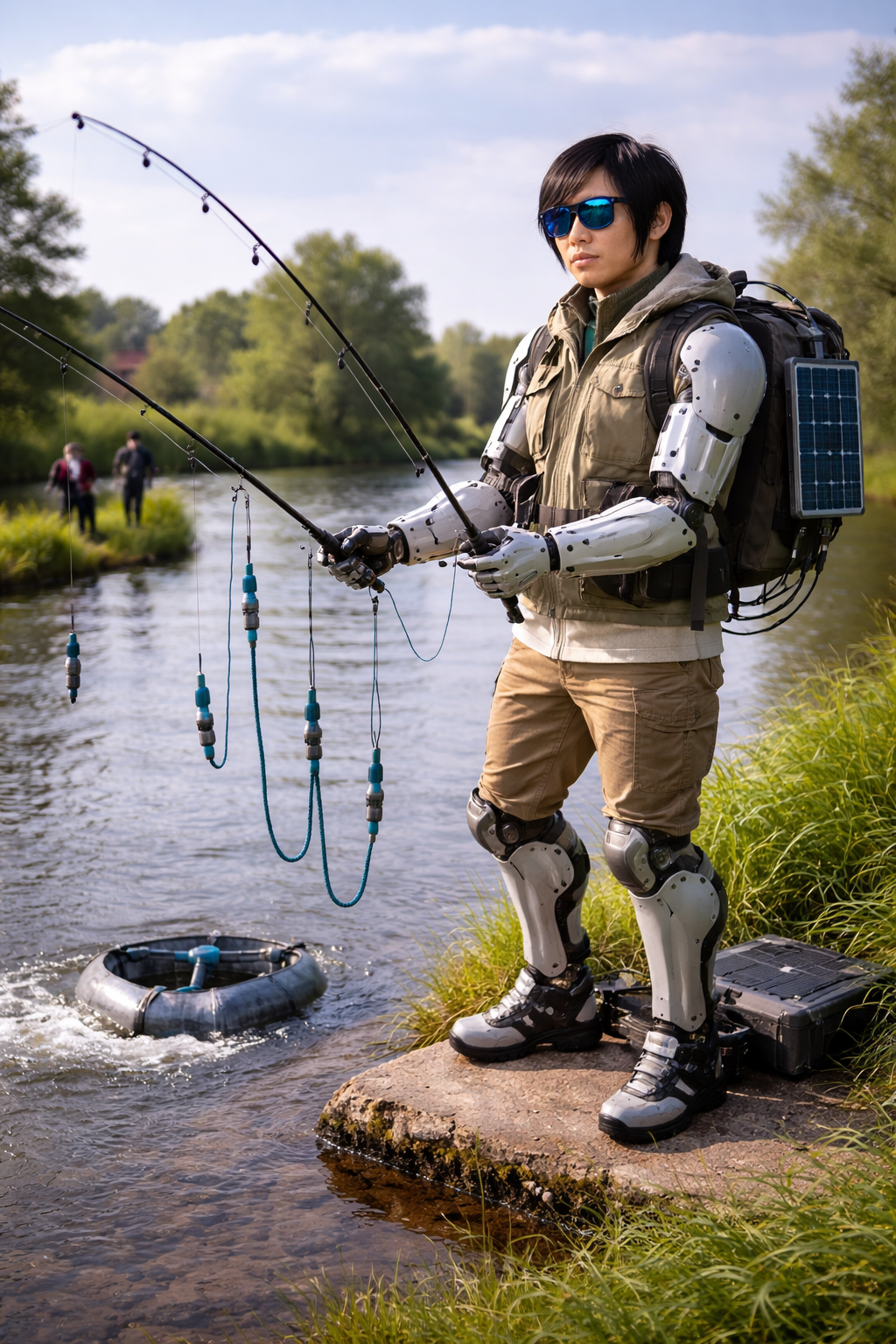
At the center of it all is a humanoid robot—roughly my height, vaguely my posture, though considerably more patient. Its frame is industrial aluminum and composite joints, designed for stability on uneven riverbanks. It stands, day and night, along the Dender river, unmoving until needed, like a quiet sentinel disguised as a fisherman.

Its brain is not singular. Instead, it runs on a cluster of four Mac Minis, mounted in a sealed, weatherproof compartment within its backpack. Overkill? Perhaps. But the redundancy allows for parallel processing: environmental analysis, motor control, bait synthesis, and remote communication all run simultaneously without latency.

The backpack with the Mac-Mini Tower

The system itself was developed with the help of Claude AI, which I used more as a collaborator than as a tool. Together, we iterated on decision trees, adaptive learning models, and behavioral responses. Over time, the robot stopped behaving like a programmed device and began acting more like a cautious, observant angler.

Energy Without Interruption

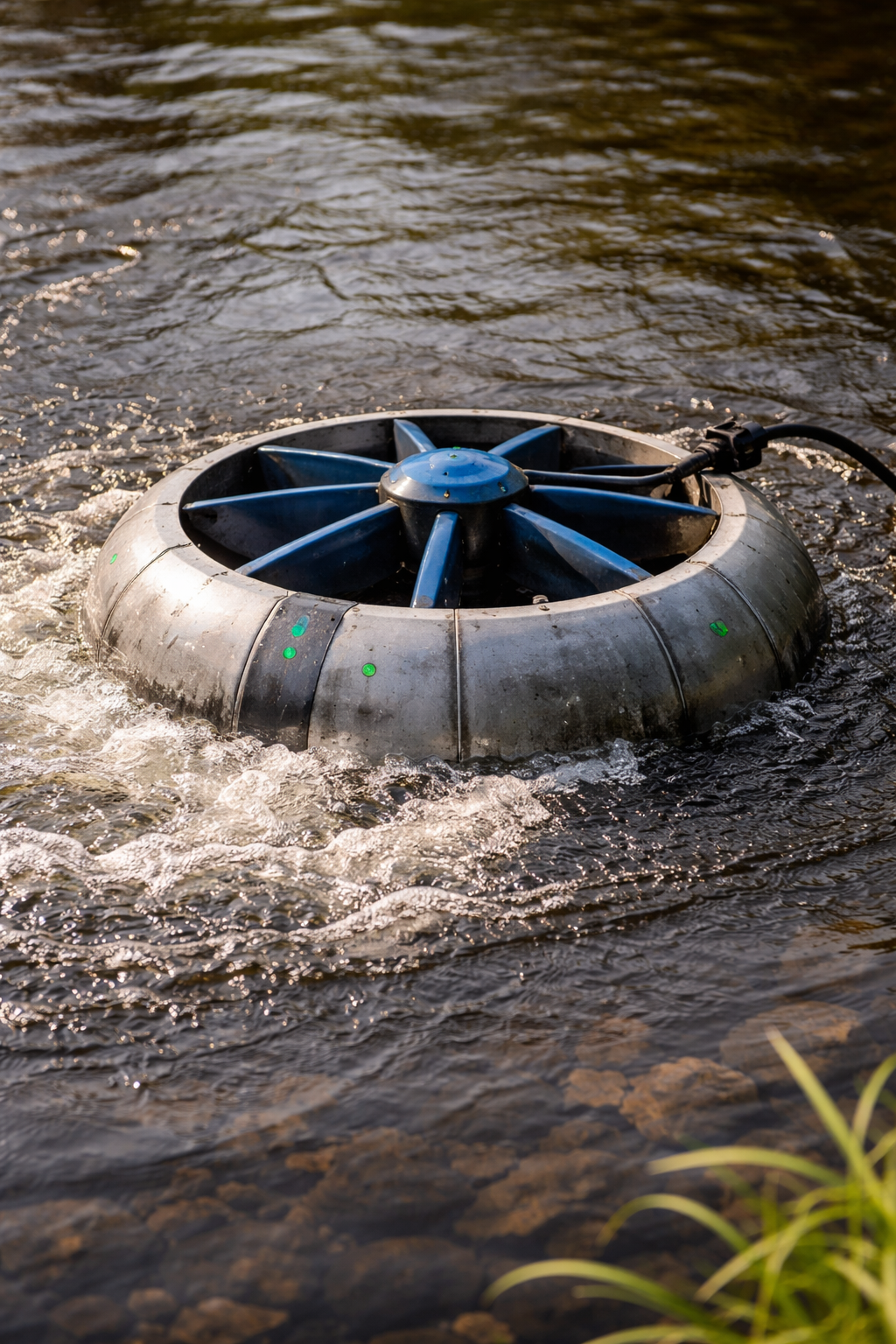
One of the early challenges was power. A machine that fishes continuously cannot depend on a wall outlet. The solution was hybrid and, admittedly, a bit romantic: solar panels combined with a micro water turbine anchored directly in the river. During the day, the panels provide ample energy, while the turbine ensures baseline power during nights and overcast stretches—which, in Flanders, is most of the year.

The micro water turbine

The result is a system that is almost entirely self-sufficient. It wakes, observes, calculates, and acts without requiring human intervention. I sometimes forget it’s out there until I log in and see what it has been doing.

Fishing From Home

Yes, you can control it remotely. That was always part of the vision: fishing without being physically present. From my desk—or, more often, my kitchen—I can connect to the humanoid’s interface and take over its movements. There’s a slight delay, but nothing that breaks the illusion. You see through its cameras. You feel (in a limited, haptic sense) the tension in the line. You decide when to cast, when to reel, when to wait. But here’s the strange part: I rarely do. Because the robot is better at it than I am.

Intelligent Bait Synthesis

This is where things begin to feel less like engineering and more like alchemy. The humanoid doesn’t just use pre-made bait. It creates its own.

Equipped with a compact mixing system—part chemistry lab, part kitchen—it analyzes environmental data and determines the optimal bait composition for specific fish species in the Dender River. It considers water temperature, turbidity, recent rainfall, seasonal migration patterns, and even subtle chemical traces in the water.

Then it mixes. Proteins, oils, plant matter, scent compounds—each combination slightly different from the last. Over time, it has developed a library of successful mixtures, continuously refining them through feedback loops. Success is measured not just by catches, but by which fish are caught, at what time, and under which conditions.

I once tried one of its recommended mixes myself. It smelled terrible. It worked perfectly.

Tentacles Instead of Lines

Traditional fishing lines felt insufficient for what I wanted this system to achieve.

So we replaced them.

A relatively complete set-up

Extending from the humanoid’s arms are flexible, twisted appendages—something between cables and tentacles. Each one houses a network of sensors capable of detecting micro-changes in water pressure, temperature gradients, chemical composition, and movement patterns.

They don’t just wait passively. They explore. These tentacles can subtly reposition themselves, probing different depths and currents simultaneously. They gather data constantly, feeding it back into the system, allowing the AI to make real-time decisions about where to focus effort.

It’s less like fishing and more like listening to the river.

The Competition

I hadn’t planned to enter any competitions. In fact, the idea seemed almost unfair. Pitting a continuously learning, sensor-rich humanoid system against traditional anglers felt like entering a calculator into a mental arithmetic contest. But curiosity got the better of me.

The international fishing competition on the Dender river is, under normal circumstances, a quiet affair—serious participants, careful techniques, and a shared respect for patience. When the humanoid arrived, it attracted attention, then skepticism, and eventually mild irritation.

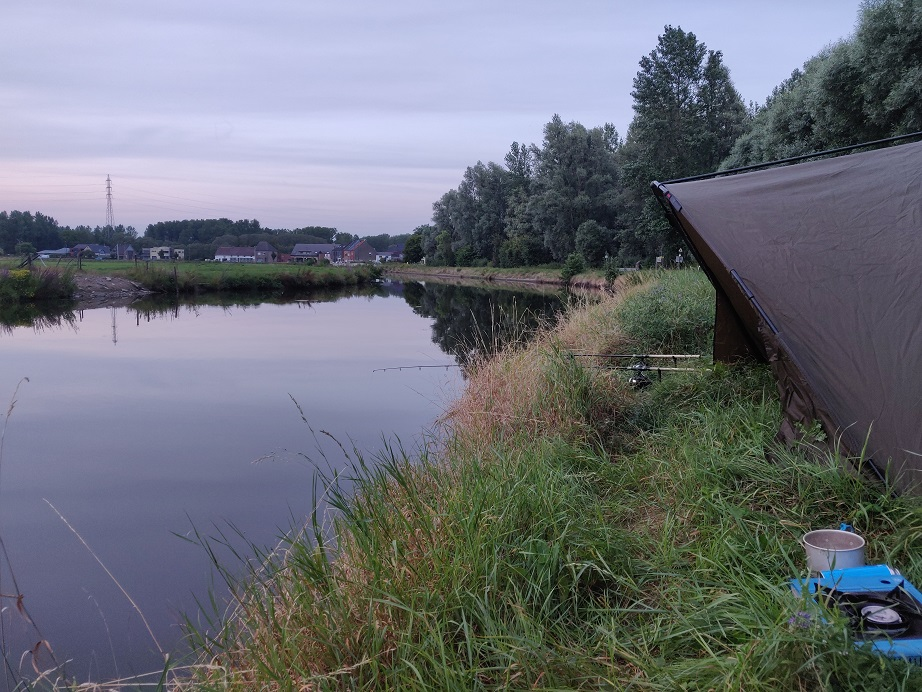
The quiet location for the competition

It stood there, unmoving, as others prepared their gear. And then it began. Over the course of the competition, the robot adjusted constantly. It shifted positions, altered bait compositions, and fine-tuned its approach based on conditions that changed hour by hour. While human participants relied on experience, intuition, and occasional luck, the humanoid relied on continuous analysis.

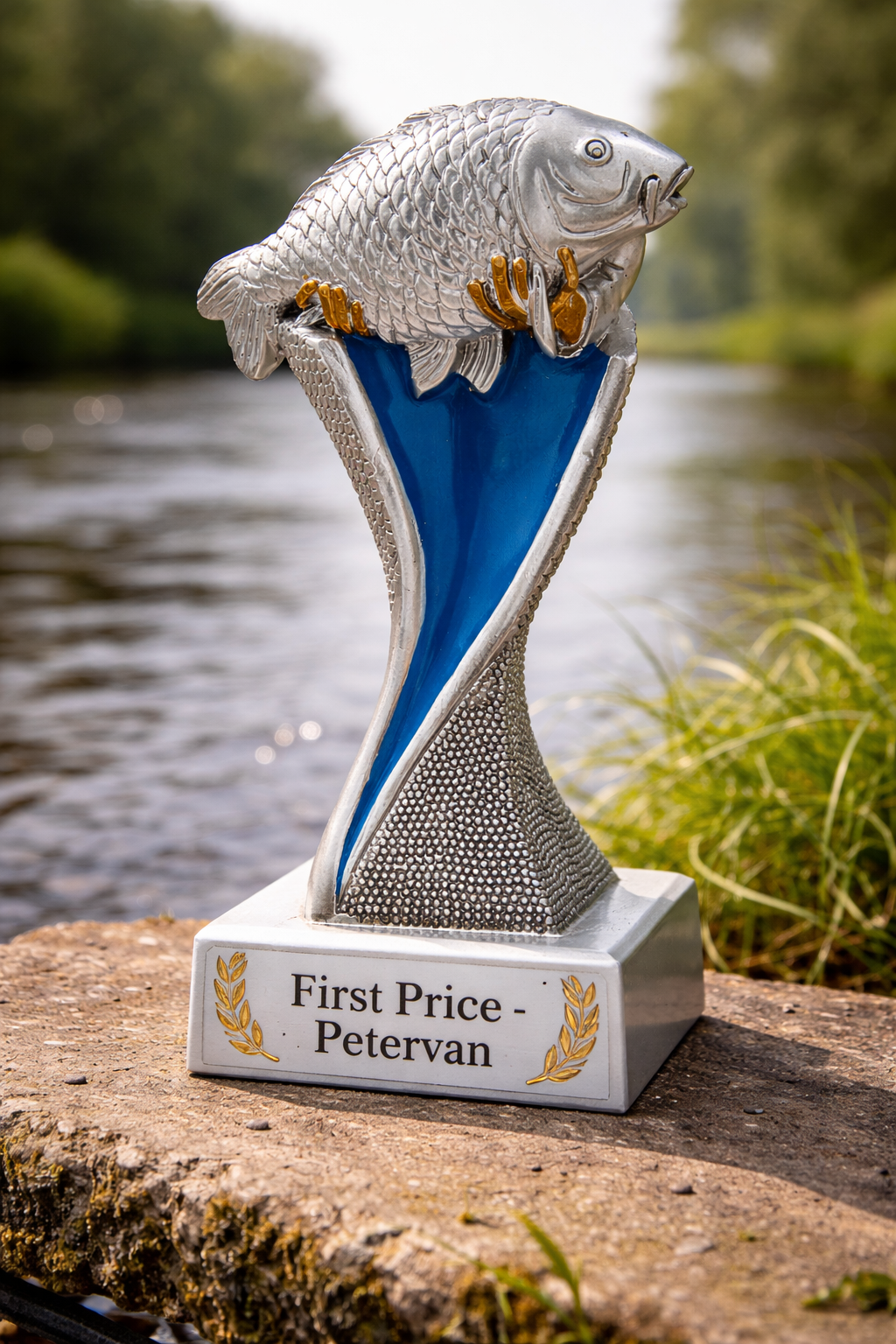
By the end, the results were undeniable. It didn’t just win—it dominated. First prize.

The Award

What This Actually Means

I’ve been asked whether this is still fishing. It’s a fair question. There is something inherently human about sitting by water, waiting, thinking, doing very little. This machine removes much of that. It replaces stillness with computation, patience with optimization. And yet, I find myself more connected to the process than before.

Not because I am physically present, but because I have built something that observes more deeply than I ever could. It notices patterns I would miss. It reacts faster than I could. It learns in ways that feel both mechanical and strangely intuitive. This is not a replacement for fishing. It is a transformation of it.

What Comes Next

The humanoid still stands by the Dender. It continues to learn. I continue to watch. Sometimes I take control, just to remember what it feels like. Most of the time, I let it do what it does best. I didn’t expect retirement to lead me here—to a machine that fishes better than I ever did, powered by sun and water, thinking with the help of artificial intelligence.

But then again, I didn’t expect to stop making art either. Perhaps I didn’t. Perhaps this is just another form of it.

Performance “Claim Your Cybernetic Word”

A new Petervan performance lecture “Claim Your Cybernetic Word” is in the making, to be delivered 100% remotely during the 60th anniversary of the American Society for Cybernetics in mid-June 2024.

Extract from Petervan Performance “Claim Your Cyberbetic Word”

Below is the official abstract of that session:

An engaging conversational workshop crafted to elicit compelling language that embodies the human elements within cybernetics. Attendees will be encouraged to participate actively by offering cybernetic terminology, which will be visually depicted in an immersive cloud-like interactive video installation accompanied by a bespoke soundscape. The session opens with an artistic cinematic cybernetic dream sequence. Through facilitated brainstorming sessions with the audience, participants will have the ability to fine-tune word generation. They will discuss the Paskian Knobs required to steer randomness and the style of the outcome. The session closes with a cinematic cybernetic song outro. The total duration is between 45-60 minutes. This session will be delivered remotely with remote interactions with the audience. An experience room is available for on-site participants, allowing them to engage collectively in this conversational setting.  Please access the session 10 minutes before the starting hour, as the performance already starts during the virtual walk-in of the audience when visual and auditory segments set the stage for the experience.

Some friends who have seen an early dry-run version describe it as an “immersion” or “a trip”.