Petervan Studios – Update Feb 2022 – The Scaffold

Here is the latest update on Petervan Studios. The previous update already goes back to June 2021.

The family is good. Somehow, we managed not to get infected by the virus. We all got boostered and respected safety measures to the max. Most of my time, I spent home in my studio and only came out for some grocery shopping, some visits to art exhibitions, and delivering the taxi service to my daughter’s school and horse stables. Zero travel since October 2019, but I cannot say I miss it.

At this moment, it looks like we are getting out of the woods of the 5th Covid wave, and measures in Belgium are getting relaxed. Partying is allowed again as of 18 Feb 2022.

More importantly: my father is still alive and kicking, and he celebrated his 90th birthday in Sep 2022!

What else?

The Bricks Project

For those who remember, this is my “zen” project. Drawing bricks in silence. Many bricks. 8,255 Bricks at the time of writing this post:

Exhibitions

Since the last update, I visited the following art exhibitions:

Luc Deleu, De Singel, Antwerp, Aug 2021

Drawing Art, BOZAR, Brussels, Sep 2021

ING Laughing Art, ING Gallery, Brussels, Sep 2021

David Hockney, BOZAR, Brussels, Oct 2021

Masculinities, FOMU, Antwerp, Nov 2021

Re-Collect, FOMU, Antwerp, Nov 2021

Rinus Van de Velde, Tim Van Laer Gallery, Antwerp, Nov 2021

Train Modernity, KMSK, Brussels, Nov 2021

Fabrice Samyn, KMSK, Brussels, Nov 2021

Pop-Art, SMAK, Ghent, Feb 2022

Chaos, Alex Vervoordt, Wijnegem, Feb 2022

Anne-Mie Van Kerckhoven, Zeno X, Antwerp, Feb 2022

David Claerbout – The Close, Brugge, Feb 2022

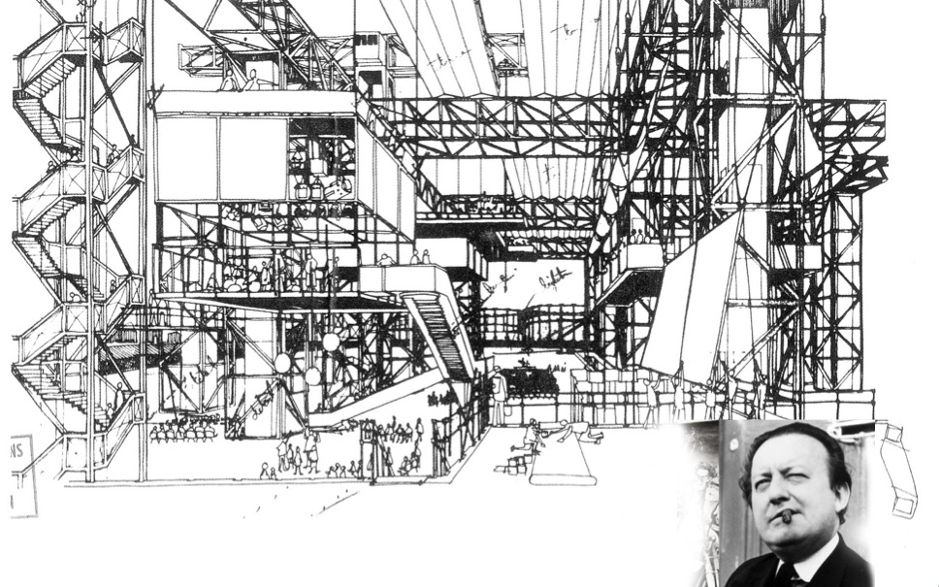
Luc Deleu inspired by Buckminster Fuller

Detail of painting by Rinus Van de Velde – 2021

Hippie Elias (Self portret) by Etienne Elias – 1970

Fabrice Samyn – Detail from Eve&Adam – 2018

Still from The Close – David Claerbout – 2022

Outdoors

Weather did not treat us well. My recollection is one of all shades of grey and lots of rain from August 2021 till Feb 2022. Only the beginning of Sep 2021 was decent. But I have some nice winter fog pictures from my strolls and bicycle rides:

Horses

Astrid made a lot of progress in horse-riding. She won the 2nd price at a local dressage competition, and she also enjoys jumping a lot.

Talking about Astrid, in Dec 2021 she celebrated her 16th birthday. Where has the time gone?

Traveling Without Moving project

Travelling without Moving (TWM) is a series of essays documenting my mental and philosophical journey in 2020-2022.

The main outline was published in November 2020, and in the meantime, several episodes have been released. Since the last Petervan Studios update, I published one more essay on “Studios”.

There are a couple more in the pipeline, but I have a hunch that these will morph into The Scaffold project (see later in this post).

Books

Check out my GoodReads: https://www.goodreads.com/user/show/3085594-peter-auwera

Some highlights

Until Proven Safe: The History and Future of Quarantine by Geoff Manaugh, Nicola Twilley

Where Is My Flying Car? by J. Storrs Hall

Reclaiming Art in the Age of Artifice: A Treatise, Critique, and Call to Action by J.F. Martel

Lichamen by Peter Verhelst

Petervan Rides

Since July 2019, I publish every month a Spotify List with new releases combined with some oldies from the 60ies, 70ies, and beyond. Search for “Petervan Ride” and select “playlists”. Subjective selection of course, as driven only by my personal taste (or lack thereof).

Here is the latest Ride from Feb 2022, still being populated as we publish this post.

I suggest you play it in shuffle mode, it enhances the surprise experience.

My Art Practice

I did not produce much artwork. I was very focused on a work-project that required all my attention and focus. I shared most of my recent art work via my Facebook page, or on this blog under the heading “Sine Parole”. Some “highlights” if I can say that about my own work:

Petervan Artworks © 2022 – Digital scribble on iPad

Petervan Artworks © 2022 – Digital scribble on iPad

Professionalisation of Petervan Studios Art Practice

As from March 2022, I will focus on the professionalization of my art practice. I have hired a coach to help me with that. We are working with a digital archiving platform with an API that is steering the show & tell of my analogue and digital artworks. There will also be an integration with a shopping environment, and an online VR exhibition environment. There is also a brand-new website for Petervan Studios in the making. This new online environment will also become the home for a new project, working title “The Scaffold”, see below

Freelance Projects

I have been deeply involved and committed as architect and head of design of an 100% on-line learning expedition running from Sep 2021 till Feb 2022. We just landed the closing session. We still want to produce a “scrapbook” that documents the journey by end Feb 2022. The experience came in two chapters. The first chapter was a technology refresh on digital identity, infrastructure, VR, Robotics, Web3, and UX. The second chapter was about developing a practice of innovation for wicked problems, and how to design for emergence in complex adaptive systems.

I had the chance to collaborate with professional facilitation and innovation partners, and a collective of “guides” – some really smart people – that helped us shape and deliver the content.

The Scaffold

The learning expedition mentioned above had a great impact on me and the way I look at “events”. I believe I am onto something that may be the start of a new “genre” of learning studios. And I have started talking and pitching to potential partners and investors. Here is the high-level pitch:

The Scaffold is a 100% online learning studio for creating new knowledge based on the passion of the explorer. 

The Scaffold can be seen as a form of Pop-Up school and/or an experimentation-based learning playground.

The Scaffold is planned as a three-year research cycle, with cohorts joining an online virtual playground for six-month intensive high-impact expeditions where together with the faculty they will create new knowledge in collaboration. 

The curriculum of the expeditions is composed of several interventions, interruptions, and provocations anchored in the reality of a client’s project. The project serves as a vehicle to trigger new and imaginative thinking. 

The Scaffold is a “scaffold” for something much bigger, something that could lead to a movement and foundation for better futures.

More about that later, probably in the second half of 2022. I hope to have a first client cohort signed-up by then.

So, in summary, whats next?

The plan for the coming months is to work/play on:

Professionalizing my art practice

Pitch and realize my project “The Scaffold”

So, that’s it for this edition. If there is something worth reporting, next update is for Sep 2022.

Warmest,
5 books to help you understand (and profit from) global trends

The time that we could organise our companies without acting too much on global evolutions lies long behind us. Leaders understand more than ever that tackling world challenges not only creates a better context for all of us to live in but also presents fantastic business opportunities. It’s why am thrilled to be one of the curators of nexxworks’ Mission NXT program, designed to help leaders turn global trends into opportunities.

For those who are truly passionate about fostering this type of outside in vision, here are five (zero bullshit) books that fundamentally changed and formed my thinking in the matter over the years.

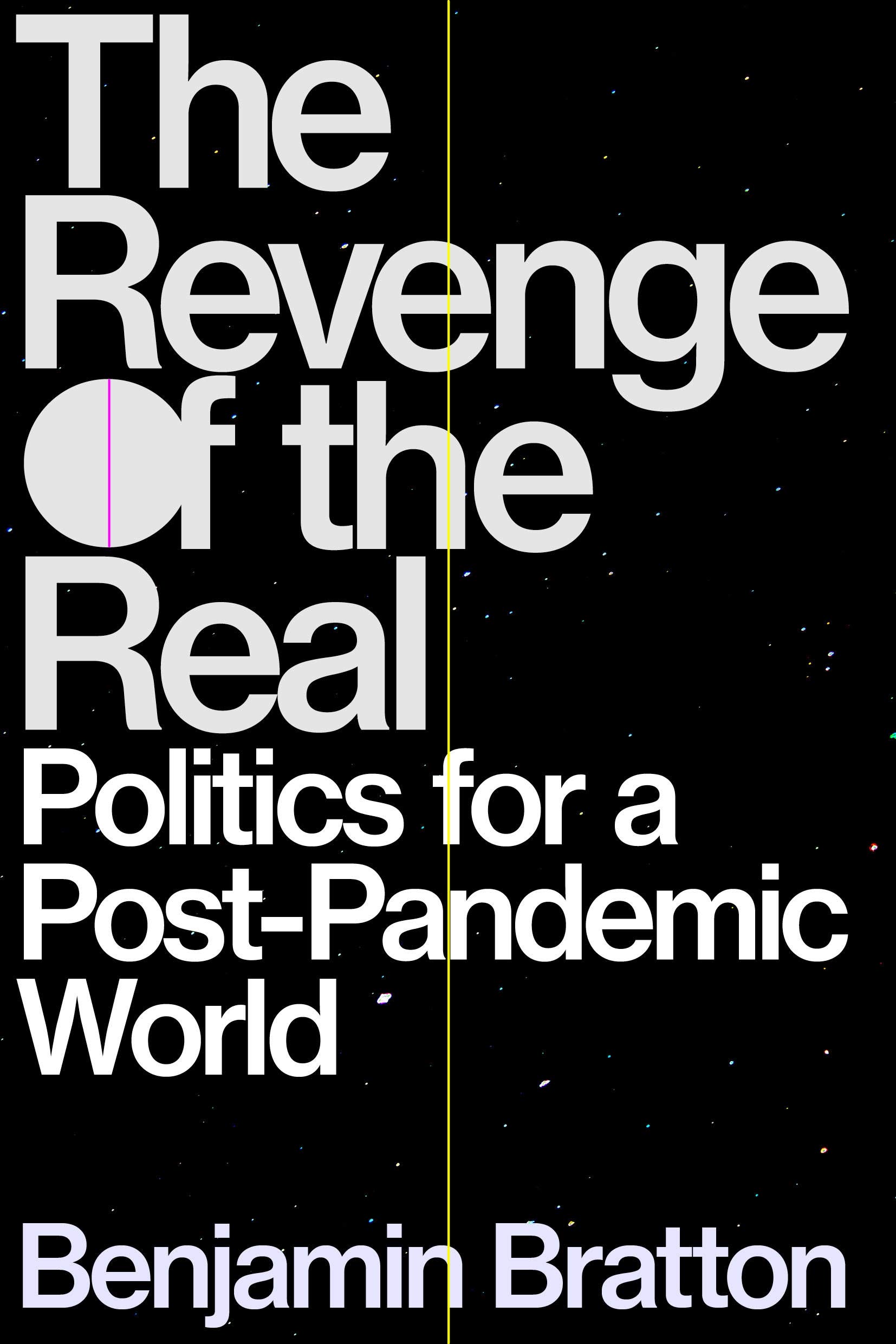
Benjamin Bratton – The Revenge of the Real (2021)

The pandemic showed us that we are completely unprepared to cope with our current deeply entangled world. According to Bratton, we need a “positive biopolitics” and an AI-based instrumentation of the world. He offers a refreshing way of thinking about sensors which is quite different from the worn out song about the surveillance state.

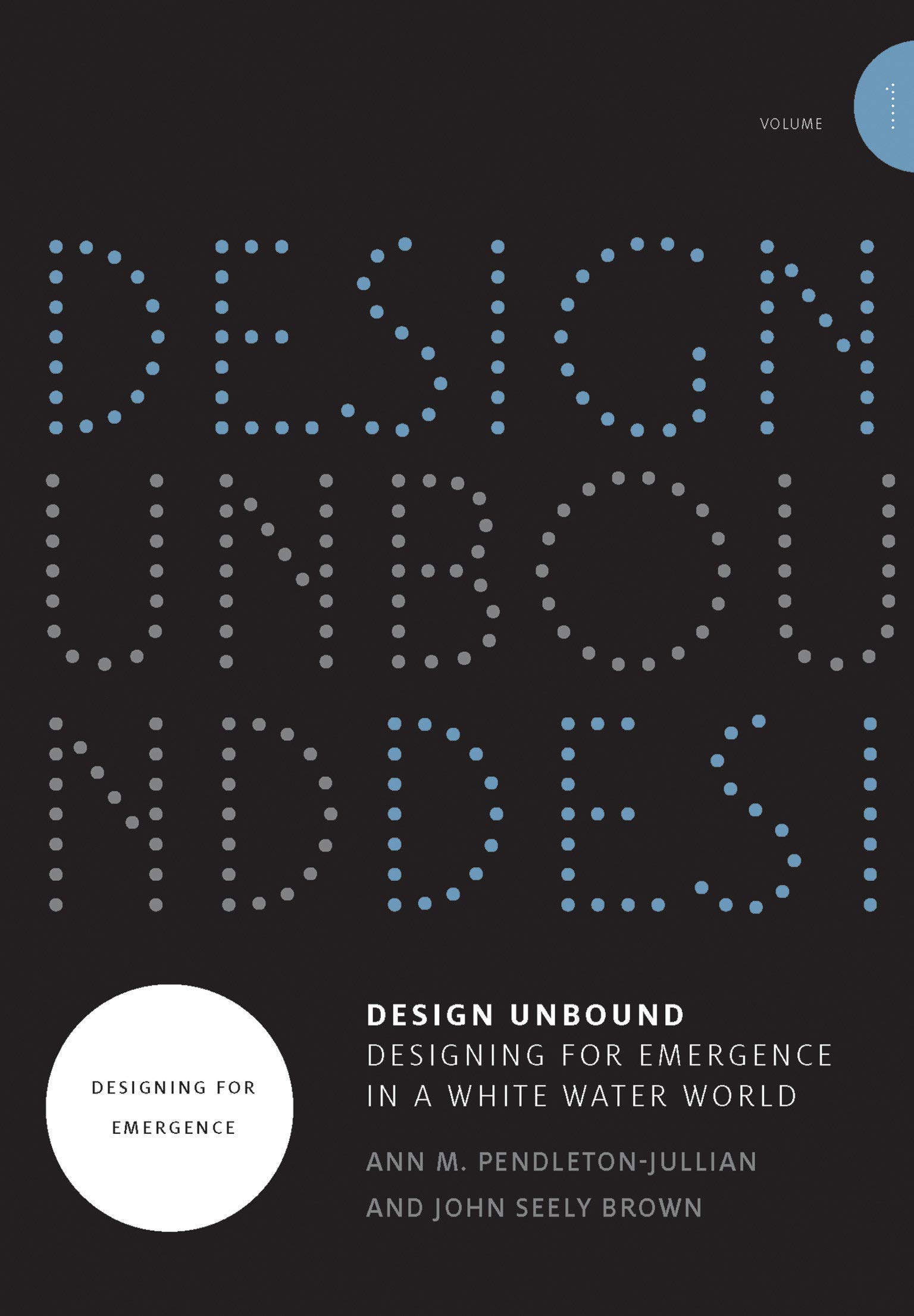
Ann Pendleton Jullian and John Seely Brown – Design Unbound (2018)

Read this if you want to understand how you can design for emergence in the Never Normal. You’ll need your full attention (it’s not a ‘light reading’ project), but in return you’ll receive two volumes of unique and well researched insights to help you better see what is and what can become. This is truly one of the most important business books I ever read.

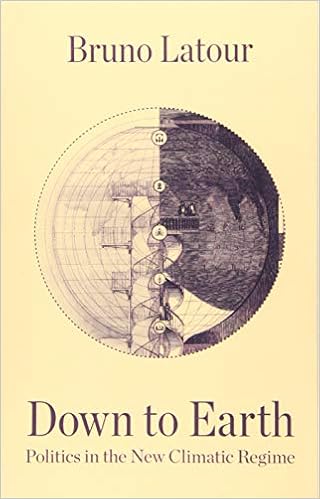
Bruno Latour – Down to Earth (2018)

Latour calls for a third way in climate politics which is left nor right: a path between libertarian globalism, and leftist localism. One that is anchored in planet earth. Read this if you want to get to know one of the most important philosophers of the 21st century.

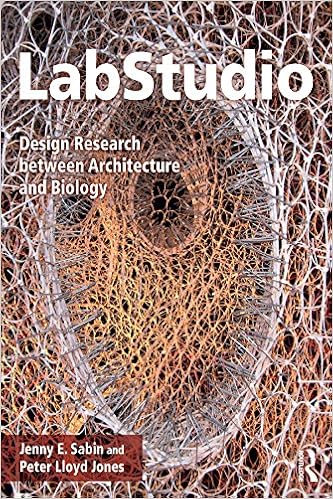
Jenny E. Sabin and Peter Lloyd Jones – LabStudio (2017)

Sabin and Lloyd Jones tackle the concept of the research design laboratory in which funded research and trans-disciplinary participants achieve radical advances in science, design, and applied architectural practice. The book demonstrates new approaches to more traditional design studio and hypothesis-led research that are complementary, iterative, experimental, and reciprocal.

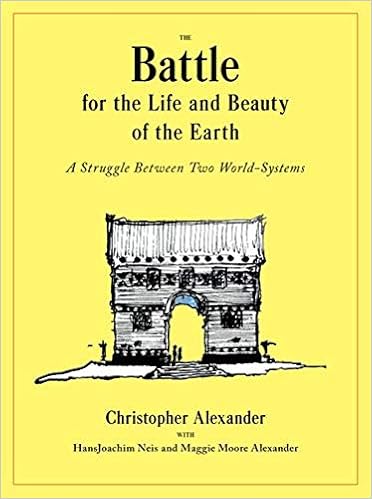
Christopher Alexander – The Battle for the Life and Beauty of the Earth: A Struggle Between Two World-Systems (2012)

This real life story of American architect Christopher Alexander designing and building the Eishin university campus in Japan serves as an analogy for the battle between two fundamentally different ways of shaping our world. One system places emphasis beauty, on subtleties, on finesse, on the structure of adaptation that makes each tiny part fit into the larger context. The other system is concerned with efficiency, with money, power and control, stressing the more gross aspects of size, speed, and profit. This second, “business-as-usual” system is incapable of enabling the emotional, whole-making side of human life, according to Alexander, who then goes on to present a new architecture.

Warmest,

This post was originally posted on the nexxworks company blog, on the occasion of Mission NXT, which I help curate

Petervan’s Delicacies – 6 Oct 2021

delicacies

As usual, an incoherent, irregular, unpredictable collection of interesting sparks. Handpicked, no robots. Minimalism in curation. There is a shitload of new stuff this month. I tried to be extra disciplined and clean out the obvious, and what you’ve probably already seen elsewhere. Spread the word. Enjoy!

If you can’t get enough of these and want more, you can hang on to the firehose, the extended version of Petervan’s Delicacies in REVUE. Also in this edition with loads of videos. Subscribe here: https://www.getrevue.co/profile/petervan

Your nexx work at nexxworks?

From time to time, I do a freelance gig for nexxworks, the company co-founded by Peter Hinssen. I am always amazed with the positive, welcoming spirit of the team.

This is a fresh, ambitious company, specialised in inspiring and connecting their customers about the Day After Tomorrow. Inspiring with examples of exponential change, immersing people in front-seat experiences with top innovators around the world, all while guiding and facilitating the questions that can activate this ambition into action.

And now they have eight (8!) open positions with quite attractive packages, including flexibility to work from home, interesting fringe benefits such as an electric company car, a sharing mobility solution, (e-)bike, laptop,  budget for a smartphone, international phone subscription, insurance packages, meal vouchers, etc.

If you are looking for a great job at one of the coolest companies in Belgium, this may be your chance. They call the world their home. If I was not retired, I would not hesitate a minute.

The nexxworks’ office building is in the middle of the student district of Ghent (Overpoort/St Pietersplein), close to sport, shops, public transport, lunch spots, … The completely refurbished iconic building was designed in 1930 by architect Fernand Brunfaut (°1886-†1972) for the editorial HQ of the newspaper “Vooruit”. Cool office space, kitchenette, meeting places, there is even a video studio for A/V productions.

Have also a look inside:

Some great team values as well:

  • Witty
  • Go-getting
  • Open-minded
  • Challenging
  • Positive

Eight vacancies. Maybe one of them is your nexx work. At nexxworks.

All info here: https://work.nexxworks.com/

Phoenix organisations in the financial industry: where are they?

It’s FinTech unicorns all over the place these days. But where are the Phoenix organisations in financial services?

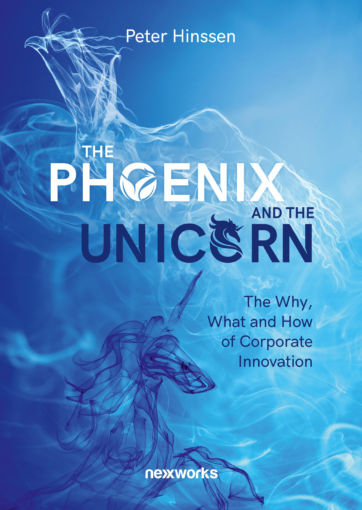
Keynote speaker and author Peter Hinssen wrote a book “The Phoenix and the Unicorn”, and he is going to interview me about phoenix organizations in the financial industry for his blog in a few days.

As a big believer in the power of the network, I was wondering what your favourite phoenix companies were in banking and finance: those type of long lived companies that were able to stay relevant by reinventing themselves on a regular basis through business model, market, service and product innovation? Examples (in different industries) would be Walmart, Microsoft, Ping An and McDonalds.

It you take part, it would be great if you could suggest a company name and why you consider them a successful financial industry phoenix. To keep it simple and straightforward: just use the comments section of this post.

You’ll receive an e-book copy of Peter’s book ‘The Phoenix and the Unicorn’ if your suggestion makes the top 3!

Travelling without Moving – Unbound

Tod Williams Billie Tsien Architects Studio – Photo by Peter Arnold 1998

This post is part of a series of essays bundled under “Travelling without moving”.

Intro of that series can be found here.

The plan/ambition with this series: to share where I have been the last year, what I learned, where I am going, and what is required.

The broader quest is to discover what is required to enable real change.

After the Anxious-post of begin Feb 2021, we continue with “Unbound”. Unbound from thingness that is.

Unbound comes from “Design Unbound”, part of the title of the book (actually two volumes) written by Ann Pendleton-Jullian (APJ) and John Seely Brown (JSB) and published in 2018.

The full title is “Design Unbound: Designing for Emergence in a White Water World”.

I am blown away and intrigued by the insights: this is about having agency in a world that is constantly shifting under you. It is so refreshing after all those business-, management-, leadership-, and self-help-books. It has become a healthy addiction: I am basically reading and re-reading and deeply internalizing everything that Ann Pendleton has written in the last couple of years. I have been haunted by this book. Ann and John put a spell on me.

This book is a game-changer. I highly recommend it.

After a first read/scan of the two volumes, and after a kind introduction by Jerry Michalski and John Hagel, I had my first (online) conversation with Ann and John on 27 May 2021. I wanted to explore a partnership for building a workshop on BANI and work with Ann and John on the response to Anxious, which was related to having agency on a world that is in constant change.

Ann initially very politely declined, but I insisted, and since then we have worked and are still working together on some NDA projects. We now have several calls per month.

How naïve I was at that time. I thought I understood, but Ann very kindly let me discover my own mind-bugs. She also pointed out my reductionist thinking around BANI. She also let me discover other resources and deep-dives to let me internalize what this was all about. The last couple of months have been a humbling experience.

I will not even attempt at summarizing the book.

I just would like to spend some time on the “Unbound” aspect of the title.

The initial title of the book, I learned, was “Architecture Unbound”.

Ann is a practicing architect.

You may discover that she co-designed the house of Carl Sagan. He hired Atelier Jullian and Pendleton, whose principal, Guillermo Jullian de la Fuente, had been a student of Le Corbusier.

The architects designed a new, separate residence for Sagan in Cayuga Heights, and prepared an extensive, two-stage redesign plan for the tomb to turn it into a study for him and his wife.

Carl Sagan house – Cayuga Heights – Picture Durston Saylor in OfHouses

In the book, Ann is applying the practice of an architecture studio to other things than buildings.

Tod Williams Billie Tsien Architects Studio

In the video above, you see how architects work together as a family. Where working and failing together – almost as a practice of group-vulnerability – thrives on experimenting and rigorous critique.

Ann describes similar practices of architecture studios and applies them to unboundedness.

Unbound from buildings.

Unbound from things.

The architect as a context designer.

The role of critique in an architecture studio.

The role of Game Play and Game Design

We’ll look into some of these aspects in some subsequent posts in this Travelling without Moving series.

If you want a quick intro (two times 90 minutes) to the work of APJ and JSB, here are two video-vignettes that Ann and John recorded for the IFTF Foresight Talk Series

The main points covered in these two videos are: white water world, pragmatic imagination, from Newton to Darwin to Ecologies, Design for Emergence, Systems of Action, and World Building.

But there is so much more in the book, and the material is so rich, so nuanced, so dense, that I very much invite you to read it, not once, but twice, ever three times.

This is just pure-gold material for anybody who is active in corporate innovation initiatives.

It helps you reset and forget and go way beyond your tactical thinking about startup bootcamps, corporate venture funds, MVPs, Lean, Agile, platforms, ecosystems, and other blah.

You don’t need a head of innovation.

You don’t need an innovation team.

You need a squad that is trained to design for emergence and to tackle wicked problems.

This is about seeing the world differently – a world in constant change – and about seeing the dispositions of the system and designing the contexts for emergence and agency in these complex systems.

Together with Ann, I am working with Hamilton Ray from Collective Next and Amber Case on a Pirate TV episode on Design Unbound.

We plan to release the video before summer. We aim to condense the key insights of the book into a 45 min, a sort of non-commercial trailer for a learning journey that is being put together. The video will be provocative enough to stand on its own as a coherent learning opportunity.

Next time we’ll talk about “Foam”, a way of looking at and reflecting about the world as suggested by German philosopher Peter Sloterdijk.

Hope you stay on board.

Warmest,

Play Drives Change

Kanaal Site – Axel Vervoordt – Wijnegem, Antwerp

For the past years, I have been on a quest to discover what is required to enable change. I try to avoid glorifying terms like “deep”, or “meaningful” change. What we are after in the end is just “good” change, right? In my opinion, good change is change that leads to ethical, moral and spiritual advancement. All the rest follows: profit, happiness, communities, and networks of returning customers.

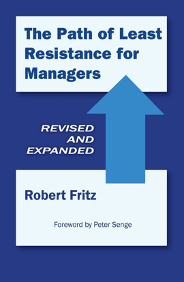
Deeply influenced by the work of Robert Fritz on structural conflict and structural tension, and that structure drives everything – especially behavior – I became dissatisfied by the responsive reaction in many organizations that can be summarized as “what problem are you trying to solve?” It is too solutionist, reductionist to my tasting, and I prefer Robert’s suggestion of the creative orientation of the artist/creator who is not solving a problem but develops mastery to create what she really wants.

So, the key starting point is to know what you want. Let that sink in for a moment. To know what you want.

Once you know what you want, you can create and change the structure that will at least be helpful – not working against you – in letting emerge and amplify the behavior that leads to what you want.

Structure is broader here than hierarchy or reporting lines. Structure includes contexts, vision, vehicles, mechanisms, and networks. Like an architect, you design spaces and structures to enable certain preferred – at time messy – human behaviors.  In a corporate environment, you don’t architect buildings, but you architect contexts. You become a context designer. As an architect, you are not only responsible for the imaginative part, but also for seeing through the execution ànd adaptation needed as the context changes throughout time. Structure and contexts drive flows of information. Like water in a riverbed, if you change the course of the riverbed, the water will behave differently.

Structure drives flow drives behavior.

Let’s add Leandro Herrero in the mix. He wrote “Viral Change” and “Homo Imitans”. Key insights: people copy behavior and behaviors drive culture. If you plant people with the desired behavior into your organization, there is a good chance others will start copying that behavior. Hence “Imitans”. Like viruses infecting others – in a positive way. Do I need to make a drawing in this Covid-19 era?

Leandro’s bottom-line: behavior drives change and not the other way. And you can design for certain preferred behaviors. It’s bottom-up. It is not because an executive team defines culture that everybody will start behaving like it. It is because you have seeded infectious behavior that a culture will emerge through imitation.

Like changing and influencing the structure of a building or a riverbed, we can influence the information flows in organizations. These changed flows lead to different behaviors that on their term drive culture. In the end culture drives change and advancement

Structure drives flow drives behavior drives culture drives change.

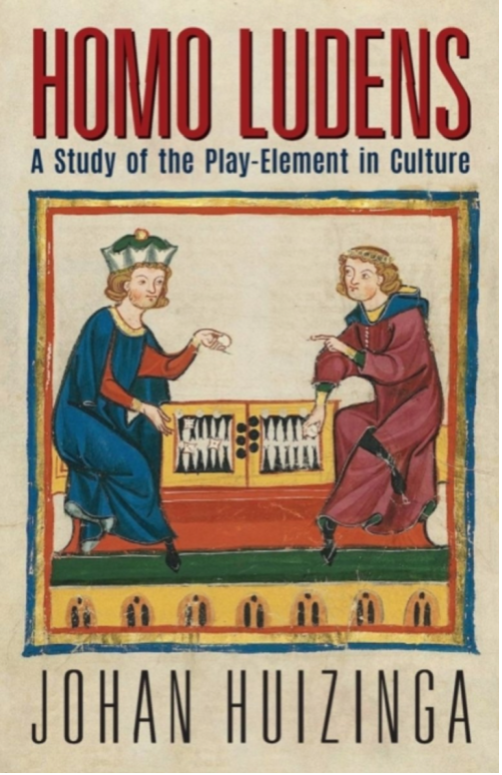
In 1938, the Dutch historian Johan Huizinga wrote a book titled “Homo Ludens: A Study of the Play Element in Culture”. The core message of Huizinga is that play drives culture.

That the disposition of a culture is already embedded in the play preceding it.

“By this we do not mean that play turns into culture, rather that in its earliest phases culture has the play-character, that it proceeds in the shape and the mood of play (Huizinga)

“There is a third function, however, applicable to both human and animal life, and just as important as reasoning and making—namely, playing. (Huizinga)”

This brings me to the insights of John Seely Brown in “A New Culture of Learning”, who quotes Huizinga extensively.

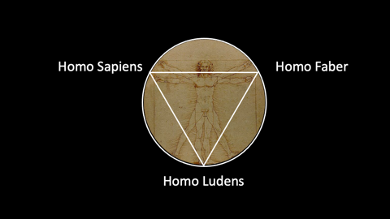
Visual/Insight inspired by John Seely Brown (JSB)

JSB talks about a “21st Century Augmented Imagination”, with a better balance between Homo Sapiens (Man as a Thinker), Homo Faber (Man as a Maker), and Homo Ludens (Man as a Player). Where imagination is triggered, tested, and augmented by play. And discovering the rules of the (future) game to play by playing it.

“In a world of near-constant flux, play becomes a strategy for embracing change, rather than a way for growing out of it (JSB)”

So, by adding “play drives culture”, we get:

Play drives structure drives flow drives behavior drives culture drives change.

Or in simpler, reductionist terms:

Play drives change

This post was written as a guest contributor to nexxworks.

This version includes additional imagery related to the books mentioned.

When my future has to catch up with my present

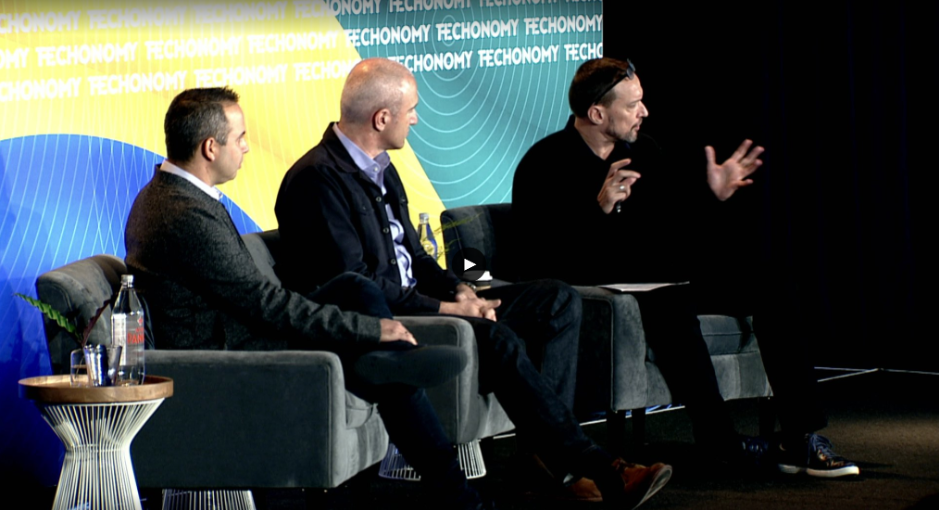
The “collapse of time” was an important meme in the Techonomy 2019 session on Super-Evolution, the idea that startups can now harness rapid prototyping and vast pools of data to develop radically new business models quickly and at scale (video here)

Techonomy

Super-Evolution is about creating more – dramatically more – options. Invented by AI, aka non-human logic. (see also Haydn Shaughnessy on the importance of maximizing options and radical adjacencies vs. core competency in innovation)

“Leave behind the myth of the grand plan and create the conditions for optionality and just-in-time strategy.”(Haydn Shaughnessy)

The first time I felt that sensation of collapsing time was when viewing Elon Musk’s Tesla 2019 update. I felt beaten by algorithms. The Tesla is now/then learning from (data) from human behavior and driving like a human, but ultimately will EXCEED their behavior” (at 01:48:15)

There you have it: gradually, but suddenly we have a singularity. Gradually but suddenly, all jobs are doomed. We are not going to stop this with an ethics council or with regulation. The train has left the station, the genie is out of the bottle.

“The fleet wakes up with an over the air update”

PR or product? The same question was asked some months later by Jean-Louis Gassée regarding the Cybertruck launch:

“Elon Musk forces us to be of two minds. On one side, we have Musk the Mountebank; on the other, a Captain of Industry.

I had the same feeling of time-space collapse and irrelevance when watching this awesome interview with Rahul Sonnad, CEO/Co-Founder of Tesloop, explaining how “Robo-Mobility is a hospitality service” and “Once cars are appliances”

Are we toast? And/or do we need to reboot, reskill, etc if we don’t want to become irrelevant? Venkatesh Rao gives his perspective when reflecting on Inventing Time, and playing on Alan Kay’s “It is easier to invent the future than to predict it” and William Gibson’s “The future is already here, it is just unevenly distributed.”

“Riding in a Tesla made the electric vehicle future seem utterly inevitable in a way that kinda killed the present for me. Suddenly I could no longer look at gasoline cars the same way. Driving in my own car felt different like I was stuck in the past, waiting for the price of the future to come down to the point where I could afford to live in it. So a Tesla creates the future in the sense of both the Alan Kay and William Gibson quotes. It makes the future real in a deep way that is like making time itself real. And you know this because the feel of the present feels different like you’re heading down a dead-end, a lame-duck future. You’ll have to either abandon it as soon as you can or end up dying with it.

Maps book

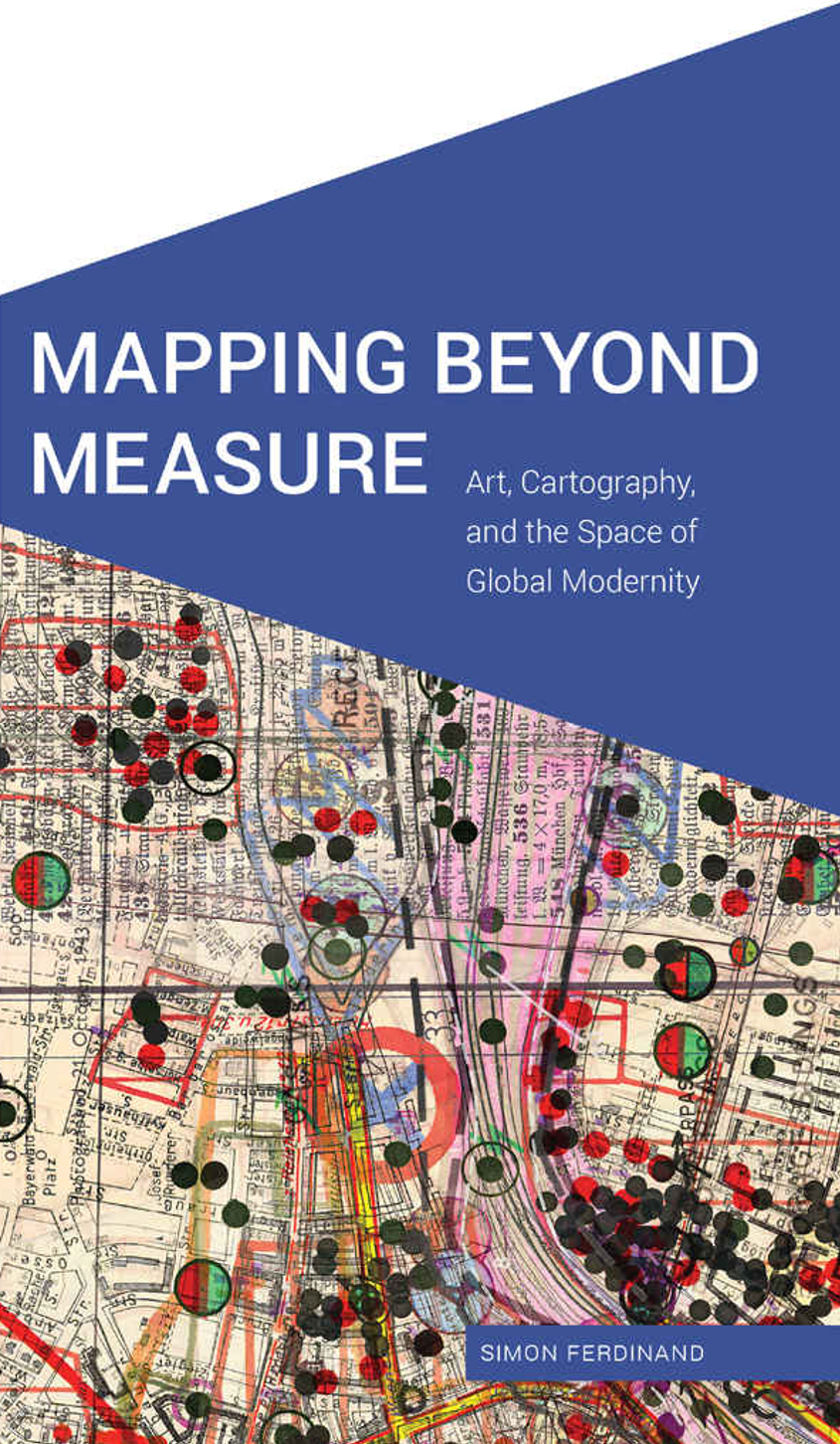
Around the same time, I was lurking in Simon Ferdinand’s Mapping Beyond Measure: Art, Cartography, and the Space of Global Modernity. He could have added the Time of Global Modernity, as he writes about spatial (spheres) and temporal (time collapse) ruptures.

“Often map artworks recapitulate the narratives of rupture (spatial as well as temporal) through which global modernity differentiates itself from inherited pasts and surroundings.

And;

“Maps have proven integral… to the experience of “time-space compression”

Greenaway

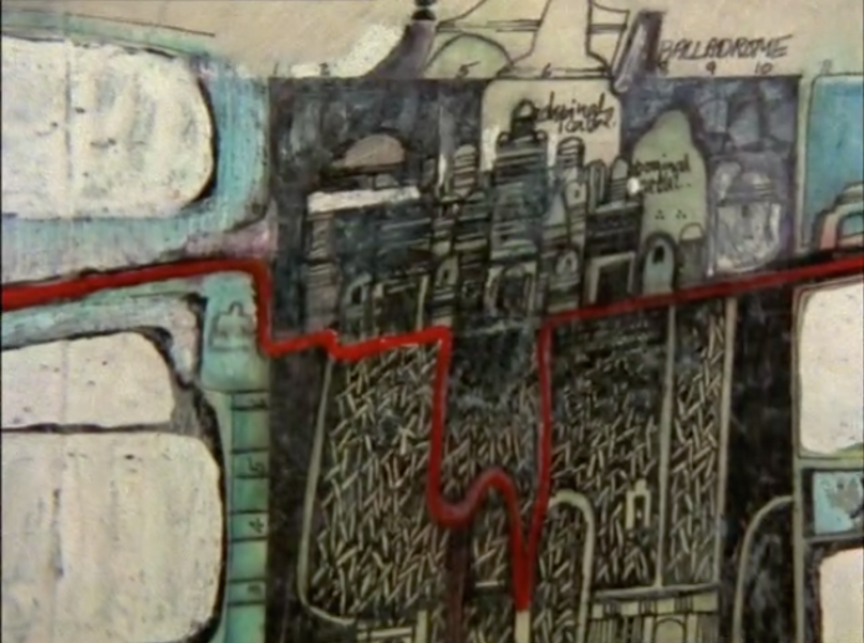
It made me think of Peter Greenaway’s film ‘A walk through H: The Reincarnation of an Ornithologist’ (1978) and “A Walk through a Thousand Plateaus”, an homage to that film.

It is probably a sign of the times that in the preparation of his new book “Agency” also the great William Gibson lost a sense of how weird the world has become, up to the point of the present bypassing his future sci-fi scripts – “His future had to catch up with the present”and “stubs”: alternative timeline in which technologists (and, more tellingly, hobbyists) of the future are able to meddle.

Agency

Hobbyists and meddling, the right words probably for not getting alienated. I would call it “tinkering” by maximizing options that human logic not necessary can spot or generate in time.

petervan-signature


Spacial Trash and Patrimony

Another rabbit hole bringing together some reflections on creativity, demolition, patrimony, and poetic ruination, as so often in this blog inspired by architectural insights and metaphors.

bouwmeester

My attention was triggered by an article in the Jan 11, 2020 weekend edition of De Standaard, a Flemish newspaper. The article was about landscaping, and more specifically “ontharding” (I would literally translate it as “softening”). In this case, softening that what was hardened in the first place. Abandoned and neglected residential and industrial sites, where the soil is still covered by the concrete and rubbish of empty buildings.

It was part of a study supported by the “Vlaamse Bouwmeester”. “Bouwmeester” means “master of building”, “bau-meister”. The term is ill-translated into “Flemish Government Architect” on the official website. The full study can be found here (PDF in Dutch).

The core mission of the Flemish Government Architect is to promote the architectural quality of the built environment. The Flemish Government Architect and his team advise public patrons in the design and realization of buildings, public space, landscape and infrastructure. In addition, the Flemish Government Architect stimulates the development of visions and reflection, with an emphasis on interdisciplinary and cross-sectoral initiatives. The Flemish Government Architect acts as an advisor to the entire Flemish Government.

In short, the article and the study plea for restoring public space by the demolition of 1/5th of hardened space/surface in the Flemish landscape by 2050.

I had a flashback to “Cradle to Cradle”, the 2002 book that alerted me for the first time to a possible vision of sustainable production and architecture. The idea at that time was that reducing waste was just not good enough, and to be sustainable we needed to add value back into the system. As an evolution, the article about the softening of landscape goes one step further: from reducing waste to creating open space by the demolition of vacancy.

“Sloop geeft blijk van falen” – “Demolition evidences failure”

It was happenstance that I was reading around the same time Dan Hill’s 2015 book “Dark matter and trojan horses. A strategic design vocabulary”. I will come back to this book in subsequent posts.

Dan Hill was/is looking for (open) spaces as well, quoting ex-FC Barcelona football player and current Al-Sadd (Quatar) football team coach Xavi Hernández:

 “Think quickly, look for spaces. That’s what I do: look for spaces. All day. I’m always looking. All day, all day. Here? No. There? No. People who haven’t played don’t always realise how hard that is. Space, space, space. It’s like being on the PlayStation. I think ‘shit, the defender’s here, play it there’. I see the space and pass. That’s what I do.”

Already more than 20 years ago, architect Cedric Price was arguing for demolish-able buildings with open re-usable spaces.

fun palace

Cedric Price’s Fun Palace – inspiration for Centre Pompidou in Paris

OK – I confess – as from that moment I went down the rabbit hole and saw demolition and abandoned architecture everywhere. Like in this recent Guardian article, arguing the case for fully demountable buildings.

“We have to think of buildings as material depots,” says Thomas Rau , a Dutch architect who has been working to develop a public database of materials in existing buildings and their potential for reuse… He has developed the concept of “material passports”, a digital record of the specific characteristics and value of every material in a construction project, thereby enabling the different parts to be recovered, recycled and reused.

But there is also something poetic about abandonment, up to the point where we could consider keeping these ruins and equipping them with sensors to listen to patrimony.

In his beautifully reflective post “Instrumental Revelation and the Architecture of Abandoned Physics Experiments”, Geoff Manough introduces the concept of “poetic ruination.

Like menhirs, these abandoned seismic sensors could now just stand there, silent in the landscape, awaiting a future photographer such as Grigoryants to capture their poetic ruination.

Lebbeus Woods was inspiration to Geoff Manough and London-based architects Smout Allen for the project L.A. Recalculated:

Woods depicts an entire city designed and built as an inhabitable scientific tool. Everywhere there are “oscilloscopes, refractors, seismometers, interferometers, and other, as yet unknown instruments, measuring light, movement, force, change.” Woods describes how “tools for extending perceptivity to all scales of nature are built spontaneously, playfully, experimentally, continuously modified in home laboratories, in laboratories that are homes.”

Instead of wasting their lives tweeting about celebrity deaths, residents construct and model their own bespoke experiments, exploring seismology, astronomy, electricity, even light itself.

seismic sensors

Seismic Counterweights
From L.A. Recalculated by Smout Allen and BLDGBLOG

Like architects think about (industrial) sites listening through sensors to seismic undercurrents, I started wondering whether we could not use this metaphor to reflect about our organizational structures; structures not only as hierarchical structures but the more encompassing set of system rules and patterns of an organization – I referred to it before as organizational patrimony.

How can we listen to and signal about the pulse of this organizational patrimony? How can we be aware of it, appreciate it, respect it, and build upon it in our rebellious acts of creative destruction?

I imagine a cohort of humans – like a colony of ants – having 24/7 sensors and laboratories everywhere in organizations; in every office, cubicle, meeting room, coffee corner, etc. And I don’t mean robotic sterile sensors feeding AI models. I mean real humans, measuring, documenting and signaling patrimonial changes in the structure of corporate structure, so they can send early warnings of experiments that have become useless and therefore have to be ruinated, or – in the worst-case – signal cases of patrimonial breakdown and demolition. In search of the material depot and passport of our organizations.

petervan-signature


The End of Experience

EX-perience is “out”, IN-tervention is “in”

When I talk about “experience”, I mean:

  • The new hype of artistic “experiences” at art exhibits
  • “Experiences” at events
  • The “experience” of driving a car
  • The “experience” in whatever, like tasting chocolate, as promoted in advertisements

It is almost always about “entertainment”, easy/easier/more convenient consumption, not forcing you to learn a new (or old/existing) language.

CycleGAN - December 22nd 2019 at 3.16.22 PM

Petervan Artwork © 2020 – Canvas through CycleGAN cloud AI model


When I talk about “intervention”, I mean:

  • Provoking
  • Asking questions
  • Challenging assumptions
  • Planting speculations
  • Through visceral (sensorial) triggers
  • Creating better “resonances”
  • Playing your harmonics, like harmonics in music
  • Hearing the real-real sound (like in Neil Young Archives)

Formats can be analog and digital artwork, performances, events, retreats, writings, poems, blogs, installations, exhibitions, immersions, soundscapes, recordings, documentaries, time capsules, AI warps, and fairy tales 😉

Interventions help us rediscover what is real, what resonates, what makes us go into frequency, what moves us, etc. And all this with a direction, with an intention: to enable spiritual, moral and aesthetical advancement at systems’ scale.

petervan-signature