The Orphic Experience: We are all Argonauts again

In my post about Dub-Techno artist Adrian Sherwood, I referred to the book “Dub Techno – The Orphic Experience of Sound” by Bahadırhan Koçer to describe my sound experiments with dub.

As promised in that post, the most compelling part of the book appears in its opening chapters, where he introduces “The Orphic Experience.”

The short summary is in the video below, from 0:59 to 2:23. The latter part of the video is about the three key elements of dub-techno: spontaneous repetition, atmosphere, and embracing noise.

TL;DR: The orphic experience uses music to alter perception, evoke deep emotions, and influence the listener’s state of mind. It creates a unique space and time for introspection and reflection.

Let me unpack this in stages: first the “orphic” aspect, then the “experience” element, and finally a synthesis.

Orphic

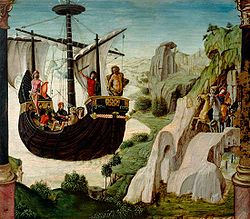
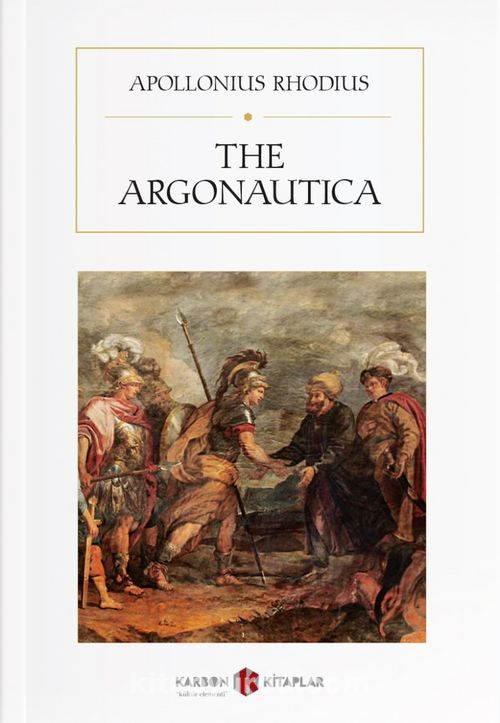
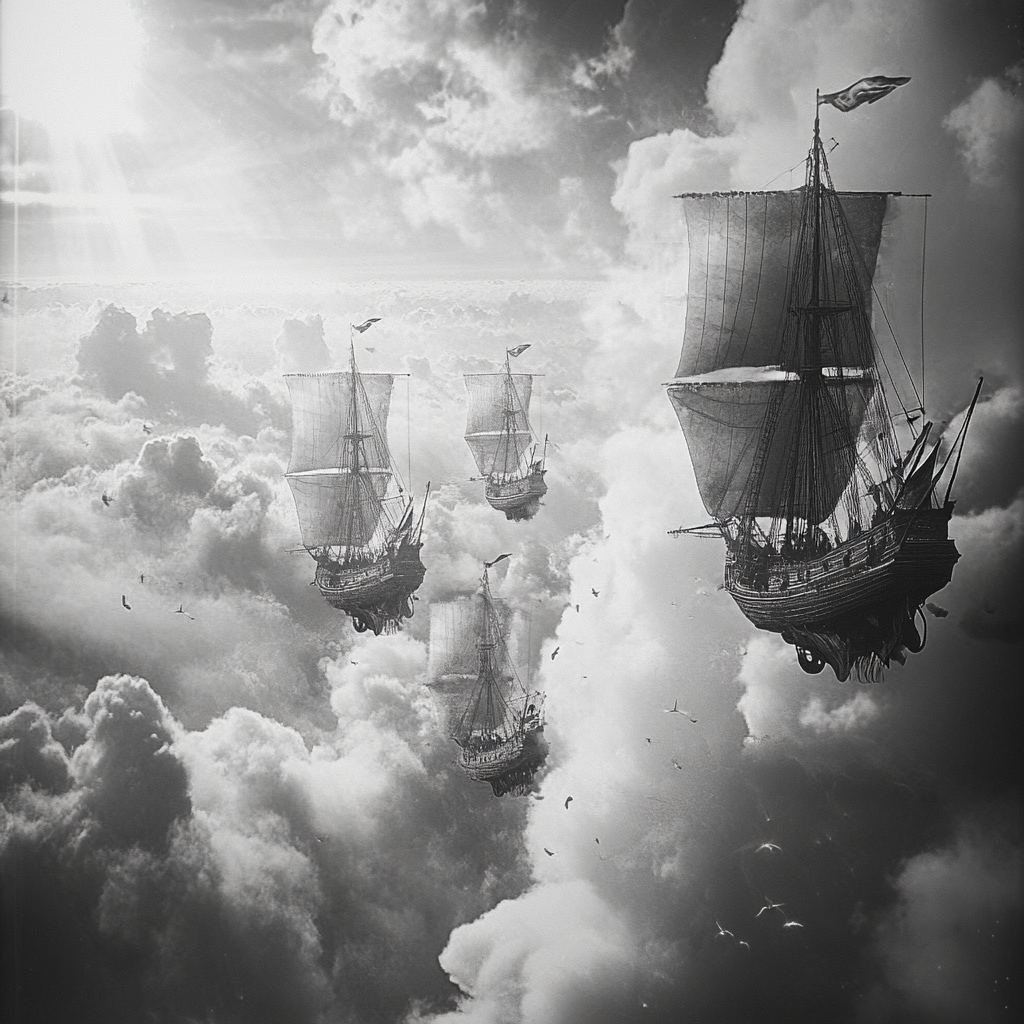
The “orphic” part originates from Orpheus, a character in the ancient Greek poem Argonautica, dating back to the 3rd century BC. The Argonauts are travellers on the boat Argo and are on a quest for the golden fleece. Somewhere along the route, sirens are trying to seduce the boatsmen. Still, Orpheus – a talented singer/musician on the boat – can shield the boatsmen from the Sirens’ temptations through his celestial, beautiful songs and voice. In other words, he was a noise canceller avant la lettre.

Some salient quotes from Bahadırhan Koçer:

The orphic experience, therefore, refers to the transformative way sound and media technologies can be used to control one’s sonic environment, creating a personalized auditory space that shields individuals from the overwhelming stimuli of modern life.

It is conceivable to argue that the nature of this transformation lies fundamentally in a shift from communal to individual listening.

The protected space needed for “sensory and emotional self-care”

In this sense, orphic experience can be seen as a way of escaping from the demands of the real world and constructing a self-contained, artificial reality.

By carefully curating their auditory environment and creating a personalized soundtrack to their lives, the individual can signal their taste and distinction to others, and distinguish themselves from those who do not possess the same level of cultural capital.

The “orphic” concerns the creation of a protected, isolated space in which the rules constraining clear thought can be suspended.

Experience

The second part is about “experience”. The words “Narrative” and “Experience” have become catch-all words. Washed-out. Weak. And they all suggest a passive audience.

Also here, a David Claerbout quote is appropriate:

I think the recent proliferation of black boxes for film and video-art is not just a practical solution to a problem of sound and light interference, but also reflects an incapability to coexist. This can become apparent in large group exhibitions, where media installations appear strong when they are shown by themselves in a small or large dark space, but they easily collapse when shown in a social space where people move about and interact. The black box is a social phenomenon, for me it is a problem.” Ulrichs, David, ‘David Claerbout. Q/A, in: Modern Painters, May 2011, pp. 64-66

“Designed Conspiracy” would be better to describe what I have in mind. With an active audience. Or even better, where there is no stage hosting the expert speaker and no passive audience just leaning back in chairs, incapable of truly internalising knowledge.

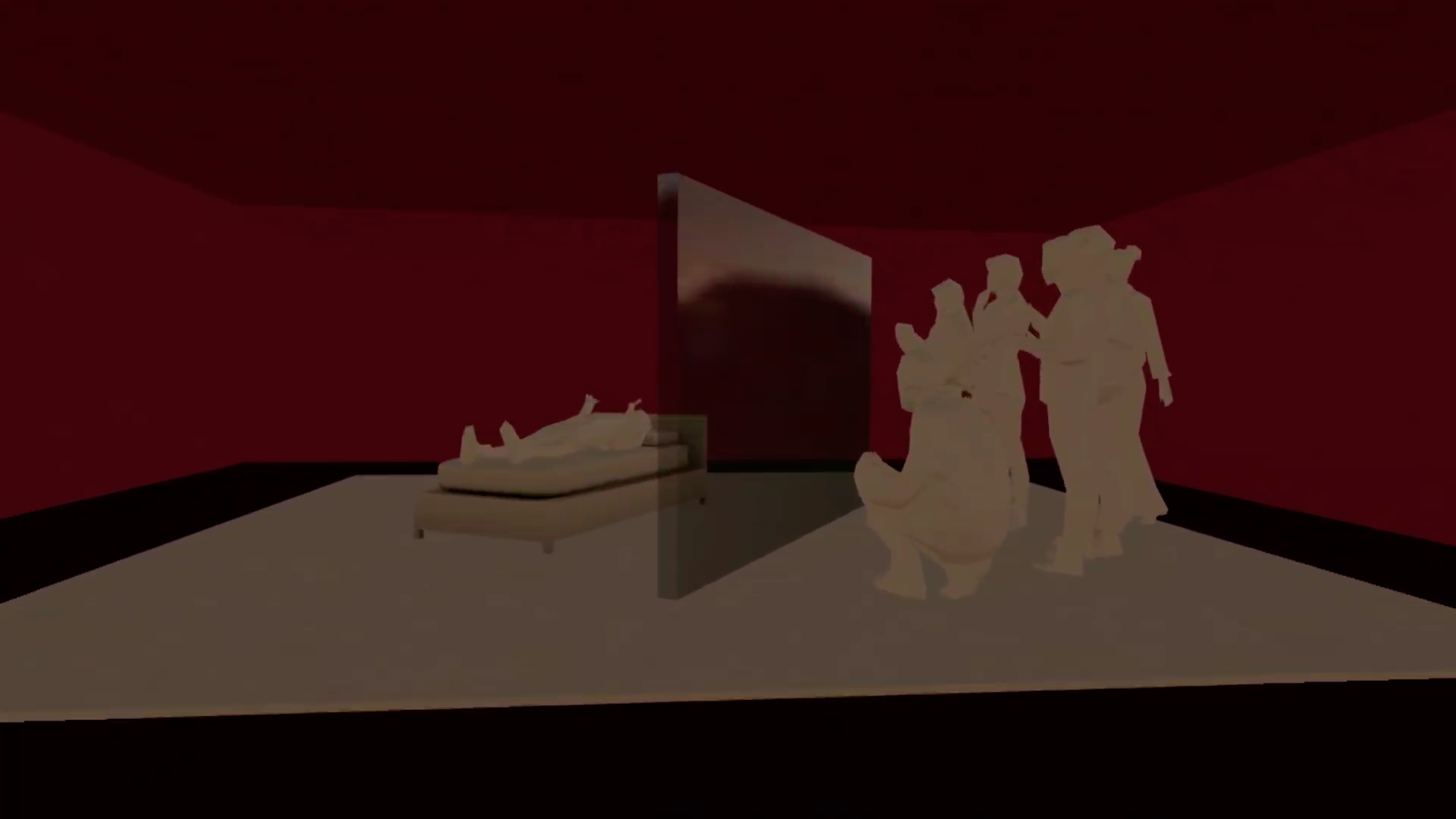
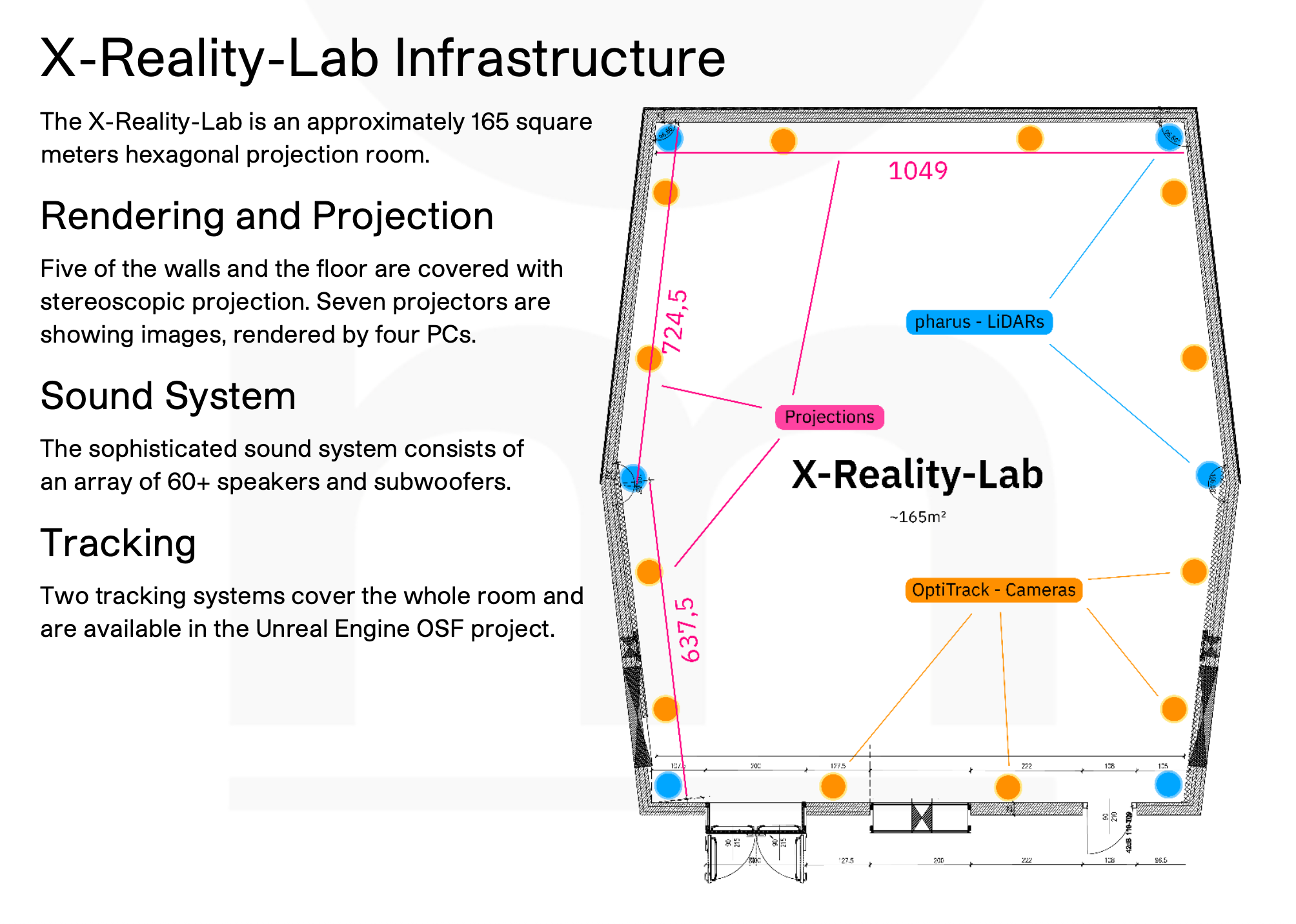
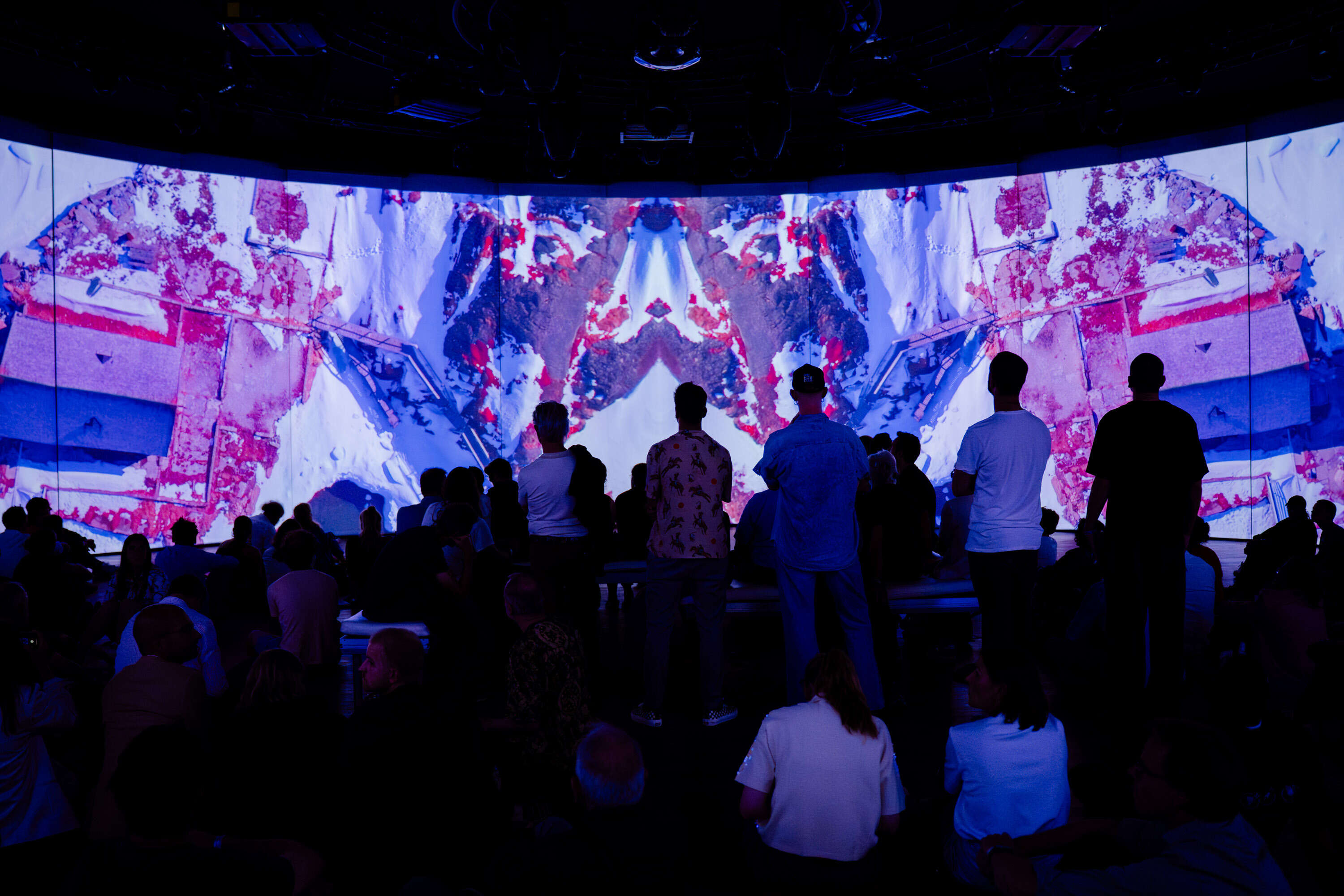
I imagine us inside a 360° immersive room: a six-metre-high LED screen, full 360 Dolby Atmos sound, LiDAR tracking, and high-definition cameras—paired with exceptional content and facilitation. A complete experience in a box, ready to tour and deploy anywhere in the world. Am I exaggerating? Maybe not. I’ve just met someone who is building exactly this.

Synthesis

Obviously, I am using all of the above as a metaphor to try to explain what I do with my artistic interventions, provocations, and interruptions. These qualities inform my work/play. Whether that is soundscapes, installations, performances, or group expeditions.

Now that we have our protected, isolated space and a designed conspiracy, it is time to play the music. Music is the content. Content is the music.

Experiencing our music – individually or as part of a group – can feel like a trip, a trance, like digital psychedelics.

The music/content is presented in the right space, with the appropriate emotional and psychological atmosphere—the backdrop, if you will—inviting and sustaining safety, interest, curiosity, awe, and growth.

The rhythm is softer, slower, quieter vs. harder, faster, louder.

We embrace – and even design – flaws and imperfections, spontaneous repetition, and noise, inviting the participants to connect with being human, and to internalise the content at an embodied level of sensory experience.

We design with fifty shades of sophistication: avant-garde activism shaped by counterculture, driven by intention and direction. We build a relational infrastructure capable of holding shared ambitions, carrying a map as a symbol of movement, of becoming. These are maps that make meaning—shifting the question from the adolescent “Where are we going?” to the more deliberate “What direction do we want?”

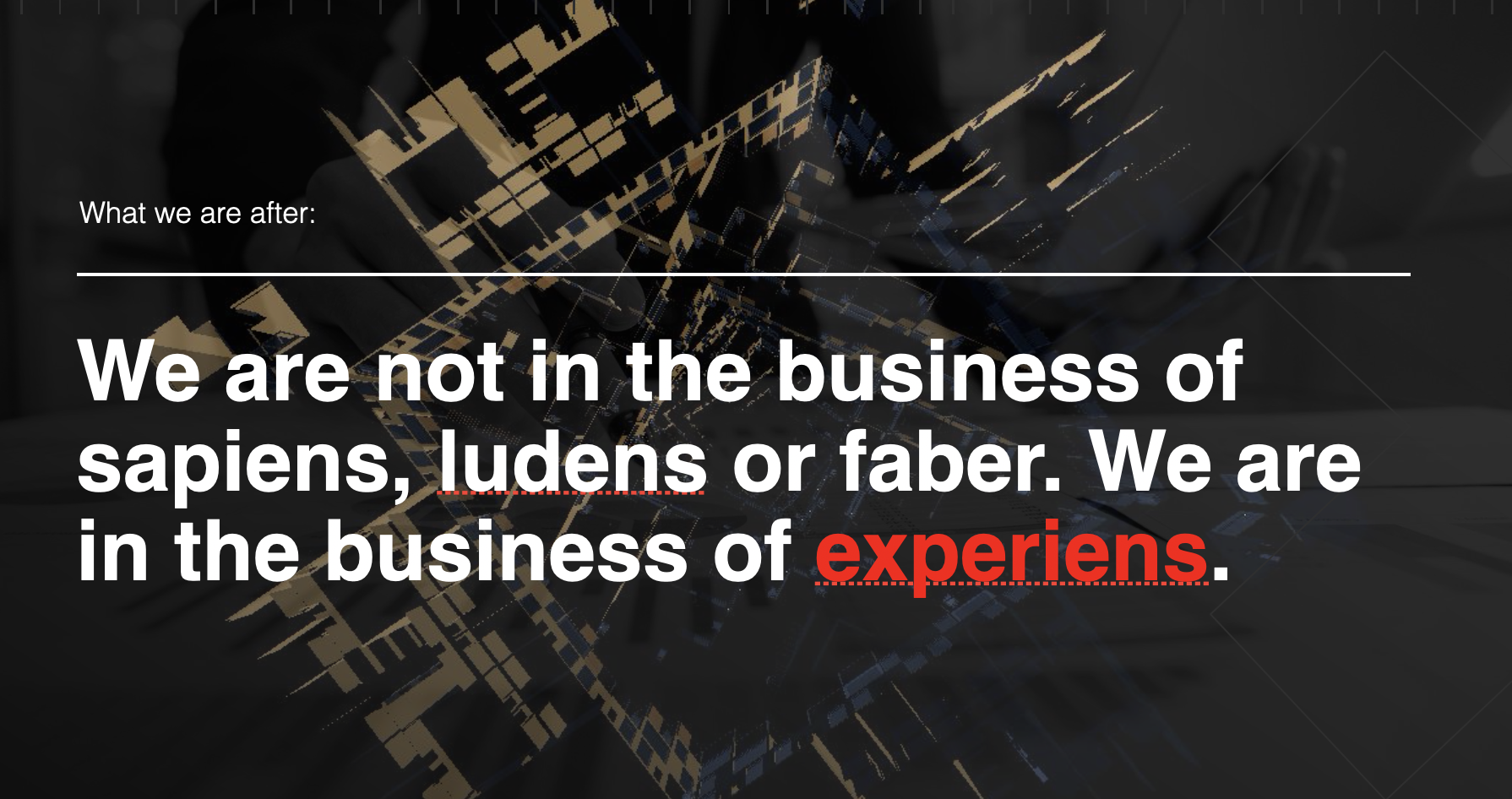
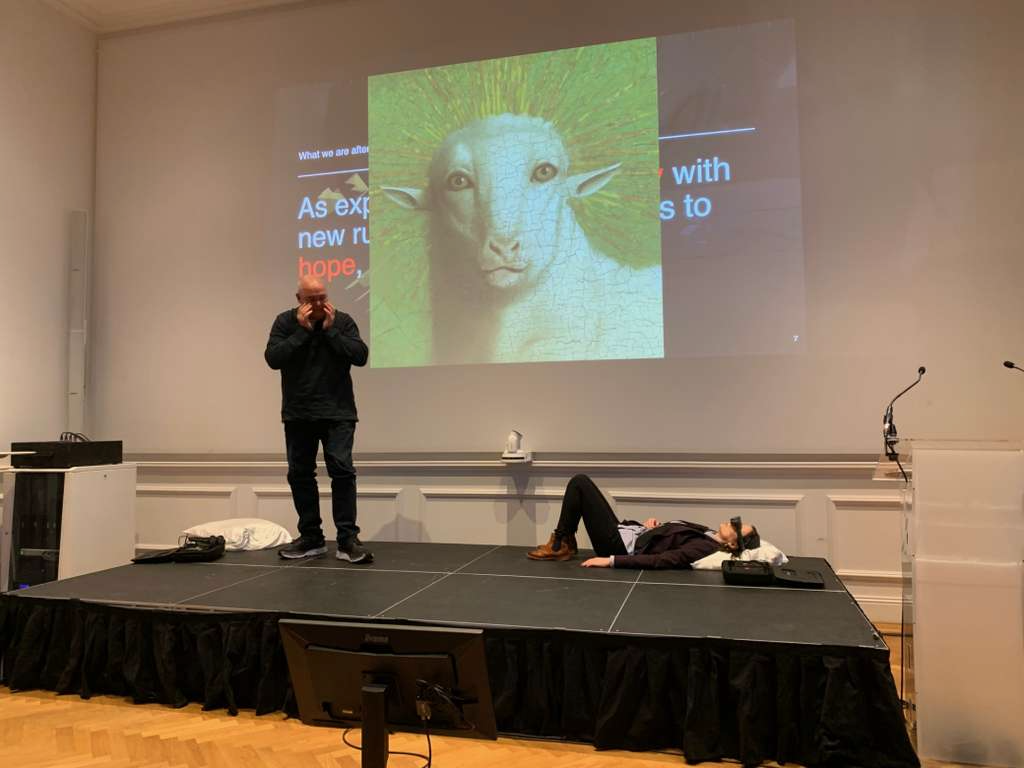
We are all Argonauts again. We are experiens-explorers. We want to create the right spaces and conditions for debating the new rules and the associated structures of reality, then acting them out as if those rules were in place. As explorers, we want to play with new rules to dream, new rules to hope, but also – not to sound too cheesy or utopian – new rules to suffer and cope with what is evil and sin. In that sense, we become all part of a shared conspiracy.

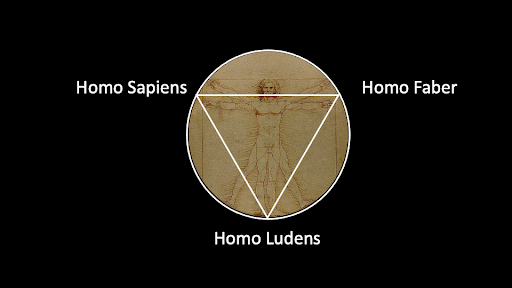
We are not in the business of homo sapiens, ludens, or faber, but in the business of homo experiens.

PXL Immersive Music Day 24 Apr 2025 – Conference notes

As part of the research for my immersive projects and performances, I am trying to better understand the visual and audio aspects of XR experiences. In that context, I attended the Immersive Music Day at PXL in Hasselt, Belgium, organized by the PXL Music Research team. The full program, schedule, and lineup are here.

It is a relatively small-scale event (I guess about 100 PAX), which is great as it enables networking with the participants and the speakers. The event was held at a location with great immersive audio infrastructure (3 rooms with full 360 sound set-up). For the rest, it was a no-frills event with super-friendly staff and good food at breakfast and lunch.

Example of an immersive music room set-up

I was also pleasantly surprised by the mix of ages, ranging from fresh-faced high school students to seasoned audio veterans and legends, plus corporate fossils like myself. That kind of diversity usually signals that something truly interesting is about to unfold.

But the best part was the content and the speakers.

If there was an intended or unintended theme, it would be the subjective aspects of the immersive experience (how sound “feels”, or about the experiential coherence of auditive, visual, and spatial input) vs. the technological aspects of immersive sound (like precise localisation of sound in space). But I am sure that in some other sessions, the content was quite nerdy, up to the detailed coded and mathematical aspects of encoders/decoders.

Here are a few notes and reflections from the sessions I attended.

Immersive Space – An Agent for Creating and Experiencing Music

Speaker: Wieslaw Woszczyk, Director of the McGill Recording Studios and the Laboratory of Virtual Acoustics Technology at the Schulich School of Music of McGill University.

Program synopsis: Humans have sensory capabilities for recognizing their presence and immersion in space. Music ideally matches these capabilities by presenting dynamic, tonal, harmonic, and rhythmic structures in sound. Musicians use space to generate and blend sounds of ensemble, to hide and reveal musical voices, to dramatize perspectives, and to harness emotion in music making and listening. The talk explores immersive space as a modern technological tool for augmenting people’s experience of music

CIRMMT Dome with 32 speakers

Notes:

I had never considered immersive sound as a medium for live music performance—being physically present in one space while listening to live musicians through a 360° sound system that simulates the acoustics of an entirely different environment. Wieslaw talked about auditory “fingerprints” of spaces. This goes way beyond sound effects like reverb that simulate the reverb of a cathedral. No, this fingerprint captures the full acoustic character of a space—every corner, every height, every nuance. And there are plug-ins available that let you import this detailed acoustic profile directly into consumer-level digital audio workstations like Logic Pro and others.

This allows performing artists to shape and test their artistic expression for a specific space, like the San Francisco Cathedral, or lets the audience experience the music as if they were actually there, immersed in that very acoustic environment.

Altering the Immersive Potential: The Case of the Heilung Concert at Roskilde Festival

Speakers: Birgitte Folmann, Head of Research, Sonic College, and Lars Tirsbæk, Consultant in Sound & Emerging Technologies, Educator 3D audio, Sonic College

Program synopsis: Immersive concert experiences are often described as specific, emotionally moving, dynamic, and complex – qualities that require experimental and interdisciplinary methods to be meaningfully understood. In this talk, we explore the immersive and engaging potential of live concerts through the lens of the Heilung performance at Roskilde Festival. Drawing on anthropological fieldwork and insights into the technical systems that supported the experience, we discuss how a deeper understanding of immersion can inform both artistic and technological development to enhance future audience experiences 

Notes:

The talk was about the Heilung Concert at Roskilde Festival in 2024, in a festival tent holding about 17,000 people. Details about the technical set-up by Meyer Sound here.

What struck me was that the concert wasn’t branded as an “immersive” experience—there was no expectation set in advance. Yet, the immersion began the moment people entered the tent: birdsong filled the air, subtly blurring the line between environment and performance. It reminded me of my Innotribe days, where we also paid close attention to how people entered a space. After all, arrival and departure are integral parts of both the performance and the scenography.

The first part of the talk by Lars was about the technical challenges of delivering a 360 immersive sound experience in such a huge space. The second part by Birgitte was about the anthropological and subjective aesthetic experience of immersive music by the audience. Her slogan, “Aesthetics is a Verb” is great t-shirt material. They also talked about the “attunement” of the audience to the experience, and that you can’t fight the visuals: for example, when the drums play on the front stage, having the 360 sound coming from behind you does not work for the human brain.

Their team is now starting to document the findings of their field research. More to come.

Designing the Live Immersive Music Experience

Speaker: Paul Geluso, Music Assistant Professor, Director of the Music Technology Program – NYU Steinhardt University

Program synopsis: Paul Geluso’s work simultaneously encompasses theoretical, practical, and artistic dimensions of immersive sound recording and reproduction. His first book, “Immersive Sound: The Art and Science of Binaural and Multi-channel Audio,” published by Focal Press-Routledge, has become a standard textbook in its field. Geluso will share his research experience while providing exclusive previews of interviews and insights with featured immersive audio masters from his forthcoming book, “Immersive Sound II: the Design and Practice of Binaural and Multi-Channel Experiences” set to be published in fall of 2025. This presentation will also included discussions on his 3DCC microphone technique, a 3D Sound Object speaker design capable of holophonic sound playback, and his work on in-air sound synthesis and other site-specific immersive sound experience building techniques. 

Notes:

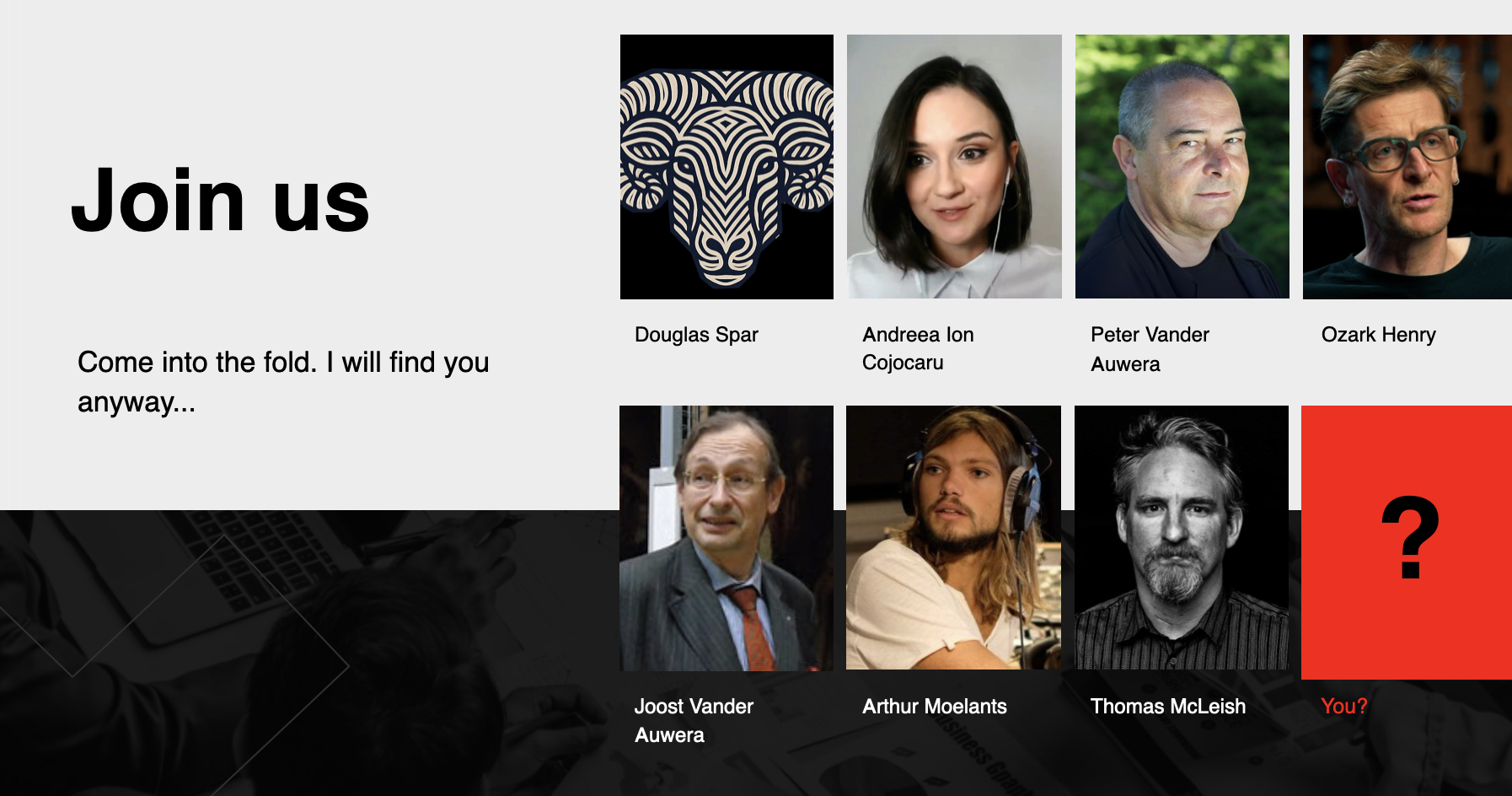
Paul Geluso is God. Some years ago, he published “Immersive Sound: The Art and Science of Binaural and Multi-channel Audio,” considered by audiophiles as “The Bible”. He is also good friends with Flanders’ best artist, Piet Goddaer aka Ozark Henry, who specializes in immersive sound and music.

Ozark Henry in his studio

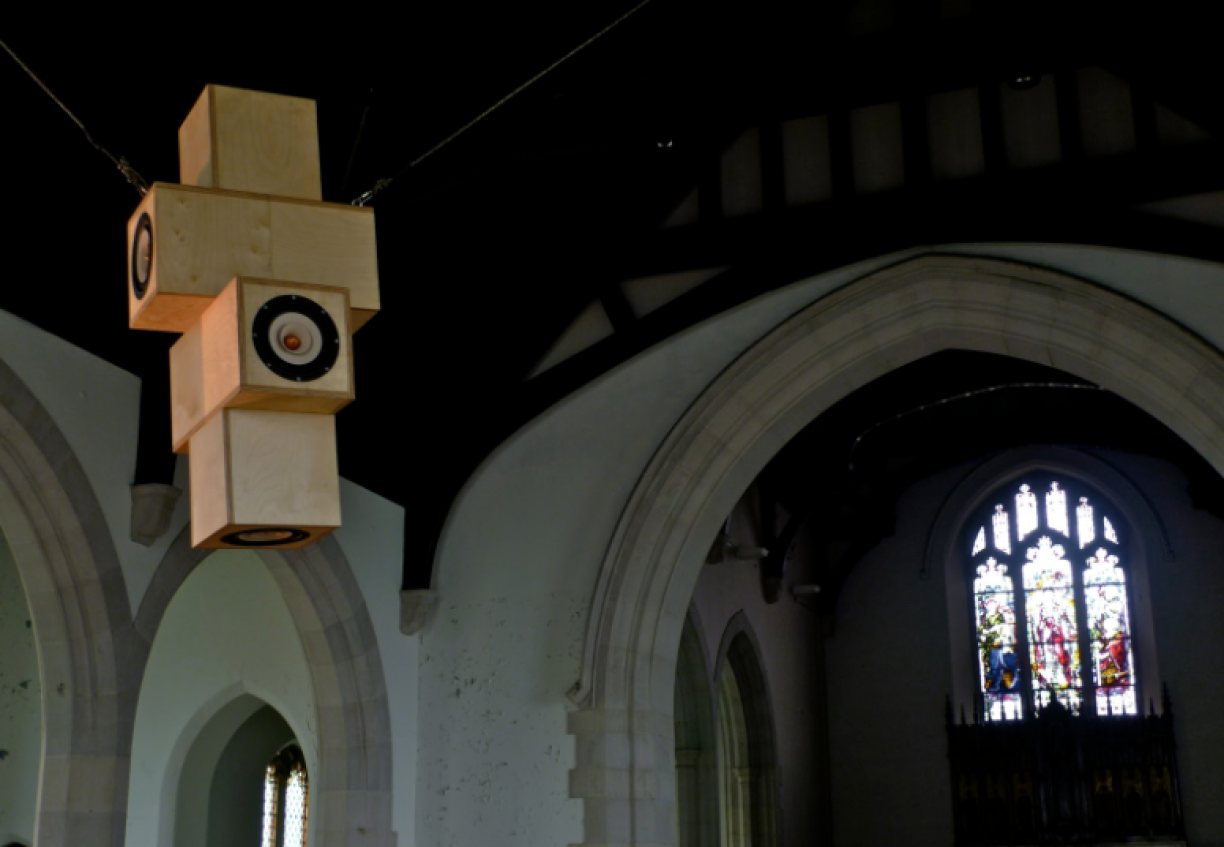
Paul took us on a journey of his research on immersive recording (making custom made 3D microphones and codes) and playback (making his own “Ambi-Speaker Objects”.

Paul Geluso’s immersive 3D Sound Object (Ambi-Speaker)

This was more of a backdrop for his upcoming book. While his first book was more about the how – the technology to record and playback immersive music – his new book will focus on the why – in essence, about leading with the story and the artistic intent. He hopes the new book will be out in 2025.

I had the chance to have a short 1-1 conversation with Paul, who seemed interested in our immersive performance ideas, which was exciting to know.

Subjective Evaluation of Immersive Microphone Techniques for Drums

Speaker: Arthur Moelants, Researcher PXL-Music

Program synopsis: When presenting a group of listeners with four immersive microphone techniques in two songs, will they always choose the most objectively correct one? An experiment with drum recordings in different acoustics and musical contexts challenges the assumption that objective parameters like ICTD and ICLD should always determine the best choice. While non-coincident techniques often score better in these metrics, listener preferences can shift depending on the musical context, as other techniques offer different sonic and practical qualities that might benefit the production more.

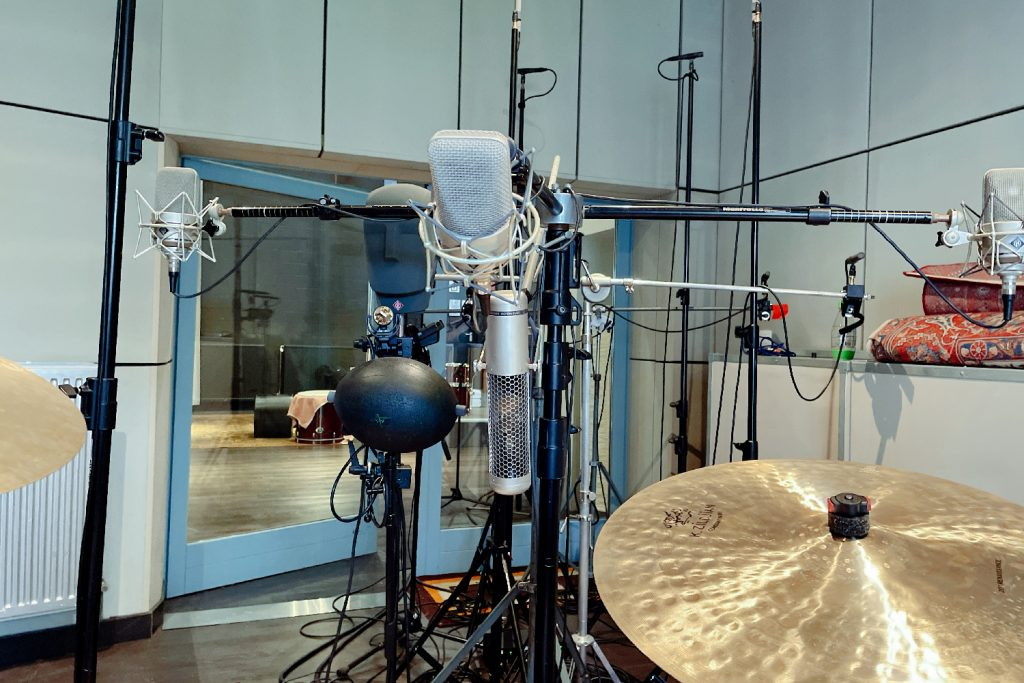
A microphone set-up for drums

Notes:

Arthur is part of my team for our immersive performances, like The New New Babylon, where he acts as both a cinematographer and immersive music expert. He is a member of the PXL-Music Research team. I was curious to see how he’d handle public speaking and delivery, and he did not disappoint. I’m always impressed by how some young professionals manage to blend deep, almost nerd-level technical expertise with polished communication and presentation skills.

His talk was about his research on the subjective experience of drums, and how that experience differs depending on the recording technique and on the context of the drums as part of a song. I really like the simple graphics of his slides to explain some quite technical aspects of immersive music. Not an easy talk to deliver as he was also giving live demos on a 360 system to let us hear the subtle differences.

That’s it. Hope you enjoyed these notes

Warmest,

Brand new performance “The New New Babylon”

I am super-excited to announce the general availability of my brand new performance “The New New Babylon”. Here is the trailer:

The New New Babylon performance is an immersive experience, divided into six chapters—Awakening, Stepping, Flying, Gliding, Folding, and Vertigo. Each chapter explores different facets of the New New Babylon concept, blending art and interaction. Audience members are invited to actively participate, engaging with interactive elements that promote a sense of community and shared creativity. To create a multisensory journey, the performance integrates rich soundscapes, video projections, visual art, poetry, masks, VR, and stage props. It’s a brand new format to deliver content, quite different from more traditional keynotes and talks.

This artistic performance has a poetic, gentle, and profoundly human touch, evoking a dreamy, Magritte-like surrealism. The atmosphere is calm and harmonious, steering away from Sci-Fi or dystopian themes toward a vision that is non-aggressive, understated, and subtly utopian.

Designed for corporate and institutional clients, art galleries, and museums, the performance’s content, materials, and timing can be adapted to suit specific needs. The performance can also be organized as an online or in-situ workshop format.

VR-Frame from ACT3 – Flying

The performance is now available for both online and on-stage presentations, with options for bespoke adaptations or commissions. If you’re interested, feel free to reach out!

The next step is to create a fully immersive VR headset performance with live interactions with AI voices. Already available are six Unity VR packages, each designed for distinct VR spaces in the performance, including specific controller actions that control both on-stage and in-VR lighting, and different camera angles. These packages are tailored to support the various acts of the performance. These Unity packages are developed by NUMENA, a renowned interdisciplinary creative studio from Germany, specializing in award-winning spatial design and programming.

We are also developing an API-supported LLM infrastructure to enable live interactions with AI Agents. Our goal is to facilitate real-time exploration of historical New Babylon research resources during on-stage and online sessions. This infrastructure is currently being developed by Thomas McLeish, Adjunct Lecturer – Berkeley Master of Design, and master creator of the 2018 replica of the Colloquy of Mobiles.

VR-Frame from ACT4 – Gliding

And here is an extract from ACT4 of Petervan’s New New Babylon Performance.

VR-Scene from ACT4 – Gliding

And as the cherry on top: alongside a talented young cinematographer from Flanders, I’ll be applying for one of just twelve coveted spots in the 9th edition of the Venice Biennale College Cinema – Immersive program (BCC-I).

The performance is one of the deliverables of my more ambitious transdisciplinary Artistic Research Project, where I am imagining and scaffolding a City of Play through different formats. These formats can be analog and digital artwork and productions, digital overlays, sketches, performance lectures, writings, poems, blogs, installations, soundscapes, recordings, documentaries, spaces, time capsules, curations, events, group experiences, immersions, expeditions, and exhibitions.

Performance “Claim Your Cybernetic Word”

A new Petervan performance lecture “Claim Your Cybernetic Word” is in the making, to be delivered 100% remotely during the 60th anniversary of the American Society for Cybernetics in mid-June 2024.

Extract from Petervan Performance “Claim Your Cyberbetic Word”

Below is the official abstract of that session:

An engaging conversational workshop crafted to elicit compelling language that embodies the human elements within cybernetics. Attendees will be encouraged to participate actively by offering cybernetic terminology, which will be visually depicted in an immersive cloud-like interactive video installation accompanied by a bespoke soundscape. The session opens with an artistic cinematic cybernetic dream sequence. Through facilitated brainstorming sessions with the audience, participants will have the ability to fine-tune word generation. They will discuss the Paskian Knobs required to steer randomness and the style of the outcome. The session closes with a cinematic cybernetic song outro. The total duration is between 45-60 minutes. This session will be delivered remotely with remote interactions with the audience. An experience room is available for on-site participants, allowing them to engage collectively in this conversational setting.  Please access the session 10 minutes before the starting hour, as the performance already starts during the virtual walk-in of the audience when visual and auditory segments set the stage for the experience.

Some friends who have seen an early dry-run version describe it as an “immersion” or “a trip”.

The Scaffold is a Wormhole

As we are turning the pages from old to new, I thought of writing one of those old-school blog posts, more for the fun of writing it – and hopefully you reading it – rather than trying to make a point or breakthrough. Although pages, pointed pencils, and breaking through are definitely topics in these reflections about The Scaffold being a wormhole. Hope you enjoy this rabbit hole.

A brain worm in my head is obsessing about wormholes being an excellent metaphor or not for bending cognitive spaces to our own particular navigational needs. 

An ear worm or brain worm is usually defined as a “catchy or memorable piece of music or saying that continuously occupies a person’s mind even after it is no longer being played or spoken about.”. 

Unfortunately, in slang, it means “a persistent delusion or obsession; a deeply-ingrained or unquestioned idea”. 

I leave it to my readers to assess whether my thoughts belong to the former or the latter.

The wormhole metaphor popped up during one of my catch-up calls with partners in crime about The Scaffold, our transdisciplinary learning studio for the never-normal. 

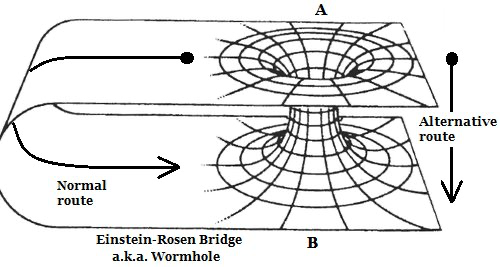
The Scaffold is a wormhole, an unorthodox way of going faster from A to B. 

Here is where Dr Romilly explains about the wormhole to Cooper in the film Interstellar:

I love the paper sheet and pencil metaphor to suggest this alternative route towards your imaginable futures. 

Easier said than done: if The Scaffold is indeed a wormhole, what do we need in place to create the wormhole? What is the nature of the plane being folded? 

The plane could be looked at as the social fabric for thinking together, thinking in synch. It is another tool or system to facilitate coordinated behaviour.  The plane becomes a graph-mind, as explained in Venkat Rao’s Graph-Mind-Notebook series. 

Punching the right line through the plane is difficult, and comes with great responsibility, and only few people can do this. These punchers are usually born like this, and often not welcome or seen as inappropriate in corporate environments. 

It takes a huge effort to instigate experiences that break away from the normal. Humans are hardwired to believe what they hear/already know. Their brains are wired to look for mirror neurons, and this not only at the cognitive cortex, but also at the motor cortex, visual cortex, other cortexes…

How do you break away into the territory of experimental imagination, as described by Ann Pendleton in Pragmatic Imagination? You could use LSD trips to create experiences that are  as strong as giving birth to a baby. Seriously, how to make the hole is a very serious proposition.

You have to first identify the consistency of assumptions of the plane, then have different strategies for drilling the hole, and a list of tools to drill the hole.

I always thought – and still do – that using artists is a natural human way to resonate beyond the cognitive, textual level. Artists – not as entertainment, but as prime contributors to the content and the narrative – can bring us in a state of different reality.

It is about human presence in multiple realities, in form ànd feeling, in space ànd time. It resembles to dance, or rather choreography.

“Dance/choreography is dancing of the second order, meta-dancing, or better, it is an investigation of dancing.” 

Alva Noe in his book The Entanglement

“We will soon live life across multiple realities. Each with its own physical laws, bodies & affordances. The only common denominators? Space, time and human presence.”

Andreea Ion Cojocaru

How to make holes is also a matter of nuance, of deciding how much dissonance you want, you can have, what’s beyond your comfort zone, although we know from Niels Pflaeging that there is no such thing as a comfort zone.  

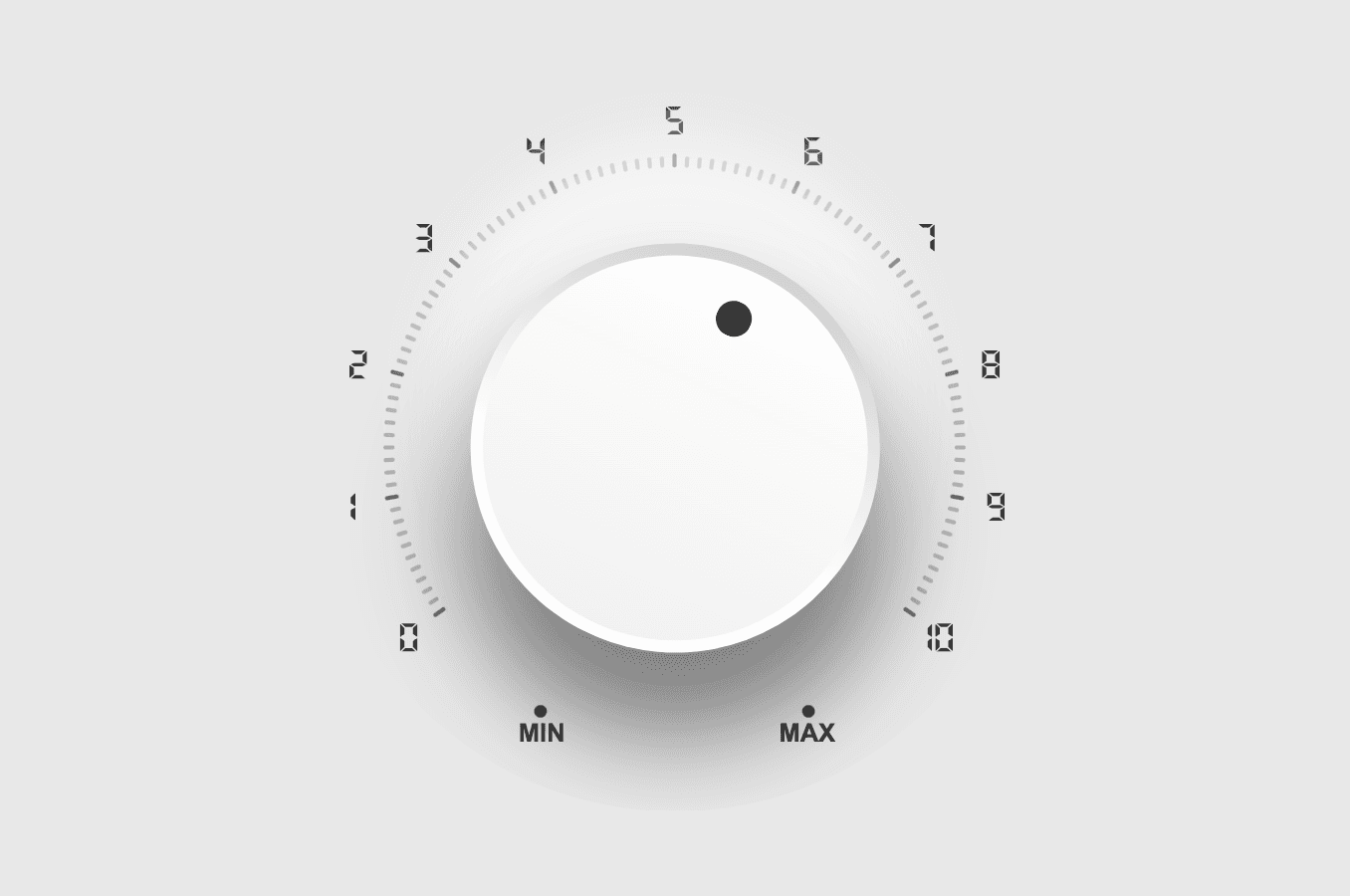
Imagine a dial/slider of dissonance

Who turns the dial? Who is the orchestrator/composer/juggler of place, space, and time? Who is the mapper/weaver of ideas? Who curates the team of transdisciplinarians in a coherent impactful learning experience?

This is about going through walls. 

It remembers me of Geoff Manaugh’s blog about Nakatomi Space where he described Bruce Willis’ Die Hard experience to literally going through walls

What I find so interesting about Die Hard—in addition to unironically enjoying the film—is that it cinematically depicts what it means to bend space to your own particular navigational needs. 

This mutational exploration of architecture even supplies the building’s narrative premise: the terrorists are there for no other reason than to drill through and rob the Nakatomi Corporation’s electromagnetically sealed vault. 

Die Hard asks naive but powerful questions: If you have to get from A to B—that is, from the 31st floor to the lobby, or from the 26th floor to the roof—why not blast, carve, shoot, lockpick, and climb your way there, hitchhiking rides atop elevator cars and meandering through the labyrinthine, previously unexposed back-corridors of the built environment?

Geoff Manaugh

The Scaffold as a wormhole is about going through previously unexposed back-corridors where all is malleable. 

This will scare the hell out of many. The disclaimer deserves a warning to be prepared to be discomforted, even to expect existential angst. Such disclaimer also imposes a duty of extreme care to the designer of such experience. 

Interestingly, and to stay in the world of film and imagination, the quote “Innovate or die” is sometimes attributed to Robert Iger, the CEO of the Walt Disney Company. 

In that sense, the title of this blog post could as well have been

“Die Hard and Innovate”

With thanks to Andreea, Marti, JMS, Josie, and Venkat for planting these brainworms in my head.

Warmest,

Petervan Studios – Update Dec 2023

As we close the year, here is the latest update on Petervan Studios.

The previous update was in March 2023. In a sense, this update is an update on the whole year. A lot has happened since then. A lot did not happen. An overview.

Quick catch-up

I studied architecture (art school), never practiced (dropped out), and stumbled into a nice corporate career. In 2017 I took a sabbatical and never went back. I left the corporate world. I am now officially “retired”

Family

On 18 Dec 2023, Astrid became 18 years, officially “of age”, driving our car (good driver, final exam in Feb 2024), and started higher studies (a four years bachelor nursery), and horses, of course. And in May, we celebrated our 30th wedding anniversary. Time flies. Happy times.

Cosy Birthday Breakfast for Astrid

The Art Studio

The Art Studio is nicely rippling along. I did not have the feeling that I accomplished much, but with hindsight, it’s not too bad, and there are a lot of good foundations for the year to come.

Some of the new projects include:

Hexagrams

Claim your word

Something has dissipated

New paintings

New digital artworks

New soundscapes

Experimenting with interfaces for IRL and VR installations

You can find most of them via the “Artworks” tab on my website

© Petervan Artworks 2023 – Pears – Acryl on Canvas

The “Something has Dissipated” project got some traction. There are now about 20 spoken language versions by real humans, including Mongolian and Chinese. But also some synthetic non-human avatar versions like this one:

I registered for the Stability.AI residency by the HUG Innovation Laboratory, participating online between 8 Jan and 18 Feb 2024.

In the planning is a personal solo art exhibition in VR coming and maybe IRL. Some installation concepts will try-out first in VR, and maybe later IRL.

A new performance lecture “City of Play” is in the making, about the New New Babylon (and the power of imagination). No specific target date. I have time, and it has to be right.

New New Babylon – City of Play

I am kind of obsessed with the New Babylon project of artist Constant Nieuwenhuys, who co-founded the avant-garde COBRA art movement in the 1950s. 

For 25 years he worked on New Babylon, an imagined city for the playful and creative human being. The oeuvre consists of hundreds of drawings, sketches, and maquettes. His work was inspired by the book Homo Ludens by Johan Huizinga.

The NEW New Babylon is an artistic research project where we use 2023 technologies.

At the time of writing, we are trying to set up a team/consortium to overlay an existing city (district) with a VR environment for A/B Testing of the urbanistic, economic, and governance aspects of the city.

It probably will involve expertise from worlding experts, interactive fiction, procedural games, autonomous worlds, protocol language patterns, etc

More high-level info here: https://petervanstudios.com/new-new-babylon-city-of-play/ .

I have more details, so if you are really interested in putting skin in this game, DM me.

Performance

The script is more or less done now. Starting to make the first soundscapes for this. 

This trailer of Hilma af Klint’s “The Temple” experience keeps haunting me. 

As well as this painting by Léon Spilliaert from 1908 called “De Duizeling” aka “The Dizziness/Vertigo”

At this moment I am exploring a whole slew of tools: videosync, BEAM, BAM, Procreate Dreams, Capture for scene design, and spending lots of time on learning/trying to understand Blender, Unity, Unreal Engine, new Ableton packs, the new version of Apple Logic Pro X, and hopefully soon Apple Vision Pro.

Timing slips. No problem, I have time. And it has to be right. And not sloppy.

Delicacies

Delicacies are back! This time on Substack

Writings

Loads of notes, draft blogs, reflections, etc in the pipeline. When I look at some of the material, it feels like I am in a different reality.

The next one is probably about wormholes.

No idea when and if I will publish what when.

It’s probably going to come in bursts.

Books

Highlights:

Making Meaning with Machines: Somatic Strategies, Choreographic Technologies, and Notational Abstractions through a Laban/Bartenieff Lens

The Entanglement: How Art and Philosophy Make Us What We Are

Other books I am reading: See my GoodReads:

https://www.goodreads.com/goodreadscompetervan

Exhibitions

Since March 2023, I visited many art exhibitions and galleries. If I had to pick one or two highlights, it would be Jan De Vlieger at Mudel and the Inspired By Love expo at Belfius Art Gallery. Picture below is work by Emilie Terlinden.

Detail Jan De Vlieger’s San Marco People – picture by Petervan

Detail of Emilie Verlinden’s The Farm 2023 – Picture by Petervan

Also, the works of David Claerbout and his practice are a continuous inspiration for my own work. Here is a great talk by David at Schaulager Basel as part of the Out of the Box exhibition.

David Claerbout discusses a range of artworks, among them Nightscape Lightboxes (2002-2003), Wildfire (meditation on fire) (2001), and Backwards Growing Tree and Birdcage (both from 2023), the latter two on show at the Gallerie Greta Meert in Brussels till 3 Feb 2024.

What’s next?

I don’t know. Focus areas are:

The New New Babylon project

The upcoming solo exhibition in VR

The Performance

But some promising smoldering sparks deep in the campfire may suddenly light up. Life is full of surprises. Only the fool don’t change their mind.

So, that’s it for this edition. 

Happy New Year to all of you!

If there is something worth reporting, the next update is for April 2024. 

Warmest, 

Apple just upgraded the illusion

Picture by Apple

The initial title of this post was “Let’s upgrade the illusion”, but that’s what Apple just did with the announcement of the Vision Pro. And I mean that in the positive sense, not as a criticism.

The quote “Let’s upgrade the illusion” comes from a keynote by Deepak Chopra during the December 2022 retreat of Nishith Desai Associates (NDA), a leading Legal & Tax Consulting company from India, with offices worldwide. It is in itself interesting to see a Legal & Tax Consulting company exclusively focused on new technologies like AI, XR, Nano, Bio, etc.

The event was hosted in NDA’s gorgeous campus “The Imaginarium”, a true infrastructure for imagination, pitched by the CEO as a “private infrastructure for the public good”. How cool is that?

But back to that keynote titled “The nature of reality, what is real?” – We jump in after 2 min:

Deepak kicks off by stating that everything is real if you are truly immersed in it: whatever you experience is an illusion. If everything is an illusion anyway, let’s then upgrade the illusion. To do so, says Deepak, ideas have to manifest. Therefore we need imagination. 

Imagination is about EVERY experience, all senses, not only visual, Deepak goes on. And then he really got me when he explained: 

“That what imagineS is consciousness, awareness, soul. That what imagineS has no form, no location in time or space, no boundary, and therefore is infinite. That what is imagineD has form, has location.”

This opens a field of possibilities, or better, a field of what can be imagined. 

I agree with Peter Hinssen when he says that the Vision Pro is not an iPhone moment but an Apple LISA moment:

“I don’t agree with those who say that the Apple Vision Pro launch is a new iPhone moment. I believe it’s an Apple Lisa moment. The Apple Lisa was a true milestone in the history of personal computing. Just like the Lisa, the Apple Vision Pro is a technological marvel that is too expensive (for now) to join the mainstream but is setting completely new standards for the industry.”

Back to Deepak. In a second talk at the same event about “The Future of Wellbeing”, he kindly notices that scientists measure experiences, and artists have experiences. That scientists identify with Quanta, and artists with Qualia. “Qualia is a unit of experience”. 

What if we would measure the success of the Vision Pro on its potential to dramatically increase our units of experience, expanding our notions and understandings of what is real.

This reminds me of David Chalmers’ book “REALITY+”, a philosophical masterpiece that basically states that any good illusion is indistinguishable from real. 

Let’s mix this with the insights of another philosopher Mark Coeckelbergh in his new book “Digital Technologies, Temporality, and the Politics of Co-Existence”, a mouthful, I know. Prof. Dr. Mark Coeckelbergh is a full Professor of Philosophy of Media and Technology at the Philosophy of Department of the University of Vienna.

In this book, Coeckelbergh makes a plea for process philosophy: 

Process philosophy shows a way out of what is today seen as overly deterministic thinking about technology and time, and clears the road for thinking about digital technologies and digital selves not as objects but as processes and becoming

He also introduces the concepts of embodied technologies and “technoperformances.”

Performances emphasize the role of humans and the social but also bodily and kinetic character of our (co-)existence with digital technologies… As I have proposed in Moved by Machines and related work, the term performance can be used to conceptualize our dealings with technologies, including digital technologies. As we use digital technologies and are involved in technoperformances, we move and are choreographed, we act and are directed. To conceptualize the important role technologies and media play, we can say that we do not only use technologies in order to move, but that technologies also move us and direct us. The medium is not only the message but also the performance.  

This brings me to the excellent interview of Kent Bye with Andreea Ion Cojocura during SXSW 2023 titled “Defining Process-Relational Architecture with Andreea Ion CojoCaru: Spatial Design as a Participatory Improv Performance”

Andreea passionately talks about the potential of XR to instigate and discover emergent behaviours, about rubbery environments in continuous change, putting change at the heart of everything. And also about performance, like in art performance, a live creative process that takes you on an embodied, visceral journey with direct interaction with public. A process relational approach: me and the building (the environment) going dancing for a while. Love that – dancing with your spacial environment: where the end result is less important than the process, the experience itself. 

Ken Bye has btw very deep thoughts about the impact of AR/VR/XR on presence, immersive storytelling, and experiential design. Watch his May 2022 Brussels talk on YouTube here. I encourage you to watch the whole thing, it will reset your assumptions about virtual reality.

The core of his talk is about this quadrant, looking at AR/VR/XR in terms of four types of presences.

One could also say the four types of “illusions” of what is real and what creates and influences your learnings and behaviors.

Let”s get out of this rabbit hole with Andreea in her recent LinkedIn post:

Apple DID debut a killer app. It’s embodied interaction *done well*. It doesn’t matter how simple it is. Experiencing space smoothlessly react to you in any form is exhilarating, addictive magic. The killer app is spatial UX as its own content. The novelty resides at the neural level, where a tiny delay or flicker makes a world of difference in how information is processed, and when and how the feeling of magic and awe is released.”

Besides the fact that the Vision Pro and anything related to it is just a gorgeous piece of technological perfection – “you can lick it” would Steve Jobs say – it deeply integrates spacial vision and embodied experience. That’s why I belief Apple just upgraded the illusion.

Update: I added a link to @BrettKing’s The Futurist Podcast on the Apple Vision Pro with @missmetaverse @Scobleizer, and @BrianRoemmele . This Podcast gives you a really good sense of the revolutionary aspects of the Apple Vision Pro. Enjoy!

Warmest

That’s it, I am leaving the real world

I always felt restricted by the real world. But now, I’ve found my true calling in the virtual world of New New Babylon.

As I explore this world, I’m constantly amazed by the endless possibilities it offers. The colors are vibrant, the sounds are unique, and the technology is incredible. It’s a place where artists and experimentalists like myself can pursue our passions without any restrictions.

I made the life-changing decision to leave the real world behind and make a living as an artist and experimentalist in New New Babylon. I sold everything I had, bought the necessary equipment, and dived headfirst into this new world.

At first, it wasn’t easy. I struggled to make ends meet and had to work long hours to create my art and experiment with new techniques. But I’m determined to make it work, and I collaborate with other artists to create some of the most stunning works of art that New New Babylon has ever seen.

As my reputation grows, so does my income. I’m able to live a comfortable life in the virtual world, and I feel more fulfilled than I ever have in the real world. I know that this is where I truly belong.

But even with my success, I never forget my roots. I miss my family and friends, but I know that I could never go back to the real world. New New Babylon is my home now, and I’m content creating and experimenting in this vibrant world.

Years will pass, and I hope that my art will become more and more famous. I want to become a household name in New New Babylon and inspire a new generation of artists and experimentalists. I’m happy and content, knowing that I’ve made the right decision.

In the end, I realize that sometimes, the things we need the most are not in the world around us, but within us. I’ve found my true calling in the virtual world, and I know that I’ll spend the rest of my life creating and experimenting, surrounded by the vibrant colors and unique sounds of New New Babylon.

Warmest

Created by ChatGPT on 1 April 2023