The Orphic Experience: We are all Argonauts again

In my post about Dub-Techno artist Adrian Sherwood, I referred to the book “Dub Techno – The Orphic Experience of Sound” by Bahadırhan Koçer to describe my sound experiments with dub.

As promised in that post, the most compelling part of the book appears in its opening chapters, where he introduces “The Orphic Experience.”

The short summary is in the video below, from 0:59 to 2:23. The latter part of the video is about the three key elements of dub-techno: spontaneous repetition, atmosphere, and embracing noise.

TL;DR: The orphic experience uses music to alter perception, evoke deep emotions, and influence the listener’s state of mind. It creates a unique space and time for introspection and reflection.

Let me unpack this in stages: first the “orphic” aspect, then the “experience” element, and finally a synthesis.

Orphic

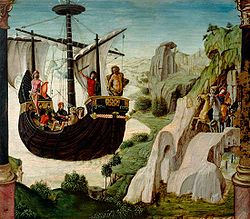
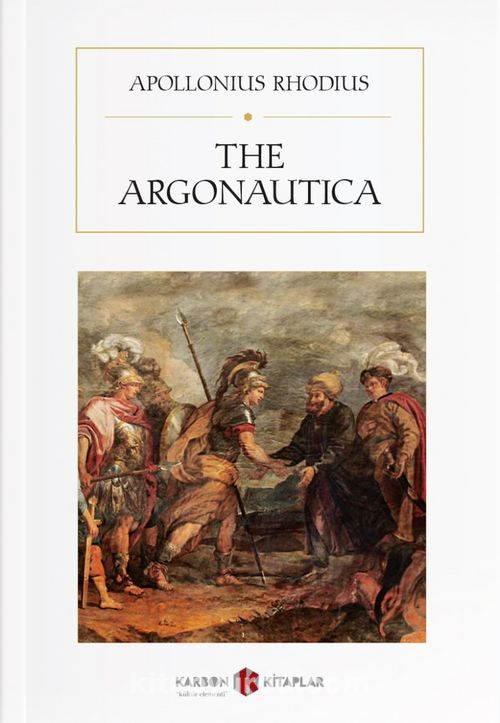
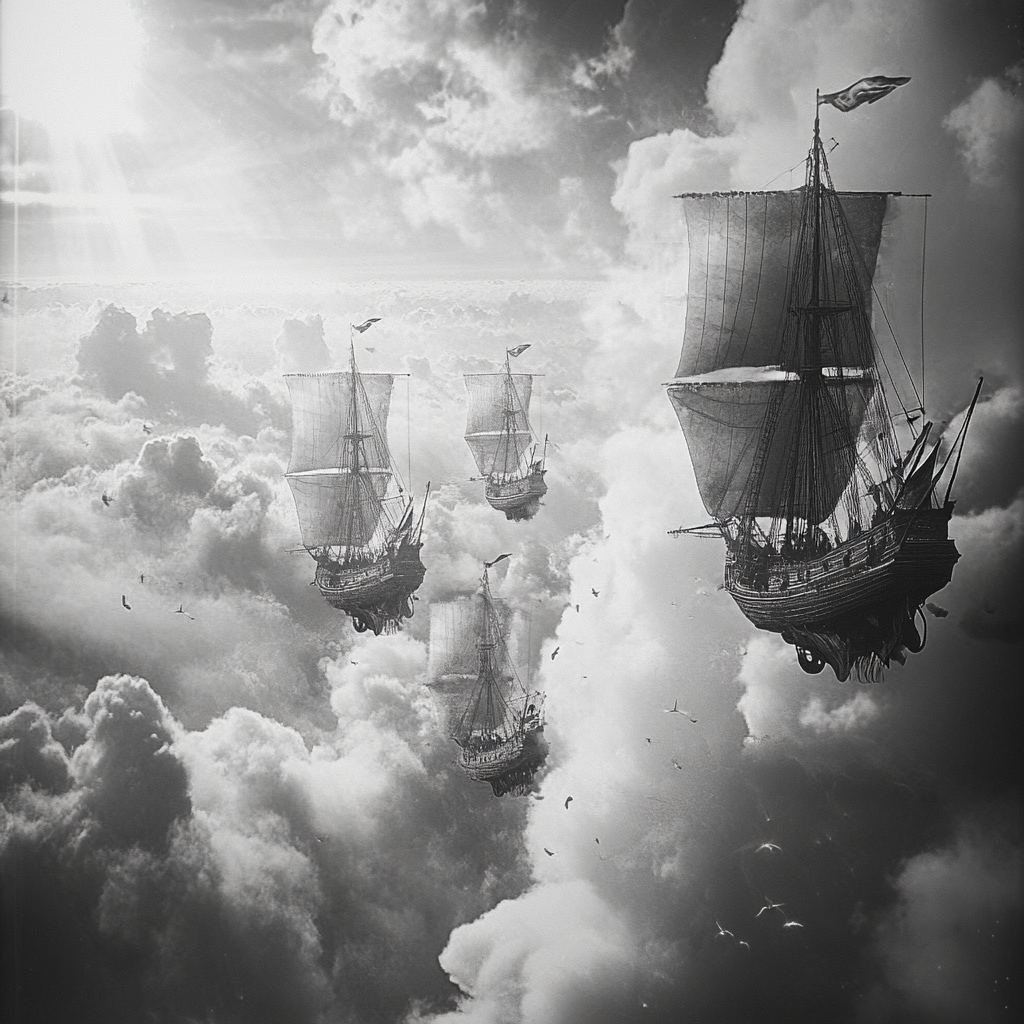
The “orphic” part originates from Orpheus, a character in the ancient Greek poem Argonautica, dating back to the 3rd century BC. The Argonauts are travellers on the boat Argo and are on a quest for the golden fleece. Somewhere along the route, sirens are trying to seduce the boatsmen. Still, Orpheus – a talented singer/musician on the boat – can shield the boatsmen from the Sirens’ temptations through his celestial, beautiful songs and voice. In other words, he was a noise canceller avant la lettre.

Some salient quotes from Bahadırhan Koçer:

The orphic experience, therefore, refers to the transformative way sound and media technologies can be used to control one’s sonic environment, creating a personalized auditory space that shields individuals from the overwhelming stimuli of modern life.

It is conceivable to argue that the nature of this transformation lies fundamentally in a shift from communal to individual listening.

The protected space needed for “sensory and emotional self-care”

In this sense, orphic experience can be seen as a way of escaping from the demands of the real world and constructing a self-contained, artificial reality.

By carefully curating their auditory environment and creating a personalized soundtrack to their lives, the individual can signal their taste and distinction to others, and distinguish themselves from those who do not possess the same level of cultural capital.

The “orphic” concerns the creation of a protected, isolated space in which the rules constraining clear thought can be suspended.

Experience

The second part is about “experience”. The words “Narrative” and “Experience” have become catch-all words. Washed-out. Weak. And they all suggest a passive audience.

Also here, a David Claerbout quote is appropriate:

I think the recent proliferation of black boxes for film and video-art is not just a practical solution to a problem of sound and light interference, but also reflects an incapability to coexist. This can become apparent in large group exhibitions, where media installations appear strong when they are shown by themselves in a small or large dark space, but they easily collapse when shown in a social space where people move about and interact. The black box is a social phenomenon, for me it is a problem.” Ulrichs, David, ‘David Claerbout. Q/A, in: Modern Painters, May 2011, pp. 64-66

“Designed Conspiracy” would be better to describe what I have in mind. With an active audience. Or even better, where there is no stage hosting the expert speaker and no passive audience just leaning back in chairs, incapable of truly internalising knowledge.

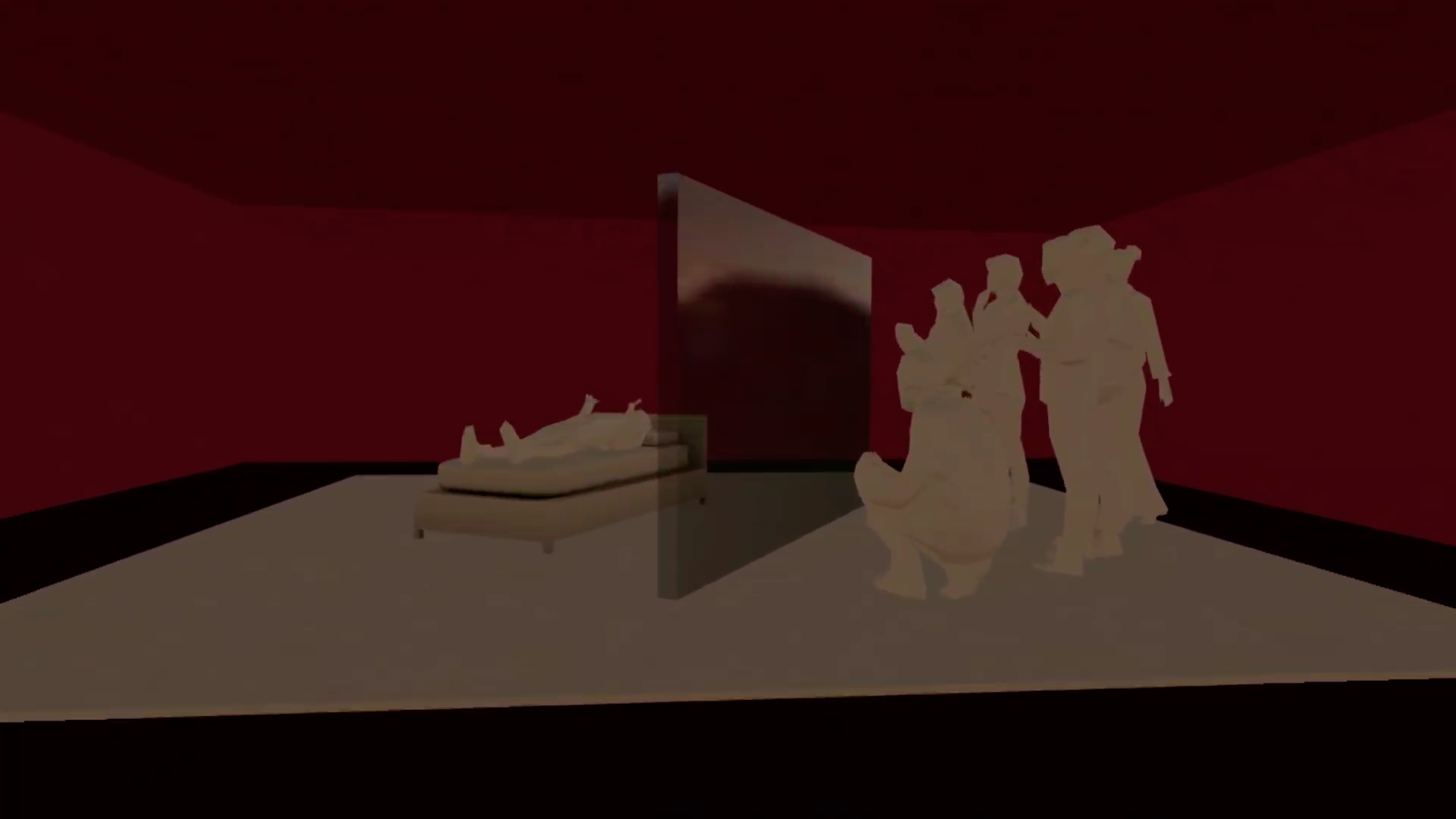
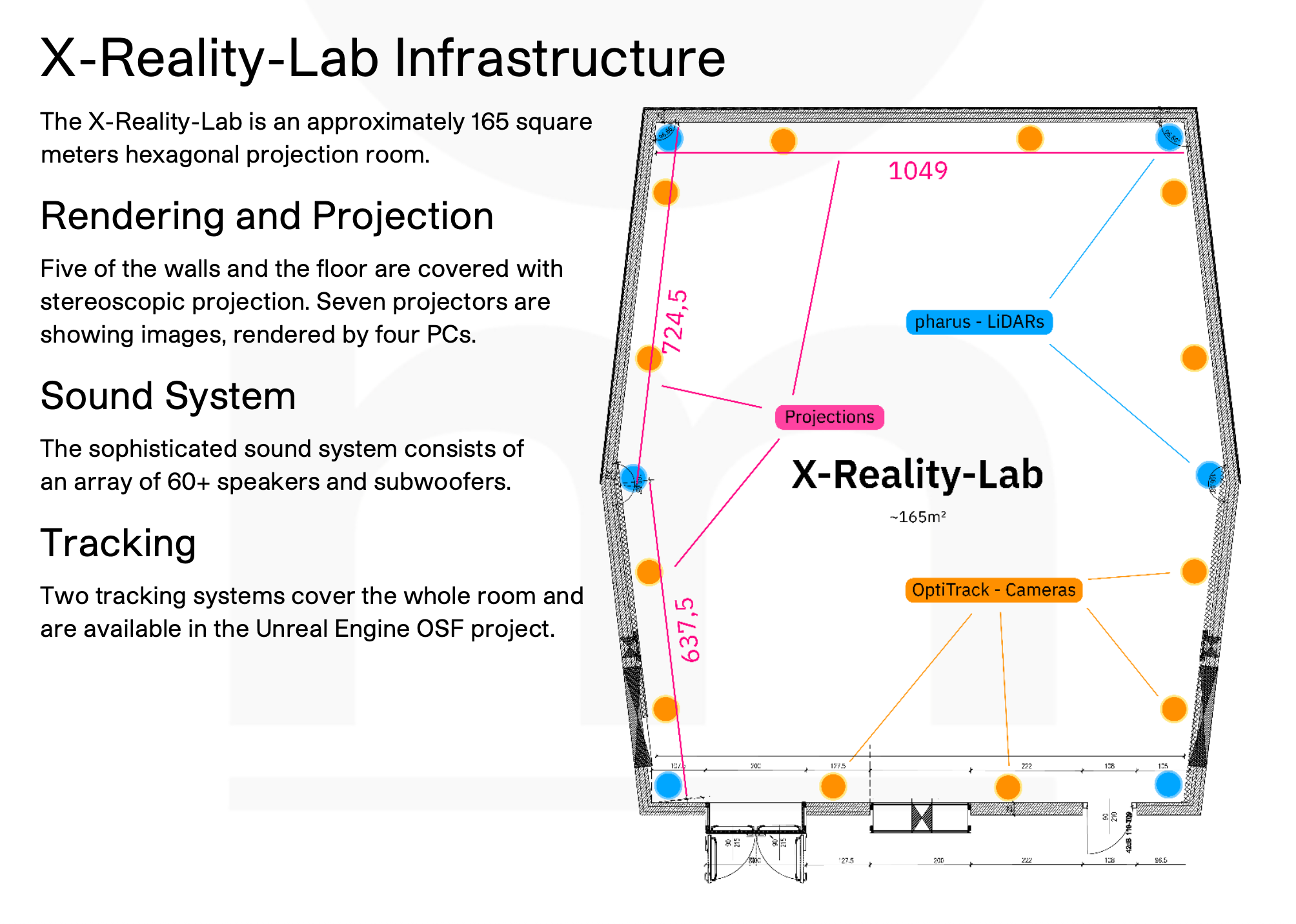
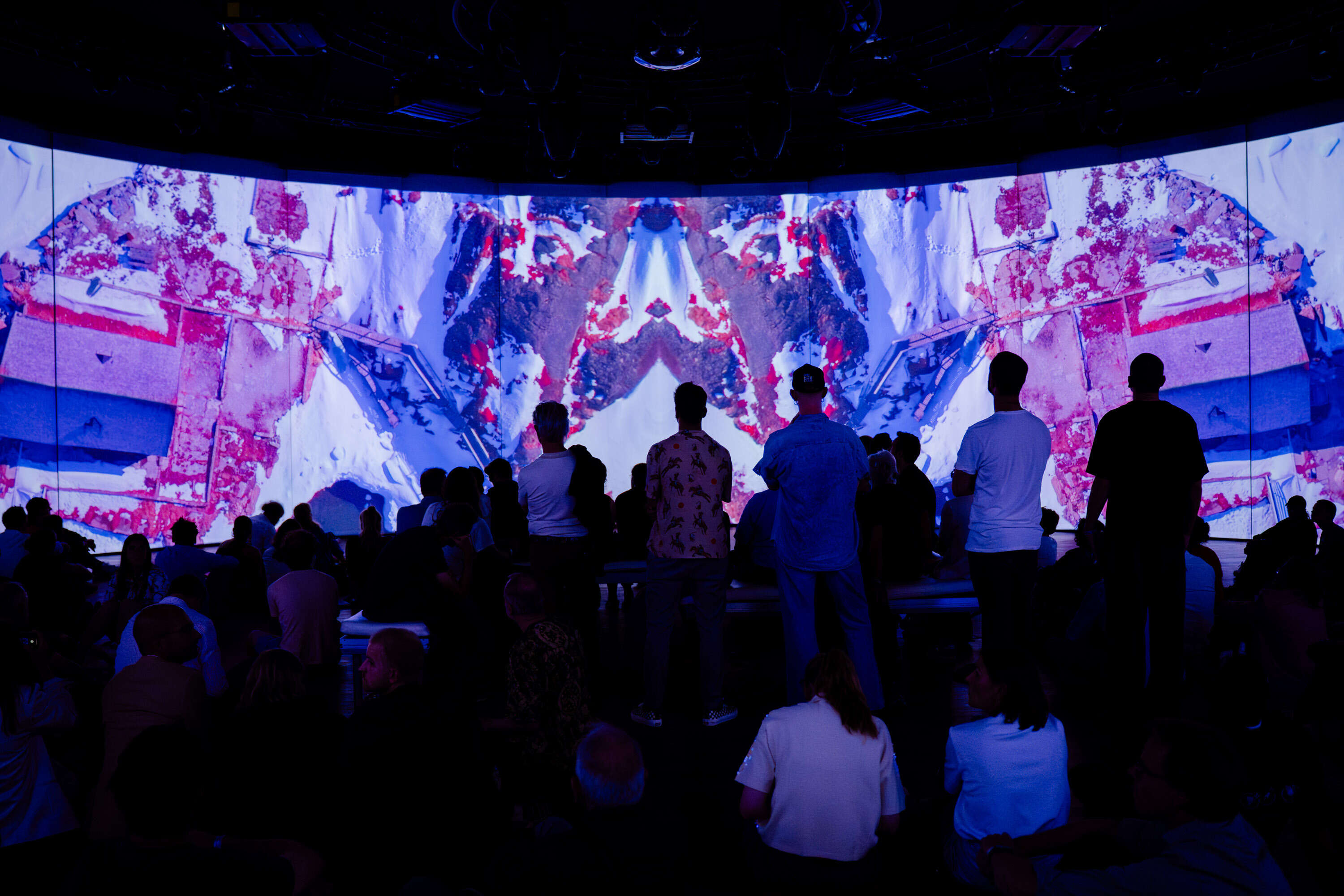
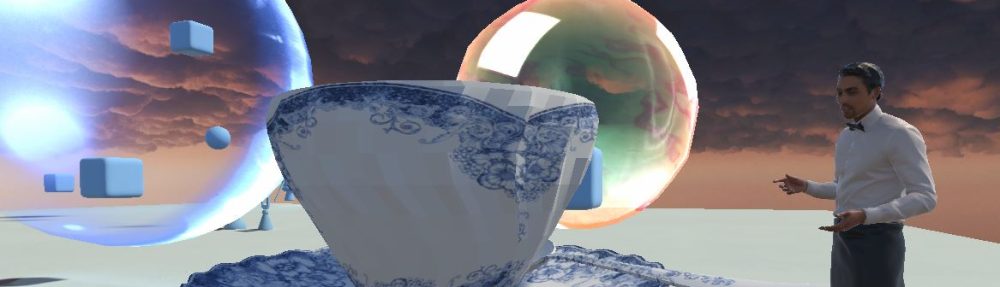
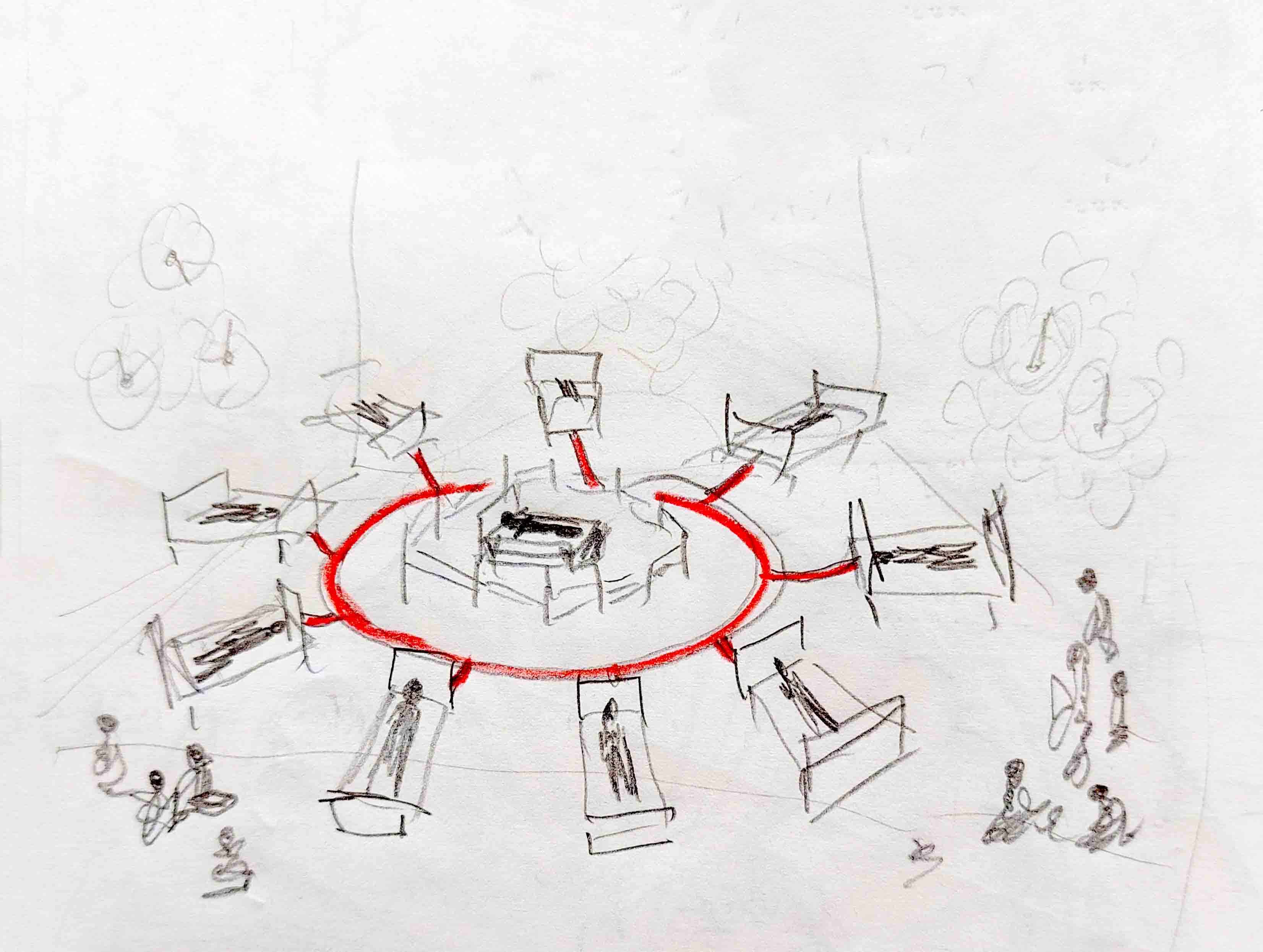
I imagine us inside a 360° immersive room: a six-metre-high LED screen, full 360 Dolby Atmos sound, LiDAR tracking, and high-definition cameras—paired with exceptional content and facilitation. A complete experience in a box, ready to tour and deploy anywhere in the world. Am I exaggerating? Maybe not. I’ve just met someone who is building exactly this.

Synthesis

Obviously, I am using all of the above as a metaphor to try to explain what I do with my artistic interventions, provocations, and interruptions. These qualities inform my work/play. Whether that is soundscapes, installations, performances, or group expeditions.

Now that we have our protected, isolated space and a designed conspiracy, it is time to play the music. Music is the content. Content is the music.

Experiencing our music – individually or as part of a group – can feel like a trip, a trance, like digital psychedelics.

The music/content is presented in the right space, with the appropriate emotional and psychological atmosphere—the backdrop, if you will—inviting and sustaining safety, interest, curiosity, awe, and growth.

The rhythm is softer, slower, quieter vs. harder, faster, louder.

We embrace – and even design – flaws and imperfections, spontaneous repetition, and noise, inviting the participants to connect with being human, and to internalise the content at an embodied level of sensory experience.

We design with fifty shades of sophistication: avant-garde activism shaped by counterculture, driven by intention and direction. We build a relational infrastructure capable of holding shared ambitions, carrying a map as a symbol of movement, of becoming. These are maps that make meaning—shifting the question from the adolescent “Where are we going?” to the more deliberate “What direction do we want?”

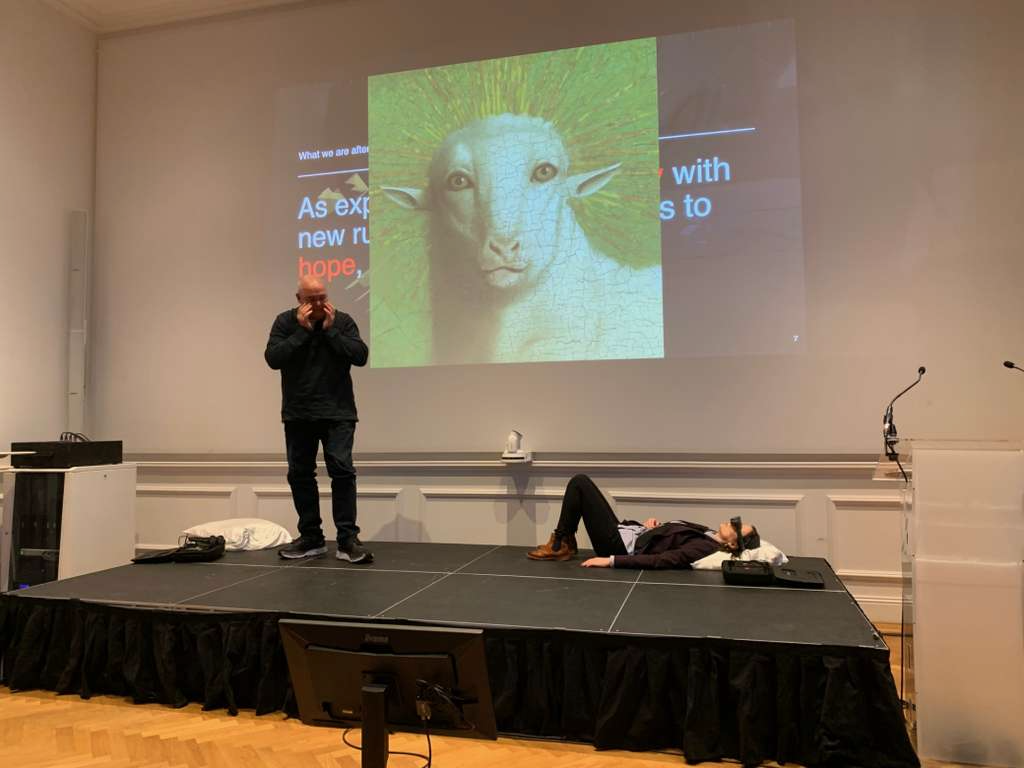
We are all Argonauts again. We are experiens-explorers. We want to create the right spaces and conditions for debating the new rules and the associated structures of reality, then acting them out as if those rules were in place. As explorers, we want to play with new rules to dream, new rules to hope, but also – not to sound too cheesy or utopian – new rules to suffer and cope with what is evil and sin. In that sense, we become all part of a shared conspiracy.

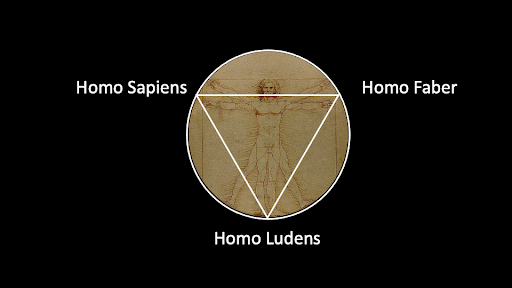
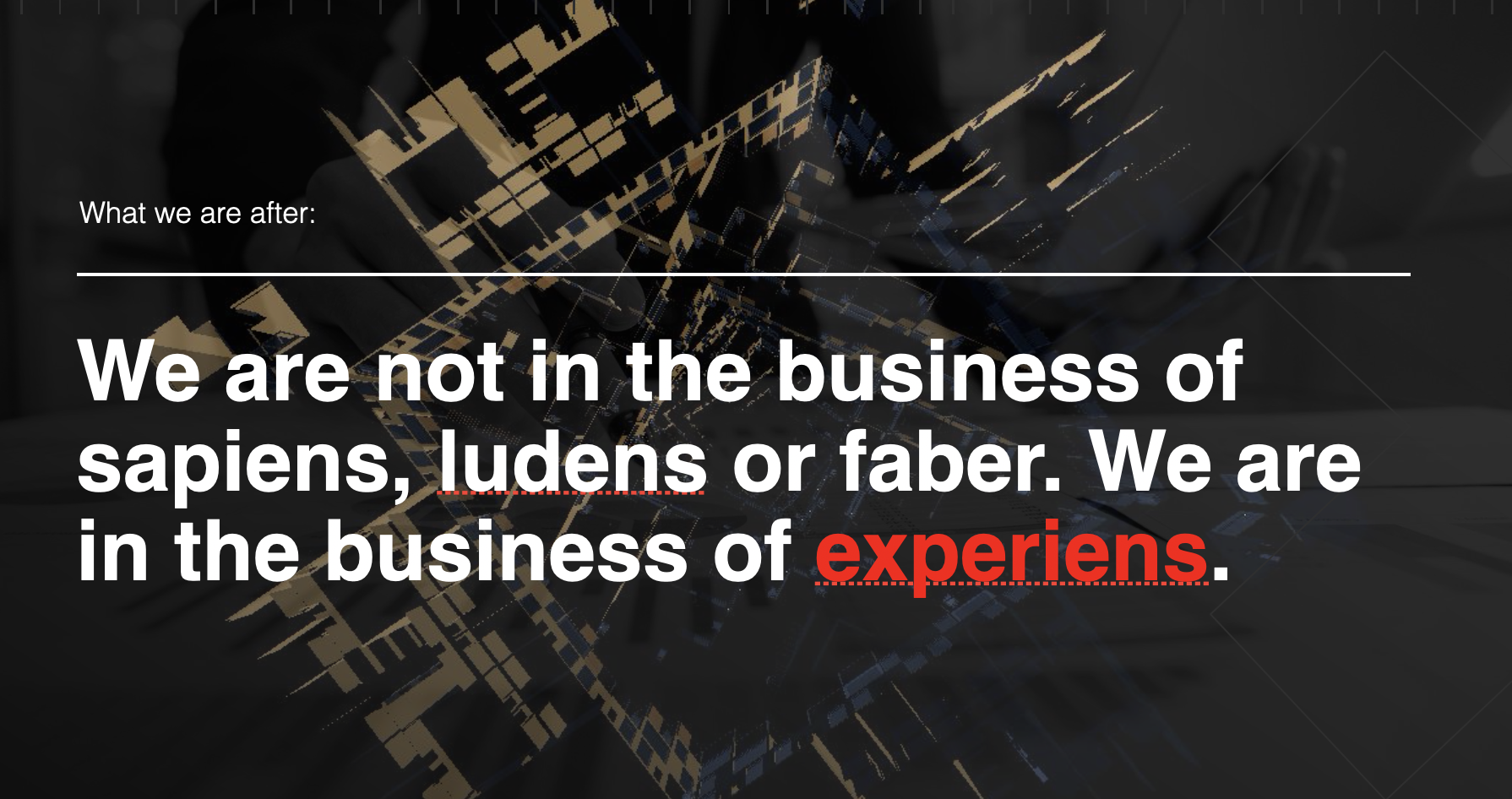
We are not in the business of homo sapiens, ludens, or faber, but in the business of homo experiens.

Making Content Work

It is rare that I read a book twice. “Making Art Work” by Patrick McCray is one of them. A book that sends you back to the future of the 50ies, a period in some sense similar to today, where we are again in a cold/warm war context, but where interesting collaborations between art, engineers, scientists, entrepreneurs, and technologists make their appearance as well. Fortunately, it was not all doom then, and neither is it today.

The book is also a huge inspiration for The Scaffold, the transdisciplinary learning studio for the never-normal that I am trying to give birth in different constellations.

In the book, the author Patrick McGray looks at artists-engineers collaborations with a very specific lens: where usually art books glorify the artists, Making Art Work looks at the engineers that made the transdisciplinary artworks work. Hence the title “Making Art Work”.

One of the key insights in these transdisciplinary collaborations is the evolution from “What do I want?” to “What do we have?” Usually, the artist comes in with what she/he wants and asks the engineers to make that happen. This approach leads to a lot of misunderstandings and frustrations. A better take is to start with the question to the engineers “What do you have?” and let the artists play and be creative with what is already there.

The book is a treasure of other gems, anecdotes, and more in-depth research of the life and work of folks like Frank Malina (rocket engineer turned artist), Billy Klüver (laser-beam engineer turned curator/impresario), Jean Tingeley (artwork/machined that destroyed itself). These were also crazy times with Andy Warhol, John Cage, Robert Rauschenberg, Marcel Duchamp, and many others.

Jean Tingeley – Hommage to New York, 1960 – The New York Times – Photographer unknown

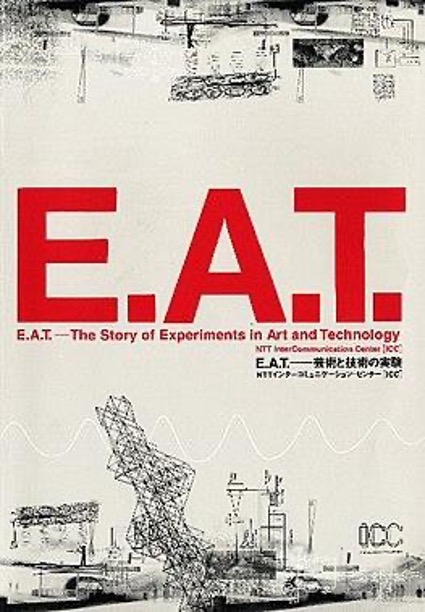
One of the initiatives described is the E.A.T. Experiments in Art and Technology, driven by curator/experimentalist/impresario Billy Klüver.

There was so much going on at E.A.T. and the best way to get a sense of the depth and breadth of their work is by reading the book, or sitting down, relaxing, and enjoying this +1hour video about the initiative, narrated by Julie Martin, at that time “Director of Experiments” at E.A.T., and in this video really charming and full of humor.

Not only is her title cool, but the title reflects the core E.A.T. ethos which was all about experiments. The outcome was deemed less important than the journey of the experiment.

The becoming is more important that the state of the thing.

In my earlier post “Apple Just Upgraded the Illusion”, I already touched upon process philosophy as “a way out of what is today seen as overly deterministic thinking about technology and time, and clears the road for thinking about digital technologies and digital selves not as objects but as processes and becoming“

“Projects that did not get realized are as interesting as projects that are”

Julie Martin talks about reverberating beyond careers and personal lives, cultivating a sense of play, disciplinary hybrids, “artrapreneurship”, and taking purposeful risks in order to explore new boundaries in both art and science. How cool is that!

The precursor of E.A.T. was an amazing one-time event “9 Evenings: Theatre and Engineering” one of the first large-scale collaborations between artists and engineers and scientists, held in the 69th Regiment Armory in New York, a huge empty space that was transformed into a theatrical performance space in five days.

E.A.T. was also the main contractor/curator for the content at the PepsiCo Pavillion at the World Fair Japan in 1970.

Here is an excellent article in IEEE Spectrum Magazine of Feb 2020 by the author of Making Art Work, Patrick McCray.

I love the subtitle “50 years on, artists and engineers staged one of the most ambitious and expensive multimedia events – and infuriated their corporate backers”

Here are some pictures from that article:

Both “9 Weeks” and the “Pepsi Pavillion” highlight the importance of space in orchestrating new skills and behaviors. Space as a language. Space as in spatial computing. Space as in spatial thinking, spatial creation.

In re-reading the book “Making Art Work” and writing this post, I suddenly realized that most of my work is about “Making Space Work”, or even better “Making Content Work”. A practice where most of the work is an experiment. Where the becoming and the performance in space are more important than the resulting artifacts.

Performance by the performers on-stage, but also by the participants. Their journey becomes an experiment as well, a curious meandering through an endless labyrinth, letting them connect the dots and do the meaning-making, rather than considering the audience as passive consumers of content that need to be hand-held, directed, and manipulated by and in a scripted non-malleable “show”.

As I mentioned several times before, my practice is not in the entertainment business, my practice is in the learning “bildung” process. These methods are underpinning my work in the area of interventions, provocations, and interruptions. In other words, all my work is about similar forms of artistic and aesthetic expression and experience in the co-creation of content. These methods also led to a new vocabulary and a new set of aesthetics to describe and share what I do and why I do it.  

I feel like I am painting with content. Making content work. I am hungry to unleash this creative energy in some big space, together with technologists, scientists, artists, and entrepreneurs.

Warmest

That’s it, I am leaving the real world

I always felt restricted by the real world. But now, I’ve found my true calling in the virtual world of New New Babylon.

As I explore this world, I’m constantly amazed by the endless possibilities it offers. The colors are vibrant, the sounds are unique, and the technology is incredible. It’s a place where artists and experimentalists like myself can pursue our passions without any restrictions.

I made the life-changing decision to leave the real world behind and make a living as an artist and experimentalist in New New Babylon. I sold everything I had, bought the necessary equipment, and dived headfirst into this new world.

At first, it wasn’t easy. I struggled to make ends meet and had to work long hours to create my art and experiment with new techniques. But I’m determined to make it work, and I collaborate with other artists to create some of the most stunning works of art that New New Babylon has ever seen.

As my reputation grows, so does my income. I’m able to live a comfortable life in the virtual world, and I feel more fulfilled than I ever have in the real world. I know that this is where I truly belong.

But even with my success, I never forget my roots. I miss my family and friends, but I know that I could never go back to the real world. New New Babylon is my home now, and I’m content creating and experimenting in this vibrant world.

Years will pass, and I hope that my art will become more and more famous. I want to become a household name in New New Babylon and inspire a new generation of artists and experimentalists. I’m happy and content, knowing that I’ve made the right decision.

In the end, I realize that sometimes, the things we need the most are not in the world around us, but within us. I’ve found my true calling in the virtual world, and I know that I’ll spend the rest of my life creating and experimenting, surrounded by the vibrant colors and unique sounds of New New Babylon.

Warmest

Created by ChatGPT on 1 April 2023

A Scaffold for an Avant-Garde Business

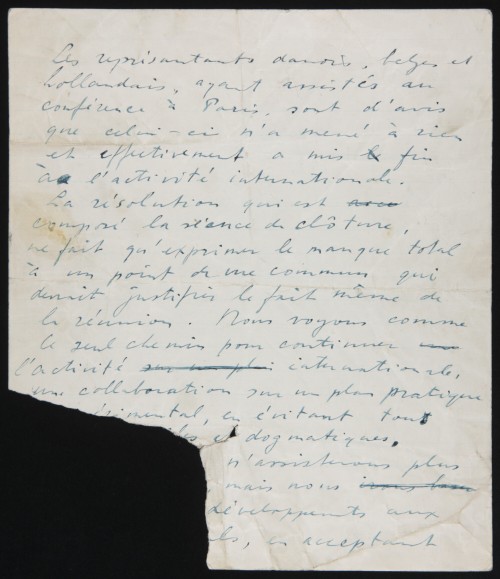
Cobra Manifesto page-1

Cobra Manifesto – Image from Beinecke Digital Collections

As many of you know, I am a big fan of Cobra, the avant-garde art movement established in 1948. The movement only existed for three years, but forever changed the landscape of postwar European art. 

What would an avant-garde business movement look like? 

How could we scaffold that?

In my Sep 2022 update, I briefly introduced The Scaffold. 

Today, I would like to share some more details about The Scaffold

The Scaffold is a brand-new transdisciplinary learning studio for the never-normal

A Scaffold: a temporary structure to let emerge something new

Transdisciplinary: for each client project, we curate a transdisciplinary tribe of entrepreneurs, engineers, scientists, artists, and philosophers to reflect and speculate about your better futures

Learning: this is not learning by teaching, but learning through conversations, acting, and doing

Studio: the keyword here is critique: individual, group, and formal critique

The Never Normal: the ever faster changing environment we operate in. The best metaphor is that of the kayaker in wild water.

Older metaphors like the speedboat (brute force), tacking the sails to the wind (adapting with the destination in focus), and surfing the waves of change (staying before the tsunami of disruption) don’t serve us anymore. 

Today you are in the water. 

You have to sense faster and better what is, sense faster and better what can become, and take action – right there – in the middle of a system in full motion. 

I often hear that we need more data, data is the new oil, and we need powerful AI and Machine Learning to discover patterns in the data, so we can make better and faster decisions. 

But data will bring us only so far. 

Data tell us something about correlation. 

Correlation is not the same as causation.

And also rational cause-and-effect thinking and planning are only part of the story. 

The Scaffold is imagination in full play: not knowing all the dots, and having to keep multiple lines of inquiry open at the same time, without coming to a conclusion, ànd feeling comfortable with that.

Orchestrating and activating collective intelligence (both human and non-human intelligence)

WHAT DO WE HAVE?

WHERE ARE WE GOING?

WHY ARE WE GOING THERE?

HOW DO WE GET THERE?

WHAT RULES DO WE FOLLOW?

WHAT IS FORBIDDEN?

HOW DO WE SPEAK TO EACH OTHER?

WHAT WORLD ARE WE PLAYING IN?

WHAT DO WE REALLY WANT?

The Scaffold asks questions related to the narratives that motivate individuals and organizations from the inside. These motivations have nothing to do with marketing from the outside. These motivations share the desire for societal, moral, and aesthetic advancement. 

The experiences that we design can be in-person, and others are 100% online or virtual, or a combination thereof. Our experiences are high-touch and highly facilitated. We use world-class facilitators. We apply live scribing, live video editing, and live note-taking. We use technology in support of the content, not to impress nor to create a spectacle. We challenge each other through individual and group critique. We experiment, explore, tinker, and dare to change in flight. We use physical and virtual channels/containers of experimentation & distribution 

We believe in the long format. Transdisciplinary impact groups learn by working, doing, and acting together during an extended period of time. This approach increases trust, bonding, candor, the release of real or perceived vulnerabilities, and the discovery of unintended opportunities.

The Scaffold is your PEPA

Play – Experimentation – Participation – Activation

The Scaffold is about dreaming & imagining big with your eyes wide open for reality. 

More inspiring quotes are here

More details at https://petervanstudios.com/the-scaffold/ 

The Scaffold is made possible through strategic partnerships with https://www.nexxworks.com/ and https://collectivenext.com/

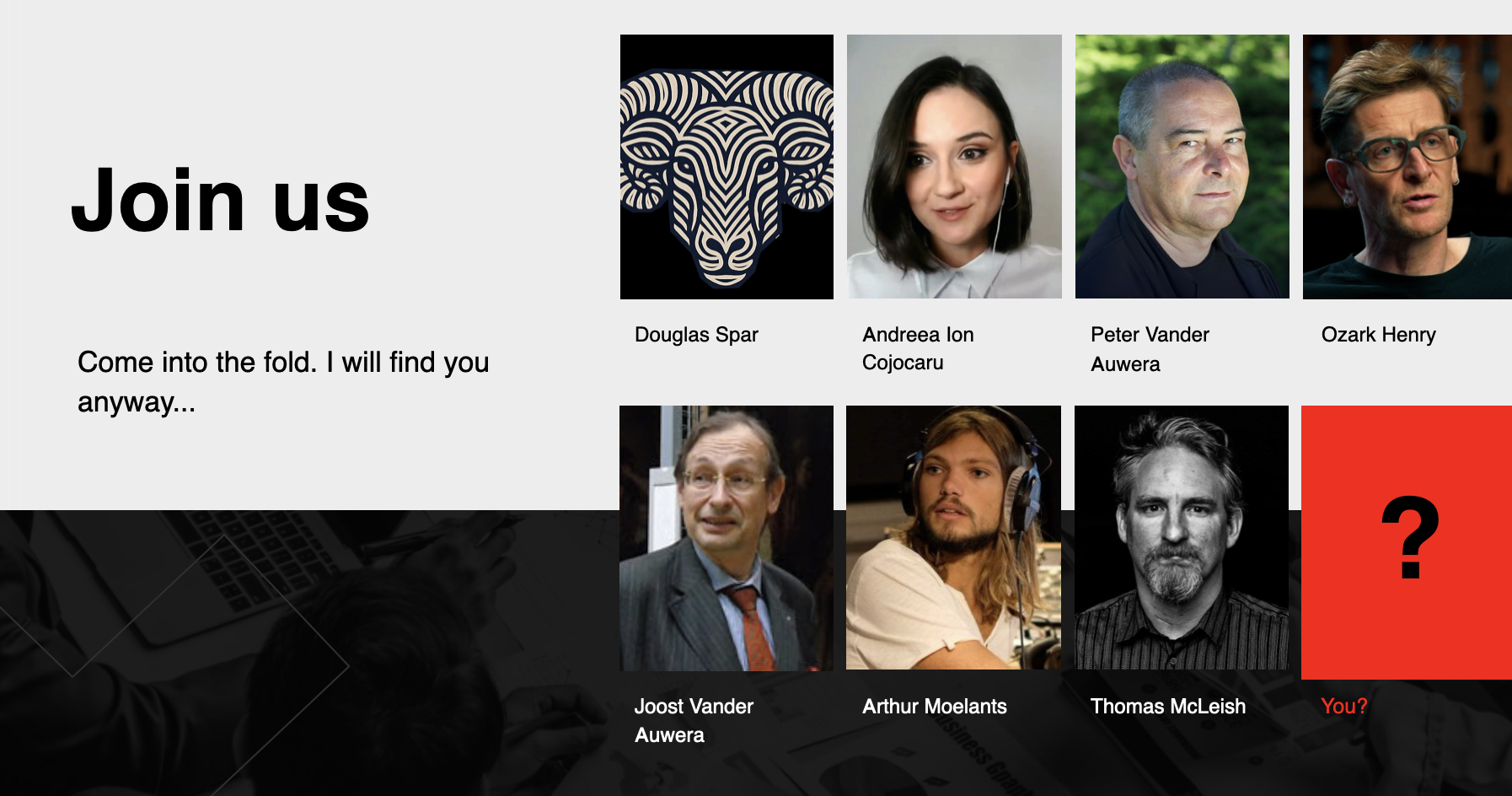
Powered by a coalition of exceptional individuals as advisors for The Scaffold. A unique mix of strategists, futurists, engineers, entrepreneurs, experts in classic and contemporary arts, masters in narrative environments, philosophers, and a licensed architect and VR developer.

We are very curious about how this resonates with you. 

Who could be interested in such an offering? 

What is great, mediocre, or missing? 

Let’s chat

Hope to welcome you soon!

Warmest,

Inspiration – Peter Cook – Utopian or Real?

From time to time, I discover an interview, an artist, a dreamer, or another non-conformist take on reality that I find worthwhile transcribing. 

I prefer to make such transcripts manually, by listening, pausing, and reflecting. Like drawing by hand. 

And also in the resulting text, it is possible to give some sense to that rhythm of reflection. 

In this post, a transcript of the conversation with artist/architect Peter Cook on the benefits of drawing by hand, on buildable or non-buildable ideas, on utopia or reality. I started transcribing around 11:15 in this video which also contains beautiful artwork. 

Somehow, I would like to grow old like Peter Cook…

In drawing

You can decide upon almost anything

How to make a building that can go from solid to transparent without a window?

From solid 

to slightly permeable 

and then translucent 

More translucent

Completely transparent

And then back again

I don’t think any of the work is utopian

The notion of utopia, the notion of the ideal perfect objective is not in my mind

I think that a lot of these drawings are buildable

they may not be a hundred percent buildable 

but they are more buildable

than they’re unbuildable

so what i’m saying is

to answer the question is it utopic 

No, it’s not utopian 

I even balk at the idea

if it’s huge you see

what happens is

the critical observer will say 

Ah! that stuff is utopian

what we do down the road is real

and it delights me to say that

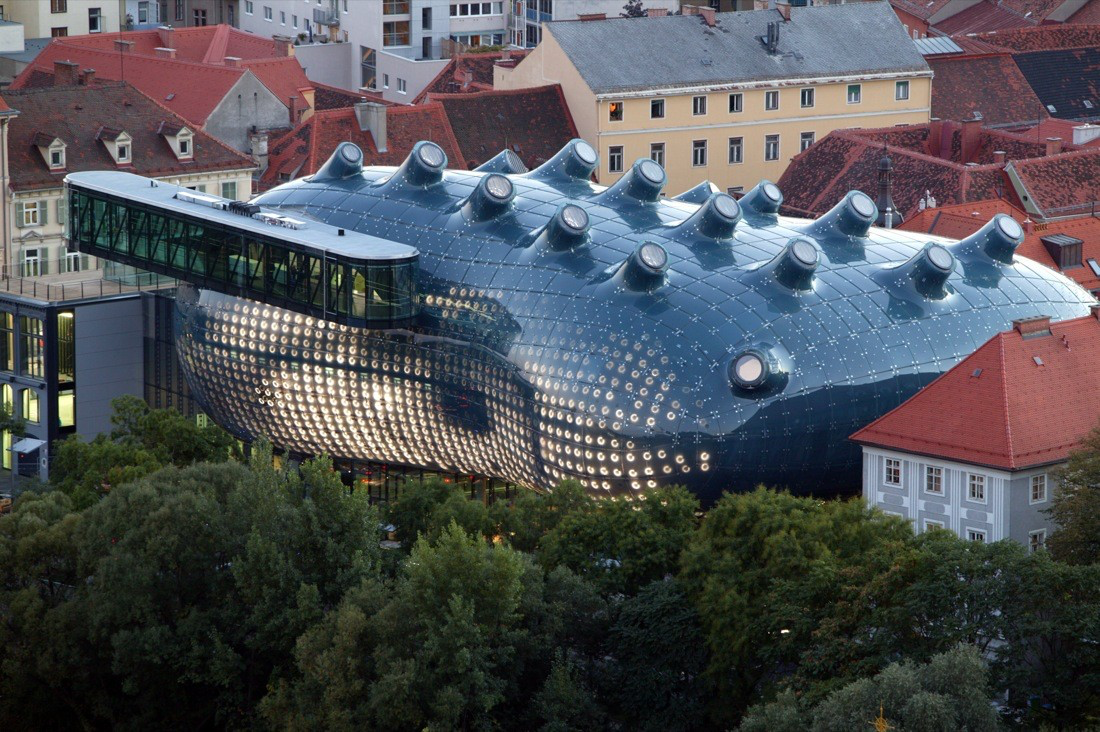
we did build The Kunsthaus in Graz

which could have been one of these drawings

but it’s there 

you can go inside 

it is still working 20 years down the line

and agreeably 

The Kunsthaus in Graz, by Peter Cook

and so then I say 

hey hold it

if you say that this stuff is utopian

what about Graz  

it’s built

if you can

build Graz 

aha you guys

you can build 80% of this stuff 

it’s just that you obey by the critics and the

regular people saying it’s utopian 

You put it aside 

you put it into a kind of

you put it into a pigeon hole that says

oh those sort of architects are utopian

and we architects are normal

the delight I get out of doing some buildings 

it’s to say

screw you 

it can be built

so then i say

I do not want to be a utopian architect

i’m not interested in utopia 

I’m interested in architecture 

I’m interested in the drawings 

contributing towards 

the discussion and language 

of architecture 

and thank you very much 

I wouldn’t mind building some of it

Below are some images of the hand-drawn city landscapes by Peter Cook. From the Louisiana Museum of Modern Art

Obviously all images are courtesy of the artist. 

A lot of Peter Cooke’s work and insights throw me back to my own architecture studies in the 70ies when we were allowed to design buildings that did not have to be buildable.

In the same way, his utopian/reality paradox is central to the ideas I developed as part of The Scaffold, a transdisciplinary learning studio for the Never Normal. The studio gives permission to play with ideas that are not necessarily buildable but that unlock some other kind of less cognitive insight.

Hope you stay on board

Warmest

Parallel Grooves

Picture generated by DALL-E

It all started with Vankatesh Rao’s “Future Tables” post last week, with the subtitle “We don’t want future visions, we want future tables”. Venkat introduced the concept of “temporal potential groove”.

I added the following comment to his post:

“I enjoyed this one very much. You have written so much about time that my feedback may sound trivial. Anyway. I felt attracted to “temporal potential groove”. It made me think about grooves in vinyl records. About remastering to improve the dynamics of output. Music in general as a scheme of bars, tempo, etc. About the grid and snapping to the grid in music and other software. Also about furrows on land, and riverbeds. And how we could learn to unsnap from the grid, groove, riverbed, etc to find new paths that are not defined by the “table”.”

I wrote about unsnapping from grids before

Image credits: Microscopic Things/Youtube

Just a couple of days later, I had my monthly catch-up call with Josie Gibson, and we started a lovely conversation about vinyl records. 

Yes, for those who remember, vinyl records “sound” different. It is an analog sound. It has a warmer, more human touch to it. We are so used to listening to compressed, streamed, digital music that listening to really high quality sound/music is an experience that many of us don’t have any real experience with. Neil Young wrote a whole book about it and the lack of HD sound was the reason for him starting the Neil Young Archives

But besides the sound quality, there is also quite a difference in the experience of consuming music.

Sometimes, the pickup stylus jumped out of the groove, jumping to an unexpected part of the song or even the album. There was some sort of enjoyable unpredictability. 

You were also supposed to listen to the whole album (or at least one “side” of the vinyl disc) in one non-interrupted session. 

Also, we lost the patience to wait, to be comfortable with the in-betweens, the no-groove areas between the songs.

There was at some time the notion of a “concept album”, where all the songs of the album belong to a coherent concept/narrative, instead of a compilation or sequence of greatest hits or unrelated “singles” 

As we discussed, we made parallels to the way I curate learning experiences, where the value is in the coherence of the narrative and associated speakers, and not just a list of individuals taking the stage for their standard pre-canned talk. My ambition is to take people out of the groove, to discover parallel worlds and options. 

Josie coined the term “Parallel Grooves”, obviously T-shirt material! I should seriously consider hiring Josie as my copywriter 😉

Mock-up T-Shirt with image from DALL-E

The vinyl groove is one metaphor. 

We could also consider the riverbed: by putting obstacles in the riverbed, we can change the flow of the water, we can divert the flow.

Or waterfalls. Josie spoke about “the language of waterfalls” and what happens when you put a big rock at the top of the waterfall and how the language of the waterfall changes.

Image generated by DALL-E

Serendipity is my companion these days, and as I was writing this post, I bumped into this image of Cameron Falls in Alberta, Canada:

Cameron Falls in Alberta, Canada has crystal clear water on normal days, but when abnormally heavy rainfall hits the region, a phenomenon happens. Sediments called agrolites are released into the water and make the river look pink or red when light hits it. Seen on Facebook https://www.facebook.com/auckee 

Or the metaphor of furrows in a field. 

Here is my uncle Hubert plowing a fresh field with his tractor. Ask him how difficult it is to steer the tractor out of the furrow.

But what if he could plow not only the land but also a river or a waterfall or all of them? You would get a very nice metaphorical representation of my idea of curation.

Image generated by DALL-E

People think they are in the groove, but they aren’t. Or they don’t know what else exists out of the groove.

“They don’t know what they need, but they know what they yearn for”

(another copy by Josie)

What seems more interesting to me is to surf that yearning and go to a place in a different dimension you don’t even know existed.

“You were looking for “X” and but I let you discover “Y”

(Josie)

Parallel Grooves in other words.

Guess what? 

Parallel Grooves will be part of “Studio Interventions”, one of the three studios I am launching after the summer together with a brand new Petervan Studios website

Stay tuned

Warmest,

Petervan Expo Vernissage Video Timecapsule


As promised, here is the TimeCapsule video for the virtual opening vernissage of my first solo exhibition.

Subtitles are available in NL/UK

With contributions by my cousin Joost Vander Auwera (Senior Curator – Royal Museums of Fine Art of Belgium, Brussels), Chris Vanbeveren (my Art Painting coach – Academy for Visual Arts, Ghent, Belgium), Frank Poncelet (synthesizer soundscape, co-student Digital Visual Arts, Ghent, Belgium), and John Oliver from Interior Truth. With lots of gratitude.

Background music credits: by Meydän – Tracks: Pure Water, Under Water, Please Wake Up https://freemusicarchive.org/music/Me…

All other artwork, video, soundscape, poems, video editing by Petervan. Produced with standard tools like iMovie and YouTube Studio. 

I am inviting video artists to do something more interesting with the raw material of this TimeCapsule. Contact me privately if interested.

Joost and Chris were so kind to write and record introductory words for the opening keynotes. Below some extracts and links to the full versions. The TimeCapsule video includes slightly edited versions of the full versions in NL/UK.

Opening Keynote Joost

Joost WhatsApp Image 2020-06-30 at 10.19.18

“Petervan has a special sensitivity in his art for the image that captures. And he knows how to maintain this in a multitude of styles and media. This is evident from this solo exhibition. He greatly appreciates what his teachers teach him and that decorates him.”

“He constantly experiments, but his images keep capturing attention, in a wide variety of form languages”

Opening Keynote Chris

foto chris vanbever parels pluimen

“Peter likes to work with different materials and techniques and since a few months he also expresses himself with digital imaging. In that context, we can definitely speak of “mixed media”. There are even initiatives and ideas to give this a three-dimensional character. We can only encourage it. In his exhibition we see that diversity. There are “grid structures”, paintings with collage-like aspects, idiosyncratic representations of man, interiors, models like I already mentioned, geometric and organic.”

“I think we can safely say that Peter is a thinker in images.”

And Frank Poncelet – in his daily life Operations Architect at the Xplore Group, but here as co-student of the Digital Visual Arts Media Lab of the Academy in Ghent – made a soundscape for the TimeCapsule with his synthesizers. Check out his YouTube Channel Frame Per Second Animation). I selected his video “Pellicule”. I am sure the Corporate Rebels out there will find inspiration in this compilation.

Also included in this TimeCapsule is a recording made by John Oliver from  Interior Truth: what he does is interesting – silent witnessing videos of artists. Check him out.

Screenshot 2020-07-11 at 13.31.27

Short version here, and the long version here

My testimonial about this experience:

The silence witnessing approach is refreshing. John creates a virtual space for permission. Permission to be silent, to open-up, to reflect, to adjust, to pause, to dream, and to imagine. He skilfully listens and watches in silence, trying to discern the different stories interwoven in the recording, picking one, and editing it in a high-quality video testimony that respects the integrity of the moment.

Personally, I chose to share stories that were informed from recent reflections, rather than stepping over the lines of my own vulnerability. I know it, and I have no regrets of not exposing my worst shadows to a broader audience. I think it is good for any artist/creative to have a witnessing moment like this, to discover and articulate better what is driving the artistic process. Bravo!

The showroom of the exhibition is open until 31 August 2020. You can get in via this link.

I got some very encouraging feedback after the launch on 1 July 2020, for which I am very grateful. So, more artwork is coming. I just subscribed for another two years at the Academy for Visual Arts in Ghent: a series of 2 specialization years on painting with the aim to professionalise my practice. And cherry on the cake, two artworks already sold: “Blue Boat” and “Five Guys on the Beach”. Feels like the start of a new career.

Showroom

Enjoy!

petervan-signature

Vernissage – Chris Vanbeveren

foto chris vanbever parels pluimen

Peter Vanderauwera is één van die uitzonderlijke studenten schilderkunst aan de Academie voor Beeldende Kunst Gent, die professionele bezigheden en artistieke activiteiten, combineert met elkaar.

Werkzaam in de internationale ‘event’ sector duiken installatoire elementen op op de podia waar hij neerstrijkt en waarvan we de grondslag dikwijls kunnen terugvinden in zijn schilderijen. Het dankbare daaraan vind ik dat Peter de functionaliteit van zijn creaties kent en gebruikt.

Bij Peter is er geen strikte scheiding tussen toegepaste kunsten en vrije kunsten. Gelukkig maar. Ze staan in een even waardigheid naast elkaar. Peter is er zich erg van bewust dat de uiterlijke aspecten waarin een lezing gehouden wordt bepalend is voor de manier waarop de toehoorders de inhoud zullen ontvangen. Een lezing met zijn spreker wordt onderdeel van een beeldende installatie.

Peter is begeesterd. Dat blijkt des te meer wanneer je een gesprek aangaat met hem en je hem de tijd geeft om uit te weiden over online lezingen. Ik, als zijn leraar schilderkunst, heb dan ook nog eens het voorrecht om zulke gesprekken met Peter te kunnen voeren ten midden van zijn beeldend werk. Het universum van Peter openbaart zich op die manier.

Zijn productie is omvangrijk en divers. Het gaat van modeltekenen over figuratie tot minimalistisch abstract. Een hele gevarieerde waaier die vertelt over de zoektocht waarin Peter momenteel verkeert. Waarbij wij als begeleiders dan meteen in de verleiding komen voor een dikwijls geformuleerde stelling: het zoeken, het proces is belangrijker dan het doel, het product.

Peter werkt graag met verschillende materialen en technieken en sinds enkele maanden drukt hij zich ook uit met digitale beeldvorming. In die context kunnen we zonder meer spreken van ‘mixed media’. Er zijn zelfs aanzetten en ideeën om dit ook een drie dimensionaal karakter te geven. We kunnen het alleen maar aanmoedigen. In zijn tentoonstelling zien we die diversiteit. Er zijn ‘grid structures’, schilderijen met collageachtige aspecten, eigenzinnige weergaven van de mens, interieurs, modellen zoals ik al vernoemde, geometrisch en organisch.

Ik denk dat we rustig kunnen stellen dat Peter een denker in beelden is.

Chris Vanbeveren.

Gent, 27 Juni 2020

English translation by Google:


Peter Vanderauwera is one of those exceptional painting students at the Academy of Fine Art Ghent, who combines professional activities and artistic activities. Working in the international ‘event’ sector, installation elements emerge on the stages where he lands and of which we often find the basis in his paintings. I am grateful that Peter knows and uses the functionality of his creations. With Peter, there is no strict distinction between applied arts and liberal arts. Fortunately. They stand side by side in equal dignity. Peter is very aware that the external aspects in which a lecture is given determine the way in which the audience will receive the content. A lecture with his speaker becomes part of a visual installation.

Peter is passionate. This is all the more evident when you enter into a conversation with him and give him time to elaborate on online lectures. I, as his painting teacher, have the privilege of having such conversations with Peter in the midst of his visual work. The universe of Peter thus reveals itself.

His production is extensive and diverse. It ranges from model drawing to figuration to minimalist abstract. A very varied range that tells about the quest that Peter is currently in. In which we, as supervisors, are immediately tempted by an often formulated statement: the search, the process is more important than the goal, the product.

Peter likes to work with different materials and techniques and since a few months he also expresses himself with digital imaging. In that context, we can definitely speak of “mixed media”. There are even initiatives and ideas to give this a three-dimensional character. We can only encourage it. In his exhibition we see that diversity. There are “grid structures”, paintings with collage-like aspects, idiosyncratic representations of man, interiors, models like I already mentioned, geometric and organic.

I think we can safely say that Peter is a thinker in images.

Chris Vanbeveren.

Gent, 27 June 2020

Refik Anadol – Beautiful Speculations and Data Dramatisations

This post is a semi-transcript of a fantastic talk “Space in the mind of a machine” by media artist Refik Anadol. My post is not intended as a literal transcript, but rather as a collection of – often poetic – idea clusters of Refik’s talk. None of the ideas are mine, I just tried to condense it and brush some highlights.

The talk was given on 4 December 2019 at the Southern California Institute of Architecture (SCI-ARC). The website of SCI-ARC itself is nirvana for all beauty and art lovers out there, and worth spending a virtual visit of a couple of hours.

The talk was transformative for me, in the sense that it made me realize we truly have entered a new reality and a witnessing the dawn of a new area, full of beauty, poetry, and artistic interventions that create alertness and aliveness similar to the 16th-century renaissance.

After a long intro, his talk starts at 2:46


Criticizing the idea of canvas

Dimensional explorations

Augmented structures

“Design is a solution to a problem; art is a question to a problem” – John Maeda

Humans, Machines, and Environments in a symbiotic relationship

Can a building dream?

“Life can only be understood backward, but it must be lived forward” – Kierkegaard

The data that we leave behind us

Data “dramatization” vs. Data Visualisation

The invisible space of Wi-Fi, 4G, radio signals, etc.

A poetic exploration of invisible datasets

Data Paintings

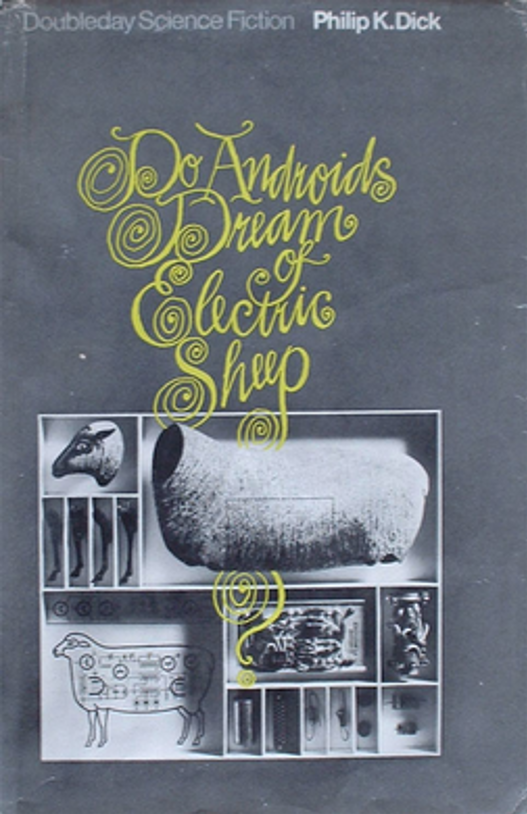
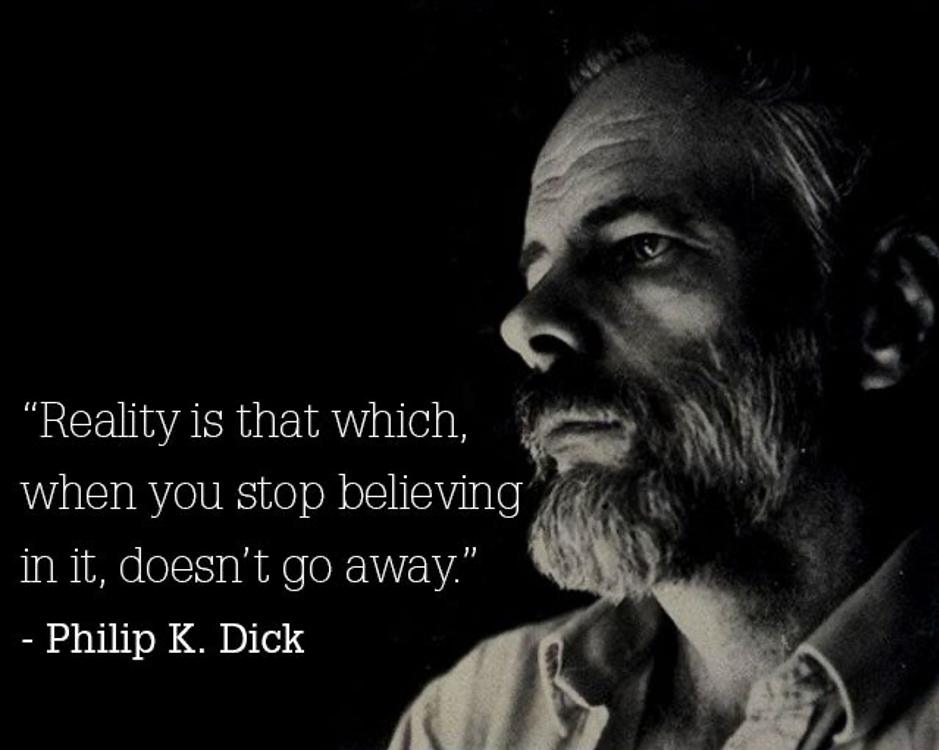
At a certain moment, Refik Anadol quotes Philip K. Dick, author of the 1968 science fiction book “Do Androids Dream of Electric Sheep”, later retitled Blade Runner, and basis for the 1982 initial version of the film.

Electric Sheep

Quote Philip Dick

This inspires Refik Anadol to seed the following insight:

A simulation is that which does not stop when the stories go away

Stories are responsible for our human desire for resolution

But the simulation is only responsible for its own laws and initializing conditions

A simulation has no moral, prejudice of meaning

Like nature it just is

There is some poetry hidden in this abstraction of data

Exploring data sets that have this quality of meditation

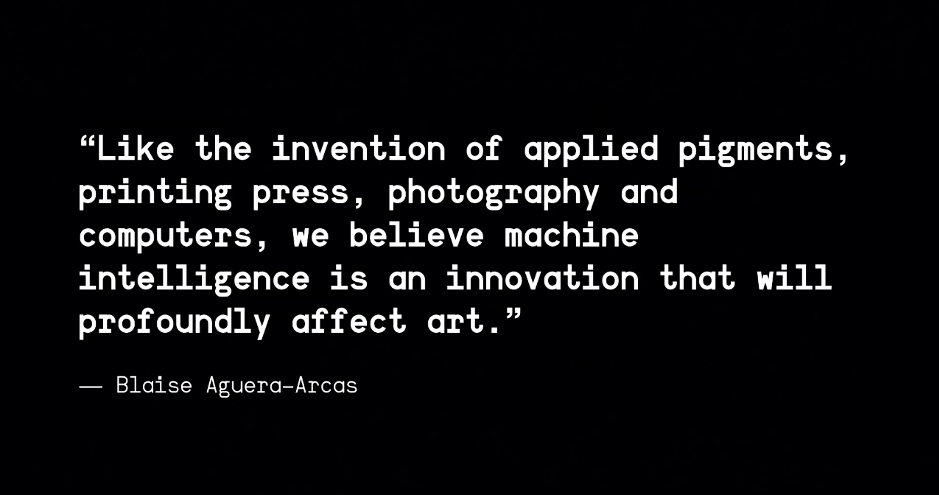
The architect as an operating systems designer, a beautiful “speculation”

Quote Blaise

Finding the moment of remembering

Finding the moment of entering a dream state

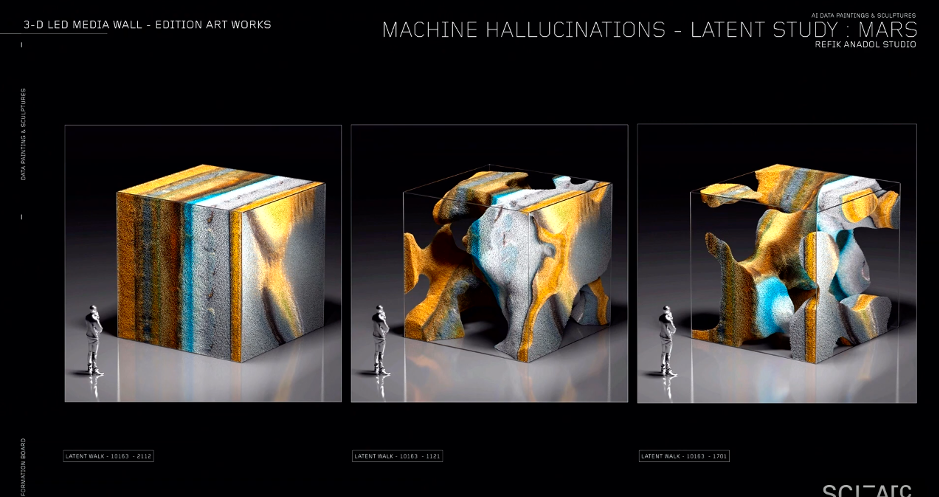
“Machine Hallucinations”

Collective memories of spaces

To make the invisible visible

Hallucination narrators

Dream narrators

The Selfies of the Earth

Machine Hallucinations

Refik is asking questions that are not just a fancy-fications of a bunch of algorithms

petervan-signature


The Foamy Explosion of Everything

larry and sergey

Larry and Sergey in hot tub bubbles in 2005 – picture by William Mercer McLeod

In my previous post, I played with words on Descartes’ “Je pense, donc je suis” – “I think, therefore I am”. In the background, you will notice my always-restless search for who I am. It is an everlasting search for (digital) identity. But maybe “Who” I am is a less critical investigation than “Where” I am?

I always have been intrigued by spheres. From my exposure as an youngster architecture student, through the discovery of Buckminster Fuller’s Geodesic Domes, from my thinking about digital identity being a sphere of fragments of influence that one could share with others, till my recent discoveries in exploring 3D drawing and sculpting software, where meshes of polygon meshes and NURBS primitives can be found and molded-in in abundance.

It should therefore not come as a surprise that – as mentioned in my Dec 2019 update –  I became absolutely fascinated by Sloterdijk’s “Foams”, part-3 of his trilogy on Bubbles, Spheres and Foam.

Foams book

I probably – with a probability of 100% – only understand a very small fraction of what is written and meant by Sloterdijk, or by some of the authors of essays introducing and contextualizing his work. I did some homework for this post by reading and reading again the excellent introduction by Jean Pierre Couture on the work of Sloterdijk in general, and Charlie Huenemann’s “Sloterdijk’s Spheres: Bubbles, Globes, and Foams”. And then starting the real thing by the master himself. It is not a page-turner: 900 pages of solid philosophical writing. I can do a maximum of 5 pages/day and need time to let it all sink in. That should do as far as the disclaimers are concerned.

Indeed, this is just a personal thought experiment – and maybe an art experiment or performance as well in the near future – re my evolution on thinking about (digital) identity, and daring to propose a different, radical and spherical perspective.

It’s a baby-idea, just out of the womb, waiting for parents and caregivers to be nurtured, and made alive. There is no practical application for this as far as I can think of, but it just feels I am onto something.

My latest contribution was The Cambrian Explosion of Identity from February 2019, already intended then as the start of a series on the subject, but other priorities distracted me from further development. Let’s add some “spherology” to the mix now.

„Peter Sloterdijk’s celebrated „Spheres“ trilogy is a 2,500-page „grand narrative“ retelling of the history of humanity, as related through the anthropological concept of the „Sphere”,… a lengthy meditation of Being and Space — a shifting of the question of „who we are„ to a more fundamental question of „where we are.“

Foams are masses of little bubbles, of course. As a metaphor, foams represent smaller zones of inclusion filled with the air of hope.” Huenemann, Charlie.

“And this, in essence, is what Sloterdijk sees as the project of the modernity: the business of constructing bigger and bigger shells, with more Lebensraum for the soul.Huenemann, Charlie.

I used to think of a robot as an entity that has a body, a mind, and sensors for input/output computation. A computational machine. But to me, it seems just a bit too easy to separate the mind and body, and to replace the mind with some form of artificial intelligence.

It feels like Sloterdijk describes “being” – being in the world, coming into the world, creating your own world and make it become alive, worlding – as acting as-a-foam, not as a “body”, a body with a brain on top that thinks. He is after the wholeness of foam and its integration and relationships with upper and lower levels of spheres and bubbles.

blue foam

The metaphor of foam is a very solid one: what was before foam, what happens after the foam disintegrates? Where does foam go, what caveats is it trying to fill? All interesting avenues for research and investigation.

It also made me think of this strange creature – the blob with 720 sexes – that foams over old wood trees as a monster we can all learn from?

Because of this sudden focus on foamy shapes, I see bubble-structures everywhere. I see foam in this discovery of Christian Mio Loclair’s art installations, interventions, and interpretations. His studio “Waltz Binaire” works for the biggest brands in the world.

He explores the harmonic friction of human bodies, movement, and nature colliding with digital aesthetics. Using cutting edge technology in interactive installations, audio-visual experiences, visual narratives, and dance performances, he continuously illuminates the beauty and drama of human identity.

waltz binaire foam

Enhanced Motion Design - Waltz Binaire Studio

I see foams in Spheres Journal:

“Yet the vision algorithms have of our future is built on our past. What we teach these algorithms ultimately reflects back on us and it is, therefore, no surprise when artificial intelligence starts to classify on the basis of race, class, and gender. This odd ‘hauntology’1 is at the core of what is currently discussed under the labels of algorithmic bias or pattern discrimination.”

Current identity thinking is based on past data. On graphs. On connections and relationships between “nodes”, “end-points” of a relatively fixed and static structure. With the extraction of value built on top of that past, amplified by AI. The past amplified.

But we did not notice that the nodes have become overlapping cells of belonging. The attractiveness of a “foamy” group- or individual-identity is that it is not fixed and static. It is “expansive”, not “extractive”. It adds value. It grows unpredictably into the future. Not like extrapolations of last year’s revenue growth. More like fruit maturing into a juicy ripeness.

Foam is dynamic. Made of bubbles, it lives within and across spheres of influence (both in the sense of actively influencing and passive being influenced).

Foam is not static. It is alive. In search of higher levels of aliveness. Until it dies. And only blobs of dust and air are left.

I see foam in Paul Baran’s network models:

paul baran

Centralized, decentralized and distributed network models
Paul Baran (1964)

What’s the impact of foamy logic on organizational models? How does a foamy organization look like? What’s the shape of D?

Are we moving from Graphs to Foams? From Nodes to Bubbles? What would nodes and endpoints be called in the foam-world anyway? Are we foam? It feels like I am going down a rabbit hole of foam. From fuzzy to foamy logic?

petervan-signature