From time to time, I discover an interview, an artist, a dreamer, or another non-conformist take on reality that I find worthwhile transcribing.
I prefer to make such transcripts manually, by listening, pausing, and reflecting. Like drawing by hand.
And also in the resulting text, it is possible to give some sense to that rhythm of reflection.
In this post, a transcript of the conversation with artist/architect Peter Cook on the benefits of drawing by hand, on buildable or non-buildable ideas, on utopia or reality. I started transcribing around 11:15 in this video which also contains beautiful artwork.
Somehow, I would like to grow old like Peter Cook…
In drawing
You can decide upon almost anything
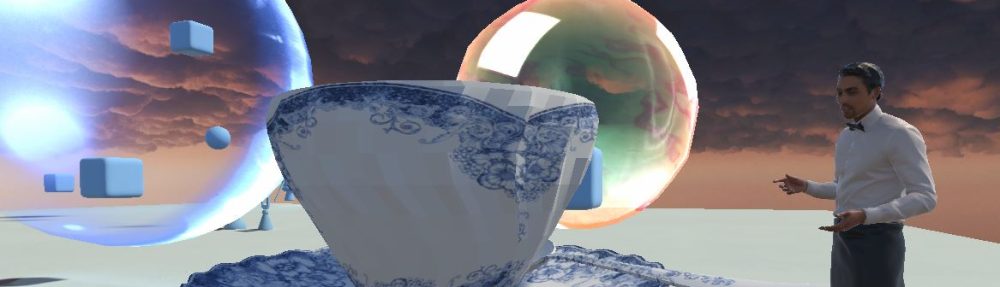
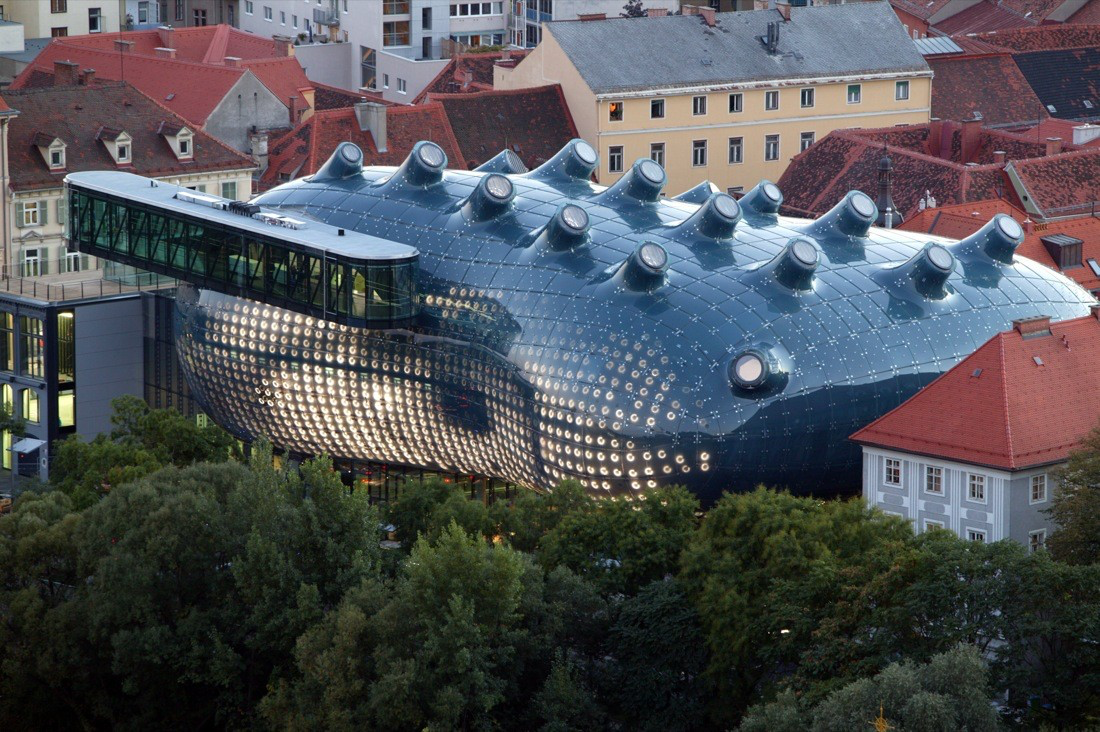
How to make a building that can go from solid to transparent without a window?
From solid
to slightly permeable
and then translucent
More translucent
Completely transparent
And then back again
I don’t think any of the work is utopian
The notion of utopia, the notion of the ideal perfect objective is not in my mind
I think that a lot of these drawings are buildable
A lot of Peter Cooke’s work and insights throw me back to my own architecture studies in the 70ies when we were allowed to design buildings that did not have to be buildable.
In the same way, his utopian/reality paradox is central to the ideas I developed as part of The Scaffold, a transdisciplinary learning studio for the Never Normal. The studio gives permission to play with ideas that are not necessarily buildable but that unlock some other kind of less cognitive insight.
As I was very focused on professionalizing my art practice, I did not produce much artwork during that time. On the website, you can discover some of my existing work by selecting a method, dynamic, and outcome. You can of course also sort per container: canvas, video, audio, etc.
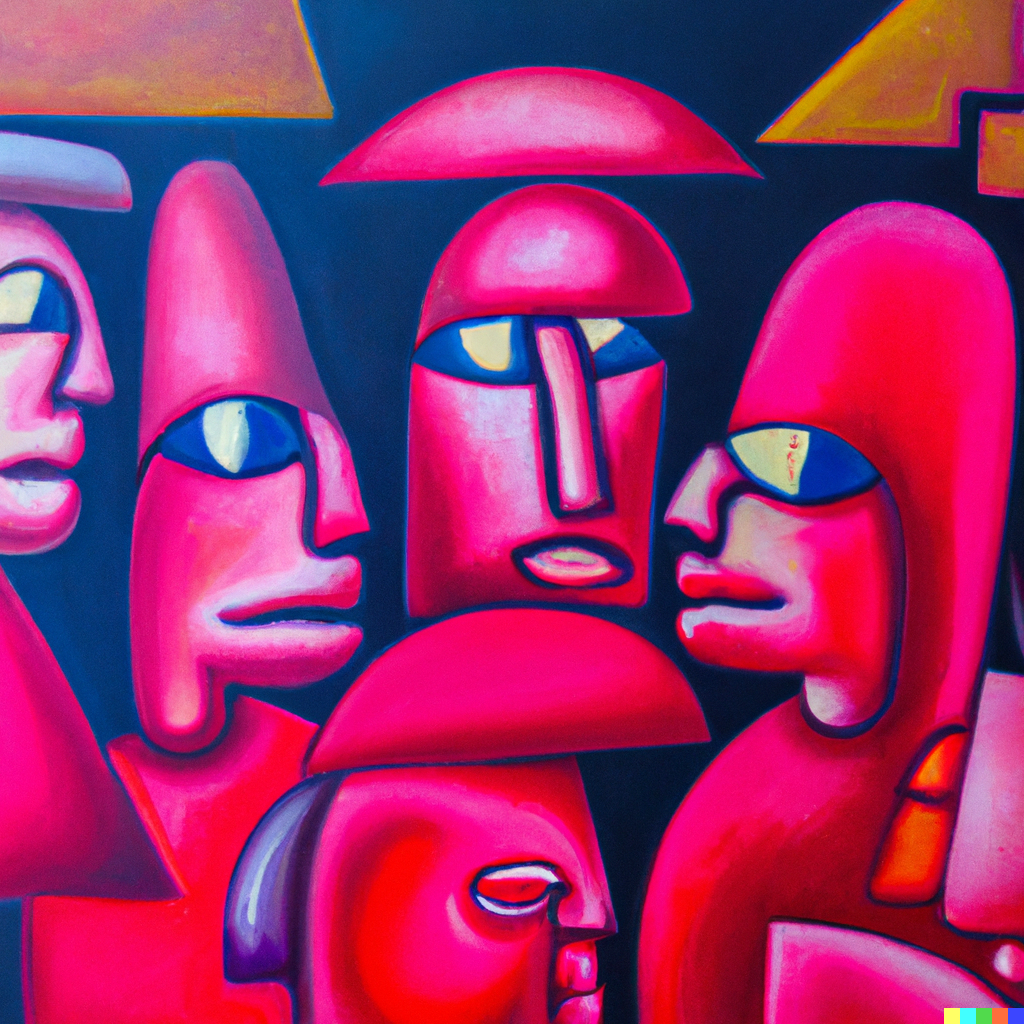
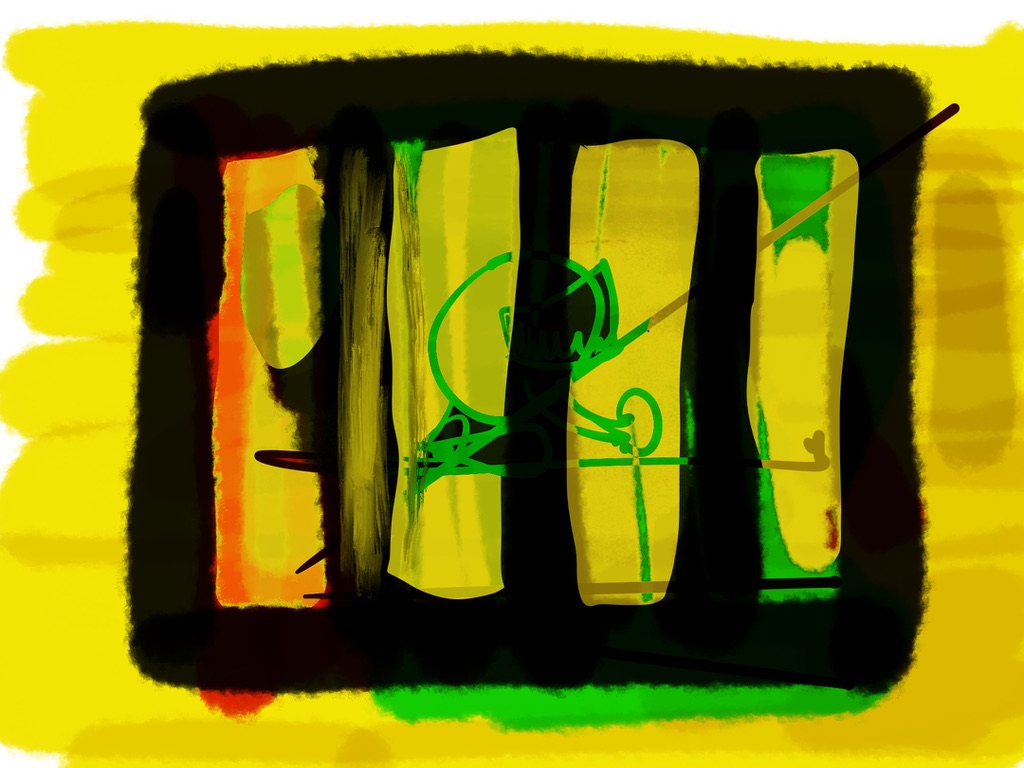
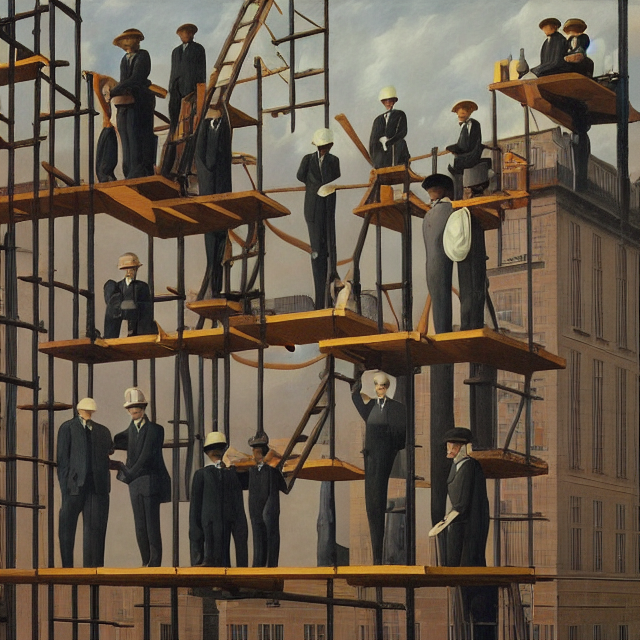
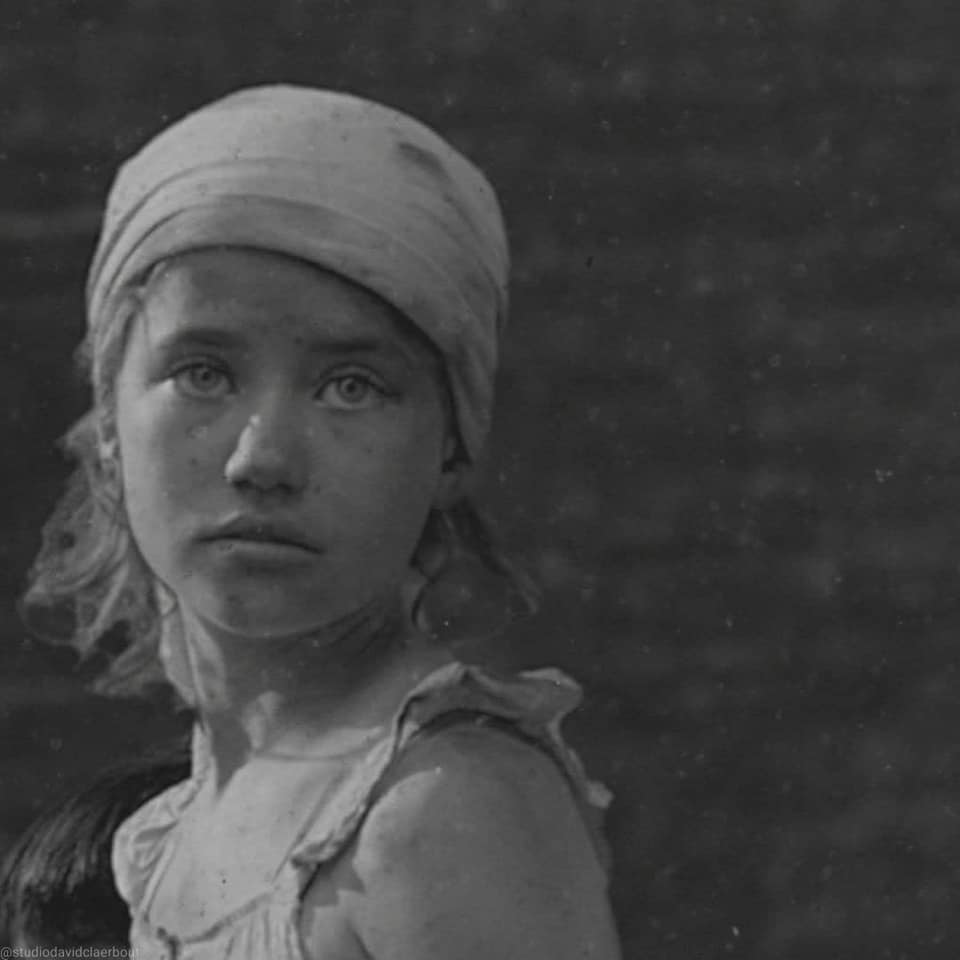
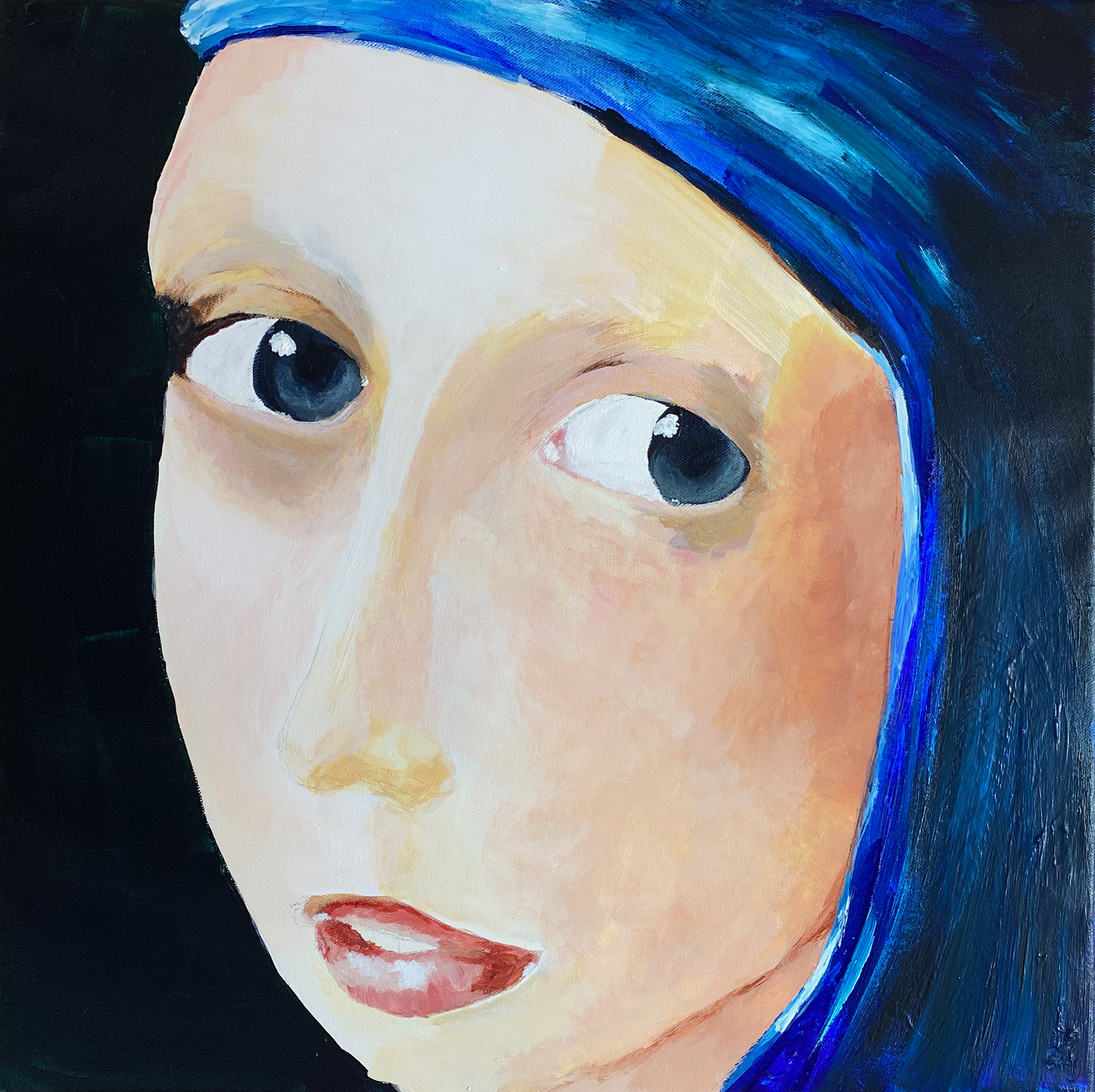
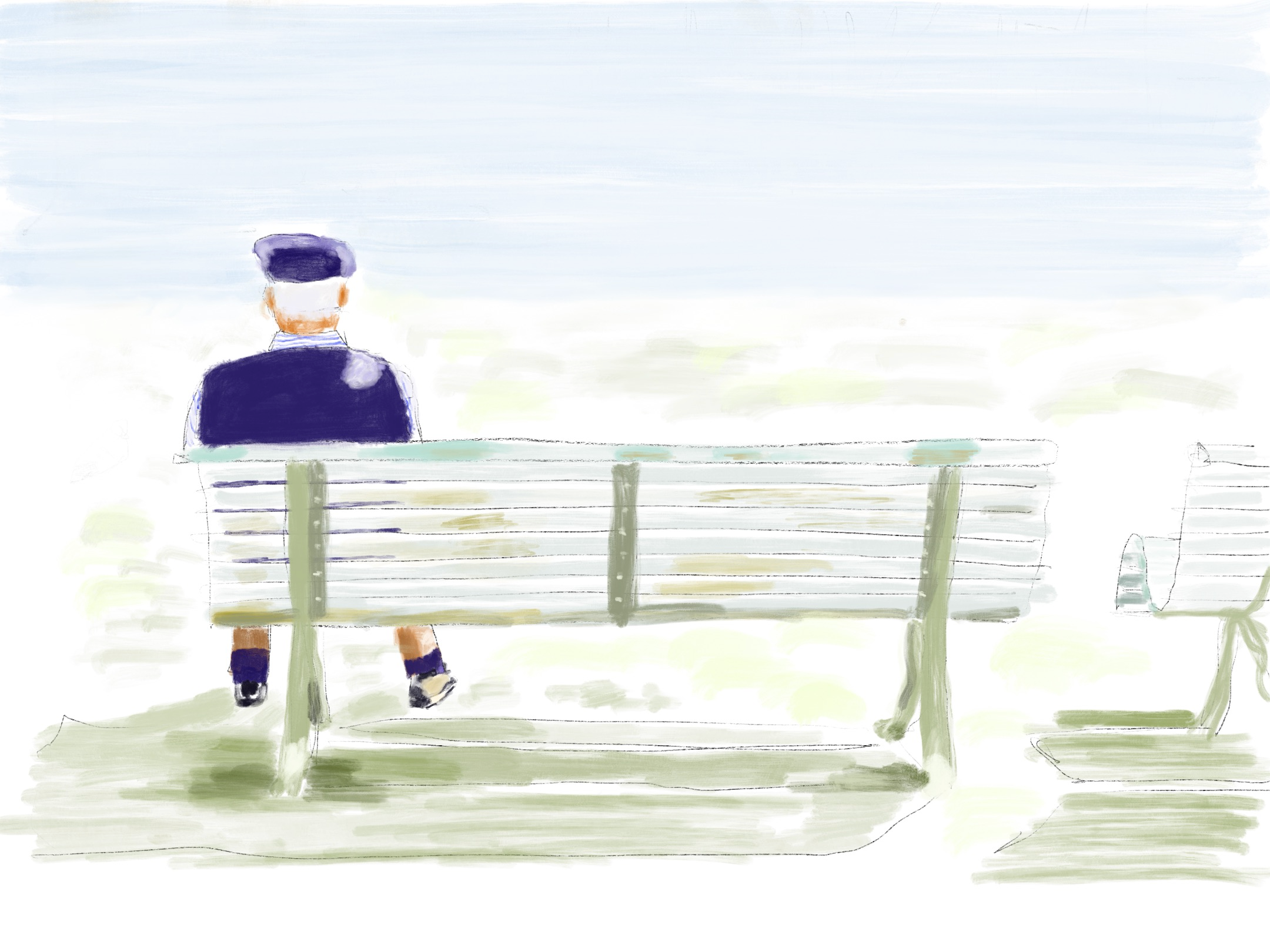
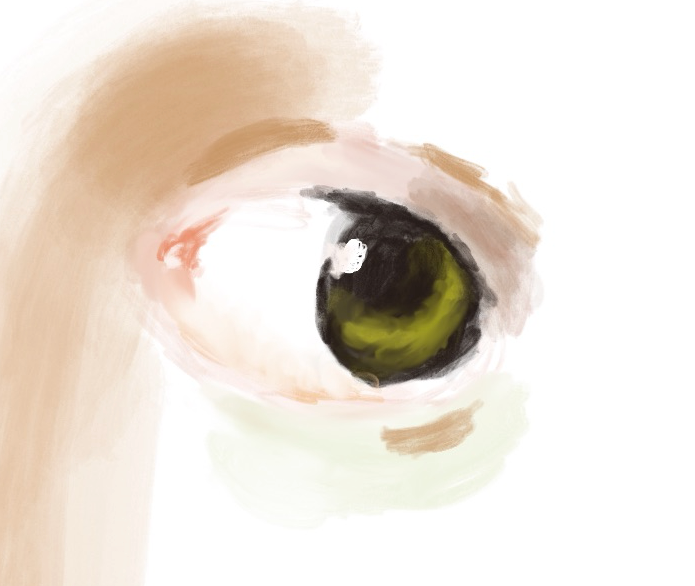
As part of the inventory work, I stumbled upon some older works and played around with DALL-E
Since the last update, I visited the following art exhibitions:
Dhondt Dhaenens, Deurle, April 2022
Berlinde De Bruyckere, Studio visit, Ghent, April 2022
Castle of Laarne, Laarne, May 2022
Storycon, BOZAR Brussels, May 2022
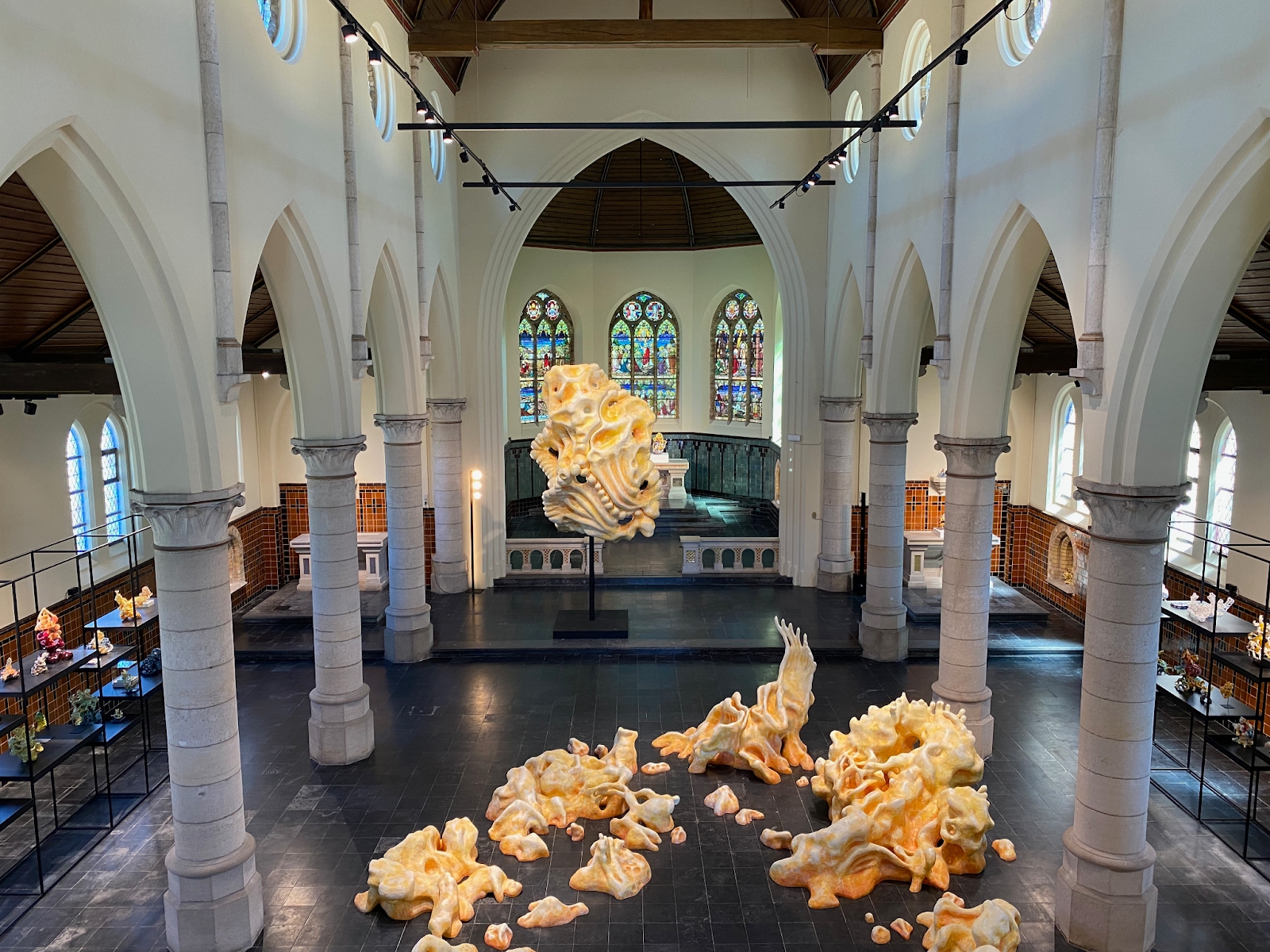
Nick Ervinck, Skins, K.E.R.K., Middelkerke, July 2022
8th Biennial of Painting, Dhondt Dhaenens, Deurle, July 2022
8th Biennial of Painting, Mudel, Deinze, July 2022
8th Biennial of Painting, Raveem Museum, Zulte, July 2022
Jonas Gekhiere, MUSEE, Oostende, July 2022
Christian Dotremont, KMSKB, Brussels, August 2022
Tanya Goelen, KMSKB, Brussels, August 2022
(Un)Common Values, National Bank Belgium, Brussels, August 2022
Nick Ervinck, Studio Visit, Lichtervelde, August 2022
Wim Opbrouck Open Hart, Dr. Ghislain Museum, Ghent, August 2022
Splendid Isolation, S.M.A.K., Ghent, August 2022
Outdoors
We had a fantastic spring and summer. We basically had sunny weather from March till August. At least that is how I recall it.
Spent quite some time outdoors: some gardening, some walking, some bicycling, some doing nothing. Got a nice tan, and people asked me where I spent my holidays. At home, but many don’t seem to believe me 😉
I have not traveled abroad since October 2019. Cannot say I miss it.
Since July 2019, I have published every month a Spotify List with new releases combined with some oldies from the 60ies, 70ies, and beyond. Search for “Petervan Ride” and select “playlists”. Selection is driven only by my personal taste (or lack thereof).
In July 2022, we entered the fourth year of this experiment. Here is the latest Ride from September 2022
I suggest you play it in shuffle mode, it enhances the surprise experience.
Family
The most important news is that Astrid passed and is now starting her last year in high school! Where has the time gone?
What else?
Horses
Astrid is still enjoying horse riding very much. And so do I!
I have three roles in the horse riding adventure: being her All Bundy, her taxi driver, and her photographer
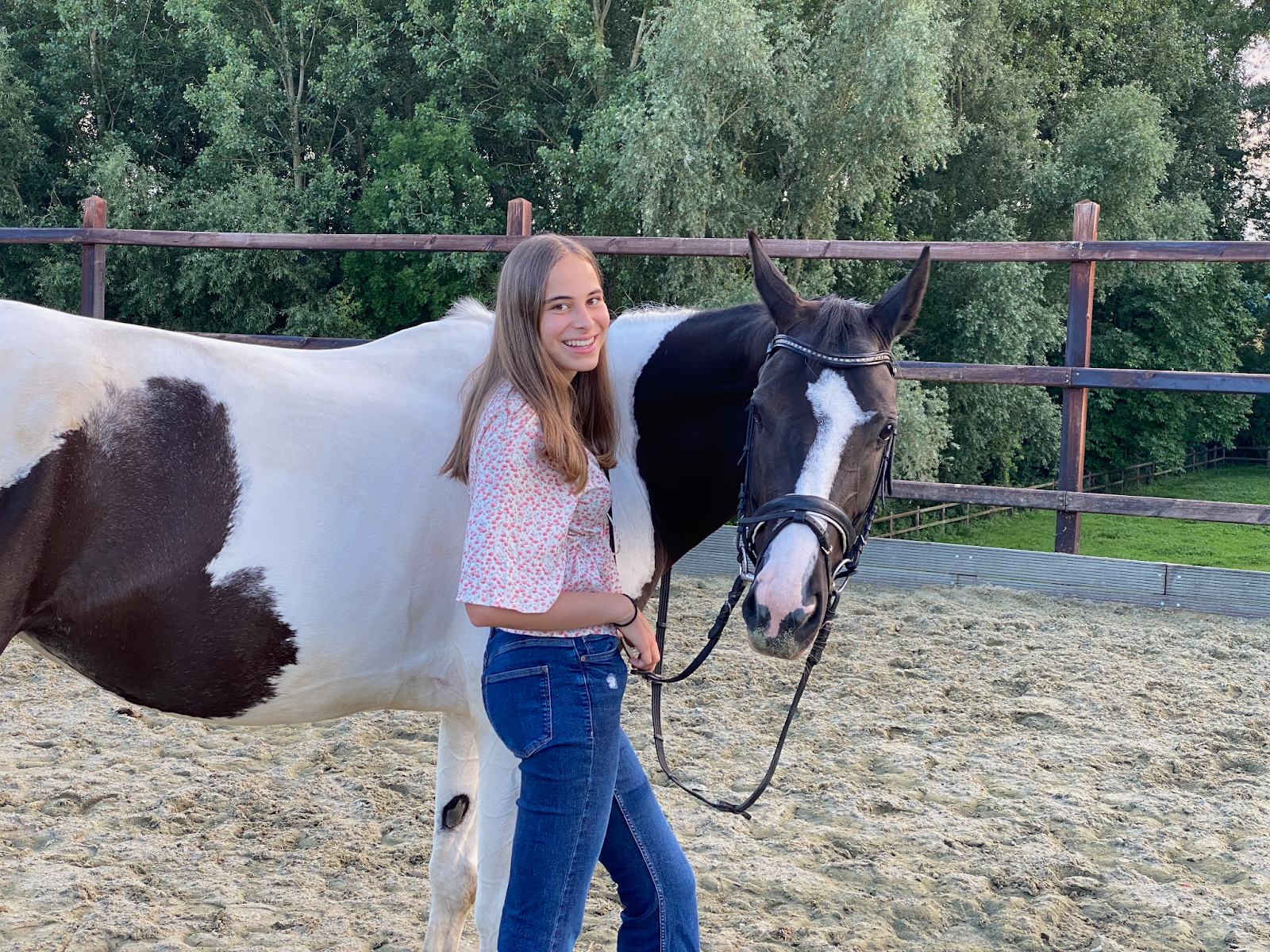
Astrid with Cienta
So, in summary, what’s next?
The plan for the next mile is to work/play on:
Support Astrid in her last year at high school
Professionalizing my art practice
Pitch and realize my project “The Scaffold”
So, that’s it for this edition.
If there is something worth reporting, the next update is for Feb 2023.
Since March 2022, I have focused on the professionalization of my art practice. As part of a grant for the innovation of cultural business models, I invited Kurt Vanbelleghem from Amy-Art and Present Future to be my coach in that endeavor.
Kurt is a curator, critic, and publisher specializing in the field of contemporary artistic practices. He received a MA in Psychological Sciences and a MA in Art History from the University of Ghent, Belgium, and a Master in Visual Arts Administration from The Royal College of Art, London, UK.
Whereas we initially started looking at my artwork only, Kurt was great at pointing out that the output of my artwork was less important than the methods and dynamics applied. And that these methods were also underpinning my other work in the area of interventions, provocations, and interruptions. In other words, all my work was about similar forms of artistic and aesthetic expression and experience. Kurt set me on a path of better articulation of my ambitions and offerings. It also led to a new vocabulary and a new set of aesthetics to describe and share what I do and why I do it.
I have now consolidated my creative undertakings into Petervan StudioS (plural).
Petervan Studios is the melting pot of three studios: The Art Studio, The Interventions Studio, and The Scaffold Studio. The Studios have the following methods, dynamics, and outcomes in common:
The three studios share the motivation and desire for societal, moral, and aesthetic advancement.
I just launched a brand new website with all details about the three studios: www.petervanstudios.com .
The Website is designed by WebIt. Thanks, Ruben, Joke, and team for your patience. Thanks also to Peter, Kurt, Janne, and Tijana from Amy-Art for help with the archiving and API integration.
Below is a quick summary of the three studios
Studio-1 Artworks
This studio is the home of Petervan’s art experiments: a mix of analog and digital artwork and productions, writings, poems, installations, video scapes, soundscapes, recordings, documentaries, and time capsules.
Studio-2 Interventions
These interventions build upon my experience and capability as a translator/interpreter of your specific challenges and designer/architect of intellectual collisions. Most of the interventions involve private or semi-private tailor-made provocations and include: Conversations, keynotes, performances, and curations
Studio-3 The Scaffold
The Scaffold is a brand-new transdisciplinary learning studio for the never normal. This unusual learning studio invites participants into a fresh break from the day-to-day. It allows participants to think, sense, learn, ànd act together with a brilliant, curated non-conformist tribe about a specific collective challenge. Not to solve the challenge, but to identify pivotal insights and a new way to position it.
We also brought together a coalition of exceptional individuals as advisors for The Scaffold. A unique mix of strategists, futurists, engineers, entrepreneurs, experts in classic and contemporary arts, masters in narrative environments, philosophers, licensed architects, and VR developers.
This post is the last post of a series of essays bundled under “Traveling without moving”.
The intro of that series can be found here. In hindsight, this whole series was a slow reflection, maturation, and catalyst for something that will emerge in September as “The Scaffold”
The idea of a new “genre” has been hanging around since 2018, actually. But the COVID-related lockdowns have only amplified this dissatisfaction with replicating old analog formats into their digital copy-cats, without considering that the craving for something better has a deeper foundation.
In my Nov 2020 update, I already suggested:
“People are exhausted. Tired of online meetings. Tired of being locked up in their houses. Tired of all the negative news. People crave oxygen. People crave for small safe groups where they can share, critique, ideate, play.”
As John Hagel wrote some time ago: “We all are hungry for hope and excitement”
During and post-COVID, we have seen an acceleration in the use of online meetings and other forms of remote participation. We also witnessed the rise and hype of the metaverse, web3, AI-based image and text generators, and more.
But we have not catered to the craving for oxygen. On the contrary, we seem to flee and lose ourselves in virtual realities, suffocating ourselves in the coolness of the latest technological gadgets and hypes.
I feel we have hardly touched the surface of what is possible and more importantly what is desirable. What is our/my ambition in this space? I have written before about this in the “Ambition Cube”
I believe we need to start working on a new “genre” for collective learning and collaboration.
Photography in Scaffold by Milo-Profi, Begijnhof, Mechelen, BE
Over the last couple of months, I have watched, suggested, and experimented with a number of concepts that go beyond a pimped-up Zoom meeting. The spectrum included proposals like Pirate TV (gracefully hijacked – and well executed – by Mykel Dixon and Co after I mentioned it during a catalyst meeting with Josie Gibson), Beyond TV, or Beyond Netflix.
I started reflecting: is “pirate” or “rebel” really what I want to be? That may sound like heroic and sympathetic, but is that behavior leading to the desired outcome of imagining and orchestrating new narratives? And why would I even use the word “TV” in what I do? TV as a format that leaves little room for imagination?
Maybe it should be something more Newsroom style like Ian Bremmers’ GZERO channel, Ray Wang’s “DisruptTV”, or Gerd Leonhard’s KeynoteTV. Gerd probably nailed it when it comes to repurposing keynotes for the virtual world (and also very well executed).
Somewhere in 2020, I got the wonderful opportunity to collaborate on nexxworks’ “Missions”, and more specifically on the curation of Mission NXT, with Peter Hinssen as the host.
Mission NXT episode with Peter Hinssen and John Hagel
In all formats above I have witnessed discussions live or pre-recorded, with or without Q&As, edited or unedited, etc.
But these are delivery-related questions only.
In the end, these formats are still about passive consumption of knowledge, not about working-out-loud together, or better “learning-out-loud together”, and at best they reach the level of high-quality “teaching” of simple topics.
What we seem to be craving for are formats that are mentoring and/or inquiry-based, tackling complicated and complex subjects and projects. These use in-person and virtual facilitation and immersion technologies, helping us discover new unintended opportunities and new unintended behaviors and skills.
Courtesy Ann Pendleton-Jullian from FOUR (+1) Studios
What does that genre-ambition look like? What do we really want?
We do NOT want yet another set of virtual equivalents of “meetings”, or “events”, “workshops”, TED Talks, TV shows, etc.
We want a genre with high participation and high connectedness; with a slow tempo, we take the time to digest existing knowledge and create new knowledge. Failing and learning together through “collisions”, provocations, and collaborative and highly participatory engagements.
This new genre adheres to a different style: away from the spectacle, and breathing a mood of silence and introspection. Not trying to impress but to take care. Away from the quick bites, quick-wins, and snackable fast-food content, but surfing on the slow waves of the long quality content format.
Witnessing, questioning, interrogating, inquiring, iterating, all beyond the cognitive knowledge consumption.
With tools like scaffolds, collages, visual and multi-sensory collisions, assemblages, narrative environments, multiple narratives, and plurality in points of view and participants.
It should feel like a cesarean, assisting birth to something completely new.
It is about scaffolding narrative immersive spaces for collective learning.
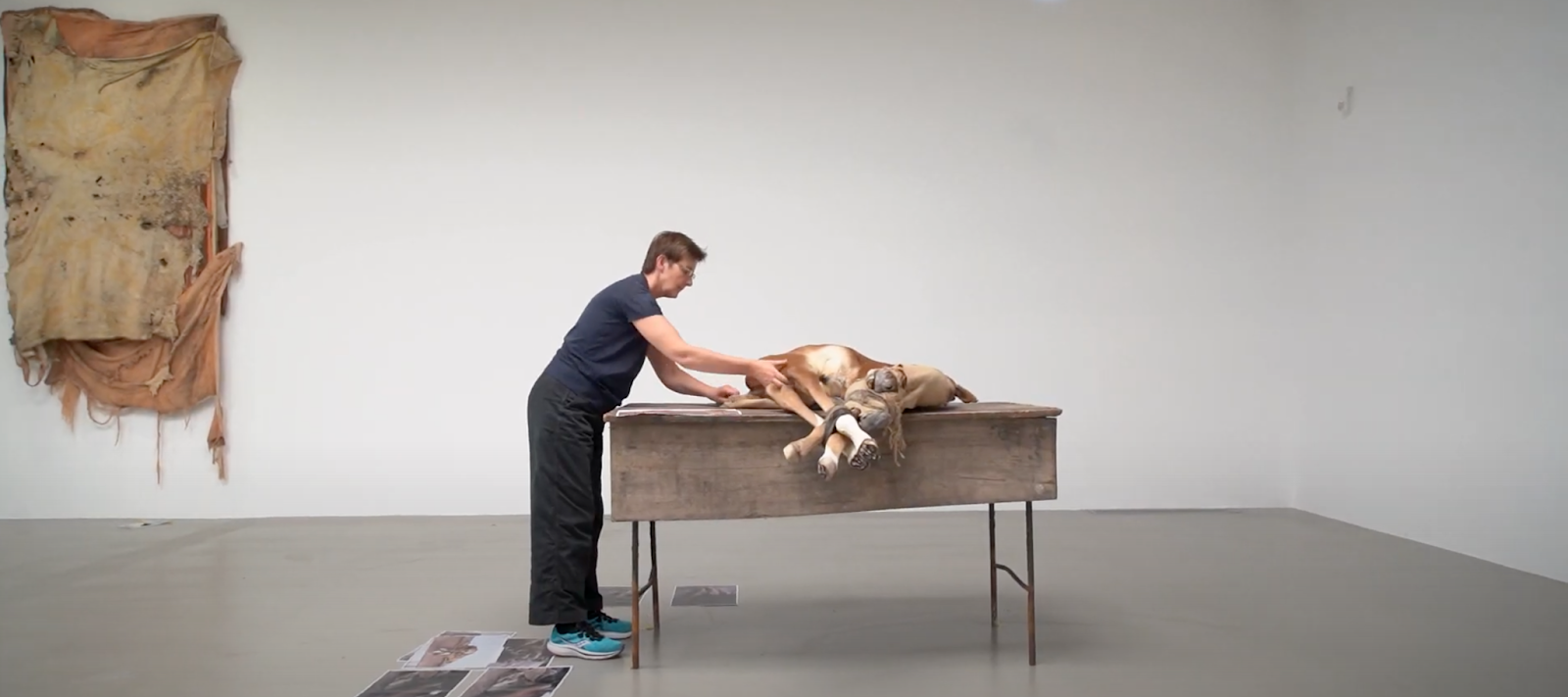
I was one of the twenty lucky ones to be invited to an exclusive studio visit of Belgian and internationally renowned top-artist Berlinde De Bruyckere. She represented Belgium in the 55th Venice Biennale. The studio visit was organized by the Flemish Art Magazine HART.
Still from MO.CO interview video, Berlinde preparing with grace “to Zurbaran”, from 2015
“Born in Ghent, Belgium, in 1964, where she currently lives and works, Berlinde De Bruyckere was deeply influenced by the Flemish Renaissance painting. Drawing on the legacy of great European masters, religious iconography, as well as on ancient mythology and traditional culture, her work rests upon the dialectics experienced between images of current affairs and the breath of universal and timeless parables. By experimenting with malleable materials, like wax, fabric, or animal skin, Berlinde De Bruyckere built a unique body of work, simultaneously identifiable and moving, at times also unsettling, that translates into the flesh of sculptures the paradox of ‘sublime weakness’ posited by Lao-Tzu. Working both as a painter and a sculptor, her hybrid forms with human, animal, and plant features, bear an envelope, a diaphanous skin, or a bark under which quiver very dainty veins, a sap that ceaselessly flows and witnesses the hope contained in the miracle of each life.” (Quote from the MO.CO website)”
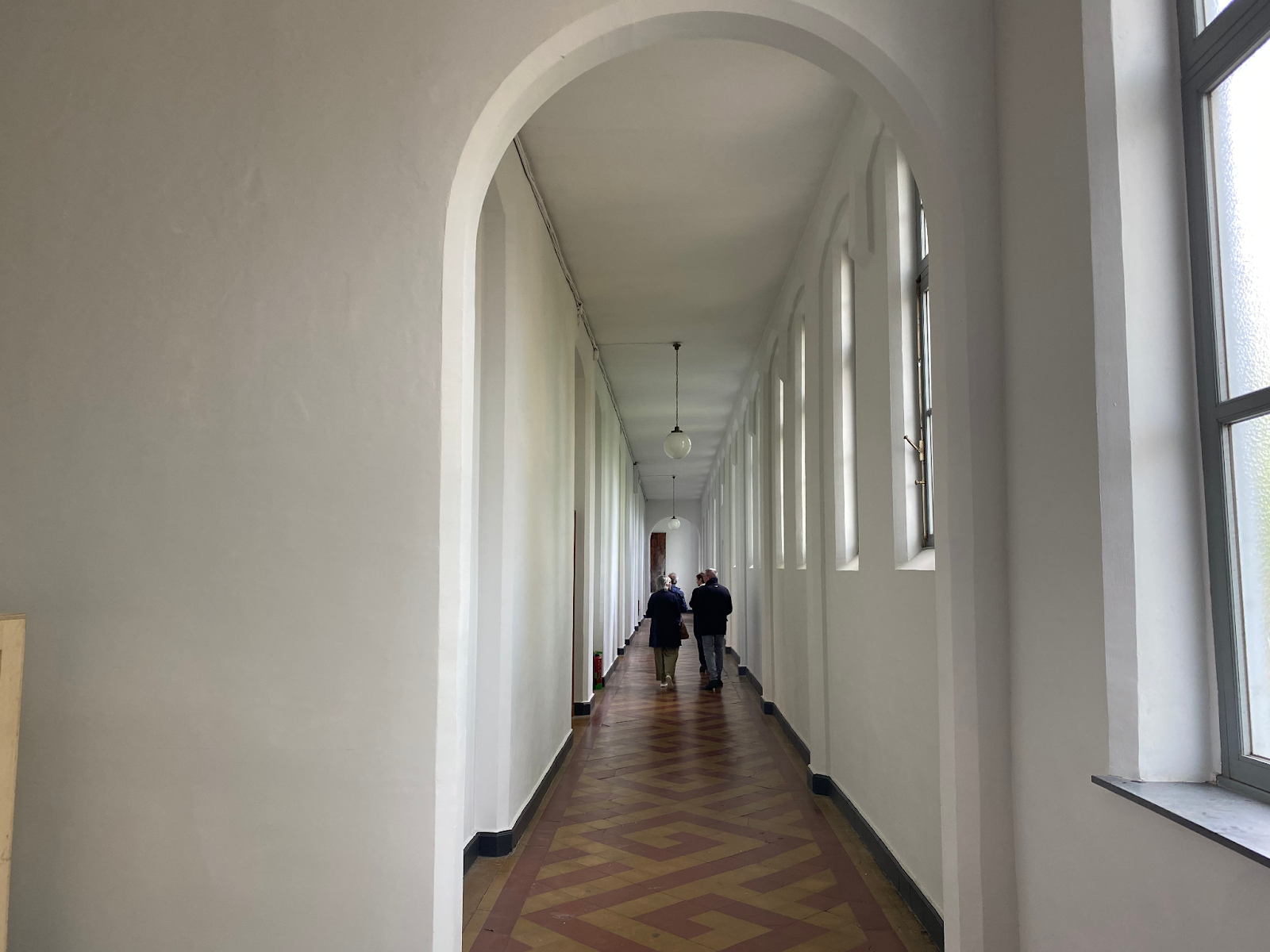
School corridor – Studio Berlinde De Bruycker – Picture by Petervan
Her studio is based in an old refurbished school building in the working-class neighborhood “Muide” in the port area in the north of the Belgian city of Ghent. This is also the area where she was raised: her father ran a butcher’s shop 100 meters from the school. Over the years, she and her husband transformed the classrooms into different art studios.
I managed my expectations for the visit upfront. Maybe at best, we would meet the artist during the welcome, and maybe the visit would only last one hour.
Welcome to Berlinde De Bruyckere studio – Picture by Petervan
Great was my surprise that Berlinde was there from start to finish, including during the lunch afterward. She was very approachable and hungry for questions about her work and her practice. During lunch, Berlinde was sitting in front of me, and I felt like we had an interesting conversation about her and my art practice.
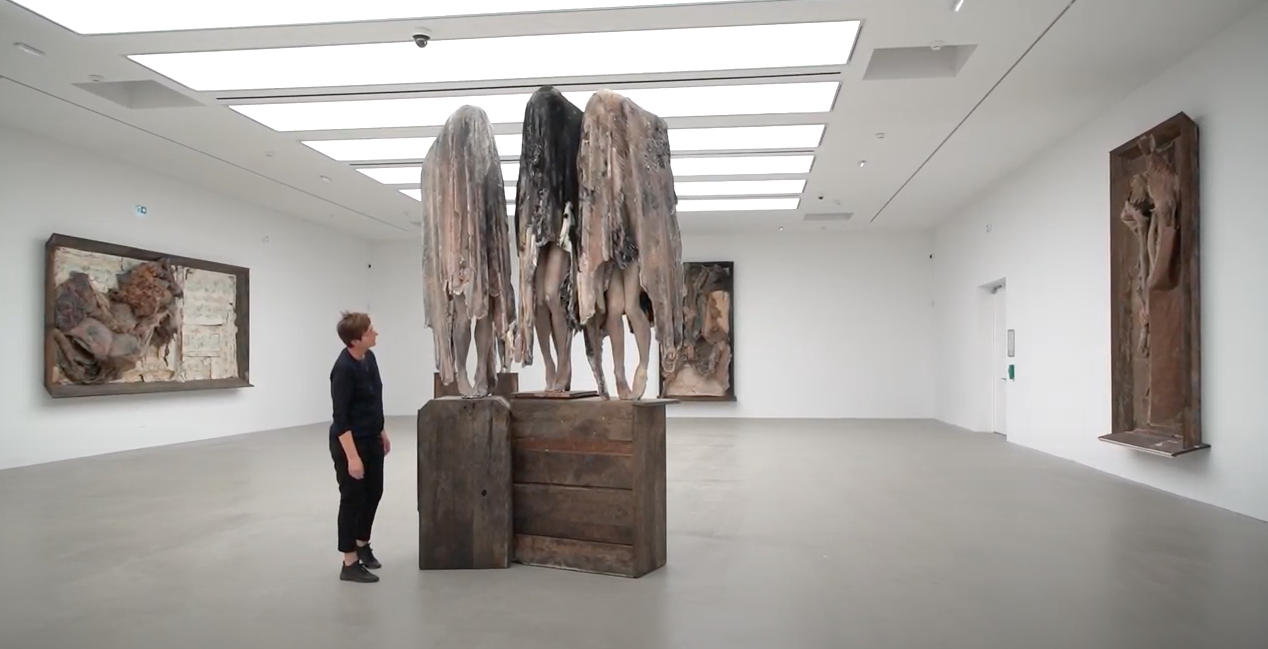
The setting was quite exclusive: we could see work (in progress) that she was creating for her big upcoming exhibition in June 2022 in Montpellier, France.
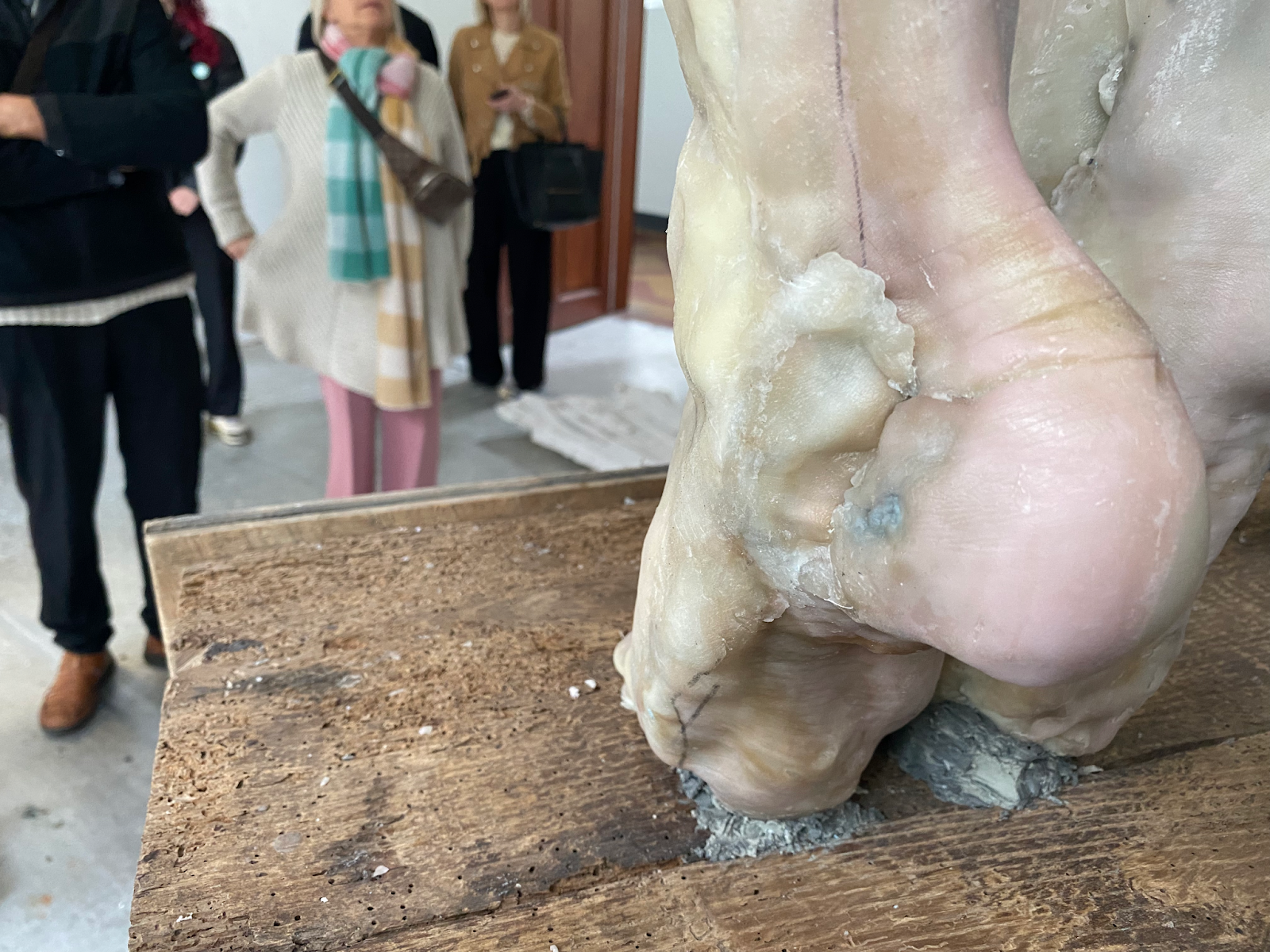
Detail TRE ARCANGELI, 2022 – Berlinde De Bruyckere – Picture by Petervan
During the group conversations around the TRE ARCANGELI, there was a sentence/question that touched me:
WELK BEELD KAN JE TROOSTEN?
WHAT IMAGE CAN COMFORT YOU?
TRE ARCANGELI, 2022 – Berlinde De Bruyckere – Picture by Petervan
Also, the conversation about working with a team was full of insights that for sure are also applicable to corporate teams. In this particular case: how do you empathically communicate failure to the team, and decide as a group that the work done does not fit the concept and that we have to start from scratch again?
I will come back later in another post about the meaning or “concept”, about conceptual art, conceptual business, and conceptual curation.
Having this opportunity to be in direct and close contact with a professional artist is super inspiring, and it influences my own work and practice in the following ways:
Focus: no distractions, silence, solitude
Professionalism: time for reflection, and discipline of doing the work, every day
Attitude: the combination of integrity, modesty, subduedness, stillness, respect
The value of a concept
To go as far as one wants
Making a group that is forced together
Showing its scars and wounds
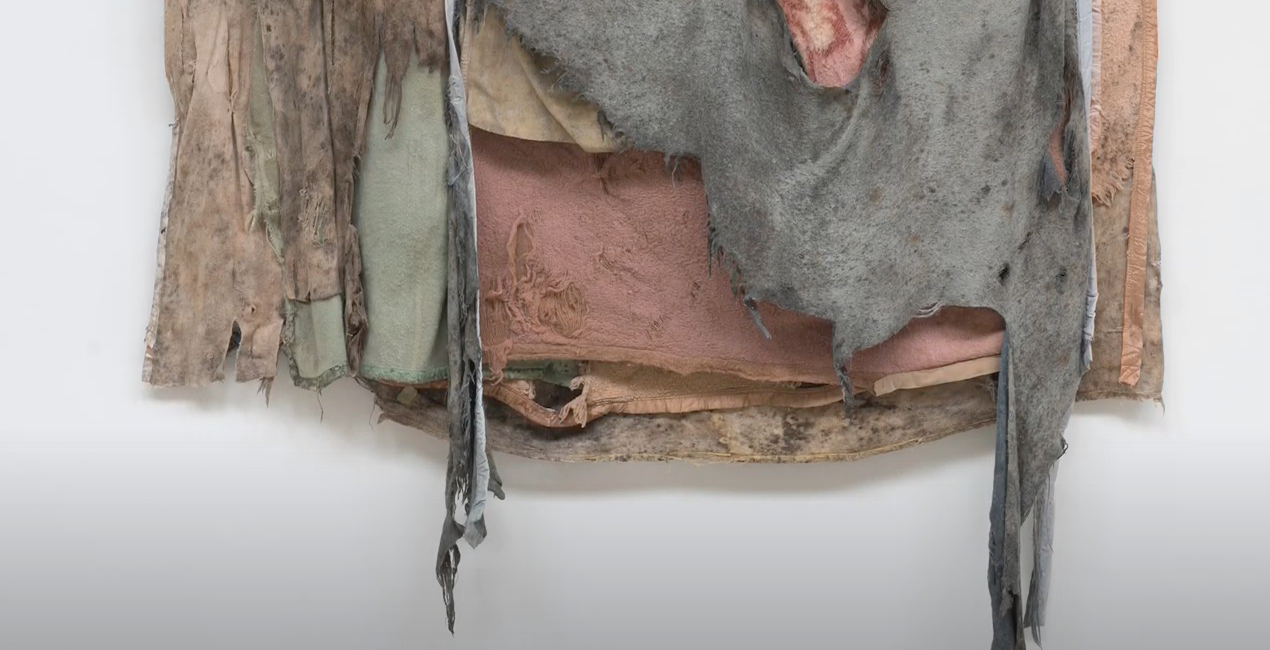
The blanket is a metaphor for our failing society
Still from MO.CO interview video
When you leave the show and you feel that the themes are tough, it’s not easy to find words that express what you, as a spectator, felt about the show.
But you should leave with a feeling of hope
I will come back in September on this feeling of hope, or rather our longing and yearning for hope and excitement.
Here is the latest update on Petervan Studios. The previous update already goes back to June 2021.
The family is good. Somehow, we managed not to get infected by the virus. We all got boostered and respected safety measures to the max. Most of my time, I spent home in my studio and only came out for some grocery shopping, some visits to art exhibitions, and delivering the taxi service to my daughter’s school and horse stables. Zero travel since October 2019, but I cannot say I miss it.
At this moment, it looks like we are getting out of the woods of the 5th Covid wave, and measures in Belgium are getting relaxed. Partying is allowed again as of 18 Feb 2022.
More importantly: my father is still alive and kicking, and he celebrated his 90th birthday in Sep 2022!
What else?
The Bricks Project
For those who remember, this is my “zen” project. Drawing bricks in silence. Many bricks. 8,255 Bricks at the time of writing this post:
Exhibitions
Since the last update, I visited the following art exhibitions:
Luc Deleu, De Singel, Antwerp, Aug 2021
Drawing Art, BOZAR, Brussels, Sep 2021
ING Laughing Art, ING Gallery, Brussels, Sep 2021
David Hockney, BOZAR, Brussels, Oct 2021
Masculinities, FOMU, Antwerp, Nov 2021
Re-Collect, FOMU, Antwerp, Nov 2021
Rinus Van de Velde, Tim Van Laer Gallery, Antwerp, Nov 2021
Train Modernity, KMSK, Brussels, Nov 2021
Fabrice Samyn, KMSK, Brussels, Nov 2021
Pop-Art, SMAK, Ghent, Feb 2022
Chaos, Alex Vervoordt, Wijnegem, Feb 2022
Anne-Mie Van Kerckhoven, Zeno X, Antwerp, Feb 2022
David Claerbout – The Close, Brugge, Feb 2022
Luc Deleu inspired by Buckminster Fuller
Detail of painting by Rinus Van de Velde – 2021
Hippie Elias (Self portret) by Etienne Elias – 1970
Fabrice Samyn – Detail from Eve&Adam – 2018
Still from The Close – David Claerbout – 2022
Outdoors
Weather did not treat us well. My recollection is one of all shades of grey and lots of rain from August 2021 till Feb 2022. Only the beginning of Sep 2021 was decent. But I have some nice winter fog pictures from my strolls and bicycle rides:
Horses
Astrid made a lot of progress in horse-riding. She won the 2nd price at a local dressage competition, and she also enjoys jumping a lot.
Talking about Astrid, in Dec 2021 she celebrated her 16th birthday. Where has the time gone?
Traveling Without Moving project
Travelling without Moving (TWM) is a series of essays documenting my mental and philosophical journey in 2020-2022.
The main outline was published in November 2020, and in the meantime, several episodes have been released. Since the last Petervan Studios update, I published one more essay on “Studios”.
There are a couple more in the pipeline, but I have a hunch that these will morph into The Scaffold project (see later in this post).
Since July 2019, I publish every month a Spotify List with new releases combined with some oldies from the 60ies, 70ies, and beyond. Search for “Petervan Ride” and select “playlists”. Subjective selection of course, as driven only by my personal taste (or lack thereof).
Here is the latest Ride from Feb 2022, still being populated as we publish this post.
I suggest you play it in shuffle mode, it enhances the surprise experience.
My Art Practice
I did not produce much artwork. I was very focused on a work-project that required all my attention and focus. I shared most of my recent art work via my Facebook page, or on this blog under the heading “Sine Parole”. Some “highlights” if I can say that about my own work:
Professionalisation of Petervan Studios Art Practice
As from March 2022, I will focus on the professionalization of my art practice. I have hired a coach to help me with that. We are working with a digital archiving platform with an API that is steering the show & tell of my analogue and digital artworks. There will also be an integration with a shopping environment, and an online VR exhibition environment. There is also a brand-new website for Petervan Studios in the making. This new online environment will also become the home for a new project, working title “The Scaffold”, see below
Freelance Projects
I have been deeply involved and committed as architect and head of design of an 100% on-line learning expedition running from Sep 2021 till Feb 2022. We just landed the closing session. We still want to produce a “scrapbook” that documents the journey by end Feb 2022. The experience came in two chapters. The first chapter was a technology refresh on digital identity, infrastructure, VR, Robotics, Web3, and UX. The second chapter was about developing a practice of innovation for wicked problems, and how to design for emergence in complex adaptive systems.
I had the chance to collaborate with professional facilitation and innovation partners, and a collective of “guides” – some really smart people – that helped us shape and deliver the content.
The Scaffold
The learning expedition mentioned above had a great impact on me and the way I look at “events”. I believe I am onto something that may be the start of a new “genre” of learning studios. And I have started talking and pitching to potential partners and investors. Here is the high-level pitch:
The Scaffold is a 100% online learning studio for creating new knowledge based on the passion of the explorer.
The Scaffold can be seen as a form of Pop-Up school and/or an experimentation-based learning playground.
The Scaffold is planned as a three-year research cycle, with cohorts joining an online virtual playground for six-month intensive high-impact expeditions where together with the faculty they will create new knowledge in collaboration.
The curriculum of the expeditions is composed of several interventions, interruptions, and provocations anchored in the reality of a client’s project. The project serves as a vehicle to trigger new and imaginative thinking.
The Scaffold is a “scaffold” for something much bigger, something that could lead to a movement and foundation for better futures.
More about that later, probably in the second half of 2022. I hope to have a first client cohort signed-up by then.
So, in summary, what’s next?
The plan for the coming months is to work/play on:
Professionalizing my art practice
Pitch and realize my project “The Scaffold”
So, that’s it for this edition. If there is something worth reporting, next update is for Sep 2022.
The time that we could organise our companies without acting too much on global evolutions lies long behind us. Leaders understand more than ever that tackling world challenges not only creates a better context for all of us to live in but also presents fantastic business opportunities. It’s why am thrilled to be one of the curators of nexxworks’ Mission NXT program, designed to help leaders turn global trends into opportunities.
For those who are truly passionate about fostering this type of outside in vision, here are five (zero bullshit) books that fundamentally changed and formed my thinking in the matter over the years.
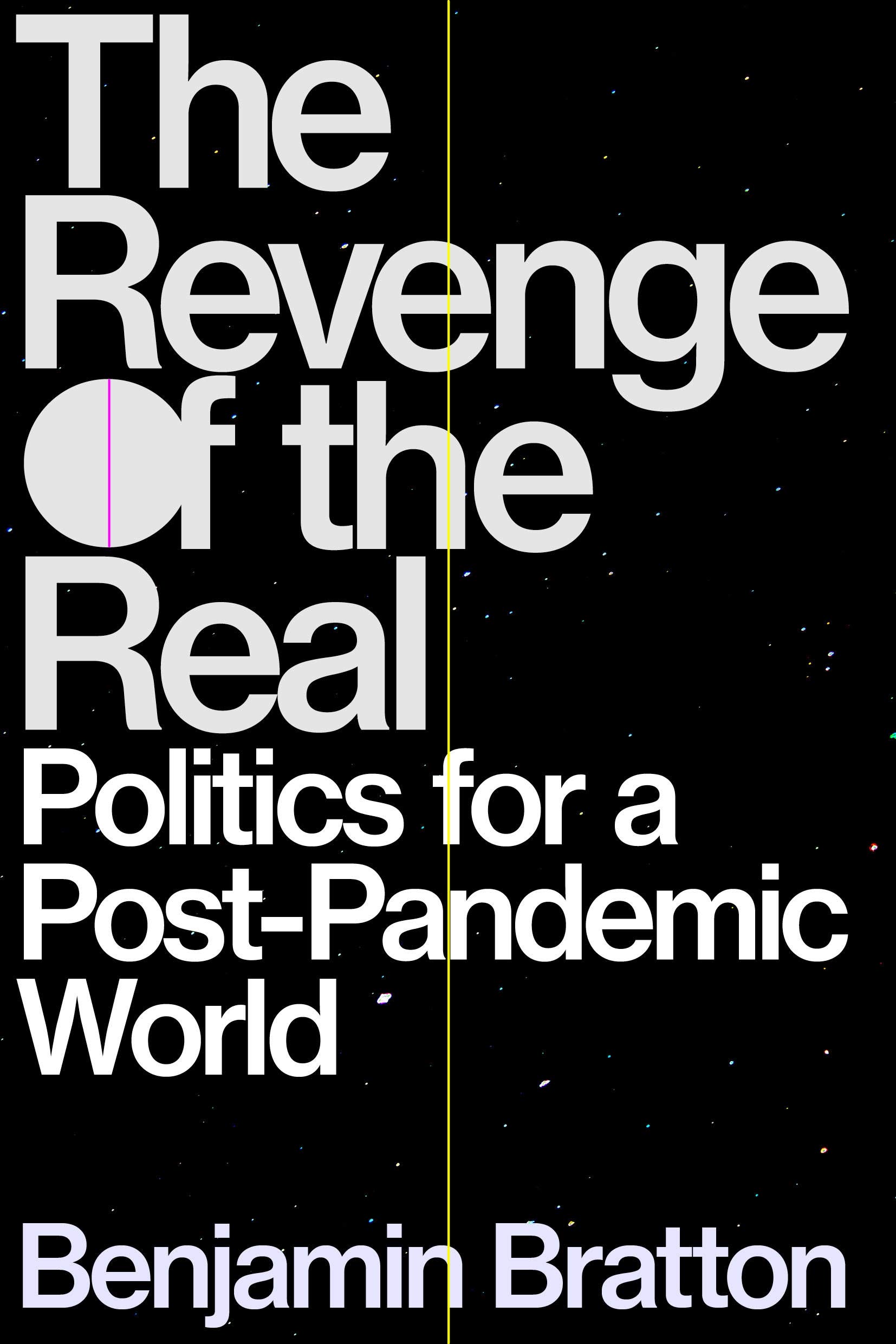
The pandemic showed us that we are completely unprepared to cope with our current deeply entangled world. According to Bratton, we need a “positive biopolitics” and an AI-based instrumentation of the world. He offers a refreshing way of thinking about sensors which is quite different from the worn out song about the surveillance state.
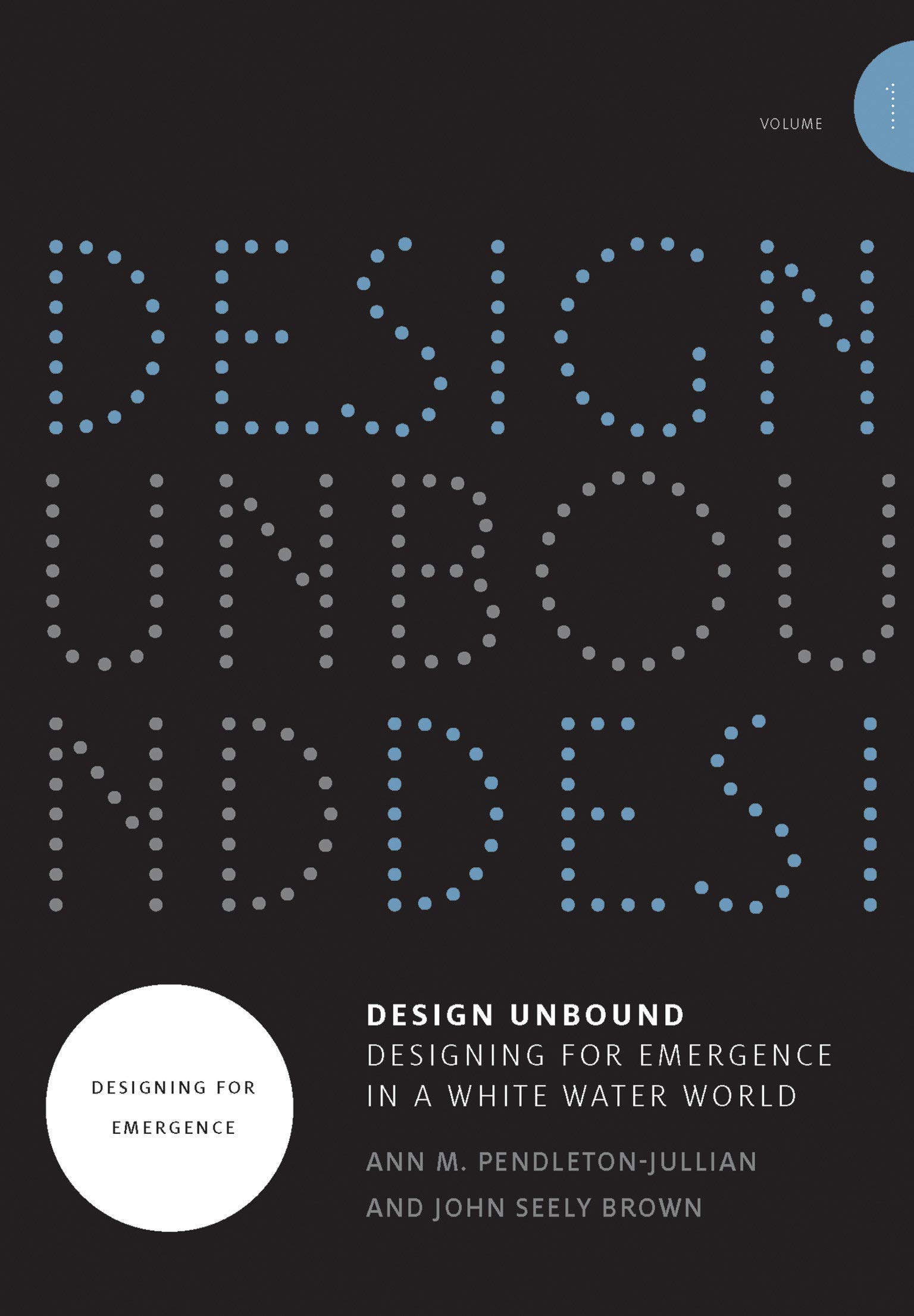
Ann Pendleton Jullian and John Seely Brown – Design Unbound (2018)
Read this if you want to understand how you can design for emergence in the Never Normal. You’ll need your full attention (it’s not a ‘light reading’ project), but in return you’ll receive two volumes of unique and well researched insights to help you better see what is and what can become. This is truly one of the most important business books I ever read.
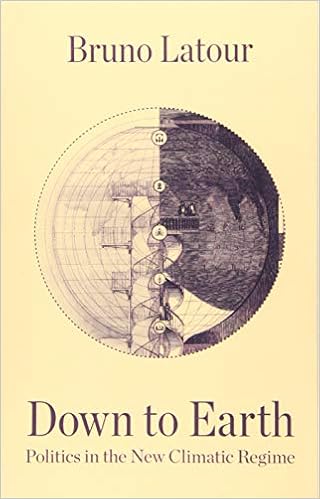
Latour calls for a third way in climate politics which is left nor right: a path between libertarian globalism, and leftist localism. One that is anchored in planet earth. Read this if you want to get to know one of the most important philosophers of the 21st century.
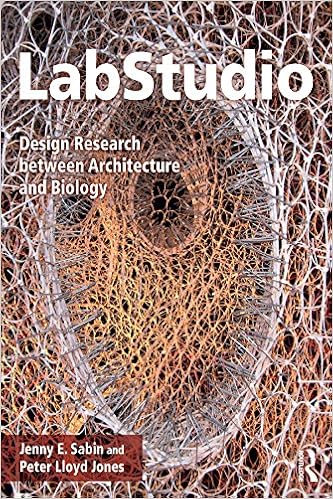
Jenny E. Sabin and Peter Lloyd Jones – LabStudio (2017)
Sabin and Lloyd Jones tackle the concept of the research design laboratory in which funded research and trans-disciplinary participants achieve radical advances in science, design, and applied architectural practice. The book demonstrates new approaches to more traditional design studio and hypothesis-led research that are complementary, iterative, experimental, and reciprocal.
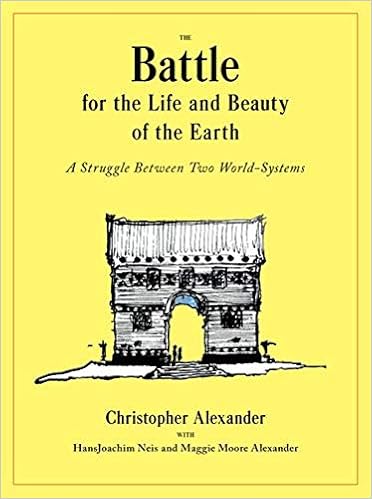
This real life story of American architect Christopher Alexander designing and building the Eishin university campus in Japan serves as an analogy for the battle between two fundamentally different ways of shaping our world. One system places emphasis beauty, on subtleties, on finesse, on the structure of adaptation that makes each tiny part fit into the larger context. The other system is concerned with efficiency, with money, power and control, stressing the more gross aspects of size, speed, and profit. This second, “business-as-usual” system is incapable of enabling the emotional, whole-making side of human life, according to Alexander, who then goes on to present a new architecture.