Travelling without moving – Silence

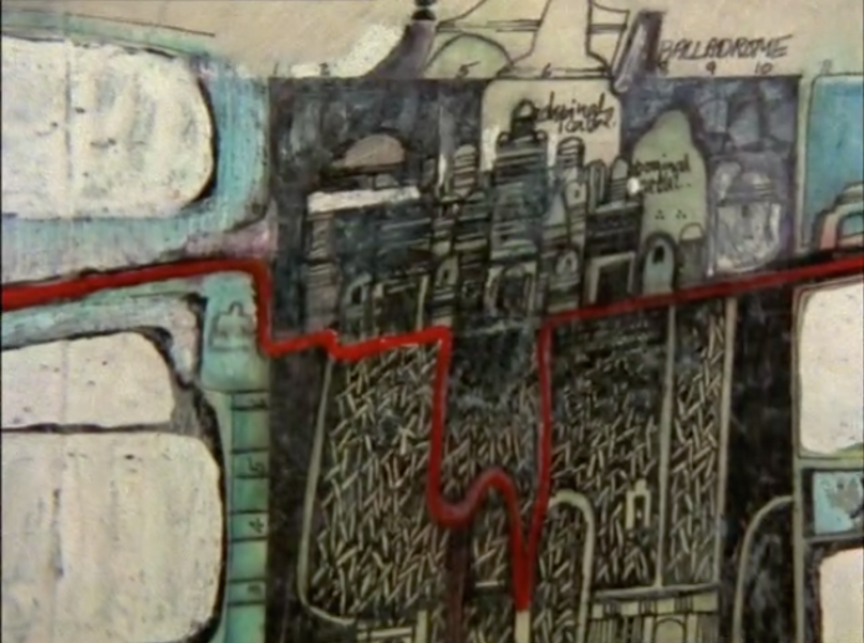
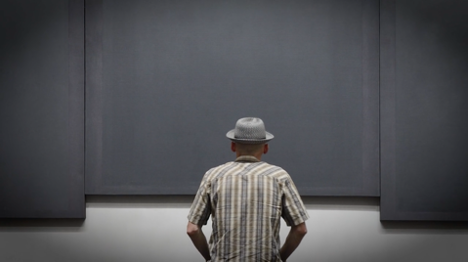
Still from Rhotko Chapel Video https://vimeo.com/127754629

This post is part of a series of essays bundled under “Travelling without moving”. Intro of that series can be found here.

My 2020 journey started with a Direct Message via Twitter from Mark Storm on Feb 8, 2020 a couple of weeks before the first formal lockdown in Belgium on 13 Mar 2020

Mark says “Maybe you will find this an interesting essay about Mark Rothko. Have a great Sunday, Mark”

Thanks for sharing, Mark! And yes, I found it interesting, in as much that I choose it as the start of this series 😉

Here is the direct link (Dutch only) to the Rothko essay (PDF) by Dutch philosopher Joke J. Hermsen. The essay is about the effect of stillness on an audience in front of a Rothko painting. It is an ode to Kairos (time as experience) as opposed to Chronos (time as clock-time).

Mark Rothko – Yellow Over Purple (1956).

Some highlight from the essay:

Het onmenselijke geweld van de oorlog bracht hem ertoe een laatste zoektocht naar de kern van menselijkheid te ondernemen: ‘Ik wil mensen daarheen brengen waar ze hun menselijkheid weer kunnen ervaren.’ En dat kan volgens hem alleen als een kunstwerk ‘tijdloze momenten schept’, die de mens tot een nieuwe ervaring van zichzelf en vervolgens tot een nieuw inzicht over de wereld kan inspireren.

The inhumane violence of the war had induced him into a last quest for the essence of humanity: “I want to lead people to a place where they can experience their humanity again”. And he believes that is only possible when a piece of art “creates timeless moments”, inspiring men to a new experience of himself and subsequently new insights about the world.

Er bestaan geen goede schilderijen die over niets gaan

There are no good painting that are about nothing

Om ‘te kunnen worden die je bent’, dienen de oude waarheden en inzichten als het ware opgeschort te worden. Het is een ervaring die door Nietzsche ook wel extatisch wordt genoemd, omdat het letterlijk een uitstaan naar is, kortom een zich openstellen voor en zich overgeven aan het onbekende. Rothko spreekt in dit geval van ‘transcendentale ervaringen’

In order “to be able to become who you are”, old truths and insights need to be postponed. Nietzsche labelled such experiences as ecstatic – literally standing-out – opening up to and surrendering to the unknown. Rothko speaks in this case of “transcendental experiences”

Deze ‘transcendentale ervaring’ wordt door Rothko een ‘tijdloos moment’ genoemd, omdat deze niet aan de klok gebonden tijd als het ware haaks staat op of inbreekt in de as van de lineaire tijd.

This “transcendental experience” is called a “timeless moment” by Rothko, because this non-clocked time is at odds with or breaks into the axis of linear time.

De identiteit van de toeschouwer wordt voor een moment doorbroken, waardoor hij de indruk heeft niet langer tegenover het werk te staan, maar er door omringd of opgezogen te worden

The spectator’s identity is momentarily broken, giving him the impression that he is no longer facing the work, but is surrounded or absorbed by it

The essay encouraged me to go and buy Joke Hermsen’s book “Stil De Tijd – Pleidooi voor een langzame toekomst”, as far as I know only available in Dutch.

The suggested translation for the title is “Stop the clocks – Manifesto for a Slow Future”, although I feel that “plea” is probably a better translation than “manifesto”, and I would have translated “Stil De Tijd” as “Silence the clocks”. I wrote about time in the past, and in this post from May 2018, I already mentioned Joke Hermsen.

Here are some of my notes/highlights/moods from the book.

Tijd schept ruimte

Time shapes space

Verlangen te realiseren wat er nog niet is.

Desire to realise what is not

Opnieuw zien we hier hoe zowel het wachten als het openlaten van de tijd en het opschorten van betekenisgeving aan de oorsprong staan van de creativiteit en het denken.

Again, we see how waiting as well as leaving space for time and the suspension of giving meaning are at the source of creativity and thinking

Het wachten (attente) is voor Blanchot dan ook het vrijleggen van een ander soort aandacht (attention), die zich niet op het reeds bekende van de verwachting richt, maar op het onbekende, het onverwachte, het nog niet ingevulde.

The waiting (attente) is for Blanchot the release of another sort of attention (attention), not pointing towards the known knows of the expectation, but towards the unknown, the unexpected, what has not yet been filled in.

Picasso: ‘Ik zoek niet – ik vind.’ Over dat onderscheid tussen zoeken en vinden, zegt Picasso: ‘Zoeken, dat is uitgaan van het oude in een willen vinden van het reeds bekende in het nieuwe. Vinden, dat is het volledig nieuwe. Alle wegen zijn open, en wat gevonden wordt, is onbekend. Het is een waagstuk, een avontuur.’

Picasso: “I don’t search – I find”. About that difference between searching and finding, Picasso says: “Searching is starting from the past, in an effort to find the already known in the future. Finding, that’s what’s completely new. Alle options are open, and what is being found, is unknown. It is a venture, an adventure”

Belangeloze aandacht

Disinterested attention

Last highlight:

Die creativiteit wordt aangewakkerd als we ons bij tijd en wijle aan het regime van de klok kunnen onttrekken en ons durven overgeven aan ervaringen die haaks staan op het gestaag voorttikken van de wijzers. Wachten, vervelen, luieren, mijmeren, nadenken en nietsdoen, zijn vormen van ontvankelijke passiviteit waarmee men in deze rusteloze, door de economie opgedreven tijden misschien weinig applaus zal oogsten, maar die in vrijwel alle hier opgenomen essays noodzakelijk bleken voor de mens en voor de wereld om niet te verstarren en te verharden.

That creativity is encouraged when we can detach us from time to time from the regime of the clock and dare to surrender to the experiences that are orthogonal to the ongoing ticking of the moving clock-hands. Waiting, being bored, idle, musing, reflecting and doing nothing, are all forms of receptive passivity that are not really appreciated by the inflated time of the economy, but that are essential in all essays of this publication, essential for the humans and the world in order not to fossilize, become rigid, petrify and harden.

I make similar reflections during my bike tours in nature, asking myself who is the real me, what is my original rhythm, finding my own rhythm, re-finding myself.

During one of those tours, I spotted a path to my right, with no signage, leading into some small woods and boskets. A small hesitation, but in a blink, I decided to turn right, right into the unknown.

Only a couple of minutes later, I found myself in an open space, in the middle of the green, in almost complete silence, and saw this snail sunbathing under a parasol of green leave.

The silence and nature had made me soft, with indeed a disinterested attention, but active attention anyway, not passive.

After years of – at times – hectic corporate life, and after a semi-pause of about four years, I realized it was only now that I started to cool down, to wind down. It was only now that I started to enjoy that state of detachment from Chronos time, detachment from anything, actually.

It should therefore not come as a surprise that my next essay in this series will be about… pause.
Petervan Studios – Update Nov 2020 – Intervals of Possibility

Petervan memories from the 70ies – First artistic performances

It’s almost one year (!) since my previous Dec 2019 update. And what a year it was/still is! I basically stayed home for the whole period and had zero travel since Oct 2019.

I am publishing this on the day Belgium is entering its second Covid-19 lockdown. A forced pause-marathon starting on my 63th birthday on 1 Nov till at least mid-Dec 2020. But I am afraid the effort will have to run until deep into 2021 and I am preparing for it as an “interval of possibility”.

An interval of possibility is a temporal framing to see better what is and what can emerge. There is indeed still so much to read, to learn, to experiment, to play with. So many contexts to be architected. So many interesting people to (re)connect with (at least virtually). So much opportunity for spiritual, moral, and aesthetical advancement! Expect me to be quite generative in the coming weeks and months.

The Artschool Project

The Artschool academy year started again in Sep 2020, and I subscribed for a two-year curriculum labeled “specialization”.

“Professionalization” is probably a better title for what it is: a focus on getting the (art)work done, commitment, and ambition. We’ll learn to discover our own visual language starting from our personal frames and themes with the ambition to develop our own artistic maturity and identity. This is about personal reflection, self- and group-critique, evaluation, and research. About creative identity and creative disposition. And about how to create a portfolio, develop contacts with galleries, presenting your own work, setting up your own expo, etc.

From an artistic medium point of view, my main focus will remain painting on canvas, but I will keep experimenting with other (mainly digital) media.

I shared most of my recent work via my Facebook page, or on this blog under the heading “Sine Parole”. I also started selecting more straightforward subjects, such as vases, landscapes, cows, fruit, and everyday objects. In many cases the obvious and what is in front of you is interesting enough. Here is an example of some apples from our mini orchard:

Petervan Artwork © 2020 – Apples – Acryl on Canvas – 50x50cm

The upcoming Cow project

I have something with cows (pun intended). I met many during my summer bike tours. It feels it is going to become yet another a thematic series, like the prison windows, or the birds, or the boxers.

Petervan Artworks @ 2020 – Cow Project – Digital Try-out
Petervan Artworks @ 2020 – Cow Project – Sketch of the Intervals of Possibility

One option is to create a cow-sign-language and typography, or maybe see how I can get them generated through in-the-cloud AI neural networks.

Via Mario Klingeman (@quasimodo) -AI generated shapes

Exhibitions

Last year, I visited some art exhibitions, including:

  • There is no Planet B – S.M.A.K., Ghent, Dec 2019
  • Inge Decuypere – Ronse, Feb 2020
  • Dali-Magritte – Museum Fine Arts, Brussels, Feb 2020
  • Love-Hate – ING Gallery, Brussels, Feb 2020
  • Keith Haring – BOZAR, Brussels, Feb 2020
  • Van Eyck – Museum Schone Kunsten, Ghent, Feb 2020
  • Stephan VanFleteren – FOMU, Antwerp, July 2020
  • Writing Beyong – Axel Vervoordt, Wijnegem, July 2020
  • Dechamps, Panamarenko and Co – Deweer Gallery, Zwevegem, Oct 2020

There were many more, but due to Covid-19, many musea were closed or had restrictions.

Stephan VanFleteren – FOMU, Antwerp, July 2020

My own exhibition

I ran my first solo (100% virtual) exhibition during summer. Some unexpected fans actually bought some of my works. Thank you: this is very encouraging. For those who don’t know: I also do commissioned work. If interested – in buying or commissions – please send me a private message.

Some vernissage impressions here.

Outdoors

We had a great summer in Flanders. Since the start of the first lockdown on 13 March 2020 we had good to excellent weather till mid-September 2020. Plenty of opportunity for being outdoors, with the occasional bike tour or walk.

Freelance

Covid-19 is not kind to freelancers, especially if you target what some people call the “event industry”. With the exception of a small gig in 2020, I basically got no work since October 2019. Contact me in private if you’d like to hire me for “interesting” work.

BANI

Already in 2018, Jamais Cascio coined the term BANI. See my post from Aug 2019 and Jamais’ update from April 2020. As mentioned before, I am working with some partners on a virtual multimedia workshop based on this framework, with a specific focus on possible responses. We have an amazing cast on-board, and it looks that we’ll be able to make some announcements soon.

Design Unbound

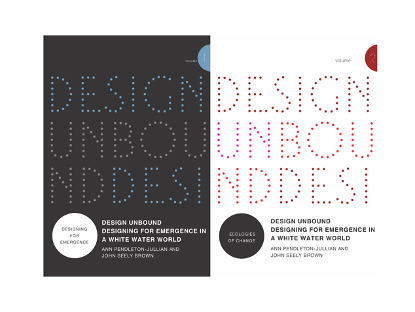
I am blown away and intrigued by the insights in Design Unbound: Designing for Emergence in a White Water World. This is about having agency in a world that is constantly shifting under you. It is so refreshing after all those business-, management-, leadership-, and self-help-books. It has become a healthy addiction: I am basically reading and re-reading and deeply internalizing everything that Ann Pendleton has written in the last couple of years.

We are building a team to design and deliver a corporate curriculum on this topic. Stay tuned on the “we” and the “curriculum”.

Pirate TV

Most online events and conferences suck. I have some ideas on how to be more ambitious. See my earlier post on the ambition cube for virtual events.

Still from Pirate TV Trailer – Petervan Studios © 2020

I got the chance to do a commission for a client on this concept and we – the client, the team, myself – learned a lot on what works and what not.

There are now two Pirate TV channels in the pipeline: one more business focused and one more “artsy”.

New toys

For Pirate TV, I wanted to become more fluent in video and sound creation. As there was nothing else to do due to Covid-19, I followed some online courses on Ableton Live, Final Cut Pro, and Logic Pro X.

These are such rich software environments. Also, their user interfaces make me think differently: thinking in layers, connections, patterns, and harmonies.

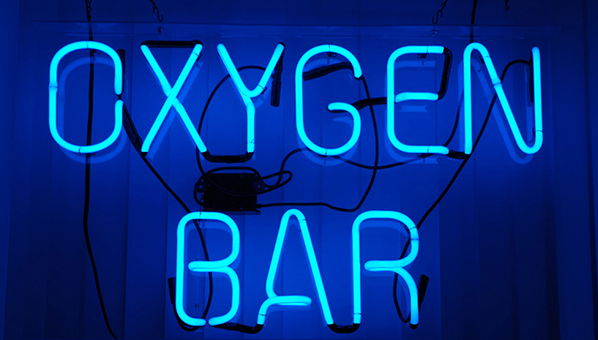
Studio Oxygen project

An idea that has been hanging around since 2018, actually.

People are exhausted. Tired of online meetings. Tired of being locked up in their houses. Tired of all the negative news. People crave for oxygen. People crave for small safe groups where they can share, critique, ideate, play.

With a small on-line collective, we plan to come together regularly online to have slow-paced conversations on a topic/seed that I plant.  The seed can be the chapter of a book, an object, a poem, a job well done, or a failing forward.

With a no-frills focus on quality content, we hope these sparks of inspiration will give you “oxygen for the mind”.

Traveling Without Moving project

This will be a series of posts documenting my mental and philosophical journey in 2020.

Some spoiler keywords: silence, pause, play, anxiety, unbound, truth, inappropriateness, genre, and yellow.

Traveling Without Moving (TMW) is also somewhat related to Studio Oxygen and Pirate TV

Books

Check out my GoodReads: https://www.goodreads.com/user/show/3085594-peter-auwera

Some highlights:

Also don’t forget Robert Poynton’s “Do Pause”. Together with Josie Gibson we made 8 podcast episodes, one for each chapter in this book. The last episode is here.

Petervan Rides

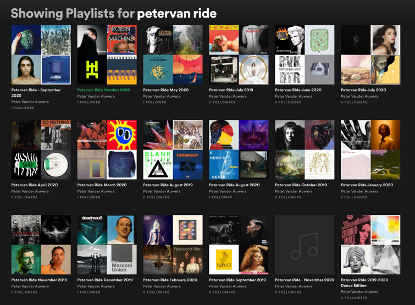
Since July 2019, I publish every month a Spotify List with new releases combined with some oldies from the 60ies, 70ies, and beyond. Search for “Petervan Ride” and select “playlists”. Subjective selection of course, as driven only by my personal taste (or lack thereof).

Petervan Rides on Spotify

So, what’s next?

I will officially retire from corporate life as from 1 Dec 2020. Not that I plan to stay idle, on the contrary. Within limits, I will stay available for interesting freelance work – I call it “paid play” –  and plan to stay very focused on my artwork.

The plan for the coming months is to work/play on (random order):

  • “Interesting” freelance work
  • Artwork
  • Studio Oxygen
  • Traveling Without Moving
  • Pickup Time Capsules again

So, that’s it for this edition. If there is something worth reporting, next update is for Apr 2021.

#STAYSAFE

#STAYCONNECTED

Warmest,

Pause with Josie – Episode 8

This is episode-8 of the calm conversation with Josie Gibson from The Catalyst Network, inspired by Robert Poynton’s book “Pause – You are not a To-Do list“. The approach is simple: we both read a chapter of the book and highlight three sentences, and mark the words that resonate most. These sentences and words are the triggers for a very slow-paced conversation on whatever comes our way. No tricks, no gimmicks, just a gentle and calm wandering and meandering of minds. As this chapter is the “Afterwords” section of the book, this is also the last episode in the Robert Poynton series. Maybe other calm conversations follow. Who knows?

Here are Josie’s three sentences:

What I couldn’t anticipate were the unplanned pauses that would occur along the way

If anything, rather than delay things, the time-out accelerated them.

Too much pause and nothing gets done.

And here are my three sentences:

Rehearse ideas with different people

Carlo Rovelli’s book, The Order of Time

That long gestation period meant that once I started I was able to get going quickly

We covered a wide range of topics:

Ideas as the starting point, not the end point

Chance

Serendipity

STOP ASKING QUESTIONS

Confidence and permission

Revisiting intentionality

THE APPROXIMATION COLLECTIVE

What is real and what is not?

Implicit judgement

When pause become procrastination

Vs.

When pause becomes heaven (zen/buddha)

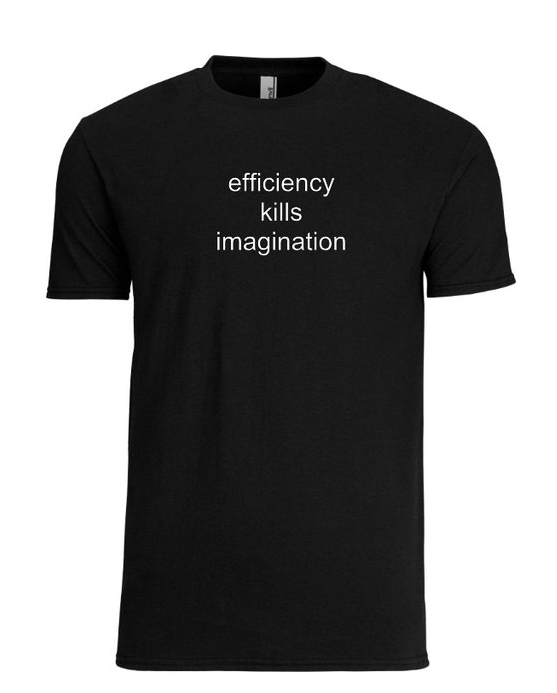
It also gave rise to a new t-shirt design:

Other links mentioned in this podcast:

Episode-1 is here. Episode-2 is here. Episode-3 is here. Episode-4 is here. Episode-5 is here. Episode-6 is here. Episode-7 is here.

These are very calm conversations; so best is to take a pause, install yourself in a quiet corner, and enjoy!

Peter & Josie

Pause with Josie – Episode 7

This is episode-7 of the calm conversation with Josie Gibson from The Catalyst Network, inspired by Robert Poynton’s book “Pause – You are not a To-Do list“. The approach is simple: we both read chapter-7 of the book and highlight three sentences, and mark the words that resonate most. These sentences and words are the triggers for a very slow-paced conversation on whatever comes our way. No tricks, no gimmicks, just a gentle and calm wandering and meandering of minds.

Chapter-7 is about Time for Pause

Here are Josie’s three sentences:

A longer pause…gives the intelligent unconscious – what Claxton calls the ‘undermind’ – a chance to have a crack at a problem, bringing a more associative, creative quality of thinking to bear.

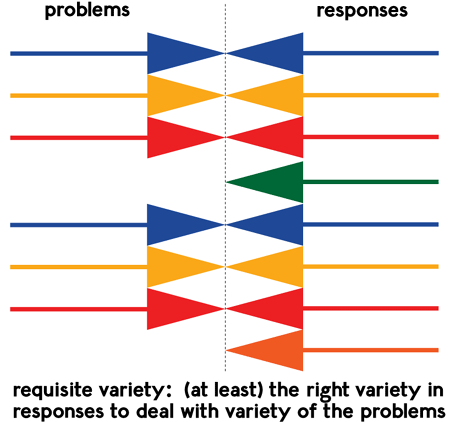
In any natural system, there is always ‘redundancy’  or ‘requisite variety’ built in; stuff that isn’t useful yet, but could be one dayf relying on just one.

The decision to start properly came in a pause.
And here are my three sentences:

Our fulfilment does not derive from being as efficient as possible

It (pause) gives you the chance to follow your mood, not the schedule

Instead of trying to cram more in, you focus on getting more out

We covered a wide range of topics from redundancy, richness of experiences in a complex world, we are not machines, beautiful change, elegant movements, cybernetics, requisite variety,…

…the “undermind”, leaving space open for sacred moments, commitment, to start doing, at the right time, after the right pause, after reading all the signals.

We also discussed how efficiency kills imagination, and why we should go into the t-shirt business 😉

Other links mentioned in this podcast:

Episode-1 is here. Episode-2 is here. Episode-3 is here. Episode-4 is here. Episode-5 is here. Episode-6 is here.

These are very calm conversations; so best is to take a pause, install yourself in a quiet corner, and enjoy!

Peter & Josie

Pause with Josie – Episode 6

This is episode-6 of the calm conversation with Josie Gibson from The Catalyst Network, inspired by Robert Poynton’s book “Pause – You are not a To-Do list“. The approach is simple: we both read chapter-6 of the book and highlight three sentences, and mark the words that resonate most. These sentences and words are the triggers for a very slow-paced conversation on whatever comes our way. No tricks, no gimmicks, just a gentle and calm wandering and meandering of minds.

Chapter-6 is about Tools (of Pause)

Here are Josie’s three sentences:

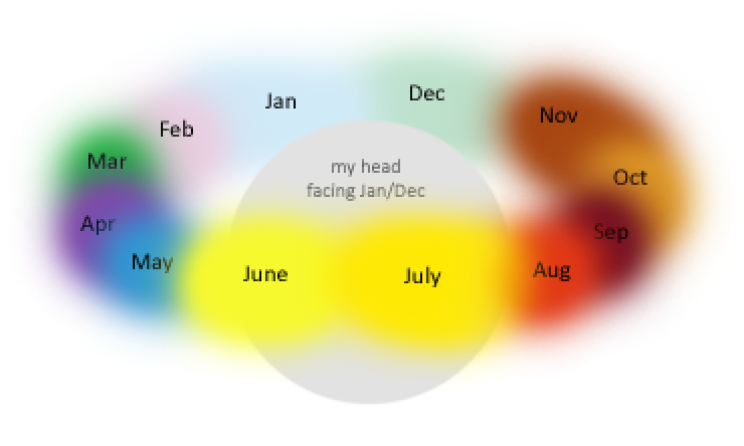
He uses differently coloured Google calendars where the colours represent how each kind of time feels to him..

It is more powerful if you are able to think about multiple layers, and build a set of practices that weave together the different ‘pace layers’ of your life instead of relying on just one.

Noone has a life so unrelenting that it is impossible to pause.
And here are my three sentences:

‘Exhale time’ is when he is teaching, writing or delivering work for clients. ‘Inhale time’ is when he is reading, studying, walking or spending time with people he just finds interesting

Notice what that experience is. If it was interesting, or useful, or valuable, or thought-provoking, or puzzling, or curious, or fun, or engaging in any way at all, do it some more. If not, try something else.

Instead of trying to manage your time, pay more attention to finding your rhythm

We covered a wide range of topics from responsible imagination, slower time, golden time, smell time, sound time, synesthesia,…

synesthesia

…colors of the months, layers, weaving, fabric, calendar, interstitials, 3D, 4D, rhythm in context, two people dancing the tango, wondering with intent, accountability for creative health, and undefended presence (mentioned in the Coaching Summit 2020 video below).

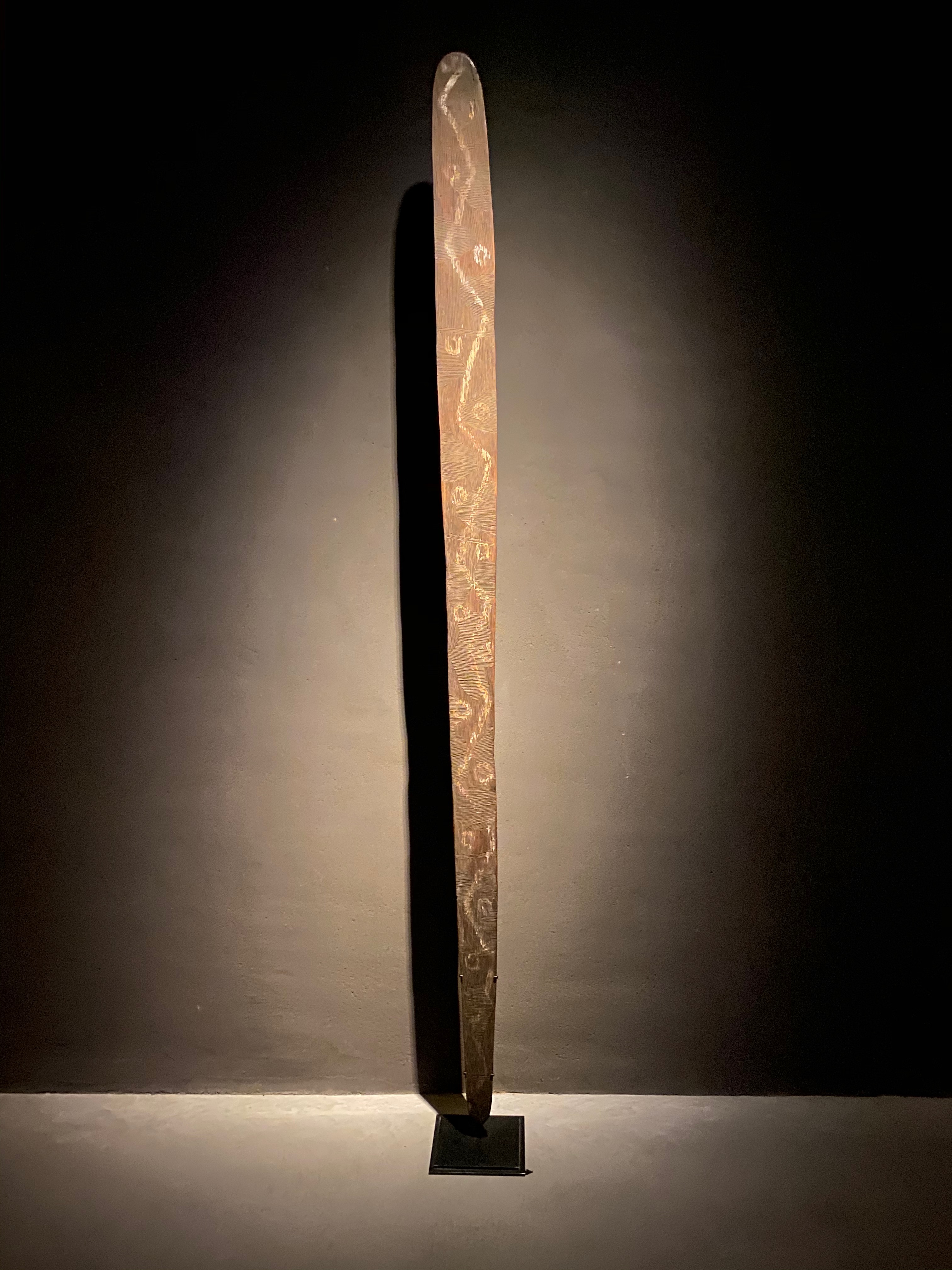
We even talked about the South-Australian Tjuringa, a Dream Stones, and artist Roman Polanka’s visualization of time.

IMG_2480


Other links mentioned in this podcast:

Episode-1 is here. Episode-2 is here. Episode-3 is here. Episode-4 is here. Episode-5 is here.

These are very calm conversations; so best is to take a pause, install yourself in a quiet corner, and enjoy!

Peter & Josie

Pause with Josie – Episode 5

This is episode-5 of the calm conversation with Josie Gibson from The Catalyst Network, inspired by Robert Poynton’s book “Pause – You are not a To-Do list“. The approach is simple: we both read chapter-5 of the book and highlight three sentences, and mark the words that resonate most. These sentences and words are the triggers for a very slow-paced conversation on whatever comes our way.  No tricks, no gimmicks, just a gentle and calm wandering and meandering of minds.

Chapter-5 is about Culture (of Pause)

https://soundcloud.com/peter-vander-auwera/josie-petervan-poynton-chapter5

Here are Josie’s three sentences:

Older, more measured rhythms continue to exist… and the here and now is appreciated more for itself than as a means to get somewhere else.

They come in order to reconnect to a place that mediates a pause for them. For one, it is a rock by the river Pelayos – quite literally, a touchstone. Where might you find yours?

Burning Man: ‘This is pause as a suspension of the status quo, designed to try things out, not slow them down

And here are my three sentences:

There is no possible way to hurry any of this. Whatever you do, it takes the time it takes. The only hacks around here are made with axes.

They rarely say anything new; talk is not about relaying information, it is a way of seeing others and being with them

If you aren’t able to pause to consider or explore alternatives, it is extremely difficult to change direction

We covered a wide range of topics from scaffolding, “Go-Bush”, touchstones, freedom to be, Shakespeare, Burning Man, suspension (not smashing) of status quo, the calm “Corona Walks” by photographer Stephan Vanfleteren, the need for diverse lenses, and Budha’s beginner’s mind.

Some useful links mentioned in the conversation:

Episode-1 is here. Episode-2 is here. Episode-3 is here. Episode-4 is here.

These are very calm conversations; so best is to take a pause, install yourself in a quiet corner, and enjoy!

Peter & Josie

Moodscape-1 – Clockdust Astronauts

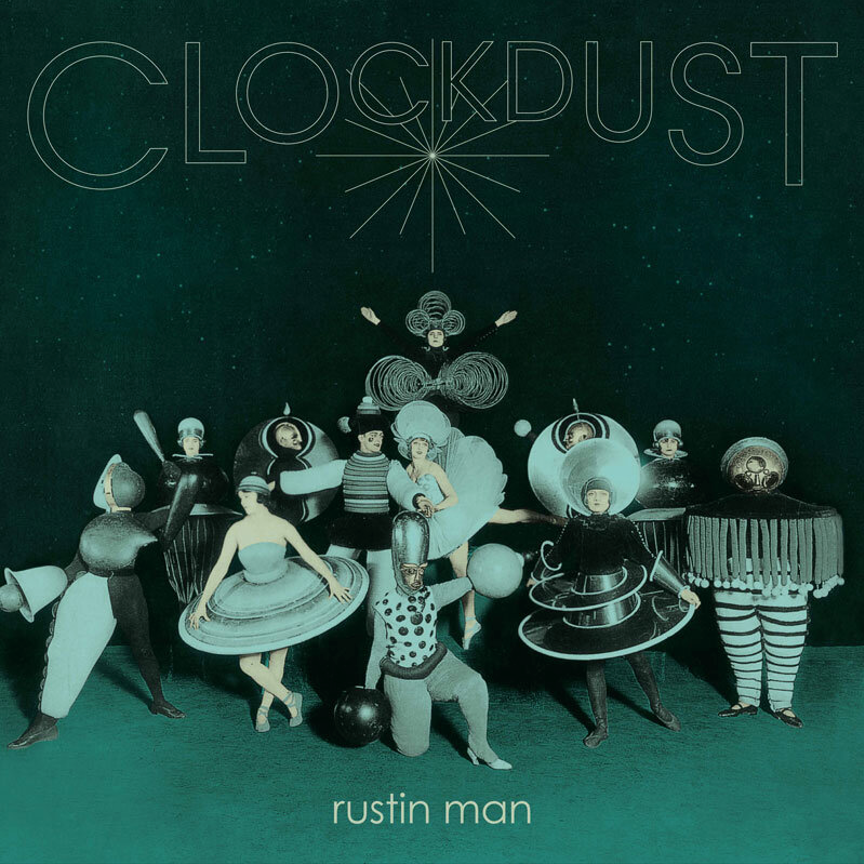
Clockdust cover

Cover of Rustin Man's "Clockdust" Album

Let’s try something new here: a “mood-scape”, documenting a personal mood/world using words, visuals, and sound. And inviting you to build new worlds by participating on a 1-1 basis. Although “new” is relative: the term moodscape was initially coined in the seventies, and mixing media can hardly be labeled new or novel. But having a “calm” conversation may sound like an anachronism in these times where time itself is collapsing, where time itself has become exponential.

It started with discovering Rustin Man’s new album “Clockdust”. Rustin Man was in a previous life better known as Paul Webb, the bass player of the band Talk Talk. Check out his about page.

Listen to Night In Evening City

I immediately fell in love with the melancholic, nostalgic, slow pace sound of the album, in my opinion, a perfect soundscape for the disorienting times we live in. There is some sort of homesickness here, knowing deep inside that we have already said goodbye to a golden era, and era that I sometimes refer to as the Bowie-Era.

I added a couple of Clockdust songs to my Spotify March 2020 Ride playlist, and one of the songs happened to sit next to David Bowie’s Lazarus song from his Blackstar album. To make a long story short, I created a sub-set of the playlist, containing the songs that I felt best reflected my March 2020 “Mood”. There is one coming for April as well 😉

I suggest you let it play in the background in shuffle-mode whilst reading this blog post, as I believe it may augment what I am trying to share.

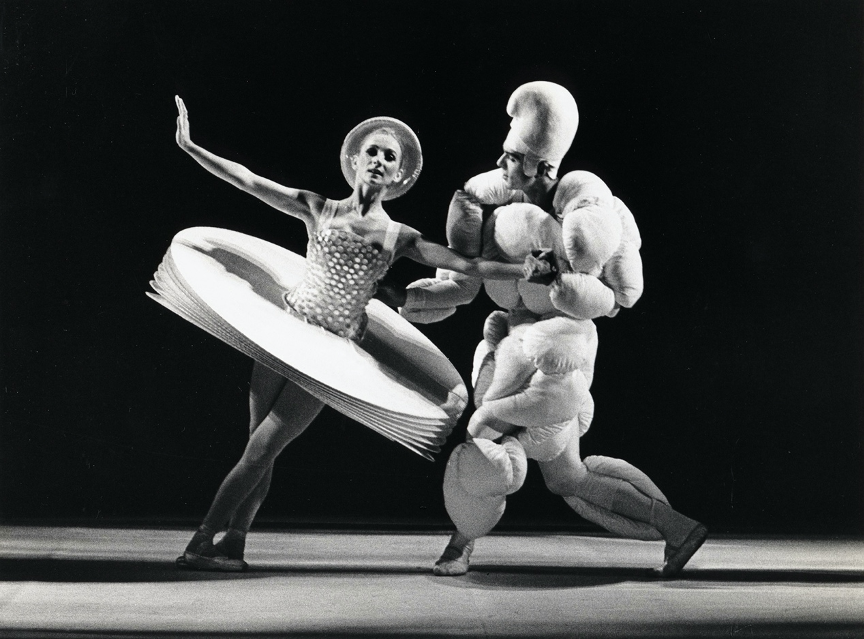
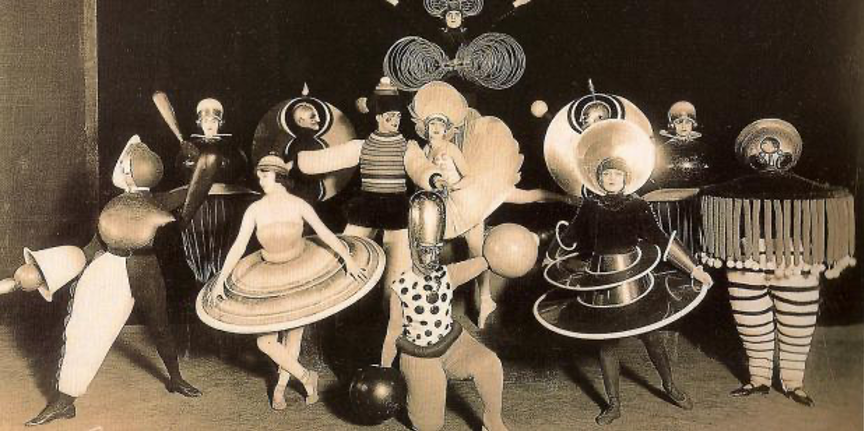
The cover is a picture from Oskar Schlemmer’s Triadisches Ballett (Triadic Ballet), a choreography with costumed actors transformed into geometrical representations of the human body.

ballet black white

Ballet colour

There is also this wonderful video testimony of one of the early performances of that choreography

The video sent me back in time – clockdust time – when I was a 6-year old schoolboy. For the very first time in my life, I stood – proudly – in front of a huge whiteboard in the classroom – it was a blackboard with white chalk – and we were invited by the teacher to properly write the letters of the alphabet with white chalk on this blackboard.

It must have been my early creative juices, but I could not withhold myself drawing big white spirals instead of well-formed a’s and b’s, etc. on that black-black blackboard. Result: punishment and the lesson learned that a classroom is not a place for creativity and imagination.

In vain, the seeds were sown, and spirals, spheres, labyrinths, maps, and foams became – with hindsight – an obsession. I love the endlessness, and the recursiveness of these shapes and forms. Especially double, entangled spirals or labyrinths get me going…

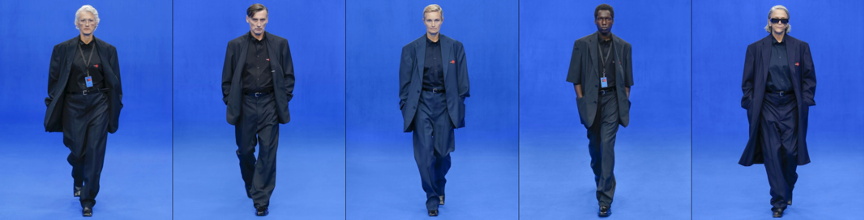
This high-end Balenciaga Summer 2020 production, with music from BFRND, is a perfect timestamp of our times. Grim black coats, at times almost German SS uniform like Arial race,… our sleepwalking into fascism. One thinks The Matrix, hard as stone, sharp as a knife, and greyed out faces. Will we take the Red or Blue pill? Blue for sure is the backdrop for what Balenciaga call “Power Dressing”.

balenciaga moods

Balenciaga Summer 20 reimagines dressing for work: power dressing, no matter what one does as a job. Looks transform a wearer in the way a uniform can. Unlike their archetypes, though, garments and accessories are made using unconventional processes.

They talk about New Fashion Uniforms, Seamless Tailoring, New Trompe L’oeil, Super Plissé, Pillow Parkas, Fetish Gownsn, and Wearable Ballroom dresses.

Models of various career tracks interpret and play on beauty standards of today, the past, and the future.

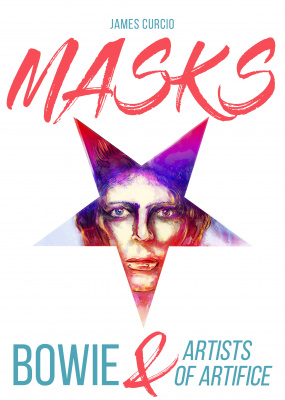
Enter Masks, a new book by James Curcio, about Bowie and other artists of artifice. I spotted the book in a guest post by James Curcio on Ribbonfarm’s always excellent blog.

maskhrfinal-82106-290x400

The difference between a king and a beggar, a soldier and a murderer remains in the realm of performance, a kind of farcical mummers trick that we agree to play along with, if often unconsciously.

The bulk of the book is about Bowie’s unique conceptual art, his capability to create new coherent worlds and identities. I miss Bowie.

The post and book also refer to French philosopher Jean Baudrillard’s book Simulacra and Simulation, apparently required reading for the actors of The Matrix before filming. According to Wikipedia, Baudrillard is “best known for his analyses of media, contemporary culture, and technological communication, as well as his formulation of concepts such as simulation and hyperreality.”

It cannot be happenstance that I find a reference to Simulacra and Simulation in “Design Unbound”, fantastic two-volume work on “Designing for Emergence in a White Water World”, by John Seely Brown and Ann M. Pendleton-Jullian, a print-only MIT Press publication. Chapter 14 is about “World Building”: “much more than just the setting for a story, word building creates coherent contexts that stories become to inhabit”

This is very much avant-garde, feels a lot like Cobra world-building practices like New Babylon by Constant Nieuwenhuis.

I feel like I am drifting into a thin timeline, and time is slipping through my fingers like clockdust. A shaken gravity, with no reference framework, unable to make U-turns, and affront reality with an open mind, heart, and will.

I need a new backdrop, a new backstory to make or break sense. I want to liberate myself from the harness of fixed time and space. An opening-up that leads to more vulnerability – and less power dress. With proximity, intimacy, and closeness – like the closeness and blissfulness that is evoked in “Two Sleepy People” in the March 2020 Mini-Ride.

In that sense, the from/to framing of before and after COVID-19 is misleading. I believe we have to start thinking of ourselves as analog/digital assets whose state is updated in real-time ànd asynchronously, our lives continuously evolving through space and time. We are indeed astronauts, in need of coherent world-building and navigating clockdust till eternity.

I have time. You have time. Both clock-time (Chronos) and experienced-time (Kairos). Ping me if you want to continue the conversation. I’d love to hear where your clockdust has settled these days.

petervan-signature

When my future has to catch up with my present

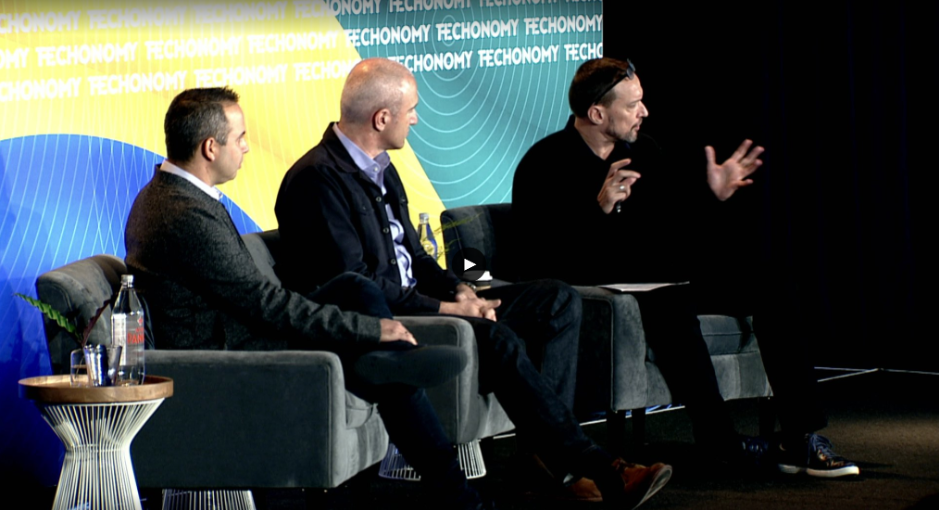
The “collapse of time” was an important meme in the Techonomy 2019 session on Super-Evolution, the idea that startups can now harness rapid prototyping and vast pools of data to develop radically new business models quickly and at scale (video here)

Techonomy

Super-Evolution is about creating more – dramatically more – options. Invented by AI, aka non-human logic. (see also Haydn Shaughnessy on the importance of maximizing options and radical adjacencies vs. core competency in innovation)

“Leave behind the myth of the grand plan and create the conditions for optionality and just-in-time strategy.”(Haydn Shaughnessy)

The first time I felt that sensation of collapsing time was when viewing Elon Musk’s Tesla 2019 update. I felt beaten by algorithms. The Tesla is now/then learning from (data) from human behavior and driving like a human, but ultimately will EXCEED their behavior” (at 01:48:15)

There you have it: gradually, but suddenly we have a singularity. Gradually but suddenly, all jobs are doomed. We are not going to stop this with an ethics council or with regulation. The train has left the station, the genie is out of the bottle.

“The fleet wakes up with an over the air update”

PR or product? The same question was asked some months later by Jean-Louis Gassée regarding the Cybertruck launch:

“Elon Musk forces us to be of two minds. On one side, we have Musk the Mountebank; on the other, a Captain of Industry.”

I had the same feeling of time-space collapse and irrelevance when watching this awesome interview with Rahul Sonnad, CEO/Co-Founder of Tesloop, explaining how “Robo-Mobility is a hospitality service” and “Once cars are appliances”

Are we toast? And/or do we need to reboot, reskill, etc if we don’t want to become irrelevant? Venkatesh Rao gives his perspective when reflecting on Inventing Time, and playing on Alan Kay’s “It is easier to invent the future than to predict it” and William Gibson’s “The future is already here, it is just unevenly distributed.”

“Riding in a Tesla made the electric vehicle future seem utterly inevitable in a way that kinda killed the present for me. Suddenly I could no longer look at gasoline cars the same way. Driving in my own car felt different like I was stuck in the past, waiting for the price of the future to come down to the point where I could afford to live in it. So a Tesla creates the future in the sense of both the Alan Kay and William Gibson quotes. It makes the future real in a deep way that is like making time itself real. And you know this because the feel of the present feels different like you’re heading down a dead-end, a lame-duck future. You’ll have to either abandon it as soon as you can or end up dying with it.”

Maps book

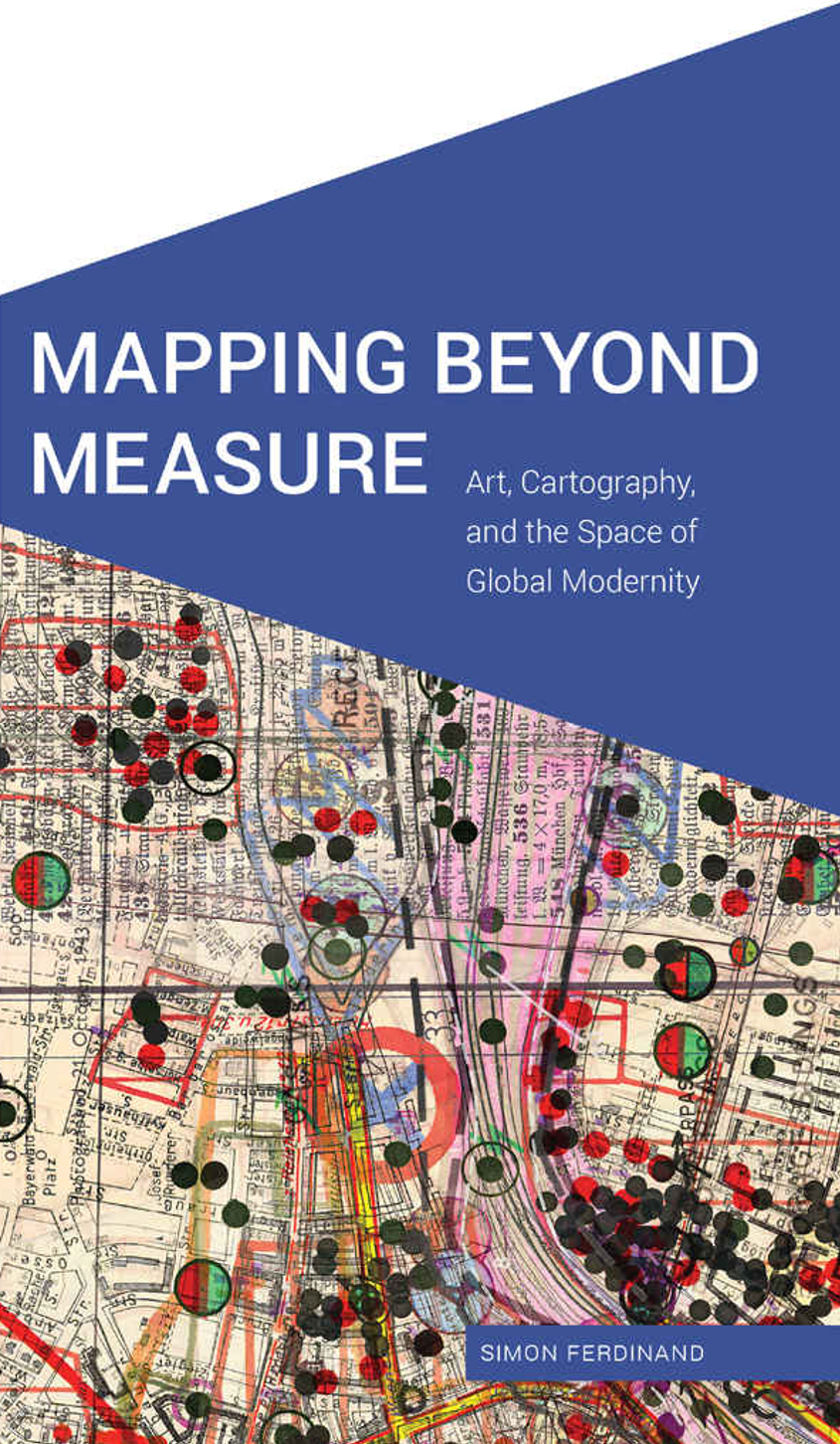
Around the same time, I was lurking in Simon Ferdinand’s Mapping Beyond Measure: Art, Cartography, and the Space of Global Modernity. He could have added the Time of Global Modernity, as he writes about spatial (spheres) and temporal (time collapse) ruptures.

“Often map artworks recapitulate the narratives of rupture (spatial as well as temporal) through which global modernity differentiates itself from inherited pasts and surroundings.”

And;

“Maps have proven integral… to the experience of “time-space compression”

Greenaway

It made me think of Peter Greenaway’s film ‘A walk through H: The Reincarnation of an Ornithologist’ (1978) and “A Walk through a Thousand Plateaus”, an homage to that film.

It is probably a sign of the times that in the preparation of his new book “Agency” also the great William Gibson lost a sense of how weird the world has become, up to the point of the present bypassing his future sci-fi scripts – “His future had to catch up with the present”– and “stubs”: alternative timeline in which technologists (and, more tellingly, hobbyists) of the future are able to meddle.

Agency

Hobbyists and meddling, the right words probably for not getting alienated. I would call it “tinkering” by maximizing options that human logic not necessary can spot or generate in time.

petervan-signature


Refik Anadol – Beautiful Speculations and Data Dramatisations

This post is a semi-transcript of a fantastic talk “Space in the mind of a machine” by media artist Refik Anadol. My post is not intended as a literal transcript, but rather as a collection of – often poetic – idea clusters of Refik’s talk. None of the ideas are mine, I just tried to condense it and brush some highlights.

The talk was given on 4 December 2019 at the Southern California Institute of Architecture (SCI-ARC). The website of SCI-ARC itself is nirvana for all beauty and art lovers out there, and worth spending a virtual visit of a couple of hours.

The talk was transformative for me, in the sense that it made me realize we truly have entered a new reality and a witnessing the dawn of a new area, full of beauty, poetry, and artistic interventions that create alertness and aliveness similar to the 16th-century renaissance.

After a long intro, his talk starts at 2:46


Criticizing the idea of canvas

Dimensional explorations

Augmented structures

“Design is a solution to a problem; art is a question to a problem” – John Maeda

Humans, Machines, and Environments in a symbiotic relationship

Can a building dream?

“Life can only be understood backward, but it must be lived forward” – Kierkegaard

The data that we leave behind us

Data “dramatization” vs. Data Visualisation

The invisible space of Wi-Fi, 4G, radio signals, etc.

A poetic exploration of invisible datasets

Data Paintings

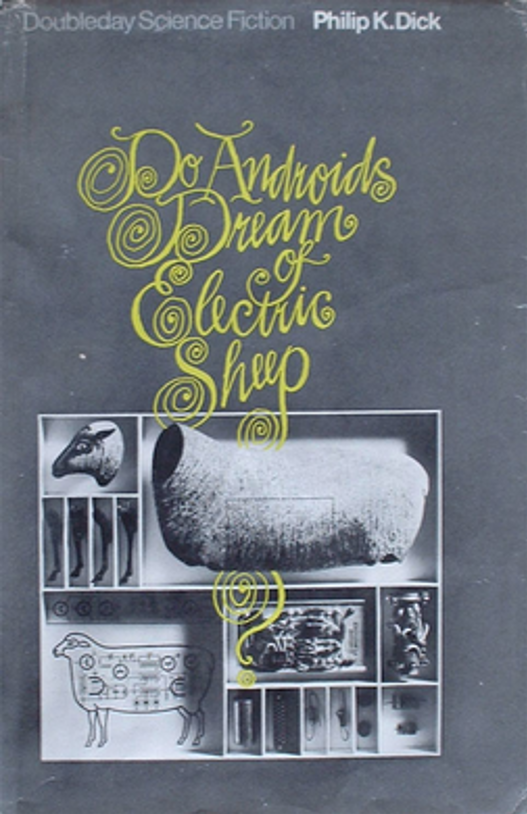
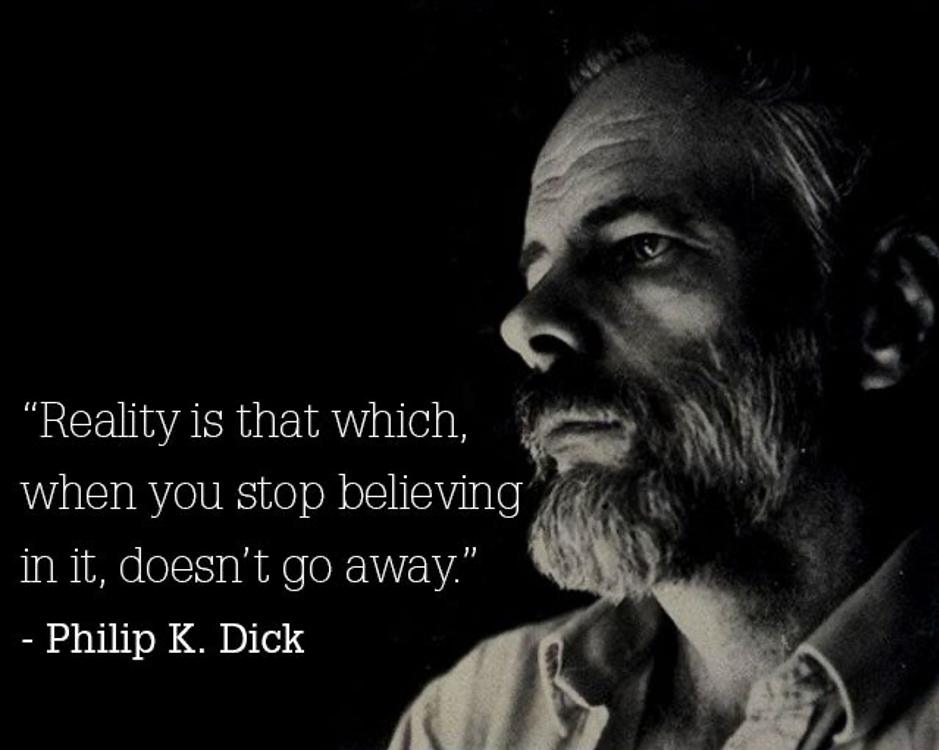
At a certain moment, Refik Anadol quotes Philip K. Dick, author of the 1968 science fiction book “Do Androids Dream of Electric Sheep”, later retitled Blade Runner, and basis for the 1982 initial version of the film.

Electric Sheep

Quote Philip Dick

This inspires Refik Anadol to seed the following insight:

A simulation is that which does not stop when the stories go away

Stories are responsible for our human desire for resolution

But the simulation is only responsible for its own laws and initializing conditions

A simulation has no moral, prejudice of meaning

Like nature it just is

There is some poetry hidden in this abstraction of data

Exploring data sets that have this quality of meditation

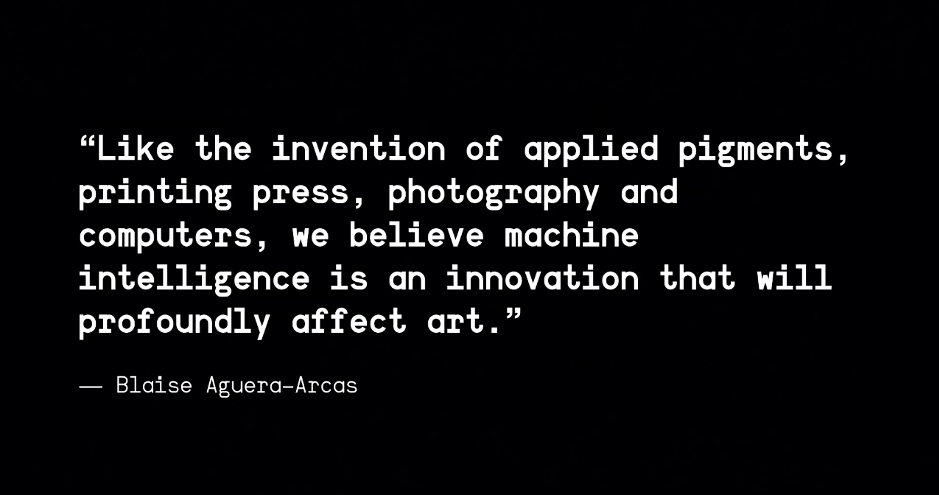
The architect as an operating systems designer, a beautiful “speculation”

Quote Blaise

Finding the moment of remembering

Finding the moment of entering a dream state

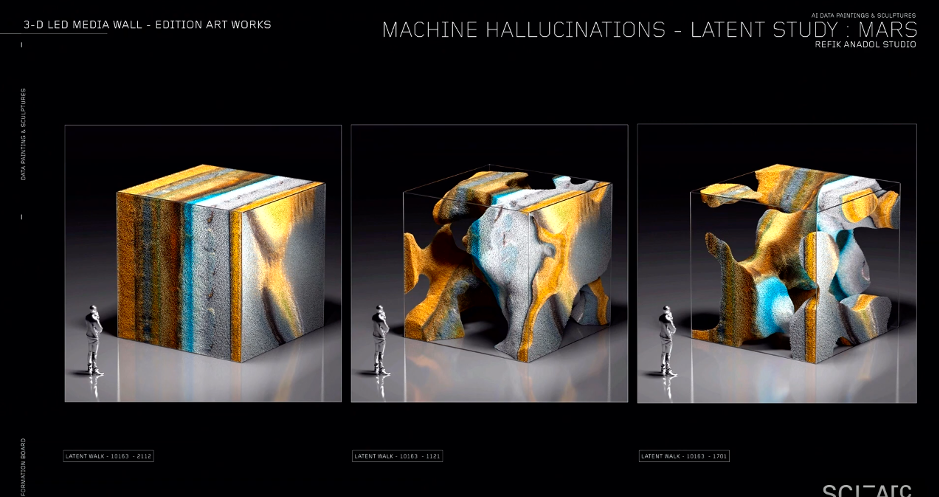
“Machine Hallucinations”

Collective memories of spaces

To make the invisible visible

Hallucination narrators

Dream narrators

The Selfies of the Earth

Machine Hallucinations

Refik is asking questions that are not just a fancy-fications of a bunch of algorithms

petervan-signature


Spacial Trash and Patrimony

Another rabbit hole bringing together some reflections on creativity, demolition, patrimony, and poetic ruination, as so often in this blog inspired by architectural insights and metaphors.

bouwmeester

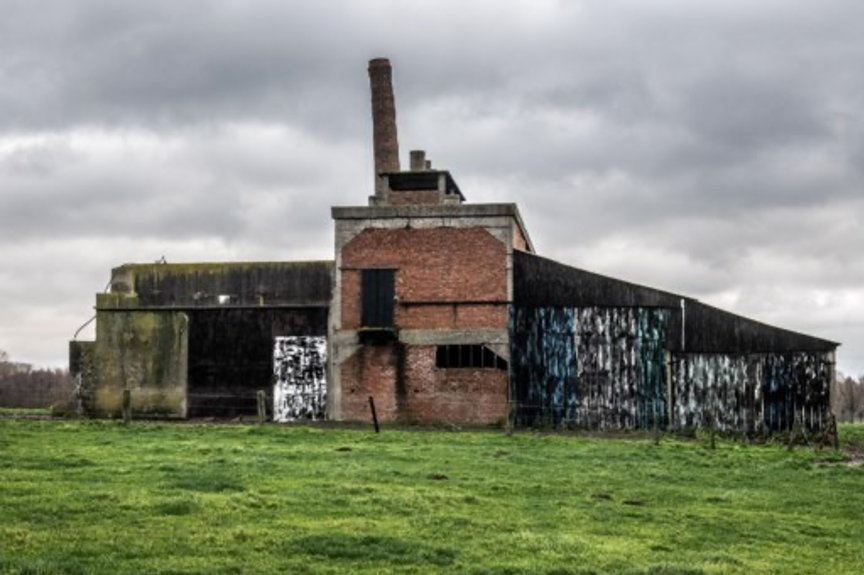
My attention was triggered by an article in the Jan 11, 2020 weekend edition of De Standaard, a Flemish newspaper. The article was about landscaping, and more specifically “ontharding” (I would literally translate it as “softening”). In this case, softening that what was hardened in the first place. Abandoned and neglected residential and industrial sites, where the soil is still covered by the concrete and rubbish of empty buildings.

It was part of a study supported by the “Vlaamse Bouwmeester”. “Bouwmeester” means “master of building”, “bau-meister”. The term is ill-translated into “Flemish Government Architect” on the official website. The full study can be found here (PDF in Dutch).

The core mission of the Flemish Government Architect is to promote the architectural quality of the built environment. The Flemish Government Architect and his team advise public patrons in the design and realization of buildings, public space, landscape and infrastructure. In addition, the Flemish Government Architect stimulates the development of visions and reflection, with an emphasis on interdisciplinary and cross-sectoral initiatives. The Flemish Government Architect acts as an advisor to the entire Flemish Government.

In short, the article and the study plea for restoring public space by the demolition of 1/5th of hardened space/surface in the Flemish landscape by 2050.

I had a flashback to “Cradle to Cradle”, the 2002 book that alerted me for the first time to a possible vision of sustainable production and architecture. The idea at that time was that reducing waste was just not good enough, and to be sustainable we needed to add value back into the system. As an evolution, the article about the softening of landscape goes one step further: from reducing waste to creating open space by the demolition of vacancy.

“Sloop geeft blijk van falen” – “Demolition evidences failure”

It was happenstance that I was reading around the same time Dan Hill’s 2015 book “Dark matter and trojan horses. A strategic design vocabulary”. I will come back to this book in subsequent posts.

Dan Hill was/is looking for (open) spaces as well, quoting ex-FC Barcelona football player and current Al-Sadd (Quatar) football team coach Xavi Hernández:

 “Think quickly, look for spaces. That’s what I do: look for spaces. All day. I’m always looking. All day, all day. Here? No. There? No. People who haven’t played don’t always realise how hard that is. Space, space, space. It’s like being on the PlayStation. I think ‘shit, the defender’s here, play it there’. I see the space and pass. That’s what I do.”

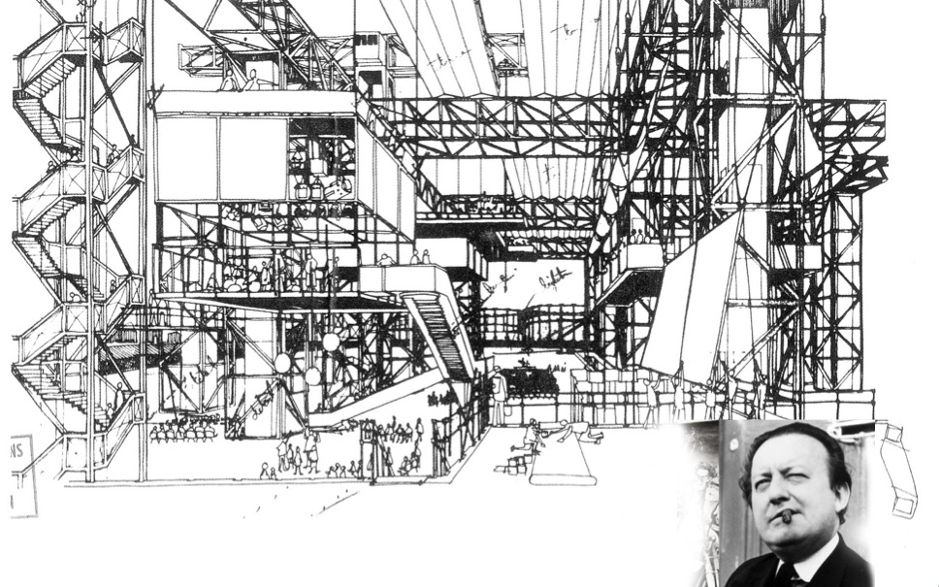
Already more than 20 years ago, architect Cedric Price was arguing for demolish-able buildings with open re-usable spaces.

fun palace

Cedric Price’s Fun Palace – inspiration for Centre Pompidou in Paris

OK – I confess – as from that moment I went down the rabbit hole and saw demolition and abandoned architecture everywhere. Like in this recent Guardian article, arguing the case for fully demountable buildings.

“We have to think of buildings as material depots,” says Thomas Rau , a Dutch architect who has been working to develop a public database of materials in existing buildings and their potential for reuse… He has developed the concept of “material passports”, a digital record of the specific characteristics and value of every material in a construction project, thereby enabling the different parts to be recovered, recycled and reused.

But there is also something poetic about abandonment, up to the point where we could consider keeping these ruins and equipping them with sensors to listen to patrimony.

In his beautifully reflective post “Instrumental Revelation and the Architecture of Abandoned Physics Experiments”, Geoff Manough introduces the concept of “poetic ruination.

Like menhirs, these abandoned seismic sensors could now just stand there, silent in the landscape, awaiting a future photographer such as Grigoryants to capture their poetic ruination.

Lebbeus Woods was inspiration to Geoff Manough and London-based architects Smout Allen for the project L.A. Recalculated:

Woods depicts an entire city designed and built as an inhabitable scientific tool. Everywhere there are “oscilloscopes, refractors, seismometers, interferometers, and other, as yet unknown instruments, measuring light, movement, force, change.” Woods describes how “tools for extending perceptivity to all scales of nature are built spontaneously, playfully, experimentally, continuously modified in home laboratories, in laboratories that are homes.”

Instead of wasting their lives tweeting about celebrity deaths, residents construct and model their own bespoke experiments, exploring seismology, astronomy, electricity, even light itself.

seismic sensors

Seismic Counterweights
From L.A. Recalculated by Smout Allen and BLDGBLOG

Like architects think about (industrial) sites listening through sensors to seismic undercurrents, I started wondering whether we could not use this metaphor to reflect about our organizational structures; structures not only as hierarchical structures but the more encompassing set of system rules and patterns of an organization – I referred to it before as organizational patrimony.

How can we listen to and signal about the pulse of this organizational patrimony? How can we be aware of it, appreciate it, respect it, and build upon it in our rebellious acts of creative destruction?

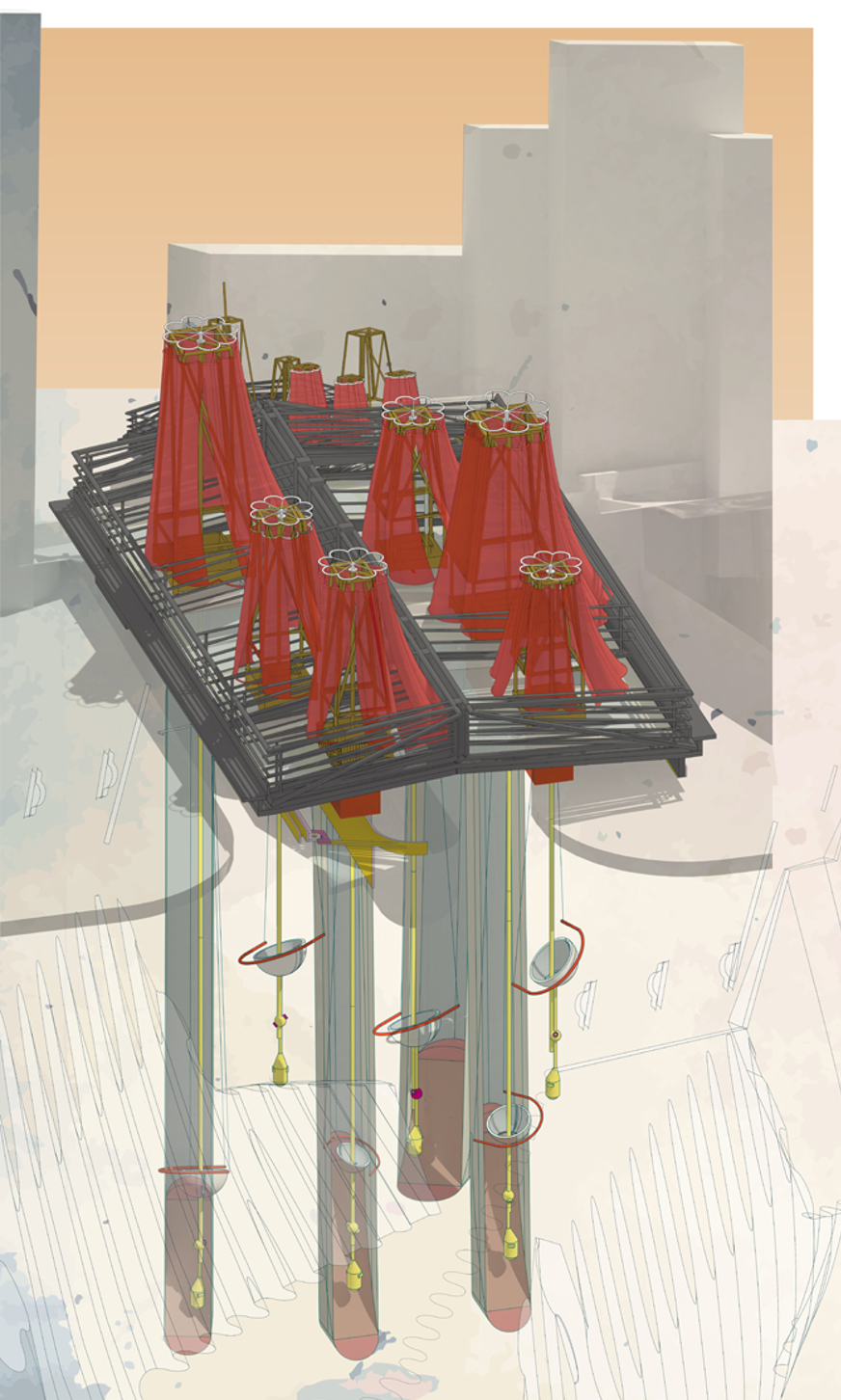
I imagine a cohort of humans – like a colony of ants – having 24/7 sensors and laboratories everywhere in organizations; in every office, cubicle, meeting room, coffee corner, etc. And I don’t mean robotic sterile sensors feeding AI models. I mean real humans, measuring, documenting and signaling patrimonial changes in the structure of corporate structure, so they can send early warnings of experiments that have become useless and therefore have to be ruinated, or – in the worst-case – signal cases of patrimonial breakdown and demolition. In search of the material depot and passport of our organizations.

petervan-signature