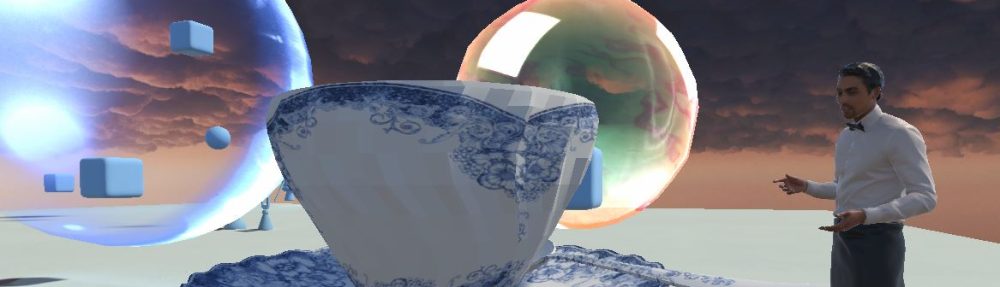
It’s been a while. Some of you have written, others have probably assumed I disappeared into one of my own unfinished experiments. For years, my studio was a place of images, projections, strange XR environments, and long nights chasing ideas that rarely behaved. But somewhere along the way—perhaps during retirement, perhaps during one of those quiet afternoons where nothing quite compels you anymore—I found myself tired of it all. Not of thinking, not of making, but of making that kind of work. So I did something else. I dismantled the studio.
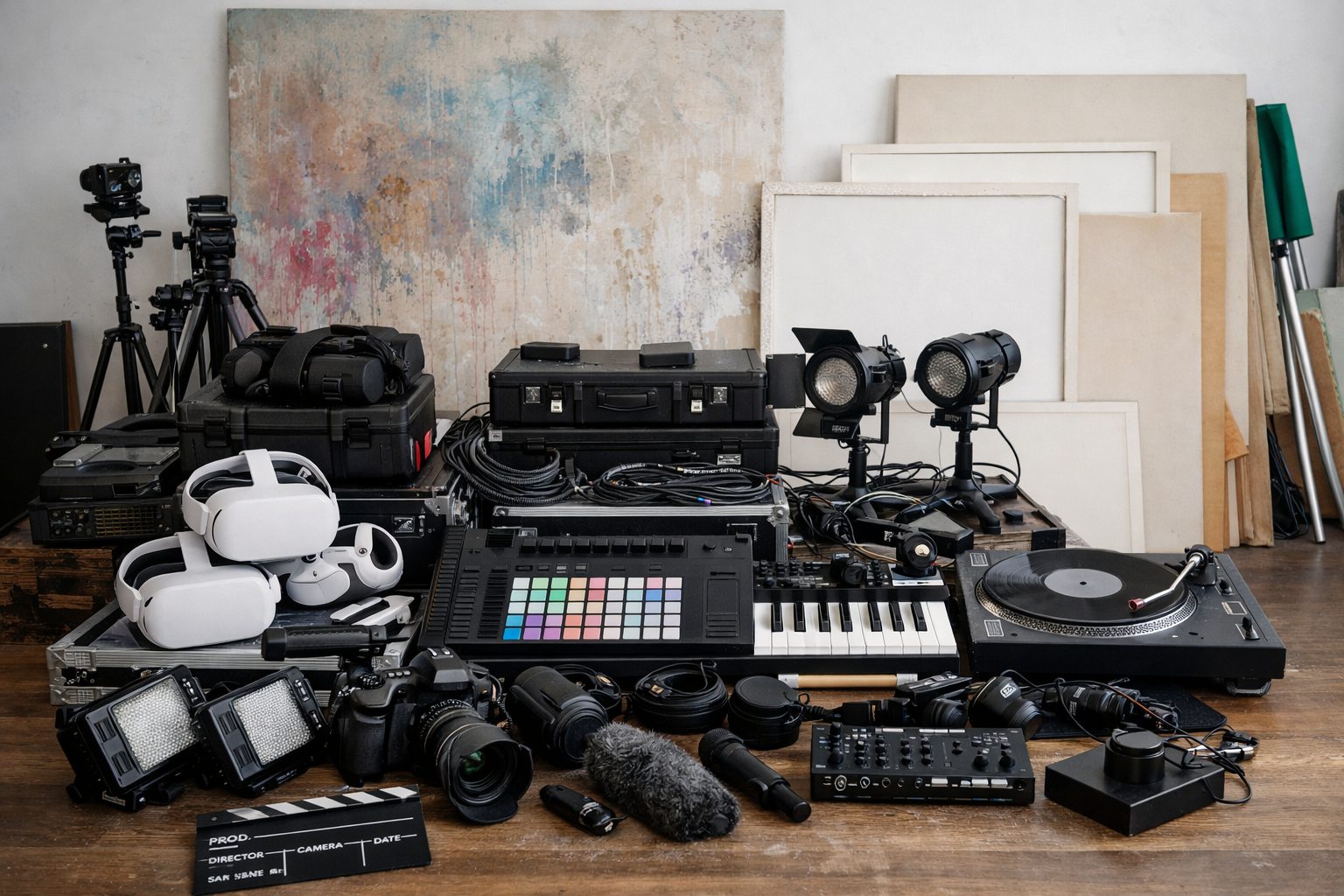
The dismantling of the studio
The cameras, the rigs, the VR headsets, the motion trackers—they all went into storage. In their place, I began assembling something far less poetic and far more absurd: a machine designed to fish. Not just any machine. A humanoid.
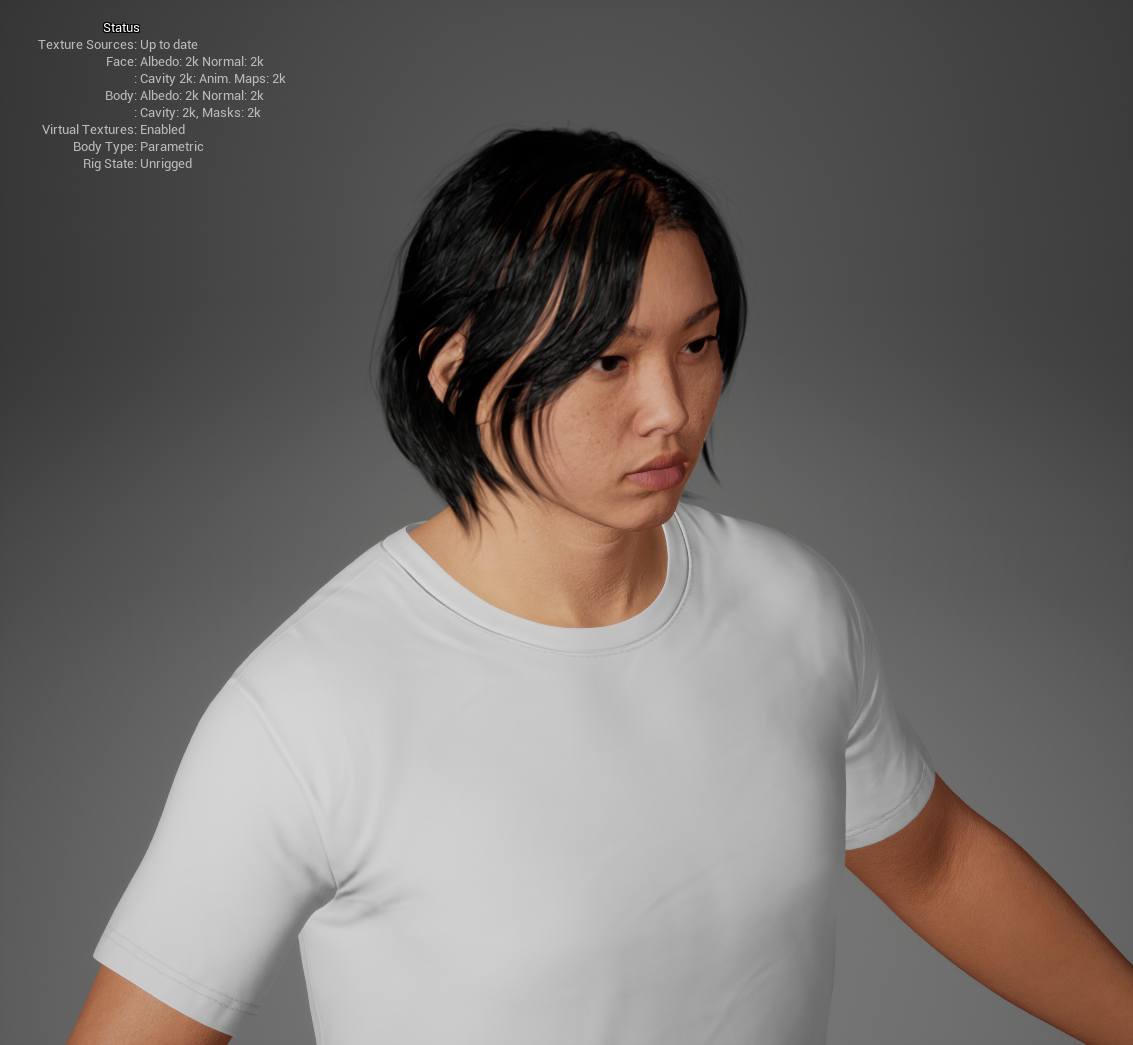
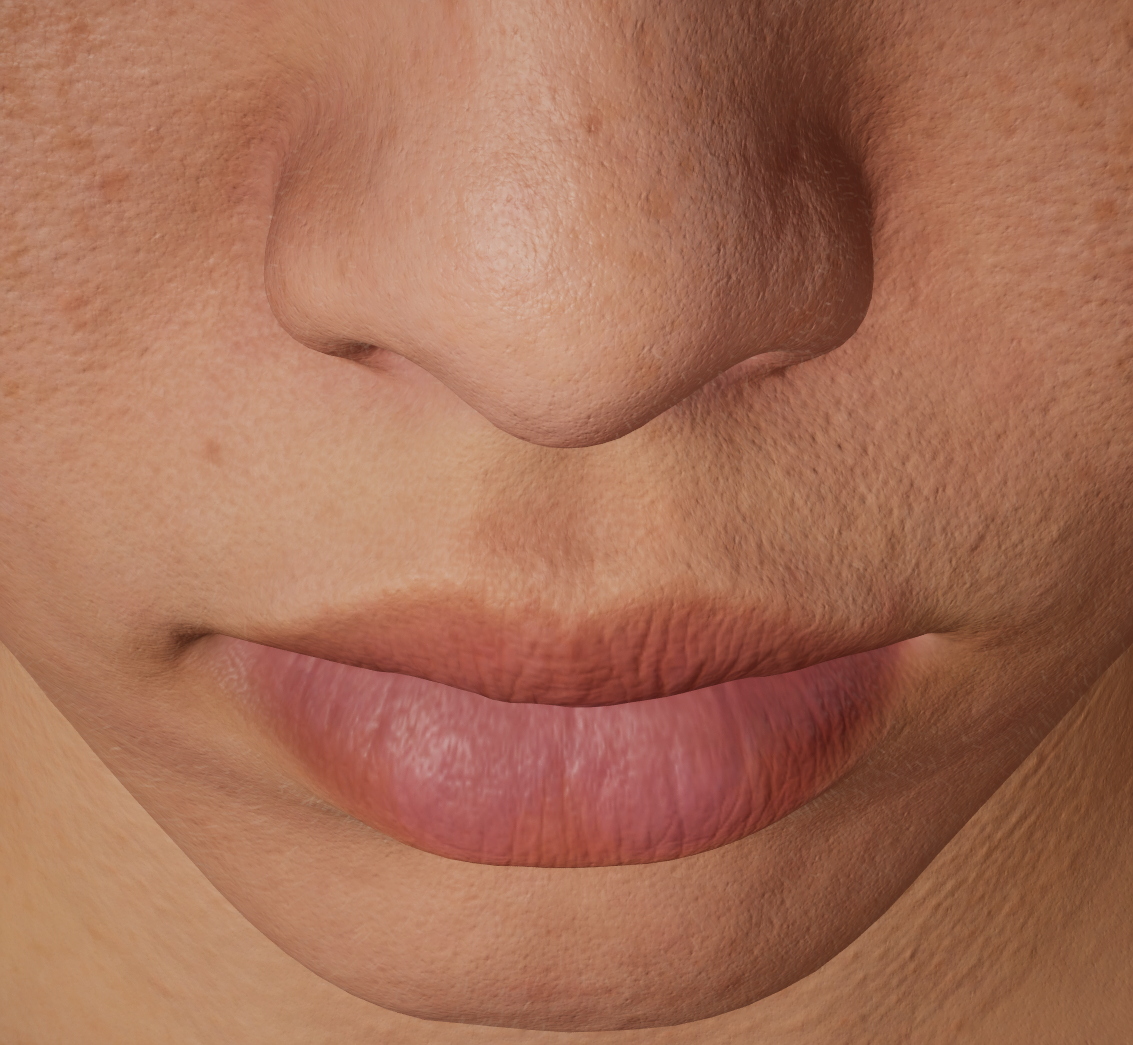
Early versions of the humanoid in Metahumans Unreal Engine
From Art Studio to Autonomous Fisher
The idea didn’t come all at once. It started with a simple irritation: I missed fishing, but not the waiting, not the cold, and certainly not the unpredictability of the Belgian weather. I wanted the experience without the inconvenience. I wanted presence without being present.
So I asked myself a question that feels obvious in hindsight: what if fishing could be performed remotely, intelligently, and continuously? That question became a project.
At the center of it all is a humanoid robot—roughly my height, vaguely my posture, though considerably more patient. Its frame is industrial aluminum and composite joints, designed for stability on uneven riverbanks. It stands, day and night, along the Dender river, unmoving until needed, like a quiet sentinel disguised as a fisherman.
Its brain is not singular. Instead, it runs on a cluster of four Mac Minis, mounted in a sealed, weatherproof compartment within its backpack. Overkill? Perhaps. But the redundancy allows for parallel processing: environmental analysis, motor control, bait synthesis, and remote communication all run simultaneously without latency.
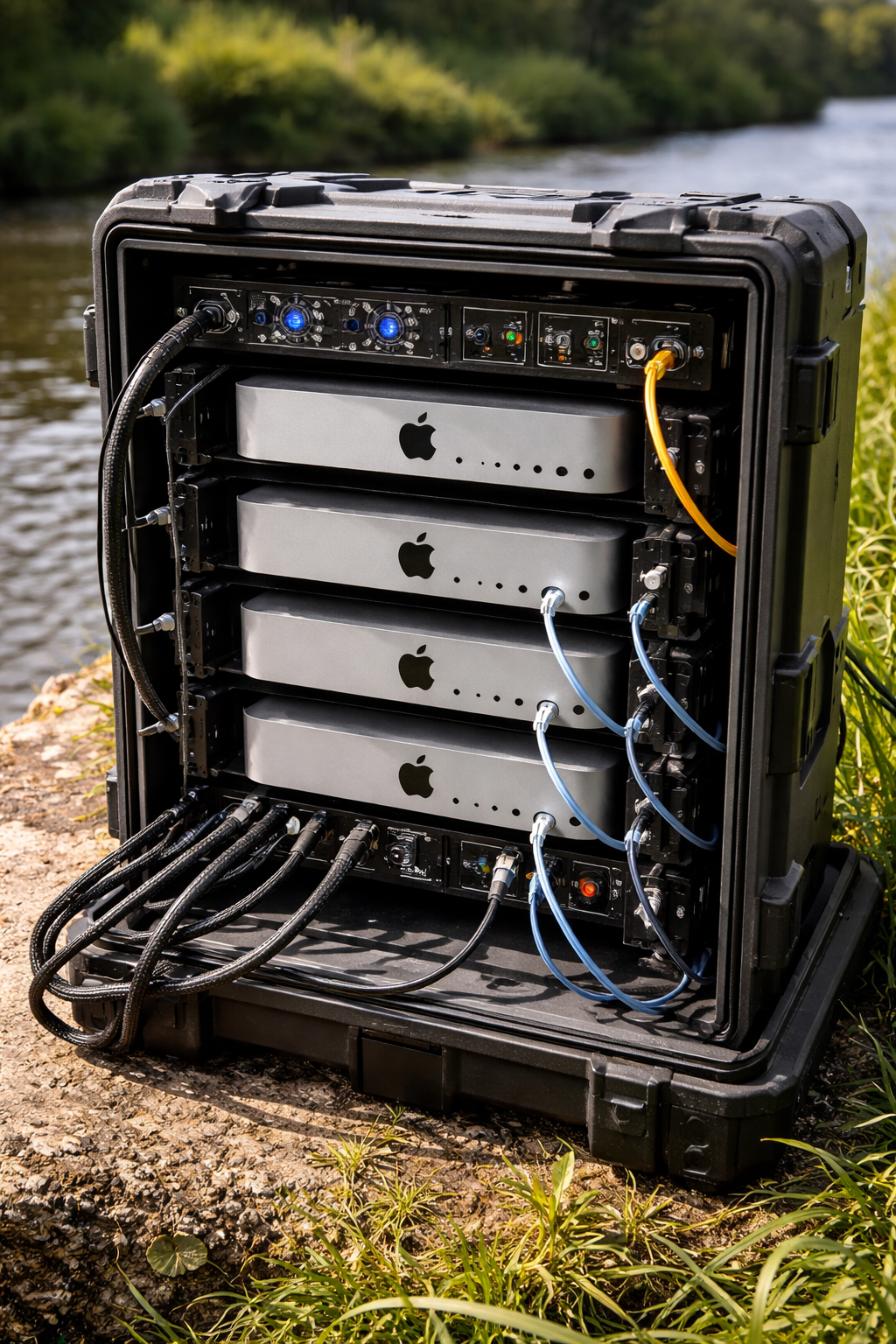
The backpack with the Mac-Mini Tower
The system itself was developed with the help of Claude AI, which I used more as a collaborator than as a tool. Together, we iterated on decision trees, adaptive learning models, and behavioral responses. Over time, the robot stopped behaving like a programmed device and began acting more like a cautious, observant angler.
Energy Without Interruption
One of the early challenges was power. A machine that fishes continuously cannot depend on a wall outlet. The solution was hybrid and, admittedly, a bit romantic: solar panels combined with a micro water turbine anchored directly in the river. During the day, the panels provide ample energy, while the turbine ensures baseline power during nights and overcast stretches—which, in Flanders, is most of the year.
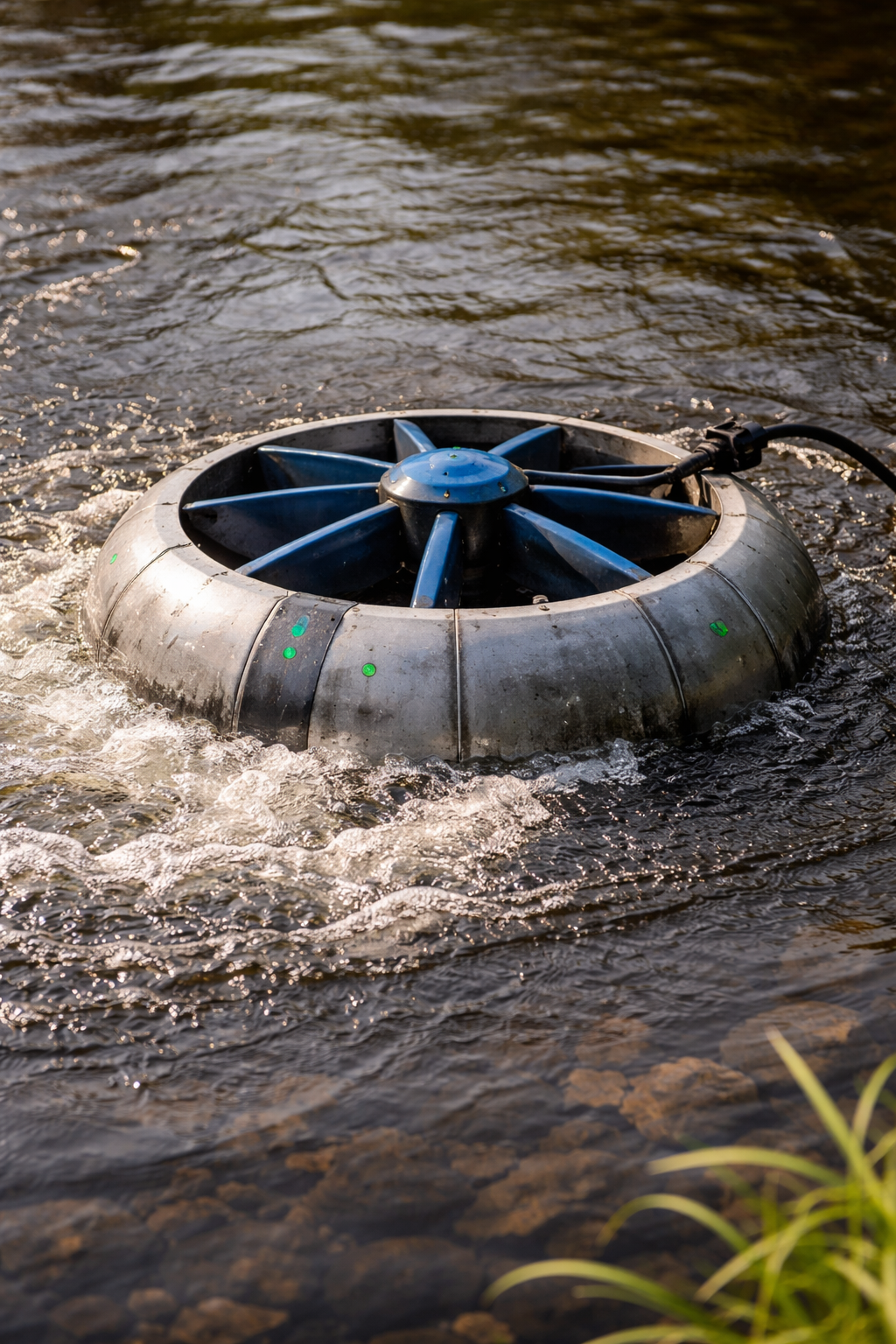
The micro water turbine
The result is a system that is almost entirely self-sufficient. It wakes, observes, calculates, and acts without requiring human intervention. I sometimes forget it’s out there until I log in and see what it has been doing.
Fishing From Home
Yes, you can control it remotely. That was always part of the vision: fishing without being physically present. From my desk—or, more often, my kitchen—I can connect to the humanoid’s interface and take over its movements. There’s a slight delay, but nothing that breaks the illusion. You see through its cameras. You feel (in a limited, haptic sense) the tension in the line. You decide when to cast, when to reel, when to wait. But here’s the strange part: I rarely do. Because the robot is better at it than I am.
Intelligent Bait Synthesis
This is where things begin to feel less like engineering and more like alchemy. The humanoid doesn’t just use pre-made bait. It creates its own.
Equipped with a compact mixing system—part chemistry lab, part kitchen—it analyzes environmental data and determines the optimal bait composition for specific fish species in the Dender River. It considers water temperature, turbidity, recent rainfall, seasonal migration patterns, and even subtle chemical traces in the water.
Then it mixes. Proteins, oils, plant matter, scent compounds—each combination slightly different from the last. Over time, it has developed a library of successful mixtures, continuously refining them through feedback loops. Success is measured not just by catches, but by which fish are caught, at what time, and under which conditions.
I once tried one of its recommended mixes myself. It smelled terrible. It worked perfectly.
Tentacles Instead of Lines
Traditional fishing lines felt insufficient for what I wanted this system to achieve.
So we replaced them.
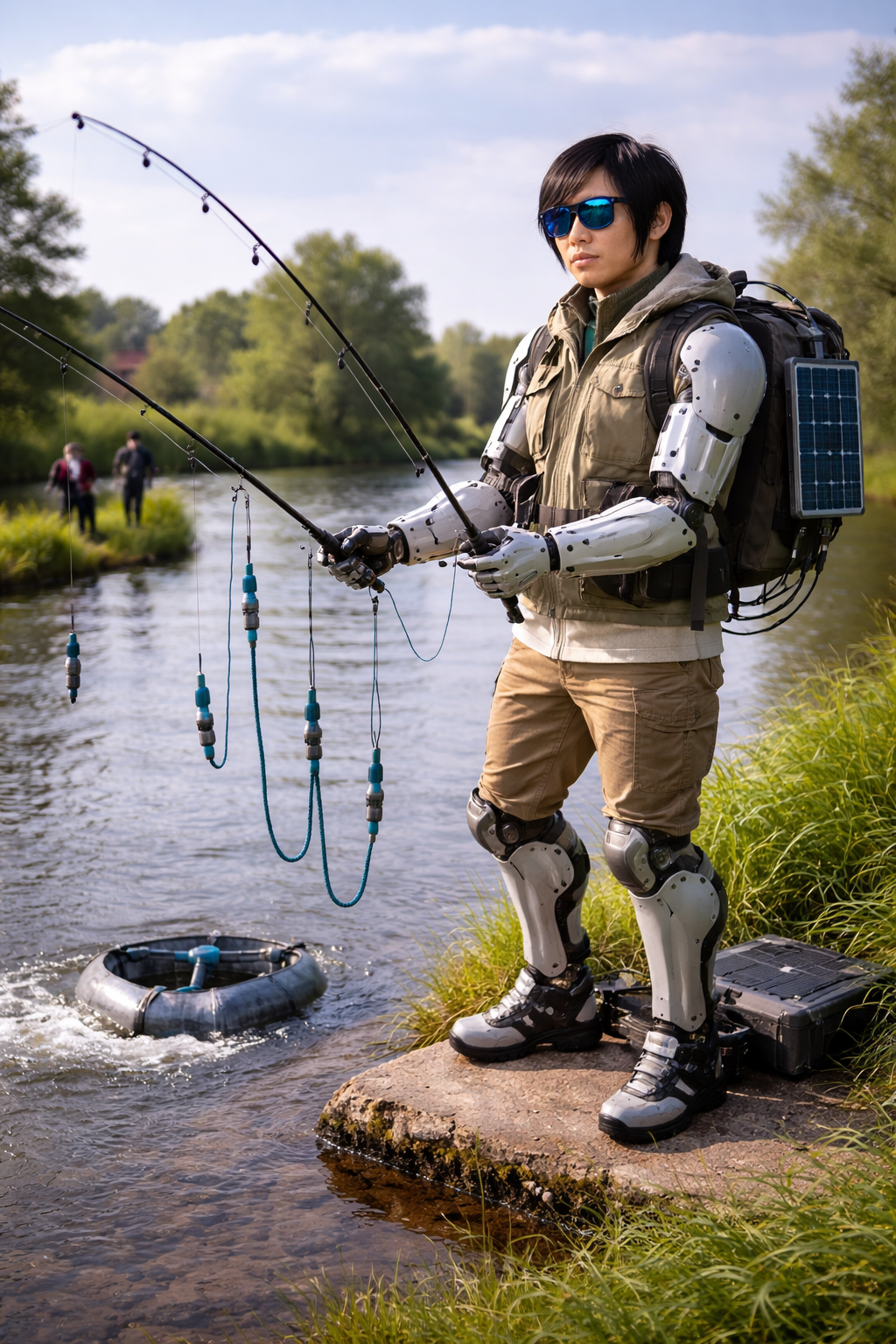
A relatively complete set-up
Extending from the humanoid’s arms are flexible, twisted appendages—something between cables and tentacles. Each one houses a network of sensors capable of detecting micro-changes in water pressure, temperature gradients, chemical composition, and movement patterns.
They don’t just wait passively. They explore. These tentacles can subtly reposition themselves, probing different depths and currents simultaneously. They gather data constantly, feeding it back into the system, allowing the AI to make real-time decisions about where to focus effort.
It’s less like fishing and more like listening to the river.
The Competition
I hadn’t planned to enter any competitions. In fact, the idea seemed almost unfair. Pitting a continuously learning, sensor-rich humanoid system against traditional anglers felt like entering a calculator into a mental arithmetic contest. But curiosity got the better of me.
The international fishing competition on the Dender river is, under normal circumstances, a quiet affair—serious participants, careful techniques, and a shared respect for patience. When the humanoid arrived, it attracted attention, then skepticism, and eventually mild irritation.
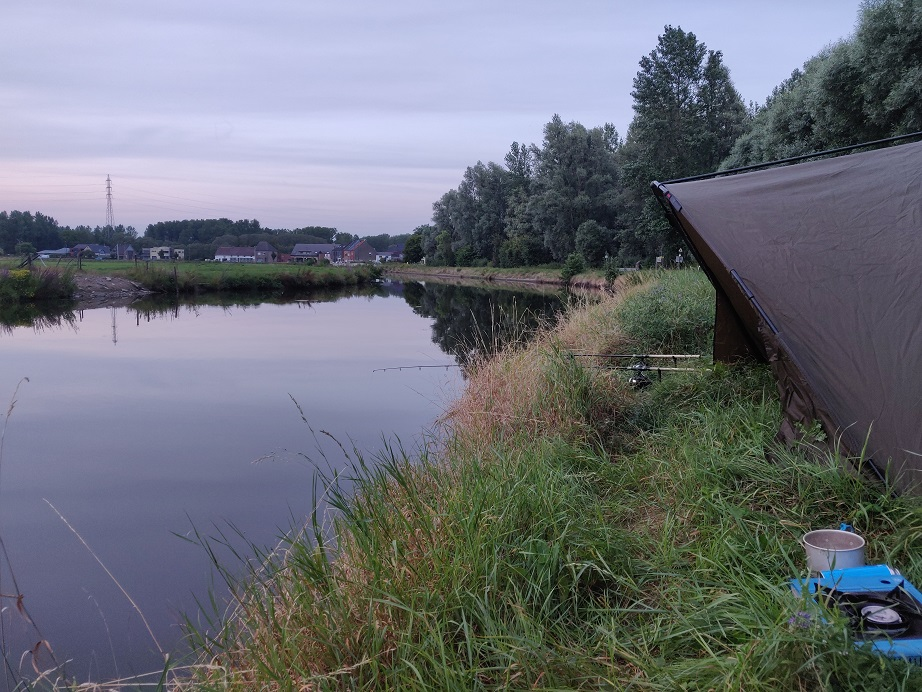
The quiet location for the competition
It stood there, unmoving, as others prepared their gear. And then it began. Over the course of the competition, the robot adjusted constantly. It shifted positions, altered bait compositions, and fine-tuned its approach based on conditions that changed hour by hour. While human participants relied on experience, intuition, and occasional luck, the humanoid relied on continuous analysis.
By the end, the results were undeniable. It didn’t just win—it dominated. First prize.
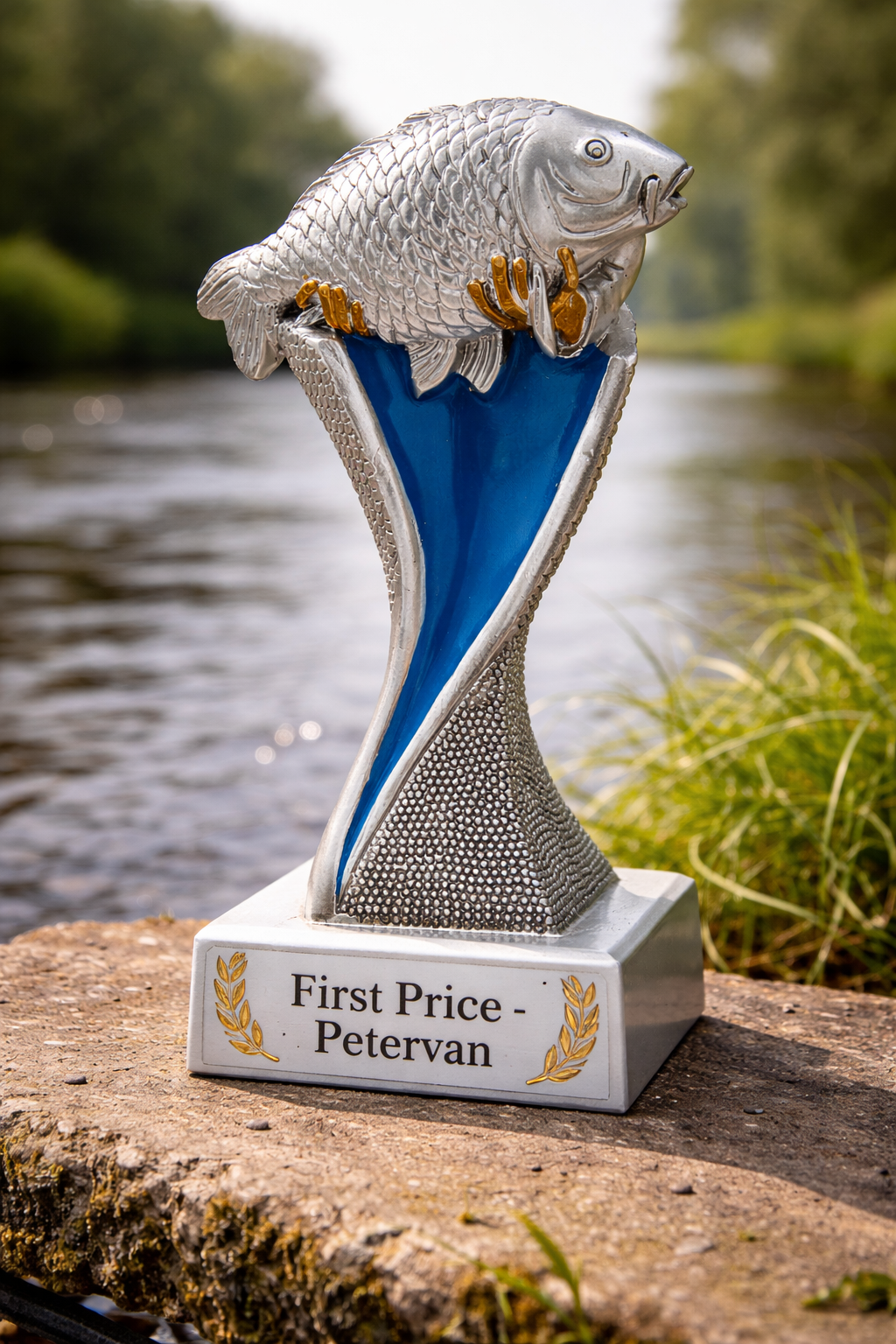
The Award
What This Actually Means
I’ve been asked whether this is still fishing. It’s a fair question. There is something inherently human about sitting by water, waiting, thinking, doing very little. This machine removes much of that. It replaces stillness with computation, patience with optimization. And yet, I find myself more connected to the process than before.
Not because I am physically present, but because I have built something that observes more deeply than I ever could. It notices patterns I would miss. It reacts faster than I could. It learns in ways that feel both mechanical and strangely intuitive. This is not a replacement for fishing. It is a transformation of it.
What Comes Next
The humanoid still stands by the Dender. It continues to learn. I continue to watch. Sometimes I take control, just to remember what it feels like. Most of the time, I let it do what it does best. I didn’t expect retirement to lead me here—to a machine that fishes better than I ever did, powered by sun and water, thinking with the help of artificial intelligence.
But then again, I didn’t expect to stop making art either. Perhaps I didn’t. Perhaps this is just another form of it.



 Petervan Studios