AI-powered humanoid wins international competition

It’s been a while. Some of you have written, others have probably assumed I disappeared into one of my own unfinished experiments. For years, my studio was a place of images, projections, strange XR environments, and long nights chasing ideas that rarely behaved. But somewhere along the way—perhaps during retirement, perhaps during one of those quiet afternoons where nothing quite compels you anymore—I found myself tired of it all. Not of thinking, not of making, but of making that kind of work. So I did something else. I dismantled the studio.
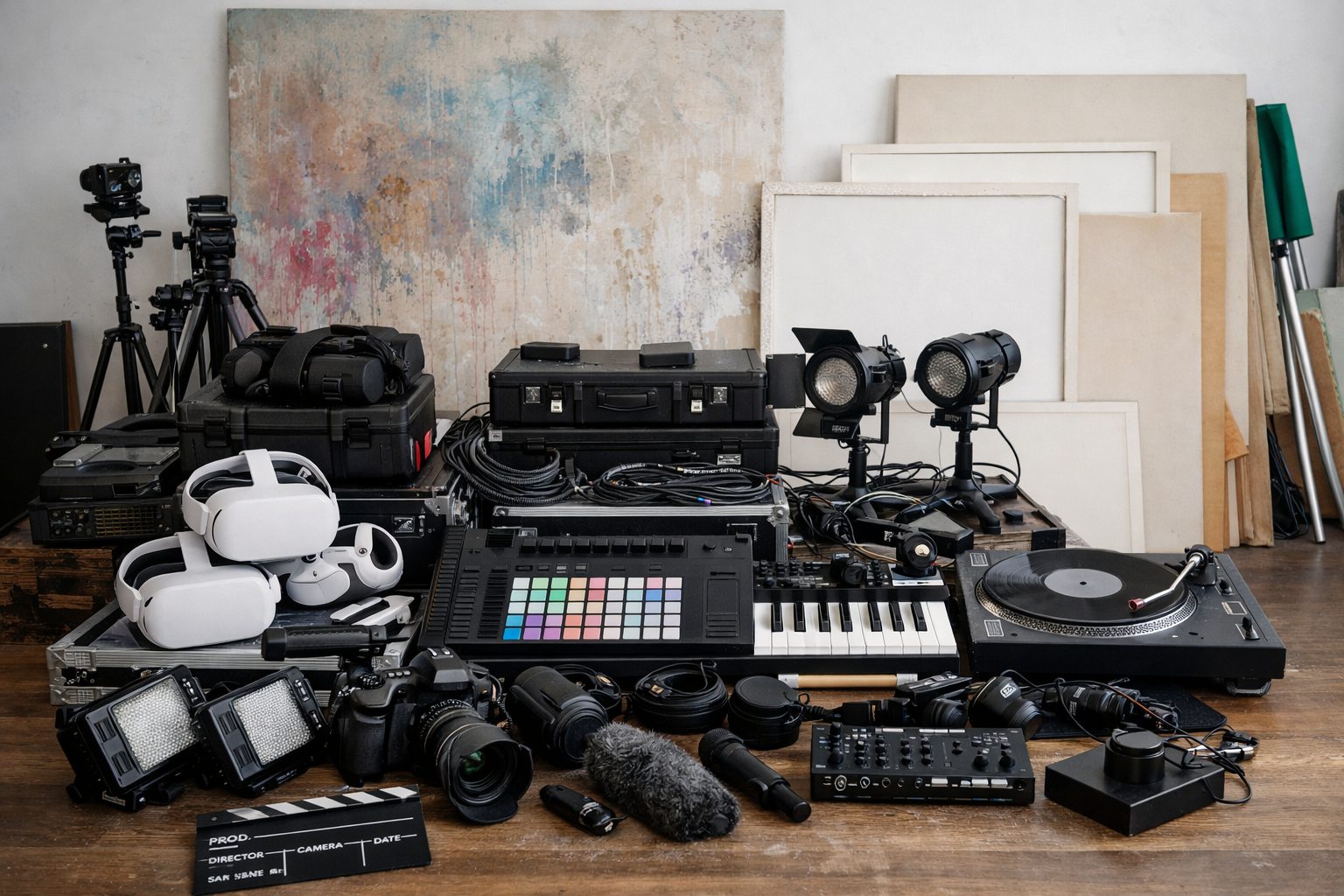
The dismantling of the studio

The cameras, the rigs, the VR headsets, the motion trackers—they all went into storage. In their place, I began assembling something far less poetic and far more absurd: a machine designed to fish. Not just any machine. A humanoid.
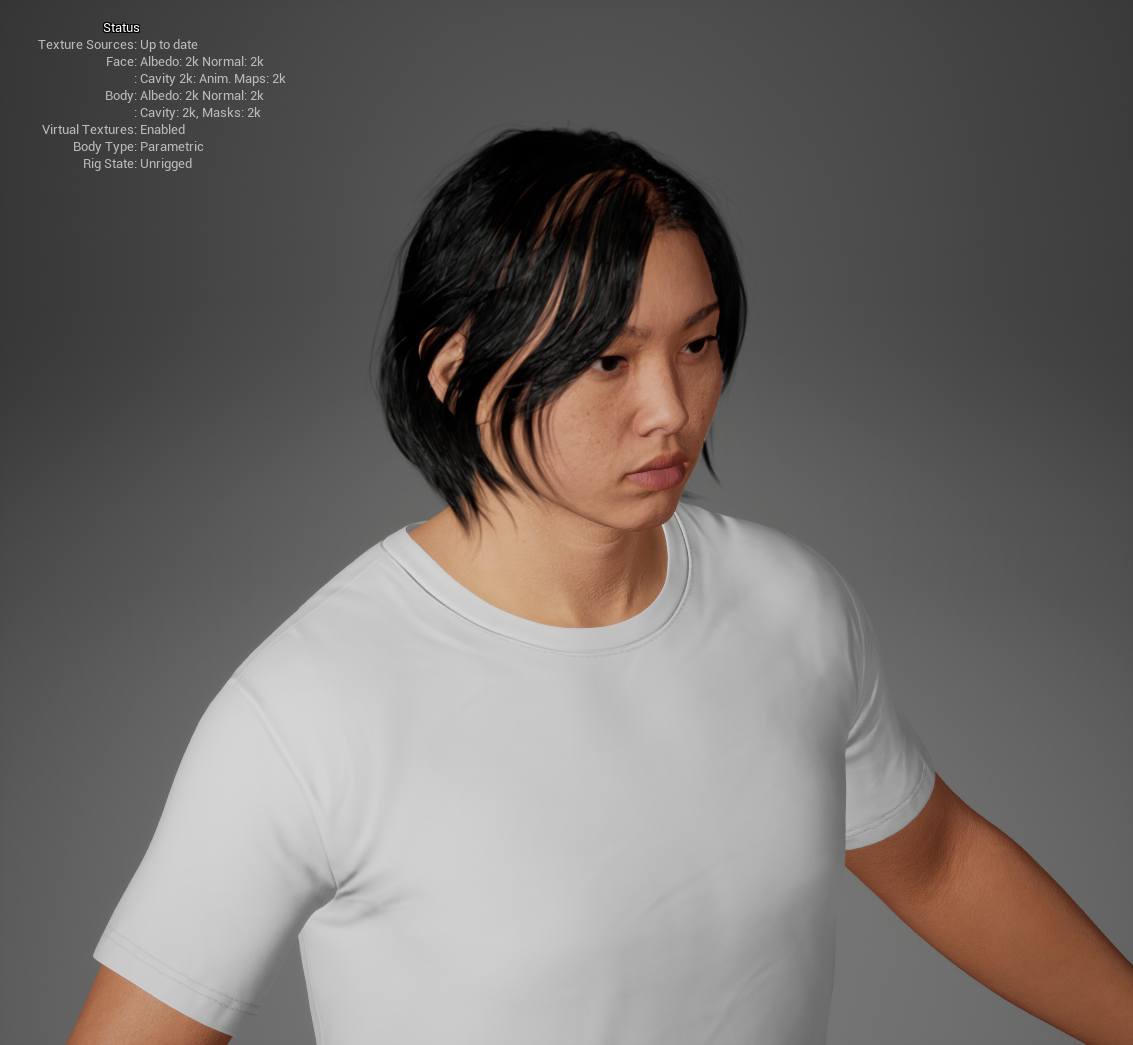
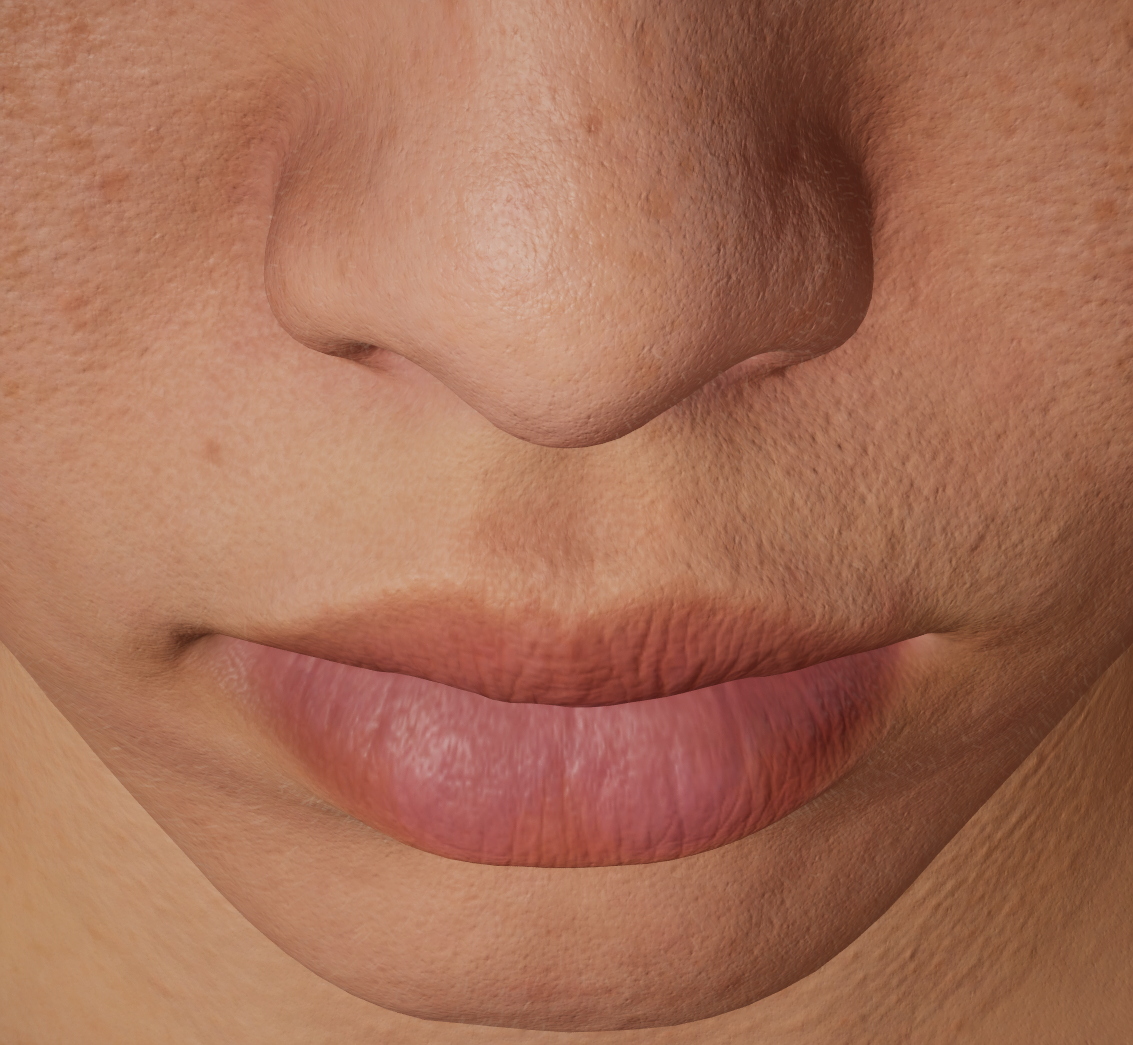
Early versions of the humanoid in Metahumans Unreal Engine

From Art Studio to Autonomous Fisher

The idea didn’t come all at once. It started with a simple irritation: I missed fishing, but not the waiting, not the cold, and certainly not the unpredictability of the Belgian weather. I wanted the experience without the inconvenience. I wanted presence without being present.

So I asked myself a question that feels obvious in hindsight: what if fishing could be performed remotely, intelligently, and continuously? That question became a project.

At the center of it all is a humanoid robot—roughly my height, vaguely my posture, though considerably more patient. Its frame is industrial aluminum and composite joints, designed for stability on uneven riverbanks. It stands, day and night, along the Dender river, unmoving until needed, like a quiet sentinel disguised as a fisherman.

Its brain is not singular. Instead, it runs on a cluster of four Mac Minis, mounted in a sealed, weatherproof compartment within its backpack. Overkill? Perhaps. But the redundancy allows for parallel processing: environmental analysis, motor control, bait synthesis, and remote communication all run simultaneously without latency.
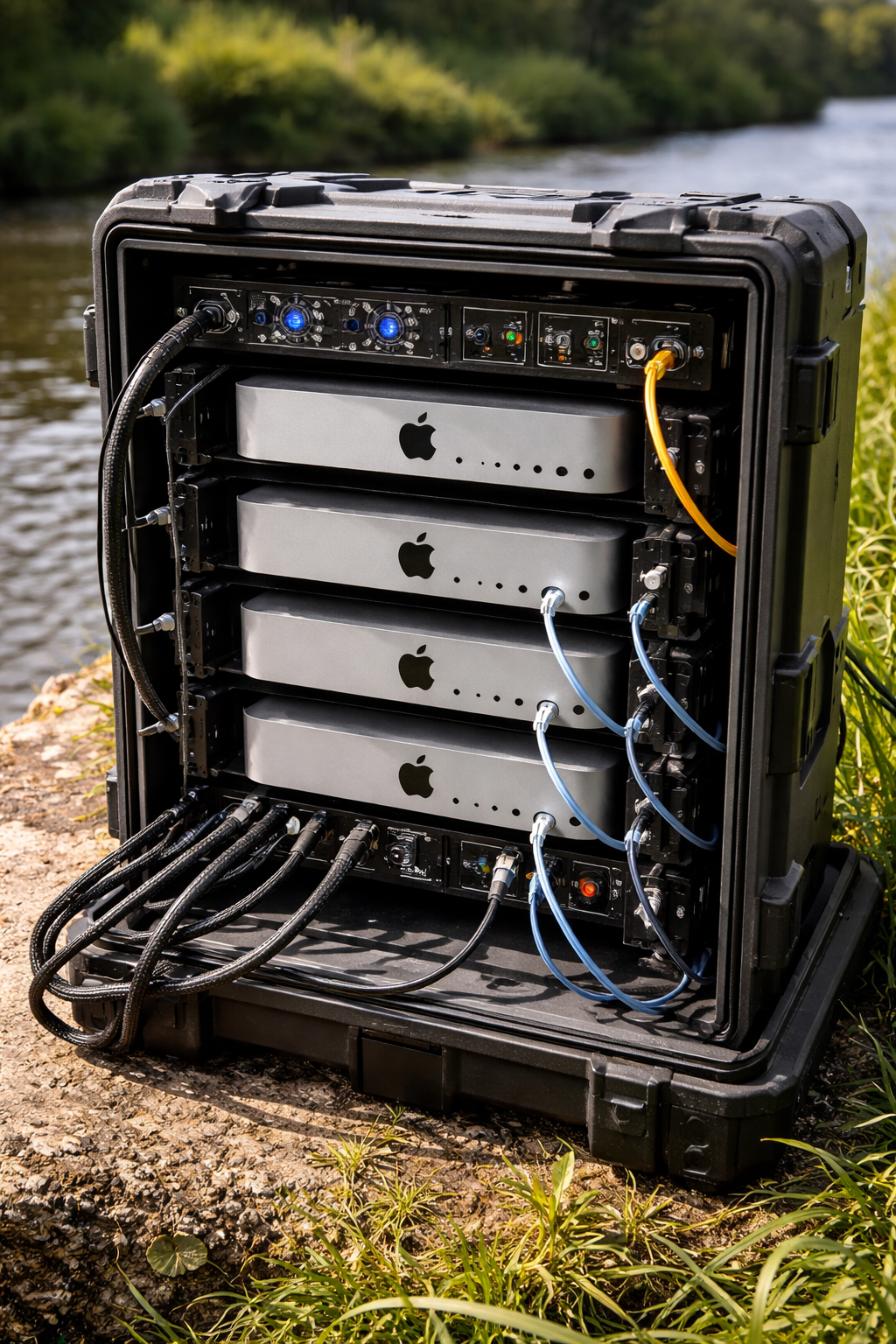
The backpack with the Mac-Mini Tower

The system itself was developed with the help of Claude AI, which I used more as a collaborator than as a tool. Together, we iterated on decision trees, adaptive learning models, and behavioral responses. Over time, the robot stopped behaving like a programmed device and began acting more like a cautious, observant angler.

Energy Without Interruption

One of the early challenges was power. A machine that fishes continuously cannot depend on a wall outlet. The solution was hybrid and, admittedly, a bit romantic: solar panels combined with a micro water turbine anchored directly in the river. During the day, the panels provide ample energy, while the turbine ensures baseline power during nights and overcast stretches—which, in Flanders, is most of the year.
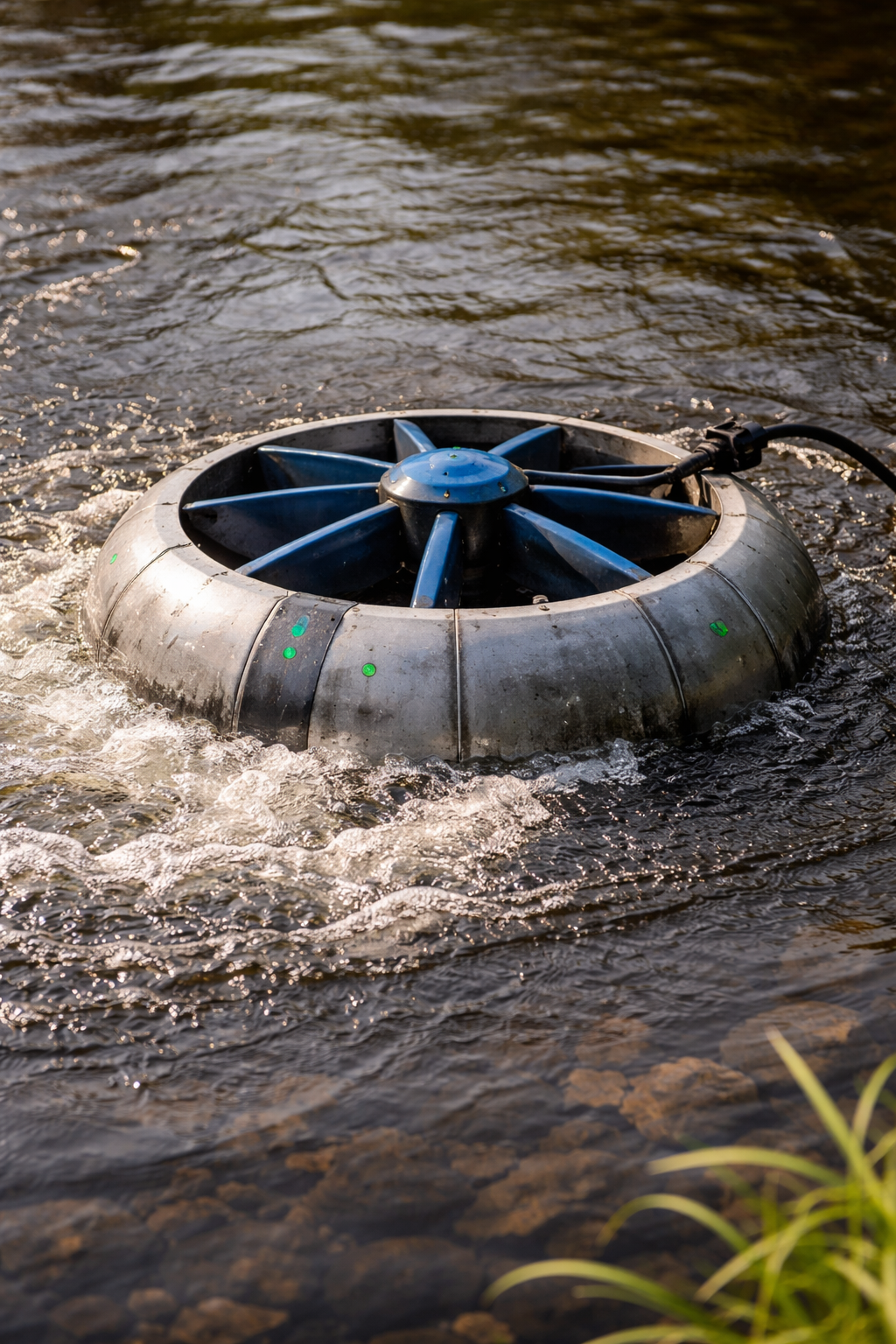
The micro water turbine

The result is a system that is almost entirely self-sufficient. It wakes, observes, calculates, and acts without requiring human intervention. I sometimes forget it’s out there until I log in and see what it has been doing.

Fishing From Home

Yes, you can control it remotely. That was always part of the vision: fishing without being physically present. From my desk—or, more often, my kitchen—I can connect to the humanoid’s interface and take over its movements. There’s a slight delay, but nothing that breaks the illusion. You see through its cameras. You feel (in a limited, haptic sense) the tension in the line. You decide when to cast, when to reel, when to wait. But here’s the strange part: I rarely do. Because the robot is better at it than I am.

Intelligent Bait Synthesis

This is where things begin to feel less like engineering and more like alchemy. The humanoid doesn’t just use pre-made bait. It creates its own.

Equipped with a compact mixing system—part chemistry lab, part kitchen—it analyzes environmental data and determines the optimal bait composition for specific fish species in the Dender River. It considers water temperature, turbidity, recent rainfall, seasonal migration patterns, and even subtle chemical traces in the water.

Then it mixes. Proteins, oils, plant matter, scent compounds—each combination slightly different from the last. Over time, it has developed a library of successful mixtures, continuously refining them through feedback loops. Success is measured not just by catches, but by which fish are caught, at what time, and under which conditions.

I once tried one of its recommended mixes myself. It smelled terrible. It worked perfectly.

Tentacles Instead of Lines

Traditional fishing lines felt insufficient for what I wanted this system to achieve.

So we replaced them.
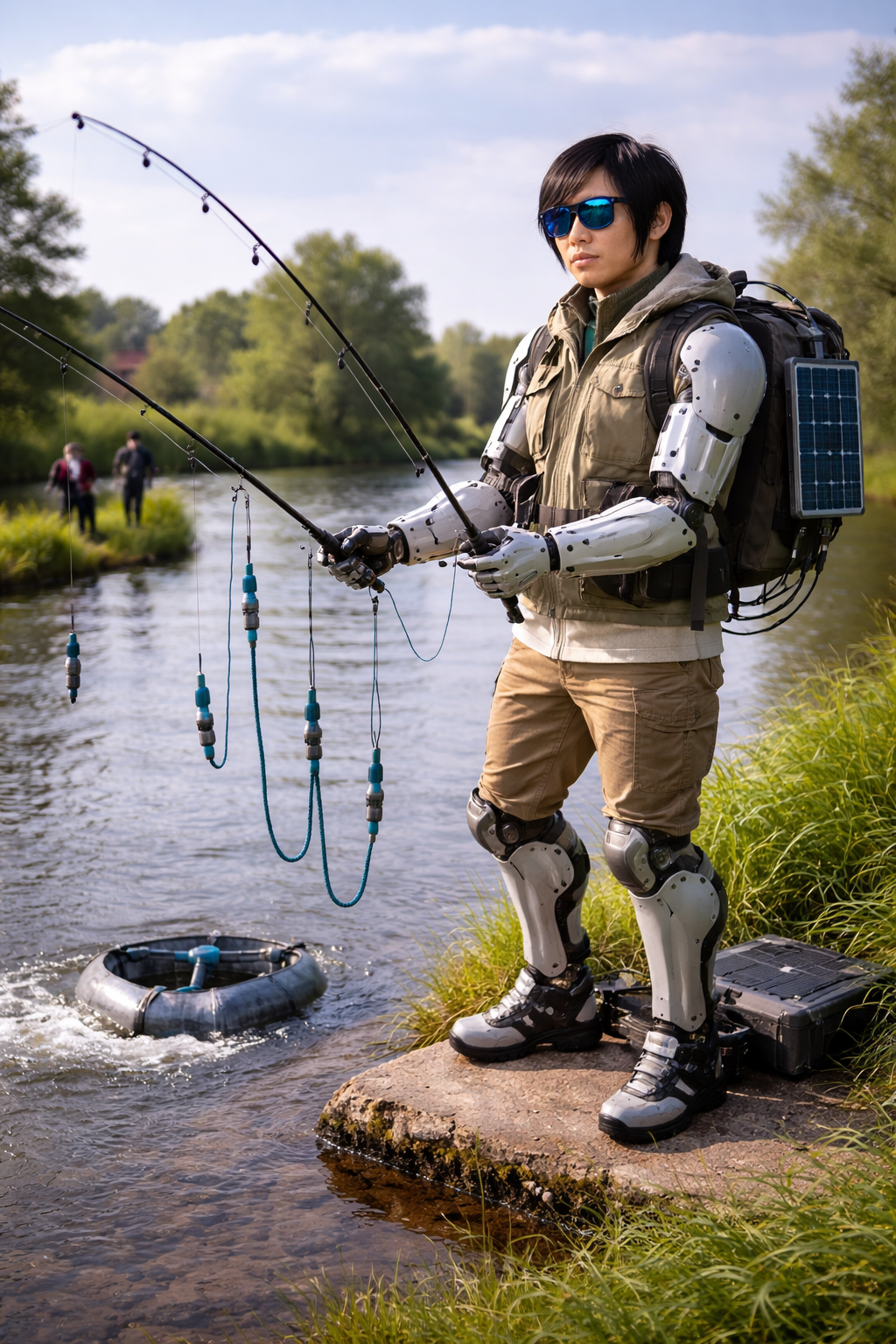
A relatively complete set-up

Extending from the humanoid’s arms are flexible, twisted appendages—something between cables and tentacles. Each one houses a network of sensors capable of detecting micro-changes in water pressure, temperature gradients, chemical composition, and movement patterns.

They don’t just wait passively. They explore. These tentacles can subtly reposition themselves, probing different depths and currents simultaneously. They gather data constantly, feeding it back into the system, allowing the AI to make real-time decisions about where to focus effort.

It’s less like fishing and more like listening to the river.

The Competition

I hadn’t planned to enter any competitions. In fact, the idea seemed almost unfair. Pitting a continuously learning, sensor-rich humanoid system against traditional anglers felt like entering a calculator into a mental arithmetic contest. But curiosity got the better of me.

The international fishing competition on the Dender river is, under normal circumstances, a quiet affair—serious participants, careful techniques, and a shared respect for patience. When the humanoid arrived, it attracted attention, then skepticism, and eventually mild irritation.
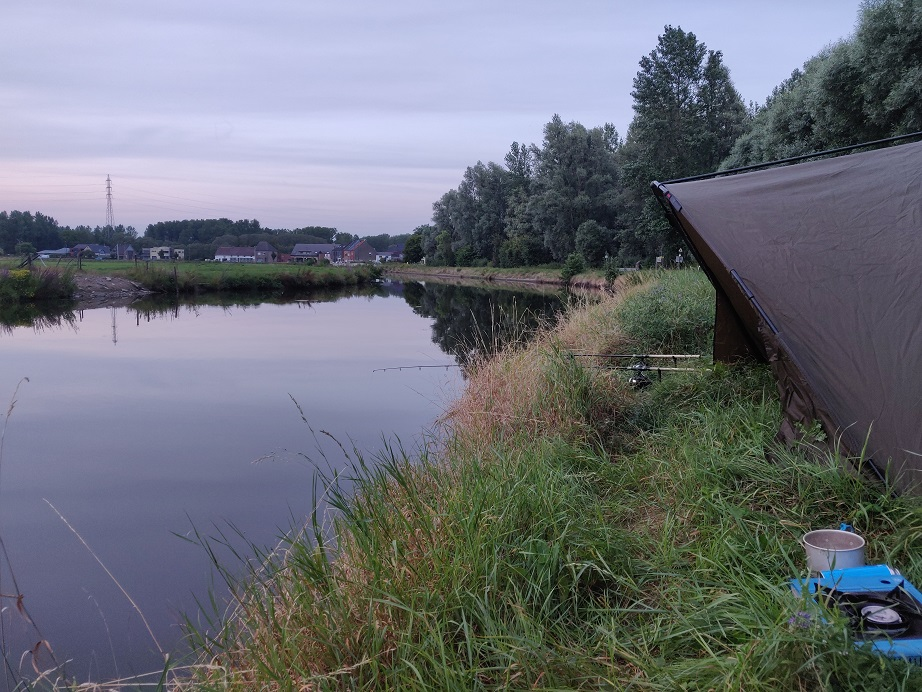
The quiet location for the competition

It stood there, unmoving, as others prepared their gear. And then it began. Over the course of the competition, the robot adjusted constantly. It shifted positions, altered bait compositions, and fine-tuned its approach based on conditions that changed hour by hour. While human participants relied on experience, intuition, and occasional luck, the humanoid relied on continuous analysis.

By the end, the results were undeniable. It didn’t just win—it dominated. First prize.
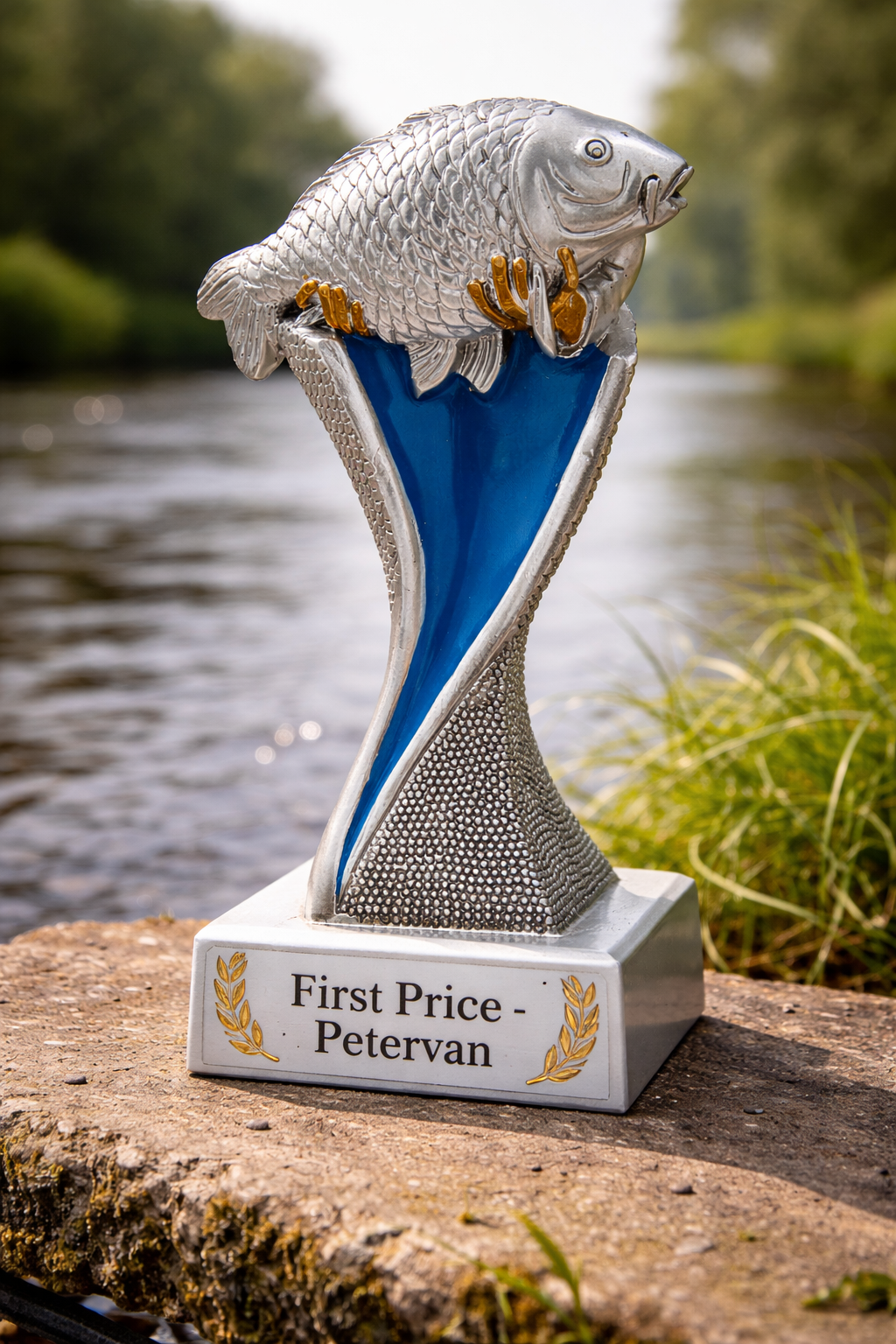
The Award

What This Actually Means

I’ve been asked whether this is still fishing. It’s a fair question. There is something inherently human about sitting by water, waiting, thinking, doing very little. This machine removes much of that. It replaces stillness with computation, patience with optimization. And yet, I find myself more connected to the process than before.

Not because I am physically present, but because I have built something that observes more deeply than I ever could. It notices patterns I would miss. It reacts faster than I could. It learns in ways that feel both mechanical and strangely intuitive. This is not a replacement for fishing. It is a transformation of it.

What Comes Next

The humanoid still stands by the Dender. It continues to learn. I continue to watch. Sometimes I take control, just to remember what it feels like. Most of the time, I let it do what it does best. I didn’t expect retirement to lead me here—to a machine that fishes better than I ever did, powered by sun and water, thinking with the help of artificial intelligence.

But then again, I didn’t expect to stop making art either. Perhaps I didn’t. Perhaps this is just another form of it.
A Scaffold for an Avant-Garde Business

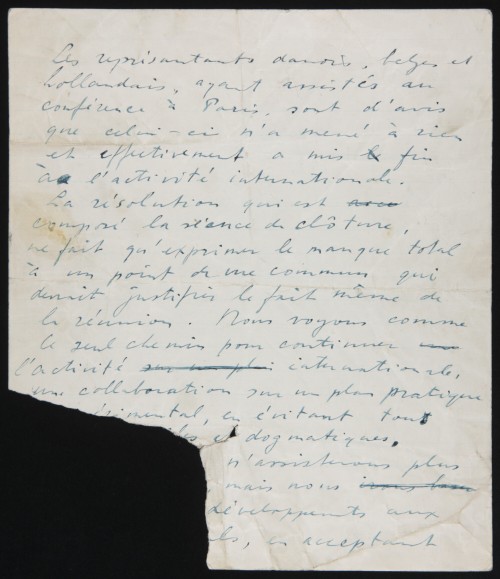
Cobra Manifesto page-1

Cobra Manifesto – Image from Beinecke Digital Collections

As many of you know, I am a big fan of Cobra, the avant-garde art movement established in 1948. The movement only existed for three years, but forever changed the landscape of postwar European art. 

What would an avant-garde business movement look like? 

How could we scaffold that?

In my Sep 2022 update, I briefly introduced The Scaffold. 

Today, I would like to share some more details about The Scaffold

The Scaffold is a brand-new transdisciplinary learning studio for the never-normal

A Scaffold: a temporary structure to let emerge something new

Transdisciplinary: for each client project, we curate a transdisciplinary tribe of entrepreneurs, engineers, scientists, artists, and philosophers to reflect and speculate about your better futures

Learning: this is not learning by teaching, but learning through conversations, acting, and doing

Studio: the keyword here is critique: individual, group, and formal critique

The Never Normal: the ever faster changing environment we operate in. The best metaphor is that of the kayaker in wild water.

Older metaphors like the speedboat (brute force), tacking the sails to the wind (adapting with the destination in focus), and surfing the waves of change (staying before the tsunami of disruption) don’t serve us anymore. 

Today you are in the water. 

You have to sense faster and better what is, sense faster and better what can become, and take action – right there – in the middle of a system in full motion. 

I often hear that we need more data, data is the new oil, and we need powerful AI and Machine Learning to discover patterns in the data, so we can make better and faster decisions. 

But data will bring us only so far. 

Data tell us something about correlation. 

Correlation is not the same as causation.

And also rational cause-and-effect thinking and planning are only part of the story. 

The Scaffold is imagination in full play: not knowing all the dots, and having to keep multiple lines of inquiry open at the same time, without coming to a conclusion, ànd feeling comfortable with that.

Orchestrating and activating collective intelligence (both human and non-human intelligence)

WHAT DO WE HAVE?

WHERE ARE WE GOING?

WHY ARE WE GOING THERE?

HOW DO WE GET THERE?

WHAT RULES DO WE FOLLOW?

WHAT IS FORBIDDEN?

HOW DO WE SPEAK TO EACH OTHER?

WHAT WORLD ARE WE PLAYING IN?

WHAT DO WE REALLY WANT?

The Scaffold asks questions related to the narratives that motivate individuals and organizations from the inside. These motivations have nothing to do with marketing from the outside. These motivations share the desire for societal, moral, and aesthetic advancement. 

The experiences that we design can be in-person, and others are 100% online or virtual, or a combination thereof. Our experiences are high-touch and highly facilitated. We use world-class facilitators. We apply live scribing, live video editing, and live note-taking. We use technology in support of the content, not to impress nor to create a spectacle. We challenge each other through individual and group critique. We experiment, explore, tinker, and dare to change in flight. We use physical and virtual channels/containers of experimentation & distribution 

We believe in the long format. Transdisciplinary impact groups learn by working, doing, and acting together during an extended period of time. This approach increases trust, bonding, candor, the release of real or perceived vulnerabilities, and the discovery of unintended opportunities.

The Scaffold is your PEPA

Play – Experimentation – Participation – Activation

The Scaffold is about dreaming & imagining big with your eyes wide open for reality. 

More inspiring quotes are here

More details at https://petervanstudios.com/the-scaffold/ 

The Scaffold is made possible through strategic partnerships with https://www.nexxworks.com/ and https://collectivenext.com/

Powered by a coalition of exceptional individuals as advisors for The Scaffold. A unique mix of strategists, futurists, engineers, entrepreneurs, experts in classic and contemporary arts, masters in narrative environments, philosophers, and a licensed architect and VR developer.

We are very curious about how this resonates with you. 

Who could be interested in such an offering? 

What is great, mediocre, or missing? 

Let’s chat

Hope to welcome you soon!

Warmest,

Petervan’s Delicacies – 5 June 2022

delicacies

As usual, an incoherent, irregular, unpredictable collection of interesting sparks. Handpicked, no robots. Minimalism in curation. Enjoy!

If you can’t get enough of these and want more, you can hang on to the firehose, the extended version of Petervan’s Delicacies in REVUE with loads of videos. Subscribe here: https://www.getrevue.co/profile/petervan

5 books to help you understand (and profit from) global trends

The time that we could organise our companies without acting too much on global evolutions lies long behind us. Leaders understand more than ever that tackling world challenges not only creates a better context for all of us to live in but also presents fantastic business opportunities. It’s why am thrilled to be one of the curators of nexxworks’ Mission NXT program, designed to help leaders turn global trends into opportunities.

For those who are truly passionate about fostering this type of outside in vision, here are five (zero bullshit) books that fundamentally changed and formed my thinking in the matter over the years.

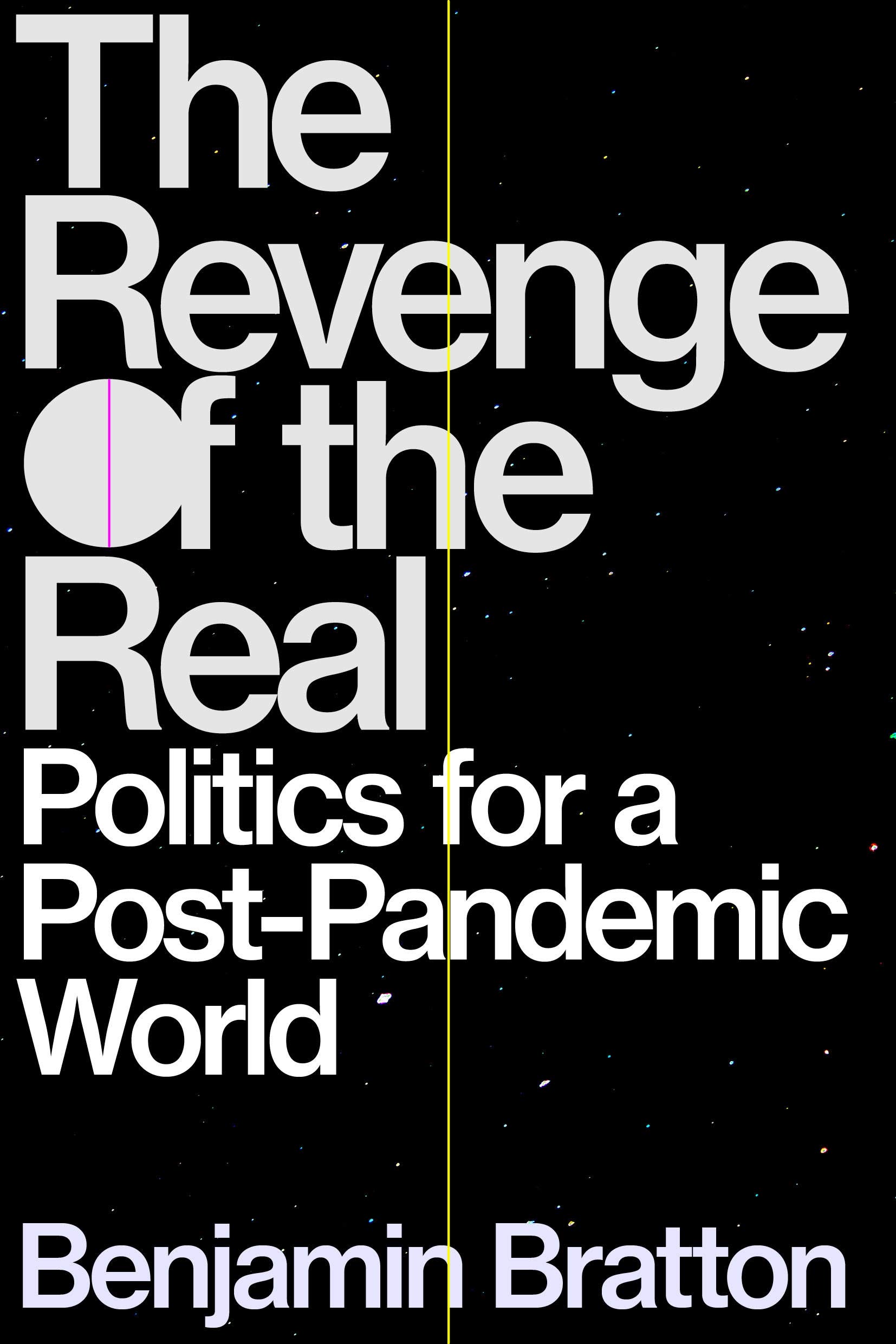
Benjamin Bratton – The Revenge of the Real (2021)

The pandemic showed us that we are completely unprepared to cope with our current deeply entangled world. According to Bratton, we need a “positive biopolitics” and an AI-based instrumentation of the world. He offers a refreshing way of thinking about sensors which is quite different from the worn out song about the surveillance state.

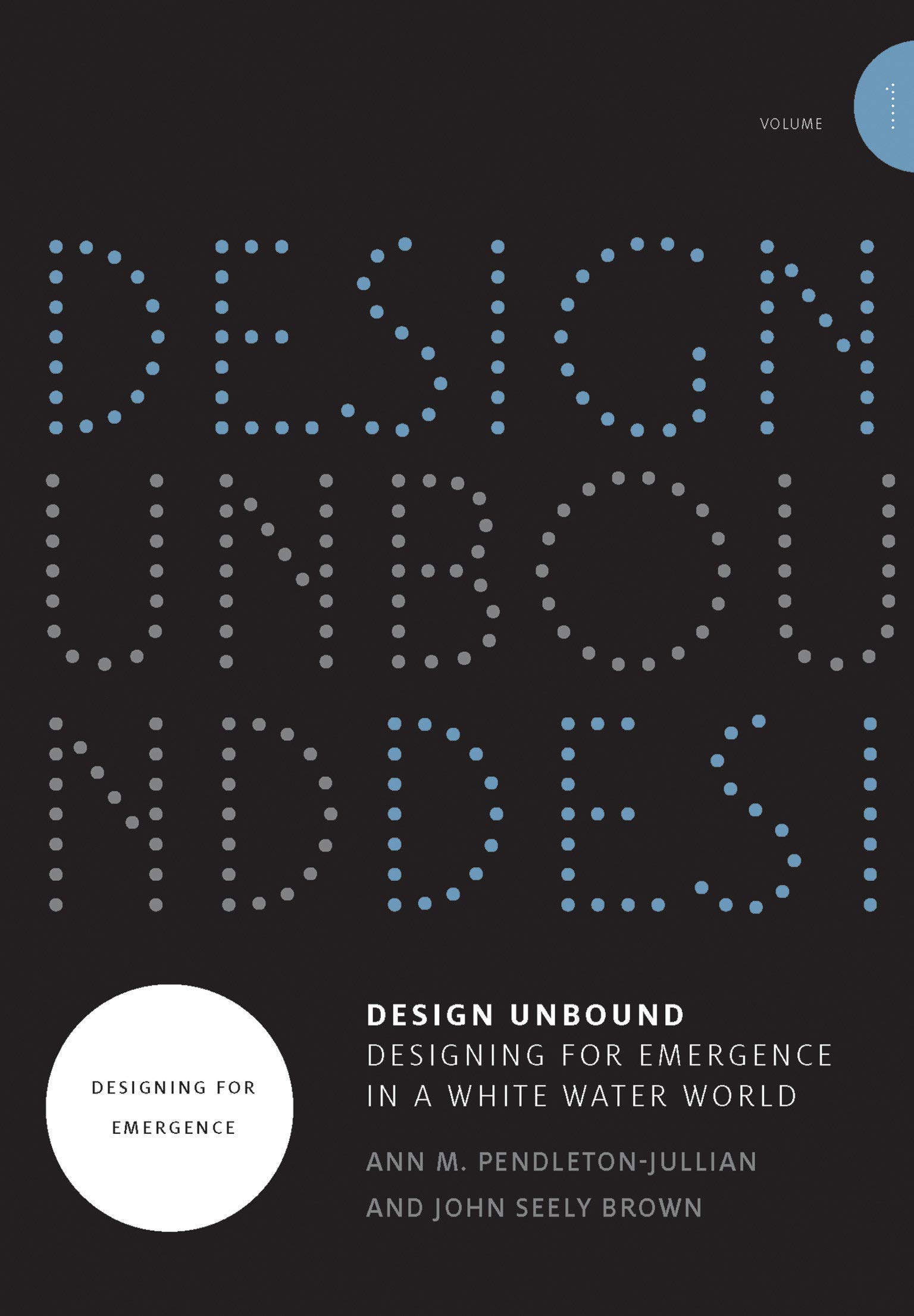
Ann Pendleton Jullian and John Seely Brown – Design Unbound (2018)

Read this if you want to understand how you can design for emergence in the Never Normal. You’ll need your full attention (it’s not a ‘light reading’ project), but in return you’ll receive two volumes of unique and well researched insights to help you better see what is and what can become. This is truly one of the most important business books I ever read.

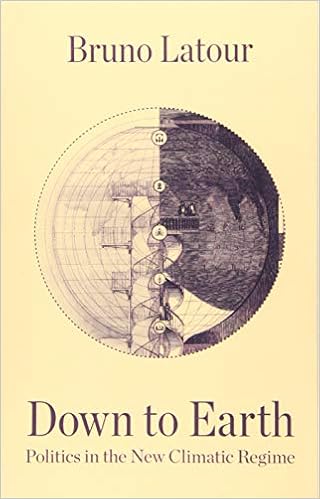
Bruno Latour – Down to Earth (2018)

Latour calls for a third way in climate politics which is left nor right: a path between libertarian globalism, and leftist localism. One that is anchored in planet earth. Read this if you want to get to know one of the most important philosophers of the 21st century.

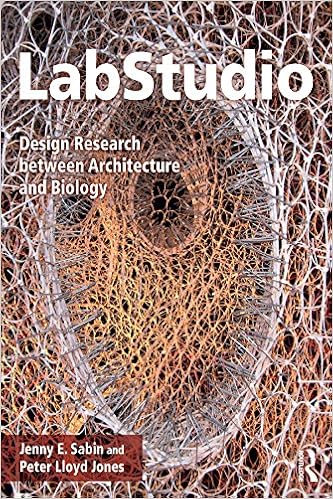
Jenny E. Sabin and Peter Lloyd Jones – LabStudio (2017)

Sabin and Lloyd Jones tackle the concept of the research design laboratory in which funded research and trans-disciplinary participants achieve radical advances in science, design, and applied architectural practice. The book demonstrates new approaches to more traditional design studio and hypothesis-led research that are complementary, iterative, experimental, and reciprocal.

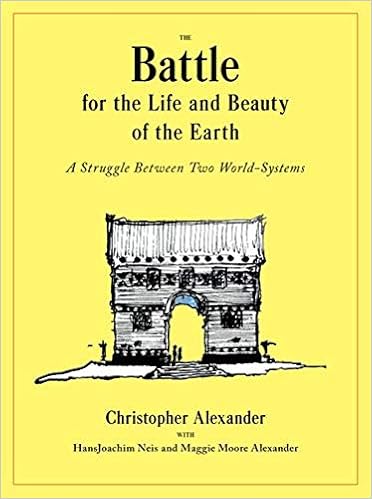
Christopher Alexander – The Battle for the Life and Beauty of the Earth: A Struggle Between Two World-Systems (2012)

This real life story of American architect Christopher Alexander designing and building the Eishin university campus in Japan serves as an analogy for the battle between two fundamentally different ways of shaping our world. One system places emphasis beauty, on subtleties, on finesse, on the structure of adaptation that makes each tiny part fit into the larger context. The other system is concerned with efficiency, with money, power and control, stressing the more gross aspects of size, speed, and profit. This second, “business-as-usual” system is incapable of enabling the emotional, whole-making side of human life, according to Alexander, who then goes on to present a new architecture.

Warmest,

This post was originally posted on the nexxworks company blog, on the occasion of Mission NXT, which I help curate

Your nexx work at nexxworks?

From time to time, I do a freelance gig for nexxworks, the company co-founded by Peter Hinssen. I am always amazed with the positive, welcoming spirit of the team.

This is a fresh, ambitious company, specialised in inspiring and connecting their customers about the Day After Tomorrow. Inspiring with examples of exponential change, immersing people in front-seat experiences with top innovators around the world, all while guiding and facilitating the questions that can activate this ambition into action.

And now they have eight (8!) open positions with quite attractive packages, including flexibility to work from home, interesting fringe benefits such as an electric company car, a sharing mobility solution, (e-)bike, laptop,  budget for a smartphone, international phone subscription, insurance packages, meal vouchers, etc.

If you are looking for a great job at one of the coolest companies in Belgium, this may be your chance. They call the world their home. If I was not retired, I would not hesitate a minute.

The nexxworks’ office building is in the middle of the student district of Ghent (Overpoort/St Pietersplein), close to sport, shops, public transport, lunch spots, … The completely refurbished iconic building was designed in 1930 by architect Fernand Brunfaut (°1886-†1972) for the editorial HQ of the newspaper “Vooruit”. Cool office space, kitchenette, meeting places, there is even a video studio for A/V productions.

Have also a look inside:

Some great team values as well:

  • Witty
  • Go-getting
  • Open-minded
  • Challenging
  • Positive

Eight vacancies. Maybe one of them is your nexx work. At nexxworks.

All info here: https://work.nexxworks.com/