
Petervan Studios – Update March 2023

Petervan Artworks © 2023 – New New Babylon – Generated with MidJourney

Here is the latest update on Petervan Studios. The previous update already goes back to September 2022

As most of you know, Petervan Studios is the melting pot of three studios: The Art Studio, The Interventions Studio, and The Scaffold Studio

The Art Studio

My latest artworks are on the artworks section of the Petervan Studios site. Here is my cousin Joost standing in front of one of
my recent paintings: 4 panels together measuring 240cm x 200cm.

IMG_6629 cropped

I am also working on a VR implementation of the New New Babylon (NNB) Project: a network of urban youth city districts that are connected through standard interfaces. 
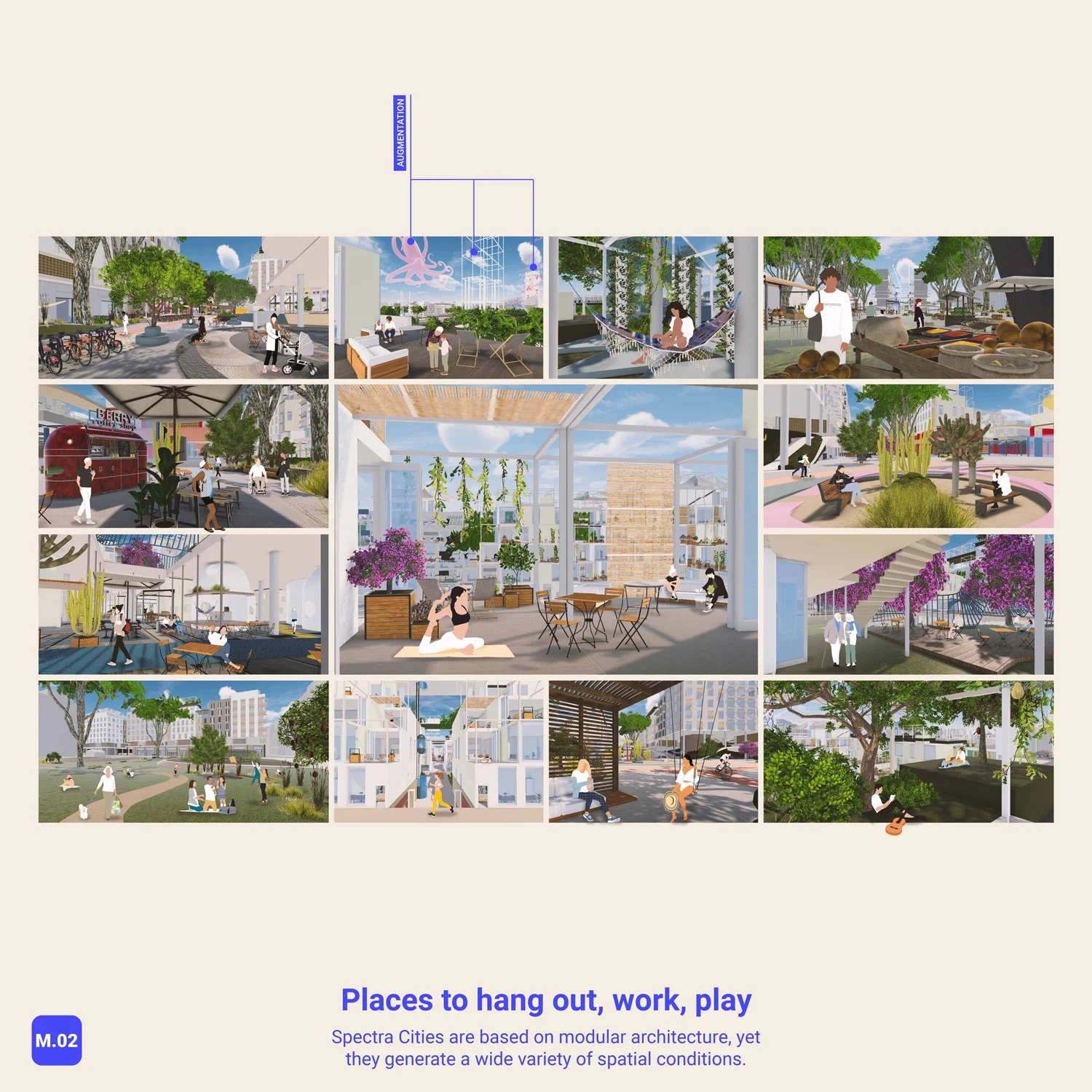
02_Places

We are working with Spectracities to launch a design challenge by April 2023. I am doing an intro talk on this project during the Spectracities meet-up on 9 March 2023.
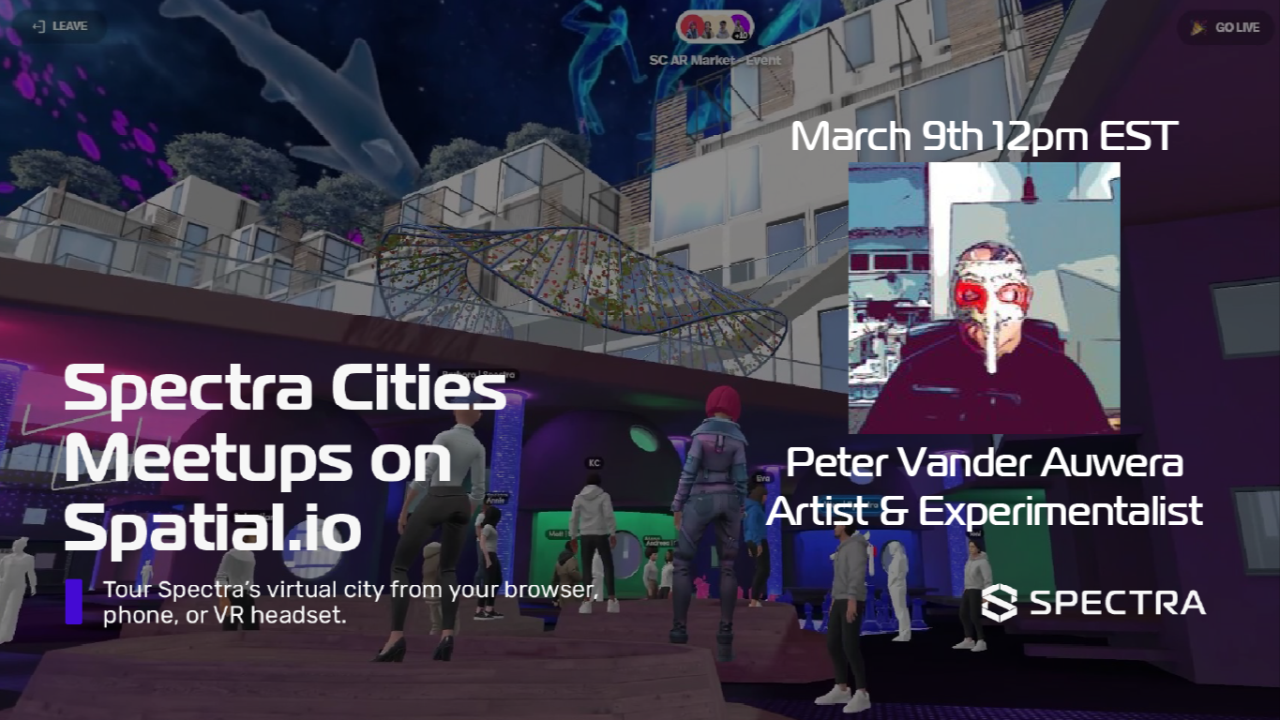
petervan event poster NNB

And here is the recording: starts at minute 7:32

NNB will also have a number of virtual Art White Rooms that will host my latest artworks.

NNB will also host a New New Babylon TOWER, and I plan to make a physical model of that tower as an example of materializing my metaphors.

A new “Performance Lecture” will consolidate all of the above in a compelling multimedia narrative and performance.

Target date for the performance and the supporting NBB material is 1 Nov 2023

The Interventions Studio

Two interesting experiences with the Zen Bricks Project

One client asked me to run a 30 min online session, where all the participants are drawing little bricks in complete silence. I was very surprised to learn how this zen moment unleashed quite emotional reactions among the participants.

Another client invited me to do something similar in real life, as part of their corporate event that was organized around the theme of mental wellness and the importance of calm moments.

The Scaffold Studio

The Scaffold is a transdisciplinary learning studio for the never-normal.
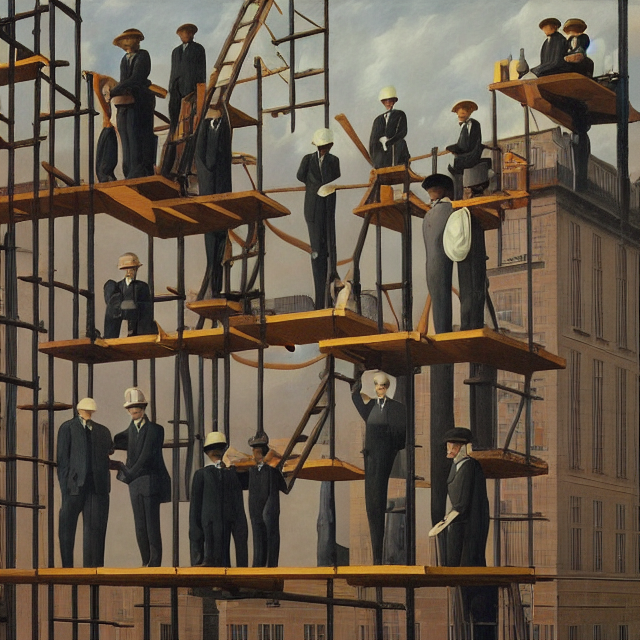
1966890944_oil_painting_in_magritte_style_of_a_group_of_artists_and_engineers_on_a_scaffold_looking_into_space

We are working on two interesting leads.

Lead #1 is a services company that owns a beautiful physical building/campus with meeting rooms, study rooms, a library, auditoria, lush gardens, etc. They run it as a private infrastructure for the public good. We look at it as an imagination infrastructure. The hardware. What The Scaffold offers is the software: the expertise, network, and practice to curate and design a series of learning studios and expeditions. The study topics are non-hierarchical organizations and new democracies.

Lead #2 is a globally operating organization trying to get its head around the topic of corporate governance. Like the first lead, they own world-class real estate, including an auditorium and a museum. We are also looking to design a physical journey between cities leading toward a major event in 2024.

We have a great coalition of advisors. Last month, Lene Rachel Andersen joined our advisor’s group as the twelfth apostle. She specialises in Bildung, Metamodernity, and Libertism. Give Lene a warm welcome.

So, that’s it for this edition.  If there is something worth reporting, the next update is for Sep 2023.

Warmest,
petervan-signature-version-23-oct-2021-transparent

Corporate Radicalism

As mentioned in my recent inspiration post, this is the book that Nick Ervinck suggested to get me going on professionalizing my art practice. But it clearly also had an effect on my other practices.

Michael Craig-Martin is often described as the godfather of the Young British Artists (YBA) of the 1980s and 1990s. Shame on me that I knew little about YBA and even less about Michael Craig-Martin. That ignorance was also an advantage, as I could read the book without prejudice. 

The book is a series of short stories and episodes on the many ideas, events, and people that have influenced Craig-Martin during his rich artistic life. 

I really liked the book, and I liked the cut-the-crap approach of all the things you are supposed to do or not do as an aspiring artist.

For this post, I picked the story ”On the three stages of twentieth-century art”, and gave it a twist that relates more to my Scaffold practice than to my art practice.

Craig-Marting described in that story the three stages of RADICALIZATION of art:

Radicalization of Form

Radicalization of Materials

Radicalization of Content

Together these three radicalizations lead to:

“A vast EXPANSION in the scope of what art can look like, be made of, and be about”

One could say this expansion formed the foundation for “contemporary” art.

I feel attracted to the words “contemporary” and “avant-garde”. 

Probably because they seem to suggest novelty, modernity, and some level of gentle subversive aesthetic, less prone to the temporalities of fashions or trends.

It seems that art movements could also be considered precursors of business movements, and how we can and have to recalibrate our insights (or lack thereof) in innovation in corporate environments.

The quote above smells a lot like what many spontaneous and enthusiastic people feel and experience when they want to enable positive change in the corporate environment. I have come across that resistance many times in my corporate career. And it breaks my heart to see how again today, many organizations smell a conservative ambiance and favor moderation rather than radicalism, caution rather than risk. 

How can we create an environment where these young, bright enthusiasts can thrive and not be suffocated in their endeavors by non-contemporary organizations and teams?

What would be the radicalizations that lead to a contemporary business, an avant-garde business, or some form of corporate radicalism?

Take a quote again from Craig-Martin’s book (my emphasis):

“Taking an interest in contemporary art, the art of one’s own time as it is being made, is quite different from having an interest in the past, even the recent past. It involves a sense of participation, a pleasure in uncertainty, a willingness to have one’s assumptions challenged, a desire to be unsettled. Art holds a unique and critically important place in modern life precisely because it has not been afraid to take on board all the diverse and dangerously unpredictable creative activities rejected by the other arts. In a world where everyone and everything has to be accounted for, isn’t it of immense intellectual, aesthetic, social, and political importance that art provides a context for those creative activities that do not easily fit the system?”

A DESIRE TO BE UNSETTLED! 

Imagine that!

I tried to re-write and adapt this paragraph for a contemporary corporate spring:

“Taking an interest in contemporary business, the business of one’s own time as it is being made, is quite different from having an interest in the past, even the recent past. It involves a sense of participation, a pleasure in uncertainty, a willingness to have one’s assumptions challenged, a desire to be unsettled. Radical organizations and teams hold a unique and critically important place in modern life precisely because they are not afraid to take on board all the diverse and dangerously unpredictable creative activities rejected by the conservative ambiance. In a world where everyone and everything has to be accounted for, isn’t it of immense intellectual, aesthetic, social, and political importance that organizations provide a context for those creative activities that do not easily fit the system?”

I believe corporate radicalism and corporate radicalists are something quite different than the romanticized and heroic take on misfits, dreamers, rebels, etc. We have to move way beyond corporate rebellion. 

We need corporate radicalism in:

Form

Materials

Content

What are the corporate forms, materials, and content that need expansion?

We need contemporary, avant-garde, radical businesses that account for the intended and unintended consequences ànd opportunities. Organizations that are inclusive in all aspects. Companies that desire to be unsettled. Institutions that desire societal, moral, and aesthetic advancement.

This will require a different type of learning, formation, education, or training. Not only exploring the STEM (Science, Technology, Engineering, Mathematics) and Production dimensions of their business, but also daring to (re)compose and live out loud new exciting and daring narratives, set high ethical and moral standards, and embrace new aesthetics.

That new type of learning must resemble what Michael Craig-Marting describes as an ideal art school. Just drop the word art, and you may get an idea of what 21st-century corporate education and formation may look like.

We need to radically rethink corporate business schools.

We need radical schools for radical times.

We need to train, form, and build radical organizations. 

How can we scaffold such a school? 

What is needed to take the leap of faith for being re-trained like that again?