Petervan Artwork © 2020 - Yellow Speed - Acryl on Canvas - 50 x 50 cm

Petervan Artwork © 2020 - Yellow Speed - Acryl on Canvas - 50 x 50 cm
Petervan Artwork ©2020 - The Real Virus Does Not Look That Nice
3D Sculpture in Putty 3D - Soundtrack

Petervan Artwork ©2020 - Seaside Tribe - Acryl on canvas - 120x100cm
Petervan Artwork © 2020 - 3D Mask Experiment in 3D Putty

Petervan Artwork © 2020 - Collage Canvas on Canvas - 120x52cm
Petervan Artwork © 2020 - Digital Sketches and own soundscape
Petervan Artwork © 2020 - 3D sculptures and own soundscape
EX-perience is “out”, IN-tervention is “in”
When I talk about “experience”, I mean:
It is almost always about “entertainment”, easy/easier/more convenient consumption, not forcing you to learn a new (or old/existing) language.
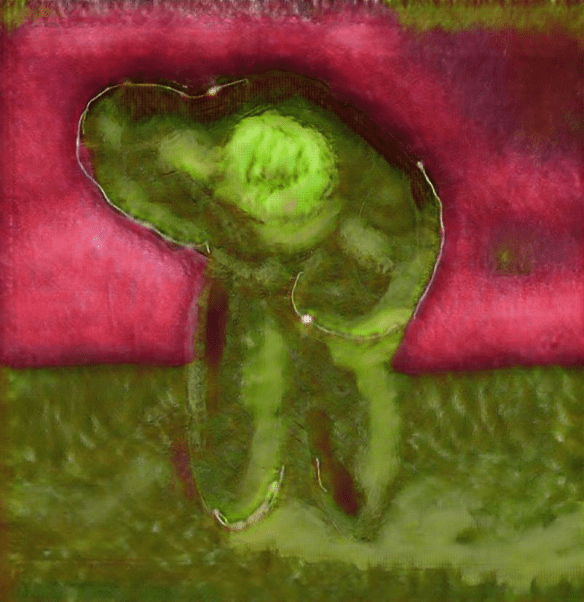
Petervan Artwork © 2020 – Canvas through CycleGAN cloud AI model
When I talk about “intervention”, I mean:
Formats can be analog and digital artwork, performances, events, retreats, writings, poems, blogs, installations, exhibitions, immersions, soundscapes, recordings, documentaries, time capsules, AI warps, and fairy tales 😉
Interventions help us rediscover what is real, what resonates, what makes us go into frequency, what moves us, etc. And all this with a direction, with an intention: to enable spiritual, moral and aesthetical advancement at systems’ scale.

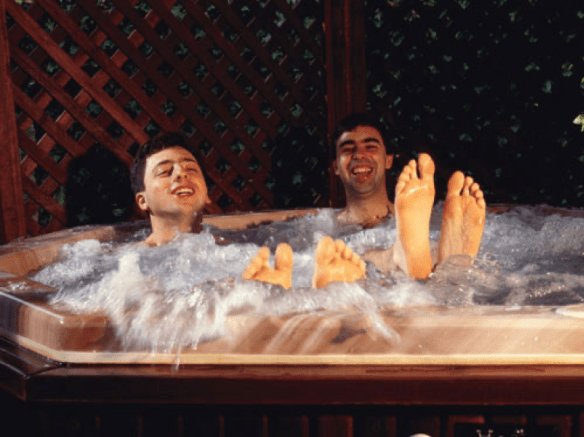
Larry and Sergey in hot tub bubbles in 2005 – picture by William Mercer McLeod
In my previous post, I played with words on Descartes’ “Je pense, donc je suis” – “I think, therefore I am”. In the background, you will notice my always-restless search for who I am. It is an everlasting search for (digital) identity. But maybe “Who” I am is a less critical investigation than “Where” I am?
I always have been intrigued by spheres. From my exposure as an youngster architecture student, through the discovery of Buckminster Fuller’s Geodesic Domes, from my thinking about digital identity being a sphere of fragments of influence that one could share with others, till my recent discoveries in exploring 3D drawing and sculpting software, where meshes of polygon meshes and NURBS primitives can be found and molded-in in abundance.
It should therefore not come as a surprise that – as mentioned in my Dec 2019 update – I became absolutely fascinated by Sloterdijk’s “Foams”, part-3 of his trilogy on Bubbles, Spheres and Foam.
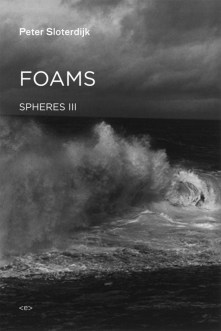
I probably – with a probability of 100% – only understand a very small fraction of what is written and meant by Sloterdijk, or by some of the authors of essays introducing and contextualizing his work. I did some homework for this post by reading and reading again the excellent introduction by Jean Pierre Couture on the work of Sloterdijk in general, and Charlie Huenemann’s “Sloterdijk’s Spheres: Bubbles, Globes, and Foams”. And then starting the real thing by the master himself. It is not a page-turner: 900 pages of solid philosophical writing. I can do a maximum of 5 pages/day and need time to let it all sink in. That should do as far as the disclaimers are concerned.
Indeed, this is just a personal thought experiment – and maybe an art experiment or performance as well in the near future – re my evolution on thinking about (digital) identity, and daring to propose a different, radical and spherical perspective.
It’s a baby-idea, just out of the womb, waiting for parents and caregivers to be nurtured, and made alive. There is no practical application for this as far as I can think of, but it just feels I am onto something.
My latest contribution was The Cambrian Explosion of Identity from February 2019, already intended then as the start of a series on the subject, but other priorities distracted me from further development. Let’s add some “spherology” to the mix now.
„Peter Sloterdijk’s celebrated „Spheres“ trilogy is a 2,500-page „grand narrative“ retelling of the history of humanity, as related through the anthropological concept of the „Sphere”,… a lengthy meditation of Being and Space — a shifting of the question of „who we are„ to a more fundamental question of „where we are.“
“Foams are masses of little bubbles, of course. As a metaphor, foams represent smaller zones of inclusion filled with the air of hope.” Huenemann, Charlie.
“And this, in essence, is what Sloterdijk sees as the project of the modernity: the business of constructing bigger and bigger shells, with more Lebensraum for the soul.” Huenemann, Charlie.
I used to think of a robot as an entity that has a body, a mind, and sensors for input/output computation. A computational machine. But to me, it seems just a bit too easy to separate the mind and body, and to replace the mind with some form of artificial intelligence.
It feels like Sloterdijk describes “being” – being in the world, coming into the world, creating your own world and make it become alive, worlding – as acting as-a-foam, not as a “body”, a body with a brain on top that thinks. He is after the wholeness of foam and its integration and relationships with upper and lower levels of spheres and bubbles.
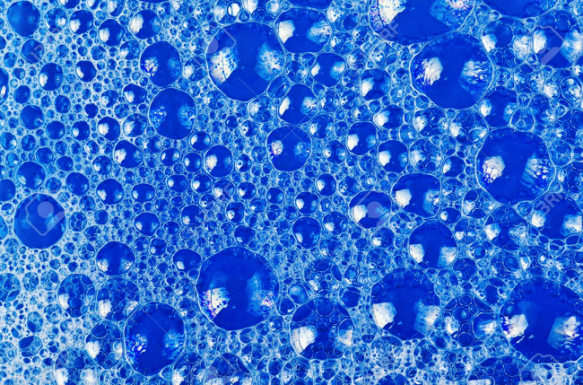
The metaphor of foam is a very solid one: what was before foam, what happens after the foam disintegrates? Where does foam go, what caveats is it trying to fill? All interesting avenues for research and investigation.
It also made me think of this strange creature – the blob with 720 sexes – that foams over old wood trees as a monster we can all learn from?
Because of this sudden focus on foamy shapes, I see bubble-structures everywhere. I see foam in this discovery of Christian Mio Loclair’s art installations, interventions, and interpretations. His studio “Waltz Binaire” works for the biggest brands in the world.
He explores the harmonic friction of human bodies, movement, and nature colliding with digital aesthetics. Using cutting edge technology in interactive installations, audio-visual experiences, visual narratives, and dance performances, he continuously illuminates the beauty and drama of human identity.

Enhanced Motion Design - Waltz Binaire Studio
I see foams in Spheres Journal:
“Yet the vision algorithms have of our future is built on our past. What we teach these algorithms ultimately reflects back on us and it is, therefore, no surprise when artificial intelligence starts to classify on the basis of race, class, and gender. This odd ‘hauntology’1 is at the core of what is currently discussed under the labels of algorithmic bias or pattern discrimination.”
Current identity thinking is based on past data. On graphs. On connections and relationships between “nodes”, “end-points” of a relatively fixed and static structure. With the extraction of value built on top of that past, amplified by AI. The past amplified.
But we did not notice that the nodes have become overlapping cells of belonging. The attractiveness of a “foamy” group- or individual-identity is that it is not fixed and static. It is “expansive”, not “extractive”. It adds value. It grows unpredictably into the future. Not like extrapolations of last year’s revenue growth. More like fruit maturing into a juicy ripeness.
Foam is dynamic. Made of bubbles, it lives within and across spheres of influence (both in the sense of actively influencing and passive being influenced).
Foam is not static. It is alive. In search of higher levels of aliveness. Until it dies. And only blobs of dust and air are left.
I see foam in Paul Baran’s network models:
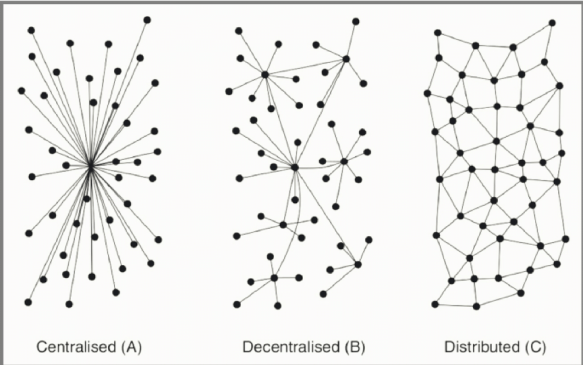
Centralized, decentralized and distributed network models
Paul Baran (1964)
What’s the impact of foamy logic on organizational models? How does a foamy organization look like? What’s the shape of D?
Are we moving from Graphs to Foams? From Nodes to Bubbles? What would nodes and endpoints be called in the foam-world anyway? Are we foam? It feels like I am going down a rabbit hole of foam. From fuzzy to foamy logic?
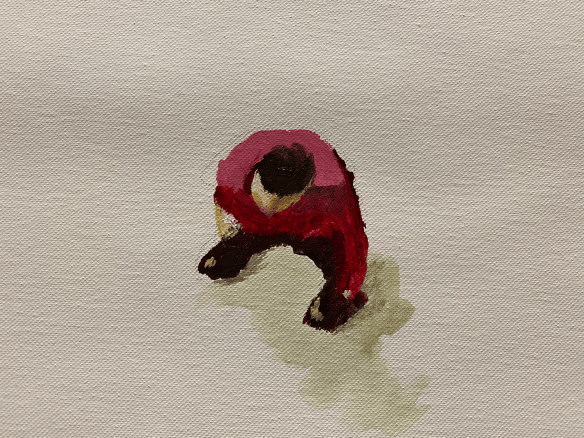
Petervan Artwork © 2019 – Little man on canvas – Acryl on Canvas – 10x10cm
Ik luister, dus ik ben
Ik kijk, dus ik ben
Ik teken, dus ik ben
Ik schrijf, dus ik ben
Ik componeer, dus ik ben
Ik creëer, dus ik ben
Ik loop, dus ik ben
Ik rust, dus ik ben
Ik huil, dus ik ben
Ik dans, dus ik ben
Ik schilder, dus ik ben
Ik peins, dus ik ben
Ik de-peins, dus ik ben
Meen je dat echt?
J’écoute, donc je suis
Je regarde, donc je suis
Je dessine, donc je suis
J’écris, donc je suis
Je compose, donc je suis
Je crée, donc je suis
Je cours, donc je suis
Je me repose donc je suis
Je cris, donc je suis
Je danse, donc je suis
Je peins, donc je suis
Je pense, donc je suis
Je dé-pense, donc je suis
Vraiment?
I listen, therefore I am
I look, therefore I am
I draw, therefore I am
I write, therefore I am
I compose, therefore I am
I create, therefore I am
I run, therefore I am
I chill, therefore I am
I cry, therefore I am
I dance, therefore I am
I paint, therefore I am
I pense, therefore I am
I ex-pense, therefore I am
Really?

This post is the start of a short series of posts on who and where I am/you are, and a set of new interventions and provocations to renew aliveness and alertness in what we observe and what we hope for. Looking forward to creating spiritual, moral and aesthetical advancement together.
You can subscribe via email to these posts via the “Follow blog via email” in the upper right corner of this page. Enjoy!