This is episode-8 of the calm conversation with Josie Gibson from The Catalyst Network, inspired by Robert Poynton’s book “Pause – You are not a To-Do list“. The approach is simple: we both read a chapter of the book and highlight three sentences, and mark the words that resonate most. These sentences and words are the triggers for a very slow-paced conversation on whatever comes our way. No tricks, no gimmicks, just a gentle and calm wandering and meandering of minds. As this chapter is the “Afterwords” section of the book, this is also the last episode in the Robert Poynton series. Maybe other calm conversations follow. Who knows?
Here are Josie’s three sentences:
What I couldn’t anticipate were the unplanned pauses that would occur along the way
If anything, rather than delay things, the time-out accelerated them.
Too much pause and nothing gets done.
And here are my three sentences:
Rehearse ideas with different people
Carlo Rovelli’s book, The Order of Time
That long gestation period meant that once I started I was able to get going quickly
This is episode-7 of the calm conversation with Josie Gibson from The Catalyst Network, inspired by Robert Poynton’s book “Pause – You are not a To-Do list“. The approach is simple: we both read chapter-7 of the book and highlight three sentences, and mark the words that resonate most. These sentences and words are the triggers for a very slow-paced conversation on whatever comes our way. No tricks, no gimmicks, just a gentle and calm wandering and meandering of minds.
Chapter-7 is about Time for Pause
Here are Josie’s three sentences:
A longer pause…gives the intelligent unconscious – what Claxton calls the ‘undermind’ – a chance to have a crack at a problem, bringing a more associative, creative quality of thinking to bear.
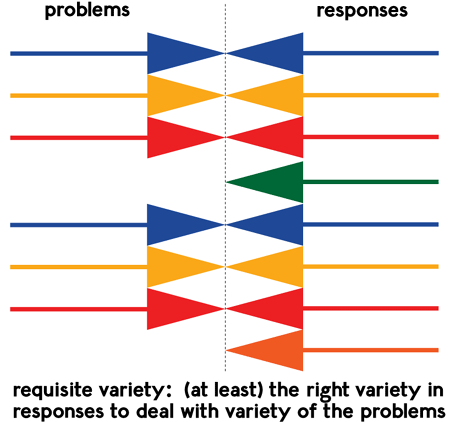
In any natural system, there is always ‘redundancy’ or ‘requisite variety’ built in; stuff that isn’t useful yet, but could be one dayf relying on just one.
The decision to start properly came in a pause.
And here are my three sentences:
Our fulfilment does not derive from being as efficient as possible
It (pause) gives you the chance to follow your mood, not the schedule
Instead of trying to cram more in, you focus on getting more out
We covered a wide range of topics from redundancy, richness of experiences in a complex world, we are not machines, beautiful change, elegant movements, cybernetics, requisite variety,…
…the “undermind”, leaving space open for sacred moments, commitment, to start doing, at the right time, after the right pause, after reading all the signals.
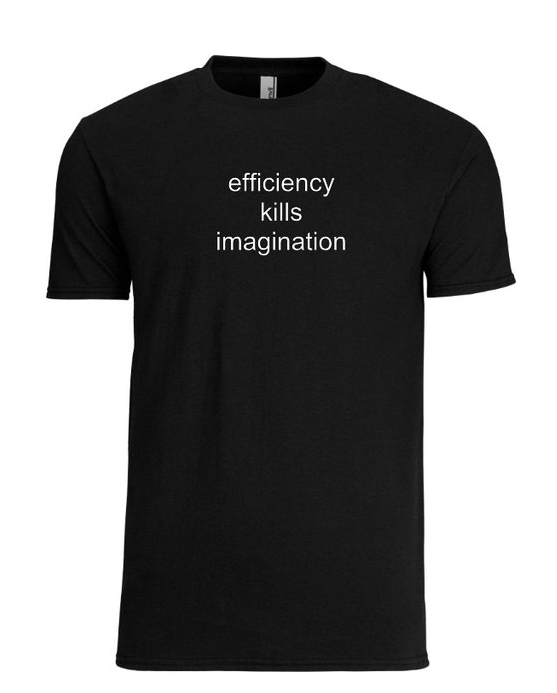
We also discussed how efficiency kills imagination, and why we should go into the t-shirt business 😉
This is episode-6 of the calm conversation with Josie Gibson from The Catalyst Network, inspired by Robert Poynton’s book “Pause – You are not a To-Do list“. The approach is simple: we both read chapter-6 of the book and highlight three sentences, and mark the words that resonate most. These sentences and words are the triggers for a very slow-paced conversation on whatever comes our way. No tricks, no gimmicks, just a gentle and calm wandering and meandering of minds.
Chapter-6 is about Tools (of Pause)
Here are Josie’s three sentences:
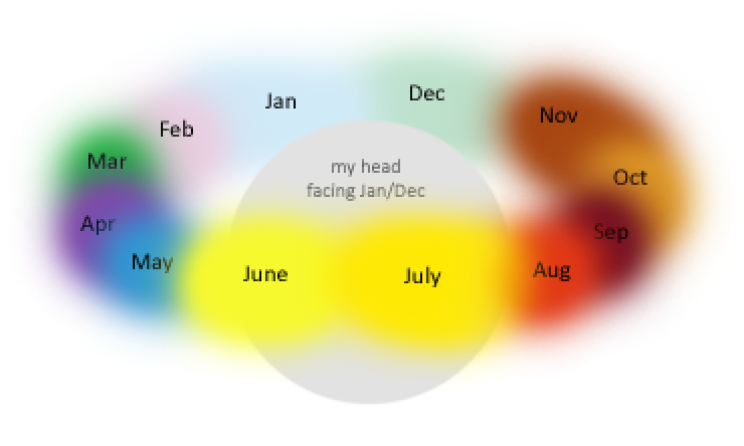
He uses differently coloured Google calendars where the colours represent how each kind of time feels to him..
It is more powerful if you are able to think about multiple layers, and build a set of practices that weave together the different ‘pace layers’ of your life instead of relying on just one.
Noone has a life so unrelenting that it is impossible to pause.
And here are my three sentences:
‘Exhale time’ is when he is teaching, writing or delivering work for clients. ‘Inhale time’ is when he is reading, studying, walking or spending time with people he just finds interesting
Notice what that experience is. If it was interesting, or useful, or valuable, or thought-provoking, or puzzling, or curious, or fun, or engaging in any way at all, do it some more. If not, try something else.
Instead of trying to manage your time, pay more attention to finding your rhythm
We covered a wide range of topics from responsible imagination, slower time, golden time, smell time, sound time, synesthesia,…
…colors of the months, layers, weaving, fabric, calendar, interstitials, 3D, 4D, rhythm in context, two people dancing the tango, wondering with intent, accountability for creative health, and undefended presence (mentioned in the Coaching Summit 2020 video below).
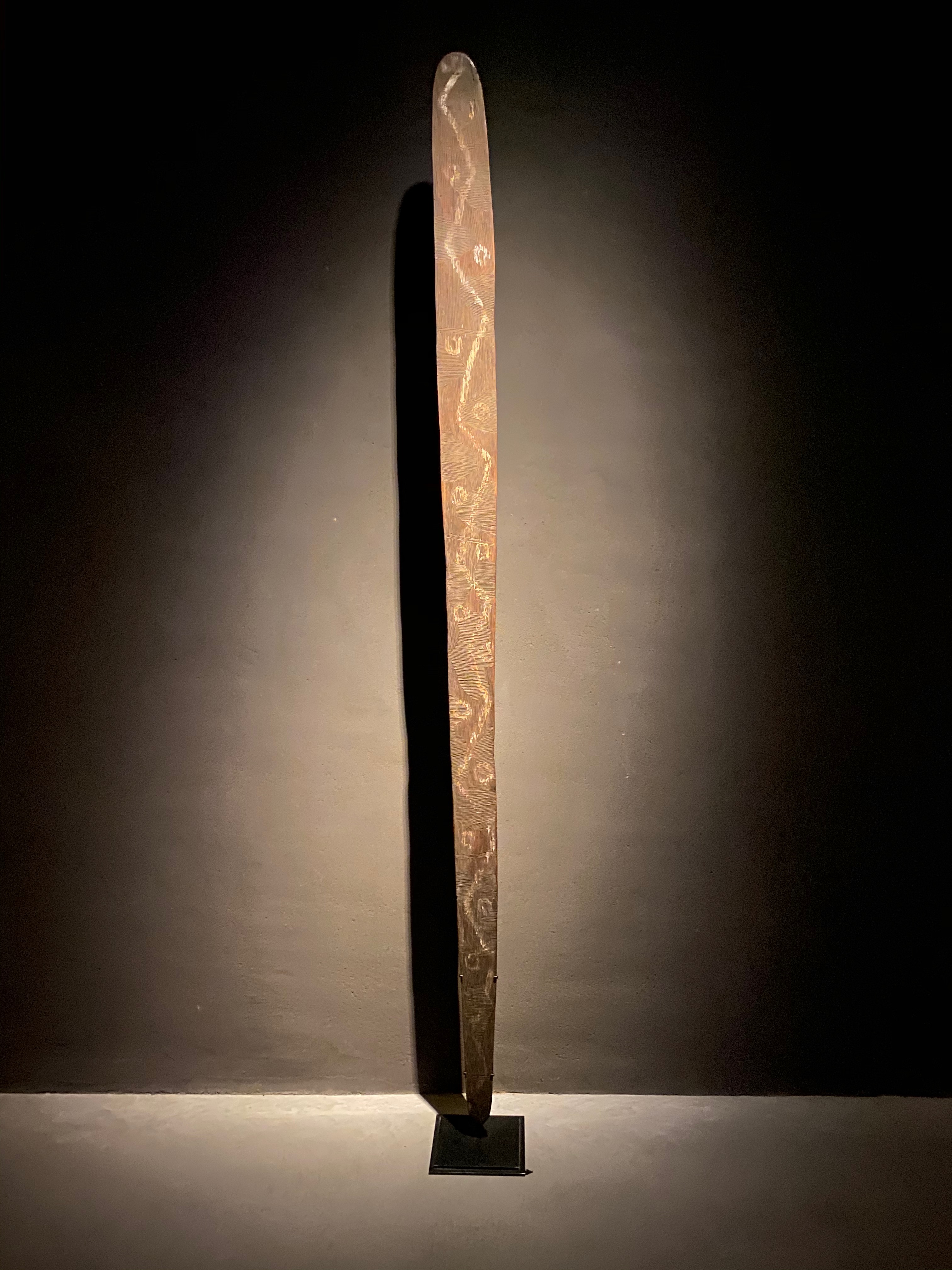
We even talked about the South-Australian Tjuringa, a Dream Stones, and artist Roman Polanka’s visualization of time.
Other links mentioned in this podcast:
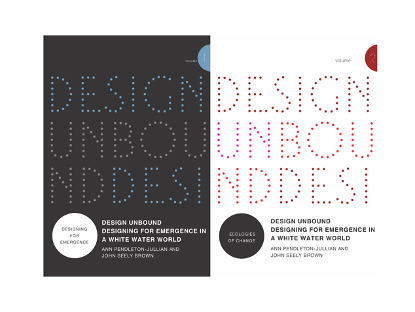
The book Design Unbound (some free chapters for download here)
This is episode-5 of the calm conversation with Josie Gibson from The Catalyst Network, inspired by Robert Poynton’s book “Pause – You are not a To-Do list“. The approach is simple: we both read chapter-5 of the book and highlight three sentences, and mark the words that resonate most. These sentences and words are the triggers for a very slow-paced conversation on whatever comes our way. No tricks, no gimmicks, just a gentle and calm wandering and meandering of minds.
Older, more measured rhythms continue to exist… and the here and now is appreciated more for itself than as a means to get somewhere else.
They come in order to reconnect to a place that mediates a pause for them. For one, it is a rock by the river Pelayos – quite literally, a touchstone. Where might you find yours?
Burning Man: ‘This is pause as a suspension of the status quo, designed to try things out, not slow them down
And here are my three sentences:
There is no possible way to hurry any of this. Whatever you do, it takes the time it takes. The only hacks around here are made with axes.
They rarely say anything new; talk is not about relaying information, it is a way of seeing others and being with them
If you aren’t able to pause to consider or explore alternatives, it is extremely difficult to change direction
We covered a wide range of topics from scaffolding, “Go-Bush”, touchstones, freedom to be, Shakespeare, Burning Man, suspension (not smashing) of status quo, the calm “Corona Walks” by photographer Stephan Vanfleteren, the need for diverse lenses, and Budha’s beginner’s mind.
Let’s try something new here: a “mood-scape”, documenting a personal mood/world using words, visuals, and sound. And inviting you to build new worlds by participating on a 1-1 basis. Although “new” is relative: the term moodscape was initially coined in the seventies, and mixing media can hardly be labeled new or novel. But having a “calm” conversation may sound like an anachronism in these times where time itself is collapsing, where time itself has become exponential.
I immediately fell in love with the melancholic, nostalgic, slow pace sound of the album, in my opinion, a perfect soundscape for the disorienting times we live in. There is some sort of homesickness here, knowing deep inside that we have already said goodbye to a golden era, and era that I sometimes refer to as the Bowie-Era.
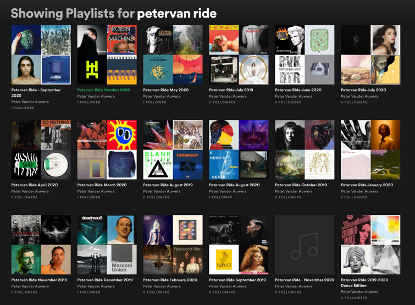
I added a couple of Clockdust songs to my Spotify March 2020 Ride playlist, and one of the songs happened to sit next to David Bowie’s Lazarus song from his Blackstar album. To make a long story short, I created a sub-set of the playlist, containing the songs that I felt best reflected my March 2020 “Mood”. There is one coming for April as well 😉
I suggest you let it play in the background in shuffle-mode whilst reading this blog post, as I believe it may augment what I am trying to share.
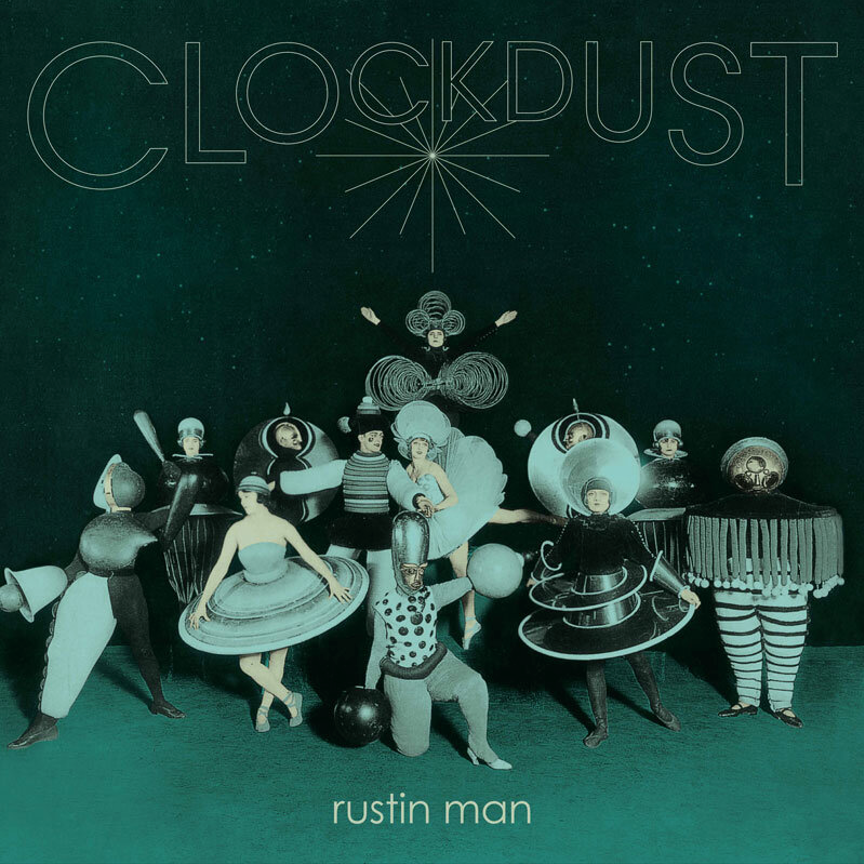
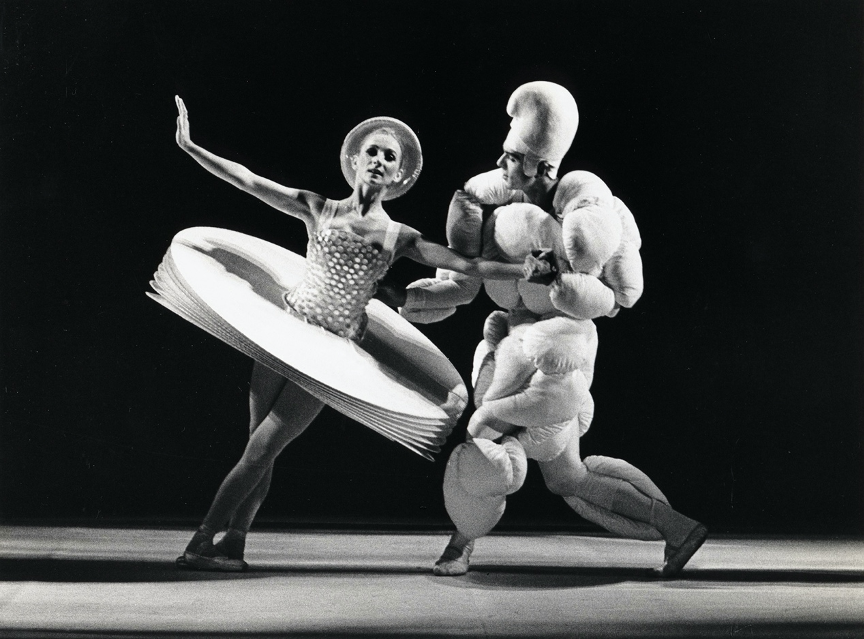
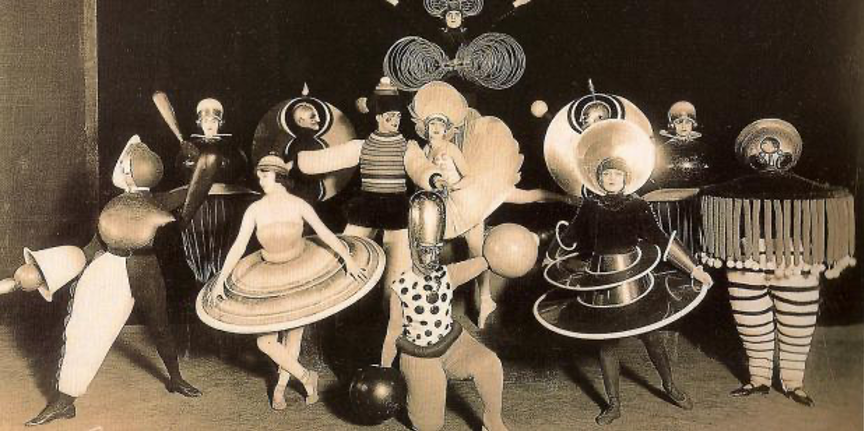
The cover is a picture from Oskar Schlemmer’s Triadisches Ballett (Triadic Ballet), a choreography with costumed actors transformed into geometrical representations of the human body.
There is also this wonderful video testimony of one of the early performances of that choreography
The video sent me back in time – clockdust time – when I was a 6-year old schoolboy. For the very first time in my life, I stood – proudly – in front of a huge whiteboard in the classroom – it was a blackboard with white chalk – and we were invited by the teacher to properly write the letters of the alphabet with white chalk on this blackboard.
It must have been my early creative juices, but I could not withhold myself drawing big white spirals instead of well-formed a’s and b’s, etc. on that black-black blackboard. Result: punishment and the lesson learned that a classroom is not a place for creativity and imagination.
In vain, the seeds were sown, and spirals, spheres, labyrinths, maps, and foams became – with hindsight – an obsession. I love the endlessness, and the recursiveness of these shapes and forms. Especially double, entangled spirals or labyrinths get me going…
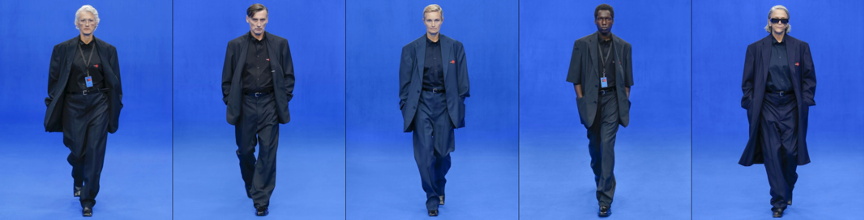
This high-end Balenciaga Summer 2020 production, with music from BFRND, is a perfect timestamp of our times. Grim black coats, at times almost German SS uniform like Arial race,… our sleepwalking into fascism. One thinks The Matrix, hard as stone, sharp as a knife, and greyed out faces. Will we take the Red or Blue pill? Blue for sure is the backdrop for what Balenciaga call “Power Dressing”.
Balenciaga Summer 20 reimagines dressing for work: power dressing, no matter what one does as a job. Looks transform a wearer in the way a uniform can. Unlike their archetypes, though, garments and accessories are made using unconventional processes.
They talk about New Fashion Uniforms, Seamless Tailoring, New Trompe L’oeil, Super Plissé, Pillow Parkas, Fetish Gownsn, and Wearable Ballroom dresses.
Models of various career tracks interpret and play on beauty standards of today, the past, and the future.
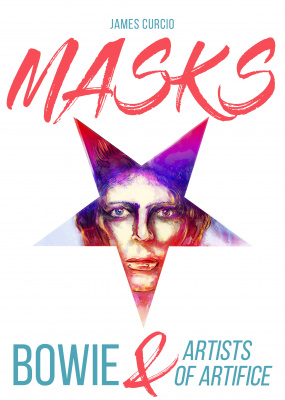
Enter Masks, a new book by James Curcio, about Bowie and other artists of artifice. I spotted the book in a guest post by James Curcio on Ribbonfarm’s always excellent blog.
The difference between a king and a beggar, a soldier and a murderer remains in the realm of performance, a kind of farcical mummers trick that we agree to play along with, if often unconsciously.
The bulk of the book is about Bowie’s unique conceptual art, his capability to create new coherent worlds and identities. I miss Bowie.
The post and book also refer to French philosopher Jean Baudrillard’s book Simulacra and Simulation, apparently required reading for the actors of The Matrix before filming. According to Wikipedia, Baudrillard is “best known for his analyses of media, contemporary culture, and technological communication, as well as his formulation of concepts such as simulation and hyperreality.”
It cannot be happenstance that I find a reference to Simulacra and Simulation in “Design Unbound”, fantastic two-volume work on “Designing for Emergence in a White Water World”, by John Seely Brown and Ann M. Pendleton-Jullian, a print-only MIT Press publication. Chapter 14 is about “World Building”: “much more than just the setting for a story, word building creates coherent contexts that stories become to inhabit”
This is very much avant-garde, feels a lot like Cobra world-building practices like New Babylon by Constant Nieuwenhuis.
I feel like I am drifting into a thin timeline, and time is slipping through my fingers like clockdust. A shaken gravity, with no reference framework, unable to make U-turns, and affront reality with an open mind, heart, and will.
I need a new backdrop, a new backstory to make or break sense. I want to liberate myself from the harness of fixed time and space. An opening-up that leads to more vulnerability – and less power dress. With proximity, intimacy, and closeness – like the closeness and blissfulness that is evoked in “Two Sleepy People” in the March 2020 Mini-Ride.
In that sense, the from/to framing of before and after COVID-19 is misleading. I believe we have to start thinking of ourselves as analog/digital assets whose state is updated in real-time ànd asynchronously, our lives continuously evolving through space and time. We are indeed astronauts, in need of coherent world-building and navigating clockdust till eternity.
I have time. You have time. Both clock-time (Chronos) and experienced-time (Kairos). Ping me if you want to continue the conversation. I’d love to hear where your clockdust has settled these days.
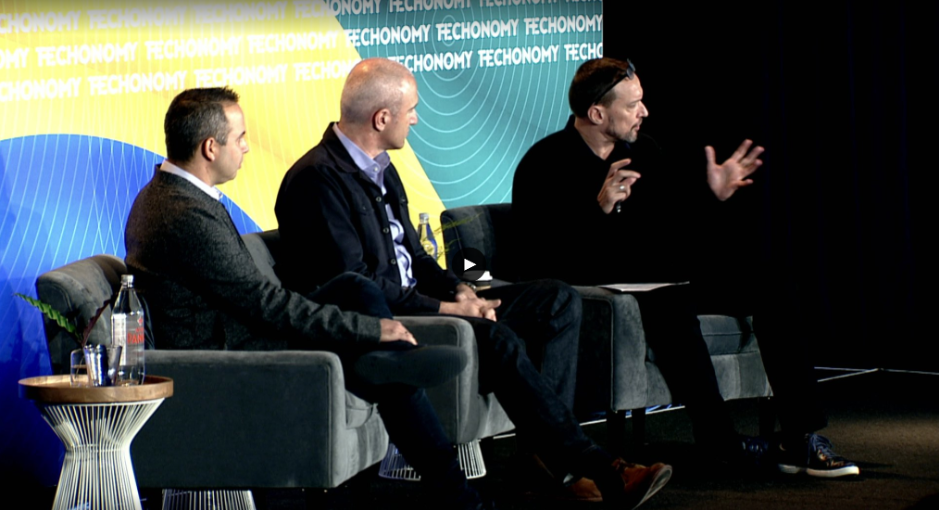
The “collapse of time” was an important meme in the Techonomy 2019 session on Super-Evolution, the idea that startups can now harness rapid prototyping and vast pools of data to develop radically new business models quickly and at scale (video here)
Super-Evolution is about creating more – dramatically more – options. Invented by AI, aka non-human logic. (see also Haydn Shaughnessy on the importance of maximizing options and radical adjacencies vs. core competency in innovation)
“Leave behind the myth of the grand plan and create the conditions for optionality and just-in-time strategy.”(Haydn Shaughnessy)
The first time I felt that sensation of collapsing time was when viewing Elon Musk’s Tesla 2019 update. I felt beaten by algorithms. The Tesla is now/then learning from (data) from human behavior and driving like a human, but ultimately will EXCEED their behavior” (at 01:48:15)
There you have it: gradually, but suddenly we have a singularity. Gradually but suddenly, all jobs are doomed. We are not going to stop this with an ethics council or with regulation. The train has left the station, the genie is out of the bottle.
“Elon Musk forces us to be of two minds. On one side, we have Musk the Mountebank; on the other, a Captain of Industry.”
I had the same feeling of time-space collapse and irrelevance when watching this awesome interview with Rahul Sonnad, CEO/Co-Founder of Tesloop, explaining how “Robo-Mobility is a hospitality service” and “Once cars are appliances”
Are we toast? And/or do we need to reboot, reskill, etc if we don’t want to become irrelevant? Venkatesh Rao gives his perspective when reflecting on Inventing Time, and playing on Alan Kay’s “It is easier to invent the future than to predict it” and William Gibson’s “The future is already here, it is just unevenly distributed.”
“Riding in a Tesla made the electric vehicle future seem utterly inevitable in a way that kinda killed the present for me. Suddenly I could no longer look at gasoline cars the same way. Driving in my own car felt different like I was stuck in the past, waiting for the price of the future to come down to the point where I could afford to live in it. So a Tesla creates the future in the sense of both the Alan Kay and William Gibson quotes. It makes the future real in a deep way that is like making time itself real. And you know this because the feel of the present feels different like you’re heading down a dead-end, a lame-duck future. You’ll have to either abandon it as soon as you can or end up dying with it.”
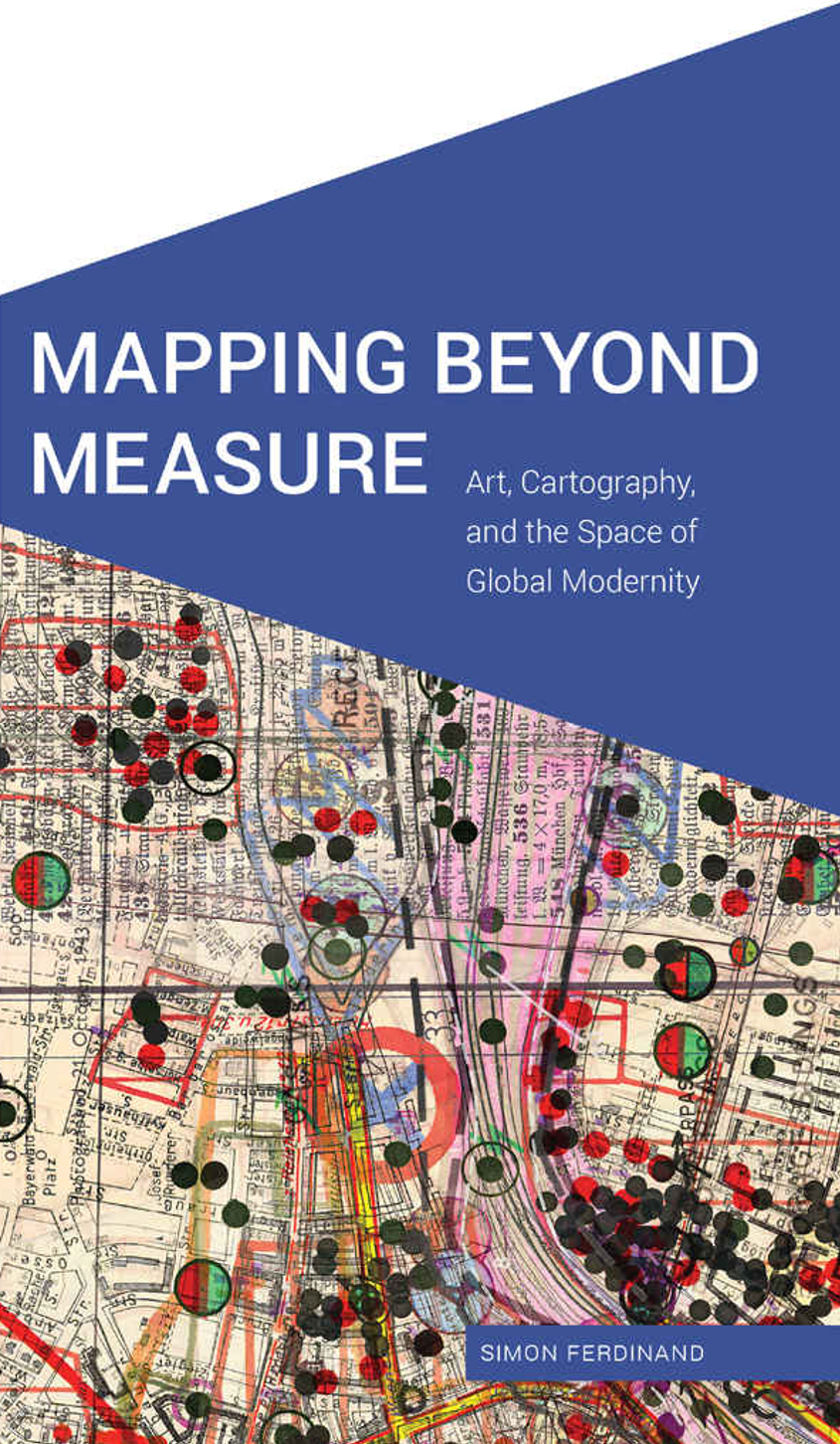
“Often map artworks recapitulate the narratives of rupture (spatial as well as temporal) through which global modernity differentiates itself from inherited pasts and surroundings.”
And;
“Maps have proven integral… to the experience of “time-space compression”
It is probably a sign of the times that in the preparation of his new book “Agency” also the great William Gibson lost a sense of how weird the world has become, up to the point of the present bypassing his future sci-fi scripts – “His future had to catch up with the present”– and “stubs”: alternative timeline in which technologists (and, more tellingly, hobbyists) of the future are able to meddle.
Hobbyists and meddling, the right words probably for not getting alienated. I would call it “tinkering” by maximizing options that human logic not necessary can spot or generate in time.
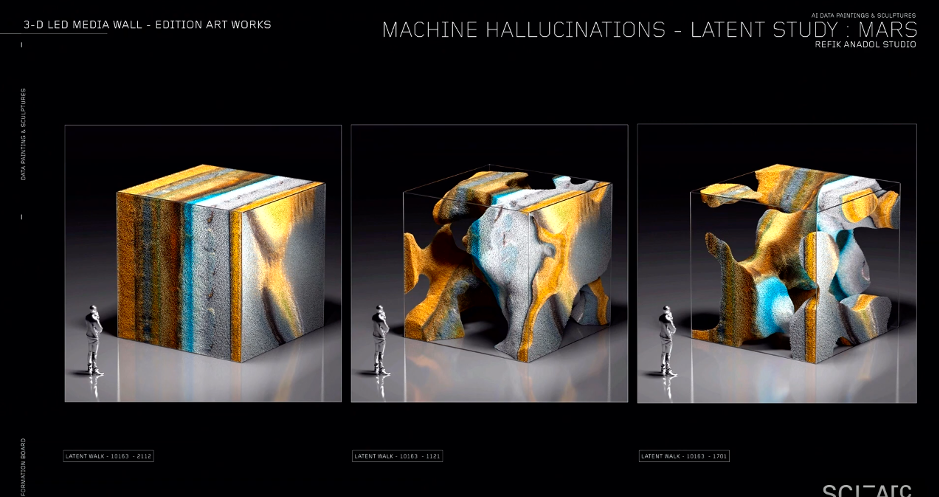
This post is a semi-transcript of a fantastic talk “Space in the mind of a machine” by media artist Refik Anadol. My post is not intended as a literal transcript, but rather as a collection of – often poetic – idea clusters of Refik’s talk. None of the ideas are mine, I just tried to condense it and brush some highlights.
The talk was given on 4 December 2019 at the Southern California Institute of Architecture (SCI-ARC). The website of SCI-ARC itself is nirvana for all beauty and art lovers out there, and worth spending a virtual visit of a couple of hours.
The talk was transformative for me, in the sense that it made me realize we truly have entered a new reality and a witnessing the dawn of a new area, full of beauty, poetry, and artistic interventions that create alertness and aliveness similar to the 16th-century renaissance.
After a long intro, his talk starts at 2:46
Criticizing the idea of canvas
Dimensional explorations
Augmented structures
“Design is a solution to a problem; art is a question to a problem” – John Maeda
Humans, Machines, and Environments in a symbiotic relationship
Can a building dream?
“Life can only be understood backward, but it must be lived forward” – Kierkegaard
The data that we leave behind us
Data “dramatization” vs. Data Visualisation
The invisible space of Wi-Fi, 4G, radio signals, etc.
A poetic exploration of invisible datasets
Data Paintings
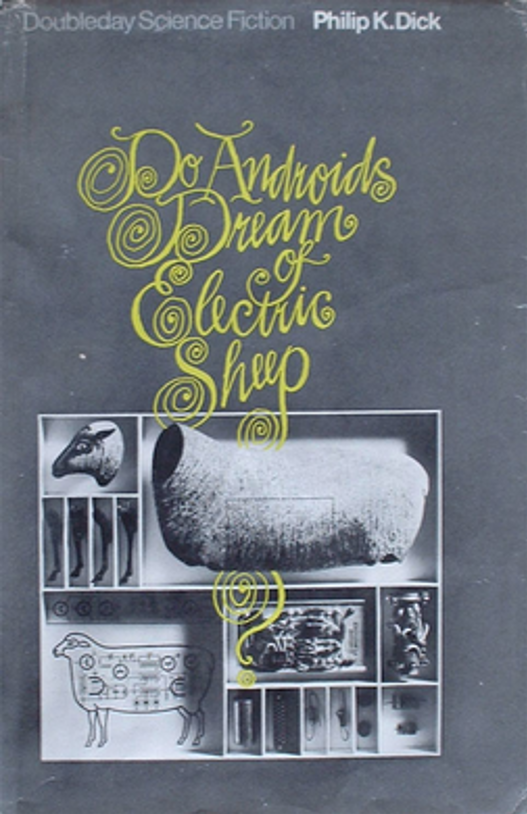
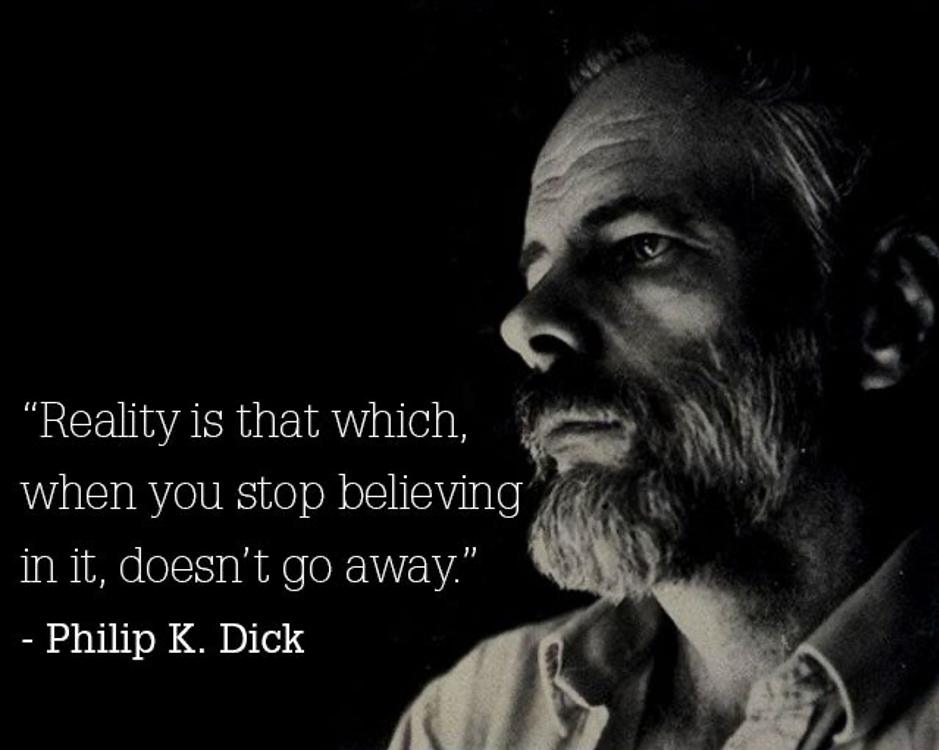
At a certain moment, Refik Anadol quotes Philip K. Dick, author of the 1968 science fiction book “Do Androids Dream of Electric Sheep”, later retitled Blade Runner, and basis for the 1982 initial version of the film.
This inspires Refik Anadol to seed the following insight:
A simulation is that which does not stop when the stories go away
Stories are responsible for our human desire for resolution
But the simulation is only responsible for its own laws and initializing conditions
A simulation has no moral, prejudice of meaning
Like nature it just is
There is some poetry hidden in this abstraction of data
Exploring data sets that have this quality of meditation
The architect as an operating systems designer, a beautiful “speculation”
Finding the moment of remembering
Finding the moment of entering a dream state
“Machine Hallucinations”
Collective memories of spaces
To make the invisible visible
Hallucination narrators
Dream narrators
The Selfies of the Earth
Refik is asking questions that are not just a fancy-fications of a bunch of algorithms
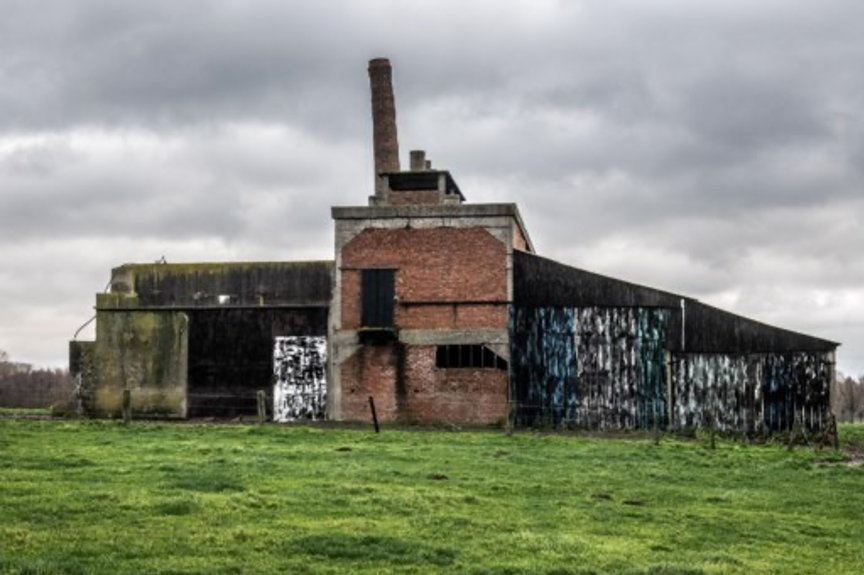
Another rabbit hole bringing together some reflections on creativity, demolition, patrimony, and poetic ruination, as so often in this blog inspired by architectural insights and metaphors.
My attention was triggered by an article in the Jan 11, 2020 weekend edition of De Standaard, a Flemish newspaper. The article was about landscaping, and more specifically “ontharding” (I would literally translate it as “softening”). In this case, softening that what was hardened in the first place. Abandoned and neglected residential and industrial sites, where the soil is still covered by the concrete and rubbish of empty buildings.
It was part of a study supported by the “Vlaamse Bouwmeester”. “Bouwmeester” means “master of building”, “bau-meister”. The term is ill-translated into “Flemish Government Architect” on the official website. The full study can be found here (PDF in Dutch).
The core mission of the Flemish Government Architect is to promote the architectural quality of the built environment. The Flemish Government Architect and his team advise public patrons in the design and realization of buildings, public space, landscape and infrastructure. In addition, the Flemish Government Architect stimulates the development of visions and reflection, with an emphasis on interdisciplinary and cross-sectoral initiatives. The Flemish Government Architect acts as an advisor to the entire Flemish Government.
In short, the article and the study plea for restoring public space by the demolition of 1/5th of hardened space/surface in the Flemish landscape by 2050.
I had a flashback to “Cradle to Cradle”, the 2002 book that alerted me for the first time to a possible vision of sustainable production and architecture. The idea at that time was that reducing waste was just not good enough, and to be sustainable we needed to add value back into the system. As an evolution, the article about the softening of landscape goes one step further: from reducing waste to creating open space by the demolition of vacancy.
“Sloop geeft blijk van falen” – “Demolition evidences failure”
Dan Hill was/is looking for (open) spaces as well, quoting ex-FC Barcelona football player and current Al-Sadd (Quatar) football team coach Xavi Hernández:
“Think quickly, look for spaces. That’s what I do: look for spaces. All day. I’m always looking. All day, all day. Here? No. There? No. People who haven’t played don’t always realise how hard that is. Space, space, space. It’s like being on the PlayStation. I think ‘shit, the defender’s here, play it there’. I see the space and pass. That’s what I do.”
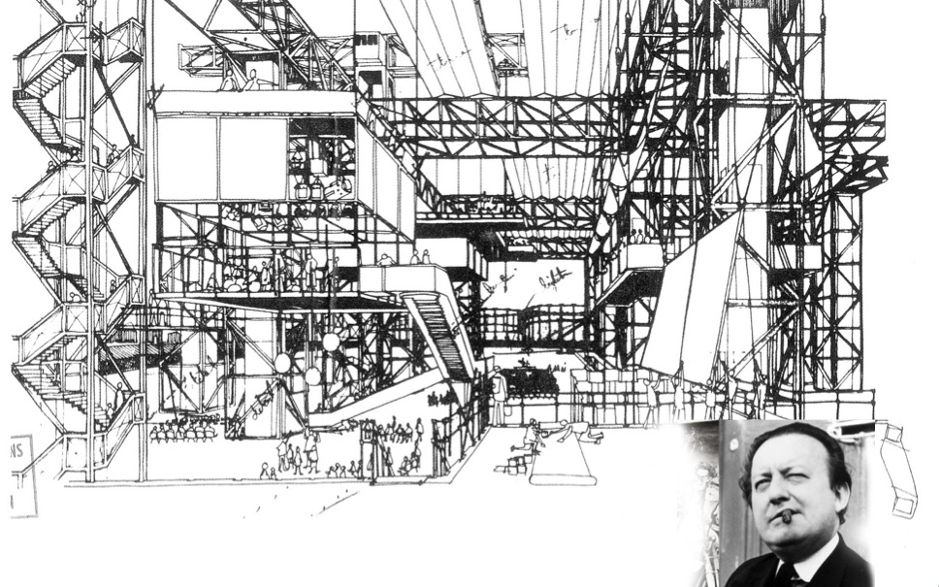
Already more than 20 years ago, architect Cedric Price was arguing for demolish-able buildings with open re-usable spaces.
Cedric Price’s Fun Palace – inspiration for Centre Pompidou in Paris
OK – I confess – as from that moment I went down the rabbit hole and saw demolition and abandoned architecture everywhere. Like in this recent Guardian article, arguing the case for fully demountable buildings.
“We have to think of buildings as material depots,” says Thomas Rau , a Dutch architect who has been working to develop a public database of materials in existing buildings and their potential for reuse… He has developed the concept of “material passports”, a digital record of the specific characteristics and value of every material in a construction project, thereby enabling the different parts to be recovered, recycled and reused.
But there is also something poetic about abandonment, up to the point where we could consider keeping these ruins and equipping them with sensors to listen to patrimony.
Like menhirs, these abandoned seismic sensors could now just stand there, silent in the landscape, awaiting a future photographer such as Grigoryants to capture their poetic ruination.
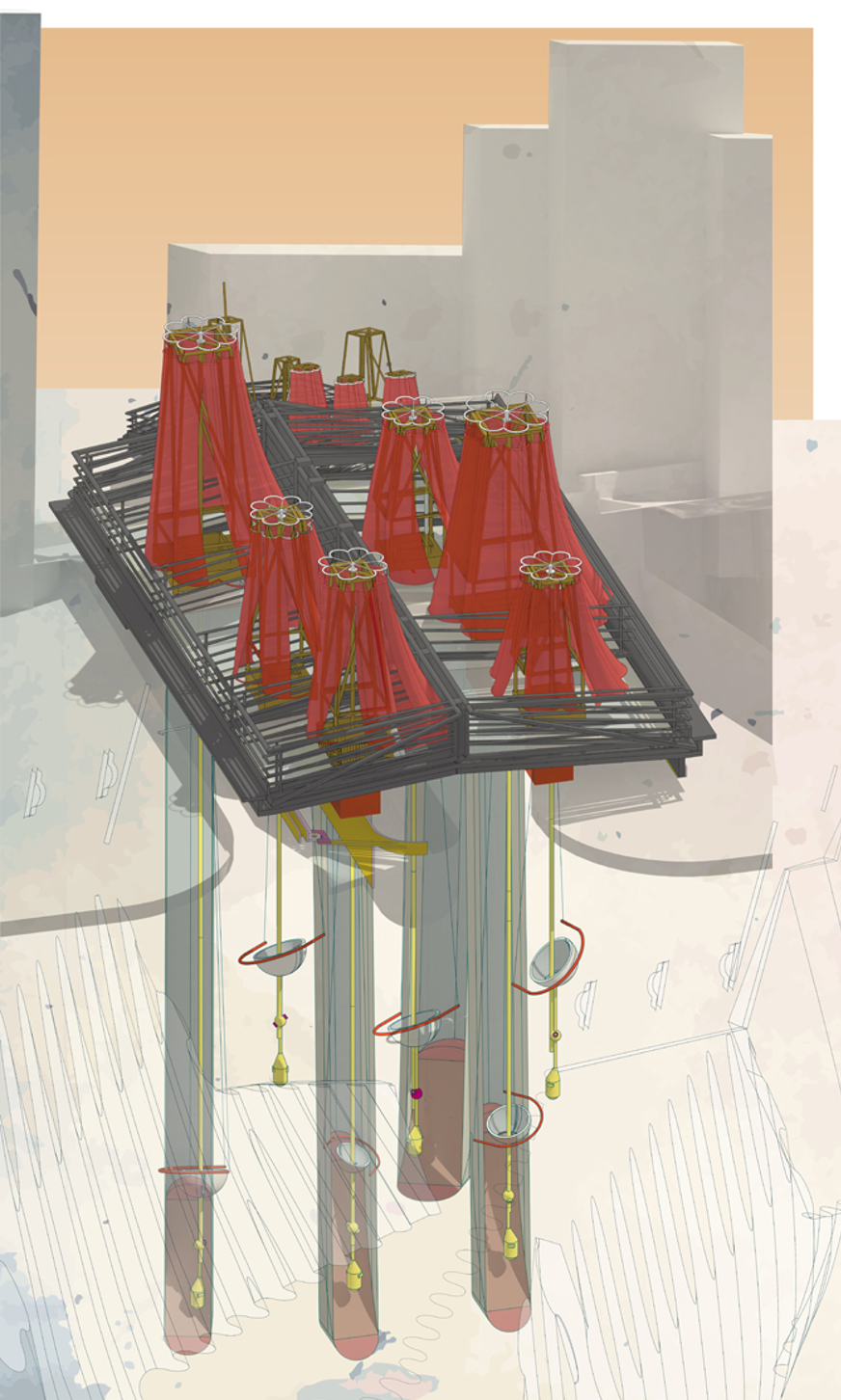
Lebbeus Woods was inspiration to Geoff Manough and London-based architects Smout Allen for the project L.A. Recalculated:
Woods depicts an entire city designed and built as an inhabitable scientific tool. Everywhere there are “oscilloscopes, refractors, seismometers, interferometers, and other, as yet unknown instruments, measuring light, movement, force, change.” Woods describes how “tools for extending perceptivity to all scales of nature are built spontaneously, playfully, experimentally, continuously modified in home laboratories, in laboratories that are homes.”
Instead of wasting their lives tweeting about celebrity deaths, residents construct and model their own bespoke experiments, exploring seismology, astronomy, electricity, even light itself.
Seismic Counterweights
From L.A. Recalculated by Smout Allen and BLDGBLOG
Like architects think about (industrial) sites listening through sensors to seismic undercurrents, I started wondering whether we could not use this metaphor to reflect about our organizational structures; structures not only as hierarchical structures but the more encompassing set of system rules and patterns of an organization – I referred to it before as organizational patrimony.
How can we listen to and signal about the pulse of this organizational patrimony? How can we be aware of it, appreciate it, respect it, and build upon it in our rebellious acts of creative destruction?
I imagine a cohort of humans – like a colony of ants – having 24/7 sensors and laboratories everywhere in organizations; in every office, cubicle, meeting room, coffee corner, etc. And I don’t mean robotic sterile sensors feeding AI models. I mean real humans, measuring, documenting and signaling patrimonial changes in the structure of corporate structure, so they can send early warnings of experiments that have become useless and therefore have to be ruinated, or – in the worst-case – signal cases of patrimonial breakdown and demolition. In search of the material depot and passport of our organizations.
Byrne, left, and fellow members of the 12-person, gray-suited cast.Photo Credit: Bryan Derballa for The New York Times
It was Robert Fritz who pointed me at the meaninglessness of glorifying terms like “deep”, “meaningful”, “sustainable”, etc. especially in combination with corporate common blahs like “innovation”, “disruption”, “ecosystem”, and “change”
Simon Wardley's Common Blahs
Just try it: meaningful change, deep change, sustainable learning organization, etc. Utterly nonsense. But what if we would embrace another form of nonsense, another form of meaninglessness? Another form of plainness, elegance, pure joy from form?
It was this article about David Byrne’s Utopia Tour in the NYT, that lead me into the wormhole of Dada poetry, and later into the other art movement Cobra and its related Cobra Manifesto (Cobra is for a subsequent post).
“I thought plain but elegant suits would unify us and help reveal us as a tribe, a community,”
What was that song with the nonsense lyrics?The lyrics for “I Zimbra” were derived from “Gadji beri bimba,” a 1916 phonetic poem by Hugo Ball, the German author-poet and co-founder of Dada. More than a half-century after Ball strove to stop making sense, he got a writing credit for the opening track on the Talking Heads album “Fear of Music.”
Gadji beri bimba clandridi
Lauli lonni cadori gadjam
A bim beri glassala glandride
E glassala tuffm I zimbra
Kadó? Cadeau? Maybe it’s a matter of learning to be better at the art of accepting presents or pure gifts. The text above is the last ‘movement’ of the Ango laïna by Rudolf Blümner, a kind of phonetic cantata for two voices from the year 1921. Blümner described it as an ‘absolute poem’. The Ango laïna demonstrates what poetry can be after it is emancipated from the vocabulary, grammar, rhetoric, and phonetics of the German language.
It made me think about what makes me happy and unhappy. Unhappiness caused by dullness, not making the most of it, chatter, irrelevance, not being in the moment, Being distracted from what you are supposed to be, to do,…
This is not about boredom. I can be perfectly happy in full boredom. I can be perfectly happy in full silence. I can be perfectly happy in full nothingness
Happiness is about being in the perfect “bubble” or “sphere” of belonging and relevance. This is beyond Maslow’s hierarchy of needs. It is getting closer to Nitin Nohria’s four drivers of motivation (see also my 2011 post on Lipstick on Pigs):
The drive to acquire,
The drive to defend,
The drive to bond, and
The drive to learn
Without stress, fatigue, and unhappiness. These happen when:
You cannot decide the pace of viewing (credit to my art teacher Fiorella Stinders)
You cannot decide the pace of creating (credit to Geert Lovink)
Happiness, in essence, is about not being withheld. Withheld by tempo. Withheld by form. Withheld by meaning.
This form of meaningless joy is what attracts me to the Dada movement.
In my next post, we’ll get into the Cobra movement, and why their ideas of playfulness are relevant in today’s thinking about society.
I always have been intrigued by spheres. From my exposure as an youngster architecture student, through the discovery of Buckminster Fuller’s Geodesic Domes, from my thinking about digital identity being a sphere of fragments of influence that one could share with others, till my recent discoveries in exploring 3D drawing and sculpting software, where meshes of polygon meshes and NURBS primitives can be found and molded-in in abundance.
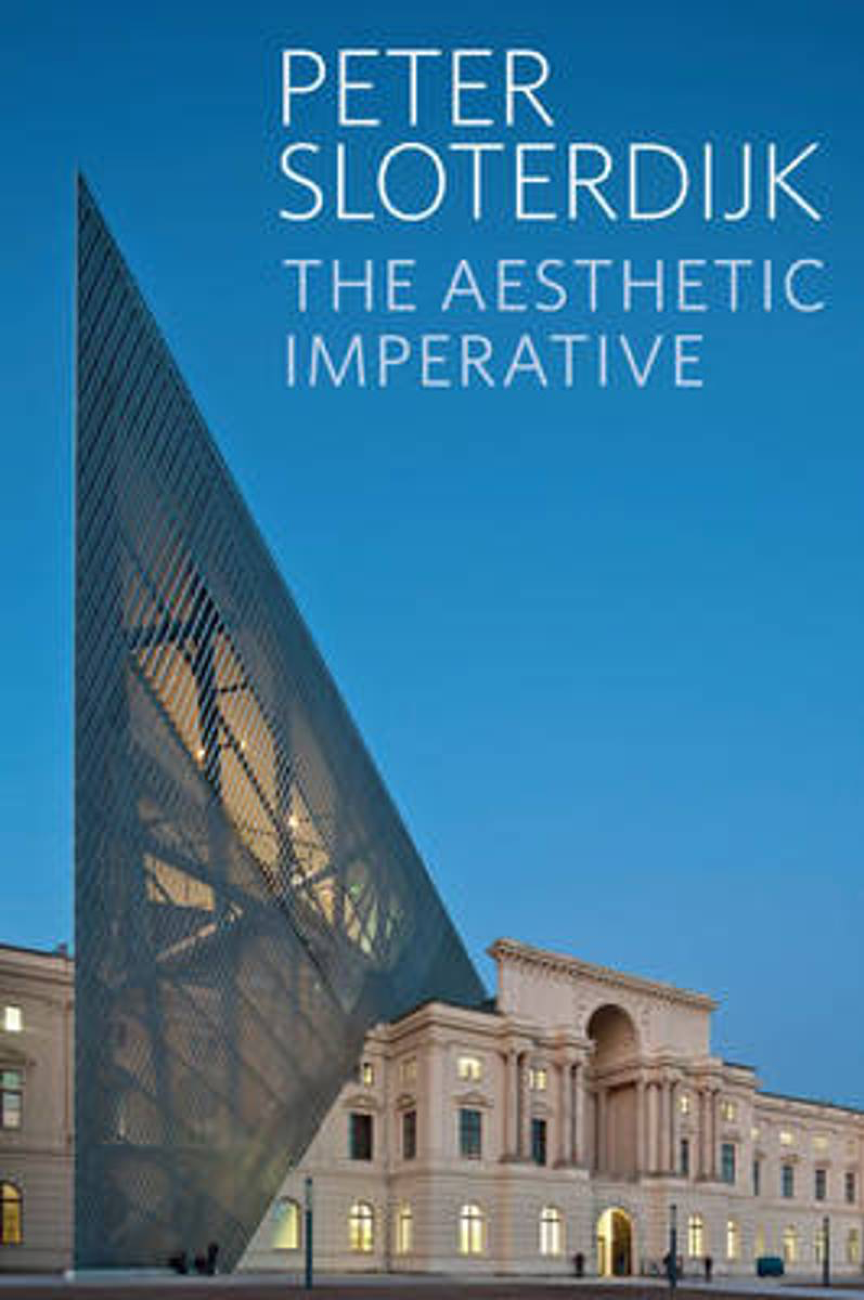
It should therefore not come as a surprise that – as mentioned in my Dec 2019 update – I became absolutely fascinated by Sloterdijk’s “Foams”, part-3 of his trilogy on Bubbles, Spheres and Foam.
I probably – with a probability of 100% – only understand a very small fraction of what is written and meant by Sloterdijk, or by some of the authors of essays introducing and contextualizing his work. I did some homework for this post by reading and reading again the excellent introduction by Jean Pierre Couture on the work of Sloterdijk in general, and Charlie Huenemann’s “Sloterdijk’s Spheres: Bubbles, Globes, and Foams”. And then starting the real thing by the master himself. It is not a page-turner: 900 pages of solid philosophical writing. I can do a maximum of 5 pages/day and need time to let it all sink in. That should do as far as the disclaimers are concerned.
Indeed, this is just a personal thought experiment – and maybe an art experiment or performance as well in the near future – re my evolution on thinking about (digital) identity, and daring to propose a different, radical and spherical perspective.
It’s a baby-idea, just out of the womb, waiting for parents and caregivers to be nurtured, and made alive. There is no practical application for this as far as I can think of, but it just feels I am onto something.
My latest contribution was The Cambrian Explosion of Identity from February 2019, already intended then as the start of a series on the subject, but other priorities distracted me from further development. Let’s add some “spherology” to the mix now.
„Peter Sloterdijk’s celebrated „Spheres“ trilogy is a 2,500-page „grand narrative“ retelling of the history of humanity, as related through the anthropological concept of the „Sphere”,… a lengthy meditation of Being and Space — a shifting of the question of „who we are„ to a more fundamental question of „where we are.“
“Foams are masses of little bubbles, of course. As a metaphor, foams represent smaller zones of inclusion filled with the air of hope.” Huenemann, Charlie.
“And this, in essence, is what Sloterdijk sees as the project of the modernity: the business of constructing bigger and bigger shells, with more Lebensraum for the soul.” Huenemann, Charlie.
I used to think of a robot as an entity that has a body, a mind, and sensors for input/output computation. A computational machine. But to me, it seems just a bit too easy to separate the mind and body, and to replace the mind with some form of artificial intelligence.
It feels like Sloterdijk describes “being” – being in the world, coming into the world, creating your own world and make it become alive, worlding – as acting as-a-foam, not as a “body”, a body with a brain on top that thinks. He is after the wholeness of foam and its integration and relationships with upper and lower levels of spheres and bubbles.
The metaphor of foam is a very solid one: what was before foam, what happens after the foam disintegrates? Where does foam go, what caveats is it trying to fill? All interesting avenues for research and investigation.
It also made me think of this strange creature – the blob with 720 sexes – that foams over old wood trees as a monster we can all learn from?
Because of this sudden focus on foamy shapes, I see bubble-structures everywhere. I see foam in this discovery of Christian Mio Loclair’s art installations, interventions, and interpretations. His studio “Waltz Binaire” works for the biggest brands in the world.
He explores the harmonic friction of human bodies, movement, and nature colliding with digital aesthetics. Using cutting edge technology in interactive installations, audio-visual experiences, visual narratives, and dance performances, he continuously illuminates the beauty and drama of human identity.
“Yet the vision algorithms have of our future is built on our past. What we teach these algorithms ultimately reflects back on us and it is, therefore, no surprise when artificial intelligence starts to classify on the basis of race, class, and gender. This odd ‘hauntology’1 is at the core of what is currently discussed under the labels of algorithmic bias or pattern discrimination.”
Current identity thinking is based on past data. On graphs. On connections and relationships between “nodes”, “end-points” of a relatively fixed and static structure. With the extraction of value built on top of that past, amplified by AI. The past amplified.
But we did not notice that the nodes have become overlapping cells of belonging. The attractiveness of a “foamy” group- or individual-identity is that it is not fixed and static. It is “expansive”, not “extractive”. It adds value. It grows unpredictably into the future. Not like extrapolations of last year’s revenue growth. More like fruit maturing into a juicy ripeness.
Foam is dynamic. Made of bubbles, it lives within and across spheres of influence (both in the sense of actively influencing and passive being influenced).
Foam is not static. It is alive. In search of higher levels of aliveness. Until it dies. And only blobs of dust and air are left.
I see foam in Paul Baran’s network models:
Centralized, decentralized and distributed network models
Paul Baran (1964)
What’s the impact of foamy logic on organizational models? How does a foamy organization look like? What’s the shape of D?
Are we moving from Graphs to Foams? From Nodes to Bubbles? What would nodes and endpoints be called in the foam-world anyway? Are we foam? It feels like I am going down a rabbit hole of foam. From fuzzy to foamy logic?