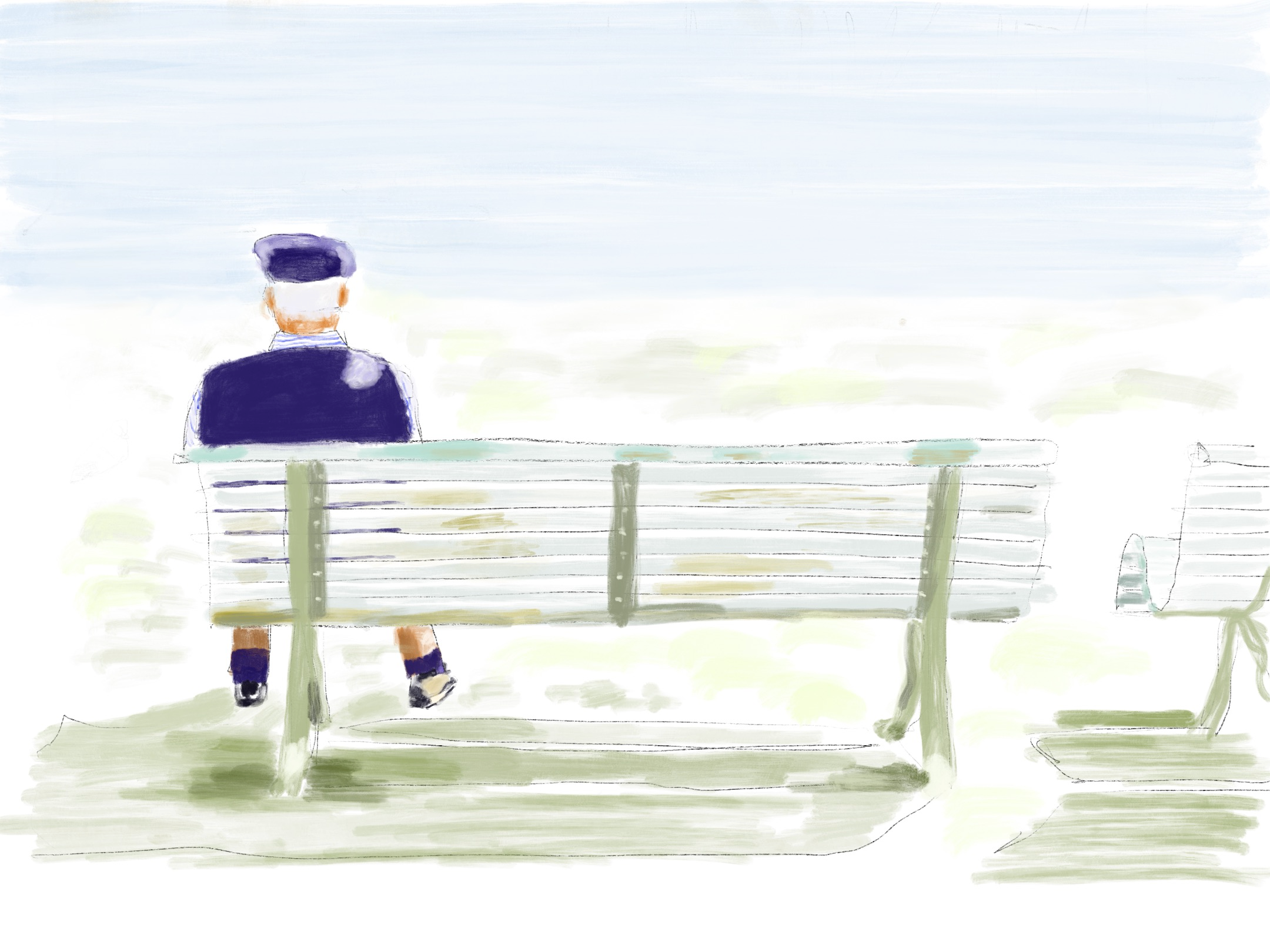
Petervan Artworks © 2021 – The Bench – Procreate on iPad
Petervan Artworks © 2021 – The Bench – Procreate on iPad
Petervan Studios © 2021 > Digital artwork > Eye in Procreate
The time that we could organise our companies without acting too much on global evolutions lies long behind us. Leaders understand more than ever that tackling world challenges not only creates a better context for all of us to live in but also presents fantastic business opportunities. It’s why am thrilled to be one of the curators of nexxworks’ Mission NXT program, designed to help leaders turn global trends into opportunities.
For those who are truly passionate about fostering this type of outside in vision, here are five (zero bullshit) books that fundamentally changed and formed my thinking in the matter over the years.
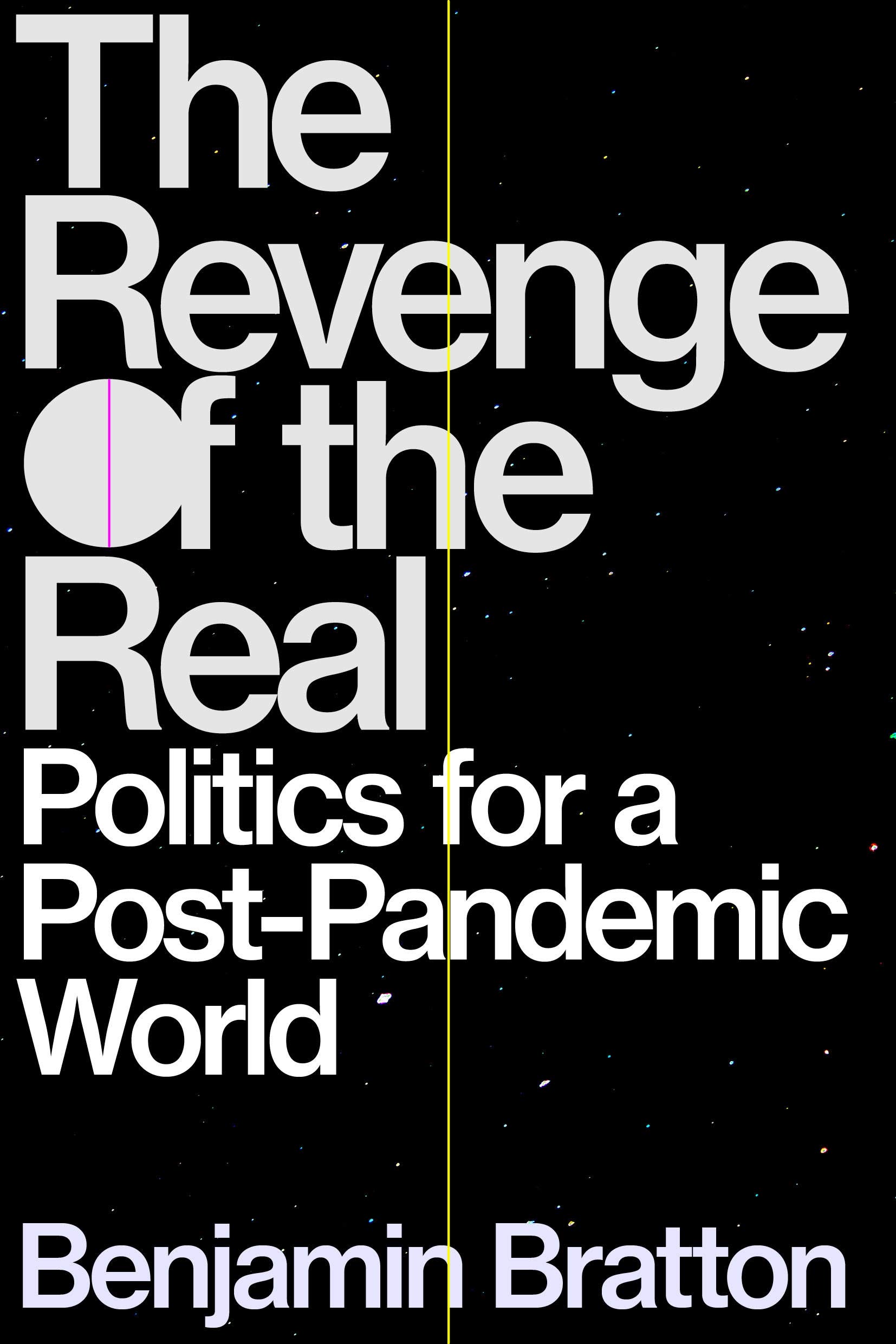
The pandemic showed us that we are completely unprepared to cope with our current deeply entangled world. According to Bratton, we need a “positive biopolitics” and an AI-based instrumentation of the world. He offers a refreshing way of thinking about sensors which is quite different from the worn out song about the surveillance state.
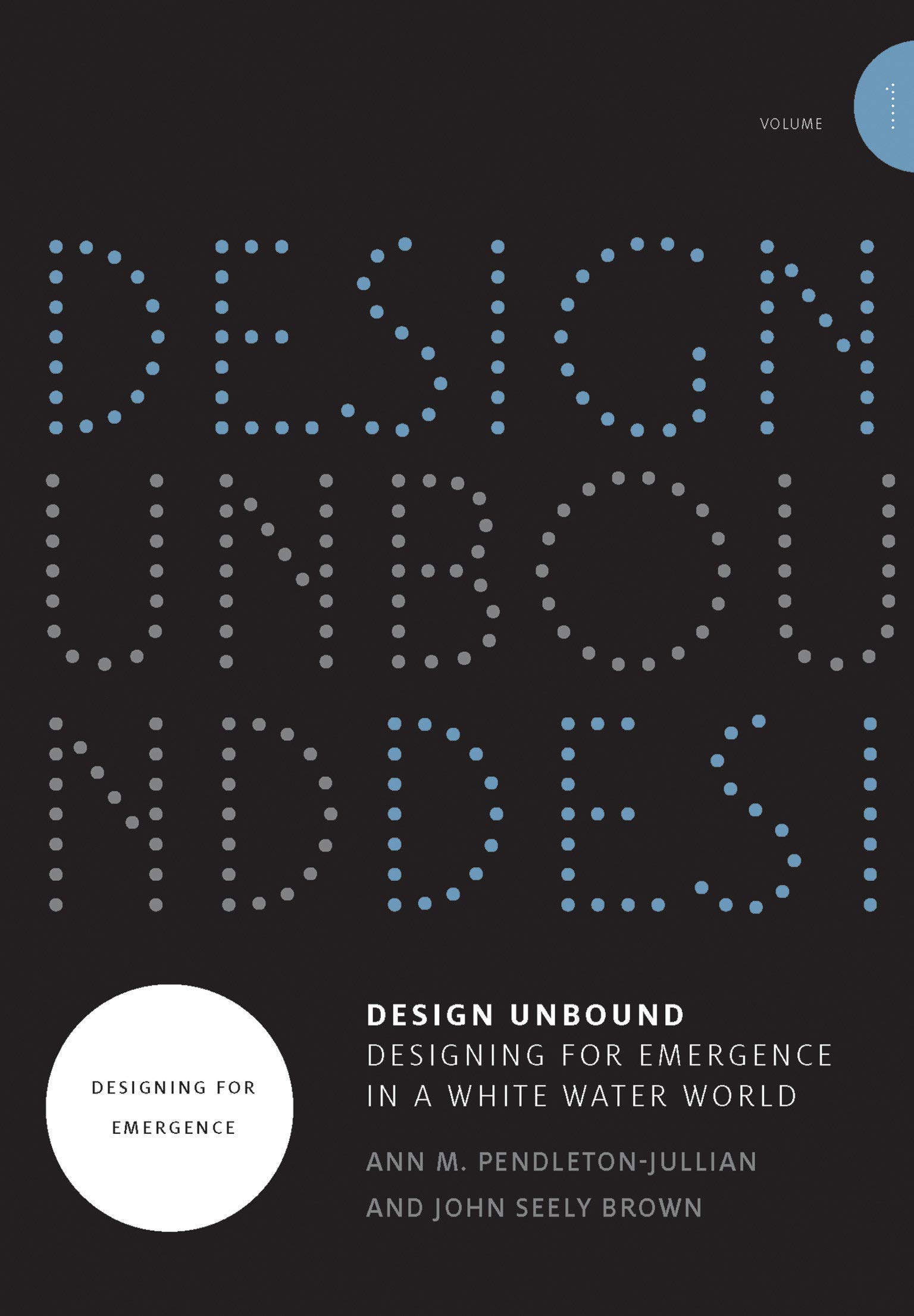
Read this if you want to understand how you can design for emergence in the Never Normal. You’ll need your full attention (it’s not a ‘light reading’ project), but in return you’ll receive two volumes of unique and well researched insights to help you better see what is and what can become. This is truly one of the most important business books I ever read.
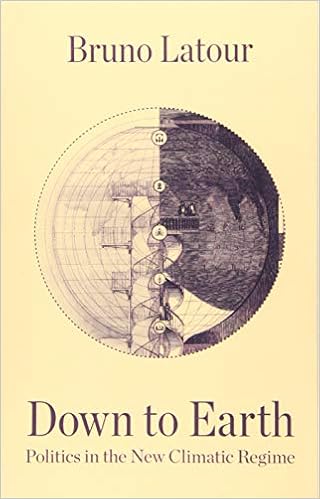
Latour calls for a third way in climate politics which is left nor right: a path between libertarian globalism, and leftist localism. One that is anchored in planet earth. Read this if you want to get to know one of the most important philosophers of the 21st century.
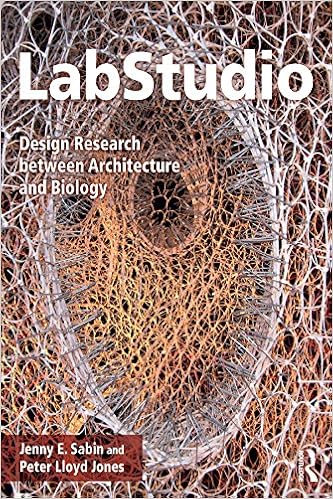
Sabin and Lloyd Jones tackle the concept of the research design laboratory in which funded research and trans-disciplinary participants achieve radical advances in science, design, and applied architectural practice. The book demonstrates new approaches to more traditional design studio and hypothesis-led research that are complementary, iterative, experimental, and reciprocal.
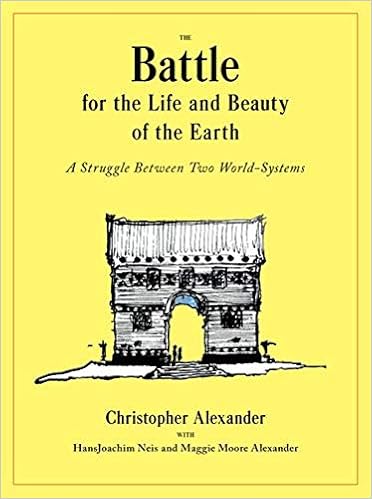
This real life story of American architect Christopher Alexander designing and building the Eishin university campus in Japan serves as an analogy for the battle between two fundamentally different ways of shaping our world. One system places emphasis beauty, on subtleties, on finesse, on the structure of adaptation that makes each tiny part fit into the larger context. The other system is concerned with efficiency, with money, power and control, stressing the more gross aspects of size, speed, and profit. This second, “business-as-usual” system is incapable of enabling the emotional, whole-making side of human life, according to Alexander, who then goes on to present a new architecture.
Warmest,

This post was originally posted on the nexxworks company blog, on the occasion of Mission NXT, which I help curate
As usual, an incoherent, irregular, unpredictable collection of interesting sparks. Handpicked, no robots. Minimalism in curation. There is a shitload of new stuff this month. I tried to be extra disciplined and clean out the obvious, and what you’ve probably already seen elsewhere. Spread the word. Enjoy!
If you can’t get enough of these and want more, you can hang on to the firehose, the extended version of Petervan’s Delicacies in REVUE. Also in this edition with loads of videos. Subscribe here: https://www.getrevue.co/profile/petervan
This post is part of a series of essays bundled under “Traveling without moving”.
Intro of that series can be found here.

Petervan Pictures © 2021 – Travelling Without Moving
After the Inappropriate post of begin June 2021 we continue with “Studios”, a way of collaborating together as a practice of practices.
In my previous life (2009-2016), I architected several immersive learning experiences for SWIFT’s annual conference Sibos. It was called Innotribe @ Sibos. Already then, I was convinced that learning should be more than the transfer of knowledge by a speaker on a stage (or in a Zoom window) talking to a passive audience. I wanted to resonate with the audience at a level beyond the pure cognitive. I wanted the experts to talk with the audience in immersive settings. We got quiet far in that ambition during the 2016 edition, where physical and mental space formed a coherent and harmonious backdrop and context for several creative learning sessions.

Innotribe human-artistic space 2016
In 2016, I sensed there was an untapped potential for building cognitive and non-cognitive equity by integrating artists into the mix. Not as entertainment, but in support of the content by creating a multidisciplinary mix of left and right brain dispositions. “A bridge too far” was the harsh judgement. I took a one-year sabbatical, never went back, and started Petervan’s Studios.
I now had plenty of room to experiment with real and virtual paint, sound- and video-production tools, animation, collaboration with artists, etc. And was invited as a lead experience designer for a couple of high-touch leadership experiences.
The plural “S” and the end of Petervan StudioS was inspired by Nelly Ben Hayoun StudioS, a weird mix of interrogations and provocations using different studio disciplines from writing, to painting, through video and soundscape, film productions, theatre, drama, experiences, etc. Multiple studios under one – albeit often virtual – roof.
With Petervan StudioS, my ambition is to design and architect creative interventions, interruptions, and provocations. Formats can be curations, events, group experiences, expeditions, immersions, exhibitions, analog and digital artwork and productions, performances, writings, poems, blogs, installations, soundscapes, recordings, documentaries, and time capsules.
Studios are more than a glorified term for artworks, workshops, or events.
A studio is a practice of practices.
This is a good moment to consider FOUR (+1) STUDIOS (PDF), Ann Pendleton-Jullian’s take on StudioS, a 254-page long articulation and inquiry of the subject.
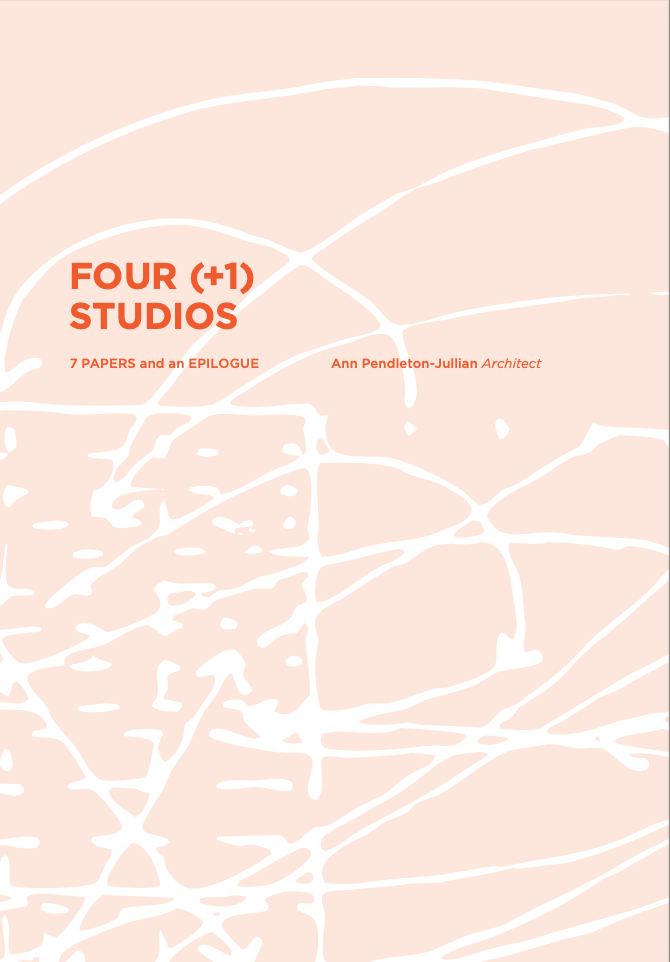
“Written from the perspective of an architect, these papers talk about design and design thinking, the social environment of practice of the studio, and how the architectural design studio and its methodologies have evolved over time to respond to evolving social environments and practices”
What follows is my personal interpretation of Ann’s insights, based on extensive reading and studying of her writings and transcribing many of her video vignettes.
Four (+1) Studios is about applying the principles, work methods and ethics of an architecture studio to the domain of system and organizational design.
Studios are where the practice takes place and where a practice of practices is forged and then evolves in a space.
A practice is a way of doing. It usually has a very strong task component, but critically it has to do with being embodied in a context.
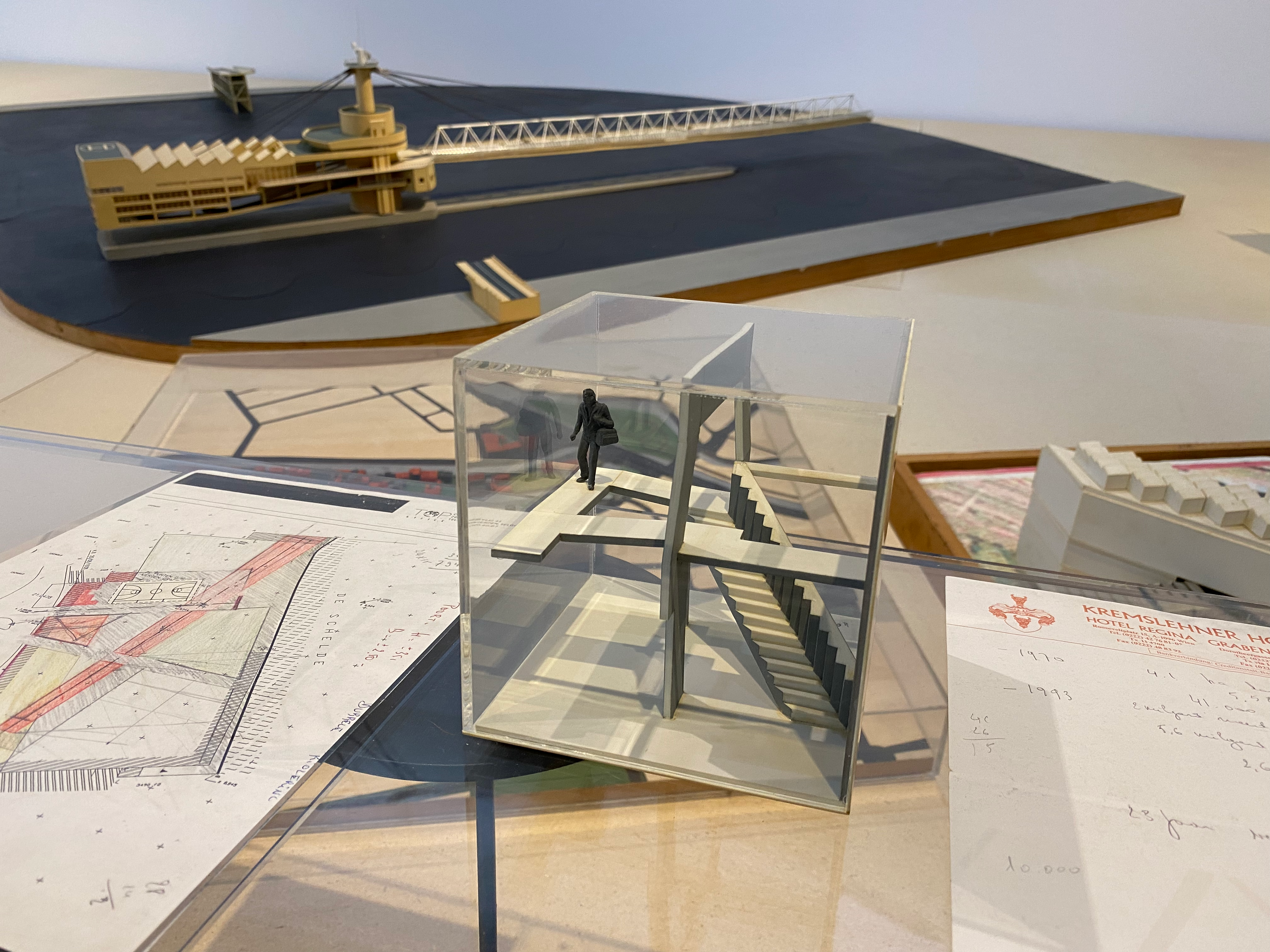
Future Plans 1970-2020 – Luc Delue and T.O.P. Office – De Singel, Antwerp
The learning of a practice involves becoming a member of a community of practice. Think of guilds in the Middle Ages.
But it is more than a community of specialized skills or artisans.
For example, if you consider the handling of a pipette in a lab, and you want to work with a Petri dish low and behold, each lab may train their folks to hold their pipette in a certain way, the way you hold that pipette influences the visual that’s never been recorded.
In other words, the community of practice develops his own signaling, that create the community and amplify kind of tacit communication in very powerful ways that makes that community a practice.
The studio combines different practices. An architecture studio is multi-disciplinary: a combination of aesthetic, ethical, engineering, scientific, societal, political, philosophical, and anthropological skills. A combination of material, societal, and mental ecologies. In the end, architecture is about designing spaces for messy human beings to grow and develop at their best.
We can architect buildings, spaces, things. But we can also architect contexts, less tangible artifacts that let a project emerge and evolve into preferred and desired futures.
There are five key aspects of studio, which make it unique from other teaching and learning environments.
The studio is initiated by and formulated around problems, yet it is not specifically about solving problems.
It is profoundly social in nature and structured.
It is a highly critical and discursive environment using critiques – not criticism
It’s deeply synthetic in nature in contrast to teaching and learning environments that operate as compartmentalized, a specialized knowledge basis.
and five, it operates through the integration of knowledge with skills.

Design studio and the student apprentice’s journey (courtesy Ann Pendleton-Jullian)
Studios are a proven way of failing and recovering together, a repurposing of the architecture studio practice of practices.
There are three kinds of studios.
The teaching studios, where you’re trying to teach something. It is about the didactic transfer of knowledge.
The mentoring studios, where you now are giving a project and helping a student move through that project.
The inquiry-based or research studios; these can be real-world projects, and real world, richly networked experiences.

Illustration courtesy Ann Pendleton-Jullian
Combining these different types of studios has become a key component of my client work in 2019-2021.
For one client we developed a leadership studio around the topic of ambiguity. For another client, we are creating an online expedition based on conversation moments and thinking experiences, using different types of “Guides”. Some guides have a more didactical role of transferring knowledge (teaching studios), other guides have an enabling/mentoring role (mentoring studios), and yet other participants inject new ways of thinking about the future, other than scenario planning (inquiry based studios).
Other clients ask us to design learning experiments: multiple parallel lines of inquiry, keeping multiple options open, resisting the urge to come to quick resolutions, and building up cognitive equity, together. These online sessions are designed as facilitated studios: a proven way of failing and recovering together, as an embodied learning.
Doing projects like these require my 100% focus and attention.
They require me too deeply immersive myself in the client’s problem and project space.
I am human, and my quality attention is scarce, not unlimited, and I need pauses for reflection and recalibration.
It is why I only can accept one such project per year.
Because I want to keep the balance and attention right.
Next time in Travelling Without Moving, we’ll talk about “Genres”, a set of different practices to weave content and engagement into video learning experiences.
Hope you stay on board.
Warmest,

A couple of weeks ago, I discovered by accident a way to get myself in a zen-state of total peace and relaxation. Not that I feel super hectic or nervous, or something like that. Not that I need it. Not that I was in search for it. I just stumbled upon it and I really liked it.
Petervan Artwork © 2021 – 5000 Bricks – Soundscape by Petervan in Logic Pro
It is the very simple – highly repetitive – practice of drawing many many little bricks, black ink on white paper. I am doing this when I am completely alone in my studio, with some repetitive music in the background (see later), and the sound of a ticking clock.
The only other things I hear/notice is the sound of the pen softly scratching the paper, the sound of my breath, a motorcycle or car or plane passing by in a soft distance, a door opening/closing somewhere in the house, sometimes a dog barking, or a dove crying.
I am old enough to remember reading somewhere in the eighties Robert Pirsig’s “Zen and the Art of Motorcycle Maintenance” from 1974.

“As in Zen, the trick is to become one with the activity, to engage in it fully, to see and appreciate all details–be it hiking in the woods, penning an essay, or tightening the chain on a motorcycle.”
It made me think about the repetive art of Roman Opalka who spent a big part of his life drawing numbers from one to infinity.

Roman Opalka by Lothar Wolleh – Sep 2002
But I don’t talk nor record my words while drawing my bricks. I am silent. And listen to repetitive soundscapes. I was looking for some “non-intrusive music”, music without meaning, music without noise, something that did not distract from the content (aka the bricks), but was rather amplifying it. I tried several ambients from Brian Eno, or songs from Robert Frip’s Music for Quiet Moments series and many more.
Until I discovered this AI-auto-generated music library by @alex_bainter.
The “song” that I have used most so far is called “Lullaby”.
Check it out at: https://play.generative.fm/library

Ann Pendleton-Jullian pointed me in the direction of Lu Qing’s work. Ly Qing is the spouse of Ai Weiwei, but she is always in background, not looking for press attention. When browsing her work, I stumbled upon this repetitive work, acrylic blocks on a silk roll of about 20 meters long and 83 cm wide.

M+ Sigg Collection, Hong Kong. By donation, © Lu Qing
This ink painting on a bolt of silk is partially unrolled and drapes over a table. Small dark-grey squares in acrylic paint almost fill the fabric and create a grid. Departing from her early abstract oil paintings, beginning in 2000, Lu Qing has painted on a twenty-five-metre bolt of silk that she buys each year. Small geometric shapes are painstakingly painted on the fabric over the course of the year. Regardless of how much of the cloth is painted, Lu considers the painting complete at the end of the year and begins with a new bolt the next year. The varying shades of dark grey in the work indicate changes in Lu’s emotional state and in the pressure she exerted, and also recall the different shades of black in traditional Chinese painting. The work is a meditative practice in which the process is valued over the end product, and it functions as an abstract record of emotion and time. (from https://collections.mplus.org.hk/en/objects/untitled-2012687)
I ran to my attic, found a roll of cheap white paper of 1 meter wide and 5 meter long, and started drawing. What you see in the video above are the first 5,000 bricks of a “long” work.
Josie Gibson from The Catalyst Network pointed out that my work was multilayered, with the layers being Peace, Mind Wandering, Kairos, Repetitive work, Musical memory anchors.
In my opinion, it also has layers of different types of attention.
Attention to the drawing itself: getting the pattern right, working without no or a minimum of grid/supporting lines, drawing “perfect” bricks, made in one line-flow, for each of them.
Attention to the mind-wandering: making small (at times only mental) notes, reflections about a project, my daughter, my spouse etc.
It’s useless, I know. But it brings me in contact with an unexplored part of myself. It brings me in a Zen state, a state of deep calm and happiness. I am literately and metaphorically losing my time, my-self. Or am I re-finding my-self?
Doing something. Doing the work. Getting lost. In time and space that is. Being one with my practice: it is more important than end product.
Warmest,


Petervan Artwork © 2021 – Horses Series
The top one is acryl on canvas 60x50cm – others are digital experiments in Procreate

This post is part of a series of essays bundled under “Travelling without moving”.
Intro of that series can be found here.
The plan/ambition with this series: to share where I have been the last year, what I learned, where I am going, and what is required.
The broader quest is to discover what is required to enable real change.
After the Play-Post of begin Jan 2021, we continue with “Anxious” in a post-VUCA world.
BANI is what is next after VUCA.
Already in 2018, Jamais Cascio coined the term BANI. See my post from Aug 2019 and Jamais’ update from April 2020.
BANI stands for Brittleness, Anxious, Non-Linear, and Incomprehensible.
Let’s focus on the “A” of BANI.
I suggested that the preferred response to Anxiousness was empathy or agency.
But that felt too open ended.
Empathy with what, and agency in what kind of world?
And was it forward or backward looking?
A possible world or a preferred world?
I went back to the most common definition for anxious:
“being worried about what may happen or have happened”
Like a rabbit caught in the headlights, some people are so frightened or nervous that they do not know what to do. They sometimes remain still because they do not know where the light comes from or which way to go.

Another reaction is to fake that you know what to do, especially if you are in the spotlight for one reason or another. In other words, to bluff yourself out of an anxious situation.
Imagine a workshop where the top executives of a firm are sitting on the first VIP row of a theatre (in COVID-times, it would be a massive Zoom session with all the employees being able to look over the shoulder of their executives).
All the employees are sitting in the rows behind the VIP row to witness how their executives manage a difficult situation, or even more frightening, being able to see inside the heads of those who bluff to know, don’t blink an eye, and confidently steer their troops in the wrong direction, efficiently of course.
Remaining still or bluffing strong are most probably not the wisest responses to anxiety.
A better response would have to do with orientation or some kind of possibility mapping.
I assume many of my readers are familiar with Joseph Voros’ Future Cone.

Great background explanation by Joseph Voros here.
These days, you can buy out-of-the-box possibility mapping workshops from some of the big-4 and many boutique consultancies. Some of them already fully COVID-proof online, with Miro boards of future cones, chatrooms, Clubhouse conversations, Slack and other real-time streams.
But all this online-first coolness can also be distracting. What I am exploring is some kind of new genre, where we also inject artists to resonate with and for the content at a non-cognitive level, not as entertainment, but with an aesthetic that is demonstrative, not just a gimmick overlay.
An aesthetic that has a sense of stillness and serenity that makes the effort and work real, beyond perception and reason, with an anchoring in humanistic relevance.
Without falling for the temptation to add such toolkit to a “Pot-Pourri” of other coolness, as a tapas-bar, a Chinese menu to choose from.
What is missing in the “Pot-Pourri” is a sense of agency, a sense for direction and choice. Choice as in opinion, and direction as in judgment and daring to step forward with preference.
If not, the online-first future cones become a surrogate for analog Post-It-driven brainstorms, just mapping future concepts on the dimensions of possible, plausible, probable, and impossible.
The crux is daring to address the preferrable future. Because that is using the map beyond seeing better what is and what could be. It is using the map for standing for an opinion, a direction, most probably in the space of moral, spiritual, and aesthetical advancement.
That’s of course a more difficult sell.
But for now, let’s summarise, not as a conclusion, but more as a beacon in our developing story that a possible response to anxiousness is possibility mapping with the courage to set direction and preference.
Next time we’ll talk about “Unbound” – Unbound from thingness that is.
Hope you stay on board.
Warmest,
I am excited to announce the launch of one of my new channels: Petervan’s Pirate TV – Art-Tribe Edition
The first episode will premiere on YouTube on 1 Dec 2020 at 09:30am Los Angeles – 12:30pm New York – 6:30pm Brussels – 1:30am Hong Kong (next day)
The YouTube live chat will be open for feedback, critique and encouragements.
I suggest you set the YouTube reminder so you don’t miss the premiere and the live chat.
The video will remain available for viewing after the Premiere event
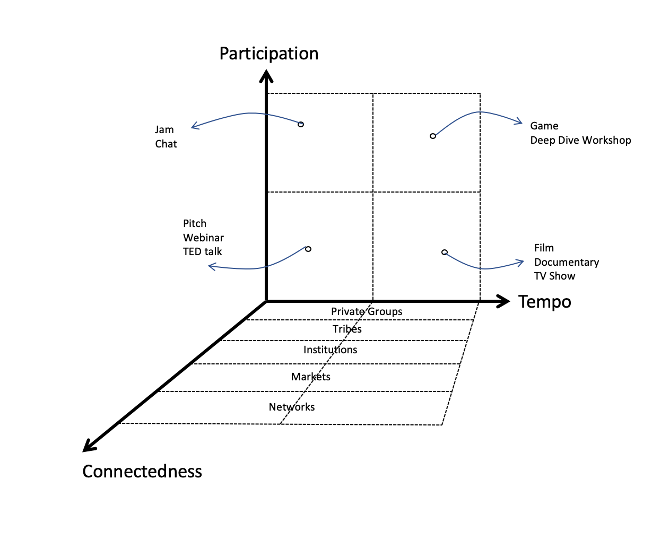
Pirate TV is a new genre that sits somewhere between a vlogcast, documentary, film, and TV show. In the events ambition cube, this sits in the lower right quadrant for a tribe-connectedness.
Current plan is to have two editions: one more business related (the Biz-Tribe Edition), and one more artistic related (the Art-Tribe Edition).
The Art-Tribe Edition launches on 1 Dec 2020, the Biz-Tribe Edition will launch on 2 Feb 2021.
As I strongly believe that magic happens at the cross-section of artists, scientists, engineers, and business people, I expect that sooner or later the two editions will start to blend.
Art-Tribe Edition is intended as a platform for artists in conversation with Petervan.
The artist-in-residence for this first episode is Frank Poncelet.

Frank Poncelet is an independent Artist/Director/Producer who graduated from “The Academy for Visual Arts” in Ghent in 2017. While he has no intention of pursuing professional animation in the future, he enjoys the process and will continue to make animations and VFX shorts. After his Graduation film “A Night On Gor”. He worked for One year on an Animation Mashup “Bug’s Club” inspired by “Hell’s Club” from Antonio Maria Da Silva AMDSFILMS. In 2017/2018). Frank Also Produced his short sci-fi film “Alpha” in 2019. Currently Frank is working on video art using Neural Style Transfer techniques and on a sequel to “Alpha”.
I hope you will enjoy this first episode. Here is the trailer:
The soundtrack of the trailer is here:
If you are an artist, and you are interested to have your work shared and discussed on this channel, please contact me privately.
Warmest,
This post is part of a series of essays bundled under “Travelling without moving”. Intro of that series can be found here.
My 2020 journey started with a Direct Message via Twitter from Mark Storm on Feb 8, 2020 a couple of weeks before the first formal lockdown in Belgium on 13 Mar 2020

Mark says “Maybe you will find this an interesting essay about Mark Rothko. Have a great Sunday, Mark”
Thanks for sharing, Mark! And yes, I found it interesting, in as much that I choose it as the start of this series 😉
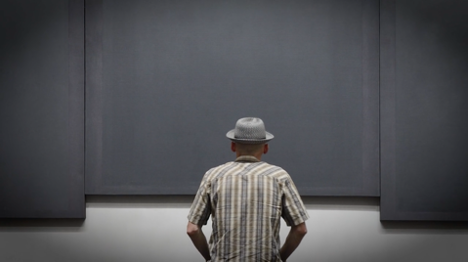
Here is the direct link (Dutch only) to the Rothko essay (PDF) by Dutch philosopher Joke J. Hermsen. The essay is about the effect of stillness on an audience in front of a Rothko painting. It is an ode to Kairos (time as experience) as opposed to Chronos (time as clock-time).

Some highlight from the essay:
Het onmenselijke geweld van de oorlog bracht hem ertoe een laatste zoektocht naar de kern van menselijkheid te ondernemen: ‘Ik wil mensen daarheen brengen waar ze hun menselijkheid weer kunnen ervaren.’ En dat kan volgens hem alleen als een kunstwerk ‘tijdloze momenten schept’, die de mens tot een nieuwe ervaring van zichzelf en vervolgens tot een nieuw inzicht over de wereld kan inspireren.
The inhumane violence of the war had induced him into a last quest for the essence of humanity: “I want to lead people to a place where they can experience their humanity again”. And he believes that is only possible when a piece of art “creates timeless moments”, inspiring men to a new experience of himself and subsequently new insights about the world.
Er bestaan geen goede schilderijen die over niets gaan
There are no good painting that are about nothing
Om ‘te kunnen worden die je bent’, dienen de oude waarheden en inzichten als het ware opgeschort te worden. Het is een ervaring die door Nietzsche ook wel extatisch wordt genoemd, omdat het letterlijk een uitstaan naar is, kortom een zich openstellen voor en zich overgeven aan het onbekende. Rothko spreekt in dit geval van ‘transcendentale ervaringen’
In order “to be able to become who you are”, old truths and insights need to be postponed. Nietzsche labelled such experiences as ecstatic – literally standing-out – opening up to and surrendering to the unknown. Rothko speaks in this case of “transcendental experiences”
Deze ‘transcendentale ervaring’ wordt door Rothko een ‘tijdloos moment’ genoemd, omdat deze niet aan de klok gebonden tijd als het ware haaks staat op of inbreekt in de as van de lineaire tijd.
This “transcendental experience” is called a “timeless moment” by Rothko, because this non-clocked time is at odds with or breaks into the axis of linear time.
De identiteit van de toeschouwer wordt voor een moment doorbroken, waardoor hij de indruk heeft niet langer tegenover het werk te staan, maar er door omringd of opgezogen te worden
The spectator’s identity is momentarily broken, giving him the impression that he is no longer facing the work, but is surrounded or absorbed by it
The essay encouraged me to go and buy Joke Hermsen’s book “Stil De Tijd – Pleidooi voor een langzame toekomst”, as far as I know only available in Dutch.

The suggested translation for the title is “Stop the clocks – Manifesto for a Slow Future”, although I feel that “plea” is probably a better translation than “manifesto”, and I would have translated “Stil De Tijd” as “Silence the clocks”. I wrote about time in the past, and in this post from May 2018, I already mentioned Joke Hermsen.
Here are some of my notes/highlights/moods from the book.
Tijd schept ruimte
Time shapes space
Verlangen te realiseren wat er nog niet is.
Desire to realise what is not
Opnieuw zien we hier hoe zowel het wachten als het openlaten van de tijd en het opschorten van betekenisgeving aan de oorsprong staan van de creativiteit en het denken.
Again, we see how waiting as well as leaving space for time and the suspension of giving meaning are at the source of creativity and thinking
Het wachten (attente) is voor Blanchot dan ook het vrijleggen van een ander soort aandacht (attention), die zich niet op het reeds bekende van de verwachting richt, maar op het onbekende, het onverwachte, het nog niet ingevulde.
The waiting (attente) is for Blanchot the release of another sort of attention (attention), not pointing towards the known knows of the expectation, but towards the unknown, the unexpected, what has not yet been filled in.
Picasso: ‘Ik zoek niet – ik vind.’ Over dat onderscheid tussen zoeken en vinden, zegt Picasso: ‘Zoeken, dat is uitgaan van het oude in een willen vinden van het reeds bekende in het nieuwe. Vinden, dat is het volledig nieuwe. Alle wegen zijn open, en wat gevonden wordt, is onbekend. Het is een waagstuk, een avontuur.’
Picasso: “I don’t search – I find”. About that difference between searching and finding, Picasso says: “Searching is starting from the past, in an effort to find the already known in the future. Finding, that’s what’s completely new. Alle options are open, and what is being found, is unknown. It is a venture, an adventure”
Belangeloze aandacht
Disinterested attention
Last highlight:
Die creativiteit wordt aangewakkerd als we ons bij tijd en wijle aan het regime van de klok kunnen onttrekken en ons durven overgeven aan ervaringen die haaks staan op het gestaag voorttikken van de wijzers. Wachten, vervelen, luieren, mijmeren, nadenken en nietsdoen, zijn vormen van ontvankelijke passiviteit waarmee men in deze rusteloze, door de economie opgedreven tijden misschien weinig applaus zal oogsten, maar die in vrijwel alle hier opgenomen essays noodzakelijk bleken voor de mens en voor de wereld om niet te verstarren en te verharden.
That creativity is encouraged when we can detach us from time to time from the regime of the clock and dare to surrender to the experiences that are orthogonal to the ongoing ticking of the moving clock-hands. Waiting, being bored, idle, musing, reflecting and doing nothing, are all forms of receptive passivity that are not really appreciated by the inflated time of the economy, but that are essential in all essays of this publication, essential for the humans and the world in order not to fossilize, become rigid, petrify and harden.
I make similar reflections during my bike tours in nature, asking myself who is the real me, what is my original rhythm, finding my own rhythm, re-finding myself.
During one of those tours, I spotted a path to my right, with no signage, leading into some small woods and boskets. A small hesitation, but in a blink, I decided to turn right, right into the unknown.
Only a couple of minutes later, I found myself in an open space, in the middle of the green, in almost complete silence, and saw this snail sunbathing under a parasol of green leave.

The silence and nature had made me soft, with indeed a disinterested attention, but active attention anyway, not passive.
After years of – at times – hectic corporate life, and after a semi-pause of about four years, I realized it was only now that I started to cool down, to wind down. It was only now that I started to enjoy that state of detachment from Chronos time, detachment from anything, actually.
It should therefore not come as a surprise that my next essay in this series will be about… pause.
 Petervan Studios