Petervan Studios © 2021 – Just Loops
Sine Parole – 11 Sep 2021
Reply

Petervan Studios © 2021 – Just Loops
This post is part of a series of essays bundled under “Traveling without moving”.
Intro of that series can be found here.

Petervan Pictures © 2021 – Travelling Without Moving
After the Inappropriate post of begin June 2021 we continue with “Studios”, a way of collaborating together as a practice of practices.
In my previous life (2009-2016), I architected several immersive learning experiences for SWIFT’s annual conference Sibos. It was called Innotribe @ Sibos. Already then, I was convinced that learning should be more than the transfer of knowledge by a speaker on a stage (or in a Zoom window) talking to a passive audience. I wanted to resonate with the audience at a level beyond the pure cognitive. I wanted the experts to talk with the audience in immersive settings. We got quiet far in that ambition during the 2016 edition, where physical and mental space formed a coherent and harmonious backdrop and context for several creative learning sessions.

Innotribe human-artistic space 2016
In 2016, I sensed there was an untapped potential for building cognitive and non-cognitive equity by integrating artists into the mix. Not as entertainment, but in support of the content by creating a multidisciplinary mix of left and right brain dispositions. “A bridge too far” was the harsh judgement. I took a one-year sabbatical, never went back, and started Petervan’s Studios.
I now had plenty of room to experiment with real and virtual paint, sound- and video-production tools, animation, collaboration with artists, etc. And was invited as a lead experience designer for a couple of high-touch leadership experiences.
The plural “S” and the end of Petervan StudioS was inspired by Nelly Ben Hayoun StudioS, a weird mix of interrogations and provocations using different studio disciplines from writing, to painting, through video and soundscape, film productions, theatre, drama, experiences, etc. Multiple studios under one – albeit often virtual – roof.
With Petervan StudioS, my ambition is to design and architect creative interventions, interruptions, and provocations. Formats can be curations, events, group experiences, expeditions, immersions, exhibitions, analog and digital artwork and productions, performances, writings, poems, blogs, installations, soundscapes, recordings, documentaries, and time capsules.
Studios are more than a glorified term for artworks, workshops, or events.
A studio is a practice of practices.
This is a good moment to consider FOUR (+1) STUDIOS (PDF), Ann Pendleton-Jullian’s take on StudioS, a 254-page long articulation and inquiry of the subject.
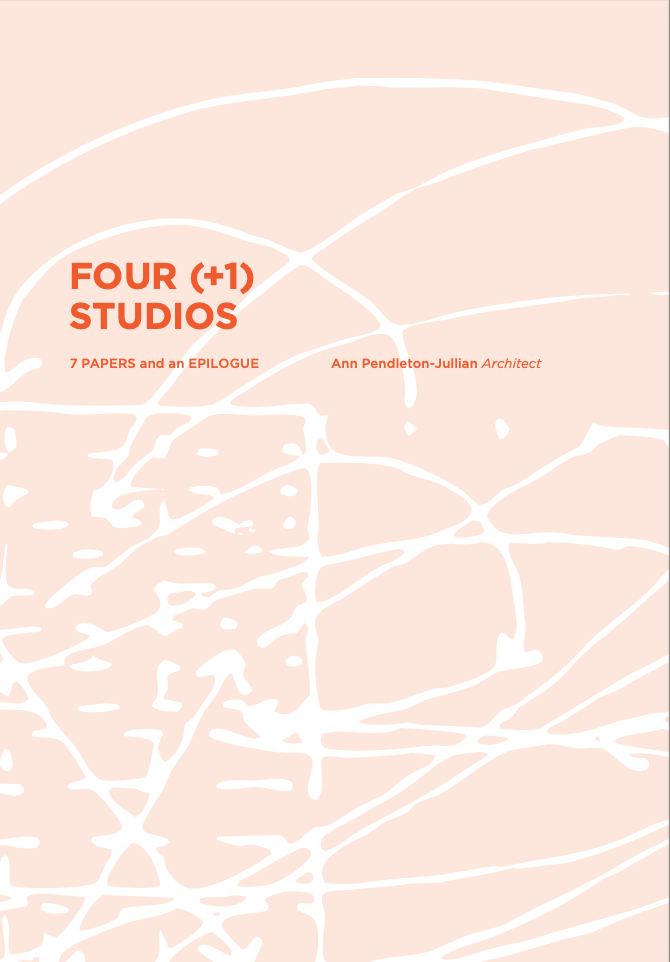
“Written from the perspective of an architect, these papers talk about design and design thinking, the social environment of practice of the studio, and how the architectural design studio and its methodologies have evolved over time to respond to evolving social environments and practices”
What follows is my personal interpretation of Ann’s insights, based on extensive reading and studying of her writings and transcribing many of her video vignettes.
Four (+1) Studios is about applying the principles, work methods and ethics of an architecture studio to the domain of system and organizational design.
Studios are where the practice takes place and where a practice of practices is forged and then evolves in a space.
A practice is a way of doing. It usually has a very strong task component, but critically it has to do with being embodied in a context.
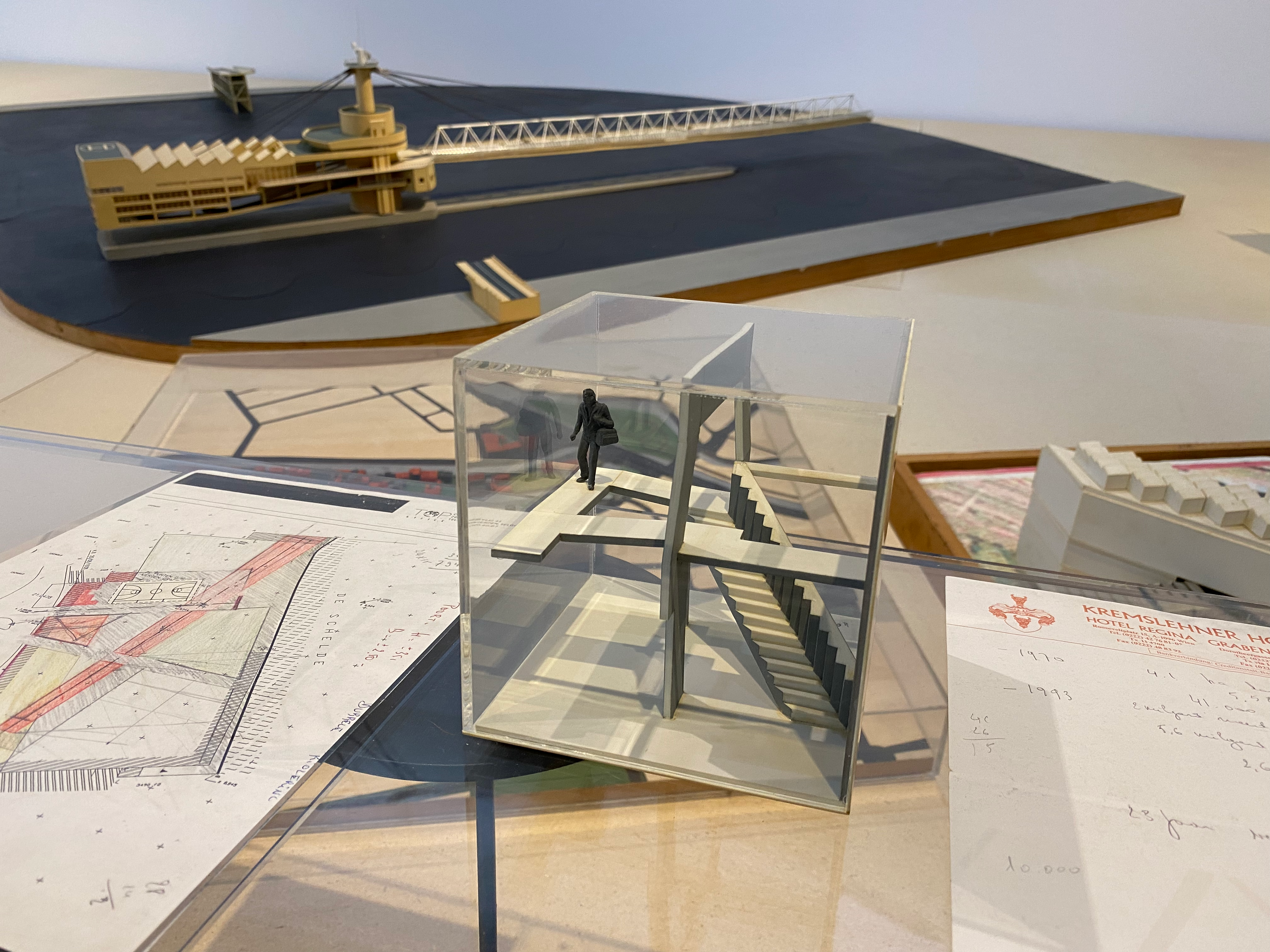
Future Plans 1970-2020 – Luc Delue and T.O.P. Office – De Singel, Antwerp
The learning of a practice involves becoming a member of a community of practice. Think of guilds in the Middle Ages.
But it is more than a community of specialized skills or artisans.
For example, if you consider the handling of a pipette in a lab, and you want to work with a Petri dish low and behold, each lab may train their folks to hold their pipette in a certain way, the way you hold that pipette influences the visual that’s never been recorded.
In other words, the community of practice develops his own signaling, that create the community and amplify kind of tacit communication in very powerful ways that makes that community a practice.
The studio combines different practices. An architecture studio is multi-disciplinary: a combination of aesthetic, ethical, engineering, scientific, societal, political, philosophical, and anthropological skills. A combination of material, societal, and mental ecologies. In the end, architecture is about designing spaces for messy human beings to grow and develop at their best.
We can architect buildings, spaces, things. But we can also architect contexts, less tangible artifacts that let a project emerge and evolve into preferred and desired futures.
There are five key aspects of studio, which make it unique from other teaching and learning environments.
The studio is initiated by and formulated around problems, yet it is not specifically about solving problems.
It is profoundly social in nature and structured.
It is a highly critical and discursive environment using critiques – not criticism
It’s deeply synthetic in nature in contrast to teaching and learning environments that operate as compartmentalized, a specialized knowledge basis.
and five, it operates through the integration of knowledge with skills.

Design studio and the student apprentice’s journey (courtesy Ann Pendleton-Jullian)
Studios are a proven way of failing and recovering together, a repurposing of the architecture studio practice of practices.
There are three kinds of studios.
The teaching studios, where you’re trying to teach something. It is about the didactic transfer of knowledge.
The mentoring studios, where you now are giving a project and helping a student move through that project.
The inquiry-based or research studios; these can be real-world projects, and real world, richly networked experiences.

Illustration courtesy Ann Pendleton-Jullian
Combining these different types of studios has become a key component of my client work in 2019-2021.
For one client we developed a leadership studio around the topic of ambiguity. For another client, we are creating an online expedition based on conversation moments and thinking experiences, using different types of “Guides”. Some guides have a more didactical role of transferring knowledge (teaching studios), other guides have an enabling/mentoring role (mentoring studios), and yet other participants inject new ways of thinking about the future, other than scenario planning (inquiry based studios).
Other clients ask us to design learning experiments: multiple parallel lines of inquiry, keeping multiple options open, resisting the urge to come to quick resolutions, and building up cognitive equity, together. These online sessions are designed as facilitated studios: a proven way of failing and recovering together, as an embodied learning.
Doing projects like these require my 100% focus and attention.
They require me too deeply immersive myself in the client’s problem and project space.
I am human, and my quality attention is scarce, not unlimited, and I need pauses for reflection and recalibration.
It is why I only can accept one such project per year.
Because I want to keep the balance and attention right.
Next time in Travelling Without Moving, we’ll talk about “Genres”, a set of different practices to weave content and engagement into video learning experiences.
Hope you stay on board.
Warmest,

Since my time at Microsoft (almost 20 years ago!), I have been infected by the digital identity virus. At one moment I was even part of the WEF Personal Identity workgroup. Since then, I followed the identity space in some depth, some years more than others. See also my post on The Cambrian Explosion of Identity from 2019 that also figures David Birch.
Earlier this week, that same David Birch published a very interesting post about digital identity: the bottom line of his insight is that we should be less interested in solving pre-digital conceptions of identity and more in (certified) credentials.
I recently came to a similar conclusion, but from a completely different angle.
First, I bumped into The Block Whitepaper on CBDCs (Central Bank Digital Currencies) from August 2020, and got intrigued by the schema on page 13:

The authors do a great job in explaining the difference between Claim-based (or account-based) money and Object-based (or token-based) money.
In other words, money is an asset, and can be represented as a Claim (Account) or as an Object (Token)
Then I ran into this May 2021 post by Andrew Hong on The Composability of Identity across Web 2.0 and Web 3.0. It’s a quite technical paper, and I probably only understand 5% of it, but my attention was again drawn to a diagram on the composable and non-composable aspects of identity:
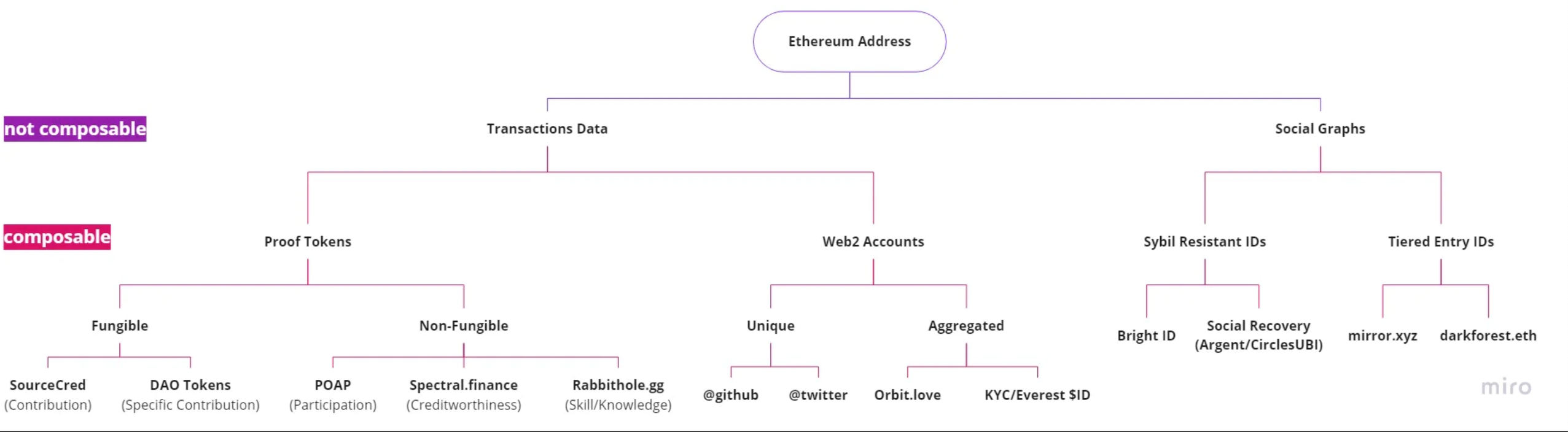
Andrew Hong writes: “The second layer (and onwards) highlights categories and products that allow us to represent that transaction data and/or social graph as tokens. Since tokens have the qualities of existence, flexibility, and reusability – then by the transitive property – our digital identity now does as well. I can move around these tokens at will to different accounts and in different combinations.”
I suddenly realized that the difference between Account-based money and Token-based money also applied to identity.
In other words, just like money, also identity is an asset (it always was), and it can be represented as a Claim (Account) or as an Object (Token)
During my 2003 Microsoft project, I was lucky enough to be exposed to more advanced identity thinking by wise people like Kim Cameron and the other folks from The Internet Identity Workshop gang, and I got quite familiar with their thinking of certified identity claims or claims-based identity.
But only now, I realized that both Money and Identity can be account- or token-based, and that token-based is probably what’s going to help us make progress, because it makes identity and money programmable.
In other words:
For Account-based identity, you need to be sure of the identity of the account holder (the User ID / Password of your Facebook-account, your company-network, etc.). For Token-based identity (Certified claim about your age for example) you need a certified claim about an attribute of that identity.
For Account-based money, you need to be sure of the identity of the account owner (the User ID / Password or other mechanism to access your account). For Token -based money (a 100€ bill, an NFT token, a ETH token, etc.) you need a certified claim about an attribute of that money.
So, I come – although from a different angle – to the same (or at least similar) conclusion as David Birch in his latest post about identity that (certified) credentials are the way forward.
“These credentials would attest to my ability to do something: they would prove that I am entitled to do something (see a doctor, drink in the pub, read about people who a richer than me), not who I am.” (David Birch)
I am just adding the money dimension to it, and using the same sentence, I can now say:
“These credentials would attest the money’s ability to do something: they would prove that the money is entitled to do something (pay for Starbucks, pay for food, only to be used if there is enough money on my account, etc.), not whose money it is. (Petervan)
Post Scriptum:
You could also consider NFTs as certified claims of something (in today’s hype, they are certified claims of the authenticity of an artwork, but it could be anything, also identity, or also money. Amber Case for example referred to NFTs in the context when mentioning the Unlock Protocol on her ongoing overview of micropayments and web-monetization:
Unlock Protocol has a particularly inventive approach to NFTs — using them as customizable membership keys for certain sites. This allows people to set a length of time for the membership, or access to certain features like private Discord channels.
Content creators can place paywalls and membership zones in the form of “locks” on their sites, which are essentially access lists keeping track of who can view the content. The locks are owned by the content owners, while the membership keys are owned by site visitors.
In that sense we can really look at certified credentials as key to open something (a door, a website, a resource) or to enable something (a certain action, a certain right, a certain flow, etc).
Rabbit hole? Curious to read your thoughts.
Warmest,
This month’s collection of new releases, and some very few oldies. Try it out. Play in shuffle mode to improve the surprise experience. Enjoy!
As usual, an incoherent, irregular, unpredictable collection of interesting sparks. Handpicked, no robots. Minimalism in curation. There is a shitload of new stuff this month. I tried to be extra disciplined and clean out the obvious, and what you’ve probably already seen elsewhere. Spread the word. Enjoy!
If you can’t get enough of these and want more, you can hang on to the firehose, the extended version of Petervan’s Delicacies in REVUE. Also in this edition with loads of videos. Subscribe here: https://www.getrevue.co/profile/petervan
It’s FinTech unicorns all over the place these days. But where are the Phoenix organisations in financial services?
Keynote speaker and author Peter Hinssen wrote a book “The Phoenix and the Unicorn”, and he is going to interview me about phoenix organizations in the financial industry for his blog in a few days.
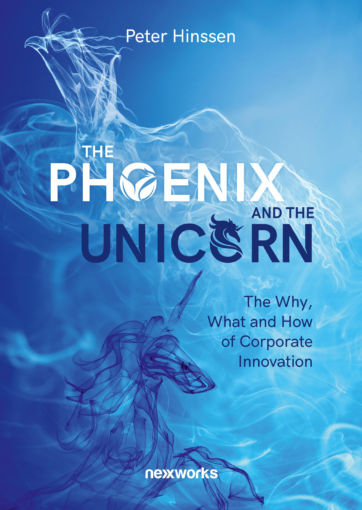
As a big believer in the power of the network, I was wondering what your favourite phoenix companies were in banking and finance: those type of long lived companies that were able to stay relevant by reinventing themselves on a regular basis through business model, market, service and product innovation? Examples (in different industries) would be Walmart, Microsoft, Ping An and McDonalds.
It you take part, it would be great if you could suggest a company name and why you consider them a successful financial industry phoenix. To keep it simple and straightforward: just use the comments section of this post.
You’ll receive an e-book copy of Peter’s book ‘The Phoenix and the Unicorn’ if your suggestion makes the top 3!
As usual, an incoherent, irregular, unpredictable collection of interesting sparks. Handpicked, no robots. Minimalism in curation. There is a shitload of new stuff this month. I tried to be extra disciplined and clean out the obvious, and what you’ve probably already seen elsewhere. Spread the word. Enjoy!
If you can’t get enough of these and want more, you can hang on to the firehose, the extended version of Petervan’s Delicacies in REVUE. Also in this edition with loads of videos. Subscribe here: https://www.getrevue.co/profile/petervan
This month’s collection of new releases, and some very few oldies. Try it out. Play in shuffle mode to improve the surprise experience. Enjoy!
As usual, an incoherent, irregular, unpredictable collection of interesting sparks. Handpicked, no robots. Minimalism in curation. There is a shitload of new stuff this month. I tried to be extra disciplined and clean out the obvious, and what you’ve probably already seen elsewhere. Spread the word. Enjoy!
If you can’t get enough of these and want more, you can hang on to the firehose, the extended version of Petervan’s Delicacies in REVUE. Also in this edition with loads of videos. Subscribe here: https://www.getrevue.co/profile/petervan
 Petervan Studios