How to avoid simplistic conversations on disruption?

This post is about some of the myopic views on disruption in financial services (or any other vertical for that argument), and why I am getting a bit tired of FinTech, RegTech, InsurTech, or whatever AbcTech you may come up with.

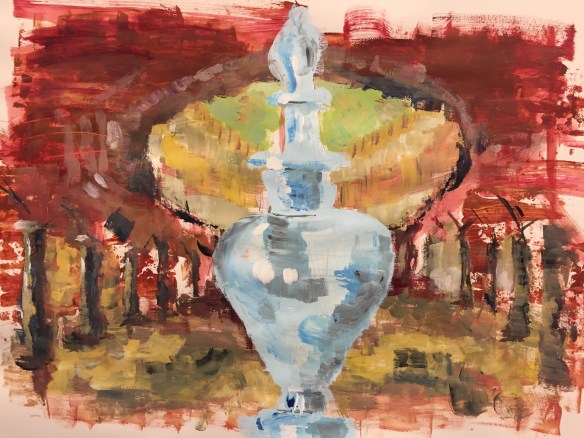
Petervan Abstrakt Motiv 390a detail b+

Disrupted - Petervan Artwork - Acryl on Paper format A1


Most of the discussions in FinTech are about the (by now outdated) “unbundling” of highly vertical integrated organizations like banks. Everybody recalls the famous CB-Insight slides on how all functions on the website of HSBC, Wells Fargo, or fill in your <Bank Name> here, will be replaced by better offerings of startups or scale-ups: “everything gets fragmented”, you know 😉

It even leads to a “Re-bundling” of financial services, as what was once unbundled needs now to be re-bundled by “banking-as-a-platform” or “Fintegration”, just to throw another buzzword into the mix.

This is in my opinion a highly simplistic view on disruption. It is a fragmented view on disruption. The disruption view is fragmented: each little function on its own is subject of a fragmented disruption debate. We are missing the holistic view of what is going on.

What I would like to bring into the conversation is the “inter-connectedness” of everything, or the “entanglement” of everything.

For payments, the conversation is usually about how many and which intermediaries are part of a payment transaction from the payer to the payee, and how they add value, friction and costs into the system: one can indeed draw disintermediation maps and articulate how the different new entrants attack the different pieces of the end-to-end transaction. But it is piecemealed view, as if the sum of the atomic transactions is an exact equation of the value created in those ecosystem value chains.

The same reflections can be made on the securities business, where many different players (exchanges, central counterparties (CCPs), central securities depositories (CSDs), brokers, custodians and investment managers) are part of the end-to-end flow of atomic transactions between the issuer of a security and the consumer of that security. See also recent comprehensive post by Let’s Talk Payments.

The point I am trying to make here is that what needs to be solved, re-thought and re-designed is a deep ecosystem entanglement. What are really needed are a fundamental process redesign and process innovation and that is not an easy undertaking with all the network effects that are inherent in these ecosystems.

The other point I am trying to make is nobody – not the incumbents, nor the startups/scale-ups – is in a position to solve this on their own.

I believe we have to evolve from platform capitalism to platform cooperation or even platform co-operativism.

  • Instead of talking about optimized correspondent banking, the conversation should be one of collaborative/cooperative banking.
  • Instead of talking about optimized securities lifecycles and settlement, the conversation should be one of collaborative/cooperative securities markets.

The system is not broken. It works very well for what it was designed for. It does not need to be fixed. It needs to be re-thought. What we are witnessing is the need for a fundamental re-thinking of our assumptions. The financial system is part of a broader system of capitalism based on neoliberalism. That system is broken.

Paul Mason – who wrote the book “Post-Capitalism” – was very clear in his recent keynote to the Glasgow Economic Forum: “Neoliberalism is broken”. And he goes on:

  • information technology has paralysed capitalism’s capacity to adapt
  • information technology creates a short-cut to abundance
  • the root cause of the boom-bust cycles, collapsing productivity, stagnation and policy paralysis is that the markets are sending us a signal that there’s not enough value in a high-tech economy to justify current valuations — of debt, equities or derivatives
  • we are in a long transition beyond capitalism, in which the state, the market and a non-market sector based on collaborative production will jostle and coexist
  • and that the only theory that can encompass all of these facts is the one originated by the man quoted on the poster behind me [Adam Smith] — a modernised form of the labour theory of value.

That is the first simplification in the current mainstream thinking about disruption.

As a start, one should start looking at the symptoms of that broken system (as very well articulated in Otto Scharmer’s work at the MIT U.Lab). These symptoms are:

  • An Ecological divide
  • A Social divide
  • A Spiritual divide

otto

The second simplification of the disruption discourse is the lack of inclusion of the macro-forces. Some of the macro-forces deeply driving what’s going on are:

  • Technology macro-force. Here is where inter-connectedness hits hardest. However, this is probably the easiest macro-force to deal with, as technology will take care of itself, as it always has. Open source and other collaborative models will only speed-up that self-care of technology: standards will emerge almost naturally, by natural selection, or my monopolistic interventions.
  • Regulatory macro-force. Regulation is still very high on the agenda of financial institutions, and one can only expect that more is to come, especially on the area of data capitalism, handling of personal and corporate data, and even data ethics. After having digested the regulatory impact of the 2008 financial crisis, many are tempted and seduced to jump back with relief into innovation. The blockchain hype is a great excuse for claiming one is busy with the future state of things. Nothing could be further from the truth
  • Geo-political macro-force: Grexit, Brexit, Terrorism, War, Surveillance, climate, and other crisis that can pop-up at any moment in time, with their potential of killing overnight all the innovation plans and ambitions.
  • Eco macro-force: the acknowledgement that our organizations don’t operate in isolation, that we have to evolve from ego-businesses to eco-businesses, not only extracting value out of the ecosystem for our sole and own benefit, but that we are part of a reciprocal non-zero-sum game with an unspoken desire to save humanity.

The third simplification is the omission of the time component of evolution. I strongly recommend you discovering the work of Simon Wardley and his “situational awareness maps”.


Different values are created by different versions of different technologies and value engines, each of them evolving at their own pace on the lifecycle of emerging to commodity/utility. For big organizations – like financial institutions – it is extremely difficult to map out the current state, let’s not even mention the ability to strategically decide where one wants to head for in different time horizons in the future.

The same situational awareness is not only needed for (existing) and new technologies, but also for existing and new regulations, geo- and eco- events and ambitions.

In the past many have been concerned with the “backward compatibility” of new services and solutions. Backwards compatibility with the existing footprint and practices in the market that is.

I believe there is room today to start thinking in terms of “Forward Compatibility”.

What is Forward Compatibility? It is a capability to plan ahead for gradual adoption by the ecosystem, taking into account the different barriers mentioned above. This is about knowing HOW to get at the new destination:

  • How you rally the main stakeholders of the ecosystem into a rigorous system and process innovation? Process innovation is different from process-, datamodel-, or messaging standardization. It is not about standardizing the existing and guaranteeing backwards compatibility with the existing. It is about co-creating a new reality.
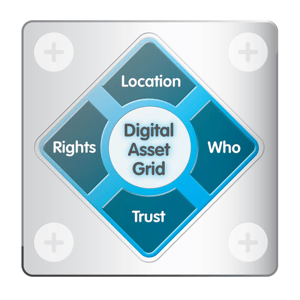
  • How you promote the evolution from the current model to the future model? In the case of distributed ledger technologies for example, it is not about a tabula rasa that will eradicate the existing, but how one evolves from for example a messaging hub-and-spoke paradigm towards business objects and lifecycles in the cloud, initially probably in one central database (one node), and then evolve to a peer-to-peer networks of many distributed databases or nodes (remember the Digital Asset Grid?)
  • How to bootstrap this new reality taking into account the network effects to be created and promoted in the new P2P reality.

No disruption will happen without fundamental re-design – or better re-invention – of the end-to-end business processes:

  • Organizations knowing where they want to get and defining and leading that journey;
  • De-risking change throughout this journey;
  • Making trade-offs in the breadth ànd depth of the destination;
  • Moving beyond the atomic nature of the transaction. As mentioned an nausea in previous posts, it is not good enough anymore to enable (atomic) transactions, the challenge is to enable commerce, as an end-to-end process

Startups/Scale-ups who want to be part of this endeavor, will need to know how to “scale”: they will need to learn to appreciate the mechanics of growing a startup into a corporate. This growth process (and its associated growth pains) is very well described in the post “Go Corporate or go home” around the concept of legibility of on organization. The startup organizations – whether they like it or not – will need to become more legible, more predictable. The author makes a very solid argument why hierarchies are needed.

“The smaller a company is, the less they need to formalize anything, and the less the three levels — chain of command, business process, and culture — differ.”

 As they grow, they will have to synchronize how they transform these three levels (chain of command, business process, and culture). It’s not only from small self-sufficient team into hierarchies; it is also growing into professional business processes, and evolving the social fabric and conventions.

Although startups, scale-ups, and corporate innovation sandboxes mimicking the startup culture “love to have and keep the flexibility, the cost of growth is scale, integration, and profitability.”

In this context, it is probably worth having a look at the post about the Transferwise culture (I could have taken any other scale-up for that matter) “We inspire smart people and we trust them”, and especially the comment on that post that talks about KPIs, product-level empowerment, about focusing on growth more holistically, actually removing bottlenecks and silos, empowering teams at the product level, and instrumenting themselves to be able to actually get granular feedback.

If possible – assuming you want to spend some quality time – read that post and comment after you have read “Go corporate of go home”.

So next time, when you pitch about disruption, about the end of banks/banking, about collaboration/co-operation, or about any other technology solving world hunger, please make sure you have an answer on how to get to your new destination. I would suggest you keep forward compatibility in mind.

It snows and everything is white

My daughter is 10. She is a constant source of inspiration for me. She has a talent for writing but she does not know yet. When we had our first snow some weeks ago, she wrote the following (in Dutch), followed by a bad translation by myself. Enjoy.

cold-snow-landscape-nature

Het sneeuwt, het sneeuwt.

Alles wordt wit

De bomen zijn al kaal en hebben koud nat

Ze zijn vol sneeuw

Het sneeuwt hier en daar

Hier en daar

Daar en daar

Het sneeuwt in 1 woord overaaaaaaal

Zo leuk vind ik dit toooooch?

xxx

It snows, it snows

Everything becomes white

The trees are bald already and are wet and cold

They are full of snow

It snows here and there

Here and there

There and there

It snows in 1 word everywheeeeere

So happy I am noooooww!


Petervan’s Delicacies – Week 14 Mar 2016

delicacies

Edition-55 of Delicacies: as usual, max 5 articles that i found interesting and worth re-reading. Handpicked, no robots. Minimalism in curation. Enjoy! Much more of this in my weekly Revue summary. Subscribe at bottom of this post.

 If you can’t get enough of these and want more than 5 articles, I have created an extended version of Petervan’s Delicacies in REVUE. If you want more than 5 links, you can subscribe here: https://www.getrevue.co/profile/petervan

Petervan’s Delicacies – Week 7 Mar 2016

delicacies

Edition-54 of Delicacies: as usual, max 5 articles that i found interesting and worth re-reading. Handpicked, no robots. Minimalism in curation. Enjoy! Much more of this in my weekly Revue summary. Subscribe at bottom of this post.

If you can’t get enough of these and want more than 5 articles, I have created an extended version of Petervan’s Delicacies in REVUE. If you want more than 5 links, you can subscribe here: https://www.getrevue.co/profile/petervan

Petervan Delicacies – 22 Feb-6 Mar 2016

delicacies

Edition-53 of Delicacies: as usual, max 5 articles that i found interesting and worth re-reading. Handpicked, no robots. Minimalism in curation. Enjoy! Much more of this in my weekly Revue summary. Subscribe at bottom of this post.

If you can’t get enough of these and want more than 5 articles, I have created an extended version of Petervan’s Delicacies in REVUE. If you want more than 5 links, you can subscribe here: https://www.getrevue.co/profile/petervan

Platform Capitalism or Platform Cooperativism

Douglas

Headshot - Douglas Rushkoff

The first time I heard the term “Platform Cooperativism” was when listening to a talk by Douglas Rushkoff (www.rushkoff.com) on 15 Nov 2015 at the Internet Society.

video

Just a couple of weeks before, Doug had sent me a manuscript version of his new upcoming book “Throwing Rocks at the Google Bus: How Growth became the enemy of prosperity” (Amazon Associates link), planned for release in two weeks or so. I recall the working title of the book was “The end of growth”.

book

As usual – when listening to an interesting talk – I scribble notes on my notepad, pausing the video after every interesting sentence, and end up with some sort of transcript, somewhat personalized because using my own sense-making lens and bias.

Some snapshots:

  • Before the law enforced monopoly, now technology enforces monopoly
  • From creative destruction to destructive destruction
  • A software company is a company extracting value from the working economy (transactions between people) and converts it into capital (static bags of shares and stock prices), converting land and labor into capital.
  • Creating real value, that’s the suckers’ place (of being gamed). Playing the game is the place where you want to be
  • Central currency is the embedded operating system
  • Should we optimize for growth or optimize for humans?
  • Jobs!, Jobs!, Jobs! Let’s pretend we are on acid for a minute ;-). Who really wants a “job”?
  • Most companies, after reaching max growth, go for steady state, the flow of money
  • Uber drivers are doing R&D for automatic cars. They don’t have a platform cooperative
  • Family businesses are focused on the long term, are generational, are even willing to help other create value.
  • From a growth model of business to a flow model of business
  • Optimize for the velocity of money (not for being static, stocked in troves)
  • We don’t need banks to authenticate
  • The bank was made to extract value out of our transactions
  • About Bitcoin/Blockchain (at minute 37): “what are they programming for?” Bitcoin creates trust? No, Bitcoin SUBSTITUTES trust
  • In the end, we have to re-program the social expectations of each other
  • There is some chance that the P2P economy may happen, that the extraction economy comes to its end, with interesting experiments
    • We see hybrid models to fund pizzeria, 50% Crowd, 50% bank
    • The bank as facilitator of local community development
  • From platform monopolies to platform cooperatives
  • Facilitating exchange of value between people instead of extracting value from people’s labor.
  • We need a full-blown renaissance, and we are in it…
    • From Perspective painting to the hologram and the fractal
    • From the individual hero to collectivism
    • From the printing press to the computer
    • From enclosing the commons to retrieving the commons
    • From divisional science to the science of whole-ism
  • Land, Labor, and Capital as PARTNERS in an economy
    • Today, capital is extracting from Land and Labor

The comments right after Douglas’ talk by Astra Taylor, author of the book: “The Peoples’ Platform: And Other Digital Dilusions” are interesting:

  • I want (platform) cooperatism to be confrontational, it has to make a difference in the world
  • How different is the current moment? If different at all….
  • The key for cooperatives success is access to capital

Platform Cooperativism is possibly an answer to Platform Capitalism. Harold Jarche recently articulated very well what platform capitalism is really about: the extraction of value from many for the benefit of a few.

“The emerging economy of platform capitalism includes companies like Amazon, Facebook, Google, and Apple. These giants combined do not employ as many people as General Motors did. But the money accrued by them is enormous and remains in a few hands.”

And just a couple of days ago, David Bollier had a great post pointing to a new report on Platform Cooperativism by Trebor Scholz, one of the organizers of the Nov 2015 conference where Rushkoff spoke. Full report (PDF) report here.

“In the report, Scholz notes that the gig economy financializes resources that were previously outside of the market.  Our cars, our apartments, our private time – all can now be monetized through corporate platforms and made subordinate to market forces.  In effect, this new system is “embedding extractive processes into social interactions” and “extending the deregulated free market into previously private areas of our lives,” writes Scholz.”

Platform Cooperativism is a choice we have in the Industrial-Human Paradox. The WEF makes a lot of noise about “The 4th Industrial Revolution”, semi celebrating forms platform capitalism like the Uberization of everything, and robots eating our jobs.

It feels to me that sort of thinking starts feeling more as entertainment rather than independent thinking and provocation.

As Douglas Rushkoff said and provoked elsewhere: we don’t need to fix the system. The system just works fine for what it was designed for: extracting value.

scharmer

Otto Scharmer articulated very well the symptoms of the broken system:

  • Ecological divide
  • Social divide
  • Spiritual divide

We don’t need to fix the existing system, we need another system. We need radical ideas for the new century: platform cooperatism could be the answer. But a lot needs to change.

Still inspired by Scharmer, we need to improve the quality of how we engage with each other, the way we debate, dialogue, coordinate, organize. We need to take into account the quality of the context. We need to go from experiments and prototypes to models that can scale and be transformative. And that needs to happen at an institutional level.

In his ULabs, Otto Scharmer has identified two missing conditions for this to happen:

  • Enabling infrastructures that bring together the right set of players into a system
  • Move from abstract coordination mechanisms (like hierarchy, markets or organized interest groups) to co-creating ecosystems

In the middle of the great transition from centralized to decentralized to fully distributed systems, we have a choice: we can copycat the models of platform capitalism leading almost by nature to a few monopolists who take it all, or we can choose for a construct that has in mind the flourishing of the whole, of the cooperative.

Somebody has to take up the role of the commons for financial services, where the end-goal is not to maximize profit and shareholders value, but the interest of the community and the maximalisation of flow between all the stakeholders.

Petervan Delicacies – Week 15 Feb 2016

delicacies

Edition-52 of Delicacies: as usual, max 5 articles that i found interesting and worth re-reading. Handpicked, no robots. Minimalism in curation. Enjoy! Much more of this in my weekly Revue summary. Subscribe at bottom of this post.

If you can’t get enough of these and want more than 5 articles, I have created an extended version of Petervan’s Delicacies in REVUE. If you want more than 5 links, you can subscribe here: https://www.getrevue.co/profile/petervan

Sine Parole – 21 Feb 2016

Snapshots from Petervan’s Artwork

Petervan Abstrakt Motiv 388+

Petervan Abstrakt Motiv 388 - Acryl on Paper - A1 Format


Petervan Abstrakt Motiv 389b+

Petervan Abstrakt Motiv 389 - Acryl on Paper - A1 Format


Petervan Abstrakt Motiv 390a detail b+

Petervan Abstrakt Motiv 390 - Acryl on Paper - A1 Format


Petervan Abstrakt Motiv 391a+

Petervan Abstrakt Motiv 391 - Acryl on Paper - A1 Format