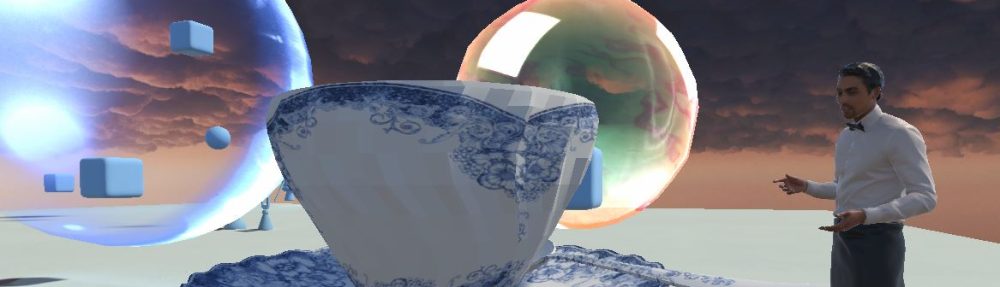
This post is a semi-transcript of a fantastic talk “Space in the mind of a machine” by media artist Refik Anadol. My post is not intended as a literal transcript, but rather as a collection of – often poetic – idea clusters of Refik’s talk. None of the ideas are mine, I just tried to condense it and brush some highlights.
The talk was given on 4 December 2019 at the Southern California Institute of Architecture (SCI-ARC). The website of SCI-ARC itself is nirvana for all beauty and art lovers out there, and worth spending a virtual visit of a couple of hours.
The talk was transformative for me, in the sense that it made me realize we truly have entered a new reality and a witnessing the dawn of a new area, full of beauty, poetry, and artistic interventions that create alertness and aliveness similar to the 16th-century renaissance.
After a long intro, his talk starts at 2:46
Criticizing the idea of canvas
Dimensional explorations
Augmented structures
“Design is a solution to a problem; art is a question to a problem” – John Maeda
Humans, Machines, and Environments in a symbiotic relationship
Can a building dream?
“Life can only be understood backward, but it must be lived forward” – Kierkegaard
The data that we leave behind us
Data “dramatization” vs. Data Visualisation
The invisible space of Wi-Fi, 4G, radio signals, etc.
A poetic exploration of invisible datasets
Data Paintings
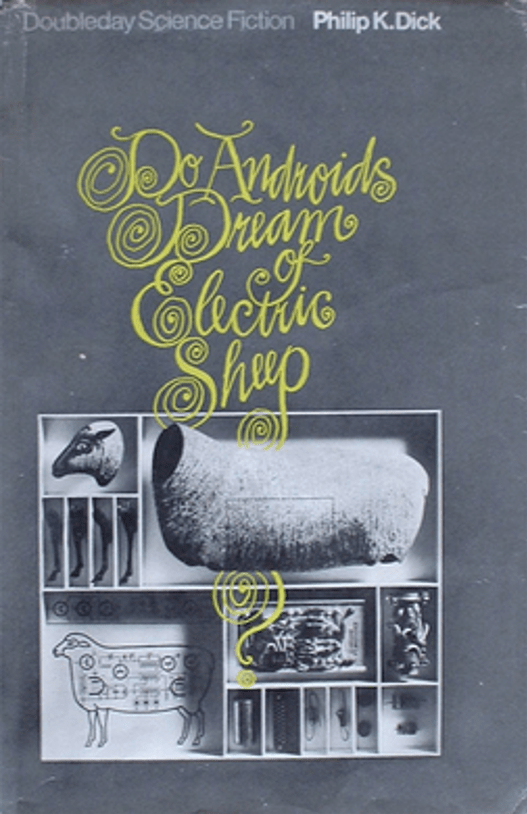
At a certain moment, Refik Anadol quotes Philip K. Dick, author of the 1968 science fiction book “Do Androids Dream of Electric Sheep”, later retitled Blade Runner, and basis for the 1982 initial version of the film.
This inspires Refik Anadol to seed the following insight:
A simulation is that which does not stop when the stories go away
Stories are responsible for our human desire for resolution
But the simulation is only responsible for its own laws and initializing conditions
A simulation has no moral, prejudice of meaning
Like nature it just is
There is some poetry hidden in this abstraction of data
Exploring data sets that have this quality of meditation
The architect as an operating systems designer, a beautiful “speculation”
Finding the moment of remembering
Finding the moment of entering a dream state
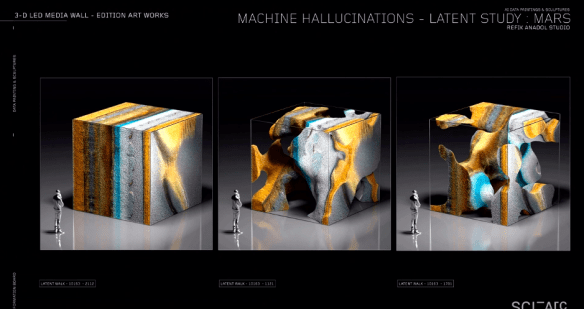
“Machine Hallucinations”
Collective memories of spaces
To make the invisible visible
Hallucination narrators
Dream narrators
The Selfies of the Earth
Refik is asking questions that are not just a fancy-fications of a bunch of algorithms
Another rabbit hole bringing together some reflections on creativity, demolition, patrimony, and poetic ruination, as so often in this blog inspired by architectural insights and metaphors.
My attention was triggered by an article in the Jan 11, 2020 weekend edition of De Standaard, a Flemish newspaper. The article was about landscaping, and more specifically “ontharding” (I would literally translate it as “softening”). In this case, softening that what was hardened in the first place. Abandoned and neglected residential and industrial sites, where the soil is still covered by the concrete and rubbish of empty buildings.
It was part of a study supported by the “Vlaamse Bouwmeester”. “Bouwmeester” means “master of building”, “bau-meister”. The term is ill-translated into “Flemish Government Architect” on the official website. The full study can be found here (PDF in Dutch).
The core mission of the Flemish Government Architect is to promote the architectural quality of the built environment. The Flemish Government Architect and his team advise public patrons in the design and realization of buildings, public space, landscape and infrastructure. In addition, the Flemish Government Architect stimulates the development of visions and reflection, with an emphasis on interdisciplinary and cross-sectoral initiatives. The Flemish Government Architect acts as an advisor to the entire Flemish Government.
In short, the article and the study plea for restoring public space by the demolition of 1/5th of hardened space/surface in the Flemish landscape by 2050.
I had a flashback to “Cradle to Cradle”, the 2002 book that alerted me for the first time to a possible vision of sustainable production and architecture. The idea at that time was that reducing waste was just not good enough, and to be sustainable we needed to add value back into the system. As an evolution, the article about the softening of landscape goes one step further: from reducing waste to creating open space by the demolition of vacancy.
“Sloop geeft blijk van falen” – “Demolition evidences failure”
Dan Hill was/is looking for (open) spaces as well, quoting ex-FC Barcelona football player and current Al-Sadd (Quatar) football team coach Xavi Hernández:
“Think quickly, look for spaces. That’s what I do: look for spaces. All day. I’m always looking. All day, all day. Here? No. There? No. People who haven’t played don’t always realise how hard that is. Space, space, space. It’s like being on the PlayStation. I think ‘shit, the defender’s here, play it there’. I see the space and pass. That’s what I do.”
Already more than 20 years ago, architect Cedric Price was arguing for demolish-able buildings with open re-usable spaces.
Cedric Price’s Fun Palace – inspiration for Centre Pompidou in Paris
OK – I confess – as from that moment I went down the rabbit hole and saw demolition and abandoned architecture everywhere. Like in this recent Guardian article, arguing the case for fully demountable buildings.
“We have to think of buildings as material depots,” says Thomas Rau , a Dutch architect who has been working to develop a public database of materials in existing buildings and their potential for reuse… He has developed the concept of “material passports”, a digital record of the specific characteristics and value of every material in a construction project, thereby enabling the different parts to be recovered, recycled and reused.
But there is also something poetic about abandonment, up to the point where we could consider keeping these ruins and equipping them with sensors to listen to patrimony.
Like menhirs, these abandoned seismic sensors could now just stand there, silent in the landscape, awaiting a future photographer such as Grigoryants to capture their poetic ruination.
Lebbeus Woods was inspiration to Geoff Manough and London-based architects Smout Allen for the project L.A. Recalculated:
Woods depicts an entire city designed and built as an inhabitable scientific tool. Everywhere there are “oscilloscopes, refractors, seismometers, interferometers, and other, as yet unknown instruments, measuring light, movement, force, change.” Woods describes how “tools for extending perceptivity to all scales of nature are built spontaneously, playfully, experimentally, continuously modified in home laboratories, in laboratories that are homes.”
Instead of wasting their lives tweeting about celebrity deaths, residents construct and model their own bespoke experiments, exploring seismology, astronomy, electricity, even light itself.
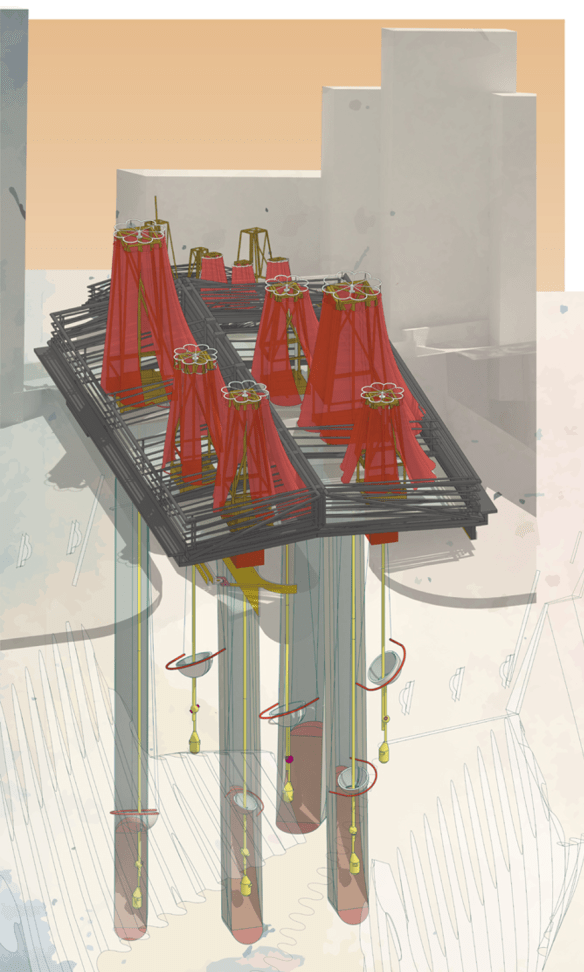
Seismic Counterweights
From L.A. Recalculated by Smout Allen and BLDGBLOG
Like architects think about (industrial) sites listening through sensors to seismic undercurrents, I started wondering whether we could not use this metaphor to reflect about our organizational structures; structures not only as hierarchical structures but the more encompassing set of system rules and patterns of an organization – I referred to it before as organizational patrimony.
How can we listen to and signal about the pulse of this organizational patrimony? How can we be aware of it, appreciate it, respect it, and build upon it in our rebellious acts of creative destruction?
I imagine a cohort of humans – like a colony of ants – having 24/7 sensors and laboratories everywhere in organizations; in every office, cubicle, meeting room, coffee corner, etc. And I don’t mean robotic sterile sensors feeding AI models. I mean real humans, measuring, documenting and signaling patrimonial changes in the structure of corporate structure, so they can send early warnings of experiments that have become useless and therefore have to be ruinated, or – in the worst-case – signal cases of patrimonial breakdown and demolition. In search of the material depot and passport of our organizations.
During my visit to SFMOMA on 15 Nov 2019, I was standing on the terrace of the 7th Floor looking North-East into Natoma Street, and wondering what the curved-walled building on the left was about.
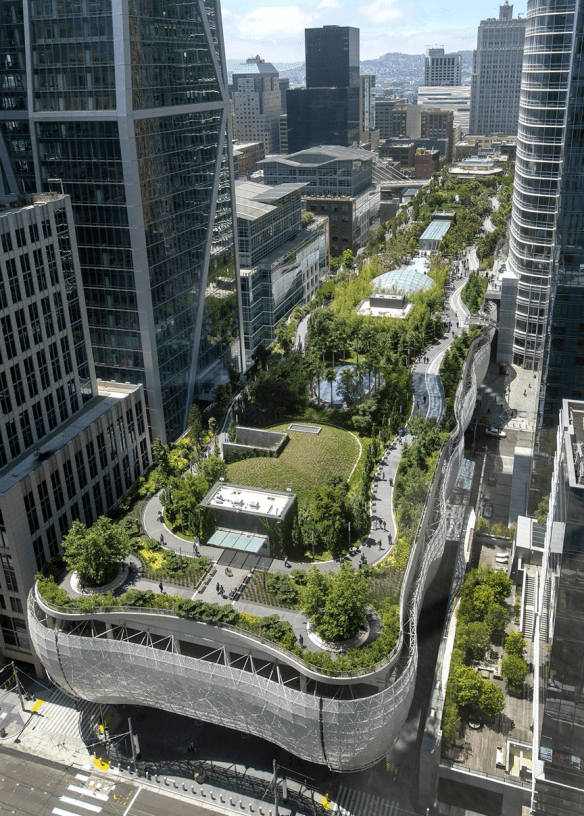
I did not pay much attention until I was reminded of this view in this article about floating utopias in The New-Yorker of 11 Dec 2019. Below is a view from the other side, probably taken from the Providian Financial rooftop on Beale Street, looking South-West. At the far end, you may recognize the SFMOMA building. The building in the front is Salesforce Park, a lush rooftop arcadia of rolling meadows.
Salesforce Park.Photograph by Karl Mondon / The Mercury News / Getty
The article in The New-Yorker is about the utopian, surveilled and orchestrated architecture in the middle of the astonishing inequality of homeless people in all the other streets of San Francisco:
Taxpayer-funded, corporately branded, suspended above the homeless, the park is an irresistible metaphor for the city’s socioeconomic tensions. It also feels like a bid, or a prayer, for a certain vision of its future.
Salesforce Park as a model for the rest of San Francisco—vertical, expansive, ecologically minded, expensive, sponsored, and surveilled.
“I feel totally orchestrated,” Cranz said, placing her hand on the railing separating us from the plant life. “I’m acutely aware of how managed everything is.”
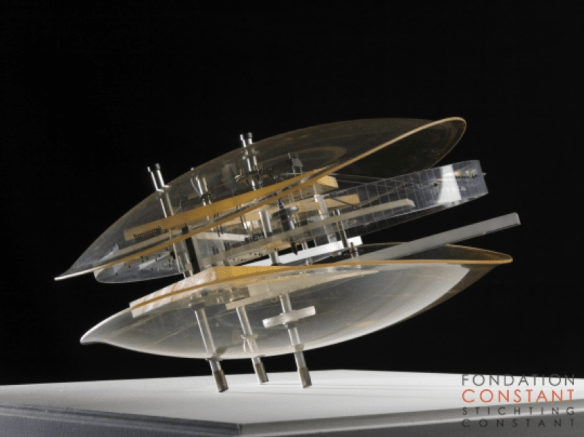
Two days later, I bumped on-line into the magical world of the Dutch artist Constant Nieuwenhuis and especially his Magnus opus “New Babylon”, another utopia, a city designed to respond to Homo Ludens’ need for playing, for adventure, and for mobility.
In New Babylon there are no single houses
The whole city is one immense covered collective house
A house with countless rooms, halls and corridors,
In which one can roam for days or weeks,
But where one can also find
Small spaces for privacy
New Babylon is a labyrinth
Inexhaustible in its variations
A palace with a thousand rooms
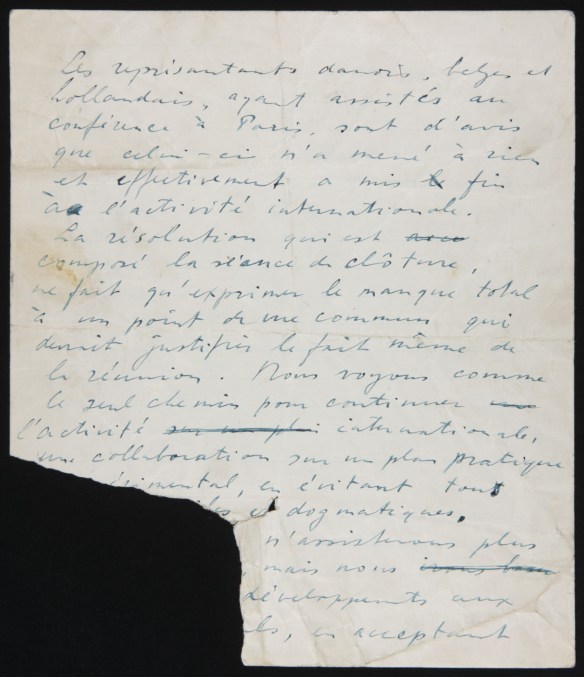
Constant was one of the founders of Cobra, an avant-garde art movement established on 8 Nov 1948. The movement only existed for three years, but forever changed the landscape of postwar European art. Cobra was perhaps the last avant-garde movement of the twentieth century. Constant was the author and co-signee of the initial COBRA Manifesto “La Cause était entendue” – “The Case was Settled”.
Les représentants belges, danois et hollandais à la conférence du Centre Internatiopnal de Documentation sur l’Art d’Avant-Garde à Paris jugent que celle-ci n’a mené à rien.
La résolution qui a été votée à la séance de cloture ne fait qu’exprimer le manque total d’un accord suffisant pour justifier le fait même de la réunion.
Nous voyons comme le seul chemin pour continuer l’activité internationale une collaboration organique expérimentale qui évite toute théorie stérile et dogmatique.
Aussi décidons-nous de ne plus assister aux conférences dont le programme et l’atmosphère ne sont pas favorable à un développement de notre travail.
Nous avons pu constater, nous, que nos façons de vivre, de travailler, de sentir étaient communes ; nous nous entendons sur le plan pratique et nous refusons de nous embrigader dans une unité théorique artificielle. Nous travaillons ensemble, nous travaillerons ensemble.
C’est dans un esprit d’efficacité que nous ajoutons à nos expériences nationales une expérience dialectique entre nos groupes. Si, actuellement, nous ne voyons pas ailleurs qu’entre nous d’activité internationale, nous faisons appel cependant aux artistes de n’importe quel pays qui puissent travailler – qui puissent travailler dans notre sens.
After reading “Homo Ludens – A Study of the Play-Element in Culture” by Johan Huizinga, Constant develops the idea for a futuristic city. He develops this idea by drawing maps, writing texts, building constructions, and models.
Constant worked for almost 20 years on New Babylon (1959-1974). Today, there is a foundation to preserve and promote the art collection and intellectual legacy of the artist.
From Wikipedia:
The goal was the creating of alternative life experiences, called ‘situations’
Perched above ground, Constant’s megastructures would literally leave the bourgeois metropolis below and would be populated by homo ludens–man at play.
In the New Babylon, the bourgeois shackles of work, family life, and civic responsibility would be discarded. The post-revolutionary individual would wander from one leisure environment to another in search of new sensations. Beholden to no one, he would sleep, eat, recreate, and procreate where and when he wanted. Self-fulfillment and self-satisfaction were Constant’s social goals. Deductive reasoning, goal-oriented production, the construction and betterment of a political community–all these were eschewed.
It is obvious that a person free to use his time for the whole of his life, free to go where he wants, when he wants, cannot make the greatest use of his freedom in a world ruled by the clock and the imperative of a fixed abode. As a way of life Homo Ludens will demand, firstly, that he responds to his need for playing, for adventure, for mobility, as well as all the conditions that facilitate the free creation of his own life.
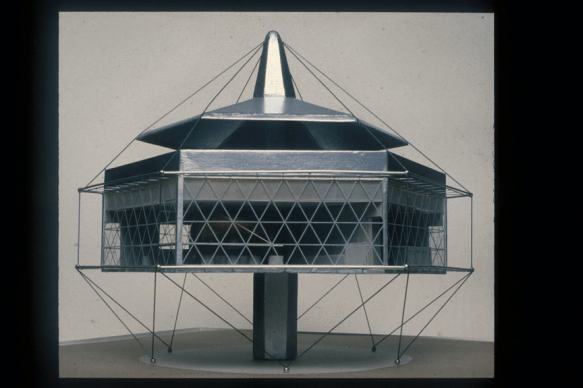
Some of the constructs in Constant’s vision reminded me of the sketches and models of Buckminster Fuller’s Dimaxyon House of 30 years earlier).
Buckminster Fuller, Dimaxyon House, Chicago, USA, 1927
Constant passes away in Utrecht on August 1st, 2005, at home with his wife Trudy van der Horst. He is buried at Zorgvlied in Amstelveen on August 6th. On his grave:
In art freedom manifests itself in its highest form. The creative imagination. Art creates an image of the world that didn’t exist before. No. More than that. An image that was unthinkable before.
I’d love to see a 21st-century version of Cobra, a collective of artists, thinkers, creators, tinkerers, and experimentalists, leading into a movement of fresh thinking. Not necessarily and exclusively an art-movement, but an all-encompassing societal-movement, with more time and air and oxygen for our children to play, where they naturally can grow into what they are best at, with a renewed freshness and renaissance, a new corporate and societal spring, celebrating the power of imagination and creativity, as a response to our dull political landscape of non-zero games.
A new New Babylon, a new city to play, a new avant-garde propelling us into the highest forms of freedom.
Byrne, left, and fellow members of the 12-person, gray-suited cast.Photo Credit: Bryan Derballa for The New York Times
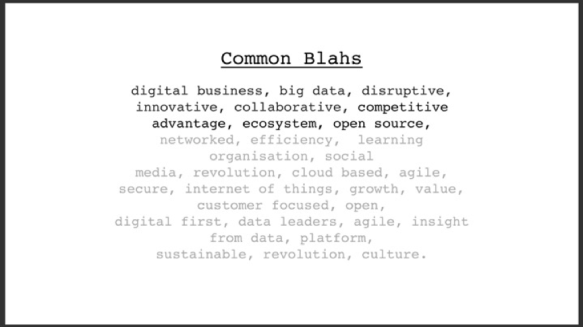
It was Robert Fritz who pointed me at the meaninglessness of glorifying terms like “deep”, “meaningful”, “sustainable”, etc. especially in combination with corporate common blahs like “innovation”, “disruption”, “ecosystem”, and “change”
Simon Wardley's Common Blahs
Just try it: meaningful change, deep change, sustainable learning organization, etc. Utterly nonsense. But what if we would embrace another form of nonsense, another form of meaninglessness? Another form of plainness, elegance, pure joy from form?
It was this article about David Byrne’s Utopia Tour in the NYT, that lead me into the wormhole of Dada poetry, and later into the other art movement Cobra and its related Cobra Manifesto (Cobra is for a subsequent post).
“I thought plain but elegant suits would unify us and help reveal us as a tribe, a community,”
What was that song with the nonsense lyrics?The lyrics for “I Zimbra” were derived from “Gadji beri bimba,” a 1916 phonetic poem by Hugo Ball, the German author-poet and co-founder of Dada. More than a half-century after Ball strove to stop making sense, he got a writing credit for the opening track on the Talking Heads album “Fear of Music.”
Gadji beri bimba clandridi
Lauli lonni cadori gadjam
A bim beri glassala glandride
E glassala tuffm I zimbra
Kadó? Cadeau? Maybe it’s a matter of learning to be better at the art of accepting presents or pure gifts. The text above is the last ‘movement’ of the Ango laïna by Rudolf Blümner, a kind of phonetic cantata for two voices from the year 1921. Blümner described it as an ‘absolute poem’. The Ango laïna demonstrates what poetry can be after it is emancipated from the vocabulary, grammar, rhetoric, and phonetics of the German language.
It made me think about what makes me happy and unhappy. Unhappiness caused by dullness, not making the most of it, chatter, irrelevance, not being in the moment, Being distracted from what you are supposed to be, to do,…
This is not about boredom. I can be perfectly happy in full boredom. I can be perfectly happy in full silence. I can be perfectly happy in full nothingness
Happiness is about being in the perfect “bubble” or “sphere” of belonging and relevance. This is beyond Maslow’s hierarchy of needs. It is getting closer to Nitin Nohria’s four drivers of motivation (see also my 2011 post on Lipstick on Pigs):
The drive to acquire,
The drive to defend,
The drive to bond, and
The drive to learn
Without stress, fatigue, and unhappiness. These happen when:
You cannot decide the pace of viewing (credit to my art teacher Fiorella Stinders)
You cannot decide the pace of creating (credit to Geert Lovink)
Happiness, in essence, is about not being withheld. Withheld by tempo. Withheld by form. Withheld by meaning.
This form of meaningless joy is what attracts me to the Dada movement.
In my next post, we’ll get into the Cobra movement, and why their ideas of playfulness are relevant in today’s thinking about society.
I always have been intrigued by spheres. From my exposure as an youngster architecture student, through the discovery of Buckminster Fuller’s Geodesic Domes, from my thinking about digital identity being a sphere of fragments of influence that one could share with others, till my recent discoveries in exploring 3D drawing and sculpting software, where meshes of polygon meshes and NURBS primitives can be found and molded-in in abundance.
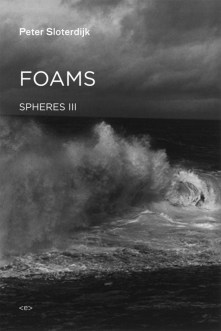
It should therefore not come as a surprise that – as mentioned in my Dec 2019 update – I became absolutely fascinated by Sloterdijk’s “Foams”, part-3 of his trilogy on Bubbles, Spheres and Foam.
I probably – with a probability of 100% – only understand a very small fraction of what is written and meant by Sloterdijk, or by some of the authors of essays introducing and contextualizing his work. I did some homework for this post by reading and reading again the excellent introduction by Jean Pierre Couture on the work of Sloterdijk in general, and Charlie Huenemann’s “Sloterdijk’s Spheres: Bubbles, Globes, and Foams”. And then starting the real thing by the master himself. It is not a page-turner: 900 pages of solid philosophical writing. I can do a maximum of 5 pages/day and need time to let it all sink in. That should do as far as the disclaimers are concerned.
Indeed, this is just a personal thought experiment – and maybe an art experiment or performance as well in the near future – re my evolution on thinking about (digital) identity, and daring to propose a different, radical and spherical perspective.
It’s a baby-idea, just out of the womb, waiting for parents and caregivers to be nurtured, and made alive. There is no practical application for this as far as I can think of, but it just feels I am onto something.
My latest contribution was The Cambrian Explosion of Identity from February 2019, already intended then as the start of a series on the subject, but other priorities distracted me from further development. Let’s add some “spherology” to the mix now.
„Peter Sloterdijk’s celebrated „Spheres“ trilogy is a 2,500-page „grand narrative“ retelling of the history of humanity, as related through the anthropological concept of the „Sphere”,… a lengthy meditation of Being and Space — a shifting of the question of „who we are„ to a more fundamental question of „where we are.“
“Foams are masses of little bubbles, of course. As a metaphor, foams represent smaller zones of inclusion filled with the air of hope.” Huenemann, Charlie.
“And this, in essence, is what Sloterdijk sees as the project of the modernity: the business of constructing bigger and bigger shells, with more Lebensraum for the soul.” Huenemann, Charlie.
I used to think of a robot as an entity that has a body, a mind, and sensors for input/output computation. A computational machine. But to me, it seems just a bit too easy to separate the mind and body, and to replace the mind with some form of artificial intelligence.
It feels like Sloterdijk describes “being” – being in the world, coming into the world, creating your own world and make it become alive, worlding – as acting as-a-foam, not as a “body”, a body with a brain on top that thinks. He is after the wholeness of foam and its integration and relationships with upper and lower levels of spheres and bubbles.
The metaphor of foam is a very solid one: what was before foam, what happens after the foam disintegrates? Where does foam go, what caveats is it trying to fill? All interesting avenues for research and investigation.
It also made me think of this strange creature – the blob with 720 sexes – that foams over old wood trees as a monster we can all learn from?
Because of this sudden focus on foamy shapes, I see bubble-structures everywhere. I see foam in this discovery of Christian Mio Loclair’s art installations, interventions, and interpretations. His studio “Waltz Binaire” works for the biggest brands in the world.
He explores the harmonic friction of human bodies, movement, and nature colliding with digital aesthetics. Using cutting edge technology in interactive installations, audio-visual experiences, visual narratives, and dance performances, he continuously illuminates the beauty and drama of human identity.
“Yet the vision algorithms have of our future is built on our past. What we teach these algorithms ultimately reflects back on us and it is, therefore, no surprise when artificial intelligence starts to classify on the basis of race, class, and gender. This odd ‘hauntology’1 is at the core of what is currently discussed under the labels of algorithmic bias or pattern discrimination.”
Current identity thinking is based on past data. On graphs. On connections and relationships between “nodes”, “end-points” of a relatively fixed and static structure. With the extraction of value built on top of that past, amplified by AI. The past amplified.
But we did not notice that the nodes have become overlapping cells of belonging. The attractiveness of a “foamy” group- or individual-identity is that it is not fixed and static. It is “expansive”, not “extractive”. It adds value. It grows unpredictably into the future. Not like extrapolations of last year’s revenue growth. More like fruit maturing into a juicy ripeness.
Foam is dynamic. Made of bubbles, it lives within and across spheres of influence (both in the sense of actively influencing and passive being influenced).
Foam is not static. It is alive. In search of higher levels of aliveness. Until it dies. And only blobs of dust and air are left.
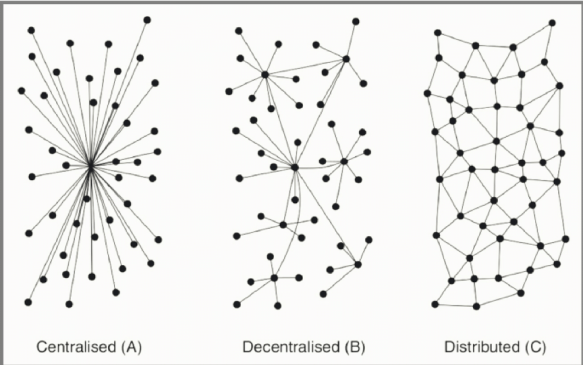
I see foam in Paul Baran’s network models:
Centralized, decentralized and distributed network models
Paul Baran (1964)
What’s the impact of foamy logic on organizational models? How does a foamy organization look like? What’s the shape of D?
Are we moving from Graphs to Foams? From Nodes to Bubbles? What would nodes and endpoints be called in the foam-world anyway? Are we foam? It feels like I am going down a rabbit hole of foam. From fuzzy to foamy logic?
This post is the start of a short series of posts on who and where I am/you are, and a set of new interventions and provocations to renew aliveness and alertness in what we observe and what we hope for. Looking forward to creating spiritual, moral and aesthetical advancement together.
You can subscribe via email to these posts via the “Follow blog via email” in the upper right corner of this page. Enjoy!
The theme for Techonomy 2019 in Half Moon Bay, California was “Reset and Restore: Governing Tech, Retrieving Ethics, and Acting on Climate.”
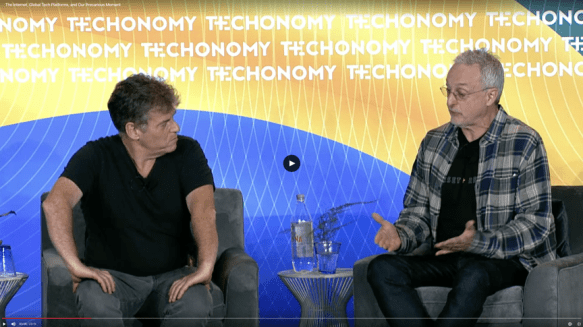
In the opening session, Founder and Host David Kirkpatrick prompted: “These are serious times” and the following interview by Andrew Keen of David was really interesting. Keen rightfully asked the question of what needs to be reset, and – if we have to restore something – is this a nostalgic going back to good old times, or what is meant here?
To make a long story short, it seemed the answer could be distilled to a resetting and restoring back to/towards more humanity.
Konstantinos Karachalios, Managing Director of IEEE’s Digital Ethics department referred to the German Jewish Viennese philosopher Gunther Anders, who wrote in 1956 “The outdatedness of the Human Species”.
Konstantinos also shared some strong opinions about the Power (in)equation – the asymmetry in power of the big tech vs. us – and summarized his thinking as “The Time of (Engineering) Innocence is Over”
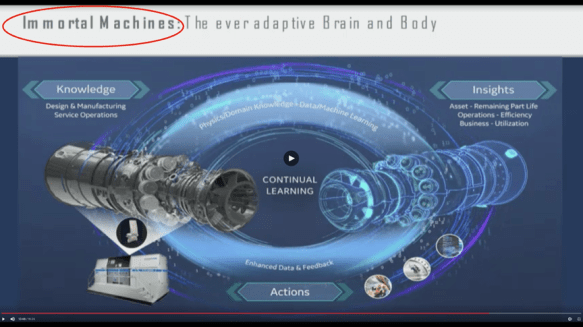
Colin Parris @colin_j_paris did a session titled “Why AI has to be humble” about GE’s use of self-learning AI in the building of GE Jet Engines. Super-slick and professional presentation, almost too clinical. The last slide was about “Intimidation by Immortal Machines”.
Let me put all this behind the backdrop of what I saw and experienced a couple of days earlier in the San Francisco Museum of Modern Art (SFMOMA).
Richard Moss "INCOMING" - Picture by Petervan
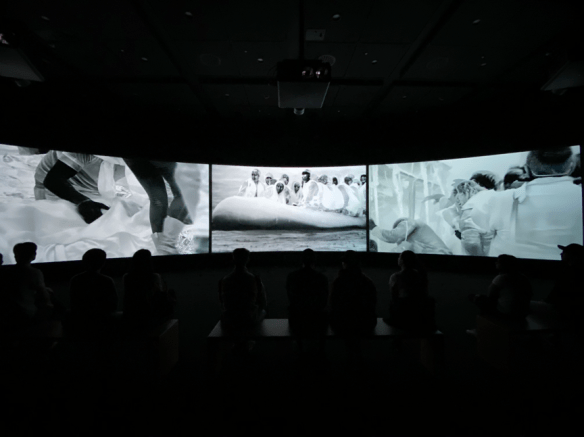
On the 7th floor, there is an amazing video installation by Richard Mosse, called “INCOMING”, and it is about the horrible conditions in another Western export product: refugee camps, and related issues of sovereignty, warfare, and surveillance. The installation forces us to confront our own complicity. Strongly recommended. Still running in SFMOMA till 17 Feb 2020. Warning: you won’t come out smiling from this installation!
The entrance of the installation also includes a picture of Berlin’s Tempelhof, a symbolically loaded site to house asylum seekers.
“…, and the airfield has been transformed into a popular public park. Some of its adjacent buildings and territory were designated as an emergency refugee shelter in 2015”
What misery! What a shame for a “modern” society! This installation made me rethink my opinion about refugees. For me, it questions the whole semantic discussion about “asylum seekers” vs. “economic” refugees. There is no difference. When people become so desperate to flee their home and take these incredible risks and withstand these inhumane circumstances, those semantics become irrelevant.
This injustice is going to explode in our face, sooner or later. A toxic mix with climate change, inequality and the 1% owning 99% of the wealth. I can only hope I will not be treated this way when I or my children have to find refuge for climate change or other disasters in the future.
All the big problems of today are crying for more compassion, more morality, less greed. The root cause is a lack of morals combined with an abundance of greed.
Putting it all together, “Immortal Machines of Loving Grace” may be better replaced by “Immoral Machines of Loving Greed”. Just replacing two words is probably better and more adequately describing our Zeitgeist.
In that sense, some of the discussions of Techonomy 2019 should have included the refugee crisis vs. having safe conversations about the attention economy, tech supremacy or immortal machines of loving grace in a five-star luxury hotel.
Mid November 2019, I was once more lucky enough to attend the 9th edition of Techonomy, in my opinion, one of the best tech conferences and networking events in the world.
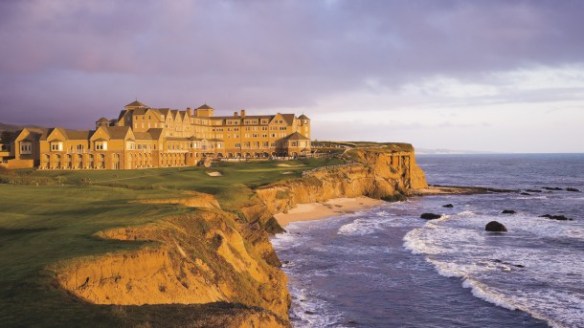
The event is set up as a three-day retreat at The Ritz-Carlton on the shores of Half Moon Bay, CA. The format is pretty straightforward: many fireside chats, some presentations, and some early morning workshops. Content leads and is focused on tech, business, and social progress. Full program here. All live video streams here.
The theme for Techonomy 2019 was “Reset and Restore: Governing Tech, Retrieving Ethics, and Acting on Climate” with an awesome list of speakers and instigators.
Here is – in more or less random order – a set of tweetable memes that I collected at #Techonomy19:
Can technology help us listen vs. sharing/shouting?
From giving fish > learn to fish > create fishing schools
Only the Walmarts can save us from Trump
by addressing the root cause of big problems such as healthcare
The hierarchy not always wins
There has to be some kind of return (on investment). Why?
Real-Time Crime Solving vs. Real-Time Health Development
Real-Time Evil Control vs. Real-Time Good Amplification
5G Beam Forming
Precision Economy
Computing moving back to the edge
Trust is consistency over time
Transparency vs. Clarity
Your digital twin is not you real me; it is just a model of me
All companies are connection machines
I will not work on fully autonomous weapons
Voice First
The Time of Engineering Innocence is Over
Privacy is Dead vs. Anonymity is Dead
The Absolute does not Exist
Worry and Concern are two different things
The State (country) is done
Welcome a future of 2,000 “Nations” aka Superminds
Following my post “Who is the composer?”, I got the opportunity to have a conversation with the man himself: Ozark. He told me the story of what happened when he tried to conduct a philharmonic orchestra for a film soundtrack he had written. I did not know he wrote a score for a film, but he did. It is the score for the film Crusade in Jeans and the music is performed by with the Metropole Orchestra from The Netherlands. All professional musicians used to work with artists in residence.
There is some real classical music stuff going on here
As a composer, he knew exactly what needed to be played when and how. He could as well conduct the orchestra himself, no? Or so he thought… But he learned the hard way that doing so was breaking hierarchies. He stepped out of his role as the composer when he tried to be the conductor of the orchestra.
An orchestra is like a ministry. Every unit has a role. The conductor does not communicate directly with the violist, no he/she speaks to the lead of the violin ensemble who speaks to the violist. Ozark brought also copies of the score with him, ignoring that copying the score was the job of somebody from the orchestra team. He could as well have said: “You know what? I found this great tribe of horn players, so they will play the horns this time.” Basically putting the original team in unemployment.
In a reaction of self-defense, the orchestra started playing – well-intentioned – games, sabotaging what Ozark tried to achieve. These games were well-intentioned because the intention was the care of the team.
In Dutch, there is a word “bezorgdheid” usually translated into “concern”, mostly an anxious type of concern. In my sense of Dutch language (my mother tongue), there is also an almost “mother-care” type of concern encapsulated in that word. A team-mother-care about what the orchestra is concerned about, the cohesion they wish to protect. This is not about care for the team, but care/bezorgheid of the team.
I often think back to the old Innotribe days, where we had a fantastic team. In my 2013 post Breaking and Making Teams, I described with quite some cynicism the recipe for breaking successful teams successfully. Remember: cynicism is a knot in the heart.
It is a paradox: to innovate, one must have the courage to challenge the status quo, the existing processes, and hierarchies. But on the other hand, a team and a hierarchy have a built-in DNA-like patrimony of craftmanship and care-manship. Breaking that patrimony is a recipe for failure.
One can cut-and-paste the breaking hierarchies metaphor straight into corporate mergers and acquisition scenarios, for example when a successful team is acquired into a new company. Instead of looking how the strengths of an acquired team and its internal language, proceedings, and patrimony can help to imagine new worlds – in other words, making the team even more successful in its new environment – in many cases the CEO is only interested in how that team can help him/her be more successful.
In such cases, we wonder why the team is not willing to share its secrets, wondering why the best folks leave, wondering why there is no team left at all after 1-2 years. We shouldn’t be surprised: we just broke the team hierarchies.
Sometimes, the orchestra metaphor is used in leadership contexts, representing the leader as the conductor, steering/leading the orchestra. I believe the asymmetric relationship of the “leader” with his/her “followers” is a flawed metaphor.
The more interesting and critical question is “Who wrote the score?”. In other words, “Who is the composer?”. I already alluded to this in my good/bad-change-post.
"Heroes" and others by Ozark Henry and National Orchestra of Belgium
Quote by Robert Fritz
“In an orchestra, it is not the conductor or individual musicians who are in control. It is the composer. The composer’s job is to make sure that the parts fit together. Too often, no one is actually composing the organisation, and it leaves one of two bad choices: command and control or organising systems. Much has been made in the last 20 years, glorifying organising systems, but, what happens over time is that these systems self-organise into structural conflicts, which lead to oscillating patterns.”
“That’s why a “composed” system can lead to advancement and forward movement toward building the company but the other alternatives do not live up to their promise.”
The composer creates an immersion. A good example in music is Ozark Henry, who now spends his days creating immersive soundscapes. He got into this 360° sound experience when setting the bar for his immersive album “Paramount”, recorded with the Philharmonic Orchestra of Belgium. The full documentary of the making of this album also shows Ozark Henry in his role as “Composer” working with the Orchestra.
Ozark is NOT the conductor. He hired the conductor. He hired the director. He hired the musicians. He is the composer.
What are the qualities of the composer? Also here, Ian Cheng comes to our help.
Ian Cheng - from the book "Emissary's Guide to Worlding"
As can be seen from the diagrams above, the stretch for most artists is to become “composers” rather than problem solvers or conductors. The composer is an artist/alchemist, trying to create harmony between four internal forces/roles:
The Director at work, focused on “What is the story/narrative?”
The Emissary at work, focused on “A future you can believe in”
The Cartoonist at work, focused on a uniting Cartoon/Mascot metaphor
The Hacker at work, focused on iterating hacks “It might not be science but it works”
All roles need to be present in the composer. In my opinion, this model does not only apply to artistic endeavors but works very well in a business context. Most businesses struggle to get to the right side of the graphic; in seeking surprise and going into unknown territory, and imagining alive worlds that they believe in. That’s where the future innovative opportunities are.
I suggest the composer is the ideal archetype for dealing with ambiguity.