Unsnap from the Grid

You have been programmed to snap.

Snap to the grid that is.

And I believe we have to unlearn to snap.

We have to unsnap.

I am sure you all have come across some software that has snapping guides, digital magnets to help you stay centered, or aligned, or in synch, or in tempo.

Photoshop is well known for this. You also have it in Powerpoint to help you nicely center your images in the middle of the slide. It is even more apparent in “creative” software like Sketchbook, Procreate, and of course Final Cut Pro. The richest metaphor is probably in music creation software like Ableton Live and Apple’s Logic Pro.

Quantization is a good example of snapping in music software. A human beat/drummer is normally not 100% on the grid. So, if you are a really bad drummer, you can ask the software for help and let it quantize (read adjust) your beats to the grid. Then it sounds perfectly to the beat. Maybe too perfect, as it then sounds mechanic, not imperfect “human”. Of course, there are some additional functions to humanize again the too perfect beat, and so on.

Before Logic Pro quantization:

After quantization (to the 4th Note):

In a more corporate environment, especially post-COVID when we have to/want to do everything on-line – “virtually” – we are getting snapped by tools like Miro and Mural. Especially Miro comes loaded with tons of templates. I am not picking on Miro or Mural, I am just using them as educational examples to make my point.

Example of Miro board templates

This all sounds very exciting, but I am afraid we are getting snapped into a scripted illusion.

This became apparent during a sparring-session with one of my clients, who asked me to review the prep work for a virtual leadership “off-site” (no pun intended ;-).

Wow! That looked really impressive: Miro board after Miro board, scripting a 3-day workshop in all its glory details. To be honest, I personally felt “boxed”. But apparently, the executives participating in the workshop felt they were doing a great job and were pleased to see how everything got nicely boxed. It gave a feeling of being in control.

The illusion became complete when I learned that the workshop was in support of the number one priority project of the company, and it became apparent that none of the participating executives had any intention whatsoever to collaborate with the others. One guy was appointed as project lead and 100% of his time allocated to this, but the other 14 project members had at best 10% of their time locked down. And this for the company’s priority one project.

They fully satisfied filled 20+ online boards, and then… nothing happened.
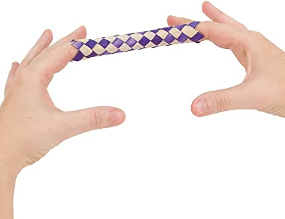
Unsnapping is similar to unstucking or unfreezing. A good metaphor for stuck/unstuck is the Chinese Finger Trap. You are getting stuck by only seeing one solution to get out of the trap: by pulling. The trick is to stop pulling and to start twisting.

Unsnapping is about unfreezing yourself and to get into your human rhythm/pace/tempo, without being quantized.

Unsnapping is about surfacing and seeing stuff that are de-railing the client without them noticing. Like putting in your face that the participants to the number one project have no intention to work together.

To see that twisting is also an option.

Unsnapping is not comfortable. Because it confronts you with being scripted, being programmed, and noticing that you have become a cog in snapping machine. Unsnapping may feel anxious. Because you are in unknown territory. Anxious as in my blog post from the Travelling without Moving series.

I am experimenting with some clients to offer an “Unsnapping Service”. To un-bind people from the “grid-lock”. To let go of the grids and snaps and re-finding your agency out of the grid. To sustain the creative tension that makes real change possible, to avoid snapping-back out of the creative tension.

I am using tools and techniques such as visual and audio collisions, artistic interventions, weirdness, and intentional silence. In some sense you could call me an elegant disruptor and connector. Connecting the unexpected. Disrupting through experimental and free imagination and association.

In most cases I am invited as an observer, but with a license to intervene at will or on command, a license to snap/unsnap, a license to provoke.

Josie Gibson from The Catalyst Network suggested I may be onto something. And that maybe I should start considering an Unstuck Manifesto or at least Unstuck Principles. Maybe, if I get unstuck from the grid of outdated practices 😉

Any views/suggestions/critiques warmly welcome. You can react in the comments field of this post or contact me in private.

Credit: the initial seed for unsnapping came during a conversation with Scott Smith (@changeist) and John V Willshire @willsh from Smithery. I am just playing around with that initial idea.

Warm regards,
Travelling without Moving – Unbound

Tod Williams Billie Tsien Architects Studio – Photo by Peter Arnold 1998

This post is part of a series of essays bundled under “Travelling without moving”.

Intro of that series can be found here.

The plan/ambition with this series: to share where I have been the last year, what I learned, where I am going, and what is required.

The broader quest is to discover what is required to enable real change.

After the Anxious-post of begin Feb 2021, we continue with “Unbound”. Unbound from thingness that is.

Unbound comes from “Design Unbound”, part of the title of the book (actually two volumes) written by Ann Pendleton-Jullian (APJ) and John Seely Brown (JSB) and published in 2018.

The full title is “Design Unbound: Designing for Emergence in a White Water World”.

I am blown away and intrigued by the insights: this is about having agency in a world that is constantly shifting under you. It is so refreshing after all those business-, management-, leadership-, and self-help-books. It has become a healthy addiction: I am basically reading and re-reading and deeply internalizing everything that Ann Pendleton has written in the last couple of years. I have been haunted by this book. Ann and John put a spell on me.

This book is a game-changer. I highly recommend it.

After a first read/scan of the two volumes, and after a kind introduction by Jerry Michalski and John Hagel, I had my first (online) conversation with Ann and John on 27 May 2021. I wanted to explore a partnership for building a workshop on BANI and work with Ann and John on the response to Anxious, which was related to having agency on a world that is in constant change.

Ann initially very politely declined, but I insisted, and since then we have worked and are still working together on some NDA projects. We now have several calls per month.

How naïve I was at that time. I thought I understood, but Ann very kindly let me discover my own mind-bugs. She also pointed out my reductionist thinking around BANI. She also let me discover other resources and deep-dives to let me internalize what this was all about. The last couple of months have been a humbling experience.

I will not even attempt at summarizing the book.

I just would like to spend some time on the “Unbound” aspect of the title.

The initial title of the book, I learned, was “Architecture Unbound”.

Ann is a practicing architect.

You may discover that she co-designed the house of Carl Sagan. He hired Atelier Jullian and Pendleton, whose principal, Guillermo Jullian de la Fuente, had been a student of Le Corbusier.

The architects designed a new, separate residence for Sagan in Cayuga Heights, and prepared an extensive, two-stage redesign plan for the tomb to turn it into a study for him and his wife.

Carl Sagan house – Cayuga Heights – Picture Durston Saylor in OfHouses

In the book, Ann is applying the practice of an architecture studio to other things than buildings.

Tod Williams Billie Tsien Architects Studio

In the video above, you see how architects work together as a family. Where working and failing together – almost as a practice of group-vulnerability – thrives on experimenting and rigorous critique.

Ann describes similar practices of architecture studios and applies them to unboundedness.

Unbound from buildings.

Unbound from things.

The architect as a context designer.

The role of critique in an architecture studio.

The role of Game Play and Game Design

We’ll look into some of these aspects in some subsequent posts in this Travelling without Moving series.

If you want a quick intro (two times 90 minutes) to the work of APJ and JSB, here are two video-vignettes that Ann and John recorded for the IFTF Foresight Talk Series

The main points covered in these two videos are: white water world, pragmatic imagination, from Newton to Darwin to Ecologies, Design for Emergence, Systems of Action, and World Building.

But there is so much more in the book, and the material is so rich, so nuanced, so dense, that I very much invite you to read it, not once, but twice, ever three times.

This is just pure-gold material for anybody who is active in corporate innovation initiatives.

It helps you reset and forget and go way beyond your tactical thinking about startup bootcamps, corporate venture funds, MVPs, Lean, Agile, platforms, ecosystems, and other blah.

You don’t need a head of innovation.

You don’t need an innovation team.

You need a squad that is trained to design for emergence and to tackle wicked problems.

This is about seeing the world differently – a world in constant change – and about seeing the dispositions of the system and designing the contexts for emergence and agency in these complex systems.

Together with Ann, I am working with Hamilton Ray from Collective Next and Amber Case on a Pirate TV episode on Design Unbound.

We plan to release the video before summer. We aim to condense the key insights of the book into a 45 min, a sort of non-commercial trailer for a learning journey that is being put together. The video will be provocative enough to stand on its own as a coherent learning opportunity.

Next time we’ll talk about “Foam”, a way of looking at and reflecting about the world as suggested by German philosopher Peter Sloterdijk.

Hope you stay on board.

Warmest,

The End of Experience

EX-perience is “out”, IN-tervention is “in”

When I talk about “experience”, I mean:

  • The new hype of artistic “experiences” at art exhibits
  • “Experiences” at events
  • The “experience” of driving a car
  • The “experience” in whatever, like tasting chocolate, as promoted in advertisements

It is almost always about “entertainment”, easy/easier/more convenient consumption, not forcing you to learn a new (or old/existing) language.

CycleGAN - December 22nd 2019 at 3.16.22 PM

Petervan Artwork © 2020 – Canvas through CycleGAN cloud AI model


When I talk about “intervention”, I mean:

  • Provoking
  • Asking questions
  • Challenging assumptions
  • Planting speculations
  • Through visceral (sensorial) triggers
  • Creating better “resonances”
  • Playing your harmonics, like harmonics in music
  • Hearing the real-real sound (like in Neil Young Archives)

Formats can be analog and digital artwork, performances, events, retreats, writings, poems, blogs, installations, exhibitions, immersions, soundscapes, recordings, documentaries, time capsules, AI warps, and fairy tales 😉

Interventions help us rediscover what is real, what resonates, what makes us go into frequency, what moves us, etc. And all this with a direction, with an intention: to enable spiritual, moral and aesthetical advancement at systems’ scale.

petervan-signature

New Babylon – New Frisco – New Cobra – New city to play

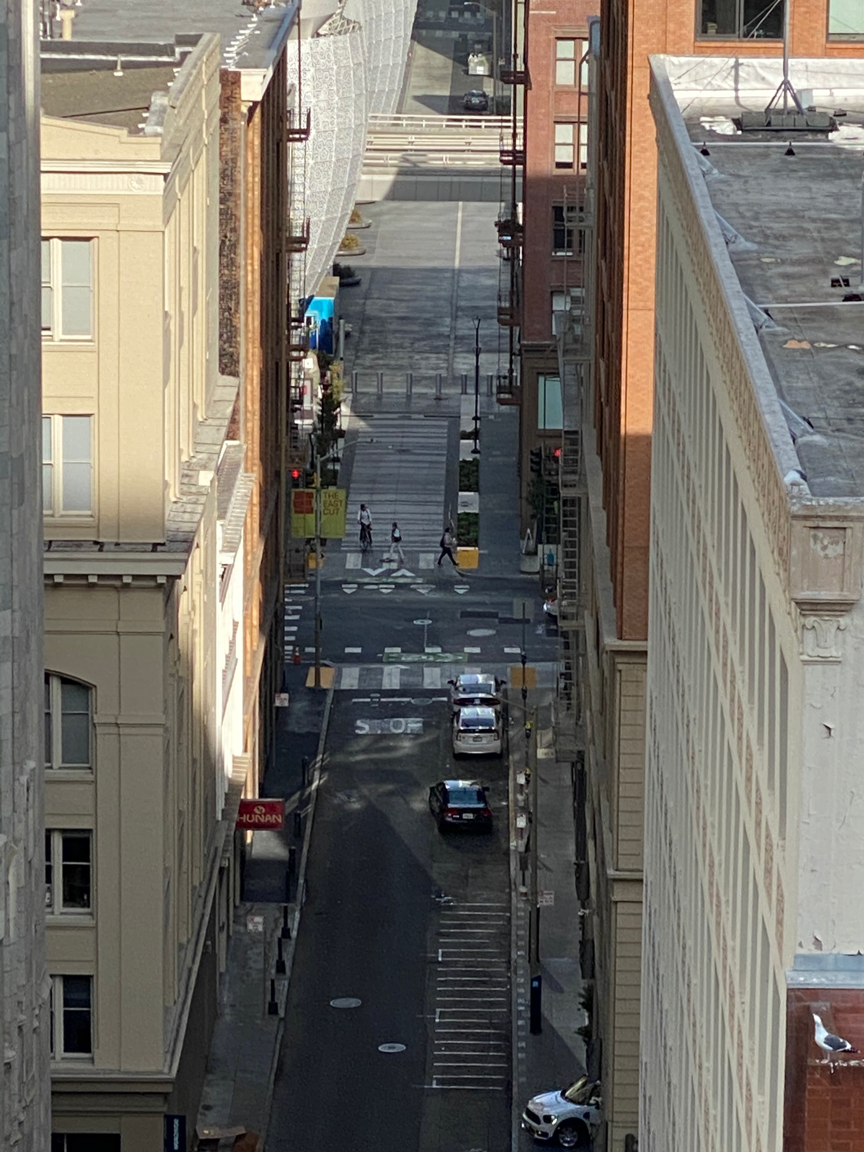
During my visit to SFMOMA on 15 Nov 2019, I was standing on the terrace of the 7th Floor looking North-East into Natoma Street, and wondering what the curved-walled building on the left was about.

SFMOMA

I did not pay much attention until I was reminded of this view in this article about floating utopias in The New-Yorker of 11 Dec 2019. Below is a view from the other side, probably taken from the Providian Financial rooftop on Beale Street, looking South-West. At the far end, you may recognize the SFMOMA building. The building in the front is Salesforce Park, a lush rooftop arcadia of rolling meadows.

Salesforce Park

Salesforce Park.Photograph by Karl Mondon / The Mercury News / Getty

The article in The New-Yorker is about the utopian, surveilled and orchestrated architecture in the middle of the astonishing inequality of homeless people in all the other streets of San Francisco:

Taxpayer-funded, corporately branded, suspended above the homeless, the park is an irresistible metaphor for the city’s socioeconomic tensions. It also feels like a bid, or a prayer, for a certain vision of its future.

Salesforce Park as a model for the rest of San Francisco—vertical, expansive, ecologically minded, expensive, sponsored, and surveilled.

“I feel totally orchestrated,” Cranz said, placing her hand on the railing separating us from the plant life. “I’m acutely aware of how managed everything is.”

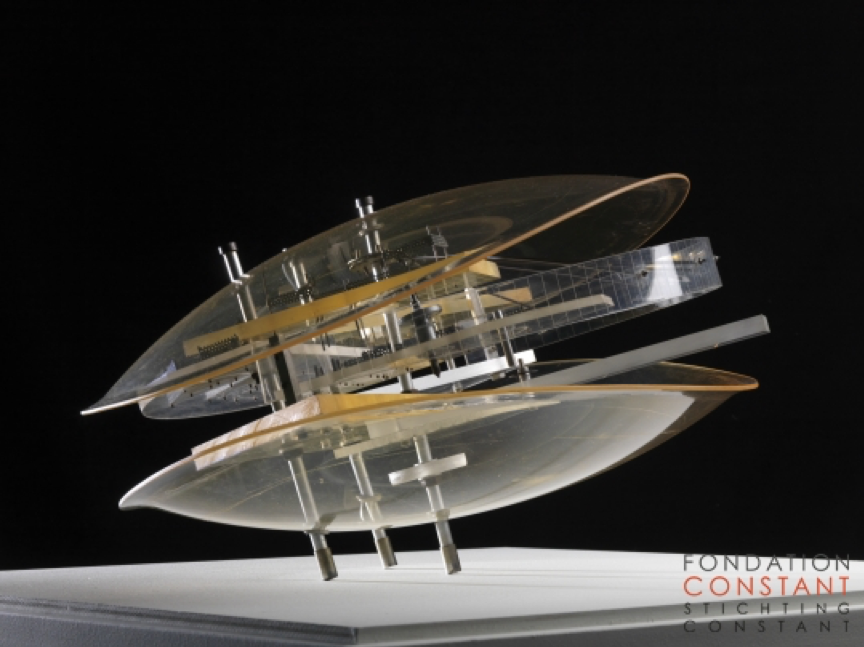
Shuttle Constant

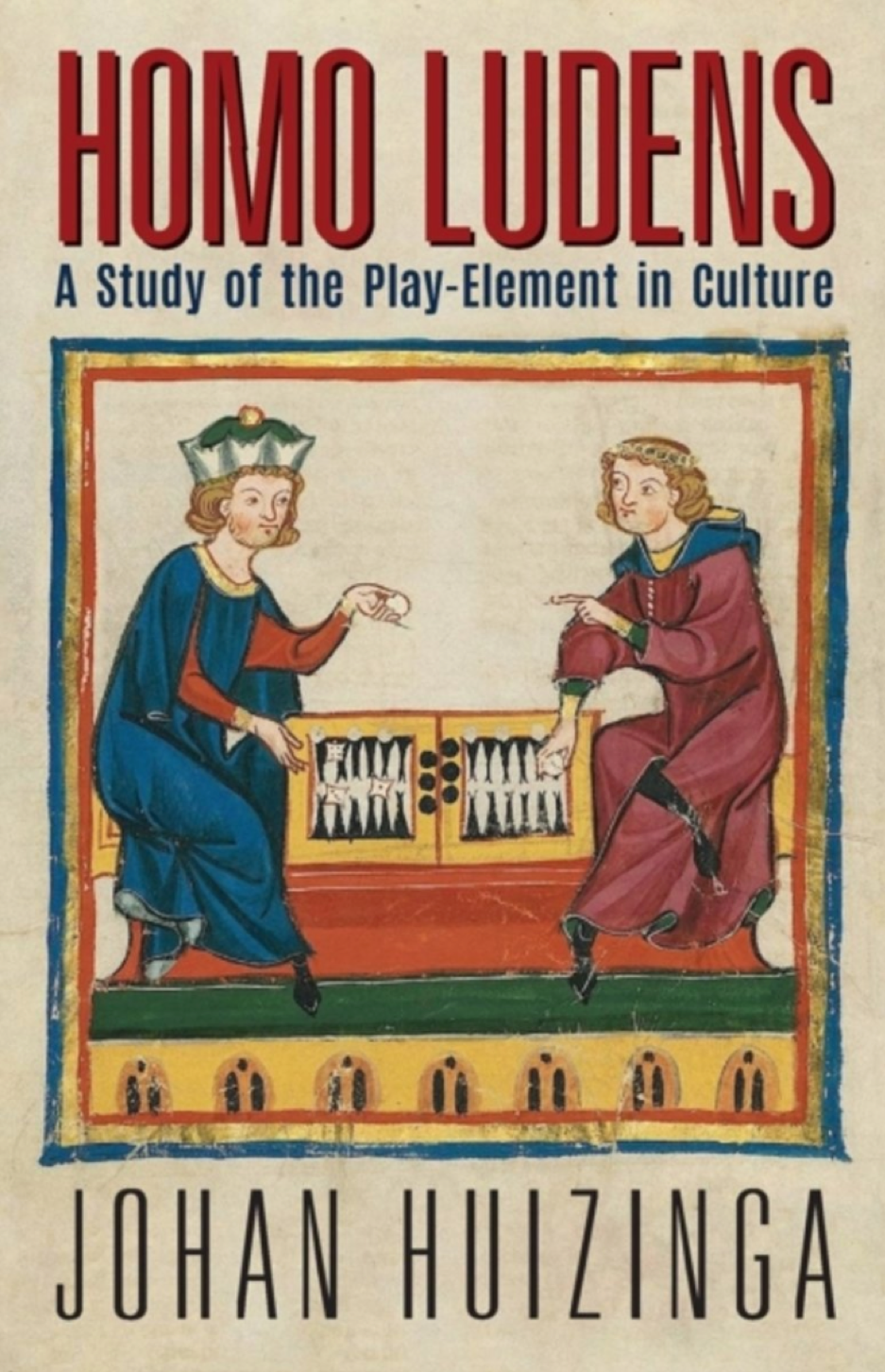
Two days later, I bumped on-line into the magical world of the Dutch artist Constant Nieuwenhuis and especially his Magnus opus “New Babylon”, another utopia, a city designed to respond to Homo Ludens’ need for playing, for adventure, and for mobility.


In New Babylon there are no single houses

The whole city is one immense covered collective house

A house with countless rooms, halls and corridors,

In which one can roam for days or weeks,

But where one can also find

Small spaces for privacy

New Babylon is a labyrinth

Inexhaustible in its variations

A palace with a thousand rooms

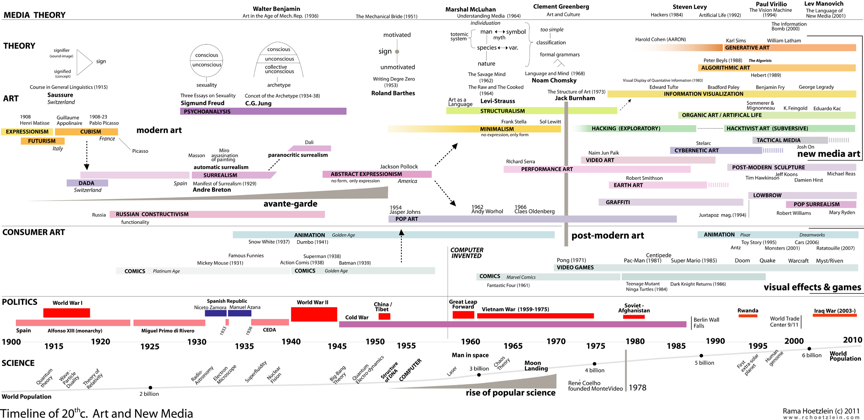
timeline art

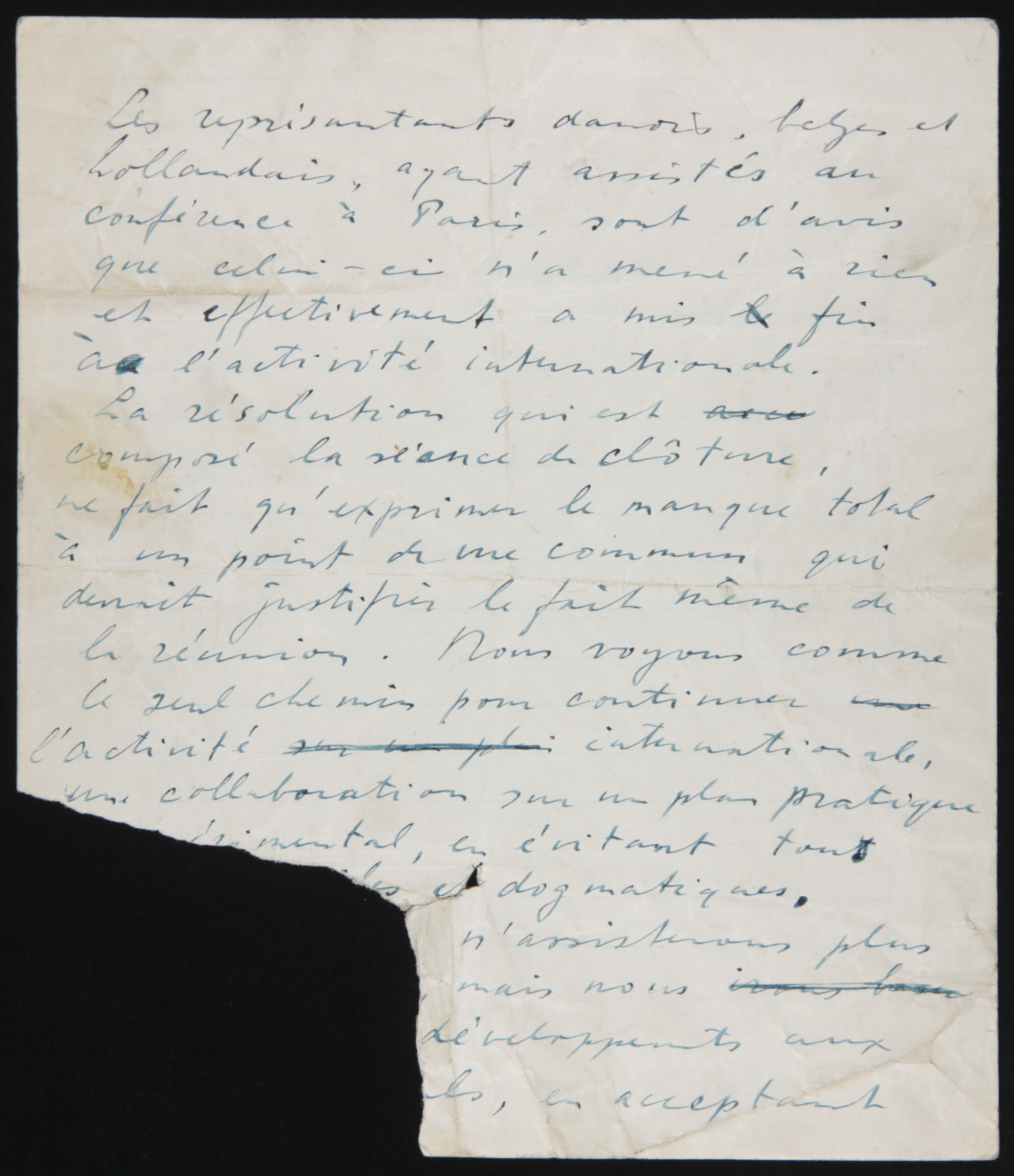
Constant was one of the founders of Cobra, an avant-garde art movement established on 8 Nov 1948. The movement only existed for three years, but forever changed the landscape of postwar European art. Cobra was perhaps the last avant-garde movement of the twentieth century. Constant was the author and co-signee of the initial COBRA Manifesto “La Cause était entendue” – “The Case was Settled”.

Les représentants belges, danois et hollandais à la conférence du Centre Internatiopnal de Documentation sur l’Art d’Avant-Garde à Paris jugent que celle-ci n’a mené à rien.

La résolution qui a été votée à la séance de cloture ne fait qu’exprimer le manque total d’un accord suffisant pour justifier le fait même de la réunion.

Nous voyons comme le seul chemin pour continuer l’activité internationale une collaboration organique expérimentale qui évite toute théorie stérile et dogmatique.

Aussi décidons-nous de ne plus assister aux conférences dont le programme et l’atmosphère ne sont pas favorable à un développement de notre travail.

Nous avons pu constater, nous, que nos façons de vivre, de travailler, de sentir étaient communes ; nous nous entendons sur le plan pratique et nous refusons de nous embrigader dans une unité théorique artificielle. Nous travaillons ensemble, nous travaillerons ensemble.

C’est dans un esprit d’efficacité que nous ajoutons à nos expériences nationales une expérience dialectique entre nos groupes. Si, actuellement, nous ne voyons pas ailleurs qu’entre nous d’activité internationale, nous faisons appel cependant aux artistes de n’importe quel pays qui puissent travailler – qui puissent travailler dans notre sens.

Paris, le 8 novembre 48.

Cobra Manifesto page-1

Cobra Manifesto - Image from Beinecke Digital Collections

After reading “Homo Ludens – A Study of the Play-Element in Culture” by Johan Huizinga, Constant develops the idea for a futuristic city. He develops this idea by drawing maps, writing texts, building constructions, and models.

Homo Ludens

Constant worked for almost 20 years on New Babylon (1959-1974). Today, there is a foundation to preserve and promote the art collection and intellectual legacy of the artist.

From Wikipedia:

The goal was the creating of alternative life experiences, called ‘situations’

Perched above ground, Constant’s megastructures would literally leave the bourgeois metropolis below and would be populated by homo ludens–man at play.

In the New Babylon, the bourgeois shackles of work, family life, and civic responsibility would be discarded. The post-revolutionary individual would wander from one leisure environment to another in search of new sensations. Beholden to no one, he would sleep, eat, recreate, and procreate where and when he wanted. Self-fulfillment and self-satisfaction were Constant’s social goals. Deductive reasoning, goal-oriented production, the construction and betterment of a political community–all these were eschewed.

It is obvious that a person free to use his time for the whole of his life, free to go where he wants, when he wants, cannot make the greatest use of his freedom in a world ruled by the clock and the imperative of a fixed abode. As a way of life Homo Ludens will demand, firstly, that he responds to his need for playing, for adventure, for mobility, as well as all the conditions that facilitate the free creation of his own life.

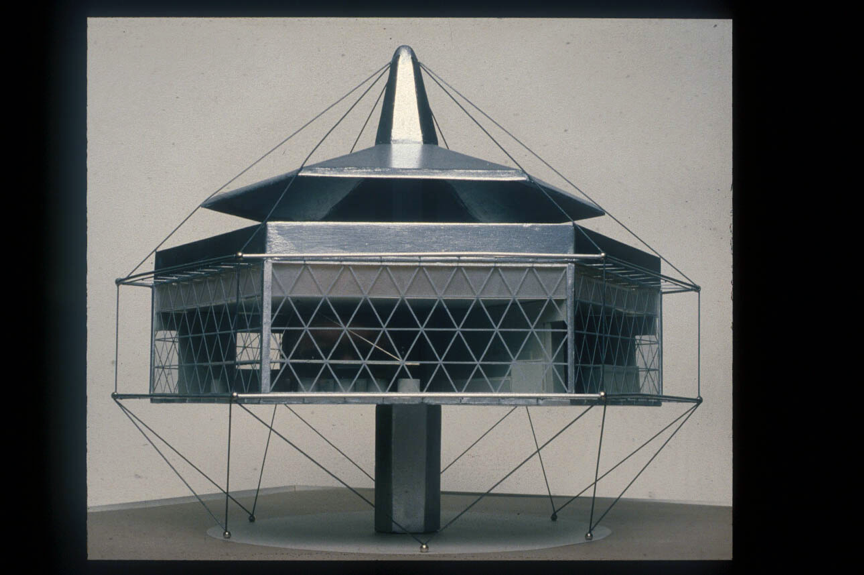
Some of the constructs in Constant’s vision reminded me of the sketches and models of Buckminster Fuller’s Dimaxyon House of 30 years earlier).

Dymaxion House

Buckminster Fuller, Dimaxyon House, Chicago, USA, 1927

Constant passes away in Utrecht on August 1st, 2005, at home with his wife Trudy van der Horst. He is buried at Zorgvlied in Amstelveen on August 6th. On his grave:

In art freedom manifests itself in its highest form.
The creative imagination.
Art creates an image of the world that didn’t exist before.
No. More than that.
An image that was unthinkable before.

I’d love to see a 21st-century version of Cobra, a collective of artists, thinkers, creators, tinkerers, and experimentalists, leading into a movement of fresh thinking. Not necessarily and exclusively an art-movement, but an all-encompassing societal-movement, with more time and air and oxygen for our children to play, where they naturally can grow into what they are best at, with a renewed freshness and renaissance, a new corporate and societal spring, celebrating the power of imagination and creativity, as a response to our dull political landscape of non-zero games.

A new New Babylon, a new city to play, a new avant-garde propelling us into the highest forms of freedom.

petervan-signature


The Foamy Explosion of Everything

larry and sergey

Larry and Sergey in hot tub bubbles in 2005 – picture by William Mercer McLeod

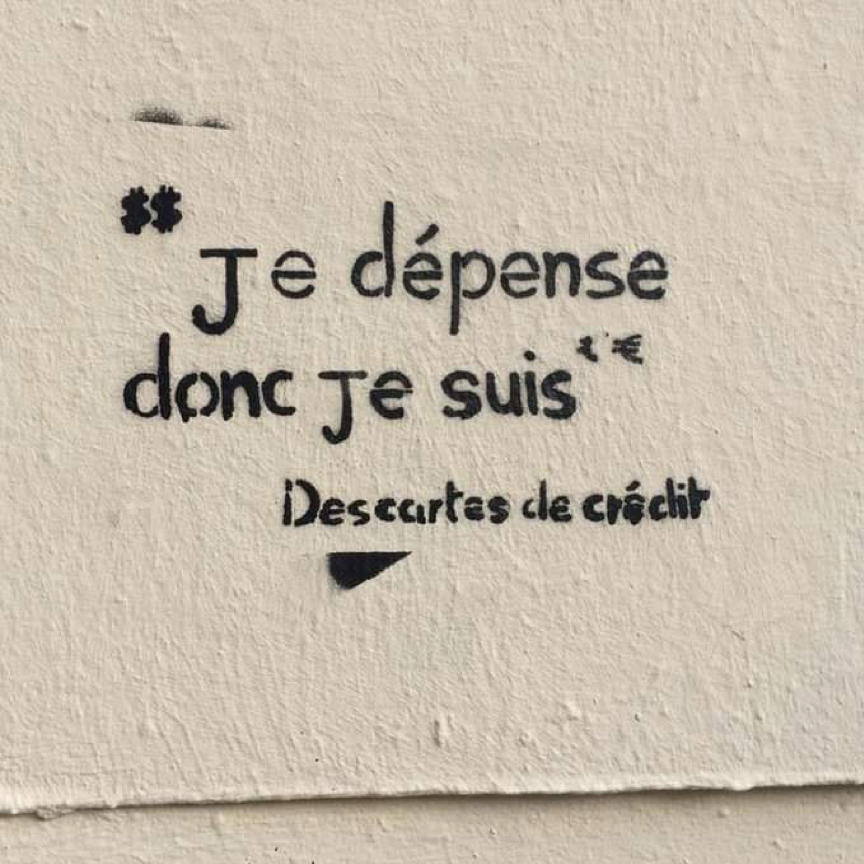
In my previous post, I played with words on Descartes’ “Je pense, donc je suis” – “I think, therefore I am”. In the background, you will notice my always-restless search for who I am. It is an everlasting search for (digital) identity. But maybe “Who” I am is a less critical investigation than “Where” I am?

I always have been intrigued by spheres. From my exposure as an youngster architecture student, through the discovery of Buckminster Fuller’s Geodesic Domes, from my thinking about digital identity being a sphere of fragments of influence that one could share with others, till my recent discoveries in exploring 3D drawing and sculpting software, where meshes of polygon meshes and NURBS primitives can be found and molded-in in abundance.

It should therefore not come as a surprise that – as mentioned in my Dec 2019 update –  I became absolutely fascinated by Sloterdijk’s “Foams”, part-3 of his trilogy on Bubbles, Spheres and Foam.

Foams book

I probably – with a probability of 100% – only understand a very small fraction of what is written and meant by Sloterdijk, or by some of the authors of essays introducing and contextualizing his work. I did some homework for this post by reading and reading again the excellent introduction by Jean Pierre Couture on the work of Sloterdijk in general, and Charlie Huenemann’s “Sloterdijk’s Spheres: Bubbles, Globes, and Foams”. And then starting the real thing by the master himself. It is not a page-turner: 900 pages of solid philosophical writing. I can do a maximum of 5 pages/day and need time to let it all sink in. That should do as far as the disclaimers are concerned.

Indeed, this is just a personal thought experiment – and maybe an art experiment or performance as well in the near future – re my evolution on thinking about (digital) identity, and daring to propose a different, radical and spherical perspective.

It’s a baby-idea, just out of the womb, waiting for parents and caregivers to be nurtured, and made alive. There is no practical application for this as far as I can think of, but it just feels I am onto something.

My latest contribution was The Cambrian Explosion of Identity from February 2019, already intended then as the start of a series on the subject, but other priorities distracted me from further development. Let’s add some “spherology” to the mix now.

„Peter Sloterdijk’s celebrated „Spheres“ trilogy is a 2,500-page „grand narrative“ retelling of the history of humanity, as related through the anthropological concept of the „Sphere”,… a lengthy meditation of Being and Space — a shifting of the question of „who we are„ to a more fundamental question of „where we are.“

Foams are masses of little bubbles, of course. As a metaphor, foams represent smaller zones of inclusion filled with the air of hope.” Huenemann, Charlie.

“And this, in essence, is what Sloterdijk sees as the project of the modernity: the business of constructing bigger and bigger shells, with more Lebensraum for the soul.Huenemann, Charlie.

I used to think of a robot as an entity that has a body, a mind, and sensors for input/output computation. A computational machine. But to me, it seems just a bit too easy to separate the mind and body, and to replace the mind with some form of artificial intelligence.

It feels like Sloterdijk describes “being” – being in the world, coming into the world, creating your own world and make it become alive, worlding – as acting as-a-foam, not as a “body”, a body with a brain on top that thinks. He is after the wholeness of foam and its integration and relationships with upper and lower levels of spheres and bubbles.

blue foam

The metaphor of foam is a very solid one: what was before foam, what happens after the foam disintegrates? Where does foam go, what caveats is it trying to fill? All interesting avenues for research and investigation.

It also made me think of this strange creature – the blob with 720 sexes – that foams over old wood trees as a monster we can all learn from?

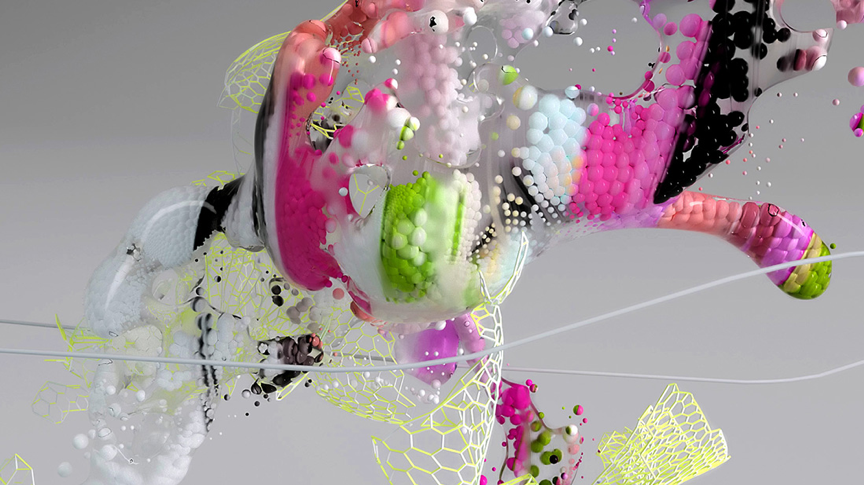
Because of this sudden focus on foamy shapes, I see bubble-structures everywhere. I see foam in this discovery of Christian Mio Loclair’s art installations, interventions, and interpretations. His studio “Waltz Binaire” works for the biggest brands in the world.

He explores the harmonic friction of human bodies, movement, and nature colliding with digital aesthetics. Using cutting edge technology in interactive installations, audio-visual experiences, visual narratives, and dance performances, he continuously illuminates the beauty and drama of human identity.

waltz binaire foam

Enhanced Motion Design - Waltz Binaire Studio

I see foams in Spheres Journal:

“Yet the vision algorithms have of our future is built on our past. What we teach these algorithms ultimately reflects back on us and it is, therefore, no surprise when artificial intelligence starts to classify on the basis of race, class, and gender. This odd ‘hauntology’1 is at the core of what is currently discussed under the labels of algorithmic bias or pattern discrimination.”

Current identity thinking is based on past data. On graphs. On connections and relationships between “nodes”, “end-points” of a relatively fixed and static structure. With the extraction of value built on top of that past, amplified by AI. The past amplified.

But we did not notice that the nodes have become overlapping cells of belonging. The attractiveness of a “foamy” group- or individual-identity is that it is not fixed and static. It is “expansive”, not “extractive”. It adds value. It grows unpredictably into the future. Not like extrapolations of last year’s revenue growth. More like fruit maturing into a juicy ripeness.

Foam is dynamic. Made of bubbles, it lives within and across spheres of influence (both in the sense of actively influencing and passive being influenced).

Foam is not static. It is alive. In search of higher levels of aliveness. Until it dies. And only blobs of dust and air are left.

I see foam in Paul Baran’s network models:

paul baran

Centralized, decentralized and distributed network models
Paul Baran (1964)

What’s the impact of foamy logic on organizational models? How does a foamy organization look like? What’s the shape of D?

Are we moving from Graphs to Foams? From Nodes to Bubbles? What would nodes and endpoints be called in the foam-world anyway? Are we foam? It feels like I am going down a rabbit hole of foam. From fuzzy to foamy logic?

petervan-signature


Ik ben – Je suis – I am

Man on canvas

Petervan Artwork © 2019 – Little man on canvas – Acryl on Canvas – 10x10cm


Ik luister, dus ik ben

Ik kijk, dus ik ben

Ik teken, dus ik ben

Ik schrijf, dus ik ben

Ik componeer, dus ik ben

Ik creëer, dus ik ben

Ik loop, dus ik ben

Ik rust, dus ik ben

Ik huil, dus ik ben

Ik dans, dus ik ben

Ik schilder, dus ik ben

Ik peins, dus ik ben

Ik de-peins, dus ik ben

Meen je dat echt?

J’écoute, donc je suis

Je regarde, donc je suis

Je dessine, donc je suis

J’écris, donc je suis

Je compose, donc je suis

Je crée, donc je suis

Je cours, donc je suis

Je me repose donc je suis

Je cris, donc je suis

Je danse, donc je suis

Je peins, donc je suis

Je pense, donc je suis

Je dé-pense, donc je suis

Vraiment?

I listen, therefore I am

I look, therefore I am

I draw, therefore I am

I write, therefore I am

I compose, therefore I am

I create, therefore I am

I run, therefore I am

I chill, therefore I am

I cry, therefore I am

I dance, therefore I am

I paint, therefore I am

I pense, therefore I am

I ex-pense, therefore I am

Really?


Je depense


This post is the start of a short series of posts on who and where I am/you are, and a set of new interventions and provocations to renew aliveness and alertness in what we observe and what we hope for. Looking forward to creating spiritual, moral and aesthetical advancement together.

You can subscribe via email to these posts via the “Follow blog via email” in the upper right corner of this page. Enjoy!

petervan-signature


Techonomy 2019 Memes

Mid November 2019, I was once more lucky enough to attend the 9th edition of Techonomy, in my opinion, one of the best tech conferences and networking events in the world.

The event is set up as a three-day retreat at The Ritz-Carlton on the shores of Half Moon Bay, CA. The format is pretty straightforward: many fireside chats, some presentations, and some early morning workshops. Content leads and is focused on tech, business, and social progress. Full program here. All live video streams here.

Ritz_HalfMoonBay_00143_Galleries_1280x720

The theme for Techonomy 2019 was “Reset and Restore: Governing Tech, Retrieving Ethics, and Acting on Climate” with an awesome list of speakers and instigators.

Here is – in more or less random order – a set of tweetable memes that I collected at #Techonomy19:

Can technology help us listen vs. sharing/shouting?

From giving fish > learn to fish > create fishing schools

Only the Walmarts can save us from Trump

by addressing the root cause of big problems such as healthcare

The hierarchy not always wins

There has to be some kind of return (on investment). Why?

Real-Time Crime Solving vs. Real-Time Health Development

Real-Time Evil Control vs. Real-Time Good Amplification

5G Beam Forming

Precision Economy

Computing moving back to the edge

Trust is consistency over time

Transparency vs. Clarity

Your digital twin is not you real me; it is just a model of me

All companies are connection machines

I will not work on fully autonomous weapons 

Voice First

The Time of Engineering Innocence is Over

Privacy is Dead vs. Anonymity is Dead

The Absolute does not Exist

Worry and Concern are two different things

The State (country) is done

Welcome a future of 2,000 “Nations” aka Superminds

Tribal Nations along the Internet Highway

Democracy > Netocracy

We need more law at the POC stage

Super-evolution

More mission-driven companies

More audacious companies

More focus on the physical world

More than optimize a spreadsheet

The full-stack company

Machines have no Bias

Machines have no Emotions

Infinite experiments driven by machines

The Collapse of Time

40 crops per year (instead of 2-4)

What to read to stay current?

“By the time you read about it, it is too late”

“We are NOT a Tech Company”

“Every Tech Company wants to become a bank”

Technology is the best way to disintermediate

See also my related post titled “Immoral Machines of Loving Greed”.

Breaking Hierarchies

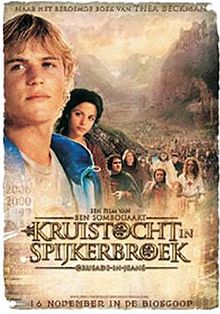
Following my post “Who is the composer?”, I got the opportunity to have a conversation with the man himself: Ozark. He told me the story of what happened when he tried to conduct a philharmonic orchestra for a film soundtrack he had written. I did not know he wrote a score for a film, but he did. It is the score for the film Crusade in Jeans and the music is performed by with the Metropole Orchestra from The Netherlands. All professional musicians used to work with artists in residence.

Film_poster_Crusade_in_Jeans

There is some real classical music stuff going on here

As a composer, he knew exactly what needed to be played when and how. He could as well conduct the orchestra himself, no? Or so he thought… But he learned the hard way that doing so was breaking hierarchies. He stepped out of his role as the composer when he tried to be the conductor of the orchestra.

An orchestra is like a ministry. Every unit has a role. The conductor does not communicate directly with the violist, no he/she speaks to the lead of the violin ensemble who speaks to the violist. Ozark brought also copies of the score with him, ignoring that copying the score was the job of somebody from the orchestra team. He could as well have said: “You know what? I found this great tribe of horn players, so they will play the horns this time.” Basically putting the original team in unemployment.

In a reaction of self-defense, the orchestra started playing – well-intentioned – games, sabotaging what Ozark tried to achieve. These games were well-intentioned because the intention was the care of the team.

In Dutch, there is a word “bezorgdheid” usually translated into “concern”, mostly an anxious type of concern. In my sense of Dutch language (my mother tongue), there is also an almost “mother-care” type of concern encapsulated in that word. A team-mother-care about what the orchestra is concerned about, the cohesion they wish to protect. This is not about care for the team, but care/bezorgheid of the team.

I often think back to the old Innotribe days, where we had a fantastic team. In my 2013 post Breaking and Making Teams, I described with quite some cynicism the recipe for breaking successful teams successfully. Remember: cynicism is a knot in the heart.

knot-tree-trunk-84928768

It is a paradox: to innovate, one must have the courage to challenge the status quo, the existing processes, and hierarchies. But on the other hand, a team and a hierarchy have a built-in DNA-like patrimony of craftmanship and care-manship. Breaking that patrimony is a recipe for failure.

One can cut-and-paste the breaking hierarchies metaphor straight into corporate mergers and acquisition scenarios, for example when a successful team is acquired into a new company. Instead of looking how the strengths of an acquired team and its internal language, proceedings, and patrimony can help to imagine new worlds – in other words, making the team even more successful in its new environment – in many cases the CEO is only interested in how that team can help him/her be more successful.

In such cases, we wonder why the team is not willing to share its secrets, wondering why the best folks leave, wondering why there is no team left at all after 1-2 years. We shouldn’t be surprised: we just broke the team hierarchies.

petervan-signature


The Cambrian Explosion of Identity

I have been thinking about “digital” (identity) for a while. Way back in 2003, I got infected by the digital identity virus at Microsoft in a research project related to the launch of the Belgian Electronic Identity (eID) card, a project that led to executive sponsorship of Mr. Bill Gates himself and meeting forward thinkers like Kim Cameron and many others smart people at Microsoft Research.

bill gates eID card

Later, as the project leader of the Digital Asset Grid (a prototype research project at my previous employer SWIFT/Innotribe), we were investigating distributed sharing of data by independent trusted nodes (one would call that blockchain these days).

Future Scenario from the Digital Asset Grid
Filmed & Produced by Heather Vescent

The project never survived the prototype stage, and although the project was really about sharing any kind of data (and not only personal data), it gave me a seat at the WEF Personal Data experts group. I stayed in touch with many of them and tried to follow the space.

cambrian_fig_1_1_large

Then in 2012, I wrote a blog post titled The Cambrian Explosion of Everything, still one of my most read and commented posts since the start of this blog.

I kept being fascinated by the subject and developed a metaphor where the user would own their data, as if the user would be encapsulated in a Buckminster Fuller sort of sphere, and would be able to share different facets of their outer sphere (their data) and be in control of who they share it with and in what particular transaction context.

BuckminsterFuller

That is, in essence, the VRM concept (Vendor Relationship Management), a set of tools that would give users the tools to manage their vendor relationships, just like vendor manage their customers with CRM (Customer Relationship Management) tools.

My thoughts have definitely evolved since then, especially because I always felt there was a mismatch in trying to mimic 2D identity concepts of the off-line world into the more complex 3D online world. The only thing people were trying to do was to create a digital equivalent of a physical real-world identity card, basically only a representation of an account number, or a social security number, or a government-issued ID.

Identity reduced to a number sitting on a chip of a smart card. It always felt so limiting, and with hindsight plain wrong.

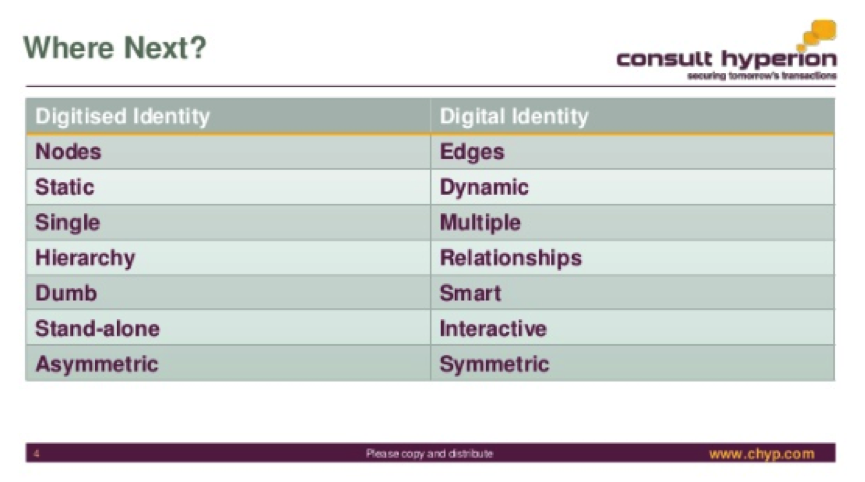
I recently bumped into a presentation by David Birch of Consult Hyperion, and I was fascinated by this slide:

Dave Birch on Identity

The eID card was and still is nothing more than a “digitized” identity. The Belgian government recently decided to add a digital fingerprint to the card. Besides a privacy nightmare, this move won’t help: the card will remain static, dumb, stand-alone, etc and a misnomer in a multidimensional on-line world.

What if we pushed our thinking about true digital identity? What metaphors would help us understand what is needed? What is the new and future context for this?

Zuckerberg in prison on cropped window with white borders V3 with red effect cropped

Petervan Artwork © 2018 - Zuckerberg Prison Cell - Digital Mix

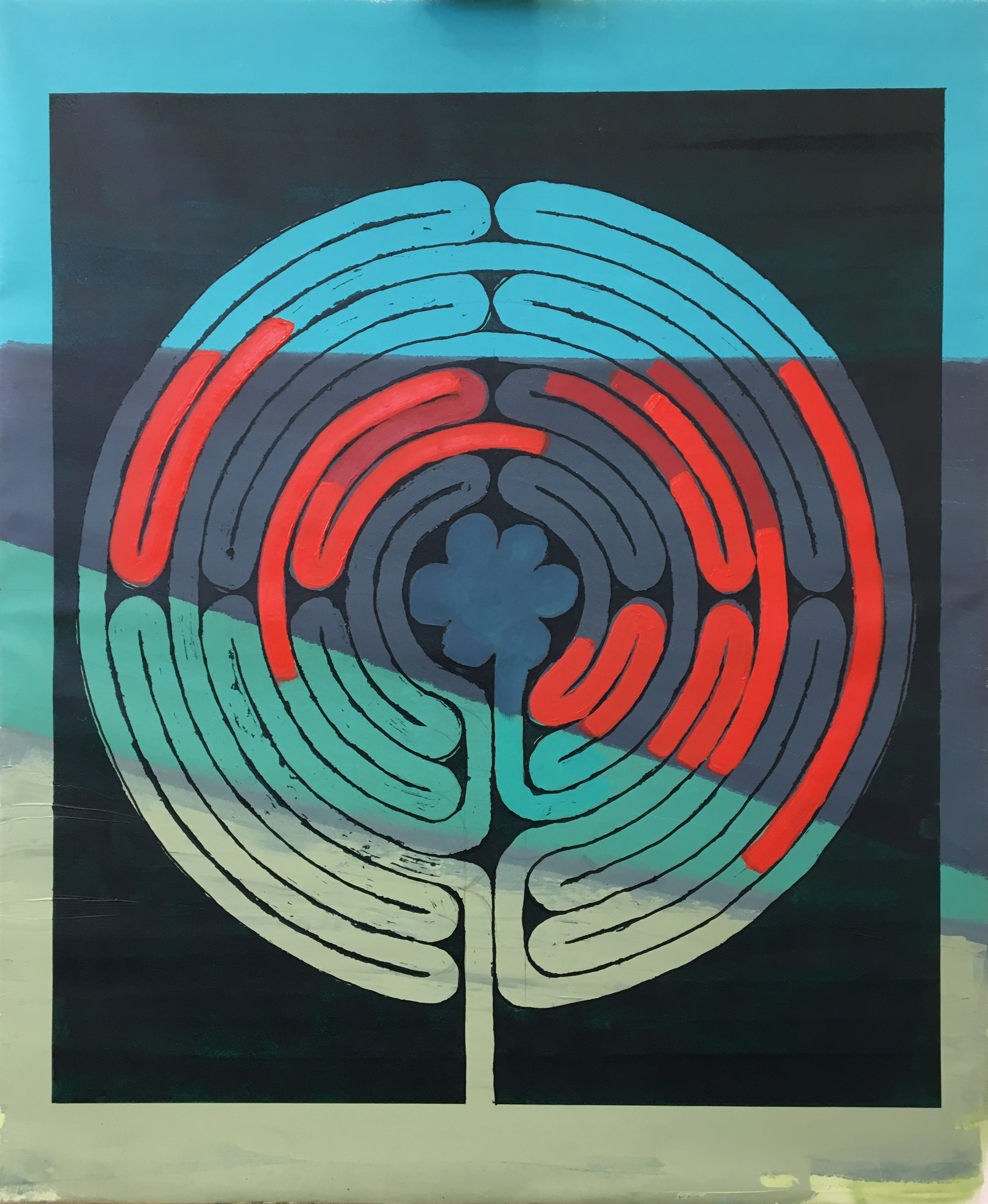
Some of my new metaphors are inspired by my recent artwork on prison cells and labyrinths. I am thinking about identity and data sharing in terms of “signatures”, “maps”, and “labyrinths”.

Labyrinth with two red lines - final

Petervan Artwork © 2018 - Labyrinth - Acryl on Canvas - 100x120cm

In essence, I believe we have to expand all dimensions of entities, data, and transaction context. In addition, we need to become more aware of a different type of scale. We have to start thinking about trillions of entities, sharing all types of data in real-time transaction contexts.

I believe that somewhere in 2012-2013 we lost the time window for VRM in its implementation as personal data stores in the cloud. There is so much data out there now (at FB, Google, your bank, your retailer, your hospital, etc.) that it is an illusion we will ever get back control over it. And even if we would be able to do that, the idea of a user taking the pain to pull the levers of control of their personal data locker is just ridiculous.

Open Banking and PSD2 may give us a hunch: what sort of new services would be possible to develop if banks (and by extension retailers, FB, etc) were forced by regulation to open and share their data. Not new services like a personal data store (PSD), but something more integrated with the daily experience.

For example, I don’t use my credit card to make payments, I use it to buy stuff. The credit card just works under the hood to give me a convenient buying experience. What would be the equivalent services enabling an experience like “I just buy stuff” when Open Banking and PSD2 live up to their promises?

We have to expand our dimensions

Many are confused by the privacy focus on personal data sharing. By now, I tend to agree that privacy does not exist online. I think privacy only exists in the off-line world and in the unspoken word/thought, not in what is being shared (intentionally or non-intentionally)

Privacy only exists Off-line

Privacy has to do with The Unspoken Data. In The Crisis of Intimacy in the Age of Digital Connectivity, Stephen Marche says:

“In an all-sharing world, what we don’t share will define us. The secret will be irrelevant because it is not on the network. It will be the part of us that matters.”

The DAG/Holochain/Solid/etc projects of this world won’t solve this. I don’t know what would solve it. I don’t know whether there is a problem to be solved.

“It can not work because we can’t own information”, says also David Brin.

The more critical question is “What kind of world do we want to live in?”, as in Apple’s CEO Tim Cook’s speech to the EU in Nov 2018.

He talks about “Human-centered technology” in the era of surveillance and misinformation. It is a call for regulation of the platforms and their relation with (mainly) personal entities. I believe we have to expand this.

The Cambrian Explosion of Identity has ramifications beyond platform-human relationships.

In an upcoming series of blog posts, I will expand the following dimensions:

  • Identity
  • Entities
  • Relationships
  • Transactions
  • Type of data
  • Context
  • Motivations
  • Governance
  • Entropy of information

Hope you’ll stay on board for the series.

petervan-signature

I have joined The Futures Agency

I am super excited to let you know I have joined Gerd Leonhard‘s The Futures Agency as a speaker and as a part-time researcher and curator.

Gerd is Futurist and Humanist, Keynote Speaker, Author, Film Maker. His latest book “Technology vs. Humanity” – published in 2016 – is a best-seller and has been translated in ten different languages.

I first met Gerd when curating the program for Innotribe@Sibos 2016 in Geneva, where we experimented with a new format for his keynotes, labelled “The Future Show Live”. After lots of rehearsals this resulted into a stunning presentation using the full real estate of a huge HD wall.

Gerd Leonhard speaking at Innotribe@Sibos 2016 in Geneva

Continue reading