Inspiration – Even more David Claerbout

Studio David Claerbout just published the video of a lecture at The Cloud Collection, Nanjing on the occasion of the opening “Flow of Time. David Claerbout and Zhou Tao” exhibition.

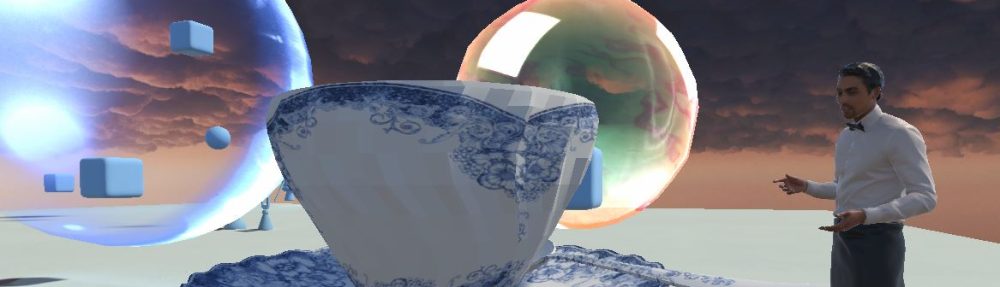
At 17:50, he explains how he made the Woodcarver and the Forest. Prompting ChatGPT to create a script and images, then filming what ChatGPT suggested, and then giving it back to ChatGPT and asking whether it recognises itself.

I took the rough auto-generated YouTube transcript of this talk, and prompted ChatGPT as follows: “take this transcript, delete the time markers, delete the uhm’s, and put it together in readable sentences”, and this is what it came up with (highlights by Petervan)

+++ by ChatGPT

Thank you for coming. When the invitation arrived to make a double exhibition with the work of Zhou Tao, we were of course very curious. It was clear that there was a real reason we were invited to exhibit together, but there was also a lot of mystery because I didn’t know his work very well, and I had not yet realized the intrinsic relationship to time in his work. It was only by coming here a few days ago that it started to sink in—what the subtle relationships between the two of us might be.

First of all, I would like to thank the Cloud Collection for bringing us together. We obviously have very different ways of working, which you can see in the works. For Joe, being in a location, being physically in a place with his camera as his partner, is crucial. In my practice, we spend a long time and work with many people, sometimes for at least a year. If I look around at the pieces in this exhibition, I think the shortest production time is one full year. Other works took two or three years. Our record, if I remember well, is sixteen years—sixteen years of thinking back and forth about how to do something until we finally finished a production.

What we do have in common is that we like to use the duration of the film as the acting force—not so much the actors, not so much the motives, but the simple fact of being in front of a situation. This approach to film is relatively recent and has to do with the availability of digital time. I call it digital time because it is no longer expensive time; it’s virtual time of which we can gather a lot. For our generation, duration is no longer exclusive, expensive, or spectacular, but something broad and long.

When I came here two days ago and saw the combination with the work of Tao, it made me question myself: is it really necessary that I work so long on a single image? The airplane is a single motive. The birdcage is a single motive. These works revolve around very simple motives. I have to admit that whenever I work on one film, I am actually thinking about two films. This is one of the reasons I keep my motives simple: because I try to work with two identities.

For example, the film behind you, The Wood Carver, has the identity of a meditative work that calms you down, but also another identity that is almost the complete opposite. I’ve always been fascinated by what happens when you let go of narrative film—when you let go of talkies, psychological realism, and story, and instead go with time, with duration, with the flicker of the images. Could I make a very minimalist film where I use the least possible narrative and still generate narrative inside the heads of the visitors?

As you walk around, you’ll notice there are few sounds—no soundtracks, only what I call “witness sounds”: bird songs, nature, wind, footsteps. It wasn’t always like this. I made films with soundtracks, musical scores, conversations between actors. But my focus was always on the background, and more and more the birds became a symbol for that background—giving the film back to the witnesses rather than the actors. In cinema we often speak about foreground and background, like in painting. I realized I have a preference for what is behind—for what is far away, not in the foreground.

One of my very first films, made in 2003, is a 14-hour film where three actors perform a short 12-minute scene repeatedly for a full day, until they start making errors or falling apart. Only then do you slowly begin to see that the film is really about the light, the changes of light, and not about the narrative in the foreground. I am very much an advocate of the cinema of the witness, not the cinema of the actor.

A word also on ecology: I avoid entering specific subject matter, but I cannot help noticing that we spend a lot of time in front of screens and very little in nature. This makes me think about the relationship we have with technology. On one hand, I love technology—I’m a technological buff, and whenever something new appears, I try to catch up with it. But at the same time, my works are not about technology. They are about light and shadow, about composition, about the slow pace of time. Again, there are two tracks.

Any cinematographer knows that the moving image is a technological construction—25 frames per second. It is a prison of time; you cannot escape it. So why would artists choose to work in this prison in order to liberate time? To find alternatives for thinking about the flow of time, as Suzu beautifully mentioned in his text.

Let me elaborate on the black-and-white film behind the wall, titled Aircraft Final Assembly Line. Like many of my films, it is based on an image or an idea I found somewhere—an archive image, something with no particular message. I found a black-and-white photograph of this aircraft. It was originally painted in black matte aluminum. I was fascinated by the enormous wooden hall in Chicago where it was constructed—a space that no longer exists. This polished aluminum aircraft stood there, brand new in the past, yet I look at it now from the future, as a witness. I know the aircraft is probably destroyed by now. The work became about the dialectic between materials: polished aluminum, rough wood, concrete floor, improvised-looking scaffolding—yet airplanes themselves are not improvised. They must be perfect. Airplanes are like perfect arrows of time: they promise the future.

This is typical of how I work: I don’t invent; I let myself be inspired by archive images, almost orphaned images from the past.

When we move mentally to Bird Cage, the film with the explosion, this was a follow-up to a pandemic-era film, Wildfire. I continued with the motive of the explosion because it is the perfect index of a moment—after an explosion, nothing is ever the same. I was fascinated by the idea of remaining inside that moment of change for a long time, looking at all the pieces of the world flying apart, but in a peaceful way. Again, a paradox between destructive and meditative energies.

In the middle of this are two birds that appear twice—once inside the explosion, at the last fraction of their lives, and again later, alive and peaceful in a garden. I hesitated for a long time to use this imagery because it is almost ridiculous—two birds in an explosion, like a crucifix of birds. But I kept it because I was fascinated by the elliptical camera movement. If you look closely, there is no cut: the camera moves from the explosion back to a normal, sunlit garden, with the same two birds sitting together, almost as if they are trying to tell you something. Ten minutes later, the same ellipse brings you back to the explosion, frozen in time—an “immobile explosion,” a contradiction in itself.

I like to work within a single mental space, not jumping between spaces but taking the viewer on a minimalist journey through one situation.

The confetti piece around the corner, the double screen, was made from 2016 to 2018. It corresponds to a series I’ve done for about 15 years: dozens or hundreds of digitally constructed photographs combined into a slideshow. A conventional parade of images, except that it’s about the absence of sound. In the film, a little boy is screaming, but you hear nothing. His scream becomes internalized. The scene is exaggerated—a Black boy surrounded by white adults. I was warned against using it because it might appear divisive. But I said yes, that tension is exactly what we need in order to reach something more universal. The real fascination for me was the internalized scream, and the way spending time with the work might let the viewer internalize it too. It is as close as I can get to a painting with an action attached to it.

Finally, behind us is the latest work we made, just finished for this exhibition: The Wood Carver in the Forest. The subtitle is “A ruthless deforestation machine disguised as a meditative film.” Again, it has two identities. Most spectators will identify with the relaxation—the small sounds, the details of oil, wood, knives, carving, micro-movements outside any big narrative.

We designed this work using ChatGPT. ChatGPT is one big confabulation machine; it always gives you an answer, even when it has no clue. We wrote the storyboard with it, then requested illustrations, and used those as the basis for a cinematographic team. We worked for a year to reproduce what AI had suggested.

It came up with scenes like the one by the window: a person staring at nature but actually staring at something artificial—as if looking at a screen. In the images, if you look carefully, the “trees” outside are actually vertically stacked television screens. We prompted an image of the garden and it produced about ninety trees. Using its own calculation, it estimated it would take thirteen years for the protagonist to turn those trees into wooden objects. From those “thirteen years,” we selected three days—one early, one mid-process, one at the end—and produced only those.

In the end, it becomes a loop: AI proposes something, we produce it, then return it to AI like an alien creature and ask, “Do you recognize yourself?” About 5–7% of the imagery is completely fake—AI reprocessing its own outputs.

The idea of the work is that someone else—not me—could complete those thirteen years of destruction. My job was to create images with two simultaneous identities, properly schizophrenic: destructive and generative at the same time.

I think I will stop here. Thank you.

+++ end ChatGPT

Programmable Money and Identity

Since my time at Microsoft (almost 20 years ago!), I have been infected by the digital identity virus. At one moment I was even part of the WEF Personal Identity workgroup. Since then, I followed the identity space in some depth, some years more than others. See also my post on The Cambrian Explosion of Identity from 2019 that also figures David Birch.

Earlier this week, that same David Birch published a very interesting post about digital identity: the bottom line of his insight is that we should be less interested in solving pre-digital conceptions of identity and more in (certified) credentials.

I recently came to a similar conclusion, but from a completely different angle.

First, I bumped into The Block Whitepaper on CBDCs (Central Bank Digital Currencies) from August 2020, and got intrigued by the schema on page 13:

The authors do a great job in explaining the difference between Claim-based (or account-based) money and Object-based (or token-based) money.

In other words, money is an asset, and can be represented as a Claim (Account) or as an Object (Token)

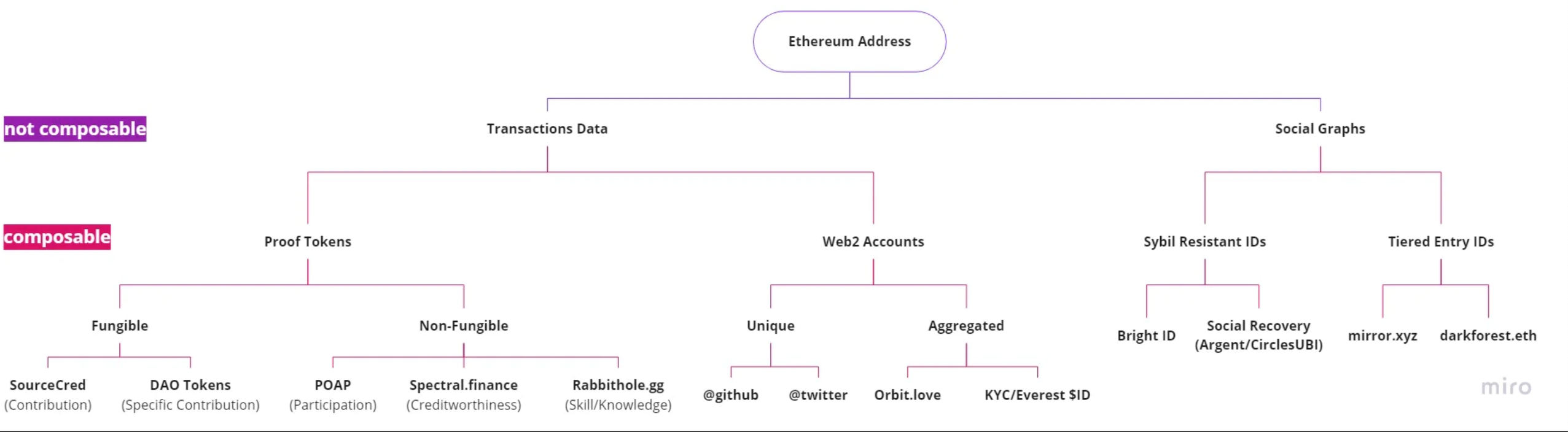
Then I ran into this May 2021 post by Andrew Hong on The Composability of Identity across Web 2.0 and Web 3.0. It’s a quite technical paper, and I probably only understand 5% of it, but my attention was again drawn to a diagram on the composable and non-composable aspects of identity:

Andrew Hong writes: “The second layer (and onwards) highlights categories and products that allow us to represent that transaction data and/or social graph as tokens. Since tokens have the qualities of existence, flexibility, and reusability – then by the transitive property – our digital identity now does as well. I can move around these tokens at will to different accounts and in different combinations.”

I suddenly realized that the difference between Account-based money and Token-based money also applied to identity.

In other words, just like money, also identity is an asset (it always was), and it can be represented as a Claim (Account) or as an Object (Token)

During my 2003 Microsoft project, I was lucky enough to be exposed to more advanced  identity thinking by wise people like Kim Cameron and the other folks from The Internet Identity Workshop gang, and I got quite familiar with their thinking of certified identity claims or claims-based identity.

But only now, I realized that both Money and Identity can be account- or token-based, and that token-based is probably what’s going to help us make progress, because it makes identity and money programmable.

In other words:

For Account-based identity, you need to be sure of the identity of the account holder (the User ID / Password of your Facebook-account, your company-network, etc.). For Token-based identity (Certified claim about your age for example) you need a certified claim about an attribute of that identity.

  • For a paper/plastic ID Card/passport, it is the signature of yourself and the signature of the issuing authority, and plenty of other technical ways of ensuring the integrity of the card of passport (holograms, etc.). But it is a certified claim that the ID Card/passport is real, authentic, not tampered with.
  • In the case of an electronic ID Card (like the one we have in Belgium), the certified “token” for authentication or for digital signature is stored on the microchip of the ID card, and can be enabled by the PIN-code of the user (a bit like User ID / Password)
  • For a certified (identity) claim (like proving that you are older than 18 for example), you basically need a signed token, a signed attribute. And because it is done digitally, (identity) attributes becomes programmable, you can assign it access and usage rights

For Account-based money, you need to be sure of the identity of the account owner (the User ID / Password or other mechanism to access your account). For Token -based money (a 100€ bill, an NFT token, a ETH token, etc.) you need a certified claim about an attribute of that money.

  • For a 100€ bill it is the signature of the President of the ECB (European Central Bank) and plenty of other technical ways of ensuring the integrity of the paper bill (holograms etc.). But it is a certified claim that the 100€ bill is real, authentic, not tampered with.
  • For digital money, it is a signed and encrypted token representing one or more certified aspects of that money. And because it is done digitally, money becomes programmable, you can assign it access and usage rights, just like you could do for identity aspects

So, I come – although from a different angle – to the same (or at least similar) conclusion as David Birch in his latest post about identity that (certified) credentials are the way forward.

“These credentials would attest to my ability to do something: they would prove that I am entitled to do something (see a doctor, drink in the pub, read about people who a richer than me), not who I am.” (David Birch)

I am just adding the money dimension to it, and using the same sentence, I can now say:

“These credentials would attest the money’s ability to do something: they would prove that the money is entitled to do something (pay for Starbucks, pay for food, only to be used if there is enough money on my account, etc.), not whose money it is. (Petervan)

Post Scriptum:

You could also consider NFTs as certified claims of something (in today’s hype, they are certified claims of the authenticity of an artwork, but it could be anything, also identity, or also money. Amber Case for example referred to NFTs in the context when mentioning the Unlock Protocol on her ongoing overview of micropayments and web-monetization:

Unlock Protocol has a particularly inventive approach to NFTs — using them as customizable membership keys for certain sites. This allows people to set a length of time for the membership, or access to certain features like private Discord channels.

Content creators can place paywalls and membership zones in the form of “locks” on their sites, which are essentially access lists keeping track of who can view the content. The locks are owned by the content owners, while the membership keys are owned by site visitors.

In that sense we can really look at certified credentials as key to open something (a door, a website, a resource) or to enable something (a certain action, a certain right, a certain flow, etc).

Rabbit hole? Curious to read your thoughts.

Warmest,

The Foamy Explosion of Everything

larry and sergey

Larry and Sergey in hot tub bubbles in 2005 – picture by William Mercer McLeod

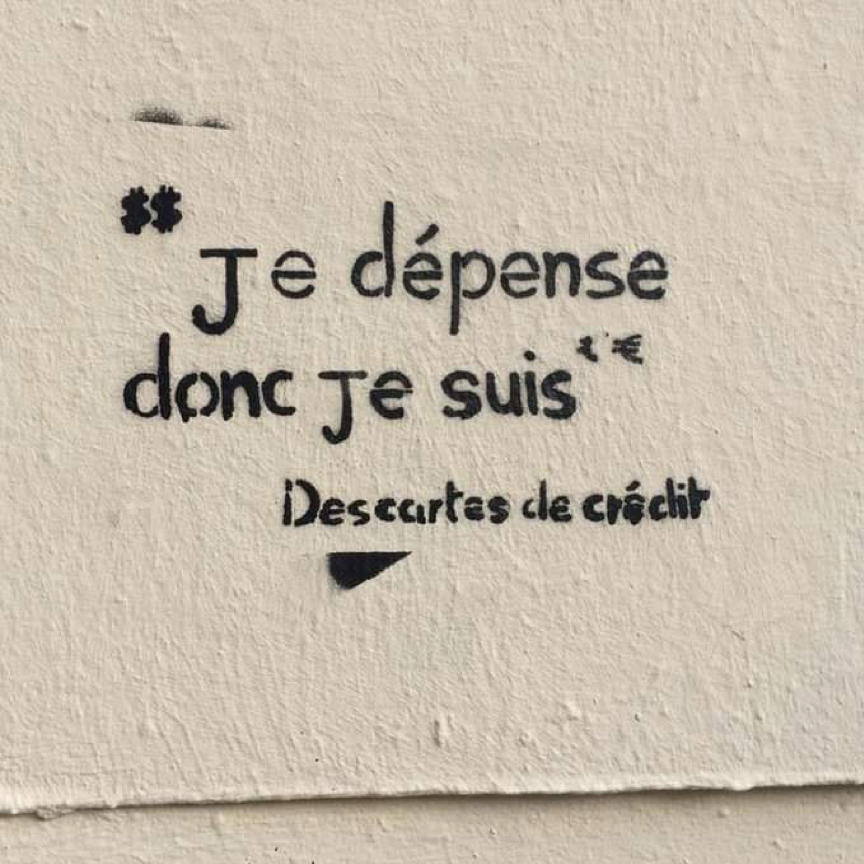
In my previous post, I played with words on Descartes’ “Je pense, donc je suis” – “I think, therefore I am”. In the background, you will notice my always-restless search for who I am. It is an everlasting search for (digital) identity. But maybe “Who” I am is a less critical investigation than “Where” I am?

I always have been intrigued by spheres. From my exposure as an youngster architecture student, through the discovery of Buckminster Fuller’s Geodesic Domes, from my thinking about digital identity being a sphere of fragments of influence that one could share with others, till my recent discoveries in exploring 3D drawing and sculpting software, where meshes of polygon meshes and NURBS primitives can be found and molded-in in abundance.

It should therefore not come as a surprise that – as mentioned in my Dec 2019 update –  I became absolutely fascinated by Sloterdijk’s “Foams”, part-3 of his trilogy on Bubbles, Spheres and Foam.

Foams book

I probably – with a probability of 100% – only understand a very small fraction of what is written and meant by Sloterdijk, or by some of the authors of essays introducing and contextualizing his work. I did some homework for this post by reading and reading again the excellent introduction by Jean Pierre Couture on the work of Sloterdijk in general, and Charlie Huenemann’s “Sloterdijk’s Spheres: Bubbles, Globes, and Foams”. And then starting the real thing by the master himself. It is not a page-turner: 900 pages of solid philosophical writing. I can do a maximum of 5 pages/day and need time to let it all sink in. That should do as far as the disclaimers are concerned.

Indeed, this is just a personal thought experiment – and maybe an art experiment or performance as well in the near future – re my evolution on thinking about (digital) identity, and daring to propose a different, radical and spherical perspective.

It’s a baby-idea, just out of the womb, waiting for parents and caregivers to be nurtured, and made alive. There is no practical application for this as far as I can think of, but it just feels I am onto something.

My latest contribution was The Cambrian Explosion of Identity from February 2019, already intended then as the start of a series on the subject, but other priorities distracted me from further development. Let’s add some “spherology” to the mix now.

„Peter Sloterdijk’s celebrated „Spheres“ trilogy is a 2,500-page „grand narrative“ retelling of the history of humanity, as related through the anthropological concept of the „Sphere”,… a lengthy meditation of Being and Space — a shifting of the question of „who we are„ to a more fundamental question of „where we are.“

Foams are masses of little bubbles, of course. As a metaphor, foams represent smaller zones of inclusion filled with the air of hope.” Huenemann, Charlie.

“And this, in essence, is what Sloterdijk sees as the project of the modernity: the business of constructing bigger and bigger shells, with more Lebensraum for the soul.Huenemann, Charlie.

I used to think of a robot as an entity that has a body, a mind, and sensors for input/output computation. A computational machine. But to me, it seems just a bit too easy to separate the mind and body, and to replace the mind with some form of artificial intelligence.

It feels like Sloterdijk describes “being” – being in the world, coming into the world, creating your own world and make it become alive, worlding – as acting as-a-foam, not as a “body”, a body with a brain on top that thinks. He is after the wholeness of foam and its integration and relationships with upper and lower levels of spheres and bubbles.

blue foam

The metaphor of foam is a very solid one: what was before foam, what happens after the foam disintegrates? Where does foam go, what caveats is it trying to fill? All interesting avenues for research and investigation.

It also made me think of this strange creature – the blob with 720 sexes – that foams over old wood trees as a monster we can all learn from?

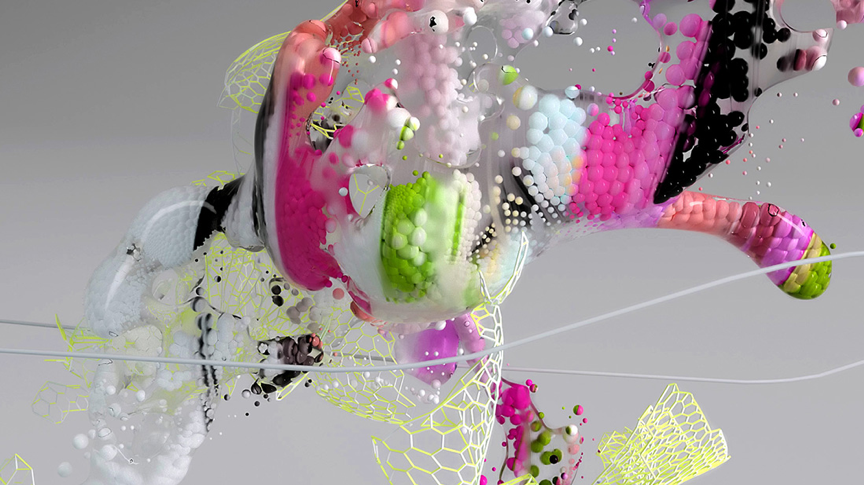
Because of this sudden focus on foamy shapes, I see bubble-structures everywhere. I see foam in this discovery of Christian Mio Loclair’s art installations, interventions, and interpretations. His studio “Waltz Binaire” works for the biggest brands in the world.

He explores the harmonic friction of human bodies, movement, and nature colliding with digital aesthetics. Using cutting edge technology in interactive installations, audio-visual experiences, visual narratives, and dance performances, he continuously illuminates the beauty and drama of human identity.

waltz binaire foam

Enhanced Motion Design - Waltz Binaire Studio

I see foams in Spheres Journal:

“Yet the vision algorithms have of our future is built on our past. What we teach these algorithms ultimately reflects back on us and it is, therefore, no surprise when artificial intelligence starts to classify on the basis of race, class, and gender. This odd ‘hauntology’1 is at the core of what is currently discussed under the labels of algorithmic bias or pattern discrimination.”

Current identity thinking is based on past data. On graphs. On connections and relationships between “nodes”, “end-points” of a relatively fixed and static structure. With the extraction of value built on top of that past, amplified by AI. The past amplified.

But we did not notice that the nodes have become overlapping cells of belonging. The attractiveness of a “foamy” group- or individual-identity is that it is not fixed and static. It is “expansive”, not “extractive”. It adds value. It grows unpredictably into the future. Not like extrapolations of last year’s revenue growth. More like fruit maturing into a juicy ripeness.

Foam is dynamic. Made of bubbles, it lives within and across spheres of influence (both in the sense of actively influencing and passive being influenced).

Foam is not static. It is alive. In search of higher levels of aliveness. Until it dies. And only blobs of dust and air are left.

I see foam in Paul Baran’s network models:

paul baran

Centralized, decentralized and distributed network models
Paul Baran (1964)

What’s the impact of foamy logic on organizational models? How does a foamy organization look like? What’s the shape of D?

Are we moving from Graphs to Foams? From Nodes to Bubbles? What would nodes and endpoints be called in the foam-world anyway? Are we foam? It feels like I am going down a rabbit hole of foam. From fuzzy to foamy logic?

petervan-signature


Ik ben – Je suis – I am

Man on canvas

Petervan Artwork © 2019 – Little man on canvas – Acryl on Canvas – 10x10cm


Ik luister, dus ik ben

Ik kijk, dus ik ben

Ik teken, dus ik ben

Ik schrijf, dus ik ben

Ik componeer, dus ik ben

Ik creëer, dus ik ben

Ik loop, dus ik ben

Ik rust, dus ik ben

Ik huil, dus ik ben

Ik dans, dus ik ben

Ik schilder, dus ik ben

Ik peins, dus ik ben

Ik de-peins, dus ik ben

Meen je dat echt?

J’écoute, donc je suis

Je regarde, donc je suis

Je dessine, donc je suis

J’écris, donc je suis

Je compose, donc je suis

Je crée, donc je suis

Je cours, donc je suis

Je me repose donc je suis

Je cris, donc je suis

Je danse, donc je suis

Je peins, donc je suis

Je pense, donc je suis

Je dé-pense, donc je suis

Vraiment?

I listen, therefore I am

I look, therefore I am

I draw, therefore I am

I write, therefore I am

I compose, therefore I am

I create, therefore I am

I run, therefore I am

I chill, therefore I am

I cry, therefore I am

I dance, therefore I am

I paint, therefore I am

I pense, therefore I am

I ex-pense, therefore I am

Really?


Je depense


This post is the start of a short series of posts on who and where I am/you are, and a set of new interventions and provocations to renew aliveness and alertness in what we observe and what we hope for. Looking forward to creating spiritual, moral and aesthetical advancement together.

You can subscribe via email to these posts via the “Follow blog via email” in the upper right corner of this page. Enjoy!

petervan-signature


The Cambrian Explosion of Identity

I have been thinking about “digital” (identity) for a while. Way back in 2003, I got infected by the digital identity virus at Microsoft in a research project related to the launch of the Belgian Electronic Identity (eID) card, a project that led to executive sponsorship of Mr. Bill Gates himself and meeting forward thinkers like Kim Cameron and many others smart people at Microsoft Research.

bill gates eID card

Later, as the project leader of the Digital Asset Grid (a prototype research project at my previous employer SWIFT/Innotribe), we were investigating distributed sharing of data by independent trusted nodes (one would call that blockchain these days).

Future Scenario from the Digital Asset Grid
Filmed & Produced by Heather Vescent

The project never survived the prototype stage, and although the project was really about sharing any kind of data (and not only personal data), it gave me a seat at the WEF Personal Data experts group. I stayed in touch with many of them and tried to follow the space.

cambrian_fig_1_1_large

Then in 2012, I wrote a blog post titled The Cambrian Explosion of Everything, still one of my most read and commented posts since the start of this blog.

I kept being fascinated by the subject and developed a metaphor where the user would own their data, as if the user would be encapsulated in a Buckminster Fuller sort of sphere, and would be able to share different facets of their outer sphere (their data) and be in control of who they share it with and in what particular transaction context.

BuckminsterFuller

That is, in essence, the VRM concept (Vendor Relationship Management), a set of tools that would give users the tools to manage their vendor relationships, just like vendor manage their customers with CRM (Customer Relationship Management) tools.

My thoughts have definitely evolved since then, especially because I always felt there was a mismatch in trying to mimic 2D identity concepts of the off-line world into the more complex 3D online world. The only thing people were trying to do was to create a digital equivalent of a physical real-world identity card, basically only a representation of an account number, or a social security number, or a government-issued ID.

Identity reduced to a number sitting on a chip of a smart card. It always felt so limiting, and with hindsight plain wrong.

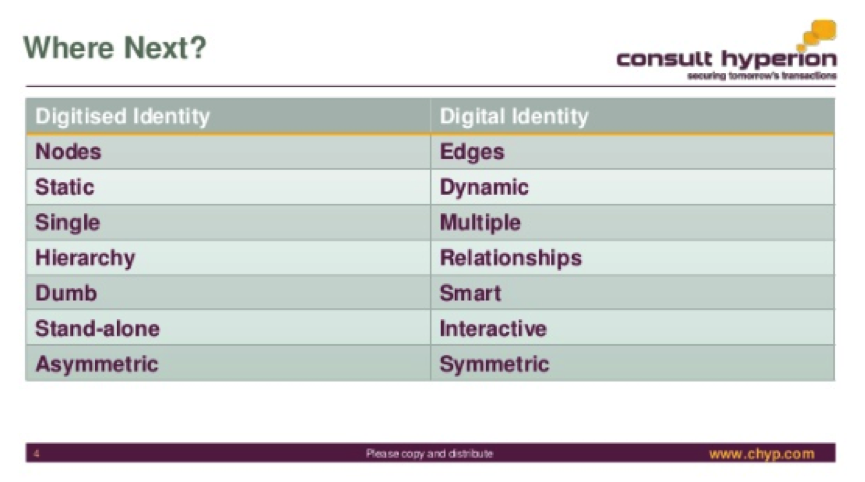
I recently bumped into a presentation by David Birch of Consult Hyperion, and I was fascinated by this slide:

Dave Birch on Identity

The eID card was and still is nothing more than a “digitized” identity. The Belgian government recently decided to add a digital fingerprint to the card. Besides a privacy nightmare, this move won’t help: the card will remain static, dumb, stand-alone, etc and a misnomer in a multidimensional on-line world.

What if we pushed our thinking about true digital identity? What metaphors would help us understand what is needed? What is the new and future context for this?

Zuckerberg in prison on cropped window with white borders V3 with red effect cropped

Petervan Artwork © 2018 - Zuckerberg Prison Cell - Digital Mix

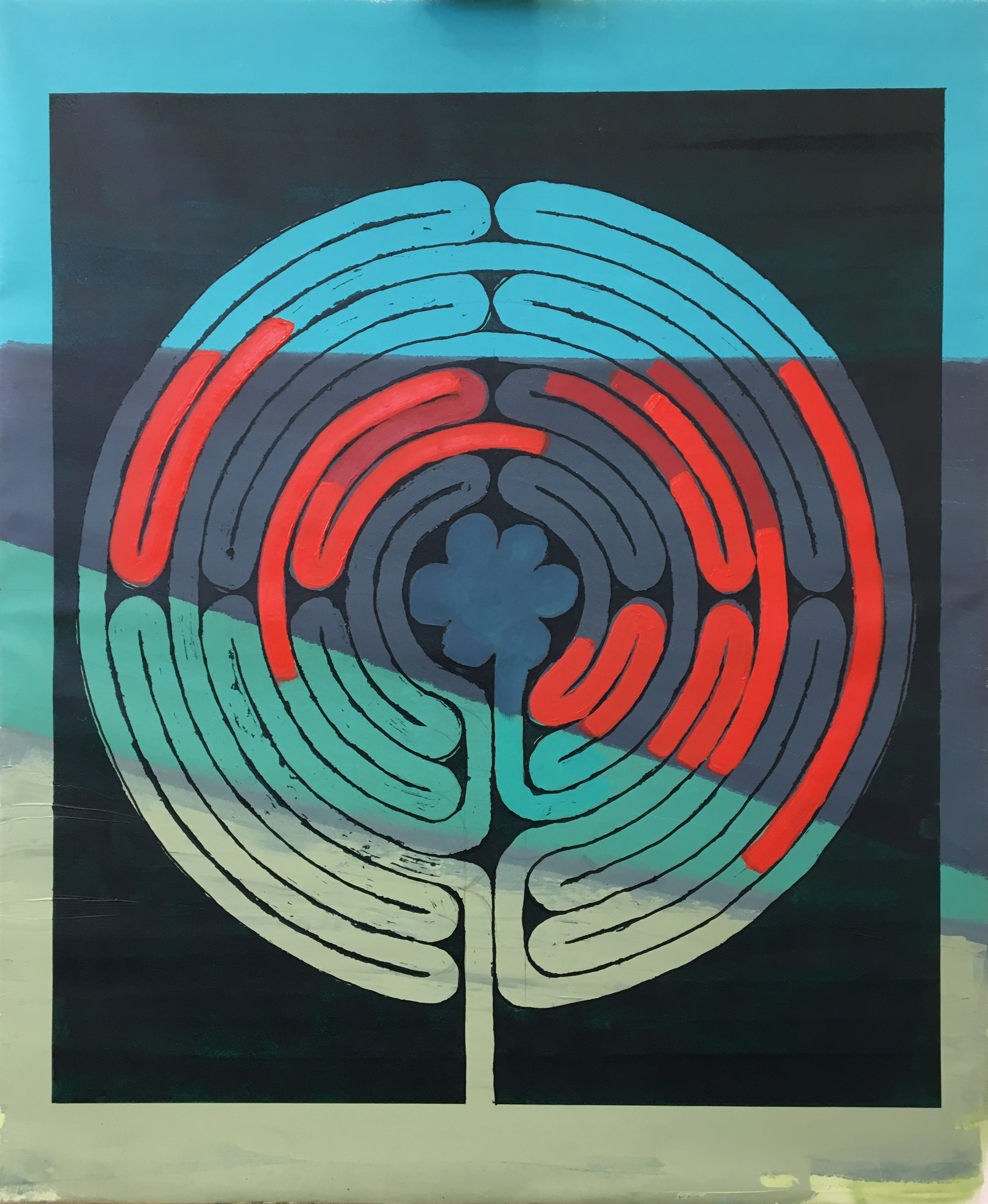
Some of my new metaphors are inspired by my recent artwork on prison cells and labyrinths. I am thinking about identity and data sharing in terms of “signatures”, “maps”, and “labyrinths”.

Labyrinth with two red lines - final

Petervan Artwork © 2018 - Labyrinth - Acryl on Canvas - 100x120cm

In essence, I believe we have to expand all dimensions of entities, data, and transaction context. In addition, we need to become more aware of a different type of scale. We have to start thinking about trillions of entities, sharing all types of data in real-time transaction contexts.

I believe that somewhere in 2012-2013 we lost the time window for VRM in its implementation as personal data stores in the cloud. There is so much data out there now (at FB, Google, your bank, your retailer, your hospital, etc.) that it is an illusion we will ever get back control over it. And even if we would be able to do that, the idea of a user taking the pain to pull the levers of control of their personal data locker is just ridiculous.

Open Banking and PSD2 may give us a hunch: what sort of new services would be possible to develop if banks (and by extension retailers, FB, etc) were forced by regulation to open and share their data. Not new services like a personal data store (PSD), but something more integrated with the daily experience.

For example, I don’t use my credit card to make payments, I use it to buy stuff. The credit card just works under the hood to give me a convenient buying experience. What would be the equivalent services enabling an experience like “I just buy stuff” when Open Banking and PSD2 live up to their promises?

We have to expand our dimensions

Many are confused by the privacy focus on personal data sharing. By now, I tend to agree that privacy does not exist online. I think privacy only exists in the off-line world and in the unspoken word/thought, not in what is being shared (intentionally or non-intentionally)

Privacy only exists Off-line

Privacy has to do with The Unspoken Data. In The Crisis of Intimacy in the Age of Digital Connectivity, Stephen Marche says:

“In an all-sharing world, what we don’t share will define us. The secret will be irrelevant because it is not on the network. It will be the part of us that matters.”

The DAG/Holochain/Solid/etc projects of this world won’t solve this. I don’t know what would solve it. I don’t know whether there is a problem to be solved.

“It can not work because we can’t own information”, says also David Brin.

The more critical question is “What kind of world do we want to live in?”, as in Apple’s CEO Tim Cook’s speech to the EU in Nov 2018.

He talks about “Human-centered technology” in the era of surveillance and misinformation. It is a call for regulation of the platforms and their relation with (mainly) personal entities. I believe we have to expand this.

The Cambrian Explosion of Identity has ramifications beyond platform-human relationships.

In an upcoming series of blog posts, I will expand the following dimensions:

  • Identity
  • Entities
  • Relationships
  • Transactions
  • Type of data
  • Context
  • Motivations
  • Governance
  • Entropy of information

Hope you’ll stay on board for the series.

petervan-signature

What is your signature?

A relatively short essay on what may capture your identity: about titles, maps, codes and signatures.

What’s your title ?

Your title is what is on your business card. It is what you put in the about us section of your website, or in the profile information of your social media. But how much of that is made up?

Darth Vader business card

That title is more a promotional thing. The good side of things. In that sense somewhat related to fakeness, or to rationality as defined by Nicholas Taleb in his latest book “Skin in the Game”.

Crafting your title is a form of ego design optimisation. In many cases that optimisation only makes sense in context of the organisation you work for. Titles also somewhat assume you do work, you do have a job. No job, no title.

Those titles are also ephemeral. You change titles as you change jobs.

But they are fairly meaningless. You will learn that people are only interested in what you can give them access to (money, investment, contacts, brain picking, etc). You risk becoming nobody without your corporate title and business card.

What is your map?

A better way to think about your identity – or “onlyness” as coined by Nilofer Merchant – is to think about your identity map.

Richard Martin already did the homework on this topic, especially when highlighting the Map of Days (HD PDF) by Grayson Perry.

map perry

Fragment from A Map of Days by Grayson Perry


“In the Map, Perry presents his complex personality and plural identity in the form of a walled city. Streets, buildings and other locales represent personal traits and behaviours, indicating a self-exploration that embraces both the positive and the negative, that poses questions, as well as providing answers, binding together truth and fiction.

 At the centre of Perry’s map is a labyrinthine garden, in which a figure walks, off-centre, pursuing ‘a sense of self’.  

I am getting somewhat obsessed by labyrinths and mazes these days. Some fans also refer to my labyrinths as brains or intestines 😉 If I could fabric 3D labyrinths that fit into a skull, that would be a good metaphor for the complexity of identity as well.

Labyrinth on landscape cropped

Petervan Artwork 2018 - Digital composition - Labyrinth on landscape

What’s your code ?

Some people refer to “code”.

Code is very similar to patrimony, very close to narrative, very close to structure.

Some refer to code as to formula. Others – like Christopher Alexander in the Timeless Way of Building – talk about “pattern languages”. The code of a house, of a building so to speak.

There is also “code” in fashion.

BTW: the Balenciaga show has a fantastic soundtrack. You can fine it here.

But the danger is around the corner: that the code becomes a gimmick, nothing more than a formula, getting formulaic, turning into meaningless clichés, and ultimately loosing spontaneity and becoming irrelevant.

What’s your signature?

I believe “signature” is a richer concept. There is no face anymore, no title, but there is a signature, your unique way of creating, executing and communicating.

There is a recognition that you are part of, influenced by a bigger set of interactions and community. Like Celine Schillinger did on her latest website. She labeled that page “Together”, a list of partners in crime.

In painting, artists and critics refer to somebody’s “signature”. They don’t talk about the handwritten signature on the bottom of the painting.

In the past, painters put their signature on the painting when done. These days this is not-done. That handwritten signature becomes a disturbance, distorts the coherence of the image. The signature distorts the signature of the image.

No, they talk about “touch”, “writing style”, and “symbolic script”. In dance one refers to the “choreographer’s writing”,…

What is the signature of your work? When you architect something, will your audience immediately recognise it as yours? Not because it resembles like a copy-cat of previous work, previous collections, but because it carries your unique signature?

And how does your signature reflect your sense for ethical, aesthetical, and spiritual advancement?

robert motherwell the voyage

Robert Motherwell – The Voyage – 1949

New American Painting Calalogue2

In the beautiful 1959 “The New American Painting” catalogue (PDF) of MOMA, Robert Motherwell said on page 56:

“I believe that painters’ judgments of painting are first ethical, then aesthetic, the aesthetic judgments flowing from an ethical context …

Without ethical consciousness, a painter is only a decorator.

Without ethical consciousness, the audience is only sensual, one of aesthetes.

When are you more than a decorator? When do you touch your audience beyond the cognitive, sensual and aesthetical? When do you resonate at an ethical and almost non-conscious level? What is your signature?

petervan-signature

I have no clue what you are talking about

This is a short (and bit weird) morsel on not understanding a clue anymore, to have the feeling to encounter a completely foreign world.

I happened to me several times last months, that I read or meet something/somebody and I really don’t have a clue what they are talking about.

  • A friend shares with me her business plan for a new app, and I have no clue what it is about, even not after having (tried to) read the associated white paper
  • The book “What Algorithms Want” by Ed Finn
  • The “God is in the Machine” post by Carl Miller
  • The 1000 dimensions of algorithms in James Bridle’s “New Dark Age
  • Eddie Harran’s (aka Dr.Time) Temporal Labs, Research lab investigating time’s impact on humanity

From the “God in the machine” post:

We sat there, looking at the computer, his creation laid out in multi-coloured type. “This is all to do with complexity,” he said contemplatively. “Complexity of input. Complexity of analysis. Complexity of how outputs are combined, structured and used.” 

 “Truth is dead,” he sighed. “There is only output.”

 After some 1-1 conversations with some of the authors, it looks like I missed a whole generation of aesthetic language that is only found in apps, games, and Netflix-ish series like Black Mirror, Mr. Robot, Tangerine, Ratter, and Skam.

black mirror

Black Mirror – Season 4 – 2017

It feels like digital incest. Trying to hide from your virtual self. A virtual loop of digital identities and personalities. Not knowing what is real and what is fake or sliced/looped faith.

It also makes me think of this extract from Bill Gates’ review of Capitalism without Capital:

It took time for the investment world to embrace companies built on intangible assets. When we were preparing to take Microsoft public in 1986, I felt like I was explaining something completely foreign to people. Our pitch involved a different way of looking at assets than our option holders were used to. They couldn’t imagine what returns we would generate over the long term.

It feels like I cannot imagine what these new aesthetics can mean on the long term, and how they are already influencing now Generations X, Y, and Z.

I am missing the @swardley’s situational awareness map, about movement and position. Where is the anchor? What is edge and what is commodity?

Visit Roger Raveel museum 28 Sep 2018

If you are still in for it, here are two soundscapes of my visit to the Roger Raveel Museum;

Still with me? Where am I? What’s next? Where is this going? How fast? How? When? With whom? Who is cheating? Who’s not?

Are we entering a digital matrix? Where real and surreal blur into an new perception?

Tell me if your understand.

Are we all lost?

petervan-signature

The Unspoken Data

This list of unspoken data is intended to be read in conjunction with my post on “The Selfish Data”

I want to get rid of the delusion that our social profiles are real and that we “don’t have anything to hide”. We are also a container, owner, custodian of many thoughts, concepts, ideas, habits, etc that we wish to protect, to keep intimate, to keep inside, to keep secret. Maybe that’s the real objective of privacy.

These are the data you take with you in your graveyard. They are not passed on to next generations like a selfish gene.


The unspoken dreams

The unspoken frustrations

The unspoken fantasies

The unspoken weird thoughts

The unspoken desires

The unspoken memories

The unspoken secrets

The unspoken shadows

The unspoken wounds

The unspoken joys

The unspoken likes/unlikes

The unspoken emotions

The unspoken jealousies

The unspoken failures

The unspoken loves

The unspoken trusts/distrusts

The unspoken masks

The unspoken narratives

The unspoken journal notes

The unspoken games

The unspoken phobias

The unspoken fears

The unspoken spaces

The unspoken dominances/submissions

The unspoken psychotics

The unspoken obscenities

The unspoken forbidden areas

The unspoken losses

The unspoken hates

The unspoken skin problems

The unspoken health concerns

The unspoken pathologies

The unspoken pardons

The unspoken little physical pains

The unspoken disorders

The unspoken shames

The unspoken lusts

The unspoken bodies

The unspoken vanities

The unspoken delusions

The unspoken disorders

The unspoken scandals

The unspoken doctrinal inconsistencies


Feel free to add more in the comments section of this post. If appropriate, I will add them to this initial list.


petervan-signature

The Selfish Data

Some days ago, a Google video “The Selfish Ledger” leaked: a futuristic thought experiment on how total data collection could reshape society. I believe it is a very interesting perspective on data collection that can lead to as many utopian as dystopian scenarios as you want.

There was an excellent coverage in The Verge, well done, so read that one first maybe. The same Verge article also includes a good context video here.

What I would like to offer here is a somewhat broader perspective on the whole issue.

The use of the word “Ledger” reminds me of course of the 2012 Digital Asset Grid project – in essence a collection of distributed ledgers of all sorts of data (not only personal data), a blockchain without blocks and without chains – that was already incorporating concepts like the intention economy of Doc Searls. With some goodwill one could interpret the “Resolution” concept in the Google video as some sort of intention.

In 2012 there was maybe a time window where Personal Data Stores could offer an alternative to the almighty GAFAS of this world, but that time has long been gone. The Google video also shows how outdated the GDPR legislation is. Today is not anymore about users giving consent, but about data having its own life and will. I could paraphrase Kevin Kelly’s “What does technology want?” into “What do my data want?”. Not that I believe that my data wants anything at all, but it gives you a zest of Google’s thought experiment.

google ledger

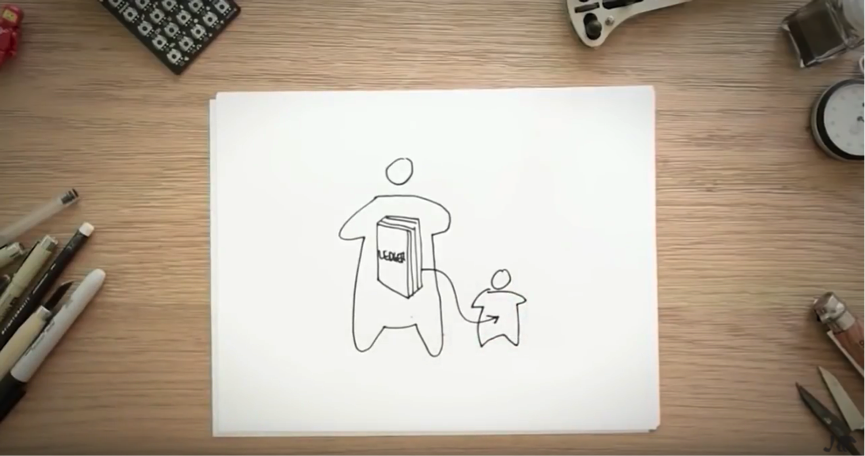
The key snippet from the video is where the human becomes the custodian – not the owner – of the data ledger, and can pass it on to next generations. The video suggests that data has it’s own intention, an intention to survive and pass on information to next generations. Like the Selfish Gene of Richard Dawkins (a book from 1976 ! that is also referred in the Google video). The Selfish Gene was published more than 40 ago, and since then the ideas of Dawkins have been quite critized.

The Google film also has a bit of the same alienating atmosphere, uncanny valley feel of Andy Curtis documentaries. Of course the documentary “The Century of Self” is the most relevant in this context.

It’s a series of 4 videos, together more than 3 hours of footage, but I strongly encourage you the watch it with the Google video as reference point.

Curtis depicts “how those in power have used Freud’s theories to try and control the dangerous crowd in an age of mass democracy.” and refers a lot to the PR techniques developed at the time by Edward Bernays, who was using the corporate PR techniques, but now for governments wishing to influence the behaviour of their citizens.

Curtis also cites the words of Paul Mazur, a leading Wall Street banker working for Lehman Brothers in 1927:

“We must shift America from a needs- to a desires-culture. People must be trained to desire, to want new things, even before the old have been entirely consumed. […] Man’s desires must overshadow his needs”

The Google video seems inspired by that desire to train people to desire, whether that is buying stuff or realising resolutions. Still very much looking at the user as a consumer, which is an insult IMO. It also starts feeling very much like the Sesame Credit score, the Chinese government social rating system, a private credit scoring system developed by Ant Financial Services Group, an affiliate of the Chinese Alibaba Group, where in essence behaviour in line with the party line is rewarded, and behaviour not in line with that norm is punished. The critical question is of course who sets the norms and what are the intentions of those issuing these norms.

Also, what many discussions about personal data seem to omit, is that the data that are intentionally or unintentionally shared by users are only a very small snapshot of somebody’s data “ledger”. A lot is not shared at all: I would refer to these data as “The Unspoken”. The ideas, thoughts, concepts, models, desires, fears, etc that are unspoken, because they embarrass you, or because they have not yet been integrated in your personal narrative of who you are.

The Unspoken data are related to unspoken dreams, frustrations, fantasies, weird thoughts, shadows, memories, etc. In many cases personal secrets that you are too afraid to share as they expose your vulnerabilities. I have started making a list of The Unspoken that you can find here, and I kindly invite you to complement this list if you feel so. Who said again that “If you have something that you don’t want anyone to know, maybe you shouldn’t be doing it in the first place.”?

On another dimension, I have been reading quite recently a couple of books that at first sight may seem unrelated to the subject at heart here.

  • Nora Bateson’s “Small Arcs of Larger Circles: Framing through other patterns”. A book about how thoughts, ideas, concepts and patterns are inter-relational and are passed from one generation to another.
  • Michael Singer’s “The Untethered Soul”: about the timeless philosophical question “Who am I?” and more importantly, which “I” are we talking about here. The “I” of our thoughts and emotions, or the “I” that is witnessing them?
  • Keith Johnstone’s “Impro: Improvisation and the Theatre”: highlighting how people try much too hard not being obvious, and how many people think they are only interesting of they have something different to show, share, say.
  • Venkatesh Rao’s “Tempo: Timing, Tactics and Strategy in narrative-driven decision making”, describing virtuoso how “tempo” is an always present but less outspoken aspect of our relationships between people, corporations, etc
  • Han Kang’s “The White Book”, with an essay about swaddling white bands around a newborn baby: “The womb will have been such a snug fit, so the nurse binds the body tight, to mitigate the shock of its abrupt projection into limitlessness. Person who begins only now to breathe, a first filling-up of the lungs. Person who does not know who they are, where they are, what has just begun. The most helpless of all young animals, more defenceless even than a newborn chick.”

The Google video is also inherent of Silicon Valley’s solutionism delusion; that if there is a problem to be solved, there is an app or an algorithm for it. This is finite game thinking as compared to infinite game thinking, as well described by James Carse.

I like Nora Bateson’s quote here:

The problem with problem-solving is the idea that a solution is an endpoint.

 And further in her book:

I see a great deal of misunderstanding—a great deal of information floating around, and even more being generated in the form of big data, little data, medium data. But not much in the forms of the warm data of interrelationality.

“Warm Data” is information about the interrelationships that integrate elements of a complex system. Information without interrelationality is likely to lead us toward actions that are misinformed, thereby creating further destructive patterns.

“Warm data”, I like that. I prefer that way more than selfish data.


petervan-signature

Petervan Jan 2018 – Let’s do something interesting

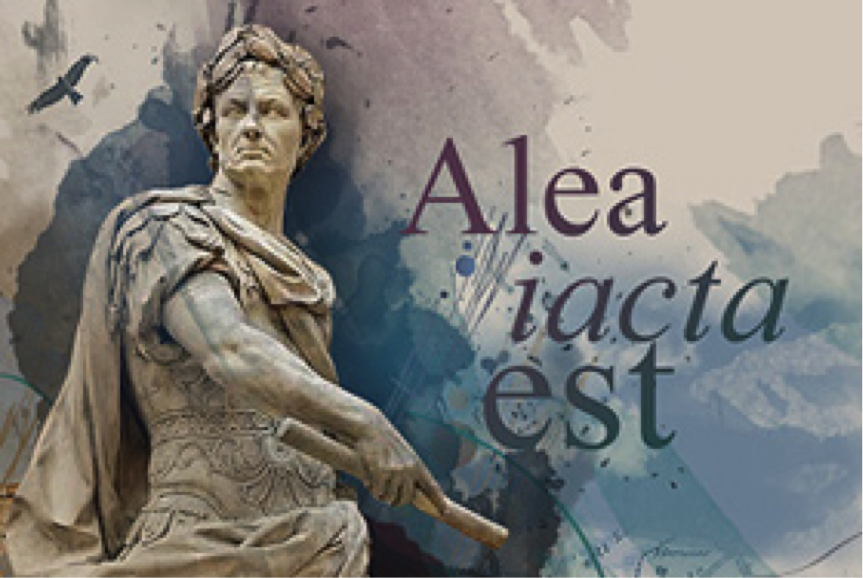
Alea iacta est

My sabbatical has come to an end, and I left SWIFT on amicable terms mid Jan 2018.

I also decided to drop the whole idea of Petervan “Productions” and killed the related website. It just simplifies a lot. The “Productions” branding of my work confused people more than anything. I am not in the event business; my work is more about artistic experiences. I am not running a company. Just a guy on his own, cranking out some stuff that sometimes people find interesting (or not).

I will continue my journey now as a free agent to do “interesting” stuff. Here is an open invitation: let’s talk about what “interesting” means and surprise each other!

“What I want to do is make situations where we’re all slightly at sea because people make their best work when they are alert. I’m now 68, so I might have another 15 to 20 years left – talking about my history. So, given the little time I’ve got left on this planet, I would really love to focus on some of the new things I’m doing.” (Brian Eno)

I am not 68 yet, but I feel the same desire not to talk about the past but to focus on the new things I discovered during my sabbatical, and to help you make your best work.

"Celui qui tombe" by Yoann Bourgeois
Dance performance with music “My Way” by Frank Sinatra


The Artschool project

I am really enjoying my time at the Art Academy in Ghent (KASK), and love the freedom and feedback from my mentors Chris, Koen, Inge, Marie-Ange, and Annique.

prison window Gober

Prison Window – Art installation by Robert Gober - 1992


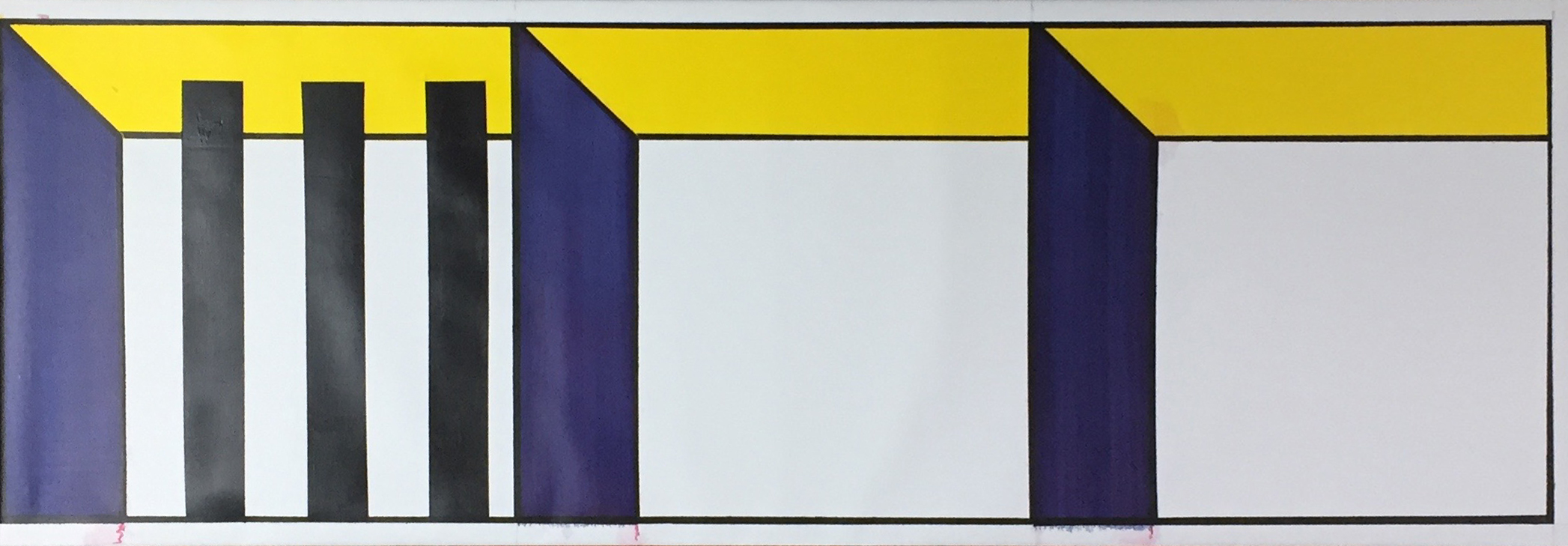
I also found a theme to work on for the rest of the academy year. The theme is labeled “Hot dogs tonight” and the inspiration was an art installation “Prison Window” by Robert Gober.

I will work on a series of very abstract artworks and installations based on a minimalistic geometrical interpretation of that window. Here is my basic shape to start from, and a first painting exploring this meme:

prison cell basic shape

Petervan concept interpretation of Prison Window – 2018


prison V1 9 Jan 2018

Petervan artwork – Hot Dogs Tonight #1 – 2018 – Acryl on canvas – 120x40cm


I did an impromptu Skype presentation about this project to a friend in San-Francisco, and I was amazed how the work seems to be an open invitation to have a conversation about what it means to be a full person and not only a reputation or influence. Ping me if you’d also like a run-through of the plans for “Hot Dogs Tonight”.

This project can keep me busy for quite some time, and to make sure the thing does not become an obsession or pain in the neck, something that I have to do, I will still produce in parallel some more figurative work.

The Poem project

Several poems written over the last couple of months, but for this edition of Petervan’s update, here is a really a short one, just two lines:

I dreamt I was reading a book of dreams,

and forgot where and why I was

red-pocket-leather-journal-the-book-of-dreams_1


Five trends for humanistic advancement

I found it a good moment to condense my sabbatical thinking into a couple of levers that could enable high quality advancement for a humanist future.

To drill down, click the appropriate link. There is also a self-contained version on the site of Humanworks Design. Thanks to Rudy for having me.

Any of the trends described could evolve in a good or bad direction, but as an optimist, I chose for the path of “advancement” vs. the path of decline and degradation.

The Performance project

The organisers of FinnoSummit kindly invited to do the premiere of my performance as the closing keynote for their Miami event on 9 Oct 2017.

To give you an idea of the storyline and subject covered, here is a link to the slides:

https://www.slideshare.net/thepierre/finno-summit-2017-miami-petervan


The keynote performance also includes self-composed and performed live music, poetry, soundscapes and other artwork. To have an idea about some of the soundscapes, here is a snippet of a very long self-composed ambient that I use while the audience walks into the room, purposefully called “Opening Walkin”: http://soundcloud.com/peter-vander-auwera/opening-walkin The snippet is about 40 seconds long, the real thing lasts for 29 minutes.

Thank you Andres and Fermin for letting me do this.

The Pigs & Chickens Project

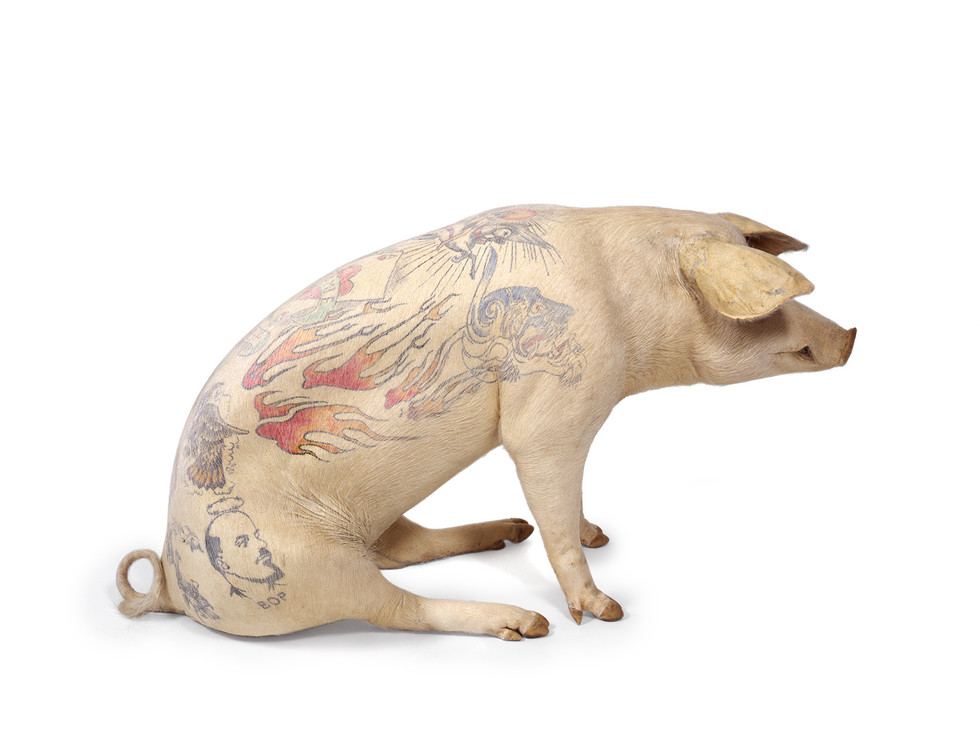
This is just a moniker for my garden project. I know of a friend who years ago left corporate life to start a pig farming business. True story 😉 But my wife said no to pigs, so we’ll have chickens instead.

Tattooed Pig Jamie

Tatooed Pig Jamie by Belgian artist Wim Delvoye - 2005


Besides spending more time in my kitchen garden and orchard, I plan to be more in nature in general. So expect some more pictures of my bike rides in the country of the Flemish Primitives.

The Studio Oxygen project

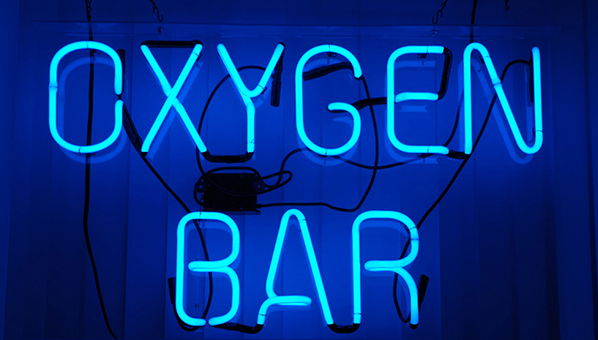
Being in nature is also about taking in more oxygen. I am running a small on-line collective that (un)regularly comes together online to discuss a seed that I have planted. Sometimes we’re ten people in the call, sometimes nobody shows up. The conversations are very unstructured and open-ended, like with no agenda, but they generate all sorts of inspiring thoughts and ideas, and people seem to like these sparks of inspiration and refer to them as “oxygen for the mind”.

Oygen Bar

So I plan to experiment with some formats to create a platform letting people share the interesting stuff and ideas they are up to.

What’s next?

During Jan – Mar 2018, the plan is to work on:

  • Pigs & Chickens Project
  • Hot Dogs Tonight
  • Studio Oxygen
  • More artwork
  • Whatever feels interesting and comes naturally into my flow


IMG_2735 (1)

Petervan artwork – Early pre-study for concert hall – Jan 2017 – Acryl on sketch paper – format A4


That’s it for this edition. If there is something worth reporting, next update is for Apr 2018. Looking forward to hearing from your latest adventures as well.

And if you have an idea to do something interesting together, please contact me.

Warmest,

petervan-signature