The Orphic Experience: We are all Argonauts again

In my post about Dub-Techno artist Adrian Sherwood, I referred to the book “Dub Techno – The Orphic Experience of Sound” by Bahadırhan Koçer to describe my sound experiments with dub.

As promised in that post, the most compelling part of the book appears in its opening chapters, where he introduces “The Orphic Experience.”

The short summary is in the video below, from 0:59 to 2:23. The latter part of the video is about the three key elements of dub-techno: spontaneous repetition, atmosphere, and embracing noise.

TL;DR: The orphic experience uses music to alter perception, evoke deep emotions, and influence the listener’s state of mind. It creates a unique space and time for introspection and reflection.

Let me unpack this in stages: first the “orphic” aspect, then the “experience” element, and finally a synthesis.

Orphic

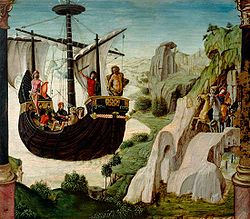
The “orphic” part originates from Orpheus, a character in the ancient Greek poem Argonautica, dating back to the 3rd century BC. The Argonauts are travellers on the boat Argo and are on a quest for the golden fleece. Somewhere along the route, sirens are trying to seduce the boatsmen. Still, Orpheus – a talented singer/musician on the boat – can shield the boatsmen from the Sirens’ temptations through his celestial, beautiful songs and voice. In other words, he was a noise canceller avant la lettre.
Some salient quotes from Bahadırhan Koçer:

The orphic experience, therefore, refers to the transformative way sound and media technologies can be used to control one’s sonic environment, creating a personalized auditory space that shields individuals from the overwhelming stimuli of modern life.

It is conceivable to argue that the nature of this transformation lies fundamentally in a shift from communal to individual listening.

The protected space needed for “sensory and emotional self-care”

In this sense, orphic experience can be seen as a way of escaping from the demands of the real world and constructing a self-contained, artificial reality.

By carefully curating their auditory environment and creating a personalized soundtrack to their lives, the individual can signal their taste and distinction to others, and distinguish themselves from those who do not possess the same level of cultural capital.

The “orphic” concerns the creation of a protected, isolated space in which the rules constraining clear thought can be suspended.

Experience

The second part is about “experience”. The words “Narrative” and “Experience” have become catch-all words. Washed-out. Weak. And they all suggest a passive audience.

Also here, a David Claerbout quote is appropriate:

I think the recent proliferation of black boxes for film and video-art is not just a practical solution to a problem of sound and light interference, but also reflects an incapability to coexist. This can become apparent in large group exhibitions, where media installations appear strong when they are shown by themselves in a small or large dark space, but they easily collapse when shown in a social space where people move about and interact. The black box is a social phenomenon, for me it is a problem.” Ulrichs, David, ‘David Claerbout. Q/A, in: Modern Painters, May 2011, pp. 64-66

“Designed Conspiracy” would be better to describe what I have in mind. With an active audience. Or even better, where there is no stage hosting the expert speaker and no passive audience just leaning back in chairs, incapable of truly internalising knowledge.
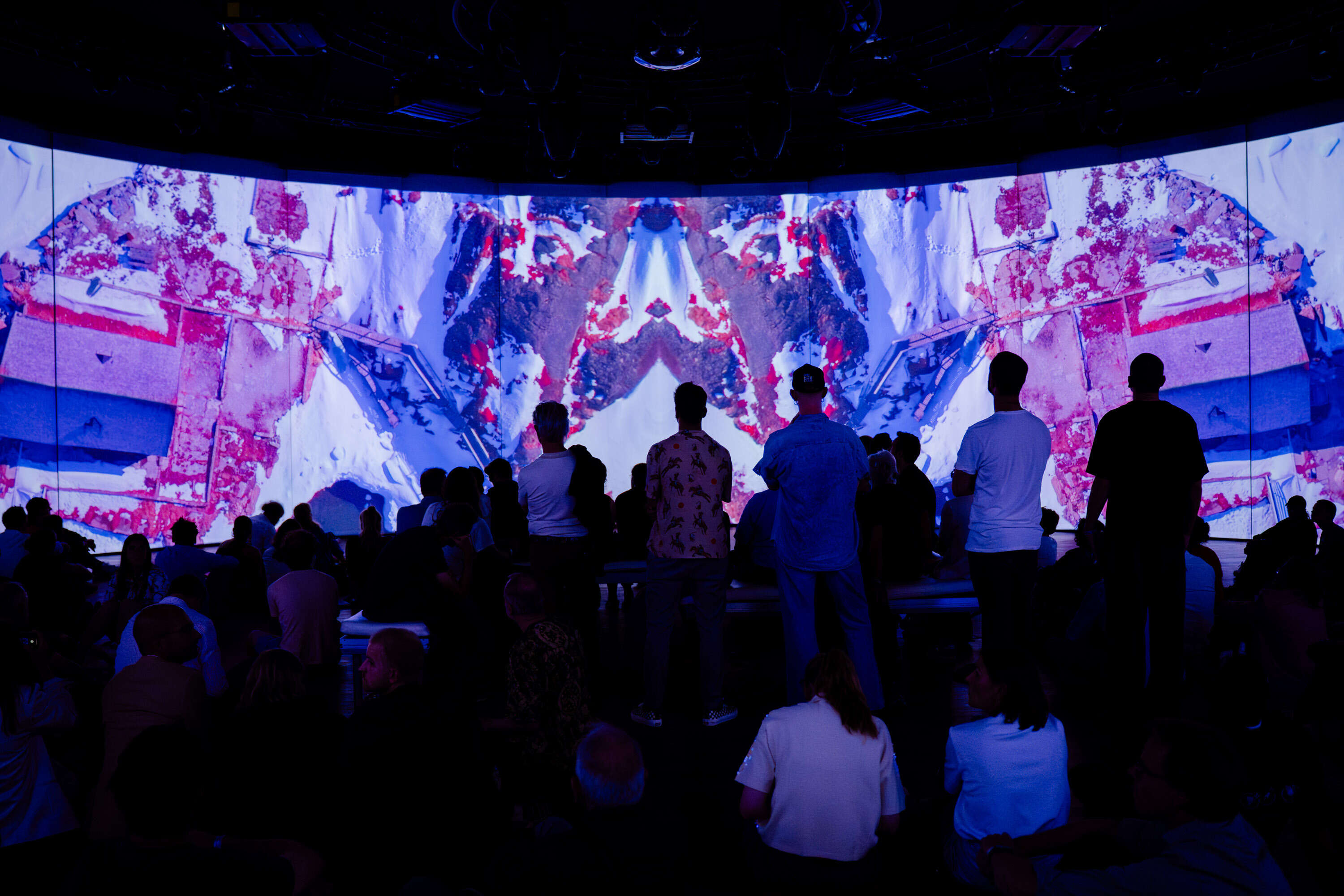
I imagine us inside a 360° immersive room: a six-metre-high LED screen, full 360 Dolby Atmos sound, LiDAR tracking, and high-definition cameras—paired with exceptional content and facilitation. A complete experience in a box, ready to tour and deploy anywhere in the world. Am I exaggerating? Maybe not. I’ve just met someone who is building exactly this.

Synthesis

Obviously, I am using all of the above as a metaphor to try to explain what I do with my artistic interventions, provocations, and interruptions. These qualities inform my work/play. Whether that is soundscapes, installations, performances, or group expeditions.

Now that we have our protected, isolated space and a designed conspiracy, it is time to play the music. Music is the content. Content is the music.

Experiencing our music – individually or as part of a group – can feel like a trip, a trance, like digital psychedelics.

The music/content is presented in the right space, with the appropriate emotional and psychological atmosphere—the backdrop, if you will—inviting and sustaining safety, interest, curiosity, awe, and growth.

The rhythm is softer, slower, quieter vs. harder, faster, louder.

We embrace – and even design – flaws and imperfections, spontaneous repetition, and noise, inviting the participants to connect with being human, and to internalise the content at an embodied level of sensory experience.

We design with fifty shades of sophistication: avant-garde activism shaped by counterculture, driven by intention and direction. We build a relational infrastructure capable of holding shared ambitions, carrying a map as a symbol of movement, of becoming. These are maps that make meaning—shifting the question from the adolescent “Where are we going?” to the more deliberate “What direction do we want?”
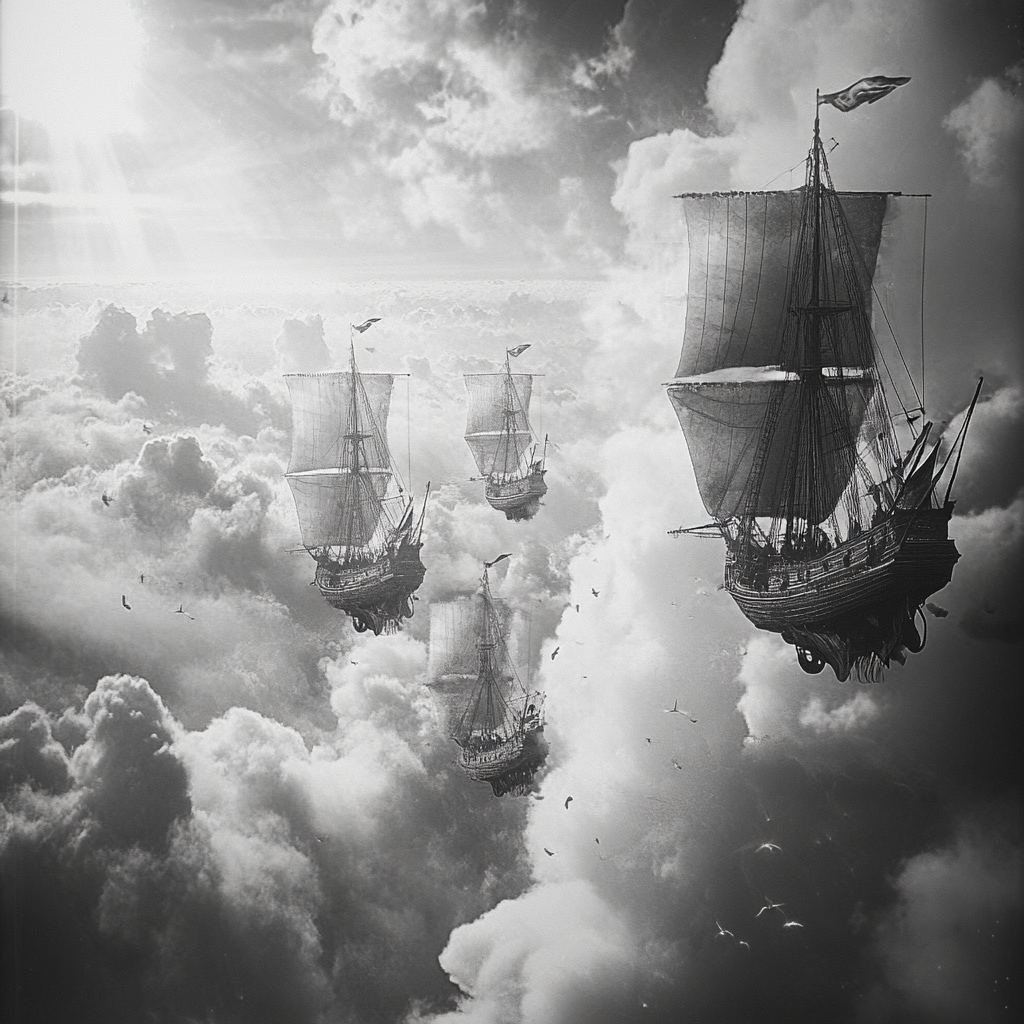
We are all Argonauts again. We are experiens-explorers. We want to create the right spaces and conditions for debating the new rules and the associated structures of reality, then acting them out as if those rules were in place. As explorers, we want to play with new rules to dream, new rules to hope, but also – not to sound too cheesy or utopian – new rules to suffer and cope with what is evil and sin. In that sense, we become all part of a shared conspiracy.

We are not in the business of homo sapiens, ludens, or faber, but in the business of homo experiens.

Inspiration – Even more David Claerbout

Studio David Claerbout just published the video of a lecture at The Cloud Collection, Nanjing on the occasion of the opening “Flow of Time. David Claerbout and Zhou Tao” exhibition.

At 17:50, he explains how he made the Woodcarver and the Forest. Prompting ChatGPT to create a script and images, then filming what ChatGPT suggested, and then giving it back to ChatGPT and asking whether it recognises itself.

I took the rough auto-generated YouTube transcript of this talk, and prompted ChatGPT as follows: “take this transcript, delete the time markers, delete the uhm’s, and put it together in readable sentences”, and this is what it came up with (highlights by Petervan)

+++ by ChatGPT

Thank you for coming. When the invitation arrived to make a double exhibition with the work of Zhou Tao, we were of course very curious. It was clear that there was a real reason we were invited to exhibit together, but there was also a lot of mystery because I didn’t know his work very well, and I had not yet realized the intrinsic relationship to time in his work. It was only by coming here a few days ago that it started to sink in—what the subtle relationships between the two of us might be.

First of all, I would like to thank the Cloud Collection for bringing us together. We obviously have very different ways of working, which you can see in the works. For Joe, being in a location, being physically in a place with his camera as his partner, is crucial. In my practice, we spend a long time and work with many people, sometimes for at least a year. If I look around at the pieces in this exhibition, I think the shortest production time is one full year. Other works took two or three years. Our record, if I remember well, is sixteen years—sixteen years of thinking back and forth about how to do something until we finally finished a production.

What we do have in common is that we like to use the duration of the film as the acting force—not so much the actors, not so much the motives, but the simple fact of being in front of a situation. This approach to film is relatively recent and has to do with the availability of digital time. I call it digital time because it is no longer expensive time; it’s virtual time of which we can gather a lot. For our generation, duration is no longer exclusive, expensive, or spectacular, but something broad and long.

When I came here two days ago and saw the combination with the work of Tao, it made me question myself: is it really necessary that I work so long on a single image? The airplane is a single motive. The birdcage is a single motive. These works revolve around very simple motives. I have to admit that whenever I work on one film, I am actually thinking about two films. This is one of the reasons I keep my motives simple: because I try to work with two identities.

For example, the film behind you, The Wood Carver, has the identity of a meditative work that calms you down, but also another identity that is almost the complete opposite. I’ve always been fascinated by what happens when you let go of narrative film—when you let go of talkies, psychological realism, and story, and instead go with time, with duration, with the flicker of the images. Could I make a very minimalist film where I use the least possible narrative and still generate narrative inside the heads of the visitors?

As you walk around, you’ll notice there are few sounds—no soundtracks, only what I call “witness sounds”: bird songs, nature, wind, footsteps. It wasn’t always like this. I made films with soundtracks, musical scores, conversations between actors. But my focus was always on the background, and more and more the birds became a symbol for that background—giving the film back to the witnesses rather than the actors. In cinema we often speak about foreground and background, like in painting. I realized I have a preference for what is behind—for what is far away, not in the foreground.

One of my very first films, made in 2003, is a 14-hour film where three actors perform a short 12-minute scene repeatedly for a full day, until they start making errors or falling apart. Only then do you slowly begin to see that the film is really about the light, the changes of light, and not about the narrative in the foreground. I am very much an advocate of the cinema of the witness, not the cinema of the actor.

A word also on ecology: I avoid entering specific subject matter, but I cannot help noticing that we spend a lot of time in front of screens and very little in nature. This makes me think about the relationship we have with technology. On one hand, I love technology—I’m a technological buff, and whenever something new appears, I try to catch up with it. But at the same time, my works are not about technology. They are about light and shadow, about composition, about the slow pace of time. Again, there are two tracks.

Any cinematographer knows that the moving image is a technological construction—25 frames per second. It is a prison of time; you cannot escape it. So why would artists choose to work in this prison in order to liberate time? To find alternatives for thinking about the flow of time, as Suzu beautifully mentioned in his text.

Let me elaborate on the black-and-white film behind the wall, titled Aircraft Final Assembly Line. Like many of my films, it is based on an image or an idea I found somewhere—an archive image, something with no particular message. I found a black-and-white photograph of this aircraft. It was originally painted in black matte aluminum. I was fascinated by the enormous wooden hall in Chicago where it was constructed—a space that no longer exists. This polished aluminum aircraft stood there, brand new in the past, yet I look at it now from the future, as a witness. I know the aircraft is probably destroyed by now. The work became about the dialectic between materials: polished aluminum, rough wood, concrete floor, improvised-looking scaffolding—yet airplanes themselves are not improvised. They must be perfect. Airplanes are like perfect arrows of time: they promise the future.

This is typical of how I work: I don’t invent; I let myself be inspired by archive images, almost orphaned images from the past.

When we move mentally to Bird Cage, the film with the explosion, this was a follow-up to a pandemic-era film, Wildfire. I continued with the motive of the explosion because it is the perfect index of a moment—after an explosion, nothing is ever the same. I was fascinated by the idea of remaining inside that moment of change for a long time, looking at all the pieces of the world flying apart, but in a peaceful way. Again, a paradox between destructive and meditative energies.

In the middle of this are two birds that appear twice—once inside the explosion, at the last fraction of their lives, and again later, alive and peaceful in a garden. I hesitated for a long time to use this imagery because it is almost ridiculous—two birds in an explosion, like a crucifix of birds. But I kept it because I was fascinated by the elliptical camera movement. If you look closely, there is no cut: the camera moves from the explosion back to a normal, sunlit garden, with the same two birds sitting together, almost as if they are trying to tell you something. Ten minutes later, the same ellipse brings you back to the explosion, frozen in time—an “immobile explosion,” a contradiction in itself.
I like to work within a single mental space, not jumping between spaces but taking the viewer on a minimalist journey through one situation.

The confetti piece around the corner, the double screen, was made from 2016 to 2018. It corresponds to a series I’ve done for about 15 years: dozens or hundreds of digitally constructed photographs combined into a slideshow. A conventional parade of images, except that it’s about the absence of sound. In the film, a little boy is screaming, but you hear nothing. His scream becomes internalized. The scene is exaggerated—a Black boy surrounded by white adults. I was warned against using it because it might appear divisive. But I said yes, that tension is exactly what we need in order to reach something more universal. The real fascination for me was the internalized scream, and the way spending time with the work might let the viewer internalize it too. It is as close as I can get to a painting with an action attached to it.

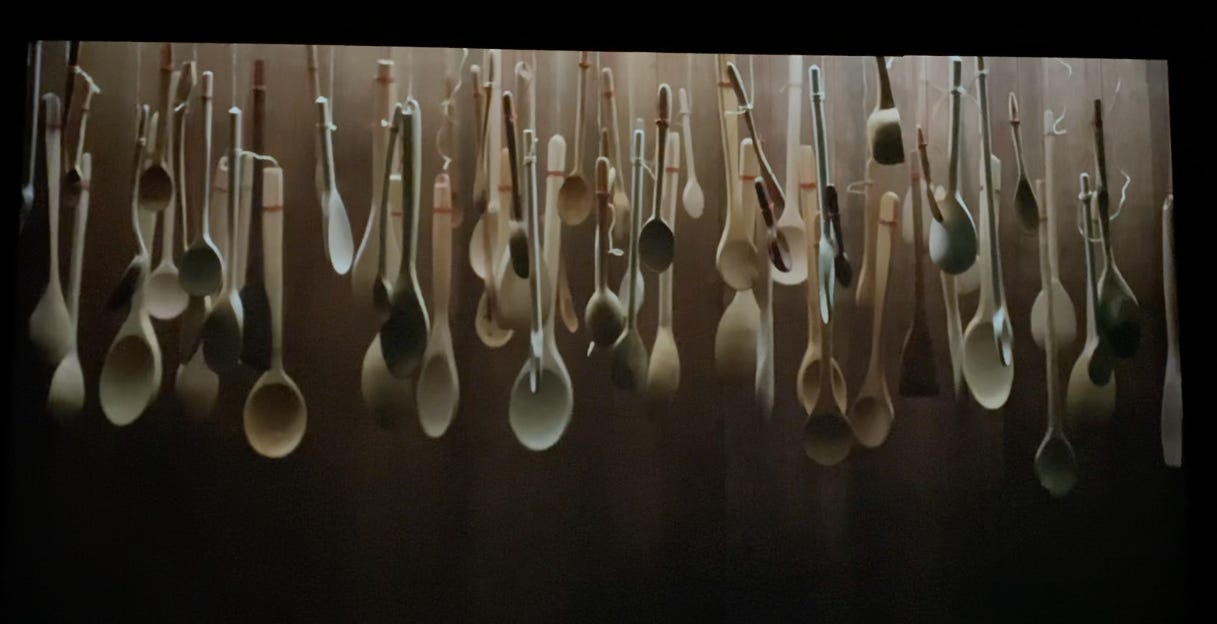
Finally, behind us is the latest work we made, just finished for this exhibition: The Wood Carver in the Forest. The subtitle is “A ruthless deforestation machine disguised as a meditative film.” Again, it has two identities. Most spectators will identify with the relaxation—the small sounds, the details of oil, wood, knives, carving, micro-movements outside any big narrative.

We designed this work using ChatGPT. ChatGPT is one big confabulation machine; it always gives you an answer, even when it has no clue. We wrote the storyboard with it, then requested illustrations, and used those as the basis for a cinematographic team. We worked for a year to reproduce what AI had suggested.

It came up with scenes like the one by the window: a person staring at nature but actually staring at something artificial—as if looking at a screen. In the images, if you look carefully, the “trees” outside are actually vertically stacked television screens. We prompted an image of the garden and it produced about ninety trees. Using its own calculation, it estimated it would take thirteen years for the protagonist to turn those trees into wooden objects. From those “thirteen years,” we selected three days—one early, one mid-process, one at the end—and produced only those.

In the end, it becomes a loop: AI proposes something, we produce it, then return it to AI like an alien creature and ask, “Do you recognize yourself?” About 5–7% of the imagery is completely fake—AI reprocessing its own outputs.

The idea of the work is that someone else—not me—could complete those thirteen years of destruction. My job was to create images with two simultaneous identities, properly schizophrenic: destructive and generative at the same time.

I think I will stop here. Thank you.

+++ end ChatGPT

Inspiration: Stefan Vanfleteren

Sometimes, the silence of the sacred and the touch of chance awaken something deep within.

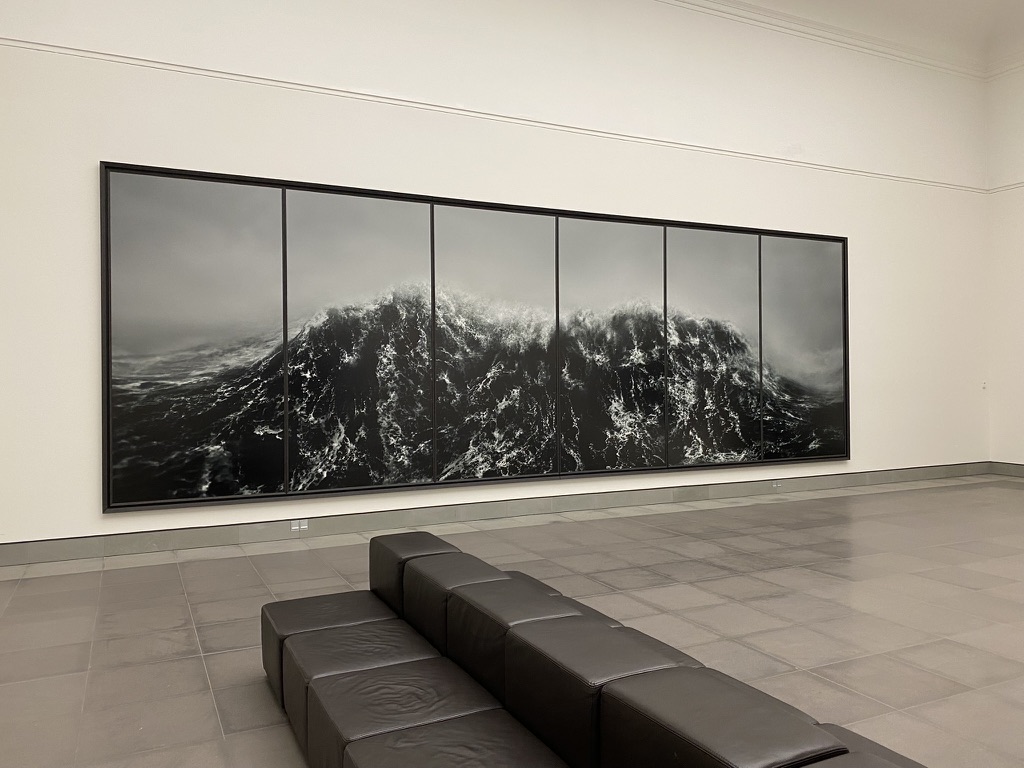
This is what happened to me when I once again found myself confused by beauty, when visiting the Stefan Vanfleteren exhibition “Transcripts of a Sea” in the Museum of Fine Arts in Ghent.
“In 2020, photographer Stephan Vanfleteren embarked on a challenging project that culminates in the exhibition Stephan Vanfleteren. Transcripts of a Sea at the MSK Ghent, during autumn and winter 2025. The exhibition is the conclusion of a long quest, not only into the depths of a body of water, but also into the essence of artistry – Vanfleteren’s answer to what complete artistic freedom can mean.”

You can find good-quality pictures on Stefan Vanfleteren’s website. That page also includes some paragraphs about Vanfleteren’s practice and his approach to this project. But the experience in the museum is way superior.

First, there is the silence. When you close the door between the entrance hall and the exhibition space, the noise of the city is cancelled, and it feels like you are entering a sacred space. The silence also slows you down. Your steps are more measured, respectful. Your breathing adapts.

Second, there are the artworks. Huge, super high-quality photographs of the North Sea. Most black and white. They radiate the same sacredness as the paintings of Gerhard Richter. They incentivize introspection. The artworks are positioned in conversation with actual sea paintings of famous painters. The difference between painting and photography blurs completely.

I begin to wonder, leaning in to scan some of the photographs up close. It feels as if I’m standing in the sea. It’s something I have done before, with paintings, sculptures, and bodies. This close-by scanning is a different eye-set that adds a new aspect to my artistic practice. Here is a “scan” of one of the paintings…

Third, there are the information panels—their texts are as beautiful and inspiring as the paintings themselves.

Here is an example of the panel poetry:

The North Sea is not azure blue, but rather a medley of grey, green, and brown hues, shifting with the mood of the weather. Through those muted, muddied, and sullied reflections, the white foam crashes in the surf – boiling with fury or dripping with desire between land and water. Even the tallest wave eventually lands flat on its stomach. The surf as a postscript of a long journey.

At first, I sought to capture the sea as faithfully as possible. But gradually, I realized it could never be truly reproduced. It is precisely the art of letting go that has led to fascinating and challenging results. Chance, failure, and experiment became ever more important. embraced the unexpected quirks of my camera: motion blur, miscalculations in focus distance, and unforeseen colour casts.

The absolute freedom found in a confused autofocus, incorrect exposure, or unintended framing became a blessing. And I allowed the scratches, mist, droplets, and salt stains on the camera’s protective glass to remain, trusting in the unexpected. In fact, I chased my own delightful failure.

I am reminded by this Gerhard Richter quote:

When I walk out, I am overwhelmed by the sheer effort and attention to detail it took the artist to land an exhibition like this. Just watch the logbooks at the end of the expo.

Picture by author

There is also a film screening of “The Tide Will Bring You Home” by Basile Rabaey, who followed Vanfleteren during his five-year sea expedition. But the small film Black Box was too crowded to make this a joyful experience. So, I skipped that, hoping the film will appear sooner or later on the Internet.

Basile Rabaey

A tapestry of slowness, silence, and chance. “Transcripts of a Sea” runs till 4 January 2026 at the MSK in Ghent.

In Limbo or Not? – A Timeless Day at the Castle of Gaasbeek

Picture @petervan

I went to the premiere exhibition of David Claerbout’s The Woodcarver and the Forest at the Castle of Gaasbeek. I went by bike, for me, a two-hour ride each way, on a warm sunny day through the Pajottenland, the region southwest of Brussels where I spent the first 25 years of my life. Cycling up and down its rolling hills stirred deep emotions and memories of my youth. This is the land of Bruegel, of Geuze and Lambic beer, of Remco Evenepoel. It is also, unmistakably, my land.

Before arriving at the castle, visitors walk about 15 minutes from the entrance through a carefully tended, forest-like domain. The path itself already feels like part of the experience, drawing you gradually into a slower, quieter, almost meditative state.

There is also a 2-hectare Museum Garden.

Picture © Fabrice Debatty

A top-level garden modelled on castle gardens from the 18th and 19th centuries. A strong example of living cultural heritage. Take a stroll through this magnificent Garden of Eden, with the old-model fruit repository, the beehives, and a wonderful view of Gaasbeek Castle and the Pajottenland.

I lingered in the garden for some time, sitting on a bench and gazing at another bench across the way, the two connected by a loofgang—a leafy tunnel formed by pear trees. I simply sat in silence, doing nothing. Eventually, I walked through the shaded passage to the other side, before making my way to the castle. In hindsight, the video I captured carries an unintended sense of suspense.

Once inside the castle, visitors are guided along a signposted route. Along the way, I captured this video of sunlight filtering through stained glass, casting vibrant patterns onto the wooden, carpeted floor.

The Claerbout installation awaits at the very end, rising three stories high beneath the roof.

From the brochure:

This work is Claerbout’s latest creation and presents itself as an intimate portrait of a reclusive young man. Do you feel the meditative effect of the slow, repetitive movements and their sound?

Specific audiovisual stimuli – such as soft sounds or rhythmic movements – can evoke feelings of relaxation and inner calm. This phenomenon is known as ASMR (Autonomous Sensory Meridian Response) and forms the foundation of this work

The Woodcarver and the Forest is an open film, which is completed using generative artificial intelligence. As a spectator, our experience also remains open and unfinished, partly due to the long duration of the work.

This reveals the dual nature of the film: an interplay between pleasure and sorrow, beauty and destruction.

Still from Claerbout’s video installation – picture by @petervan

I sat in there for more than one hour. It put me in some state of limbo about my own work and where I want to go next. Following Google’s Gemini AI, it means “to be in an uncertain, undecided, or forgotten state where nothing can progress or be resolved, similar to being caught between two stages or places.”

I am a big fan of David Claerbout. See previous entries on this blog here. The Woodcarver gave me the chance to revisit some of Claerbout’s earlier works and conversations, while also helping me reconnect with the artistic drive within myself.

Here is a more recent talk by David Claerbout

Some interesting quotes

Change your mind-set ànd your eye-set, from inquisitive to open-ended

The Brain does not choose sides; it does not know how to

And around minute 18, he gets into a very interesting schema of “former” AI technologies. He really got me when he says “the camera is a profoundly liberal invention” and later “around the 2000s, we start to think of visual culture as a assemblage, the coordinate system is back, and a coordinate system knows exactly where you are it has exact points in space it can find you back and instead of a liberal body in a world that could be anything anywhere it changes into a pinpointing in a space that so we we get a gathering of coordinates and we’re no longer free” 
In closing, he shares reflections on recent readings that explore AI, vision, and the language of thought.

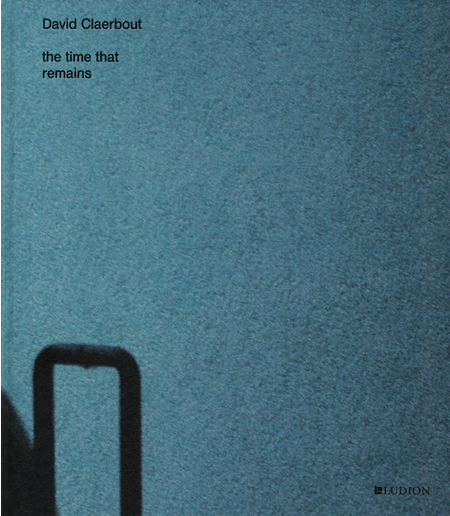
After watching the video, I visited the University of Ghent library—you can get a visitor’s pass as a non-student for €15 per year, granting access to all of the university’s libraries! There, I picked up the book The Time That Remains, a title that resonated with me on two levels: first, the concept of time, so ever-present in Claerbout’s work; and second, the realization that I am approaching my seventieth birthday, prompting me to reflect increasingly on the time I have left and how I want to spend it—especially in my artistic practice, if I can even call my tinkering that.

From the intro:

This publication marks the welcome collaboration between internationally acclaimed Belgian artist David Claerbout and two European institutions: Wiels, Brussels and Parasol unit, in London. The publication accompanies Claerbout’s exhibition opening at Parasol unit, on 30 May 2012; but it also provides a highly appreciated documentation for Wiels, which held a solo exhibition of Claerbout’s work, The Time that Remains, in 2011.

It’s from 2012, but the content is, well, timeless.

Some quotes/insights from that book.

I think the recent proliferation of black boxes for film and video-art is not just a practical solution to a problem of sound and light interference, but also reflects an incapability to coexist. This can become apparent in large group exhibitions, where media installations appear strong when they are shown by themselves in a small or large dark space, but they easily collapse when shown in a social space where people move about and interact. The black box is a social phenomenon, for me it is a problem.” Ulrichs, David, ‘David Claerbout. Q/A, in: Modern Painters, May 2011, pp. 64-66

+++

Time is invested into something that will prove to be valuable and productive. By consequence duration’ becomes increasingly expensive. But duration can only be free if it is unproductive.”

+++

Cinema, YouTube and film-festivals demand the prolonged physical immobility of the viewer. Music, exhibitions or a walk in the park don’t.

My sense of being in limbo stems from a hesitation: to move further into abstraction rather than figuration, toward longer forms rather than shorter ones, toward meditative sound and video landscapes rather than straightforward documentary. It also comes from my struggle to resist the banality of social media—where time is squandered on addictive, bite-sized fragments of content that ultimately feel useless.

I believe I know the answer, yet I dare not leap just yet.

Who will be the one to give me a gentle nudge?

Is this still needed?

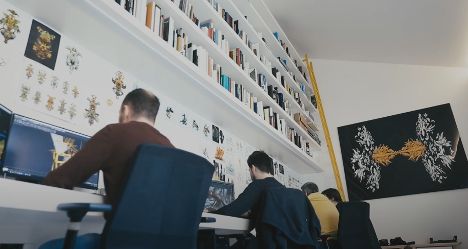
Inspiration: Nick Ervinck

Some years ago, I discovered the magical art world of Flemish artist Nick Ervinck.

I subscribed to his newsletter and was inspired by his ongoing progress.

If you want to get a good sense of what drives Nick and what his artwork is all about, here is a great video:

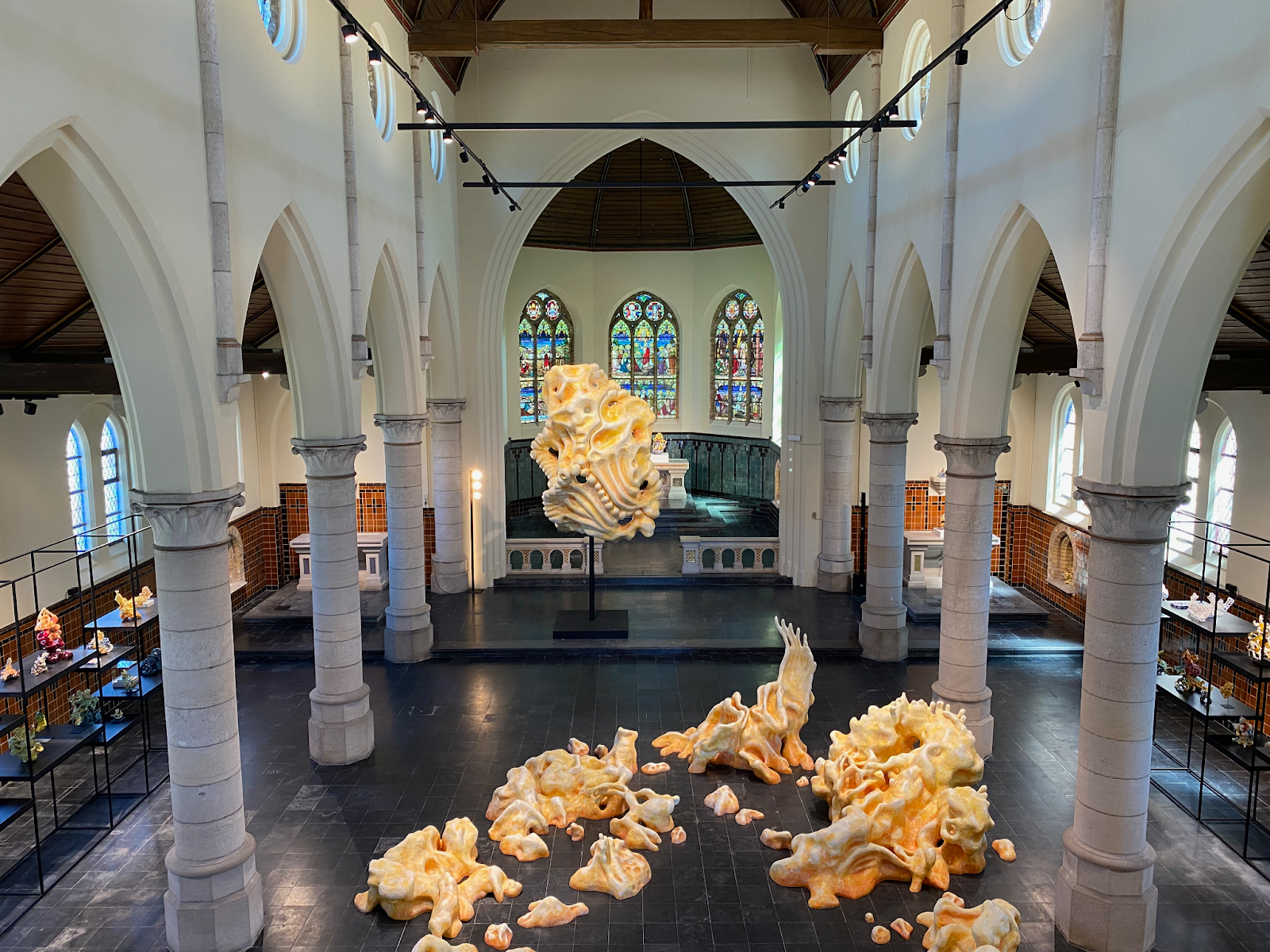
Nick has a church (The Dutch word for church is “kerk”). 

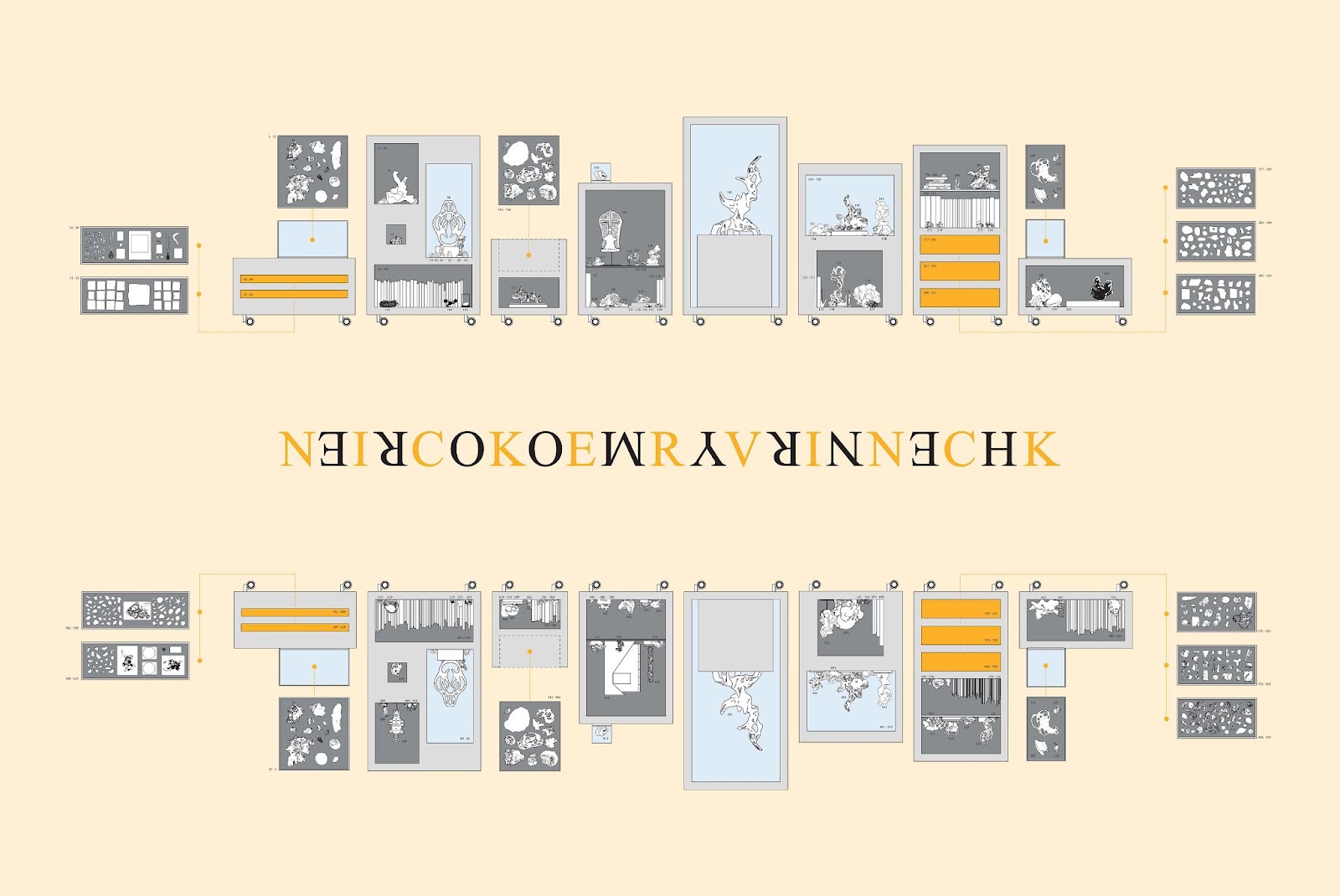
Nick’s church is branded “K.E.R.K.” standing for Kunsthalle ERvickK” and is located in the tiny village of Sint-Pieters-Kapelle, a township part of Middelkerke, a mall town at the Belgian North Sea coast. Last summer, I combined a bike ride with a visit to K.E.R.K. on a very hot 10 July 2022. The exhibition “SKIN WORKS” displayed recent work by Nick Ervinck.

I was impressed and inspired. I wanted to meet Nick one day, and if possible visit his studio. At the reception, there was a young student, and I asked whether the artist was present in the church. He was not, but she gave me a business card with his email address and phone number, suggesting that I would ask for a studio visit.

Here is the mail that I wrote to Nick:

Hello Nick,

I’ve been following you for a while and I’m a fan. Yesterday I visited K.E.R.K. (GNI-RI JUL2022 SKIN WORKS) and the friendly young woman at the entrance said it was possible to visit your studio.

I do a number of artistic experiments myself, and I recently hired Kurt Vanbelleghem to help me professionalize my practice. Besides the art, I work on a project “The Scaffold”, where I bring artists, entrepreneurs, and engineers together in residencies for corporate clients.

I would love to have a conversation with you, preferably in your studio, or else in K.E.R.K. or any other location of your choice.

Interested?

Here is Nick’s answer:

Hey peter,

Nice to hear from you.

It is not possible to receive each person individually.

I normally only open the studio for group visits.

But your email has caught my interest. What you are doing is of course not clear to me.

Bringing artists, entrepreneurs, engineers, and companies together sounds like music to my ears.

I am someone who likes to work goal and result oriented. And many of these initiatives do not succeed in this.

I will be happy to receive you in my studio/atelier to exchange thoughts.

Fits for you possibly Tuesday evening August 9 or Wednesday evening August 10.

Or feel free to make some suggestions and I’ll check my agenda.

Artistic greetings

Nick

We settled for 9 August, also a very hot summer day. 

There I stood in front of his studio, with no agenda, but with a quite detailed concept of what The Scaffold had to become.

I did not know what to expect. Maybe he would kick me out after ½ hour? No worries: I got a really warm welcome. Nick was very approachable, and as would show quickly, a real professional in all senses. There was a click: we spent 4 hours together. 

Above the working desk was a huge library of more than a thousand artbooks. 

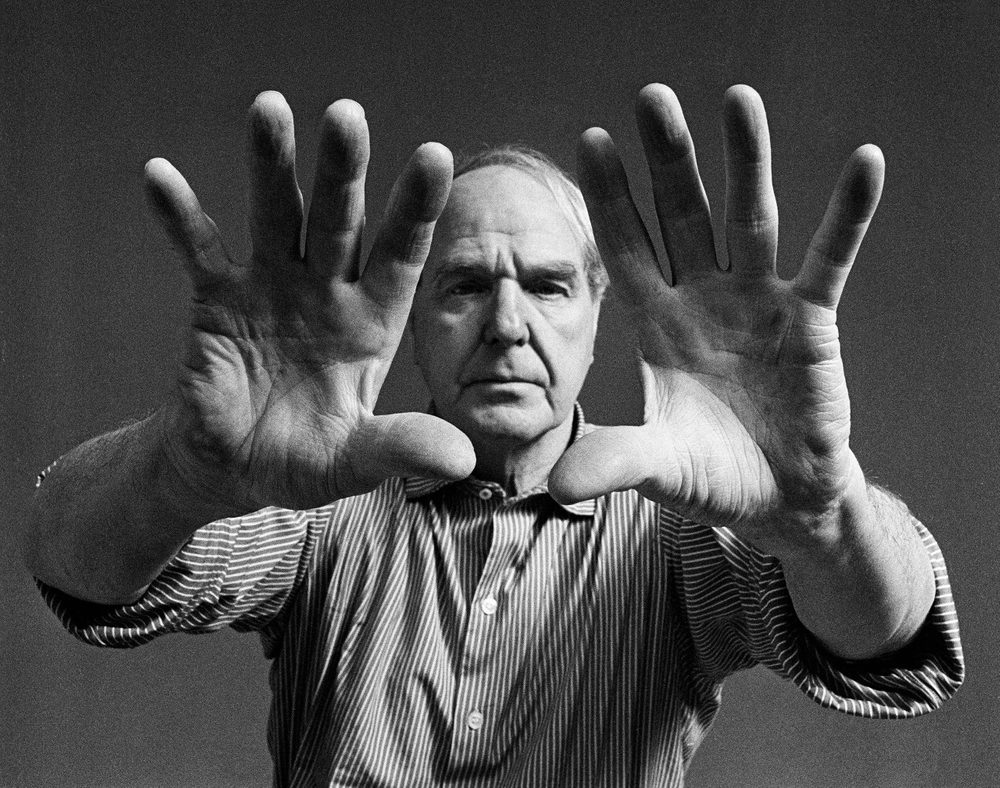
Nick is also a big fan of Henry Moore, a British artist mainly known for his sculptures. Moore can be said to have caused a British sculptural renaissance. Nick’s Henry Moore book collection encompasses more than 300 books! The biggest private collection in the world: the only place in the world where you can find more is in the Henry Moore Foundation itself!

Nick also built his own virtual museum “MOUSEION” and his own “NIKIPEDIA” landing page:

The visit and the conversation were super inspiring for me. His work and attitude influence me in many ways:

His Focus

He is an artist entrepreneur and focuses exclusively on that

His Professionalism

Both as an artist and as an entrepreneur. 

Everything exudes attention to detail and perfectionism in everything: 

Archiving and documenting

High-quality printing, framing, book printing

Business cards

Website

Respect for own work

Cleanness and order in the studio

His Sharing

Links to books, his own manuals for art photography, bookbinding, framing, transport boxes, software, high-quality art print shops, etc, etc

His Erudition

He is very well-read, has a pluralistic view of things, and is able to express himself very well orally and in writing

I invited Nick to be part of the non-conformist tribes I am curating for The Scaffold learning experiences.

When leaving the studio, he left me with some of his own art books as a present, a poster of his Henry Moore cabinet show (see the above picture, where Nick Ervinck and Henry Moore are interwoven), and a recommendation for the book “On Being An Artist” by Michael Craig-Martin.

He must have read my mind, as the book proved to be another big inspiration for my practice (and the subject of my next blog post).

When I walked towards my car in the warm evening sun, I felt like coming out of a movie.

This is the thank you letter I sent:

Dear Nick

Do you recognize the feeling when you’ve been to a good movie, and you come out, and the world feels different? That’s the feeling I had yesterday when I came out of your studio and on my ride back home.

Thank you very much for the generosity of time (more than three hours!) and the quality of your input and feedback. Thanks also for the MOUSEION book, the poster, the flyers, and the book suggestions. The poster is now right in front of me.

Thank you also for the confidence in showing your management software, the guided tour in your studio, and sharing successful projects, but also projects that just didn’t make it. 

Warm artistic greetings,

Inspiration: Berlinde De Bruyckere

I was one of the twenty lucky ones to be invited to an exclusive studio visit of Belgian and internationally renowned top-artist Berlinde De Bruyckere.  She represented Belgium in the 55th Venice Biennale. The studio visit was organized by the Flemish Art Magazine HART.

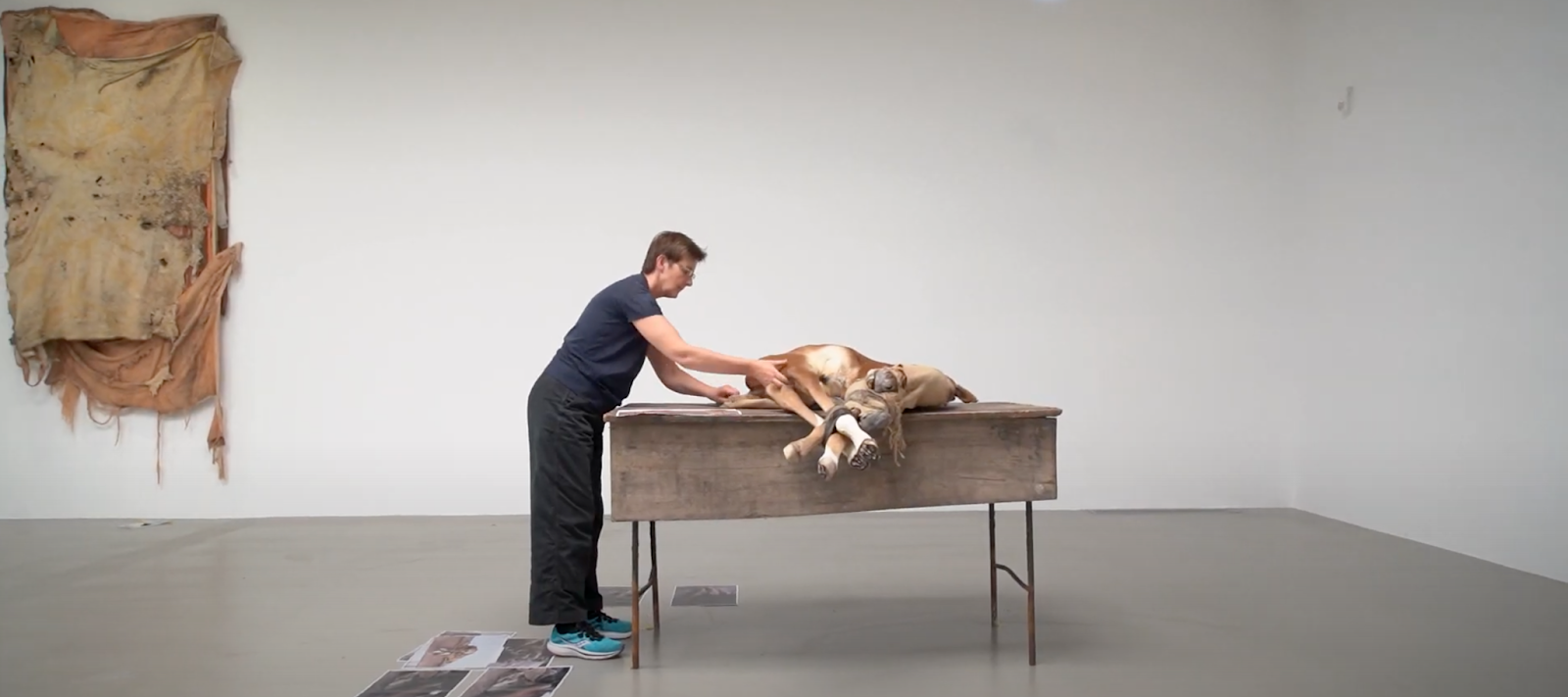
Still from MO.CO interview video, Berlinde preparing with grace “to Zurbaran”, from 2015

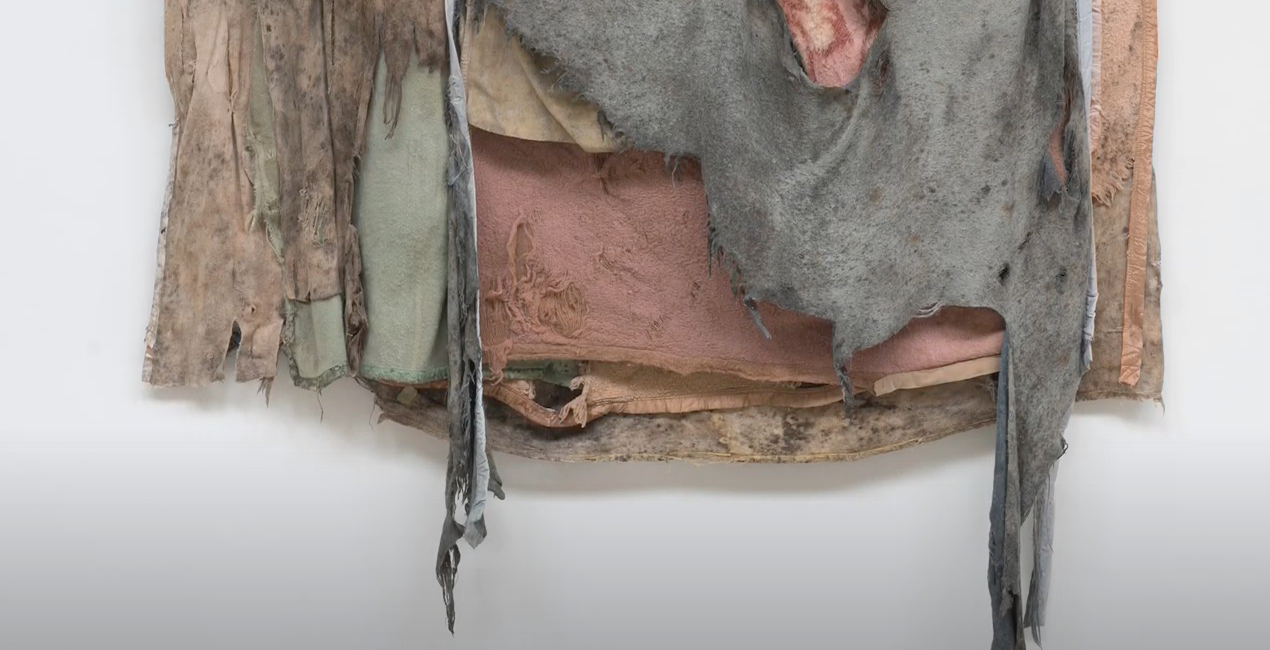
“Born in Ghent, Belgium, in 1964, where she currently lives and works, Berlinde De Bruyckere was deeply influenced by the Flemish Renaissance painting. Drawing on the legacy of great European masters, religious iconography, as well as on ancient mythology and traditional culture, her work rests upon the dialectics experienced between images of current affairs and the breath of universal and timeless parables. By experimenting with malleable materials, like wax, fabric, or animal skin, Berlinde De Bruyckere built a unique body of work, simultaneously identifiable and moving, at times also unsettling, that translates into the flesh of sculptures the paradox of ‘sublime weakness’ posited by Lao-Tzu. Working both as a painter and a sculptor, her hybrid forms with human, animal, and plant features, bear an envelope, a diaphanous skin, or a bark under which quiver very dainty veins, a sap that ceaselessly flows and witnesses the hope contained in the miracle of each life.” (Quote from the MO.CO website)”

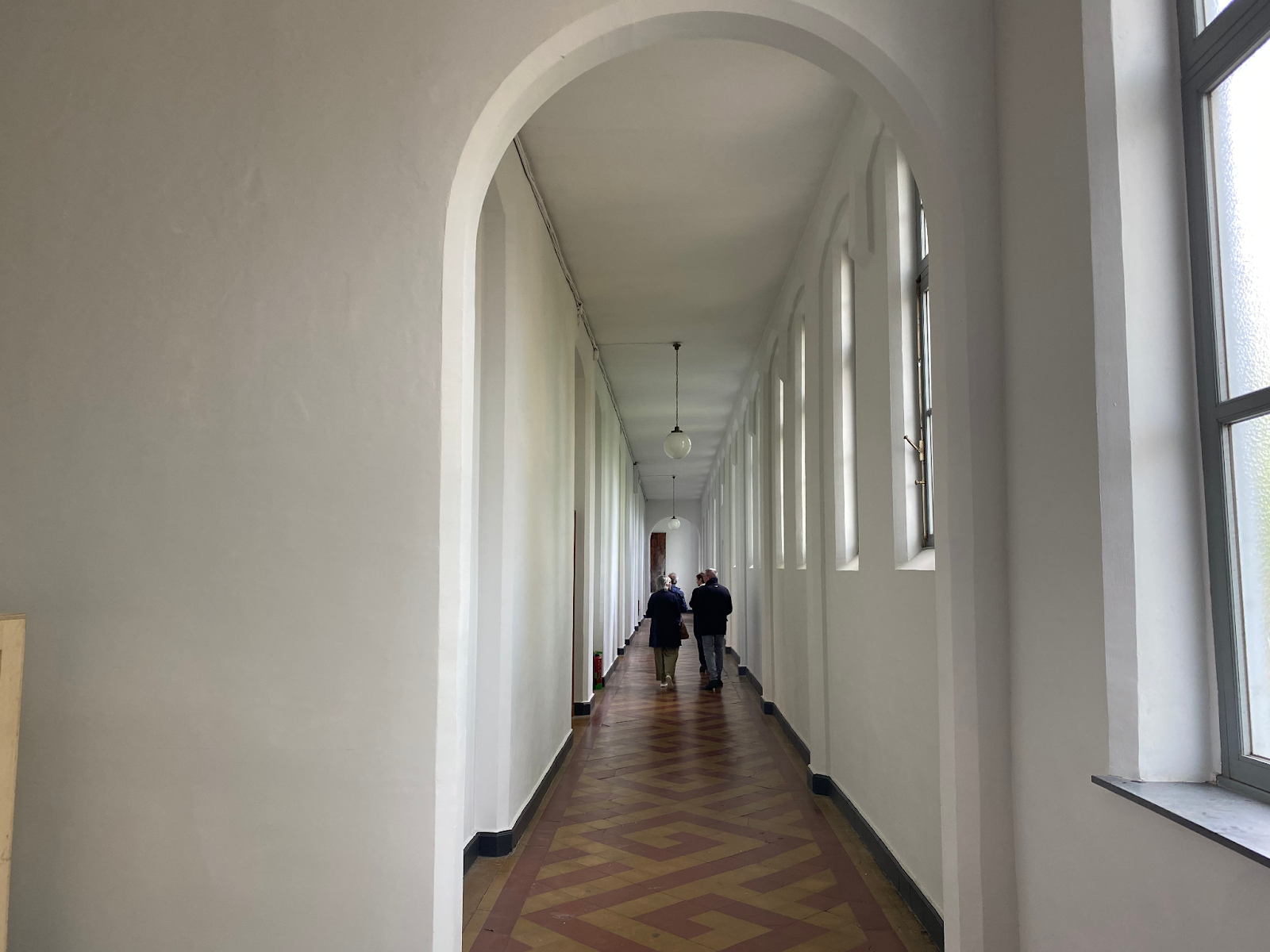
School corridor – Studio Berlinde De Bruycker – Picture by Petervan

Her studio is based in an old refurbished school building in the working-class neighborhood “Muide” in the port area in the north of the Belgian city of Ghent. This is also the area where she was raised: her father ran a butcher’s shop 100 meters from the school. Over the years, she and her husband transformed the classrooms into different art studios. 

I managed my expectations for the visit upfront. Maybe at best, we would meet the artist during the welcome, and maybe the visit would only last one hour. 

Welcome to Berlinde De Bruyckere studio – Picture by Petervan

Great was my surprise that Berlinde was there from start to finish, including during the lunch afterward. She was very approachable and hungry for questions about her work and her practice. During lunch, Berlinde was sitting in front of me, and I felt like we had an interesting conversation about her and my art practice. 

The setting was quite exclusive: we could see work (in progress) that she was creating for her big upcoming exhibition in June 2022 in Montpellier, France. 

That exhibition is live now and runs till 2 October 2022. Here is the home page of the exhibition in MO.CO (Montpellier Contemporain) website. 

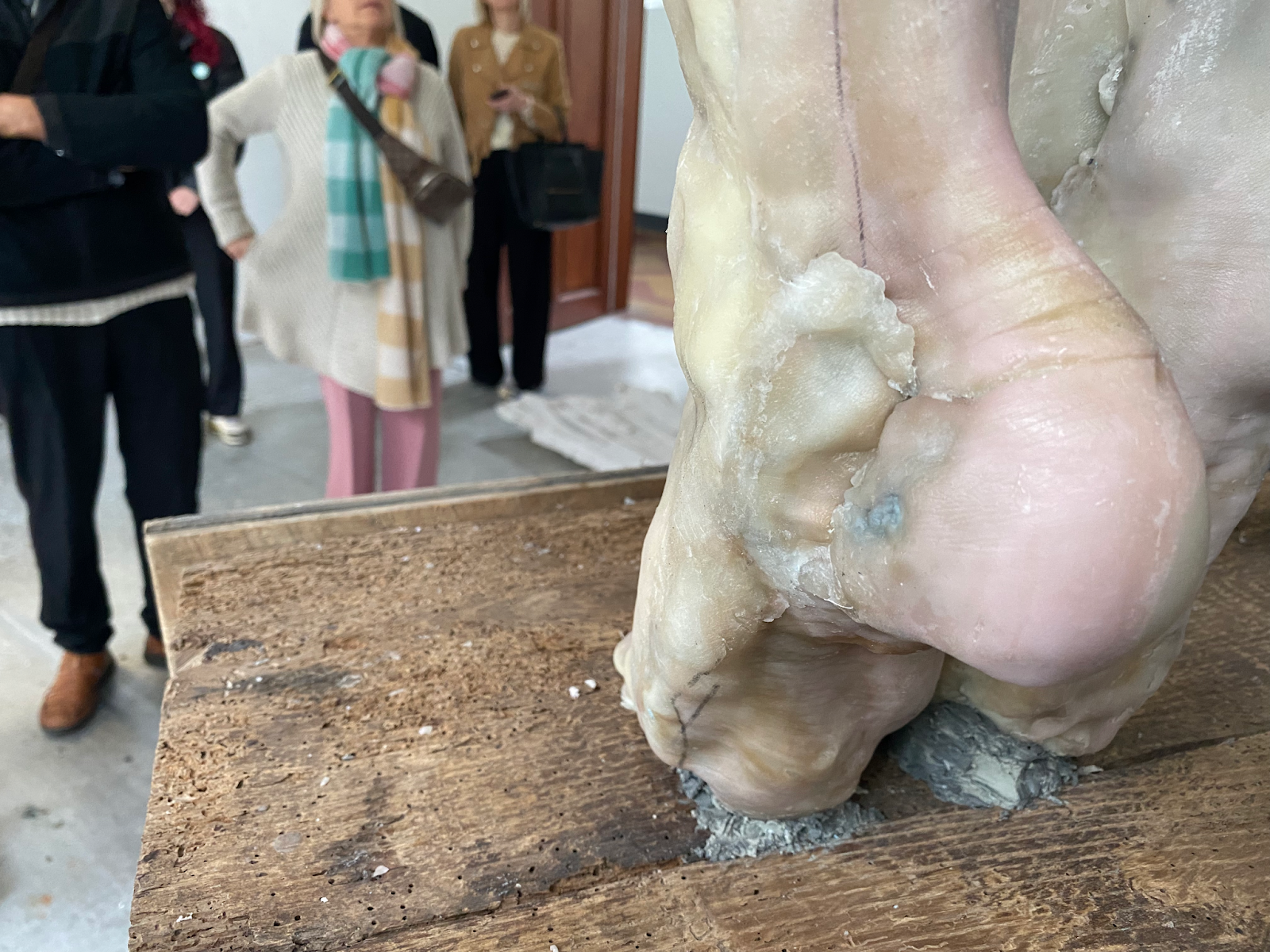
Detail TRE ARCANGELI, 2022 – Berlinde De Bruyckere – Picture by Petervan

During the group conversations around the TRE ARCANGELI, there was a sentence/question that touched me:

WELK BEELD KAN JE TROOSTEN?

WHAT IMAGE CAN COMFORT YOU? 

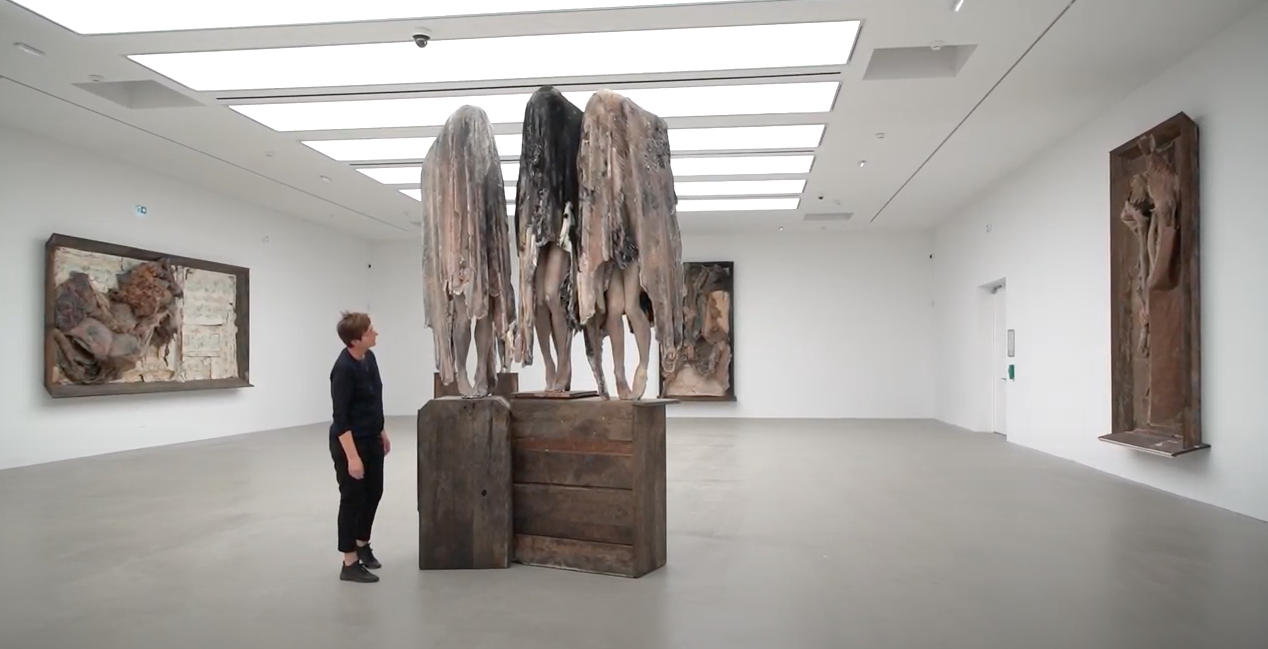
TRE ARCANGELI, 2022 – Berlinde De Bruyckere – Picture by Petervan

Also, the conversation about working with a team was full of insights that for sure are also applicable to corporate teams. In this particular case: how do you empathically communicate failure to the team, and decide as a group that the work done does not fit the concept and that we have to start from scratch again?

I will come back later in another post about the meaning or “concept”, about conceptual art, conceptual business, and conceptual curation.

Having this opportunity to be in direct and close contact with a professional artist is super inspiring, and it influences my own work and practice in the following ways:

Focus: no distractions, silence, solitude

Professionalism: time for reflection, and discipline of doing the work, every day

Attitude: the combination of integrity, modesty, subduedness, stillness, respect

The value of a concept

To go as far as one wants

Making a group that is forced together

Showing its scars and wounds

The blanket is a metaphor for our failing society

Still from MO.CO interview video

When you leave the show and you feel that the themes are tough, it’s not easy to find words that express what you, as a spectator, felt about the show. 

But you should leave with a feeling of hope

I will come back in September on this feeling of hope, or rather our longing and yearning for hope and excitement.

Warmly,

Inspiration – David Claerbout

Last week, I went to the Foto Museum (FOMU) in Antwerp to see the expo Masculanities – Liberation through Photography. This expo was already at The Barbican in London in the summer of 2020. I had some time left, and a slipped into the adjacent expo Re-Collect, an overview of a decade of acquisitions of FOMU.

Very similar to my first encounter with the work of Belgian fashion designer Dries Van Noten – see my post “Confused by Beauty” from 2015 – I was touched and moved by the video installation “KING” (2015-2016) by Belgian artist David Claerbout.

David Claerbout (b. 1969) is a Belgian artist, whose work combines elements of still photography and moving images. Using photography, video, and digital-editing tools, Claerbout creates large-scale video installations that provoke questions of time, memory, and truth. Solo exhibitions include Van Abbemuseum in Eindhoven, Centre Georges Pompidou in Paris, National Museum of Contemporary Art in Athens, Pinakothek der Moderne in Munich, and SFMoMA in San Francisco.”

From the FOMU site:

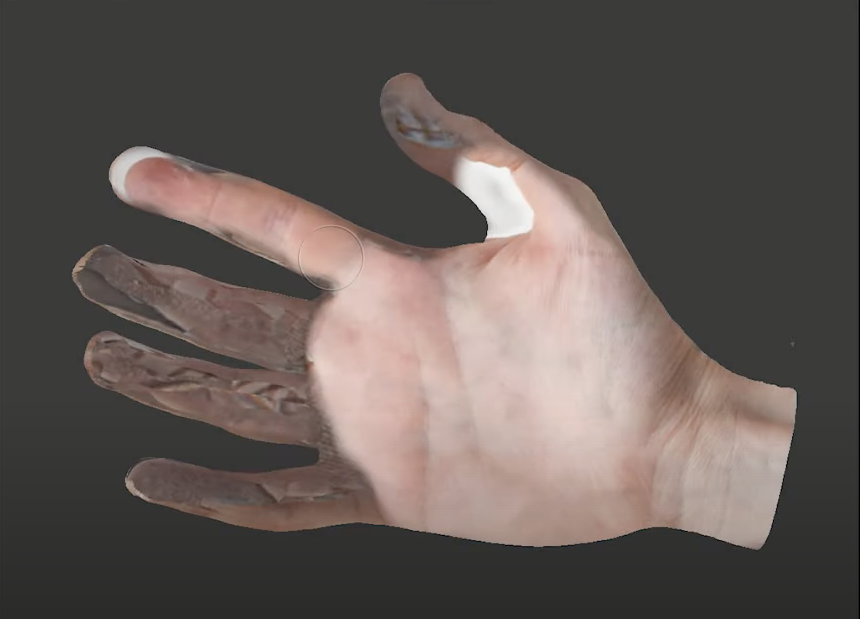
The viewer sees a digital 3D environment based on a private photograph of Elvis Presley. The photograph was taken in 1956, when Presley was on the cusp of world fame. This was a time when the photographer, Alfred Wertheimer, could still get close to the man—before the transition from ordinary human to icon, from normal life to an era of superstardom and spectacle. David Claerbout modelled Elvis’ body using hundreds of photographic fragments of his skin and facial features. He challenges the two-dimensional nature of the photograph by adding virtual time and space. Photography is both the launching pad and the subject of KING. Claerbout confronts the viewer with the transition from looking through a lens to looking by means of a scanner. This radical reversal of normal observation means that you seem to creep into the image. Claerbout uses the artistic, conceptual and technical perspectives to question our way of looking.

FOMU has a short 5 min artist video on their site, with Dutch and English subtitles.

That was enough to get me really interested, and I found another great 30 min interview video with David Claerbout at Louisiana Channel. He explains how the whole project was made: they even used a stand-in model and stitched together thousands of pictures of Elvis’ skin on the 3D scan of the model. Amazing!

Showing us around in his “studio” – actually many different rooms in an old Flemisch house in Antwerp – Claerbout is very articulate about his work and practice and I found this super inspiring, as I am preparing next year 2022 as my year to professionalize my own art practice.

He opens with:

“I am an artist, and I do not know exactly what it is what I am doing, it seems I am changing my ways all of the time, but I am a self-taught very hungry autodidact in the domain of the moving image animation film video and what we could call virtual image making.”

As we walk through his studio, we see his drawing-room, how he started building an archive of images, how his team is usually working on one project at the time, having all equipment inhouse, two recording studios, including a small server farm in the basement to render image/video in the most optimal way.

Throughout the whole interview, there transpires a mood of silence, integrity, dedication, focus, discipline, professionalism. His origins are in painting, and drawing, and lithography.

The interview/walkthrough is full of inspiring insights, provocations,

WHAT IS IT THAT I CAN CONTRIBUTE?

MY WORK DOES NOT HAVE ANYTHING SHOCKING

I WANT TO DEVELOP A LANGUAGE

SPEAKING/WORKING WITH PEOPLE THAT YOU ARE CONFIDENT WITH, THAT YOU CAN TRUST

WHAT IS IT THAT BINDS EVERYTHING TOGETHER?

CHRONOS – KAIROS – HETEROCHRONY – THE PLURALITY OF DURATION

PRIVILEGED MOMENTS

BEING NOT AT THE CENTER OF THE COMPOSITION

THE CAMERA AS A VAMPIRE

THE RELATION BETWEEN OUR THINKING AND OUR PERCEPTION

YOU DON’T WAIT FOR BUDGETS, YOU DON’T WAIT FOR PEOPLE, YOU JUST DO IT

THE DELICATE CENTER

HOW DO WE LIVE WITH VIRTUAL MATTER?

WE HUMAN BEINGS ARE PROGRAMMED TO TRUST

WE ARE NOT PROGRAMMED TO PUT OUR SENSES INTO QUESTION

WE FIRST WILL BE SPONTANEOUS BELIEVERS AND THEN WE WILL BE ANALYTICAL

I WRITE A LOT, I DON’T PUBLISH A LOT BECAUSE IT IS SO TIME-CONSUMING

LIFE IS NOT LONGER A TAPE THAT RUNS FROM BEGINNING TO END

THE TRINITY OF PAST-PRESENT-FUTURE IN THE VIRTUAL REALM

EVERYTHING IS BUILT OUT OF TWO

A BUILT-IN REDUNDANCY

LAZINESS AND ENERGY

SHARING DIRECTLY BY SITTING TOGETHER

WE PERFORM AND AT THE END OF THE EXHIBITION THE PERFORMANCE IS OVER

THERE IS NO SUCH THING AS THIS INCREDIBLY EXPENSIVE VALUABLE SINGULAR ARTWORK SITUATED SOMEWHERE IN TIME NOT IN PARTICULAR MATTER

SOMEWHERE IN THE SMALL FOLDS OF TIME, THERE ARE ENCOUNTERS

WHAT IS THE LIMIT? WHERE IS IT?

THE PRIVILEGE OF THE ARTIST OF HAVING TIME TO WASTE

THE ARTIST DOES NOT HAVE TO BE EFFICIENT

IT IS QUITE LOUD WHEN THERE IS NO SOUND

It is clear that Claerbout is full of poetry. As Norman Foster used to say “I can write you a letter, but a poem?”

No wonder the “KING” and some others I discovered in the meantime are so well resonating with where I am now and where I would like to be the next years. I may post some other inspiring stories in the weeks and months ahead as part of my transition to and professionalization of my art practice.

Warmest,

5 books to help you understand (and profit from) global trends

The time that we could organise our companies without acting too much on global evolutions lies long behind us. Leaders understand more than ever that tackling world challenges not only creates a better context for all of us to live in but also presents fantastic business opportunities. It’s why am thrilled to be one of the curators of nexxworks’ Mission NXT program, designed to help leaders turn global trends into opportunities.

For those who are truly passionate about fostering this type of outside in vision, here are five (zero bullshit) books that fundamentally changed and formed my thinking in the matter over the years.

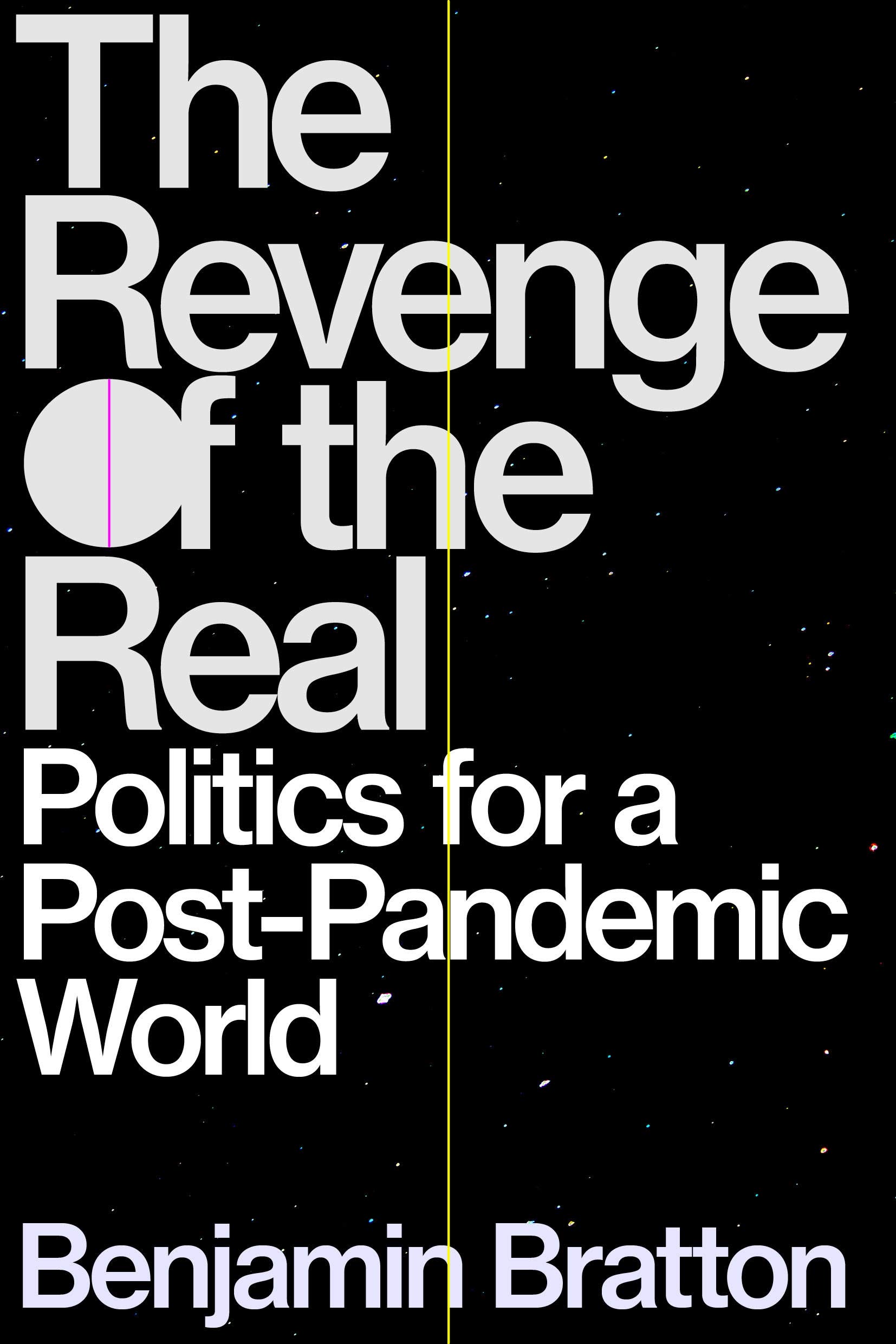
Benjamin Bratton – The Revenge of the Real (2021)

The pandemic showed us that we are completely unprepared to cope with our current deeply entangled world. According to Bratton, we need a “positive biopolitics” and an AI-based instrumentation of the world. He offers a refreshing way of thinking about sensors which is quite different from the worn out song about the surveillance state.

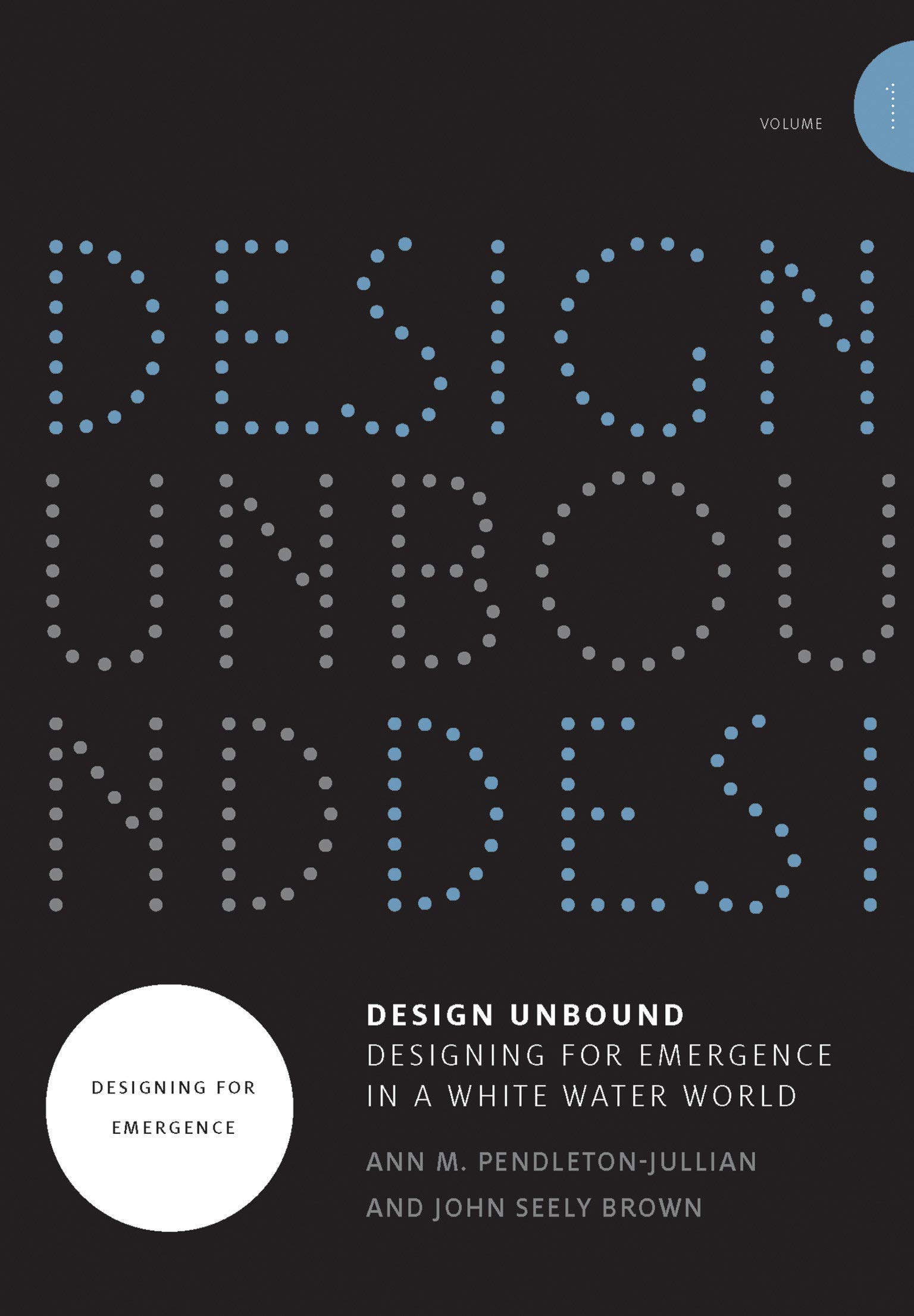
Ann Pendleton Jullian and John Seely Brown – Design Unbound (2018)

Read this if you want to understand how you can design for emergence in the Never Normal. You’ll need your full attention (it’s not a ‘light reading’ project), but in return you’ll receive two volumes of unique and well researched insights to help you better see what is and what can become. This is truly one of the most important business books I ever read.

Bruno Latour – Down to Earth (2018)

Latour calls for a third way in climate politics which is left nor right: a path between libertarian globalism, and leftist localism. One that is anchored in planet earth. Read this if you want to get to know one of the most important philosophers of the 21st century.

Jenny E. Sabin and Peter Lloyd Jones – LabStudio (2017)

Sabin and Lloyd Jones tackle the concept of the research design laboratory in which funded research and trans-disciplinary participants achieve radical advances in science, design, and applied architectural practice. The book demonstrates new approaches to more traditional design studio and hypothesis-led research that are complementary, iterative, experimental, and reciprocal.

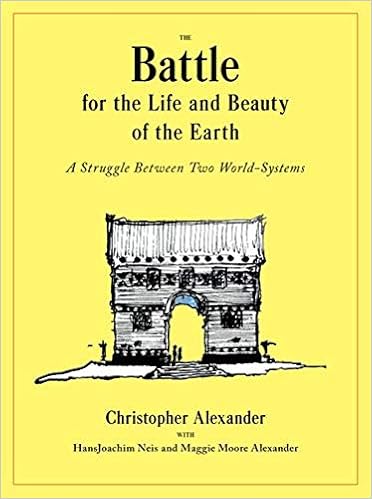
Christopher Alexander – The Battle for the Life and Beauty of the Earth: A Struggle Between Two World-Systems (2012)

This real life story of American architect Christopher Alexander designing and building the Eishin university campus in Japan serves as an analogy for the battle between two fundamentally different ways of shaping our world. One system places emphasis beauty, on subtleties, on finesse, on the structure of adaptation that makes each tiny part fit into the larger context. The other system is concerned with efficiency, with money, power and control, stressing the more gross aspects of size, speed, and profit. This second, “business-as-usual” system is incapable of enabling the emotional, whole-making side of human life, according to Alexander, who then goes on to present a new architecture.

Warmest,

This post was originally posted on the nexxworks company blog, on the occasion of Mission NXT, which I help curate

Travelling without moving – Silence

Still from Rhotko Chapel Video https://vimeo.com/127754629

This post is part of a series of essays bundled under “Travelling without moving”. Intro of that series can be found here.

My 2020 journey started with a Direct Message via Twitter from Mark Storm on Feb 8, 2020 a couple of weeks before the first formal lockdown in Belgium on 13 Mar 2020

Mark says “Maybe you will find this an interesting essay about Mark Rothko. Have a great Sunday, Mark”

Thanks for sharing, Mark! And yes, I found it interesting, in as much that I choose it as the start of this series 😉

Here is the direct link (Dutch only) to the Rothko essay (PDF) by Dutch philosopher Joke J. Hermsen. The essay is about the effect of stillness on an audience in front of a Rothko painting. It is an ode to Kairos (time as experience) as opposed to Chronos (time as clock-time).

Mark Rothko – Yellow Over Purple (1956).

Some highlight from the essay:

Het onmenselijke geweld van de oorlog bracht hem ertoe een laatste zoektocht naar de kern van menselijkheid te ondernemen: ‘Ik wil mensen daarheen brengen waar ze hun menselijkheid weer kunnen ervaren.’ En dat kan volgens hem alleen als een kunstwerk ‘tijdloze momenten schept’, die de mens tot een nieuwe ervaring van zichzelf en vervolgens tot een nieuw inzicht over de wereld kan inspireren.

The inhumane violence of the war had induced him into a last quest for the essence of humanity: “I want to lead people to a place where they can experience their humanity again”. And he believes that is only possible when a piece of art “creates timeless moments”, inspiring men to a new experience of himself and subsequently new insights about the world.

Er bestaan geen goede schilderijen die over niets gaan

There are no good painting that are about nothing

Om ‘te kunnen worden die je bent’, dienen de oude waarheden en inzichten als het ware opgeschort te worden. Het is een ervaring die door Nietzsche ook wel extatisch wordt genoemd, omdat het letterlijk een uitstaan naar is, kortom een zich openstellen voor en zich overgeven aan het onbekende. Rothko spreekt in dit geval van ‘transcendentale ervaringen’

In order “to be able to become who you are”, old truths and insights need to be postponed. Nietzsche labelled such experiences as ecstatic – literally standing-out – opening up to and surrendering to the unknown. Rothko speaks in this case of “transcendental experiences”

Deze ‘transcendentale ervaring’ wordt door Rothko een ‘tijdloos moment’ genoemd, omdat deze niet aan de klok gebonden tijd als het ware haaks staat op of inbreekt in de as van de lineaire tijd.

This “transcendental experience” is called a “timeless moment” by Rothko, because this non-clocked time is at odds with or breaks into the axis of linear time.

De identiteit van de toeschouwer wordt voor een moment doorbroken, waardoor hij de indruk heeft niet langer tegenover het werk te staan, maar er door omringd of opgezogen te worden

The spectator’s identity is momentarily broken, giving him the impression that he is no longer facing the work, but is surrounded or absorbed by it

The essay encouraged me to go and buy Joke Hermsen’s book “Stil De Tijd – Pleidooi voor een langzame toekomst”, as far as I know only available in Dutch.

The suggested translation for the title is “Stop the clocks – Manifesto for a Slow Future”, although I feel that “plea” is probably a better translation than “manifesto”, and I would have translated “Stil De Tijd” as “Silence the clocks”. I wrote about time in the past, and in this post from May 2018, I already mentioned Joke Hermsen.

Here are some of my notes/highlights/moods from the book.

Tijd schept ruimte

Time shapes space

Verlangen te realiseren wat er nog niet is.

Desire to realise what is not

Opnieuw zien we hier hoe zowel het wachten als het openlaten van de tijd en het opschorten van betekenisgeving aan de oorsprong staan van de creativiteit en het denken.

Again, we see how waiting as well as leaving space for time and the suspension of giving meaning are at the source of creativity and thinking

Het wachten (attente) is voor Blanchot dan ook het vrijleggen van een ander soort aandacht (attention), die zich niet op het reeds bekende van de verwachting richt, maar op het onbekende, het onverwachte, het nog niet ingevulde.

The waiting (attente) is for Blanchot the release of another sort of attention (attention), not pointing towards the known knows of the expectation, but towards the unknown, the unexpected, what has not yet been filled in.

Picasso: ‘Ik zoek niet – ik vind.’ Over dat onderscheid tussen zoeken en vinden, zegt Picasso: ‘Zoeken, dat is uitgaan van het oude in een willen vinden van het reeds bekende in het nieuwe. Vinden, dat is het volledig nieuwe. Alle wegen zijn open, en wat gevonden wordt, is onbekend. Het is een waagstuk, een avontuur.’

Picasso: “I don’t search – I find”. About that difference between searching and finding, Picasso says: “Searching is starting from the past, in an effort to find the already known in the future. Finding, that’s what’s completely new. Alle options are open, and what is being found, is unknown. It is a venture, an adventure”

Belangeloze aandacht

Disinterested attention

Last highlight:

Die creativiteit wordt aangewakkerd als we ons bij tijd en wijle aan het regime van de klok kunnen onttrekken en ons durven overgeven aan ervaringen die haaks staan op het gestaag voorttikken van de wijzers. Wachten, vervelen, luieren, mijmeren, nadenken en nietsdoen, zijn vormen van ontvankelijke passiviteit waarmee men in deze rusteloze, door de economie opgedreven tijden misschien weinig applaus zal oogsten, maar die in vrijwel alle hier opgenomen essays noodzakelijk bleken voor de mens en voor de wereld om niet te verstarren en te verharden.

That creativity is encouraged when we can detach us from time to time from the regime of the clock and dare to surrender to the experiences that are orthogonal to the ongoing ticking of the moving clock-hands. Waiting, being bored, idle, musing, reflecting and doing nothing, are all forms of receptive passivity that are not really appreciated by the inflated time of the economy, but that are essential in all essays of this publication, essential for the humans and the world in order not to fossilize, become rigid, petrify and harden.

I make similar reflections during my bike tours in nature, asking myself who is the real me, what is my original rhythm, finding my own rhythm, re-finding myself.

During one of those tours, I spotted a path to my right, with no signage, leading into some small woods and boskets. A small hesitation, but in a blink, I decided to turn right, right into the unknown.

Only a couple of minutes later, I found myself in an open space, in the middle of the green, in almost complete silence, and saw this snail sunbathing under a parasol of green leave.

The silence and nature had made me soft, with indeed a disinterested attention, but active attention anyway, not passive.

After years of – at times – hectic corporate life, and after a semi-pause of about four years, I realized it was only now that I started to cool down, to wind down. It was only now that I started to enjoy that state of detachment from Chronos time, detachment from anything, actually.

It should therefore not come as a surprise that my next essay in this series will be about… pause.

Refik Anadol – Beautiful Speculations and Data Dramatisations

This post is a semi-transcript of a fantastic talk “Space in the mind of a machine” by media artist Refik Anadol. My post is not intended as a literal transcript, but rather as a collection of – often poetic – idea clusters of Refik’s talk. None of the ideas are mine, I just tried to condense it and brush some highlights.

The talk was given on 4 December 2019 at the Southern California Institute of Architecture (SCI-ARC). The website of SCI-ARC itself is nirvana for all beauty and art lovers out there, and worth spending a virtual visit of a couple of hours.

The talk was transformative for me, in the sense that it made me realize we truly have entered a new reality and a witnessing the dawn of a new area, full of beauty, poetry, and artistic interventions that create alertness and aliveness similar to the 16th-century renaissance.

After a long intro, his talk starts at 2:46


Criticizing the idea of canvas

Dimensional explorations

Augmented structures

“Design is a solution to a problem; art is a question to a problem” – John Maeda

Humans, Machines, and Environments in a symbiotic relationship

Can a building dream?

“Life can only be understood backward, but it must be lived forward” – Kierkegaard

The data that we leave behind us

Data “dramatization” vs. Data Visualisation

The invisible space of Wi-Fi, 4G, radio signals, etc.

A poetic exploration of invisible datasets

Data Paintings

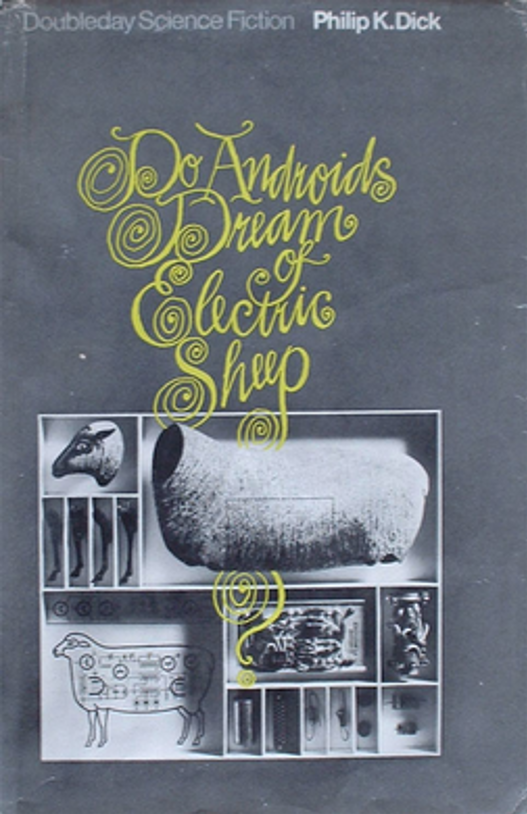
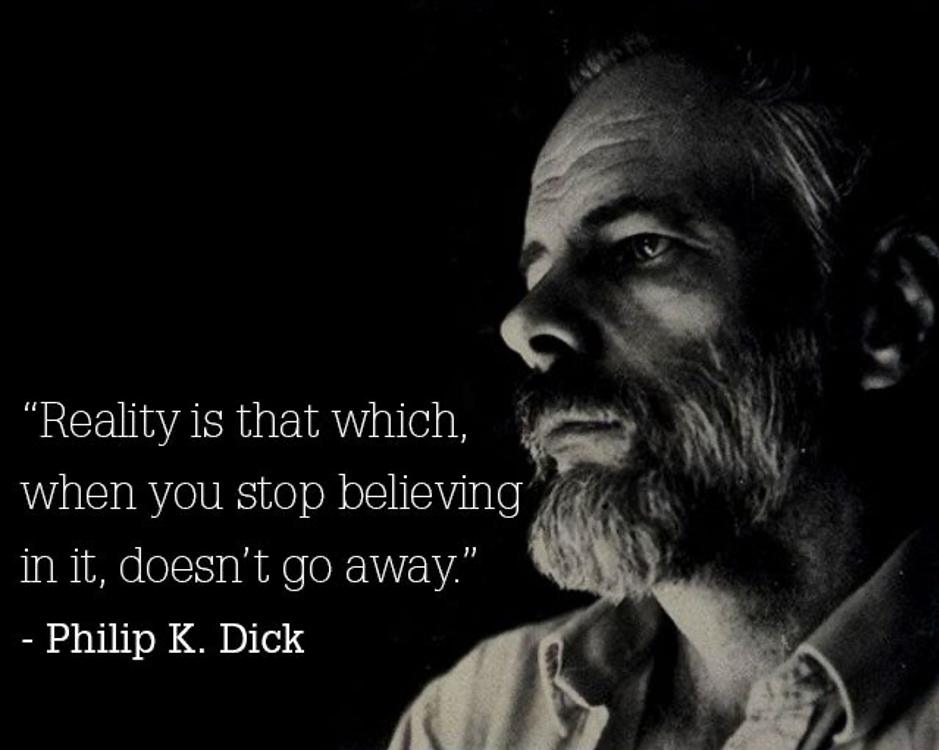
At a certain moment, Refik Anadol quotes Philip K. Dick, author of the 1968 science fiction book “Do Androids Dream of Electric Sheep”, later retitled Blade Runner, and basis for the 1982 initial version of the film.

Electric Sheep

Quote Philip Dick

This inspires Refik Anadol to seed the following insight:

A simulation is that which does not stop when the stories go away

Stories are responsible for our human desire for resolution

But the simulation is only responsible for its own laws and initializing conditions

A simulation has no moral, prejudice of meaning

Like nature it just is

There is some poetry hidden in this abstraction of data

Exploring data sets that have this quality of meditation

The architect as an operating systems designer, a beautiful “speculation”

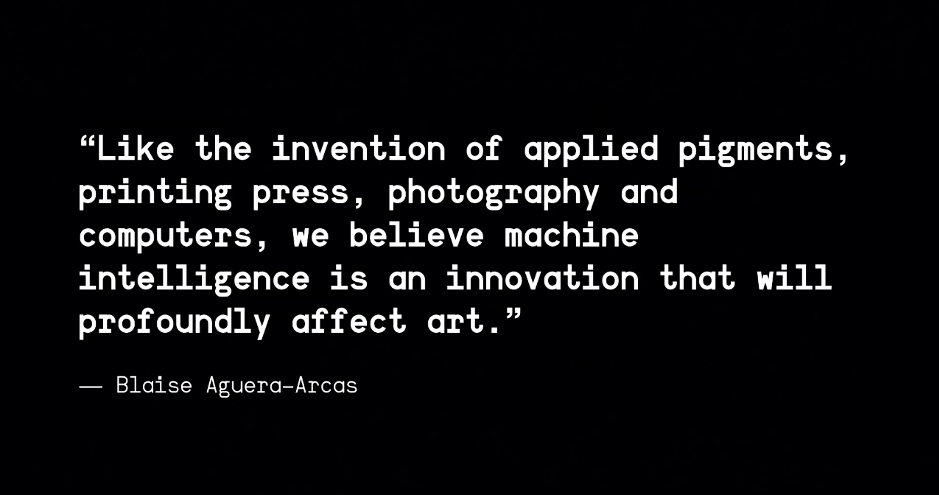
Quote Blaise

Finding the moment of remembering

Finding the moment of entering a dream state

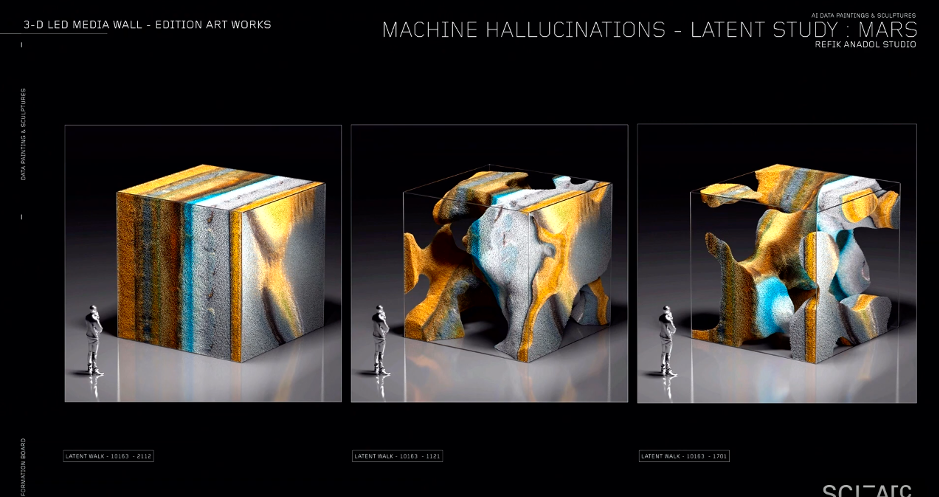
“Machine Hallucinations”

Collective memories of spaces

To make the invisible visible

Hallucination narrators

Dream narrators

The Selfies of the Earth

Machine Hallucinations

Refik is asking questions that are not just a fancy-fications of a bunch of algorithms

petervan-signature