In the current economic climate, one restructuring follows the other. In my country there are some notable examples like AB Inbev, Opel (GM) Antwerp, HP, etc.
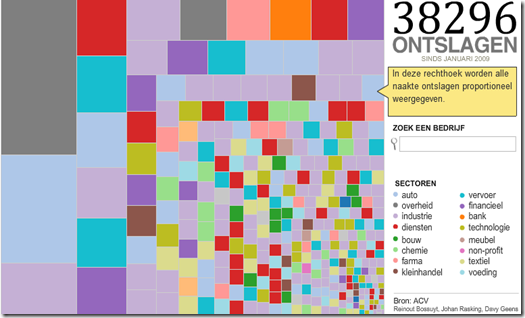
At the time of writing this post, the counter of lost jobs in Belgium since January 2009 stood at
38,296
lost jobs
And this is “only” from structured and collective redundancies. The following table comes from quality newspaper De Standaard. The visualization also represents what sectors “contribute” most to these redundancies.
It’s therefore “normal” that i see/meet/mail more and more friends and (now ex-) colleagues being hit by the recession, crisis, or whatever you prefer to call the current economic climate and resulting restructuring or transformation programs. It happens everywhere. Except at the one employer i ever had that still today shows double digit growth.
However, some of these friends were living in Golden Cages for years but were bored to hell. The shame is that they let this happen over them. Others indulged all sorts of manipulations, political maneuvers, and other techniques that did not take them for full or were just ignoring them and their ideas. Others just had the courage of sticking out there neck, but not being appreciated by the blueprint and/or differing too much with the “normal way of doing things here”.
Indeed, it seems recurring many companies that diversity in thoughts is not always welcome, despite all the window dressing about values etc. That is of course a pity, because this diversity in thoughts and ideas is fundamental to being innovative.
And it happens everywhere. Except at that one record retailer. They seem to be some kind of Tribe. Have always been since the 60’ies, with self-development programs and alike. They also continuously innovate. With green IT and own windmills etc already 10 years ago. “Cradle-To-Cradle – Remaking the Way We Make Things” applied before the book was written.

So it’s all about sustainability, made possible through R&D and Innovation in new sciences and technologies. And being part of a tribe that has innovation in its DNA. See also later in this post when we discuss the jobs and trends of the future: science and technology are at the heart of the sustainable development debate.
However, if you’re not part of such a tribe, and you get fired where you were bored, then there is light at the end of the tunnel. Getting fired could really be a fresh start of your professional life, although somebody else made the decision for you.
Have a read at “The Living Dead: Switched Off, Zoned Out – The Shocking Thruth about Office Life” by David Bolchover.
Joe read the book and here is his review:
This book is about – the millions of talented and bored to tears people rotting away in large offices, completely disconnected, disenchanted, disengaged, shuffling papers away, staring at screens, writing memos and Powerpoints, sitting in meetings deliberating in jargon that means nothing, and generating serious pretend-work….
and how our world and organizations have made this a taboo topic, refuse to recognize its existence and aggravate this problem through inadequate structure and processes (specialized business jargon, office politics, hierarchy, etc).
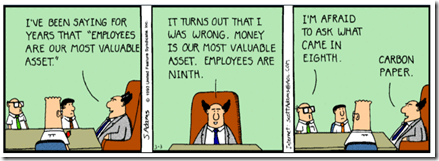
This is one of the most blunt books I’ve ever read – a Dilbert with the sharp facts substantiated! And you will not find one business jargon word that can qualify for a b-sh**t bingo in there.
The most interesting part is that the book is written already 5 years ago – and looking at Peter Van’s blog and the book gives a clear indication of a very alarming trend. Not for the weak-hearted! Contains some seriously ego-busting words on our Great Leaders ( the big companies CEOs) and Even Greater Gurus (the Management book writers).
What would you do if you got fired ? What would be the one thing that you would like to do for free for the next 10 years ?
Could give you a real good indication
of where your true
passion and purpose is.
But where to look first ? The report FastFuture.com report “The Shape of Jobs to Come” (Final Version January 2010, you can download the PDF here) would be a good starting point.

The report lists the 100 most likely jobs to emerge and be successful by 2030. Some of these jobs will already see the light as soon as this year 2010.
And if you have the luxury to take first take a couple of months sabbatical, then the report has in Appendix-3 an excellent time-line on what will happen when, what skills you need to master by when, and what the most probable and most looked after jobs of the future may be.
The outcome may be that you may want to follow some course on NIBC convergence technologies. (NIBC = nanotechnology-biotechnology-information technology-cognitive science) or to study Chinese, Spanish and Portuguese if you want to mean anything in the economies of growth of 2015.
Some extracts with – as usual – some personal comments.
For the longer term, the centrality of science and technology in helping to tackle the most pressing planetary challenges from poverty to clean water, environment to human health, climate change to energy supply and housing to transport are ensuring that science and technology are at the heart of the sustainable development debate
Finally they are expected to help us survive and thrive in the cyber world, whether through legal protection, counseling or management of our virtual data and ‘personal brand image‘. As a result, the survey suggests that many of these roles will be popular, well-rewarded and aspirational.
The ten key patterns of change identified in the report are:
1. Demographic Shifts
2. Economic Turbulence
3. Politics Gets Complex
4. Business 3.0 – An Expanding Agenda
5. Science and Technology go Mainstream
6. Generational Crossroads
7. Rethinking Talent, Education and Training
8. Global Expansion of Electronic Media
9. A Society in Transition
0. Natural Resource Challenges
Looks like the list we suggested for our Think Tank on Long Term Future 😉
Under “economic turbulence, we find:
Further economic turbulence and potential downturns between 2010 – 2020, followed by a more stable period to 2030 as excessive risks have been removed from the financial markets and most economies have repaired their finances
Out of the list of 100 future jobs, i personally liked very much: the body part maker, the teleportation specialist, the currency designer, the non-military defense specialist, the director of responsible investments, the mind reading specialist,
Take the Body Part Maker (possible emergence as a profession: 2020, that’s only 10 years from now !):
Due to the huge advances being made in bio-tissues, robotics and plastics, the creation of high performing body parts – from organs to limbs – will soon be possible, requiring body part makers, body part stores and body part repair shops.
While a typical organ such as a liver or kidney might be grown, other parts such as an arm would involve the complex integration of a nano-engineered skeleton, high performance robotic joints, fibre-optic nerves, artificially grown skin, synthetic flesh and muscles.
Or the Memory Augmentation Surgeon (emerging profession in 2030). It really reads like Ray Kurzweil’s “The Singularity is Near” (book written in 2005 !)
This is a new category of surgeons whose role is to add extra memory to people who want to increase their memory capacity. A key service would be helping those who have literally been overloaded with information in the course of their life and simply can no longer take on any more data – thus leading to
sensory shutdown
Although the job descriptions are somewhat funny and even “cute”, the real value of the report is in its Appendices: they hide a wealth of trends for 2030.
Truly amazing. If only 10% of this becomes true, the world in 2030 will look quite different from 2010. Especially Appendix-2 is a summary of all things you should be aware of as 2015 approaches. Appendix-3 shows a very comprehensive timeline per trend.
It is in these Appendices that you can learn for example about Generational Cross-Roads:
The challenge for employers will be to create an environment where each group can feel valued and be effective. Indeed, a Randstad USA survey found that 51% of baby boomers and 66% of the generation that preceded them reported having little to no interaction with colleagues from Generation Y.
What is your company doing to get these young generations
deeply into your workforce’s DNA ?
And about Society in Transition:
Higher ethical standards and a sense of the greater good are two of these evolving trends. Increasing expectations are concurrent with a decline in trust of key institutions.
“Higher ethical standards…” See also my previous blog post on Ethical Re-Boot.
About Evolving Technological Ecosystem, the appendices reveal that:
Handheld devices expected to become the control centre of a rapidly expanding personal ecosystem – where projection / pullout screens and keyboards could accelerate laptop replacement. Key enablers include augmented reality, intuitive interfaces, semantic computing and the increasing embedding of intelligence in a range of devices – often known as ambient intelligence or IP Everywhere.
What is your company doing to get these technologies
deeply into your innovation DNA ?
And about Quantum Cryptography that:
In “traditional cryptography” the data itself is encrypted using complicated mathematical functions. In “quantum encrypted communications”, a key is sent by beaming a string of photons, representing a code, from the source to the target. If it gets to the other end and matches what the target expects, then the data gets unencrypted. The Guardian notes that if anyone tries to intercept or break it, thanks to the laws of quantum physics, the mere act of observing the stream of photons changes it – and so it fails
If you company is doing something related to internet security
your strategy for the next 5-10 years
should have some bullets and focus on this.
And it is not always about throwing another GUI at your application. Have a look at this article that suggest that Mind and Square are NOT innovative and the true meaning of innovation in financial services lies in the plumbing, not the UI.
Remember my discourse about Innovation at the Core vs. Innovation beyond the Core ?
And then there is a section on R&D and Innovation trends. Most countries and regions seem to invest more in Innovation:
R&D Takes Centre Stage: Germany is investing EUR900M by 2010 to fund R&D projects commissioned by medium-sized business and EUR65M to expand and develop research infrastructure. Norway is set to increase its Research and Innovation Fund capital by EUR685M and create over 200 new research positions each with EUR90,000 funding. France is committing EUR731M in 2009-10 to refurbish universities and research institutions. China’s 10Tn Yuan 2009-11stimulus package includes major investments in science and technology, including "key research projects related to enlarging the domestic market.‖ (University World News).
And where is Flanders ? The Flemish Government decided to REDUCE the budgets for Innovation and R&D for the next couple of years ! And some companies plan to do the same in reaction to the economic climate.
Reducing your innovation budgets
means the beginning of the end
It means that you don’t believe
in the future
of your region, company or project.
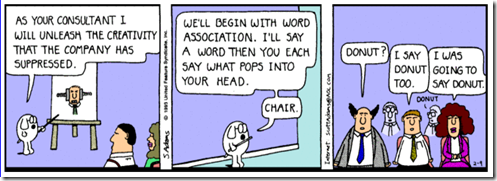
Calling in a bus of consultants to tell you how to innovate will not work. First check out How real your Innovation is. And start from there. Especially if your company has a culture of incremental innovation.
We have to invest now. As mentioned before, i believe this requires a private (non-public) initiative. Many public – government driven – initiatives seem to lead to lots of consensus and compromise, often leading to a watered down vision, or no vision at all.
I was – and still am – hoping that our Think Tank on Long Term future can kick-start this private process.
Let’s also watch-out for the Belgian Presidency of the EU for the second half of 2010. I heard they bring on board some really smart people that can make the difference. Hopefully we get in the news because we really could make that difference, rather than through scandals about drunk MP’s.
If not, we may have to start imagining a miserable future in 2030 where we will be feeling like in 2010 without Internet (kicked into our lives around 1995 for most of us).
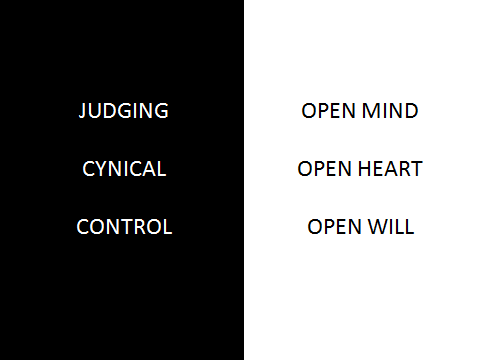
So, if you are/get fired, the next best thing to do is probably to look into the direction of your purpose and to surround you by the people of the right tribe. Those that make you live longer not shorter. Those that truly bind not seek conflict. Those that want you to succeed, not fail. Those that are capable of saying yes, and have not been trained to find the “no”.
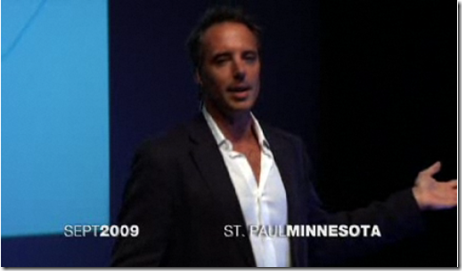
For further inspiration about being mentally healthy and finding the right tribe, have a look at this TED talk by Dan Buettner on “How to live to be 100+”. With thanks to the friends in Iceland for spotting this one.
Or you may just not even make it to 2030 !







![Reblog this post [with Zemanta]](https://i0.wp.com/img.zemanta.com/reblog_e.png)