Every morning I wake up angry

crash

It was triggered in me for the first time when I was watching the movie “Crash” featuring Sandra Bullock. She plays a rich wealthy healthy good looking woman that has everything. Has a great job, good family, fancies the better restaurants and clubs.

But she is spoiled and disconnected with the real world. She lives in an ivory tower.

It gets as bad as her saying during a morning breakfast discussion:

“Every morning I wake up angry”.


Angry

That emotion that was so present during (and after) the 18 month personal development program Leading by Being that a ended about a year ago now. The 23 Feb 2009 coming-out of that program also resulted in this blog.

My angriness this morning is basically triggered by an argument I has last night with my lovely wife about something really stupid. Nothing spectacular, but the feeling remained during the night. So, i had a bad night.

The trigger is pulled when i recognize that feeling of not living my full potential. When i feel swimming in syrup. What i feel i don’t progress anymore. Status-quo. It’s protest. It’s rebellion. It’s Anger.

In one of my previous posts i was writing about the holy fire. This time it’s maybe the devil’s fire.

This fire is also burning like hell, but the burning is one like

acid


It’s a lot of negative energy. It’s the devil inside me. The Hannibal Lector with his own (melo)-drama, showing himself as the complex persons as that suits him well, and does not force him to show his true (empty) self.

image

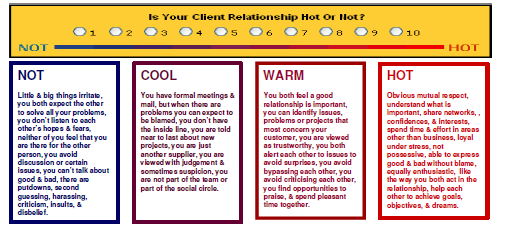
I went back to my notes of Leading by Being, “refreshing” what caused my angriness. This is what i found back:

image

It’s this feeling that i can do so much more but am standing in my own status-quo. Since the coming-out on 23 Feb 2009, there is not much i have done with all the nice resolutions i wrote down at that time.

It’s the feeling that you know very well what to do/change in your life to be your true self and not the self that you imagined for yourself. And being angry for not applying in any way all the great lessons you have learned in this program or in all the great books you have been reading in your life-time.

And feeling deep inside that something “big” is on your life-path, and that you seem to have missed it consistently or avoided it on purpose. The thing that Huge McLeod calls “You have to find your own shtick”

It was the fact that somehow playing around with something new, suddenly they found they were able to put their entire selves into it. Only the did it become their “shtick”, their true voice, etc. That’s what people responded to. The humanity, not the form. The voice, not the form". Put your whole self into it, and you will find your true voice. Hold back and you won’t. It’s that simple.

I have also been reflecting on this blog. I read quite a lot. Books. And I spent quite some time reading postings via my Google Reader. 2 hours per day is not uncommon (my wife loves me for this).

It really would not be difficult to post 3-4 new posts per day linking to other stuff i found interesting. And i discovered the trick that if my blog post title contains “Google”, or “Android” or… I get a lot more hits. But do those hits also mean impact ?

If so, it’s mere quantitative, not qualitative. And even when that happens, what does that do ? Make myself interesting and exposing how smart i think i am ? It is not satisfying. Anymore. Like others, I am in search for more

depth


I enjoyed much more the postings like holy fire. They’re more “authentic”. I know it is a big word. Maybe i should now share what stuff i am reading at this moment. Puts it all more in context.

I am in 4-5 books at the same time: re-read Seth Godin’s “Tribes”, devastated by Hugh McLeod’s “Ignore Everybody”, the disappointing Nick Carr’s “The Big Switch”, Howard Gardner’s “Five Minds for the Future”, Joel Garreau’s “Radical Evolution” and – in Dutch – Rik Torfs “Wie gaat er dan de wereld redden ?”  (translated: “And who is then going to save the world "?).

Those guys really inspire me.

I am inspired by what Howard Man, entrepreneur and the author of Your
Business Brickyard, has to say:

I’m continually amazed by the number of people on Twitter and on blogs, and the growth of people (and brands) on Facebook. But I’m also amazed by how so many of us are spending our time. The echo chamber we’re building is getting larger and louder.

More megaphones don’t equal a better dialogue. We’ve become slaves to our mobile devices and the glow of our screens. It used to be much more simple and, somewhere, simple turned into slow.

We walk the streets with our heads down staring into 3-inch screens while the world whisks by doing the same. And yet we’re convinced we are more connected to each other than ever before.

Multi-tasking has become a badge of honor. I want to know why.

I don’t have all the answers to these questions but I find myself thinking about them more and more.

In between tweets, blog posts and Facebook updates.

That’s why I’d like to write more about the real life. My life. Yours. My colleagues.

And not to show fear but

vulnerability


And to inspire others to dream.

What matters now

This is the time of New Year resolutions.

If you need some inspiration for your resolutions, I can recommend Seth Godin’s latest free e-book ‘”What Matters Now”

image

You can download it here.

It’s a collection of wonderful one-pagers written by smart friends of Seth Godin about noble themes such as Generosity, Fear, Passion, Compassion, etc

It also has a couple of advertisements for a fund-raising campaign for “Room to Read”, a program for providing books and education to children in developing countries.

image

In the collection of one-pages, the one that attracted immediately my attention and that really resonated with me was …

image


Have you ever wondered who’s behind that little voice in your head that tells you, “you’re in this by yourself, one person doesn’t make a difference, so why even try?” His name is Fear. Fear plays the role of antagonist in the story of your life. You must rid yourself of him using all necessary means.

We’re often impressed by those who appear to be fearless. The people who fly to the moon. Chase tornadoes. Enter dangerous war zones. Skydive. Speak in front of thousands of people. Stand up to cancer. Raise money and adopt a child that isn’t their flesh and blood.

So, why are we so inspired by them? Because deep down, we are them. We all share the same characteristics. We’re all divinely human. Until Fear is gone, (and realize he may never completely leave) make the decision to be courageous.

The world needs your story in order to be complete

Or about Productivity:

image


Or about Gumption:

image

I want to be fear-less

I want to be productive

I want to make things happen


I am hungry


Want to flap my wings


I want it now

The holy fire

If you are in one of those dips – and who doesn’t from time to time – I’d like to recommend you some “power-reading”. It’s better than zapping in front of your television, or better than (re)tweeting 140 characters. It’s definitely better than booze or drugs. And it has some element of “depth” that you don’t get from those other media/substances.

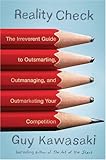
I could have titled this blog post “Ignore Everybody”, the title of a fantastic book by Hugh MacLeod of gapingvoid.com. The subtitle is ‘And 39 Other Keys to Creativity”.

ie222jpeg1-265x400

This is one of those rare books that hits you in the face. Subscribe to his blog. A drawing on a business card will wake/shake you up every day when you open your Google Reader.

091125d

Guy Kawasaki said: “Hugh’s book will kick your ass and push you out of your zone of mediocrity and stagnation”.

On one of the other cards in the book it reads:

The price of being a sheep is boredom. The price of being a wolf is loneliness. Choose one or the other with great care.

Hugh refers to the “Pissed Off Gene”. That burning fire inside that make you want to challenge the status quo.

It has something primal.

a25_17287961

So there i am with my wildfire, and now i come across a bunch of folks who feel down and ask me why we need an innovation team. They feel down because they have just gone through one of those mandatory efficiency or six sigma programs to cut fat out of the processes. Nothing wrong with that, some organizations can use a diet, and it’s in essence about being fit and going to the gym (looking at my belly it’s time for me to do so ;-). But what i think is really going on is that they feel the “Pissed Off Gene” coming alive again. It’s protest. It’s challenging where we are. It is challenging the status quo. This gene is a great source of energy. If only we could turn that negative energy in a positive one. Wouldn’t we loose less time and move forward faster ?

Sometimes however it’s getting worse. These days i believe we not only need a physical-gym, but also a mental-gym, because these days, some people already feel down in advance of the program: they start to hide, don’t dare to stick out their neck, afraid that if they become too visible or are not in line with the blueprint, they will be the first to be cut. That’s a ream shame. Come on, guys ! Don’t ignore yourselves in such a big way. Because your are worth it.

So back to the question “Why we need an innovation team ?”. Why we need innovation ? Really, reading the above i wished you did not ask. Because a company that does not have a focus on innovation does not believe in the future. Does not believe in growth. Does not believe in creating wealth. Is a dead company.

images

Dead wood.

So, what should we do ? Get rid of the innovation team ? Have no focus on innovation ? Come on !

We should probably quadruple our efforts.

But i know there is also the reality of budgets, certainly in these days. But I will keep pushing for it. So please, for once be proud that your company überhaupt has an innovation program in place (and a quite good one compared to other companies), and embrace it and help it and the company succeed, instead of complaining about it.

Our innovation team gives help. To the people who have that “Pissed Off Gene”, who have that holy fire. To help them to stand up and keep on fighting the status quo. To help them and the company make the difference. We are not measured on the ideas generated by the innovation team. We are measured on the ideas and success stories in the rest of the company and the eco-system at large. We can help those “passionate creatives” with resources (people and money).

And i hope that we also kick some ass

,and send out some wake-up calls, when we see things at the edge of our jungle that could be beneficial for our community. It is our duty to report those things, to orient/position them, to evangelize those new ideas and to help people moving from prototype into incubation.

And yes, that can be fun

Seems to be a bad thing these days to have fun. Really don’t get it. Also, they don’t see the hard work that goes on behind the scenes. They only see the fun part. Innovation is about change. People resist change.

Some days i feel like swimming in syrup

And some days it really feels good when we achieve something. But complaining seems to be the fashion of the day. And being in a good mood is these days like almost like an offense. In any case, the complainers never come to see us to see how they can be part of the fun. They complain. By preference in the gossip aisles of “radio-corridor”, hiding in the safety of anonymity.

It was probably a bad idea to call our team “the innovation team”, as we are measured on how many ideas we make the others generate and realize. But heck ! What should we have called it ? The A-Team ? The Tiger team ? The incentivators ? Cut the crap !

Print

In the end the name “InnoTribe” is right on. A tribe of innovators. Tribe as in Seth Godin’s book “Tribes”. One of those other great books if you have one of those dips.

banana_tribes

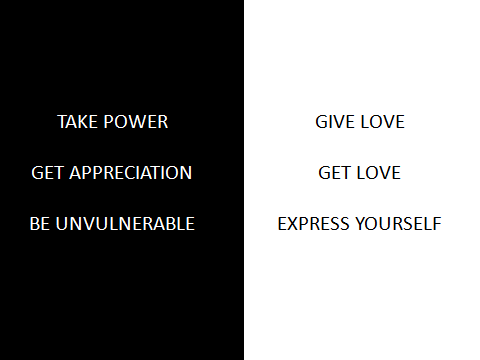
You know what all this is about ? I am going to use a big word: “leadership”. Not the leadership that you read about in McKinsey’s Newsletters. No, personal leadership. The leadership from within. From your true self. When you know damn well when something is right or wrong. Leading by Being. It is daring to follow your internal compass. It’s the difference between putting the fault on others and taking initiative yourself to fix the problem, or to come-up with something bright new. It’s daring to choose between old-game and new-game.

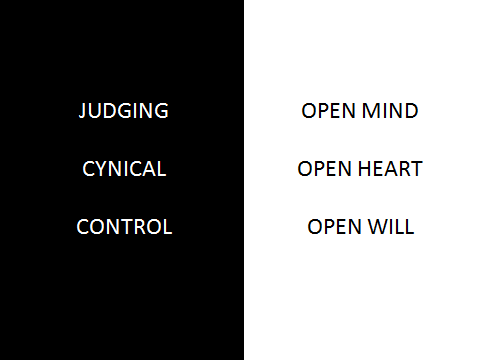
Old Game is being judgmental. New Game is Open Mind.

Old Game is being cynical. New Game is Open Heart

Old Game is being in control. New Game is Open Mind

In the end it’s people with passion that drive the innovation.

You can lead a horse to water but you can’t make him drink
You can’t push a string uphill
Time waits for no man

Jeffrey Philips adds one about innovation. While we like to say that everyone can innovate, its probably also safe to say that

You can’t force a disinterested person to innovate

So, what is it ? Are you the interested or the disinterested person ? If you are of the first category, join the journey. If you are the latter, come and see me. I’ll try to give you a pep-talk and try to shake/wake up that fire in you that is burning for sure in every human being. We just learned through the accidents of life/work to ignore and hide those fires. They’re too close to emotions. And emotions do not belong at work. What a crap !

Express yourself and come alive !


Do YOU have the hole fire ?

I do. And I am not ashamed to say so. And I am 52. And there is no age for it. And i am burning like hell. It’s primal. I am on a mission. “Ignore Everybody”. Don’t wait for the others to support you. GO !

And if you still feel in a dip after this, turn on Madonna’s “Jump”, volume knob on 10, and dance and listen to the following words:

The more that I wait, the more time that I waste
I haven’t got much time to waste
It’s time to make my way
I’m not afraid of what I’ll face
But I’m afraid to stay
I’m going down my road and I can make it alone
I’ll work and I’ll fight till I find a place of my own
[Chorus]
Are you ready to jump
Get ready to jump
Don’t ever look back oh baby
Yes, I’m ready to jump
Just take my hand
get ready to jump

Google Chrome: who is right and who is wrong?

All over the tech websites last week: Google previewing their Chrome OS and releasing it’s code to the open source community.

Planning, pre-viewing and releasing an OS is a big thing. Especially if everybody is looking at you as the provider of THE cloud OS.

It stroke me that some of the comments are so diverging. Some examples. Who is right and who is wrong ? With – as usual – some additional thoughts and spices by yours truly.

Negative

When the title says “Why Chrome OS will fail” you know what to expect.

However, it also inherits that platform’s (Linux) many warts, including spotty hardware compatibility.

It’s a move born of desperation. Google knows it can’t possibly establish a viable hardware ecosystem and still meet its self-imposed release deadline of "mid-2010”.

…no surprise that the primary interface to the Chrome OS is … Chrome, as in the Google browser. Unlike a traditional OS, there’s no desktop. The "applications" running under the Chrome OS are really just interactive Web pages,…

The bottom line is that while there is virtually nothing that you’ll be able to do with the Chrome OS that you won’t be able to do equally well with Windows, there are literally millions of things that you can do with Windows today that you’ll likely never be able to do with the Chrome OS.

It should come as no surprise that this is the article that is tweeted around Twitterspace with great and almost malicious pleasure by current Microsoft employees. Still loyal to their employer.

But think twice when you use the word loyalty in this context. See how fast the love can turn into competition when the company does not treat its ambassadors rightly (Don Dodges 180° love/hate turn around after being hired by Google)

See also James Gardner on the “Evidence of the (Microsoft) chip (in Microsoft employees)” and the introduction of a new term:

the Borgocrat

Fake Steve Jobs, one of my favourite blogs on the internet, summarised the whole thing very nicely I thought, in a post where he calls Don a Borgocrat (Fake Steve refers to everything Microsoft as the Borg), and compares previous posts Don has made with his new position on products for the company.

If this isn’t evidence that the “chip” still exists, I don’t know what is.

The more a read those opinions of some of head-in-the-sand Microsoft opinion makers , the more they are irritating and even not credible.

What to think of a Microsoftie making fun of Google Gmail being down, when their Hotmail has been down and hacked so many times.

But it’s a more general irritation.

What to think of traditional network vendors making fun of some cloud outages, knowing that their legacy technology is 30 years old, and the cloud players are doing relatively well, if you would add an adoption ratio of number of users and the incredible short time to market for users to take up.

That sort of arguments are so passé,

so old game

Neutral

Starting with a safe “Personally, I think it’s too early to tell.” The more interesting part in this posting is the effect that “geeks” can have on mainstream.

Yes, the "geek" audience is without a doubt a niche market. So it’s easy for Microsoft or Apple to write off Chrome OS. But that’s a mistake. As John Gruber wrote in his excellent piece, "Microsoft’s Long, Slow Decline":

People who love computers overwhelmingly prefer to use a Mac today. Microsoft’s core problem is that they have lost the hearts of computer enthusiasts. Regular people don’t think about their choice of computer platform in detail and with passion like nerds do because, duh, they are not nerds. But nerds are leading indicators.

Microsoft’s losses to Apple aren’t based on "regular people" choosing the Mac. Rather, these "regular people" were encouraged to do so by the geeks in their lives who had made the switch to a Mac years ago. Consumer technology vendors can ignore the alpha geek niche at their peril.

Positive

Louis Gray has a long term view.

Google’s preview of the Chrome OS was more than a product release. It was a milestone in a vision of a Web-centric world, one in which we are increasingly living.

For the vast majority of my own activity, I am online, not using software. I intentionally use some applications, like Microsoft’s Office suite or Adobe Photoshop, quickly, and then close them just as quickly, as to not slow down my computer’s performance. Google’s Chrome OS is the latest development in a vision that says our activity will be online, our data will be stored in the cloud, and applications that have traditionally been desktop software will make their way online.

Under no uncertain terms, I agree with their vision. This is happening and it is happening fast.

Robert Scoble (an ex-Microsoft himself) has as usual a more documented insight on his blog.

Google is playing a different game. Google Chrome OS is NOT about killing Microsoft or Apple.

What is it about? Developers, developers, developers, developers, developers.

This reminds me of the famous video where Steve Ballmer cheers up the developer’s audience in the good old days. It looks however – like pointed out in the neutral article above – that Microsoft has lost its’ “clout” with the developers at large.

It’s even getting worse: last week at PDC, Ray Ozzie was saying that apps won’t be a differentiating factor on smart phones. Sounds a bit arrogant to me when you know that iPhone Appstore has 100,000+ apps in store, and Android Marketplace building up fast.

Scobleizer continues:

I have not seen a single thing demonstrated on stage yet that won’t run on Google Chrome OS.

This is a winner, but on a new field

Innovation at the Core and beyond the core

If you consider yourself as an innovator, I guess you all want to create some Edison effect. So that when you launch your innovative solution, you can refer to the old days as “how could we ever live like that ?”

1878_initialspark_530

The fundamental premise of this blog post is that organizations need a two-speed strategy for innovation.

  • One for innovation in the core, which is more about creating efficiencies in the core.
  • And one for innovation beyond the core, where you basically look for the next xxx Million EUR/USD new business stream (*).

*(Fill in the xxx based on the type of business you’re in). Think twice: by filling the xxx, you already frame your innovation to relative small innovations or real bold disruptive ideas.

Beyond the core you can NOT apply the same traditional core principles, decision criteria, mantra’s, etc.

Even more importantly, you need different governance and funding mechanism to succeed in innovation beyond the core. You also need a tail of your innovation process.

You need a governance that is not based on consensus (or even worse, on the principle of pleasing or obfuscating the no-Sayers), but on

the power of the believers

Team up with the believers.

You need a funding model where for each project – aka read new revenue stream of xxx Million EUR/USD – you have a FEW share/stakeholders, so that decisions are fast and don’t get watered down by yet another consensus process.

Because you want to make decisions on change of direction fast. You do not want to go through a lengthy consultation process with all sorts of stakeholders. In this sort of innovation beyond the core, often you take entrepreneurial decisions, that is taking decisions without knowing all the elements of the equation. In other words, their is some risk taking involved.

And when you take risk you can fail.

Fail wisely

And make corrections as you go.

For that you need fast assessment of the situation and fast decision taking to change course.

a06_20612883

In this innovation beyond the core, you probably don’t ask customers what they expect from the next problem, as they are probably framed in the existing core products and probably think in extensions of existing familiar products. When Apple launched the iPOD, do you really think they asked their MacBook customer base what they expected of a portable music player. Do not think so.

They probably would have ended up

with a cassette-player in the cloud

It took the nerve and courage of a visionary with – euh, a vision – and then execute very well on that vision.

You need to define a radically new and very clear tail to you innovation process. That tail must be agile, with few to decide and fund, to move fast before your competitor gets there. If not you end up with a number of cool ideas that never get further than prototype. And you create a big illusion and disappointment with all those who spent often a lot of their free time to come up with ideas and work them out into prototypes and initial business cases. (not everybody has the Google luxury to dedicate 20% of your work-time to innovation). And you loose the “clout” of your innovation team/work. See more about clout at the end of this blog post.

If you still need to be convinced of this principle, please read on and see what a number of very smart people have to say on this.

I found inspiration for this blog post in two great recent articles on Innovation by Adam Hartung in Forbes and one other on his great blog. Reader subscription mandatory if you do something in innovation in real business. Adam is author of Create Marketplace Disruption: How to Stay Ahead of the Competition.

image 0811_adam-hartung_170x170

First article was in Forbes in October about the myth of efficiency.

Most organizations embrace the creation of new ideas and the fun exercises that surround "ideation." Then they hope they can somehow develop the momentum to roll out those ideas. As if that were what organizations do.

We all know that organizations are not designed to create and implement new ideas. To the contrary, they usually exist mainly to manage legacy businesses, to defend and extend them.

Organization leadership focuses on order and control. Thus a recent spurt of articles across the business press bemoans the problem of business "inertia," as the management expert Gary Hamel calls it.

When you take a hard look at efficiency, you can see that it’s never a good source of higher returns.

As appealing as cost cutting sounds, it can’t improve returns except within the shortest time frame. Why? First, most cost cutting is easily matched by competitors, thus offering little or no competitive advantage. Second, most cost cutting is simply distributed to customers through lower prices, in a fight to maintain revenue and stay ahead of fast-moving competitors. Price wars break out as a business spirals into lower margins and declining growth.

We know that the return on innovation is very high

As I mentioned earlier, it has been shown in many industries that investment in new products and services creates substantially higher returns. Why? Because real innovations are harder for competitors to match and keep up with, especially the more radical or disruptive they are. Also, genuine innovation prompts more customers to buy, increasing sales. Innovation grows a business. And since it leaves competitors behind, it generates higher margins.

Second article also in Forbes a couple of days ago. About Innovation beyond the core.

album_large_2317911

Few businesses are any good at innovation. For all their brainstorming exercises and "open innovation" programs,

they mostly just come up with reformulations of existing products,

new pricing plans and basic updates

the same old things just a little cheaper, faster or better

Businesses ask their "strategic customers" where to innovate and get little advice. Those customers are usually strategic only in that they are large, not because they have any particular market insight. They too just want more, better and cheaper, which are hardly recommendations for true innovation.

The criteria are developed by reviewing "core technologies," "core markets" and "core capabilities."

"Leveraging the core"

becomes a refrain

All of which just increases the likelihood that what comes out will be remarkably non-innovative, like reducing the dirt-removing strength in Tide, slapping the word Basic on it, lowering the price and calling the result an innovation.

This leverages the "core brand" while extending its reach to more low-price customers, but how much can it possibly increase company revenues?

Even if you get that far, and have some form of Innovation evangelists in your company (i hate the word Innovation “Manager” as innovation has to come from everywhere inside and outside your company) that is in no way a guarantee for success and often a source for cynicism.

As ideas are developed, they get pushed through the wringer. Managers try to add value by applying a critical eye to them. With little more than their own past experience to guide them,

they cut out ideas they fear

won’t work technologically,

won’t be accepted by distributors,

might cannibalize existing product sales,

could require entering unknown markets

or otherwise are disruptive.

The number of ideas quickly shrinks.

Why is failure the norm? Defending and extending the business is what we’ve trained our business leaders and managers to be good at. They know how to remain close to "core" by staying "focused." They work on improving "operational excellence" and seek the "low cost position" while striving for "customer intimacy" with the biggest customers (encouraged by Michael Tracy and Fred Wiersema, the authors of The Discipline of Market Leaders).

Third article on his own blog just before the week-end. Referring to another great article by Andrew McAfee, in essence about the management illusion of (brand) control in this Web 2.0 world.

album_large_2355746

Executives who feel like

they have "control" of their business

are under an illusion in 2009. 

And that has been demonstrated time and time again as this recession has driven home a plethora of market shifts.  There are many things managers can control.  But many of the most important things to success are completely out of management’s hands. 

Thus, the ones who succeed aren’t trying to control their brand, or business. 

Instead they are building organizations that have great market sensing and are quick to react. 

Just compare GM to Google and you’ll see the gap between what worked in 1965, and what works 45 years later.

Fourth and last article is from James Gardner.

6a00d83451f8b769e200e554046d3d8833-150wi

James Gardner is a Director in Corporate Information Technology at the Department of Work and Pensions in the UK, where he is accountable for innovation, architecture and strategy. Before that he was Head of Innovation and Investment & CIO Technology at Lloyds TSB. For quite some time he is writing about innovation in Banker’s Vision. His latest post is about innovation backlash and innovation clout.

Consider this scenario. You use the tools of innovation to create a pile of new thinking that results in new prototypes or experiments getting built. Everyone is excited, and loves the new approach. New things start happening, so everyone declares the exercise a success.

But the situation is illustrative of something that you always see when you send an innovation team into the wild: the new ideas getting created threaten someone’s interests, no matter how well the innovation team influences those around it.

You get a backlash that is as inevitable as it is hard to manage. In fact, I’m not certain it is possible to manage it.

If you’re about changing the status quo and you don’t ruffle some feathers, it is surely inescapable that you’re not really changing anything at all.

My conclusion is that you have to invest your innovators with sufficient political clout that they can – in their own right –

protect themselves

from the backlash when it happens. If the clout is invested via proximity to a powerful senior figure, then so much the better.

There is a downside to giving innovators clout, of course. The downside is they then have the ability to disrupt strategy and “get distracting”. My own view, though, is that a strategy that doesn’t know how to deal with the new stuff without falling apart isn’t very much use anyway. It’ll only be current in the short term.

Try this: give your innovators their head and protect them from harm.

You’ll be surprised as the results you get.

This sounds very much like the Red Monkey story from Jef Staes, already mentioned elsewhere on my blog.

Summary: Innovating in the core or beyond the core is fundamentally different.

PS: of course, this blog post was written during my free personal time.

Web Squared for advanced

Very cool presentation on the impact of the web on the world. Web Wide World revisited so to speak. Enjoy.
View more documents from gloriagdiago.

Web Wide World


“The web is transforming society”

m04_20979625

“Web Squared: how the web transforms the world”

web2009_websquared-cover

“Web Wide World” transforming “World Wide Web”

image

Several very interesting publications and postings over the last couple of weeks, all confirming that something very profound is happening with our core systems, our core values, and how the collective intelligence of the web is gradually but surely transforming our value kit for the nearby and long term future.

First, i would like to point to 2 very rich and profound postings by Nova Spivack.

250px-Nova_spivack

On Nov 4, Nova posted The Web Wide World — The Web Spreads Into the Physical World.

A world in which every physical object, everything we do, and eventually perhaps our every thought and action is recorded, augmented, and possibly shared. What will the world be like when it’s all connected? When all our bodies and brains are connected together — when even our physical spaces, furniture, products, tools, and even our natural environments, are all online? Beyond just a Global Brain,

we are really building a Global Body

Even more profound and more elaborated is his posting What after the Real Time Web ? This supposes that you already have an idea what Real Time Web is all about. It’s a very long posting, but worth every minute/word of it. Some highlights/bullets with some personal comments:

About Web Attention Deficit Disorder: You can experience this every day if you are a Twitter, Facebook, Google Reader user. It’s about having tools to filter out the noice and focus on the essence

About Web Intention Deficit Disorder. Great “bridge” from attention to intention. I was thinking in terms of moving from “Crowd-Sourcing” towards “Crowd-Targeting

About Messaging. Messaging as we know it for 20 years is going to change 180°. In these days it is somewhat insane that we still send messages from A to B, whereas with today’s technology it’s more about having something stored centrally and collaboratively participate to this "information object in the cloud”. Google Wave is a powerful trendsetter.

About Semantics. What can i say. It should be clear by now for any semantic standards setting organization like SWIFT, like GS1, like… that their knowledge to deal with semantics in “messages” can now have a ten-fold impact in a “semantic web” world, where we now can automatically semantically tag any form of information, whether that information is already structured, or not (like in Word, PDF, images, digital information footprints, etc)

About Attenuation. About helping someone focus their finite attention more efficiently on the things they care about most. This makes me think of Generation-M (see elsewhere on this blog). The generation that cares about things that Matter.

About The WebOS.  I like Nova’s statement that “the winning WebOS is probably not going to come from Google, Microsoft or Amazon — rather it will probably come from someone neutral, with the best interests of developers as the primary goal.”

About Decentralization. “By this time the Web will be far too vast and complex and rapidly changing for any centralized system to index and search it”. It becomes increasingly clear that “central control” or “central policing” does not work in this Web Wide World. Definitely not if you don’t add value in the middle.

The intelligence is moving

to the edges

About Socialization. There is no escape. No hiding possible anymore. The future is for those who can share. That will be rewarded in new “currencies”. See elsewhere on this blog about the Whuffie Bank.

About Augmentation. Just today i was reading another post about augmented reality eye-lenses. And about Google Latitude now offering historical tracking on your whereabouts. Nova is mainly talking about real-time augmentation. Adding the historical tracker to all of this is pretty exciting.

About Collective Intelligence. Just quoting here: “This collective mind is not just comprised of humans, but also of software and computers and information, all interlinked into one unimaginably complex system: A system that senses the universe and itself, that thinks, feels, and does things, on a planetary scale.”

About Social Evolution. “Existing and established social, political and economic structures are going to either evolve or be overturned and replaced.” This has been my thesis since the beginning of my blogging. Stronger, it’s the raison d’être for my blog. If all this happens, what is the 2020-2030 impact on our core systems, on our core corporate and personal values. How will our companies, countries, world systems going to be organized and how can we prepare for the day when “Top-down beaurocratic control systems are simply not going to be able to keep up or function effectively in this new world of distributed, omnidirectional collective intelligence.”

About Physical Evolution. In essence, Nova describes the age of the Singularity, when our human brains will  be complemented by the collective and give leeway to a different type of human being.

The environment we will live in will be a constantly changing sea of collective thought in which nothing and nobody will be isolated. We will be more interdependent than ever before. Interdependence leads to symbiosis, and eventually to the loss of generality and increasing specialization.

This must sound as music in the ears to my friend and coach André Pelgrims, who is fighting the sort of societal and corporate change management that is often not more than a big illusion, because the company has been focusing on aligning (not event fusing) of departmental silos, and was not able to descend to the level of person-to-person connection and enlightenment.

These are just some of the changes that are likely to occur as a result of the things we’re working on today. The Web and the emerging Real-Time Web are just a prelude of things to come.

The last element i’d like to ask your attention for is the existence and activities of the Web Science Trust.

image

The Web is the largest human information construct in history. The Web is transforming society. In order to understand what the Web is, engineer its future and ensure its social benefit we need a new interdisciplinary field that we call Web Science.

Have a look at some of the big names behind the Web Science Trust: Tim Berners-Lee, etc. Also very good to see that some European (UK) universities are starting to take the lead.

Most interesting is to look at the Research Roadmap. Just look at the research perspectives, and it gives you an idea of the deep profound impact of the Web Wide World:

  • Computational perspective
  • Mathematical perspective
  • Social Science perspective
  • Economic perspective
  • Legal perspective

And the integrative research themes:

  • Collective Intelligence
  • Openness of the Web
  • Dynamics of the Web
  • Security, Privacy and Trust
  • Inference

I took the effort to download one of the students research reports. Oh boy, how interesting how these young people study, research, reflect, analyze. I’d love to be back at university 🙂

Here is one sentence about the WebSci’09: Society On-Line Conference:

Thanks to the support of the Web Science exchange bursary, I had also the opportunity to participate in the WebSci’09: Society On-Line Conference, which was held in Athens, Greece from 18th to 20th March 2009. The conference was actually a very special one, as it was the first conference I have ever been to where I had the chance to exchange ideas with not only computer scientists but and legal studies.

I believe it is key that

we start building companies

made of the “hybrids”

Not only computer-scientists, but people with cross-fertilizing expertise. Like “experts of other areas including social science, humanities and legal studies” and bio-engineering and nanotechnology.

All the above is very close to the suggested scope of our Think Tank on Long Term Future.

Cloud Computing and Marketplace are just happening

Three interesting news items that Cloud computing and marketplace are just happening.

image 

Nobody else than Salesforce – a 10-year old company running a 10B+ $ cloud business, with 60,000 customers and 1,5M users (talking about reach…) – has as helped to launch FinancialForce.com , a new company that offers financial software. The new startup is funded by Unit 4 Agresso, the parent company of Coda, which had sold the Coda2Go SaaS through Salesforce.com’s on-demand application store. The new company is co-headquartered from Salesforce.com’s offices in San Mateo, Calif., and from an office in Harrogate, England. Salesforce.com will provide the customer support for the startup’s core product, also called FinancialForce (formerly Coda2Go). Salesforce.com is looking to position Force.com as a platform to launch new SaaS companies. FinancialForce.com is one of their first big case studies. The new solution includes general ledger accounting, user-defined budgets, spreadsheet integration, accounts payable and receivable, and invoicing. Pricing starts at $125 per user per month, and customers do not have to be Salesforce.com customers. Yes, i know, it is "just" accounting. But if you know that force.com already has 80 Financial Apps on their marketplace, it’s obvious on how the dots will connect.

The second is nobody else The U.S. Defense Department. They just put into operation their cloud computing services for military personnel. Originally launched a year ago, the platform, called RACE (Rapid Access Computing Environment) , was initially used for testing and development of new applications. The military says RACE is ready to go live with 99.999% uptime.

image

The third is a company Schumachergroup .

image

Their CIO was speaking at the Cloud Computing conference in London this week. This presentation was by far the best of the whole conference.

image

75% of all their business critical apps are now in the cloud. And targeting 90 % by 2010. The rest in a traditional on-premise data center. The cloud is 99,5% uptime and is manned by 25% of their IT FTE’s. This is the area where they innovate. Their data-center is 98% uptime, has 75% of the IT FTE’s running it and it’s the data center that keeps the CIO awake. In the cloud, they can deliver 5-10 times more value faster. What does faster mean: on average 5 months to deploy a new app into the cloud.

We have invited this CIO to Innotribe at Sibos2010 to deliver a real-life case study from another industry.

Print

See also the article "Marketplace – a commodity" on my personal blog here . Some people believe a Marketplace for Financial Services is years away, even beyond 2015. Don’t think so. It’s getting build-in in platforms.

Traveling on Light

Great article in NYT. You can find full article here.

image

The article is so inspiring. Anything is possible when you let yourself inspire by your dreams.

The next break came when Dr. Friedman was talking about the LightSail to a group of potential donors. A man — “a very modest dear person,” in Ms. Druyan’s words — asked about the cost of the missions and then committed to paying for two of them, and perhaps a third, if all went well.

After the talk, the man, who does not wish his identity to be known, according to the society, came up and asked for the society’s bank routing number. Within days the money was in its bank account.

My dream is to get our Think Tank on Long Term Future kicked-off in 2010. In the next 2 weeks, i will be speaking on this Think Tank to a group of potential interested captains of industry.

My purpose is “To Inspire Others to Dream”.