Highlights Disruption Tour

I am just back from the #disruptiontour with tour leaders Peter Hinssen https://twitter.com/hinssen and Steven Van Belleghem https://twitter.com/StevenVBe, and flawlessly put together by tour organizer Ilse Debondt from Connected Visions (https://twitter.com/ConnectdVisions ).

The PDF of the full program can be found here: http://www.connectedvisions.eu/pdf/cvdtour_program2014.pdf

I have made two blog posts about this excellent study tour:

  • “Highlights Disruption Tour” with a sequential overview of highlights per company visited (this post)
  • The Uberization of Everything”, a more holistic analysis and sensemaking effort of what I believe are the disruption understreams.

The tour started in the Bay Area on Monday 2 June 2014 with a visit to Google and ended on Friday 6 June 2014 at Scripps Research in San Diego.

In chronological order, please find below some highlights in telegram style with my 100% subjective views for which I am 100% responsible 😉

Google https://www.google.be/intl/en/about/

Google Play marketplace is cross platform. Focus on avoidance fragmentation Android platform. Focused on monetization developers, OEMs, Carriers, HW device manufacturers with “lead devices” launching new versions of android. “Interesting” to see that focus and monetization is on ecosystem, and not end customer. Trends: everything going mobile and multi-screen

Next:

  • Android beyond phones and tablets’, TVs, cars and wearables
  • Voice based search, and not only one way search but also leading into CONVERSATIONS
  • Car display as remote display for your phone
  • OS for the rest of the car, cars have much longer life cycles, how do we keep innovating?
  • Wearables: same strategy of platform, specific versions of android, skimmed down versions
  • Enterprise, “android at work”, with specific focus on security

Brand: speaker acknowledges that he does not know anymore what the Google brand is standing for

Google Glass https://www.google.com/glass/start/

We had opportunity to “play” with Google Glass. Some disappointment as far as I am concerned. Needs much more value prop. Baffled that some folks pay 1,500 USD for this.

YouTube https://www.youtube.com

Metaphor Switzerland vs India: Switzerland, cost of entry high, lots of barriers, everybody follows the rules; India, the opposite: low cost of entry, less barriers, no rules. Video is like India. Astonishing volumes of videos on YouTube. YouTube is the new search for Millenials. Little control what is watched. Organize for variation. Cost of production and distribution drastically down. Biggest learning: from “audience” to “fan-base”However, still talking in terms of “targeting the right adds to the right “audience”, not fans (sics) > not eating their own dog food

Khan Academy https://www.khanacademy.org

Khan logo

Mainly focused on math courses, some other categories emerging. Interesting: more focus on non-cognitive aspects coming: fear of math, fear of success, how to build confidence. Disrupting education: teachers become fellows/coaches

Tesla http://www.teslamotors.com

teslo plant

Wow! I was almost in a shock when entering the industrial the open office space (no pictures allowed inside) of Tesla in the ex-Toyota manufacturing plant. Really feels like pigeons in open cubicles. Before complaining about your open office space, first have a look at this one. From 600 to 6000 people in 3 years, and 6000 more this year. Presenter and head of supply chain: “The first 18 months were brutally tough”. The vehicle is a software platform, every car is a connected vehicle, over the air software upgrade of the vehicle. Burning 100m USD per quarter!!! Mission is about “transporting human beings” and caring about the customer: “somebody is looking after you” > we call them pro-actively in their car… We want to transform the automotive industry into sustainable practices”

The key thing for Tesla is driving he revolution, self driving vehicles are coming much much faster, and the future is one of no combustion engines, self driving, full connected vehicles.

Biggest eye-opener: the people at Tesla are more proud and more engaged than the Google folks. Also here: fighting regulation of retail structure of dealerships, and fighting regulation requires deep pockets

23andMe https://www.23andme.com

Who gets money of making sure people do NOT getting sick. Towards “data ethical organizations” and personalised medicine. Google-like big data principles applied to genetics. FDA update: “FDA was more concerned with The INTERPRETATION of The data”. Embraced the process of FDA regulation > will be very beneficial for us!!! The only one standing FDA approved one… going through the regulation process makes you stronger, but required deep pockets”Research: ONE big aggregated database: shared (against fee) with pharma research, even with P&G > makes me feel very uncomfortable. Do I have the right to be forgotten in the aggregates data pool of 23andMe?

Paypal http://www.paypal.com

Mobile, mobile, mobile. Target, target, target. Get in, get out, any currency. Next target, move bodies and shopping. In shop cameras, sensors, real time, creepy. Fascinating how easy they say “what the heck, it’s cool…” shop more efficient, immediate satisfaction. Making payments invisible. ONE hour delivery in Manhattan.

Cross “method of value”, anything in, anything out. They were avoiding my question about supporting crypto-currencies, although their (now ex-) CEO Marcus seemed to open the door. Marcus is now with Facebook….. Online and offline. Blurring into the OFFLINE physical world

PayPal Beacon: It’s a tracking and checking device handsfree. “You have been “tagged”

Cross merchant payment profile: “It’s creepy but we will get over this”

Very nice showroom/lab: User experience looks more and more like Spotification” of commerce information streamPayment becomes invisible aspect of commerce experience

Palantir Technologies http://www.palantir.com

Had very high expectations. Awesome opening presentation by Ari Gersher, #9 non-founding employee of Palantir

Pamantir

  • AI and chess: “weak human plus weak machine plus better interface beats the grandmaster”
  • Human machine symbiosis
  • Engineering all the friction between human and machine
  • A “synergistic system” for decision making
  • “Just works” experiences for enterprise, like what Apple did for consumer
  • We can build Facebook in one day
  • HR: Seniority does not encompass competence
  • 40% is government work
  • Data integration in 8 weeks in stead of 5 years, anecdote of McKinsey brain just incapable of taking in this sort of time disruption
  • “Nuanced analysis” > love the vocabulary
  • Have a philanthropic engineering team
  • Do things not because the law, but because it is the right thing to do
  • Working on changing IT purchasing in government
    • “We have learned that you don’t sell to a government, you sell to a budget”
  • Great metaphor, comparing Hadoop to engine block and LeMans car race with team of 120 people…
  • Doing UX is always hard: have team of 20 product designers for UX > UX is major capability for 21st century

Demo section of visit was disappointing. A lot of the demo videos on their website are much more convincing. A missed opportunity for Palantir.

  • Cyber crime demo, Turn around exploits in 4-6 hours, 1-2 TB per day digital exhaust
  • Credit card processor demo: 100 billion data points, “fluid” data exploration, showing their Valhalla application

Palantir Valhalla

Singularity University http://singularityu.org

On NASA Research Park, Moffet Field. Old building. Glasses, drones, genome, and other over glorifications of technology and abundance. Missing the critical dialogue here. Referring to CIA TED video about ethics > how cynical can you get post Snowden? Interesting: spokesperson herself does not believe in a singularity one single moment… “Singularity University is not about the singularity and not a university”, another brand identification issueSingularity University is also and incubation space for startups/companies. “lots of ethical stuff about all that, but… Anyway…

Scanadu https://www.scanadu.com

Quick visit and chat with Samia from Scanadu, who have office in incubation space of Singularity University. Lots of issues to solve with regulators. Almost forgot the story/narrative of why Scanadu was started > narrative is so important

Coursera https://www.coursera.org

Coursera Logo

One of the highlights of this tour. Very impressive track record in only 2nd year of existence. Quality education at scale. Peer assessment is as good as teacher assessment

  • From lectures to high quality feedback loops
  • From audience to fan-base
  • From audience to peer-base

Specializations: Capstone project, apply in real world project. Sponsorships by corporates for specific curriculum possible

Stanford Faculty Club panel discussion http://facultyclub.stanford.edu

About corporate Labs/Outposts in Silicon Valley. Btw: Vodaphone just closed their InnoLab in Silicon Valley

Panel discussion introduced by Mark Zawacki http://www.650labs.com/team-member/mark-zawacki/ of http://www.650labs.com with Todd Schofield from Standard Chartered Bank Studios and Ursula Oesterle from Swisscom

  • Todd also spearheads a group of 20 banks that have presence in Silicon Valley
  • Swisscom have 4 people, most rotating, projects-based, looking into foresights, insights, actions

o   Common themes

  • Corporate needs to sell to startup and not the other way around
  • Stop, go, stop, go,….you lab activities: the worst things you can do to your brand and reputation
  • Remote silicon valley labs only work if you have high quality alignment at exec level

Ripple Labs https://www.ripplelabs.com

ripple labs logo

Presented by the awesome Patrick Griffin, who was at Innotribe Sibos 2013 in Dubai last year.

Excellent presentation:

  • Peer to peer exchange of currency
  • It is a settlement system, it is not a payment system
  • Bitcoin is single currency Ledger (the currency is Bitcoin), Ripple is multi-currency

Ripple is attacking the correspondent banking space.
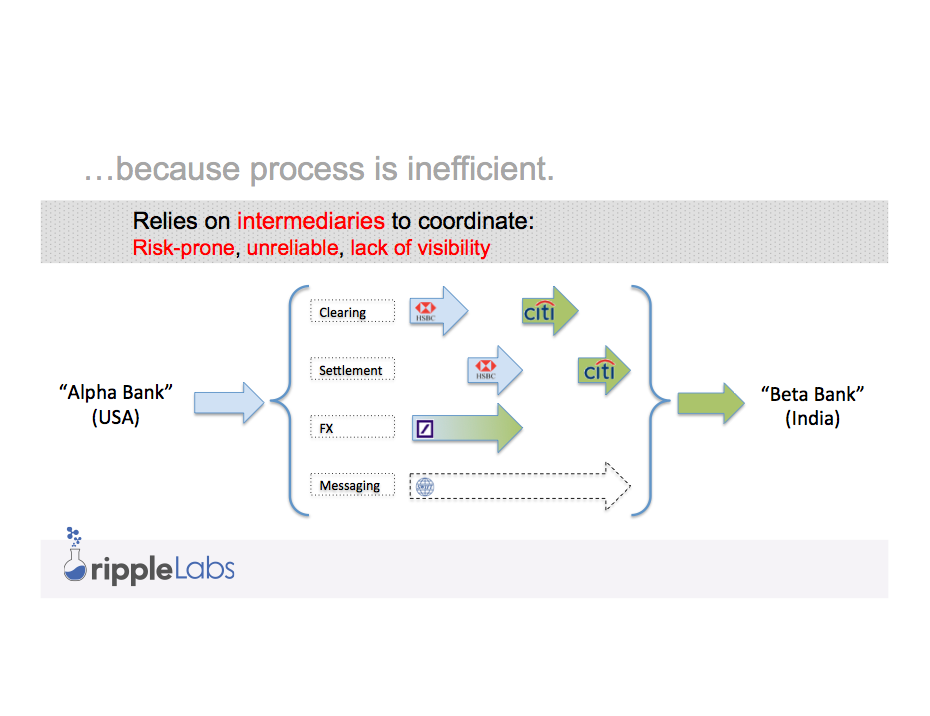
ripple slide correspondent banking

Ripple super-sweet for SWIFT, talking about “complementarity” although difficult to believe this is not disruptive for SWIFT. Positioning Ripple as “complementary” to SWIFT. Sending swift messages on top of the ripple layer.

StockTwits http://stocktwits.com

Founder (now Chairman) Howard Lindzon was already at Innotribe Sibos in Toronto in 2011. I know it’s a great company, but our presenter was Chris Corriveau (CTO), who apparently just left the company.. Interesting to see other end of spectrum of somebody who has run out of energy and motivation. Had lot of funding: “4M here, 4M there….”, Lots of funding, but no clear direction: “Throw stuff and see what sticks “. New CEO comes from media, stock tweets seen as media. Personal aha moment: “Social IS media”

EvoNexus http://www.commnexus.org/evonexus/

No strings attached high tech incubator Www.commnexus.org. 30 startups now in incubation. “Wet lab, dry lab” > only dry labs. Started in 2009.

Feeling of me too old, they too young

Too young

Here is their International Business Development Manager

What’s special? Free for startups. Tough to get in. No board seat, no equity, and no legal oversight. Can kick you out if no progress shown. All buildings owned by Irvine Company, largest property owner in California. Provide this completely free, growing next generation of tenants. “An engineer can always reinvent himself, a banker not”

Liked the Timeline for managing the startups
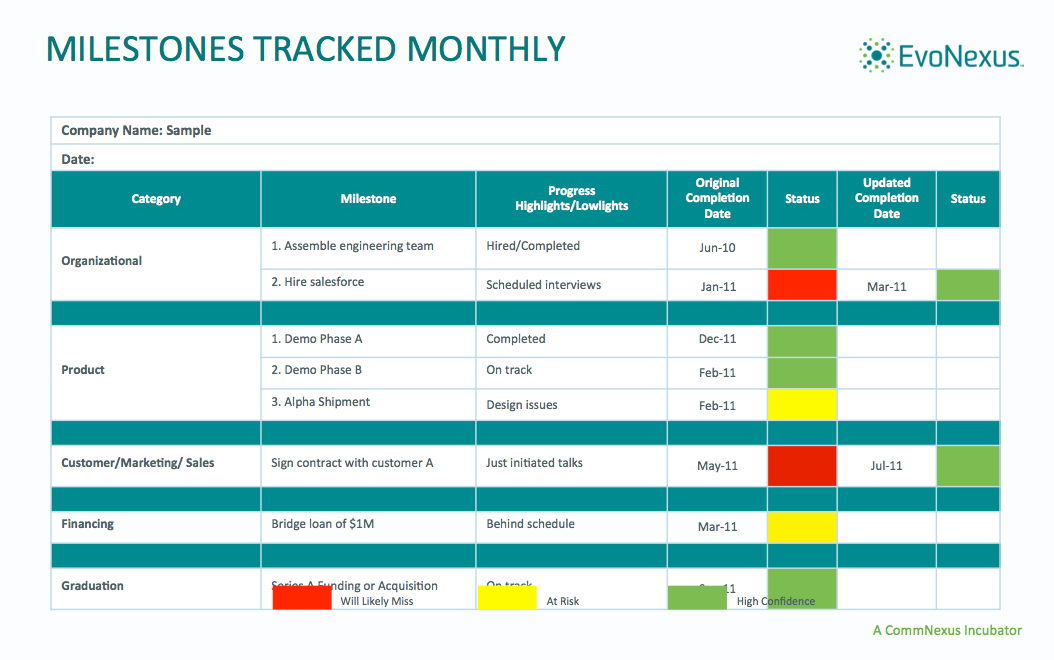
Evonexus Timeline

Janssens Labs (Johnson and Johnson) http://www.janssenrnd.com/our-innovation/partnerships/janssen-labs-at-san-diego

Without doubt the absolute highlight of this tour.

Main_Entrance_Home_JanssenLabs

Wow, what a campus!!!! Corporate Credo in welcome hall. See PDF version here: http://www.jnj.com/sites/default/files/pdf/jnj_ourcredo_english_us_8.5x11_cmyk.pdf Here is an extract:
Janssen Credo extract

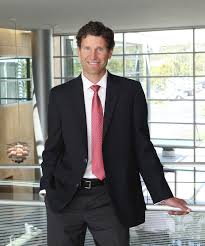
Our host is Diego Miralles, Global Head Innovation at Janssen. Very impressive. Walks into room, says hello, and gets right into the subject, and entertains audience for 1 ½ hour without slides. Absolute magic!
Diego Miralles 2

  • Story of Janssen Labs is story of shared infrastructure
  • Life sciences is very different from tech, you need a lot of infrastructure, highly regulated, etc > so many parallels with financial sector
  • “we should all be humble , there are a lot of smart people in the world”
  • Money in healthcare is almost exclusively made in the presence of disease > this business is highly dysfunctional
  • The current system of medicine is based on healer having all the knowledge and the recipient
  • The system is so vested, the problem is not technical, it is societal
  • The idea of fee for service in this business is the problem, based in volume, based on keeping the status quo of the system > a lot of parallels with financial services
  • The regulator is not evolving: too much focus on preventing harm vs. enabling progress
  • We a getting old too > you have to refill your organization with mentally young healthy minds for sustained innovation
  • Beware of entitlement

Qualcomm http://www.qualcomm.com

This was new territory for me. Huge campus, huge company. Qualcomm can best be summarized as the Intel for Mobile”5B USD last year in R&D. Vibrant partner ecosystem, like Microsoft, but for device design. 4 focus areas: energy, infrastructure, transportation, government. Look at things that are IP-addressable8B smartphones to be shipped 2014-2018. Smart Cities Connectivity has to be heterogeneous. Thinking through the longevity of connectivity. Decision making in cities is a mess: 40 different city departments making decisions about city connectivity. Also in Cars and in metering. Cities getting afraid of being punished for NOT doing anything with the data collected. Interesting how longevity of infrastructure is so important in this business 

Qualcomm Museum Tour http://www.qualcomm.com/about/buildings/museum

Qualcomm Museum

First Kindle is in museum as item #30. In overview of smartphones, the timeline starts in the year 2000


kindle in museummobile starts in 2000

Scripps Research http://www.scripps.edu

When we came in, we all got a copy of the book “Creative Destruction of Medecine”, just to set the scene 😉

Creative Destuction of Medicine

First part of presentation was relatively basic with Airbnb, Uber, Mobile, etc. Surprised to hear that 40 USD for a 15 min doctor appointment is seen here as progress. Key message: monitoring you see today in hospital emergency room will soon be available on your wrist: blood pressure, ECG, Physical exam, house calls can now all be done with mobile device.

scripps body sensors

End

This was just a chronological overview of the Disruption Tour. See also my blog post “The Uberization of Everything” for some transversal sensemaking.

The Revolution of the Data Slaves

Some years ago, when Facebook “only” had 356M users, I remember Marc Zuckerberg saying:

“… changing the privacy options of 356M users overnight, that’s not something everybody would do. Well, we decided to do it, and to decide what are the social norms.”


But who decides those social norms?


In my opinion it’s not normal or desirable that we leave those decisions to powerhouses with commercial interests like Facebook, Google, or any other “siren servers” like your health insurance company, your bank, your retailer, or even your government. These norms should be given back to the commons, with equal rights, obligation and benefits for all parties in the data-ecosystem, from providers of services and products, to data-intermediaries, and including the end-users.

Armitage_Siren

“Siren servers” was a term coined by Jaron Lanier in his seminal book “Who owns the Future?” It reminded me of the master-slave relationship spelled out by Doc Searls, the godfather of VRM (Vender Relationship Management). With VRM users get the tools to decide what data they want to share with whom in what particular transaction context. In other words, the opposite of CRM, where the goal of the product/service provider is to collect as much as possible information/data about the customer in order to be able to “shoot” as good as possible products, services, and ads to the “target” “consumer”. This is a language of war. This is a language of slavery.

To put things into perspective, I recommend all of you to watch the fantastic BBC video series “The Century of the Self” by Adam Curtis. It’s four hours of video, but if you only watch episode-1, you will get the hang of it.


Century Self2


It’s the story of the invention of PR, or maybe better “propaganda”, as a set of techniques to appeal to the immediate satisfaction of the conscious and unconscious needs of the “target” audience, who is deemed not smart enough to think for itself, or worse, an attempt to suppress any dissenting voices that may challenge the status quo of those who are in power.

We are not only becoming data slaves of those siren servers, but we are also becoming slaves of their invisible algorithms. That, combined with the recent revelations of mass surveillance by our own governments, leads to a very unhealthy environment with very little privacy and freedom of speech/thought is left, both online and offline.

We are in urgent need of finding a new balance between privacy, transparency, shelter, censorship, propaganda, governance, regulation, oversight, surveillance, co-veillance, sous-veillance, trust and even human intimacy.

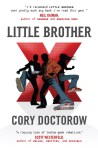
To get a good sense of how bad it gets, I strongly recommend Glenn Greenwald’s “No place to hide”, and Cory Doctorow’s “Little Brother”, which was very recently put on the black list of some schools in the US, because the ideas in the book would incentivize young people to revolt and rebel against the power in place, against the accepted social norms.

Greenwald  no place to hideLittle-Brother

Or listen to Bruce Schneier in this TEDxCambrigde talk on “Trust in Networks”, where he explains how we have put our trust in “Feudal Lords”, who are betraying our trust for profit. That feudal model is based on power. The feudal lords have created the utopia/illusion of the Internet: that we have given power to the masses and unpowered the governments.


“It does not work this way”, says Schneier, “on the contrary it magnifies power, because there are huge asymmetries in power, disorganizing the initially more agile groundswell movements, and letting the initially slower institutions catch up quickly through sheer computer power and science, and thus fast becoming more effective than the nimble and quick.”


Feudal lords should get responsibilities as well as rights.


There should be limitations on what vendors can do with our data and public scrutiny on the rules by which we are judged by our data.

More Bruce Schneier thinking in this Atlantic piece from Oct 2013:

“Medieval feudalism was a hierarchical political system, with obligations in both directions. Lords offered protection, and vassals offered service. The lord-peasant relationship was similar, with a much greater power differential. It was a response to a dangerous world. Feudal security consolidates power in the hands of the few.”

Or Kevin Kelly in March 2014 in Wired:

“So our central choice now is whether this surveillance is a secret, one-way panopticon — or a mutual, transparent kind of “coveillance” that involves watching the watchers. The first option is hell, the second redeemable.”

“So while a world of total surveillance seems inevitable, we don’t know if such a mode will nurture a strong sense of self, which is the engine of innovation and creativity — and thus all future progress. How would an individual maintain the boundaries of self when their every thought, utterance, and action is captured, archived, analyzed, and eventually anticipated by others?”

I went back to my history books – these days on Wikipedia – and tried to find out what happened in the medieval era when feudal lords misused their power.

What happens then is revolt and rebellion, what happens then is revolution and take back of control.


magna carta brief history

king-john magna carta


In 1215, the Barons and the Servants rebelled against King John, and that revolt led to the signature of the Magna Carta, that was the basis of our current democracy.

I used this metaphor in the first version of my talk “The upcoming revolution of the data slaves” at the Nov 2013 Future Trends event in Los Angeles, echoing Bruce Schneier’s call for the need of a new Magna Carta. And in March 2014, nobody less than Tim Berners Lee himself repeated this need for a new on-line Magna Carta.

But what would be the basis and fundamentals of such Magna Carta? To know, we may want to have a look in one of the fundamental changes happening in full sight, but not getting enough attention.

It was technology and trends researcher Michel Zappa, who really got my attention when he published his work on “The Future of Money”. The key insight was that we are at a tipping point in the transition from centralized to decentralized to fully distributed models, architectures, topologies and the associated shifts in power.

Zappa central-decentral-distributed

Zappa’s study focused on the impact of this shift on the future of money and the appearance of decentralized currencies like Bitcoin and many other cryptocurrencies. But in my opinion, this shift is not only relevant for virtual currencies, but more importantly leading to a whole new set of technical protocols that enable a fully decentralized sharing of any data between millions – of not trillions – if we think Internet of Things – independent nodes on the grid.

We are evolving towards infrastructure that is owned by the nodes, owned by the commons.

To get a good feel of what’s next, check out the Ethereum Project, with Vitalik Buterin as one of the 20 year old founders. By adding a scripting language on top of the Bitcoin protocol, Ethereum is laying the basis of an lego-brick architecture for financial services based on the shared ledger.

What if we could extend these models to people self-tracking themselves, maintain a ledger and blockchain memory of their life, and letting the next generation issue their own currencies and becoming themselves their “truest source of data”

And once having established this “truest source of data” what mechanisms could we put in place to let the people – the independent nodes – control the sharing of their data, whilst preserving their rights on privacy? And what would privacy mean in such a word?

It depends on whom you ask, because privacy – just like identity – is something highly contextual.

Andrew Keen talks about “the right to have a secret” in Digital Vertigo. John Havens from the Happathon Project talks about “user’s preferences and control of sharing” vs. “looking after the rights of data brokers”

I agree:

it is not about what we want to hide, but what we want to share 


Ann Cavoukian, Information and Privacy Commissioner of Ontario, explained in her publication “Privacy by design” that privacy is about control, not about keeping secrets. “Privacy does not equal secrecy of personal data, it equates to individual control of one’s data.”

ann cavoukianprivacy by design logo

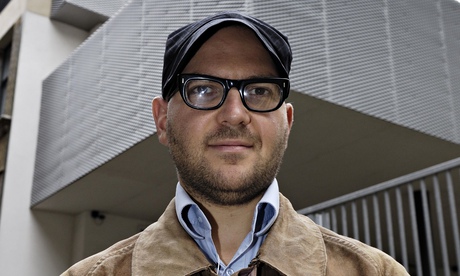
And Cory Doctorow feels that “Privacy doesn’t mean that no one in the world knows about your business. It means that you get to choose who knows about your business.”

Cory Doctorow

I would like to add that “The meaning of the word privacy includes shelter” paraphrasing architect Frank Lloyd Wright “The meaning of the word shelter includes privacy” when reflecting on Philip Johnson’s fully transparent Glass House from 1948.

transparent house1

Just think about this metaphor in the context of today’s mass surveillance revelations and how it would “feel” to live in such hyper-transparent environment.


Like identity, privacy and sharing of data are highly contextual.


Today, people are not really involved in the data collection that is what is wrong. The consent model is broken. We need to re-build trust with our consumers beyond consent at data collection.

I would dare to go further than trust and call for a deep sense of intimacy in our evolution towards a higher ambition for quality in our personal and business relationships. I would like to hope that “Intimacy is the new black”. The data-relationship economy needs to be more human, and needs context of what wealth really means. It is about the deeper self.

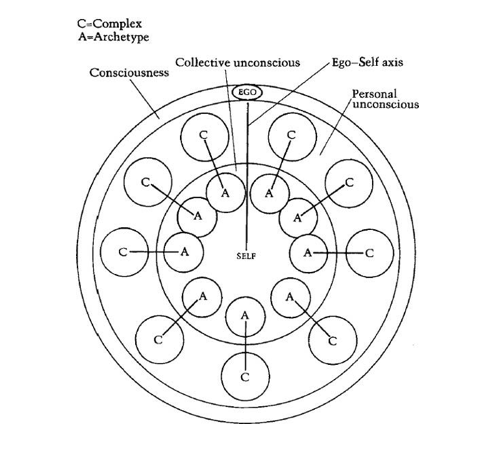
Way back, Carl Jung was already making the distinction between the external self and the real self, and how our identity has been instigated by archetypes and mythologies that have formed our species’ mental DNA over many thousands of years. So far, we “only” share some aspects of our external self on Facebook and alike. But don’t touch my archetype, my real self, what really drives me subconsciously, based on this Darwinian evolution of our mental selves.

Jung Circle

Jennifer Sertl called this an identity crisis:

“I believe we are all in an identity crisis. A crisis between nature and technology, a crisis between capitalism and collaboration, a crisis between big data and intuition, and finally a crisis between influencer seduction and our own solo voice.”

So where is all this leading us?

Some weeks ago, the moderator of a panel on privacy asked the following question: “How can data be used responsibly and non-intrusively when marketing a product/ Service?” I believe the question is somewhat outdated 😉

It is not anymore about pushing out and “marketing” (like in propaganda) products and services. I think we are moving from marketing a product/service to users intent-casting their needs. I believe we are evolving towards a new set of Trust Frameworks for peer-to-peer data sharing. I believe that – like already the case in some cryptocurrencies – we will need to provide the users the possibility of a “scaling” their data sharing, controlled and “tuned-on-a-scale” by the user.

In summary, the biggest revolution in my opinion is the advent of peer-to-peer network topologies and business models. We are moving from a centralized to a fully distributed model, with a new type of architecture, a new business model, new governance, and even a new meta-morality, where it is not good enough anymore to do what is legal but to do what is ethically right. We are evolving from a “century of me” towards a “century of we”. (I already reserved the domain http://www.centuryofwe.com and “Century of We” is another upcoming post on this site 😉


The Century of We


That revolution is coming. In November 2013, my audience was asking “when?” and I answered “in 2014”.

Today, I can be more precise: the privacy revolution starts today on 23 June 2014, when Respect Network will launch globally at the start of their worldwide launch tour in London’s City Hall. It will be my privilege to be one of their guests this evening and one of the keynote speakers at the subsequent event tomorrow 24 June 2014, in my capacity of independent thinker, creator and sensemaker.

RespectNetwork_Logo_H_RGB-300x94


The Revolution of the Data Slaves starts today. Join the revolution and co-shape the next Internet with privacy and respect. Own your digital future. Join Respect Network and be one of the first million members to co-own the infrastructure for future privacy.

RN artwork - own your digital future

Take back control.

RN First Million

Disclosure: I decided to put my money where my mouth is, and earlier this year decided to become an (modest) investor in the Series-A funding round of Respect Network.

Innotribe Sibos 2014 – Building Bridges

SibosBoston opening

It’s been six years since we launched Innotribe@Sibos, and we have put together a comprehensive programme covering a range of topics crucial to the future of the financial industry. A powerful mix of world experts in engaging keynote sessions, in-depth case studies and interactive immersive discussions, and of course the Innotribe Startup Challenge 2014 Grand Finale.

As usual, our content curators have explored the edges of our ecosystem, giving you a sneak preview of developments that have the potential to impact or even disrupt our industry in 3-5 years. Remember: Cloud, Mobile, and Social were already on the Innotribe agenda in 2009, and many of these topics have now moved mainstream.

building bridges

The tagline of Innotribe at Sibos 2014 is “Building Bridges”: bridges between the core and the non-core, bridges between the disruptors and the incumbents, between what’s happening at Innotribe and the rest of the Sibos conference, bridges between the InnoTRIBE Space and our presence on the exhibition floor with our brand new InnoTRIBE Stand.

The overall theme of this year’s Innotribe at Sibos is “Network Disruptions” We will explore the move from centralised to decentralised to fully distributed networks and how these network dynamics cause a phase-change of innovation and radical disruption at an ever-faster pace and scale. With thought leaders from our Innotribe network, we will assess the impact on the financial industry, with a specific focus on the payments, securities and investment management verticals.

Our design principle this year is “depth”: in stead of scattered subjects throughout the week, we’d like to spend a full day on one particular theme, look at it from all angles, and offer advanced sensemaking and reflection for the financial industry.

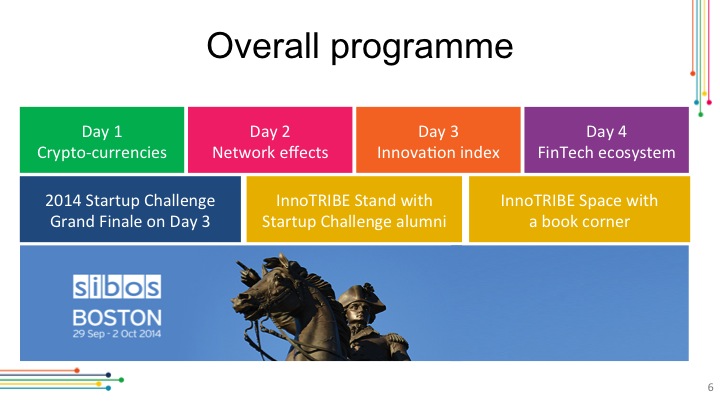
Slide06

Innotribe at Sibos 2014 will run over four days, each day focused on a particular set of phase-changes, disruptions and innovations:

  • Monday 29 Sep 2014: Disruption and Opportunities of Cryptocurrencies
  • Tuesday 30 Sep 2014: Network Effects – Towards a 21st Century Networked Organization
  • Wednesday 1 Oct 2014: Innovation Capabilities and Grand Finale Innotribe Startup Challenge 2014
  • Thursday 2 Oct 2014: Federation of the Fintech Innovation Ecosystem

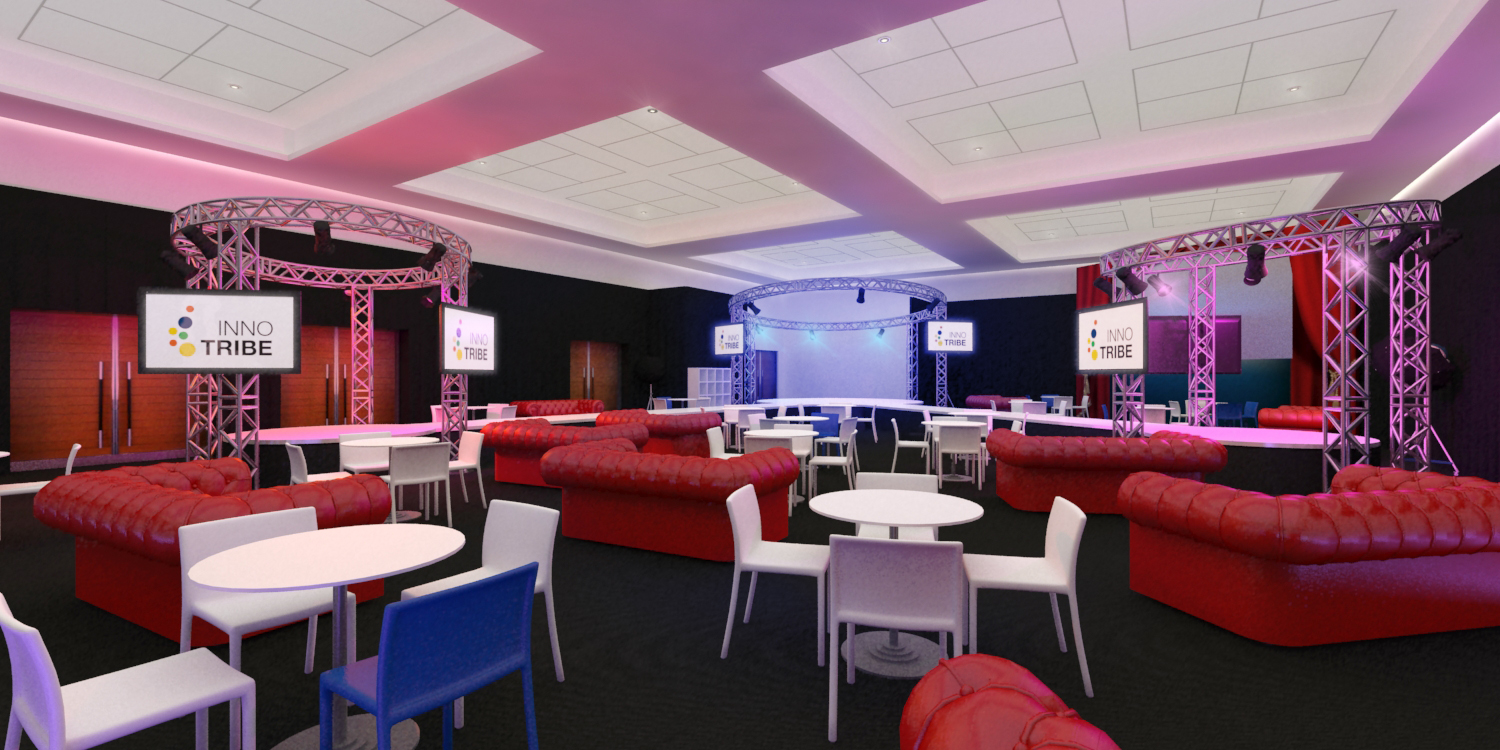
Most of the sessions will happen in the InnoTRIBE Space:

Camera 05b Camera 02b

  • A space designed where people come alive, with multiple stages, and physical bridges to make the connections happen.
  • Overlaid with an non-intrusive digital layer, with direct feedback loops, almost real-time production of video snippets, and live production of infographics, leading to a knowledge repository for you to take back home your learning.
  • And for the first time ever, we will Live Stream the whole event, in a way that you never saw Live Streaming before

We are biased of course, but we believe we have once more re-defined what an “event” is. Our ambition has never been higher:

“We are not in the events business; we are in the business of creating high quality feedback loops to enable immersive learning experiences.”

Program overview

Agenda for post

http://www.sibos.com/conference/conference-programme/2014?field_session_stream_tid%5B%5D=203&op=Filter

Day-1 (Monday 29 Sep 2014): Disruption and Opportunities of Cryptocurrencies

Location: InnoTRIBE Space

Bitcoin has been the talk of the town in 2013/2014. We will offer critical conversations about the currency, the asset class, and the technical protocols. We aim to include an impact assessment of Bitcoin and other cryptocurrencies on the core business of correspondent banking, and highlight some VC investment strategies and drivers. Cryptocurrencies represent another cataclysmic shift that is real and here to stay: will financial institutions ignore this phase-change, or will they hopefully embrace for the greater interest for the industry and the customers it serves?

A mix of keynote sessions and interactive learning experiences spread of four sessions on cryptocurrencies:

  • Future of Money
  • Regulation
  • Disruption
  • Disruption, Big Banks and VCs

Confirmed speakers include:

  • Gottfried Leibbrandt, CEO SWIFT
  • Believers: Jon Matonis, Executive Director & Board Member, Bitcoin Foundation
  • Skeptics: Jem Bendell, Professor and Director of IFLAS and WEF Young Global Leader
  • Disruptors: Chris Larsen (Co-founder and CEO of Ripple Labs), Jeremy Allaire (Founder and CEO, Circle Internet Financial), Scott Millar (Founder & CEO Cryex), Marcus Swaenepoel (Co-founder and CEO Switchless), Yoni Assia (CEO eToro and Board member Israel Bitcoin Association)
  • Sensemakers: Richard Gendal Brown (Executive Architect for Industry Innovation, Banking and Financial Markets, IBM UK), Marc Hochstein (Executive Editor American Banker), Udayan Goyal (Founder Anthemis Group), Chris Skinner (Chairman, The Financial Services Club, Author of Digital Bank), Dan Marovitz (CEO Faculty of 1000 Ltd, former Managing Director, Head of Product Management, Global Transaction Banking Deutsche Bank)
  • Regulation, Stan Stalnaker (Member of the Board, Digital Asset Transfer Authority (DATA), Founder Hub Culture / Ven Currency), Adam Shapiro (Director Promontory Financial Group), Dirk Haubrich (Head of Consumer Protection and Financial Innovation, European Banking Authority EBA, via Skype) and Anne Shere Wallwork (Senior Counselor for Strategic Policy, Office of Terrorist Financing and Financial Crimes – U.S. Department of the Treasury)
  • Visionaries: Vitalik Buterin, Founder of the Ethereum Project, Dan Elitzer and Jeremy Rubin, Co-creators of the MIT Bitcoin Project.
  • Investors: Barry Silbert (Founder Secondmarket and Creator Bitcoin Investment Trust)
  • Financial Institutions: Ebru Pakcan (Managing Director, Head of Global Payments, Citi Treasury and Trade Solutions), and Mark Buitenhek (Global Head Transaction Services at ING), Lee Fulmer (CTO, Global Head of Cash Management at JP Morgan), Gautam Jain (Managing Director and Global Head of Client Access, Standard Chartered Bank)

At the end of the day, we will transform the InnoTRIBE Space into an Innotribe Movie lounge – with popcorn – for a film screening of a brand new film on Bitcoin from the Trebeka film festival.

Day-2 (Tuesday 30 Sep 2014): Network Effects: Towards a 21st Century Networked Organization

Location: InnoTRIBE Space

What are the mechanisms driving network dynamics versus more linear models? How do speed and scale of disrupt everything, from HR, to innovation, software and hardware deployment, platform thinking and a revamped definition of work? What’s the impact on architecture, governance, and security when millions of devices will join the conversation?

A mix of keynote sessions and interactive learning experiences spread over five sessions:

  • The Network always wins
  • From Hierarchies to Wierarchies
  • Platform thinking
  • APIs
  • Ecosystem Innovation

Confirmed speakers:

  • Peter Hinssen (Thought leader and Co-founder of NexxWorks): keynote “The Network always Wins”
  • Mickey McManus (Chairman @ Principal MAYA Design): when Trillions join the conversation
  • Jon Husband (Founder, Wierarchy)
  • Celine Schillinger (Charter Member, Change Agents Worldwide LLC and Senior Director, Stakeholder Engagement Sanofi, 2013 French Woman’s Award by La Tribune)
  • Sangeet Paul Choudary (Founder and Managing Director, Platform Thinking Labs)
  • Haydn Shaughnessy (Author and Consultant on platform-based transformation and innovation/ Owner, Bearing-Cogenuity Research)
  • John Sheldon (SVP, Group Head of Innovation Management, MasterCard)
  • Ann Badillo (Entrepreneur in Residence, T2 Venture Creation) on Ecosystems
  • Todd Johnston (Entrepreneur in Residence, T2 Venture Creation) on Ecosystems

Evening: informal Innotribe speakers dinner in the sky, on one of the conference bridges that will be transformed in a lounge area (by invitation).

Day-3 AM (Wednesday 1 Oct 2014): Innovation Capabilities for the 21st Century

Location: InnoTRIBE Space

In this session we will discuss the Innovation Capabilities needed by organisations to succeed in the 21st century. We will look at cross-industry Innovation Indices/Benchmarks based on both input and the output of the innovation process.

Confirmed speakers:

  • Haydn Shaughnessy (Author and Consultant on platform-based transformation and innovation/ Owner, Bearing-Cogenuity Research)

Day-3 PM (Wednesday 1 Oct 2014):Innotribe Startup Challenge 2014

Location: InnoTRIBE Space

For sure one of the climax moments of this year’s edition, the now famous Innotribe Startup Challenge 2014 Grand Finale, showcases the 15 finalists from our regional showcases in London, Singapore and New York. Sponsored this year by HP, SAP, Invest Northern Ireland, Level 39, and SWIFT.

New this year is that we have tagged the startups that applied to the Startup Challenge in order to highlight new trends that are affecting the financial service industry.

Innotribe Map 2014

We will use this information to understand what threats and opportunities are currently in the financial service industry space and identify the areas where the startups are innovating these days.

Followed by a reception and celebration of the winners.

Day-4 (Thursday 2 Oct 2014): The federation of the Fintech innovation ecosystem

Location: InnoTRIBE Space

On day-4, we create a true federation of as many as possible movers and shakers of the Fintech ecosystem.

With keynotes, interactive sessions and informal conversations, we hope to give an overview of the successes, lessons learned, challenges and opportunities in the Fintech innovation ecosystem.

We plan to gather the who’s who of the Fintech innovation scene:

  • Heads of Innovation of the major financial institutions
  • Fintech accelerators, incubators, and bootcamps
  • Innotribe and other Startup communities
  • Angel Investors, Venture Capitalists and Captive Funds from some major financial institutions.

A mix of keynote sessions and interactive learning experiences spread over four sessions:

  • Captive Funds
  • Reverse Pitching
  • Ties Bank vs Facebook Bank with Innovate Finance
  • Topical Speed Networking
  • Closing ceremony Innotribe

To kick-off day-4 we have gathered the top captive funds in one session starting on 2 Oct at 09:30 am, and moderated by Tony Fish, Founder AMF Ventures:

  • Vanessa Colella, Director Citi Ventures
  • Christophe Chazot, New Group Head of Innovation, HSBC
  • Derek White, Chief Design Officer, Barclays
  • Matteo Rizzi, General Partner, Sberbank SBT Venture Capital
  • Julio Faura, Head of R&D and Innovation, Banco Santander
  • Manual Silva Martinez, Vice-President BBVA Ventures

More to follow on day-4

All days: Startup Alumni Stand

Location: InnoTRIBE Stand (next to the main SWIFT stand)

Throughout the Sibos week, we are welcoming you in our wonderful Startup Alumni Village/Satellite/Stand on the exhibition floor: we’ll have a focus on the Alumni of the Innotribe Startup Challenge.

Innotribe Stand

Winners of previous years will have a chance to:

  • Present their offerings to the Sibos audience
  • Have private conversations “Office Hours” with interested financial institutions and investors.

Bookstore and Publications

We’ll have a Bookstore corner in our InnoTRIBE Space, including:

  • The 2014 Innotribe/Informilo Magazine, a glossy publication reflecting the Innotribe program, startups, and federated ecosystem. Advertising and sponsoring options still available.
  • Books and essays published by our speakers, and opportunity for signing by the authors.
  • A curated set of other non-commercial publications, research documents, and innovation whitepapers (please let us know if you have a publication you would like to share for free in the InnoTRIBE Space)

We are super excited by the brainpower and insights we bring together in this 2014 edition of Innotribe at Sibos.

Logo Innotribe

The Innotribe Team @innotribe

Written by @petervan, Executive Producer, Architect and Content Curator Innotribe@Sibos

Dream #1: Breakfast

Some time a ago, i took a “little” break for the rat-race, also know as “sabbatical leave”. It allowed me to find internal rest, and clarity about a lot of things important to life. One of the “plans” was to stick to “the plan of not having plan” and let emerge what comes.

I got back to drawing – yes, i was trained as an architect – and discovered i am still quite good at drawing straight lines, but really challenged by curved lines, like human bodies, faces, hands,… probably a testimony of my inclination to the cognitive, analytic, “straight” thinking patterns that formed the first part of my life.

I also did a little dive in the works of Carl Jung. One of the works i struggled through was “Man and his Symbols“.


Jung Man and his Symbols


I was particularly attracted to the part on dream analysis, and how a dream strictly spoken can only be analysed by the dreamer himself. There is not something like a standard way of analysing dreams. I followed the suggestion to document my dreams. I found this quite confrontational. Very personal. Most of it not really for publication on a public blog.

But i was surprised how some dream transcripts came out in different formats: from films scenarios, to paintings, or even poetry like.

I will start publishing some of these dreams. Here is the first one: i labeled it “breakfast”. Hope you like it.


Warm hands wiping

Caressing the table

Weeping leftovers of the night

Used and worn-out shrapnel

Dispersed sparks amidst breadcrumbs and tears


More to come…

The Myth of Collaboration

Rogier Noort just published a post on his site, for a great part based on an interview he did with me during the Enterprise 2.0 Summit in Paris in February of this year. Rogier’s original title of the post was “Collaboration:  Salvation or Myth”. It’s a great post, and Rogier clearly took the pain to reflect on our conversation. I would label it as “The Myth of Collaboration”. Some people call my point of view blasphemy in a period where everything has to be “social”, “working together” and “collaboration and hacking spaces”. So be it. I just felt there was something deep wrong about it, and Rogier did an awesome job of articulating my thoughts. I have copied the text in it’s entirety, and just added the usual colour emphasis.

+++ Start Rogier’s post +++

Collaboration is an important part of productivity. It’s a highly desired commodity, but seemingly more elusive that you’d might think.., and it cannot be forced.

The other day my wife saw a message from an old colleague.., they’re moving her to a flex desk. “Now, I’m no longer allowed to place a photo of my grand children on my desk”, is what she said.

Her work is routine, she’s not allowed to work from home, needs no collaboration, won’t hop from desk to desk, and nobody will wander in looking for a place to work.., in other words.., that particular department does not need flexible workspaces. What they need is a working environment where an employee feels comfortable, secure and relaxed. A place where it’s okay to have a picture of your grand children on your desk.

This message reminded me of a conversation I had with Peter Vander Auwera about this very topic. I didn’t know quite how to put this in a post, until now.

The Key to Success

There is a wide variety of approaches to SocBiz, or Enterprise 2.0, some say the business goals have to be aligned to social, or we need to measure everything first, or we have to have a Digital Village first… others take a more tangible approach. A more non-virtual one. They reshuffle the physical space people work in.., the office floor.

Collaboration is the key to success.., so.., we create a (physical) working environment where collaboration is as easy as raising your hand and ask a question. Serendipity is guaranteed because people have no fixed desk, so you never know who you’re going to sit next to.

The Myth

According to Peter “[the office space] has been designed to enhance collaboration… working with each other across departments.”

The myth is, you have to collaborate all the time.

But, not everybody operates that way. As far as I’m concerned, I like my work area quiet. I need focus to concentrate, and more often than not, my work needs to be accurate and creative. Two things I can (or need to) do alone, no collaboration is needed.

For Peter it’s the same; “I don’t function that way… I need time on my own to think.”

Collaboration is Not Happening

Peter explains his view further; “When you sit with other colleagues around a “collaboration” table.., I hardly see any collaboration. Everybody still works in their own zone, because they have work to do. It just doesn’t happen.”

This happens when culture and progressive ideas clash. You can’t force people into a collaborative state of mind. Reshuffling desks, open up the floor, and taking away personal offices does not guarantee collaboration.., it just doesn’t.

I’m sure at some companies, for some departments this approach can do wonders. But, we should judge the merit of such huge changes on any specific floor/office/department/company.

You could simply ask employees their stand on such a high impact change.

Personal Space

“The other aspect has to do with physical space and emotional space. When working in a collaborative space I have the feeling my privacy is disturbed. At any time somebody can come up behind you and look over your shoulder.., it feels like a sort of surveillance.”, Peter says.

“It’s difficult to articulate, because I have nothing to hide, in fact, I have a lot of things to share. The idea of collaboration has the opposite effect, it doesn’t invite me to collaborate with the people who look over my shoulder. Because I feel they are intruding in my privacy zone, my creativity zone.”

The idea that anybody can criticise your work at any time can be a great hinder. This is not just in the physical space, but can also occur in a collaborative on-line space. When I’m working on something, a blogpost for instance, I like to write a great deal, preferably all the way to the end with a revision or two, before I let anybody read it.

This is my process, the way I want to work.., I do not want any input, suggestions or comments until I’m good and well ready for them.

More about working in peace can be read in “Silence, I’m Painting“, an article by Peter on his personal blog.

Inspiration

… or lack thereof. Most people in the office have nothing or very little to do with your work. The chance of having exactly that person that you need come sit next to you in an open floor space is quite slim.

The odds of serendipity (fortuitous happenstance or pleasant surprise) are against you, against us. Even if you plan and scheme everything to enhance those chances.

Inspiration therefore is one of those things we seek out. We connect with those people who can help us move beyond a certain point.., everything else is just noise.

Controversial

Peter worries about this attitude sounding arrogant. Knowing Peter.., this is far from what is happening.

What’s really happening is that, at times, we should stop and think, reflect on the changes we’re trying to make, and the goals we want to achieve. Despite the fact there are a lot of talented people out there with a great number of good ideas, we cannot, and should not, just apply them. This goes for collaboration, but also hierarchy, job titles, software.., you name it.

Social business, The New Way of Working.., or whatever you want to call it.., is NOT generic. There is no One-Size-Fits-All. Not only does this apply to every company, but also to each department and each individual. To generalise, automate, or standardise this idea works as good as trying to fit every person in exactly the same suit.

Balance

Like any other undertaking, regardless of what it is, for it to have long term success, there has to be balance.

An office should provide spaces for all sorts of productivity styles. Employees should be involved in the design, their opinions should drive the change. After all, it is they who do the work.

 Thank you Peter for the insights and challenging us to think.

Peter is a creative thinker, creator and sensemaker. Co-initiator of Corporate Rebels United, a movement to unite corporate rebels worldwide to ensure that true change happens virally. Charter Member of Change Agents Worldwide.


Edit: Richard Martin (@IndaleGenesis) pointed me to this wonderful video made by Dave Coplin (@DCoplin). It really adds to the points made in the post. It’s only 9 minutes, I encourage you to watch it.

+++ end Rogier’s post

New website Corporate Rebels United

Corporate Rebels United is a movement uniting innovation- and disruption-catalysts and instigators worldwide to ensure that true change happens virally from deep within the fabric of our organisations.

rebels mathias 1

The organisations we have in mind can be any size/form of organisation (Fortune 500 company, SME, NGO, non-profit, Network, Peer-to-Peer, Cell, System, Context) and we aim to be truly cross industry (industrial, tech, health, government, financial, pharmaceuticals,  educational, ….)


The Only Rule Is That There Are No Rules


We Trust That You Are REsponsible


We don’t do screening or certification of our activists: our movement is designed by and for trust in the first place. We welcome any inspired individual from any organisation that is subscribing to our manifesto and is willing to implement the 20 principles of our movement in the way that makes most sense in their individual and group context:

  • If You are a principal champion of a program or cause or action
  • If You do not wait for permission to lead, innovate, strategize
  • If You are Responsible, Do what is right
  • If You aim for Greatness, Healthy Fire, Worthiness
  • If You name things others don’t see yet
  • If You point to new horizons
  • If without You, the storyline never changes

Then Corporate Rebels United is something for You!

When we started in 2012 with Corporate Rebels United, we had no idea that 2 years later we would be a group of +/- 800 protagonists/instigators, from San-Francisco to New-Zealand and anything in between, truly cross-industry. Our web presence was sober: with the help of Mathias, we created a super simple one-page-HTML site with our Manifesto, and at the bottom of that page a simple “JOIN” button.

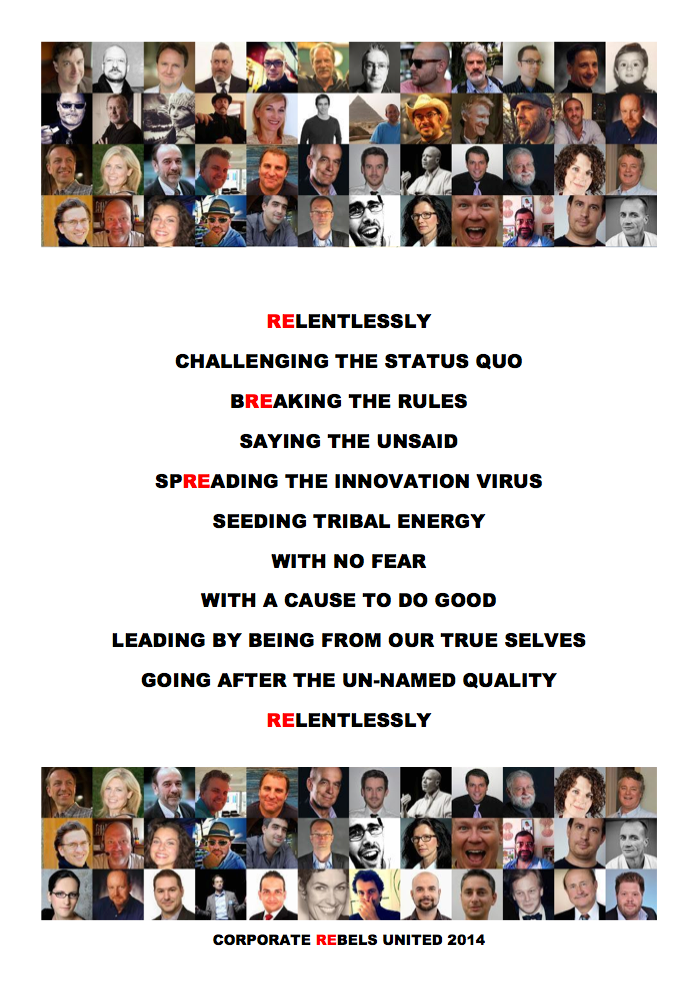
Manifesto Rebels Pic

The Manifesto (PDF available on the new site)

We also created a Facebook group, a Google+ Community, a LinkedIn Group and a Twitter account (@corprebels). Every day, one or more people joined, and shared suggestions. And we got some cool speaking opportunities at TEDx events and in some corporate environments.

End 2013, i got a mail from Nadja Petranovskaja from Hamburg asking:


“Are we going to DO something here?”


Indeed, although several folks already had set up a Local Chapter, and there was some good sharing going on in the online communities, i agreed with Nadja that we wanted to be more actionable. We wanted to be more than just another echo chamber of the Internet.

We connected via Skype, and had several hack sessions to prepare our action plan for 2014. As we have a great group of silent advisors, i suggested to Nadja that we’d have a call with them to do some sound boarding of our initial ideas. Not really to my surprise, that call ended up as a personal coaching call for myself. It was a period where i felt exhausted, mentally and physically tired. Anyway, the advice i got was to first create clarity for myself before messing around with the Corporate Rebels United movement.

I took some time off (a sort of mini-sabbatical), slowed myself down, did almost nothing, except reading a lot, taking my bicycle when sun was out, trying to stick to the plan of not having a plan. I was taking lots of notes and keeping some sort of journal – I think i have enough material for 50-60 blog posts or maybe a book, and will start gradually releasing the new material in the coming weeks/months.

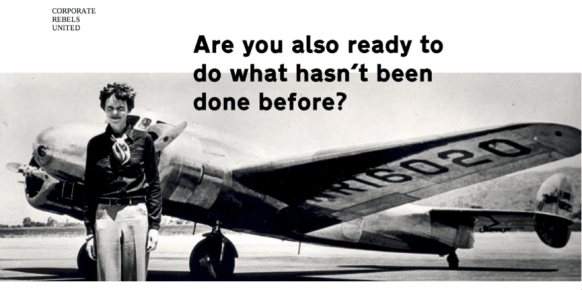
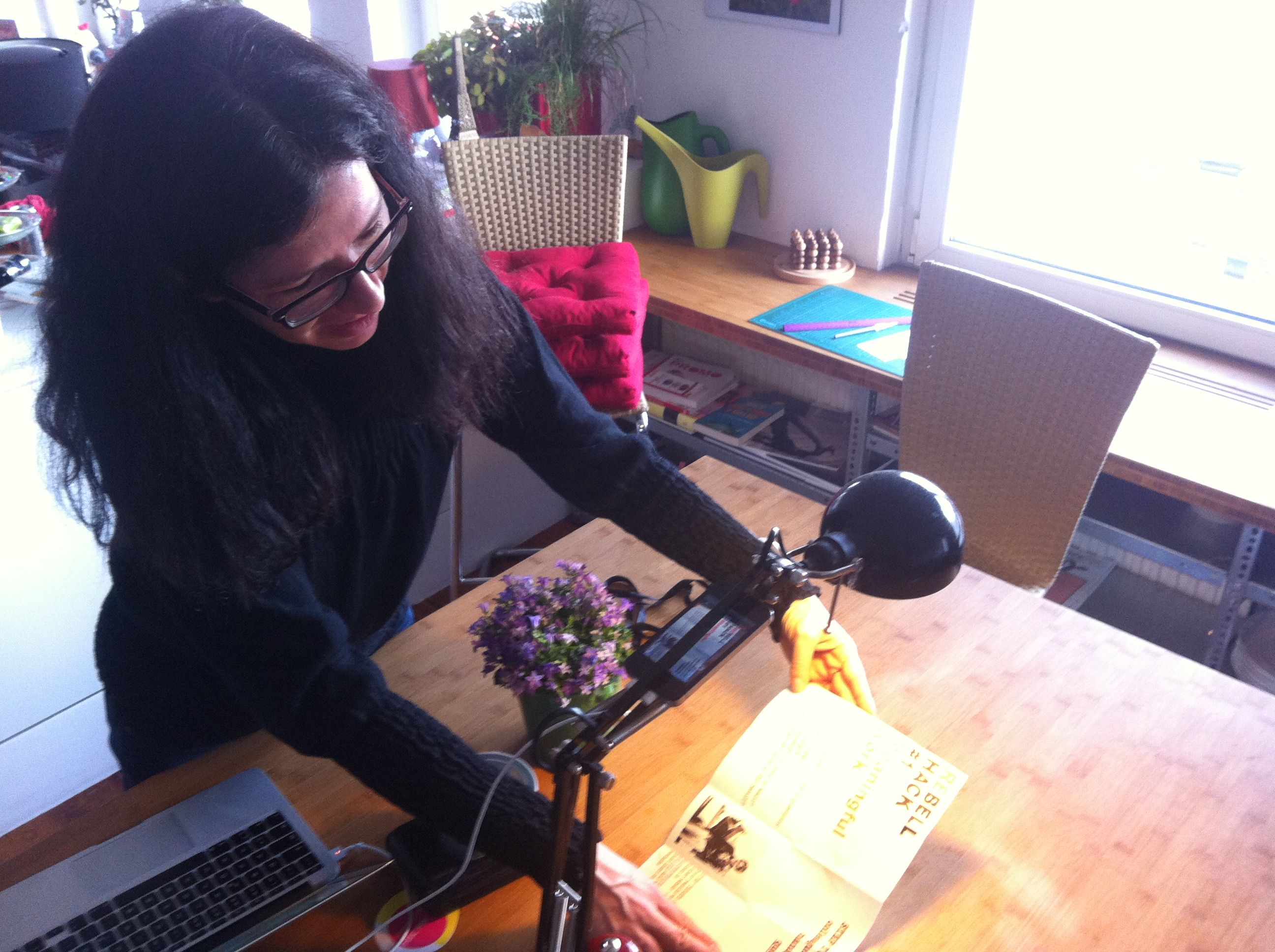
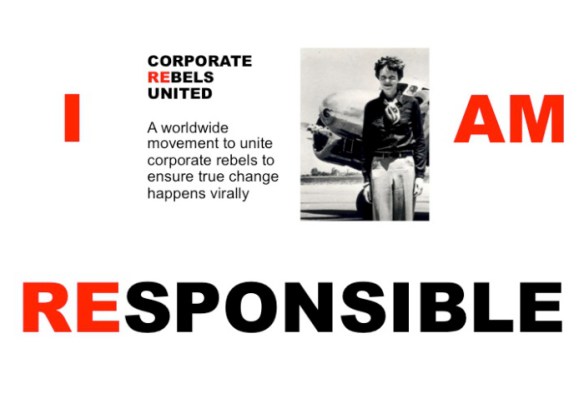
In the meantime, Nadja and myself kept exchanging ideas, themes and action plans. Then, a couple of weeks ago, i decided to walk my talk, booked a cheap flight to Hamburg, and spent a hacking day with Nadja to lay the foundation for our new website and action plan. Some time before, i had asked several people for help with a basic WordPress site, but nobody really delivered. In Hamburg, we just started working on it, did some initial white-boarding and post-it hacking, and Nadja teached me some WordPress basics. In about half a day, we had our site up and running with some basic content, and Nadja had produced a nice PDF version of our Manifesto, a video illustration our first Hack, and an fantastic foldable flyer on our “I am Responsible” theme for 2014.

IMG_3567

Nadja working on the video for Hack#1

It was awesome. I went back home – completely energised – and worked out some details, created more content, polished a bit, and… here it is, the brand new site of Corporate Rebels United.

We still want to keep it relatively basic: our website is a quite straightforward WordPress site. It allows for basic collaboration where you can comment on every page and post. We added some forms to post ideas and artwork. Of course we are aware that more powerful collaboration tools exist such as Jive, Microsoft’s Yammer, Salesforce’s Chatter, SocialCast, Lithium, SocialText and many other Wiki environments. But before we move to one of those Rolls-Royces, we first want to test the appetite and needs of the Corporate Rebels as we go. In the meantime, we suggest we default to a couple of de-facto standards for online collaboration, without full integration within our website (See the tools section on our new site).

We hope that the new environment will encourages you to actually DO something.

And we made some suggestions:

  • Celebrations for the Corporate Rebel of the month
  • Helpers: there is a lot of creative power in the movement, so we decided to outsource some of the work for visual artists, creatives, PR people, etc
  • Hacks: not the heavy lifting work, but some small tips, tricks and practices to help you coming out of your protective shell, and make more powerful connections within and across your organisations.
  • Value Practices: we invite all Corporate Rebels to start forming small teams (“pods” as Dave Gray would say) to hack out Practices for Value Creation that can be shared inside and outside of our community as sources of inspiration, practice, and reflection.

Our main theme for 2014 is “I am Responsible”

I am responsible

We’d like to encourage you to be responsible human beings. Being a Corporate Rebel is NOT about kicking and screaming around like crazy. It is about daring to be great, about daring to step forward, about taking personal leadership.

It is about being responsible and actionable. Corporate Rebels are responsible for:

  • Themselves: their mental and physical well-being
  • The teams they belong to:
  • The organisations these teams belong to;
  • The ecosystems these organisations belong to;
  • The whole world these ecosystems belong to

Since the start we loved the idea of being a actionable group of people, not just a think-tank or an echo-chamber of the internet. With the new website, we try to create some conditions to enable online group collaboration, and to suggest some initiatives where everybody can apply his/her talents for the great cause for our movement: to make of our organisations places where people come alive!

Corporate Rebels United is a movement. It’s a culture, emerging from some specific behaviors. It’s a tribe of enthusiastic protagonists hungry for change. Positive change. Not an anarchist tribe, but a tribe of people who care for the companies they work for and want them to succeed in the 21st century of hyper-connectivity. Corporate Rebels United soul is about people taking agency, people stepping forward and taking responsibility, self-empowering themselves.

Corporate Rebels United is deeply value and purpose driven. We have an ambition for progress, looking forward. We fight mediocrity, and applaud critical thinking.

We invite you to join us and be part of our challenging journey.

Rebelliously Yours,

Petervan

My Ultimate Cyborg Makeover

I have been away for some while. Many of you thought I was on a sabbatical leave, but that was just a smoke curtain for a much more dramatic makeover and re-invention of myself. I decided to become a true cyborg.

Oculus Ruft Headset Shoot

Zuck was onto something when he decided to acquire Oculus for 1.9B$ earlier this month: blurring the virtual world with the physical world to tap into the enormous opportunity of virtual experiences. But I believe he did not go till the end of his thoughts. You see, the Oculus is “only” one-directional. Giving you the input of virtual worlds. What if you could also give-back and share-back into the virtual world? The ultimate sharing economy?

That’s why I recently decided to become angel investor in a small start-up from Ukraine called “The Fishery”. We are really in stealth mode, I can’t say too much of it. But we are applying the lean startup methodology and we now have our first MVP (Minimal Viable Product) that we start iterating with our celebrity customers. I hope you will understand I can’t share names at this stage.

fitbit-flex-jawbone-up-review-19

Whereas products such as FitBit, Jawbone and others focus on QS (Quantified Self), we believe that with the Fishery we are entering the space of the Qualified Self – it’s about depth and quality, not quantity. We are still hesitating what will be the name of the product: something between the “Fishbit” of the “iFish”: indeed, what we are doing is starting to fish into the deep oceans of the subconscious and the unconscious, where data and the human species become integral one and holistic.

For quite some time, I was a big believer in so called “Personal Data Stores”: tools for the user that allow us to decide ourselves which pieces of our data we share with what vendor in what particular transaction context. But I realized that this only covers the data that we share intentionally. It does not cover data that we share non-intentionally (like the signals from our SIM cards), or data that are collected in surveillance and co-veillance scenarios.

So why not bite the bullet, accept that privacy is dead, and move into the realm of extreme transparency? And what if we could just plainly connect our own human brain to the internet, and create a distributed peer-to-peer exchange of human brainpower, and start to keep a human ledger that is cryptographically secured and trusted? This goes way beyond the Minority Report scenarios (after all, a film of more that a decade old). In this case, you only have to start thinking about something you would do, and hop! It would be immediately shared and algorithmically processed by the hive of connected brains. Of course, we’d have to make some major changes to legislation and regulation, but that can be overcome, it has been done before.

Anyway, last week I was back in our labs in Ukraine, and I volunteered to become the first test case for the latest beta version of our Fishbit.

Petervan with Fishbit

What you see on the picture is me on the lab-bed, right after the 3 hour operation. The little brick on my chest is the prototype of the Fishbit. About 35 wires are connected to different sensors on my brain, my heart, my blood pressure, my lungs, skin, my legs, arms, etc: it’s a true virtual and “brick”-and-mortar tricoder of all my physical and mental sensations and experiences, not only at the cognitive level, but more importantly also tracking and tracing the sub- and unconscious activities of my brain and body.

The Fishbit has of course a number of well-documented open APIs, as this is clearly a platform play where developers can let explode their creativity for thousands of apps tapping into my body, mind, and soul. And to fully bite the bullet of transparency and surveillance, we have added a couple of more secret “dark” APIs to give direct access to governments and other trustworthy organizations looking after the greater good of society at large. But I am deviating.

The mask and the tube are there to add extra oxygen and creative gases, because the sensations are so strong that I need to breath much more consciously to let my heart pumps more oxygen in the blood streams. I can tune the tube, for example per season or month, when for example in April I get an extra dose of laughing gas, and in May some smell or spring blossoms to bring me back to my 60ies hippie memories.

One of the earlier versions had an API with Twitter that made it much easier for me to tweet. I just had to think “tweet”, and hop, there where 140 characters describing what I had spotted in my 2,500 RSS feeds that I follow on a daily basis.

But now we can go a lot further

Jung Man and his Symbols

Many of you know that I am a deep expert in the works of Carl Jung, especially his Book of Dreams, The Man and his Symbols, and his work on the Self, the Archetypes, the personal and the collective unconscious

Jung Sphere

Illustration from the book: “Jung, a very short introduction” by Anthony Stevens

What we discovered with Fishbit, is that sharing as we know in Facebook, Twitter, etc is so… well, outdated. If we reflect on Jung, this sort of FB-sharing only addresses the outer shell of who we are, the ego. In many cases that ego is made up and self-created, and by no means reflecting our deeper selves and motivations. Now, with Fishbit we can tap into that power.

Now, I can share my dreams as they happen. The Fishbit sensors sense when I am entering my REM sleep, can capture my dreams, and in the preferences I can set whether I want my dream to be shared as a literal transcript, as a film scenario or as a piece of poetry.

Now, I can connect my collective and personal conscious to the grid, and share with vendors my really true subconscious needs, to they can shoot better ads to me, the target. Finally! Indeed, as my hero Frank Zappa used to say: “without deviation from the norm, progress is not possible.”

Zappa deviation norm

And is it not progress when now, for the first time, data, dualism, humanism and the deep unconscious merge into a exciting melting pot with unseen business opportunities on the medium and long term? I hope you share my enthusiasm for this wonderful new world. Welcome to the world of Fishbit. Welcome to my ultimate cyborg make-over.

UPDATE: obviously this post was related to it’s fishy publication date. Thanks for your reactions of concern about my health, I am doing 100% fine 😉

21st Century organization

Knock, knock, it’s 2014, we are more than one decade in the 21st century, and it’s time to think about transforming our organisations into fast moving feedback movements. A couple of days ago, Rogier Noort (@RogierNoort) interviewed me via mail about my upcoming talk at the Enterprise 2.0 Summit 2014 conference in Paris on 10-12 February 2014. You can find the full interview here (and this post has some extracts from it), but I wanted to expand a little bit on the objective and concept of the 21st Century Organization that I mentioned in that interview.

Knife-Painting-by-Francoise-Nielly

Image credit: Knife Painting by Françoise Niles

It’s the sort of organization we try to fight for with Corporate Rebels United (www.corporaterebelsunited.com). We have had many discussions about the “brand” of Corporate Rebels United. Maybe we’ll change it. The words “corporate” and “rebel” need probably some update or at least some clarification. The only thing that is probably still spot-on is the word “United”. The word “Corporate” is limiting, as it gives the impression that we are “only” targeting big Fortune 500 type of companies. On the contrary, we aim to inspire and activate anybody that is working in any type of organization, networks of people, cells, companies, or ecosystems. The word “Rebel” is probably not the right word either, but as I have said many times, I wanted to keep it as it has something “sharp” to it. We are people taking agency, empowering ourselves, not letting ourselves empowered by others; we are activists and do-ers. Nilofer Merchant nailed it in her 2011 HBR post, we she used the term “protagonists”.

To rebel is to push against something. To lead is to advocate for an idea. To rebel is to say “heck no.” To lead is to say “we will.” To rebel is to deny the authority of others. To lead is to invoke your own authority. A protagonist is a principal champion of a cause or program or action. The protagonist does not wait for permission to lead, innovate, or strategize. They do what is right for the firm, without regard to status. Their goal is to do what’s good for the whole. Protagonists help organizations become more competitive. After all, the word compete comes from the Latin com petter, which means “to seek together.” Their intent is to not to antagonize, but to drive towards something. Protagonists are willing to name things others don’t yet see; they point to new horizons. Without them, the storyline never changes.”

In essence it’s about leveraging the power and energy of people who act from their true selves. Nilofer calls that “Onlyness”: “In this era — the social era — the nugget of value creation starts with a connected human. We call this many things today: a founder, an entrepreneur, an innovator, an intrapreneur… whatever the name, Onlyness is *central* (no longer a nice-to-have) to what gets created. Until you celebrate your own ‘vision of the world’, you’ll be missing out (and so will the rest of the world). Onlyness is one of the 11 rules for the Social Era rules.”

The soul of Corporate Rebels United is indeed about a tribe of enthusiastic protagonists hungry for change. Positive change. Not an anarchist tribe, but a tribe of people who care for the companies they work for and want them to succeed in the 21st century of hyper-connectivity. We are deeply value and purpose driven. We have an ambition for progress, looking forward. We fight mediocrity, and applaud critical thinking. We want to give the best of ourselves. For doing good. For creating human connections between people. For letting people discover their hidden talents and powers. For taking people on a path of discovery, individual and collective relevance. We want everybody in the company and industry to think, to be and act responsible to increase value and wealth creation. Moving from ego-systems and creating eco-systems filled with meaning. We hope we can be a tribe/swarm for leading by being. To quote Keith Yamashita from SY Partners:

“Every leader, at some point in their career, decides whether or not to do the hard work of pursuing greatness. It’s a choice that’s not about satisfying their ego, but about holding themselves and their ambitions to a more enlightened standard of leadership. And it requires the worthy work of showing up as their best self every day, and making a lasting positive impact on their people, teams, customers—even society.”

We love and care for the organizations and networks that we work for and we want them to succeed. We want to reboot our corporate and organizational culture to install a 21st century, digitally native, networked and humanistic version, to accelerate positive viral change from deep within the fabric of our organizations, and to reclaim our passion for meaningful work. The ultimate goal is to find, articulate the drivers and values of “a modern, 21st century organization” and to live, promote, and breathe them every day in our own organization and networks.

But what does such a 21st century organization look like? In my research, I suddenly realized that it is the network dynamics that are fundamental to all the changes at speed and scale we witness. I took back the 2002 (!) book of Albert-Laszlo Barabasi “Linked: The New Science of Networks” (Amazon Associates Link), and started re-reading it with today’s perspective. As many of you know, I read a lot, and i am usually in many books at the same time. So it happened, that I switched to another book that resonates very strong with me: “Moral Tribes: Emotion, Reason and the Gap Between Us and Them” (Amazon Associates Link) by Joshua Greene.

BarabaseiMoral Tribes

Barabasi writes:

  • “Companies, firms, corporations, financial institutions, governments, and all potential economic players are the nodes. Links quantify various interactions between these institutions, involving purchases and sales, joint research and marketing projects, and so forth. The weight of the links captures the value of the transaction, and the direction points from the provider to the receiver. The structure and evolution of this weighted and directed network determine the outcome of all macroeconomic”
  • “in markets the standard strategy is to drive the hardest possible bargain on the immediate exchange. In networks, the preferred option is often creating indebtedness and reliance over the long haul.
  • “A me attitude, where the company’s immediate financial balance is the only factor, limits network thinking. Not understanding how the actions of one node affect other nodes easily cripples whole segments of the network”
  • “A scale-free network is a web without a spider. In the absence of a spider, there is no meticulous design behind these networks either. Real networks are self-organized.”

Moral Tribes is based on the premise that:

  • “We need a kind of thinking that enables groups with conflicting moralities to live together and prosper. In other words, we need a metamorality
  • “We need a moral system that can resolve disagreements among groups with different moral ideals, just as ordinary, first-order morality resolves disagreements among individuals with different selfish interests to think in new and uncomfortable ways.”
  • “Cooperation between groups is thwarted by tribalism (group-level selfishness), disagreements over the proper terms of cooperation (individualism or collectivism?), commitments to local “proper nouns” (leaders, gods, holy books), a biased sense of fairness, and a biased perception of the facts.”

Now we can do our magic trick of mixing and matching and try to do some sensemaking out of this 😉 These network- and moral tribe effects fundamentally change all aspects of what we understand by a company:

  • Organizational structures: from hierarchies to wirearchies
  • Leadership: holding ourselves to a more enlightened standard of leadership, and evolve to leadingship (see many other post on leadingship on my blog)
  • People motivation: from extrinsic to intrinsic motivators
  • Competitiveness: redefine from winner takes it all to it’s Latin origin of “com petire” which means “to seek together”
  • Speed, scale and quality of innovation with different capabilities on social, computational and design dimensions. Netflix deploys software code every 2 minutes (!). Amazon answer customer response times are down to 9 seconds on average (during Xmass peak period !). How does one create ultra fast innovation feedback loops in such high velocity execution  environment.
  • Processes: from Gate-keeping to Gate-Opening, with ultra fast iterations and ultra fast feedback loops with customers.
  • Decision making: moving away from pure ROI and NVP based models into social decision making based on heuristics, narrative, probabilistic analysis of disruption and risk possibility analysis (a big shout here to the thinking of Haydn Shaughnessy), and all that again ultra fast, in real-time.
  • Value creation: from benefiting “only” the shareholders, towards value creation for all stakeholders. We have to start thinking in terms of ecosystems “system-innovation”, and the impact of our actions on the society at large and our long term sustainability
  • The role of the CxO functions: from “officers” to “enablers”. What if the CFO could reinvent herself into the “Chief Innovation Enabler” in stead of the budget gatekeeper?

fairburn-3

Image Credit: Pen Drawing on map by Ed Fairburn

As mentioned in the Enterprise 2.0 interview, there are many challenges along this journey. Let me recap them once more for you:

  • The challenge is – whether we like it or not – that organizational anti-bodies exist and will always exist; they will always resist change, and we have to be aware of this, and still keep on fighting.
  • The challenge is to move beyond some myths of change that sound good in a manifesto, but that have little or no effect in actual viral change at scale in organizations.
  • The challenge is to act like a real swarm, like a virus that “infects” the organization at scale from deep within its own fabric.
  • The challenge is to “activate” our people into doing, to create a do-ocracy.
  • The challenge is to optimize the swarm for speed, trust and scalability between idea and action.
  • The challenge is to make sure that everybody feels included.
  • The challenge is to maintain one value set and one value base.
  • The challenge is to be respectful.
  • The challenge is to be relentless and persistent.
  • The challenge is to remain kind.
  • The challenge is to have the courage to stand for your true self, every day again.
  • The challenge is to make all the above economically relevant, if we want to have the attention of the executives of our organizations

My hope is to find allies to help us in spreading the virus of the 21st Century organization. I don’t know what form that may take; maybe a collective of savants that can coach organizations on this path? Something else? Let me know. My hope is that as a collective we can move beyond the abstraction level of social, organizational, and transformative concepts, ideas and science. I’d love to see that we reach a tipping point where we pay more attention for the humanistic, self-driving and self-motivating energies of human beings, where being is our basis and reference point for leading why and what and how we shake the tree of organizational culture and practices.

As David Gelernter recently said: “A world that is intimidated by science and bored sick with cynical, empty “postmodernism” desperately needs a new subjectivist, humanist, individualist worldview now—not just scattered protests but a growing movement, a cry from the heart.”

Looking forward to your feedback, contributions and ideas for alliances to make this happen.

Why Disruptive Change Points to a New Humanism in Banking

Many use the term “disruption,” to describe the upheaval we’re seeing in the financial services industry. But I believe we are witnessing a “phase-change”—a deeper transformation of how banking and business in general are done, caused by the fragmentation of everything and an unprecedented and unsurpassed period of evolutionary innovation–what might be called a “Cambrian explosion”.

In the run up to Techonomy 2012, I contributed an article entitled “The Six Ways Organizations Can Survive Until 2100.” Six months later, my essays “Dystopian Futures” and “Drowning In Data, Banks Must Learn To Surf” elaborated on my thinking.

Techonomy 2013

With a couple of weeks from Techonomy 2013, now I think we need to get back to our human sense of analog time.

We see the Net-driven fragmentation of work and hierarchies, even as sovereign states are stealing data and intruding into systems worldwide.  We see the fragmentation of trust, privacy, and secrecy. Our organizations are no longer vertically integrated but fragmented into orchestrators of highly specialized functions, sourced from a diverse group of both incumbents and aggressive newcomers.

We need stories about the humans we try to reach and move—narratives, as John Hagel puts it so well in Edge Perspectives–that have a beginning, middle, and end and convey a clear purpose and call for action and progress.

At the same time, we see an explosion of nodes on the grid, with trillions of “things” joining the digital conversation; an explosion in the volume and types of data. Digital currencies are erupting with decentralized and distributed models. States engage in surveillance and companies deploy what Jaron Lanier calls “Siren Servers”: online powerhouses that betray our trust for profit. In banking, we see the advent of network-only banks, and peer-to-peer money exchange solutions like Paypal’s Cash solution–a simple way to email money between people.

Value is being redefined, and many are rethinking what constitutes real wealth and wellbeing, beyond money and GDP. We have to rethink how we measure wealth. Robert Kennedy said: “GDP measures everything…except that which makes life worthwhile.” Happiness Indicators like Bhutan’s Gross National Happiness, the OECD’s Better Life Index, and the UK’s Happy Planet Index are already helping the world define well-being and wealth beyond money. The H(app)athon Project www.happathon.com wants to go one step further by “hacking happiness,” and shifting the world’s view of value beyond the lens of GDP.

happathon

In the financial industry, “shareholder value” and “profit maximization” remain the main criteria for investment. Nevertheless, new investment trends are emerging as a result of global changes and new ways of thinking. Investors are starting to look for criteria beyond maximizing profit, shareholder value, and pure financial return.

We have to think about what may in fact be intangible assets, along with how to account for them and invest in them. We have to re-assess the role financial markets play or should play, and their future “design principles,” so that over time we can develop more transparency, self-empowerment, and permissive not restrictive organizations.

Recently, Michell Zappa http://envisioning.io/money/ published a fantastic piece of research on “The Future of Money” documenting recent changes accelerating transactions, leveraging crowds, undermining fiat currencies, and explaining how banking is evolving into just a layer, embedded invisibly in many sorts of daily conversations. These phase changes pose fundamental questions about the role and identity of networks, institutions, and individuals.

Zappa’s timeline infographic is illuminating.

Zappa central-decentral-distributed

The phase-change from centralized to decentralized to distributed networks is shifting how power is distributed: from favoring the connected few to an irregular distribution that favors some individuals, and to a horizontal distribution of power that favors the whole of the network.

We seem to live in a  state of perpetual crisis, jumping from one incident to another, with no room to reflect or to assess.  It feels like we are drowning in tactics and ad-hoc firefighting, incapable of interpreting the tsunami of change. The world enters a level of complexity that cannot be addressed anymore by conventional, binary, linear thinking.

With all these parts moving at once, we need new tools for monitoring change. We need new capabilities and more non-linear ways of thinking, and openness to new options. We need new tools to forecast, assess, and guide our choices. They should offer richer ways to express our options through visual thinking and other techniques.

This is way beyond flashy hyper-tech bank branches and “punchy-music-cool-sexy” banking apps or product videos. This is about bringing back the analog humanizing aspect into banking. I am not my device. The future of banking is analog not digital, and its focus needs to be on relationships, intimacy, depth, and human connection.

Cross-posted at Techonomy 2013

A Conceptology of Learning and Leading at Work – Guest post by Rune Kvist Olsen

Since about a year now, i have been intrigued by the work of Rune Kvist Olsen from Norway. It’s a pleasure to give room and space for his thinking on my personal blog. His previous contributions were the best read posts on my blog ever: they include “The End of Leadership” and “Leading from The Edge”. Now, Rune has compiled and added a new piece of work that he introduces himself below (Colored highlights by myself):

Hi You All!

The paper “A Conceptology of  Learning and Leading at Work” is now completed and ready for reviewing/announcing/posting/publishing.

The purpose with the “Conceptology of Learning and Leading at Work” is to construct and establish an alternative belief system that would entitle everyone in the workplace the same conditions and access of mutual trust and personal freedom. The intention is to advocate the values and standards of health, liberty, dignity and equality as common principles applied for all the people involved. In challenging the mainstream and contemporary belief system in organizing, leading and managing work and people (granting only a few and someone these principles exclusively), the effort behind this new attempt of intervention was aimed at developing a real alternative option of choice by creating an entirely new way of structuring power in organizing, leading and managing the process of work.

An appropriate perspective in reviewing the significance of the “Conceptology of Learning and Leading at Work”, could be by assessing the article “The Myth of Executive Stress” by Keith Payne. This article is presenting relevant research studies within the field of leading and managing people. Some of the core findings reported is that leaders are showing substantially lower levels of stress than non-leaders caused by their superior position and supreme power in managing other people and leading people below. The implication of being managed and led from others above is the lack of control. The result of being controlled is higher blood pressure, lowered immune function and stress-related diseases. When the stress response is activated for months at a time, it is toxic as Payne is stating. The concluding statement is; “Control is the essence of power, the linchpin binding status to stress”. In this perspective the alternative “Conceptology of Learning and Leading at Work” is raised as the counterpart to the belief system of leadership with leaders above and non-leaders below, and represents an alternative option of choice in moving from the mantra of “leadership for someone” to “leadingship for everyone”.

Everyone in the workplace should be entitled the principles of trust and freedom as common privileges concerning health, liberty, equality and dignity at work. In the history of management the Conceptology of “Humanology” and “Humanability” is granting everyone the equal access to personal control with none above and below in a chain of command and none in charge of anyone else.

The links to the articles and the research studies are:

http://www.scientificamerican.com/article.cfm?id=the-myth-of-executive-str&page=2

http://www.pnas.org/content/early/2012/09/19/1207042109.full.pdf+html

https://faculty.fuqua.duke.edu/~ack23/Publications%20PDFs/Compensatory%20Control%20Current%20Directions%202009.pdf (PDF File)

Please enjoy the attached paper (A conceptology in Learning and Leading _short version_– PDF File) and let the Conceptology make a difference and become a real option of choice in organizational life! Feel free to pass this message around.


All the best

Rune Kvist Olsen

Inventor and facilitator