Seasonal Greetings from Petervan
Image
Reply


Byrne, left, and fellow members of the 12-person, gray-suited cast. Photo Credit: Bryan Derballa for The New York Times
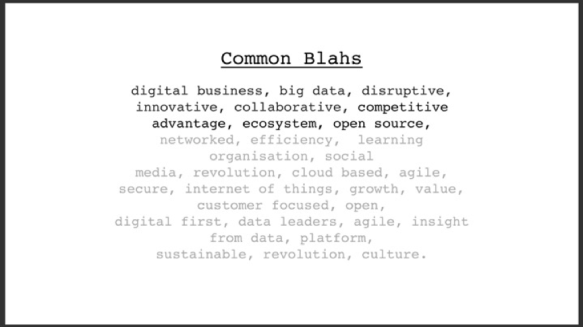
It was Robert Fritz who pointed me at the meaninglessness of glorifying terms like “deep”, “meaningful”, “sustainable”, etc. especially in combination with corporate common blahs like “innovation”, “disruption”, “ecosystem”, and “change”

Simon Wardley's Common Blahs
Just try it: meaningful change, deep change, sustainable learning organization, etc. Utterly nonsense. But what if we would embrace another form of nonsense, another form of meaninglessness? Another form of plainness, elegance, pure joy from form?
It was this article about David Byrne’s Utopia Tour in the NYT, that lead me into the wormhole of Dada poetry, and later into the other art movement Cobra and its related Cobra Manifesto (Cobra is for a subsequent post).
“I thought plain but elegant suits would unify us and help reveal us as a tribe, a community,”
What was that song with the nonsense lyrics?The lyrics for “I Zimbra” were derived from “Gadji beri bimba,” a 1916 phonetic poem by Hugo Ball, the German author-poet and co-founder of Dada. More than a half-century after Ball strove to stop making sense, he got a writing credit for the opening track on the Talking Heads album “Fear of Music.”
Gadji beri bimba clandridi
Lauli lonni cadori gadjam
A bim beri glassala glandride
E glassala tuffm I zimbra
Bim blassa galassasa zimbrabim
Blassa glallassasa zimbrabim
A bim beri glassala grandrid
E glassala tuffm I zimbra
Gadji…
And then I found this in Peter Sloterdijk’s book “The Aesthetic Imperative”:
I éja
Alo
Myu
Ssírio
Ssa
Schuá
Ará
Niíja
Stuáz
Brorr
Schjatt
Ui ai laéla – oía ssísialu
To trésa trésa trésa mischnumi
Ia lon schtazúmato
Ango laína la
Lu liálo lu léiula
Lu léja léja hioleíolu
A túalo mýo
Myo túalo
My ángo Ina
Ango gádse la
Schia séngu ína
Séngu ína la
My ángo séngu
Séngu ángola
Mengádse
Séngu
Iná
Leíola
Kbaó
Sagór
Kadó
Kadó? Cadeau? Maybe it’s a matter of learning to be better at the art of accepting presents or pure gifts. The text above is the last ‘movement’ of the Ango laïna by Rudolf Blümner, a kind of phonetic cantata for two voices from the year 1921. Blümner described it as an ‘absolute poem’. The Ango laïna demonstrates what poetry can be after it is emancipated from the vocabulary, grammar, rhetoric, and phonetics of the German language.
It made me think about what makes me happy and unhappy. Unhappiness caused by dullness, not making the most of it, chatter, irrelevance, not being in the moment, Being distracted from what you are supposed to be, to do,…
This is not about boredom. I can be perfectly happy in full boredom. I can be perfectly happy in full silence. I can be perfectly happy in full nothingness
Happiness is about being in the perfect “bubble” or “sphere” of belonging and relevance. This is beyond Maslow’s hierarchy of needs. It is getting closer to Nitin Nohria’s four drivers of motivation (see also my 2011 post on Lipstick on Pigs):
Without stress, fatigue, and unhappiness. These happen when:
Happiness, in essence, is about not being withheld. Withheld by tempo. Withheld by form. Withheld by meaning.
This form of meaningless joy is what attracts me to the Dada movement.
In my next post, we’ll get into the Cobra movement, and why their ideas of playfulness are relevant in today’s thinking about society.


Here is the latest version of my Delicacies newsletter. You can subscribe to the newsletter on the top of that page.
These are articles/posts that for some reason created a spark in my memory.
Teaser: this fantastic video by Joao Pombeiro

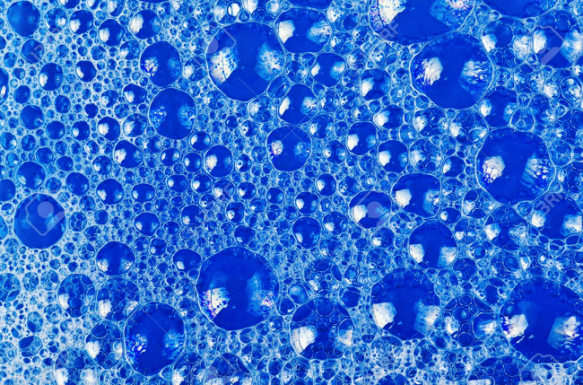
Larry and Sergey in hot tub bubbles in 2005 – picture by William Mercer McLeod
In my previous post, I played with words on Descartes’ “Je pense, donc je suis” – “I think, therefore I am”. In the background, you will notice my always-restless search for who I am. It is an everlasting search for (digital) identity. But maybe “Who” I am is a less critical investigation than “Where” I am?
I always have been intrigued by spheres. From my exposure as an youngster architecture student, through the discovery of Buckminster Fuller’s Geodesic Domes, from my thinking about digital identity being a sphere of fragments of influence that one could share with others, till my recent discoveries in exploring 3D drawing and sculpting software, where meshes of polygon meshes and NURBS primitives can be found and molded-in in abundance.
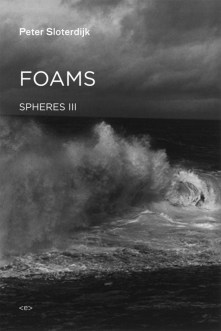
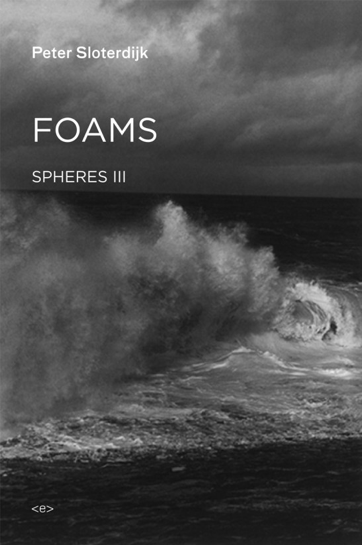
It should therefore not come as a surprise that – as mentioned in my Dec 2019 update – I became absolutely fascinated by Sloterdijk’s “Foams”, part-3 of his trilogy on Bubbles, Spheres and Foam.

I probably – with a probability of 100% – only understand a very small fraction of what is written and meant by Sloterdijk, or by some of the authors of essays introducing and contextualizing his work. I did some homework for this post by reading and reading again the excellent introduction by Jean Pierre Couture on the work of Sloterdijk in general, and Charlie Huenemann’s “Sloterdijk’s Spheres: Bubbles, Globes, and Foams”. And then starting the real thing by the master himself. It is not a page-turner: 900 pages of solid philosophical writing. I can do a maximum of 5 pages/day and need time to let it all sink in. That should do as far as the disclaimers are concerned.
Indeed, this is just a personal thought experiment – and maybe an art experiment or performance as well in the near future – re my evolution on thinking about (digital) identity, and daring to propose a different, radical and spherical perspective.
It’s a baby-idea, just out of the womb, waiting for parents and caregivers to be nurtured, and made alive. There is no practical application for this as far as I can think of, but it just feels I am onto something.
My latest contribution was The Cambrian Explosion of Identity from February 2019, already intended then as the start of a series on the subject, but other priorities distracted me from further development. Let’s add some “spherology” to the mix now.
„Peter Sloterdijk’s celebrated „Spheres“ trilogy is a 2,500-page „grand narrative“ retelling of the history of humanity, as related through the anthropological concept of the „Sphere”,… a lengthy meditation of Being and Space — a shifting of the question of „who we are„ to a more fundamental question of „where we are.“
“Foams are masses of little bubbles, of course. As a metaphor, foams represent smaller zones of inclusion filled with the air of hope.” Huenemann, Charlie.
“And this, in essence, is what Sloterdijk sees as the project of the modernity: the business of constructing bigger and bigger shells, with more Lebensraum for the soul.” Huenemann, Charlie.
I used to think of a robot as an entity that has a body, a mind, and sensors for input/output computation. A computational machine. But to me, it seems just a bit too easy to separate the mind and body, and to replace the mind with some form of artificial intelligence.
It feels like Sloterdijk describes “being” – being in the world, coming into the world, creating your own world and make it become alive, worlding – as acting as-a-foam, not as a “body”, a body with a brain on top that thinks. He is after the wholeness of foam and its integration and relationships with upper and lower levels of spheres and bubbles.

The metaphor of foam is a very solid one: what was before foam, what happens after the foam disintegrates? Where does foam go, what caveats is it trying to fill? All interesting avenues for research and investigation.
It also made me think of this strange creature – the blob with 720 sexes – that foams over old wood trees as a monster we can all learn from?
Because of this sudden focus on foamy shapes, I see bubble-structures everywhere. I see foam in this discovery of Christian Mio Loclair’s art installations, interventions, and interpretations. His studio “Waltz Binaire” works for the biggest brands in the world.
He explores the harmonic friction of human bodies, movement, and nature colliding with digital aesthetics. Using cutting edge technology in interactive installations, audio-visual experiences, visual narratives, and dance performances, he continuously illuminates the beauty and drama of human identity.

Enhanced Motion Design - Waltz Binaire Studio
I see foams in Spheres Journal:
“Yet the vision algorithms have of our future is built on our past. What we teach these algorithms ultimately reflects back on us and it is, therefore, no surprise when artificial intelligence starts to classify on the basis of race, class, and gender. This odd ‘hauntology’1 is at the core of what is currently discussed under the labels of algorithmic bias or pattern discrimination.”
Current identity thinking is based on past data. On graphs. On connections and relationships between “nodes”, “end-points” of a relatively fixed and static structure. With the extraction of value built on top of that past, amplified by AI. The past amplified.
But we did not notice that the nodes have become overlapping cells of belonging. The attractiveness of a “foamy” group- or individual-identity is that it is not fixed and static. It is “expansive”, not “extractive”. It adds value. It grows unpredictably into the future. Not like extrapolations of last year’s revenue growth. More like fruit maturing into a juicy ripeness.
Foam is dynamic. Made of bubbles, it lives within and across spheres of influence (both in the sense of actively influencing and passive being influenced).
Foam is not static. It is alive. In search of higher levels of aliveness. Until it dies. And only blobs of dust and air are left.
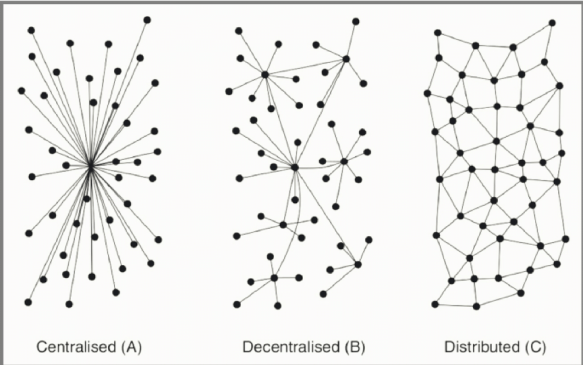
I see foam in Paul Baran’s network models:

Centralized, decentralized and distributed network models Paul Baran (1964)
What’s the impact of foamy logic on organizational models? How does a foamy organization look like? What’s the shape of D?
Are we moving from Graphs to Foams? From Nodes to Bubbles? What would nodes and endpoints be called in the foam-world anyway? Are we foam? It feels like I am going down a rabbit hole of foam. From fuzzy to foamy logic?


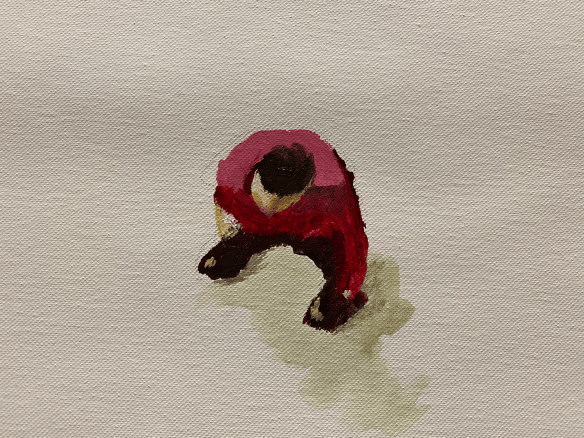
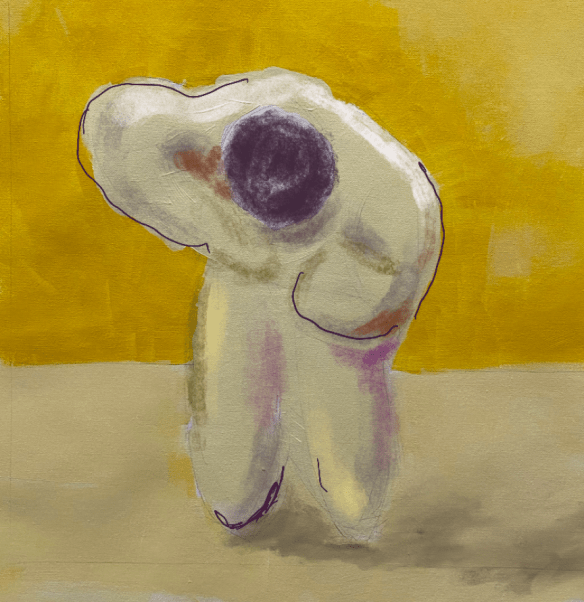
Petervan Artwork © 2019 – Little man on canvas – Acryl on Canvas – 10x10cm
Ik luister, dus ik ben
Ik kijk, dus ik ben
Ik teken, dus ik ben
Ik schrijf, dus ik ben
Ik componeer, dus ik ben
Ik creëer, dus ik ben
Ik loop, dus ik ben
Ik rust, dus ik ben
Ik huil, dus ik ben
Ik dans, dus ik ben
Ik schilder, dus ik ben
Ik peins, dus ik ben
Ik de-peins, dus ik ben
Meen je dat echt?
J’écoute, donc je suis
Je regarde, donc je suis
Je dessine, donc je suis
J’écris, donc je suis
Je compose, donc je suis
Je crée, donc je suis
Je cours, donc je suis
Je me repose donc je suis
Je cris, donc je suis
Je danse, donc je suis
Je peins, donc je suis
Je pense, donc je suis
Je dé-pense, donc je suis
Vraiment?
I listen, therefore I am
I look, therefore I am
I draw, therefore I am
I write, therefore I am
I compose, therefore I am
I create, therefore I am
I run, therefore I am
I chill, therefore I am
I cry, therefore I am
I dance, therefore I am
I paint, therefore I am
I pense, therefore I am
I ex-pense, therefore I am
Really?

This post is the start of a short series of posts on who and where I am/you are, and a set of new interventions and provocations to renew aliveness and alertness in what we observe and what we hope for. Looking forward to creating spiritual, moral and aesthetical advancement together.
You can subscribe via email to these posts via the “Follow blog via email” in the upper right corner of this page. Enjoy!

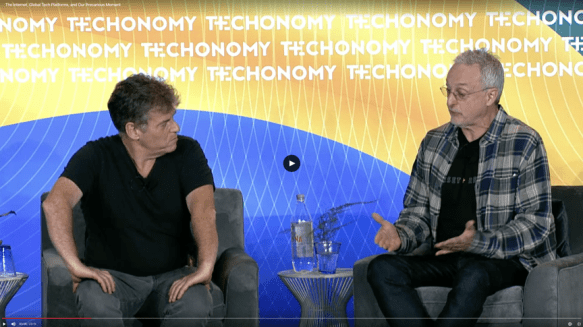
The theme for Techonomy 2019 in Half Moon Bay, California was “Reset and Restore: Governing Tech, Retrieving Ethics, and Acting on Climate.”
In the opening session, Founder and Host David Kirkpatrick prompted: “These are serious times” and the following interview by Andrew Keen of David was really interesting. Keen rightfully asked the question of what needs to be reset, and – if we have to restore something – is this a nostalgic going back to good old times, or what is meant here?
To make a long story short, it seemed the answer could be distilled to a resetting and restoring back to/towards more humanity.
Konstantinos Karachalios, Managing Director of IEEE’s Digital Ethics department referred to the German Jewish Viennese philosopher Gunther Anders, who wrote in 1956 “The outdatedness of the Human Species”.
Konstantinos also shared some strong opinions about the Power (in)equation – the asymmetry in power of the big tech vs. us – and summarized his thinking as “The Time of (Engineering) Innocence is Over”
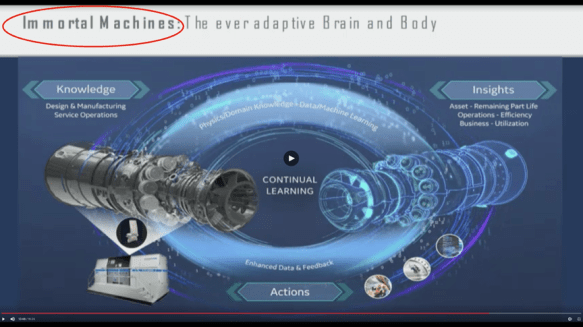
Colin Parris @colin_j_paris did a session titled “Why AI has to be humble” about GE’s use of self-learning AI in the building of GE Jet Engines. Super-slick and professional presentation, almost too clinical. The last slide was about “Intimidation by Immortal Machines”.

My head got spinning and got me thinking of John Markoff’s 2015 book “Machines of Loving Grace – The Quest for Common Ground between Humans and Machines”

In itself, the book’s title is a spin on Richard Brautigan’s “All Watched Over by Machines of Loving Grace” from 1967, and of course, Adam Curtis fantastic 2011 documentary “All Watched Over by Machines of Loving Grace”
I like to think (it has to be!) of a cybernetic ecology
where we are free of our labors
and joined back to nature,
returned to our mammal brothers and sisters,
and all watched over by machines of loving grace.
Richard Brautigan, “All Watched Over by Machines of Loving Grace” © 1967
Let me put all this behind the backdrop of what I saw and experienced a couple of days earlier in the San Francisco Museum of Modern Art (SFMOMA).
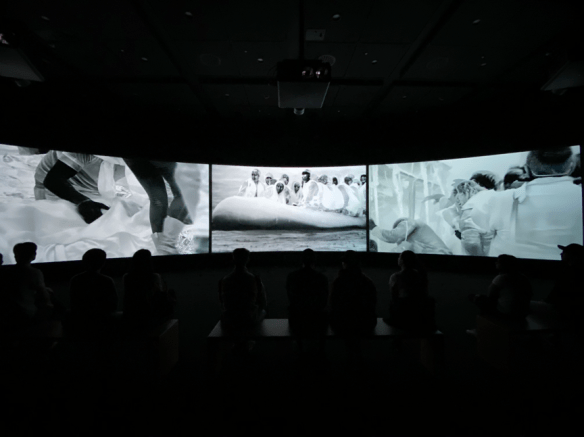
Richard Moss "INCOMING" - Picture by Petervan
On the 7th floor, there is an amazing video installation by Richard Mosse, called “INCOMING”, and it is about the horrible conditions in another Western export product: refugee camps, and related issues of sovereignty, warfare, and surveillance. The installation forces us to confront our own complicity. Strongly recommended. Still running in SFMOMA till 17 Feb 2020. Warning: you won’t come out smiling from this installation!
See also interview with the artist in Forensic Architecture
The entrance of the installation also includes a picture of Berlin’s Tempelhof, a symbolically loaded site to house asylum seekers.


“…, and the airfield has been transformed into a popular public park. Some of its adjacent buildings and territory were designated as an emergency refugee shelter in 2015”
What misery! What a shame for a “modern” society! This installation made me rethink my opinion about refugees. For me, it questions the whole semantic discussion about “asylum seekers” vs. “economic” refugees. There is no difference. When people become so desperate to flee their home and take these incredible risks and withstand these inhumane circumstances, those semantics become irrelevant.
This injustice is going to explode in our face, sooner or later. A toxic mix with climate change, inequality and the 1% owning 99% of the wealth. I can only hope I will not be treated this way when I or my children have to find refuge for climate change or other disasters in the future.
All the big problems of today are crying for more compassion, more morality, less greed. The root cause is a lack of morals combined with an abundance of greed.
Putting it all together, “Immortal Machines of Loving Grace” may be better replaced by “Immoral Machines of Loving Greed”. Just replacing two words is probably better and more adequately describing our Zeitgeist.
In that sense, some of the discussions of Techonomy 2019 should have included the refugee crisis vs. having safe conversations about the attention economy, tech supremacy or immortal machines of loving grace in a five-star luxury hotel.
See also my separate post on the key memes of Techonomy 2019.

Mid November 2019, I was once more lucky enough to attend the 9th edition of Techonomy, in my opinion, one of the best tech conferences and networking events in the world.
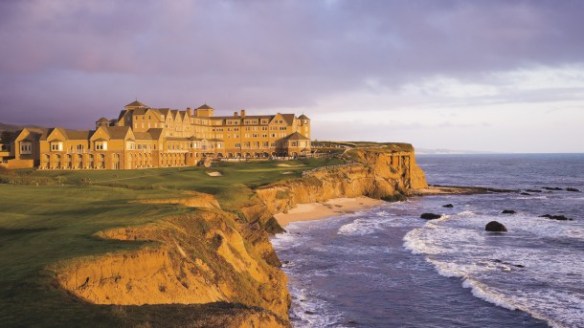
The event is set up as a three-day retreat at The Ritz-Carlton on the shores of Half Moon Bay, CA. The format is pretty straightforward: many fireside chats, some presentations, and some early morning workshops. Content leads and is focused on tech, business, and social progress. Full program here. All live video streams here.

The theme for Techonomy 2019 was “Reset and Restore: Governing Tech, Retrieving Ethics, and Acting on Climate” with an awesome list of speakers and instigators.
Here is – in more or less random order – a set of tweetable memes that I collected at #Techonomy19:
Can technology help us listen vs. sharing/shouting?
From giving fish > learn to fish > create fishing schools
Only the Walmarts can save us from Trump
by addressing the root cause of big problems such as healthcare
The hierarchy not always wins
There has to be some kind of return (on investment). Why?
Real-Time Crime Solving vs. Real-Time Health Development
Real-Time Evil Control vs. Real-Time Good Amplification
5G Beam Forming
Precision Economy
Computing moving back to the edge
Trust is consistency over time
Transparency vs. Clarity
Your digital twin is not you real me; it is just a model of me
All companies are connection machines
I will not work on fully autonomous weapons
Voice First
The Time of Engineering Innocence is Over
Privacy is Dead vs. Anonymity is Dead
The Absolute does not Exist
Worry and Concern are two different things
The State (country) is done
Welcome a future of 2,000 “Nations” aka Superminds
Tribal Nations along the Internet Highway
Democracy > Netocracy
We need more law at the POC stage
Super-evolution
More mission-driven companies
More audacious companies
More focus on the physical world
More than optimize a spreadsheet
The full-stack company
Machines have no Bias
Machines have no Emotions
Infinite experiments driven by machines
The Collapse of Time
40 crops per year (instead of 2-4)
What to read to stay current?
“By the time you read about it, it is too late”
“We are NOT a Tech Company”
“Every Tech Company wants to become a bank”
Technology is the best way to disintermediate
See also my related post titled “Immoral Machines of Loving Greed”.
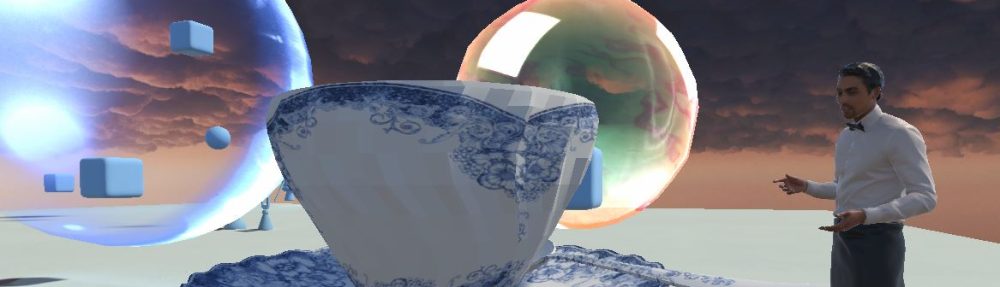
Petervan Artwork © 2019 - 3D Sculpture in Forger for iPAD Texture own painting acryl on canvas 50x50cm

An irregular update on what happened since my previous August 2019 post and some updated plans. With lots (!) of images and videos 😉 Looks like I have been busy, but it did not feel that way.
The Artschool Project
The Artschool academy year started again in Sep 2019, and I decided to do a cross-over year combining Painting and Digital Visual Arts. Progress has been a bit slow as I need to find a good rhythm to combine these two areas, and the abundance in creative apps has overwhelmed me a bit, to be honest. Some examples:
Canvas work

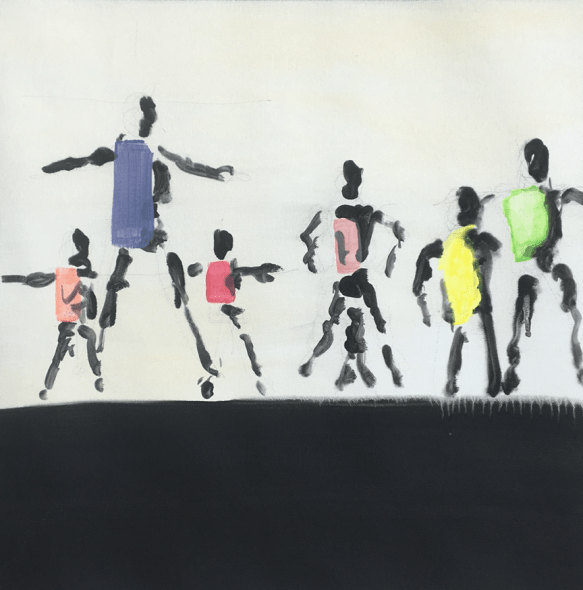
Petervan Artwork © 2019 – Dancers – Acryl on canvas – 50x50cm

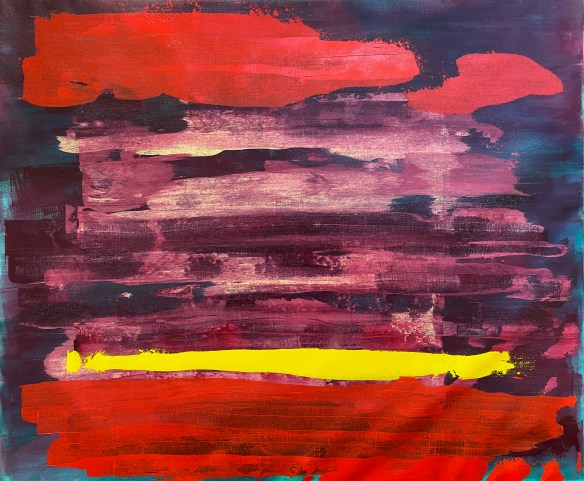
Petervan Artwork © 2019 - Abstract#1 – Acryl on Canvas – 120x100cm
Combined Canvas-Digital work

Petervan Artwork © 2019 – The Boxer – Canvas and Digital – 50x50cm
Videoscapes
Some other videoscapes here (playlist):
With thanks to my Academy coaches Chris, Inge, and Patrick
Time Capsules Project
The Time Capsules Project (see my previous update) is still on hold. The plan is still to have at least a prototype of our Beyoncé project, before further engaging with other commissions
Delicacies
Delicacies is an irregular, unpredictable, incoherent, unfocused publication of mind-sparks that got me thinking. There have been three issues of Delicacies since Aug 2019. Check-out them out here:
https://www.getrevue.co/profile/petervan/issues/petervan-s-delicacies-issue-124-188170
https://www.getrevue.co/profile/petervan/issues/petervan-s-delicacies-issue-125-193906
https://www.getrevue.co/profile/petervan/issues/petervan-s-delicacies-issue-126-205279
Blogs
I published a number of reflections related to ambiguity, worlding, and hierarchies:
https://petervan.wordpress.com/2019/08/09/on-the-ambiguity-of-kayakers/
https://petervan.wordpress.com/2019/08/17/imagining-worlds-you-believe-in/
https://petervan.wordpress.com/2019/08/24/who-is-the-composer-who-wrote-the-score/
https://petervan.wordpress.com/2019/08/30/breaking-hierarchies/
https://petervan.wordpress.com/2019/10/30/ebb-and-flow/
I also queued up a huge list of reflections, and there are some juicy pieces in preparation for identity and – what is he now thinking – about “foam”. I will try to post them at a rhythm of 1-2 per month.
Petervan Rides
Lots of fun putting together some monthly Spotify Lists. Most fun when you choose shuffle play:
Petervan Ride July 2019
Petervan Ride August 2019
Petervan Ride September 2019
Petervan Ride October 2019
Petervan Ride November 2019
https://open.spotify.com/playlist/0I3BQot79HxMHF0gHd0VmE?si=l0FFPNl8R9Sbs9YL6YsCPQ
Petervan Mixes

https://soundcloud.com/peter-vander-auwera/petervan-mix-james-brown-david-bowie-25-nov-2019
Mix by Petervan Scapes © 2019 – With algoriddim DJ Pro Version 1.4.5
More music
Check out Neil Young’s book “To Feel Music”: the book is related to his efforts to let you re-discover high-res sound, as most existing streaming services only offer low quality sound. These days, young people who never heard vinyl analog sound through a decent HiFi kit, have no idea what really good sound sounds like. Neil Young wants to fix that.
With his book and the Neil Young Archives, you can enjoy again his full collection and much more in high-res. There is also a dedicated App for iPhone, iPad, and Android, but the best listening experience is on your PC/Mac connected to a good amplifier and speakers. Highly recommended.
Visual Collisions
I started collecting a number of “visual collisions”. Most of these are videos, a minority are pictures. These visual collisions are intended to de-frame an audience before introducing something new.
Check out this YouTube Channel:
New toys
I added some new toys to my studio, most of it is software (and most of it free of charge, at least for art students):
Books
I have been reading quite a lot. Noteworthy are “The Aesthetic Imperative” by Peter Sloterdijk, and “How to Speak Machine” by John Maeda.
I am fascinated by Sloterdijk’s “Foams” (more about that later)
„Foams „completes Peter Sloterdijk’s celebrated „Spheres“ trilogy: his 2,500-page „grand narrative“ retelling of the history of humanity, as related through the anthropological concept of the „Sphere.“ For Sloterdijk, life is a matter of form, and in life, sphere formation and thought are two different labels for the same thing. The trilogy also together offers his corrective answer to Martin Heidegger’s „Being and Time,“ reformulating it into a lengthy meditation of Being and Space — a shifting of the question of „who we are „to a more fundamental question of „where we are.“

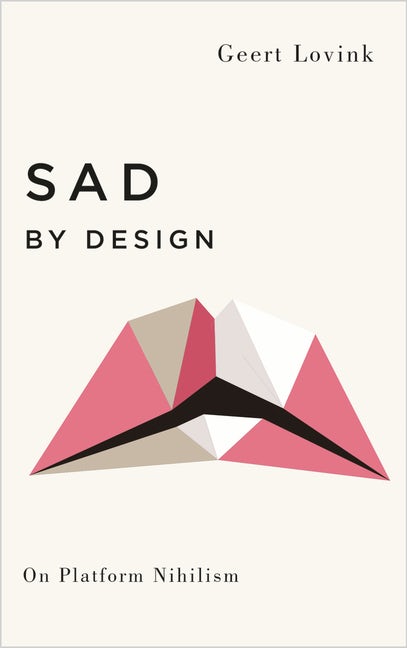
The absolute #1 recommendation is Sad by Design by Geert Lovink. If you want to go beyond the worn-out opinions of Silicon Valley libertarians vs. Humanity, this is your book.
You can find a link to all the books I am reading in my Goodreads
Exhibitions
I visited a couple of art exhibitions:

Sarah Baker – Portrait of Bill May – Museum Dhondt Dhaenens End Aug 2019 – Picture by Petervan
Lace is more – PiKANT exhibition about Lace in Aalst. Video and soundscape by Petervan

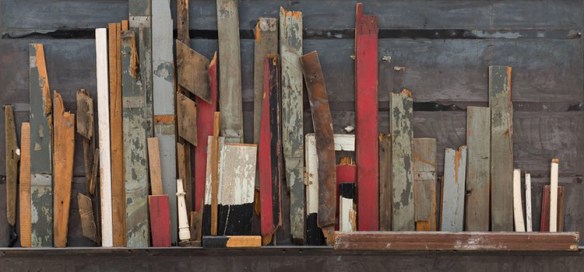
Jannis Kounellis – Untitled – 1983 - Arte Povera – SFMOMA Nov 2019
My own exhibition

Angel in Chapel of Mater Location of my upcoming exhibition end May 2020
Since I started academy some years ago, I produced something like 500 drawings, paintings, sketches, soundscapes, and video experiments. Many have asked whether I even thought of setting up an exhibition of my own work. That’s going to happen end May – beginning June 2020:

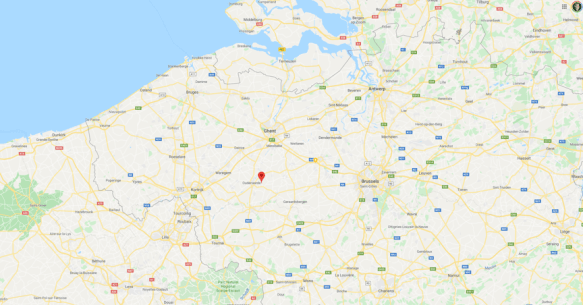
Location: Chapel of Mater (a small village in the Flemish Ardennes, Tour de Flanders territory)
For regular updates on this exhibition via a mailing list, you can subscribe here.
Outdoors
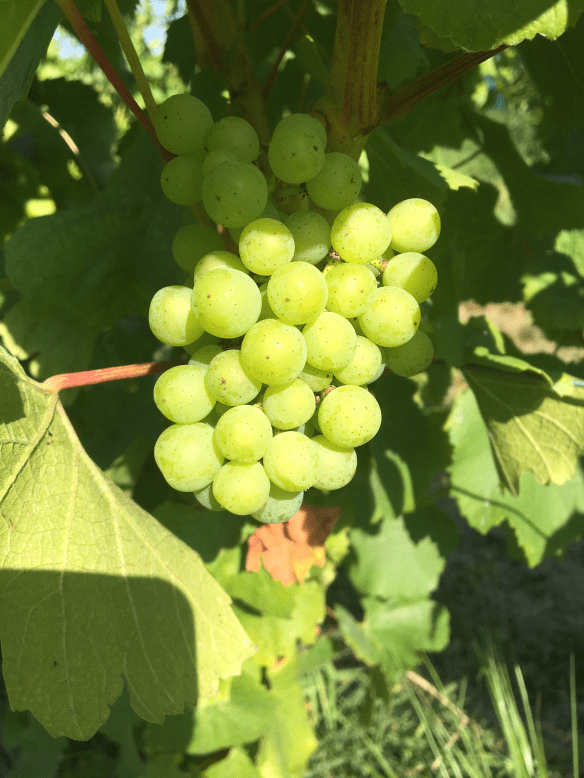
Great summer morphing into rainy Sep-Oct-November. Not too bad. We visited a vineyard close to Aalst (Belgium) and biking tours continued at irregular intervals; small distances (20-40 km) at a very low speed. Maintenance of the garden also kept me busy. I have about 150 meters of hedges (x2 both sides), so by the time you get to the end, you can start again 😉

Vineyard in Aalst, Belgium - August 2019 - Picture by Petervan
Life of a Sunflower from 26 Aug till 30 Sep 2019 - Montage by Petervan

Bike tour along a very green Dender (river crossing Aalst)
Freelance
Main project was a leadership immersion for a client that took us to Shenzhen and Hong Kong the first week of October 2019. Think of an Innotribe @ Sibos but then in a intimate retreat format for small private audiences; with artists of course. A good example of Imagining Worlds That You Believe In – aka “Worlding”, a term coined by Ian Cheng in his book.

Hong Kong Peak Tram Oct 2019 – Picture by Petervan
Reflections
Retirement is coming closer. I will be officially retired as from 1 May 2020. Not that I plan to stay idle, on the contrary. Within limits, I will stay available for interesting freelance work and plan to stay very focused on my artwork.
In other words, no time for too much social media engagement (I put some blockers on most of my devices) or making selfies.

Graffiti in Ghent Citadel Park 16 Sep 2019 – Picture by Petervan
All the above helped me getting sharper on what I am and what I do: create artistic interventions, interruptions, and provocations that lead to higher states of alertness and aliveness. Formats can be analog and digital artwork, performances, writings, poems, blogs, installations, exhibitions, immersions, soundscapes, recordings, documentaries, and time capsules.
So, what’s next?
The plan for Jan – Mar 2020 is to work on:

As you can see, a labyrinth of choices. The red thread may be the solution: stay hungry, stay foolish, stay focused.
So, that’s it for this edition. If there is something worth reporting, the next update is for Apr 2020.
Merry Christmas and Happy New-Year!
Video play with Videoleap by Petervan – Music James Brown “I feel good”
Warmest,


Petervan Artwork © 2019 - Abstract#1 - Acryl on canvas - 100x120cm