9 Lessons from Rune on Leadingship

Since my post “The End of Leadership”, the topic of Leadership vs. Leadingship keeps buzzing in my head. I further elaborated on the topic in a subsequent post “Leading from the Edge”.  As many of my readers know, the inspiration muze for these posts was Rune Kvist Olsen from Norway.

tumblr_mk56n9nE7b1rse1ipo1_500

Rune is fine-tuning the concept by sending regular comments to those posts. He now has collected and gathered his writings from February and March into 9 lessons for Leadingship.

Rune lives a bit isolated in a self-designed and self-built house on a lake in Norway. A bit disconnected from technology and social media and all the rest, but probably more humanly connected than many of us hyper-connected digital stress rabbits.

It is a pleasure to respond with a wholeheartedly “yes” to Rune’s request to post his lessons on my blog as a guest post. It is probably his only voice to the world.

It’s a long read, and you need your attention and intention with you when reading, but Rune has developed such a rich language to articulate the differences between Leadership and Leadingship that I find it always worthwhile to immerse myself in his thinking.

So, here they are, the 9 lessons for Leadingship. Red and italic highlights by myself.

+++ Start of 9 lessons from Rune on Leadingship – Feb/March 2013 +++

Lesson-1: The consistency in interactions between personal conceptions of reality and the influence of personal power in the organization.

The general conceptual principle: We are envisaging the reality as we are our self, and not as the reality is in it self. The particular conceptual principle: We are seeing the reality in our organization based on Who we are as persons and What we have as persons.

The organizational design principle: Our reality conceptions at work varies and fluctuates with our specific and factual organizational circumstances.

1. The reality conceived from a Leadership point of view:

As superior persons appointed to leadership positions we see the reality from above and downward. We are envisaging the reality based on our position and rank as superiors and will understand, interpret, explain and defend our conceptions and perceptions of the reality context accordingly to his respective circumstance of power over subordinates below.

The superior person in a leadership position is given the power to determine and ascertain the correct version and view of the truth and the power to enforce the authoritative description of the reality.

The subordinate person must accept and comply to the version of the true reality conception established by the ruling order with loyalty and obedience, with the purpose of sustaining one owns job and work.

The reality conception powered by Leadership is based on What we are and have by the virtue of positions and ranks.

2. The reality conceived from a Leadingship point of view:

The power of Leadingship is based on the principle that everyone in the organization are entitled and authorized personal power within a respective field of work, and entrusted with individual freedom and personal responsibility in making autonomous decisions.

Everyone are relating as equals and peers and are envisaging their reality context from a similar point of view (neither upwards or downwards – but sideward’s) from the same platform of out looking the organizational reality.

A shared reality conception between individual human beings occurs when individuals are able to understand that other’s conception of reality can be as real, true and valuable as their own conceptions and perceptions.

The common awareness that our reality are composed of a myriad of different views, conceptions and opinions, are the dynamical cord that are linking and connecting us together through our individual personalities in shaping our common identity as a working community.

The reality conception powered by Leadingship is based on Who we are as individual human beings based on our personal competence and capacity in doing our respective jobs.

Lesson-2: The Truth powered by Leadership versus Leadingship:

A. The Truth powered by Leadership:

The Subjective and Superior Truth as a matter of an Objective Supremacy Fact. The superior leadership person sees and rules the truth, and the subordinate person is told and ruled by this commanding truth:

If and when a superior person in a leadership position don’t  like, disagrees and disputes a critical and controversial report from subordinates, the superior person will most likely terminate and close the matter, and file the case in the archive as invalid, unreliable and unaccountable. The subordinates will be labeled as disobedient, disloyal, dishonest and not trustworthy.

B. The Truth powered by Leadingship:

Subjectivity is a personal matter as an individual expression of reality conception. Objectivity is a collective matter as a result of shared understanding amongst the people involved.

When people have gained the personal force to operate and function independently and entrusted the liberty to take responsibility of actions as equals and peers, they have at that moment of conscious state of mind attained enough personal confidence and will force to accept and trust the reality description of others without fear, rejection, condemnation, denunciation. damnation and contempt.

Lesson-3: The consequence of a polarized reality conception powered by Leadership versus a shared reality conception powered by Leadingship.

1. The Leadership reality conception directed downwards and upwards:

  • Mastering hegemony by monopolizing the truth.
  • Colliding values and believes.
  • Minimizing, discrediting and ridiculing alternative statements as rhetorical and semantical matters (depriving and renouncing confronting aspects their authority in being serious and real).
  • Conflicting priorities.
  • Contradicting truthfulness.
  • Compromising reliability and credibility.
  • Alienation by separation.
  • Ruling by dividing, conquering and domination.
  • Verticalization of relationships.

2. The Leadingship reality conception directed sideward’s:

  • Sharing by beneficial benevolence.
  • Communication by leveling.
  • Collaboration by coordination.
  • Corporation by complementation.
  • Connecting by integration.
  • Equalizing by reciprocally.
  • Horizontalization of relationships.

The structure in organizing, managing and leading work and people are a consequential reflector of the structuring of power as the premise shaper of the reality design in the organization.

Lesson-4: The necessity and essentiality of substituting and replacing obsolescent and anachronistic believes and dogma (f.ex: Leadership) with new and alternative options and solutions (f.ex: Leadingship) – which are not part of the illness and disease that inflicts and infects the mental health of the human mind in contemporary organizational life.

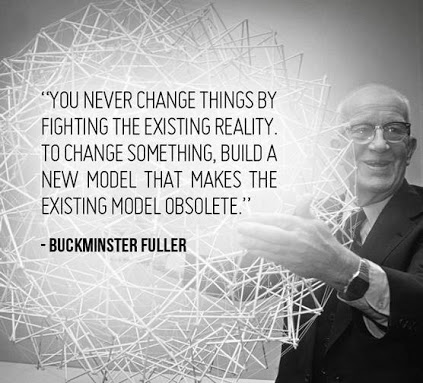
The excellent and brilliant statement of Buckminster Fuller says everything about the necessity in creating alternative options (model, concept, system, structure) when dealing with obsolescent matters opposing and counteracting new future realities:

“You never change things by fighting the existing reality. To change something, build a new model that makes the existing model obsolete.”

The power and force embedded in the concept of Leadingship enables us in moving beyond existing mental boundaries in reaching the emergent future of a new workplace reality, where everyone are relating equally and mutually on the same level of co-existence.

At that point of evolution in the state of mind of the individual human being, we have released the chain of control and command from someone above to lead and others below to be led. This significant action have made the existing model of Leadership for Someone superfluous by compensating this obsolescent dogma with a new model of Leadingship for Everyone.

Lesson-5: Notorious governing administrative mechanisms and ruling Leadership techniques in enforcing silencing, subjugation and subordination in the workplace – in relation to Leadingship practice.

The purpose of well known and famous governing mechanisms administered by the system and ruling leadership techniques applied by the superior (leader, boss, supervisor, controller, director etc.) person in charge, is quieting and silencing people against advocating personal, individual and collective concerns, anxieties and worries about their work, working conditions and working contracts. The intention of such subtitle and often concealed leadership action, are enforcing, protecting and preserving the interest of the power holding and the powerbase that ensures supreme privileges and advantages for the people in charge in leadership positions.

In practicing Leadingship everyone must take responsibility and operate independently because there are none to command and control, and subsequently there is an absence of manipulative mechanisms and techniques of silencing people to muteness. One main purpose behind Leadingship is to take each other seriously and not dismiss controversial, challenging and critical arguments as invalid.

There are some factual and actual factors (mechanisms/techniques) applied by superiors above in governing/ruling subordinates below by legitimate leadership strategies and tactics:

1. Dismantling the existing workplace setting.
2. Dispersing/dissolving the working group.
3. Exiling persons from the workplace (office/station).
4. Removing access to working instruments.
5. Depriving of tasks and functions.
6. Redrawing authorization, certification and security clearance.
7. Degradation/depromotion downwards.
8. Excluding/out locking from job.
9. Expelling from department.
10.Relocation to another physical setting.
11.Discharging/firing from job.
12.Dismissing/teminating contract
13.Disgraced/dishonored professional reputation.

Revealing and exposing pretentions, intentions and reasons behind the monumentation and cementation of the Truth of Reputation by the correct version of history description, is the only option in establishing transparency and prevent future veiling of manipulated truth powered by Leadership.

I will end this enigmatic lesson with a statement from some years ago:

“The truth is only threatened by its own essence when revealed as a deception and falsehood in concealing the real and sincere intentions and reasons behind a manipulative action in preserving the status quo.”.

Lesson-6: Identifying and mapping the consequences of institutionalizing the correct version of the Truth by the legitimate and authorized act of either superiority or equality in the organization.

Evidencing the Truth of reality by Leadership versus Leadingship. Our conception of reality becomes our truth depending on how we are letting and accepting the reality being described and interpreted by someone keeping the power based on (leadership) position, or by everyone sharing the power based on experience and knowledge (leadingship competence).

The act of indentifying the common reality experienced by everyone individually in the organization, can be done by proposing relevant questions in revealing and exposing the real truth about powering, organizing, managing and leading work and people:

  1. Can you envision a workplace where all people are powered with authority by their own abilities to operate and function independently and responsible?
  2. Can you envision a workplace without superiors and subordinates where some people have power to dominate, control and command others in the act of subjugating them to subordination?
  3. Can you envision a workplace reality where the power to make and take decisions is linked exclusively to personal competence (in contrast to position and rank)?
  4. How are your present workplace powered, organized, managed and led?
  5. What are the intentions and reasons behind the existing structuring of power in your organization?
  6. What would you regard as the most important, crucial and vital assets and requirements in changing your workplace to a reality where everyone have equal access to personal freedom and individual responsibility?
  7. How can you contribute in addressing issues at work that you need to resolve in creating a transparent and ethical social conscience amongst the people in your organization?

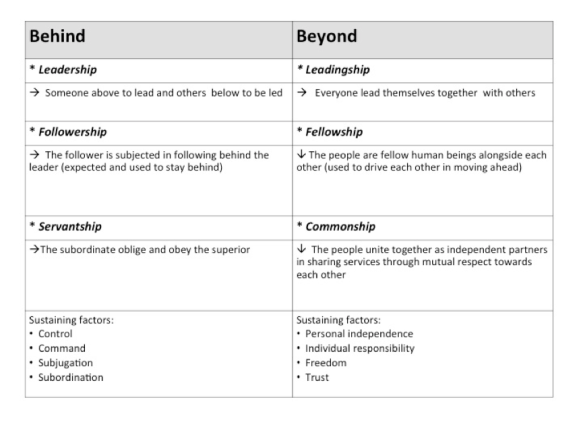
The strategic option in this organizational context is either staying behind by maintaining and conserving Leadership for Someone or moving beyond by initiating and implementing Leadingship for Everyone.

Lesson-7: Why Leadership versus Leadingship are interconnected opposite poles in a dynamical learning progression interfacing each other through reciprocal  interdependency and mutual influentially.

A key to a dualistic relationship between diametrical contrasting opponents is challenging each other by their opposing differences and inequalities, lies in the insight, knowledge and experience of how the essence on one specific entity is shaped and formed in the relation to its absolute contrast.

For example to understand white we must understand black, god versus bad, nice versus evil, sharing versus keeping, cold versus warm etc. Our conceptions and perceptions are constructed by this code of symbiotic dualism. Subsequently the insight and understanding of Leadingship is found in the knowledge of Leadership. The simple pedagogical motto is therefore: ”Knowing the one by knowing the other and visa versa”.

The paradigm of dualism unites separation and integration as two opposite aspects of the same matter, both contradicting and presupposing each other at the same time in a dynamic and progressive process of attraction and repulsion. The pedagogical flow are the initiating energy behind all human learning as a composition of mutual interaction and interference between distinctive reciprocal components. These influencing factors generates a synergic and symbiotically impact of unified consciousness by the momentum of learning.

In balancing and harmonizing a dualistically process between opposite poles that are contesting the essence and nature of each other constantly, we must establish counterbalance that are enabling the potential and options of alternative choices granting us the freedom to choose. In choosing and selecting one specific option, we must at the same time be aware of alternative options.

Alternative options gives of the freedom of choice, while absence of alternative options will be forcing us to submit to the only given solution at hand.

The lack of options is the opposite of freedom of choice.

In balancing and harmonizing our choice in organizing, managing and leading work and people, the option of Leadingship contra Leadership is significant and essential in sustaining the free will and the freedom of choice. Subsequently the counterbalance of interconnected opposite poles in a learning perspective, is substantial in generating “learning of the one” by the “learning of the other” and visa versa.

We learn our self in relation to others by questioning What, Why and How we our self can perform, accomplish, achieve and pursue our intentions and purposes.

We are not truly learning by letting others tell us what to do. Learning from others are just reproduction and copying old learning’s. Others can help us to learn, but the learning is ours to do within our self.

Learning is a personal process done inside the human embodiment. By internalizing and processing all types of inputs from outside and inside, we will be molding our impressions to distinct emotions and thoughts that can transpire to learning’s that enables specific actions. By converting the learning’s to actions, we are creating competence as we are testing our theories into practical operations for our self and others.

Competence is a individual and personal matter that never can be conveyed and transferred to other people, because of the nature of the process as a personal matter inside the individual person. Everyone must do their job and learn by themselves from birth to death. However we can share and exchange our knowledge and experiences so that others can internalize and process their own impressions, and later can convert their thoughts into competent expressive actions.

Learning as a dualistic matter is all about learning and understanding One Self through the relationship to others in true and affectionate mutuality of susceptibility and receptivity. In this way we learn by challenging and questioning the truth conveyed by others, and instead be searching for our own personal truth in becoming authentic individuals.

Lesson-8: The Learning Design of Leadership versus the Learning Design of Leadingship.

The vital and crucial questions are:

1. Am I my self able in taking responsibility for my own learning or not?

2. Am I the person who know best what I need to learn most and in a way that suits me best?

Answers to these questions will be determining and forming the applied learning design principles regarding which force of power that will be ruling and governing our learning process and learning lessons. The selected force of power will have two alternative options of choice:

1. My inner self capacity in taking care of my learning responsibility.
2. Someone outside my self who is assigned my tutor and appointed my superior being considered as best qualified.

I. The Leadership Learning Design:

Someone above as the superior authoritative person in charge is telling, instructing, training others below as subordinates what to do, why to do it and how to do it.

The learning belief is that the person in the leadership position has the best knowledge and competence to determine what is best for the people below in performing their jobs, while the subordinate person is not personally equipped and endowed with the adequate and sufficient talent in taking care of one owns learning in an independent and responsible manner.

This difference in preference and reference signalize the distinction between trust and distrust in people and in the emphasizing of the significance of position and rank. This differences in conception of who to trust as superior and who to mistrust as inferior, are the main reasons that someone is valued and regarded as best qualified to leadership positions and subsequently most trustworthy in taking care of others learning.

The leadership learning design principle is focused on organizing learning as a system of teaching, training and education from top down the hierarchical ladder by the appointed person in charge of the facilitation training program in employee education. The superiors themselves are summoned to exclusive Leadership programs in learning the design principles of organizing, managing and leading the subordinates below.

II. The Leadingship Learning Design:

Everyone are considered qualified in taking care of their own learning actions as trusted equals and peers based on their respective competence and personal characteristics in adding value to the common good and the corporate benefit.

The learning belief is that everyone are doing their learning from inside themselves based on personal choice of individual development. The learning must be subjected to personal choice and processes in order to evolve as a personal matter of competent individual actions. People will be operating independently and responsible in generating their learning and be converting their learning into applicative competencies.

The leadingship learning design principle is to situate and arrange necessary space for personal learning and collective sharing of individual learning, where the internalized learning outcome from everyone can be coordinated and integrated as a collective force of organizational competence. The leadingship design of learning is focused on organizing learning as a consecutive process of learning by experiencing progress and regress in personal achievements, and by reflection on continuous improvements in personal accomplishments.

The Leadingship programs of training and education are inclusive for everyone since everyone are learning by themselves together with others all the way through their working life and private life.

The ultimate choice of the Design principle of Learning is subsequently a choice between either Leadership learning program for Someone or Leadingship learning program for Everyone.

Lesson-9: As in Heaven – So on Earth. Leading and Learning through parallel perspectives of Reality.

In this time of solemn and holy reverential sentiment to come for the celebration of the Easter holiday, I would like to summarize my posted lessons in both an earthly perspective as a spiritual perspective. I will be starting this angling approach with the spiritual part in relevance to the theme; Leading and learning in parallel perspectives of reality, by making a connection between references to spiritual experiences extracted from conveyed interviews with persons under superconscious hypnosis.

The distinguished author and scientist Dr. Michael Newton has uncovered the mysteries of our state of being in the spirit world, and has written several books covering experiences from living human beings who convey reports from their spiritual realm. The texts of Dr. Newton gives a fascinating and an intriguing insight of how a parallel reality such as the spiritual world, could be organized, managed and led. The following statement is quotations from the book; “Destiny of Souls”:

“While in a superconscious state during deep hypnosis, my subjects tell me that in the spirit world no soul is looked down upon as having less value that any other soul. We are all in a process of transformation to something greater than our current state of enlightenment. Each of us is considered uniquely qualified to make some contribution toward the whole, no matter how hard we are struggling with our lessons. If this was not true we would not have been created in the first place. (page 6)… Advancement through the taking of personal responsibility does not involve dominance or status ranking but rather a recognition of potential. They see integrity and personal freedom everywhere in their life between lives. (page 7)”.

A rather solemn and reverential statement at this time of sentimental and ceremonial reflection and contemplation, I would say. In either way these words of Dr. Newton can perhaps give us a touch in raising our senses in expanding our perspectives of existential matter.

I will be ending this lesson with an earthly part in relevance to the theme; Leading and learning in parallel perspectives of reality. The earthly duality of values and believes states the overture:

“Someone are leading others and others are led by someone” powered by Leadership versus “Everyone are leading themselves together with others” powered by Leadingship.

At the moment when the majority of people are deprived their power of self-decision and ranked below as subordinates with superiors in charge, the structuring of power is shaped vertical and organized hierarchical. At this momentum of subjugation by subordination, someone is appointed the authority of leading others by the virtue of their superior position and rank, and others are subjugated to be led by the virtue of their corresponding inferior position and rank. This way of organizing, managing and leading work and people represent the rule of Leadership where the organization is adopting and adapting Leadership for Someone.

At the moment of revelation of the apparently devastating and damaging consequences of Leadership for Someone for the human energy and spirit in the workplace, where the majority of people are subdued to inferiority and subjugated to subordination, people will at the moment of despair understand that this vertical and hierarchical way of organizing is obsolete and destructive regarding human engagement at work.

The mantra of Leadership for Someone would at this point be at its breaking point of revolution, and ripe and ready for replacement by the essence of Leadingship for Everyone.

The essence of Leadingship for Everyone is that all people are enabled the authority of self-decision at work. At this moment of transformation in the way we operate as free individual human beings, the structuring of power is shaped horizontal and organized egalitarian with people sharing power, exchanging resources and complementing each other in unified actions.

This way of organizing, managing and leading work and people, represent the era of a humanized work life, where the organization is adopting and adapting the vision of Leadingship for Everyone.

At this moment of truthfulness including and equalizing Everyone and Everybody in the organization, we are in a way aligned with the spiritual vision of leading and learning beyond our own comprehension of reality.

+++ End of 9 lessons from Rune on Leadingship – Feb/March 2013 +++

The Future is Analogue

Last week, I attended the PurpleBeach launch event (check out the twitter stream at #purplebeachlaunch). It’s one of those events that got me again into hyper-reflection mode.

Purplebeacj

I was not really sure what the launch was about – initially I thought it was about the launch of a new consultancy firm – but once on site, it looked like being an experiment driven by Annemie Ress about “People Innovation”. Annemie had been heading HR and people efforts at eBAY, PayPal and Skype and I think she was not sure yet herself where this happening was going to land. She was maybe taken a bit by surprise by the number of folks who signed up for this invitation-only event – and in some way I liked a lot the authenticity of her and the team, being and staying open and curious about what could emerge from a gathering of about 180 folks of quite diverse “plumage”.

I got invited via MJ Petroni, owner and founder of Causeit.org. I met MJ last year when he and his team coached the Innotribe team on making quality team alignments and intentions. Petroni is mentored by Mark Bonchek, PhD, former SVP of Networks and Communities at Sears, now heading his own consultancy Orbit about pulling customers and communities in “orbit” around your brand. Enough credentials to follow-up on the invitation and checkout the event that took place in Audi Quattro Rooms, West-Side of London.

quattro rooms

Day one started with some strange mix of “quite-ok” talks about mobile, big data, digital identity, trends, leadership, HR, and the blurred zone between HR and Marketing.

In essence, the glue binding the different activities was “business humanization” and “people innovation”. The basic premise that innovation in organizations does not happen without people rediscovering themselves in their full being, a rich combination of left/right brain activities, and greater levels of personal awareness.

And yes, there was some strange Californian “wu-wu”, “mindfulness”, “well-being” and poetry and artistic performance elements as well. After all, we were on the “beach”, a place where you can relax, be idle, and be open to whatever comes your way.

Day one was ok, but not more than that: I was more or less familiar already with the content presented, and was in search for the new insight, the new synthesis, the new “AHA” moment. Alas, I waited in vain for the muse to inspire me.

But Day-2 kicked off by a great discussion about being “on”-line all the time, after a presentation by a trends watcher about future trends, micro work, etc. The presenter was depicting a future of always-on, nowism and “on-ism”, a future where you have to check your smart-device or sensor every second to capture that 5 minute chunk of work on a worldwide marketplace for mechanical turks.

In the following panel, Doug MacCallum (ex eBay but still advisor to the CEO of eBAY and non-executive Director on the board of Ocado) couldn’t hold it anymore:

“What a horror! I don’t want to live in a future like that. People need their time off to reflect and recalibrate. This is a dystopian future”

Doug MacMallum almost got a standing ovation for his intervention, and just the fact he got the ovation is a proof of how deep “presentism” is disturbing our human lives. It was like some sort of relief going through the room.

He went on describing a practice of Executives not sending mails in the weekend, to respect their own free time and that of their collaborators. Great initiative, but I have seen such promises before, and in some occasions the executive is preparing her emails during the weekend, queuing them up, and releasing them on Monday morning, so you have your inbox loaded with fresh instructions and work (sic).

present shock

It made me think of Douglas Rushkoff’s latest book “Present Shock” (Amazon Associates Link), about the fragmentation of everything, including work and value, and the addiction that arises when you are not able anymore to step out of the digital time, back into analog time, where you still have some sense of time fluidity, rhythm, and relative perspective.

Penelope Trunk, co-founder of Brazen Careerist, recently wrote a great article in Quartz. I like the section on refusing to present your-self in a linear way:

Agents represent workers who pick and choose projects that match them rather than signing on for indefinite amounts of time. The Harvard Business Review calls this supertemping. Business Week calls it going Hollywood.

It’s about a deep desire for story and narrative, context, being part of something, being for the long haul.

But unfortunately, we are getting fragmented disassembled

UPDATE: @MayaDroeschler retweeted my post and linked it with metaphysics of pure presence, referring to the the work of the philosopher Jacques Derrida who introduced the concept of deconstructivism, and who also influenced architecture (in the form of deconstructivism). This is the space of famous architects like Peter EisenmanFrank GehryZaha HadidCoop HimmelblauRem KoolhaasDaniel Libeskind, and Bernard Tschumi. Readers who know me, understand that Maya touched my sensitive chord of love for architecture. Picture below from Frank Gehry’s Guggenheim Museum in Bilbao.

gmb_bilbao_690x235

But I got distracted 😉 The Quartz article also mentions new “modern” practices of young people selling stocks in themselves. This is about investing in – or probably better called “betting” on humans.

A “good” example is Upstart, a start-up opening their site with the slogan “The Start-Up is You.’’

Upstart

Upstart was founded by a group of ex-Googlers, including Dave Girouard, who spent 8 years at Google where he was President of Google Enterprise and VP of Apps.

I can’t help it, but this starts smelling like slavery to me. You already knew that you were the “product” of Siren Servers like Facebook, Google, your bank, your insurance company, your health company; they are getting your data for free and can monetize it without compensation of the data originator. It’s getting worse now: we are now entering an era where one owns the life of another human being, worse even, takes options in somebody’s future and betting on it.

Jaron Lanier has recently published a great book about this “Who owns the Future?” (Amazon Associated Link)

Who owns the future

I feel really sorry for otherwise very smart people Eric Schmidt, Peter Thiel, Khosla Ventures, Marc Benioff and other moguls for putting 5.9M USD in the last capital round of Upstart. I believe they are forgetting something very important here. This is in essence a form of digitizing of what it means to be a human being, digitizing the being into binary data blips, forgetting the rich set of emotions, senses and creativity we all can bring to the table. We are more than data present in the moment. We are part of a narrative, a story, an analog context.

Our “presentism”, just having that safety option to do that quick email check in the week-end, to check that Twitter status, the Klout and other scores are probably symptoms of something deeper going on: just having that capability is for some people already reducing the anxiety of loosing out on something.

Somebody shouted from the audience “But we are loosing the obvious!” – meaning loosing of being humans – and then a couple of “minutes” later, the quote of the day:

“The Future is Analogue”

I really believe it’s about loosing or sustaining our analogue human identity. Identity is contextual and one context is the time framework we want to function in. I’d prefer to live in the analogue time context; the way Doug Rushkoff described it: “What do we want: the long now or the short forever?”

This lead to my first “Aha” experience at the event: an experience about identity. As somebody quite active online, I try to be – and believe I am – the same person on-line or off-line. I don’t believe I have a different persona online of off-line. But online, I feel more the need to amplify myself  and my outgoing data streams, and at the same time trying the amplify and maximize the incoming streams of new data. But there is too much info out there, I feel indeed this anxiety to miss out on something. I also sense higher degrees of narcissism on-line, narcissism in the sense of self-amplification and promotion. What does that do with my identity? I think I am pretty the same online as in the real world… But “shaping” my online identity raises deep questions on who I am: as an individual, in a group, in the world at large.

Ron Shevlin @rshevlin, author of Snarketing 2.0 sent out this tweet on 28 Apr 2013:

“If identity is the new money,

schizophrenics have it made.”

It was in this mood of identity reflections when I entered a conversation with another Purplebeach participant: Jefferson Cann from Extraordinary Leadership, a soft-spoken gentleman bringing the topic of intimacy into the debate.

The word “intimacy” worked like a red flag on me. I explained Jeff how I was trying to stabilize/discover/re-discover my identity. His feedback was that he was not sure that one needs to fix/stabilize your identity.

“By fixing, you close yourself for being open to the moment, for the intimacy with the moment. The intimacy of the moment INCLUDES identity, so that the identity can flow, can evolve. In that sense, I hope that your MBTI of 10 years ago is not the same as your MBTI of this year, which would mean you have not evolved.”

This coming together of intimacy and purpose gave lead to my second big insight of the week, the second “Aha” moment.

My readers know that I am sick of the 10 min, 15 min, 18 min pitches and talks. I am hungry for depth, for richness of conversations, for going beyond scratching the surface. One of the reasons why I keep writing these long posts 😉

The insight was that my hunger for depth is really a hunger for intimacy, the hunger for human connection, also on professional environments.

What does it really mean when a manager tells you: “You know, I am a pragmatic man, two feet on the ground, so can you please pitch me your story in one minute, and at the same time tell me what the ROI for the next 2 years will be?”

I suddenly realized that this famous pragmatism and two-feet-on-the-ground is probably a shield to hide from depth, from intimacy. It is a shield against the present that can even be used in Machiavellic ways to include/exclude people from connection. It’s a deep sign of uncertainty and insecurity, the fear of losing control, fear of human contact, the fear of opening up, the fear people will discover there is no substance, and fearing/knowing you cannot compete on content. It’s the fear of having to acknowledge that your leadership power only comes from your position in the hierarchy and not from who you really are.

As Glenn Llopis recently wrote in Forbes about “The 5 Things Leaders are thinking with not talking about”:

Leaders must find a new sense of maturity within themselves to address and navigate these new workplace issues with greater clarity, focus and intention. Leaders must be more proactive in coming to grips with today’s new normal.   In doing so, they must face their greatest fears head-on and get on with the business at hand.  The marketplace, the workplace and those whom they serve demand it.   Until they do, here are five things leaders are thinking, but not talking enough about: 

  • I don’t have all the answers
  • I have difficulty relating to the younger generation
  • Diversity makes me uncomfortable
  • I am uncertain about the future
  • My leadership skills are not relevant


It looks like we are witnessing murder by modernity: murder of the human connectedness through the avoidance of intimacy. It looks like most of us – including our leaders – and not ready from the new normal. We need to send our leaders to “Purplebeaches”, so they find again time to reflect, to enjoy depth, to open up and embrace connections between fellow human beings.

UPDATE: as a real example of synchronicity, Jennifer Sertl just posted this awesome video about being human.


Some interesting insights:

  • There is no off/on button for feeling an emotion
  • How are we teaching people what is human vs. what is technical
  • We have to re-enforce the usefulness of being human
  • You can’t take care of yourself if your are at the same time taking care of a tribe
  • Everything you do becomes part of a data piece
  • Playing a higher personal – private – game
  • Our ability to have empathy is impacted by technology

“We are loosing the obvious: what we are loosing is our ability to scenario plan, our ability to gain perspective, our ability to know ourselves, and our ability to empathise. Those four things is what separates us from the gadgets”

Life is not digital. The future is one of analogue connection.

Amplify Festival 2013: Shift Happened > Transformation Required

Amplify Festival of Innovation & Thought Leadership-powered by AMP and now is Australia’s largest business innovation gathering of world-leading experts, entrepreneurs and thought leaders.

amplify
Theme

Amplify Festival 2013 is themed: Shift Happened > Transformation Required. It will explore the irreversible shifts triggered by the triple revolution of digital, social and mobile technologies and the implications for business models and business transformation, including the Future of Work.


Who attends

Now in its 10th year, Amplify is both AMP’s internal catalyst for change AND open to the public. Already 12 CEOs and 24 C-suite executives from Australia, Singapore, Japan, and China’s leading corporations have snatched up the limited number of tickets (only 80) reserved for business leaders of the Asia-Pacific region.


Please don’t keep this a secret- your clients and friends will love you for passing on this opportunity to deeply engage with today’s business transformation challenges!

International cast of 35

Check out the depth of international thought leaders around Emerging Trends and Disruptive Technologies, Skills for the Future, Business Model Transformation; Enterprise Systems, Multi-channel Immersive experiences and Organisational Change that will be speaking at Amplify Festival.

People like Lucy Marcus ( From Reuters’ “In the Boardroom with Lucy Marcus”); Jason Pontin ( Editor-in-Chief MIT Technology Review); Saul Kaplan ( Founder Business Innovation Factory) , Peter Vander Auwera ( Founder Corporate Rebels and Innovation Catalyst for SWIFT’s Innotribe); Howard Lindzon ( Founder & CEO Stocktwits), JP Rangaswami (Chief Scientist Salesforce) ; Sherwood Neiss (Founder & CEO Crowd Capital); John Heinsen ( Digital Producer OSCARS), Michael Schrage ( MIT Media Lab) , to name but a few of the international cast of 35!
Tickets

The full programme can be viewed and tickets purchased via the website at http://www.amplifyfestival.com.au

The Early Bird (Festival pass) offer closes 15 April. We also offer day passes, breakfasts, workshops, our ever popular $10 event, The Bright Sparks Pitch Night for PhD Students and free access to the EXPO in Sydney on 7 June.

Call to action

This is going to be the biggest ever Amplify! If you are a leader in a large corporation today, can you afford NOT to be there?

Cheers!

Annalie Killian
AMP Director of Innovation & Amplify Festival,
Twitter: @Amplifyfest @Maverickwoman

Kindness is the New Black

Many organizations are in pain. I am just back from the Front-End of Innovation conference in Copenhagen where I met several friends, ex-colleagues, relatives, business partners, and it seems that change and re-organization are the new normal in our organizations these days. These days, one could jokingly introduce her by saying “what re-organization do you work for?”. But that may be too cynical a start for a blog post.

treo

It also seems to be a constant these days that organizations retract into the comfort zone of their core business and are tuning down their innovation initiatives. I have heard it from at least 4-5 large organizations this week. What remains is a lot of innovation rhetoric but no action on the floor other than political power games.

More importantly, what remains as well is a lot of pain of colleagues seeing their best working mates (have to) leave the company in the worst case, or being re-organized into other departments at best. In Copenhagen, I have seen the pain, fear, and desperation in people’s eyes.

This blog post is about those re-organization pains, and some possible avenues to deal with them.

  • One way to react is driven by emotions: getting in a state of perpetual frustration, blame, gossip, under the skin fights, and self-service. It’s a state of mind that only aggravates the situation, alienates people and teams more from each other than ever.
  • Another way to react is the flee into the comfort zone of tactical actions and quick hits and extrapolating or creating quick and dirty variations of the tricks and processes we are familiar with, without any level of intentionality.
  • The third way – which I would like to promote – is to look deep under the skin of our professional and private way of being. To get to this insight, I was influenced by three books that I was reading more or less in parallel.

The first book I would like to recommend is “The Five Dysfunctions of a Team” by Patrick Lencioni (Amazon Affiliates Link).

dysfunctions

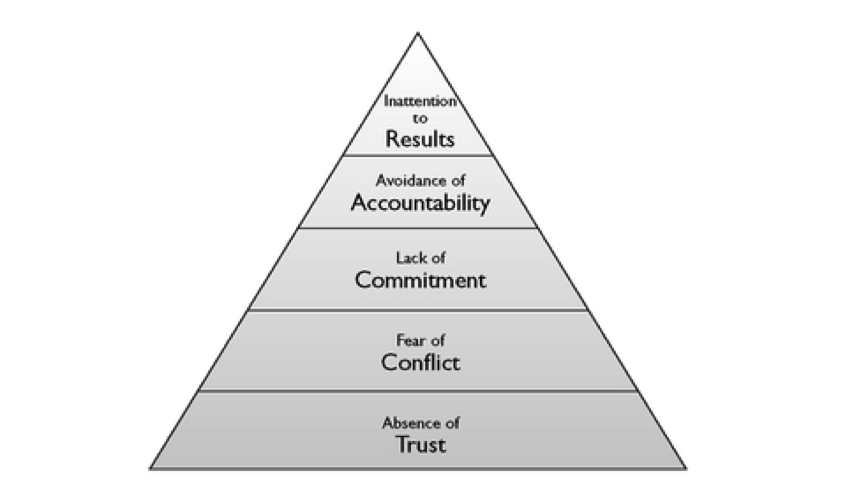
The author explains razor sharp that trust is the essential foundation of highly effective teams (and organizations). As can be seen from the layered pyramid below, lack of trust in the end leads to inattention to results.

pyramid

I have taken a the following really good summary out of another book “Search Inside Yourself”, that I will refer to later again in this blog post.

The five dysfunctions, in order of causality are:

  • Absence of trust: People do not trust the intentions of their teammates. They feel the need to protect themselves from each other and tread carefully around others on the team. This leads to the next dysfunction.
  • Fear of conflict: Without trust, people are unwilling to involve themselves in productive debates and conflicts, the type of good conflict that focuses entirely on resolving issues without involving character attacks or hidden personal agendas. Without such healthy conflicts, issues stay unresolved or are unsatisfactorily resolved. People feel they have not been properly involved in decisions. This leads to the next dysfunction.
  • Lack of commitment: When people feel their input has not been properly considered and that they have not been properly involved in decisions, they have no buy-in. They do not commit to the final decisions. Ambiguity about priorities and directions festers, and uncertainties linger. This leads to the next dysfunction.
  • Avoidance of accountability: When people have no buy in about decisions, they avoid accepting accountability. Worse still, they do not hold their teammates accountable to high standards. Resentment festers, and mediocrity spreads. This leads to the final dysfunction.
  • Inattention to results: The ultimate dysfunction of a team. People care about something other than the collective goals of the team. Goals are not met, results are not achieved, and you lose your best people to your competitors.

It all begins with trust. The absence of trust is the root cause of all other dysfunctions. Specifically, the type of trust Lencioni talks about is what he calls “vulnerability-based trust.” That is when team members trust the intentions of each other enough that they are willing to expose their own vulnerabilities because they are confident their exposed vulnerabilities will not be used against them. Hence, they are willing to admit issues and deficiencies and ask for help. In other words, they are able to concentrate their energies on achieving the team’s common goals, rather than wasting time trying to defend their egos and look good to their teammates.

Do you trust your team members enough that to expose your own vulnerabilities because you are confident that your exposed vulnerabilities will not be used against you? That you will not be presented sooner or later with the emotional bill? Or is the trust and alignment in your team of a very superficial and low-quality nature?

I fully buy the trust argument in the book. What the book unfortunately does NOT explain is how you get to this level of trust.

My premise is that it starts by looking at people as people, not as objects. By developing a very high standard of empathy for the others. Looking at the other person not as the team member of this or that department (that would be looking at the person as an object, and attaching value to that object based on its hierarchical of functional power or non-power). This is of course very much related to the topic of “LeadINGship” and “Leading from the Edge” that I have shared already at many occasions on my blog.

“Looking at people as people” means looking at people in their wholeness, their full being, with all the aspects that that person brings, like cultural baggage, family situations, vulnerabilities, issues, motivations, concerns, etc

When I look at people as an object, I am “living IN the box”. When I look at people as people, I am “Living OUT of the box”. This living in/out of the box is very well described in “Leadership and Self-Deception” by The Arbinger Institute (Amazon Affiliate Link).

self-deception

“We have to develop a culture where people are simply invited to see others as people. And being seen and treated straightforwardly, people respond accordingly”

But the book goes much further than that, and brings the subjects of self-deception and self-betrayal in full frontal view, and that can be quite confrontational.

Self-Deception and its consequence Self-Betrayal happen when you see a person in need, you feel you should act, but you don’t. What happens then are a couple of behaviors that I recognize with others and myself; I get into a defense mode:

  • I start blaming (maybe not vocally, but for sure internally) the other, the system, the management, and/or the company for all the things that don’t work. Yes, of course the problem of all evil is out there, not with me.
  • I start minimizing or ignoring my own faults, failures, and weaknesses
  • I start inflating the faults of the other persons or teams or departments.
  • I start inflating my virtues: it is because the others don’t have the same virtues as myself that of course things don’t work as they should.

“I just mean that in acting contrary to my sense of what was appropriate, I betrayed my own sense of how I should be toward another person. So we call such an act ‘self-betrayal.” And “I focused on and inflated her faults when I needed to feel justified for mine.”

This is about anger and frustration but at the same time feeling deep inside that “I was aware of the hypocrisy in my anger”.

What is even worse, this sort of in-the-box behavior for sure does NOT solicit the desired counter-behavior in others: it’s a disease that is infectious and viral in nature.

“In the box we provoke others to get in the box — both with us and against us. Our allies and we withhold information, for example, which gives others reason to do the same. We try to control others, which provokes the very resistance that we feel the need to control all the more. We withhold resources from others, who then feel the need to protect resources from us. We blame others for dragging their feet and in so doing give them reason to feel justified in dragging their feet all the more. And so on. Collusion spreads far and wide, and the result is that coworkers position themselves against coworkers, workgroups against workgroups, and departments against departments. People who came together to help an organization succeed actually end up delighting in each other’s failures and resenting each other’s successes.”

“But gradually I came to see the lie in my defensiveness. I saw in myself a leader who was so sure of the brilliance of his own ideas that he couldn’t allow brilliance in anyone else’s; a leader who felt he was so ‘enlightened’ that he needed to see workers negatively in order to prove his enlightenment; a leader so driven to be the best that he made sure no one else could be as good as he was. I was carrying the disease I blamed everyone else for. I infected them and then blamed them for the infection. Our organizational chart was a chart of colluding boxes. We were a mess.”

So key messages here are:

  • Stay away from self-defensiveness
  • See people as people not objects
  • Develop a superior awareness whether you are in/out the box of self-betrayal

And then I got hit by “Search Inside Yourself” by Chade-Meng Tan (Amazon Affiliates Link), also known as “Jolly Good Fellow” from Google.

SIY

Meng also refers to “The Five Dysfunctions of a Team” (see summary above) and it was at that moment that the pieces of the puzzle starting falling together and make sense. The “Search Inside Yourself” book is in essence about self-awareness.

Self-awareness depends on being able to see ourselves objectively, and that requires the ability to examine our thoughts and emotions from a third-person perspective, not getting swept up in the emotion, not identifying with it, but just seeing it clearly and objectively…. We are not our emotions. Emotions become what we experience in the body, so we go from “I am angry” to “I experience anger in my body”

And also:

“We have the tendency to feel bad about feeling bad. I call it “meta-distress,” distress about experiencing distress. Also recognize that feeling bad about feeling bad is an act of ego” and “Success and failure are emotional experiences. These emotions can give rise to grasping and aversion, which can hold us back and hamper our ability to achieve our goals.

But there is hope, says Meng: we can become emotionally resilient to grasping onto success and aversion from failure.

The sentence that really blow me way and could become the cornerstone of our new renaissance, our new way of responding to whatever we encounter in life was:

“Imagine the kindest, most positive response” to whatever comes your way.

Wow! Read that again:

“Imagine the kindest, most positive response”

What would happen in our organizations if:

  • Stay away from self-defensiveness;
  • We would always look at the other person as a person and not an object;
  • Develop a superior awareness whether you are in/out the box of self-betrayal
  • And in all occasions, try to “Imagine the kindest, most positive response”

Kindness is the engine of empathy; it motivates you to care, and it makes you more receptive to others, and them to you”

The first time that the word/feeling/attitude “kindness” entered like a bomb in myself was when listening to Jeff Bezos during the graduation speech Princeton, where he says, “it is harder to be kind than clever”. I have posted the link to this speech before, but here it is once more, as so good. Full transcript here

The second time the word/feeling/attitude “kindness” resonated deeply in myself was when reading that book “Search Inside Yourself” (see above).

The third time was later in the same book, where Meng extends the self-awareness to organizational and political awareness.

“Political awareness is a more difficult skill: the ability to read an organization’s emotional currents and power relationships. Political awareness is the generalization of empathy from an interpersonal level to an organizational level…  The ability to empathize on an organizational level, not just an interpersonal one… Distinguish between your own self-interest, the interest of your team, and the organization’s interest—everyone has all three of these interests. It is very important to understand which is which.

SIY Institute

This is such a powerful message, that Meng and his friends made an “Institute” out of the book. Since March 1, 2013 all the curricula are available for free on the website of the SIY Institute:

“Any company that truly values the employee as their most valuable asset should do Search Inside Yourself”

“It’s a great way to develop and grow teams that can work together”

Kindness is associated with friendliness, gentleness, courtesy, kindliness, affability, goodness, tenderness, kindliness, benignity, sweetness. Meng focusses a lot on “goodness”. This empathic/kind self is probably the golden key to unlock and defuse the re-organization pains in our companies and institutions. One of the big shifts we have to make is the transformation from “I” to “We.”

That need for “I” to “We” transformation became also so evident in the talk of The Coca-Cola Man this week in Copenhagen, where Vince Vorne highlighted the need for “respect” for all your partners and stakeholders in and outside your organization and the need to make others win based on their merits and metrics.

It is too easy to fall back in blaming. Yes, we have to keep challenging the status-quo (or in some cased the regression), but we need also to do so in respect for our colleagues, partners, hierarchies, and bosses. Yes, we also have to have to look at them as persons not objects. And yes, we also can even drop our pride and hubris, and “kindly” forgive them for their perceived or real errors, even when it seemed like they were in self-service mode, taking the easiest and safest way out and leaving their teams in the cold. When we look at them as whole persons, they also bring context, pressures, and constraints that we may completely be unaware of.

Just a couple of weeks ago, Dan Rockwell @leadershipfreak wrote a fascinating post “13 Powertips for Leading through Uncertainty”; with a tip to ensure your boss support:

“Pull with – not against, higher ups. Grab the rope and pull, even if you disagree. Everyone who pulls in his or her own direction dilutes potential success. If you can’t pull with, jump ship, now.”

A bit along the same theme, there also was Regis Hadiaris @regishadiaris who posted this week “Martin Scorsese: Leadership lessons for Project Managers”.

marty-scorsese

A very good read from which I retain the following quote:

“You have to first ensure you understand your bosses.  After that, use their view as a “lens” with which to see your project and yourself.  By doing this, you’ll be able to ensure the project executes on their vision as well as yours.”

I deeply hope that applying these principles will make me/us more humble and soft (soft in the sense of soft looking eyes of kindness). If we all could at least give it a try, maybe we all get less cynical and frustrated, judgmental and control addicts; and we can recalibrate towards a renaissance of open mind, open heart and open will; more human and cultural and erudite.

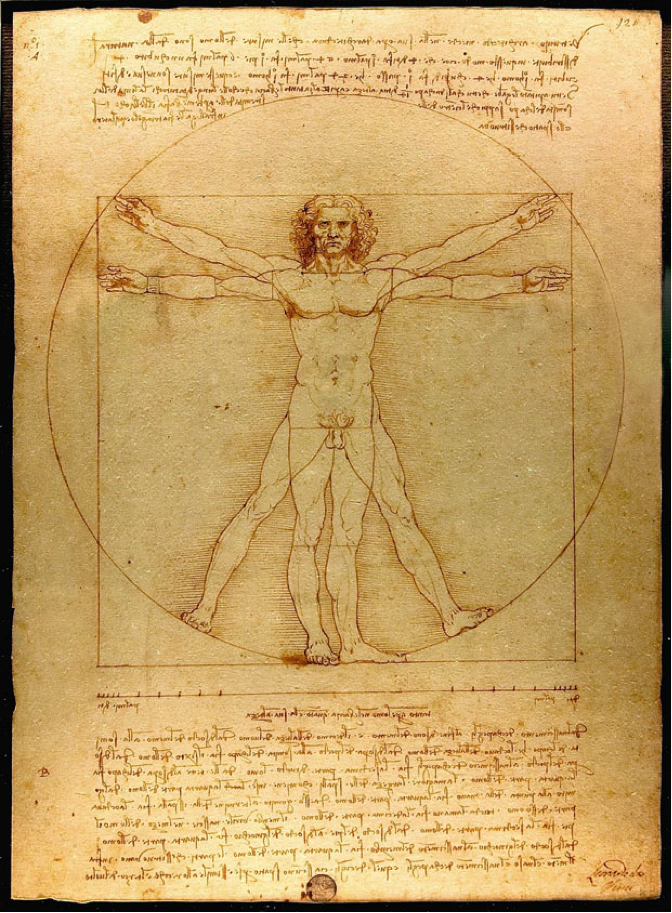
davinci

I have made (and probably still will make) so many errors in my life against the principles of seeing people as people, helping when I see somebody in need, imagining the kindest, most positive response to whatever comes my way, and being respectful and getting buy-in from my leadership/leadingship.

But this time, I may have found a framework and context for greater awareness and the insight that I always have an option: the option to change and to turn the switch towards more kindness and forgiveness.

Maybe this way we can make the transition from “I” to “We” and positively impact the trust between ourselves, our teams, our departments, our companies, our society, our world.

In essence using Meng’s kindness  as the input to the trust layer of Lencioni.

The Coca-Cola Man

At the Front-End of Innovation conference in Copenhagen this week, there was a fascinating presentation on “Why Companies Can’t Afford Not to be Design-Centric: The Future of Strategic Brand Identity” by Vince Voron @vincevoron from Coca-Cola, North Americas.

vincevoron

Vince has an interesting background: he is former senior designer of Apple where he worked for 16 years, before joining Coca-Cola six years ago.

Vince in essence deconstructed the Apple methodology, so he could teach it and apply it in other companies.

He looked back at the 1998 – 2004 history of innovation at apple, where designers were key to drive innovation for their business and their cultural relevancy. I like that:

for their cultural “relevancy”

In the early days, R&D money was going first into software, hardware engineering and product design; in that order. So the first big insight was where does the money go, and how can you switch the priorities.

Good Design was NOT good brand identity: all products in 1997-1998 looked/felt differently, even though all products were designed by one design company (IDEO). Personal design preferences were not controlled.

Then there was a phase of designing with constraints. Apple identified a geometric shape to be core to visual identity, the lozenge (on oval shape) as a unifying element of design. It was a way for objective, non-confrontational conversations on design.

Apple started designing for all consumer touch-points. Hardware buttons that were touched most were designed like “Jewels” and there was a move towards empowering passion inspired innovation; from functional to emotional experiences.

Apple also was (still is ?) a better integrator than innovator; for example integrating packaging and product design.

The biggest lesson learned however was that packaging was valued and incentivized on productivity and cost containment. And the way to make package creators think like designers was to give credit to those people and let them shine based on their metrics.

Over to Coca-Cola. When arriving at Coca-Cola, the biggest challenge was to develop a culture based on design driven innovation. When Vince started the biggest R&D investments went into liquids/beverages, packaging and equipment; in hat order.

In 2006, Coca-Cola made a huge investment in equipment, integrating people, assets and partners. To sell the idea to finance people to like their models, it was really about using the same language as the CFO.

Vince did an awesome job in decomposing the language used, whether you talk about your innovations to Finance, Marketing or Manufacturing, realizing that this way each of them could be a designer. “Everyone is a designer” and professional designers are best suited to drive innovation to shape ideas and provide tools for x-functional team to achieve success. Designers had to come out of their design studios and into the organization. Designers also need to be trained to understand business jargon like ROI, finance terms, marketers, etc

A great example was to reposition vending machines to marketers as “Consumer Touch points” and “Media Assets”, and to measure success based on the number of “impressions”.


coca-cola-coca-cola-freestyle-2000-70751

Same for manufacturing. Before: it was about design what we could manufacture (vending machines). Now it was about manufacture what we design.

All this lead to the second big insight to “respect your partners in different business units” and make them win on their terms and based on the metrics that they are incentivized on.

The third big insight was about the importance of language and narratives. Vince described this as “Design by Common Nomenclatures for “Inclusivity. Instead of talking about industrial designers, graphical designers, digital designers, it was now about “Media Designers”, “Iconic Assets” Engaging with the equipment (vending machine) and “emotional engagement with the equipment (in this case vending machines).

Not just thinking about the transactional experience of buying a bottle of Coke, but looking what a young person’s first experience was when that person for the very first time in her life decided herself on what machine to put your 1 $. This was about brand love at first retail experience.

Even for vending machines there is a way about thinking in terms of a “3D Visual Identity System”: similar geometric shape, respect the past, sculpted flows, and using on purpose asymmetric design as it was prove to be more attractive. And yes, even in vending machines you can conceive “jewels” for the touch-points, thinking in great detail for example about the shape and look and feel of the refrigerator plate, making sure it is well lit where you serve the ice.

Coca-Cola is now also experimenting with digital consistent user experience. “We are so naïve, we have so much to learn”, said Vince and showed crowdsourcing experiments for creating environments for co-creation: checkout www.unlock.coke.com. They went also so far in integrating new tech on old machines; replacing all refrigerator doors with a new door with Samsung screens (yes, Samsung, not Apple). Results are staggering: +38% brand love, +78% volume lift, +83% media savings.

Integration is also at the level of “Integrated Partnerships”. Coca-Cola partners with all their suppliers on THEIR innovation initiatives. They now operate as a multi-dimensional agency; brokering and bringing together BMW and Coke for example, and make them play in the same Sandbox

Vince was rightfully proud to close his presentation with the reward by Forbes of the iPhone and Coca-Cola listed as the coolest products of the decade. Vince is now in the list of great design thinkers. Checkout this video http://designthinkingmovie.com

The Q&A was fairly interesting as well, and about a theme that I have heard a lot about during this conference. Vince does not really like the term “design thinking”. It was just a term invented by an IDEO guy who wrote about it. In essence the big achievement of design thinking is that it brought together Engineering academics and Business academics to have a conversation and get their act together around “customer driven integrated design”.

I would have loved seeing Vince coming on/off stage with tanned torso, carrying a crate of Coca-Cola on his shoulder, as from a design point of you, he is probably the real Coca-Cola Man 😉

Post originally appeared first on Front-End of Innovation blog

Leading from the Edge

My post “The End of Leadership” was one of the most read posts on my blog ever. But i owe the spark and the essence for this post to Rune Kvist Olsen, who keeps fine-tuning the concept by sending regular comments to that post. Here is one of these comments

As individual human beings we must learn to practise our free will in taking and making personal choices, and practise responsibility towards our self and each other as trustworthy, dignified, reliable and accountable humans.

tumblr_md1jsakdvx1rrsl5ho1_250

The post also triggers comments in Google+ communities like this one by Leland LeCuyer:

Leader-ship puts the emphasis on the person, in particular upon the role that person is playing. Thus the title and the office give an individual certain powers, prerogatives, and duties. Certain other individuals are subordinate to the leader and are expected to execute what the leader commands.

Leading-ship emphasizes the action that is taken. It requires initiative mixed with talent, skill, and commitment. Instead of issuing orders to be carried out, it draws upon the ability of the person who is leading to inspire, teach, and motivate others to join her or him in acting. Most important of all, it doesn’t require an office or a title, just talent, skill and a commitment to act.

The differences are night and day. Carpe diem!

For others to join her or him in acting. That ties in wonderful with my updated “about” where i suggest:

“I love connecting with the experts,

the musicians, and artists of all kinds,

to bring out the very best in them,

to love to work & live with them

to show personal intent and integrity,

so that others want to join our projects too.”

But nothing better than the master himself 😉 Just a couple of days ago, Rune sent me his February update, and asked me to share it with my community and followers. It’s wonderful and deeply enlightening. Highlights are by your humble servant. Enjoy!

+++ Start Rune’s February 2012 update +++
1. Understanding the conceptualization of “Leadingship”

The ultimate core in the vision of “Leadingship” is the principle of self-determination at work. Subsequent that the individual human being is self-deciding within a defined area and field of work based on her or his individual competence. This principle should be the natural and self-evident choice in designing organizations regarding managing and leading working processes. “Leadingship” is a substantial humanistic principle by design and is stating the value of “Leadingship for Everyone”.

The contracting principle to “Leadingship” is that someone is leading and deciding over others and someone is led and decided over by others. The superior authority in subjugating people to subordination is designed by position and rank (contrary to competence). The design principle of “Leadership” authorizing the superior person in charge, is depriving the persons below their innate sense of being personal responsible of one owns contribution and performance of work. The relationship between superior people and subordinate people is legitimating the design of someone above who is worthy trust and responsibility and others below that is unworthy the dignity as equals and peers in the workplace. “Leadership” is definitive an anti-humanistic principle by design and is stating the value of “Leadership for Someone”.

In sum the natural design principle at work is to grant competent people their human right of self-decision. Depriving people their right of self-determination, is to devaluate their competence as authorities within their personal field of expertise. And that choice is both unnatural and anti-human.

2. Understanding the incomprehensibility and unintelligibility of the unknown matter of reality, through our adapted perceptions of beliefs and values.

To become able of understanding and learning anything that comes to us as a matter of something unknown, strange, different and perhaps controversial in challenging our ingrained beliefs and truths, we are dependent of an ability and a will force to think the unthinkable in understanding the unbelievable substance of the unknown matter at hand.

Unless our capacity of transgression beyond our force and power of mind exist, we will surely be stuck with our old beliefs and truths surrounded by ignorance, prejudice and convictions – as protective shields against challenges perceived as threats to our known measures of reality.

The journey of mind from Leadership to Leadingship, is an example of such a provocative, controversial and challenging test for our ability and will to move beyond the unthinkable of the common reality of theory and practice in organizations to day.

3. The pedagogical core of Leadingship

  • As individual human beings we must learn to become independent responsible human entities interacting with each other on mutual and equal ground.
  • As individual human beings we must learn to practice our free will in taking and making personal choices, and practice responsibility towards our self and each other as trustworthy, dignified, reliable and accountable humans.
  • As individual human beings we must learn to convert our learning’s to personal competence by practicing our independence and responsibility through the adaption and application of our learning’s in real life.
  • Being independent and responsible human beings at work. When we have become truly independent and responsible individual human beings at work by taking care of our self and each other, we have gained the personal ability to practice Leadingship in the process of leading our self together with others based on our competence and enabled by mutual trust and personal freedom.

4. Fear based relationship powered by Leadership versus trust based relationship powered by Leadingship

A relationship based on fear (of rejection, exclusion, punishment etc.) and managed by control, command and domination over other people in the organization, is an expression of a deep and intrinsic personal need, urge and desire of being in charge as a superior person ranked above others as subordinates ranked below. By being in charge the person has gained the superiority and the enforcing power over others. The nature of Leadership is to lead others by deciding over them and by subjugating others to be led through obedience and loyalty. The notion of being subjected to others mercy, is in it self a source of the threatening emergency of fear.

A relationship based on trust (of appreciation, recognition, acknowledgement etc) and managed by personal freedom, mutual respect and social responsibility, is an innate expression of a devoted and compassionate engagement between people who are regarding themselves as equal, peers and partners in either working alone or together. The social mutuality is practiced through the respect and appreciation of each person as a worthy, competent and valuable contributor in the integration and coordination of work. The nature of Leadingship is to lead one self together with others in taking personal responsibility for decisions within one owns field of work based on the shared trust in performing independence and responsible actions.

+++ End Rune’s February 2012 update +++

It should make us think deeply what we do with our organizations and the people working in it, for it, or even better from it. The “organization” is not anymore a objective in itself, but rather a tool, a platform for moving the needle of progress in the world. As mentioned before in this blog, I strongly believe that “Organizations are becoming Movements for Greatness”.

The old model has failed and is obsolete.

But we keep on training our young potentials based on the old-style model. Like the overall financial system has failed and is obsolete by only taking value out of the system but never giving back. The old model showcases perseverance in repeating the same greed errors over and over again. The old model fails to see the deeper ecological values beyond transactional relations based on raw power and money. The old model has failed because the power of leaders is based on hierarchical position, title and entitlement.

bucky

The old model has failed, and a new generation of leaders is standing up, protesting against the end-less and clueless forms of (re)organizations where people are still considered by “leaders” as pieces on a chessboard that can be moved as resources that are owned in a slavery type of relation, a power by leaders exercised on “subordinates”. These organizations are becoming toxic environments, where people are getting mentally and even physically sick, because they are deprived of genuine sharing and leadingship oxygen.

1671908-slide-airwaves

These new empowered employees are making a big plea for a more humanized workplace and call for actionable movements for greatness and inspiration. For a place where they are no longer seen as cogs in a machine, doing mindless repetitive work, soon to be taken over by machines

Ross Dawson and John Hagel recently elaborated in “Our future depends on the humanization of work“:

However perhaps the most important perspective is that work must be humanized.

As Hagel eloquently described, the problems we face have largely arisen because of the dehumanization of work. As we have built processes and structures that have made people into cogs in machines, it has indeed made them eminently replaceable.

In fact one of the great promises of the increased mechanization of work is that in a way it it forces us to be more human.

We are continually being pushed into the territory that distinguishes us from machines: emotion, relationships, synthesis, abstraction, beauty, art, meaning, and more.

Part of this is in designing jobs that draw on our uniquely human skills, and for all of us to bring our humanity to bear in our work.

Yet the broader frame is an economic structure that has made work inhuman and readily replaced by machines. We need to fundamentally change the nature of organizations and how we work together to create value. The systems must be humanized in order to allow the work to be humanized.

That is our challenge, our task, indeed our imperative if we wish our collective future to be happy and prosperous. Let us work hard to humanize work.

There is a huge role for independent and inter-dependent leadingship grounded employees to virally change the system from deep within, sticking out their neck for this good cause and leading from the edge.

living on the edge

I look forward hearing your comments. Have an inspiring day!

The Bridge

My colleague Ian from South Africa recently wrote me a private mail in reaction to my “Help, I failed” blog post. Below some edited extracts (Ian was happy to let me share from his mail on my blog), as I wanted to share the full picture where Ian is coming from when suggesting the concept of “The Bridge”.

the bridge

Ian writes:

“Your post got me thinking of Kosta’s famous analogy of the Castle and the Sandbox and I wonder if we are missing a “bridge of common understanding and respect” between our Castle and the Sandbox. You are probably thinking by now what is Ian talking about and has he had too many good bottles of South African Red Wine 🙂 Well let me try explaining it in a slightly different way. I have two young kids, aged 7 & 4. We live in in a nicely sized home but it is very clear that we have very different needs in the form of what TV programs I like to watch versus what they like to watch. I like quiet space to read my books and recharge my batteries, where they like a noisy space to play their Wii and play with their friends. So we have created our own Castle and Sandbox so as to speak. The place in the house, called a playroom, for the kids to do what they need to do and a quiet study type den for me to do what I need to do. There is something additional we have in our home, which I believe is missing within the Castle and Sandbox scenario. We have a place where mutual respect prevails. It is called the dinner table. I guess you could also refer to it as a bridge between our diversified needs. We make a conscious effort to sit together during the week where we enjoy dinner together. The rules are simple. No distractions from ‘daily lives’, such as the TV on during dinner or iPods or iPhones at the table. Everyone has a chance to share something uninterrupted, they learnt or enjoyed during the day. Everyone feels included, safe to speak their mind and most importantly respected. So what I am saying is perhaps what we need is to create a ‘bridge’ between our Castle and Sandbox. I am not talking about a gating-process. We need to create a ‘bridge’ where colleagues from the Castle and the Sandbox can come together and feel mutually respected for their views and feel safe and comfortable to engage with one another. No one should feel threatened for questioning the status quo and everyone should feel proud to be a part of our great and diversified organization that makes our company what it is and what it will be irrespective of whether you are in the Castle or Sandbox. I don’t know concretely what this ‘Bridge’ looks like but it should be place for celebrating successes and failures. What do I mean by celebrating failures? We should celebrate that we were bold enough to take the risk and try something that was rebellious and unique and share confidently what we learnt along the way and to proudly say we will continue to walk the edges of corporate accepted behaviours and continue to Innovate.”

Two weeks later, Ian also had a chat with Kosta on this idea of “The Bridge” during our annual sales convention. And another two weeks later I bumped into Haydn Shaughnessy, who gave a whole new dimension to this meme.

Ian’s idea got me thinking. I was already somewhat unsatisfied by existing innovation models. Innovation has become an empty buzzword. Every company is doing open innovation in one size of form. Everybody is doing start-up competitions, VC-funds, prototypes, boot camps, sandboxes, etc. And Kosta has explained at numerous occasions what the Innotribe sandbox is all about. He even wrote a whole book about it (Amazon Associates Link)!

castle and sandbox

The advantage of the “castle and the sandbox” is that is a simple metaphor.

“The sandbox is an “incubator” – a protected place where people with ideas can “play”, or to try out their ideas, without impacting the castle. The “castle” is the metaphor for the mothership, the core of the company. The incubator is the place where you can try, experiment, fail, try again, fail again, and eventually learn and succeed.”

In our incubator sandbox approach, project teams are even located in a separate building. It was an empty platform in one of the side-wings of the campus, and as innovation team we jokingly said that we were going to highjack that space. Which in the end we more or less did 😉 With minimal budget, some paint and beanbags from IKEA, we transformed the office space in a loft-alike start-up garage, where end-to-end project teams were co-located.

With hindsight, the separate building approach may need some fine-tuning. Maybe it needs “The Bridge” that Ian was talking about. Working separately without much transparency creates tensions, suspicion and jealousy. It would probably be better to physically create the sandbox “within” the castle, like a sort of patio, so that people can look over the shoulder, feel confident that real and cool works is being done there, tempting their curiosity so they are looking to join our projects too. Then there may even not be the need for a bridge.

Another disadvantage of the castle-sandbox metaphor is that it polarizes; it creates the perception that the castle is the serious thing, and the sandbox the playground. Innovation projects are just perceived/positioned to the inside/outside world as “Oh, thàt project? Don’t worry, it’s just some experiment/research by the innovation team”.

And before you know it, the problem is becoming one of credibility. The problem is one of execution and scale.

The challenge is NOT to have ideas, or to prototype those ideas, or to incubate those ideas. The real nut to crack is: how do I get projects out of the Sandbox, back into mainstream, back into the castle? As I have already shared many times on my personal blog, this question is for me becoming an existential question. What am I really doing here, if all these great ideas are only play-worthy, but are never allowed to hit the mainstream, the mainstreet?

This is getting into purpose. Personal purpose, team purpose, and company purpose. Purpose and meaning.

“The Bridge” could be one way to tear down the virtual or perceived walls between the castle and the sandbox, and to re-create that meaning.

serendipity machine

“The Bridge” makes me also think of “The Serendipity Machine – a disruptive business model for Society 3.0”. It is the “3rd Space”, where two worlds meet, not only in mutual respect, but also in a gift-economy lifestyle, where our expertise and knowledge becomes an asset to share between equals.

3rd space

But “The Bridge” is in my opinion just the start of a much broader discussion on how we can re-invent innovation.

Haydn Shaughnessy – Forbes/HBR blogger on RE:THINKING INNOVATION, and author of “The Elastic Enterprise – the New Manifesto for Business Revolution” (Amazon Associates Link) for which I wrote a foreword a year ago – has some ideas about this.

Elastic Enterprise

Haydn happened to be in Brussels and invited me for a coffee, as we never met in person before/after the foreword. I shared this idea of The Bridge, and my search and ambition to re-invent innovation. It happened that Haydn was doing a research on a similar topic in preparation of a new book.

The conversation got my head buzzing, and I felt I was onto something: a menu, a mind map, and/or the ingredients of a re-invention of innovation.

  • Lab explosion: the one castle and one sandbox will be replaced by many mini “labs”, at times subversive and in guerilla mode, deeply embedded in the fabric of our organizations, creating a viral effect of systematic and systemic change.
  • The Bridge, or Bridges, or many 3rd Places where we can blend (see above) and respect each other.
  • Integral Innovation: our organizations will require a much bigger focus on external symbiosis and innovation, where we not only suck value out of the system for our own benefit, but we give back to society as equal contributors/fellows, way beyond many master-slave relationships. Focusing only/primarily on the inside or the core will not do it anymore.
  • Functional Integration: In the same realm, check out this article related to the announcement of FastCompany’s 2103 world most innovative companies. The article is titled Death to Core Competency: Lessons from Nike, Apple and Netflix”“In a world of rapid disruption, the idea of having a core competency–an intrinsic set of skills required to thrive in certain markets–is an outmoded principle”. It is very much related to the end of horizontal or vertical integration, and the advent of “functional integration” as wonderfully explained by R/GA CEO and founder, Bob Greenberg, and Barry Wacksman, EVP, Chief Growth Officer, discussing how to grow and thrive amid the chaos and the future of the industry and beyond, and explaining how they re-invent themselves every 9 years (click part-3 under the video stream to get right to the hart of the matter)
  • People Innovation: we need a different type of person, more vulnerable and more human. With other strengths and skills. People with a creative life&work style: people who can experience and digest self-validation, risk and peer rejection, risk and peer validation, failure and triumph.
  • Peer-to-Peer Innovation. P2P is changing everything. Not only technology-wise but also in the way people interact with each other without intermediaries or hierarchies. It even puts in question the need for any form of central organization to filter and dispatch ideas.
  • Uber-Innovation: what if we would apply the Uber-taxi concept to innovation itself? And arm the participants in the innovation demand-and-supply chain with mobile devices, so that ideas can flow freely from the idea-generator straight into the last mile of the one who materializes the idea in a desirable product or service? Is this sort of “Uber-Innovation” just a wet dream, or is it exactly what P&G is doing with P&G-Connect+Develop ™, a first incarnation of this dream becoming reality?

“The Bridge” has also a special meaning in music. There is a whole Wikipedia page about it. I like the description for a “bridge” in a fugue:

“… a short passage at the end of the first entrance of the answer and the beginning of the second entrance of the subject. Its purpose is to modulate back to the tonic key (subject) from the answer (which is in the dominant key). “

But I am not such a classic guy 😉 I lived my youth in the 60ies, and 70ies and 80ies. I could refer to Simon and Garfunkel’s “Bridge over troubled water”, but I don’t want to go there ;-), especially with the people I invite to dance at the end of this post.

Then I prefer from far “Taking them to the Bridge” and shake the tree and the body with the famous James Brown song “Sexmachine”, here in a 1971 version with Fred Wesley.

James Brown and Fred Wesley are “taking you to the bridge” somewhere around minute 1:15. So while you are having fun and shaking your body, try also to think about the bridge and other ingredients for re-inventing innovation.

I also now just realize I made full circle to my blog post “My Boss asked me to dance!”, sharing that way my 2012 company objectives.

But this time, it’s me who is inviting Kosta and Haydn to join me in this dance, and have a collaborative, shared, and joined post on re-inventing innovation.

Let us take you to the bridge!

Help, I failed !

We have all been reading the books and hearing the innovation experts and gurus speak and preach about the need for experimentation and failing wisely in innovation environments. All that is good in theory. What about the real life? What happens in your organization when you fail? How does your leadership assist you in this transition? What happens in the team dynamics? What happens with you?

FALLING_0014

I failed big time recently. And it traumatizes and immobilizes me. It gets me on a rollercoaster of emotions. It’s difficult to deal with the abrupt changes between being celebrated the one day, and being the pariah the other day. Or should I find solace in the fact that at least, I still have highs (and lows) in corporate life?  Some friends and colleagues don’t even have that luxury: they are being beaten up all the time.

It’s not the first time this happens to me: failing big time. Being awarded and congratulated for stellar performance in one fiscal year and then being dropped a couple of days later due to changed priorities in the new fiscal year. So where is the pattern? What can I learn from it? How don’t I get “trapped” in the same mechanism of self-defense over and over again?

When the failing hits, I indeed tend to “protect” my vulnerability and myself by avoiding contact, by being silent, not expressing myself, while at the same time feeling deep anger inside. I am turning in circles, can’t concentrate nor focus, and become cynical. It damages my performance. How can I voice my soul, my emotional state and psychology of failing, the human emotions, and the intimate collateral damage that go with all this? How can I resurrect from failure?

It happens that Adam Dachis (@adachis) just wrote a post about this, titled “The Psychology Behind the Importance of Failure”, and quotes Heidi Grant Halvorson (@hghalvorson), shared with me by Jennifer Sertl (@jennifersertl).

The problem with the Be-Good mindset is that it tends to cause problems when we are faced with something unfamiliar or difficult. We start worrying about making mistakes, because mistakes mean that we lack ability, and this creates a lot of anxiety and frustration. Anxiety and frustration, in turn, undermine performance by compromising our working memory, disrupting the many cognitive processes we rely on for creative and analytical thinking. Also, when we focus too much on doing things perfectly (i.e., being good), we don’t engage in the kind of exploratory thinking and behavior that creates new knowledge and innovation.

So here you are: you have read all the books, seen all the greatest speakers, got the best personal coaches, followed all the personal development journeys you can imagine, you even preached yourself to others the benefits and adrenaline effects of going for your true self. And then you get hit. And you don’t know what to do, how to react, how to stand-up, how to reboot, how to get alive again.

Here are a couple of questions for all you innovators out there. Some areas where I would like to know how YOU coped with that situation, and what we all can learn from it.

  • You have a project of a lifetime. You stick out your neck big time and after lots of blood, sweat and tears, corporate priorities change, and your project is stopped from one day to another. How do you cope with that? Do you have examples of how you turned that sort of failure into a success? A crisis into an opportunity? I don’t know yet a good way how to do this, other than sweating out your time and hoping for the better.
  • Igniting change and innovating also means being a corporate rebel. You walk the edges of corporate accepted behaviors  in 95% of the cases, you succeed keeping that balance. But sometimes you go over the edge. How does that behaviour impact the perception others have of you? Does it impact your performance reviews? How can you avoid paying the price?
  • In innovation, the pedestal of success and the bin of the pariah are oh-so-close. On the pedestal of success, you are full of energy, even arrogant at times, sometimes preaching. But always with your heart at the right place and a deep intention for doing good for your company and the folks who work for it. Some people call it “irresistible enthusiasm”, and get energized when they hear your voice and they see the sparks in your eyes. Others – the criticasters – believe you are member of the “ego-tribe”. You sense jealousy from those who don’t have your opportunities, who don’t have a flexible boss like yours, who don’t enjoy executive sponsorship, some call it executive “protection”. When you fail, all that positive juice flows away. You’re empty handed. It’s time for revenge, for presenting the emotional invoices. Nobody comes to sit at your table at lunch; nobody wants to be seen with the one who just failed. You have been burned. What’s your experience with that? How do you cope with that?
  • What is your experience and reaction with abrupt changes of priorities, change of guards, change of budgets? What do you do when your marching orders change from one day to another? What if you don’t feel aligned with the new directions suggested or imposed? Especially when you just failed and are super vulnerable? Should you just brace for a while and hope for the turn of tides, of keep acting based on what your intimate true self tells you about what is right or wrong for yourself or for the organization you work for and deeply care about? Who has ever done and experienced something like that? Please share your wounds and healings.
  • Corporate world has the reputation of being a world of extroverts. But at least half of the workforce is introvert. I am and never was superman. I am not the vocal extrovert; I am more the reflecting introvert. Many of us are sensitive human beings. Many men have more feminine energy than women and the other way around. Where do you go when you fail? Where do you find a shoulder to cry on? When and how do you deal with pretending to be untouchable in formal settings and/or as team leader? Should you dare to show your vulnerability with trusted colleagues or friends?  Can we look through the crack in you and wonder at the light inside?
  • Is there überhaupt something like trust in business, or is it indeed like one of my first managers in my career told me “never trust anybody in business”. Have I become old and cynical? Judgmental? Control freak? In other words have I become all the things I never wanted to become and ended up on the flip sides of my ideals “Open Heart, Open Mind, Open Will” inspired by Otto Sharmer’s “Theory U”?

The bottom line question really is: how do I keep being present and aligned with my true self, when the going gets though in periods of failure? And who is holding a space for me when I long for help in healing my injuries?

“Life of a frontrunner is hard one; he/she will suffer & many of these injuries will not be accidental” ~ Pele

I know that many Corporate Rebels struggle with this. We can support each other by sharing what works and what does not work in these circumstances. Because I have the deep belief that resurrecting from failure is one of the core elements of creating a practice for value creation.

Credit: Fallen picture by Kerry Skarbakka http://www.skarbakka.com/

Who Am I, Really?

This post is an extract from my first guest post on WE THE DATA http://wethedata.org/2013/01/08/who-am-i-really/

We The Data

I have always been intrigued by identity. Physical-world-Identity or Digital-Identity. But “digital” is an outdated adjective, used my pre-millennial friend to make the distinction with the world as they used to know it.

Today, it is ONE environment, blurring the contours of who-I-am as a human being in flesh and blood and with my own mind, thoughts, and consciousness. Both my body and my mind are getting increasingly augmented and complemented by tools, by ecology of machines, networks, and algorithms. That ecology of an emergent self-correcting organism was labeled as “The Technium” by mastermind Kevin Kelly.

We probably have to invent a new word for this “one environment of me”: maybe the word “Dysical” – as a contraction of Digital and Physical – could do the job?  But it is more than one word we need. We need a new language, a new vocabulary, a new grammar; new ways to create the sentences and the narrative that can capture this new form of being. And when we have developed basic literacy in this new language, perfect it like art, like literature, like poetry, for deep and rich self-expressions of the “Dysical-me”.

That rich self-expression will needed a new data order, caused by ubiquitous connectivity and an increasingly pervasive computing environment, and generating two massive transformations: the enablement of peer-to-peer relations, and the explosion of data: big data, small data, augmented data, fast data, real-time data, etc.

I believe it is time to start reflecting on a P2P “Data-Economy”. Thanks to the ubiquitous connectivity, nodes in a grid can now interact and share with each other without central body or governance. The emergence of the Bitcoin currency is a typical example how new and probably more robust and resilient currency exchanges are possible without central banks, central governance.

My “Dysical-Self” is also getting more and more defined by my context and reputation in this new P2P data-economy. My identity not any longer simply equals my identity number or my digital certificate or passport. My identity is deeply correlated with my relationships with other people and other nodes in the grid. Trust suddenly gets defined at the level of the relationship, not at the level of identity.

That sort of trust will also be very much related to our reputation. Whether that reputation is as self experienced with our human antennas, deducted by algorithms (Klout, Peerindex, Kred,…) or Socially Vouched (LinkedIn, Connect.me,…)

It will require some form of Cloud Operating System, where our mobile device becomes the remote control of our personal and interoperable Data Clouds.

But one could go on step further, where we think beyond the device. Dhani Sutandto , Senior Digital Art Director and the creator of the Oyster Card Ring recently indeed quoted in PSFK Magazine:

“There will be mobile devices but they will be something that you would wear discreetly, without making you look out of place. Instead of constantly looking down at a screen, people will wear something discreetly. Your interaction with technology won’t
be gone, but it will be seamlessly integrated and we will therefore look up and interact in a human way with one another.”

Indeed, when trillions of devices are inter-connected, we need to think beyond the context of the “device”. Device is no longer the context. We – the “Data-objects” – are the context, are the interface:

“We are the data”

And we – the data – will need a common interface to deal with our Dysical Identity, to deal with Access, Trust and Grid-Literacy.

There is more context on the WE THE DATA web-site http://wethedata.org/2013/01/08/who-am-i-really/ with thanks to Juliette Powell for giving the opportunity to share these ideas on a broader scale.

The End of Leadership

I am coming to a stage in my life where I discover that most if not all of the knowledge, models, methods, and principles I learned at school and the last 30 years of my career are completely outdated and irrelevant for the new reality we live in.

baby

That also applies to the concept of leadership. We’ve all learned about heroic and charismatic leaders.  That leaders are leaders when they have followers and when they can create the conditions to engage her followers in a new direction, a place where no one has ever been before, to make 1,000 flowers blossom, etc, etc

With some notable dropout exceptions (Jobs, Gates, Bezos, etc), “leaders” all have the “right” attitude and have MBAs or other impressive certificates. They have the right profile. They went to right schools and the top universities like Harvard, Stanford, INSEAD, etc. Career progress and evolution is systematically reserved to this elite. Even upon today, I see companies that reserve certain professional or personal development programs to those who have the right certificates. How sad.

Most of these “leaders” fit a certain “style”, and most have been moulded in the same factories. Well-dressed, always smiling, ready to help, forthcoming, making it in every aspect of the professional and private lives, always reserved, never angry or upset, in control of their emotions, etc. They make impressive careers, mainly by pleasing their hierarchies, by staying in the blueprint and taking no risks.

But over time, I have become suspicious and bitter about these perfectly casted people. In many organisations I have seen how cheer-“leaders” joyfully smile in the face of their subordinates and at the same time put a knife in the back of the same human beings.

Some “leaders” have even “developed” an almost sadistic pleasure in ignoring and destroying well-crafted pieces of work. I would like to illustrate this with a story from during my studies as architect.

We got an assignment to build an exposition hall and the creation of the space had to be based on some repeating element of construction. As part of the coming-out we had to make artistic sketches, draw the precise floor plans and construction details, and work out the whole thing as a model on scale, including the repeating construction element. I think a worked 3 weeks day and night to make the deadline, and I was quite proud of the result. The model was made out of fine balsa wood. During the review session, my “leader” – the professor and coach, I still remember his name – found an immense pleasure in shooting apart with his fingers the fragile construction. I was not amused; in fact I felt deeply hurt and humiliated.

This is of course quite extreme and even psychopathic behaviour  but I am sure each of us can find one or more examples in their career where their project-of-a-lifetime was shot in pieces apart. If it would happen again, I would probably kick and scream, or no, be subtler and present a glass of purifying water, as in this great advertisement from Spa Reine.

Some of the perfectly trained leaders also never take the pain to reach out to those who are more introverts who hunger for depth and they only listen to the extroverts who are most vocal that reach out to them. Decisions about subordinates are made in secrecy.

But the secrecy-trick does no longer work out in this hyper-connected environment, and news that is supposed to be kept confidential in the catacombs of the power hierarchies is dripping through the more and more porous walls of our organisations.

This new self-emerging transparency leads of course to a huge credibility crisis for the leader, as she does not know that you already know, and her “in-control” pose becomes painfully revealing of the true nature of those so called leaders.

Of course, Pepsodent, Spa Reine and the external look-and-feel vestimentary attributes are only metaphors for something deeper going on.

The problem with this sort of leadership is that it is leadership based on what you are (your power position in a hierarchy) versus who you are, your true internal power as a human.

A monkey in a suit remains a monkey in a suit.

We need a more humanistic approach, inspired by meaning and purpose; an “eudaimonic” economy as so well described by Umair Hague in “Is a Well Lived Life Worth Anything?”

That’s an alternate vision, one I call eudaimonic prosperity, and it’s about living meaningfully well. Its purpose is not merely passive, slack-jawed “consuming” but living: doing, achieving, fulfilling, becoming, inspiring, transcending, creating, accomplishing – all the stuff that matters the most. See the difference? Opulence is Donald Trump. Eudaimonia is the Declaration of Independence.

We have too many Donald Trumps in our organisations  We need a culture that is based on deep respect and dignity for the human being. In this context, I recently had a conversation with a very senior businessperson of a multi-billion-technology company, who told me the parable of the Indian King.

The king had hired a consultant to advice him on the performance of the kingdom. The expert told the king to fire ½ of his workforce, as they did not have the same performance and added value to the kingdom as the top performers. The king responded “And what will those people do, once they get fired?”. The consultant answered, “Is that our/your problem? Your kingdom will be more efficient, that’s what you hired me for, no?”. The king did not follow the advice of the consultant, as he deliberately chose for a societal role in giving his citizens an job, a meaning, and a future, even if that meant a little bit of overhead. His choice was driven by people’s dignity.

The leadership that we all learned about starts smelling like a myth: the myth of charismatic leadership. But don’t blame them. That’s how they have been trained and educated. And the “training” or “brainwash” already started at those business schools, provided that you were lucky enough to be born in a family with wealthy parents that could pay the bill, or you were prepared to put yourselves in life-long debts as slaves to the financial institutions of this world.

harvard

The first thing I notice about the Harvard Business School campus is the way people walk. No one ambles, strolls, or lingers. They stride, full of forward momentum. The students are even better turned out than their surroundings, if such a thing is possible.

No one is more than five pounds overweight or has bad skin or wears odd accessories. The women are a cross between Head Cheerleader and Most Likely to Succeed. They wear fitted jeans, filmy blouses, and high-heeled peekaboo-toed shoes that make a pleasing clickety–clack on Spangler’s polished wood floors.

Some parade like fashion models, except that they’re social and beaming instead of aloof and impassive. The men are clean-cut and athletic; they look like people who expect to be in charge, but in a friendly, Eagle Scout sort of way.

I have the feeling that if you asked one of them for driving directions, he’d greet you with a can-do smile and throw himself into the task of helping you to your destination—whether or not he knew the way.

“This school is predicated on extroversion,” and “Your grades and social status depend on it. It’s just the norm here. Everyone around you is speaking up and being social and going out.” “Isn’t there anyone on the quieter side?” I ask. They look at me curiously. “I couldn’t tell you,” says the first student dismissively.

quiet

These are extracts from “Quiet: The Power of Introverts in a World That Can’t Stop Talking” a fantastic book by Susan Chain. The book is an eye-opener in itself about the lost and untapped energy/potential of introverts in organisations.

The essence of the HBS education is that leaders have to act confidently and make decisions in the face of incomplete information. HBS was once called the Spiritual Capital of Extroversion” where Top of Form “Socializing here is an extreme sport” and where verbal fluency and sociability are the two most important predictors of success.” writes Susan Chain, and goes on: “It’s so easy to confuse schmoozing ability with talent. Someone seems like a good presenter, easy to get along with, and those traits are rewarded. Exceptional CEOs are known not for their flash or charisma but for extreme humility coupled with intense professional will: quiet, humble, modest, reserved, shy, gracious, mild-mannered, self-effacing, understated. We don’t need giant personalities to transform companies. We need leaders who build not their own egos but the institutions they run.”

Leadership as we know it does not work anymore. We need something else. We also need a language to articulate what this new “thing” is. Some are starting to look into that.

MIX

The MIX http://www.managementexchange.com/ was co-founded by Gary Hamel and Michael Zannini (ex-McKinsey). They have set up a platform to share best practices on innovation, management and leadership. “It’s time to re-invent management” is their tag line, and Gary Hamel has written several books and rants on the subject. And as part of the M-Prize competition series, they just launched a new challenge on “Innovating Innovation”. I will write more about this and the related M-Prize where both Innotribe and Corporate Rebels United will make a submission before the end of the year.

But if you look carefully, many of the contributors are from mainly male-driven organisations with very extrovert people. They fit the HBS mould. We seem to keep on tapping into the same high-testosterone pool of resources.

That becomes very challenging for those who do not fit that mould: the ones who are introvert, and who are rarely listened too (if they ever get the chance to be heard); the ones who don’t have the right MBA or certificate; the ones who have a more feminine rather than masculine energy (some man have lots of feminine energy, like some women hive high doses of testosterone); the ones of the other gender, race, religion, age, education, etc

nilofer2

Nilofer Merchant, author of  “11 Rules for Creating Value in the #SocialEra” (Amazon Associates link) rightly pointed out to me:

I hope our future economy is also about including the people who are unseen today. Those who are right in front of us, creating value but then ignored when it comes to be included as leaders, or thinkers to shape the future. No one does this out of bad intent, but out of blindness. Few people will realize that while Hagel and Kelly and Gray etc are mentioned, many well-respected best-selling women management thinkers were not. Our thriving systems HAVE to be open enough to include those that are currently blocked out. Blindness shifts when we start to be more conscious. Instead of perpetuating talking about the change, we have to embodying the change. 

Indeed, something deeper is going on….

Flowchain

Bob Marshall (aka @FlowchainSensei) is addressing a somewhat similar dimension of “leadership” in his post “Leadership of Fellowship” and especially the section about dysfunctions of leadership.

The concept of leadership introduces a number of dysfunctions. Rarely are these discussable or discussed in our romanticized conception of the mythological leader:

  • Leadership inevitably produces implicit (or even explicit) Parent-Child relationships. “Just one of many examples of this type of parent/child exchange is the unwritten pact that if employees do whatever their bosses ask of them (regardless of whether it makes good business sense) the boss will take care of their next promotion/career move.”

  • Leadership validates “followership” and thus increased risk of “social loafing“

  • Leadership cultivates “learned helplessness”

  • Leadership can increases alienation, tribalism and the formation of in-groups

  • Leadership often encourages favoritism, patriarchy, deference, sycophancy and obsequiousness, with a consequent reduction in both the quality and quantity of meaningful dialogue.

  • Leadership compounds and perpetuates the Analytic mindset

  • Leadership subtly undermines systems thinking, by breaking the social body into discrete parts (leaders, followers), and focusing attention on those parts rather than on e.g. the relationships between them, and the whole itself.

But the master of language and insight is for sure Rune Kvist Olsen from Norway. Checkout this excellent article “Leading-Ship: reshaping relationships at work”. Rune’s work is inspired by Mary Parker Follett (1868-1933), a visionary in the field of human relations, democratic organization, and management. The tagline of the Mary Parker Follet Network is:

Unity, not uniformity, must be our aim

Rune’s s elaborated thinking blew me away: he is rethinking “leadership” into “leadingship”. It cuts deep in what motivates people. Rune challenges big time all our preconceptions about leaders and followers. I felt deeply inspired by it. So, I got into a conversation with Rune.

During this post-Sibos period of the year, I take off every Friday of the week to create some space for myself to reflect, to catch up on some reading, at times just being there and sitting in silence and trying to make contact with myself again, and then – in that moment of awareness – getting inspired by books and art. One could call it a personal retreat in silence and/or reflection and/or depth.

It was during one of those Fridays that I had scheduled a very long Skype call with Rune so that I could give him my full attention and listen in full presence to the rich language and set of concepts Rune had developed over the years. Since then Rune keeps on sending me wonderful essays and manifestos: describing what is really going on under the hood of human beings in leadership context. It’s very fascinating, and I all encourage you to dive in and discover Rune’s work.

The biggest outcome of Rune’s work is in my opinion that he has developed a language to express this new type of being as a leader in your organisations. It is so new and refreshing, that it needs its own language and vocabulary. Only then you can engage in a conversation trying to understand each other.

A good example of this language is in the following slide (a small extract of a very long presentation)

slide rune

That language is further elaborated in an essay called “Extracts from Humanistic Management Responsibility in the workplace”. It is about Imposed Responsibility (forced upon from outside) versus Chosen Responsibility:

The practice of “taking control” is a significant way in stimulating and inspiring self-esteem and self-confidence in the art of becoming a responsible and independent person.

Receiving and getting control from managers above implies that the person who is giving, still has control and can withdraw it at any suitable time.

Giving or delegating authority creates and sustain a superior/inferior relationship between the people involved.

This practice of giving as a form of domination is easily encumbered with the feeling of humiliation from the receiver’s point of view. The receiver could suffer the humiliation of not having personal control and not being able to take personal responsibility for the specific action at hand.

By granting power to people in gaining personal control and in becoming personally responsible for their actions, we are at the same time granting them real freedom to become true equals and fully human beings.

It is not difficult to understand that being an object of delegation and a recipient of giving (as a token of shared power), a person can naturally feel the humiliating bitterness engendered by being a powerless and subservient receiver and not having the authority in exercising personal freedom.

The result of this type of submissive role-behaviour, would possible entail the undermining of self- esteem, self-worth, and self-respect.

The most obvious flaw in the context of power concentration in the hands of persons in charge of others is the assumption that delegated responsibility is analogous to a commodity that can be shared among individuals or groups.

Giving or delegating responsibility can be conceived as a disguised way of pretending that people below will be empowered by the person above when this person is handling out some responsibility occasionally.

This is a deception in the sense that managers of other people are not actually entitled to give away any power because their power is connected to the managers’

Rune also signed up for Corporate Rebels United. We are btw now a worldwide group of about 200 people now and counting. And several pods being started up worldwide. More about that later.

rebels website

As his contribution to the rebels’ story, Rune produced the following essay “The Story of a Corporate Heresy”.

rune heresy

The full version in PDF is here The Story of a Corporate Heresy, but to whet your appetite here are already some salient extracts:

These types of corporate activist movements emerges as a result of profound crisis in the way corporate communities are organizing, managing and leading their organizations. Corporate Rebel United is pointing out the problem:

“Our companies no longer serve our needs. They cannot keep pace with a high- velocity, hyper-connected world. They no longer can do what we need them to do. Change is required.” Corporate Rebel Manifesto 2012.

Why, what and how can offensive, progressive and constructive actions be a part of the solution and not the problem?

“You never change things

by fighting the existing reality.

To change something,

build a new model

that makes the existing model obsolete.”

stamp fuller

Buckminster Fuller.

The next and last question of the solution in reinforcing engagement and passion amongst everyone in the corporation is: “How can we unblock and reopen the free flow of creativity and innovation for everyone, and create engagement, enthusiasm and passion amongst one and all?”

The resolving answer could be lying in removing the factors that institutionalize the system of vertical power, and in replacing this system with a model that are granting everyone personal authority in exercising power through individual competence, ability and capacity.

All the above are useful reflections about our future leadingship models. But how do we get to that ideal model of leadingship?

As Einstein once said:

“A problem can not be solved

with the same methods

that created the problem”.

Rune – and Bucky, and Einstein – indeed indicated, that part of the solution is to get rid of the leadership that has brought us where we are today. But this is dangerous territory, as those are the leaders who still are in the hierarchical power position to eradicate the subordinates that do not fit the HBS blueprint, and try to challenge the existing system. It makes me think of recursive loops, or the drawings of M.C. Esher. At what point does the transition between night and day really happen?

esher

“Day and Night” by M.C. Escher

Rune started sticking out his neck many years ago, in a period where he could not yet amplify his message through social media. Because he attacked the powers and hierarchies without defence, the system expelled him, and he ended up somewhat isolated, albeit in a beautiful self-built house on the borders of a beautiful Nordic lake (the story is correct, the picture below not)

house by lake

It is not my ambition to get expelled, and I am trying to walk on thin ice every blog again to get your attention for being your true self.

It is in that context that my questions to you are:

  • How can we get these new practices out of the reflection room and into the daily value creation practice?
  • Who has already implemented these principles?
  • What worked and what did not work when rolling it out or letting it emerge?

Let’s share and learn from each other. Let’s document this practice for value creation. This practice of Leadership. Jump in.