Traveling without moving – Studios

This post is part of a series of essays bundled under “Traveling without moving”.

Intro of that series can be found here.

Petervan Pictures © 2021 – Travelling Without Moving

After the Inappropriate post of begin June 2021 we continue with “Studios”, a way of collaborating together as a practice of practices.

In my previous life (2009-2016), I architected several immersive learning experiences for SWIFT’s annual conference Sibos. It was called Innotribe @ Sibos. Already then, I was convinced that learning should be more than the transfer of knowledge by a speaker on a stage (or in a Zoom window) talking to a passive audience. I wanted to resonate with the audience at a level beyond the pure cognitive. I wanted the experts to talk with the audience in immersive settings. We got quiet far in that ambition during the 2016 edition, where physical and mental space formed a coherent and harmonious backdrop and context for several creative learning sessions.

Innotribe human-artistic space 2016

In 2016, I sensed there was an untapped potential for building cognitive and non-cognitive equity by integrating artists into the mix. Not as entertainment, but in support of the content by creating a multidisciplinary mix of left and right brain dispositions. “A bridge too far” was the harsh judgement. I took a one-year sabbatical, never went back, and started Petervan’s Studios.

I now had plenty of room to experiment with real and virtual paint, sound- and video-production tools, animation, collaboration with artists, etc. And was invited as a lead experience designer for a couple of high-touch leadership experiences.

The plural “S” and the end of Petervan StudioS was inspired by Nelly Ben Hayoun StudioS, a weird mix of interrogations and provocations using different studio disciplines from writing, to painting, through video and soundscape, film productions, theatre, drama, experiences, etc. Multiple studios under one – albeit often virtual – roof.

With Petervan StudioS, my ambition is to design and architect creative interventions, interruptions, and provocations. Formats can be curations, events, group experiences, expeditions,  immersions, exhibitions, analog and digital artwork and productions, performances, writings, poems, blogs, installations, soundscapes, recordings, documentaries, and time capsules.

Studios are more than a glorified term for artworks, workshops, or events.

A studio is a practice of practices.

This is a good moment to consider FOUR (+1) STUDIOS (PDF), Ann Pendleton-Jullian’s take on StudioS, a 254-page long articulation and inquiry of the subject.
“Written from the perspective of an architect, these papers talk about design and design thinking, the social environment of practice of the studio, and how the architectural design studio and its methodologies have evolved over time to respond to evolving social environments and practices”

What follows is my personal interpretation of Ann’s insights, based on extensive reading and studying of her writings and transcribing many of her video vignettes.

Four (+1) Studios is about applying the principles, work methods and ethics of an architecture studio to the domain of system and organizational design.

Studios are where the practice takes place and where a practice of practices is forged and then evolves in a space. 

A practice is a way of doing. It usually has a very strong task component, but critically it has to do with being embodied in a context. 
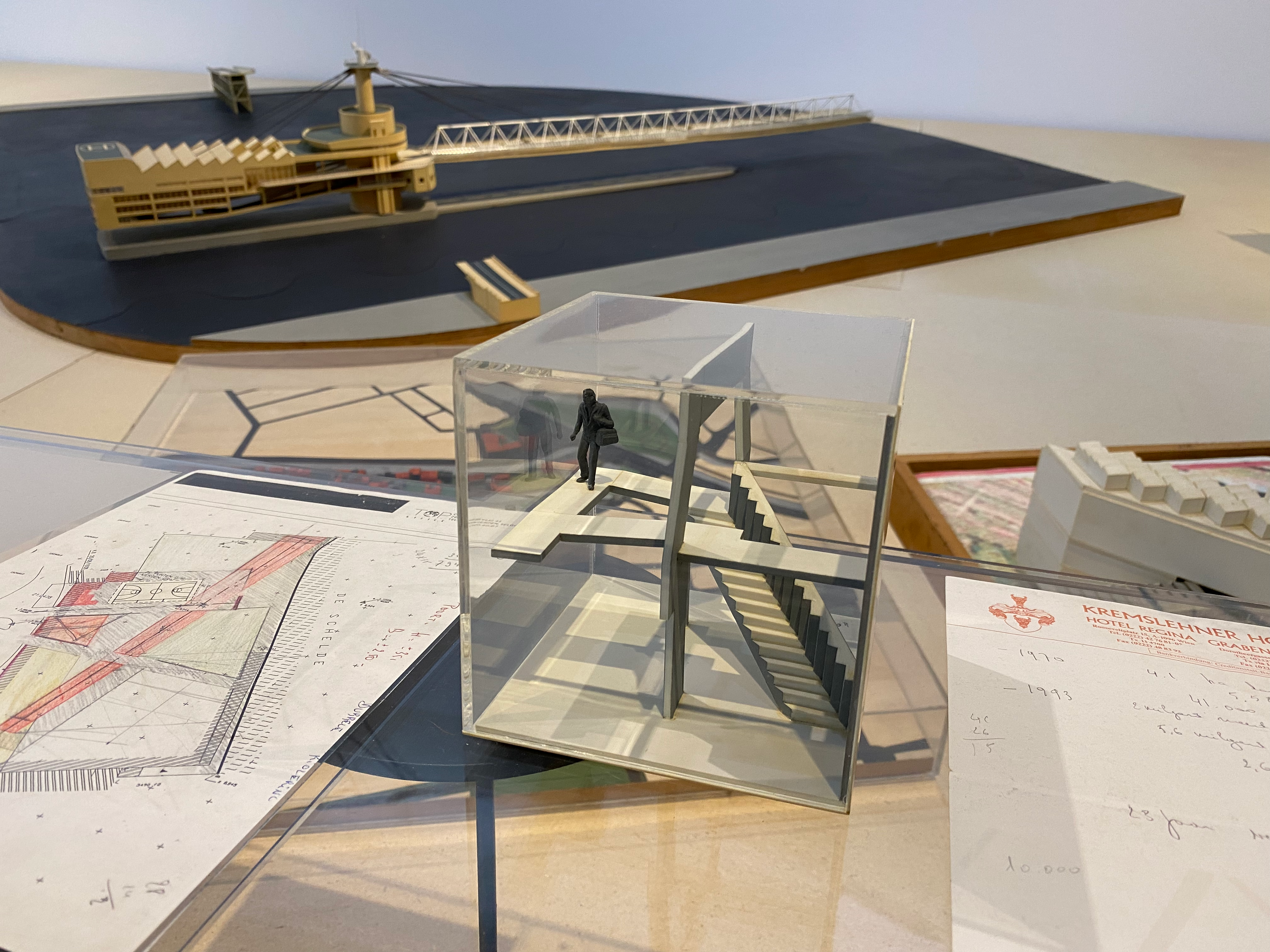
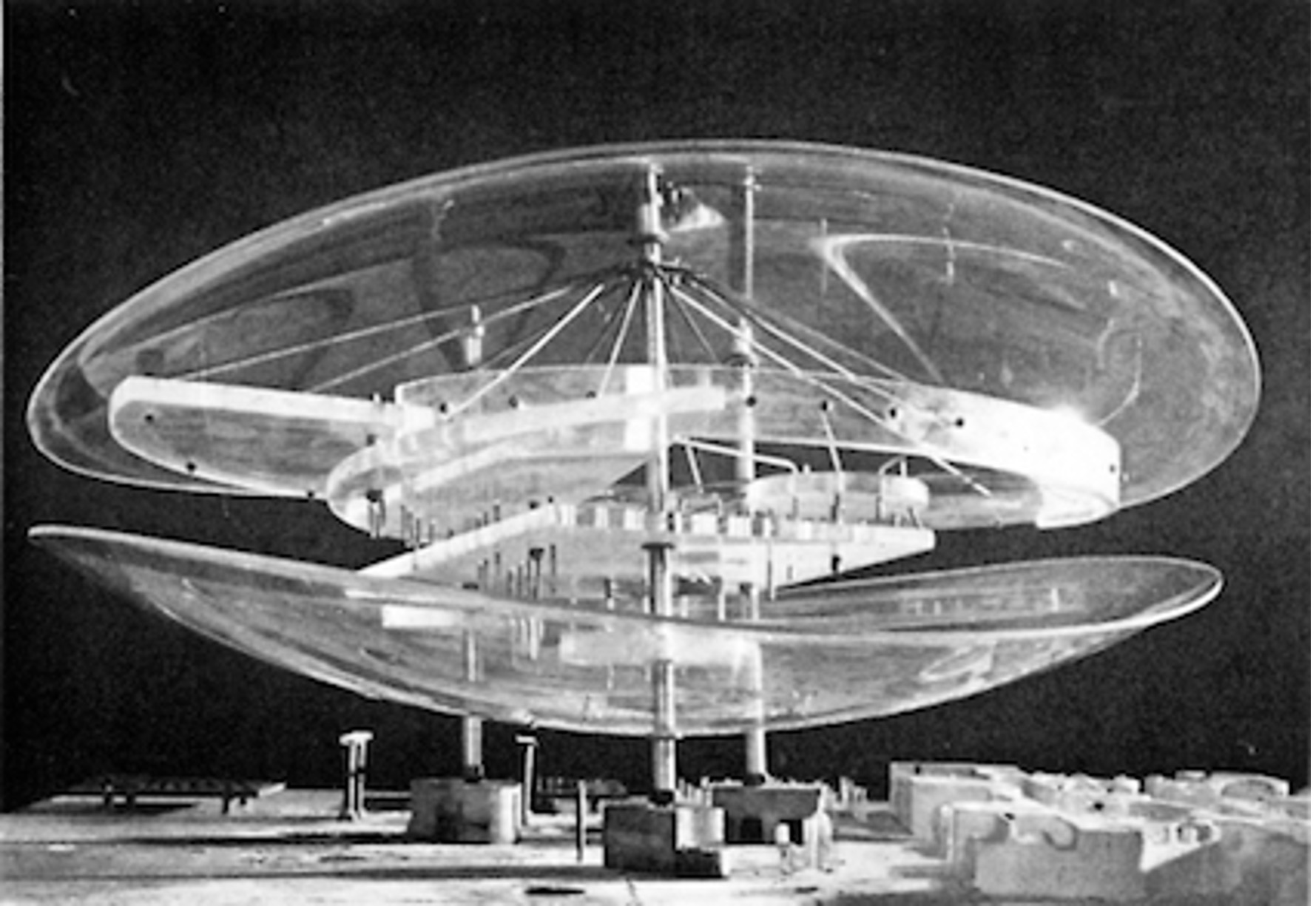
Future Plans 1970-2020 – Luc Delue and T.O.P. Office – De Singel, Antwerp

The learning of a practice involves becoming a member of a community of practice. Think of guilds in the Middle Ages.

But it is more than a community of specialized skills or artisans.

For example, if you consider the handling of a pipette in a lab, and you want to work with a Petri dish low and behold, each lab may train their folks to hold their pipette in a certain way, the way you hold that pipette influences the visual that’s never been recorded. 

In other words, the community of practice develops his own signaling, that create the community and amplify kind of tacit communication in very powerful ways that makes that community a practice.

The studio combines different practices. An architecture studio is multi-disciplinary: a combination of aesthetic, ethical, engineering, scientific, societal, political, philosophical, and anthropological skills. A combination of material, societal, and mental ecologies. In the end, architecture is about designing spaces for messy human beings to grow and develop at their best.

We can architect buildings, spaces, things. But we can also architect contexts, less tangible artifacts that let a project emerge and evolve into preferred and desired futures.

There are five key aspects of studio, which make it unique from other teaching and learning environments. 

The studio is initiated by and formulated around problems, yet it is not specifically about solving problems. 

It is profoundly social in nature and structured

It is a highly critical and discursive environment using critiques – not criticism 

It’s deeply synthetic in nature in contrast to teaching and learning environments that operate as compartmentalized, a specialized knowledge basis. 

and five, it operates through the integration of knowledge with skills.

Design studio and the student apprentice’s journey (courtesy Ann Pendleton-Jullian)

Studios are a proven way of failing and recovering together, a repurposing of the architecture studio practice of practices.

There are three kinds of studios.

The teaching studios, where you’re trying to teach something. It is about the didactic transfer of knowledge.

The mentoring studios, where you now are giving a project and helping a student move through that project.

The inquiry-based or research studios; these can be real-world projects, and real world, richly networked experiences.

Illustration courtesy Ann Pendleton-Jullian

Combining these different types of studios has become a key component of my client work in 2019-2021.

For one client we developed a leadership studio around the topic of ambiguity. For another client, we are creating an online expedition based on conversation moments and thinking experiences, using different types of “Guides”. Some guides have a more didactical role of transferring knowledge (teaching studios), other guides have an enabling/mentoring role (mentoring studios), and yet other participants inject new ways of thinking about the future, other than scenario planning (inquiry based studios).

Other clients ask us to design learning experiments: multiple parallel lines of inquiry, keeping multiple options open, resisting the urge to come to quick resolutions, and building up cognitive equity, together. These online sessions are designed as facilitated studios: a proven way of failing and recovering together, as an embodied learning.

Doing projects like these require my 100% focus and attention.

They require me too deeply immersive myself in the client’s problem and project space.

I am human, and my quality attention is scarce, not unlimited, and I need pauses for reflection and recalibration.

It is why I only can accept one such project per year.

Because I want to keep the balance and attention right.

Next time in Travelling Without Moving, we’ll talk about “Genres”, a set of different practices to weave content and engagement into video learning experiences.

Hope you stay on board.

Warmest,

Petervan Studios – Update June 2021 – The Right Balance

Here is the latest update on Petervan Studios. The previous update already goes back to November 2020, that’s more than six months ago, and a lot can happen in half a year.

It looks like we are getting out of the COVID woods. At least in Belgium infection and hospitalization numbers are down, and I got my second Pfizer jab on 5 June 2021, so I think I am good to come out of my cave.

Family is good, Astrid does well at school, Mieke loves the garden now that the summer is back, and I continue my art practice and some freelance projects.

What else?

My Art Practice

Due to COVID regulations, 2021 was a terrible year for doing artwork at the academy. I just can’t work with a mask on. I retreated to my own studio at home, but I miss the coaches, and the discipline/routine of going twice a week to the academy in Ghent.

Most of the specialisation courses of the academy were online via Zoom calls, and nothing beats the dynamic of face-to-face contact, and on-the-floor experimentation.

Not sure yet what I will do next year: back to academy or being super disciplined in my daily routine in my home studio.

I shared most of my recent work via my Facebook page, or on this blog under the heading “Sine Parole”. Some “highlights” if I can say that about my own work:

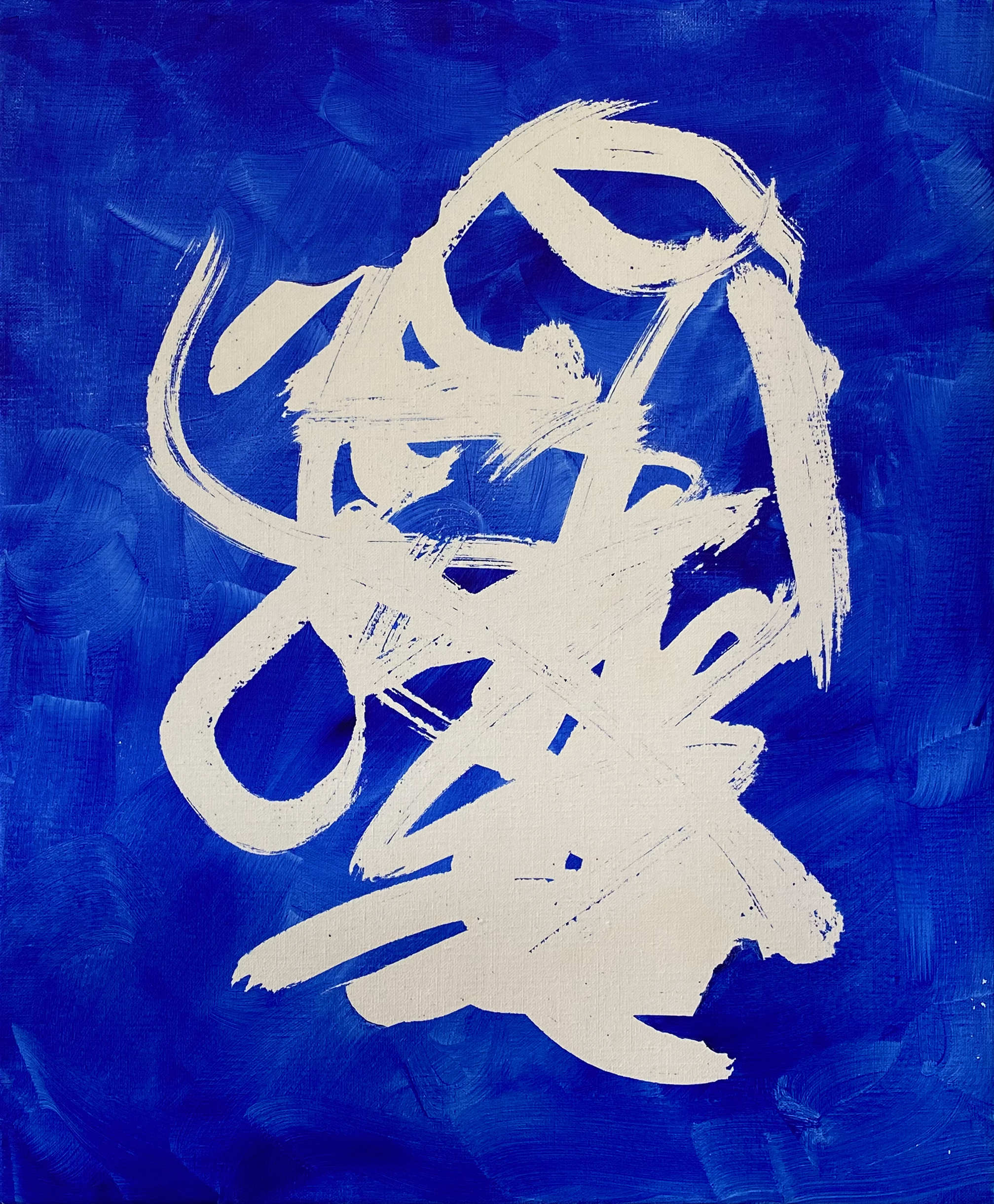
Petervan Artwork © 2021 – Big Blue – Acryl on Canvas – 100x120cm

Petervan Artwork © 2021 – Shape on blue – Acryl on Canvas – 60x50cm

Petervan Artwork © 2021 – Wild Black & White – Acryl on Canvas – 120x100cm

The Bricks Project

Petervan Artwork © 2021 – Drawing – Chinese Ink on Steinbach Paper – A1

Petervan Artwork © 2021 – Video – Brickonomics – Own soundscape

Petervan Artwork © 2021 – Video – Bricks City Animation

Petervan Artwork © 2021 – Video – Zen and the Art of Bricks Drawing

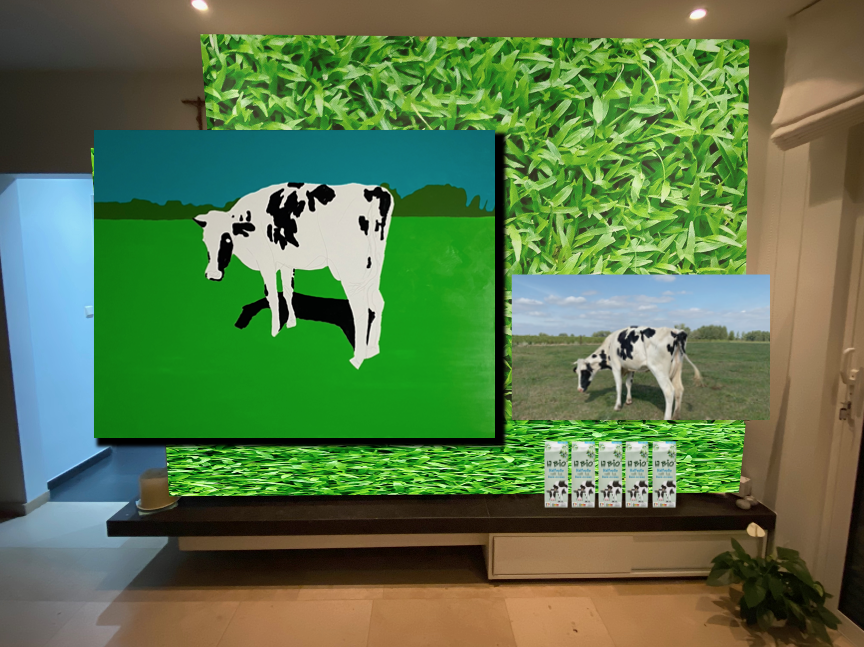
The Cow Project

Introduced as a plan in the Nov 2020 update, I got hooked on cows, if that makes sense. Whatever.

Petervan Artwork © 2021 – Cow-Vid-19 – Acryl on Canvas – 120x150cm

Petervan Artwork © 2021 – Cowonomics – Stop Motion Film

Petervan Artwork © 2021 – Digital CollageCow on chimney on grass with milk tetra packs.

Part of an assignment for the academy specialisation class

Exhibitions

Since last update, I visited following art exhibitions:

C-Mine, Tim Walker, Genk, Jan 2021

Z33, Palms, Hasselt, Jan 2021

Be Modern, Royal Museums of Fine Arts, Brussels, Jan 2021

Danser Brut, BOZAR, Brussels, Jan 2021

Lynne Cohen, FOMU, Antwerp, Jan 2021

Adrian Ghenie, Tim Van Laer, Antwerp, Jan 2021

Kunstuur, Mechelen, March 2021

Alechinsky and Aboriginals, RMFA, Brussels, April 2021

Silence, Axel Vervoordt, Wijnegem, April 2021

Luc Tuymans and AI, BOZAR, Brussels, April 2021

Superstudio Migrazioni, CIVA, Brussels, April 2021

Inge Decuypere, A Joly Boring Thing To Do, Oudenaarde, April 2021

Vincent Geyskens, M-Museum, Leuven, May 2021

Detail of a Karel Appel’s painting “Liggend Naakt” 1957 – Oil on Canvas

The founders of SuperStudio – Painting in Expo Migrazioni

Vincent Geyskens – in M-Museum – Leuven

Outdoors

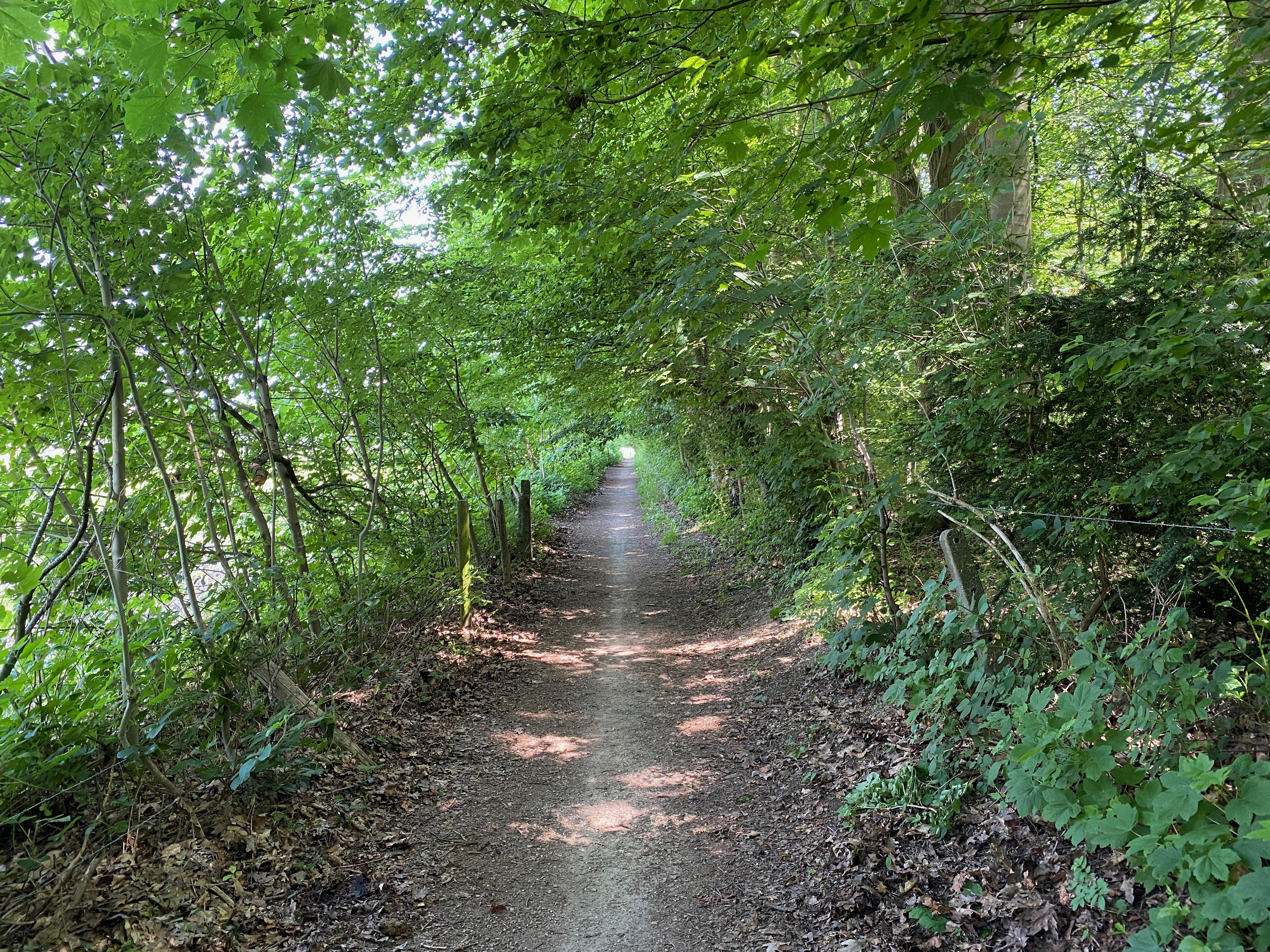
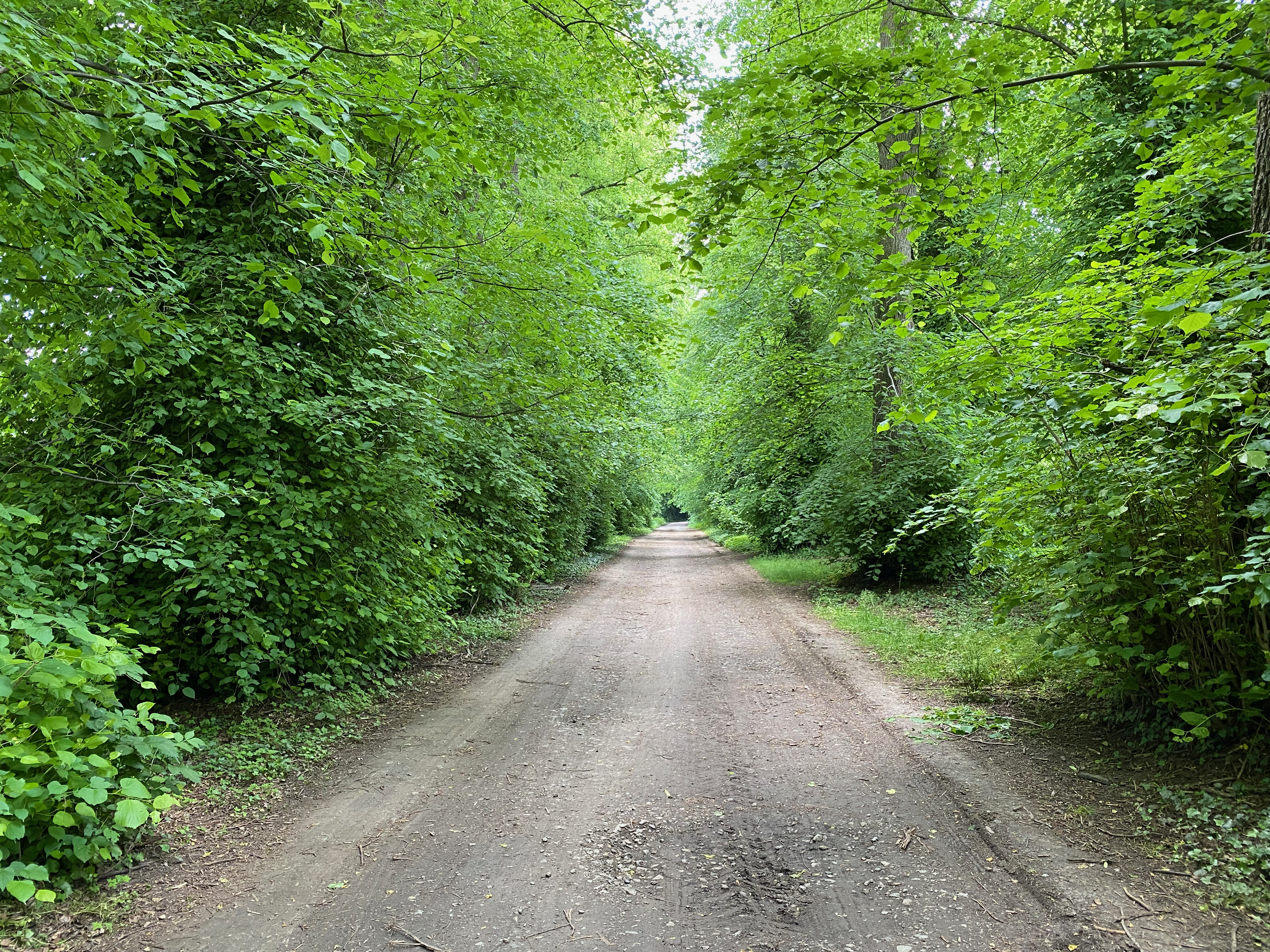
We had a lousy winter in Flanders. I did some walks and bike tours, but not as much as I would love to do. Winter lasted till deep in spring with a super cold and rainy month of May. When June started, the sun was back in full force, up to a point where I started already longing for shadow.

Horses

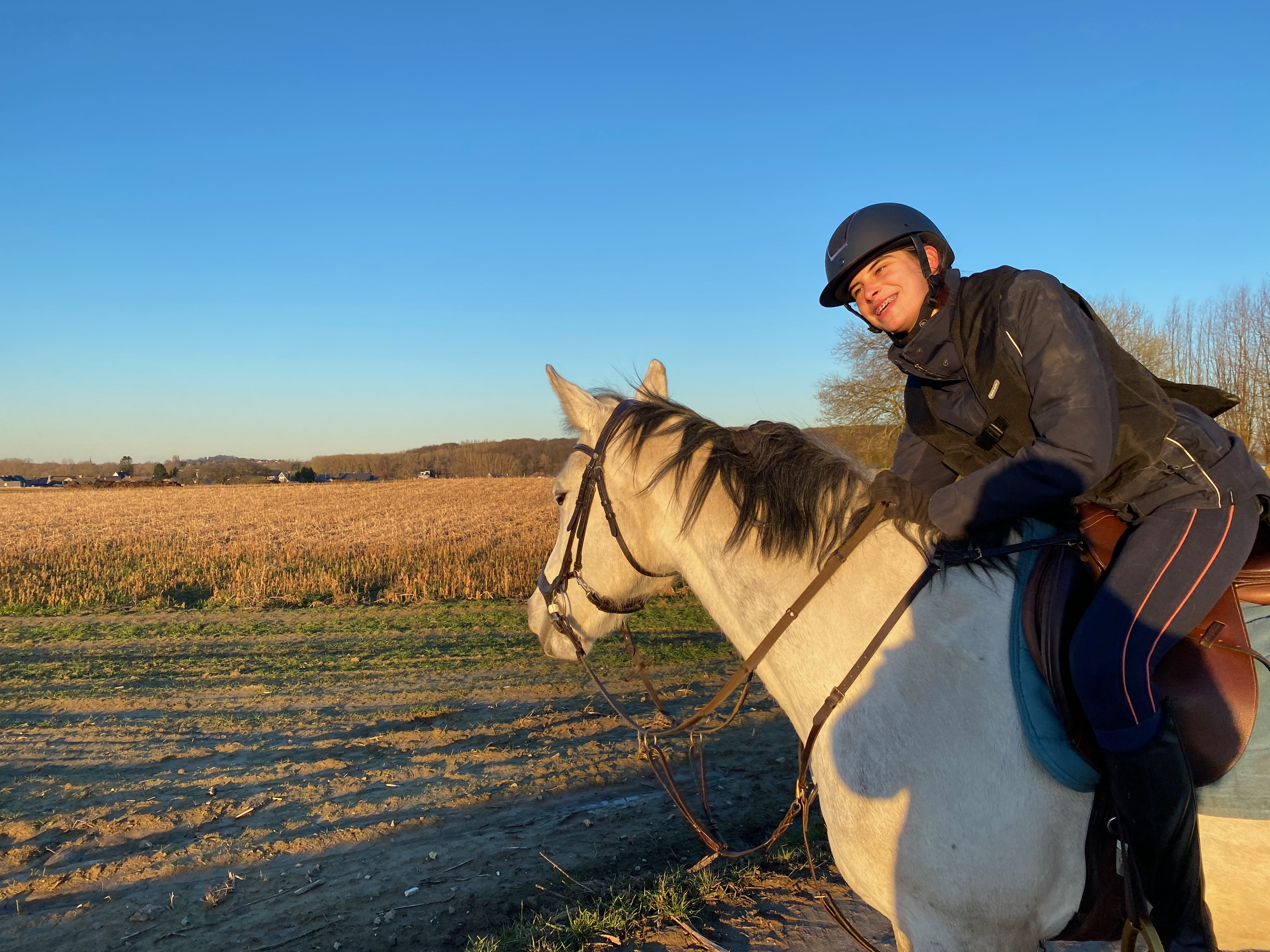
My daughter Astrid loves horses, and that is an understatement. I have become her private taxi driver to/from the stables, and I spend quite some time watching her at the riding school. She needs it very much in this COVID year, and she can really disconnect from school. And on and with the horses, she is in flow. Look at her smile: it makes a father happy too!

Freelance

I am on a new interesting gig for a very respected client. With a small team, we are doing research on what is next-next in financial services, and the research will be followed by several workshops and a private experiential event/tour later in 2021.

This and the previous project in Shenzhen also helped me reflect on different types of workshops: sharing, teaching, mentoring, and inquiry-based workshops, some online, others in real life. I have some concrete ideas on how to bring these to market, together with a supporting team of facilitators, provocateurs, artists, and producers. Contact me privately if interested.

BANI

Already in 2018, Jamais Cascio coined the term BANI. See my post from Aug 2019 and Jamais’ update from April 2020. As mentioned before, I am working with some partners on a virtual multimedia workshop based on this framework, with a specific focus on possible responses to a BANI world. One of our partners got locked in another client project, so we put the project temporarily on hold.

Design Unbound

I am continuing my immersion in the work of Ann Pendleton and her insights in Design Unbound: Designing for Emergence in a White Water World. We have found a way to convey this complex material into a matrix-form, with video vignettes, so that the customer can pick and choose where they enter the learning journey.

To give you a sense of the intensity of this work: I have now weekly calls with Ann Pendleton to go through the scripts that will form the foundation of the video vignettes.

We have put together a team to design and deliver a corporate curriculum on this topic. Stay tuned on the “we” and the “curriculum”.

Pirate TV

I released the first episode of Pirate TV – Art Tribe Edition, with my friend Frank Poncelet from the Art Academy in Ghent

There is a very nice queue of artists who have agreed to be the guest in the subsequent episodes: some painters, video artist, and photographers. Initially, the plan was to have an episode every month as from March 2021 onwards. Working with artists and original content authors, I have learned to be patient and more careful in setting expectations on the when and what of the final deliverable, although the pressure of a deadline sometimes – but only sometimes – helps to get to a high-quality experience. We are getting there.

There are now two Pirate TV channels in the pipeline: the Art Tribe edition and the Business edition.

Traveling Without Moving project

Travelling without Moving (TWM) is a series of essays documenting my mental and philosophical journey in 2020-2021.

The main outline was published in November 2020, and in the meantime, several episodes have been released. So far, I have posted seven essays:

Silence

Pause

Play

Anxious

Unbound

Foam

(In)appropriate

The next one will be about “Studios”, studios as a proven way of failing and recovering together, a repurposing of the architecture studio practice of practices. Hope you stay on board.

Books

Check out my GoodReads: https://www.goodreads.com/user/show/3085594-peter-auwera

Some highlights:

The Stack, by Benjamin Bratton

Crossover, by Cecil Ballmond

Making Art Work, by Patrick McCray

Ways of Seeing, by John Berger

Petervan Rides

Since July 2019, I publish every month a Spotify List with new releases combined with some oldies from the 60ies, 70ies, and beyond. Search for “Petervan Ride” and select “playlists”. Subjective selection of course, as driven only by my personal taste (or lack thereof). Next month, we’ll celebrate the second anniversary of these Rides. Time flies!

Here is the latest Ride from May 2021

I suggest you play it in shuffle mode, it enhances the surprise experience.

So, whats next?

Since I officially retired from corporate life on 1 Dec 2020, I am completely free to do what I want, what gigs I accept, what clients I choose and reject, what I say and what I write. And if nobody cares, that is fine as well, as then I can really do what I want.

This “interesting” work still leaves me enough room and headspace for my art-practice.  I wrote a post before on what I consider “interesting”. The keywords are: not done before, risky, and sensemaking through sense-breaking. I feel I have found a good balance and feel happy.

The plan for the coming months is to work/play on (random order):

The Fintech Next-Next Project

“Interesting” Freelance Work

Continuing my Art Practice

Release some Pirate TV Episodes

So, that’s it for this edition. If there is something worth reporting, next update is for Dec 2021.

Warmest,

Travelling without Moving – Inappropriateness

This post is part of a series of essays bundled under “Travelling without moving”.

Intro of that series can be found here.

Petervan Pictures © 2021 – Travelling Without Moving

After the Foam-post of begin April 2021, we continue with “Inappropriateness”, an ambiguous feedback from a client on a rejected project.

In her post “The Change Refusal” https://weneedsocial.com/blog/2021/4/8/the-change-refusal, Céline Schillinger describes the weird situations where she submitted an idea, it was accepted, and then… was not given the permission, the support, or the means to carry it forward.

I had a similar experience not so long ago.

With a small team, we were contracted for a corporate experiment with Pirate-TV, a novel crossover video production.

Depending on whose point of view, it went well to not-so-well.

The production team was and still is super-proud of and committed to the deliverable. But at the very end of the project, the client believed our work was “inappropriate” and banned us from replay.

My good friend Peter Hinssen (Founding Partner of nexxworks) warned me early in the project “Boy, you are in for some fights if you want to pull this one off!”. I shrugged; I had crossed many other bridges over troubled water before.

The project started promising. The client accepted our proposal and briefing to do something radically different. Different in content, mixing, rhythm, visual collision and poetry, that sort of thing. Different, but relevant. Relevant to the ambiguity and uncertainty of the white-water world we are drowning in.

Not a Zoom style webinar with a speaker and a slide deck, or worse, a “fireside-chat” of two boring executives and a CNBC style of journalist, 2 meters apart from each other in white leather seats in front of a green screen that is then filled in with some fake backdrop to look cool.

So off we went. Everything went quite smooth. Too smooth in hindsight.

There was one hick-up in the process. A senior director who did not understand “why the heck we were doing this” almost stopped us. We scheduled a meeting to explain and understand her feedback. “All right, I get it now, make sure you integrate my feedback and questions, but without mentioning my name”, she said.

We incorporated the feedback and answered the questions. We delivered what we believed was a professional end-product, 100% in line with the brief.

But at the very last minute another senior person in the client’s organization intervened from the top, we got banned, and that was end of story.

The explanation? The work was considered “completely inappropriate”.

A request from our side to have a conversation was not honored.

Was it the format that felt too heretic to the executive leadership? Was it something else? We can only guess.

And what does that mean “inappropriate”?

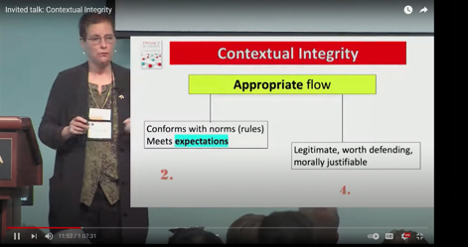
As I was writing this post, I bumped into a presentation about contextual integrity. The talk was in the context of privacy, but I liked the breakdown to be very “appropriate” for my argument.

I believe the rejection had indeed to do with contextual integrities not being well aligned.

If inappropriateness is the opposite of appropriateness, then that would mean that inappropriateness is about not conforming, not meeting the expectations. That the result is illegitimate, not worth defending, morally not justifiable.

So, in other words, we did not conform. Thank God! What a compliment! The brief was to be radically different, no?

We requested if we could release the production under our own brand, “appropriately” edited not to reveal the name and the business of the client. But unfortunately, the client decided we were not allowed to re-use the raw footage. Hour and hours, days and days of brainstorming, recording, editing, soundscaping, video production down the drain.

No worries. We’ll be back.  We decided to re-do the whole bloody thing on our own budget, our own tastes, our own reclaimed freedom.

Since then, we have redacted the scripts for the new recordings, did extra research on the content material, and developed a virtual mosaic leaving the audience the choice where the enter the show, and how to complete the narrative journey. It will be the first episode of Pirate TV – Business Edition.

When will it be ready? Shall we say in a couple of weeks? Working with artists and original content authors, I have learned to be patient and more careful in setting expectations on the when and what of the final deliverable, although the pressure of a deadline sometimes – but only sometimes – helps to get to a high-quality experience.

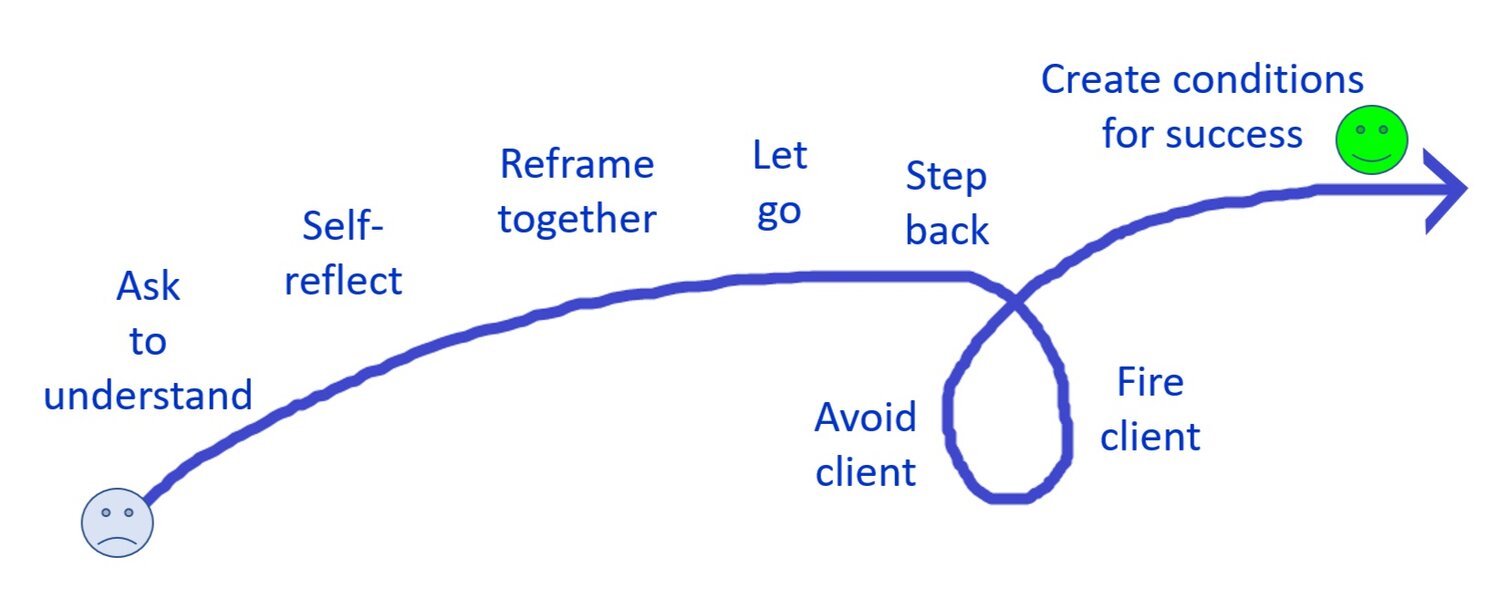
Looking back at Celine’s themes for dealing with rejected work, I believe we went through the full loop. Asking to understand and reframe together with the first senior director, getting banned, avoided, and then picking up the pieces and creating the context for success in our upcoming re-do of the project on our own terms and conditions.

Courtesy Céline Schillinger

As creators, we must take risks, break sense, practice free play imagination.

Sometimes, we must be on the err side of things to know how it tastes.

In that sense, this experience was very rewarding.

Being banned even felt a bit heretic, and almost a badge of honour.

Next time in Travelling Without Moving, we’ll talk about “Studios”, as a proven way of failing and recovering together, a repurposing of the architecture studio practice of practices.

Hope you stay on board.

Warmest,

Travelling without Moving – Foam

This post is part of a series of essays bundled under “Travelling without moving”.

Intro of that series can be found here.

After the Unbound-post of begin March 2021, we continue with “Foam”, a way of looking at and reflecting about the world as suggested by German philosopher Peter Sloterdijk.

I will not even attempt at claiming to understand Sloterdijk and/or to summarize his magnus opus trilogy “Spheres, Bubbles and Foam”.

I just want to share some tangential thoughts that “bubbled-up” when reading about it.

See also my 2019 post “The Foamy Explosion of Everything” and this good introduction by Charlie Hueneman

Foam is organic as in relating to or derived from living matter.

As opposed to inorganic.

Organic/Inorganic is similar but still different than the Analog/Digital or Kairos/Chronos.

It is tangential to human/non-human.

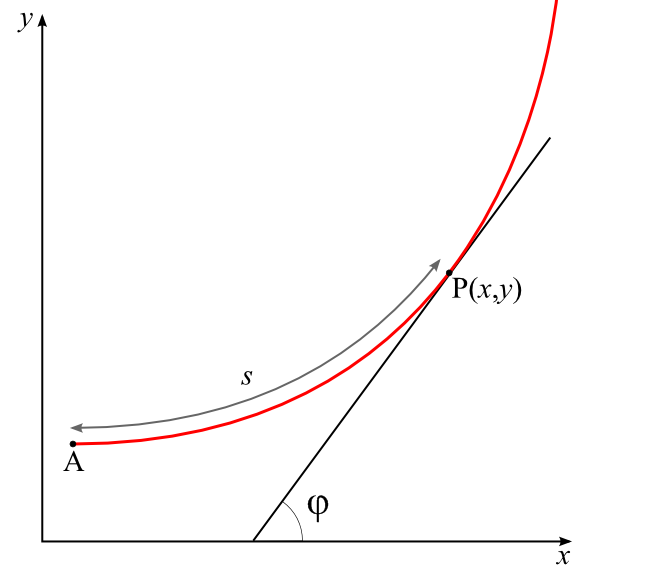
“In geometry, a tangent is a straight line that touches a curve at a single point. So we say that someone who starts talking about one thing and gets sidetracked has gone off on a tangent. The new subject is tangential to the first subject—it touches it and moves off in a different direction.(Merriam Webster)”

By Pigetrational – Own work, CC BY-SA 3.0, https://commons.wikimedia.org/w/index.php?curid=6333986

Consider the curved line as the outer shell of the foam bubble, its membrane.

What the tangent is doing is snapping to the grid.

Foaming is about snapping without a grid.

Freewheeling and unpredictable.

Uncomfortable if a grid is the only thing you know, but full of potential and dispositions if you let the foam emerge.

Foam as “unsnapped from the grid”

Foam has no direction.

Following foam is like driving a road that is not road, emerging continuously.

Foam is about relations.

Between people.

Foam-mates

From general relativity to relativity of relations.

The quality of the relation depends on the viewpoint.

The quality depends on the dispositions and emergent potentials of relations

Foam is an emergence of dispositions and potentials

For a life of play is no genuine human life;

But is it really?

We now have affluence and surplus, for the first time in human history.

Hueneman

Constant’s New Babylon or the Biosphere 2 project come to mind.

You are part of multiple spheres: the bigger ones like “world”, or “earth”, or “continent”, or the smaller “bubbles” like “province”, or “institution”, or “corporation”, and the smaller foam bubbles, as “communities” of influence, attraction, care, intimacy and attention.

It is a fragmentation, but one with soft borders/membranes.

Not splintered like broken glass, but organic and lubricous and smooth like the soap bubbles in the hot tub.

And the assemblage of all this is dynamic, changing and interacting all the time, like a complex adaptive system.

In her 2021 Tech Report, Amy Webb identified more that 100 new signals.

A fragmentation of signals.

A fragmentation of everything, entangled like foam.

Abundance.

Wealth has come to us like a thief in the night

Sloterdijk

How would one design for and in such a system?

Designing space and context for 1000 flowers to blossom, for 1000 bubbles to co-exist…

I have a hunch that Ann Pendleton-Jullian and John Seely Brown may have some suggestions in Design Unbound.

Or check-out “Medium Design” by Keller Easterling, who writes about dispositions of interdependent objects and spaces; or should I say “spheres”?

“Disposition is a latent agency or immanent potential—a property or propensity within a context that unfolds over time and in the absence of a reifying event or an executive mental order.” Keller Easterling

Dispositions and propensities are becoming part of roaring 20’ies thinking.

So are spheres, bubbles and foam.

Because we are hungry for new communities of intimacy and connection.

Next time we’ll talk about “Inappropriateness”, as a badge-of-honor that is.

Hope you stay on board.

Warmest,
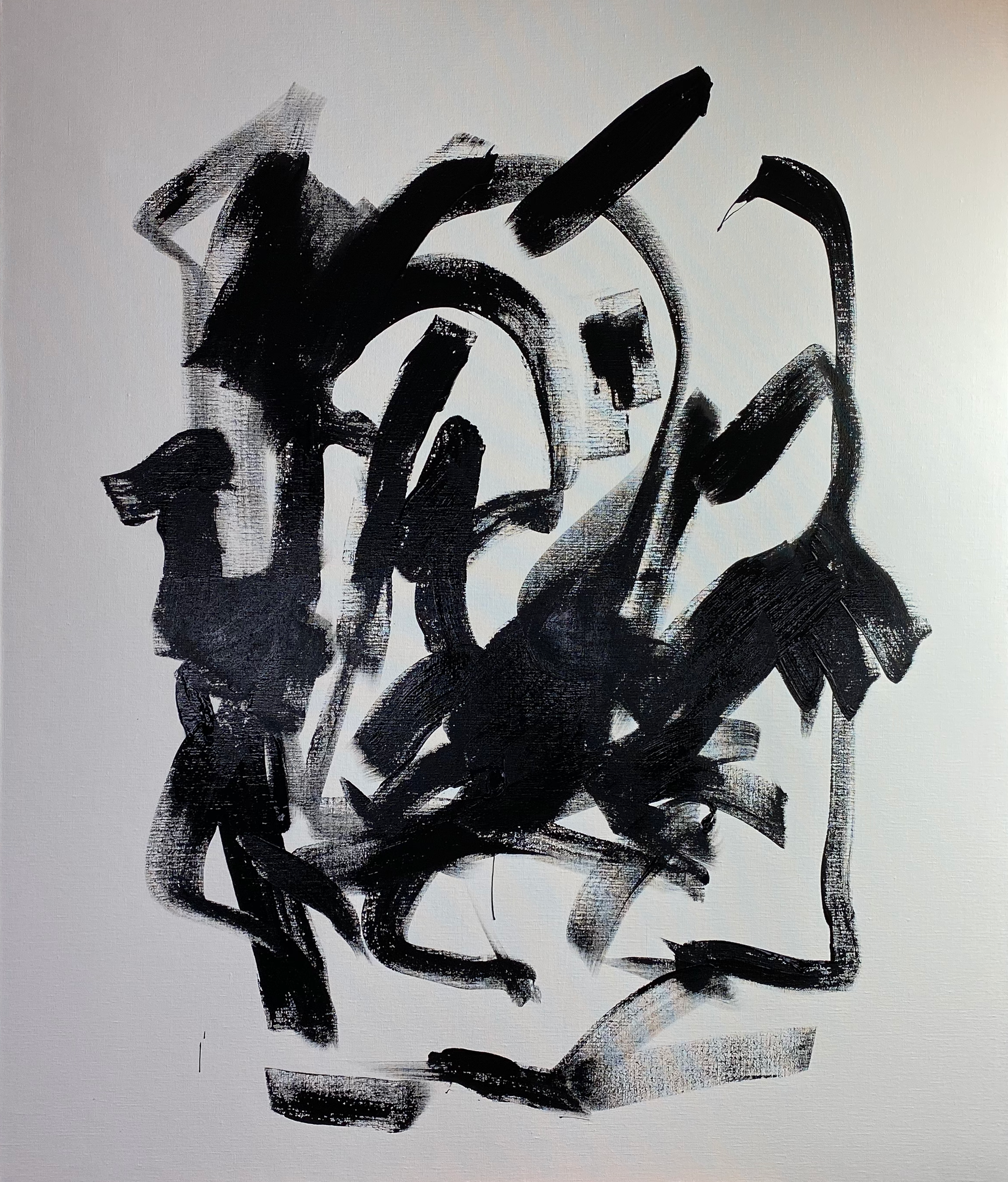
Unsnap from the Grid

You have been programmed to snap.

Snap to the grid that is.

And I believe we have to unlearn to snap.

We have to unsnap.

I am sure you all have come across some software that has snapping guides, digital magnets to help you stay centered, or aligned, or in synch, or in tempo.

Photoshop is well known for this. You also have it in Powerpoint to help you nicely center your images in the middle of the slide. It is even more apparent in “creative” software like Sketchbook, Procreate, and of course Final Cut Pro. The richest metaphor is probably in music creation software like Ableton Live and Apple’s Logic Pro.

Quantization is a good example of snapping in music software. A human beat/drummer is normally not 100% on the grid. So, if you are a really bad drummer, you can ask the software for help and let it quantize (read adjust) your beats to the grid. Then it sounds perfectly to the beat. Maybe too perfect, as it then sounds mechanic, not imperfect “human”. Of course, there are some additional functions to humanize again the too perfect beat, and so on.

Before Logic Pro quantization:

After quantization (to the 4th Note):

In a more corporate environment, especially post-COVID when we have to/want to do everything on-line – “virtually” – we are getting snapped by tools like Miro and Mural. Especially Miro comes loaded with tons of templates. I am not picking on Miro or Mural, I am just using them as educational examples to make my point.

Example of Miro board templates

This all sounds very exciting, but I am afraid we are getting snapped into a scripted illusion.

This became apparent during a sparring-session with one of my clients, who asked me to review the prep work for a virtual leadership “off-site” (no pun intended ;-).

Wow! That looked really impressive: Miro board after Miro board, scripting a 3-day workshop in all its glory details. To be honest, I personally felt “boxed”. But apparently, the executives participating in the workshop felt they were doing a great job and were pleased to see how everything got nicely boxed. It gave a feeling of being in control.

The illusion became complete when I learned that the workshop was in support of the number one priority project of the company, and it became apparent that none of the participating executives had any intention whatsoever to collaborate with the others. One guy was appointed as project lead and 100% of his time allocated to this, but the other 14 project members had at best 10% of their time locked down. And this for the company’s priority one project.

They fully satisfied filled 20+ online boards, and then… nothing happened.

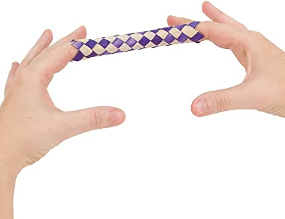
Unsnapping is similar to unstucking or unfreezing. A good metaphor for stuck/unstuck is the Chinese Finger Trap. You are getting stuck by only seeing one solution to get out of the trap: by pulling. The trick is to stop pulling and to start twisting.

Unsnapping is about unfreezing yourself and to get into your human rhythm/pace/tempo, without being quantized.

Unsnapping is about surfacing and seeing stuff that are de-railing the client without them noticing. Like putting in your face that the participants to the number one project have no intention to work together.

To see that twisting is also an option.

Unsnapping is not comfortable. Because it confronts you with being scripted, being programmed, and noticing that you have become a cog in snapping machine. Unsnapping may feel anxious. Because you are in unknown territory. Anxious as in my blog post from the Travelling without Moving series.

I am experimenting with some clients to offer an “Unsnapping Service”. To un-bind people from the “grid-lock”. To let go of the grids and snaps and re-finding your agency out of the grid. To sustain the creative tension that makes real change possible, to avoid snapping-back out of the creative tension.

I am using tools and techniques such as visual and audio collisions, artistic interventions, weirdness, and intentional silence. In some sense you could call me an elegant disruptor and connector. Connecting the unexpected. Disrupting through experimental and free imagination and association.

In most cases I am invited as an observer, but with a license to intervene at will or on command, a license to snap/unsnap, a license to provoke.

Josie Gibson from The Catalyst Network suggested I may be onto something. And that maybe I should start considering an Unstuck Manifesto or at least Unstuck Principles. Maybe, if I get unstuck from the grid of outdated practices 😉

Any views/suggestions/critiques warmly welcome. You can react in the comments field of this post or contact me in private.

Credit: the initial seed for unsnapping came during a conversation with Scott Smith (@changeist) and John V Willshire @willsh from Smithery. I am just playing around with that initial idea.

Warm regards,

Travelling without Moving – Unbound

Tod Williams Billie Tsien Architects Studio – Photo by Peter Arnold 1998

This post is part of a series of essays bundled under “Travelling without moving”.

Intro of that series can be found here.

The plan/ambition with this series: to share where I have been the last year, what I learned, where I am going, and what is required.

The broader quest is to discover what is required to enable real change.

After the Anxious-post of begin Feb 2021, we continue with “Unbound”. Unbound from thingness that is.

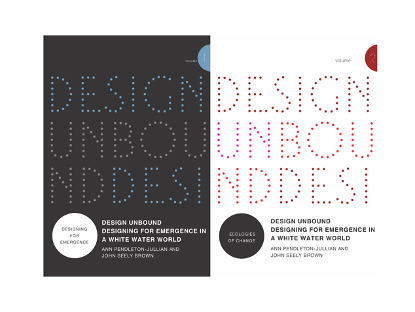
Unbound comes from “Design Unbound”, part of the title of the book (actually two volumes) written by Ann Pendleton-Jullian (APJ) and John Seely Brown (JSB) and published in 2018.

The full title is “Design Unbound: Designing for Emergence in a White Water World”.

I am blown away and intrigued by the insights: this is about having agency in a world that is constantly shifting under you. It is so refreshing after all those business-, management-, leadership-, and self-help-books. It has become a healthy addiction: I am basically reading and re-reading and deeply internalizing everything that Ann Pendleton has written in the last couple of years. I have been haunted by this book. Ann and John put a spell on me.

This book is a game-changer. I highly recommend it.

After a first read/scan of the two volumes, and after a kind introduction by Jerry Michalski and John Hagel, I had my first (online) conversation with Ann and John on 27 May 2021. I wanted to explore a partnership for building a workshop on BANI and work with Ann and John on the response to Anxious, which was related to having agency on a world that is in constant change.

Ann initially very politely declined, but I insisted, and since then we have worked and are still working together on some NDA projects. We now have several calls per month.

How naïve I was at that time. I thought I understood, but Ann very kindly let me discover my own mind-bugs. She also pointed out my reductionist thinking around BANI. She also let me discover other resources and deep-dives to let me internalize what this was all about. The last couple of months have been a humbling experience.

I will not even attempt at summarizing the book.

I just would like to spend some time on the “Unbound” aspect of the title.

The initial title of the book, I learned, was “Architecture Unbound”.

Ann is a practicing architect.

You may discover that she co-designed the house of Carl Sagan. He hired Atelier Jullian and Pendleton, whose principal, Guillermo Jullian de la Fuente, had been a student of Le Corbusier.

The architects designed a new, separate residence for Sagan in Cayuga Heights, and prepared an extensive, two-stage redesign plan for the tomb to turn it into a study for him and his wife.

Carl Sagan house – Cayuga Heights – Picture Durston Saylor in OfHouses

In the book, Ann is applying the practice of an architecture studio to other things than buildings.

Tod Williams Billie Tsien Architects Studio

In the video above, you see how architects work together as a family. Where working and failing together – almost as a practice of group-vulnerability – thrives on experimenting and rigorous critique.

Ann describes similar practices of architecture studios and applies them to unboundedness.

Unbound from buildings.

Unbound from things.

The architect as a context designer.

The role of critique in an architecture studio.

The role of Game Play and Game Design

We’ll look into some of these aspects in some subsequent posts in this Travelling without Moving series.

If you want a quick intro (two times 90 minutes) to the work of APJ and JSB, here are two video-vignettes that Ann and John recorded for the IFTF Foresight Talk Series

The main points covered in these two videos are: white water world, pragmatic imagination, from Newton to Darwin to Ecologies, Design for Emergence, Systems of Action, and World Building.

But there is so much more in the book, and the material is so rich, so nuanced, so dense, that I very much invite you to read it, not once, but twice, ever three times.

This is just pure-gold material for anybody who is active in corporate innovation initiatives.

It helps you reset and forget and go way beyond your tactical thinking about startup bootcamps, corporate venture funds, MVPs, Lean, Agile, platforms, ecosystems, and other blah.

You don’t need a head of innovation.

You don’t need an innovation team.

You need a squad that is trained to design for emergence and to tackle wicked problems.

This is about seeing the world differently – a world in constant change – and about seeing the dispositions of the system and designing the contexts for emergence and agency in these complex systems.

Together with Ann, I am working with Hamilton Ray from Collective Next and Amber Case on a Pirate TV episode on Design Unbound.

We plan to release the video before summer. We aim to condense the key insights of the book into a 45 min, a sort of non-commercial trailer for a learning journey that is being put together. The video will be provocative enough to stand on its own as a coherent learning opportunity.

Next time we’ll talk about “Foam”, a way of looking at and reflecting about the world as suggested by German philosopher Peter Sloterdijk.

Hope you stay on board.

Warmest,

Play Drives Change

Kanaal Site – Axel Vervoordt – Wijnegem, Antwerp

For the past years, I have been on a quest to discover what is required to enable change. I try to avoid glorifying terms like “deep”, or “meaningful” change. What we are after in the end is just “good” change, right? In my opinion, good change is change that leads to ethical, moral and spiritual advancement. All the rest follows: profit, happiness, communities, and networks of returning customers.

Deeply influenced by the work of Robert Fritz on structural conflict and structural tension, and that structure drives everything – especially behavior – I became dissatisfied by the responsive reaction in many organizations that can be summarized as “what problem are you trying to solve?” It is too solutionist, reductionist to my tasting, and I prefer Robert’s suggestion of the creative orientation of the artist/creator who is not solving a problem but develops mastery to create what she really wants.

So, the key starting point is to know what you want. Let that sink in for a moment. To know what you want.

Once you know what you want, you can create and change the structure that will at least be helpful – not working against you – in letting emerge and amplify the behavior that leads to what you want.

Structure is broader here than hierarchy or reporting lines. Structure includes contexts, vision, vehicles, mechanisms, and networks. Like an architect, you design spaces and structures to enable certain preferred – at time messy – human behaviors.  In a corporate environment, you don’t architect buildings, but you architect contexts. You become a context designer. As an architect, you are not only responsible for the imaginative part, but also for seeing through the execution ànd adaptation needed as the context changes throughout time. Structure and contexts drive flows of information. Like water in a riverbed, if you change the course of the riverbed, the water will behave differently.

Structure drives flow drives behavior.

Let’s add Leandro Herrero in the mix. He wrote “Viral Change” and “Homo Imitans”. Key insights: people copy behavior and behaviors drive culture. If you plant people with the desired behavior into your organization, there is a good chance others will start copying that behavior. Hence “Imitans”. Like viruses infecting others – in a positive way. Do I need to make a drawing in this Covid-19 era?

Leandro’s bottom-line: behavior drives change and not the other way. And you can design for certain preferred behaviors. It’s bottom-up. It is not because an executive team defines culture that everybody will start behaving like it. It is because you have seeded infectious behavior that a culture will emerge through imitation.

Like changing and influencing the structure of a building or a riverbed, we can influence the information flows in organizations. These changed flows lead to different behaviors that on their term drive culture. In the end culture drives change and advancement

Structure drives flow drives behavior drives culture drives change.

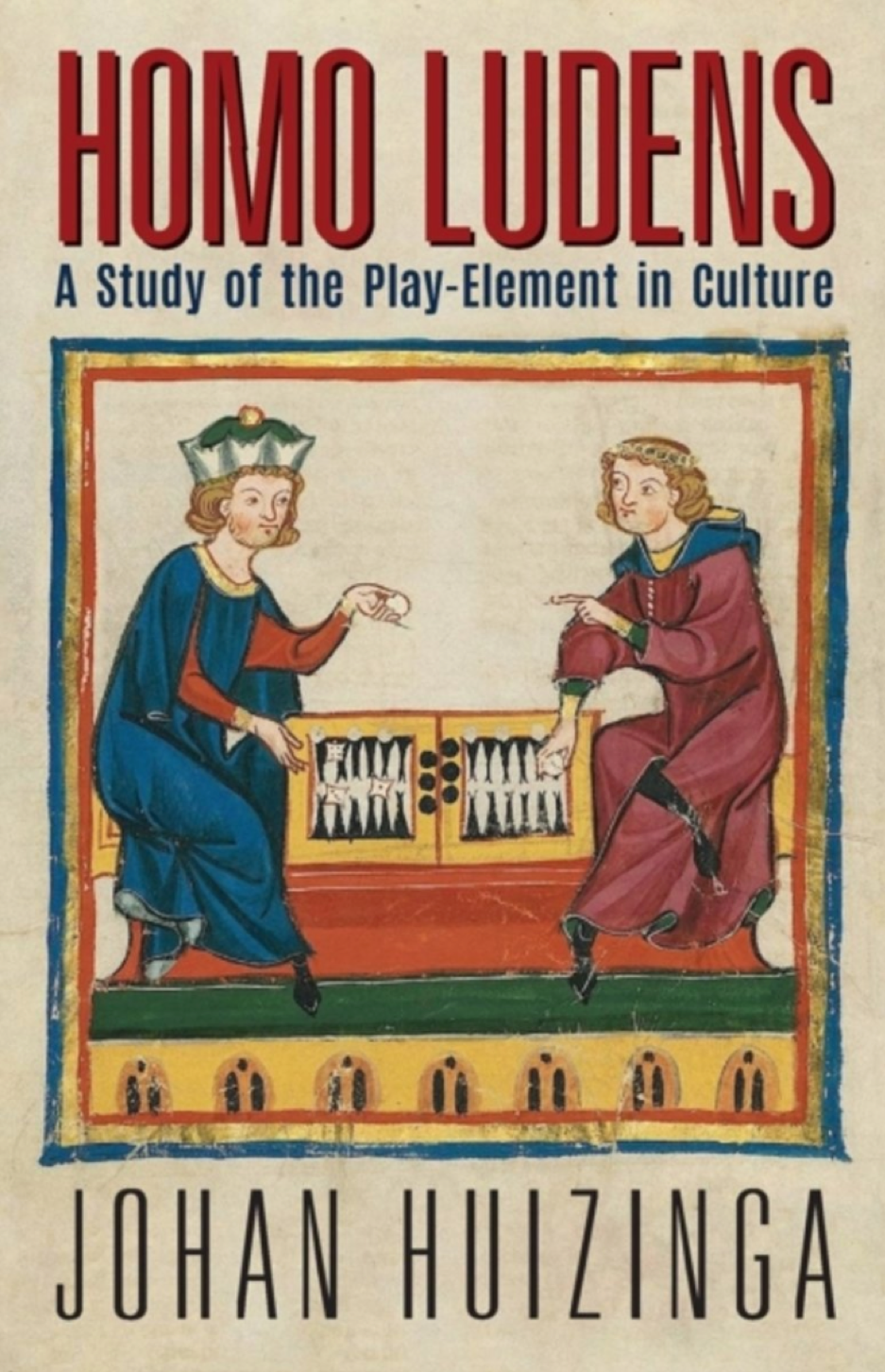
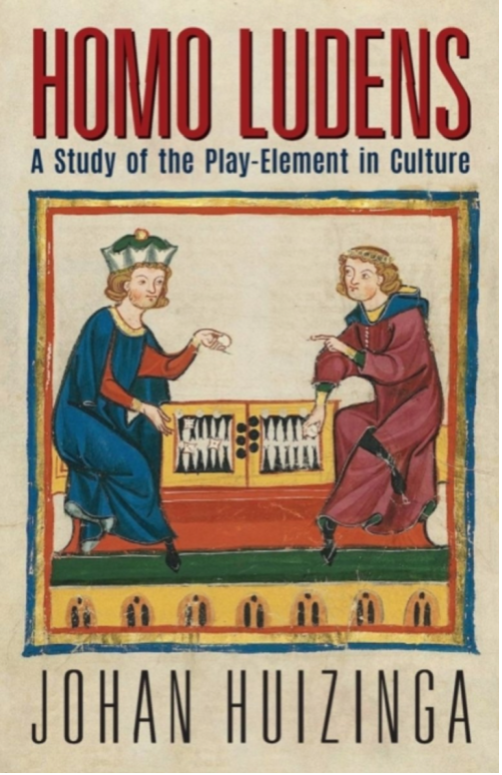
In 1938, the Dutch historian Johan Huizinga wrote a book titled “Homo Ludens: A Study of the Play Element in Culture”. The core message of Huizinga is that play drives culture.

That the disposition of a culture is already embedded in the play preceding it.

“By this we do not mean that play turns into culture, rather that in its earliest phases culture has the play-character, that it proceeds in the shape and the mood of play (Huizinga)

“There is a third function, however, applicable to both human and animal life, and just as important as reasoning and making—namely, playing. (Huizinga)”

This brings me to the insights of John Seely Brown in “A New Culture of Learning”, who quotes Huizinga extensively.

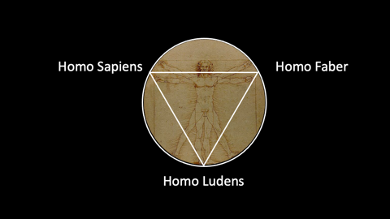
Visual/Insight inspired by John Seely Brown (JSB)

JSB talks about a “21st Century Augmented Imagination”, with a better balance between Homo Sapiens (Man as a Thinker), Homo Faber (Man as a Maker), and Homo Ludens (Man as a Player). Where imagination is triggered, tested, and augmented by play. And discovering the rules of the (future) game to play by playing it.

“In a world of near-constant flux, play becomes a strategy for embracing change, rather than a way for growing out of it (JSB)”

So, by adding “play drives culture”, we get:

Play drives structure drives flow drives behavior drives culture drives change.

Or in simpler, reductionist terms:

Play drives change

This post was written as a guest contributor to nexxworks.

This version includes additional imagery related to the books mentioned.

Travelling without Moving – Anxious

This post is part of a series of essays bundled under “Travelling without moving”.

Intro of that series can be found here.

The plan/ambition with this series: to share where I have been the last year, what I learned, where I am going, and what is required.

The broader quest is to discover what is required to enable real change.

After the Play-Post of begin Jan 2021, we continue with “Anxious” in a post-VUCA world.

BANI is what is next after VUCA.

Already in 2018, Jamais Cascio coined the term BANI. See my post from Aug 2019 and Jamais’ update from April 2020.

BANI stands for Brittleness, Anxious, Non-Linear, and Incomprehensible.

Let’s focus on the “A” of BANI.

I suggested that the preferred response to Anxiousness was empathy or agency.

But that felt too open ended.

Empathy with what, and agency in what kind of world?

And was it forward or backward looking?

A possible world or a preferred world?

I went back to the most common definition for anxious:

“being worried about what may happen or have happened”

Like a rabbit caught in the headlights, some people are so frightened or nervous that they do not know what to do. They sometimes remain still because they do not know where the light comes from or which way to go.

Another reaction is to fake that you know what to do, especially if you are in the spotlight for one reason or another. In other words, to bluff yourself out of an anxious situation.

Imagine a workshop where the top executives of a firm are sitting on the first VIP row of a theatre (in COVID-times, it would be a massive Zoom session with all the employees being able to look over the shoulder of their executives).

All the employees are sitting in the rows behind the VIP row to witness how their executives manage a difficult situation, or even more frightening, being able to see inside the heads of those who bluff to know, don’t blink an eye, and confidently steer their troops in the wrong direction, efficiently of course.

Remaining still or bluffing strong are most probably not the wisest responses to anxiety.

A better response would have to do with orientation or some kind of possibility mapping.

I assume many of my readers are familiar with Joseph Voros’ Future Cone.

Great background explanation by Joseph Voros here.

These days, you can buy out-of-the-box possibility mapping workshops from some of the big-4 and many boutique consultancies. Some of them already fully COVID-proof online, with Miro boards of future cones, chatrooms, Clubhouse conversations, Slack and other real-time streams.

But all this online-first coolness can also be distracting. What I am exploring is some kind of new genre, where we also inject artists to resonate with and for the content at a non-cognitive level, not as entertainment, but with an aesthetic that is demonstrative, not just a gimmick overlay.

An aesthetic that has a sense of stillness and serenity that makes the effort and work real, beyond perception and reason, with an anchoring in humanistic relevance.

Without falling for the temptation to add such toolkit to a “Pot-Pourri” of other coolness, as a tapas-bar, a Chinese menu to choose from.

What is missing in the “Pot-Pourri” is a sense of agency, a sense for direction and choice. Choice as in opinion, and direction as in judgment and daring to step forward with preference.

If not, the online-first future cones become a surrogate for analog Post-It-driven brainstorms, just mapping future concepts on the dimensions of possible, plausible, probable, and impossible.

The crux is daring to address the preferrable future. Because that is using the map beyond seeing better what is and what could be. It is using the map for standing for an opinion, a direction, most probably in the space of moral, spiritual, and aesthetical advancement.

That’s of course a more difficult sell.

But for now, let’s summarise, not as a conclusion, but more as a beacon in our developing story that a possible response to anxiousness is possibility mapping with the courage to set direction and preference.

Next time we’ll talk about “Unbound” – Unbound from thingness that is.

Hope you stay on board.

Warmest,

Travelling without Moving – Play

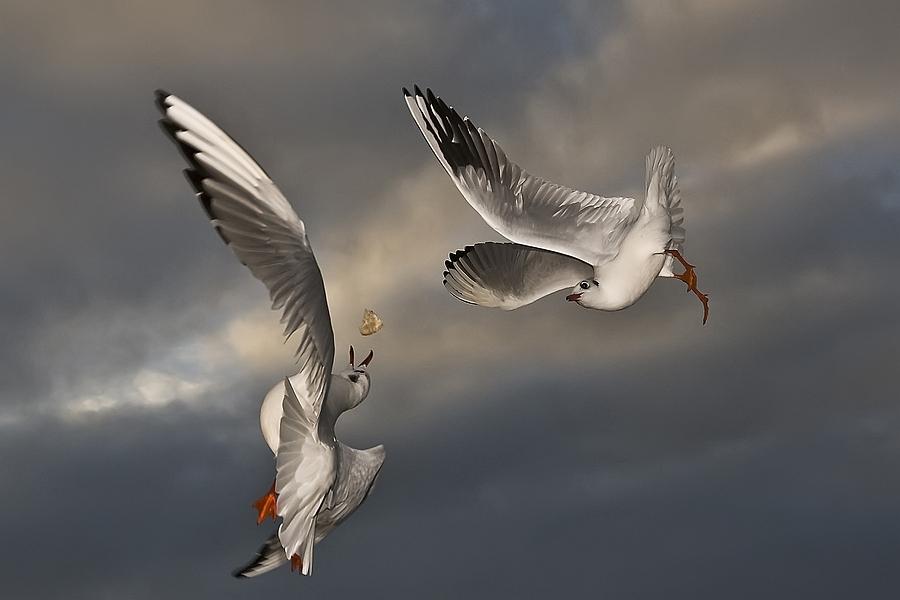
White birds playing on air with food (via Reddit)

This post is part of a series of essays bundled under “Traveling without moving”.

Intro of that series can be found here.

The plan/ambition with this series: to share where I have been in 2020, what I learned, where I am going, and what is required.

The broader quest is to discover what is required to enable real change.

After the Pause-Post of end Nov 2020, we continue with “Play”.

“I’d like to do nothing for some time

be free

flying and gliding

like birds in the sky

left, right, up, down, up, down,…

defying centrifugal forces

unlimited by time, space, distance, force

like free painting

with myself as the paintbrush

and the sky as canvas

4-dimensional

playful like the birds,

showing little tricks,

challenge and pursue

but not limited

by any form of danger”

@petervan

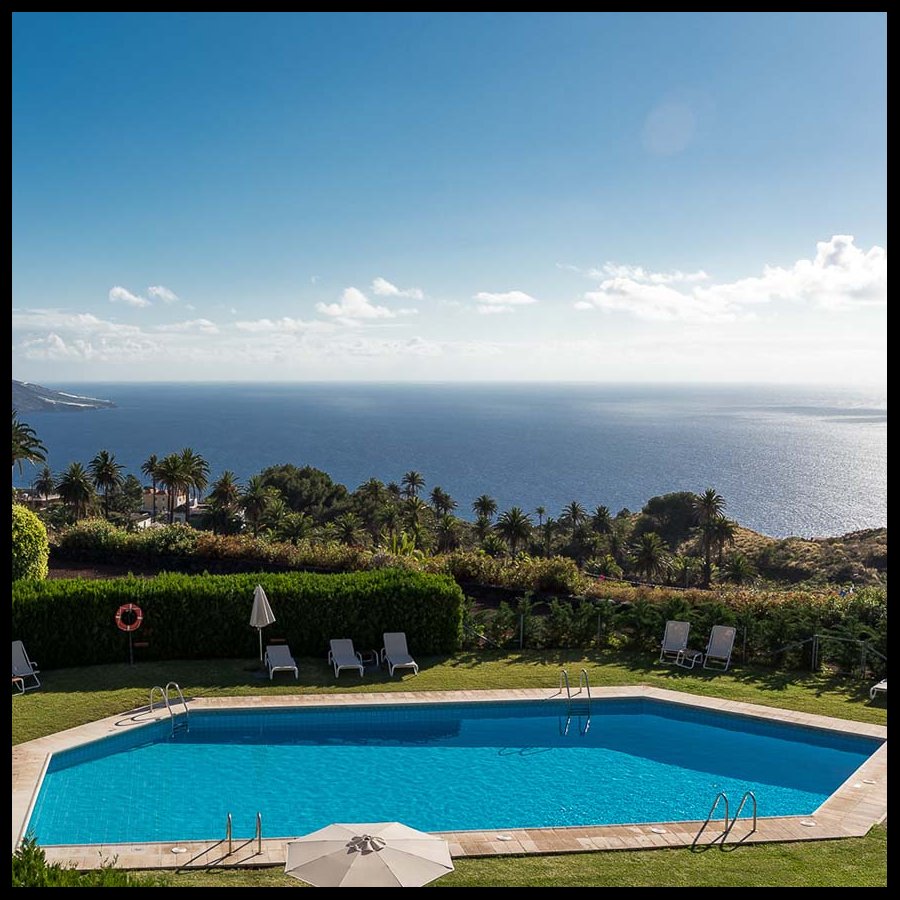
It is a poem I wrote in 2012 laying at a pool at the Paradores Hotel in La Palma (Canary Islands), watching the birds playing in the blue sky…

This is the sort of play I would like to write about today.

This is the sort of play written about by Johan Huizinga in Homo Ludens in 1938

I believe I already mentioned Homo Ludens in my post about a New Babylon

Huizinga believes play is of all times, and not limited to humans.

Animals play also.

A lot.

It is not “play” as in “game”.

Game – at least finite games – hints at some underlying sense for competition.

This is play without competition.

Play just for the pleasure of play.

Like birds in the sky,

cows in the pasture,

dogs on the beach,

humans teasing each other…

The core message of Huizinga is that play drives culture.

That the disposition of a culture is already embedded in the play preceding it.

By this we do not mean that play turns into culture, rather that in its earliest phases culture has the play-character, that it proceeds in the shape and the mood of play (Huizinga)

Play is irrational.

Play is a voluntary activity.

Play has a tendency to be beautiful. It may be that this aesthetic factor is identical with the impulse to create orderly form, which animates play in all its aspects. The words we use to denote the elements of play belong for the most part to aesthetics, terms with which we try to describe the effects of beauty: tension, poise, balance, contrast, variation, solution, resolution, etc.

Play casts a spell over us; it is “enchanting”, “captivating”. It is invested with the noblest qualities we are capable of perceiving in things: rhythm and harmony.

The child plays in complete—we can well say, in sacred—earnest.

But it plays and knows that it plays.

Play is a voluntary activity or occupation executed within certain fixed limits of time and place, according to rules freely accepted but absolutely binding, having its aim in itself and accompanied by a feeling of tension, joy and the consciousness that it is “different” from “ordinary life”.

We do not play for wages, we work for them

@Huizinga

The last one resonates well with my current state of being. For me, and especially since my retirement from corporate life on 1 Dec 2020, “work” has become “paid play”, although most of the work in 2020 was “unpaid play”.

But it is play.

In 2017, in my series “Trends for human advancement”, I strongly believed that structure is driving everything, and landed on the phrase:

“Structure drives flow drives behaviour drives culture drives change”

With the insights of Huizinga, I would complement it as follows:

Play drives structure drives flow drives behaviour drives culture drives change”

So, to be able to change, we first need to re-learn to play.

“There is a third function, however, applicable to both human and animal life, and just as important as reasoning and making—namely, playing.”

@Huizinga

This brings me to the insights of John Seely Brown in “A New Culture of Learning”, who quotes Huizinga extensively

I rediscovered John Seely Brown (JSB) when reading “Design Unbound” that he wrote together with Ann Pendleton-Jullian. Much (!) more about that book and Ann’s work and how it changed and formed my thinking in 2020 and ongoing.

Visual/Insight by JSB

JSB talks about a “21st Century Augmented Imagination”, with a better balance between Homo Sapien, Homo Faber, and Homo Ludens

Play, questioning, and—perhaps most important—imagination lie at the very heart of arc-of-life learning

In a world of near-constant flux, play becomes a strategy for embracing change, rather than a way for growing out of it

Play fuses the two elements of learning that we have been talking about: the information network and the petri dish (or bounded environment of experimentation). That fusion is what we call the new culture of learning

@JSB

Later in this series, we’ll also talk extensively about the concept of “Studios”, leveraging the practice of practices that is architecture (again, as so well documented by Ann Pendleton-Jullian in “Four Studios (+1)”)

The key point here that play and critique are indispensable tools and skills  for collective learning when integrating game play and game design in the scaffolding of the disposition of imagination.

Next time we’ll talk about “Anxious” one of the states of a post-VUCA world. And what a possible response to that anxiety can be.

From there – in subsequent posts – we’ll leave the road of reductionism and will enter a space where we will mix more abstraction and holistic thinking.

Hope you stay on board.

Warmest,
Travelling without Moving – Pause

Alley entrance of the Gaasbeek Castle – Picture Petervan

This post is part of a series of essays bundled under “Travelling without Moving”.

Intro of that series can be found here.

After the Silence post of last week, we continue with Pause.

In “Silence”, I mentioned “Stop the clocks – Manifesto for a Slow Future”, Joke Hermsen’s book about Silencing the Time. Minutes after I published that post, I got a notification of a new book by Joke Hermsen
“Ogenblik & Eeuwigheid” or “Moment & Eternity” opens with Joke’s reflections on a Kairos/Chronos exhibition she curated in 2017 in the Gaasbeek Castle south of Brussels. Coincidence or not, but I happened to be there, and here is a video of one of the installations exhibited then.
I wrote about this exhibition in “About Time

“This is about that mysterious moment when our soul is unguarded and spreads out its wings. Kairos manoeuvres virtuoso between two worlds: the measurable and the immeasurable, the known and the un-known, backing out of our knowledge, covertly showing us a glimpse of the possible”

Her new book is once again about Chronos and Kairos and the potential of art to move us into the surplus of Kairos

Het surplus aan tijdservaring die de kunst voor ons in petto heeft verschilt aanzienlijk van het louter meten van tijd op de klok.

The surplus of time experience made available by art is quite different from the pure measurement of time

Artists covered/mentioned are:

Sean Scully

Virginia Woolf

Hilma Af Klint

Marlène Dumas

Thomas Mann

Mark Rothko

Hannah Arendt

Edmond Jabès

But this post was to be about Pause.

Robert Poynton wrote a book about it.

I highly recommend it.

Robert lives between Oxford and a remote Spanish town west of Madrid. In Spain, he lives off grid – literally and metaphorically.

His remote, hilltop house is even off the electricity grid.

It is also the place where he contemplates.

Intro https://www.robertpoynton.com/

Together with Josie Gibson from The Catalyst Network, we started some 1-1 calls to share what these books trigger for us and our communities. We decided to start a small experiment: we read a chapter of the book, schedule a 1-1 call to let flow our minds, record it, and share it with our communities.

Very down to earth, no tricks, no gimmicks, just a gentle and calm wandering and meandering of minds from two opposite sides of this earth. One person from Melbourne, Australia and one from Aalst, Belgium; one person in autumn, one in spring.

These are very calm conversations; so best is to take a pause, install yourself in a quiet corner and enjoy!

Episode-1 on “Why Pause?” is here.

Episode-2 on “What’s in a Pause” is here.

Episode-3 on “Habits” is here.

Episode-4 on “Design” is here.

Episode-5 on “Culture” is here.

Episode-6 on “Tools” is here.

Episode-7 on “Time to Pause” is here.

Episode-8 on “Afterword” is here.

“Everything is an offer”, Robert writes in Pause.

It is an invitation to calm and tranquility as powerful sources of vitality ànd relaxation.

Yes! They can go together.

But sometimes the rhythms of an ordinary day offer stillness as well.

Even the ticking of the Chronos clock as a background soundscape can bring me in a state of calm and stillness.

Like monks doing their miniatures.

I found this online clock that ticks for 12 hours.

It’s the only thing it does.

And in the meantime, I am drawing thousands of little bricks in brick bonds.

It’s useless, I know.

But it brings me in a Zen state, a state of deep calm and happiness.

I am literately and metaphorically losing my time.

In a recent newsletter update about “pottering” in his garden, Robert wrote:

“When I do what I am drawn to, I am absorbed by my surroundings – by what I see, or hear, or smell. My attention is open, soft, pliable. This stills something inside me and I find a kind of quiet calm.”
 
“This stillness is something that is given to me, not something I create. It is a gift; and one I cherish. It is settling, if not nourishing to be reminded that the worries and concerns that bother me so, are mostly of my own invention. And that moving around can help me to be still.”

I am attracted by Robert’s pause, his stillness as a gift.

A place where I want to hang-out, where I can lose my Chronos time.

In the meantime, I got many conversations with Robert. I shared with him my ideas on creating better gatherings, beyond “conferences” as entertainment, but more as learning experiences, resonating beyond the cognitive, and how we can do much better than just copying the analog.

(Not) to my surprise, Robert spent a lot of time as well on how learning can be done better, differently. And together with Alex Carabi, he created Yellow Learning. I mention it quickly here, as Yellow is one of the other keywords in this series Traveling without Moving.

Check it out:

https://www.yellowlearning.org/

I was part of the second cohort ending next week. Yellow is fee based. But worth its money, trust me. If you are interested, the call for the next groups Jan-June 2021 is open now.

Apply here: https://www.yellowlearning.org/apply-to-join

Next time, we’ll talk about “Play”

Hope you enjoy the series.

Warmest,