Petervan Studios © 2021 – Soundscape “Repetitions”
Category Archives: Petervan’s Artwork
Petervan Studios – Update June 2021 – The Right Balance

Here is the latest update on Petervan Studios. The previous update already goes back to November 2020, that’s more than six months ago, and a lot can happen in half a year.
It looks like we are getting out of the COVID woods. At least in Belgium infection and hospitalization numbers are down, and I got my second Pfizer jab on 5 June 2021, so I think I am good to come out of my cave.
Family is good, Astrid does well at school, Mieke loves the garden now that the summer is back, and I continue my art practice and some freelance projects.
What else?
My Art Practice
Due to COVID regulations, 2021 was a terrible year for doing artwork at the academy. I just can’t work with a mask on. I retreated to my own studio at home, but I miss the coaches, and the discipline/routine of going twice a week to the academy in Ghent.
Most of the specialisation courses of the academy were online via Zoom calls, and nothing beats the dynamic of face-to-face contact, and on-the-floor experimentation.
Not sure yet what I will do next year: back to academy or being super disciplined in my daily routine in my home studio.
I shared most of my recent work via my Facebook page, or on this blog under the heading “Sine Parole”. Some “highlights” if I can say that about my own work:

Petervan Artwork © 2021 – Big Blue – Acryl on Canvas – 100x120cm

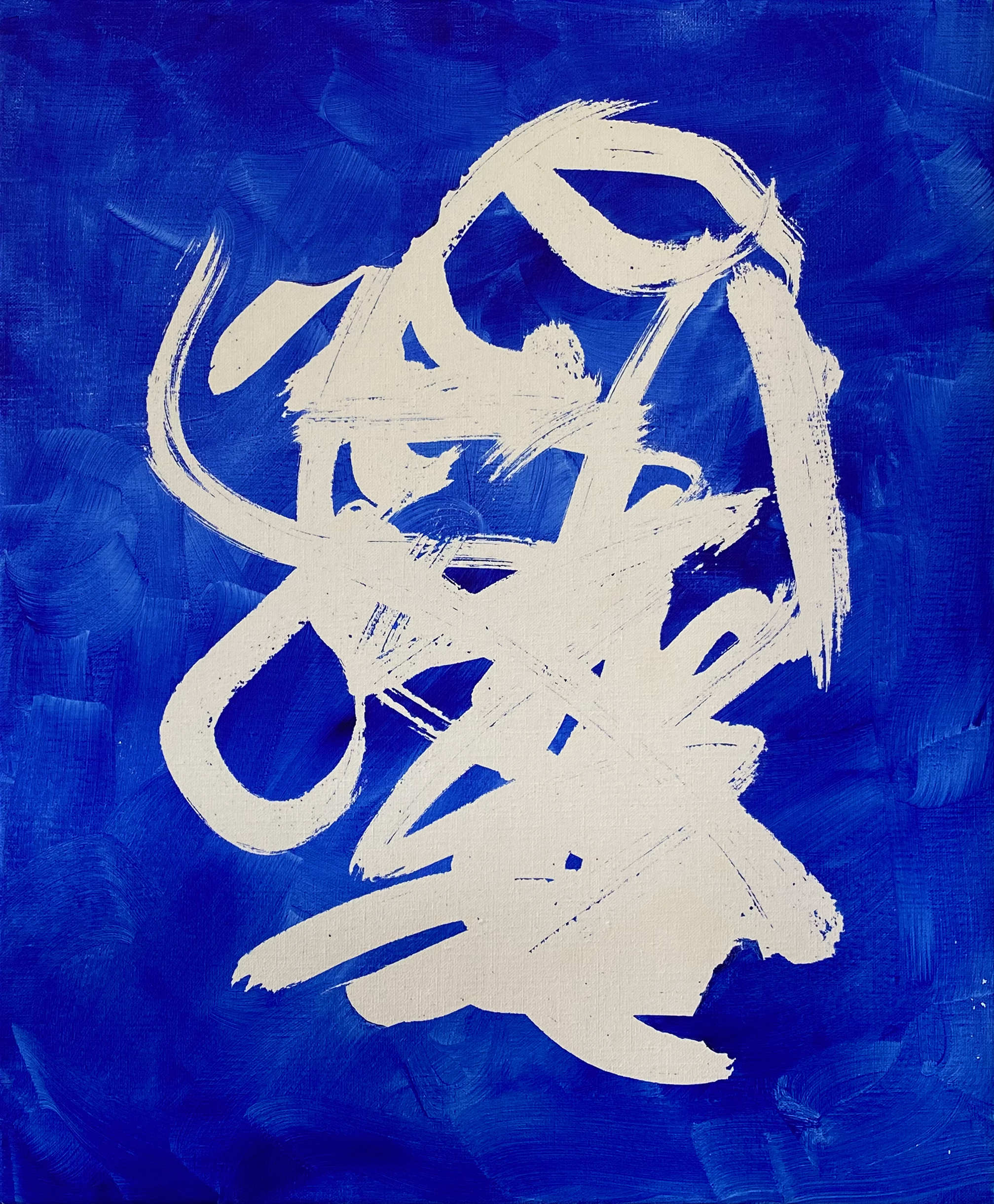
Petervan Artwork © 2021 – Shape on blue – Acryl on Canvas – 60x50cm

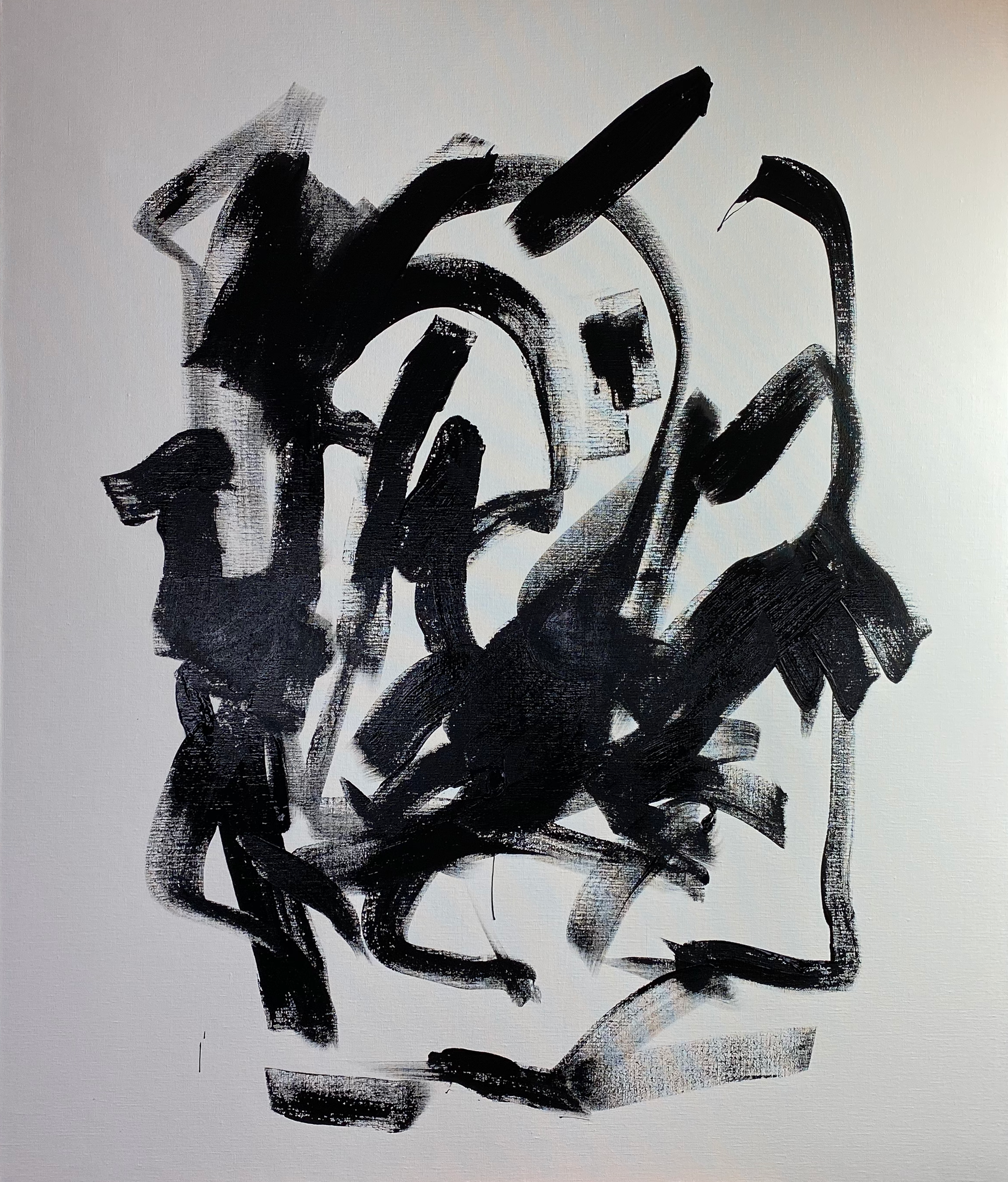
Petervan Artwork © 2021 – Wild Black & White – Acryl on Canvas – 120x100cm
The Bricks Project

Petervan Artwork © 2021 – Drawing – Chinese Ink on Steinbach Paper – A1
Petervan Artwork © 2021 – Video – Brickonomics – Own soundscape
Petervan Artwork © 2021 – Video – Bricks City Animation
Petervan Artwork © 2021 – Video – Zen and the Art of Bricks Drawing
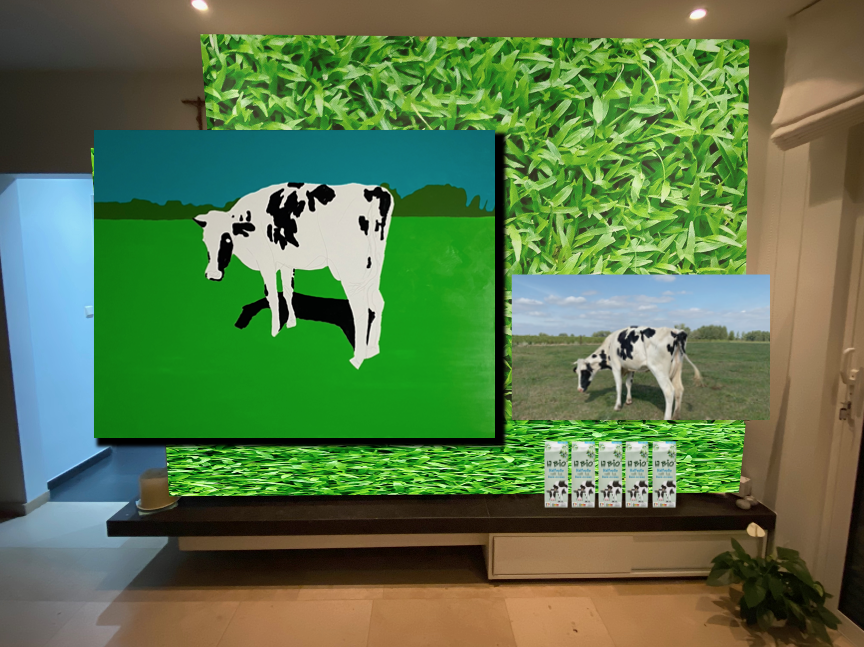
The Cow Project
Introduced as a plan in the Nov 2020 update, I got hooked on cows, if that makes sense. Whatever.

Petervan Artwork © 2021 – Cow-Vid-19 – Acryl on Canvas – 120x150cm
Petervan Artwork © 2021 – Cowonomics – Stop Motion Film

Petervan Artwork © 2021 – Digital CollageCow on chimney on grass with milk tetra packs.
Part of an assignment for the academy specialisation class
Exhibitions
Since last update, I visited following art exhibitions:
C-Mine, Tim Walker, Genk, Jan 2021
Z33, Palms, Hasselt, Jan 2021
Be Modern, Royal Museums of Fine Arts, Brussels, Jan 2021
Danser Brut, BOZAR, Brussels, Jan 2021
Lynne Cohen, FOMU, Antwerp, Jan 2021
Adrian Ghenie, Tim Van Laer, Antwerp, Jan 2021
Kunstuur, Mechelen, March 2021
Alechinsky and Aboriginals, RMFA, Brussels, April 2021
Silence, Axel Vervoordt, Wijnegem, April 2021
Luc Tuymans and AI, BOZAR, Brussels, April 2021
Superstudio Migrazioni, CIVA, Brussels, April 2021
Inge Decuypere, A Joly Boring Thing To Do, Oudenaarde, April 2021
Vincent Geyskens, M-Museum, Leuven, May 2021

Detail of a Karel Appel’s painting “Liggend Naakt” 1957 – Oil on Canvas

The founders of SuperStudio – Painting in Expo Migrazioni

Vincent Geyskens – in M-Museum – Leuven
Outdoors
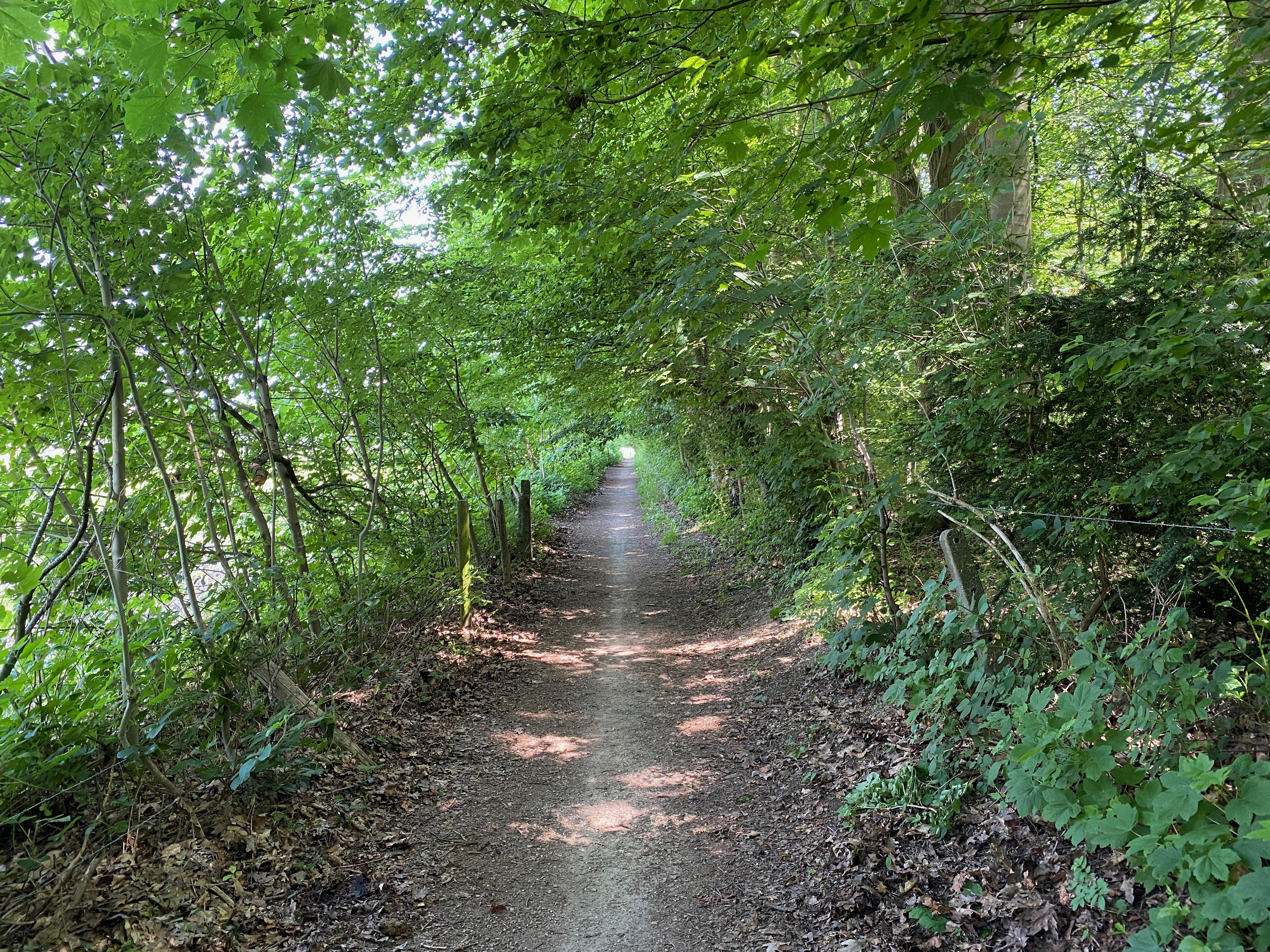
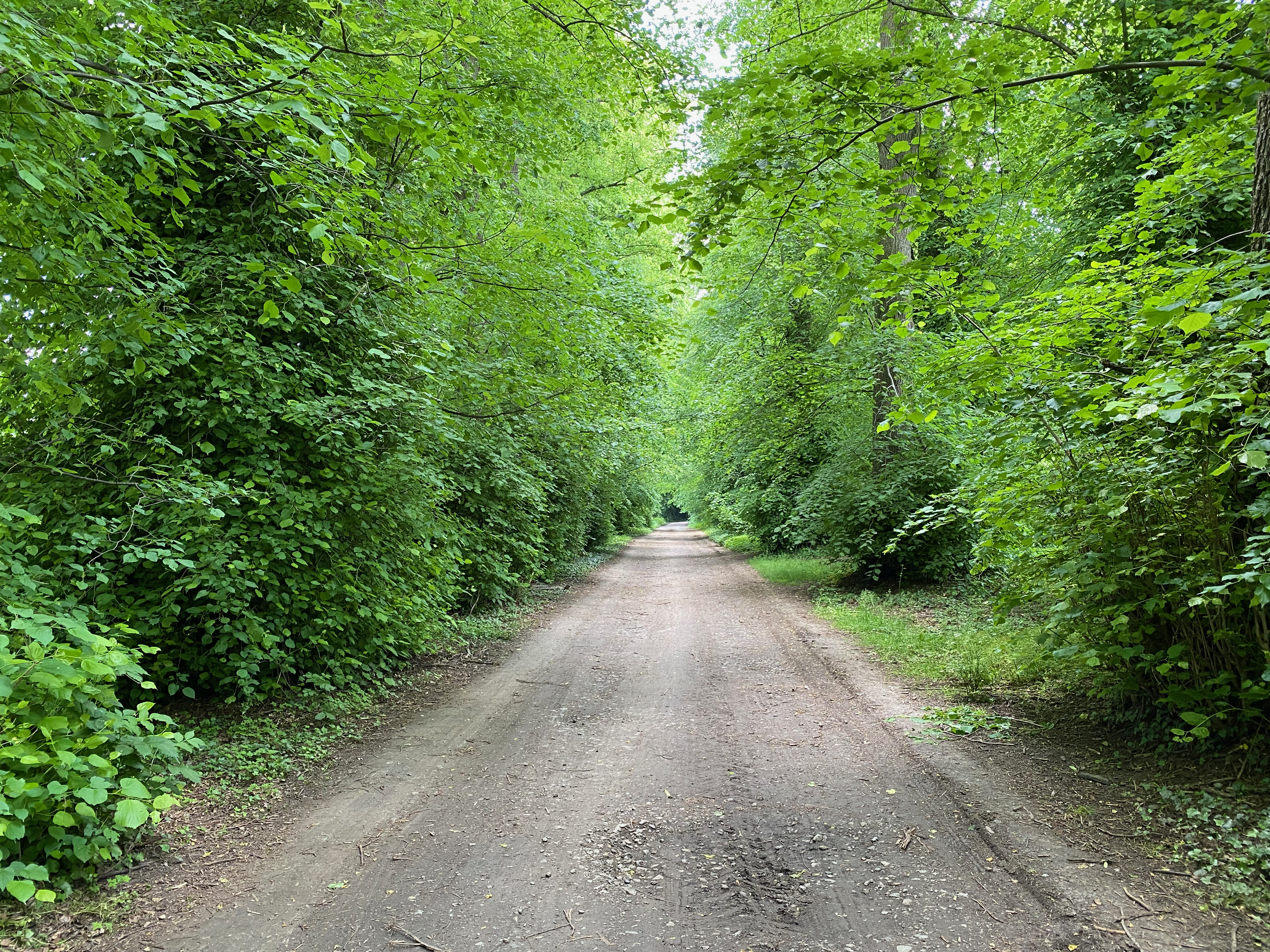
We had a lousy winter in Flanders. I did some walks and bike tours, but not as much as I would love to do. Winter lasted till deep in spring with a super cold and rainy month of May. When June started, the sun was back in full force, up to a point where I started already longing for shadow.


Horses
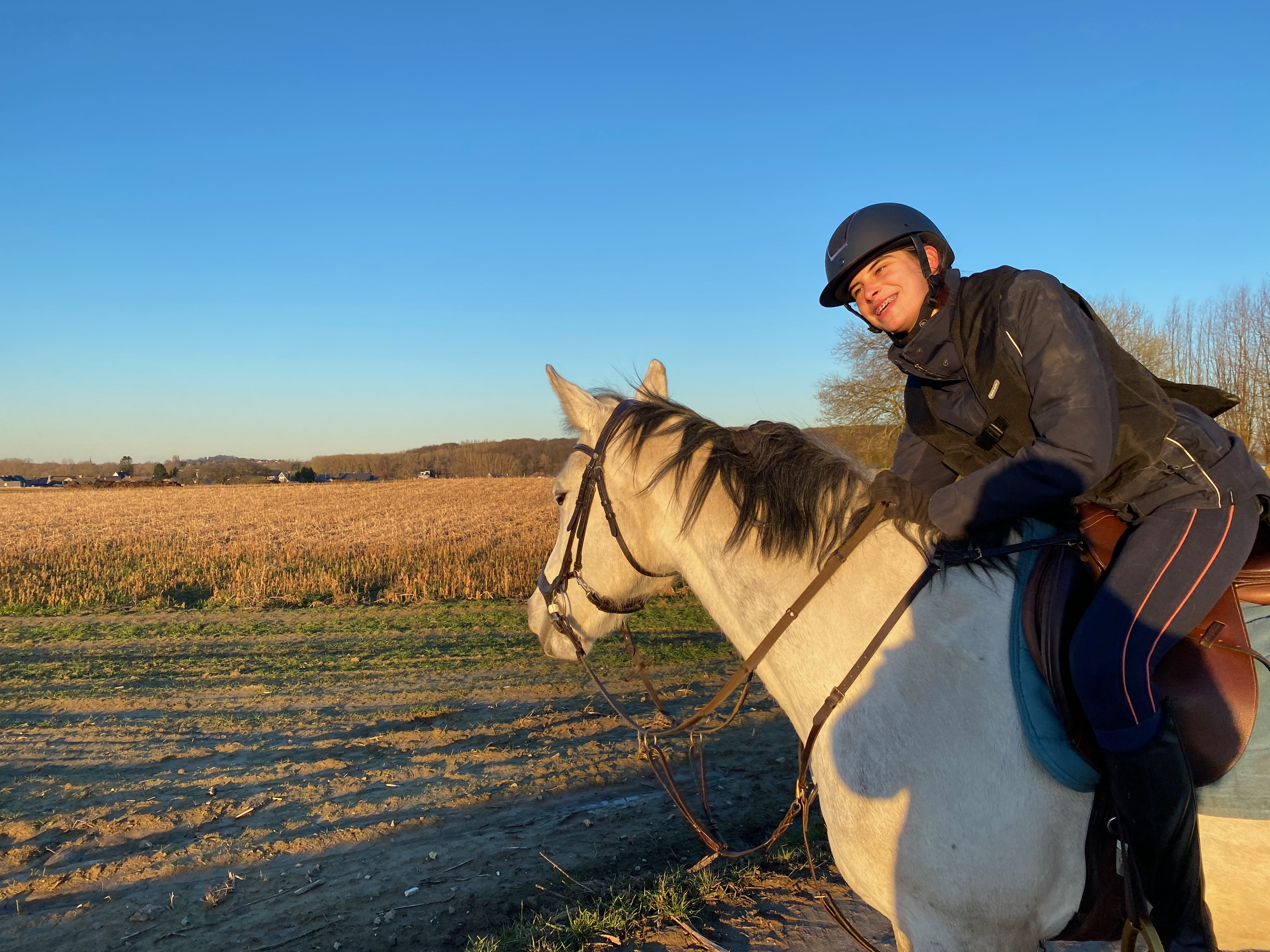
My daughter Astrid loves horses, and that is an understatement. I have become her private taxi driver to/from the stables, and I spend quite some time watching her at the riding school. She needs it very much in this COVID year, and she can really disconnect from school. And on and with the horses, she is in flow. Look at her smile: it makes a father happy too!


Freelance
I am on a new interesting gig for a very respected client. With a small team, we are doing research on what is next-next in financial services, and the research will be followed by several workshops and a private experiential event/tour later in 2021.
This and the previous project in Shenzhen also helped me reflect on different types of workshops: sharing, teaching, mentoring, and inquiry-based workshops, some online, others in real life. I have some concrete ideas on how to bring these to market, together with a supporting team of facilitators, provocateurs, artists, and producers. Contact me privately if interested.
BANI
Already in 2018, Jamais Cascio coined the term BANI. See my post from Aug 2019 and Jamais’ update from April 2020. As mentioned before, I am working with some partners on a virtual multimedia workshop based on this framework, with a specific focus on possible responses to a BANI world. One of our partners got locked in another client project, so we put the project temporarily on hold.
Design Unbound
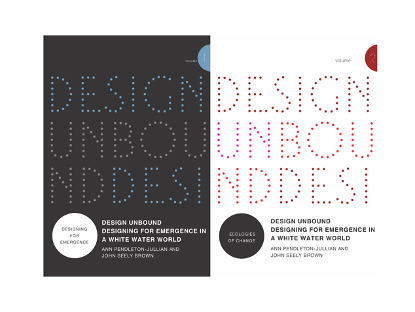
I am continuing my immersion in the work of Ann Pendleton and her insights in Design Unbound: Designing for Emergence in a White Water World. We have found a way to convey this complex material into a matrix-form, with video vignettes, so that the customer can pick and choose where they enter the learning journey.
To give you a sense of the intensity of this work: I have now weekly calls with Ann Pendleton to go through the scripts that will form the foundation of the video vignettes.
We have put together a team to design and deliver a corporate curriculum on this topic. Stay tuned on the “we” and the “curriculum”.
Pirate TV
I released the first episode of Pirate TV – Art Tribe Edition, with my friend Frank Poncelet from the Art Academy in Ghent
There is a very nice queue of artists who have agreed to be the guest in the subsequent episodes: some painters, video artist, and photographers. Initially, the plan was to have an episode every month as from March 2021 onwards. Working with artists and original content authors, I have learned to be patient and more careful in setting expectations on the when and what of the final deliverable, although the pressure of a deadline sometimes – but only sometimes – helps to get to a high-quality experience. We are getting there.
There are now two Pirate TV channels in the pipeline: the Art Tribe edition and the Business edition.
Traveling Without Moving project
Travelling without Moving (TWM) is a series of essays documenting my mental and philosophical journey in 2020-2021.
The main outline was published in November 2020, and in the meantime, several episodes have been released. So far, I have posted seven essays:
The next one will be about “Studios”, studios as a proven way of failing and recovering together, a repurposing of the architecture studio practice of practices. Hope you stay on board.
Books
Check out my GoodReads: https://www.goodreads.com/user/show/3085594-peter-auwera
Some highlights:
The Stack, by Benjamin Bratton
Crossover, by Cecil Ballmond
Making Art Work, by Patrick McCray
Ways of Seeing, by John Berger
Petervan Rides
Since July 2019, I publish every month a Spotify List with new releases combined with some oldies from the 60ies, 70ies, and beyond. Search for “Petervan Ride” and select “playlists”. Subjective selection of course, as driven only by my personal taste (or lack thereof). Next month, we’ll celebrate the second anniversary of these Rides. Time flies!
Here is the latest Ride from May 2021
I suggest you play it in shuffle mode, it enhances the surprise experience.
So, what’s next?
Since I officially retired from corporate life on 1 Dec 2020, I am completely free to do what I want, what gigs I accept, what clients I choose and reject, what I say and what I write. And if nobody cares, that is fine as well, as then I can really do what I want.
This “interesting” work still leaves me enough room and headspace for my art-practice. I wrote a post before on what I consider “interesting”. The keywords are: not done before, risky, and sensemaking through sense-breaking. I feel I have found a good balance and feel happy.
The plan for the coming months is to work/play on (random order):
The Fintech Next-Next Project
“Interesting” Freelance Work
Continuing my Art Practice
Release some Pirate TV Episodes
So, that’s it for this edition. If there is something worth reporting, next update is for Dec 2021.
Warmest,
Travelling without Moving – Inappropriateness
This post is part of a series of essays bundled under “Travelling without moving”.
Intro of that series can be found here.
Petervan Pictures © 2021 – Travelling Without Moving
After the Foam-post of begin April 2021, we continue with “Inappropriateness”, an ambiguous feedback from a client on a rejected project.
In her post “The Change Refusal” https://weneedsocial.com/blog/2021/4/8/the-change-refusal, Céline Schillinger describes the weird situations where she submitted an idea, it was accepted, and then… was not given the permission, the support, or the means to carry it forward.
I had a similar experience not so long ago.
With a small team, we were contracted for a corporate experiment with Pirate-TV, a novel crossover video production.
Depending on whose point of view, it went well to not-so-well.
The production team was and still is super-proud of and committed to the deliverable. But at the very end of the project, the client believed our work was “inappropriate” and banned us from replay.
My good friend Peter Hinssen (Founding Partner of nexxworks) warned me early in the project “Boy, you are in for some fights if you want to pull this one off!”. I shrugged; I had crossed many other bridges over troubled water before.
The project started promising. The client accepted our proposal and briefing to do something radically different. Different in content, mixing, rhythm, visual collision and poetry, that sort of thing. Different, but relevant. Relevant to the ambiguity and uncertainty of the white-water world we are drowning in.
Not a Zoom style webinar with a speaker and a slide deck, or worse, a “fireside-chat” of two boring executives and a CNBC style of journalist, 2 meters apart from each other in white leather seats in front of a green screen that is then filled in with some fake backdrop to look cool.
So off we went. Everything went quite smooth. Too smooth in hindsight.
There was one hick-up in the process. A senior director who did not understand “why the heck we were doing this” almost stopped us. We scheduled a meeting to explain and understand her feedback. “All right, I get it now, make sure you integrate my feedback and questions, but without mentioning my name”, she said.
We incorporated the feedback and answered the questions. We delivered what we believed was a professional end-product, 100% in line with the brief.
But at the very last minute another senior person in the client’s organization intervened from the top, we got banned, and that was end of story.
The explanation? The work was considered “completely inappropriate”.
A request from our side to have a conversation was not honored.
Was it the format that felt too heretic to the executive leadership? Was it something else? We can only guess.
And what does that mean “inappropriate”?
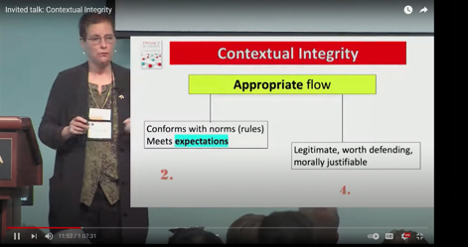
As I was writing this post, I bumped into a presentation about contextual integrity. The talk was in the context of privacy, but I liked the breakdown to be very “appropriate” for my argument.
I believe the rejection had indeed to do with contextual integrities not being well aligned.
If inappropriateness is the opposite of appropriateness, then that would mean that inappropriateness is about not conforming, not meeting the expectations. That the result is illegitimate, not worth defending, morally not justifiable.
So, in other words, we did not conform. Thank God! What a compliment! The brief was to be radically different, no?
We requested if we could release the production under our own brand, “appropriately” edited not to reveal the name and the business of the client. But unfortunately, the client decided we were not allowed to re-use the raw footage. Hour and hours, days and days of brainstorming, recording, editing, soundscaping, video production down the drain.
No worries. We’ll be back. We decided to re-do the whole bloody thing on our own budget, our own tastes, our own reclaimed freedom.
Since then, we have redacted the scripts for the new recordings, did extra research on the content material, and developed a virtual mosaic leaving the audience the choice where the enter the show, and how to complete the narrative journey. It will be the first episode of Pirate TV – Business Edition.
When will it be ready? Shall we say in a couple of weeks? Working with artists and original content authors, I have learned to be patient and more careful in setting expectations on the when and what of the final deliverable, although the pressure of a deadline sometimes – but only sometimes – helps to get to a high-quality experience.
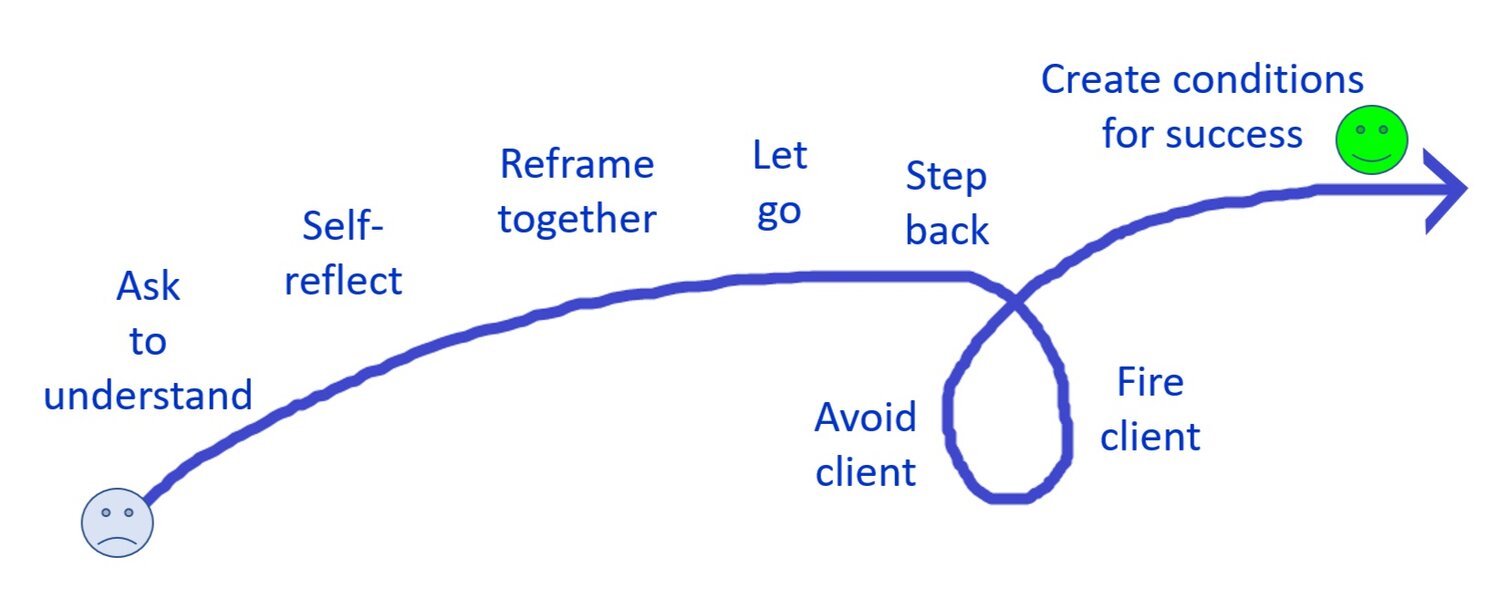
Looking back at Celine’s themes for dealing with rejected work, I believe we went through the full loop. Asking to understand and reframe together with the first senior director, getting banned, avoided, and then picking up the pieces and creating the context for success in our upcoming re-do of the project on our own terms and conditions.

Courtesy Céline Schillinger
As creators, we must take risks, break sense, practice free play imagination.
Sometimes, we must be on the err side of things to know how it tastes.
In that sense, this experience was very rewarding.
Being banned even felt a bit heretic, and almost a badge of honour.
Next time in Travelling Without Moving, we’ll talk about “Studios”, as a proven way of failing and recovering together, a repurposing of the architecture studio practice of practices.
Hope you stay on board.
Warmest,
Zen and the Art of Drawing Bricks
A couple of weeks ago, I discovered by accident a way to get myself in a zen-state of total peace and relaxation. Not that I feel super hectic or nervous, or something like that. Not that I need it. Not that I was in search for it. I just stumbled upon it and I really liked it.
Petervan Artwork © 2021 – 5000 Bricks – Soundscape by Petervan in Logic Pro
It is the very simple – highly repetitive – practice of drawing many many little bricks, black ink on white paper. I am doing this when I am completely alone in my studio, with some repetitive music in the background (see later), and the sound of a ticking clock.
The only other things I hear/notice is the sound of the pen softly scratching the paper, the sound of my breath, a motorcycle or car or plane passing by in a soft distance, a door opening/closing somewhere in the house, sometimes a dog barking, or a dove crying.
I am old enough to remember reading somewhere in the eighties Robert Pirsig’s “Zen and the Art of Motorcycle Maintenance” from 1974.
“As in Zen, the trick is to become one with the activity, to engage in it fully, to see and appreciate all details–be it hiking in the woods, penning an essay, or tightening the chain on a motorcycle.”
It made me think about the repetive art of Roman Opalka who spent a big part of his life drawing numbers from one to infinity.
Roman Opalka by Lothar Wolleh – Sep 2002
But I don’t talk nor record my words while drawing my bricks. I am silent. And listen to repetitive soundscapes. I was looking for some “non-intrusive music”, music without meaning, music without noise, something that did not distract from the content (aka the bricks), but was rather amplifying it. I tried several ambients from Brian Eno, or songs from Robert Frip’s Music for Quiet Moments series and many more.
Until I discovered this AI-auto-generated music library by @alex_bainter.
The “song” that I have used most so far is called “Lullaby”.
Check it out at: https://play.generative.fm/library

Ann Pendleton-Jullian pointed me in the direction of Lu Qing’s work. Ly Qing is the spouse of Ai Weiwei, but she is always in background, not looking for press attention. When browsing her work, I stumbled upon this repetitive work, acrylic blocks on a silk roll of about 20 meters long and 83 cm wide.
M+ Sigg Collection, Hong Kong. By donation, © Lu Qing
This ink painting on a bolt of silk is partially unrolled and drapes over a table. Small dark-grey squares in acrylic paint almost fill the fabric and create a grid. Departing from her early abstract oil paintings, beginning in 2000, Lu Qing has painted on a twenty-five-metre bolt of silk that she buys each year. Small geometric shapes are painstakingly painted on the fabric over the course of the year. Regardless of how much of the cloth is painted, Lu considers the painting complete at the end of the year and begins with a new bolt the next year. The varying shades of dark grey in the work indicate changes in Lu’s emotional state and in the pressure she exerted, and also recall the different shades of black in traditional Chinese painting. The work is a meditative practice in which the process is valued over the end product, and it functions as an abstract record of emotion and time. (from https://collections.mplus.org.hk/en/objects/untitled-2012687)
I ran to my attic, found a roll of cheap white paper of 1 meter wide and 5 meter long, and started drawing. What you see in the video above are the first 5,000 bricks of a “long” work.
Josie Gibson from The Catalyst Network pointed out that my work was multilayered, with the layers being Peace, Mind Wandering, Kairos, Repetitive work, Musical memory anchors.
In my opinion, it also has layers of different types of attention.
Attention to the drawing itself: getting the pattern right, working without no or a minimum of grid/supporting lines, drawing “perfect” bricks, made in one line-flow, for each of them.
Attention to the mind-wandering: making small (at times only mental) notes, reflections about a project, my daughter, my spouse etc.
It’s useless, I know. But it brings me in contact with an unexplored part of myself. It brings me in a Zen state, a state of deep calm and happiness. I am literately and metaphorically losing my time, my-self. Or am I re-finding my-self?
Doing something. Doing the work. Getting lost. In time and space that is. Being one with my practice: it is more important than end product.
Warmest,
Sine Parole – 11 Mar 2021
Unsnap from the Grid
You have been programmed to snap.
Snap to the grid that is.
And I believe we have to unlearn to snap.
We have to unsnap.
I am sure you all have come across some software that has snapping guides, digital magnets to help you stay centered, or aligned, or in synch, or in tempo.
Photoshop is well known for this. You also have it in Powerpoint to help you nicely center your images in the middle of the slide. It is even more apparent in “creative” software like Sketchbook, Procreate, and of course Final Cut Pro. The richest metaphor is probably in music creation software like Ableton Live and Apple’s Logic Pro.
Quantization is a good example of snapping in music software. A human beat/drummer is normally not 100% on the grid. So, if you are a really bad drummer, you can ask the software for help and let it quantize (read adjust) your beats to the grid. Then it sounds perfectly to the beat. Maybe too perfect, as it then sounds mechanic, not imperfect “human”. Of course, there are some additional functions to humanize again the too perfect beat, and so on.
Before Logic Pro quantization:
After quantization (to the 4th Note):
In a more corporate environment, especially post-COVID when we have to/want to do everything on-line – “virtually” – we are getting snapped by tools like Miro and Mural. Especially Miro comes loaded with tons of templates. I am not picking on Miro or Mural, I am just using them as educational examples to make my point.
Example of Miro board templates
This all sounds very exciting, but I am afraid we are getting snapped into a scripted illusion.
This became apparent during a sparring-session with one of my clients, who asked me to review the prep work for a virtual leadership “off-site” (no pun intended ;-).
Wow! That looked really impressive: Miro board after Miro board, scripting a 3-day workshop in all its glory details. To be honest, I personally felt “boxed”. But apparently, the executives participating in the workshop felt they were doing a great job and were pleased to see how everything got nicely boxed. It gave a feeling of being in control.
The illusion became complete when I learned that the workshop was in support of the number one priority project of the company, and it became apparent that none of the participating executives had any intention whatsoever to collaborate with the others. One guy was appointed as project lead and 100% of his time allocated to this, but the other 14 project members had at best 10% of their time locked down. And this for the company’s priority one project.
They fully satisfied filled 20+ online boards, and then… nothing happened.
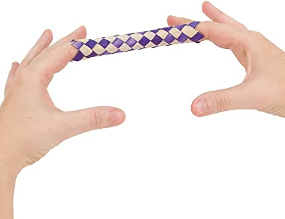
Unsnapping is similar to unstucking or unfreezing. A good metaphor for stuck/unstuck is the Chinese Finger Trap. You are getting stuck by only seeing one solution to get out of the trap: by pulling. The trick is to stop pulling and to start twisting.
Unsnapping is about unfreezing yourself and to get into your human rhythm/pace/tempo, without being quantized.
Unsnapping is about surfacing and seeing stuff that are de-railing the client without them noticing. Like putting in your face that the participants to the number one project have no intention to work together.
To see that twisting is also an option.
Unsnapping is not comfortable. Because it confronts you with being scripted, being programmed, and noticing that you have become a cog in snapping machine. Unsnapping may feel anxious. Because you are in unknown territory. Anxious as in my blog post from the Travelling without Moving series.
I am experimenting with some clients to offer an “Unsnapping Service”. To un-bind people from the “grid-lock”. To let go of the grids and snaps and re-finding your agency out of the grid. To sustain the creative tension that makes real change possible, to avoid snapping-back out of the creative tension.
I am using tools and techniques such as visual and audio collisions, artistic interventions, weirdness, and intentional silence. In some sense you could call me an elegant disruptor and connector. Connecting the unexpected. Disrupting through experimental and free imagination and association.
In most cases I am invited as an observer, but with a license to intervene at will or on command, a license to snap/unsnap, a license to provoke.
Josie Gibson from The Catalyst Network suggested I may be onto something. And that maybe I should start considering an Unstuck Manifesto or at least Unstuck Principles. Maybe, if I get unstuck from the grid of outdated practices 😉
Any views/suggestions/critiques warmly welcome. You can react in the comments field of this post or contact me in private.
Credit: the initial seed for unsnapping came during a conversation with Scott Smith (@changeist) and John V Willshire @willsh from Smithery. I am just playing around with that initial idea.
Warm regards,
Sine Parole – 6 March 2021
Sine Parole – 28 Feb 2021
Petervan draws bricks in monk pattern. Chinese ink on Steinbach paper. Format about A4.
Soundtrack with Behold instrument in Logic Pro.
Sine Parole – 19 Feb 2021
Travelling without Moving – Pause

This post is part of a series of essays bundled under “Travelling without Moving”.
Intro of that series can be found here.
After the Silence post of last week, we continue with Pause.
In “Silence”, I mentioned “Stop the clocks – Manifesto for a Slow Future”, Joke Hermsen’s book about Silencing the Time. Minutes after I published that post, I got a notification of a new book by Joke Hermsen
“Ogenblik & Eeuwigheid” or “Moment & Eternity” opens with Joke’s reflections on a Kairos/Chronos exhibition she curated in 2017 in the Gaasbeek Castle south of Brussels. Coincidence or not, but I happened to be there, and here is a video of one of the installations exhibited then.
I wrote about this exhibition in “About Time”
“This is about that mysterious moment when our soul is unguarded and spreads out its wings. Kairos manoeuvres virtuoso between two worlds: the measurable and the immeasurable, the known and the un-known, backing out of our knowledge, covertly showing us a glimpse of the possible”
Her new book is once again about Chronos and Kairos and the potential of art to move us into the surplus of Kairos
Het surplus aan tijdservaring die de kunst voor ons in petto heeft verschilt aanzienlijk van het louter meten van tijd op de klok.
The surplus of time experience made available by art is quite different from the pure measurement of time
Artists covered/mentioned are:
Sean Scully
Virginia Woolf
Hilma Af Klint
Marlène Dumas
Thomas Mann
Mark Rothko
Hannah Arendt
Edmond Jabès
But this post was to be about Pause.
Robert Poynton wrote a book about it.
I highly recommend it.
Robert lives between Oxford and a remote Spanish town west of Madrid. In Spain, he lives off grid – literally and metaphorically.
His remote, hilltop house is even off the electricity grid.
It is also the place where he contemplates.
Intro https://www.robertpoynton.com/
Together with Josie Gibson from The Catalyst Network, we started some 1-1 calls to share what these books trigger for us and our communities. We decided to start a small experiment: we read a chapter of the book, schedule a 1-1 call to let flow our minds, record it, and share it with our communities.
Very down to earth, no tricks, no gimmicks, just a gentle and calm wandering and meandering of minds from two opposite sides of this earth. One person from Melbourne, Australia and one from Aalst, Belgium; one person in autumn, one in spring.
These are very calm conversations; so best is to take a pause, install yourself in a quiet corner and enjoy!
Episode-1 on “Why Pause?” is here.
Episode-2 on “What’s in a Pause” is here.
Episode-3 on “Habits” is here.
Episode-4 on “Design” is here.
Episode-5 on “Culture” is here.
Episode-6 on “Tools” is here.
Episode-7 on “Time to Pause” is here.
Episode-8 on “Afterword” is here.
“Everything is an offer”, Robert writes in Pause.
It is an invitation to calm and tranquility as powerful sources of vitality ànd relaxation.
Yes! They can go together.
But sometimes the rhythms of an ordinary day offer stillness as well.
Even the ticking of the Chronos clock as a background soundscape can bring me in a state of calm and stillness.
Like monks doing their miniatures.
I found this online clock that ticks for 12 hours.
It’s the only thing it does.
And in the meantime, I am drawing thousands of little bricks in brick bonds.
It’s useless, I know.
But it brings me in a Zen state, a state of deep calm and happiness.
I am literately and metaphorically losing my time.
In a recent newsletter update about “pottering” in his garden, Robert wrote:
“When I do what I am drawn to, I am absorbed by my surroundings – by what I see, or hear, or smell. My attention is open, soft, pliable. This stills something inside me and I find a kind of quiet calm.”
“This stillness is something that is given to me, not something I create. It is a gift; and one I cherish. It is settling, if not nourishing to be reminded that the worries and concerns that bother me so, are mostly of my own invention. And that moving around can help me to be still.”
I am attracted by Robert’s pause, his stillness as a gift.
A place where I want to hang-out, where I can lose my Chronos time.
In the meantime, I got many conversations with Robert. I shared with him my ideas on creating better gatherings, beyond “conferences” as entertainment, but more as learning experiences, resonating beyond the cognitive, and how we can do much better than just copying the analog.
(Not) to my surprise, Robert spent a lot of time as well on how learning can be done better, differently. And together with Alex Carabi, he created Yellow Learning. I mention it quickly here, as Yellow is one of the other keywords in this series Traveling without Moving.
Check it out:
https://www.yellowlearning.org/
I was part of the second cohort ending next week. Yellow is fee based. But worth its money, trust me. If you are interested, the call for the next groups Jan-June 2021 is open now.
Apply here: https://www.yellowlearning.org/apply-to-join
Next time, we’ll talk about “Play”
Hope you enjoy the series.
Warmest,