Innotribe at Sibos Osaka: Innotribe Health Index

This blog post shares some more details about the Innotribe Health Index. This session will take place on Monday 29 Oct 2012 from 11:00 till 12:15 in the Innotribe Space. The overall Innotribe Program at Sibos is here, and I try to keep that post up-to-date with the very latest speaker and program announcements.

Whereas we are sure that the main conference will cover main topic areas and trends such as Global Shifts in Economic Power, Regulation, and the financial crisis, Innotribe would like to propose some alternative lenses based on New Economies and New Values thinking, aimed at accelerating a positive re-balancing.

The Innotribe Health Index is a brand new Innotribe initiative. Through six different lenses (Reputation and Sentiment, Social Data Capital, Big Shift Readiness, Technology Readiness, Urbanization and Inequality, and Agility), we will try to give an alternative ‘health check’ of the financial system.

The intention is that the Innotribe Index is an annual checkpoint, where this year we establish the baseline, and in subsequent years we look at the progress we make versus this baseline.

The effect we want to create is a bit like the famous “state of the union” update on Internet trends by Mary Meeker (who moved last year from Morgan Stanley to Kleiner Perkins Caufield Beyers).

Here is the data-avalanche presentation by Mary Meeker of last year at Web 2.0 Summit in San Francisco:

That went fast? Yes, indeed. Like a jet-airliner flying through your living room!

We will at least go as fast, if not faster. Indeed, this session is designed as a “high-speed” session.

Each igniter (that’s how we call our speakers) will give a power talk on their specific lens, and where possible come-up with a readiness index score from 1 – 10, giving a sense of the readiness of our community for that particular challenge. That’s six lenses in one hour!

Some background on our igniters for this session, and why we invited them to be part of this session:

Julius O. Akinyemi

Julius is the initiator of Unleashing the Wealth of Nations project and the Resident Entrepreneur at MIT Media Lab in Cambridge, Massachusetts.

The objective of this initiative is to effect a sea-change, a quantum leap for ordinary citizens of developing economies to move from day-to-day survival mode to a personal wealth creation and growth via asset ownership, registry, and mobilization.

To unlock the wealth of nations, we aim to provide practical solutions tailored to the local environment that leverages the convergence of existing technologies. By registering people, their assets, and life events in an eRegistry, and through economic modeling, we will work to mobilize the currently dormant trillions of dollars in local assets in developing nations in order to generate local capital that fuels the economy via asset securitization.

Julius will come with a “Social Data Readiness Index”, as we see the availability of people’s social and identity data as one way to create financial inclusion. This topic will also be covered during one of the breakouts of the Digital Asset Grid session to showcase that unlocking data assets has an important role for the bottom of the pyramid.

Wouter De Ploey
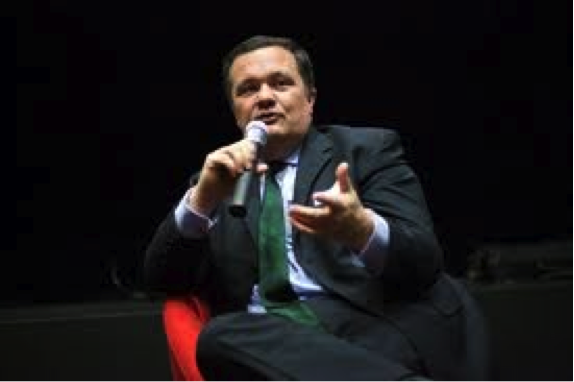
Wouter is Director in Business Technology Office, McKinsey & Company.

He will present results of research done by the McKinsey Global Institute on global economic trends, including urbanization, resource markets, capital markets, and productivity and growth, with a focus on Asia.

  • The landscape for supply/demand of labor is changing dramatically: where are the jobs for skilled/unskilled workers? Is the inequality in wages going up/down?
  • More and more people live in cities. Urbanization is driving a lot of growth. McKinsey identified 450 emerging market cities. Capital follows activity. Access to capital gets tighter and more localized. Do banks have the right local footprint?

“What’s the readiness of banks to confront these meta-challenges?” is the subject of this lens.

John Hagel

John is Co-chairman, Deloitte Centre of the Edge. He very much supports out-of-the-box and catalyst new ways of thinking. That is for sure one of the many reasons why John is one of the enablers for the Innotribe incubation activities.

John writes regular for HBR, on his own blog, and has published several book. His latest “The Power of Pull” (Amazon Affiliates link) has become a business classic, where John highlights how we move from Knowledge Stocks to Knowledge Flows.
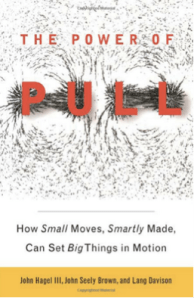
This shift is also at the basis of the Big Shift Index that Deloitte’s Center for the Edge has developed to provide a clear, comprehensive, and sustained view of the deep dynamics changing our world, and what companies can do to address them.

The Big Shift Index consists of 3 indices and 25 metrics designed to make longer-term performance trends more visible and actionable. You can download the Big Shift Index here (PDF file)

We are very proud of having such a thought leader as John Hagel with us at Innotribe Sibos to present the Big Shift Index. You don’t want to miss John’s authentic take on this fascinating subject.

Michael Jones

Michael is VP of Technology, Dachis Group. We have invited Michael to present the Social Business Index.
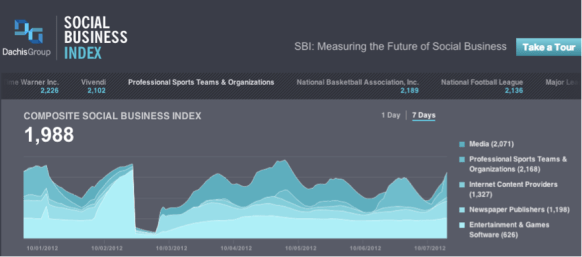
This index is built on top of Dachis Group’s Social Business Intelligence Insight Platform, analyzes the effectiveness of strategies and tactics organizations employ to engage the market through social channels.

The Social Business Index analyzes signals from over one hundred million social sources globally and analyzes the performance of the largest global companies and thousands of those companies’ brands. The Index is generated through the use of natural language processing, semantic analysis, and machine learning algorithms.

Think about it as a machine learning engine.

Michael will do a drill down on the data they have available on financial institutions.

William Saito

William is Founder & CEO, InTecur, K.K.

He is an entrepreneur, venture capitalist, public policy consultant and educator who has founded start-ups, managed corporations and worked on global information security policy over the past two decades.

To build entrepreneurial spirit in Japan, Saito also acts as CEO for the Innovation Platform Technology Fund (IPTF), a venture capital fund established by ex-Sony CEO Nobuyuki Idei and Kazuhiko Toyama, the former COO of the Industrial Revitalization Corporation of Japan (IRCJ). The IPTF seeks to produce more successful global ventures in Japan by creating a genuine venture environment.

Saito is active in several roles with the World Economic Forum (WEF). In 2011, he was named a Young Global Leader.

He is also Chief Technology Officer (CTO) of the Fukushima Nuclear Accident Independent Investigation Commission, the first such commission ever appointed by Japan’s national legislature.

With his strong entrepreneur role and his extra-ordinary international perspective, we have asked William – who now lives in Japan – to come up with “The William Saito Index”, an index reflecting agility readiness in financial services.

It will be a very personal take reflecting on entre- and intra-preneurship, in Japan and globally.

Michell Zappa

Michell Zappa is a Berlin-based technology futurist who has spent part of his life between London, São Paulo, Stockholm & Amsterdam.

His work, called Envisioning Technology, focuses on explaining where society is heading in the near future by extrapolating on current technological developments.

His research facilitates understanding the field for those who work in technology by painting a bigger picture of where the landscape is heading. In this, he tries to guide both corporations and public institutions in making better decisions about their (and society’s) future.

I met Michell through a tweet that was forwarded by one of my followers. Once we connected, we immediately spotted a fantastic opportunity to describe the readiness of financial institutions through an amazing interactive infographic. As we get closer to Sibos, we’ll release some pre-views of these amazing insights.

Coming soon: previews of Michell Zappa’s infographic on technology readiness of banks: short, medium and long term.

Michell has really surprised me with his fresh take on technology readiness, and I am very excited by the work-in-progress that I have seen from him in preparation for this session. Next year, I would love to give him a full hour.

So, in summary, fasten your seatbelts for this “faster-than-light” session, were you will be immersed in the readiness of financial institutions based on six different alternative lenses.

See you all in Osaka! Monday 29 Oct 2012 from 11:00 till 12:15 in the Innotribe Space.

By @petervan from the Innotribe team

Innotribe at Sibos Osaka – Future of Big and Small Data

This blog post shares some more details about the Future of Big and Small Data session. This session will take place on Wednesday 31 Oct 2012 from 12:30 till 15:30 in the Innotribe Space. This Future of Data session is leading into the next session on Digital Asset Grid. The overall Innotribe Program at Sibos is here, and I try to keep that post up-to-date with the very latest speaker and program announcements.

Picking up where we left off last year with Big Data, this session will de-mystify what we think we know about data. We will hear opinions of different experts and judge together what are the hard facts, half-truths and complete unknowns about data today: big, small, broad, real time. We will dive into artificial intelligence, augmented reality and algorithms and how they impact our analysis and use of data.

This will be one of those Innotribe sessions, where we go “all the way” with super igniters (that’s how we call our speakers) and the amazing group techniques from Innotribster Mariella Atanassova and her team of designers and facilitators.

We will indeed design this session

as architects of serendipity,

creating collisions of ideas,

leading into

immersive learning experiences

The high-level design of the session is organized around debunking the myths that exist about data. We will look at this from different angles:

  • Who is consuming the data: people, business, devices, applications, API’s (Application Program Interfaces)
  • Technical and human aspects of data creation, data usage and data management
  • The different lenses offered by our igniters

I would like to share a bit more about our igniters for this session and why we have invited them:

For the more “technical” angle on the subject:

Sean Gourley, CTO, from Quid.

Sean Gourley is originally from New Zealand and now based in San Francisco where he splits his time between Mathematical research and his venture backed startup Quid.

He has a PhD in physics from Oxford, and his academic research has taken him from Nanotechnology to Complex Systems and the Mathematics of War. Prior to Quid he worked at NASA Ames in Mountain View, Exclusive Analysis in London, and a (very) brief stint as a consultant at BCG in Chicago.

Sean started Quid back in Dec 2009, and they are doing some pretty amazing things with data, mathematics and visualization. They are building a global intelligence platform, a place where open source intelligence is collected, structured and visualized to help people understand and make better decisions about the complex world we live in.

Sean is currently CTO of Quid. Their corporate slogan of Quid is “Augmenting Our Ability to Perceive this Complex World™ ”

http://www.youtube.com/watch?v=V43a-KxLFcg&feature=youtu.be

Sean will talk about the war of algorithms, a world of machines where black-swans almost become the norm. I have already mentioned this fantastic talk in my blog post about “The Cambrian Explosion of Everything

Amir Halfon, CTO for Financial Services , MarkLogic

It is Amir’s fourth Innotribe at Sibos.

Before Amir recently joined MarkLogic, he was with Sun/Oracle for more than 12 years, where his last position was Chief Technologist specialized in Financial Services. MarkLogic offers next-generation database technology capable of handling any data, at any volume, in any structure. So, Amir brings the enterprise perspective.

This will not be a product pitch. We specifically invited Amir for his rich background in financial services and his familiarity with the Innotribe-way of doing things, so we can tap into his broad experience to map the generic big data concepts to our specific market.

Anant Jhingran, VP, Data, Apigee

I met Anant for the first time last year during Defrag 2011, where we had breakfast with Sam Ramji, Head of Strategy at Apigee.

Anant is VP of Data at Apigee. Before he 21 years with IBM where he was VP and CTO for IBM’s Information Management Division, Co-Chair of IBM wide Cloud Computing Architecture Board and one of the “IBM Fellows”.

He is our ideal igniter to talk about data as seen by API’s. However, in the session preparation talk I had with Anant, he already highlighted that discussions about APIs are very people centric in the enterprise:

“What is the governance for publishing the APIs? Some enterprises insist on a central gatekeeper for APIs, others believe in a decentralised Darwinian model.”

Anant blogs regularly. Check-out here how his new start-up life changed his thinking. I love his quote:

“Coding is liberating”

Alexander D. Wissner-Gross, Institute Fellow, Harvard University Institute

Alex is an award-winning scientist, inventor, and entrepreneur. He serves as an Institute Fellow at the Harvard University Institute for Applied Computational Science and as a Research Affiliate at the MIT Media Laboratory.

He has received 107 major distinctions, authored 13 publications, been granted 16 issued, pending, and provisional patents, and founded, managed, and advised 4 technology companies, 1 of which has been acquired. In 1998 and 1999, respectively, he won the U.S.A. Computer Olympiad and the Intel Science Talent Search.

In 2003, he became the last person in MIT history to receive a triple major, with bachelors in Physics, Electrical Science and Engineering, and Mathematics, while graduating first in his class from the MIT School of Engineering. In 2007, he completed his Ph.D. in Physics at Harvard, where his research on smart matter, pervasive computing, and machine learning was awarded the Hertz Doctoral Thesis Prize.

His work has been featured in over 100 news outlets worldwide including The New York Times, CNN, USA Today, the Wall Street Journal, and BusinessWeek.

Alex will share how HFT is driving a latency arms race. He has a fascinating story about “Sea-Steading”, where financial institutions start building operating centers in the middle of the ocean, just to win a couple of mille-seconds in latency.

He has developed an algorithm that calculates the best geographical spot for an operating center, based on a number of criteria given by the customer.

For the more “human” angle on the subject:

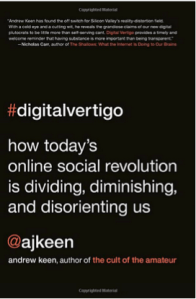
Andrew Keen, Author, Andrew Keen Productions, Author Digital Vertigo

I am very proud to have Andrew Keen on board. Andrew Keen is an Anglo-American entrepreneur, writer, broadcaster and public speaker. He is particularly known for his view that the current Internet culture and the trend may be debasing culture, an opinion he shares with Jaron Lanier and Nicholas G. Carr among others.

Keen is especially concerned about the way that the current Internet culture undermines the authority of learned experts and the work of professionals.

He is sometimes called “The Anti-Christ of Silicon Valley”. He is the author of the international hit “Cult of the Amateur: How the Internet is Killing our Culture” which has been published in 17 different languages and was short-listed for the Higham’s Business Technology Book of the Year award.

Andrew just published his new book about the social media revolution, “Digital Vertigo” (Amazon Affiliates Link), a book I highly recommend, and the thinking developed in this book is the main reason why I invited Andrew to Innotribe at Sibos.

Following extract is typical Keen-speak:

“I am dreaming of a Web that caters to a person who no longer exists. A private person, a person who is a mystery, to the world and—which is more important—to herself. Person as mystery: This idea of personhood is certainly changing, perhaps has already changed.”

He is a real “contrarian” and therefore our ideal igniter to challenge all your assumptions on data and social media. The myth he would like to challenge is:

“the myth that social media

brings us closer together

and unites the human race”

Daniel Erasmus, Owner, The Digital Thinking Network

I was introduced to Daniel Erasmus by Brewster Kahle (who was critical for the Google’s book digitization) during Jerry Michalski’s retreat when he heard about the Digital Asset Grid. Because Daniel was doing some really advance scenario thinking for some clients in the financial industry, Brewster thought i should meet him.

Since then, I enjoyed numerous calls with Daniel on the importance of scenario thinking, and it was almost by accident we stumbled upon his start-up NewsConsole™, which is all about big data and the co-existence of man and machine and the world of augmented reality, in the sense of augmented information reality.

“Every day, an exabyte of information is created – an amount equivalent to half of all information created up to 2001. You will not read it, nor will any other individual, but some of it will be critical to your business.”

NewsConsole™ reads more than a million news articles per day to give its clients strategic overview of today and tomorrow’s news.  The Console is in use in the Financial Services, Governmental, the Energy and other sectors.

I love the way he talks about big data:

“Big data sells the story of “the eyes of god”: sometimes it is there, sometimes is  not. It’s about sort of half-truths, I would call them contingent-truths, as half-truths” has something negative”

and

“We see a computation a-symmetry. Google (for example) can do calculations on my data, but I cannot. This a-symmetry will have stunning implications on the power balances in the world. 20th century is all about “mass”. The 21st century is about the interface of one”

Daniel is a very erudite and versatile international businessman. In his scenario thinking work, he uses similar facilitation techniques as the Innotribe team, so Daniel will move between the spaces of advocacy and facilitation.

As for the other Innotribe session, you see that we put quite some effort in architecting, content curating, designing and facilitating our sessions.

We want to do more than just “events”

and listing some speakers.

We’d like to offer you

a memorable experience

In summary, this session is about debunking myths about data. What is the myth YOU would like to debunk? Let me know via the comments option of this blog post.

See you all in Osaka! Wednesday 31 Oct 2012, at 12:30 in the Innotribe Space.

By @petervan from the Innotribe team

Innotribe at Sibos Osaka: Digital Asset Grid

This blog post shares some more details about the Digital Asset Grid session. The session Digital Asset Grid will take place on Wednesday 31 Oct 2012 from 16:00 till 17:30 in the Conference Room-3. It is part of the Main Conference sessions of Sibos. The overall Innotribe Program at Sibos here, and I try to keep that post up-to-date with the very latest speaker and program announcements.

I have written extensively about the Digital Asset Grid in previous blog posts. Most recently in Banks-as-a-Platform and the Cambrian Explosion of Everything, all reflections on what it means to live in a hyper-connected world, to be immersed in the digital age.

We swim in a sea of data and the sea level is rising rapidly. Tens of millions of connected people, billions of sensors, trillions of transactions now work to create unimaginable amounts of information. A new environment requiring a lot of adaptability. We are species from the land that have to learn to live in the ocean. Like camels that used to live in the desert, that now have to survive in the ocean.

A new environment requires a new design.

The digital age and making the new design presents both threats and opportunities for Banks:

  • Dis-intermediation and erosion of market share by new entrants, telco’s and dominant technology companies threaten the position of Banks – and are increasing in velocity – reducing margins and profitability.
  • But there are also opportunities: new sources of rich information are multiplying, and the information that is available is being digitised.

Every business is becoming a digital business,

also banks and financial institutions

However, the potential benefits of the explosion in number of nodes and the data volume explosion are being squandered due to low levels of trust, concerns about security, and barriers to monetisation. The Digital Asset Grid has the ambition to tackle these challenges.

The Digital Asset Grid is a research project by Innotribe, SWIFT’s Innovation initiative for enabling collaborative innovation.

The Digital Asset Grid is probably one of the most forward-looking incubation projects of Innotribe.

The project proposes a new infrastructure

for banks to provide a platform

for secure peer-to-peer data sharing

between trusted people, businesses, and devices

The Digital Asset Grid does for data what SWIFT has already done for payments: providing a new scalable global network that supports “digital data banking”, a trusted peer to peer sharing of any digital asset between two or more nodes on the network. Banks existing qualities in management of de-materialized assets (today this is money but tomorrow this will be data), trust, regulatory compliance, market coverage and risk management puts them in a unique position to assume this role.

Indeed, with the Digital Asset Grid, we believe we are setting the direction for creating an internet-scale digital platform for information logistics.

The Digital Asset Grid acts as a digital map which describes:

  • The location of the data,
  • The trust framework governing access,
  • The digital identities who have access to that data, and
  • The usage rights these identities have under trust frameworks.

It overcomes the “data frictions” such as lack of security and trust and enables data to flow, leading to the creation of a low cost eco-system of revenue generating apps & services.

In addition, the Digital Asset Grid leverages SWIFT’s core skills and competences regarding governance, identity, security and operational excellence, establishing thus a global data-sharing platform as ubiquitous and reliable as today’s global banking network.

As part of the research, we wanted to go beyond mere PowerPoint presentation of a concept. What we have done is building an end-to-end prototype, with working applications and a working back-end infrastructure, together with a solid business story that is the result of a consultation with several banks of our community. In addition we produced a “foresight”-video of possible use cases.

Innotribe and its collaboration partners will present this prototype at Sibos on Wednesday 31 October 2012 from 4pm – 5:30pm in Conference Room 3. The session is part of the Main Conference Sessions of Sibos.

What we will show-case is:

  • A very strong opening with a strategy story by Antonio Benjamin – Global Chief Technology Officer & MD Citi GTS/ICG
  • A exciting intro into the changes in the digital data landscape
  • A brand new HD video – in the style of “Flowers for Grandma” and “Fly me to the Moon”, taking you into a not so far future 2013-2014, and showing in life environment of what is possible with current technology and the apps that we have built as part of the prototype.
  • A working prototype of the Digital Asset Grid server, server code and APIs
  • 4 applications illustrating the power of the Digital Asset Grid; some apps are relevant for the retail space, others are more relevant in a B2B context.
  • A compelling Business Story, where the opportunities are categories in three groups:
    • Creating new revenue streams through monetization of existing and new data assets
    • Doing the same better
    • Delivering New Services

But it would not be Innotribe if we added some elements of performance and interactivity. I can’t reveal everything in this blog post, but the staging of this session will include a motorcycle and smoking server.

Also, we will have facilitated breakout sessions to create an immersive learning experience for the audience. In these breakouts you will have the opportunity to get into person-to-person conversation with the developers of the applications and the back-end infrastructure, and the partners who have built the Business Story.

And at the end, Yobie and senior representatives from two other major banks will wrap-up the sessions with some suggestions on the way forward. And we’ll have some other surprises and some very cool announcements, which of course I cannot share now, if not you would not come to the session 😉

The Digital Asset Grid offers Banks the opportunity to transform their industry, making them and their customers more efficient, generating new value and enabling Banks to launch a range of new services – it is a game changer.

The financial industry has a unique chance to seize this opportunity and position themselves in a very compelling competitive position in a future of real-time information logistics.

I cannot enough emphasise the importance of the Banks-as-a-Platform meme: it means that the value creation moves from the centre to the nodes. The market used to think in monopolistic, silo-ed service providers, that put themselves in the middle of the nodes-universe, leading to non-interoperable silos of data and value creation. By moving from a central to distributed architecture at internet-scale, banks suddenly have the opportunity to be themselves the platform, with SWIFT as a shared beacon of governance and trust.

I believe this is a “good” project. Good for our industry. It comes at the right time and at a tipping point where we see an evolution towards a peer-to-peer economy between trusted nodes in the grid.

It is fantastic that SWIFT – through the Innotribe Incubation Fund – makes this sort of research and experimentation projects possible.

Incubation is in my opinion indeed about “catalysing ideas”: it is about setting waves of thinking into motion, planting seeds in the brain, and getting the chance to develop those ideas in full so that they become foresight scenarios that become in their turn reference points for decision making.

Only when you have some strong foresight scenario/reference in your brain, you can spot and recognise the disruptive change signals from the market and make relevant and inspired decisions on “what would I do if this scenario happens?”

The Digital Asset Grid is one of those foresight scenarios of a catalysed idea, a strong testimony that innovation beyond adjacencies can happen in more traditional environments.

The team has done a great job in depicting the “foresight reference model” of a not-so-far-out possible future. The test for our community will be to validate whether we can rally ourselves to take the foresight model out of its incubation sandbox and move it to the next phase of acceleration and do it for real.

I am very excited to be able to share soon with a wider audience the results of the last couple of months of hard work, and I am very curious to see how and when our industry will seize this opportunity. I feel privileged to witness this turning point, and I am deeply grateful to the team, the customers, and SWIFT who made all this happen.

See you all in Osaka! Wednesday 31 Oct 2012, at 16:00 in Conference Room-3.

By @petervan from the Innotribe team

Companies are Movements for Greatness

A couple of weeks ago, I was attending #BIF8 conference, organized by Saul Kaplan and his team. I was there 2 years ago, when Keith Yamashita from SY Partners did his fabulous talk on “Should I Dare to be Great?”

With hindsight, I found that that 2010 edition of BIF was better curated and had a more consistent level of high quality of speakers or “story tellers” as they are called at BIF.

Whereas 2010 was great, 2012 was good. This year, I was missing that consistency in quality. But there was clearly a theme emerging from the different talks. Initially it was a bit blurry for me what the theme was: companies are communities, creators of serendipity, human community movements, platforms for movements,… ?

In any case, it was clear that something deep is changing about what a company is all about. It made me think about the 1997 (yes, 1997!) book “The Living Company: Growth, Learning and Longevity in Business” by Arie De Geus (Amazon Affiliate Link).

The foreword by Peter Senge highlighted the big shift that is described in this wonderful book:

“The contrast between these two views – thinking about a company as a machine for making money versus a living being – illuminates a host of core assumptions about management and our organizations”

and

“Seeing a company as a living being leads to seeing its members as human work communities”

Most decision makers in our organizations have and still are trained in the model of the organization as a money making machine. Because this model almost completely ignores the fact that organizations are made out of people, human beings of flesh and blood and emotions and not “human resources” that you can just move around on the check board like physical resources, this has created in many companies an almost toxic environment with little room for happiness.

“Corporate health is experienced as work stress, endless struggles for power and control, and the cynicism and resignation that results from a work environment that stifles rather than releases human imagination, energy and commitment. The day-to-day climate of most organizations is probably more toxic than we care to admit, whether or not these companies are in the midst of obvious decline”

In addition, most of our marketing and strategy managers have been trained in fundamentals like the 4 P’s, the 5 C’s, etc by management gurus like Drucker and Kottler.

Andrew Stein recently posted a blog in defense of Kottler and Drucker, in essence claiming that the marketing fundamentals have not changed.

I tend to disagree, and here is why.

An important piece of the why argumentation came my way during the #BIF8 conference, by two storytellers:

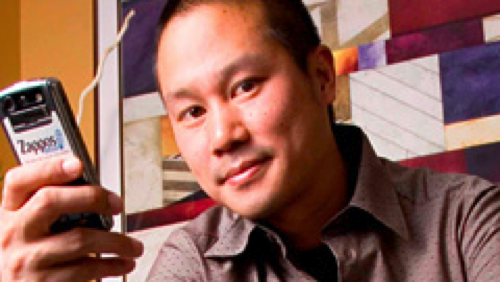
  • The first was Tony Hsieh, CEO of Zappos, the shoe company acquired my Amazon last year (one of my other heroes companies)
  • The second was Susan Shuman, CEO of SY Partners, yes the same company that Keith Yamashita from “should I dare to be great?” is working for

I was really blown away by Tony Hsieh, CEO of Zappos (Shoes) acquired last year by Amazon.

Tony was talking about Zappos’ Downtownproject and the slide deck he used was more or less the same as what is on the slideshare here

The story kicks off when Zappos was considering building a new HQ Campus like Google, Apple, Nike, Microsoft etc,

Instead of venturing in yet another megalomaniac luxury campus with everything on-site from shops, restaurants, doctors, and central central incubator garages, he decided to become deep integral part of the city fabric and to create collisions and serendipities. He is investing about 350 million USD in local start-ups, local small businesses,  education, arts, culture, and residential & real estate.

It is an amazing story circling and hovering over what are probably the five or ten or whatever number of C’s of the hyper-connected and learning organizations of this new era:

  • Curated content
  • Community (Culture of openness, Collaboration, Creativity, and optimism)
  • Co-Learning, Co-Working, Co-Creation
  • Collisions (Colliding communities, serendipity, etc)
  • Connections

As in a real roller-coaster, Tony Hsieh took us from one sensation to another:

  • “We are creating a space where innovators, dreamers, doers, and though leaders from around the world can come to share ideas to enrich the community, to inspire us all. Call it a residency program”
  • “We want to make you/us smarter”
  • “Culture is to a company what Community is to a City See”
  • “Vibrant, interesting and community focused”
  • “Short term ROI vs long term ROC Return on Community”
  • “A learning community” aka “A learning organization” aka “An agile community”

And then it suddenly crystalized for me:

“Companies are Movements”

The sort of movements to change the world.

I reached out to one of the books in my library; very recent one about change management.

Or should I say transformation management?

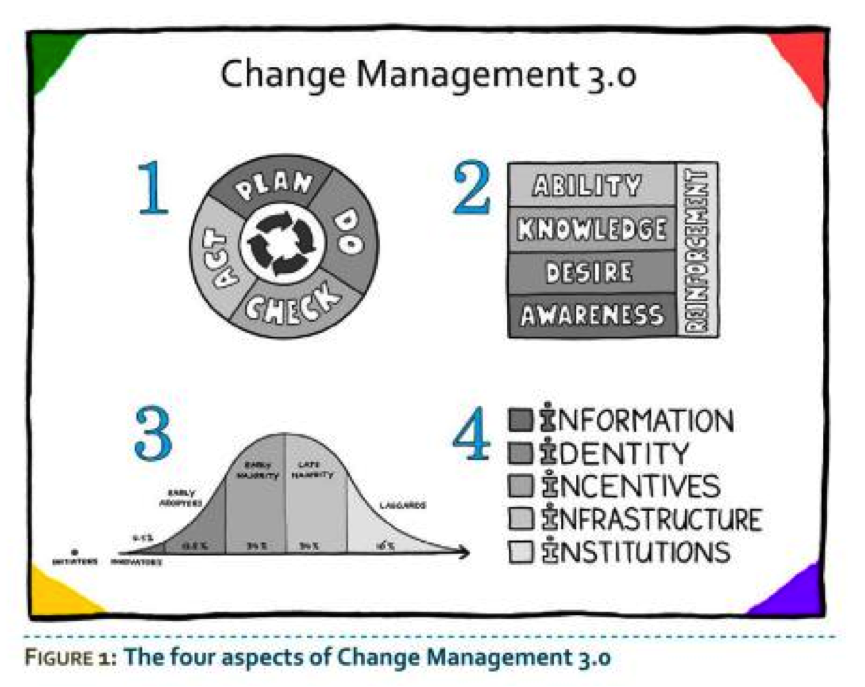
The book is by Jurgen Appelo and is titled How to Change the World: Change Management 3.0 where he proposed four dimensions for change:

  • Dance with the system: Plan, do, check, act
  • Mind the people: Ability, Knowledge, Desire, Awareness, Reinforcement
  • Stimulate the network (instigators, early adopters, early majority, late majority, laggards)
  • Change/Transform the environment: Information, Identity, incentives, infrastructure, institutions

It’s all about being part of the system you are trying to change. But change or incremental innovation is not good enough anymore in this fast moving world. The keyword is “transformation”: bringing into a new state where there is no option back, a risk to fall back into the old toxic habits. It is about a humanization of our organizations; a transformation at deep people level.

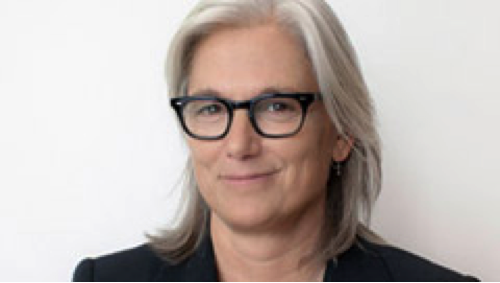
This is where my other #BIF8 hero comes in: Susan Shuman @susansyp, CEO of SY Partners.

She did not talk about the executives and the middle managers.

She talked about

the forgotten middle

the people who actually do the work in companies.

Some participants to the conference found she was too much in pitching mode, pitching her company. That may be true, but the story of what her company does is a very strong one.

I love the tagline “we help companies design their future”. This is a transformation story of Seeing, Believing, Thinking and Acting in meaningful and impactful new ways:

  • See = Fore-sighting, seeing the options vs constraining the options
  • Believe = deep sense of what is possible
  • Think = new solutions, prototyping, fail fast and wisely
  • Act = liberated in pursuing value driven opportunities

It’s about transformation management (not “change” management). It’s about a new way for creating strategy, grounded in complexity thinking and opening the options versus closing them, seeing through the lens of possibility not the lens of constraints, making visible and enabling options for collaboration.

The sort of collaboration and learning experiences that enable greatness, viral change from the top and from deep in the company fabric. It enables a modern way to look at strategy, an emergent strategy, where we not only look at short term revenue streams, but also for new capabilities and strengths. A different way of content curation, facilitation and design, leading to new collisions of expertise, and long lasting transformations.

The sort of collaboration that exists in great team where “duo’s” or “triads” of highly complementary people create greatness. Teams don’t just happen.

Teams are designed

You have to design for team magic

That’s also why moving around “human resources” from one team to another does not move around the greatness with it.

It’s about a new set of tools to let teams perform at their very best, a network of individuals dedicated to each other’s success, a tribe of humans that envision, believe in, and fight for greatness. It’s about a new practice for value creation.

It is not a coincidence that Innotribe’s updated mission statement includes a couple of these key components for the modern organization: To enable collaborative innovation for the financial industry and create new value for the people it serves

Companies are movements

Movements for greatness

Innotribe enables those movements and transformations.

Innotribe at Sibos Osaka: Hyper-Economies

I blogged about the overall Innotribe Program at Sibos here. That post is kept up-to-date with the latest announcements and program changes. The Innotribe program is also available here on the Sibos website.

This blog post shares some more details about the Hyper-Economies session. The session Hyper-Economies will take place on Tuesday 30 Oct 2012 from 12:30 till 14:30 in the Innotribe Space (the special tent in the middle of the conference centre).

We live in a hyper-connected world. The speed of change is increasing exponentially. Information has become abundant, versus scarce in the past, and change is happening in real-time.

This session will focus on the major cultural tectonic shifts that are underpinning and driving the hyper-connected economy and are the under-stream of deep organizational changes. We are witnessing the birth of
new economies based on hyper-connected organizations, exposure of core competence through APIs, horizontal sourcing versus vertical integration, Peer-To-Peer (P2P) sharing of data and Open Source developments, that lead to a new practice for value creation.

We have brought together an eclectic set of igniters (our name for “speakers”) to have a healthy interactive debate on the challenges and opportunities these changes represent for our financial industry.

Mark Pesce

Mark Pesce is Founder of Future Street Consulting, based in Sydney. He is currently publishing a book on the topic, titled “The Next Billion Seconds”. Mark was already with during the Innotribe Bangkok event in April of this year.

Every company should assess whether it is reducing frictions, or whether it is introducing frictions. This friction (less)-rule not only applies to organizations and functions but also to people and events.

But be aware, there are some “irreducible” frictions. Mark Pesce identifies 6 of them, all starting with a “T”. Here is how Mark Pesce describes the 6 “Ts”:

No matter how ‘smooth’ and frictionless hyper-connected commerce becomes, certain frictions in the business world will persist.  These represent both speed humps and opportunities.  The businesses of the 21st century will find leverage and differentiation by identifying and exploiting them.


  1. Time – If it were done when it were done, they’re well done quickly;
  2. Territory – you can’t be everywhere at once;
  3. Talent – some people are naturally better at it than others;
  4. Trust – is rarely immediately conferred, instead growing from a continuing relationship, and must exist for commerce to succeed;
  5. Tongue – language barriers persist until we all speak Globish.
  6. Tension – frictions in teams between humans

The topics that Mark addresses are very relevant to the evolution towards Banks-as-a-Platform and the Cambrian Explosion of Everything.

Michel Bauwens

Michel Bauwens is in my opinion the absolute “guru” for the P2P Economy, the thinking behind the Commons and the role of Open Source in software and other collaborative approaches.

He is the founder of the Peer-to-Peer Foundation and works in collaboration with a global group of researchers in the exploration of peer production, governance, and property. Michel currently lives in Chiang Mai, Thailand, has taught at Payap University and Dhurakij Pandit University’s International College. He is a founding member of the Commons Strategies Group.

The Hyper-Connected economy leads to new models of co-operation, and value production in highly connected P2P networks. Michel describes this as “Commons-Oriented Peer Production”

To get a deeper understanding of Michel’s work, check-out this fantastic report “The Synthetic Overview of the Collaborative Economy” (link to PDF file)

Allevo

Allevo’s presence at Sibos will be under the signs of Innovation and Open Source.

Their project FinTP gravitates around the bold idea of developing an open source application for financial transactions processing and a creative community around it.

FinTP is an open distributed application for processing financial transactions and it is based on the 7 years practice proven solution Allevo has successfully deployed at its customers.

Covering the entire life cycle of financial transactions, FinTP intends to create a widespread financial transactions processing platform, an alternative for an industry common solution. The hope is this will evolve into a new standardization layer – a single financial dialect comprehensible for any party involved from individuals, SMSs, to corporates and financial institutions.

We believe this represents in fact the acceptance of the commoditization of the payments processing arena.

The format from this session will be a facilitated conversation. Like in Bangkok, we will help the audience identifying friction points in their value chains, and assess how the concepts of the Hyper-Economies, P2P and Collaborative Economy, and Open Source can give rise to a rich eco-system of parties building added value on top of Open Source platforms in financial services.

The session Hyper-Economies will take place on Tuesday 30 Oct 2012 from 12:30 till 14:30 in the Innotribe Space (the special tent in the middle of the conference centre)

This session is a meta-story for the session “Future of Organizations”, that follows right after this Hyper-Economies session.

By @petervan of the Innotribe Team.

Bank(s) As A Platform

I am just coming out of 3 fantastic and super-intense days with the team that is working on the prototype for the Digital Asset Grid (DAG). The DAG is a SWIFT Innotribe’s incubation project; we are really in research mode. Acting as a catalyzer, putting a big bold vision on the radar-screen of our community. Our plan is to show the results of our work during the upcoming Sibos in Osaka. Our session is planned on 31 October 2012 at 4pm in Conference Room 3.

Just last week, there were a couple of really interesting articles in press about the Digital Asset Grid project:

Click on image to launch video

At the end of the video, Marc says:

“If you can give the consumer more control over day-to-day commerce and greater privacy, that would be a reason to actually like your bank, rather than being resigned to deal with your bank”

So it looks like the huge opportunity is in the apps. True, but there is more.

And that only became apparent last week when we were together with the FULL team:

  • We took stock of the draft presentations, demo-scripts and video material that we will be showcasing in Osaka
  • We had some great and very intense interactions with customers, management and staff
  • We completed the last bits of the video, and we taped the last video interviews that will lead to a mini documentary on the topic
  • We articulated the key messages to be used on our communications plan leading up to Sibos

But last but not least, we created a platform of intensity where ideas could flow freely, leading to the most formidable insights.

One of those insights came during the playful key-messages-exercise, where we nailed down our key concepts by imagining what would be printed on the imaginary “product box” of the Digital Asset Grid (thanks to Martine Deweirdt of the Innotribe team to facilitate this exercise).

It was the moment where the word “platform” was deeply debated.

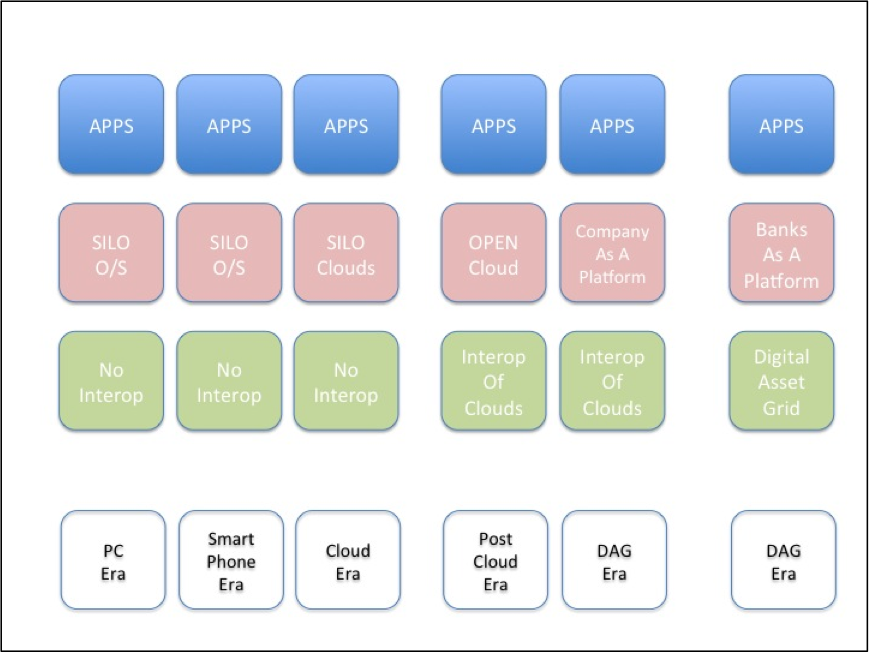
Is “platform” like Windows (or for the sake of the argument any PC-era operating system), or did we mean something else?

The owner of the platform really owns 90% of the market. Not only the OS market but also the ecosystem of applications and application developers that create a business on top of the platform.

The platform that is most loved by developers and that gives most value for the business decision makers/owners of the application companies ultimately wins. But we have evolved quite a bit since the early PC days.

  • In the PC-era, we had really one dominant Operating System. But it was a siloed OS.
  • In the SmartPhone Era, Steve Jobs and Apple reinvented the space and created the Application Store, a disruptive channel for apps. But still built on top of a highly closed and proprietary OS and ecosystem
  • More or less same happens with clouds. They become more and more proprietary. iCloud, DropBox, G-Drive, Skydrive, etc All living in their own silo. All these examples are very consumer oriented, but usually B2B follows the slipstream of retail customer, and it can be expected the same happens with B2B cloud offerings.
  • Add to this mess the blurring lines and confusions between all sorts of clouds: private clouds, public clouds, hybrid clouds, community clouds, personal clouds, device clouds, etc, etc

In the end, every entity (people, business, device, program, etc) will have its own cloud and its own APIs

  • What has to come next in this evolution is an interoperability of clouds, a layer of almost Kernel level services, protocols and standards that let the Cambrian Explosion of Everything share data in real time, securely and with the appropriate governance and trust per interest-domain.
  • This is the bottom-layer in the diagram above
  • This is what the infrastructure-layer of the DAG is trying to address. We base ourselves on open standards XDI/XRI which are going through their approval process at OASIS.

Phil Windley described the vision of the Personal Cloud Operating system in his blog “The Layers and Components in a Cloud OS

Image courtesy Phil Windley

So far, we are thinking about companies (banks) hosting apps that run on top of this Customer Cloud Operating System. I use the more generic term “customer” in stead of “personal” Cloud Operation System, as the “customer” can be both the person, a corporate, or even a device or program.

In all our discussions, we have been so tempted to say that the value is in the apps (upper layer of this diagram). Whether that is in providing those apps as service providers (the bank as a data service provider), or as a consumer of data-services (in that case the bank acts as a “vendor” of financial services, trying to leverage the information from the direct channel with the customer (whether that customer is a retail or wholesale customer)

But that’s “only” the temptation.

The Holy Grail

is to be able to position your company

as the “platform”

on which others can build apps and create value.

Like Amazon (not the bookshop but Amazon Web Services). To make yourself so indispensable as a platform, that even your competitors start building on top of your company platform.

And suddenly the “gem” was there:

Bank(s)-as-a-platform

It is apparently a new meme (I Googled it, and did not get any hits ;-), and so I trademarked it 😉

Update: the meme “Bank as a Platform” is not new. Nicolas Debock (@ndebock) kindly pointed out to me that:

Anyway, “Bank(s) as a Platform” is what the DAG really enables. A new interoperability layer for people-, business- and device-clouds, creating a value and reputation system leveraging the existing KYC and digital slipstream information of customers with full respect of privacy and empowerment.

The real question is whether banks will see and grab this enormous opportunity, or whether they will satisfy themselves with copycats of outworn 20th century business models, and narrow down a great vision into adjacent banality.

Maybe we all can get inspired by two of my heroes:

Jeff Bezos (Founder and CEO of Amazon) said last week in an interview with @triciad in All Things Digital

“we don’t ask why do this, we ask why NOT do this?”

Click on image to launch video

And Buckminster Fuller said:

“You never change things by fighting the existing reality. To change something, build a new model that makes the existing model obsolete.”

and

“There is nothing in a caterpillar that tells you its going to be a butterfly”.

The opportunity for banks is indeed to position themselves as data-platforms for value creation by a formidable ecosystem of third parties, so that every customer – from the Bottom of the Pyramid to the Top of the Pyramid and every customer in between – appreciates their bank as their own private wealth manager.

“Wealth” not necessarily exclusively expressed as “Money”, but as a richer an broader concept including social data capital for financial inclusion, reputation, trust, ethics, and integrity. Roger Hamilton nailed it when he said “Wealth is what you have left when you have lost all your money” 

This sort of wealth is enabling empowered customers with agency. The origin of the word “bank” was “bench”, a place where two people meet and create a relationship.

The deep meaning behind the DAG beyond its technical innovation is that it creates Relationship-as-a-Service (a term coined and trademarked by Respect Network). The realisation of this Relationship Economy will change the love/hate relationship with banks:  instead of being criticised for their past behaviorthey can be loved like the Googles, Amazons, and other great platform companies of this era.

Innotribe@Sibos Osaka 29 Oct – 1 Nov 2012

Now in its fourth year, Innotribe@Sibos, the initiative’s flagship event, runs throughout Sibos week and offers a comprehensive programme exploring a range of topics crucial to the financial industry. Innotribe@Sibos in Osaka will once again bring together a powerful combination of world experts to participate in an exciting mix of keynote sessions, case studies, and interactive discussions.

Some aspects of Innotribe@Sibos will be familiar to those who have attended before, such as the Innotribe Labs and the magic they create. But we will also explore new formats and new topics, and experiment with new facilitation techniques, such as game-storming and open space discussions. Building on our history of creating compelling line-ups of speakers, Innotribe will bring together a set of our most exciting innovators yet.

Innotribe will take the main stage at Sibos 

with an awesome Innotribe opening session.

In the last four years, we have made roads into the main Sibos conference: in 2009 we were located 15 minutes away from the main conference area; this year we are at the heart of the event. The Innotribe space will be the first thing you see when entering the event, and this year we have secured three main conference sessions. The Innotribe Space will be located in our own tent, in the middle of the conference patio. It just looks gorgeous!

Who should attend?

Innotribe@Sibos is open to all who come to Osaka. It brings together strategists, business and technology leaders, trend-setters and trend-watchers, and thinkers interested in taking action and shaping the future. In short, anyone keen to find out how the world is changing and what that means for our industry.

Why attend?

Join us to discover new business and technology trends; share and discuss ground-breaking ideas for co-investment; and challenge each other to build theoretical concepts into tangible prototypes in professionally facilitated workshops.

Programme

Innotribe Opening: The Tribe on the Tatami – Plenary Room

In 2011, this session was standing room only. In 2012, Innotribe will take to the main plenary stage for the first time, giving a sparkling overview of the 2012 Innotribe program. Through inspiring keynotes, spiced up with some novel interactive formats and techniques, the 2012 Innotribe@Sibos topics will be introduced, followed by an amazing performance with one of the leading judo practitioners. This will be a session not to be missed.

Already confirmed:

  • Sean Park, Founder, Anthemis
  • Mark Pesce, Founder, FutureStreet
  • William Saito, Founder & CEO, InTecur, K.K.
  • Kosta Peric, Head of Innovation, SWIFT
  • Christopher Siers, Director, Financial Services Network
  • Aiko Sato, Women’s World Champion Judo (-57kg)

BREAKING NEWS: Very proud to confirm Aiko Sato (Current 57kg Women’s World Champion Judo) for #innotribe opening #sibos http://see.sc/kJpiBI > Aiko will do live demonstration of Innovation Themes through Judo Movements.

Innotribe Health Index: Accelerating positive re-balancing – Innotribe Space

The Innotribe Health Index is a brand new Innotribe initiative. Through six different lenses (Reputation and Sentiment, Relationship, Big Shift Readiness, Technology Readiness, Urbanization and Inequality, and Agility), we will try to give an alternative ‘health check’ of the financial system. The intention is that the Index is an annual checkpoint based on New Economies and New Values thinking, aimed at accelerating a positive re-balancing.

Already confirmed:

  • Wouter De Ploey, Director in Business Technology Office, McKinsey & Company
  • John Hagel, Co-chairman, Deloitte Centre of the Edge
  • Michael Jones, VP of Technology, Dachis Group
  • William Saito, Founder & CEO, InTecur, K.K.
  • Michell Zappa, Founder, Envisioning Technlogy
  • Julius Akinyemi, MIT Media Lab and Wealth Of Nations

Ignite Talks – Innotribe Space

Ignite Talks is a new Innotribe format of  with 4-5 short 15 minutes power talks by innovators from the financial industry. We will share some of the presentations we have seen in 2012 that really wowed the Innotribe team. There will be three sessions spread over the event.

Already confirmed:

  • Antonio Benjamin, Global Chief Technology Officer & Managing Director , Citi
  • Shamir Karkal, Founder and CTO, Simple
  • Jesper J. Koll, JPMC
  • Nils Boesen, Director Knowledge, Innovation and Capacity, United Nations Development Programme

Future of Money – Conference Room-2

This session will look at financial innovation in detail. What’s happening on the fringe of traditional finance, with new alternative currencies and peer-to-peer payments? How are the innovative ideas of last year evolving and how quickly are they becoming mainstream? What can we expect to see next from some of the leading big financial innovators? Expect discussion on these themes and more.

Already confirmed:

  • Udayan Goyal, Founder, Anthemis
  • Chris Skinner, Balatro Ltd
  • Eli Gothill, Research Technologist, We Are Social
  • Mike Laven, CEO, The Currency Cloud
  • Yoni Assia, Founder and CEO, Etoro.com
  • Vipul Shah, MD, Product Strategy Executive T&SS, J.P.Morgan Chase
  • Paul Wilmore , Managing Director, Barclays US

SWIFT Applications Platform – Innotribe Space

The SWIFT Applications Platform is a strategic initiative, currently in the ‘incubation’ phase that aims at delivering cloud-based financial services and applications in a simple and secure way. Key objectives include providing a harmonised framework in terms of security (authentication and authorisation) and APIs usage, along with a simple, integrated customer experience. The platform will be built around three main pillars:

  • A secure business portal and application store that will allow users to find and purchase financial applications and services. Offering a harmonised user experience as one place to subscribe, register, access and manage applications and services
  • An Identity and Access Management component as a single and uniform security layer to access the portal, business applications and services, by providing authentication (e.g. single sign-on), authorisation, registration and non-repudiation.
  • An Application Programmable Interface (API) engine to offer a standardised way to use or consume applications and services. In addition, this will enable customers and third-party developers to create new or to enrich existing applications and services.

Hyper-Economics – Innotribe Space

This session will focus on the major cultural tectonic shifts that are underpinning and driving the hyper-connected economy and are the understream of deep organizational changes. We are witnessing the birth of new economies based on hyper-connected organizations, exposure of core competence through APIs, horizontal sourcing versus vertical integration,  Peer-To-Peer (P2P) sharing of data, Open Source developments, and activated humans that act from their true selves and

lead into a new practice for value creation

Already confirmed:

  • Corina Mihalache, Director Business Analysis, Allevo
  • Mark Pesce, Founder, FutureStreet
  • Michel Bauwens, Founder , P2P Foundation

The Future of Organizations Innotribe Space

We live in a hyper-connected world. The speed of change is increasing exponentially. Information has become abundant, versus scarce in the past, and change is happening in real-time. It affects the way we think; some claim it affects our brain.

to be able to deal with these profound changes

we need to rethink

the body and soul

of our organizations

What does this mean for our organizations? What is the impact on organizational structure, hierarchies, team-forming and disbanding? What sort of skill and mindset will our next generation of knowledge workers require? What does it mean to let people take real personal leadership, and create viral change from within? The future of Organisation is a brand new Innotribe session, building upon the success of last year’s Corporate Culture session.

Already confirmed:

  • Guibert Englebienne, CTO, Globant.com
  • Jennifer Sertl, Founder and Author, Agility 3R
  • M.J. Petroni, Principal, Causeit.org
  • Mark Dowds, Investor, Trov.com
  • Dave Gray, SVP Strategy, Dachis Group (via video)

Next Bank Asia: Banking meets Design – Innotribe Space

Next Bank Asia was one of the best financial services events the Innotribe team attended in 2012. The mix of fringe players, entrepreneurs with new business models, designers, and anthropologists resulted in a raving 2 day event tuned for Asia. A guest slot for Next Bank Asia will be held in the Innotribe Space, where bankers meet designers in 4-5 short talks.

Already confirmed:

  • Rob Findlay, CEO, Next Bank Asia and curator for this session
  • Arvind Singh, Founder/CEO, Aleph Labs
  • Toby Johnston, Partner/Creative Director, Shift Partners
  • Tim Kobe, Founder, EightInc

The Future of Big and Small Data – Innotribe Space

In this brand new Innotribe session, we will take you on a fantastic rollercoaster journey on the future of data. We’ll start where we ended last year on Big Data, and will dive into Artificial Intelligence, Augmented Reality, and Wars of Algorithms. It’s not only about Big Data, but also about the massive amount of small data generated by sensors and self-tracking devices. We will question how we can do real-time analysis on this ever-growing and ever-faster moving data stream.

Already confirmed:

  • Sean Gourley, CTO, Quid
  • Amir Halfon, CTO for Financial Services , MarkLogic
  • Anant Jhingran, VP, Data, Apigee
  • Alexander D. Wissner-Gross, Institute Fellow, Harvard University Institute
  • Daniel Erasmus, Owner, The Digital Thinking Network and CEO NewsConsole
  • Andrew Keen, Author, TechcrunchTV

Digital Asset Grid – Conference Room-3

Artwork by Kosta Peric

The Digital Asset Grid is one of the most forward-looking of Innotribe’s incubation projects. In this session, we will present the results of the prototype, including a business story, a compelling video, real applications and a prototype back-end infrastructure. We will bring about an in-depth conversation with some of the world’s leaders on privacy and digital footprint, followed by an interactive discussion with the audience too.

Already confirmed:

  • Liz Brandt, CEO, Ctrl-Shift
  • Andrew Keen, Author, TechcrunchTV
  • Matthias Kroener, CEO, Fidor Bank
  • Alan Mitchell, Strategist, Ctrl-Shift
  • Drummond Reed, Founder, Connect.me
  • Phil Windley, Founder and CTO, Kynetx
  • Mark Dowds, Investor, Trov.com
  • Julius Akinyemi, MIT Media Lab and Wealth Of Nations

The Future of Doing Good (Banks for a Better World) – Innotribe Space

Is “Doing Good” more than Corporate Social Responsibility? Is “Doing Good” good for Business?

This Innotribe session will look at new ethical, sustainable and social responsible products, services and practices and how they represent great opportunities both for our industry and society. The focus will be on “Banks for a Better World”, our latest Innotribe initiative focusing on 3 mains streams: financial inclusion, collaborative social engagement and interconnecting infrastructure(s) between the mainstream financial industry and the alternative banking industry and its beneficiaries, such as social entrepreneurs and unbanked.

This session will also include

the Social Finance Innovation Challenge

in association with Ashoka.

Already confirmed:

  • Julius O. Akinyemi, Entrepreneur-In-Residence, Massachusetts Institute of Technology
  • Kartik Kaushik, Managing Director, Global Head of Business Development, Citi
  • Carolyn Stephens, Professor (PhD, FFPH, IFRSM) , Universidad Nacional de Tucuman/UCL
  • Prof. Muhammad Yunus, Chairman, Yunus Centre

Innotribe Startup Challenge 2012 – Grand Finale – Innotribe Space

The Innotribe Startup Challenge 2012 introduces the world’s most promising FinTech and financial services start-ups to the global community of financial institutions, venture capitalists, angels and influencers actively investing in innovation.

Sibos will host

the Grande Finale of the 2012 Challenge

following regional showcases

in the Americas, EMEA and APAC

From a total of more than 500 candidates, the 15 very best start-ups of 2012 will compete in front of a live audience and professional judge panel for a cash price of 50,000 USD.

Innotribe publication by Informilo

Informilo is the official media partner of Innotribe, is publishing an independent 16 to 20 page print report at Sibos entitled:

“The Networked Economy:

How Technology

Will Radically Transform Banks

and the Future of Money”

The glossy print publication is being overseen by Jennifer L. Schenker, a journalist with 30 years experience who has worked full-time, at various points in her career, for the Wall Street Journal Europe, Time Magazine, International Herald Tribune, Red Herring and BusinessWeek.

The magazine will use first-rate independent journalists who have worked at some of the world’s most prominent newspapers and magazines.  The publication will put business and technological developments in context, explaining how everything from mobile money to cloud computing will forever change the world of banking.

The outline of the publication is as follows:

  • Digital Asset Grid: How banks might play a key role on securing and disseminating personal data
  • Future of Money
  • Hypereconomics and P2P: how the evolution of data is changing business
  • API’s: opening the way for new services
  • Top-25: the hottest start-ups in the financial space
  • Mobile money, commerce and transfer
  • Banks for a better world

A range of opportunities are available for sponsors wishing to effectively reach and influence potential clients in this targeted publication. Contact jennifer@informilo.com

Conclusion

Innotribe at Sibos 2012 will rock! Make sure to bring your energy pills!

Innotribe is about being infected

by irresistible contagious enthusiasm

of open-minded, curious

and passionate people

You can follow the progress of our program as speaker announcements continue between now and October on the Sibos website. Many more speakers and inspirational thought leaders will get confirmed in the coming weeks. Follow our daily tweets at http://twitter.com/innotribe or regularly check-out the Sibos website where we have grouped all sessions that are related to Innotribe at Sibos: www.sibos.com/conferencedata/pages/topic_innovation.page

We look forward

to seeing you in Osaka!

By @petervan from the Innotribe team

Cross-Posted on Innotribe Blog

www.sibos.com/conferencedata/pages/topic_innovation.page

www.innotribe.com

Twitter: @innotribe and @petervan

Corporate Rebels United – A New Global Practice for Value Creation

Since my initial post “Corporate Rebels United – the start of a corporate spring?” of 17 March 2012, a lot of exciting things happened.

I’d like to share with you where we are, and what’s the plan for the upcoming weeks and months. When most of you will be on the beaches, we’ll do some digging and set the basis for some of our infrastructure needs 😉

What happened?

The 17 March post was without any doubt the most viewed post ever on my personal blog. I got loads of comments. I got in contact with some very high profile people who offered their mentorship, coaching and mindshare in their communities. Many very cool people contacted me and wanted to know how they could be part of the movement. Clearly, something strong and positive resonated with you.

We now have a “core” group of +/- 30 Corporate Rebels: it’s a cross-industry group, with folks from the Americas, EMEA, and APAC. All the way from San Francisco to Sydney, with Europe in-between. Maybe still a bit weak in South-America, Africa, and Asia. We’re getting there 😉

We had several calls and Skypes, and we had our first face-to-face meeting in London on 22 June 2012. We had about 10 core rebels attending physically and 15-20 via call: one call for the Americas and one for APAC. It was a great experience, refreshing, and reinvigorating. With thanks to SWIFT for the meeting facilities.

We have worked hard with that “core” group to articulate why and how we want to create this movement. We also looked in detail into the “what”, the deliverables. We wanted to ensure that the message we sent out was “right” before we throw into the open.

I now want to share with all of you the progress we have made so far. With deep gratitude to the core group of Corporate Rebels United: as all this is obviously the result of teamwork. I also would like to talk everybody who took the time and effort to listen to me and give feedback.

Our mission, vision, and strategy

“To transform our companies into hyper-organizations and create new value for the people they serve.”

We love our companies and want them to succeed in this high-velocity, hyper-connected world. We want to reboot our corporate and organizational culture to install a 21st century, digitally native version. We want to accelerate positive viral change from deep within the fabric of our organizations. We want to enable and empower the rest of our organizations to move at rapid pace, but room for patience and reflection. We want to unleash the enormous potential that lies within every human being within our organizations. We want to re-ignite the passion in our organizations. We are actionable.”

“We are building a global network of change catalysts that act from their true selves. Our actions will lead to new product and services and new global practices for value creation, agility and velocity. Our community acts from deep personal awareness and presence, and an irresistible enthusiasm opening up old rusty structured. We are architects and scouts into the future, and we want to guide our organizations in navigating a safe path from now to then.”

“We are making and holding a space where everybody can have a voice in service of value creation. “

Our game plan

We are making and holding a space where everybody can have a voice in service of value creation.

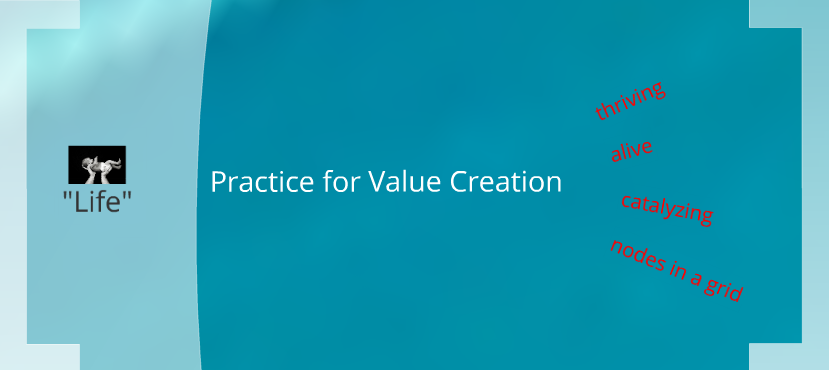
  • This space is called “Life”. This is where the new practices for value creation exist.
  • A community of cells upholds the space. These communities are self-organizing. These cells are built on the DNA of our movement.
  • The DNA of our movement is the platform of core principles that are the basis for us to connect, to practice, to embrace, and to inspire other to dream and make their dreams come true

DNA: A core (the common practice, the “commons” practices that cannot change, everything else can change. The DNA gives birth to cells. The cells can organize themselves.

They decide upon their own activities, their own resources, and their own relationships. And they always connect back to the mothership, the DNA of common core principles. Together, the cells create “Life” – our new global practice for value creation.

Our deliverables

We plan 8 types of deliverables:

  • Our manifesto
  • A common language
  • The 20 core principles of our DNA
  • A New Global Practice for Value Creation
  • A Belonging and Support program
  • A Discovery program
  • An Exchange program
  • A series of Events

I would like to summarize some of these deliverables:

The Manifesto

It has not changed really, but I’ll share it once more, as it, especially the “relentless” part of it, inspired so many people 😉

Relentlessly

Challenging the status quo

Breaking the rules

Saying the unsaid

Spreading the innovation virus

Seeding Tribal energy

With No fear

With a cause to do good

Leading by Being from our True Selves

Going after the un-named quality

Relentlessly

Common language, lexicon

It is our ambition to get buy-in and support from our corporate leaders for our proposed company transformations. We also want to articulate the direction. In a language clearly indicating the road from where we are today towards the destination we aim for. More specifically, we want to show the safe path and help our companies navigate from here to there.

This above is just a summary of some from-to destinations. The core group worked out a quite detailed and compelling list.

The 20 Core Principles of our DNA

We don’t want to be an exclusive club or so. It’s just in these early days we keep the group to 30 to be able to hack-out a first solid foundation. We will then throw it fully into the open.

But something needs to hold us together. These are the DNA principles of our practice. In the language section above you’ve seen that one of the to-from destinations is the journey from “Distrust as a default” to “Trust as a default”. Networks only work when there is trust. We want to walk the talk. When we will open-up our movement, everybody how signs-up is “in” by default. You will be “trusted” by default as long as you act in line with our 20 core principles:

  • Principle-1: We love our companies and want them to succeed in this high-velocity, hyper-connected world
  • Principle-2: We dare to be great
  • Principle-3: We have the mandate to be brave and to challenge the status quo
  • Principle-4: We reboot our corporate and organizational culture to install a 21st century, digitally native version.
  • Principle-5: We accelerate positive viral change from deep within the fabric of our organizations.
  • Principle-6: We enable and empower the rest of our organizations to move at rapid pace, but with room for patience and reflection.
  • Principle-7: We unleash the enormous potential that lies within every human being within our organizations.
  • Principle-8: We re-ignite the passion in our organizations.
  • Principle-9: We are actionable
  • Principle-10: We are building a global network of change catalysts that act from their true selves.
  • Principle-11: Our actions lead to new product and services and new global practices for value creation, agility and velocity.
  • Principle-12: Our community acts from deep personal awareness and presence, and an irresistible enthusiasm opening up old rusty structured.
  • Principle-13: We are architects and scouts into the future,
  • Principle-14: and we want to guide our organizations in navigating a safe path from now to then
  • Principle-15: We are very well intended individuals
  • Principle-16: We are united people with shared purpose starting with your own being
  • Principle-17: We maintain integrity and relevance of the reason.
  • Principle-18: We keep our community a safe environment, where you can become who you want to become. Where you are not alone in being a catalyst
  • Principle-19: Our core values are integrity, clarity of reason, brightness and great positive energy
  • Principle-20: Reflection, reporting back and adding-on to each others input and opinions is our natural way of collecting and discussing opinions.

New Global Practices for Value Creation

The core of our ambition is to create/let emerge a new Global Practice for Value Creation.

It’s “practice” like in Lean “practice” and SixSigma “practice”. However these are  for increasing efficiency in our organizations. We are on the innovation side. Innovation is less about “optimizing” the core engine; it’s more about new value creation.

Imagine having “black-belts”, “champions” in value creation and deep transformation of our companies based on our mission and principles. In the end, a company should be proud and outspoken of having x number of “black-belt Rebels” on board!

We want it to be global. From a meta-story perspective, wanting it to be something “global” that holds the values is probably one of the strongest thoughts of our movement.

We would like that these practices develop in a self-emerging way through the activities of the cells. Our expectation is that these practices are grounded in following principles:

  • Practice of Courage, Fear-is-not-an-Option, No fear to jump
  • Behavior/attitude: “Shift Makers”, “Accelerating Purposeful Innovation”, “Inside and Outside the company”, “Accelerators”, “Catalysts”, “Igniters”, carrying “The soul of Innovation”, “Re-Build”, “Re-Work, “Corporate Activists”, “Positive Deviants”
  • Emergent from the cells
  • Includes stealth approaches etc
  • Practices that lead to mastery
  • Focus on what works
  • Be part of curriculum
  • Certification levels vs. Reputation system
  • To be added as program to universities etc

In writing this blog post, it suddenly becomes clear to me that we found the sweet spot between “singing my own song”,  my loosely defined concept of a “New Value Movement”, and the irresistible enthusiasm of corporate rebels who want their companies to succeed in the 21st century by creating viral change from within.

What’s next?

I just sent a much more detailed consolidation of the 22 June London meeting to the core team. Given the summer holiday period we gave ourselves time till Mid August to co-edit all that material.

By somewhere mid-September our web site should be done.

We have planned our next face to face on 22 Sep 2012 in Providence, Rhode Island (USA), back to back with the BIF8 Summit.

Now in its eighth year, the BIF Summit has earned it reputation as “one of the top 7 places to watch great minds in action” (according to Mashable). The BIF Summit is an annual gathering of innovation junkies and transformation artists all in service of better – across industry, sector, and community. Eighty percent of Summit participants are senior executives; all are designing next generation business models. The summit provides participants with the space to be curious and crazy, get inspired, and collide with unusual collaborators. A shoe designer learns innovation processes from a car designer. A police officer teaches a business guru about transforming industries. This year’s storyteller line up features diverse system thinkers like Intel’s Brandon Barnett and ZipCar’s Robin Chase, Zappos CEO Tony Hsieh and the Food Network’s Simon Majumdar, GE Healthcare CTO Michael Harsh and Drupal Creator Dries Buytaert.

BIF8 is September 19th and 20th in Providence, Rhode Island. For those who want to move their inspiration into action, there is a third day, post-Summit Workshop on Business Model Innovation. This workshop is hosted and facilitated by BIF Founder and author Saul Kaplan and the creator of the Business Canvas, Alex Osterwalder.

Many BIF Summit participants come as teams from the same organization or affiliated group – using the BIF magic to challenge norms, inspire creativity, and think across disciplines. Recognizing how hard it is to bottle the magic, and harder still to operationalize it upon the return to business as usual, BIF offered us an interesting Team Package, helping us prepare for and act on insights and random collisions experienced at the Summit. Thank you BIF for your generosity.

The BIF8 conference is on 19-20 Sep 2012 http://www.businessinnovationfactory.com/bif-8

It’s probably around that time we will throw it into the open.

And in November, we’ll do some solid campaigning in the heavy event season with Innotribe at Sibos, Techonomy, Defrag and Blur. And back-to-back to that week, we plan our 3rd face to face on 17 Nov 2012 in Boulder, Colorado (USA).

For 2013, we already received a generous offer from the Australian AMPlify Festival to host one of our next coming together.

Hopefully by then, we’ll find some sponsors to cover some of the basic costs for keeping this going.

Some resources:

  • Prezi: some of the visuals is this post were created in Prezi. I did a talk at the EU Marie-Curie event in Brussels on 3 July that included our rebels story. That talk has 3 sections:
  • I am still maintaining a Scoop.it curation on Corporate Rebels United. As I am doing my daily RSS Feed reading, tweeting, etc, I am reading them with a specific “Corporate Rebels”-lens and put them all together in one place: http://www.scoop.it/t/corporate-rebels-united > check it out

Feel free to use and share it with anybody who can help and support our cause. Let’s rock this place together and let’s get a life / get alive ! And feel free to post events on this blog or contact me via mail or twitter.

97% owned: Democratizing the money supply

Tomorrow is May 1st, 2012: International Worker’s Day.

And unless you have been living in a cage or other planet, tomorrow is also the day where the Occupy movement is organizing a general strike action across the 125 cities in the USA.

This is organized by the 99%. In the UK however, the “97% Owned” investigates behind the scenes of the ever changing financial system, to uncover how the monetary system provides the foundations for international dominance and national control. Fresh thinking, new ideas and answers to simple questions are squeezed into this 2hr 10minute expose.

Due for release May 1st it features frank interviews and comments from Positive Money, The New Economics Foundation, PRIME, Paul Moore HBOS Whistle Blower, Simon Dixon of Bank to the Future and Nick Dearden from Jubliee Debt Campaign.

97% owned is from the creative team behind Generation OS13: The New Culture of resistance, continuing the distinctive ‘tour de force’ style and artistic interpretation.

Not that i subscribe everything that is said in this video – but i want you to sense the intensity and aggressivity of this movement. It reminds me a lot of what happened in 1977 with the punk movement, or the Flower Power 60’ies, but these were softer more “Peace no War”. This is getting much more confrontational. Check also the comments, as clearly not everybody agrees with the content, the quite tendentious language and music.

Also check-out Simon Dixon (@SimonDixonTwitt), CEO of BankoftheFuture.com, starting off his TEDx talk with some musings on leadership:

“figuring out what you were brought on this earth to do, and then do it”

This resonates strongly in me, see also my latest posts, many of them related to my reflections on what i was meant to be in this world.

Simon explains:

  • Why we need to change the rules of banking
  • What will happen if we don’t change the rules of banking
  • How we can change the rules of banking
His thinking about value is very close to Art Brock‘s ideas on the Living Ecosystem of Wealth (check out www.metacurrency.org). In Art’s model, it’s becoming crystal clear that the majority of investments are purely speculative in nature, and don’t return any value back into the economic system.
Simon is doing a call for:
  • equality
  • sustainability
  • stability
At the end, he also talks on how to change the rules, in essence by training and planting change agents virally in all financial institutions. Sounds familiar to our Corporate Rebels approach where we’d like “to ensure that true change happens virally”, although we are not targeting any specific industry.
Starts crystalizing for me that what Corporate Rebels needs to change is to make our organizations more agile, more fit, more vital, more resilient in creating value rather than extracting value. Now i know why i once read Cradle to Cradle by William A. McDonough (Amazon Affiliates Link) why once again it’s an architect who inspires me. Because it and i was meant to be.

Simon Dixon will launch his own initiative “Banks To The Future” in 30 days or so, as an alternative to bring money to the business without venture capitalists and banks involved.

Another example of “First they ignore you, then they laugh at you, then they fight you, then you win” (Mahatma Ghandi), our theme for last week’s Innotribe in Bangkok.

Simon Dixon looks to me a as good candidate for #innotribe #sibos for the session on “Future of Money”, don’t you think so ? And maybe we should be re-baptise that session into “Future of Value” ?

Exploring the Limits

I am restless these days. Exploring my limits, physically and mentally, and calibrating and navigating what I was meant to be: an architect, painter, scripter, dramaturge, producer?

I am so hungry to create those true memorable experiences, with artistic, architectural, and ethical rightness and integrity. Experiences those feel right from the very first second to the very last. Produced and executed with a crew of super professionals

Experiences that matter, those touch and move you.

Experiences that give you the same sort of “bang” as when you arrive in Bangkok airport, and get amazed by the post-industrial architecture, in all it’s grandeur and massivity.

The sort of “awe” when discovering Bucky, or the mindset of Jeffrey Katzenberg,Co-founder and CEO of DreamWorks Animation SKG here below in interview with David Kirkpatrick of Techonomy.

The sort of “yes” when seeing the Blue Man Group. But a Blue Man Group with a message, and not only one-way, but where also the audience has to participate to realize the full potential and learning of the production.

The sort of “love” and being “moved” when seeing/hearing Mark Pesce analyzing and synthesizing, and story telling with an eruditeness seldom witnessed before, with us at Innotribe Bangkok last week.

Be in company of these sources of inspiration, or at least breath the same air (spotify link)

Sometimes all I need is the air that I breathe and to love you
All I need is the air that I breathe yes to love you
All I need is the air that I breathe

When as an audience you know, just know, that this production is so right I, in the sense of “exact”, “spot-on”.

When as a producer, behind the scenes and behind the technical desk, you can feel the shiver down the spine as the rumble of the deep bass rolls-in and when the show begins, and the mystic of the lights, the mystery of the colors, the artists, the perfect technology, the professional crew are all coming together in an amazing whirlwind.

A production that feels more like a good book, where you have to invest in the beginning, where you discover new stuff, not the same old re-mashed hyped stereotypes, tricks and banalities.

Like a great film where the plot unfolds, and magic and surprise come together.

With deep immersive learning experiences, and drama, lots of drama, even in the sense of theatrical overacting. It’s creating a meta-story, a story of stories and adding performance to it. A new class of story telling, of immersive learning experience.

With authentic, inspiring mastery on stage, orchestrated and mashed-up into a brand new value play artistry, adding facilitation and superior crowd control to the mix. Aah! How I love the “stage” with it’s smell of wood, nails, pain, curtains, mechanics, flight-cases, racks, amps, cables, light and sound towers.

The whole discussion of hyper-connected companies during our Innotribe event in Bangkok, and especially the story of Uber taxi, made me reflect deeply on the role of the old taxi company as a dispatching service.

A dispatching role that was in essence the friction in the system, and becoming completely obsolete when the nodes (in this case taxi drivers and their customers) started talking to each other via API’s (in this was built into iPhone apps).

This friction (less)-rule not only applies to organizations and functions but also to people and events.

The master of ceremony (MOC) role has to become much more than just announcing and introducing speakers. If the MOC role stays limited to that, the MOC becomes a friction in itself that needs to be removed. The MOC has to become a “master of connections”, bringing additional content-value, interpretation and guidance to the mix.

In the case of events, we have to start looking at them as a way to bring the consumers and providers of our immersive learning experiences in direct P2P contact through API’s aka “emotional synapses” of the speakers/ignitors.

Some folks out there claim that we are pushing the envelope of performance too far, and should fold back to simpler formats closer to TED, or that our banking audiences and cultures are not ready for this. I deeply disagree. I believe that what we set out as a performance design in Bangkok is just the beginning, the middle of a spectrum between minimum and maximum.

It is of course easier, less complex, where you just program some cool people and surf on the success waves of others, never creating something yourself. But when an event becomes a happening with no file-rouge, no overall theme, without gluing metaphor and design, and without deep reflection about the overall energy and thematic rhythms, then we end-up merely with a set of sequentially ordered speakers, at best a mash-up of speakers, MOC, and facilitation tricks picked from the routine shelf, where the colors and scribes are just lipstick on a pig, a weak copy of the original.

It’s like cheating your audience. Because you know you can do so much better. Not giving the best of yourself is a cheating your audience, whether that audience is your beloved one, your family, your team, your company, and your world.

Easy is easy. Easy smells laziness. What we – at least me – are trying to do with events is not about producing a soap, or the n-th well produced game-program for points or money on television. Although I can be seduced by a well executed professional television production like “The Voice”.

I don’t want to go “easy”, that’s not where I set my bar. When “going back to basics, to easy” starts showing its ugly head, it’s time for us not to be complacent and run on routine, but to re-invent ourselves. We have to re-invent ourselves when we think we have explored the limits.

I am looking for the French quality of “profondeur” which I find richer than “depth”. That is where I want to go.

Sometimes, it looks like the ecosystem I live in today is not ready for this ambition and experiences. Sometimes, my current fishbowl is not ready to follow. I sense it’s a matter of time before we all can see the perspective.

This minor headwind is no reason to give-up or scale-down. I want this “giving-my-best-experience” to happen rather sooner than later. I don’t think I can do more than one production like this per year or even two years if I want to keep the quality of content and production I have in mind.

The choice is between many small touch points, with superficial tricks from the routine box and less events, with a dramatic increase in depth and exploration of new limits. Our edge of yesterday has already become the core. We have to be and remain the Edgewalkers (Amazon Affiliates link)

We have to keep our edge of “Edge-Walkers”, “Protagonists”, “Corporate Rebels”: challengers as described in Art Kleiner’s “The Age of Heretics”.

As Peter Thiel explains in this great New York Times article about establishing a creative monopoly:

Instead of being slightly better than everybody else in a crowded and established field, it’s often more valuable to create a new market and totally dominate it.

The journalist of the article makes some great observations:

Creative people don’t follow the crowds; they seek out the blank spots on the map. Creative people wander through faraway and forgotten traditions and then integrate marginal perspectives back to the mainstream. Instead of being fastest around the tracks everybody knows, creative people move adaptively through wildernesses nobody knows.

We live in a culture that nurtures competitive skills. And they are necessary: discipline, rigor and reliability. But it’s probably a good idea to try to supplement them with the skills of the creative monopolist: alertness, independence and the ability to reclaim forgotten traditions.

Maybe I should disappear for some months or years, to do my ultimate research, find sponsors, leverage the knowledge of the commons, produce and distribute with the best of the best.

I have already decided to invest in myself, healthy mind in healthy body to start with, but also focus on giving the best of myself in everything I do, and yes – with a little dose of arrogance – ignore everybody for the better overall health of myself. Ignore everybody as in Hugh McLeod’s bestseller with the same title (Amazon Affiliates link)

I am restless. Because I feel I am stagnating in my current environment. Limited in my creativity. I want to break free. Unchain my heart. Being able to speak free again. No strings attached. Surprise you and myself. Explode, and be emotional and physical again. Exploring my limits.

Sometimes all I need is the air that I breathe and to love you
All I need is the air that I breathe yes to love you
All I need is the air that I breathe