The Scaffold is a Wormhole

As we are turning the pages from old to new, I thought of writing one of those old-school blog posts, more for the fun of writing it – and hopefully you reading it – rather than trying to make a point or breakthrough. Although pages, pointed pencils, and breaking through are definitely topics in these reflections about The Scaffold being a wormhole. Hope you enjoy this rabbit hole.

A brain worm in my head is obsessing about wormholes being an excellent metaphor or not for bending cognitive spaces to our own particular navigational needs. 

An ear worm or brain worm is usually defined as a “catchy or memorable piece of music or saying that continuously occupies a person’s mind even after it is no longer being played or spoken about.”. 

Unfortunately, in slang, it means “a persistent delusion or obsession; a deeply-ingrained or unquestioned idea”. 

I leave it to my readers to assess whether my thoughts belong to the former or the latter.

The wormhole metaphor popped up during one of my catch-up calls with partners in crime about The Scaffold, our transdisciplinary learning studio for the never-normal. 

The Scaffold is a wormhole, an unorthodox way of going faster from A to B. 

Here is where Dr Romilly explains about the wormhole to Cooper in the film Interstellar:

I love the paper sheet and pencil metaphor to suggest this alternative route towards your imaginable futures. 
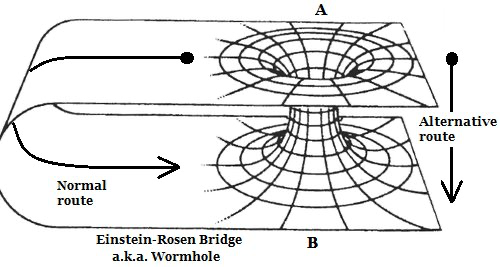
Easier said than done: if The Scaffold is indeed a wormhole, what do we need in place to create the wormhole? What is the nature of the plane being folded? 

The plane could be looked at as the social fabric for thinking together, thinking in synch. It is another tool or system to facilitate coordinated behaviour.  The plane becomes a graph-mind, as explained in Venkat Rao’s Graph-Mind-Notebook series. 

Punching the right line through the plane is difficult, and comes with great responsibility, and only few people can do this. These punchers are usually born like this, and often not welcome or seen as inappropriate in corporate environments. 

It takes a huge effort to instigate experiences that break away from the normal. Humans are hardwired to believe what they hear/already know. Their brains are wired to look for mirror neurons, and this not only at the cognitive cortex, but also at the motor cortex, visual cortex, other cortexes…

How do you break away into the territory of experimental imagination, as described by Ann Pendleton in Pragmatic Imagination? You could use LSD trips to create experiences that are  as strong as giving birth to a baby. Seriously, how to make the hole is a very serious proposition.

You have to first identify the consistency of assumptions of the plane, then have different strategies for drilling the hole, and a list of tools to drill the hole.

I always thought – and still do – that using artists is a natural human way to resonate beyond the cognitive, textual level. Artists – not as entertainment, but as prime contributors to the content and the narrative – can bring us in a state of different reality.

It is about human presence in multiple realities, in form ànd feeling, in space ànd time. It resembles to dance, or rather choreography.

“Dance/choreography is dancing of the second order, meta-dancing, or better, it is an investigation of dancing.” 

Alva Noe in his book The Entanglement

“We will soon live life across multiple realities. Each with its own physical laws, bodies & affordances. The only common denominators? Space, time and human presence.”

Andreea Ion Cojocaru

How to make holes is also a matter of nuance, of deciding how much dissonance you want, you can have, what’s beyond your comfort zone, although we know from Niels Pflaeging that there is no such thing as a comfort zone.  

Imagine a dial/slider of dissonance
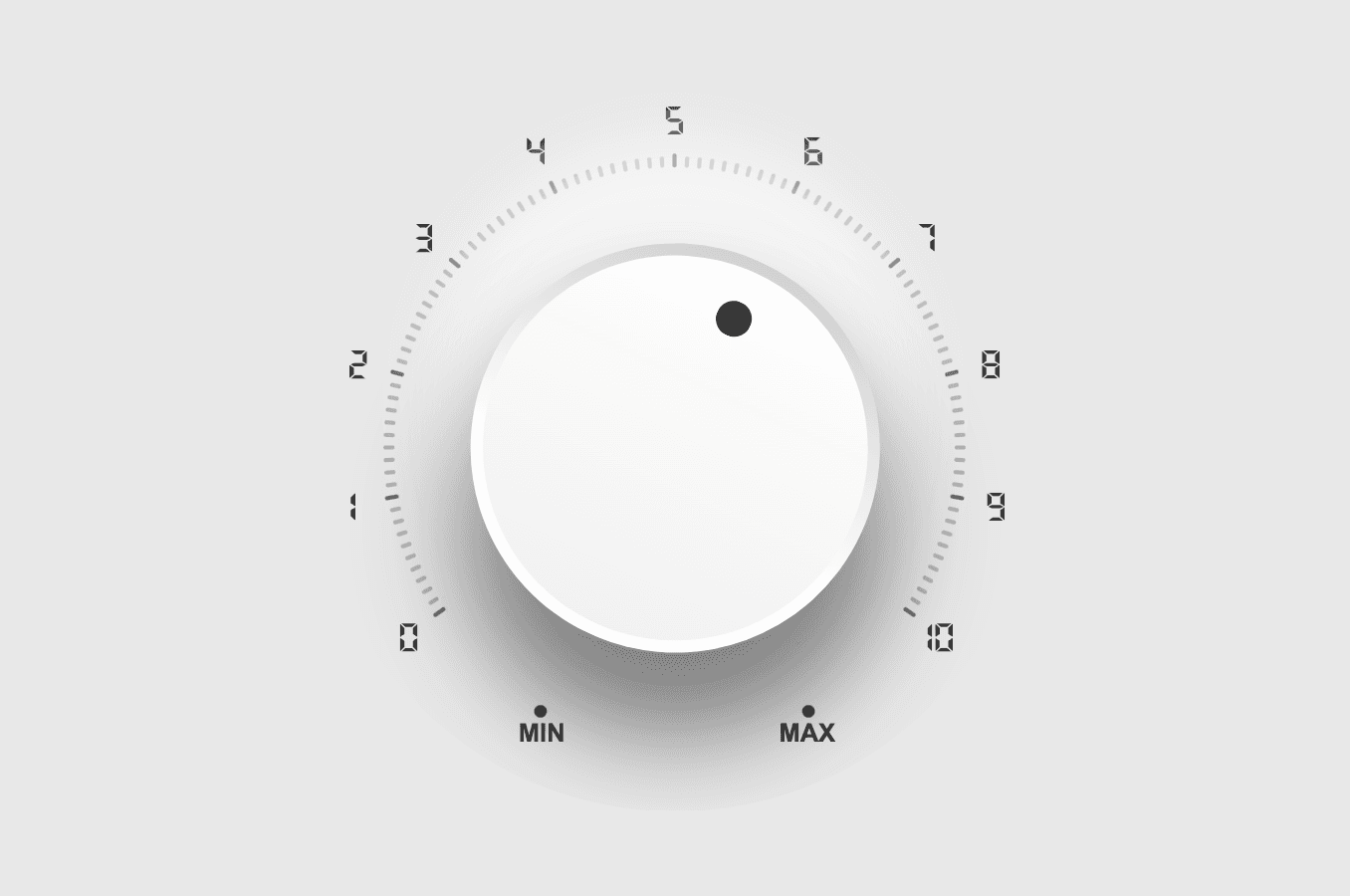
Who turns the dial? Who is the orchestrator/composer/juggler of place, space, and time? Who is the mapper/weaver of ideas? Who curates the team of transdisciplinarians in a coherent impactful learning experience?

This is about going through walls. 

It remembers me of Geoff Manaugh’s blog about Nakatomi Space where he described Bruce Willis’ Die Hard experience to literally going through walls

What I find so interesting about Die Hard—in addition to unironically enjoying the film—is that it cinematically depicts what it means to bend space to your own particular navigational needs. 

This mutational exploration of architecture even supplies the building’s narrative premise: the terrorists are there for no other reason than to drill through and rob the Nakatomi Corporation’s electromagnetically sealed vault. 

Die Hard asks naive but powerful questions: If you have to get from A to B—that is, from the 31st floor to the lobby, or from the 26th floor to the roof—why not blast, carve, shoot, lockpick, and climb your way there, hitchhiking rides atop elevator cars and meandering through the labyrinthine, previously unexposed back-corridors of the built environment?

Geoff Manaugh

The Scaffold as a wormhole is about going through previously unexposed back-corridors where all is malleable. 

This will scare the hell out of many. The disclaimer deserves a warning to be prepared to be discomforted, even to expect existential angst. Such disclaimer also imposes a duty of extreme care to the designer of such experience. 

Interestingly, and to stay in the world of film and imagination, the quote “Innovate or die” is sometimes attributed to Robert Iger, the CEO of the Walt Disney Company. 

In that sense, the title of this blog post could as well have been

“Die Hard and Innovate”

With thanks to Andreea, Marti, JMS, Josie, and Venkat for planting these brainworms in my head.

Warmest,

Making Content Work

It is rare that I read a book twice. “Making Art Work” by Patrick McCray is one of them. A book that sends you back to the future of the 50ies, a period in some sense similar to today, where we are again in a cold/warm war context, but where interesting collaborations between art, engineers, scientists, entrepreneurs, and technologists make their appearance as well. Fortunately, it was not all doom then, and neither is it today.

The book is also a huge inspiration for The Scaffold, the transdisciplinary learning studio for the never-normal that I am trying to give birth in different constellations.

In the book, the author Patrick McGray looks at artists-engineers collaborations with a very specific lens: where usually art books glorify the artists, Making Art Work looks at the engineers that made the transdisciplinary artworks work. Hence the title “Making Art Work”.

One of the key insights in these transdisciplinary collaborations is the evolution from “What do I want?” to “What do we have?” Usually, the artist comes in with what she/he wants and asks the engineers to make that happen. This approach leads to a lot of misunderstandings and frustrations. A better take is to start with the question to the engineers “What do you have?” and let the artists play and be creative with what is already there.

The book is a treasure of other gems, anecdotes, and more in-depth research of the life and work of folks like Frank Malina (rocket engineer turned artist), Billy Klüver (laser-beam engineer turned curator/impresario), Jean Tingeley (artwork/machined that destroyed itself). These were also crazy times with Andy Warhol, John Cage, Robert Rauschenberg, Marcel Duchamp, and many others.

Jean Tingeley – Hommage to New York, 1960 – The New York Times – Photographer unknown

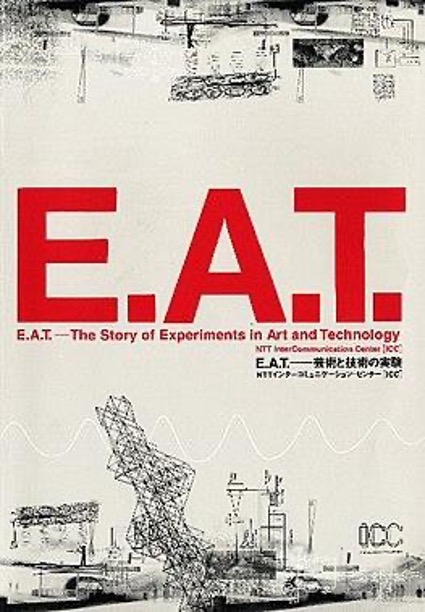
One of the initiatives described is the E.A.T. Experiments in Art and Technology, driven by curator/experimentalist/impresario Billy Klüver.

There was so much going on at E.A.T. and the best way to get a sense of the depth and breadth of their work is by reading the book, or sitting down, relaxing, and enjoying this +1hour video about the initiative, narrated by Julie Martin, at that time “Director of Experiments” at E.A.T., and in this video really charming and full of humor.

Not only is her title cool, but the title reflects the core E.A.T. ethos which was all about experiments. The outcome was deemed less important than the journey of the experiment.

The becoming is more important that the state of the thing.

In my earlier post “Apple Just Upgraded the Illusion”, I already touched upon process philosophy as “a way out of what is today seen as overly deterministic thinking about technology and time, and clears the road for thinking about digital technologies and digital selves not as objects but as processes and becoming“

“Projects that did not get realized are as interesting as projects that are”

Julie Martin talks about reverberating beyond careers and personal lives, cultivating a sense of play, disciplinary hybrids, “artrapreneurship”, and taking purposeful risks in order to explore new boundaries in both art and science. How cool is that!

The precursor of E.A.T. was an amazing one-time event “9 Evenings: Theatre and Engineering” one of the first large-scale collaborations between artists and engineers and scientists, held in the 69th Regiment Armory in New York, a huge empty space that was transformed into a theatrical performance space in five days.

E.A.T. was also the main contractor/curator for the content at the PepsiCo Pavillion at the World Fair Japan in 1970.

Here is an excellent article in IEEE Spectrum Magazine of Feb 2020 by the author of Making Art Work, Patrick McCray.

I love the subtitle “50 years on, artists and engineers staged one of the most ambitious and expensive multimedia events – and infuriated their corporate backers”

Here are some pictures from that article:

Both “9 Weeks” and the “Pepsi Pavillion” highlight the importance of space in orchestrating new skills and behaviors. Space as a language. Space as in spatial computing. Space as in spatial thinking, spatial creation.

In re-reading the book “Making Art Work” and writing this post, I suddenly realized that most of my work is about “Making Space Work”, or even better “Making Content Work”. A practice where most of the work is an experiment. Where the becoming and the performance in space are more important than the resulting artifacts.

Performance by the performers on-stage, but also by the participants. Their journey becomes an experiment as well, a curious meandering through an endless labyrinth, letting them connect the dots and do the meaning-making, rather than considering the audience as passive consumers of content that need to be hand-held, directed, and manipulated by and in a scripted non-malleable “show”.

As I mentioned several times before, my practice is not in the entertainment business, my practice is in the learning “bildung” process. These methods are underpinning my work in the area of interventions, provocations, and interruptions. In other words, all my work is about similar forms of artistic and aesthetic expression and experience in the co-creation of content. These methods also led to a new vocabulary and a new set of aesthetics to describe and share what I do and why I do it.  

I feel like I am painting with content. Making content work. I am hungry to unleash this creative energy in some big space, together with technologists, scientists, artists, and entrepreneurs.

Warmest

Apple just upgraded the illusion

Picture by Apple

The initial title of this post was “Let’s upgrade the illusion”, but that’s what Apple just did with the announcement of the Vision Pro. And I mean that in the positive sense, not as a criticism.

The quote “Let’s upgrade the illusion” comes from a keynote by Deepak Chopra during the December 2022 retreat of Nishith Desai Associates (NDA), a leading Legal & Tax Consulting company from India, with offices worldwide. It is in itself interesting to see a Legal & Tax Consulting company exclusively focused on new technologies like AI, XR, Nano, Bio, etc.

The event was hosted in NDA’s gorgeous campus “The Imaginarium”, a true infrastructure for imagination, pitched by the CEO as a “private infrastructure for the public good”. How cool is that?

But back to that keynote titled “The nature of reality, what is real?” – We jump in after 2 min:

Deepak kicks off by stating that everything is real if you are truly immersed in it: whatever you experience is an illusion. If everything is an illusion anyway, let’s then upgrade the illusion. To do so, says Deepak, ideas have to manifest. Therefore we need imagination. 

Imagination is about EVERY experience, all senses, not only visual, Deepak goes on. And then he really got me when he explained: 

“That what imagineS is consciousness, awareness, soul. That what imagineS has no form, no location in time or space, no boundary, and therefore is infinite. That what is imagineD has form, has location.”

This opens a field of possibilities, or better, a field of what can be imagined. 

I agree with Peter Hinssen when he says that the Vision Pro is not an iPhone moment but an Apple LISA moment:

“I don’t agree with those who say that the Apple Vision Pro launch is a new iPhone moment. I believe it’s an Apple Lisa moment. The Apple Lisa was a true milestone in the history of personal computing. Just like the Lisa, the Apple Vision Pro is a technological marvel that is too expensive (for now) to join the mainstream but is setting completely new standards for the industry.”

Back to Deepak. In a second talk at the same event about “The Future of Wellbeing”, he kindly notices that scientists measure experiences, and artists have experiences. That scientists identify with Quanta, and artists with Qualia. “Qualia is a unit of experience”. 

What if we would measure the success of the Vision Pro on its potential to dramatically increase our units of experience, expanding our notions and understandings of what is real.

This reminds me of David Chalmers’ book “REALITY+”, a philosophical masterpiece that basically states that any good illusion is indistinguishable from real. 

Let’s mix this with the insights of another philosopher Mark Coeckelbergh in his new book “Digital Technologies, Temporality, and the Politics of Co-Existence”, a mouthful, I know. Prof. Dr. Mark Coeckelbergh is a full Professor of Philosophy of Media and Technology at the Philosophy of Department of the University of Vienna.

In this book, Coeckelbergh makes a plea for process philosophy: 

Process philosophy shows a way out of what is today seen as overly deterministic thinking about technology and time, and clears the road for thinking about digital technologies and digital selves not as objects but as processes and becoming

He also introduces the concepts of embodied technologies and “technoperformances.”

Performances emphasize the role of humans and the social but also bodily and kinetic character of our (co-)existence with digital technologies… As I have proposed in Moved by Machines and related work, the term performance can be used to conceptualize our dealings with technologies, including digital technologies. As we use digital technologies and are involved in technoperformances, we move and are choreographed, we act and are directed. To conceptualize the important role technologies and media play, we can say that we do not only use technologies in order to move, but that technologies also move us and direct us. The medium is not only the message but also the performance.  

This brings me to the excellent interview of Kent Bye with Andreea Ion Cojocura during SXSW 2023 titled “Defining Process-Relational Architecture with Andreea Ion CojoCaru: Spatial Design as a Participatory Improv Performance”

Andreea passionately talks about the potential of XR to instigate and discover emergent behaviours, about rubbery environments in continuous change, putting change at the heart of everything. And also about performance, like in art performance, a live creative process that takes you on an embodied, visceral journey with direct interaction with public. A process relational approach: me and the building (the environment) going dancing for a while. Love that – dancing with your spacial environment: where the end result is less important than the process, the experience itself. 

Ken Bye has btw very deep thoughts about the impact of AR/VR/XR on presence, immersive storytelling, and experiential design. Watch his May 2022 Brussels talk on YouTube here. I encourage you to watch the whole thing, it will reset your assumptions about virtual reality.

The core of his talk is about this quadrant, looking at AR/VR/XR in terms of four types of presences.

One could also say the four types of “illusions” of what is real and what creates and influences your learnings and behaviors.

Let”s get out of this rabbit hole with Andreea in her recent LinkedIn post:

Apple DID debut a killer app. It’s embodied interaction *done well*. It doesn’t matter how simple it is. Experiencing space smoothlessly react to you in any form is exhilarating, addictive magic. The killer app is spatial UX as its own content. The novelty resides at the neural level, where a tiny delay or flicker makes a world of difference in how information is processed, and when and how the feeling of magic and awe is released.”

Besides the fact that the Vision Pro and anything related to it is just a gorgeous piece of technological perfection – “you can lick it” would Steve Jobs say – it deeply integrates spacial vision and embodied experience. That’s why I belief Apple just upgraded the illusion.

Update: I added a link to @BrettKing’s The Futurist Podcast on the Apple Vision Pro with @missmetaverse @Scobleizer, and @BrianRoemmele . This Podcast gives you a really good sense of the revolutionary aspects of the Apple Vision Pro. Enjoy!

Warmest

Inspiration – Peter Cook – Utopian or Real?

From time to time, I discover an interview, an artist, a dreamer, or another non-conformist take on reality that I find worthwhile transcribing. 

I prefer to make such transcripts manually, by listening, pausing, and reflecting. Like drawing by hand. 

And also in the resulting text, it is possible to give some sense to that rhythm of reflection. 

In this post, a transcript of the conversation with artist/architect Peter Cook on the benefits of drawing by hand, on buildable or non-buildable ideas, on utopia or reality. I started transcribing around 11:15 in this video which also contains beautiful artwork. 

Somehow, I would like to grow old like Peter Cook…

In drawing

You can decide upon almost anything

How to make a building that can go from solid to transparent without a window?

From solid 

to slightly permeable 

and then translucent 

More translucent

Completely transparent

And then back again

I don’t think any of the work is utopian

The notion of utopia, the notion of the ideal perfect objective is not in my mind

I think that a lot of these drawings are buildable

they may not be a hundred percent buildable 

but they are more buildable

than they’re unbuildable

so what i’m saying is

to answer the question is it utopic 

No, it’s not utopian 

I even balk at the idea

if it’s huge you see

what happens is

the critical observer will say 

Ah! that stuff is utopian

what we do down the road is real

and it delights me to say that

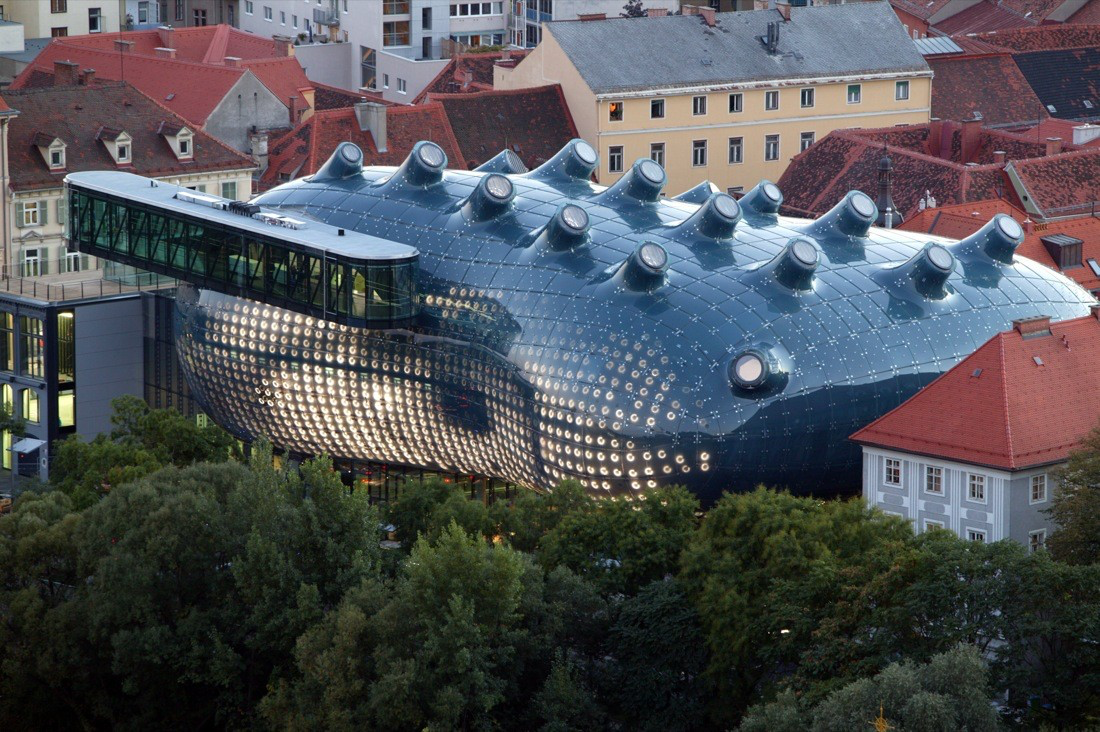
we did build The Kunsthaus in Graz

which could have been one of these drawings

but it’s there 

you can go inside 

it is still working 20 years down the line

and agreeably 

The Kunsthaus in Graz, by Peter Cook

and so then I say 

hey hold it

if you say that this stuff is utopian

what about Graz  

it’s built

if you can

build Graz 

aha you guys

you can build 80% of this stuff 

it’s just that you obey by the critics and the

regular people saying it’s utopian 

You put it aside 

you put it into a kind of

you put it into a pigeon hole that says

oh those sort of architects are utopian

and we architects are normal

the delight I get out of doing some buildings 

it’s to say

screw you 

it can be built

so then i say

I do not want to be a utopian architect

i’m not interested in utopia 

I’m interested in architecture 

I’m interested in the drawings 

contributing towards 

the discussion and language 

of architecture 

and thank you very much 

I wouldn’t mind building some of it

Below are some images of the hand-drawn city landscapes by Peter Cook. From the Louisiana Museum of Modern Art

Obviously all images are courtesy of the artist. 

A lot of Peter Cooke’s work and insights throw me back to my own architecture studies in the 70ies when we were allowed to design buildings that did not have to be buildable.

In the same way, his utopian/reality paradox is central to the ideas I developed as part of The Scaffold, a transdisciplinary learning studio for the Never Normal. The studio gives permission to play with ideas that are not necessarily buildable but that unlock some other kind of less cognitive insight.

Hope you stay on board

Warmest

5 books to help you understand (and profit from) global trends

The time that we could organise our companies without acting too much on global evolutions lies long behind us. Leaders understand more than ever that tackling world challenges not only creates a better context for all of us to live in but also presents fantastic business opportunities. It’s why am thrilled to be one of the curators of nexxworks’ Mission NXT program, designed to help leaders turn global trends into opportunities.

For those who are truly passionate about fostering this type of outside in vision, here are five (zero bullshit) books that fundamentally changed and formed my thinking in the matter over the years.

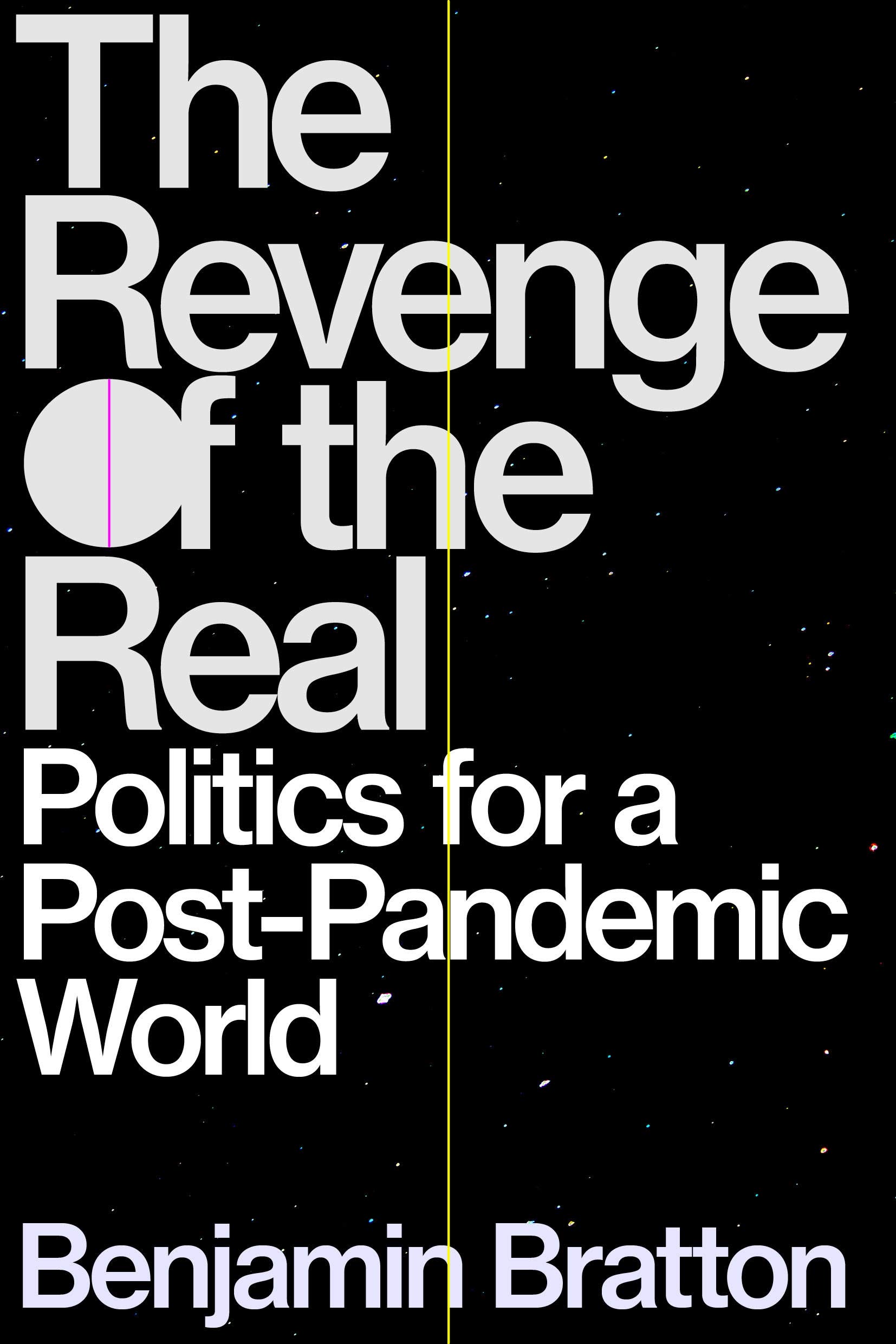
Benjamin Bratton – The Revenge of the Real (2021)

The pandemic showed us that we are completely unprepared to cope with our current deeply entangled world. According to Bratton, we need a “positive biopolitics” and an AI-based instrumentation of the world. He offers a refreshing way of thinking about sensors which is quite different from the worn out song about the surveillance state.

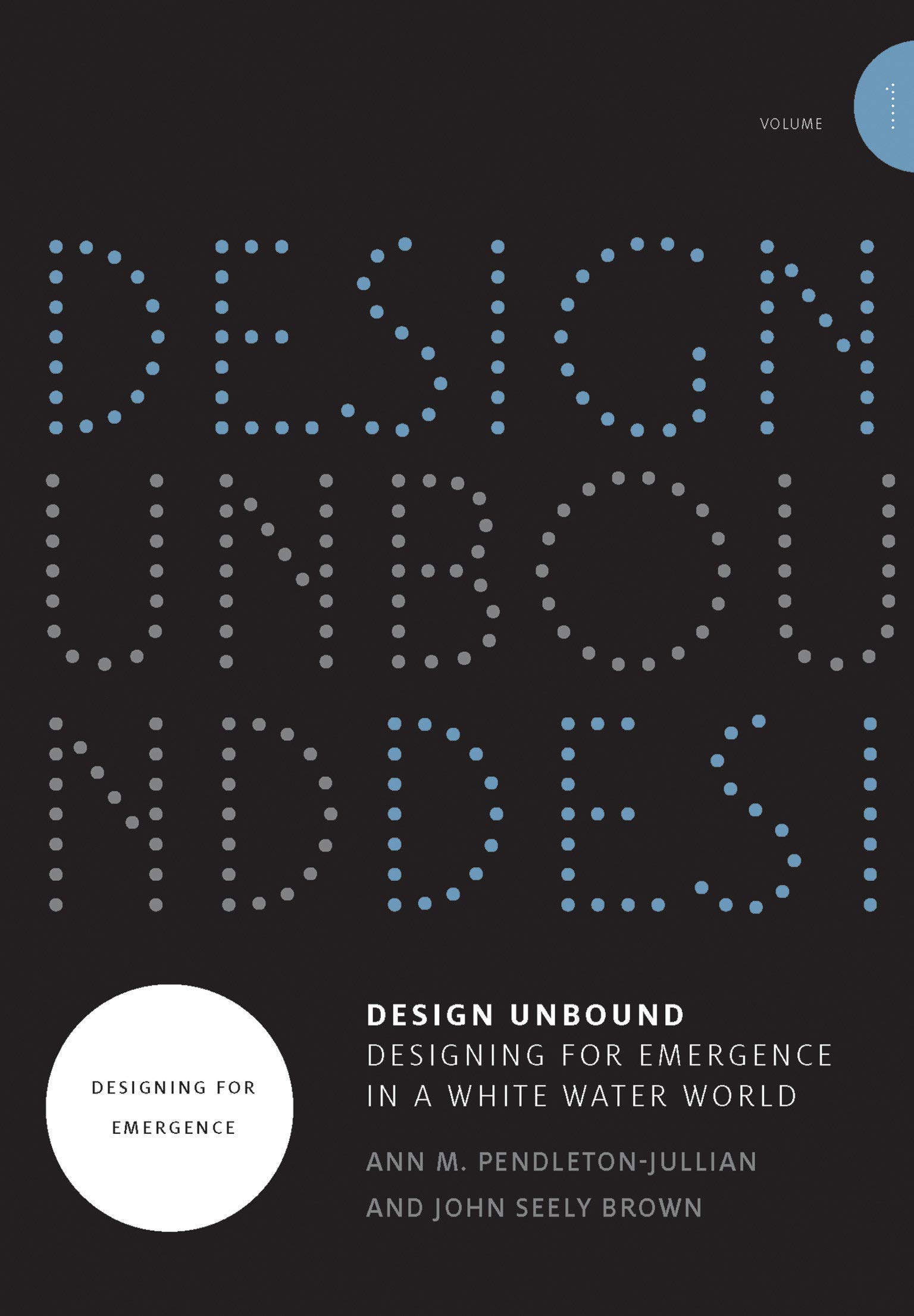
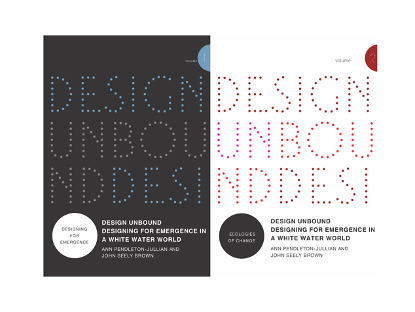
Ann Pendleton Jullian and John Seely Brown – Design Unbound (2018)

Read this if you want to understand how you can design for emergence in the Never Normal. You’ll need your full attention (it’s not a ‘light reading’ project), but in return you’ll receive two volumes of unique and well researched insights to help you better see what is and what can become. This is truly one of the most important business books I ever read.

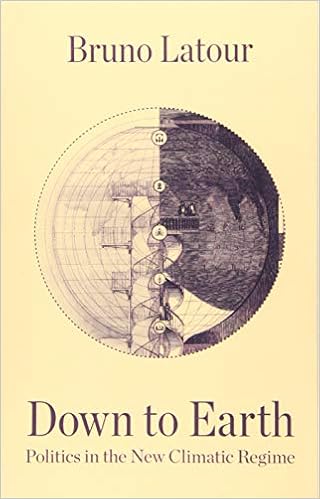
Bruno Latour – Down to Earth (2018)

Latour calls for a third way in climate politics which is left nor right: a path between libertarian globalism, and leftist localism. One that is anchored in planet earth. Read this if you want to get to know one of the most important philosophers of the 21st century.

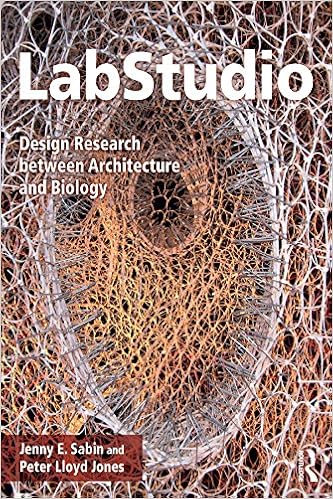
Jenny E. Sabin and Peter Lloyd Jones – LabStudio (2017)

Sabin and Lloyd Jones tackle the concept of the research design laboratory in which funded research and trans-disciplinary participants achieve radical advances in science, design, and applied architectural practice. The book demonstrates new approaches to more traditional design studio and hypothesis-led research that are complementary, iterative, experimental, and reciprocal.

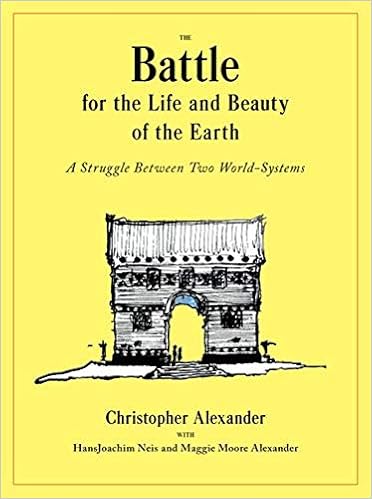
Christopher Alexander – The Battle for the Life and Beauty of the Earth: A Struggle Between Two World-Systems (2012)

This real life story of American architect Christopher Alexander designing and building the Eishin university campus in Japan serves as an analogy for the battle between two fundamentally different ways of shaping our world. One system places emphasis beauty, on subtleties, on finesse, on the structure of adaptation that makes each tiny part fit into the larger context. The other system is concerned with efficiency, with money, power and control, stressing the more gross aspects of size, speed, and profit. This second, “business-as-usual” system is incapable of enabling the emotional, whole-making side of human life, according to Alexander, who then goes on to present a new architecture.

Warmest,

This post was originally posted on the nexxworks company blog, on the occasion of Mission NXT, which I help curate

Your nexx work at nexxworks?

From time to time, I do a freelance gig for nexxworks, the company co-founded by Peter Hinssen. I am always amazed with the positive, welcoming spirit of the team.

This is a fresh, ambitious company, specialised in inspiring and connecting their customers about the Day After Tomorrow. Inspiring with examples of exponential change, immersing people in front-seat experiences with top innovators around the world, all while guiding and facilitating the questions that can activate this ambition into action.

And now they have eight (8!) open positions with quite attractive packages, including flexibility to work from home, interesting fringe benefits such as an electric company car, a sharing mobility solution, (e-)bike, laptop,  budget for a smartphone, international phone subscription, insurance packages, meal vouchers, etc.

If you are looking for a great job at one of the coolest companies in Belgium, this may be your chance. They call the world their home. If I was not retired, I would not hesitate a minute.

The nexxworks’ office building is in the middle of the student district of Ghent (Overpoort/St Pietersplein), close to sport, shops, public transport, lunch spots, … The completely refurbished iconic building was designed in 1930 by architect Fernand Brunfaut (°1886-†1972) for the editorial HQ of the newspaper “Vooruit”. Cool office space, kitchenette, meeting places, there is even a video studio for A/V productions.

Have also a look inside:

Some great team values as well:

  • Witty
  • Go-getting
  • Open-minded
  • Challenging
  • Positive

Eight vacancies. Maybe one of them is your nexx work. At nexxworks.

All info here: https://work.nexxworks.com/

Traveling without moving – Studios

This post is part of a series of essays bundled under “Traveling without moving”.

Intro of that series can be found here.

Petervan Pictures © 2021 – Travelling Without Moving

After the Inappropriate post of begin June 2021 we continue with “Studios”, a way of collaborating together as a practice of practices.

In my previous life (2009-2016), I architected several immersive learning experiences for SWIFT’s annual conference Sibos. It was called Innotribe @ Sibos. Already then, I was convinced that learning should be more than the transfer of knowledge by a speaker on a stage (or in a Zoom window) talking to a passive audience. I wanted to resonate with the audience at a level beyond the pure cognitive. I wanted the experts to talk with the audience in immersive settings. We got quiet far in that ambition during the 2016 edition, where physical and mental space formed a coherent and harmonious backdrop and context for several creative learning sessions.

Innotribe human-artistic space 2016

In 2016, I sensed there was an untapped potential for building cognitive and non-cognitive equity by integrating artists into the mix. Not as entertainment, but in support of the content by creating a multidisciplinary mix of left and right brain dispositions. “A bridge too far” was the harsh judgement. I took a one-year sabbatical, never went back, and started Petervan’s Studios.

I now had plenty of room to experiment with real and virtual paint, sound- and video-production tools, animation, collaboration with artists, etc. And was invited as a lead experience designer for a couple of high-touch leadership experiences.

The plural “S” and the end of Petervan StudioS was inspired by Nelly Ben Hayoun StudioS, a weird mix of interrogations and provocations using different studio disciplines from writing, to painting, through video and soundscape, film productions, theatre, drama, experiences, etc. Multiple studios under one – albeit often virtual – roof.

With Petervan StudioS, my ambition is to design and architect creative interventions, interruptions, and provocations. Formats can be curations, events, group experiences, expeditions,  immersions, exhibitions, analog and digital artwork and productions, performances, writings, poems, blogs, installations, soundscapes, recordings, documentaries, and time capsules.

Studios are more than a glorified term for artworks, workshops, or events.

A studio is a practice of practices.

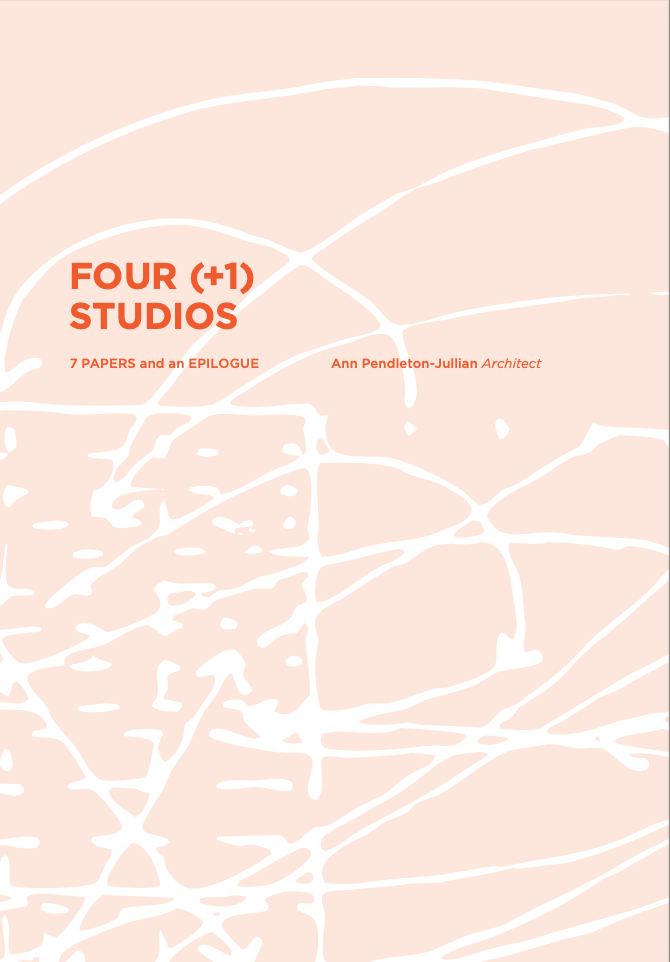
This is a good moment to consider FOUR (+1) STUDIOS (PDF), Ann Pendleton-Jullian’s take on StudioS, a 254-page long articulation and inquiry of the subject.

“Written from the perspective of an architect, these papers talk about design and design thinking, the social environment of practice of the studio, and how the architectural design studio and its methodologies have evolved over time to respond to evolving social environments and practices”

What follows is my personal interpretation of Ann’s insights, based on extensive reading and studying of her writings and transcribing many of her video vignettes.

Four (+1) Studios is about applying the principles, work methods and ethics of an architecture studio to the domain of system and organizational design.

Studios are where the practice takes place and where a practice of practices is forged and then evolves in a space. 

A practice is a way of doing. It usually has a very strong task component, but critically it has to do with being embodied in a context. 

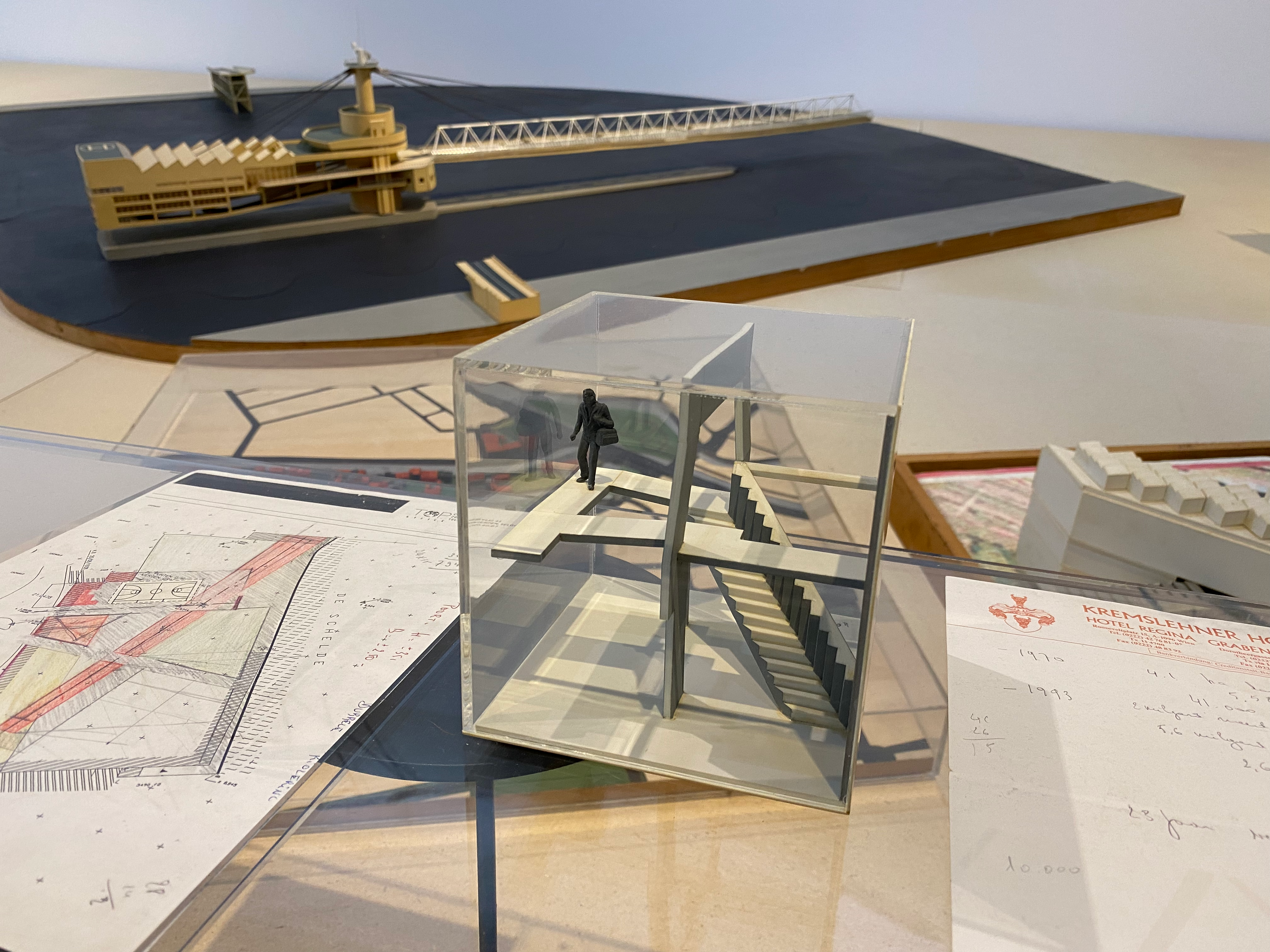
Future Plans 1970-2020 – Luc Delue and T.O.P. Office – De Singel, Antwerp

The learning of a practice involves becoming a member of a community of practice. Think of guilds in the Middle Ages.

But it is more than a community of specialized skills or artisans.

For example, if you consider the handling of a pipette in a lab, and you want to work with a Petri dish low and behold, each lab may train their folks to hold their pipette in a certain way, the way you hold that pipette influences the visual that’s never been recorded. 

In other words, the community of practice develops his own signaling, that create the community and amplify kind of tacit communication in very powerful ways that makes that community a practice.

The studio combines different practices. An architecture studio is multi-disciplinary: a combination of aesthetic, ethical, engineering, scientific, societal, political, philosophical, and anthropological skills. A combination of material, societal, and mental ecologies. In the end, architecture is about designing spaces for messy human beings to grow and develop at their best.

We can architect buildings, spaces, things. But we can also architect contexts, less tangible artifacts that let a project emerge and evolve into preferred and desired futures.

There are five key aspects of studio, which make it unique from other teaching and learning environments. 

The studio is initiated by and formulated around problems, yet it is not specifically about solving problems. 

It is profoundly social in nature and structured

It is a highly critical and discursive environment using critiques – not criticism 

It’s deeply synthetic in nature in contrast to teaching and learning environments that operate as compartmentalized, a specialized knowledge basis. 

and five, it operates through the integration of knowledge with skills.

Design studio and the student apprentice’s journey (courtesy Ann Pendleton-Jullian)

Studios are a proven way of failing and recovering together, a repurposing of the architecture studio practice of practices.

There are three kinds of studios.

The teaching studios, where you’re trying to teach something. It is about the didactic transfer of knowledge.

The mentoring studios, where you now are giving a project and helping a student move through that project.

The inquiry-based or research studios; these can be real-world projects, and real world, richly networked experiences.

Illustration courtesy Ann Pendleton-Jullian

Combining these different types of studios has become a key component of my client work in 2019-2021.

For one client we developed a leadership studio around the topic of ambiguity. For another client, we are creating an online expedition based on conversation moments and thinking experiences, using different types of “Guides”. Some guides have a more didactical role of transferring knowledge (teaching studios), other guides have an enabling/mentoring role (mentoring studios), and yet other participants inject new ways of thinking about the future, other than scenario planning (inquiry based studios).

Other clients ask us to design learning experiments: multiple parallel lines of inquiry, keeping multiple options open, resisting the urge to come to quick resolutions, and building up cognitive equity, together. These online sessions are designed as facilitated studios: a proven way of failing and recovering together, as an embodied learning.

Doing projects like these require my 100% focus and attention.

They require me too deeply immersive myself in the client’s problem and project space.

I am human, and my quality attention is scarce, not unlimited, and I need pauses for reflection and recalibration.

It is why I only can accept one such project per year.

Because I want to keep the balance and attention right.

Next time in Travelling Without Moving, we’ll talk about “Genres”, a set of different practices to weave content and engagement into video learning experiences.

Hope you stay on board.

Warmest,

Travelling without Moving – Unbound

Tod Williams Billie Tsien Architects Studio – Photo by Peter Arnold 1998

This post is part of a series of essays bundled under “Travelling without moving”.

Intro of that series can be found here.

The plan/ambition with this series: to share where I have been the last year, what I learned, where I am going, and what is required.

The broader quest is to discover what is required to enable real change.

After the Anxious-post of begin Feb 2021, we continue with “Unbound”. Unbound from thingness that is.

Unbound comes from “Design Unbound”, part of the title of the book (actually two volumes) written by Ann Pendleton-Jullian (APJ) and John Seely Brown (JSB) and published in 2018.

The full title is “Design Unbound: Designing for Emergence in a White Water World”.

I am blown away and intrigued by the insights: this is about having agency in a world that is constantly shifting under you. It is so refreshing after all those business-, management-, leadership-, and self-help-books. It has become a healthy addiction: I am basically reading and re-reading and deeply internalizing everything that Ann Pendleton has written in the last couple of years. I have been haunted by this book. Ann and John put a spell on me.

This book is a game-changer. I highly recommend it.

After a first read/scan of the two volumes, and after a kind introduction by Jerry Michalski and John Hagel, I had my first (online) conversation with Ann and John on 27 May 2021. I wanted to explore a partnership for building a workshop on BANI and work with Ann and John on the response to Anxious, which was related to having agency on a world that is in constant change.

Ann initially very politely declined, but I insisted, and since then we have worked and are still working together on some NDA projects. We now have several calls per month.

How naïve I was at that time. I thought I understood, but Ann very kindly let me discover my own mind-bugs. She also pointed out my reductionist thinking around BANI. She also let me discover other resources and deep-dives to let me internalize what this was all about. The last couple of months have been a humbling experience.

I will not even attempt at summarizing the book.

I just would like to spend some time on the “Unbound” aspect of the title.

The initial title of the book, I learned, was “Architecture Unbound”.

Ann is a practicing architect.

You may discover that she co-designed the house of Carl Sagan. He hired Atelier Jullian and Pendleton, whose principal, Guillermo Jullian de la Fuente, had been a student of Le Corbusier.

The architects designed a new, separate residence for Sagan in Cayuga Heights, and prepared an extensive, two-stage redesign plan for the tomb to turn it into a study for him and his wife.

Carl Sagan house – Cayuga Heights – Picture Durston Saylor in OfHouses

In the book, Ann is applying the practice of an architecture studio to other things than buildings.

Tod Williams Billie Tsien Architects Studio

In the video above, you see how architects work together as a family. Where working and failing together – almost as a practice of group-vulnerability – thrives on experimenting and rigorous critique.

Ann describes similar practices of architecture studios and applies them to unboundedness.

Unbound from buildings.

Unbound from things.

The architect as a context designer.

The role of critique in an architecture studio.

The role of Game Play and Game Design

We’ll look into some of these aspects in some subsequent posts in this Travelling without Moving series.

If you want a quick intro (two times 90 minutes) to the work of APJ and JSB, here are two video-vignettes that Ann and John recorded for the IFTF Foresight Talk Series

The main points covered in these two videos are: white water world, pragmatic imagination, from Newton to Darwin to Ecologies, Design for Emergence, Systems of Action, and World Building.

But there is so much more in the book, and the material is so rich, so nuanced, so dense, that I very much invite you to read it, not once, but twice, ever three times.

This is just pure-gold material for anybody who is active in corporate innovation initiatives.

It helps you reset and forget and go way beyond your tactical thinking about startup bootcamps, corporate venture funds, MVPs, Lean, Agile, platforms, ecosystems, and other blah.

You don’t need a head of innovation.

You don’t need an innovation team.

You need a squad that is trained to design for emergence and to tackle wicked problems.

This is about seeing the world differently – a world in constant change – and about seeing the dispositions of the system and designing the contexts for emergence and agency in these complex systems.

Together with Ann, I am working with Hamilton Ray from Collective Next and Amber Case on a Pirate TV episode on Design Unbound.

We plan to release the video before summer. We aim to condense the key insights of the book into a 45 min, a sort of non-commercial trailer for a learning journey that is being put together. The video will be provocative enough to stand on its own as a coherent learning opportunity.

Next time we’ll talk about “Foam”, a way of looking at and reflecting about the world as suggested by German philosopher Peter Sloterdijk.

Hope you stay on board.

Warmest,

Travelling without Moving – Play

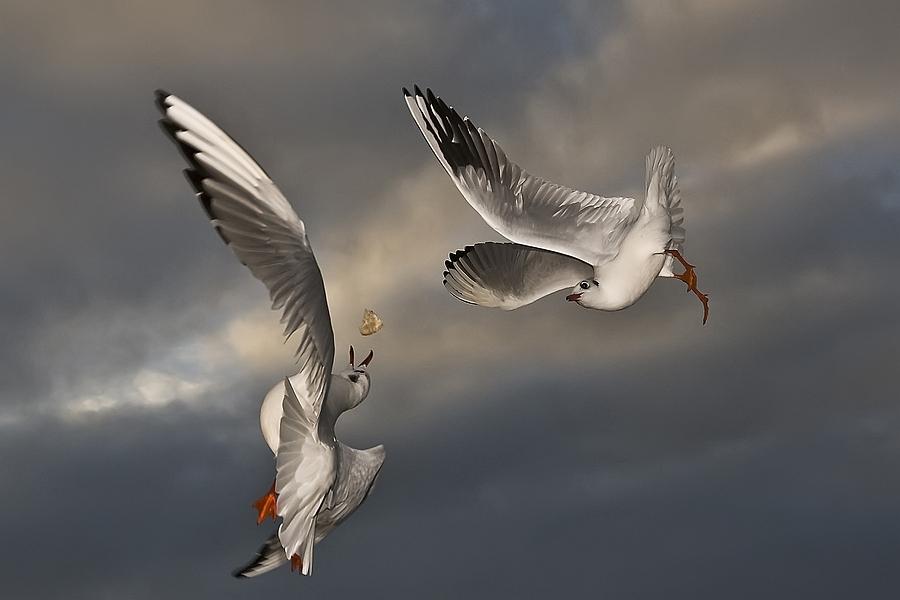
White birds playing on air with food (via Reddit)

This post is part of a series of essays bundled under “Traveling without moving”.

Intro of that series can be found here.

The plan/ambition with this series: to share where I have been in 2020, what I learned, where I am going, and what is required.

The broader quest is to discover what is required to enable real change.

After the Pause-Post of end Nov 2020, we continue with “Play”.

“I’d like to do nothing for some time

be free

flying and gliding

like birds in the sky

left, right, up, down, up, down,…

defying centrifugal forces

unlimited by time, space, distance, force

like free painting

with myself as the paintbrush

and the sky as canvas

4-dimensional

playful like the birds,

showing little tricks,

challenge and pursue

but not limited

by any form of danger”

@petervan

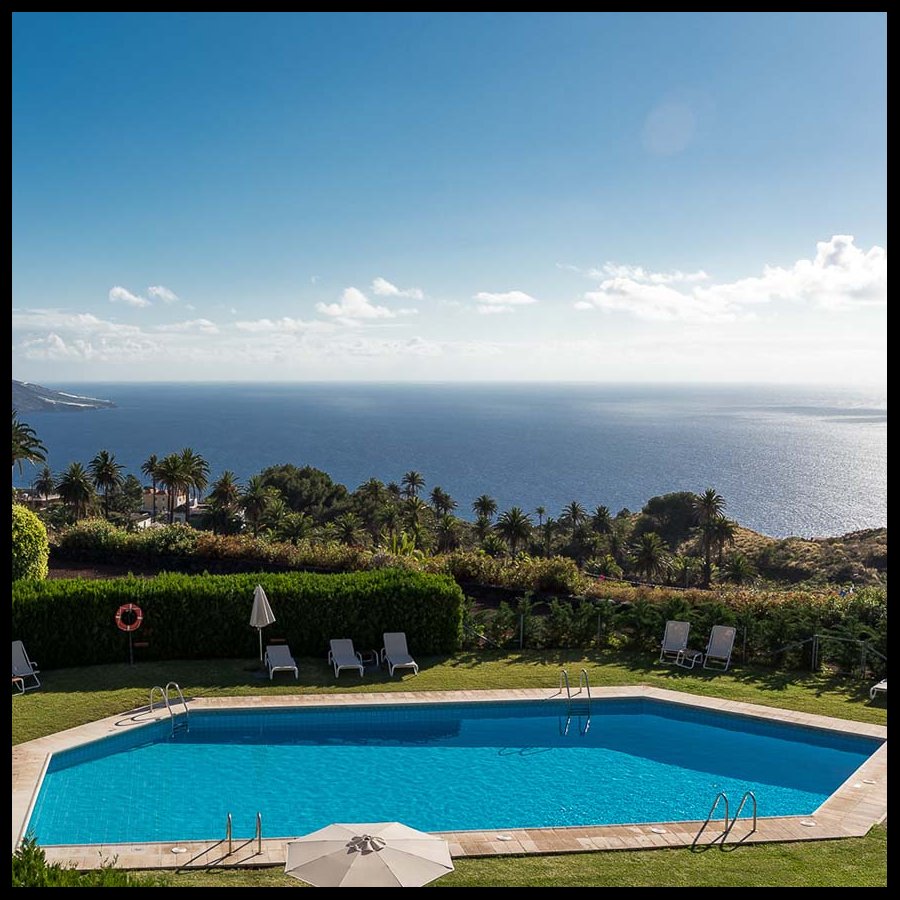
It is a poem I wrote in 2012 laying at a pool at the Paradores Hotel in La Palma (Canary Islands), watching the birds playing in the blue sky…

This is the sort of play I would like to write about today.

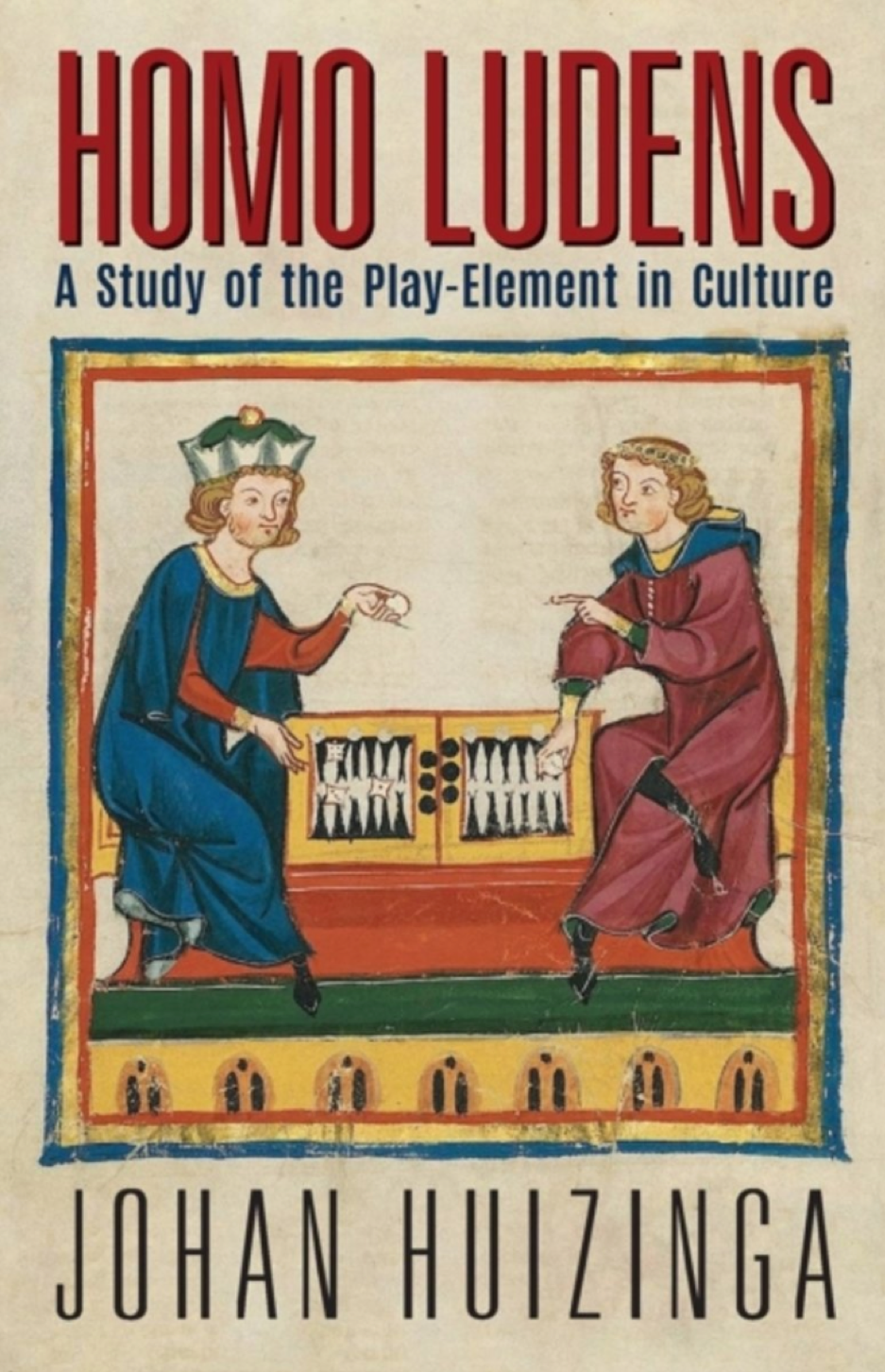
This is the sort of play written about by Johan Huizinga in Homo Ludens in 1938

I believe I already mentioned Homo Ludens in my post about a New Babylon

Huizinga believes play is of all times, and not limited to humans.

Animals play also.

A lot.

It is not “play” as in “game”.

Game – at least finite games – hints at some underlying sense for competition.

This is play without competition.

Play just for the pleasure of play.

Like birds in the sky,

cows in the pasture,

dogs on the beach,

humans teasing each other…

The core message of Huizinga is that play drives culture.

That the disposition of a culture is already embedded in the play preceding it.

By this we do not mean that play turns into culture, rather that in its earliest phases culture has the play-character, that it proceeds in the shape and the mood of play (Huizinga)

Play is irrational.

Play is a voluntary activity.

Play has a tendency to be beautiful. It may be that this aesthetic factor is identical with the impulse to create orderly form, which animates play in all its aspects. The words we use to denote the elements of play belong for the most part to aesthetics, terms with which we try to describe the effects of beauty: tension, poise, balance, contrast, variation, solution, resolution, etc.

Play casts a spell over us; it is “enchanting”, “captivating”. It is invested with the noblest qualities we are capable of perceiving in things: rhythm and harmony.

The child plays in complete—we can well say, in sacred—earnest.

But it plays and knows that it plays.

Play is a voluntary activity or occupation executed within certain fixed limits of time and place, according to rules freely accepted but absolutely binding, having its aim in itself and accompanied by a feeling of tension, joy and the consciousness that it is “different” from “ordinary life”.

We do not play for wages, we work for them

@Huizinga

The last one resonates well with my current state of being. For me, and especially since my retirement from corporate life on 1 Dec 2020, “work” has become “paid play”, although most of the work in 2020 was “unpaid play”.

But it is play.

In 2017, in my series “Trends for human advancement”, I strongly believed that structure is driving everything, and landed on the phrase:

“Structure drives flow drives behaviour drives culture drives change”

With the insights of Huizinga, I would complement it as follows:

Play drives structure drives flow drives behaviour drives culture drives change”

So, to be able to change, we first need to re-learn to play.

“There is a third function, however, applicable to both human and animal life, and just as important as reasoning and making—namely, playing.”

@Huizinga

This brings me to the insights of John Seely Brown in “A New Culture of Learning”, who quotes Huizinga extensively

I rediscovered John Seely Brown (JSB) when reading “Design Unbound” that he wrote together with Ann Pendleton-Jullian. Much (!) more about that book and Ann’s work and how it changed and formed my thinking in 2020 and ongoing.

Visual/Insight by JSB

JSB talks about a “21st Century Augmented Imagination”, with a better balance between Homo Sapien, Homo Faber, and Homo Ludens

Play, questioning, and—perhaps most important—imagination lie at the very heart of arc-of-life learning

In a world of near-constant flux, play becomes a strategy for embracing change, rather than a way for growing out of it

Play fuses the two elements of learning that we have been talking about: the information network and the petri dish (or bounded environment of experimentation). That fusion is what we call the new culture of learning

@JSB

Later in this series, we’ll also talk extensively about the concept of “Studios”, leveraging the practice of practices that is architecture (again, as so well documented by Ann Pendleton-Jullian in “Four Studios (+1)”)

The key point here that play and critique are indispensable tools and skills  for collective learning when integrating game play and game design in the scaffolding of the disposition of imagination.

Next time we’ll talk about “Anxious” one of the states of a post-VUCA world. And what a possible response to that anxiety can be.

From there – in subsequent posts – we’ll leave the road of reductionism and will enter a space where we will mix more abstraction and holistic thinking.

Hope you stay on board.

Warmest,

Petervan Studios – Update Nov 2020 – Intervals of Possibility

Petervan memories from the 70ies – First artistic performances

It’s almost one year (!) since my previous Dec 2019 update. And what a year it was/still is! I basically stayed home for the whole period and had zero travel since Oct 2019.

I am publishing this on the day Belgium is entering its second Covid-19 lockdown. A forced pause-marathon starting on my 63th birthday on 1 Nov till at least mid-Dec 2020. But I am afraid the effort will have to run until deep into 2021 and I am preparing for it as an “interval of possibility”.

An interval of possibility is a temporal framing to see better what is and what can emerge. There is indeed still so much to read, to learn, to experiment, to play with. So many contexts to be architected. So many interesting people to (re)connect with (at least virtually). So much opportunity for spiritual, moral, and aesthetical advancement! Expect me to be quite generative in the coming weeks and months.
The Artschool Project

The Artschool academy year started again in Sep 2020, and I subscribed for a two-year curriculum labeled “specialization”.

“Professionalization” is probably a better title for what it is: a focus on getting the (art)work done, commitment, and ambition. We’ll learn to discover our own visual language starting from our personal frames and themes with the ambition to develop our own artistic maturity and identity. This is about personal reflection, self- and group-critique, evaluation, and research. About creative identity and creative disposition. And about how to create a portfolio, develop contacts with galleries, presenting your own work, setting up your own expo, etc.

From an artistic medium point of view, my main focus will remain painting on canvas, but I will keep experimenting with other (mainly digital) media.

I shared most of my recent work via my Facebook page, or on this blog under the heading “Sine Parole”. I also started selecting more straightforward subjects, such as vases, landscapes, cows, fruit, and everyday objects. In many cases the obvious and what is in front of you is interesting enough. Here is an example of some apples from our mini orchard:

Petervan Artwork © 2020 – Apples – Acryl on Canvas – 50x50cm

The upcoming Cow project

I have something with cows (pun intended). I met many during my summer bike tours. It feels it is going to become yet another a thematic series, like the prison windows, or the birds, or the boxers.

Petervan Artworks @ 2020 – Cow Project – Digital Try-out
Petervan Artworks @ 2020 – Cow Project – Sketch of the Intervals of Possibility

One option is to create a cow-sign-language and typography, or maybe see how I can get them generated through in-the-cloud AI neural networks.

Via Mario Klingeman (@quasimodo) -AI generated shapes

Exhibitions

Last year, I visited some art exhibitions, including:

  • There is no Planet B – S.M.A.K., Ghent, Dec 2019
  • Inge Decuypere – Ronse, Feb 2020
  • Dali-Magritte – Museum Fine Arts, Brussels, Feb 2020
  • Love-Hate – ING Gallery, Brussels, Feb 2020
  • Keith Haring – BOZAR, Brussels, Feb 2020
  • Van Eyck – Museum Schone Kunsten, Ghent, Feb 2020
  • Stephan VanFleteren – FOMU, Antwerp, July 2020
  • Writing Beyong – Axel Vervoordt, Wijnegem, July 2020
  • Dechamps, Panamarenko and Co – Deweer Gallery, Zwevegem, Oct 2020

There were many more, but due to Covid-19, many musea were closed or had restrictions.

Stephan VanFleteren – FOMU, Antwerp, July 2020

My own exhibition

I ran my first solo (100% virtual) exhibition during summer. Some unexpected fans actually bought some of my works. Thank you: this is very encouraging. For those who don’t know: I also do commissioned work. If interested – in buying or commissions – please send me a private message.

Some vernissage impressions here.

Outdoors

We had a great summer in Flanders. Since the start of the first lockdown on 13 March 2020 we had good to excellent weather till mid-September 2020. Plenty of opportunity for being outdoors, with the occasional bike tour or walk.

Freelance

Covid-19 is not kind to freelancers, especially if you target what some people call the “event industry”. With the exception of a small gig in 2020, I basically got no work since October 2019. Contact me in private if you’d like to hire me for “interesting” work.

BANI

Already in 2018, Jamais Cascio coined the term BANI. See my post from Aug 2019 and Jamais’ update from April 2020. As mentioned before, I am working with some partners on a virtual multimedia workshop based on this framework, with a specific focus on possible responses. We have an amazing cast on-board, and it looks that we’ll be able to make some announcements soon.

Design Unbound

I am blown away and intrigued by the insights in Design Unbound: Designing for Emergence in a White Water World. This is about having agency in a world that is constantly shifting under you. It is so refreshing after all those business-, management-, leadership-, and self-help-books. It has become a healthy addiction: I am basically reading and re-reading and deeply internalizing everything that Ann Pendleton has written in the last couple of years.

We are building a team to design and deliver a corporate curriculum on this topic. Stay tuned on the “we” and the “curriculum”.

Pirate TV

Most online events and conferences suck. I have some ideas on how to be more ambitious. See my earlier post on the ambition cube for virtual events.

Still from Pirate TV Trailer – Petervan Studios © 2020

I got the chance to do a commission for a client on this concept and we – the client, the team, myself – learned a lot on what works and what not.

There are now two Pirate TV channels in the pipeline: one more business focused and one more “artsy”.

New toys

For Pirate TV, I wanted to become more fluent in video and sound creation. As there was nothing else to do due to Covid-19, I followed some online courses on Ableton Live, Final Cut Pro, and Logic Pro X.

These are such rich software environments. Also, their user interfaces make me think differently: thinking in layers, connections, patterns, and harmonies.

Studio Oxygen project

An idea that has been hanging around since 2018, actually.

People are exhausted. Tired of online meetings. Tired of being locked up in their houses. Tired of all the negative news. People crave for oxygen. People crave for small safe groups where they can share, critique, ideate, play.

With a small on-line collective, we plan to come together regularly online to have slow-paced conversations on a topic/seed that I plant.  The seed can be the chapter of a book, an object, a poem, a job well done, or a failing forward.

With a no-frills focus on quality content, we hope these sparks of inspiration will give you “oxygen for the mind”.

Traveling Without Moving project

This will be a series of posts documenting my mental and philosophical journey in 2020.

Some spoiler keywords: silence, pause, play, anxiety, unbound, truth, inappropriateness, genre, and yellow.

Traveling Without Moving (TMW) is also somewhat related to Studio Oxygen and Pirate TV

Books

Check out my GoodReads: https://www.goodreads.com/user/show/3085594-peter-auwera

Some highlights:

Also don’t forget Robert Poynton’s “Do Pause”. Together with Josie Gibson we made 8 podcast episodes, one for each chapter in this book. The last episode is here.

Petervan Rides

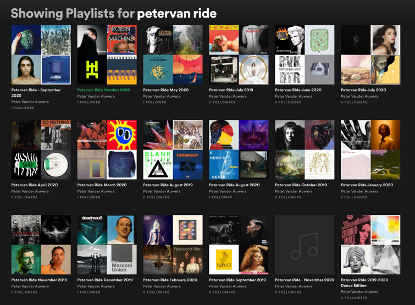
Since July 2019, I publish every month a Spotify List with new releases combined with some oldies from the 60ies, 70ies, and beyond. Search for “Petervan Ride” and select “playlists”. Subjective selection of course, as driven only by my personal taste (or lack thereof).

Petervan Rides on Spotify

So, whats next?

I will officially retire from corporate life as from 1 Dec 2020. Not that I plan to stay idle, on the contrary. Within limits, I will stay available for interesting freelance work – I call it “paid play” –  and plan to stay very focused on my artwork.

The plan for the coming months is to work/play on (random order):

  • “Interesting” freelance work
  • Artwork
  • Studio Oxygen
  • Traveling Without Moving
  • Pickup Time Capsules again

So, that’s it for this edition. If there is something worth reporting, next update is for Apr 2021.

#STAYSAFE

#STAYCONNECTED

Warmest,