Unsnap from the Grid

You have been programmed to snap.

Snap to the grid that is.

And I believe we have to unlearn to snap.

We have to unsnap.

I am sure you all have come across some software that has snapping guides, digital magnets to help you stay centered, or aligned, or in synch, or in tempo.

Photoshop is well known for this. You also have it in Powerpoint to help you nicely center your images in the middle of the slide. It is even more apparent in “creative” software like Sketchbook, Procreate, and of course Final Cut Pro. The richest metaphor is probably in music creation software like Ableton Live and Apple’s Logic Pro.

Quantization is a good example of snapping in music software. A human beat/drummer is normally not 100% on the grid. So, if you are a really bad drummer, you can ask the software for help and let it quantize (read adjust) your beats to the grid. Then it sounds perfectly to the beat. Maybe too perfect, as it then sounds mechanic, not imperfect “human”. Of course, there are some additional functions to humanize again the too perfect beat, and so on.

Before Logic Pro quantization:

After quantization (to the 4th Note):

In a more corporate environment, especially post-COVID when we have to/want to do everything on-line – “virtually” – we are getting snapped by tools like Miro and Mural. Especially Miro comes loaded with tons of templates. I am not picking on Miro or Mural, I am just using them as educational examples to make my point.

Example of Miro board templates

This all sounds very exciting, but I am afraid we are getting snapped into a scripted illusion.

This became apparent during a sparring-session with one of my clients, who asked me to review the prep work for a virtual leadership “off-site” (no pun intended ;-).

Wow! That looked really impressive: Miro board after Miro board, scripting a 3-day workshop in all its glory details. To be honest, I personally felt “boxed”. But apparently, the executives participating in the workshop felt they were doing a great job and were pleased to see how everything got nicely boxed. It gave a feeling of being in control.

The illusion became complete when I learned that the workshop was in support of the number one priority project of the company, and it became apparent that none of the participating executives had any intention whatsoever to collaborate with the others. One guy was appointed as project lead and 100% of his time allocated to this, but the other 14 project members had at best 10% of their time locked down. And this for the company’s priority one project.

They fully satisfied filled 20+ online boards, and then… nothing happened.

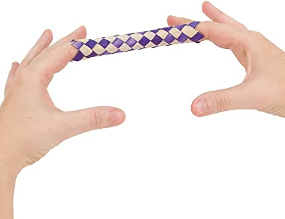
Unsnapping is similar to unstucking or unfreezing. A good metaphor for stuck/unstuck is the Chinese Finger Trap. You are getting stuck by only seeing one solution to get out of the trap: by pulling. The trick is to stop pulling and to start twisting.

Unsnapping is about unfreezing yourself and to get into your human rhythm/pace/tempo, without being quantized.

Unsnapping is about surfacing and seeing stuff that are de-railing the client without them noticing. Like putting in your face that the participants to the number one project have no intention to work together.

To see that twisting is also an option.

Unsnapping is not comfortable. Because it confronts you with being scripted, being programmed, and noticing that you have become a cog in snapping machine. Unsnapping may feel anxious. Because you are in unknown territory. Anxious as in my blog post from the Travelling without Moving series.

I am experimenting with some clients to offer an “Unsnapping Service”. To un-bind people from the “grid-lock”. To let go of the grids and snaps and re-finding your agency out of the grid. To sustain the creative tension that makes real change possible, to avoid snapping-back out of the creative tension.

I am using tools and techniques such as visual and audio collisions, artistic interventions, weirdness, and intentional silence. In some sense you could call me an elegant disruptor and connector. Connecting the unexpected. Disrupting through experimental and free imagination and association.

In most cases I am invited as an observer, but with a license to intervene at will or on command, a license to snap/unsnap, a license to provoke.

Josie Gibson from The Catalyst Network suggested I may be onto something. And that maybe I should start considering an Unstuck Manifesto or at least Unstuck Principles. Maybe, if I get unstuck from the grid of outdated practices 😉

Any views/suggestions/critiques warmly welcome. You can react in the comments field of this post or contact me in private.

Credit: the initial seed for unsnapping came during a conversation with Scott Smith (@changeist) and John V Willshire @willsh from Smithery. I am just playing around with that initial idea.

Warm regards,

Travelling without Moving – Unbound

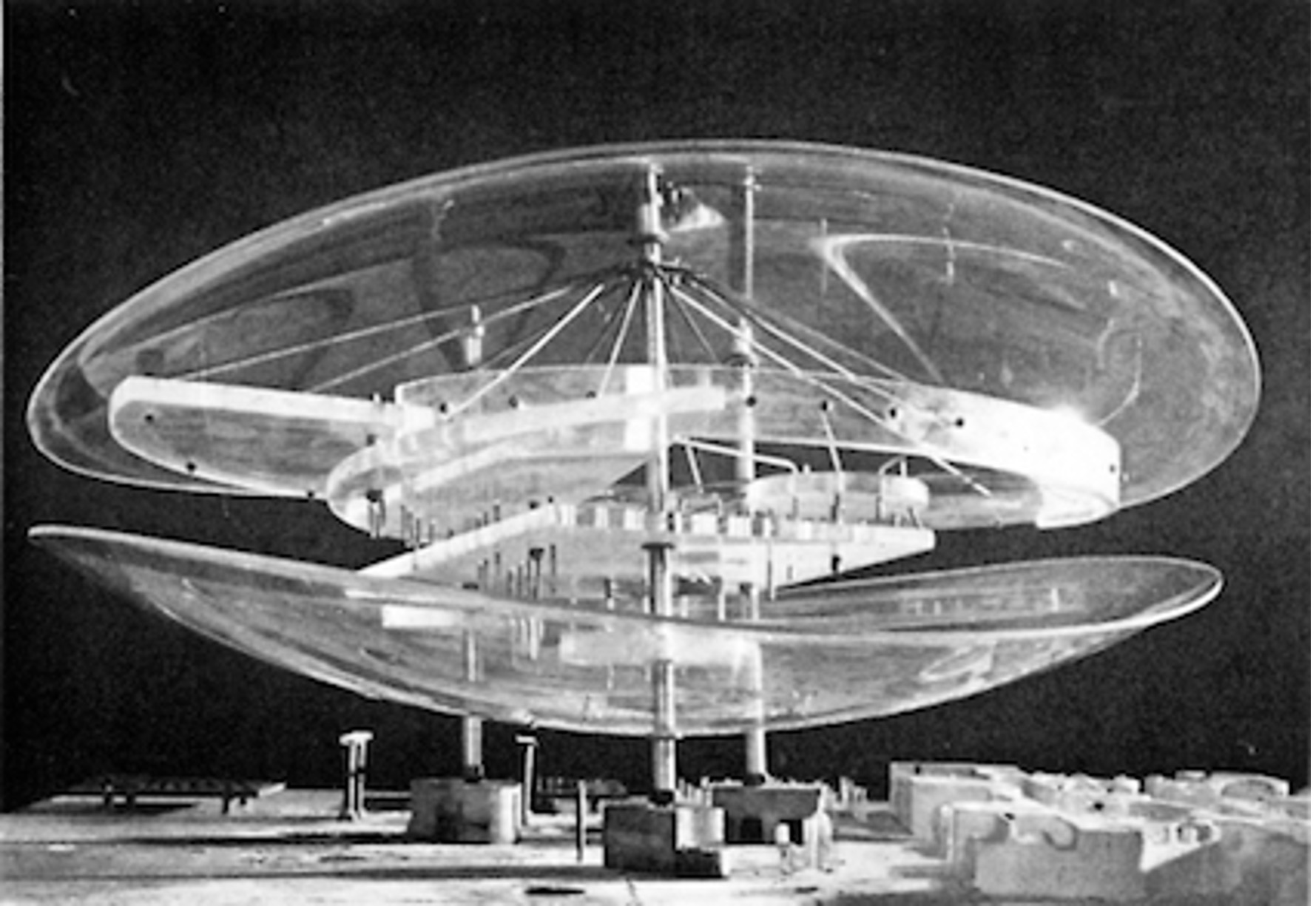
Tod Williams Billie Tsien Architects Studio – Photo by Peter Arnold 1998

This post is part of a series of essays bundled under “Travelling without moving”.

Intro of that series can be found here.

The plan/ambition with this series: to share where I have been the last year, what I learned, where I am going, and what is required.

The broader quest is to discover what is required to enable real change.

After the Anxious-post of begin Feb 2021, we continue with “Unbound”. Unbound from thingness that is.

Unbound comes from “Design Unbound”, part of the title of the book (actually two volumes) written by Ann Pendleton-Jullian (APJ) and John Seely Brown (JSB) and published in 2018.

The full title is “Design Unbound: Designing for Emergence in a White Water World”.

I am blown away and intrigued by the insights: this is about having agency in a world that is constantly shifting under you. It is so refreshing after all those business-, management-, leadership-, and self-help-books. It has become a healthy addiction: I am basically reading and re-reading and deeply internalizing everything that Ann Pendleton has written in the last couple of years. I have been haunted by this book. Ann and John put a spell on me.

This book is a game-changer. I highly recommend it.

After a first read/scan of the two volumes, and after a kind introduction by Jerry Michalski and John Hagel, I had my first (online) conversation with Ann and John on 27 May 2021. I wanted to explore a partnership for building a workshop on BANI and work with Ann and John on the response to Anxious, which was related to having agency on a world that is in constant change.

Ann initially very politely declined, but I insisted, and since then we have worked and are still working together on some NDA projects. We now have several calls per month.

How naïve I was at that time. I thought I understood, but Ann very kindly let me discover my own mind-bugs. She also pointed out my reductionist thinking around BANI. She also let me discover other resources and deep-dives to let me internalize what this was all about. The last couple of months have been a humbling experience.

I will not even attempt at summarizing the book.

I just would like to spend some time on the “Unbound” aspect of the title.

The initial title of the book, I learned, was “Architecture Unbound”.

Ann is a practicing architect.

You may discover that she co-designed the house of Carl Sagan. He hired Atelier Jullian and Pendleton, whose principal, Guillermo Jullian de la Fuente, had been a student of Le Corbusier.

The architects designed a new, separate residence for Sagan in Cayuga Heights, and prepared an extensive, two-stage redesign plan for the tomb to turn it into a study for him and his wife.

Carl Sagan house – Cayuga Heights – Picture Durston Saylor in OfHouses

In the book, Ann is applying the practice of an architecture studio to other things than buildings.

Tod Williams Billie Tsien Architects Studio

In the video above, you see how architects work together as a family. Where working and failing together – almost as a practice of group-vulnerability – thrives on experimenting and rigorous critique.

Ann describes similar practices of architecture studios and applies them to unboundedness.

Unbound from buildings.

Unbound from things.

The architect as a context designer.

The role of critique in an architecture studio.

The role of Game Play and Game Design

We’ll look into some of these aspects in some subsequent posts in this Travelling without Moving series.

If you want a quick intro (two times 90 minutes) to the work of APJ and JSB, here are two video-vignettes that Ann and John recorded for the IFTF Foresight Talk Series

The main points covered in these two videos are: white water world, pragmatic imagination, from Newton to Darwin to Ecologies, Design for Emergence, Systems of Action, and World Building.

But there is so much more in the book, and the material is so rich, so nuanced, so dense, that I very much invite you to read it, not once, but twice, ever three times.

This is just pure-gold material for anybody who is active in corporate innovation initiatives.

It helps you reset and forget and go way beyond your tactical thinking about startup bootcamps, corporate venture funds, MVPs, Lean, Agile, platforms, ecosystems, and other blah.

You don’t need a head of innovation.

You don’t need an innovation team.

You need a squad that is trained to design for emergence and to tackle wicked problems.

This is about seeing the world differently – a world in constant change – and about seeing the dispositions of the system and designing the contexts for emergence and agency in these complex systems.

Together with Ann, I am working with Hamilton Ray from Collective Next and Amber Case on a Pirate TV episode on Design Unbound.

We plan to release the video before summer. We aim to condense the key insights of the book into a 45 min, a sort of non-commercial trailer for a learning journey that is being put together. The video will be provocative enough to stand on its own as a coherent learning opportunity.

Next time we’ll talk about “Foam”, a way of looking at and reflecting about the world as suggested by German philosopher Peter Sloterdijk.

Hope you stay on board.

Warmest,

Petervan’s Delicacies – 16 Feb 2021

delicacies

As usual, an incoherent, irregular, unpredictable collection of interesting sparks. Handpicked, no robots. Minimalism in curation. Enjoy!

If you can’t get enough of these and want more than 5 articles, you can hang on to the firehose, the extended version of Petervan’s Delicacies in REVUE. Also in this edition with loads of videos. Subscribe here: https://www.getrevue.co/profile/petervan

Play Drives Change

Kanaal Site – Axel Vervoordt – Wijnegem, Antwerp

For the past years, I have been on a quest to discover what is required to enable change. I try to avoid glorifying terms like “deep”, or “meaningful” change. What we are after in the end is just “good” change, right? In my opinion, good change is change that leads to ethical, moral and spiritual advancement. All the rest follows: profit, happiness, communities, and networks of returning customers.

Deeply influenced by the work of Robert Fritz on structural conflict and structural tension, and that structure drives everything – especially behavior – I became dissatisfied by the responsive reaction in many organizations that can be summarized as “what problem are you trying to solve?” It is too solutionist, reductionist to my tasting, and I prefer Robert’s suggestion of the creative orientation of the artist/creator who is not solving a problem but develops mastery to create what she really wants.

So, the key starting point is to know what you want. Let that sink in for a moment. To know what you want.

Once you know what you want, you can create and change the structure that will at least be helpful – not working against you – in letting emerge and amplify the behavior that leads to what you want.

Structure is broader here than hierarchy or reporting lines. Structure includes contexts, vision, vehicles, mechanisms, and networks. Like an architect, you design spaces and structures to enable certain preferred – at time messy – human behaviors.  In a corporate environment, you don’t architect buildings, but you architect contexts. You become a context designer. As an architect, you are not only responsible for the imaginative part, but also for seeing through the execution ànd adaptation needed as the context changes throughout time. Structure and contexts drive flows of information. Like water in a riverbed, if you change the course of the riverbed, the water will behave differently.

Structure drives flow drives behavior.

Let’s add Leandro Herrero in the mix. He wrote “Viral Change” and “Homo Imitans”. Key insights: people copy behavior and behaviors drive culture. If you plant people with the desired behavior into your organization, there is a good chance others will start copying that behavior. Hence “Imitans”. Like viruses infecting others – in a positive way. Do I need to make a drawing in this Covid-19 era?

Leandro’s bottom-line: behavior drives change and not the other way. And you can design for certain preferred behaviors. It’s bottom-up. It is not because an executive team defines culture that everybody will start behaving like it. It is because you have seeded infectious behavior that a culture will emerge through imitation.

Like changing and influencing the structure of a building or a riverbed, we can influence the information flows in organizations. These changed flows lead to different behaviors that on their term drive culture. In the end culture drives change and advancement

Structure drives flow drives behavior drives culture drives change.

In 1938, the Dutch historian Johan Huizinga wrote a book titled “Homo Ludens: A Study of the Play Element in Culture”. The core message of Huizinga is that play drives culture.

That the disposition of a culture is already embedded in the play preceding it.

“By this we do not mean that play turns into culture, rather that in its earliest phases culture has the play-character, that it proceeds in the shape and the mood of play (Huizinga)

“There is a third function, however, applicable to both human and animal life, and just as important as reasoning and making—namely, playing. (Huizinga)”

This brings me to the insights of John Seely Brown in “A New Culture of Learning”, who quotes Huizinga extensively.

Visual/Insight inspired by John Seely Brown (JSB)

JSB talks about a “21st Century Augmented Imagination”, with a better balance between Homo Sapiens (Man as a Thinker), Homo Faber (Man as a Maker), and Homo Ludens (Man as a Player). Where imagination is triggered, tested, and augmented by play. And discovering the rules of the (future) game to play by playing it.

“In a world of near-constant flux, play becomes a strategy for embracing change, rather than a way for growing out of it (JSB)”

So, by adding “play drives culture”, we get:

Play drives structure drives flow drives behavior drives culture drives change.

Or in simpler, reductionist terms:

Play drives change

This post was written as a guest contributor to nexxworks.

This version includes additional imagery related to the books mentioned.

Travelling without Moving – Anxious

This post is part of a series of essays bundled under “Travelling without moving”.

Intro of that series can be found here.

The plan/ambition with this series: to share where I have been the last year, what I learned, where I am going, and what is required.

The broader quest is to discover what is required to enable real change.

After the Play-Post of begin Jan 2021, we continue with “Anxious” in a post-VUCA world.

BANI is what is next after VUCA.

Already in 2018, Jamais Cascio coined the term BANI. See my post from Aug 2019 and Jamais’ update from April 2020.

BANI stands for Brittleness, Anxious, Non-Linear, and Incomprehensible.

Let’s focus on the “A” of BANI.

I suggested that the preferred response to Anxiousness was empathy or agency.

But that felt too open ended.

Empathy with what, and agency in what kind of world?

And was it forward or backward looking?

A possible world or a preferred world?

I went back to the most common definition for anxious:

“being worried about what may happen or have happened”

Like a rabbit caught in the headlights, some people are so frightened or nervous that they do not know what to do. They sometimes remain still because they do not know where the light comes from or which way to go.

Another reaction is to fake that you know what to do, especially if you are in the spotlight for one reason or another. In other words, to bluff yourself out of an anxious situation.

Imagine a workshop where the top executives of a firm are sitting on the first VIP row of a theatre (in COVID-times, it would be a massive Zoom session with all the employees being able to look over the shoulder of their executives).

All the employees are sitting in the rows behind the VIP row to witness how their executives manage a difficult situation, or even more frightening, being able to see inside the heads of those who bluff to know, don’t blink an eye, and confidently steer their troops in the wrong direction, efficiently of course.

Remaining still or bluffing strong are most probably not the wisest responses to anxiety.

A better response would have to do with orientation or some kind of possibility mapping.

I assume many of my readers are familiar with Joseph Voros’ Future Cone.

Great background explanation by Joseph Voros here.

These days, you can buy out-of-the-box possibility mapping workshops from some of the big-4 and many boutique consultancies. Some of them already fully COVID-proof online, with Miro boards of future cones, chatrooms, Clubhouse conversations, Slack and other real-time streams.

But all this online-first coolness can also be distracting. What I am exploring is some kind of new genre, where we also inject artists to resonate with and for the content at a non-cognitive level, not as entertainment, but with an aesthetic that is demonstrative, not just a gimmick overlay.

An aesthetic that has a sense of stillness and serenity that makes the effort and work real, beyond perception and reason, with an anchoring in humanistic relevance.

Without falling for the temptation to add such toolkit to a “Pot-Pourri” of other coolness, as a tapas-bar, a Chinese menu to choose from.

What is missing in the “Pot-Pourri” is a sense of agency, a sense for direction and choice. Choice as in opinion, and direction as in judgment and daring to step forward with preference.

If not, the online-first future cones become a surrogate for analog Post-It-driven brainstorms, just mapping future concepts on the dimensions of possible, plausible, probable, and impossible.

The crux is daring to address the preferrable future. Because that is using the map beyond seeing better what is and what could be. It is using the map for standing for an opinion, a direction, most probably in the space of moral, spiritual, and aesthetical advancement.

That’s of course a more difficult sell.

But for now, let’s summarise, not as a conclusion, but more as a beacon in our developing story that a possible response to anxiousness is possibility mapping with the courage to set direction and preference.

Next time we’ll talk about “Unbound” – Unbound from thingness that is.

Hope you stay on board.

Warmest,