This month’s collection of new releases, and some very few oldies. Try it out. Play in shuffle mode to improve the surprise experience. Enjoy!
Petervan’s Ride – September 2021
Reply
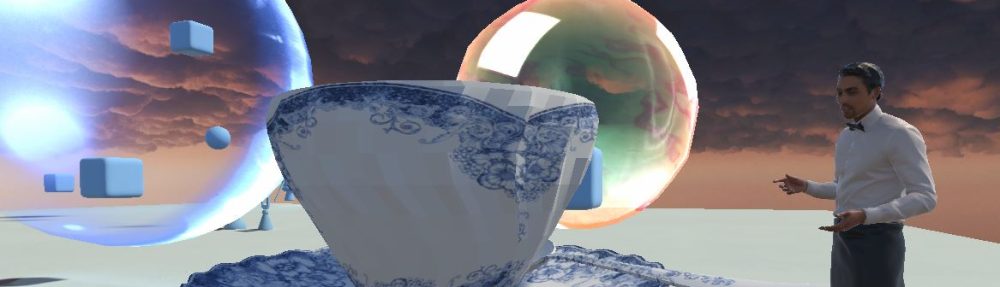
This month’s collection of new releases, and some very few oldies. Try it out. Play in shuffle mode to improve the surprise experience. Enjoy!
From time to time, I do a freelance gig for nexxworks, the company co-founded by Peter Hinssen. I am always amazed with the positive, welcoming spirit of the team.

This is a fresh, ambitious company, specialised in inspiring and connecting their customers about the Day After Tomorrow. Inspiring with examples of exponential change, immersing people in front-seat experiences with top innovators around the world, all while guiding and facilitating the questions that can activate this ambition into action.
And now they have eight (8!) open positions with quite attractive packages, including flexibility to work from home, interesting fringe benefits such as an electric company car, a sharing mobility solution, (e-)bike, laptop, budget for a smartphone, international phone subscription, insurance packages, meal vouchers, etc.
If you are looking for a great job at one of the coolest companies in Belgium, this may be your chance. They call the world their home. If I was not retired, I would not hesitate a minute.
The nexxworks’ office building is in the middle of the student district of Ghent (Overpoort/St Pietersplein), close to sport, shops, public transport, lunch spots, … The completely refurbished iconic building was designed in 1930 by architect Fernand Brunfaut (°1886-†1972) for the editorial HQ of the newspaper “Vooruit”. Cool office space, kitchenette, meeting places, there is even a video studio for A/V productions.

Have also a look inside:
Some great team values as well:
Eight vacancies. Maybe one of them is your nexx work. At nexxworks.
All info here: https://work.nexxworks.com/
Petervan Studios © 2021 – Just Loops
This post is part of a series of essays bundled under “Traveling without moving”.
Intro of that series can be found here.

Petervan Pictures © 2021 – Travelling Without Moving
After the Inappropriate post of begin June 2021 we continue with “Studios”, a way of collaborating together as a practice of practices.
In my previous life (2009-2016), I architected several immersive learning experiences for SWIFT’s annual conference Sibos. It was called Innotribe @ Sibos. Already then, I was convinced that learning should be more than the transfer of knowledge by a speaker on a stage (or in a Zoom window) talking to a passive audience. I wanted to resonate with the audience at a level beyond the pure cognitive. I wanted the experts to talk with the audience in immersive settings. We got quiet far in that ambition during the 2016 edition, where physical and mental space formed a coherent and harmonious backdrop and context for several creative learning sessions.

Innotribe human-artistic space 2016
In 2016, I sensed there was an untapped potential for building cognitive and non-cognitive equity by integrating artists into the mix. Not as entertainment, but in support of the content by creating a multidisciplinary mix of left and right brain dispositions. “A bridge too far” was the harsh judgement. I took a one-year sabbatical, never went back, and started Petervan’s Studios.
I now had plenty of room to experiment with real and virtual paint, sound- and video-production tools, animation, collaboration with artists, etc. And was invited as a lead experience designer for a couple of high-touch leadership experiences.
The plural “S” and the end of Petervan StudioS was inspired by Nelly Ben Hayoun StudioS, a weird mix of interrogations and provocations using different studio disciplines from writing, to painting, through video and soundscape, film productions, theatre, drama, experiences, etc. Multiple studios under one – albeit often virtual – roof.
With Petervan StudioS, my ambition is to design and architect creative interventions, interruptions, and provocations. Formats can be curations, events, group experiences, expeditions, immersions, exhibitions, analog and digital artwork and productions, performances, writings, poems, blogs, installations, soundscapes, recordings, documentaries, and time capsules.
Studios are more than a glorified term for artworks, workshops, or events.
A studio is a practice of practices.
This is a good moment to consider FOUR (+1) STUDIOS (PDF), Ann Pendleton-Jullian’s take on StudioS, a 254-page long articulation and inquiry of the subject.
“Written from the perspective of an architect, these papers talk about design and design thinking, the social environment of practice of the studio, and how the architectural design studio and its methodologies have evolved over time to respond to evolving social environments and practices”
What follows is my personal interpretation of Ann’s insights, based on extensive reading and studying of her writings and transcribing many of her video vignettes.
Four (+1) Studios is about applying the principles, work methods and ethics of an architecture studio to the domain of system and organizational design.
Studios are where the practice takes place and where a practice of practices is forged and then evolves in a space.
A practice is a way of doing. It usually has a very strong task component, but critically it has to do with being embodied in a context.
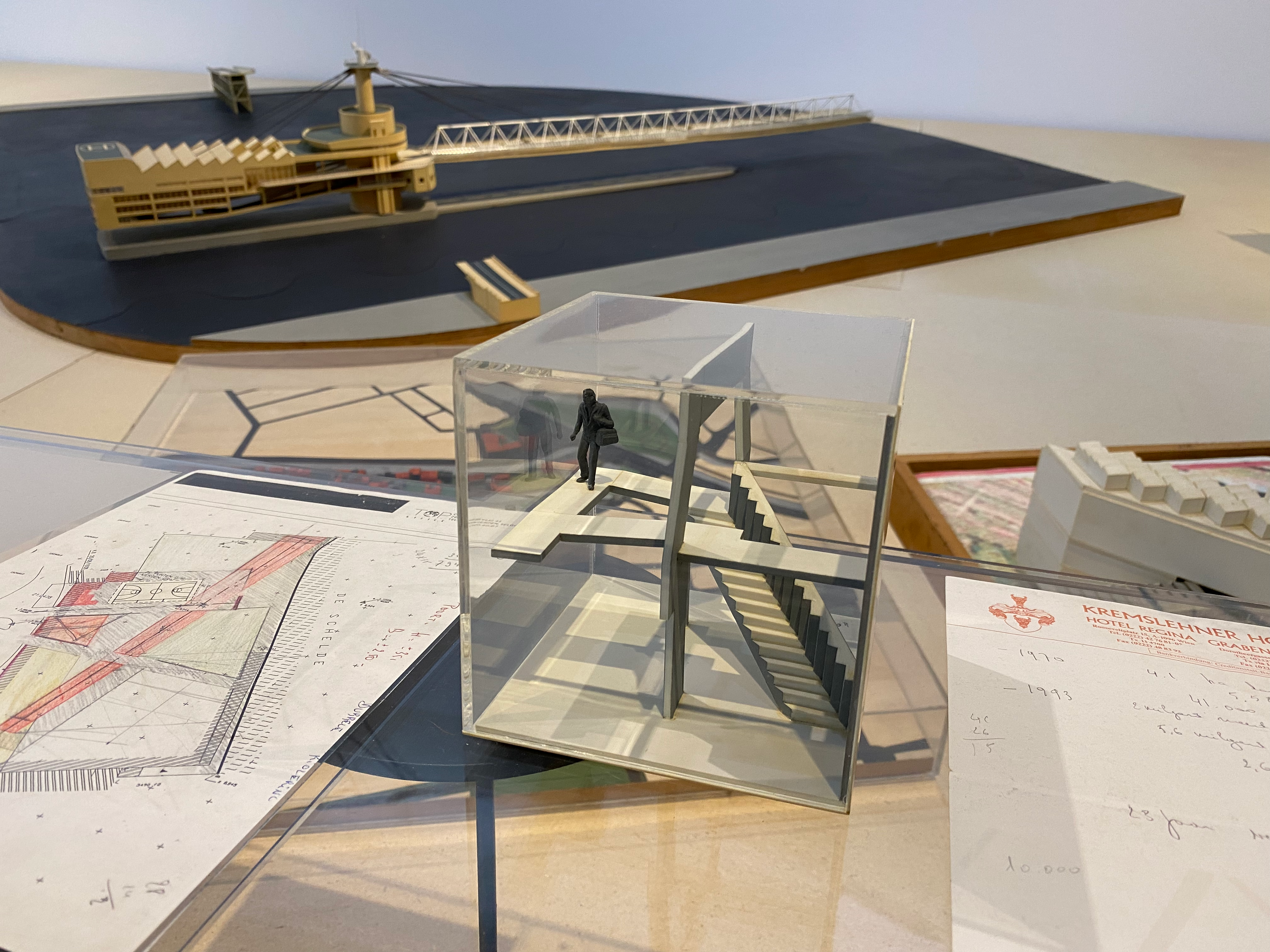
Future Plans 1970-2020 – Luc Delue and T.O.P. Office – De Singel, Antwerp
The learning of a practice involves becoming a member of a community of practice. Think of guilds in the Middle Ages.
But it is more than a community of specialized skills or artisans.
For example, if you consider the handling of a pipette in a lab, and you want to work with a Petri dish low and behold, each lab may train their folks to hold their pipette in a certain way, the way you hold that pipette influences the visual that’s never been recorded.
In other words, the community of practice develops his own signaling, that create the community and amplify kind of tacit communication in very powerful ways that makes that community a practice.
The studio combines different practices. An architecture studio is multi-disciplinary: a combination of aesthetic, ethical, engineering, scientific, societal, political, philosophical, and anthropological skills. A combination of material, societal, and mental ecologies. In the end, architecture is about designing spaces for messy human beings to grow and develop at their best.
We can architect buildings, spaces, things. But we can also architect contexts, less tangible artifacts that let a project emerge and evolve into preferred and desired futures.
There are five key aspects of studio, which make it unique from other teaching and learning environments.
The studio is initiated by and formulated around problems, yet it is not specifically about solving problems.
It is profoundly social in nature and structured.
It is a highly critical and discursive environment using critiques – not criticism
It’s deeply synthetic in nature in contrast to teaching and learning environments that operate as compartmentalized, a specialized knowledge basis.
and five, it operates through the integration of knowledge with skills.

Design studio and the student apprentice’s journey (courtesy Ann Pendleton-Jullian)
Studios are a proven way of failing and recovering together, a repurposing of the architecture studio practice of practices.
There are three kinds of studios.
The teaching studios, where you’re trying to teach something. It is about the didactic transfer of knowledge.
The mentoring studios, where you now are giving a project and helping a student move through that project.
The inquiry-based or research studios; these can be real-world projects, and real world, richly networked experiences.

Illustration courtesy Ann Pendleton-Jullian
Combining these different types of studios has become a key component of my client work in 2019-2021.
For one client we developed a leadership studio around the topic of ambiguity. For another client, we are creating an online expedition based on conversation moments and thinking experiences, using different types of “Guides”. Some guides have a more didactical role of transferring knowledge (teaching studios), other guides have an enabling/mentoring role (mentoring studios), and yet other participants inject new ways of thinking about the future, other than scenario planning (inquiry based studios).
Other clients ask us to design learning experiments: multiple parallel lines of inquiry, keeping multiple options open, resisting the urge to come to quick resolutions, and building up cognitive equity, together. These online sessions are designed as facilitated studios: a proven way of failing and recovering together, as an embodied learning.
Doing projects like these require my 100% focus and attention.
They require me too deeply immersive myself in the client’s problem and project space.
I am human, and my quality attention is scarce, not unlimited, and I need pauses for reflection and recalibration.
It is why I only can accept one such project per year.
Because I want to keep the balance and attention right.
Next time in Travelling Without Moving, we’ll talk about “Genres”, a set of different practices to weave content and engagement into video learning experiences.
Hope you stay on board.
Warmest,

 Petervan Studios