This month’s collection of new releases, spiced up with some oldies. Quite like this list. Try it out. Play in shuffle mode to improve the surprise experience. Enjoy!
Petervan’s Ride – April 2021
Reply
This month’s collection of new releases, spiced up with some oldies. Quite like this list. Try it out. Play in shuffle mode to improve the surprise experience. Enjoy!
A couple of weeks ago, I discovered by accident a way to get myself in a zen-state of total peace and relaxation. Not that I feel super hectic or nervous, or something like that. Not that I need it. Not that I was in search for it. I just stumbled upon it and I really liked it.
Petervan Artwork © 2021 – 5000 Bricks – Soundscape by Petervan in Logic Pro
It is the very simple – highly repetitive – practice of drawing many many little bricks, black ink on white paper. I am doing this when I am completely alone in my studio, with some repetitive music in the background (see later), and the sound of a ticking clock.
The only other things I hear/notice is the sound of the pen softly scratching the paper, the sound of my breath, a motorcycle or car or plane passing by in a soft distance, a door opening/closing somewhere in the house, sometimes a dog barking, or a dove crying.
I am old enough to remember reading somewhere in the eighties Robert Pirsig’s “Zen and the Art of Motorcycle Maintenance” from 1974.

“As in Zen, the trick is to become one with the activity, to engage in it fully, to see and appreciate all details–be it hiking in the woods, penning an essay, or tightening the chain on a motorcycle.”
It made me think about the repetive art of Roman Opalka who spent a big part of his life drawing numbers from one to infinity.

Roman Opalka by Lothar Wolleh – Sep 2002
But I don’t talk nor record my words while drawing my bricks. I am silent. And listen to repetitive soundscapes. I was looking for some “non-intrusive music”, music without meaning, music without noise, something that did not distract from the content (aka the bricks), but was rather amplifying it. I tried several ambients from Brian Eno, or songs from Robert Frip’s Music for Quiet Moments series and many more.
Until I discovered this AI-auto-generated music library by @alex_bainter.
The “song” that I have used most so far is called “Lullaby”.
Check it out at: https://play.generative.fm/library

Ann Pendleton-Jullian pointed me in the direction of Lu Qing’s work. Ly Qing is the spouse of Ai Weiwei, but she is always in background, not looking for press attention. When browsing her work, I stumbled upon this repetitive work, acrylic blocks on a silk roll of about 20 meters long and 83 cm wide.

M+ Sigg Collection, Hong Kong. By donation, © Lu Qing
This ink painting on a bolt of silk is partially unrolled and drapes over a table. Small dark-grey squares in acrylic paint almost fill the fabric and create a grid. Departing from her early abstract oil paintings, beginning in 2000, Lu Qing has painted on a twenty-five-metre bolt of silk that she buys each year. Small geometric shapes are painstakingly painted on the fabric over the course of the year. Regardless of how much of the cloth is painted, Lu considers the painting complete at the end of the year and begins with a new bolt the next year. The varying shades of dark grey in the work indicate changes in Lu’s emotional state and in the pressure she exerted, and also recall the different shades of black in traditional Chinese painting. The work is a meditative practice in which the process is valued over the end product, and it functions as an abstract record of emotion and time. (from https://collections.mplus.org.hk/en/objects/untitled-2012687)
I ran to my attic, found a roll of cheap white paper of 1 meter wide and 5 meter long, and started drawing. What you see in the video above are the first 5,000 bricks of a “long” work.
Josie Gibson from The Catalyst Network pointed out that my work was multilayered, with the layers being Peace, Mind Wandering, Kairos, Repetitive work, Musical memory anchors.
In my opinion, it also has layers of different types of attention.
Attention to the drawing itself: getting the pattern right, working without no or a minimum of grid/supporting lines, drawing “perfect” bricks, made in one line-flow, for each of them.
Attention to the mind-wandering: making small (at times only mental) notes, reflections about a project, my daughter, my spouse etc.
It’s useless, I know. But it brings me in contact with an unexplored part of myself. It brings me in a Zen state, a state of deep calm and happiness. I am literately and metaphorically losing my time, my-self. Or am I re-finding my-self?
Doing something. Doing the work. Getting lost. In time and space that is. Being one with my practice: it is more important than end product.
Warmest,

This post is part of a series of essays bundled under “Travelling without moving”.
Intro of that series can be found here.

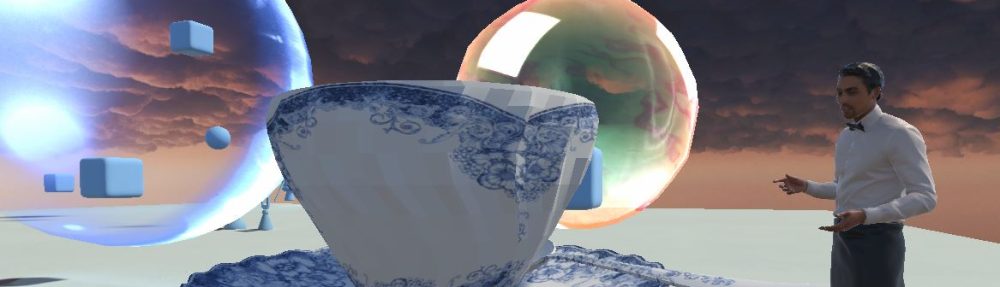
After the Unbound-post of begin March 2021, we continue with “Foam”, a way of looking at and reflecting about the world as suggested by German philosopher Peter Sloterdijk.
I will not even attempt at claiming to understand Sloterdijk and/or to summarize his magnus opus trilogy “Spheres, Bubbles and Foam”.
I just want to share some tangential thoughts that “bubbled-up” when reading about it.
See also my 2019 post “The Foamy Explosion of Everything” and this good introduction by Charlie Hueneman
Foam is organic as in relating to or derived from living matter.
As opposed to inorganic.
Organic/Inorganic is similar but still different than the Analog/Digital or Kairos/Chronos.
It is tangential to human/non-human.
“In geometry, a tangent is a straight line that touches a curve at a single point. So we say that someone who starts talking about one thing and gets sidetracked has gone off on a tangent. The new subject is tangential to the first subject—it touches it and moves off in a different direction.(Merriam Webster)”
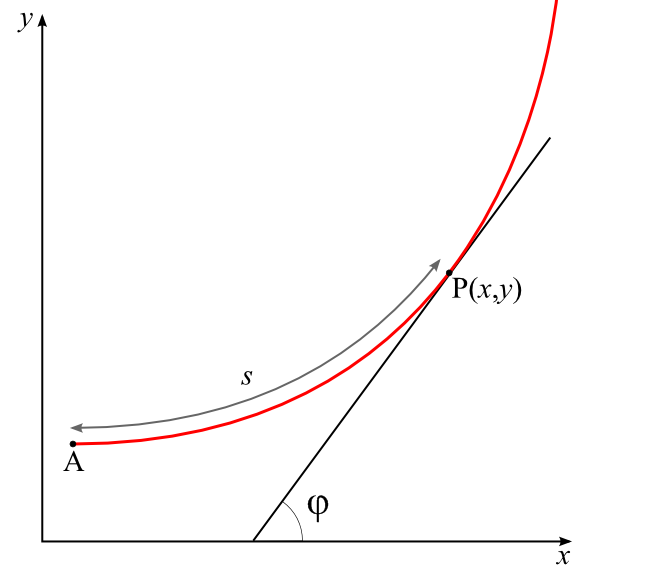
Consider the curved line as the outer shell of the foam bubble, its membrane.
What the tangent is doing is snapping to the grid.
Foaming is about snapping without a grid.
Freewheeling and unpredictable.
Uncomfortable if a grid is the only thing you know, but full of potential and dispositions if you let the foam emerge.
Foam as “unsnapped from the grid”
Foam has no direction.
Following foam is like driving a road that is not road, emerging continuously.
Foam is about relations.
Between people.
Foam-mates
From general relativity to relativity of relations.
The quality of the relation depends on the viewpoint.
The quality depends on the dispositions and emergent potentials of relations
Foam is an emergence of dispositions and potentials
For a life of play is no genuine human life;
But is it really?
We now have affluence and surplus, for the first time in human history.
Hueneman
Constant’s New Babylon or the Biosphere 2 project come to mind.
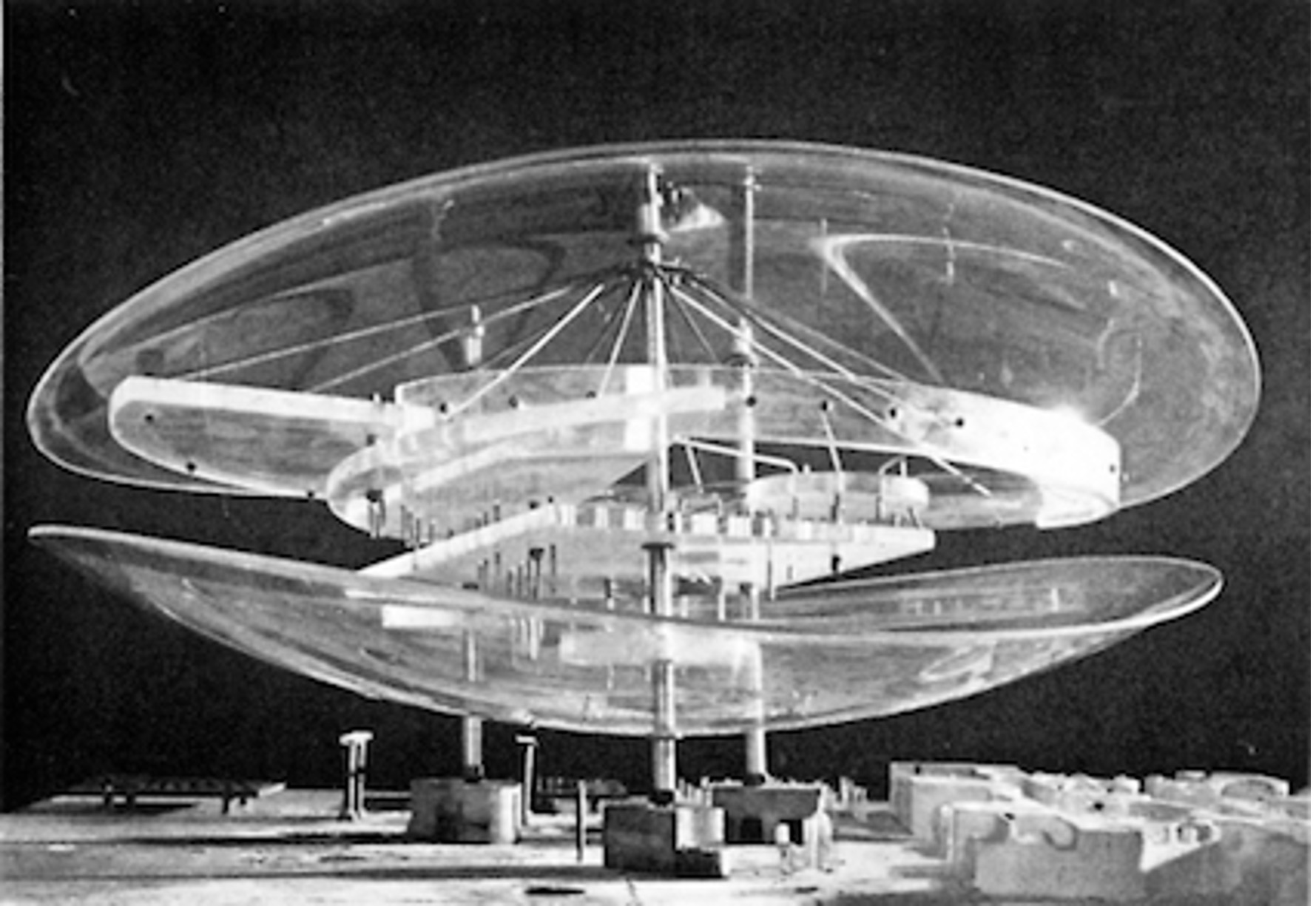

You are part of multiple spheres: the bigger ones like “world”, or “earth”, or “continent”, or the smaller “bubbles” like “province”, or “institution”, or “corporation”, and the smaller foam bubbles, as “communities” of influence, attraction, care, intimacy and attention.
It is a fragmentation, but one with soft borders/membranes.
Not splintered like broken glass, but organic and lubricous and smooth like the soap bubbles in the hot tub.
And the assemblage of all this is dynamic, changing and interacting all the time, like a complex adaptive system.
In her 2021 Tech Report, Amy Webb identified more that 100 new signals.
A fragmentation of signals.
A fragmentation of everything, entangled like foam.
Abundance.
Wealth has come to us like a thief in the night
Sloterdijk
How would one design for and in such a system?
Designing space and context for 1000 flowers to blossom, for 1000 bubbles to co-exist…
I have a hunch that Ann Pendleton-Jullian and John Seely Brown may have some suggestions in Design Unbound.
Or check-out “Medium Design” by Keller Easterling, who writes about dispositions of interdependent objects and spaces; or should I say “spheres”?
“Disposition is a latent agency or immanent potential—a property or propensity within a context that unfolds over time and in the absence of a reifying event or an executive mental order.” Keller Easterling
Dispositions and propensities are becoming part of roaring 20’ies thinking.
So are spheres, bubbles and foam.
Because we are hungry for new communities of intimacy and connection.
Next time we’ll talk about “Inappropriateness”, as a badge-of-honor that is.
Hope you stay on board.
Warmest,
As usual, an incoherent, irregular, unpredictable collection of interesting sparks. Handpicked, no robots. Minimalism in curation. I was surprised how only after three weeks how much there was already in the queu for this edition of Delicacies. Not only the quantity but also the quality and the articles that challenge conventional thinking. Loads of interesting video material as well. Enjoy!
If you can’t get enough of these and want more than 5 articles, you can hang on to the firehose, the extended version of Petervan’s Delicacies in REVUE. Also in this edition with loads of videos. Subscribe here: https://www.getrevue.co/profile/petervan
 Petervan Studios