Here is my musical ride of March 2021. Most are new releases from this month, here and there spiced up with some oldies. Surprise yourself and play this list in shuffle mode
Petervan’s Ride – March 2021
Reply
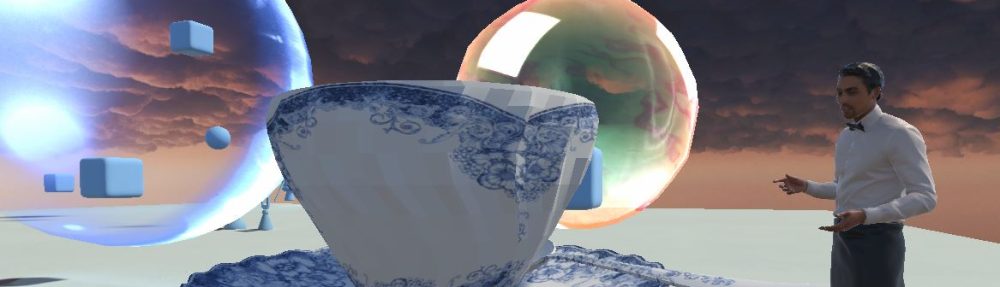
Here is my musical ride of March 2021. Most are new releases from this month, here and there spiced up with some oldies. Surprise yourself and play this list in shuffle mode

As usual, an incoherent, irregular, unpredictable collection of interesting sparks. Handpicked, no robots. Minimalism in curation. Enjoy!
A very broad sweep of topics in this episode of Delicacies. A bit more contrarian than usual. Loads of video material.
The thought of this week: “And then there was nothing, absolutely nothing, only stillness and silence. But that is quite a lot” @petervan
If you can’t get enough of these and want more than 5 articles, you can hang on to the firehose, the extended version of Petervan’s Delicacies in REVUE. Also in this edition with loads of videos. Subscribe here: https://www.getrevue.co/profile/petervan


Petervan Artwork © 2021 – Horses Series
The top one is acryl on canvas 60x50cm – others are digital experiments in Procreate
You have been programmed to snap.
Snap to the grid that is.
And I believe we have to unlearn to snap.
We have to unsnap.
I am sure you all have come across some software that has snapping guides, digital magnets to help you stay centered, or aligned, or in synch, or in tempo.
Photoshop is well known for this. You also have it in Powerpoint to help you nicely center your images in the middle of the slide. It is even more apparent in “creative” software like Sketchbook, Procreate, and of course Final Cut Pro. The richest metaphor is probably in music creation software like Ableton Live and Apple’s Logic Pro.
Quantization is a good example of snapping in music software. A human beat/drummer is normally not 100% on the grid. So, if you are a really bad drummer, you can ask the software for help and let it quantize (read adjust) your beats to the grid. Then it sounds perfectly to the beat. Maybe too perfect, as it then sounds mechanic, not imperfect “human”. Of course, there are some additional functions to humanize again the too perfect beat, and so on.
Before Logic Pro quantization:

After quantization (to the 4th Note):

In a more corporate environment, especially post-COVID when we have to/want to do everything on-line – “virtually” – we are getting snapped by tools like Miro and Mural. Especially Miro comes loaded with tons of templates. I am not picking on Miro or Mural, I am just using them as educational examples to make my point.

Example of Miro board templates
This all sounds very exciting, but I am afraid we are getting snapped into a scripted illusion.
This became apparent during a sparring-session with one of my clients, who asked me to review the prep work for a virtual leadership “off-site” (no pun intended ;-).
Wow! That looked really impressive: Miro board after Miro board, scripting a 3-day workshop in all its glory details. To be honest, I personally felt “boxed”. But apparently, the executives participating in the workshop felt they were doing a great job and were pleased to see how everything got nicely boxed. It gave a feeling of being in control.
The illusion became complete when I learned that the workshop was in support of the number one priority project of the company, and it became apparent that none of the participating executives had any intention whatsoever to collaborate with the others. One guy was appointed as project lead and 100% of his time allocated to this, but the other 14 project members had at best 10% of their time locked down. And this for the company’s priority one project.
They fully satisfied filled 20+ online boards, and then… nothing happened.

Unsnapping is similar to unstucking or unfreezing. A good metaphor for stuck/unstuck is the Chinese Finger Trap. You are getting stuck by only seeing one solution to get out of the trap: by pulling. The trick is to stop pulling and to start twisting.
Unsnapping is about unfreezing yourself and to get into your human rhythm/pace/tempo, without being quantized.
Unsnapping is about surfacing and seeing stuff that are de-railing the client without them noticing. Like putting in your face that the participants to the number one project have no intention to work together.
To see that twisting is also an option.
Unsnapping is not comfortable. Because it confronts you with being scripted, being programmed, and noticing that you have become a cog in snapping machine. Unsnapping may feel anxious. Because you are in unknown territory. Anxious as in my blog post from the Travelling without Moving series.
I am experimenting with some clients to offer an “Unsnapping Service”. To un-bind people from the “grid-lock”. To let go of the grids and snaps and re-finding your agency out of the grid. To sustain the creative tension that makes real change possible, to avoid snapping-back out of the creative tension.
I am using tools and techniques such as visual and audio collisions, artistic interventions, weirdness, and intentional silence. In some sense you could call me an elegant disruptor and connector. Connecting the unexpected. Disrupting through experimental and free imagination and association.
In most cases I am invited as an observer, but with a license to intervene at will or on command, a license to snap/unsnap, a license to provoke.
Josie Gibson from The Catalyst Network suggested I may be onto something. And that maybe I should start considering an Unstuck Manifesto or at least Unstuck Principles. Maybe, if I get unstuck from the grid of outdated practices 😉
Any views/suggestions/critiques warmly welcome. You can react in the comments field of this post or contact me in private.
Credit: the initial seed for unsnapping came during a conversation with Scott Smith (@changeist) and John V Willshire @willsh from Smithery. I am just playing around with that initial idea.
Warm regards,

Tod Williams Billie Tsien Architects Studio – Photo by Peter Arnold 1998
This post is part of a series of essays bundled under “Travelling without moving”.
Intro of that series can be found here.
The plan/ambition with this series: to share where I have been the last year, what I learned, where I am going, and what is required.
The broader quest is to discover what is required to enable real change.
After the Anxious-post of begin Feb 2021, we continue with “Unbound”. Unbound from thingness that is.
Unbound comes from “Design Unbound”, part of the title of the book (actually two volumes) written by Ann Pendleton-Jullian (APJ) and John Seely Brown (JSB) and published in 2018.
The full title is “Design Unbound: Designing for Emergence in a White Water World”.

I am blown away and intrigued by the insights: this is about having agency in a world that is constantly shifting under you. It is so refreshing after all those business-, management-, leadership-, and self-help-books. It has become a healthy addiction: I am basically reading and re-reading and deeply internalizing everything that Ann Pendleton has written in the last couple of years. I have been haunted by this book. Ann and John put a spell on me.
This book is a game-changer. I highly recommend it.
After a first read/scan of the two volumes, and after a kind introduction by Jerry Michalski and John Hagel, I had my first (online) conversation with Ann and John on 27 May 2021. I wanted to explore a partnership for building a workshop on BANI and work with Ann and John on the response to Anxious, which was related to having agency on a world that is in constant change.
Ann initially very politely declined, but I insisted, and since then we have worked and are still working together on some NDA projects. We now have several calls per month.
How naïve I was at that time. I thought I understood, but Ann very kindly let me discover my own mind-bugs. She also pointed out my reductionist thinking around BANI. She also let me discover other resources and deep-dives to let me internalize what this was all about. The last couple of months have been a humbling experience.
I will not even attempt at summarizing the book.
I just would like to spend some time on the “Unbound” aspect of the title.
The initial title of the book, I learned, was “Architecture Unbound”.
Ann is a practicing architect.
You may discover that she co-designed the house of Carl Sagan. He hired Atelier Jullian and Pendleton, whose principal, Guillermo Jullian de la Fuente, had been a student of Le Corbusier.
The architects designed a new, separate residence for Sagan in Cayuga Heights, and prepared an extensive, two-stage redesign plan for the tomb to turn it into a study for him and his wife.

Carl Sagan house – Cayuga Heights – Picture Durston Saylor in OfHouses
In the book, Ann is applying the practice of an architecture studio to other things than buildings.
Tod Williams Billie Tsien Architects Studio
In the video above, you see how architects work together as a family. Where working and failing together – almost as a practice of group-vulnerability – thrives on experimenting and rigorous critique.
Ann describes similar practices of architecture studios and applies them to unboundedness.
Unbound from buildings.
Unbound from things.
The architect as a context designer.
The role of critique in an architecture studio.
The role of Game Play and Game Design
We’ll look into some of these aspects in some subsequent posts in this Travelling without Moving series.
If you want a quick intro (two times 90 minutes) to the work of APJ and JSB, here are two video-vignettes that Ann and John recorded for the IFTF Foresight Talk Series
The main points covered in these two videos are: white water world, pragmatic imagination, from Newton to Darwin to Ecologies, Design for Emergence, Systems of Action, and World Building.
But there is so much more in the book, and the material is so rich, so nuanced, so dense, that I very much invite you to read it, not once, but twice, ever three times.
This is just pure-gold material for anybody who is active in corporate innovation initiatives.
It helps you reset and forget and go way beyond your tactical thinking about startup bootcamps, corporate venture funds, MVPs, Lean, Agile, platforms, ecosystems, and other blah.
You don’t need a head of innovation.
You don’t need an innovation team.
You need a squad that is trained to design for emergence and to tackle wicked problems.
This is about seeing the world differently – a world in constant change – and about seeing the dispositions of the system and designing the contexts for emergence and agency in these complex systems.
Together with Ann, I am working with Hamilton Ray from Collective Next and Amber Case on a Pirate TV episode on Design Unbound.
We plan to release the video before summer. We aim to condense the key insights of the book into a 45 min, a sort of non-commercial trailer for a learning journey that is being put together. The video will be provocative enough to stand on its own as a coherent learning opportunity.
Next time we’ll talk about “Foam”, a way of looking at and reflecting about the world as suggested by German philosopher Peter Sloterdijk.
Hope you stay on board.
Warmest,
 Petervan Studios