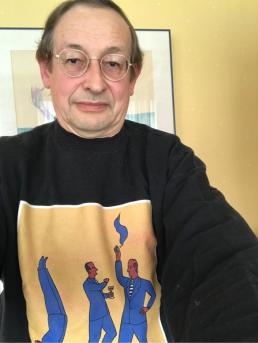
Petervan, in de wereld Peter Vander Auwera, heeft na een rijke en gevarieerde carrière in de bedrijfswereld zijn blikveld omgegooid na de openbaring van intense schoonheid in een tentoonstelling van Dries Van Noten, één van de sterktehouders van de Belgische modescène.
Ik ben zijn neef, zelfs met ouders die broers en zusters van elkaar waren, dus van het pure DNA uit bekeken en als kunsthistoricus van beroep, zou ik mij bij uitstek in de artistieke wereld van mijn neef moeten kunnen verplaatsen en mijn best moeten doen om toch objectief te blijven.
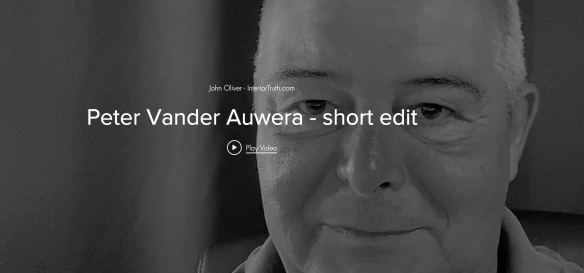
Laat ik vooreerst stellen dat ik het moedig vind om het prestige en de renumeratie van het bedrijfsleven definitief de rug toe te keren. En ook wel de rat-race kan ik vermoeden, als ik luister naar Peter’s nieuwe ideale dag in zijn video “Interior Truth”. Wel vaker heb ik (oud-) collega’s ontmoet die na studies die uitzicht boden op een zeker bestaan en het helpen instaan voor een gezin, op latere leeftijd de spijt voelden om niet hun artistieke passie te hebben gevolgd. Maar bij Peter is die wending anders en radicaler, hoewel de artistieke gevoeligheid al bleek bij zijn aanvankelijke keuze voor architectuurstudies.
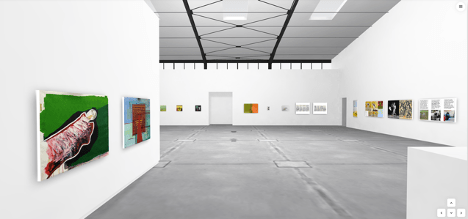
Peter(van) heeft een bijzondere gevoeligheid in zijn kunst voor het beeld dat pakt. En dat weet hij vol te houden in een veelheid van stijlen en media. Dat blijkt duidelijk uit deze solo-tentoonstelling. Hij heeft veel waardering voor wat zijn leraars hem bijbrengen en dat siert hem. Hij experimenteert voortdurend, maar zijn beelden slagen er telkens in weer de aandacht vast te houden, in een grote verscheidenheid van vormentaal
Terecht benadrukt hij het belang van schoonheid in ons aardse bestaan, van de kunst als vrijhaven in het leven en van ongebondenheid als leidraad van een betekenisrijke innerlijke beleving. Het is Ernst Gombrich die in 1960 in zijn “Art and Illusion. A Study in the Psychology of Pictorial Representation”, de ogen opende voor het fundamentele inzicht dat de kunst niet de realiteit weergeeft als door een venster, maar dat wij omgekeerd de realiteit zien doorheen wat wij als kunst in ons beeldgeheugen hebben opgeslagen. Het essentiële belang van schoonheid als zodanig voor een betekenisvol leven, is al eerder voor het eerst magistraal verwoord in de filosofie van de 18de eeuw en de verlichting, met Immanuel Kant als lichtend voorbeeld, omdat bij hem de esthetische faculteit bij de mens het sluitstuk werd van zijn filosofie – dus van het zoeken naar betekenis – na zijn analyse van het juiste weten en het juiste handelen. Sindsdien is het begrip schoonheid in de kunst wel wat ondergesneeuwd en in de hedendaagse kunst kreeg ook expressieve lelijkheid haar adelbrieven.
De kunst als vrijhaven voor de kunstenaar en haar publiek blijft een kostbaar goed en dient helaas continu verdedigd, zowel in communistisch-marxistisch als kapitalistisch gefundeerde maatschappijen, dus ook na de vruchteloze afkondiging van het einde van de ideologieën en zelfs van de geschiedenis.
Dat management-theorieën op probleemoplossingen mikken en kunst puur creatief is, daar heb vanuit mijn achtergrond als kunsthistoricus wel kritische bedenkingen bij: kunstenaars hebben in de kunstgeschiedenis wel degelijk vele opeenvolgende artistieke problemen aangepakt, van de beheersing van de perspectief tot de vraag van Adorno of poëzie nog wel mogelijk is na de nazi-uitroeiïngskampen? Maar het oplossingen zoeken gebeurt in de kunst wel op een specifiek wijze: door het continu reageren tijdens het evoluerende creatieproces zelf en niet vanuit een vooraf geformuleerde probleemstelling. Picasso formuleerde het zo: “Chercher ne signifie rien en peinture. Ce qui compte, c’est trouver.” En ook nog:”Tout ce qui peut être imaginé est réel.”.
Om met een zeer toepasselijk inzicht van Einstein te besluiten : “Imagination is more important than knowledge. For knowledge is limited, whereas imagination embraces the entire world, stimulating progress, giving birth to evolution.”
Joost Vander Auwera
Brussel, 28 Juni 2020
English translation by Google:
Petervan, in the world Peter Vander Auwera, after a rich and varied career in the business world, has changed his vision after the revelation of intense beauty in an exhibition of Dries Van Noten, one of the strength holders of the Belgian fashion scene.
I am his cousin, even with parents who were siblings, so from the pure DNA and as an art historian by profession, I should be able to put myself in my cousin’s artistic world and try my best to nevertheless remain objective.
First of all, let me say that I find it courageous to definitively abandon the prestige and the remuneration of business. I can also suspect the rat race when I listen to Peter’s new ideal day in his video “Interior Truth”. I have often met (former) colleagues who, after studies that offered prospects of a certain existence and helping to provide for a family, felt the regret at a later age for not having followed their artistic passion. But with Peter, this turn is different and more radical, although the artistic sensitivity was already evident in his initial choice for architectural studies.
Petervan has a special sensitivity in his art for the image that captures. And he knows how to maintain this in a multitude of styles and media. This is evident from this solo exhibition. He greatly appreciates what his teachers teach him and that decorates him. He constantly experiments, but his images keep capturing attention, in a wide variety of formal language
He rightly emphasizes the importance of beauty in our earthly existence, of art as a free haven in life and of unboundedness as a guideline for a meaningful inner experience. It is Ernst Gombrich who, in 1960, in his “Art and Illusion. A Study in the Psychology of Pictorial Representation ”, opened our eyes to the fundamental insight that art does not represent reality as through a window, but conversely, we see reality through what we have stored in our image memory as art. The essential importance of beauty as such for a meaningful life has already been articulated for the first time in the philosophy of the 18th century and enlightenment, with Immanuel Kant as a shining example, because in him the aesthetic faculty in man became the final piece of his philosophy – thus of the search for meaning – after his analysis of the right knowing and the right action. Since then, the term beauty has been neglected in art, and expressive ugliness has also received its nobility in contemporary art.
Art as a free haven for the artist and its public remains a precious commodity and unfortunately has to be constantly defended, both in communist-Marxist and capitalist-based societies, including after the fruitless proclamation of the end of ideologies and even of history.
The fact that management theories aim at problem-solving and art is purely creative, has critical reservations from my background as an art historian: artists have tackled many successive artistic problems in art history, from controlling perspective to Adorno’s question if poetry is still possible after the Nazi extermination camps? But the search for solutions happens in art in a specific way: by continuously responding during the evolving creation process itself and not from a pre-formulated problem statement. Picasso put it this way: “Chercher ne signifie rien en peinture. Ce qui compte, c’est trouver. ” And also: “Tout ce qui peut être imaginé est réel.”.
To conclude with a very appropriate insight from Einstein: “Imagination is more important than knowledge. For knowledge is limited, whereas imagination embraces the entire world, stimulating progress, giving birth to evolution. ”
Joost Vander Auwera
Brussels, June 28, 2020



 Petervan Studios