Money Remixed

Can i trust you?

A nasty virus.

The party is over.

Mint Money.

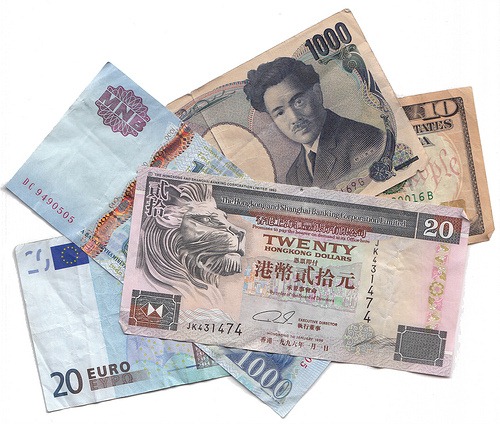
Money will be reborn.

Private currencies to be liquid ?

How many controversial statements do you need to get attention ?

Who do you trust

Brands for example. Brand Equity.


Found via O’Reilly.

The economy is going off a cliff and financial practices are being, ahem, re-evaluated. Anthony Citrano takes this thinking a step further and ponders what would happen if the US dollar disappeared. He suggests that corporations will end up issuing money (like Kong Bucks in Snow Crash).

Anthony Citrano co-founded Pop!Tech and worked on the Obama campaign. He has written for Consumerist, The Huffington Post, Money, the New York Times, Investor’s Business Daily, the Wall Street Journal, WIRED, and his blog, The Cosmic Tap. This talk was filmed by Social Animal and was given at the first ignite LA.

image

What if TRUST becomes value #1 ?

Food for thought for our Think Tank on Long Term Future

Innotribe @ Sibos – Newsflash on Opening

Also published at:

https://www.swiftcommunity.net/blogs/blogdetail.cfm?id=1495

Within a little more than one month to go, Innotribe @ Sibos will kick-off for an exciting week of inspiring presentations, face to face discussions, interactive workshops, and special challenges – all aimed at one single goal: enabling collaborative innovation.

From now on, we’ll post regular news flashes about the details of the Innotribe program.

Today, more detailed information about the Innotribe Opening: “Beyond Web 2.0 – what will YOU create?”

We have chosen this title 1) to make the connection with last year’s Sibos Labs where the theme was Web 2.0, and 2) because we really wanted to have YOU work together to collaboratively generate and flesh-out ideas before, during and after Sibos.

The Innotribe Opening will give 4 perspectives on the future. It will set the scene for a joint journey with the audience -exploring how current and emerging trends will shape our industry and landscape. With vibrant and stunning examples our speakers will energize you to join the Innotribe, innovating and crafting the future as it emerges throughout the Sibos week.

· Innovation 2.0: It’s OPEN, not closed

Peter Hinssen (1969) (www.peterhinssen.com ) is co-founder of ACROSS Group and Managing Director of ACROSS Technology. An entrepreneur, lecturer and writer, he is also the chairman of Porthus.com and has been an Entrepreneur in Residence with McKinsey & Company. He will kick-off with a 15 min presentation on the need to innovate together with customers, partners, and the eco-system at large. Peter is a regular keynote speaker. Those who have seen him before will certainly agree with me that he is our ideal speaker to give a thundering wake-up call on this subject.

· The Future of IT: Driving Innovation across Financial Services

Bindia Hallauer is the Chief Technology Strategist for Worldwide Financial Services Sector at Microsoft Corporation, based in Redmond, Washington, USA.  In this leadership role, Bindia owns shaping Microsoft’s technology strategy in financial services industry across banking, capital markets and insurance. She owns the overall technical vision, architecture and roadmap, coordinating a single point of view for FSI solution offerings IP development and productization.

Session abstract: Bindia will talk about disruptive technology trends are shaping the future of IT.  Increasing software complexity and the shift to many-core architecture, consumer-driven IT, Petabyte storage and Petaflop processing power, and cloud computing are some of the key technology trends.  This session will focus on profound changes that the future of IT will bring to Financial Services industry.  Thought provoking ideas will be presented.

· The Shape Of Banking Architecture In 2023

Jost Hoppermann is Vice-President of Forrester Research. Jost serves Enterprise Architecture professionals, particularly around financial services. As an analyst, he is an expert on a number of global banking technology topics, including banking platforms, software infrastructure, multi-channel platforms, architecture, and application strategy planning. He also covers enterprise architecture from an organizational and process perspective on an industry neutral basis.

Session abstract: this session will summarize the key findings of a global Forrester research project focusing on potential changes in the banking and financial services space in 2023. It will show how financial services firms will interact with each other and with their customers in the future; which core competencies banks expect to need; how information technology and its successor business technology will need to help the business to differentiate from competition. While 2023 looks like a very concrete date, some banks will only need five or eight years to arrive in 2023 — to some degree — while others may have to take a 10 or 15-years-long path. Bulletized agenda:

– Business scenarios

– Customer interaction

– Business technology scenarios

– Peer advice for the future

· Innovating  Around the Customer

Cindy Murray is Global Banking and Wealth Management Ecommerce Executive at Bank Of America.

Cindy Murray is responsible for designing, building and launching new credit and treasury products across Global Corporate & Investment Banking to drive the acquisition and deepening of client relationships. Her team also leads the Ecommerce portal strategic direction and development for the bank’s corporate and commercial clients.

Session abstract: It was less than 5 short years ago when we heard the term Web 2.0 used for the very first time. If you fast forward to today, it’s clear that Web 2.0 is already morphing into Web 3.0. This session will not only highlight the basics of these technology trends, but more importantly show how they are enabling companies to “innovate around the client”. You will learn how ethnographic research can transform client needs assessments, how best to leverage clients’ discussion forums, and how the financial services industry will continue to be transformed by these new methods of client engagement.

· What’s up this week @ Innotribe ?

Kosta Peric – Head of Innovation at SWIFT, and Philippe Coullomb – Facilitator from The Value Web.

Kosta will introduce the 3 themes of this year’s Innotribe: Cloud, Crowd and Mash-up and the creativity challenge. Philippe will introduce the process and rules of engagement of the first Innotribe Sibos Lab, immediately following the opening. More about that in a next newsletter.

· Innotribe Leaders pitch their Sibos Lab

We plan 3 parallel Sibos Labs: one on Cloud, one on Crowd, and one on Mash-ups. Our Innotribe Leaders will introduce the ideas that emerged pre-Sibos on Swiftcommunity.net and will pitch their Sibos Lab as the best to attend.

Where: The opening will take place in the Innotribe Dome (located in the Sibos Labs room).

When: Monday 14 Sep 2009, from 10:30 – 12:15

To let us know if you will be coming to this event, login to www.swiftcommunity.net, go to the opening event and click I will attend button next to the event. You can also see who else is coming.

Holographic Week-End

Looks like i have a holographic week-end 🙂

At our Sep 2009 Innotribe, we’ll also have something holographic.

Michael Warner (CEO Quantum4D) and Ed Sesek (InfiniteZ), will show Holographic Analytics and Banking:

Holographic Analytics goes beyond pages and files to open a new universe of interconnected insights.  

Mike and Ed will show dynamic 3D holographic models of SWIFT’s global banking networks on a national scale. They will then fly into regional views and on down into a individual bank and its internal network topology.  The tour will include – among a number of potential tour stops – models of banking markets that ‘mash-up’ demographic and industry data with SWIFT traffic. 

 Holographic_Banking_Display

They also aim to show a visual model of the bank enterprise itself from several dimensions (staff activities, IT networks, etc…)  and how that those domains interact with each other and the larger banking ecosystem we help illuminate.

This includes the addition of a display platform which will allow the audience to cue up to view the same views displayed on the big screen in an experimental holographic 3D display. Users wearing polarized sun-glasses will be able to  see the above described animated network graphics ‘floating in space’ in the air between them and two screens.

Users will also be able to wear a head tracking hat and use a pen device to literally look around and manipulate the network visualizations.

The InfiniteZ Website has a fantastic tagline:

“Transforming human-computer interaction”

image

They will speak during our R&D Insights on the Innovation Floor on 16th Sep 2009 from 15:30 – 16:30, and the audience will be able to wear special glasses and play around with holographic pointers.

Singularity Summit 2009

If you happen to be in New-York begin October 2009, and you can spend the week-end there, something different would be to attend the Saturday-Sunday 3-4 Oct 2009 Singularity Summit.

banner_color

Very interesting line-up of speakers and not that expensive: 399$ for the 2 days if your are an early bird.

The conference is devoted to the better understanding of increasing intelligence and accelerating change.

Participants will hear talks from cutting-edge researchers and network with strategic business leaders.

The world’s most eminent experts on forecasting, venture capital, emerging technologies, consciousness and life extension will present their unique perspectives on the future and how to get there.

Select Speakers this year:

* Ray Kurzweil really does not need an introduction, but anyway: he is the author of The Singularity is Near (2005) and co-founder of Singularity University, which is backed by Google and NASA. At the Singularity Summit, he will present his theories on accelerating technological change and the future of humanity.

* Dr. David Chalmers, director of the Centre for Consciousness at Australian National University and one of the world’s foremost philosophers, will discuss mind uploading, the possibility of transferring human consciousness onto a computer network.

* Dr. Ed Boyden is a joint professor of Biological Engineering and of Brain and Cognitive Sciences at MIT. Discover Magazine named him one of the 20 best brains under 40.

* Peter Thiel is the president of Clarium, seed investor in Facebook, managing partner of Founders Fund, and co-founder of PayPal.

* Dr. Aubrey de Grey is a biogerontologist and Director of Research at the SENS Foundation, which seeks to extend the human lifespan. He will present on the ethics of this proposition.

* Dr. Philip Tetlock is Professor of Organizational Behavior at the Haas School of Business, University of California, Berkeley, and author of Expert Political Judgement: How Good Is It?

* Dr. Jurgen Schmidhuber is co-director of the Dalle Molle Institute for Artificial Intelligence in Lugano, Switzerland. He will discuss the mathematical essence of beauty and creativity.

* Dr. Gary Marcus is director of the NYU Infant Language Learning Center, and professor of psychology at New York University and author of the book Kludge.

You can subscribe to the event via the banner below.

If you are interested in this sort of stuff, i strongly recommend to subscribe to the weekly KurzweilAI.net newsletter, where this week, i found the following interesting article on the first Touchable Hologram becoming reality.

3D holograms that can be touched with bare hands have been developed by researchers from the University of Tokyo. Called the Airborne Ultrasound Tactile Display, the hologram projector uses an ultrasound phenomenon called acoustic radiation pressure to create a pressure sensation on a user’s hands, which are tracked with two Nintendo Wiimotes….

Watch the white mouse at the very end. I can think of a couple of applications that are touch-based 😉

Retail/Bank of the Future (2019)

One of those Microsoft Labs videos. Always well done.

Most of this and more you can touch and feel in Living Tomorrow,  from Belgium and much better (as the chocolates) than the video 😉

You can visit the Store of Tomorrow and also the Bank of the Future. Store is sponsored by Delhaize, Bank by ING.

What a co-incidence ! At our SWIFT Innotribe @ Sibos on 14-17 Sep 2009 in Hong-Kong, we’ll have a Face-to-Face debate on “The Future of Banking”.

Check out www.innotribe.com : that’s what i am doing for a living.

The hype of Augmented Reality

Good overview of latest Augmented Reality examples on ReadWriteWeb.

The example i “like” most is the Augmented Identity one.

I am re-iterating the thinking we did before on this blog on how any on-line person is starting to have its own “information shadow” that is unique. No more need for identity “cards” or alike.

In that context, I recently met Dave Birch, Director at Consult Hyperion, who is 1) a very cool presenter on identity and digital money and 2) has two pretty interesting blogs on these subjects:

– His identity blog is here

– His money blog is here

Not much to add to the ReadWriteWeb article.

Have a deep dive in Gartner’s 2009 Hype Circle for Emerging Technologies.

gartner-emerging-technologies-hype-cycle-2009

See also that Human Augmentation now appears at the very start of the Technology Triggers.

Virtual Worlds

Thanks to my job, i get in contact with interesting people. As preparation for the Innovation track at Sibos (called www.innotribe.com), our team is focusing on 3 themes:

  1. Cloud
  2. Crowd
  3. Mash-ups

In total we’ll have more than 40 speakers during one week, combined with speedlabs, debates, and R&D pitches. And during the last day, Guy Kawasaki will be part of our VC debate and Buyers Panel.

Detailed agenda available here.

As you have probably noticed, in my private life and endeavors (such as the Think Tank for Long Term Future), i am blurring the lines between real and virtual, between flesh & bone human and robots.

As a matter of fact, i am also blurring the lines between job and private here, and i  don’t see anything wrong with it.

What about virtual reality in a business context ?

Welcome to project Wonderland from Sun Microsystems. They will do during Innotribe @ Sibos a demo on the Virtual Bank Branch Office. In the meantime , have a look at below 2 videos, that once again proof how fast our real and virtual worlds are merging.

First listen to the project manager, Nicole Yankelovich. What’s really interesting is that the sort of people that work on this are true hybrids: a mix of nerds, psychologists, anthropological and ethnographic R&D…

This video is a hidden job advertisement, so you’re warned 🙂

But this sort of stuff and skills is really were we as a society should put stimuli and scholarships for our net.generation to be ready for 2030. Those who are 20 today will be 40 by then and our next leaders.

Then enjoy to this wonderful Wonderland scenario tour based on the preview of version 0.5 in their labs:

First time i see things like federation of worlds. I already heard about federated identities, federated clouds, federated services, but this ? No, not yet.

Oh yes, you can also restore a world in his previous state.

However, i still find that the user is forced into the developers mind of properties, cells, etc. No way i can explain this to my dad. It’s like the first time you see Windows: only if you get used to it, you start making sense out of it. You adapt to the programmer’s mind.

Think.

Tank.

Thanks to Amir for providing me the links.

Retaining our identities

Thanks to xstof (again ;-), I discovered daily galaxy site.

Two really interesting blog entries related to our Long Term Think Tank ambitions:

The first about robots developing at warp speed.

Hans Moravec,  pioneer in mobile robot research and founder of Carnegie Mellon University’s Robotics Institute. Yes, again that Carnegie Mellon University.

robota_3_3_2

Whilst today, these robots are barely at the lower range of vertebrate complexity, they could catch up with us within a half century."

  1. 2010: A first generation of broadly-capable "universal robots".
  2. 2015: Utility robots host programs for several tasks.
  3. 2020: Universal robots host programs for most simple chores.
  4. 2030: Robot competence will become comparable to larger mammals.

In the decades following the first universal robots, a second generation with mammallike brainpower and cognitive ability will emerge. They will have a conditioned learning mechanism, and steer among alternative paths in their application programs on the basis of past experience, gradually adapting to their special circumstances. A third generation will think like small primates and maintain physical, cultural and psychological models of their world to mentally rehearse and optimize tasks before physically performing them. A fourth, humanlike, generation will abstract and reason from the world model.

Others believe that it is humans who will evolve into advanced “robots”. Their belief is that with futuristic technologies being developed in multiple fields, human intelligence may eventually be able to “escape its ensnarement in biological tissue” and be able to move freely across boundaries that can’t support flesh and blood—while still retaining our identities

Many more video material from Carnegie here.

One is about identities, privacy and social security numbers. I am sure my friends from the Belgian eID project will have a sort of déja-vu when watching the following video:

But in essence, it’s all about the changing nature our own real and perceived identity in a digital world. I should drop the word “digital”, as young people see this as “old-mans-wording”. They not talk about a “digital” camera. It’s just a camera. It’s our “world”.

The other article is about Project Blue Brain.

6a00d8341bf7f753ef011572290e9c970b-500wi

A bit scary is the statement: ""We cannot keep on doing animal experiments forever," That is Mr. Markram during this month’s TED Global Conference at Oxford, England.

… a simulation that recreates the activity of a human brain may produce ethical concerns.  Technically a computer that recreates a rat brain would raise similar issues but, as you’re about to see, these guys don’t have any sympathy for rats.

And not that innocent at all:

With the ability to simulate the effects of rewiring, drugs or external electric fields at an individual neuron level we can investigate enhancements (such as new senses, new cognitive modes or neuroelectric interfaces) without all the inconvenient "human rights violations" and "Crimes against humanity" such research normally entails.  We could improve our own minds – and since we’ll have just invented a silicon model operating at computer speeds in a bulletproof shell, we’ll have to.

Again, this is one of the key purposes of our Think Tank: what if all this (technological evolutionary exponential explosion) happens, what are the consequences for our value kit for the future ? For our personal and corporate values, for our ethical context, for the way we want to be human ?

And also, how do we prepare the future generation of leaders for this radically different world ?

By coincidence, one of the links on the home page of Carnegie Mellon University’s Next-Generation Computing faculty points to project Alice 3.0

Alice is an innovative 3D programming environment that makes it easy to create an animation for telling a story, playing an interactive game, or a video to share on the web. Alice is a teaching tool for introductory computing. It uses 3D graphics and a drag-and-drop interface to facilitate a more engaging, less frustrating first programming experience.

(btw, also note that the classrooms are packed with Mac’s not PC’s)

Again, it’s again about “doing things that matter”

Why can we from Europe not set-up this sort of stimulating initiatives for our Net Generation (or Generation Y or Generation M) to prepare the next generation of leaders to be ready for 2030 ?

It’s Lifestyle, stupid !

I have a couple of days off, so we can have some lighter (albeit) subjects.

First enjoy this video:

Then read this article on Singularity Hub site, and dream away with all these great subjects like Longevity, Nanotech, Robotics, Genetics, AI, The Brain…

And then click on the link to disturbingly-real-replicants-from-hanson-robotics, and enjoy scary Einstein robot (Video also below). Man, this is really creeepyyyy !

It’s funny when he says at minute 1:20 “Hello, my name is Albert Einstein, i am a physicist”. Would love to hear a trance or techno mix with this sound sample 😉 Gunbee, xstof, Maurice: want to give it a try ? Could be a big hit !

And then there is Zeno Robokind.

For Robokind, wait till minute 3:40 or so, when he/she ? awakens and starts asking questions of life like “Who am I ?” and “What is my purpose ?”. Or also “save the world from the evil” and “…allow users to explore the world of 2029”.

And “Work with us to realize the dream”: Close to our Think Tank Long Term Future (2030) “Inspire People to Dream”

Enjoy !

Augmented Reality in iPhone 3GS

Thanks to my twine.com subscription to “Technology Trends”, i found this.

You can read the related article here.

In case you doubted that man-machine are blurring more and more everyday.