HOLD THE DATE May 30 – 31: 24-hour online rebel jam
Only creative rebel thinkers would hold a free, online 24-hour Rebel Jam with new speakers, inspiring entertainment and provocative discussions every hour, with hosts from Europe, North America and Asia.
There’s such a global groundswell of interest in how rebels can positively change business, government, education, healthcare and the world itself, that we thought it was time for rebels to share their stories and practices with as many people in the world as possible, in the easiest, least expensive way.
All you’ll need is to be able to connect to the Internet and clear your calendar. Thanks to the generosity of Cisco, which is providing WebEx technology to us, we are able to do this jam free of charge.
You can tune in any time – or all 24 hours if you’re one of the crazy ones – to learn from thought leaders and Rebels about:
What are the big shifts that require our organizations to respond in fundamentally different ways to achieve dramatically higher levels of velocity
What has helped Rebels to be successful?
Set backs and obstacles Rebels experienced and how they’ve navigated through them.
Habits that help them stay creative, positive and respected.
There will be time after each speaker for questions and conversations to encourage as much learning and camaraderie as possible in an online way. We’ll also be inviting performers and artists to share and perform their work with us to fill our rebel spirits, and just have some fun.
The conference kicks off on May 30 at noon in Europe/6 a.m. North America East Coast; 3 a.m. North America Pacific, and 8 p.m. Sydney.
If you’re interested in speaking or performing, please contact Peter (p.vanderauwera@gmail.com) from Corporate Rebels United or Lois Kelly (lkelly@foghound.com) from Rebels at Work. We will soon reach out to thought leaders, rebels, and performers and provide an updated 24h schedule of activities.
Many organizations are in pain. I am just back from the Front-End of Innovation conference in Copenhagen where I met several friends, ex-colleagues, relatives, business partners, and it seems that change and re-organization are the new normal in our organizations these days. These days, one could jokingly introduce her by saying “what re-organization do you work for?”. But that may be too cynical a start for a blog post.
It also seems to be a constant these days that organizations retract into the comfort zone of their core business and are tuning down their innovation initiatives. I have heard it from at least 4-5 large organizations this week. What remains is a lot of innovation rhetoric but no action on the floor other than political power games.
More importantly, what remains as well is a lot of pain of colleagues seeing their best working mates (have to) leave the company in the worst case, or being re-organized into other departments at best. In Copenhagen, I have seen the pain, fear, and desperation in people’s eyes.
This blog post is about those re-organization pains, and some possible avenues to deal with them.
One way to react is driven by emotions: getting in a state of perpetual frustration, blame, gossip, under the skin fights, and self-service. It’s a state of mind that only aggravates the situation, alienates people and teams more from each other than ever.
Another way to react is the flee into the comfort zone of tactical actions and quick hits and extrapolating or creating quick and dirty variations of the tricks and processes we are familiar with, without any level of intentionality.
The third way – which I would like to promote – is to look deep under the skin of our professional and private way of being. To get to this insight, I was influenced by three books that I was reading more or less in parallel.
The author explains razor sharp that trust is the essential foundation of highly effective teams (and organizations). As can be seen from the layered pyramid below, lack of trust in the end leads to inattention to results.
I have taken a the following really good summary out of another book “Search Inside Yourself”, that I will refer to later again in this blog post.
The five dysfunctions, in order of causality are:
Absence of trust: People do not trust the intentions of their teammates. They feel the need to protect themselves from each other and tread carefully around others on the team. This leads to the next dysfunction.
Fear of conflict: Without trust, people are unwilling to involve themselves in productive debates and conflicts, the type of good conflict that focuses entirely on resolving issues without involving character attacks or hidden personal agendas. Without such healthy conflicts, issues stay unresolved or are unsatisfactorily resolved. People feel they have not been properly involved in decisions. This leads to the next dysfunction.
Lack of commitment: When people feel their input has not been properly considered and that they have not been properly involved in decisions, they have no buy-in. They do not commit to the final decisions. Ambiguity about priorities and directions festers, and uncertainties linger. This leads to the next dysfunction.
Avoidance of accountability: When people have no buy in about decisions, they avoid accepting accountability. Worse still, they do not hold their teammates accountable to high standards. Resentment festers, and mediocrity spreads. This leads to the final dysfunction.
Inattention to results: The ultimate dysfunction of a team. People care about something other than the collective goals of the team. Goals are not met, results are not achieved, and you lose your best people to your competitors.
It all begins with trust. The absence of trust is the root cause of all other dysfunctions. Specifically, the type of trust Lencioni talks about is what he calls “vulnerability-based trust.” That is when team members trust the intentions of each other enough that they are willing to expose their own vulnerabilities because they are confident their exposed vulnerabilities will not be used against them. Hence, they are willing to admit issues and deficiencies and ask for help. In other words, they are able to concentrate their energies on achieving the team’s common goals, rather than wasting time trying to defend their egos and look good to their teammates.
Do you trust your team members enough that to expose your own vulnerabilities because you are confident that your exposed vulnerabilities will not be used against you? That you will not be presented sooner or later with the emotional bill? Or is the trust and alignment in your team of a very superficial and low-quality nature?
I fully buy the trust argument in the book. What the book unfortunately does NOT explain is how you get to this level of trust.
My premise is that it starts by looking at people as people, not as objects. By developing a very high standard of empathy for the others. Looking at the other person not as the team member of this or that department (that would be looking at the person as an object, and attaching value to that object based on its hierarchical of functional power or non-power). This is of course very much related to the topic of “LeadINGship” and “Leading from the Edge” that I have shared already at many occasions on my blog.
“Looking at people as people” means looking at people in their wholeness, their full being, with all the aspects that that person brings, like cultural baggage, family situations, vulnerabilities, issues, motivations, concerns, etc
When I look at people as an object, I am “living IN the box”. When I look at people as people, I am “Living OUT of the box”. This living in/out of the box is very well described in “Leadership and Self-Deception” by The Arbinger Institute (Amazon Affiliate Link).
“We have to develop a culture where people are simply invited to see others as people. And being seen and treated straightforwardly, people respond accordingly”
But the book goes much further than that, and brings the subjects of self-deception and self-betrayal in full frontal view, and that can be quite confrontational.
Self-Deception and its consequence Self-Betrayal happen when you see a person in need, you feel you should act, but you don’t. What happens then are a couple of behaviors that I recognize with others and myself; I get into a defense mode:
I start blaming (maybe not vocally, but for sure internally) the other, the system, the management, and/or the company for all the things that don’t work. Yes, of course the problem of all evil is out there, not with me.
I start minimizing or ignoring my own faults, failures, and weaknesses
I start inflating the faults of the other persons or teams or departments.
I start inflating my virtues: it is because the others don’t have the same virtues as myself that of course things don’t work as they should.
“I just mean that in acting contrary to my sense of what was appropriate, I betrayed my own sense of how I should be toward another person. So we call such an act ‘self-betrayal.” And “I focused on and inflated her faults when I needed to feel justified for mine.”
This is about anger and frustration but at the same time feeling deep inside that “I was aware of the hypocrisy in my anger”.
What is even worse, this sort of in-the-box behavior for sure does NOT solicit the desired counter-behavior in others: it’s a disease that is infectious and viral in nature.
“In the box we provoke others to get in the box — both with us and against us. Our allies and we withhold information, for example, which gives others reason to do the same. We try to control others, which provokes the very resistance that we feel the need to control all the more. We withhold resources from others, who then feel the need to protect resources from us. We blame others for dragging their feet and in so doing give them reason to feel justified in dragging their feet all the more. And so on. Collusion spreads far and wide, and the result is that coworkers position themselves against coworkers, workgroups against workgroups, and departments against departments. People who came together to help an organization succeed actually end up delighting in each other’s failures and resenting each other’s successes.”
“But gradually I came to see the lie in my defensiveness. I saw in myself a leader who was so sure of the brilliance of his own ideas that he couldn’t allow brilliance in anyone else’s; a leader who felt he was so ‘enlightened’ that he needed to see workers negatively in order to prove his enlightenment; a leader so driven to be the best that he made sure no one else could be as good as he was. I was carrying the disease I blamed everyone else for. I infected them and then blamed them for the infection. Our organizational chart was a chart of colluding boxes. We were a mess.”
So key messages here are:
Stay away from self-defensiveness
See people as people not objects
Develop a superior awareness whether you are in/out the box of self-betrayal
Meng also refers to “The Five Dysfunctions of a Team” (see summary above) and it was at that moment that the pieces of the puzzle starting falling together and make sense. The “Search Inside Yourself” book is in essence about self-awareness.
“Self-awareness depends on being able to see ourselves objectively, and that requires the ability to examine our thoughts and emotions from a third-person perspective, not getting swept up in the emotion, not identifying with it, but just seeing it clearly and objectively…. We are not our emotions. Emotions become what we experience in the body, so we go from “I am angry” to “I experience anger in my body”
And also:
“We have the tendency to feel bad about feeling bad. I call it “meta-distress,” distress about experiencing distress. Also recognize that feeling bad about feeling bad is an act of ego” and “Success and failure are emotional experiences. These emotions can give rise to grasping and aversion, which can hold us back and hamper our ability to achieve our goals.
But there is hope, says Meng: we can become emotionally resilient to grasping onto success and aversion from failure.
The sentence that really blow me way and could become the cornerstone of our new renaissance, our new way of responding to whatever we encounter in life was:
“Imagine the kindest, most positive response” to whatever comes your way.
Wow! Read that again:
“Imagine the kindest, most positive response”
What would happen in our organizations if:
Stay away from self-defensiveness;
We would always look at the other person as a person and not an object;
Develop a superior awareness whether you are in/out the box of self-betrayal
And in all occasions, try to “Imagine the kindest, most positive response”
“Kindness is the engine of empathy; it motivates you to care, and it makes you more receptive to others, and them to you”
The first time that the word/feeling/attitude “kindness” entered like a bomb in myself was when listening to Jeff Bezos during the graduation speech Princeton, where he says, “it is harder to be kind than clever”. I have posted the link to this speech before, but here it is once more, as so good. Full transcript here
The second time the word/feeling/attitude “kindness” resonated deeply in myself was when reading that book “Search Inside Yourself” (see above).
The third time was later in the same book, where Meng extends the self-awareness to organizational and political awareness.
“Political awareness is a more difficult skill: the ability to read an organization’s emotional currents and power relationships. Political awareness is the generalization of empathy from an interpersonal level to an organizational level… The ability to empathize on an organizational level, not just an interpersonal one… Distinguish between your own self-interest, the interest of your team, and the organization’s interest—everyone has all three of these interests. It is very important to understand which is which.
This is such a powerful message, that Meng and his friends made an “Institute” out of the book. Since March 1, 2013 all the curricula are available for free on the website of the SIY Institute:
“Any company that truly values the employee as their most valuable asset should do Search Inside Yourself”
“It’s a great way to develop and grow teams that can work together”
Kindness is associated with friendliness, gentleness, courtesy, kindliness, affability, goodness, tenderness, kindliness, benignity, sweetness. Meng focusses a lot on “goodness”. This empathic/kind self is probably the golden key to unlock and defuse the re-organization pains in our companies and institutions. One of the big shifts we have to make is the transformation from “I” to “We.”
That need for “I” to “We” transformation became also so evident in the talk of The Coca-Cola Man this week in Copenhagen, where Vince Vorne highlighted the need for “respect” for all your partners and stakeholders in and outside your organization and the need to make others win based on their merits and metrics.
It is too easy to fall back in blaming. Yes, we have to keep challenging the status-quo (or in some cased the regression), but we need also to do so in respect for our colleagues, partners, hierarchies, and bosses. Yes, we also have to have to look at them as persons not objects. And yes, we also can even drop our pride and hubris, and “kindly” forgive them for their perceived or real errors, even when it seemed like they were in self-service mode, taking the easiest and safest way out and leaving their teams in the cold. When we look at them as whole persons, they also bring context, pressures, and constraints that we may completely be unaware of.
“Pull with – not against, higher ups. Grab the rope and pull, even if you disagree. Everyone who pulls in his or her own direction dilutes potential success. If you can’t pull with, jump ship, now.”
A very good read from which I retain the following quote:
“You have to first ensure you understand your bosses. After that, use their view as a “lens” with which to see your project and yourself. By doing this, you’ll be able to ensure the project executes on their vision as well as yours.”
I deeply hope that applying these principles will make me/us more humble and soft (soft in the sense of soft looking eyes of kindness). If we all could at least give it a try, maybe we all get less cynical and frustrated, judgmental and control addicts; and we can recalibrate towards a renaissance of open mind, open heart and open will; more human and cultural and erudite.
I have made (and probably still will make) so many errors in my life against the principles of seeing people as people, helping when I see somebody in need, imagining the kindest, most positive response to whatever comes my way, and being respectful and getting buy-in from my leadership/leadingship.
But this time, I may have found a framework and context for greater awareness and the insight that I always have an option: the option to change and to turn the switch towards more kindness and forgiveness.
Maybe this way we can make the transition from “I” to “We” and positively impact the trust between ourselves, our teams, our departments, our companies, our society, our world.
In essence using Meng’s kindness as the input to the trust layer of Lencioni.
At the Front-End of Innovation conference in Copenhagen this week, there was a fascinating presentation on “Why Companies Can’t Afford Not to be Design-Centric: The Future of Strategic Brand Identity” by Vince Voron @vincevoron from Coca-Cola, North Americas.
Vince has an interesting background: he is former senior designer of Apple where he worked for 16 years, before joining Coca-Cola six years ago.
Vince in essence deconstructed the Apple methodology, so he could teach it and apply it in other companies.
He looked back at the 1998 – 2004 history of innovation at apple, where designers were key to drive innovation for their business and their cultural relevancy. I like that:
for their cultural “relevancy”
In the early days, R&D money was going first into software, hardware engineering and product design; in that order. So the first big insight was where does the money go, and how can you switch the priorities.
Good Design was NOT good brand identity: all products in 1997-1998 looked/felt differently, even though all products were designed by one design company (IDEO). Personal design preferences were not controlled.
Then there was a phase of designing with constraints. Apple identified a geometric shape to be core to visual identity, the lozenge (on oval shape) as a unifying element of design. It was a way for objective, non-confrontational conversations on design.
Apple started designing for all consumer touch-points. Hardware buttons that were touched most were designed like “Jewels” and there was a move towards empowering passion inspired innovation; from functional to emotional experiences.
Apple also was (still is ?) a better integrator than innovator; for example integrating packaging and product design.
The biggest lesson learned however was that packaging was valued and incentivized on productivity and cost containment. And the way to make package creators think like designers was to give credit to those people and let them shine based on their metrics.
Over to Coca-Cola. When arriving at Coca-Cola, the biggest challenge was to develop a culture based on design driven innovation. When Vince started the biggest R&D investments went into liquids/beverages, packaging and equipment; in hat order.
In 2006, Coca-Cola made a huge investment in equipment, integrating people, assets and partners. To sell the idea to finance people to like their models, it was really about using the same language as the CFO.
Vince did an awesome job in decomposing the language used, whether you talk about your innovations to Finance, Marketing or Manufacturing, realizing that this way each of them could be a designer. “Everyone is a designer” and professional designers are best suited to drive innovation to shape ideas and provide tools for x-functional team to achieve success. Designers had to come out of their design studios and into the organization. Designers also need to be trained to understand business jargon like ROI, finance terms, marketers, etc
A great example was to reposition vending machines to marketers as “Consumer Touch points” and “Media Assets”, and to measure success based on the number of “impressions”.
Same for manufacturing. Before: it was about design what we could manufacture (vending machines). Now it was about manufacture what we design.
All this lead to the second big insight to “respect your partners in different business units” and make them win on their terms and based on the metrics that they are incentivized on.
The third big insight was about the importance of language and narratives. Vince described this as “Design by Common Nomenclatures for “Inclusivity”. Instead of talking about industrial designers, graphical designers, digital designers, it was now about “Media Designers”, “Iconic Assets” Engaging with the equipment (vending machine) and “emotional engagement with the equipment (in this case vending machines).
Not just thinking about the transactional experience of buying a bottle of Coke, but looking what a young person’s first experience was when that person for the very first time in her life decided herself on what machine to put your 1 $. This was about brand love at first retail experience.
Even for vending machines there is a way about thinking in terms of a “3D Visual Identity System”: similar geometric shape, respect the past, sculpted flows, and using on purpose asymmetric design as it was prove to be more attractive. And yes, even in vending machines you can conceive “jewels” for the touch-points, thinking in great detail for example about the shape and look and feel of the refrigerator plate, making sure it is well lit where you serve the ice.
Coca-Cola is now also experimenting with digital consistent user experience. “We are so naïve, we have so much to learn”, said Vince and showed crowdsourcing experiments for creating environments for co-creation: checkout www.unlock.coke.com. They went also so far in integrating new tech on old machines; replacing all refrigerator doors with a new door with Samsung screens (yes, Samsung, not Apple). Results are staggering: +38% brand love, +78% volume lift, +83% media savings.
Integration is also at the level of “Integrated Partnerships”. Coca-Cola partners with all their suppliers on THEIR innovation initiatives. They now operate as a multi-dimensional agency; brokering and bringing together BMW and Coke for example, and make them play in the same Sandbox
Vince was rightfully proud to close his presentation with the reward by Forbes of the iPhone and Coca-Cola listed as the coolest products of the decade. Vince is now in the list of great design thinkers. Checkout this video http://designthinkingmovie.com
The Q&A was fairly interesting as well, and about a theme that I have heard a lot about during this conference. Vince does not really like the term “design thinking”. It was just a term invented by an IDEO guy who wrote about it. In essence the big achievement of design thinking is that it brought together Engineering academics and Business academics to have a conversation and get their act together around “customer driven integrated design”.
I would have loved seeing Vince coming on/off stage with tanned torso, carrying a crate of Coca-Cola on his shoulder, as from a design point of you, he is probably the real Coca-Cola Man 😉
One of those days off, in the middle of the week; with nothing on the agenda than just hang around, do nothing; just getting inspired by what presents itself that day. One of the presents was a tweet this morning about daydreaming and wandering brains.
The picture of the wondering girl intrigues me. I am back in high school. My mind takes the time-capsule 30 years or more back in time. When I was a DJ of a traveling gig called “The Celebration”. Led Zeppelin’s “Celebration Day” inspired that name.
“I’m gonna join the band,
We are gonna dance and sing in celebration,
We are in the promised land”
I open up iTunes, start the HD video version of Led Zeppelin’s concert “Celebration Day”. Magic happens.
Mmmm… this is really very very good. Enjoy it very much, especially loud with quality headsets on and Mac wide 27 inch screen. Next time, I have to experience this on IMAX in a high quality cinema…
This concert performance makes me think of the magic of great bands, the magic of big teams. What they are going through when they form, when they storm, when they norm, when they perform. When they disband or get disbanded, get together, stay apart; investigating the energies and emotions that glue the human fabric in something magic and powerful that can not be articulated in hierarchies or organograms.
I take some notes of my reflections, and without knowing it on a rant about the making and breaking of bands, of teams. The metaphor is powerful.
Making
Checkout the history of Led Zeppelin on Wikipedia http://en.wikipedia.org/wiki/Led_Zeppelin > and read it as if this was not about a rock band, but about a team in an organization. How much do you recognize?
“As soon as I heard John Bonham play”, recalled Jones, “I knew this was going to be great … We locked together as a team immediately”
Suddenly, destiny brings people together. There is chemistry; sounds and creativity start flowing. We look for a group identity: something that bonds us as a team, as a tribe; a bond, a deep human need.
One account of how the new band’s name was chosen held that Moon and Entwistle had suggested that a super group with Page and Beck would go down like a “lead balloon”, an idiom for disastrous results.The group dropped the ‘a’ in lead at the suggestion of their manager, Peter Grant, so that those unfamiliar with the phrase would not pronounce it “leed”.The word “balloon” was transformed into “zeppelin“, perhaps an exaggeration of the humor, and to Page the name conjured the perfect combination of heavy and light, combustibility and grace.
Heavy, light, combustible and gracefulness. The metaphor of a well-oiled band: playing as united, with deep mutual respect for each other, no egos at play. The look in the eye, the smile of “well done”, “this rocks”, “that was fun”. Also a little bit “dying” in full performance, giving every little bit of you.
Mastery of your instrument, not any more about playing, but expressing yourself at the emotional level, touching others through word, sound, light, and all senses by letting howl your guitar from deep within your belly, but it also can be a weeping or whispering guitar: when my guitar gently weeps (The Beatles 1968, The White Album)
“I wrote “While My Guitar Gently Weeps” at my mother’s house in Warrington. I was thinking about the Chinese I Ching, the Book of Changes… The Eastern concept is that whatever happens is all meant to be, and that there’s no such thing as coincidence – every little item that’s going down has a purpose. “While My Guitar Gently Weeps” was a simple study based on that theory. I decided to write a song based on the first thing I saw upon opening any book – as it would be relative to that moment, at that time. I picked up a book at random, opened it, saw ‘gently weeps’, then laid the book down again and started the song.”
“I look at you all see the love there that’s sleeping
While my guitar gently weeps
I look at the floor and I see it needs sweeping
Still my guitar gently weeps.”
The magic of Duos and Triads and Tribes, where cohesion and conflict emerge from randomness and live peacefully next to each other. Where there is no fear, and it is 100% safe to express your opinion, to make art, unique experiences that make you smile softly in bliss. Like the smile of the young woman in the audience of the Led Zeppelin concert; a smile of joy.
“Especially the type of joy with a gentle quality that doesn’t overwhelm the senses. For example, taking a nice walk, holding hands with a loved one, enjoying a good meal, carrying a sleeping baby, or sitting with your child while she is reading a good book are great opportunities to practice mindfulness by bringing full moment-to-moment attention to the joyful experience, to the mind, and to the body. I call it Joyful Mindfulness”
“These high-performing teams are able to function as a unit as they find ways to get the job done smoothly and effectively without inappropriate conflict or the need for external supervision. By this time, they are motivated and knowledgeable. The team members are now competent, autonomous and able to handle the decision-making process without supervision. Dissent is expected and allowed as long as it is channeled through means acceptable to the team.”
Most teams never get beyond forming. Some get at storming and norming. Very few reach the stage of performing where the “we” supersedes the “me”.
Breaking
But bands split. So do teams. Some teams disband when the work is done. Other teams get disbanded. The “best” way to disband teams is to first cut them of resources, of budgets, of purpose. What also works well is to disperse the team members over different business units, to break the bonding through dis-location.
But in today’s on-line world, place and location matter less.
True bonding is a quite another level.
Mourning
When bands split or teams get disbanded, something strange happens. It feels a little bit like a shrapnel bomb hit by surprise. You loose some of your loved ones. Yes, there are direct casualties, and also collateral damage. It hurts seeing people hurt, bleeding, weeping, crying. The team gets on a roller-coaster of emotions. They are touched in their essence, their flow.
It feels like mourning. You feel alone, dazed and confused (another Led Zeppelin classic)
Every day I work so hard, bringin’ home my hard earned pay
Try to love you baby, but you push me away.
Don’t know where you’re goin’, only know just where you’ve been,
Sweet little baby, I want you again.
Re-Make and Succeed
But then it’s time to get over it and to restart, to reboot. To explore what is our true purpose, where we can make a real difference.
Great teams work on the principle of “interdependency”; interdependency from each other, interdependency from the ecosystem; the holistic/”wholistic” environment they operate in.
Great teams never give in. They have some form of pride, not hubris; every team member is standing-up, like “grounded” in full spirit, head-up, facing, forthcoming. Forte, inspiring others to dream and play like a band, rocking the place like it never had been rocked before.
Was the bond strong enough or is it over, over and out? Can we individually re-boot, re-bond across different departments? If so, we can start multiple fires, multiple tribes and set the house on fire. Not a fire of destruction, but a fire of care, love, energy, expansion of the self and the group and the company and the ecosystem at large.
Re-Ground
Quo Vadis, team? Once more the gas throttle full speed, and going were we have never been gone before? For what purpose? With what intention. Why?
To find out, teams have to re-ground. As a team. Even if they don’t exist as such anymore in the organogram.
Like Led Zeppelin, who retreated in Bron-Yr-Aur, the Welsh cottage to which Page and Plant retired in 1970 to write many of the tracks that appeared on the band’s third and fourth albums.
“On 10 December 2007 Led Zeppelin reunited for the one-off Ahmet Ertegun Tribute Concert at The O2 Arena in London, with Jason Bonham again taking his late father’s place on drums.”
Wow! The son of the original drummer? Where is my son? Where is our offspring? Who will be the new drummer of the band and make the magic of team cohesion happen again? The drummer can make a big difference as described by Tim Kastelle in “Culture provides the beat for your organization”.
This is about managing interactions and connections.
So how can we have both focused and open attention for network weaving? By focused and open attention and presence.
Again from Chade-Meng Tan’s book:
“Focused attention is an intense focus on a chosen object. It is stable, strong, and unwavering. It is like sunlight focused with a lens shining intensely on a single point. It is like a solid piece of rock, majestically unmoved by the distraction of the wind. It is a mind like a closely guarded royal palace where only the most honored guests are allowed to enter and all others are courteously but firmly turned away. Open attention is a quality of attention willing to meet any object that arrives at the mind or the senses. It is open, flexible, and inviting. It is like ambient sunlight, lending itself to anything and everything. It is like grass, always swaying gently in the wind. It is like water, willing to take on any shape at any time. It is a mind like an open house with a friendly host, where anybody who walks in is welcomed as an guest”
One of the great challenges of new teams is indeed how you welcome new team members and their emotions. Do you unconditionally welcome them and their emotions as guests, without prejudice? With the real intention to make each other succeed?
Somewhere in the middle of the concert, Roger Plant says something about “Creating a dynamic evening”.
For me that “dynamism” translates in playing my song, a real song, with harmonics, with structure, with ebb and flow, with meaning. Not just a list of great speakers that are great soloists on stage, but creating a magic welding of human energies. It is about indivisible and complete immersive experiences, the same way Led Zeppelin preferred the “album” as an indivisible piece of art:
“After changing their name from The New Yardbirds, they signed a favourable deal with Atlantic Records that allowed them considerable artistic freedom. Led Zeppelin disliked releasing their songs as singles; they viewed their albums as indivisible and complete listening experiences.”
This is not about TED, but as Umair Hague so well described in just one tweet: the difference between TED and the something else with the un-named quality that we are after.
“Not a kind of heat death of thought: all gurus, no teachers; all sound bites, no depth; all positivity, no criticism.”
What we need is a “Whole Lotta Love” in everything we do!
You’ve been coolin’, baby, I’ve been droolin’,
All the good times I’ve been misusin’,
Way, way down inside, I’m gonna give you my love,
I’m gonna give you every inch of my love,
Gonna give you my love.
My post “The End of Leadership” was one of the most read posts on my blog ever. But i owe the spark and the essence for this post to Rune Kvist Olsen, who keeps fine-tuning the concept by sending regular comments to that post. Here is one of these comments
As individual human beings we must learn to practise our free will in taking and making personal choices, and practise responsibility towards our self and each other as trustworthy, dignified, reliable and accountable humans.
The post also triggers comments in Google+ communities like this one by Leland LeCuyer:
Leader-ship puts the emphasis on the person, in particular upon the role that person is playing. Thus the title and the office give an individual certain powers, prerogatives, and duties. Certain other individuals are subordinate to the leader and are expected to execute what the leader commands.
Leading-ship emphasizes the action that is taken. It requires initiative mixed with talent, skill, and commitment. Instead of issuing orders to be carried out, it draws upon the ability of the person who is leading to inspire, teach, and motivateothers to join her or him in acting. Most important of all, it doesn’t require an office or a title, just talent, skill and a commitment to act.
The differences are night and day. Carpe diem!
For others to join her or him in acting. That ties in wonderful with my updated “about” where i suggest:
“I love connecting with the experts,
the musicians, and artists of all kinds,
to bring out the very best in them,
to love to work & live with them
to show personal intent and integrity,
so that others want to join our projects too.”
But nothing better than the master himself 😉 Just a couple of days ago, Rune sent me his February update, and asked me to share it with my community and followers. It’s wonderful and deeply enlightening. Highlights are by your humble servant. Enjoy!
+++ Start Rune’s February 2012 update +++
1. Understanding the conceptualization of “Leadingship”
The ultimate core in the vision of “Leadingship” is the principle of self-determination at work. Subsequent that the individual human being is self-deciding within a defined area and field of work based on her or his individual competence. This principle should be the natural and self-evident choice in designing organizations regarding managing and leading working processes. “Leadingship” is a substantial humanistic principle by design and is stating the value of “Leadingship for Everyone”.
The contracting principle to “Leadingship” is that someone is leading and deciding over others and someone is led and decided over by others. The superior authority in subjugating people to subordination is designed by position and rank (contrary to competence). The design principle of “Leadership” authorizing the superior person in charge, is depriving the persons below their innate sense of being personal responsible of one owns contribution and performance of work. The relationship between superior people and subordinate people is legitimating the design of someone above who is worthy trust and responsibility and others below that is unworthy the dignity as equals and peers in the workplace. “Leadership” is definitive an anti-humanistic principle by design and is stating the value of “Leadership for Someone”.
In sum the natural design principle at work is to grant competent people their human right of self-decision. Depriving people their right of self-determination, is to devaluate their competence as authorities within their personal field of expertise. And that choice is both unnatural and anti-human.
2. Understanding the incomprehensibility and unintelligibility of the unknown matter of reality, through our adapted perceptions of beliefs and values.
To become able of understanding and learning anything that comes to us as a matter of something unknown, strange, different and perhaps controversial in challenging our ingrained beliefs and truths, we are dependent of an ability and a will force to think the unthinkable in understanding the unbelievable substance of the unknown matter at hand.
Unless our capacity of transgression beyond our force and power of mind exist, we will surely be stuck with our old beliefs and truths surrounded by ignorance, prejudice and convictions – as protective shields against challenges perceived as threats to our known measures of reality.
The journey of mind from Leadership to Leadingship, is an example of such a provocative, controversial and challenging test for our ability and will to move beyond the unthinkable of the common reality of theory and practice in organizations to day.
3. The pedagogical core of Leadingship
As individual human beings we must learn to become independent responsible human entities interacting with each other on mutual and equal ground.
As individual human beings we must learn to practice our free will in taking and making personal choices, and practice responsibility towards our self and each other as trustworthy, dignified, reliable and accountable humans.
As individual human beings we must learn to convert our learning’s to personal competence by practicing our independenceand responsibility through the adaption and application of our learning’s in real life.
Being independent and responsible human beings at work. When we have become truly independent and responsible individual human beings at work by taking care of our self and each other, we have gained the personal ability to practice Leadingship in the process of leading our self together with others based on our competence and enabled by mutual trust and personal freedom.
4. Fear based relationship powered by Leadership versus trust based relationship powered by Leadingship
A relationship based on fear (of rejection, exclusion, punishment etc.) and managed by control, command and domination over other people in the organization, is an expression of a deep and intrinsic personal need, urge and desire of being in charge as a superior person ranked above others as subordinates ranked below. By being in charge the person has gained the superiority and the enforcing power over others. The nature of Leadership is to lead others by deciding over them and by subjugating others to be led through obedience and loyalty. The notion of being subjected to others mercy, is in it self a source of the threatening emergency of fear.
A relationship based on trust (of appreciation, recognition, acknowledgement etc) and managed by personal freedom, mutual respect and social responsibility, is an innate expression of a devoted and compassionate engagement between people who are regarding themselves as equal, peers and partners in either working alone or together. The social mutuality is practiced through the respect and appreciation of each person as a worthy, competent and valuable contributor in the integration and coordination of work. The nature of Leadingship is to lead one self together with others in taking personal responsibility for decisions within one owns field of work based on the shared trust in performing independence and responsible actions.
+++ End Rune’s February 2012 update +++
It should make us think deeply what we do with our organizations and the people working in it, for it, or even better from it. The “organization” is not anymore a objective in itself, but rather a tool, a platform for moving the needle of progress in the world. As mentioned before in this blog, I strongly believe that “Organizations are becoming Movements for Greatness”.
The old model has failed and is obsolete.
But we keep on training our young potentials based on the old-style model. Like the overall financial system has failed and is obsolete by only taking value out of the system but never giving back. The old model showcases perseverance in repeating the same greed errors over and over again. The old model fails to see the deeper ecological values beyond transactional relations based on raw power and money. The old model has failed because the power of leaders is based on hierarchical position, title and entitlement.
The old model has failed, and a new generation of leaders is standing up, protesting against the end-less and clueless forms of (re)organizations where people are still considered by “leaders” as pieces on a chessboard that can be moved as resources that are owned in a slavery type of relation, a power by leaders exercised on “subordinates”. These organizations are becoming toxic environments, where people are getting mentally and even physically sick, because they are deprived of genuine sharing and leadingship oxygen.
These new empowered employees are making a big plea for a more humanized workplace and call for actionable movements for greatness and inspiration. For a place where they are no longer seen as cogs in a machine, doing mindless repetitive work, soon to be taken over by machines
However perhaps the most important perspective is that work must be humanized.
As Hagel eloquently described, the problems we face have largely arisen because of the dehumanization of work. As we have built processes and structures that have made people into cogs in machines, it has indeed made them eminently replaceable.
In fact one of the great promises of the increased mechanization of work is that in a way it it forces us to be more human.
We are continually being pushed into the territory that distinguishes us from machines: emotion, relationships, synthesis, abstraction, beauty, art, meaning, and more.
Part of this is in designing jobs that draw on our uniquely human skills, and for all of us to bring our humanity to bear in our work.
Yet the broader frame is an economic structure that has made work inhuman and readily replaced by machines. We need to fundamentally change the nature of organizations and how we work together to create value. The systems must be humanized in order to allow the work to be humanized.
That is our challenge, our task, indeed our imperative if we wish our collective future to be happy and prosperous. Let us work hard to humanize work.
There is a huge role for independent and inter-dependent leadingship grounded employees to virally change the system from deep within, sticking out their neck for this good cause and leading from the edge.
I look forward hearing your comments. Have an inspiring day!
My colleague Ian from South Africa recently wrote me a private mail in reaction to my “Help, I failed” blog post. Below some edited extracts (Ian was happy to let me share from his mail on my blog), as I wanted to share the full picture where Ian is coming from when suggesting the concept of “The Bridge”.
Ian writes:
“Your post got me thinking of Kosta’s famous analogy of the Castle and the Sandbox and I wonder if we are missing a “bridge of common understanding and respect” between our Castle and the Sandbox. You are probably thinking by now what is Ian talking about and has he had too many good bottles of South African Red Wine 🙂 Well let me try explaining it in a slightly different way. I have two young kids, aged 7 & 4. We live in in a nicely sized home but it is very clear that we have very different needs in the form of what TV programs I like to watch versus what they like to watch. I like quiet space to read my books and recharge my batteries, where they like a noisy space to play their Wii and play with their friends. So we have created our own Castle and Sandbox so as to speak. The place in the house, called a playroom, for the kids to do what they need to do and a quiet study type den for me to do what I need to do. There is something additional we have in our home, which I believe is missing within the Castle and Sandbox scenario. We have a place where mutual respect prevails. It is called the dinner table. I guess you could also refer to it as a bridge between our diversified needs. We make a conscious effort to sit together during the week where we enjoy dinner together. The rules are simple. No distractions from ‘daily lives’, such as the TV on during dinner or iPods or iPhones at the table. Everyone has a chance to share something uninterrupted, they learnt or enjoyed during the day. Everyone feels included, safe to speak their mind and most importantly respected. So what I am saying is perhaps what we need is to create a ‘bridge’ between our Castle and Sandbox. I am not talking about a gating-process. We need to create a ‘bridge’ where colleagues from the Castle and the Sandbox can come together and feel mutually respected for their views and feel safe and comfortable to engage with one another. No one should feel threatened for questioning the status quo and everyone should feel proud to be a part of our great and diversified organization that makes our company what it is and what it will be irrespective of whether you are in the Castle or Sandbox. I don’t know concretely what this ‘Bridge’ looks like but it should be place for celebrating successes and failures. What do I mean by celebrating failures? We should celebrate that we were bold enough to take the risk and try something that was rebellious and unique and share confidently what we learnt along the way and to proudly say we will continue to walk the edges of corporate accepted behaviours and continue to Innovate.”
Two weeks later, Ian also had a chat with Kosta on this idea of “The Bridge” during our annual sales convention. And another two weeks later I bumped into Haydn Shaughnessy, who gave a whole new dimension to this meme.
Ian’s idea got me thinking. I was already somewhat unsatisfied by existing innovation models. Innovation has become an empty buzzword. Every company is doing open innovation in one size of form. Everybody is doing start-up competitions, VC-funds, prototypes, boot camps, sandboxes, etc. And Kosta has explained at numerous occasions what the Innotribe sandbox is all about. He even wrote a whole book about it (Amazon Associates Link)!
The advantage of the “castle and the sandbox” is that is a simple metaphor.
“The sandbox is an “incubator” – a protected place where people with ideas can “play”, or to try out their ideas, without impacting the castle. The “castle” is the metaphor for the mothership, the core of the company. The incubator is the place where you can try, experiment, fail, try again, fail again, and eventually learn and succeed.”
In our incubator sandbox approach, project teams are even located in a separate building. It was an empty platform in one of the side-wings of the campus, and as innovation team we jokingly said that we were going to highjack that space. Which in the end we more or less did 😉 With minimal budget, some paint and beanbags from IKEA, we transformed the office space in a loft-alike start-up garage, where end-to-end project teams were co-located.
With hindsight, the separate building approach may need some fine-tuning. Maybe it needs “The Bridge” that Ian was talking about. Working separately without much transparency creates tensions, suspicion and jealousy. It would probably be better to physically create the sandbox “within” the castle, like a sort of patio, so that people can look over the shoulder, feel confident that real and cool works is being done there, tempting their curiosity so they are looking to join our projects too. Then there may even not be the need for a bridge.
Another disadvantage of the castle-sandbox metaphor is that it polarizes; it creates the perception that the castle is the serious thing, and the sandbox the playground. Innovation projects are just perceived/positioned to the inside/outside world as “Oh, thàt project? Don’t worry, it’s just some experiment/research by the innovation team”.
And before you know it, the problem is becoming one of credibility. The problem is one of execution and scale.
The challenge is NOT to have ideas, or to prototype those ideas, or to incubate those ideas. The real nut to crack is: how do I get projects out of the Sandbox, back into mainstream, back into the castle? As I have already shared many times on my personal blog, this question is for me becoming an existential question. What am I really doing here, if all these great ideas are only play-worthy, but are never allowed to hit the mainstream, the mainstreet?
This is getting into purpose. Personal purpose, team purpose, and company purpose. Purpose and meaning.
“The Bridge” could be one way to tear down the virtual or perceived walls between the castle and the sandbox, and to re-create that meaning.
Haydn happened to be in Brussels and invited me for a coffee, as we never met in person before/after the foreword. I shared this idea of The Bridge, and my search and ambition to re-invent innovation. It happened that Haydn was doing a research on a similar topic in preparation of a new book.
The conversation got my head buzzing, and I felt I was onto something: a menu, a mind map, and/or the ingredients of a re-invention of innovation.
Lab explosion: the one castle and one sandbox will be replaced by many mini “labs”, at times subversive and in guerilla mode, deeply embedded in the fabric of our organizations, creating a viral effect of systematic and systemic change.
The Bridge, or Bridges, or many 3rd Places where we can blend (see above) and respect each other.
Integral Innovation: our organizations will require a much bigger focus on external symbiosis and innovation, where we not only suck value out of the system for our own benefit, but we give back to society as equal contributors/fellows, way beyond many master-slave relationships. Focusing only/primarily on the inside or the core will not do it anymore.
Functional Integration: In the same realm, check out this article related to the announcement of FastCompany’s 2103 world most innovative companies. The article is titled “Death to Core Competency: Lessons from Nike, Apple and Netflix”: “In a world of rapid disruption, the idea of having a core competency–an intrinsic set of skills required to thrive in certain markets–is an outmoded principle”. It is very much related to the end of horizontal or vertical integration, and the advent of “functional integration” as wonderfully explained by R/GA CEO and founder, Bob Greenberg, and Barry Wacksman, EVP, Chief Growth Officer, discussing how to grow and thrive amid the chaos and the future of the industry and beyond, and explaining how they re-invent themselves every 9 years (click part-3 under the video stream to get right to the hart of the matter)
People Innovation: we need a different type of person, more vulnerable and more human. With other strengths and skills. People with a creative life&work style: people who can experience and digest self-validation, risk and peer rejection, risk and peer validation, failure and triumph.
Peer-to-Peer Innovation. P2P is changing everything. Not only technology-wise but also in the way people interact with each other without intermediaries or hierarchies. It even puts in question the need for any form of central organization to filter and dispatch ideas.
Uber-Innovation: what if we would apply the Uber-taxi concept to innovation itself? And arm the participants in the innovation demand-and-supply chain with mobile devices, so that ideas can flow freely from the idea-generator straight into the last mile of the one who materializes the idea in a desirable product or service? Is this sort of “Uber-Innovation” just a wet dream, or is it exactly what P&G is doing with P&G-Connect+Develop ™, a first incarnation of this dream becoming reality?
“The Bridge” has also a special meaning in music. There is a whole Wikipedia page about it. I like the description for a “bridge” in a fugue:
“… a short passage at the end of the first entrance of the answer and the beginning of the second entrance of the subject. Its purpose is to modulate back to the tonic key (subject) from the answer (which is in the dominant key). “
But I am not such a classic guy 😉 I lived my youth in the 60ies, and 70ies and 80ies. I could refer to Simon and Garfunkel’s“Bridge over troubled water”, but I don’t want to go there ;-), especially with the people I invite to dance at the end of this post.
James Brown and Fred Wesley are “taking you to the bridge” somewhere around minute 1:15. So while you are having fun and shaking your body, try also to think about the bridge and other ingredients for re-inventing innovation.
I also now just realize I made full circle to my blog post “My Boss asked me to dance!”, sharing that way my 2012 company objectives.
But this time, it’s me who is inviting Kosta and Haydn to join me in this dance, and have a collaborative, shared, and joined post on re-inventing innovation.
The Innotribe team is super thrilled having been selected as finalist for the HBR/McKinsey M-Prize Challenge on “Innovating Innovation”. The judges and the MIX editorial team poured over more than 140 contributions from innovators from around the world and from every kind of organization—looking for depth, boldness, originality, thoroughness, and the ability to inspire and instruct in equal measure.
This is a fantastic recognition of our work of the last 5 years, especially if you look at the high-caliber of the judges of this challenge, a real who’s who of leading management thinkers and progressive practitioners, including:
Scott Anthony – Managing Director, Innosight Asia-Pacific; author, The Little Black Book of Innovation
Winners will receive significant recognition as management innovators on the MIX, Harvard Business Review and HBR.org, the McKinsey Quarterly and McKinseyQuarterly.com. Winners will also earn the chance to appear at future live events hosted by the MIX and its partners.
UPDATE 20 Feb 2013: we just learned that we did not win. Pity. But still proud to have made it to the last 24 finalists !
We have all been reading the books and hearing the innovation experts and gurus speak and preach about the need for experimentation and failing wisely in innovation environments. All that is good in theory. What about the real life? What happens in your organization when you fail? How does your leadership assist you in this transition? What happens in the team dynamics? What happens with you?
I failed big time recently. And it traumatizes and immobilizes me. It gets me on a rollercoaster of emotions. It’s difficult to deal with the abrupt changes between being celebrated the one day, and being the pariah the other day. Or should I find solace in the fact that at least, I still have highs (and lows) in corporate life? Some friends and colleagues don’t even have that luxury: they are being beaten up all the time.
It’s not the first time this happens to me: failing big time. Being awarded and congratulated for stellar performance in one fiscal year and then being dropped a couple of days later due to changed priorities in the new fiscal year. So where is the pattern? What can I learn from it? How don’t I get “trapped” in the same mechanism of self-defense over and over again?
When the failing hits, I indeed tend to “protect” my vulnerability and myself by avoiding contact, by being silent, not expressing myself, while at the same time feeling deep anger inside. I am turning in circles, can’t concentrate nor focus, and become cynical. It damages my performance. How can I voice my soul, my emotional state and psychology of failing, the human emotions, and the intimate collateral damage that go with all this? How can I resurrect from failure?
It happens that Adam Dachis (@adachis) just wrote a post about this, titled “The Psychology Behind the Importance of Failure”, and quotes Heidi Grant Halvorson (@hghalvorson), shared with me by Jennifer Sertl (@jennifersertl).
The problem with the Be-Good mindset is that it tends to cause problems when we are faced with something unfamiliar or difficult. We start worrying about making mistakes, because mistakes mean that we lack ability, and this creates a lot of anxiety and frustration. Anxiety and frustration, in turn, undermine performance by compromising our working memory, disrupting the many cognitive processes we rely on for creative and analytical thinking. Also, when we focus too much on doing things perfectly (i.e., being good), we don’t engage in the kind of exploratory thinking and behavior that creates new knowledge and innovation.
So here you are: you have read all the books, seen all the greatest speakers, got the best personal coaches, followed all the personal development journeys you can imagine, you even preached yourself to others the benefits and adrenaline effects of going for your true self. And then you get hit. And you don’t know what to do, how to react, how to stand-up, how to reboot, how to get alive again.
Here are a couple of questions for all you innovators out there. Some areas where I would like to know how YOU coped with that situation, and what we all can learn from it.
You have a project of a lifetime. You stick out your neck big time and after lots of blood, sweat and tears, corporate priorities change, and your project is stopped from one day to another. How do you cope with that? Do you have examples of how you turned that sort of failure into a success? A crisis into an opportunity? I don’t know yet a good way how to do this, other than sweating out your time and hoping for the better.
Igniting change and innovating also means being a corporate rebel. You walk the edges of corporate accepted behaviors in 95% of the cases, you succeed keeping that balance. But sometimes you go over the edge. How does that behaviour impact the perception others have of you? Does it impact your performance reviews? How can you avoid paying the price?
In innovation, the pedestal of success and the bin of the pariah are oh-so-close. On the pedestal of success, you are full of energy, even arrogant at times, sometimes preaching. But always with your heart at the right place and a deep intention for doing good for your company and the folks who work for it. Some people call it “irresistible enthusiasm”, and get energized when they hear your voice and they see the sparks in your eyes. Others – the criticasters – believe you are member of the “ego-tribe”. You sense jealousy from those who don’t have your opportunities, who don’t have a flexible boss like yours, who don’t enjoy executive sponsorship, some call it executive “protection”. When you fail, all that positive juice flows away. You’re empty handed. It’s time for revenge, for presenting the emotional invoices. Nobody comes to sit at your table at lunch; nobody wants to be seen with the one who just failed. You have been burned. What’s your experience with that? How do you cope with that?
What is your experience and reaction with abrupt changes of priorities, change of guards, change of budgets? What do you do when your marching orders change from one day to another? What if you don’t feel aligned with the new directions suggested or imposed? Especially when you just failed and are super vulnerable? Should you just brace for a while and hope for the turn of tides, of keep acting based on what your intimate true self tells you about what is right or wrong for yourself or for the organization you work for and deeply care about? Who has ever done and experienced something like that? Please share your wounds and healings.
Corporate world has the reputation of being a world of extroverts. But at least half of the workforce is introvert. I am and never was superman. I am not the vocal extrovert; I am more the reflecting introvert. Many of us are sensitive human beings. Many men have more feminine energy than women and the other way around. Where do you go when you fail? Where do you find a shoulder to cry on? When and how do you deal with pretending to be untouchable in formal settings and/or as team leader? Should you dare to show your vulnerability with trusted colleagues or friends? Can we look through the crack in you and wonder at the light inside?
Is there überhaupt something like trust in business, or is it indeed like one of my first managers in my career told me “never trust anybody in business”. Have I become old and cynical? Judgmental? Control freak? In other words have I become all the things I never wanted to become and ended up on the flip sides of my ideals “Open Heart, Open Mind, Open Will” inspired by Otto Sharmer’s “Theory U”?
The bottom line question really is: how do I keep being present and aligned with my true self, when the going gets though in periods of failure? And who is holding a space for me when I long for help in healing my injuries?
“Life of a frontrunner is hard one; he/she will suffer & many of these injuries will not be accidental” ~ Pele
I know that many Corporate Rebels struggle with this. We can support each other by sharing what works and what does not work in these circumstances. Because I have the deep belief that resurrecting from failure is one of the core elements of creating a practice for value creation.
Credit: Fallen picture by Kerry Skarbakka http://www.skarbakka.com/
I have always been intrigued by identity. Physical-world-Identity or Digital-Identity. But “digital” is an outdated adjective, used my pre-millennial friend to make the distinction with the world as they used to know it.
Today, it is ONE environment, blurring the contours of who-I-am as a human being in flesh and blood and with my own mind, thoughts, and consciousness. Both my body and my mind are getting increasingly augmented and complemented by tools, by ecology of machines, networks, and algorithms. That ecology of an emergent self-correcting organism was labeled as “The Technium” by mastermind Kevin Kelly.
We probably have to invent a new word for this “one environment of me”: maybe the word “Dysical” – as a contraction of Digital and Physical– could do the job? But it is more than one word we need. We need a new language, a new vocabulary, a new grammar; new ways to create the sentences and the narrative that can capture this new form of being. And when we have developed basic literacy in this new language, perfect it like art, like literature, like poetry, for deep and rich self-expressions of the “Dysical-me”.
That rich self-expression will needed a new data order, caused by ubiquitous connectivity and an increasingly pervasive computing environment, and generating two massive transformations: the enablement of peer-to-peer relations, and the explosion of data: big data, small data, augmented data, fast data, real-time data, etc.
I believe it is time to start reflecting on a P2P “Data-Economy”. Thanks to the ubiquitous connectivity, nodes in a grid can now interact and share with each other without central body or governance. The emergence of the Bitcoin currency is a typical example how new and probably more robust and resilient currency exchanges are possible without central banks, central governance.
My “Dysical-Self” is also getting more and more defined by my context and reputation in this new P2P data-economy. My identity not any longer simply equals my identity number or my digital certificate or passport. My identity is deeply correlated with my relationships with other people and other nodes in the grid. Trust suddenly gets defined at the level of the relationship, not at the level of identity.
That sort of trust will also be very much related to our reputation. Whether that reputation is as self experienced with our human antennas, deducted by algorithms (Klout, Peerindex, Kred,…) or Socially Vouched (LinkedIn, Connect.me,…)
It will require some form of Cloud Operating System, where our mobile device becomes the remote control of our personal and interoperable Data Clouds.
But one could go on step further, where we think beyond the device. Dhani Sutandto , Senior Digital Art Director and the creator of the Oyster Card Ring recently indeed quoted in PSFK Magazine:
“There will be mobile devices but they will be something that you would wear discreetly, without making you look out of place. Instead of constantly looking down at a screen, people will wear something discreetly. Your interaction with technology won’t be gone, but it will be seamlessly integrated and we will therefore look up and interact in a human way with one another.”
Indeed, when trillions of devices are inter-connected, we need to think beyond the context of the “device”. Device is no longer the context. We – the “Data-objects” – are the context, are the interface:
“We are the data”
And we – the data – will need a common interface to deal with our Dysical Identity, to deal with Access, Trust and Grid-Literacy.
Just a couple of days ago, I submitted our entry for the MIX (Management Innovation eXchange) HBR/McKinsey M-Prize Challenge. This challenge is about Innovating Innovation and will be judged by some of the greatest thinkers in innovation
Please find below our submission. It is taking stock of a number of innovation evolutions we went through since the start, and also gives some hints on where we will focus in 2013. Enjoy, and if you like what you read, please support us with your “like” on the M-Prize page here.
SUMMARY
Launched in 2009, Innotribe www.innotribe.com is SWIFT’s initiative to enable collaborative innovation in financial services. Innotribe fosters creative thinking in financial services, through debating the options (at Innotribe events) and supporting the creation of innovative new solutions (through the Incubator, Startup Challenge and Proof of Concepts).
CONTEXT
SWIFT www.swift.com is a member-owned cooperative that provides the communications platform, products and services to connect more than 10,000 banking organisations, securities institutions and corporate customers in 212 countries and territories. SWIFT enables its users to exchange automated, standardised financial information securely and reliably, thereby lowering costs, reducing operational risk and eliminating operational inefficiencies. SWIFT also brings the financial community together to work collaboratively to shape market practice, define standards and debate issues of mutual interest.
TRIGGERS
The initial triggers for having a specific innovation focus and creating a dedicated tem was driven by both product and culture requirements.
Product: A good example of a product requirement was the need for a product for low volume customers. Typically, existing products targeted the top and medium segment of our customers, but we did not really have a product for low volume customers. A black-belt team was formed and delivered a brand new product in one-year time. The team not only revamped the product functionality, but also revised fundamentally the buying experience, on-boarding, pricing model, and business UI experience.
Culture: Given the nature of its business, SWIFT has a strong company culture of “Failure-Is-Not-An-Option” (FNAO). Although this culture was inspired on the Apollo 13 mission, where the NASA team would do “whatever it takes” to get the three astronauts back from space, and learning from mistakes, over the years the FNAO mantra was at times misinterpreted as a culture of no-risk taking, not coming up with ideas challenging the status quo, not daring to step forward. We wanted to create a culture where “failing smart” was accepted. To that end, we created a number of tools and techniques to enable collaborative innovation. One example is our own “sandbox”. The concept is introduced on Kosta Peric’s Forbes blog here. Kosta is SWIFT’s Head of Innovation, and has documented the history and activities of Innotribe in a recently published book “The Castle and the Sandbox” available here.
The sandbox is an “incubator” – a protected place where people with ideas can “play”, or to try out their ideas, without impacting the castle. The “castle” is the metaphor for the mothership, the core of the company. The incubator is the place where you can try, experiment, fail, try again, fail again, and eventually learn and succeed.
We also offer tools to the SWIFT employees like Idea Challenges, Brown Bags, Hackatons, and internal TEDx-like events to encourage team members to learn from the edges, to step forward and to reward initiative.
KEY INNOVATIONS & TIMELINE
Innovation team started in 2007 when the new CEO came on board
Prototyping was introduced when one of the innovators challenged an executive on a proposed new product line. The executive agreed in funding 2 competing prototype teams, one for his own idea and one for the idea of the innovator. Each team had to pitch their idea and prototype head to head in front of the full executive team. To the surprise of many, the prototype of the innovator won.
Initially, the innovation team was seen as a fast product development shop where the end deliverables were software products. Black-Belt teams were formed per product, and end-to-end delivery cycles were reduced from 3-5 year to 1 year.
End 2008, based on an in-depth internal customer review, the scope of the team was re-defined as an unit within the company for enabling collaborative innovation
The Innotribe brand was launched in 2009 during SWIFT’s flagship event “Sibos” in Hong-Kong.
Initial focus of the revamped Innotribe was on idea generation and creating serendipities
By end 2010, we had in place:
An innovation framework based on open innovation;
A portfolio of tools and techniques for internal (SWIFT as a company and ecosystem) and external (the financial industry at large) innovation. Most of these tools and techniques were used to create the initial tribe and ideation for the open innovation pipeline;
A group of internal ambassadors, called “megaphones”;
A successful event and facilitation practice
In 2011, the Incubator and the worldwide start-up challenge were added to the mix and we further scaled and perfected our existing tools and techniques. The incubation phase was particularly important as for the first time we had a multi-million dollar fund for investing in promising innovations.
By end 2011, our Innotribe “brand” was considered the most important brand SWIFT launched in the last 30 years.
In 2012, we explored the Acceleration phase to progress the most promising incubation ideas through different forms of co-investment.
In 2013, we will continue and further increase our innovation efforts, with a greater focus on the core activities of the company for internal innovation, and exploring novel funding models for our external innovation.
In 2013, we will also experiment with “Innovation Journeys”, a model for enabling business units to win though co-ideation, co-creation, co-delivering. We also plan to complement our existing toolset with scenario planning and story-telling.
CHALLENGES & SOLUTIONS
Here are some of the key implementation challenges that had to be overcome:
CEO as sponsor is instrumental:
When a new CEO came on board in 2007, he made it crystal clear that innovation was one of his big bets.
A CEO can make or break the innovation agenda, and set the direction and ambition for disruptive innovation or not.
A CEO “protects” the innovators from anti-bodies who try to fight change.
A CEO can “force” certain innovation projects to go ahead.
A CEO can open the door for skip-level meetings to have a direct contact with what’s happening in the field
Executive alignment. Having the CEO as sponsor is one thing, having the whole Executive Team (and the subsequent hierarchies) aligned is another thing.
In 2008, the company engaged in a company wide “Lean” efficiency exercise. Part of the methodology includes an internal customer satisfaction survey: it became clear that the executive team was not aligned on the mission of the innovation team. Expectations ranged from a pure R&D shop to a facilitating unit.
The Lean methodology facilitated clarity on the direction of the innovation team: it was collectively agreed that the mission was to enable collaborative innovation.
Any company wide program with executive attention is a great opportunity for getting executive alignment on innovation.
The concept of “enablers”.
The incubation projects are funded by the Incubation Fund, a 100% SWIFT Fund.
To help us deciding where we put our funds, a group of “enablers” was created. This is a group of senior leaders from our industry ànd from outside our industry. They have been selected for their authority and influence as persons, not necessarily because of the organization they represent.
The role of the “enablers” is to “enable” incubation projects. This is NOT a killing committee or gating process to say “no”. It’s a group of wise people saying “yes” to projects and bringing enabling assets to the table such as contacts, experiences, trend validation, etc
Megaphones iterations.
Very early on we started with the idea of “Megaphones”, some sort of internal innovation ambassadors in different departments of the company.
In the initial version, megaphones were “volunteered”, their mandate was unclear and their management was not motivated or incentivized.
In version 3.0 we got it more or less “right”: we have a novel and very transparent megaphones recruitment campaign, megaphones now have a clear mandate, spend 15% of their time on innovation related activities, and this is part of their objectives, and signed-off at the begin of the year by their managers.
The importance of communication.
If there is one big recommendation it is “communicate like hell”. If “they” don’t know what you do, they can’t support it, they can’t leverage it, and they can’t sponsor it.
Although we were doing a lot of the right things, not many people in the company really knew what we were doing. When we were dumping at the end of the year the list of our activities, many people were surprised of all the things that went on.
For external communication we struggled for finding the appropriate bandwidth from our own communications department. The good intentions were there, not the bandwidth. In the end we mutually agreed with our communications department to hire our own external communications agency. For internal communication, we gave one person in the team that responsibility, and we leverage as much existing communication channels like our corporate intranet, Yammer and Chatter.
Being creative with funding.
When coming up with new ideas, we heard several times an enthusiastic “yes, you should do that, but you have to stay in your existing budget”. So we explored alternative ways of funding such as sponsorship.
A good example here is our Start-Up Challenge that has become fully self-sustainable through sponsoring. This Start-Up Challenge is probably one of the most visible initiatives now of Innotribe. In 2012 more than 600 start-up companies were screened during 3 regional competitions (one for the Americas, one for EMEA and one for APAC), and the two winners get away with a 50K$ cash price. The basic objective of this initiative is to bridge the gap between the start-up community and the heads of innovation of the financial industry. Success story: Mastercard acquired the winner of the 2011 edition in 2012 for 40M $.
Financial: own P/L
Our best motivation is when third parties pro-actively approach the Innotribe team and ask whether they can buy our services.
In 2012, we had our first innovation consulting and facilitation contracts.
Some of the challenges we had were related to accounting of these new revenue and cost streams. In a bigger corporation, it is not so self-evident to create a different P/L and decide what revenues and costs have to be allocated to that new P/L. To be continued…
Legal/Governance: by-laws of the company
SWIFT is a non-profit co-operative. Certain innovation ideas that are for profit and/or for the benefit of only a subset of the community would require a change in the by-laws of the company.
The governance of the company is based on a long tradition of customer consultation and consensus making. For example, our 10,000+ members are represented through 160+ National Member Groups. Consultation takes time, and sometime we want to move faster. We have learned to live with some of these constraints, to choose our battles, and remain passionate, perseverant and patient.
BENEFITS & METRICS
The benefits of Innotribe can be clustered in to three “Impact” vectors: brand, revenue, and people
Brand
The Innotribe-brand has a strong positive effect on the overall SWIFT-brand. During our 2011 Innotribe at Sibos event in Toronto, our CEO referred to the Innotribe brand as the “strongest brand SWIFT has produced in the last 30 years”
The Innotribe-brand is omni-present at internal and external SWIFT events
Our design and facilitation techniques create an immersive learning experience
Our curation expertise brings the finest speakers, igniters and subject matter experts to our staff and to our community
Customers declare it is “their” Innotribe
All our activities are appreciated for their freshness, deep design philosophy, and accessibility.
The brand reflects innovation, collaboration, youth, dynamism, and novelty.
The Innotribe brand is now strong enough to attract dedicated sponsoring, and initial explorations with an own P&L. We are humble enough in knowing that our brand is and will get a substantial part of its value from the connection with the “mothership” SWIFT.
Revenue
From very early on in the Innotribe history, we are getting challenged on the tangibility of our deliverables, how much they contribute to the company strategy and how much they contribute to the revenue objectives.
It is not always easy to find a fine balance between seeing innovation as a means for supporting short-term sales objectives, and innovation as a means to re-define the agenda.
A great success story is one of the incubation projects “MyStandards”. As one of the first true incubation ”sandbox” projects, a dedicated team with its own scrum master delivered a new product in one year time, with first paying customers and revenue contribution 3 months after production launch.
People
Our internal innovation activities touched more than 50% of the company during face-to-face meetings, workshops, events, and facilitation assignments.
More than 10% of the staff participated in our innovation challenges
Several ideas from the challenge have been implemented
But we feel we have to communicate better, at all levels: senior management, middle management, and the workforce at large.
Metrics used
Most of our metrics are quantitative and in essence about influence: we measure people reached, number of events, number of facilitations, number of ideas, velocity of ideas from ideation phase to incubation phase, etc
We regularly perform NPS (Net Promoter Scorecard) surveys. Participants to our events are very satisfied; non-participants (those who never attended) are skeptical and give us lower scores. Another reason why communication is so important
We are not (yet) measured on revenue contribution, but we start feeling the heat in the general crisis-climate of the financial industry, with a tendency to proving short team bottom-line results.
We have also seen some unintended side-effects
Tribe behavior. Our events are really special: we architect serendipities and immersive learning experiences. We create connections at people/human level. Our customers love it. We see tribe behavior – like fans for life, groupies – and return customers, who come back only for the Innotribe vibe and connections.
We did not plan for it, but in 2012 we are seeing the first customers – both from inside and outside our industry – soliciting us for paid facilitation, consultation and event services.
We are also very much in demand by our internal departments. This creates capacity challenges. The biggest challenge is to remain focused and dare to say no. We also have decided to do certain internal/external engagements only against a fee and covered T&E.
LESSONS
Here are some of the most important lessons that other organizations should learn from our Innotribe experience.
Communicate like hell: it’s extremely important to communicate what you do.
Hire a PR agency fully dedicated to your external communication. Design with them a communications plan, plan press events, plan regular press interviews, invite press to your events. Use social media tools like Blogs, Twitter, Facebook, Yammer, Chatter, etc
It may sound obvious, but have a website explaining what you do, what your methods and tools are, what your deliverables are: this should be the landing page for press and other communication contacts.
Appoint at least one person responsible for internal communication. Communicate everything: success stories and lessons learned. Celebrate experimentation, celebrate success. Have small ceremonies for winners of internal challenges. Organise brownbags, hackatons, special staff events
Think in terms of an “Innovation Portfolio”
We recommend you start thinking in terms of an “innovation portfolio”, highlighting how many projects and/or how many budget you will allocate to different areas of innovation: innovation in the core, adjacencies, new functionalities, new territories aka disruptive innovation.
Make sure you have some quick wins in core and adjacencies; it will help you getting credibility for doing more disruptive stuff later.
Keep fighting for disruptive, don’t get complacent or discouraged, it is your mission to challenge the status quo relentlessly.
Accept craziness, stealth work, but capitalize on what works
Innovators do things differently: withhold some ideas that initially sound crazy or impossible.
Stealth work. Sometimes you have to walk on thin ice and do actions behind the scenes that are not fully in line with the script or standard procedures. This does not need to be done in secrecy: you can do stealth work in full transparency with your Head of Innovation and your CEO.
Passion, Perseverance, Patience
Innovation is challenging the status quo. Many people in your organization don’t like change. They will challenge you. They will fight you. Just accept this as part of the job. Don’t get too frustrated too much by it. And if it gets too much, get yourself a trusted friend with whom you can share your frustration, and get on with it.
Your passion is infectious and viral. Talk to as many as possible people in your organization and keep the conversation going. When they see the passion in your eyes and your irresistible enthusiasm, they will follow.
Don’t “force” innovation but do “coach” and enable innovation. The metaphor is that of a parent learning a child to bicycle: at a certain moment, you have to release, let the child experiment and fail until it can bike on its own.
Be patient. Sometimes you have to live with the constraints of your organization, and accept it will take time to get where you want to be
Innovation is human business
Stay fresh, fun and accessible
Almost forgotten, but have fun 😉 Whatever you do, it must have certain lightness, freshness in it.
Design surprises/disruptions in the flow of your brainstorms, events, and facilitations. Make people experiment with their hands and build physical things, metaphors: they will love it and smile.
We design our events on purpose with some “un-polishedness”: we have learned that if what you do is too polished, too finished, you create distance and you don’t leave much room for input and creativity.
CREDITS
This post/submission is only possible because we have a fantastic team building Innotribe into what it is today. Petervan – the submitter of this story – is just one of the team members. Kosta Peric, Head of Innovation SWIFT, heads the team. Key team members are: Mela Atanassova, Martine Deweirdt, Muriel Dewingaerden, Greet Michiels, Karen Declerck, Matteo Rizzi, Nektarios Liolios, Dominik Debuyser.
We would not be where we are without the support of Lazaro Campos (the CEO who put the innovation team in place in 2007) and his successor Gottfried Leibbrandt who has been a sponsor since day one.
We also would like to extend credits to “the tribe”. We feel honored and humbled they consider us as “their” Innotribe.
TAGS
Innovation, Open Innovation, Tribe, Events, Start-Up Challenge, Incubator, Facilitation, Architects of Serendipity
HELPFUL MATERIALS
More information about Innotribe can be found in following resources:



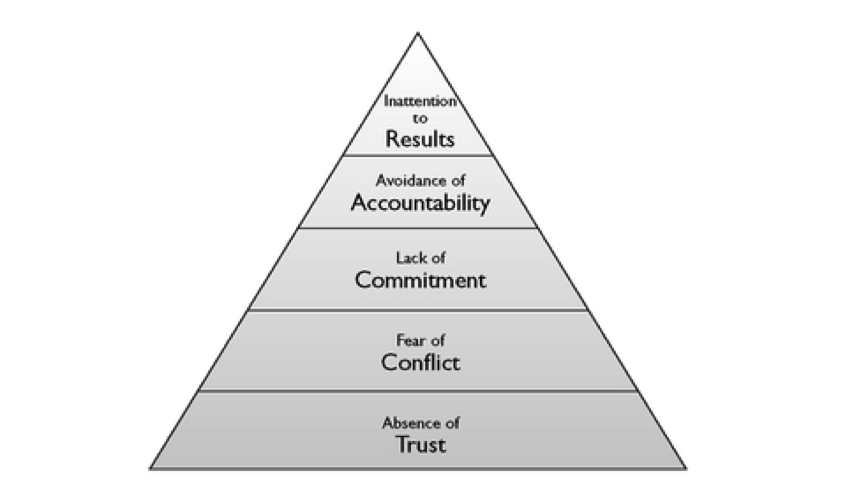



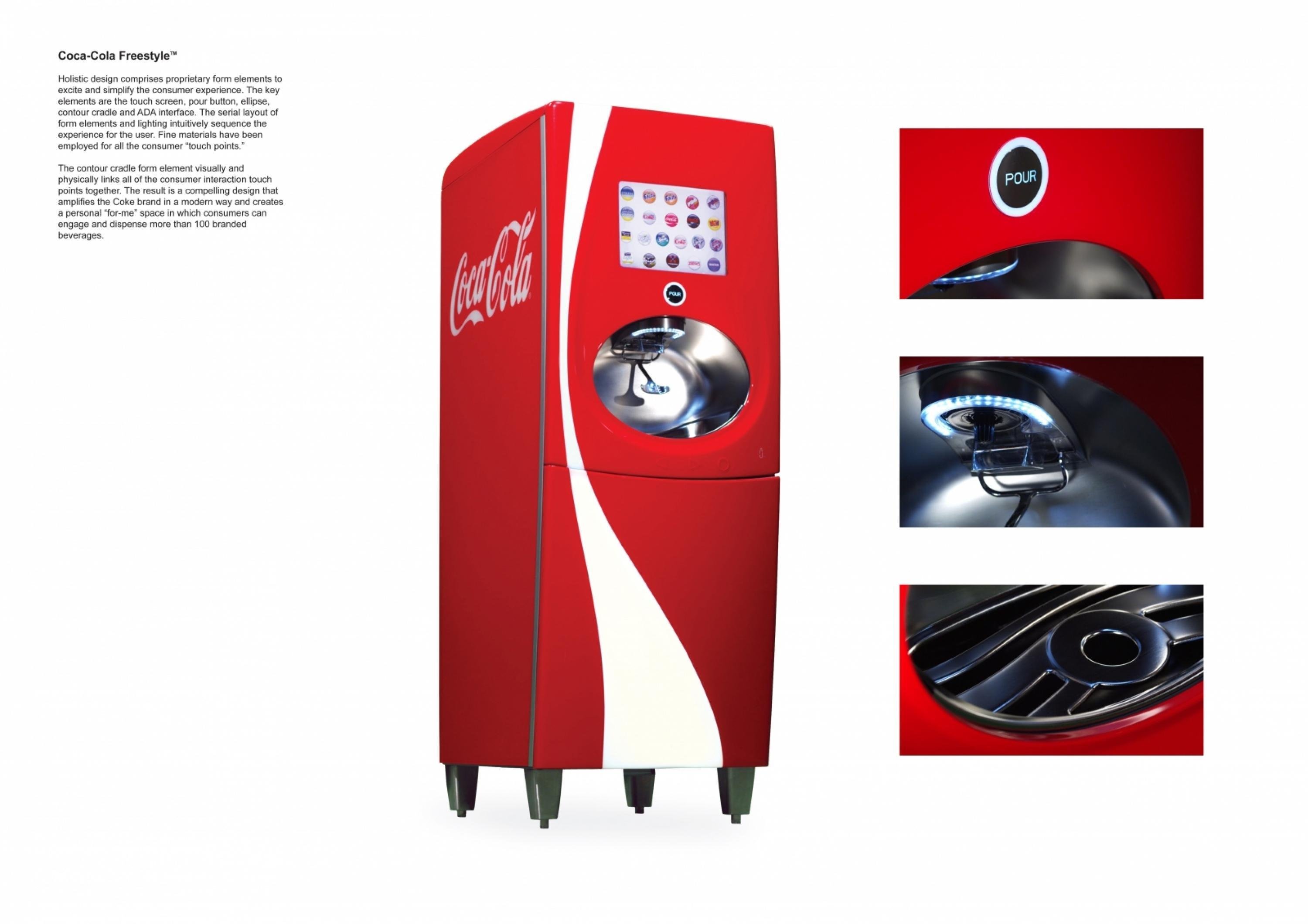











 Petervan Studios