Petervan’s Delicacies – Period 2 May – 22 May 2016

delicacies

Edition-62 of Delicacies: as usual, max 5 articles that i found interesting and worth re-reading. Handpicked, no robots. Minimalism in curation. Enjoy! Much more of this in my weekly Revue summary. Subscribe at bottom of this post.

If you can’t get enough of these and want more than 5 articles, I have created an extended version of Petervan’s Delicacies in REVUE. If you want more than 5 links, you can subscribe here: https://www.getrevue.co/profile/petervan

Petervan’s Delicacies – Week 25 Apr 2016

delicacies

Edition-61 of Delicacies: as usual, max 5 articles that i found interesting and worth re-reading. Handpicked, no robots. Minimalism in curation. Enjoy! Much more of this in my weekly Revue summary. Subscribe at bottom of this post.

If you can’t get enough of these and want more than 5 articles, I have created an extended version of Petervan’s Delicacies in REVUE. If you want more than 5 links, you can subscribe here: https://www.getrevue.co/profile/petervan

Petervan’s Delicacies – Week 18 Apr 2016

delicacies

Edition-60 of Delicacies: as usual, max 5 articles that i found interesting and worth re-reading. Handpicked, no robots. Minimalism in curation. Enjoy! Much more of this in my weekly Revue summary. Subscribe at bottom of this post.

If you can’t get enough of these and want more than 5 articles, I have created an extended version of Petervan’s Delicacies in REVUE. If you want more than 5 links, you can subscribe here: https://www.getrevue.co/profile/petervan

In search for happiness

A couple of weeks ago, Pim de Morree and Joost Minnaar contacted me to check whether their Corporate Rebels idea was related to Corporate Rebels United, our movement to unite change agents worldwide to ensure that true change happens virally from deep within the fabric of our organizations.

There are several other organizations that have similar objectives as Corporate Rebels United:

Last June 2015, we organized our second Rebel Jam, this time as a co-production of Corporate Rebels Unites, Rebels at Work, and Change Agents Worldwide. The recordings of that Rebel Jam are available here:

rebels

The work of Pim and Joost is different, with a focus on employee (dis)engagement and happiness, and in the longer run, Pim and Joost hope to develop a business out of their research about corporate heroes. There is nothing wrong with wanting to develop a business, as long as you are transparent about your intentions, I suggested Pim and Joost.

I also invited them to write an essay about their work and ambitions, and that I would be happy to share it on my personal blog and the blog of Corporate Rebels United.

They followed suit, and sent me their essay, which I am happy to reproduce below, without any editing from my side.

+++ Start essay

Pim de Morree and Joost Minnaar, Corporate Rebels, travel the world to meet their employee happiness ‘heroes’. They want to learn what works best and share their learnings with everyone.

pim and joost

Joost Minnaar (L) and Pim de Moree (R)

They believe the way most organizations are run nowadays is outdated. Gallup’s research reports show this time and time again; 87% of employees are disengaged with their work. Once you realize that we spend roughly 40 hours a week on this activity then you can only conclude that it’s time for a radical change.

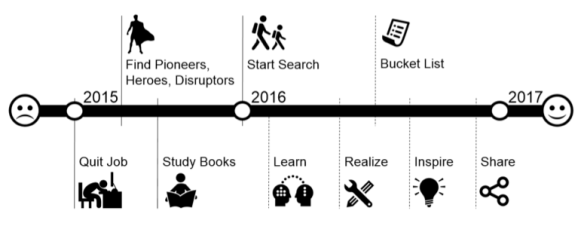
They themselves made a radical change once they both faced major demotivation after working for only 2.5 years. They quit their jobs and decided to start a quest for the happiest organizations around the globe. For a year (starting from January 2016) they dive into the world of employee happiness as Corporate Rebels. It’s their profound believe that work could and should offer much more satisfaction than it does nowadays.

Happily, there is reason for hope. Various pioneers (they call them ‘heroes’) around the world have found a solution. Organizations, academics, entrepreneurs and business leaders’ illustrate that they are achieving amazing results by increasing their employees’ happiness. They show that once people are happy at work they perform better and go the extra mile. An obvious win-win situation.

rebels time line

The Corporate Rebels visit the world’s happiest workplaces and try to discover what we all can learn from them. What do the pioneers do different than traditional companies? How did they made a successful transition? What works well? What doesn’t work? How can their approaches be spread across the world? A lot of questions as you can see.

In order to answer all those questions they have compiled a ‘Bucket List’ with the heroes they visit. The Corporate Rebels travel the world to expose their secrets. By checking off their ‘Bucket List’ they learn what works and share it with everyone that wants to listen. Only then, boring work can become a thing of the past.

rebels logo

The Corporate Rebels spread their learnings and experiences through their website (http://www.corporate-rebels.com), blog, newsletter, press, social media, inspirational talks and workshops. This is how they pursue their mission to make work more fun. To inspire employees and organizations to make a change. A change towards more happiness and more success. The Corporate Rebels hope to make the world a happier place; one employee at a time.

+++ End essay


Petervan’s Delicacies – Week 11 Apr 2016

delicacies

Edition-59 of Delicacies: as usual, max 5 articles that i found interesting and worth re-reading. Handpicked, no robots. Minimalism in curation. Enjoy! Much more of this in my weekly Revue summary. Subscribe at bottom of this post.

If you can’t get enough of these and want more than 5 articles, I have created an extended version of Petervan’s Delicacies in REVUE. If you want more than 5 links, you can subscribe here: https://www.getrevue.co/profile/petervan

Petervan’s Delicacies – Week 4 Apr 2016

delicacies

Edition-58 of Delicacies: as usual, max 5 articles that i found interesting and worth re-reading. Handpicked, no robots. Minimalism in curation. Enjoy! Much more of this in my weekly Revue summary. Subscribe at bottom of this post.

If you can’t get enough of these and want more than 5 articles, I have created an extended version of Petervan’s Delicacies in REVUE. If you want more than 5 links, you can subscribe here: https://www.getrevue.co/profile/petervan

Petervan Delicacies – Week 28 Mar 2016

delicacies

Edition-57 of Delicacies: as usual, max 5 articles that i found interesting and worth re-reading. Handpicked, no robots. Minimalism in curation. Enjoy! Much more of this in my weekly Revue summary. Subscribe at bottom of this post.

If you can’t get enough of these and want more than 5 articles, I have created an extended version of Petervan’s Delicacies in REVUE. If you want more than 5 links, you can subscribe here: https://www.getrevue.co/profile/petervan

Shift Happens: Blockchain to revolutionalise Scientology

scientology

In the aftermath of the Scientology trial in Brussels last month, senior representatives of the six Belgian governments have initiated exploratory talks with Scientology to assess the creation of a blockchain-based venture for the relationship economy.

blockchain

In a joint press release, they announced today the launch of DAG (“Digital Asset Goldings”), a new blockchain consortium headed by Bitalik Vuterin. The project uses a brand new fork of the blockchain protocol called “Ethereal”: a permissioned mutual distributed ledger protocol, underpinned by its own ether-cryptocurrency “Real”.

DAG has been set up as a non-profit cooperative, and has already collected more that 500M USD in equity funding, rocketing it into the first blockchain unicorn in history.

DAG will be governed by G4S (Governance For Securities), a governance body made of 45 major financial institutions, and several of the RegTech sandboxes, that tested the technology in Q1 of 2016.

The funding round was lead by FISH (Flanders International Securities Holdings), fully owned in open source by five of the six Belgian Governments (Brussels does not participate: as the home of the European Union, the Commission does not permit hosting regions to participate in ventures promoting non-fiat currencies).

FISH Logo

Flanders International Securities Holdings holds 51% of the shares of DAG, 29% is owned by G4S, and the remaining 20% is reserved for future crowd sourced citizen participation, based on simple bonds that will be issued in the Real open source currency on the DAG shared ledger.

Ethereal leverages the findings of the Digital Asset Grid project, an incubation project that was set on hold in 2012 by lack of interest and investment, probably because to novel at its time. Digital Asset Goldings will use the same principles of governance, trust, resilience and availability as the DAG-project, but the implementation is based on a brand new revolutionary protocol “Ethereal”, using modern breakthrough encryption technology based on Quasars.
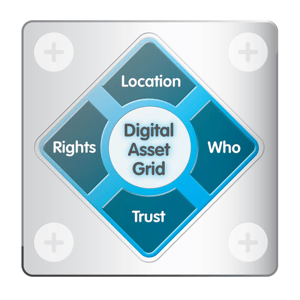
DAG logo

“With Ethereal, we have solved the scalability problem of the blockchain”, says Vuterin; “We can scale to more that 1 Trillion nodes on the grid, and all the atomic transactions can be executed in milliseconds. We can do this thanks to our quantum computer “StockGold”, mining Reals at the nanoscale and nanosecond.”

quantum computer

Quantum Computer running StockGold

Adriano Selinky – Head of BancoVentures, the investment arm of BancoBlanco and one of the 45 banks backing the project – raves: “We believe there are about 20B USD in yearly savings in direct settlement of Scientology fees: the business case was a no brainer for us, and we are eager to invest in more Ethereal-based projects and startups. DAG will revolutionize financial services, and will deeply disrupt the economic fabric of our economies. We see many more use cases, but it will take a couple of years before we will see the full impact of this.”

Adriano Selinky

Adriano Selinky – Head of BancoVentures

The Scientology trials will be labeled “TrustWeb” and will be led by Neil Sinner, as a competitor to his brother’s “DataWeb”. “Kris has been instrumental in setting up DataWeb, but this technology space is moving so fast that DataWeb is already an outdated technology before its first implementation. TrustWeb is just offering superior relationship experiences”

The promise of superior relationship experiences did not go unnoticed to the 6 Belgian Governments, who consider the DAG and the Ethereal G4S governance model ready to revolutionize their own move from centralized to decentralized to fully distributed peer-to-peer government.

DAG will have its international headquarter in Blocke-Heist, a little town on the Belgian coast. The little town is renowned for its elite public, attracted by art galleries, fashion shops, exclusive restaurants and bars, and a vibrant nightlife.

Baron Clipckens – Mayor of Blocke-Heist – was very bullish: “I was myself hit very hard during the 2008 crisis as an investor, and I am convinced that transparency and traceability of financial transactions are the best guarantee for the long- and short term savings of our citizens. We welcome all FinTech Hubs to join us in this effort, and we hope that Blocke-Heist can become the Blocke-Valley and Davos of the Relationship Economy.”

Together with Scientology, DAG has also acquired its HQ real estate in Blocke-Heist: “La Réserve”, a 3-star Michelin restaurant and conference center.

La Reserve Blocke-Heist

La Réserve in Blocke-Heist, Flanders, Belgium

It comes with an 18 Hole Golf course to facilitate high quality relationships and connections. Close to the seaside, this will guarantee DAG with a daily fresh supply of fish and seafood, and is ideally positioned as a high-end executive meeting and event center.

DAG also attracted @petervan (one of the Co-Founders of Innotribe) as their Artistic Director. “There is indeed room to rethink the way events are organized, using more participatory Ethereal concepts that will guarantee advanced collaborative learning beyond the pure cognitive. La Réserve is an outstanding location where physical and emotional space blend into unique immersive experiences”; said Petervan.
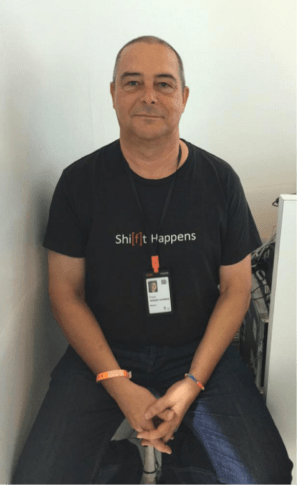
Petervan Shift Happens

@petervan, in his black T-Shirt “SHIFT HAPPENS”, at Innotribe Sibos last year
(black T-Shirts seem to be the standard uniform of Innotribe Co-Founders)

DAG seems to be a marriage in heaven and possibly the singularity moment for financial services: the future of decentralized governance combined with the relationship economy of Scientology.

Casino Blocke Heist

Blocke-Heist Casino – Magritte Biennale

The DAG opening gala party – Tuxedo and Magritte Bowler Hat only for men, ladies in Gala Dress – will be held tonight in the Grand Salon of the Casino of Blocke-Heist, starting at 11pm with Champagne and genuine Russian caviar, followed by a standing dinner, and Belgian Top House-DJ’s animating the dance floor till early in the morning. The event is sponsored by Veuve Wickcot Champagnes and BancoBlanco. For those with more artistic interests, there is also a Biennale running in the Casino, of Belgian surrealist artist Magritte. See you all there!

When public becomes private

Windows at Brussels Airport after suicide bombings on Tuesday. Credit Pool photo by Frederic Sierakowski

Windows at Brussels Airport after suicide bombings on 22 March 2016. CreditPool photo by Frederic Sierakowski, in NYT article “Je Suis Sick of This”

In the aftermath of the terrible Brussels terrorists attacks, I encourage you to watch the full 1h50m LiveStream of the “A Conversation on Privacy” of just a couple of days ago.

3heads-Image-facebook-1-1000x510

The conversation was positioned/framed as “The balance between national security and government intrusion on the rights of private citizens” and featured renowned linguist and MIT professor Noam Chomsky, NSA whistleblower Edward Snowden, and Intercept co-founding editor Glenn Greenwald. Nuala O’Connor, president and CEO of the Center for Democracy and Technology, was the moderator.

It is clear from the reactions of the public in a full house Centennial Hall of the University of Arizona College of Social and Behavioural Sciences in Tucson Arizona that Chomsky, Greenwald and Snowden were playing a home match, but that should not underplay some of the key points they were making.

There are basically four big chapters in this conversation:

  • What is privacy, and the effects of mass surveillance (nobody in its right mind is questioning targeted surveillance)
  • The Brussels and other attacks and the (in)-efficacy of mass surveillance
  • The FBI – Apple case
  • The role of journalism

I am looking forward to a full transcript of this conversation, in the meantime I made the following bulleted notes:

  • On privacy
    • When discussing privacy and security, are we discussing security of State, Corporations, or Citizens?
    • The statement “if you don’t have anything to hide, you have nothing to fear” does not cut it at all:
    • Everybody needs to be able to think and explore in a space where you are not subject to other people’s judgment, where you can make decisions as result of your own agency
    • People are starting to self-sensor, curtailing their own speech
    • Privacy is the right to enjoy the products of our own intellect
    • Privacy is the fountainhead of all other rights
    • Privacy is the right to a free mind, without having your ideas being pre-judged before they are fully formed
    • If no privacy, you live as a collective, in a state of reaction to your environment
    • “I don’t care about privacy because I have nothing to hide, is about the same as saying I don’t care about freedom of speech because I have nothing to say”
    • Rights are designed for those who are vulnerable. “Not caring about a right (because it does not apply to you) is probably the most anti-social thing I can imagine.”
    • Rights exist to protect the minority against the majority. Even if the majority does not care about privacy (or any other right), that majority view is irrelevant
    • Silicon Valley companies still don’t care about your privacy. What they fear is users would give their data to somebody else
    • The “Digital Self” is unhealthy, creates a sense of intimacy that is fraudulent, leads to very superficial interactions amongst people
    • Should there be state secrets at all? Governments classify EVERYTHING as Secret or Top Secret, because of their unwillingness for transparency
    • The elites decides on our behalf.
    • The elites change as quickly as possible the conversation to the theoretical risk of having a free press
    • Almost NOTHING is concerned with the security of the population; the population is the enemy, and they are not supposed to know what the government or corporates are doing
    • The (US) does not want you to know that the real battle is about world domination of the US doctrine
    • The trade off between security and privacy is is a false dichotomy
    • It leads to the illusion of democracy
  • On the European attacks:
    • Mass surveillance does not have ANY concrete results against terrorism
    • “When you collect everything, you understand nothing”, “you are blinded by the noise”
    • But if mass surveillance does not work for terrorism, it must work for something… What is it good for then? It is about setting and policing our policies and marking anything that is not conforming as suspicious
    • The resources are misallocated to mass surveillance in stead of addressing the route causes
  • On the Apple – FBI case
    • The FBI “wants it all” – all communications between human beings – in other words “wants to kill privacy”. They want access to everything, even your private conversations in between the safe four walls of your home.
    • Orwell interpretation “if you live in a society where you are always being watched, you loose freedom”. But that was an interpretation. What Orwell really wrote was “… a world where we COULD be watched at any moment…”
    • In such a world, you have to act AS IF you were being watched all the time, not knowing of the surveillance device is operating, watching you, or if somebody on the other side is doing something with the information collected
    • Who should be permitted to hold secrets: The citizens ? The governments? The corporations?
    • The content of San Bernardino calls already HAVE been given to the authorities (through the service providers)
    • By unlocking the phone, they would now also have access to the metadata
    • “Private citizens” should have full transparency on “Public officials”
    • The emerging culture is the opposite: Public officials’ activities becoming more and more opaque, and Private citizens’ activities becoming more public
  • On Journalism
    • “What is non-objective is significant” with respect to journalism and framing
    • A lot of journalistic framing follows from their own obedience to the framework of conformity that they learned at our best schools in the world (Oxford, Cambridge, etc.)
    • We have to continue to reveal things that should never have been concealed in the first place

On the same day of the Conversation on Privacy in Tucson, there was an interview with US Secretary of State John Kerry on Canvas (Flemish Television).

john kerry

The theme of that interview was “the need for an integrated system of information exchange to increase security”, and that some countries have reservations to such systems – specifically referring in to Edward Snowden.

Some extracts of what John Kerry said (i tried hard not to put things out of context):

“It is fair to say that in a number of countries, partly because of mister Edward Snowden, and the history, people had a reservation about doing some of these things, because they felt that might be an invasion of privacy”.

“I don’t worry about my privacy. The fact that I am getting on an airplane – if I were not flying in a military airplane now, but if I am flying in a civilian airplane which I was doing as a senator – I don’t care if they know if I am on that plane; because I am obeying the law.”

“So I think people have to relax a little bit and understand that there are plenty of ways to protect your privacy without creating greater danger in society at large.”

“I do know that you (Belgium) have a federal system, I know you have a fairly decentralized system,…. And I remember the difficulties we had in the US between federal authority, state authority, and local authority and the movement of information. So, we’ve streamlined much of that now.”

“It is up to Belgium to decide what it should do, but I would urge Belgium and all European countries to create a more integrated flow of information so that we can protect ourselves more effectively”

“And I would say to every citizen that there is a way to do that and still protect people’s legitimate privacy. There is absolutely a way to do that, and we’ve proven it and we’ve lived with it.

To be honest, I could not believe my ears when watching this interview. If you have done a little bit of homework on the topic of privacy, you would also revolt against some of these platitudes which are in the same category as “If you have nothing to hide, you have nothing to fear”. The journalist in case missed the opportunity to give pushback to Kerry and to offer a more comprehensive framing of the issues on the table.

It seems to me that the underlying theme in all of this is a cultural tipping point from “when public controls private” to “when private controls public”.

Which of course stands in stark contrast with the idealistic visions of a fully distributed society: also that is a big illusion, because in any system where there is power to be re-distributed, some bigger players like governments and corporations will try to take advantage and create monopolies.

One could discuss what “control” means in this context, and I believe it is related to setting, dictating, manipulating and policing our set of norms and behaviours.

Although the conversation in Tucson is addressing mainly the way western (read US) politics are ran, the whole reasoning is applicable to any other belief system that evolves towards totalitarianism.

Evgeny Morozov was razor sharp is this week’s “The state has lost control: tech firms now run western politics“:

The only solution that seems plausible is by having our political leaders transfer even more responsibility for problem-solving, from matters of welfare to matters of warfare, to Silicon Valley.

This might produce immense gains in efficiency but would this also not aggravate the democratic deficit that already plagues our public institutions? Sure, it would – but the crisis of democratic capitalism seems so acute that it has dropped any pretension to being democratic; hence the proliferation of euphemisms to describe the new normal (with Angela Merkel’s “market-conformed democracy” probably being the most popular one).

The “need for an integrated system of information exchange to increase security” leads to a corporate and government surveillance state. Artificial intelligence tech firms and powerhouses start penetrating every segment of industry, also financial services.

@suitpossum was spot on with his great post this week on “The dark side of digital finance: On financial machines, financial robots & financial AI”, about machines controlling the “body” of the organization. @suitpossum has a great way to articulate how AI and robots are gradually robbing us from our personal agency.

The issue is whether they collectively imprison people in digital infrastructures that increasingly undermine personal agency and replace it with coded, inflexible bureaucracy; or whether they truly offer forms of ‘democratisation’.

I start calling this “The Illusion of Agency” and it will be the topic of one of my upcoming talks and associated blog posts.

There are several ways our policy makers can react to the attacks:

  • One way is to chose for confrontation: to step up reaction and retaliation, enforcing this way the agenda set by the attackers to undermine our way of living. Hitting back includes these “integrated systems” and the access to encrypted data as suggested in the British Investigatory Powers Bill. See also great NYT article on this topic
  • Another way is to use our resources to address the route causes of all this: the disrespect and straight military attacks by the western powers on non-western cultures and economies, not in the interest of the security of their populations but in an attempt to protect the economical and power interests of an elite.

But as public becomes more and more private, and private becomes public, and knowing who is in power, I am rather pessimistic and afraid that they – not we – will chose for the confrontation.

In the meantime – as I said in the beginning of this post – I invite you to listen to the full conversation on privacy, so you get some other perspectives than the obvious and populist ones you can pick up in the mainstream press and television news programs.

Petervan’s Delicacies – Week 21 Mar 2016

delicacies

Edition-56 of Delicacies: as usual, max 5 articles that i found interesting and worth re-reading. Handpicked, no robots. Minimalism in curation. Enjoy! Much more of this in my weekly Revue summary. Subscribe at bottom of this post.

If you can’t get enough of these and want more than 5 articles, I have created an extended version of Petervan’s Delicacies in REVUE. If you want more than 5 links, you can subscribe here: https://www.getrevue.co/profile/petervan