The crack

stael-apples

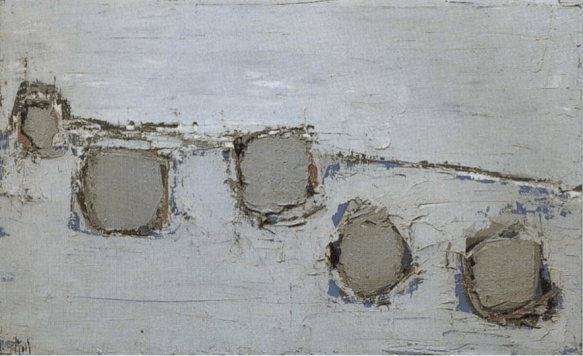
Nicolas de Staël – Five Apples – 1952

I am now one month into detailed scripting of my upcoming performance “Tin Drum is Back”. As mentioned in my last post, the narrative arc seems to be about evolving archetypes and levels of maturity.

In 2015, I was struck by lightning, by the work of fashion designer Dries Van Nooten. I wrote extensively about that experience here. It was the start of a more intense journey to let myself get touched by beauty, and to start experimenting with the creative orientation myself (Art academy, etc.)

Two years later, this 2015 expo is still resonating with me, and every time I tell the story of that experience, I get emotional, emotional like in tears of happiness and beauty. Happiness and bliss like a warm jelly feeling down your spine. I started paying attention to this emotion, opening myself to it, and wondering and exploring how it cracked me open (and very closed at other moments…)

Obviously, first thing that goes through mind, is the famous Leonard Cohen song “Anthem”, with the famous phrase:

Ring the bells that still can ring

Forget your perfect offering 

There is a crack, a crack in everything 

That’s how the light gets in.

How the light gets in…. But I started wondering how the light gets OUT… Like my skin would be lattice. Like the skin of this musallah.

th_65d1300db123ce22f6e2569fb36764f8_1551_aramc_rend_06

King Abdullah Petroleum Studies and Research Center (KAPSARC)
Riyadh / Saudi Arabia. Architect’s rendering of the musallah. 
Image Credit: Zaha Hadid Architects

What is needed for somebody to crack open like this? To get rid of all the ballast, and to stand in full onlyness ànd vulnerability ànd feeling happy with the way that is?

Another more recent moment when the lightning stroke was on a Saturday morning, where by full coincidence I hit the video of “Wild is the Wind” by David Bowie as part of the “David Bowie last 5 years” BBC documentary:


Wild is the Wind” is the first song of this amazing concert that is worth watching every of its 60 minutes. However, when he sings and smiles “you’re life itself” (at 2:40 and 4:10) that’s when shivers go down my spine and tears start rolling. Every time again.

Why is this? What is happening to me? Is Tin Drum about finally daring to stand in fire and vulnerability? Of letting my “onlyness” coming OUT through the crack(s)? Instead of hiding in a Hannibal-like shadow of complexity and impenetrability?

tin-drum-posters-gunter-grass

Film posters and book covers of Günther Grass' The Tin Drum

Cracking open seems to be about daring to stand in the fire, allowing the truth to come in and out, and allowing to loose myself and letting myself getting overwhelmed. It is about letting go of my masks, my defences.

Khurshed Dehnugara recently (my highlights) wrote about being overwhelmed in “cracking open”:

Being overwhelmed is something we are fearful of and at the same time can be helpful as we transition from one age to the next.

If our defenses are always solid, never breached, then the possibility of anything novel emerging is reduced. It often takes a moment of being overwhelmed before that part of us that we are defending can be seen. In the moment of being hurt, overloaded, caught out, tripped up or humiliated – we get a chance in those moments to see and work with the part of ourselves we spend the rest of our time enclosing in a protective shell.

As we spend time at the edges of what we know and can cope with, the container is strengthened.  When we can’t cope, the cracks can allow us to integrate an experience that has been shielded for a lifetime; but refuses to go away or stop causing problems in the rest of our lives. 

During my sabbatical, I am indeed spending time at the edges of what I don’t know and what I don’t know to cope with. At the edges of my existing communities, at the edges of new – more artistic – communities.

Also, the painting lets me re-discover the true meaning of being in the flow. But I have to get more clarity. Tell the story with fewer words, less images, less brush strokes, less gimmicks. I am trying to say too much. I am still trying too much to impress, not express.

“The more easy gimmicks, the more solid the content needs to be”, says my paint-coach Ann.

petervan-containers

Extract of Petervan painting “The Containers” in process – Feb 2017

So many metaphors between paint and real life. The longing for clarity of touch, pitch, colours, harmonies, and chords. But for now, still too much noise, both physically and mentally.

The sweet spot is where the crack is

where frequencies and overtones create the mystic.

What are your cracks? When was the last time you built defences against standing in the fire? When was the last time you put up a wall and defences against it? When was the last time you allowed the crack to put a spell on you to get in touch with your true self?
petervan-signature_transparent_black_version2

Playing tight: A non-natural show

Yesterday, there was a news item on Flemish Television on the upcoming opera performance of Puccini’s “Madama Butterfly”, that will be performed at the Brussels Federal Opera House De Munt / La Monnaie (31 Jan – 14 Feb 2017).

What touched me was that Madame Butterfly was played by a puppet, directed by three puppet players (visible in black). The effect is mystical. Check out the end of this video (comments in Dutch, but that should not spoil the experience).

puccini-madame-butterfly

Opera Madame Butterfly - De Munt - As from 31 Jan 2017

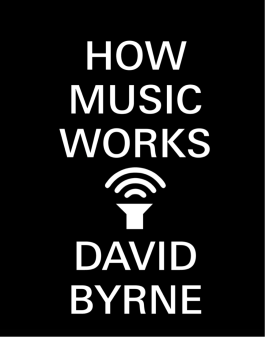
It made me think about a passage in David Byrne’s wonderful book “How music works” (Amazon Affiliates link). I am reading it in the context of my performance for Petervan Productions.

how-music-works

At a certain moment, David Byrne describes how his thinking about a show – a performance – was influenced by traditional Japanese theater forms such as Kabuki, Noh, and Bunraku.

Example of Japanese Kabuki theatre


“The tour eventually took us to Japan, where I went to see their traditional theater forms: Kabuki, Noh, and Bunraku. These were, compared to Western theater, highly stylized; presentational is the word that is sometimes used, as opposed to the pseudo-naturalistic theater we in the west are more used to.” 

“The character had in effect been so fragmented that the words they spoke didn’t come from close to or even behind that puppet. You had to reassemble the character in your head.

As in Japanese theater, the performers often wore masks and extreme makeup; their movements, too, were stylized and “unnatural.” It began to sink in that this kind of “presentational” theater had more in common with certain kinds of pop-music performance than traditional Western theater.”

“There was no attempt to formally separate the ritual and the show from the audience. I quickly absorbed that it was all right to make a show that didn’t pretend to be “natural.” To further complicate matters, I decided to make the show completely transparent. I would show how everything was done and how it had been put together.”

Check out the video footage of the resulting “Stop making sense” Tour. The show starts with a heavenly version of the song “Heaven” on an empty stage. At minute 2:30 you will see the first elements of the stage being rolled in.

The whole show is super enjoyable, and if you want to know what “playing tight” means, check this awesome version of “Breaking down the house”, which does exactly what you would expect.


Sometimes I think I have to stop trying to “make sense”. Better would be to “make meaning”.

All these reflections are related to my upcoming performance “Tin Drum is Back” (subtitle: “what is/what could be”): the performance design is evolving well, with detailed script being written as we speak.

Part of the story is looking back into ones youth (5-10 years old), look at what was forbidden then: for some people that is an area of talent they have neglected to develop. In my case, it was a tin drum I got when I was 6 years old, and the story of rhythms in my life and in my work. As the script develops, the narrative arc seems to be about evolving archetypes and levels of maturity.

Scripting is not “only” the storyline, but also the staging, transition, props, lighting, etc… And all visuals, sounds, and word are self-composed, self-created. Should be ready around March, although I may pick up some delay.

It starts feeling like theatre by an amateur 😉 So, performing “tight”, in some theatrical form, with costumes, masks, props, and stage being build-up as the show moves along, is certainly inspirational.

I see “Tin Drum…” as a teaser for a bigger story on multi-media corporate narratives, where – who knows – I create commissioned performances on less tangible topics (less tangible than “what problem are you trying to solve?”). I indeed think that a lot of the work I am preparing is steering away from the problem-solving orientation, and give more room to the creative orientation of “what do I want?”

What do you think? BS? Did I smoke too much ? 😉 Please don’t hesitate to share resources and serendipities that this post may generate.

More general Jan 2017 update here:  https://petervan.wordpress.com/2017/01/08/petervan-productions-jan-2017-update/

Rebelliously yours,


petervan-signature_transparent_black_version2

Petervan’s Delicacies – Period 10 Jan – 29 Jan 2017

delicacies

Edition-92 of Delicacies: as usual, max 5 articles that i found interesting and worth re-reading. Handpicked, no robots. Minimalism in curation. Enjoy! Much more of this in my regular Revue summary. Subscribe at bottom of this post.

If you can’t get enough of these and want more than 5 articles, I have created an extended version of Petervan’s Delicacies in REVUE. If you want more than 5 links, you can subscribe here: https://www.getrevue.co/profile/petervan

Fintech 2017- Quo Vadis?

rt6517

Deborah Kerr and Robert Taylor on the Quo Vadis filmset

Every year Jim Marous publishes the Top banking trends and predictions. On 21 Dec 2016, Jim published the sixth edition with predictions for 2017.

My input was a “pick-and-choose” list of bullet points. You can find the full list below. My input date was 27 Nov 2016. We are now two months later, and I captured some articles/announcements related to some these bullet points. And I added at the end some additional observations. All of this should be taken with more than a grain of salt, as I dimmed my focus on FinTech since starting my Petervan Productions sabbatical on 1 Nov 2016, and don’t read/research as much as before.

As always, these are 100% my personal opinions. Sometimes provocative, sometimes innocent, sometimes the cynical view of a 60 year old incumbent, but hopefully at times contrarian and inspiring. Here we go:

+++ start 27 Nov 2016 input

  • In general, 2017 will be the year of illusion, delusion, and distraction for and by FinTech.
  • Blockchain/DLT/etc will prove itself as one of the biggest distractions of this era in that it does not solve any existing problem, maybe it solves some future problems to be identified, but with a price to pay: the price of fundamental process re-engineering. Very few will be up to this task which involves community management and regulation.
  • In 2017, subject to pressures on the bottom-line and macro-political forces, banks will witness massive lay-offs and disinvestments in FinTech innovation labs and initiatives. These initiatives will be re-branded as research efforts, focused solely on incremental improvements in the core business lines.
  • FinTech will manifest itself as a techno fantasy, drawing attention away from the real problems to be tackled: cyber-security, trust and identity, which only can be solved through laser focused industry and government efforts. No single company can solve these on their own, and self-serving patenting will be counterproductive to industry-wide success.
  • In the US, the Trump administration will out-regulate innovation to protect the financial institutions fiefdoms and their control of money. But despite the Trumpian rhetoric and “opportunities” for financial institutions to start playing their old extraction-value games, financial institutions will be challenged by citizen uproar to give back to society.
  • Despite all these negative predictions, volume and frequency of FinTech investments will dramatically increase. Like in other industries, a 100M$ Fund will be considered as peanuts. Like in traffic jams, investments become bigger and last longer. Like traffic jams, ROI will be difficult to impossible to resolve.

+++ end 27 Nov 2016 input

What I am missing in many predictions is that most are just extrapolations of existing trends. They ignore the fact that the trend can just die or become a commodity where prices trend towards zero.

What I am missing is the creative/opportunity orientation (what do you want) vs. the reactive/responsive orientation (what problem are you trying to solve).

The way we think about change, disruption, and transformation) or whatever you want to call it) is going to be completely different in 5 years time. The speed of change is so big that our thinking is getting disrupted. The underestimated and ignored exponential power in all of this is the “power of networks”. I have another post in preparation for that, but in the meantime I would invite you to get familiar with following books and thinkers:

  • The Seventh Sense: Power, Fortune, and Survival in the Age of Networks, by Joshua Cooper Ramo
  • Whiplash: How to Survive Our Faster Future, by Joi Ito
  • The Inevitable: Understanding the 12 Technological Forces That Will Shape Our Future, by Kevin Kelly
  • “I wasn’t expecting that” from Simon Wardley’s upcoming book
  • Cloud wars by Simone Brunozzi
  • The end of cloud by Peter Levine from Andreesen Horovitz
  • Trillions: Thriving in the Emerging Information Ecology, by Peter Lucas, Joe Ballay and Mickey McManus (already from 2012, but so advanced in its thinking)

Rebelliously yours,

petervan-signature

Sacred Spaces

I recently had some conversations with prospective clients on the need for alignment and coherence of physical and emotional space when trying to create great experiences. I started to call them “sacred spaces”.

As you know by now, I am not in the events business. I am in the business of creating high quality feedback loops to enable immersive learning expeditions and deep change. In essence, I want to resonate with my client’s guests at another (additional) level than the pure cognitive. I believe this ambition also requires its own awareness and vocabulary, but more about that in some later posts.

One aspect of that vocabulary is our expression of sacred spaces. What first comes to mind is a church, a cathedral, some religious building of some sort.

img_4397

Sagrada Familia – Barcelona – 31 Oct 2014

In the best cases, the moment you come in, you are struck by a lightning of beauty, awe, stillness, and grandeur. The entry into the space feels almost ceremonial. You cross the entry, the line between outside and inside. The experience of the space sends vibrations down your spine. You feel suddenly whole and small at the same time.

This whole- and small-ness creates some kind of safety; some form of familiarity that this space is the right space, that this space is right. Just right for what it was designed for.

I think in similar terms about the spaces for our experiences.

Our spaces must be safe spaces. Closed as with an entry door. The entry into the space is a ritual moment. The coming out as well. It must be a physical experience: guests have to walk through the “arc of change”. They must do this in a “communion” style, as a collective, creating a visceral experience of the collectivism in their change process.

The space is about “roundness”, round as in circle, but also round as in generative, coming back to the starting point with new insights.

The space becomes a pulsing “egg”, a “womb” that will be our “nest” for a couple of days. It has of course to do a lot with right spaces for humans, and Jean Nouvel’s views (video here) on architecture. The video is also called “Reflections”, just like the latest from Brian Eno, one ambient song of 54 minutes (interview here)

jean-nouvel2

“Combining big bold shapes with intricacy and delicacy. The ability to be bold and delicate at the same time. The relation between time and light. The sphere above, the cupola. A spiritual space.”

I love the idea of the cupola. In my opinion, the closed space described above needs a roof – like a cupola – with some lattice membrane. But at the same time, the space needs to be “porous”, with light (the crack) coming in through the lattice, and light (enlightenment) coming out to inspire others. Or even better, some form of post-enlightenment as in Danny Hillis’ entanglement.

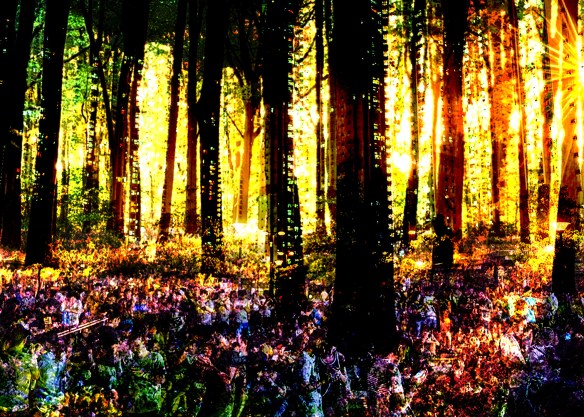
And light itself can also be the “roof” and the trees of the space forest. Check out this wonderful video of Fujimoto’s light forest:

light-forest


I shared the video with my good friend Marti Spiegelman, who replied:

Thanks for the link – this is extraordinary. It reminds me that sometimes the light itself is the sacred space – I’m thinking of the light beam on the floor, when one of the walkers stands in the light – and sometimes the light creates the boundaries, or defines the edges, of the space – as in a forest when there is a small round clearing, it’s traditionally considered to be a ‘power spot’’ [another name for sacred space] where you can call in greater powers of nature and the universe to create change.”

I was looking for some good description of sacred and sacredness. I think I found it in an article about a fashion book by Belgian fashion designer Ann Demeulemeester.

book-demeulemeester

“It looks and feels almost sacred, with pages so thin the images can be seen on both sides of each sheet; it’s a truly delicate beauty. For this reason, every single page is printed only on one side, creating a uniquely singular reading experience. The size and weight of the book gently contrasts with the fragility and smoothness of the paper, while the almost total white of the inside is in opposition with the blackness of the sides and the linen cover. Text is kept to the essentials, limited to an introduction by Patti Smith (Demeulemeester’s longtime muse) and a short final dedication by the designer herself. The book was designed by Victor Robyn, a Belgian graphic designer who has been in charge of realizing Demeulemeester’s graphics for years—from show invitations to printed fabrics. The art direction is curated by Victor Robyn, Demeulemeester herself and Patrick Robin, her life and business partner.”

Happenstance that I visited this week Casa Argentaurum, an art gallery in Ghent run by Caroline De Wolf, who kindly opened her space for me. It was one of the last days of the exposition about Ann Demeulemeester’s jewellery.

jewellery-demeulemeester

Necklace – Ann Demeulemeester – Casa Argentaurum

At the end of our conversation, Caroline gave me a copy of the catalogue of the 2010 exposition “Things, Thoughts, and Territorities”.

book-andrea-branzi

The book has some great design drawings by Andrea Branzi, and also a wonderful testimony of the artists’s love relation with Belgium (mostly Flanders btw). Somewhere half way, there is this superb quote:

“Architecture is not the art of building, it is a very complex discipline,

interpreting history, technology and the changes in society.”

It could have been the tag-line for Petervan Productions, as I see myself as the architect who conceives, gives birth to the vision together with the client, and then pulls together and orchestrates the resources, experts, and artists to create a unique experience in search for the secrets of life.

But “you can’t find secrets without looking or them” (quote by Peter Thiel in his book “From Zero to One”), so I am looking for your views on what you would expect from a sacred space.

I am looking for architects, space- and stage-designers to be part of our collective of leaders, visionaries, artists, craftsmen, designers and producers.

If you are interested to be part of that calling and dialogue, you can just leave a comment on this post.

Rebelliously yours,

petervan-signature_transparent_black_version2

Petervan Productions – Jan 2017 update

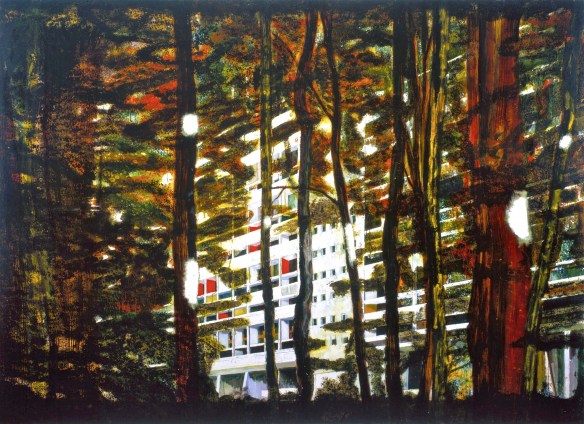
doig-study-v2-selected-for-study

Petervan Photoshop collage as part of study on Peter Doig
Theme: Culture and Nature – Dec 2016


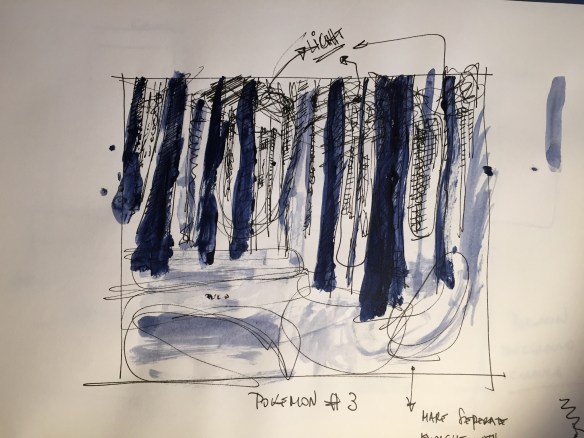
pre-study-peter-doig

Pre-Study Peter Doig - Sketch Dec 2016


Happy New Year to you, your friends and your family! Hope you are doing well.

As you know, I left Innotribe/SWIFT in Nov 2016 for a long term sabbatical to create my own thing under the Petervan Productions umbrella. My ambition is to architect and create high quality feedback loops to enable immersive learning experiences and deep change.

A quick update:

  • Artschool continued till the holiday break, starting again next week. We try to get under the skin of artists, and then paint an image in their style. Currently looking into Peter Doig.
  • Nov/Dec 2016 was a period of getting to grips with some tools for my performance: music, image, video composition tools
  • The performance “Tin Drum Is Back” is targeted for end March
  • The retreat event for Sep
  • The content festival for Nov
  • A lot of reading and a lot of posts in the queue


doi_concretecabinii-1992_lac_218x300mm-e1426095552774

“Concrete Cabin” by Peter Doig - 1992

During Jan-March 2017, the plan is to work on:

  • Detailed scripting of the performance
  • Build and expand the collective of leaders, visionaries, artists, craftsmen, designers and producers

project-plan

Extract project plan performance per week.

I am very focused (yes, working on a 8+ hour daily schedule and a project plan). I am about one week late compared to initial plans. Being focused also means saying “no”. As you may have noticed, I have drastically dimmed my social media activities, and kindly reject any requests for consultancy, speaking engagements, etc.

I have 1-2 leads that want to work with me as their architect for immersive learning experience events. But I am not in active prospection mode.

Every request for collaboration is assessed against the objectives and priorities for 2017: the art, the performance, the retreat, the festival, and to see how far I can get with all that in one year’s time.

If there is something worth reporting, next update is for Feb 2017. Looking forward to hearing from your latest adventures as well.

Rebelliously yours,

petervan-signature_transparent_black_version2


Petervan’s Delicacies- Period 12 Dec 2016 – 8 Jan 2017

delicacies

Edition-91 of Delicacies. Happy New Year to all of you. It has been almost a month since the previous “Delicacies”. That is because I am very focused on Petervan Productions.  And focus means saying “no” to a lot of invitations and distractions. More on that soon.

In the meantime, here is edition-91 of Delicacies: as usual, max 5 articles that i found interesting and worth re-reading. Handpicked, no robots. Minimalism in curation. Enjoy! Much more of this in my regular Revue summary. Subscribe at bottom of this post.

If you can’t get enough of these and want more than 5 articles, I have created an extended version of Petervan’s Delicacies in REVUE. If you want more than 5 links, you can subscribe here: https://www.getrevue.co/profile/petervan