Petervan’s Delicacies – Week 8 Oct 2018

delicacies

Petervan’s Delicacies are back! After a couple of months of relative rest, I have started again my weekly curation of content that resonated at a higher quality level. In this come-back edition, also some older posts of the last couple of months that for some reason stayed alive in my memory.

This is edition-118 of Delicacies on my blog post. As usual, max 5 articles that I found interesting and worth re-reading. Handpicked, no robots. Minimalism in curation. Enjoy!

If you can’t get enough of these and want more than 5 articles, I have created an extended version of Petervan’s Delicacies in REVUE. If you want more than 5 links, you can subscribe here: https://www.getrevue.co/profile/petervan

The illusion of constant renewal

I am probably the antidote of fashion. My standard outfit these days is made of worn-out t-shirts, old sports shorts, and plastic sandals (sort of). Nothing poetic for sure. So, it may surprise you that from time to time, I am inspired by fashion, their designers and their shows to present the spring/summer/autumn/winter collections.

rei Kawakubo 2

                      Koan-like design by Rei Kawakubo

I like the word “collection” for a body of work, and thematic portfolio. I admire the designer and their teams for the endless patience and discipline to churn out every quarter another collection and brand new fashion show.

Some shows become “classics”, sometimes because of the extravaganza and spectacular tricks and effects, others – the better ones – because they resemble more poetry than anything else.

I was pleased to bump into this great article by Angelo Flaccavento in Business of Fashion, titled “In Paris, a Fight for Supremacy”. Here are some interesting quotes highlighting the difference between sensationalism and pure quality that may inspire you to deliver better work, not just noise.


All the theatre and gimmicks sometimes

feel like a cover up for a spectacular lack of ideas


The nth iteration of the code

convinces you it’s time for a diet, or a detox.


Turning codes into a cliché is dangerous.


Honesty, focus and professional humbleness

are truly disruptive these days. 


Moving forward no longer seems to be a priority.

It’s just the endless drops of products

that give the impression of constant renewal.


The impression of constant renewal. Think about that.

petervan-signature

Design used to be about sensitivity, beauty, and taste

As part of my search for a new job, I was introduced to an organisation focusing on using design-led engagements to support innovation and understanding customer needs (needs, not problems, see my previous post on the tyranny of the problem solver)

Clouds above the sea

Lyonel Feininger - Clouds above the sea - 1923 - Oil on Canvas

Steve Jobs used to say “it doesn’t make sense to hire smart people and tell them what to do; we hire smart people so they can tell us what to do.”

So, in preparation for the job interview, and to know what to tell the recruiter what to do, I started diving a bit into design-thinking and design-led engagement.

I believe that these approaches are great to create high quality information flows, but that something else is needed than noise-free rapid information transfer.

My good friend and ex-Innotriber Nektarios Liolios kindly pointed out to me during a recent chat that “noise free is not the same as conflict free”.

  • We indeed do need conflict, tension, etc to create flow, movement, change, advancement.
  • But we do need to get rid of the noisy primary motivations of prestige, status, tic-for-tac reciprocity, etc .

I think the key element missing in existing design-led engagements is (great) aesthetics.

As I said some time ago: there should be some ambition of advancement in aesthetics, morality, and spirituality.

I that context I found this great article about aesthetics:

Design used to be about sensitivity, beauty, and taste

The key performance indicator for design has changed from beauty to profit. Measuring design has transformed a handicraft into an engineering job. 

Google, Facebook, and Amazon are optimizing their products for us, as they are optimizing our minds, bodies and our kids for their profit. Humans are slowly adapting to that labyrinth, becoming lab rats of an omniscient industry that adapts to our needs as it is adapting us to theirs.

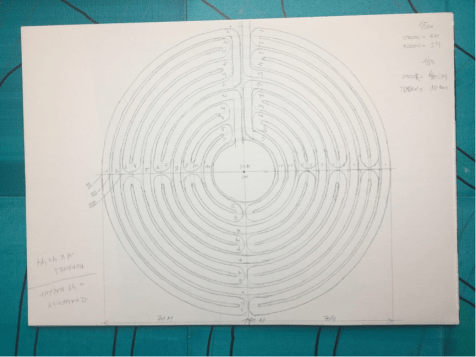
Labyrinth small V1

Petervan Artwork ©2018 - Hand drawn labyrinth 

Many labyrinths are “meandering”. We need similar meandering in design-led engagements.

We need to bolt-on something upfront that unites, aligns, encourages, and motivates teams at a level beyond the cognitive.

I think I know how to do that.

petervan-signature

Fairy tale – The Helikon

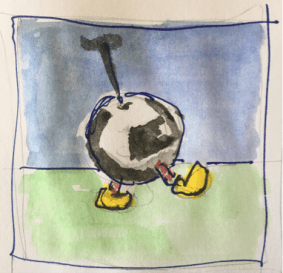
There once was – a long time ago – a small Helikon. He had a round body, stockings with red and white stripes, and yellow boots.

Helikon stepping forward

On his head he had – just like any other Helikon – a very fine “antenna” to feel for everything, and on top of that antenna, a propeller that indicated the direction and strength of the wind.

Our little Helikon also had a shiny black visor, so you could not see his eyes. But he could see you.

That shiny black visor was actually something he had inherited from his parents at birth. They had been wearing these visors for a very long time. It was a rule in Helikon country that you had to wear such a visor when you had lost some beloved one.

In the beginning everything was apparently going well and normal for our little Helikon. He was well formed, could climb very well, and had the clever brains for making it easy to bring all tasks to a successful conclusion.

But soon he had the feeling that Mom Helikon tested him, and tried to see how far she could tease him before he felt hurt. And sometimes she succeeded. I remember one time he had damaged the doors of the house with the propellor from his antenna. Just to show how angry he was.

Dad and Mom Helikon were rarely angry. Our Helikon therefore remembered all too well that one day his Dad had been really very angry. That was when Dad tried to polish the visor of his son. Our Helikon did not like the cleaning and brushing at all, and got very obnoxious. Dad then became so angry that he simply threw the cleaning cloth against the ceiling of the Helisphere. You can still see that spot today 😉

As our small Helikon grew up, he also developed a strong desire to see the antennas and propellors of the Helikas. Which at that time was actually considered very brrbwah and forbidden. One time, Mama Helikon had beaten him up for that. There was a story about the girl next door or the neighbour or maybe both. The old books are not so clear on that.

Over time, our little Helikon got something sad about him, even something of anger and violence. You could notice a certain dullness of his usually shiny black opaque visor. That was because our little Helikon had discovered that he had a speech problem: he could not pronounce the word “yes” very well. And the word “no” was also very difficult. Especially the first syllable of these two words was hard.

This speech defect haunted him for a long time but he didn’t really take care of it. The Helisphere of the Helikons lay in the middle of a big forest. In the forest were many old and large trees. The forest was very dense with ferns, mushrooms, and turquoise flowers.

Helikon frontal with trees at horizon

Our little Helikon often made long exploration trips in the woods. In the beginning it was fun, but as the Helikon pulled deeper into the forest, he was overcome by a deep fear. Would he still find his way back?

The deeper into the forest, the more he could smell the earth. The damp smell of wet leaves sometimes made him nauseous. And sometimes, it gave the urge to run away quickly. Were those trees real? And why were the great owls constantly howling? The small Helikon wanted to avoid at all costs that the owls saw that he was afraid.

And to prove himself, he climbed the highest trees, and jumped out of them, with his hands covering his black visor but without any further protection. It was as if he wanted to tell the forest: look what I can do! Look at what a daredevil I am! But the trees just kept standing where they stood, and pretended not to see him.

On a beautiful summer day – during one of those hikes – our little Helikon had gone very deep into the forest. There was only a tiny bit of sunlight filtering through the thick canopy of trees.

Helikon meets fairy

And whambam!! All of a sudden, an old fairy with spooky green eyes stood in front of him. The fairy told about the man in her life that she had lost, the eternal summer in this enchanted forest, and the black visor that she refused to wear. Helikon was very enchanted by this idea.

But the old fairy with green eyes very quickly tempered his enthusiasm by pointing out that he just landed in a fairy tale, and that all this was only a dream. A tale of elves, fairies and wizards, anyway … a tale of sweet crunchy make belief that everyone knows from his childhood.

The fairy with the green eyes made a few quick circular movements with her hand, uttered a very long spell and wished that the Helikon would soon wake up from this fairy tale and would be out in the real world: the real world of big stories of real love, real goodness, and where people no longer tried to restrain evil, but let the good grow by itself like fresh grass. Without pulling it, or without even caressing it.

Our little Helikon could not believe his ears. Was all this possible? Would such a world exist?

When the fairy touched him at the end of the spell with her magic wand, a shock went through the little body of our small Helikon: it was a wonderful warm gentle stream that flowed through his veins like hot jelly. The green-eyed fairy told him that this was “crostipana”, the holy manna pursued for centuries by all Helikons.

Helikon was now looking very intensely for that real world. But the more he searched for it, the less he liked it and the more difficult it was to imagine living there.

He searched and searched. He combed the entire forest from front to back.

Nothing could tempt, inspire or surprise him.

During one of those quests – very early in the morning, the sun was just peeping over the horizon – the little Helikon found a golden casket under a large oak tree. The sun made the morning dew sparkle in fantastic colours. It was very well made, with inlaid multicoloured gems and pearls.

The casket was closed. There was probably a big treasure inside.

Our Helikon tried to open the casket. First with a passkey he always carried in his little backpack, and when that failed, he tried to pry it open with a branch of the oak tree. Still to no avail, he threw the casket with all his might down a steep rock. The casket remained shut.

In desperation, he went to see the wise men of Helikon village.

The first wise man proposed to push the casket under water until the moisture would burst it.

The second wise man suggested to move to the country where the casket was made. They would probably have matching keys.

The third wise man just told our Helikon put the casket out of his mind, as it probably was fake and empty.

None of this helped.

Eventually our little man got to see the Great Helikon of the Helikon village. The Helisphere of the Great Helikon was very big and looked a little bleak.

Helikon meets wide man

The Great Helikon himself had a long grey antenna, the screw was all rusty, and there was a large brown stain on his visor.

When he heard the story of our Helikon, he spoke with a deep voice: “Ahum, ahum” – wise men always scrape their throat – “dear little man, you will have to leave the casket with me for a while. I will handle it with special potions and spells and polish it as new.”.

When the Helikon left the casket behind, he was terrified he would never see his casket again. Let’s hope the Great Helikon would not give the casket the wrong potions, he mumbled to himself.

But, see! Few weeks later, the Great Helikon called him in, and gave the casket back to our little Helikon, saying: “You have to pamper this casket a lot, fondle very gently the lid of the casket, and talk very nicely to it all day long, and if you do that long enough, the casket will open.”

The Helikon cuddled the casket every day now. And look, after exactly three weeks the lock of the casket clicked and opened. He just had to wiggle a bit the cover, and then it really opened.

On the inside, the casket was very nicely finished: it was completely lined with soft red silk, just like a pillow, a soft bed.

Helikon looking at kistje

And in the middle of that red soft pillow – Surprise! Surprise! – was another teeny-weeny mini casket. It was the nicest little casket that one could imagine. A mini key lay beside it to open it.

When our little Helikon carefully opened that mini-casket, there was a note in it. This was what was on the note:

xxx

“You came here with your suitcase full of secrets that weighed very heavily. Little by little, you are opening this suitcase. At the end of this journey, this case will be refilled. This time with light, power and love. Thanks to all the nice things in it, the case will be very light.”

xxx

Our little Helikon knew he did not have to search any further. The answers to all his questions were actually within himself. From that day on the Helikon was no longer afraid of the forest.


The End


Petervan Fairy Tales ©2018

Story & Illustrations by @petervan

English proofreading & corrections by Geert Barbier (Thanks!)

Original version in Dutch here

Sprookje – De Helikon

Er was eens – heel lang geleden – een kleine Helikon. Hij had een rond lijfje, kousen met rode-witte strepen, en gele laarsjes.

Helikon stepping forward

Op zijn hoofd had hij – net als elke andere Helikon – een heel fijne “antenne” om alles goed aan te voelen, en bovenop die antenne, een schroefje dat de richting en de kracht van de wind aangaf.

Onze kleine Helikon had ook een zwart glimmend vizier, waardoor je zijn ogen niet kon zien. Maar zélf zag hij je wèl.

Dat zwart glimmend vizier was eigenlijk iets dat hij van Papa & Mama Helikon had meegekregen bij de geboorte. Papa & Mama Helikon droegen zelf ook al heel lang een zelfde soort vizier. In Helikon-land moest je namelijk zo’n vizier dragen als je iemand van wie je erg hield was verloren.

In het begin liep alles schijnbaar normaal voor onze kleine Helikon. Hij was mooi gevormd, kon erg goed klimmen, en had een pienter stel hersens waardoor hij makkelijk alle opdrachten tot een goed einde bracht.

Maar hij had al snel het gevoel dat Mama Helikon hem testte, en probeerde hoever ze hem kon plagen voordat hij kwaad werd. En soms lukte dat wel eens. Ik herinner me een keer dat hij alle deuren van het huis met de schroef van zijn antenne had beschadigd. Gewoon om te laten zien hoe boos hij wel was.

Papa en Mama Helikon waren zelden boos. Onze Helikon herinnerde zich dan ook nog goed die ene enkele keer wanneer zijn Papa toch eens heel boos was geworden. Dat was toen Papa het vizier van zoonlief probeerde op te poetsen. Die vond dat poetsen helemaal niet leuk en liet dat dan ook merken. Papa werd toen zo boos dat hij toen gewoon het poetsdoekje tegen het plafond van de Helisfeer had gegooid. Die plek kan je nu nog goed zien 😉

Naarmate onze kleine Helikon groot werd, ontwikkelde zich bij hem ook een sterk verlangen om de antennes en schroefjes van de Helika’s te bekijken. Dat was in die tijd eigenlijk heel erg verboden en vies. Mama Helikon had hem daarvoor al eens een oplawaai gegeven. Er was toen iets geweest met het buurmeisje of de buurvrouw of misschien beide. Daar zijn de oude boeken niet zo duidelijk over.

Mettertijd kreeg onze kleine Helikon – je kon dat zien aan een zekere matheid van zijn doorgaans glimmende zwarte ondoorzichtige vizier – iets droevigs over zich , ja zelfs iets van boosheid en geweld. Dat kwam omdat onze kleine Helikon had ontdekt dat hij een spraakgebrek had: hij kon het woord “ja” niet goed uitspreken. En het woord “nee” lag ook erg moeilijk. Vooral de eerste lettergreep van deze twee woorden kreeg hij moeilijk uitgesproken.

Hij bleef een hele tijd rondlopen met dit spraakgebrek, zonder het echt te verzorgen.

De Helisfeer van de Helikons lag in een groot bos. In het bos stonden veel oude en grote bomen. Het bos was ook heel dicht begroeid met varens, paddestoelen, en turquoise bloemen.

Helikon frontal with trees at horizon

Onze kleine Helikon maakte dikwijls lange verkenningsochten in het bos. In het begin was dat leuk, maar naarmate de Helikon dieper in het bos trok, raakte hij bevangen door een diepe angst. Zou hij zijn weg nog terug vinden ?

Hoe dieper in het bos, hoe meer hij de aarde kon ruiken. De vochtige geur van natte bladeren maakte hem soms misselijk. En soms overviel hem de dwang om snel weg te lopen. Waren die bomen wel écht ? En wat zaten die grote uilen daar constant the oe-hoe-en ? De kleine Helikon wou tot elke prijs vermijden dat de uilen zagen dat hij bang was.

En om zich te bewijzen klom hij in de hoogste bomen, en sprong er dan – met de handen voor zijn zwarte vizier – zonder enige bescherming uit. Het was alsof hij tegen het bos wou zeggen: kijk eens wat ik kan, kijk eens wat ik durf ! Maar de bomen bleven gewoon staan waar ze stonden, en deden alsof ze hem niet zagen.

Op een mooie zomerdag – tijdens een van die trektochten door het bos – was onze kleine Helikon heel diep in het bos gegaan. Door de dikke kruinen van de bomen kwam nog maar een heel klein beetje zonlicht.

Helikon meets fairy

En plots, ineens, uit het niets, stond daar een oude fee voor hem, met groene ogen. De fee vertelde over de man in haar leven die zij verloren was, over de eeuwige zomer in dit sprookjesbos, en over het zwarte vizier dat ze weigerde te dragen. De Helikon was erg aangetrokken tot deze gedachte.

Maar de oude fee met de groene ogen koelde al snel zijn enthousiasme door hem duidelijk te maken dat hij enkel maar in een sprookje was beland, alsof het slechts een droom was. Een sprookje van kabouters, feeën, en tovenaars, enfin… een sprookje van zoeterige kunstmatigheid en on-echtheid dat iedereen wel kent vanuit zijn jeugd.

De fee met de groene ogen maakte een paar snelle cirkelvormige bewegingen met haar toverstaf, sprak een heel erg lange toverspreuk uit en uitte toen de wens uit dat de Helikon snel wakker zou worden uit dit sprookje en op zoek zou gaan naar de échte wereld: die wereld van de échte grote verhalen, van échte liefde, van échte goedheid, en waar de bewoners niet meer probeerden om het kwade te beperken, maar het goede als fris gras lieten groeien. Zonder er aan te trekken, of zonder er aan te strelen.

Onze kleine Helikon geloofde zijn oren niet. Was dit allemaal wel mogelijk ? Zou zo’n wereld bestaan ?

Toen de fee hem op het einde van de toverspreuk aanraakte met de toverstaf was het alsof er een schok door het lichaampje van onze kleine Helikon ging: het was een weldadige warme zachte stroom die door zijn adertjes vloeide, zoals warme konfituur. De fee met de groene ogen vertelde hem dat dit nu “crostipana” was, het manna dat door zoveel Helikons als ultieme doel werd nagestreefd.

De Helikon ging vanaf nu heel erg op zoek naar die échte wereld. Maar hoe meer hij ernaar zocht, hoe minder hij vond en hoe lastiger hij werd.

Hij zocht en zocht en zocht. Hij kamde het hele bos van voor naar achter uit.

Niets kon hem nog bekoren.

Tijdens een van die zoektochten vond de kleine Helikon – heel vroeg in de morgen, de zon was net op – een goudkleurig kistje onder een grote eikenboom. De ochtenddauw glinsterde nog op het kistje. Het was heel mooi gemaakt, met inlegstukjes van veelkleurige edelstenen en parels.

Het kistje was gesloten. Er zat waarschijnlijk een hele grote schat in.

Onze Helikon probeerde het kistje open te maken. Eerst met een grote bos namaak-sleutels, en toen dat niet lukte, probeerde hij het open te wrikken met een tak van de eikenboom. En toen dat ook niet lukte gooide hij het kistje heel hard naar beneden van een steile rotswand. Het kistje bleef potdicht.

Ten einde raad, trok hij met het kistje naar de wijzen van het Helikon dorp.

De eerste wijze stelde voor om het kistje onder water te duwen tot het van vocht zou barsten.

De tweede wijze stelde voor om naar een ander land te trekken waar het kistje gemaakt was. Daar zouden ze allicht nog passende sleutels hebben.

De derde wijze zei dat er waarschijnlijk niets in het kistje zat, en dat onze Helikon het kistje gewoon uit zijn gedachten moest zetten.

Niets van dit alles hielp.

Uiteindelijk stapte onze kleine man naar de Grote Helikon van het Helikon dorp. De Helisfeer van de Grote Helikon was heel erg groot en zag er een beetje somber uit.

Helikon meets wide man

De Grote Helikon zelf had een lange grijze antenne, de schroef was helemaal versleten, en had een grote bruine vlek op zijn vizier.

Toen hij het verhaal van onze Helikon hoorde, sprak hij met diepe stem: “Lieve kleine man, je zal het kistje een tijdje bij mij moeten laten. Ik zal het kistje met speciale toverdranken en -spreuken verzorgen, en het weer helemaal oppoetsen”.

Toen de Helikon het kistje achterliet, werd hij bevangen door angst: zou hij het kistje nog wel weerzien ? Zou de Grote Helikon het kistje geen verkeerde toverdrank geven ?

Toen na een paar weken de Grote Helikon hem terug bij zich riep, en het kistje teruggaf aan onze kleine Helikon, zei hij: “Je moet dit kistje heel erg vertroetelen, driemaal daags heel zachtjes op het deksel van het kistje strelen, en er elke dag heel lief tegen praten, en als je dat lang genoeg zal doen, zal het kistje opengaan.”

Onze kleine Helikon streelde nu elke dag het kistje. En kijk, na precies 3 weken klikte het slot van het kistje. Hij moest nog even wrikken aan het dekseltje, en toen ging het echt open.

Helikon looking at kistje

Het kistje was vanbinnen heel mooi afgewerkt: het was volledig afgezet met zachte rode zijde, het was precies een kussentje, een zacht bedje.

En in het midden van die rode zachte zijde lag – en dat was toch wel een grote verassing – een ander héél klein mini-kistje. Het was het mooiste kistje dat men zich maar kon inbeelden. Een mini-sleuteltje lag ernaast om het open te maken.

Toen onze kleine Helikon dat mini-kistje voorzichtig opendeed, lag er een briefje in. Op het briefje stond:

xxx

“Je bent hierheen gekomen met koffer vol geheimen die heel zwaar woog. Deze koffer ben je stilaan aan het openen. Op het einde van deze reis zal deze koffer opnieuw gevuld zijn. Deze keer met licht, kracht en nog meer liefde. Dank zij al die leuke dingen erin, zal de koffer zeer licht aanvoelen.”

xxx

Onze kleine Helikon wist dat hij nu niet verder moest zoeken. De antwoorden op al zijn vragen lagen eigenlijk in hemzelf. Vanaf die dag was de Helikon niet meer bang in het bos.


Einde


Petervan Fairy Tales © 2018

Tekst en illustraties door @petervan

Engelse versie hier.

I have no clue what you are talking about

This is a short (and bit weird) morsel on not understanding a clue anymore, to have the feeling to encounter a completely foreign world.

I happened to me several times last months, that I read or meet something/somebody and I really don’t have a clue what they are talking about.

  • A friend shares with me her business plan for a new app, and I have no clue what it is about, even not after having (tried to) read the associated white paper
  • The book “What Algorithms Want” by Ed Finn
  • The “God is in the Machine” post by Carl Miller
  • The 1000 dimensions of algorithms in James Bridle’s “New Dark Age
  • Eddie Harran’s (aka Dr.Time) Temporal Labs, Research lab investigating time’s impact on humanity

From the “God in the machine” post:

We sat there, looking at the computer, his creation laid out in multi-coloured type. “This is all to do with complexity,” he said contemplatively. “Complexity of input. Complexity of analysis. Complexity of how outputs are combined, structured and used.” 

 “Truth is dead,” he sighed. “There is only output.”

 After some 1-1 conversations with some of the authors, it looks like I missed a whole generation of aesthetic language that is only found in apps, games, and Netflix-ish series like Black Mirror, Mr. Robot, Tangerine, Ratter, and Skam.

black mirror

Black Mirror – Season 4 – 2017

It feels like digital incest. Trying to hide from your virtual self. A virtual loop of digital identities and personalities. Not knowing what is real and what is fake or sliced/looped faith.

It also makes me think of this extract from Bill Gates’ review of Capitalism without Capital:

It took time for the investment world to embrace companies built on intangible assets. When we were preparing to take Microsoft public in 1986, I felt like I was explaining something completely foreign to people. Our pitch involved a different way of looking at assets than our option holders were used to. They couldn’t imagine what returns we would generate over the long term.

It feels like I cannot imagine what these new aesthetics can mean on the long term, and how they are already influencing now Generations X, Y, and Z.

I am missing the @swardley’s situational awareness map, about movement and position. Where is the anchor? What is edge and what is commodity?

Visit Roger Raveel museum 28 Sep 2018

If you are still in for it, here are two soundscapes of my visit to the Roger Raveel Museum;

Still with me? Where am I? What’s next? Where is this going? How fast? How? When? With whom? Who is cheating? Who’s not?

Are we entering a digital matrix? Where real and surreal blur into an new perception?

Tell me if your understand.

Are we all lost?

petervan-signature

The myth of getting out of your comfort zone

I am going to do some shorter, snappier posts, just seeding an idea or an interesting (as in A.F.E.A.R.) point of view.

Google “Get out of your comfort zone” and you will get about 160,000,000 results. That’s solid framing!

comfort zone

But is it true?

My cousin – yes, the senior curator of the Royal Museums of Fine Arts in Belgium – surprised me the other day by stating the opposite: he performs (as in doing his best work) best when he is IN his comfort zone.

Just a couple of days later, I see this Tweet from Niels Pflaeging:

niels tweet

Niels is a management exorcist and a real myth-buster. I always listen to him.

So maybe the trick to do your best work is to find your comfort zone? Or is it all apeshit – or pop psychology – as Niels suggests above?

Let me know what you think.

petervan-signature


The tyranny of the problem solver

still life Song Han

Still life by Song Han

The trigger for this post was an article on the nexxworks site about right & wrong in corporate innovation. The first paragraph focuses on the need to obsess on solving a customer problem. My friend and ex-colleague Kevin commented via LinkedIn:

“Fantastic article! I’ve been banging on for years about starting with the problem, that people care about but this is so much more articulate than me.”

We started a quick exchange on LinkedIn:

linkedin with kevin

The nexxworks article is about much more than problem solving, but problem-solving is what I will be focusing on in this pamphlet/manifesto for creating what you want. As that is where I am coming from.

Not being problem focused seems almost a blasphemy these days. But we don’t realise we have been mis-framed for decades to be problem solvers and solutionists (“there is an app for that”).

It already happens in start-up pitches to start with. Start-ups are coached to pitch in a standard way. It goes back to Guy Kawasaki’s 10 slides to pitch: start with the problem, what is the solution, the team, the business model, etc, etc.

There are the Maddlibs to perfect your one-sentence-pitch. There even are Maddlibs to generate your strategy statement, based on a collection of blah-words (Thx to @swardley).

containers

Everything is “modelled” and vocabulary is standardised: we need MVP’s, lean start-ups, scale-ups, etc. It’s cool, but you then have to explain this new vocabulary to the rest of your troops.

Everything is “role-modelled”. And we get inspired by always the same use cases: Haier, Semco, Apple, Amazon, Uber, etc. We don’t seem to realise that these are exceptions. Only exceptions make the news. The exceptional is normalised, check out hyper-normalisation of Adam Curtis, albeit in another context.

“In the film, Curtis argues that since the 1970s, governments, financiers, and technological utopians have given up on the complex “real world” and built a simple “fake world” that is run by corporations and kept stable by politicians.”

Everything is based on a Silicon Valley solutionist style, a reactive/responsive orientation, something our MBA’s and entre/intra-preneurs and leaders/managers have been trained for at nauseum: define the problem, articulate the solution, make a plan to execute, execute the plan with rigor, and be effective and efficient in doing so.

It may be a style semantic. Ex-Trump-PR-guy Sarramuci said: “you may dislike his (Trump’s) style, but he is very effective.” But one can be very effective at doing the wrong thing. One can be very effective at being a problem solver.

I think it’s more than about style. We have become so politically correct. To please everybody, we say things like “It’s probably a bit of both”. That way, confusion about the real intention creeps in. I say we must be opinionated, and we must be judgemental, we must choose sides.

taleb skin

We say those politically correct things because we don’t have skin in the game. Read Nicholas Taleb’s latest on that subject. For that reason Taleb hates consultants, professors at high schools, some managers and executives, and by extension heads/consultants of innovation. They can say whatever they want, it has no consequences, at least not for their existence or that of the organisation they represent.

I recently heard Nektarios Liolios from Startupbootcamp venting his frustrations on stage, as all the innovation efforts of the last decade have apparently not changed much, or at least not shipped anything substantial. They even start bypassing heads of innovation and innovation teams in general, as they are more and more seen as barriers between customers and the business units. They want to solve real business problems.

Innovation-powerhouse-eindhoven-janne-van-berlo_dezeen_2364_col_4

Innovation Powerhouse Philips Eindhoven – Architect Janne van Berlo
A renovation respecting the building's patrimonial structure.

But I am afraid that a focus on real business problems won’t help. The only way to enable real change and lasting innovation is changing the structure of an organisation.

Structure is about more than reporting lines and P&L units. Structure is about the coherence of narrative, motives, and governance.

  • The narrative is about purpose, about patrimony (tacit knowledge), “just-do-it” kind of mantra, action oriented. A narrative is rallying the troops to play the game in a certain way, in a certain context. In war, the game is to win. In business, I would hope it’s about more than winning a finite game, and there is some sense of moral, aesthetical and spiritual advancement, an infinite game across generations.
  • Motives are about why we are doing this. There are primary/primal motives like prestige, promotion, reciprocity and tic-for-tac rewards/punishments. Once you add moral, aesthetical, and spiritual advancement, you are driven by second level motivations that have to do with care, tradition, craftsmanship, beauty, proportion, etc. In that sense, I believe that problem solving is a primal motivation. A more advanced intention of creating something great is a second level motivation. So the question should not be “what problem are you trying to solve?” but “what do you truly want to create?” If not, “solving problems” becomes a doctrine, just like “customer first” is a doctrine, or “FNAO”, or “Lean” or “Agile”. Applied across the board without thinking whether it makes sense. Being effective at doing the wrong thing.
  • Governance is about how you organise and coordinate high quality flows to play the game in context. This is what real leadership is about. In that sense, innovation is a discipline. And there is nothing wrong with discipline. All great things/products/artworks have been a result of discipline. It is about “getting things done”. Jan Chipchase has an awesome fieldbook and practice for revealing – usually in plain sight – real customer needs. He articulates these needs as “desires on getting things done”. “Getting things done” is something quite different than “solving a problem”.

Artists don’t solve problems. Neither do real innovators. Did the iPhone start with solving a problem? Did Amazon ? Did Facebook? I don’t think so. They started with what they wanted to be, and what they wanted to create. They started with structure, if anywhere at all. But not with the problem.

A customer is IMO not looking for a problem to be solved. A customer is looking for a superior experience.

With that perspective, one could ask “Can organisations change?” to make that happen?  Or “Can people change?” and the more critical question, “Why would people change?”

sheep

Sheep in boxes - drone photograph by Dean Lewins

The answer again is structure. Change the structure, and change will not be hard, it will be natural.

That’s why the whole idea of the dual approach (separation castle/sandbox, or core/innovation) is flawed. It is the wrong structure.

The preferred structure would probably more resemble a Khasbah or Souks, an open city plan with many innovation cells/areas with maximum transparency for all, so that everybody is inspired and motivated to join those projects too. And “brutal force” (see below).

It’s a paradox of course. Already in 2002, Storey & Salaman said in their Theories about Process of Innovation:

“paradox is at the heart of innovation. The pressing need for survival in the short term requires efficient exploration of current competencies and requires ‘coherence, coordination and stability’; whereas exploration / innovation requires the discovery and development of new competencies and this requires the loosening and replacement of these erstwhile virtues”

Problem-solving is like design thinking: it is fundamentally conservative and preserving the status quo.

“Rational-experimental problem solving begins with a presumption that the search for a solution starts by relying on existing data about the problem. Design thinking, in a slight divergence from the original model, suggests instead that the designer herself should generate information about the problem, by drawing on her experience of the people who will be affected by the design through the empathetic connection that she forges with them”

Remains the question: can it be done in a big or conservative organisation? Yes, of course. And it is done through what I would call the “brutal force attack”. It is the only thing I have seen working in a bigger organisation to actually SHIP innovation into the market and seeing it picked-up by a substantial part of the target customer base.

The brutal force attack requires two things:

  • A visionary that is able to articulate in a compelling way what he/she wants to create (and it does NOT start with the problem to be solved). Often this person is somewhat hidden in the fabric/structure of the organisation
  • A CxO, usually a CEO with metaphorical balls who will do whatever it takes to make the vision happen. With skin-in-the-game. Even against some part of his/her executive team and/or against part of the Board. His/her position may be at risk. He/she is committed like a pig. (For an omelet with bacon, the chicken is involved, but the pig is committed)

You then build a team to make this happen. A squad of the best of best in your company. And the project lead has a direct red telephone line to the CEO to call in case somebody puts barriers or antibodies to make the vision happen. Usually, it suffices just to threaten to pick up the red phone…

It can be as simple as that: just do it. Just build and ship what you want to create.

If you want to have some romanticised innovation story to go with it, sure, go ahead and organise start-up competitions, create innovation labs, bootcamps, accelerate, incubate, and make a lot of noise and corporate communication about it. Just be aware they are a lot of fun, give a lot of exposure, prestige, and status, but are not needed.

That’s why my mantra is “To inspire other people to dream”. To dream and imagine what they truly want to create.

Like in this Nike promo:

Don’t ask if your dreams are crazy. Ask if they’re crazy enough.

Don’t buy the tyranny of the problem solver. Don’t settle to be a problem solver.

Create what you really want.

petervan-signature