Pause with Josie – Episode 8

This is episode-8 of the calm conversation with Josie Gibson from The Catalyst Network, inspired by Robert Poynton’s book “Pause – You are not a To-Do list“. The approach is simple: we both read a chapter of the book and highlight three sentences, and mark the words that resonate most. These sentences and words are the triggers for a very slow-paced conversation on whatever comes our way. No tricks, no gimmicks, just a gentle and calm wandering and meandering of minds. As this chapter is the “Afterwords” section of the book, this is also the last episode in the Robert Poynton series. Maybe other calm conversations follow. Who knows?

Here are Josie’s three sentences:

What I couldn’t anticipate were the unplanned pauses that would occur along the way

If anything, rather than delay things, the time-out accelerated them.

Too much pause and nothing gets done.

And here are my three sentences:

Rehearse ideas with different people

Carlo Rovelli’s book, The Order of Time

That long gestation period meant that once I started I was able to get going quickly

We covered a wide range of topics:

Ideas as the starting point, not the end point

Chance

Serendipity

STOP ASKING QUESTIONS

Confidence and permission

Revisiting intentionality

THE APPROXIMATION COLLECTIVE

What is real and what is not?

Implicit judgement

When pause become procrastination

Vs.

When pause becomes heaven (zen/buddha)

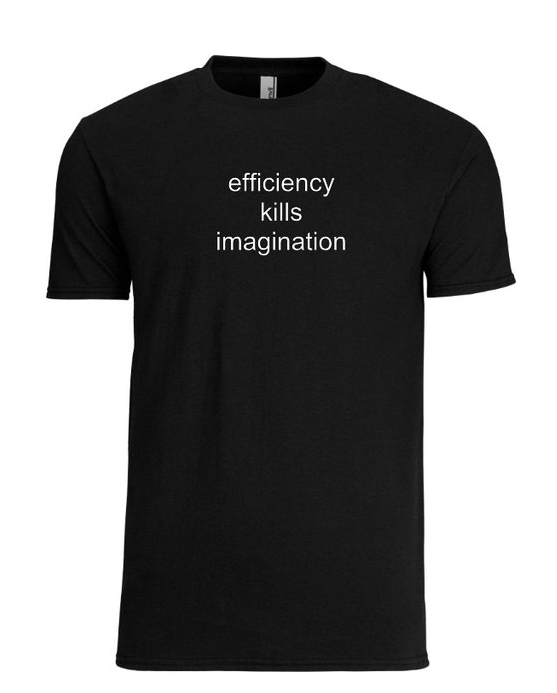
It also gave rise to a new t-shirt design:

Other links mentioned in this podcast:

Episode-1 is here. Episode-2 is here. Episode-3 is here. Episode-4 is here. Episode-5 is here. Episode-6 is here. Episode-7 is here.

These are very calm conversations; so best is to take a pause, install yourself in a quiet corner, and enjoy!

Peter & Josie

Maisvelden – Cornfields (poem)

Maisvelden

De eerste naakte velden

Vers geschoren stoppels

Nog ruig van de hete zomer

Ik ruik het sap van gevallen appels 

Straks zijn ook de kruinen ontbloot

Zoals een koningshoofd

Met nu al wat sluiers mist ’s morgens

Natrillend van genot

Cornfields

The first naked fields

Freshly shaven corn stubbles 

Rough of the hot summer

Soon the treetops denuded 

Like a bare king’s head

Fog veils In the morning

Vibrations after pleasure 

Pause with Josie – Episode 7

This is episode-7 of the calm conversation with Josie Gibson from The Catalyst Network, inspired by Robert Poynton’s book “Pause – You are not a To-Do list“. The approach is simple: we both read chapter-7 of the book and highlight three sentences, and mark the words that resonate most. These sentences and words are the triggers for a very slow-paced conversation on whatever comes our way. No tricks, no gimmicks, just a gentle and calm wandering and meandering of minds.

Chapter-7 is about Time for Pause

Here are Josie’s three sentences:

A longer pause…gives the intelligent unconscious – what Claxton calls the ‘undermind’ – a chance to have a crack at a problem, bringing a more associative, creative quality of thinking to bear.

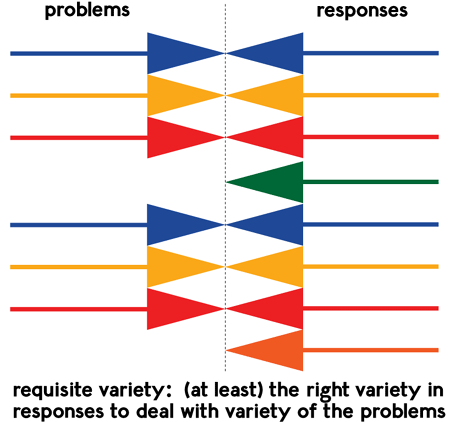
In any natural system, there is always ‘redundancy’  or ‘requisite variety’ built in; stuff that isn’t useful yet, but could be one dayf relying on just one.

The decision to start properly came in a pause.

And here are my three sentences:

Our fulfilment does not derive from being as efficient as possible

It (pause) gives you the chance to follow your mood, not the schedule

Instead of trying to cram more in, you focus on getting more out

We covered a wide range of topics from redundancy, richness of experiences in a complex world, we are not machines, beautiful change, elegant movements, cybernetics, requisite variety,…

…the “undermind”, leaving space open for sacred moments, commitment, to start doing, at the right time, after the right pause, after reading all the signals.

We also discussed how efficiency kills imagination, and why we should go into the t-shirt business 😉

Other links mentioned in this podcast:

Episode-1 is here. Episode-2 is here. Episode-3 is here. Episode-4 is here. Episode-5 is here. Episode-6 is here.

These are very calm conversations; so best is to take a pause, install yourself in a quiet corner, and enjoy!

Peter & Josie
Petervan’s Delicacies – 16 Aug 2020

delicacies

If you can’t get enough of these and want more than 5 articles, you can hang on to the firehose, the extended version of Petervan’s Delicacies in REVUE. Also in this edition with loads of videos. Subscribe here: https://www.getrevue.co/profile/petervan

Petervan’s Delicacies – 31 July 2020

delicacies

As usual, an incoherent, irregular, unpredictable collection of interesting sparks. Handpicked, no robots. Minimalism in curation. Enjoy!

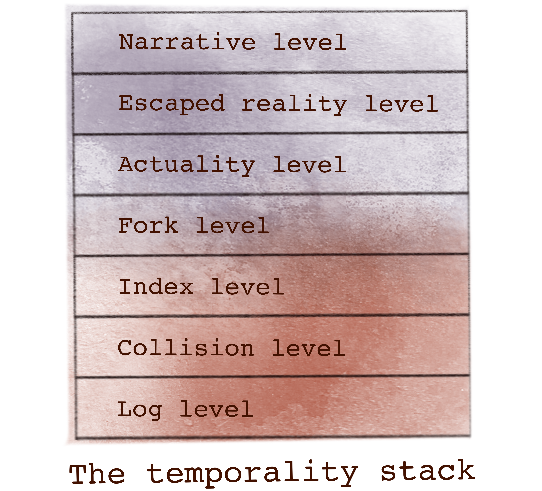
Temporality Stack

  • About planning vs. emergence. Citizen Jane (aka urbanist Jane Jacobs) thinking through the parallels between urban planning philosophies and internet ecosystems.

If you can’t get enough of these and want more than 5 articles, you can hang on to the firehose, the extended version of Petervan’s Delicacies in REVUE. Also in this edition with loads of videos. Subscribe here: https://www.getrevue.co/profile/petervan

Pause with Josie – Episode 6

This is episode-6 of the calm conversation with Josie Gibson from The Catalyst Network, inspired by Robert Poynton’s book “Pause – You are not a To-Do list“. The approach is simple: we both read chapter-6 of the book and highlight three sentences, and mark the words that resonate most. These sentences and words are the triggers for a very slow-paced conversation on whatever comes our way. No tricks, no gimmicks, just a gentle and calm wandering and meandering of minds.

Chapter-6 is about Tools (of Pause)

Here are Josie’s three sentences:

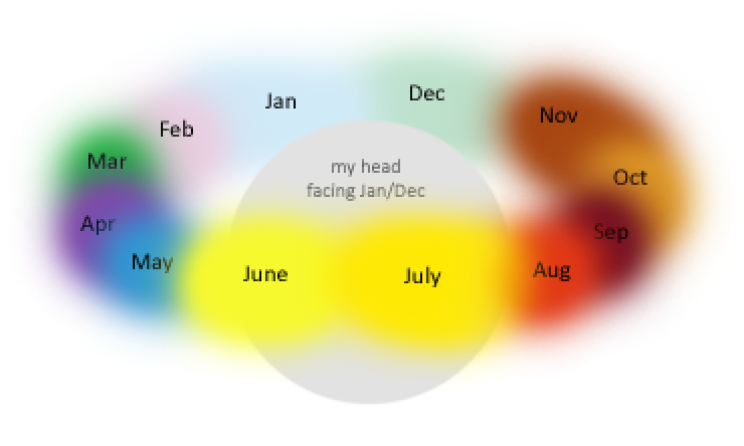
He uses differently coloured Google calendars where the colours represent how each kind of time feels to him..

It is more powerful if you are able to think about multiple layers, and build a set of practices that weave together the different ‘pace layers’ of your life instead of relying on just one.

Noone has a life so unrelenting that it is impossible to pause.

And here are my three sentences:

‘Exhale time’ is when he is teaching, writing or delivering work for clients. ‘Inhale time’ is when he is reading, studying, walking or spending time with people he just finds interesting

Notice what that experience is. If it was interesting, or useful, or valuable, or thought-provoking, or puzzling, or curious, or fun, or engaging in any way at all, do it some more. If not, try something else.

Instead of trying to manage your time, pay more attention to finding your rhythm

We covered a wide range of topics from responsible imagination, slower time, golden time, smell time, sound time, synesthesia,…

synesthesia

…colors of the months, layers, weaving, fabric, calendar, interstitials, 3D, 4D, rhythm in context, two people dancing the tango, wondering with intent, accountability for creative health, and undefended presence (mentioned in the Coaching Summit 2020 video below).

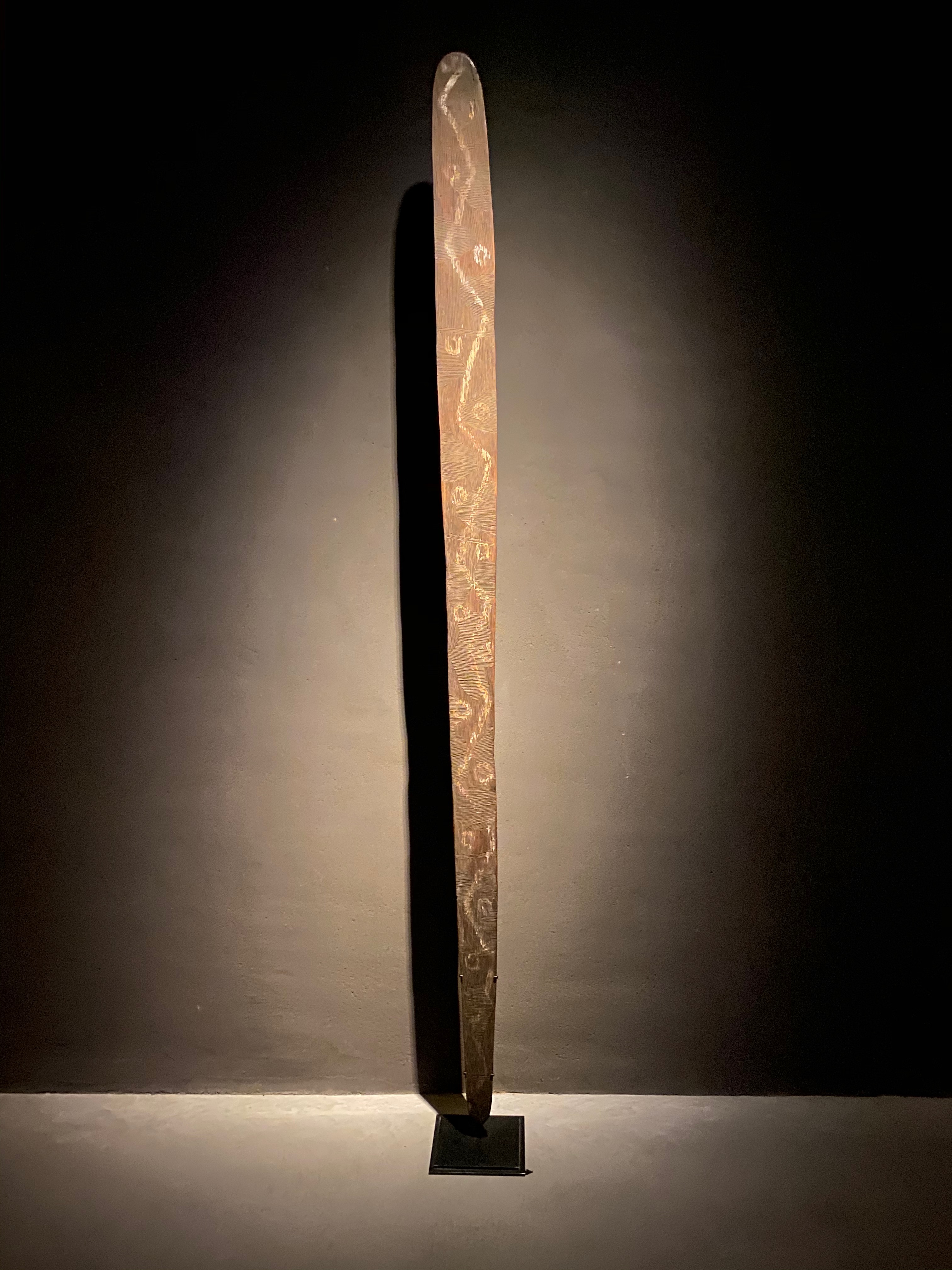
We even talked about the South-Australian Tjuringa, a Dream Stones, and artist Roman Polanka’s visualization of time.

IMG_2480


Other links mentioned in this podcast:

Episode-1 is here. Episode-2 is here. Episode-3 is here. Episode-4 is here. Episode-5 is here.

These are very calm conversations; so best is to take a pause, install yourself in a quiet corner, and enjoy!

Peter & Josie
One Morning in August: Story generated by AI-as-a-Service

The AI GPT-2 Model generated the following story, just based on the input “One morning in August,”:

One morning in August, 1991, two brothers were gunned down in the Jezeville Mansion on Jarvis Street in Detroit. This is one of several incidents where teenage boys were shot and left to die of self-inflicted injuries. Eight boys were killed after being shot in one of those four blocks on Jarvis Street. Five boys were subsequently recovered from the fatal gunshot wound on at least one of those spots. The other three were shot in the neck when a loose-walled mess hit them. One of those victims, Sylvester A. Dunlap, was undoubtedly intimidated by the fact that he had been a member of a terrorist organization before the defeat of 9/11.

Recent developments in the confines of Detroit have raised serious issues in the policing of the inner city. Chancellor Bill Blair stated several times during a presentation that research on neighborhood policing by Chicago’s public safety department will reveal problems across the city that explain the difficulty of enforcing sentencing for murders in the inner city. Blair also explained several times during a lecture in Ferguson, Missouri that he would want to use new tools to combat dysfunctional policing. His city council initiated a similar program toward ending torture for prisoners, concessions to American values, and criticism of Milwaukee County’s police policies in view of the city’s record on abuse of black people and an opportunity to address community issues. Since 1991, free speech trends shift responsive to the challenges facing black people within the region.

Like parenthood, news of new families and better education, mothers have no choice but to speak out. Their voices are heard every single Friday. Police lead agencies with, in fact, one of the longest serving party members in the entire country. This week the Detroit police chief announced that the highly visible Sunday soap operas of Salton Skelton will now be, by contrast, competitions for white children’s news. Please read the full article and consider donating to liberal blockbusters. Click here to support Indiegogo. What happens when you pry members of the guest activist ranks at the bottom of the parade? To fight only if, rather than an anti-black thing that goes next, you see a pattern of action.

One of the obvious reasons for the historical beauty of American democracy is that sometimes you almost expect people to perform one of the most aggressive and deliberately aggressive things imaginable outside of their own best interest. With a witch hunt, for example, one of death row inmates, Jared E. Souza, is described as both a teacher and a world class dancer. Eleven years later he was convicted of five counts of attempted murder by a female slave, including all counts of conspiracy. This in turn became an outlier for people incredulously, most notably in 1997 at the April 30, 1969, riots that marred all half-black-white citizens of American culture and led many to question just how African American society should be judged in a medical system that educates persons of color and not the idea of violent crime.

Laura Naumann, an assistant attorney general of the lower East Side of Detroit, estimates that 2.2 million people of color are incarcerated annually in the United States. Most incarcerated black people now have improved their status as citizens this year. About 10 percent of Chicago’s juvenile population comes from nonwhite. Black lives matter when living conditions only affect one’s race and language. What causes more crime? For example, though crime statistics show all people arrested last year on a rape charge tend to mean that one’s work can be disproportionately incarcerated. If you live in a barn, you have to subject the homeless to work and find work alone. If you live in a newer suburb, nearly every Hispanic won’t be able to vote that bad. In fact, many blacks are making it possible to vote a lot less than white Americans. And those unsupervised black men don’t actually have the blacks of color that The Mayor of Detroit led during “due process” legislation in the high-crime area of Detroit, one of the greatest systemic failures of any American society.

Today, the only way for African Americans to help our society is to remember that black men are also the only radical and peaceful voice in the revolutionary world. For instance, Harvard Law School professor Drew Doucette recently noted that black men and women are after-school most days of school; organizers sponsored several in-school free workshops, such as public-school online resources recording lessons, where black people were irrationally punished in the classroom.

If you are black, this is something you can do and do, but expect to see the strength of the movement, the power and involvement of black men in the struggles of communities worldwide. Violence on Our Streets As Cyrus Sadie writes of Wall Street: “Tragically, while there is no truly “safe” place for black men and women in our society today, many appear to be spending their financial time being unable to tell a large portion of the story in communities that are marginalized by racial discrimination

Auto-generated by GPT-2 using https://runwayml.com/ – “Machine Learning for Creators”. It is basically AI-as-a-service in the cloud. It just took 10667ms, on a standard Wifi internet connection, and a Mac.