Nice little list, mostly new releases – play in shuffle mode > increases happenstance 😉
Petervan’s Delicacies – 28 Jan 2021

- Fantastic reflection by Dan Hill and his collective on the European Commission’s suggestion to build a New Bauhaus.
- Inspired by Marcel Proust’s “A la Recherche du Temps Perdu”, the designer Anthony Guerrée creates furniture
- There is nothing wrong with utopian dreams, on the contrary.
- Doing something to reduce or eliminate the production and amplification of prejudices is damn near impossible when the mechanisms behind it are obscure by design. By @dsearls
- Psychology and philosophy are the undiscovered continents of the future of what we think is a computer.
If you can’t get enough of these and want more than 5 articles, you can hang on to the firehose, the extended version of Petervan’s Delicacies in REVUE. Also in this edition with loads of videos. Subscribe here: https://www.getrevue.co/profile/petervan
Travelling without Moving – Play
This post is part of a series of essays bundled under “Traveling without moving”.
Intro of that series can be found here.
The plan/ambition with this series: to share where I have been in 2020, what I learned, where I am going, and what is required.
The broader quest is to discover what is required to enable real change.
After the Pause-Post of end Nov 2020, we continue with “Play”.
“I’d like to do nothing for some time
be free
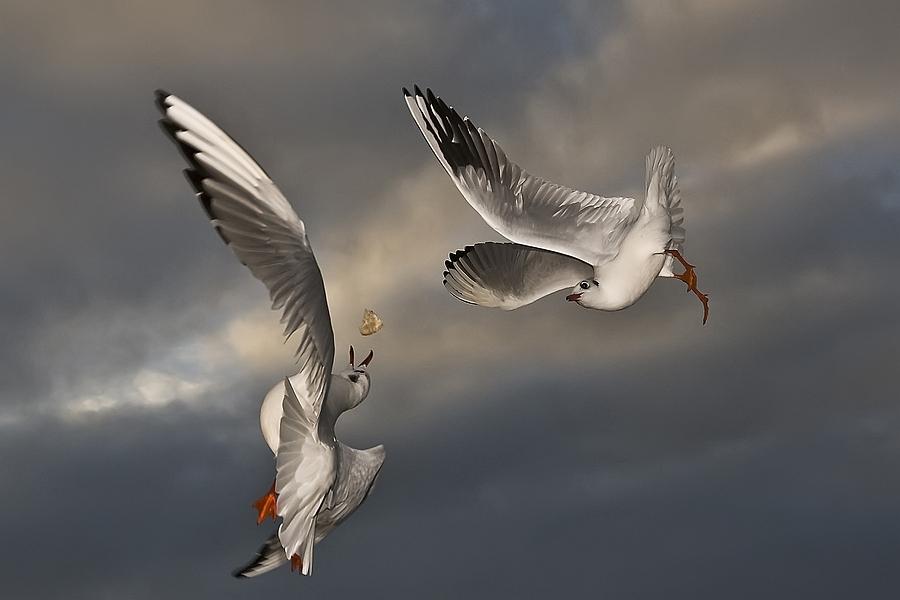
flying and gliding
like birds in the sky
left, right, up, down, up, down,…
defying centrifugal forces
unlimited by time, space, distance, force
like free painting
with myself as the paintbrush
and the sky as canvas
4-dimensional
playful like the birds,
showing little tricks,
challenge and pursue
but not limited
by any form of danger”
@petervan
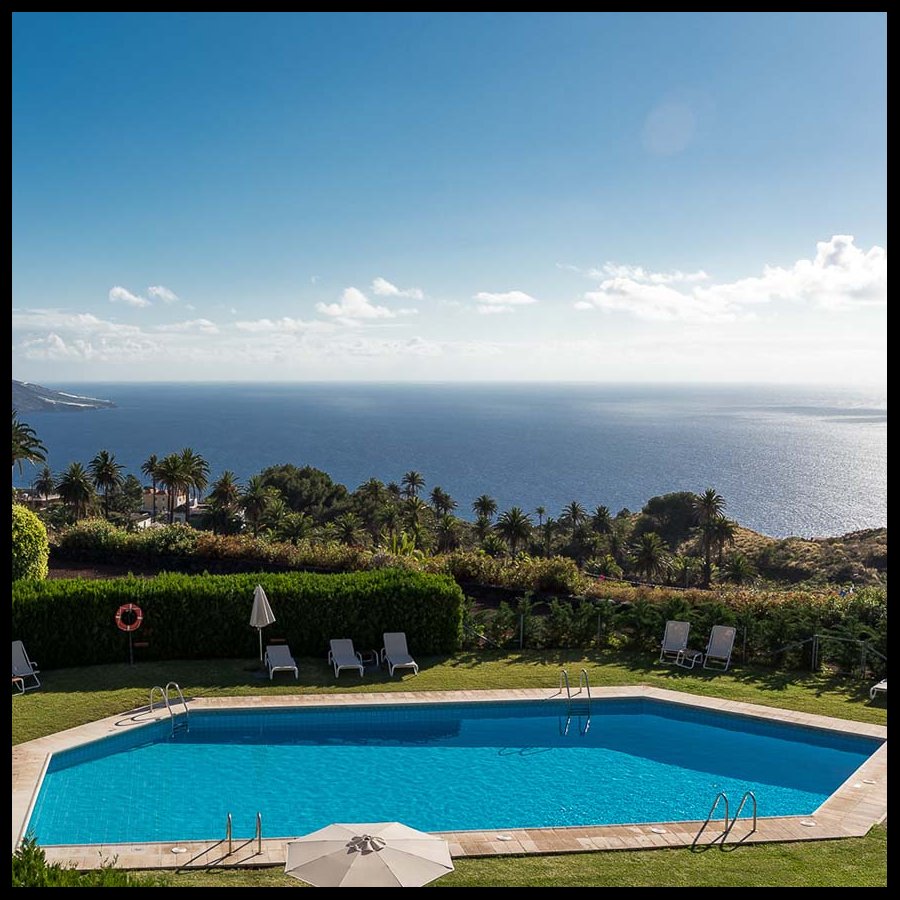
It is a poem I wrote in 2012 laying at a pool at the Paradores Hotel in La Palma (Canary Islands), watching the birds playing in the blue sky…
This is the sort of play I would like to write about today.
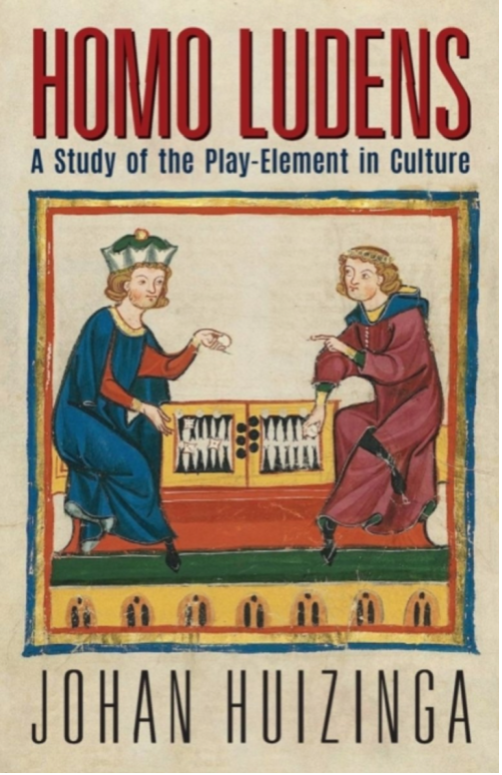
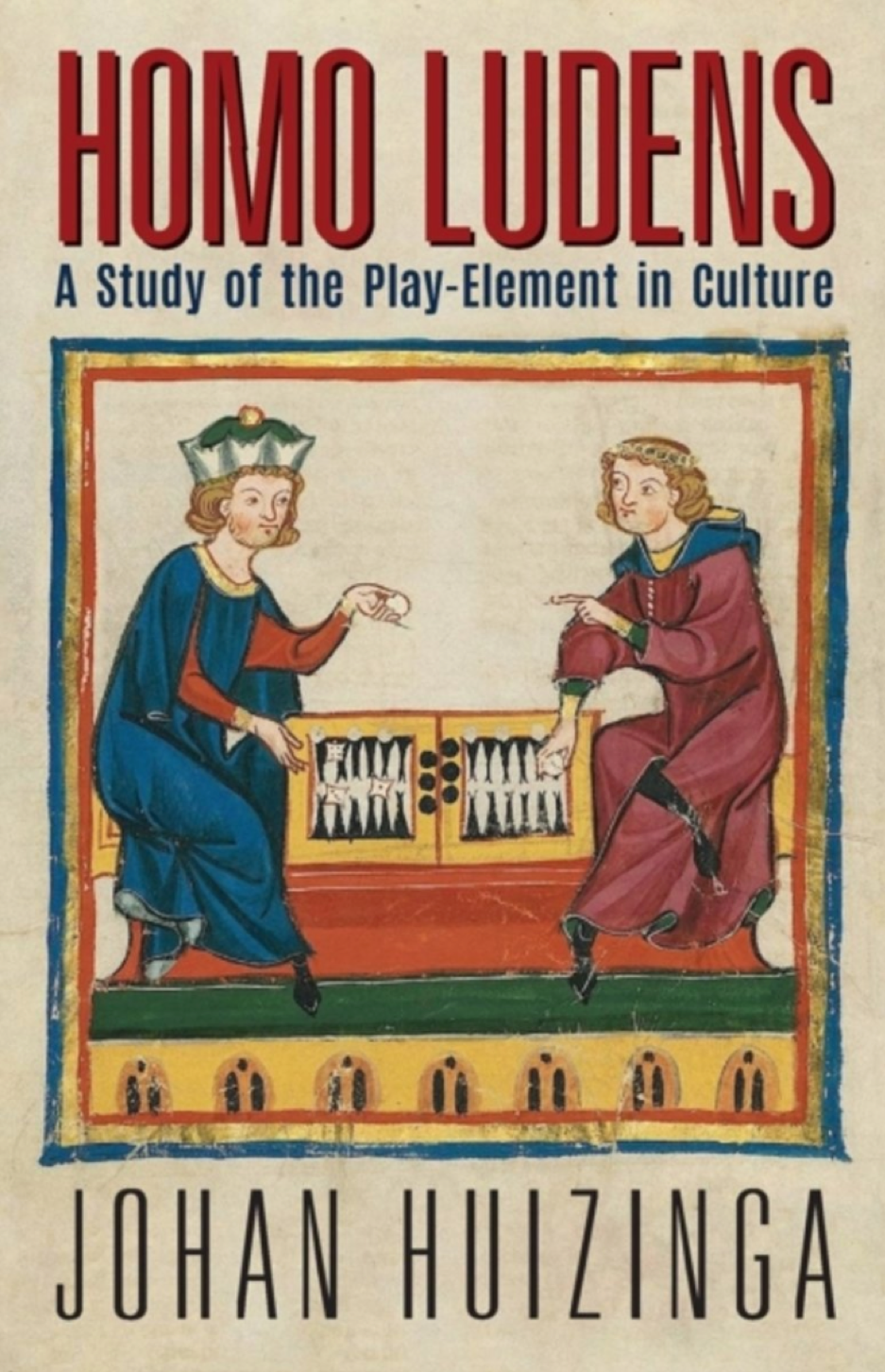
This is the sort of play written about by Johan Huizinga in Homo Ludens in 1938
I believe I already mentioned Homo Ludens in my post about a New Babylon
Huizinga believes play is of all times, and not limited to humans.
Animals play also.
A lot.
It is not “play” as in “game”.
Game – at least finite games – hints at some underlying sense for competition.
This is play without competition.
Play just for the pleasure of play.
Like birds in the sky,
cows in the pasture,
dogs on the beach,
humans teasing each other…
The core message of Huizinga is that play drives culture.
That the disposition of a culture is already embedded in the play preceding it.
By this we do not mean that play turns into culture, rather that in its earliest phases culture has the play-character, that it proceeds in the shape and the mood of play (Huizinga)
Play is irrational.
Play is a voluntary activity.
Play has a tendency to be beautiful. It may be that this aesthetic factor is identical with the impulse to create orderly form, which animates play in all its aspects. The words we use to denote the elements of play belong for the most part to aesthetics, terms with which we try to describe the effects of beauty: tension, poise, balance, contrast, variation, solution, resolution, etc.
Play casts a spell over us; it is “enchanting”, “captivating”. It is invested with the noblest qualities we are capable of perceiving in things: rhythm and harmony.
The child plays in complete—we can well say, in sacred—earnest.
But it plays and knows that it plays.
Play is a voluntary activity or occupation executed within certain fixed limits of time and place, according to rules freely accepted but absolutely binding, having its aim in itself and accompanied by a feeling of tension, joy and the consciousness that it is “different” from “ordinary life”.
We do not play for wages, we work for them
@Huizinga
The last one resonates well with my current state of being. For me, and especially since my retirement from corporate life on 1 Dec 2020, “work” has become “paid play”, although most of the work in 2020 was “unpaid play”.
But it is play.
In 2017, in my series “Trends for human advancement”, I strongly believed that structure is driving everything, and landed on the phrase:
“Structure drives flow drives behaviour drives culture drives change”
With the insights of Huizinga, I would complement it as follows:
“Play drives structure drives flow drives behaviour drives culture drives change”
So, to be able to change, we first need to re-learn to play.
“There is a third function, however, applicable to both human and animal life, and just as important as reasoning and making—namely, playing.”
@Huizinga
This brings me to the insights of John Seely Brown in “A New Culture of Learning”, who quotes Huizinga extensively
I rediscovered John Seely Brown (JSB) when reading “Design Unbound” that he wrote together with Ann Pendleton-Jullian. Much (!) more about that book and Ann’s work and how it changed and formed my thinking in 2020 and ongoing.
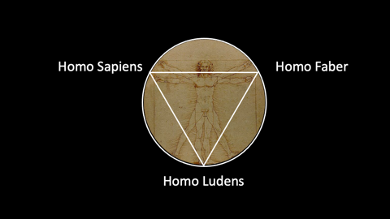
JSB talks about a “21st Century Augmented Imagination”, with a better balance between Homo Sapien, Homo Faber, and Homo Ludens
Play, questioning, and—perhaps most important—imagination lie at the very heart of arc-of-life learning
In a world of near-constant flux, play becomes a strategy for embracing change, rather than a way for growing out of it
Play fuses the two elements of learning that we have been talking about: the information network and the petri dish (or bounded environment of experimentation). That fusion is what we call the new culture of learning
@JSB
Later in this series, we’ll also talk extensively about the concept of “Studios”, leveraging the practice of practices that is architecture (again, as so well documented by Ann Pendleton-Jullian in “Four Studios (+1)”)
The key point here that play and critique are indispensable tools and skills for collective learning when integrating game play and game design in the scaffolding of the disposition of imagination.
Next time we’ll talk about “Anxious” one of the states of a post-VUCA world. And what a possible response to that anxiety can be.
From there – in subsequent posts – we’ll leave the road of reductionism and will enter a space where we will mix more abstraction and holistic thinking.
Hope you stay on board.
Warmest,
Petervan Delicacies – 2 Jan 2021

Also in the new year, I will continue with my usual, incoherent, irregular, unpredictable collection of interesting sparks. Handpicked, no robots. Minimalism in curation. Enjoy!
- About how we have become “insufficiently shocked” by people who trample on our norms
- About Distributed Cooperative Organisations for radical workplace democracy
- About revolt against the limits of anthropocentric capitalism
- A provocation metaphor for information by John V Willshire. What if data is not a flow of liquid, but behaves more like light and particles?
- About the creative and philosophical implications of designing spaces in virtual reality, as well as philosophies around tools for thought and software that can completely change the way we think creatively. With the amazing Andreea Ion Cojocaru.
If you can’t get enough of these and want more than 5 articles, you can hang on to the firehose, the extended version of Petervan’s Delicacies in REVUE. Also in this edition with loads of videos. Subscribe here: https://www.getrevue.co/profile/petervan
Petervan Ride – December 2020
Musical harvest December 2020 > most are new releases > as usual more fun when played in shuffle mode > more surprise > enjoy
Petervan’s Delicacies – 5 Dec 2020

As usual, an incoherent, irregular, unpredictable collection of interesting sparks. Handpicked, no robots. Minimalism in curation. Enjoy!
- How much does a Mac know about you and how much does it send back to Apple and who has access to those data? Fascinating analysis by Jeffrey Paul in “Your Computer isn’t Yours”. Also check out the updates: little victories.
- Why the street is not about traffic. Dan Hill about slow down landscapes, and one-minute cities
- Alexis Lloyd articulates three models for team collaboration with AIs.
- About technological elites that prey upon our basest instincts in the name of information’s freedom – Mack Hagood on Emotional Rescue
- Future Frontiers: an ongoing exploration of contemporary frontiers by members of the Yak Collective
If you can’t get enough of these and want more than 5 articles, you can hang on to the firehose, the extended version of Petervan’s Delicacies in REVUE. Also in this edition with loads of videos. Subscribe here: https://www.getrevue.co/profile/petervan
Travelling without Moving – Pause

This post is part of a series of essays bundled under “Travelling without Moving”.
Intro of that series can be found here.
After the Silence post of last week, we continue with Pause.
In “Silence”, I mentioned “Stop the clocks – Manifesto for a Slow Future”, Joke Hermsen’s book about Silencing the Time. Minutes after I published that post, I got a notification of a new book by Joke Hermsen
“Ogenblik & Eeuwigheid” or “Moment & Eternity” opens with Joke’s reflections on a Kairos/Chronos exhibition she curated in 2017 in the Gaasbeek Castle south of Brussels. Coincidence or not, but I happened to be there, and here is a video of one of the installations exhibited then.
I wrote about this exhibition in “About Time”
“This is about that mysterious moment when our soul is unguarded and spreads out its wings. Kairos manoeuvres virtuoso between two worlds: the measurable and the immeasurable, the known and the un-known, backing out of our knowledge, covertly showing us a glimpse of the possible”
Her new book is once again about Chronos and Kairos and the potential of art to move us into the surplus of Kairos
Het surplus aan tijdservaring die de kunst voor ons in petto heeft verschilt aanzienlijk van het louter meten van tijd op de klok.
The surplus of time experience made available by art is quite different from the pure measurement of time
Artists covered/mentioned are:
Sean Scully
Virginia Woolf
Hilma Af Klint
Marlène Dumas
Thomas Mann
Mark Rothko
Hannah Arendt
Edmond Jabès
But this post was to be about Pause.
Robert Poynton wrote a book about it.
I highly recommend it.
Robert lives between Oxford and a remote Spanish town west of Madrid. In Spain, he lives off grid – literally and metaphorically.
His remote, hilltop house is even off the electricity grid.
It is also the place where he contemplates.
Intro https://www.robertpoynton.com/
Together with Josie Gibson from The Catalyst Network, we started some 1-1 calls to share what these books trigger for us and our communities. We decided to start a small experiment: we read a chapter of the book, schedule a 1-1 call to let flow our minds, record it, and share it with our communities.
Very down to earth, no tricks, no gimmicks, just a gentle and calm wandering and meandering of minds from two opposite sides of this earth. One person from Melbourne, Australia and one from Aalst, Belgium; one person in autumn, one in spring.
These are very calm conversations; so best is to take a pause, install yourself in a quiet corner and enjoy!
Episode-1 on “Why Pause?” is here.
Episode-2 on “What’s in a Pause” is here.
Episode-3 on “Habits” is here.
Episode-4 on “Design” is here.
Episode-5 on “Culture” is here.
Episode-6 on “Tools” is here.
Episode-7 on “Time to Pause” is here.
Episode-8 on “Afterword” is here.
“Everything is an offer”, Robert writes in Pause.
It is an invitation to calm and tranquility as powerful sources of vitality ànd relaxation.
Yes! They can go together.
But sometimes the rhythms of an ordinary day offer stillness as well.
Even the ticking of the Chronos clock as a background soundscape can bring me in a state of calm and stillness.
Like monks doing their miniatures.
I found this online clock that ticks for 12 hours.
It’s the only thing it does.
And in the meantime, I am drawing thousands of little bricks in brick bonds.
It’s useless, I know.
But it brings me in a Zen state, a state of deep calm and happiness.
I am literately and metaphorically losing my time.
In a recent newsletter update about “pottering” in his garden, Robert wrote:
“When I do what I am drawn to, I am absorbed by my surroundings – by what I see, or hear, or smell. My attention is open, soft, pliable. This stills something inside me and I find a kind of quiet calm.”
“This stillness is something that is given to me, not something I create. It is a gift; and one I cherish. It is settling, if not nourishing to be reminded that the worries and concerns that bother me so, are mostly of my own invention. And that moving around can help me to be still.”
I am attracted by Robert’s pause, his stillness as a gift.
A place where I want to hang-out, where I can lose my Chronos time.
In the meantime, I got many conversations with Robert. I shared with him my ideas on creating better gatherings, beyond “conferences” as entertainment, but more as learning experiences, resonating beyond the cognitive, and how we can do much better than just copying the analog.
(Not) to my surprise, Robert spent a lot of time as well on how learning can be done better, differently. And together with Alex Carabi, he created Yellow Learning. I mention it quickly here, as Yellow is one of the other keywords in this series Traveling without Moving.
Check it out:
https://www.yellowlearning.org/
I was part of the second cohort ending next week. Yellow is fee based. But worth its money, trust me. If you are interested, the call for the next groups Jan-June 2021 is open now.
Apply here: https://www.yellowlearning.org/apply-to-join
Next time, we’ll talk about “Play”
Hope you enjoy the series.
Warmest,
Petervan Ride – Nov 2020
Musical harvest November 2020 > most are new releases > as usual more fun when played in shuffle mode > more surprise > enjoy
Premiere Petervan’s Pirate TV – Art-Tribe Edition
I am excited to announce the launch of one of my new channels: Petervan’s Pirate TV – Art-Tribe Edition
The first episode will premiere on YouTube on 1 Dec 2020 at 09:30am Los Angeles – 12:30pm New York – 6:30pm Brussels – 1:30am Hong Kong (next day)
The YouTube live chat will be open for feedback, critique and encouragements.
I suggest you set the YouTube reminder so you don’t miss the premiere and the live chat.
The video will remain available for viewing after the Premiere event

Pirate TV is a new genre that sits somewhere between a vlogcast, documentary, film, and TV show. In the events ambition cube, this sits in the lower right quadrant for a tribe-connectedness.
Current plan is to have two editions: one more business related (the Biz-Tribe Edition), and one more artistic related (the Art-Tribe Edition).
The Art-Tribe Edition launches on 1 Dec 2020, the Biz-Tribe Edition will launch on 2 Feb 2021.
As I strongly believe that magic happens at the cross-section of artists, scientists, engineers, and business people, I expect that sooner or later the two editions will start to blend.
Art-Tribe Edition is intended as a platform for artists in conversation with Petervan.
The artist-in-residence for this first episode is Frank Poncelet.

Frank Poncelet is an independent Artist/Director/Producer who graduated from “The Academy for Visual Arts” in Ghent in 2017. While he has no intention of pursuing professional animation in the future, he enjoys the process and will continue to make animations and VFX shorts. After his Graduation film “A Night On Gor”. He worked for One year on an Animation Mashup “Bug’s Club” inspired by “Hell’s Club” from Antonio Maria Da Silva AMDSFILMS. In 2017/2018). Frank Also Produced his short sci-fi film “Alpha” in 2019. Currently Frank is working on video art using Neural Style Transfer techniques and on a sequel to “Alpha”.
I hope you will enjoy this first episode. Here is the trailer:
The soundtrack of the trailer is here:
If you are an artist, and you are interested to have your work shared and discussed on this channel, please contact me privately.
Warmest,

Petervan’s Delicacies – Nov 2020

As usual, an incoherent, irregular, unpredictable collection of interesting sparks. Handpicked, no robots. Minimalism in curation. Enjoy!
- Fantastic talk by “deep voice” Christian Mio Loclair about his art practice based on AI and neural networks. Just 2 weeks ago his team won the The 2020 BCS AI Award for his work “Helin”
- In the late fall of 2019, Jenny Reardon, Bonnie Honig, and Warren Sack met twice for a trialogue to discuss questions like these: what are the prevailing trends in science, biotech, and software engineering?
- About (failed) attempts to predict human behavior like the weather: this quantification misses social needs and political demands
- An update from futurist Gerd Leonhard and some of his penny-drop moments, understanding and embracing the fact that there is no such thing as a ‘going back to normal’.
- This collection of nine scenes catalogues views of the life of the fatberg from the perspective of the fictional RMT (Residue Management Task Force).
If you can’t get enough of these and want more than 5 articles, you can hang on to the firehose, the extended version of Petervan’s Delicacies in REVUE. Also in this edition with loads of videos. Subscribe here: https://www.getrevue.co/profile/petervan