Some days, stars are perfectly aligned, and sudden insights create these wonderful aha-experiences. A couple of weeks ago, I was sitting together with Philippe Coullomb and Charles Collingwood-boots, co-founders of www.wheretofromhere.asia and initiators of the Sydney chapter of Corporate Rebels United.
They shared their work about “Patches and Nodes”, a G+ Community of change agents determined to nurture and drive systemic transformation in Asia Pacific.
“We aim to inspire inclusive transformation by facilitating the emergence of new models for value creation, new mindsets for doing business, and new behaviors for the workplace”
They had prepared a deck (the same one they used for the Rebel Jam on 30-31 May 2013 > WebEx recording here). The key slide in there is the following:
It’s a fantastic slide that helps us understand that big change in systems requires “systemic innovation” and a sort “graph thinking”. The circle with the colored dots represents your company. Within that company, different silos work together in some form or – in some cases – not at all.
But companies do not operate in isolation. They are part of a system, and when other actors in the system have counterproductive behavior, which may neutralize completely the efforts you are doing in your own box.
My epiphany happened, when I started looking at this drawing not as a “flat” 2D map, but as something 3-dimensional, like a galaxy of stars, where there is no middle. Every point in the graph is the starting point of a journey.
It suddenly reminded me of the great graph thinking we had done during the Digital Asset Grid (DAG) project. It revived the thinking of “We are all nodes in the Grid”.
The lens of the DAG and the lens of Patches and Nodes started to align. Focal lenses getting aligned, like stars line up in a constellation.
Starting to form “formations” and “digital maps”,
almost like network cartography
Where had I heard this sort of things before? Oh yes, it was during our work on “Network Insights”, where Kimmo Soramäki from www.fna.fi showed us another type of network cartography for financial network analytics.
Like in the demo on the FNA site, I imagined how I could zoom in and out of the graph, to get deeper insights and greater levels of detail, like a spiral crawling itself through richer and more complete quality experiences and ambitions. The spiral reminded me of myself as a 7 year old – the same age as my daughter now – drawing of spirals on the chalkboard of my class,…
From the spiral swirl on the chalkboard, via the spiral zooms into 3D graphs, it suddenly felt that I was where I always was meant to be. Not in a fatalistic way, but as a natural evolution and maturing during the different steps of my life.
Spiral Networks, Spiral Dynamics, and Dynamic Fluid Systems were all terms that made me realize that change programs don’t change anything substantial unless it systems change.
With thanks to Fabian Tilmant (@fabnet_be) for pointing me to this video on The Fibonacci Spiral in the song Lateralus by Tool
I had evolved, spiraled out…
…from the polarizing, poor and static discussions of black vs. white into something that felt more like a trajectory, from passively undergoing change to influencing and (co)-creating my own future. I had realized that we needed quality time for reflecting and – like a surfer – scanning coming waves of change and pick the best ones for a great ride. I had realized that to survive in this perpetual crisis, we needed quality time for scenario thinking, where it is about imagining some – not necessarily all – possible futures, hypothesizing, and defining what to do if those futures would happen.
The “Patches and Nodes” drawing suddenly started to make a lot of sense, not only as a way to solve ad-hoc problems in the system, but as a way of making viral change happen system wide and pro-actively, powered by the group pressure of credible and influential system partners.
All sorts of concepts started to spread themselves like viruses through my brain:
Could this be a way
to propel us forward
into a state of collective progress and prosperity?
What if we could seed “activism” into the patches and nodes, a different type of “creators of change”, from solvers of problems and answering known questions to creating a new reality/framework for deep system value creation? Could it lead to “Spiral Network Activists” like agents in “Systems of Endearment”?
Suddenly Corporate Rebels took a whole new dimension of System Rebels, Change agents for society, for systems, System Activists, a powerful group of “Unreasonable people”, together stronger than alone, like the components of Bucky’s geodesic domes.
“How can we catalyse a number of tangible and distinct but yet consistent and convergent initiatives across the board to initiate a self-reinforcing movement?”
I double-checked the “The power of unreasonable people” by Jon Elkington (Amazon Associated Link), and I noticed that that other Corporate Rebel – Laurent Ledoux – had a summary slide of Jon’s “unreasonable people” in his Rebel Jam talk.
But I wanted to go further than trying to measure the un-measurable, and go on a quest of what is worth measuring, measuring that which makes life worthwhile. Like Robert Kennedy 40 years go in his speech about the GDP, that does measure everything but what makes life worthwhile.
To create sustainable deep system change like in Nike’s Launch2020 initiative, using my advocacy and advancement of ideas toward a state of prosperity.
I suddenly realized we could use this model as a way to create deep viral behavior change, not only on companies, but also in systems of patches and nodes.
Where we go from spiral dynamics to cultural dynamics, as so magically described in the milestone post about Consumer Activism by Gunter Sonnenfeld (@goonth), describing new types of movements, archetypes, cohorts, and industries. Where Jennifer Sertl added this wonderful dimension of “frequencies” to the mix of nodes on the grid, where each of us is liberated to sing their own song, in our own frequency and at our own rhythm,
to make reverb and resonate the system at large
And where the pleasure comes from pure sharing of your mind-spins, without wanting to make a statement. A form of digital poetry just for the pleasure of play of words; and like in “Mavericks in a corporate world”, finding pleasure in just being human and developing and nurturing the capability to be touched by beauty, a picture, by mastery and harmony; developing a richer palette of responses, judgment, choice and appreciation. And to accept and enjoy that we are incurable romantics, and act from that true self.
Last week, I attended the PurpleBeach launch event (check out the twitter stream at #purplebeachlaunch). It’s one of those events that got me again into hyper-reflection mode.
I was not really sure what the launch was about – initially I thought it was about the launch of a new consultancy firm – but once on site, it looked like being an experiment driven by Annemie Ress about “People Innovation”. Annemie had been heading HR and people efforts at eBAY, PayPal and Skype and I think she was not sure yet herself where this happening was going to land. She was maybe taken a bit by surprise by the number of folks who signed up for this invitation-only event – and in some way I liked a lot the authenticity of her and the team, being and staying open and curious about what could emerge from a gathering of about 180 folks of quite diverse “plumage”.
I got invited via MJ Petroni, owner and founder of Causeit.org. I met MJ last year when he and his team coached the Innotribe team on making quality team alignments and intentions. Petroni is mentored by Mark Bonchek, PhD, former SVP of Networks and Communities at Sears, now heading his own consultancy Orbit about pulling customers and communities in “orbit” around your brand. Enough credentials to follow-up on the invitation and checkout the event that took place in Audi Quattro Rooms, West-Side of London.
Day one started with some strange mix of “quite-ok” talks about mobile, big data, digital identity, trends, leadership, HR, and the blurred zone between HR and Marketing.
In essence, the glue binding the different activities was “business humanization” and “people innovation”. The basic premise that innovation in organizations does not happen without people rediscovering themselves in their full being, a rich combination of left/right brain activities, and greater levels of personal awareness.
And yes, there was some strange Californian “wu-wu”, “mindfulness”, “well-being” and poetry and artistic performance elements as well. After all, we were on the “beach”, a place where you can relax, be idle, and be open to whatever comes your way.
Day one was ok, but not more than that: I was more or less familiar already with the content presented, and was in search for the new insight, the new synthesis, the new “AHA” moment. Alas, I waited in vain for the muse to inspire me.
But Day-2 kicked off by a great discussion about being “on”-line all the time, after a presentation by a trends watcher about future trends, micro work, etc. The presenter was depicting a future of always-on, nowism and “on-ism”, a future where you have to check your smart-device or sensor every second to capture that 5 minute chunk of work on a worldwide marketplace for mechanical turks.
In the following panel, Doug MacCallum (ex eBay but still advisor to the CEO of eBAY and non-executive Director on the board of Ocado) couldn’t hold it anymore:
“What a horror! I don’t want to live in a future like that. People need their time off to reflect and recalibrate. This is a dystopian future”
Doug MacMallum almost got a standing ovation for his intervention, and just the fact he got the ovation is a proof of how deep “presentism” is disturbing our human lives. It was like some sort of relief going through the room.
He went on describing a practice of Executives not sending mails in the weekend, to respect their own free time and that of their collaborators. Great initiative, but I have seen such promises before, and in some occasions the executive is preparing her emails during the weekend, queuing them up, and releasing them on Monday morning, so you have your inbox loaded with fresh instructions and work (sic).
It made me think of Douglas Rushkoff’s latest book “Present Shock” (Amazon Associates Link), about the fragmentation of everything, including work and value, and the addiction that arises when you are not able anymore to step out of the digital time, back into analog time, where you still have some sense of time fluidity, rhythm, and relative perspective.
Penelope Trunk, co-founder of Brazen Careerist, recently wrote a great article in Quartz. I like the section on refusing to present your-self in a linear way:
Agents represent workers who pick and choose projects that match them rather than signing on for indefinite amounts of time. The Harvard Business Review calls this supertemping. Business Week calls it going Hollywood.
It’s about a deep desire for story and narrative, context, being part of something, being for the long haul.
But unfortunately, we are getting fragmented disassembled
But I got distracted 😉 The Quartz article also mentions new “modern” practices of young people selling stocks in themselves. This is about investing in – or probably better called “betting” on humans.
A “good” example is Upstart, a start-up opening their site with the slogan “The Start-Up is You.’’
Upstart was founded by a group of ex-Googlers, including Dave Girouard, who spent 8 years at Google where he was President of Google Enterprise and VP of Apps.
I can’t help it, but this starts smelling like slavery to me. You already knew that you were the “product” of Siren Servers like Facebook, Google, your bank, your insurance company, your health company; they are getting your data for free and can monetize it without compensation of the data originator. It’s getting worse now: we are now entering an era where one owns the life of another human being, worse even, takes options in somebody’s future and betting on it.
Jaron Lanier has recently published a great book about this “Who owns the Future?” (Amazon Associated Link)
I feel really sorry for otherwise very smart people Eric Schmidt, Peter Thiel, Khosla Ventures, Marc Benioff and other moguls for putting 5.9M USD in the last capital round of Upstart. I believe they are forgetting something very important here. This is in essence a form of digitizing of what it means to be a human being, digitizing the being into binary data blips, forgetting the rich set of emotions, senses and creativity we all can bring to the table. We are more than data present in the moment. We are part of a narrative, a story, an analog context.
Our “presentism”, just having that safety option to do that quick email check in the week-end, to check that Twitter status, the Klout and other scores are probably symptoms of something deeper going on: just having that capability is for some people already reducing the anxiety of loosing out on something.
Somebody shouted from the audience “But we are loosing the obvious!” – meaning loosing of being humans – and then a couple of “minutes” later, the quote of the day:
“The Future is Analogue”
I really believe it’s about loosing or sustaining our analogue human identity. Identity is contextual and one context is the time framework we want to function in. I’d prefer to live in the analogue time context; the way Doug Rushkoff described it: “What do we want: the long now or the short forever?”
This lead to my first “Aha” experience at the event: an experience about identity. As somebody quite active online, I try to be – and believe I am – the same person on-line or off-line. I don’t believe I have a different persona online of off-line. But online, I feel more the need to amplify myself and my outgoing data streams, and at the same time trying the amplify and maximize the incoming streams of new data. But there is too much info out there, I feel indeed this anxiety to miss out on something. I also sense higher degrees of narcissism on-line, narcissism in the sense of self-amplification and promotion. What does that do with my identity? I think I am pretty the same online as in the real world… But “shaping” my online identity raises deep questions on who I am: as an individual, in a group, in the world at large.
It was in this mood of identity reflections when I entered a conversation with another Purplebeach participant: Jefferson Cann from Extraordinary Leadership, a soft-spoken gentleman bringing the topic of intimacy into the debate.
The word “intimacy” worked like a red flag on me. I explained Jeff how I was trying to stabilize/discover/re-discover my identity. His feedback was that he was not sure that one needs to fix/stabilize your identity.
“By fixing, you close yourself for being open to the moment, for the intimacy with the moment. The intimacy of the moment INCLUDES identity, so that the identity can flow, can evolve. In that sense, I hope that your MBTI of 10 years ago is not the same as your MBTI of this year, which would mean you have not evolved.”
This coming together of intimacy and purpose gave lead to my second big insight of the week, the second “Aha” moment.
My readers know that I am sick of the 10 min, 15 min, 18 min pitches and talks. I am hungry for depth, for richness of conversations, for going beyond scratching the surface. One of the reasons why I keep writing these long posts 😉
The insight was that my hunger for depth is really a hunger for intimacy, the hunger for human connection, also on professional environments.
What does it really mean when a manager tells you: “You know, I am a pragmatic man, two feet on the ground, so can you please pitch me your story in one minute, and at the same time tell me what the ROI for the next 2 years will be?”
I suddenly realized that this famous pragmatism and two-feet-on-the-ground is probably a shield to hide from depth, from intimacy. It is a shield against the present that can even be used in Machiavellic ways to include/exclude people from connection. It’s a deep sign of uncertainty and insecurity, the fear of losing control, fear of human contact, the fear of opening up, the fear people will discover there is no substance, and fearing/knowing you cannot compete on content. It’s the fear of having to acknowledge that your leadership power only comes from your position in the hierarchy and not from who you really are.
Leaders must find a new sense of maturity within themselves to address and navigate these new workplace issues with greater clarity, focus and intention. Leaders must be more proactive in coming to grips with today’s new normal. In doing so, they must face their greatest fears head-onand get on with the business at hand. The marketplace, the workplace and those whom they serve demand it. Until they do, here are five things leaders are thinking, but not talking enough about:
I don’t have all the answers
I have difficulty relating to the younger generation
Diversity makes me uncomfortable
I am uncertain about the future
My leadership skills are not relevant
It looks like we are witnessing murder by modernity: murder of the human connectedness through the avoidance of intimacy. It looks like most of us – including our leaders – and not ready from the new normal. We need to send our leaders to “Purplebeaches”, so they find again time to reflect, to enjoy depth, to open up and embrace connections between fellow human beings.
UPDATE: as a real example of synchronicity, Jennifer Sertl just posted this awesome video about being human.
Some interesting insights:
There is no off/on button for feeling an emotion
How are we teaching people what is human vs. what is technical
We have to re-enforce the usefulness of being human
You can’t take care of yourself if your are at the same time taking care of a tribe
Everything you do becomes part of a data piece
Playing a higher personal – private – game
Our ability to have empathy is impacted by technology
“We are loosing the obvious: what we are loosing is our ability to scenario plan, our ability to gain perspective, our ability to know ourselves, and our ability to empathise. Those four things is what separates us from the gadgets”
Life is not digital. The future is one of analogue connection.
Many organizations are in pain. I am just back from the Front-End of Innovation conference in Copenhagen where I met several friends, ex-colleagues, relatives, business partners, and it seems that change and re-organization are the new normal in our organizations these days. These days, one could jokingly introduce her by saying “what re-organization do you work for?”. But that may be too cynical a start for a blog post.
It also seems to be a constant these days that organizations retract into the comfort zone of their core business and are tuning down their innovation initiatives. I have heard it from at least 4-5 large organizations this week. What remains is a lot of innovation rhetoric but no action on the floor other than political power games.
More importantly, what remains as well is a lot of pain of colleagues seeing their best working mates (have to) leave the company in the worst case, or being re-organized into other departments at best. In Copenhagen, I have seen the pain, fear, and desperation in people’s eyes.
This blog post is about those re-organization pains, and some possible avenues to deal with them.
One way to react is driven by emotions: getting in a state of perpetual frustration, blame, gossip, under the skin fights, and self-service. It’s a state of mind that only aggravates the situation, alienates people and teams more from each other than ever.
Another way to react is the flee into the comfort zone of tactical actions and quick hits and extrapolating or creating quick and dirty variations of the tricks and processes we are familiar with, without any level of intentionality.
The third way – which I would like to promote – is to look deep under the skin of our professional and private way of being. To get to this insight, I was influenced by three books that I was reading more or less in parallel.
The author explains razor sharp that trust is the essential foundation of highly effective teams (and organizations). As can be seen from the layered pyramid below, lack of trust in the end leads to inattention to results.
I have taken a the following really good summary out of another book “Search Inside Yourself”, that I will refer to later again in this blog post.
The five dysfunctions, in order of causality are:
Absence of trust: People do not trust the intentions of their teammates. They feel the need to protect themselves from each other and tread carefully around others on the team. This leads to the next dysfunction.
Fear of conflict: Without trust, people are unwilling to involve themselves in productive debates and conflicts, the type of good conflict that focuses entirely on resolving issues without involving character attacks or hidden personal agendas. Without such healthy conflicts, issues stay unresolved or are unsatisfactorily resolved. People feel they have not been properly involved in decisions. This leads to the next dysfunction.
Lack of commitment: When people feel their input has not been properly considered and that they have not been properly involved in decisions, they have no buy-in. They do not commit to the final decisions. Ambiguity about priorities and directions festers, and uncertainties linger. This leads to the next dysfunction.
Avoidance of accountability: When people have no buy in about decisions, they avoid accepting accountability. Worse still, they do not hold their teammates accountable to high standards. Resentment festers, and mediocrity spreads. This leads to the final dysfunction.
Inattention to results: The ultimate dysfunction of a team. People care about something other than the collective goals of the team. Goals are not met, results are not achieved, and you lose your best people to your competitors.
It all begins with trust. The absence of trust is the root cause of all other dysfunctions. Specifically, the type of trust Lencioni talks about is what he calls “vulnerability-based trust.” That is when team members trust the intentions of each other enough that they are willing to expose their own vulnerabilities because they are confident their exposed vulnerabilities will not be used against them. Hence, they are willing to admit issues and deficiencies and ask for help. In other words, they are able to concentrate their energies on achieving the team’s common goals, rather than wasting time trying to defend their egos and look good to their teammates.
Do you trust your team members enough that to expose your own vulnerabilities because you are confident that your exposed vulnerabilities will not be used against you? That you will not be presented sooner or later with the emotional bill? Or is the trust and alignment in your team of a very superficial and low-quality nature?
I fully buy the trust argument in the book. What the book unfortunately does NOT explain is how you get to this level of trust.
My premise is that it starts by looking at people as people, not as objects. By developing a very high standard of empathy for the others. Looking at the other person not as the team member of this or that department (that would be looking at the person as an object, and attaching value to that object based on its hierarchical of functional power or non-power). This is of course very much related to the topic of “LeadINGship” and “Leading from the Edge” that I have shared already at many occasions on my blog.
“Looking at people as people” means looking at people in their wholeness, their full being, with all the aspects that that person brings, like cultural baggage, family situations, vulnerabilities, issues, motivations, concerns, etc
When I look at people as an object, I am “living IN the box”. When I look at people as people, I am “Living OUT of the box”. This living in/out of the box is very well described in “Leadership and Self-Deception” by The Arbinger Institute (Amazon Affiliate Link).
“We have to develop a culture where people are simply invited to see others as people. And being seen and treated straightforwardly, people respond accordingly”
But the book goes much further than that, and brings the subjects of self-deception and self-betrayal in full frontal view, and that can be quite confrontational.
Self-Deception and its consequence Self-Betrayal happen when you see a person in need, you feel you should act, but you don’t. What happens then are a couple of behaviors that I recognize with others and myself; I get into a defense mode:
I start blaming (maybe not vocally, but for sure internally) the other, the system, the management, and/or the company for all the things that don’t work. Yes, of course the problem of all evil is out there, not with me.
I start minimizing or ignoring my own faults, failures, and weaknesses
I start inflating the faults of the other persons or teams or departments.
I start inflating my virtues: it is because the others don’t have the same virtues as myself that of course things don’t work as they should.
“I just mean that in acting contrary to my sense of what was appropriate, I betrayed my own sense of how I should be toward another person. So we call such an act ‘self-betrayal.” And “I focused on and inflated her faults when I needed to feel justified for mine.”
This is about anger and frustration but at the same time feeling deep inside that “I was aware of the hypocrisy in my anger”.
What is even worse, this sort of in-the-box behavior for sure does NOT solicit the desired counter-behavior in others: it’s a disease that is infectious and viral in nature.
“In the box we provoke others to get in the box — both with us and against us. Our allies and we withhold information, for example, which gives others reason to do the same. We try to control others, which provokes the very resistance that we feel the need to control all the more. We withhold resources from others, who then feel the need to protect resources from us. We blame others for dragging their feet and in so doing give them reason to feel justified in dragging their feet all the more. And so on. Collusion spreads far and wide, and the result is that coworkers position themselves against coworkers, workgroups against workgroups, and departments against departments. People who came together to help an organization succeed actually end up delighting in each other’s failures and resenting each other’s successes.”
“But gradually I came to see the lie in my defensiveness. I saw in myself a leader who was so sure of the brilliance of his own ideas that he couldn’t allow brilliance in anyone else’s; a leader who felt he was so ‘enlightened’ that he needed to see workers negatively in order to prove his enlightenment; a leader so driven to be the best that he made sure no one else could be as good as he was. I was carrying the disease I blamed everyone else for. I infected them and then blamed them for the infection. Our organizational chart was a chart of colluding boxes. We were a mess.”
So key messages here are:
Stay away from self-defensiveness
See people as people not objects
Develop a superior awareness whether you are in/out the box of self-betrayal
Meng also refers to “The Five Dysfunctions of a Team” (see summary above) and it was at that moment that the pieces of the puzzle starting falling together and make sense. The “Search Inside Yourself” book is in essence about self-awareness.
“Self-awareness depends on being able to see ourselves objectively, and that requires the ability to examine our thoughts and emotions from a third-person perspective, not getting swept up in the emotion, not identifying with it, but just seeing it clearly and objectively…. We are not our emotions. Emotions become what we experience in the body, so we go from “I am angry” to “I experience anger in my body”
And also:
“We have the tendency to feel bad about feeling bad. I call it “meta-distress,” distress about experiencing distress. Also recognize that feeling bad about feeling bad is an act of ego” and “Success and failure are emotional experiences. These emotions can give rise to grasping and aversion, which can hold us back and hamper our ability to achieve our goals.
But there is hope, says Meng: we can become emotionally resilient to grasping onto success and aversion from failure.
The sentence that really blow me way and could become the cornerstone of our new renaissance, our new way of responding to whatever we encounter in life was:
“Imagine the kindest, most positive response” to whatever comes your way.
Wow! Read that again:
“Imagine the kindest, most positive response”
What would happen in our organizations if:
Stay away from self-defensiveness;
We would always look at the other person as a person and not an object;
Develop a superior awareness whether you are in/out the box of self-betrayal
And in all occasions, try to “Imagine the kindest, most positive response”
“Kindness is the engine of empathy; it motivates you to care, and it makes you more receptive to others, and them to you”
The first time that the word/feeling/attitude “kindness” entered like a bomb in myself was when listening to Jeff Bezos during the graduation speech Princeton, where he says, “it is harder to be kind than clever”. I have posted the link to this speech before, but here it is once more, as so good. Full transcript here
The second time the word/feeling/attitude “kindness” resonated deeply in myself was when reading that book “Search Inside Yourself” (see above).
The third time was later in the same book, where Meng extends the self-awareness to organizational and political awareness.
“Political awareness is a more difficult skill: the ability to read an organization’s emotional currents and power relationships. Political awareness is the generalization of empathy from an interpersonal level to an organizational level… The ability to empathize on an organizational level, not just an interpersonal one… Distinguish between your own self-interest, the interest of your team, and the organization’s interest—everyone has all three of these interests. It is very important to understand which is which.
This is such a powerful message, that Meng and his friends made an “Institute” out of the book. Since March 1, 2013 all the curricula are available for free on the website of the SIY Institute:
“Any company that truly values the employee as their most valuable asset should do Search Inside Yourself”
“It’s a great way to develop and grow teams that can work together”
Kindness is associated with friendliness, gentleness, courtesy, kindliness, affability, goodness, tenderness, kindliness, benignity, sweetness. Meng focusses a lot on “goodness”. This empathic/kind self is probably the golden key to unlock and defuse the re-organization pains in our companies and institutions. One of the big shifts we have to make is the transformation from “I” to “We.”
That need for “I” to “We” transformation became also so evident in the talk of The Coca-Cola Man this week in Copenhagen, where Vince Vorne highlighted the need for “respect” for all your partners and stakeholders in and outside your organization and the need to make others win based on their merits and metrics.
It is too easy to fall back in blaming. Yes, we have to keep challenging the status-quo (or in some cased the regression), but we need also to do so in respect for our colleagues, partners, hierarchies, and bosses. Yes, we also have to have to look at them as persons not objects. And yes, we also can even drop our pride and hubris, and “kindly” forgive them for their perceived or real errors, even when it seemed like they were in self-service mode, taking the easiest and safest way out and leaving their teams in the cold. When we look at them as whole persons, they also bring context, pressures, and constraints that we may completely be unaware of.
“Pull with – not against, higher ups. Grab the rope and pull, even if you disagree. Everyone who pulls in his or her own direction dilutes potential success. If you can’t pull with, jump ship, now.”
A very good read from which I retain the following quote:
“You have to first ensure you understand your bosses. After that, use their view as a “lens” with which to see your project and yourself. By doing this, you’ll be able to ensure the project executes on their vision as well as yours.”
I deeply hope that applying these principles will make me/us more humble and soft (soft in the sense of soft looking eyes of kindness). If we all could at least give it a try, maybe we all get less cynical and frustrated, judgmental and control addicts; and we can recalibrate towards a renaissance of open mind, open heart and open will; more human and cultural and erudite.
I have made (and probably still will make) so many errors in my life against the principles of seeing people as people, helping when I see somebody in need, imagining the kindest, most positive response to whatever comes my way, and being respectful and getting buy-in from my leadership/leadingship.
But this time, I may have found a framework and context for greater awareness and the insight that I always have an option: the option to change and to turn the switch towards more kindness and forgiveness.
Maybe this way we can make the transition from “I” to “We” and positively impact the trust between ourselves, our teams, our departments, our companies, our society, our world.
In essence using Meng’s kindness as the input to the trust layer of Lencioni.
My colleague Ian from South Africa recently wrote me a private mail in reaction to my “Help, I failed” blog post. Below some edited extracts (Ian was happy to let me share from his mail on my blog), as I wanted to share the full picture where Ian is coming from when suggesting the concept of “The Bridge”.
Ian writes:
“Your post got me thinking of Kosta’s famous analogy of the Castle and the Sandbox and I wonder if we are missing a “bridge of common understanding and respect” between our Castle and the Sandbox. You are probably thinking by now what is Ian talking about and has he had too many good bottles of South African Red Wine 🙂 Well let me try explaining it in a slightly different way. I have two young kids, aged 7 & 4. We live in in a nicely sized home but it is very clear that we have very different needs in the form of what TV programs I like to watch versus what they like to watch. I like quiet space to read my books and recharge my batteries, where they like a noisy space to play their Wii and play with their friends. So we have created our own Castle and Sandbox so as to speak. The place in the house, called a playroom, for the kids to do what they need to do and a quiet study type den for me to do what I need to do. There is something additional we have in our home, which I believe is missing within the Castle and Sandbox scenario. We have a place where mutual respect prevails. It is called the dinner table. I guess you could also refer to it as a bridge between our diversified needs. We make a conscious effort to sit together during the week where we enjoy dinner together. The rules are simple. No distractions from ‘daily lives’, such as the TV on during dinner or iPods or iPhones at the table. Everyone has a chance to share something uninterrupted, they learnt or enjoyed during the day. Everyone feels included, safe to speak their mind and most importantly respected. So what I am saying is perhaps what we need is to create a ‘bridge’ between our Castle and Sandbox. I am not talking about a gating-process. We need to create a ‘bridge’ where colleagues from the Castle and the Sandbox can come together and feel mutually respected for their views and feel safe and comfortable to engage with one another. No one should feel threatened for questioning the status quo and everyone should feel proud to be a part of our great and diversified organization that makes our company what it is and what it will be irrespective of whether you are in the Castle or Sandbox. I don’t know concretely what this ‘Bridge’ looks like but it should be place for celebrating successes and failures. What do I mean by celebrating failures? We should celebrate that we were bold enough to take the risk and try something that was rebellious and unique and share confidently what we learnt along the way and to proudly say we will continue to walk the edges of corporate accepted behaviours and continue to Innovate.”
Two weeks later, Ian also had a chat with Kosta on this idea of “The Bridge” during our annual sales convention. And another two weeks later I bumped into Haydn Shaughnessy, who gave a whole new dimension to this meme.
Ian’s idea got me thinking. I was already somewhat unsatisfied by existing innovation models. Innovation has become an empty buzzword. Every company is doing open innovation in one size of form. Everybody is doing start-up competitions, VC-funds, prototypes, boot camps, sandboxes, etc. And Kosta has explained at numerous occasions what the Innotribe sandbox is all about. He even wrote a whole book about it (Amazon Associates Link)!
The advantage of the “castle and the sandbox” is that is a simple metaphor.
“The sandbox is an “incubator” – a protected place where people with ideas can “play”, or to try out their ideas, without impacting the castle. The “castle” is the metaphor for the mothership, the core of the company. The incubator is the place where you can try, experiment, fail, try again, fail again, and eventually learn and succeed.”
In our incubator sandbox approach, project teams are even located in a separate building. It was an empty platform in one of the side-wings of the campus, and as innovation team we jokingly said that we were going to highjack that space. Which in the end we more or less did 😉 With minimal budget, some paint and beanbags from IKEA, we transformed the office space in a loft-alike start-up garage, where end-to-end project teams were co-located.
With hindsight, the separate building approach may need some fine-tuning. Maybe it needs “The Bridge” that Ian was talking about. Working separately without much transparency creates tensions, suspicion and jealousy. It would probably be better to physically create the sandbox “within” the castle, like a sort of patio, so that people can look over the shoulder, feel confident that real and cool works is being done there, tempting their curiosity so they are looking to join our projects too. Then there may even not be the need for a bridge.
Another disadvantage of the castle-sandbox metaphor is that it polarizes; it creates the perception that the castle is the serious thing, and the sandbox the playground. Innovation projects are just perceived/positioned to the inside/outside world as “Oh, thàt project? Don’t worry, it’s just some experiment/research by the innovation team”.
And before you know it, the problem is becoming one of credibility. The problem is one of execution and scale.
The challenge is NOT to have ideas, or to prototype those ideas, or to incubate those ideas. The real nut to crack is: how do I get projects out of the Sandbox, back into mainstream, back into the castle? As I have already shared many times on my personal blog, this question is for me becoming an existential question. What am I really doing here, if all these great ideas are only play-worthy, but are never allowed to hit the mainstream, the mainstreet?
This is getting into purpose. Personal purpose, team purpose, and company purpose. Purpose and meaning.
“The Bridge” could be one way to tear down the virtual or perceived walls between the castle and the sandbox, and to re-create that meaning.
Haydn happened to be in Brussels and invited me for a coffee, as we never met in person before/after the foreword. I shared this idea of The Bridge, and my search and ambition to re-invent innovation. It happened that Haydn was doing a research on a similar topic in preparation of a new book.
The conversation got my head buzzing, and I felt I was onto something: a menu, a mind map, and/or the ingredients of a re-invention of innovation.
Lab explosion: the one castle and one sandbox will be replaced by many mini “labs”, at times subversive and in guerilla mode, deeply embedded in the fabric of our organizations, creating a viral effect of systematic and systemic change.
The Bridge, or Bridges, or many 3rd Places where we can blend (see above) and respect each other.
Integral Innovation: our organizations will require a much bigger focus on external symbiosis and innovation, where we not only suck value out of the system for our own benefit, but we give back to society as equal contributors/fellows, way beyond many master-slave relationships. Focusing only/primarily on the inside or the core will not do it anymore.
Functional Integration: In the same realm, check out this article related to the announcement of FastCompany’s 2103 world most innovative companies. The article is titled “Death to Core Competency: Lessons from Nike, Apple and Netflix”: “In a world of rapid disruption, the idea of having a core competency–an intrinsic set of skills required to thrive in certain markets–is an outmoded principle”. It is very much related to the end of horizontal or vertical integration, and the advent of “functional integration” as wonderfully explained by R/GA CEO and founder, Bob Greenberg, and Barry Wacksman, EVP, Chief Growth Officer, discussing how to grow and thrive amid the chaos and the future of the industry and beyond, and explaining how they re-invent themselves every 9 years (click part-3 under the video stream to get right to the hart of the matter)
People Innovation: we need a different type of person, more vulnerable and more human. With other strengths and skills. People with a creative life&work style: people who can experience and digest self-validation, risk and peer rejection, risk and peer validation, failure and triumph.
Peer-to-Peer Innovation. P2P is changing everything. Not only technology-wise but also in the way people interact with each other without intermediaries or hierarchies. It even puts in question the need for any form of central organization to filter and dispatch ideas.
Uber-Innovation: what if we would apply the Uber-taxi concept to innovation itself? And arm the participants in the innovation demand-and-supply chain with mobile devices, so that ideas can flow freely from the idea-generator straight into the last mile of the one who materializes the idea in a desirable product or service? Is this sort of “Uber-Innovation” just a wet dream, or is it exactly what P&G is doing with P&G-Connect+Develop ™, a first incarnation of this dream becoming reality?
“The Bridge” has also a special meaning in music. There is a whole Wikipedia page about it. I like the description for a “bridge” in a fugue:
“… a short passage at the end of the first entrance of the answer and the beginning of the second entrance of the subject. Its purpose is to modulate back to the tonic key (subject) from the answer (which is in the dominant key). “
But I am not such a classic guy 😉 I lived my youth in the 60ies, and 70ies and 80ies. I could refer to Simon and Garfunkel’s“Bridge over troubled water”, but I don’t want to go there ;-), especially with the people I invite to dance at the end of this post.
James Brown and Fred Wesley are “taking you to the bridge” somewhere around minute 1:15. So while you are having fun and shaking your body, try also to think about the bridge and other ingredients for re-inventing innovation.
I also now just realize I made full circle to my blog post “My Boss asked me to dance!”, sharing that way my 2012 company objectives.
But this time, it’s me who is inviting Kosta and Haydn to join me in this dance, and have a collaborative, shared, and joined post on re-inventing innovation.
I am coming to a stage in my life where I discover that most if not all of the knowledge, models, methods, and principles I learned at school and the last 30 years of my career are completely outdated and irrelevant for the new reality we live in.
That also applies to the concept of leadership. We’ve all learned about heroic and charismatic leaders. That leaders are leaders when they have followers and when they can create the conditions to engage her followers in a new direction, a place where no one has ever been before, to make 1,000 flowers blossom, etc, etc
With some notable dropout exceptions (Jobs, Gates, Bezos, etc), “leaders” all have the “right” attitude and have MBAs or other impressive certificates. They have the right profile. They went to right schools and the top universities like Harvard, Stanford, INSEAD, etc. Career progress and evolution is systematically reserved to this elite. Even upon today, I see companies that reserve certain professional or personal development programs to those who have the right certificates. How sad.
Most of these “leaders” fit a certain “style”, and most have been moulded in the same factories. Well-dressed, always smiling, ready to help, forthcoming, making it in every aspect of the professional and private lives, always reserved, never angry or upset, in control of their emotions, etc. They make impressive careers, mainly by pleasing their hierarchies, by staying in the blueprint and taking no risks.
But over time, I have become suspicious and bitter about these perfectly casted people. In many organisations I have seen how cheer-“leaders” joyfully smile in the face of their subordinates and at the same time put a knife in the back of the same human beings.
Some “leaders” have even “developed” an almost sadistic pleasure in ignoring and destroying well-crafted pieces of work. I would like to illustrate this with a story from during my studies as architect.
We got an assignment to build an exposition hall and the creation of the space had to be based on some repeating element of construction. As part of the coming-out we had to make artistic sketches, draw the precise floor plans and construction details, and work out the whole thing as a model on scale, including the repeating construction element. I think a worked 3 weeks day and night to make the deadline, and I was quite proud of the result. The model was made out of fine balsa wood. During the review session, my “leader” – the professor and coach, I still remember his name – found an immense pleasure in shooting apart with his fingers the fragile construction. I was not amused; in fact I felt deeply hurt and humiliated.
This is of course quite extreme and even psychopathic behaviour but I am sure each of us can find one or more examples in their career where their project-of-a-lifetime was shot in pieces apart. If it would happen again, I would probably kick and scream, or no, be subtler and present a glass of purifying water, as in this great advertisement from Spa Reine.
Some of the perfectly trained leaders also never take the pain to reach out to those who are more introverts who hunger for depth and they only listen to the extroverts who are most vocal that reach out to them. Decisions about subordinates are made in secrecy.
But the secrecy-trick does no longer work out in this hyper-connected environment, and news that is supposed to be kept confidential in the catacombs of the power hierarchies is dripping through the more and more porous walls of our organisations.
This new self-emerging transparency leads of course to a huge credibility crisis for the leader, as she does not know that you already know, and her “in-control” pose becomes painfully revealing of the true nature of those so called leaders.
Of course, Pepsodent, Spa Reine and the external look-and-feel vestimentary attributes are only metaphors for something deeper going on.
Theproblem with this sort of leadership is that it is leadership based on what you are (your power position in a hierarchy) versus who you are, your true internal power as a human.
A monkey in a suit remains a monkey in a suit.
We need a more humanistic approach, inspired by meaning and purpose; an “eudaimonic” economy as so well described by Umair Hague in “Is a Well Lived Life Worth Anything?”
That’s an alternate vision, one I call eudaimonic prosperity, and it’s about living meaningfully well. Its purpose is not merely passive, slack-jawed “consuming” but living: doing, achieving, fulfilling, becoming, inspiring, transcending, creating, accomplishing – all the stuff that matters the most. See the difference? Opulence is Donald Trump. Eudaimonia is the Declaration of Independence.
We have too many Donald Trumps in our organisations We need a culture that is based on deep respect and dignity for the human being. In this context, I recently had a conversation with a very senior businessperson of a multi-billion-technology company, who told me the parable of the Indian King.
The king had hired a consultant to advice him on the performance of the kingdom. The expert told the king to fire ½ of his workforce, as they did not have the same performance and added value to the kingdom as the top performers. The king responded “And what will those people do, once they get fired?”. The consultant answered, “Is that our/your problem? Your kingdom will be more efficient, that’s what you hired me for, no?”. The king did not follow the advice of the consultant, as he deliberately chose for a societal role in giving his citizens an job, a meaning, and a future, even if that meant a little bit of overhead. His choice was driven by people’s dignity.
The leadership that we all learned about starts smelling like a myth: the myth of charismatic leadership. But don’t blame them. That’s how they have been trained and educated. And the “training” or “brainwash” already started at those business schools, provided that you were lucky enough to be born in a family with wealthy parents that could pay the bill, or you were prepared to put yourselves in life-long debts as slaves to the financial institutions of this world.
The first thing I notice about the Harvard Business School campus is the way people walk. No one ambles, strolls, or lingers. They stride, full of forward momentum. The students are even better turned out than their surroundings, if such a thing is possible.
No one is more than five pounds overweight or has bad skin or wears odd accessories. The women are a cross between Head Cheerleader and Most Likely to Succeed. They wear fitted jeans, filmy blouses, and high-heeled peekaboo-toed shoes that make a pleasing clickety–clack on Spangler’s polished wood floors.
Some parade like fashion models, except that they’re social and beaming instead of aloof and impassive. The men are clean-cut and athletic; they look like people who expect to be in charge, but in a friendly, Eagle Scout sort of way.
I have the feeling that if you asked one of them for driving directions, he’d greet you with a can-do smile and throw himself into the task of helping you to your destination—whether or not he knew the way.
“This school is predicated on extroversion,” and “Your grades and social status depend on it. It’s just the norm here. Everyone around you is speaking up and being social and going out.” “Isn’t there anyone on the quieter side?” I ask. They look at me curiously. “I couldn’t tell you,” says the first student dismissively.
The essence of the HBS education is that leaders have to act confidently and make decisions in the face of incomplete information. HBS was once called the “Spiritual Capital of Extroversion” where Top of Form “Socializing here is an extreme sport” and where verbal fluency and sociability are the two most important predictors of success.” writes Susan Chain, and goes on: “It’s so easy to confuse schmoozing ability with talent. Someone seems like a good presenter, easy to get along with, and those traits are rewarded. Exceptional CEOs are known not for their flash or charisma but for extreme humility coupled with intense professional will: quiet, humble, modest, reserved, shy, gracious, mild-mannered, self-effacing, understated. We don’t need giant personalities to transform companies. We need leaders who build not their own egos but the institutions they run.”
Leadership as we know it does not work anymore. We need something else. We also need a language to articulate what this new “thing” is. Some are starting to look into that.
The MIX http://www.managementexchange.com/ was co-founded by Gary Hamel and Michael Zannini (ex-McKinsey). They have set up a platform to share best practices on innovation, management and leadership. “It’s time to re-invent management” is their tag line, and Gary Hamel has written several books and rants on the subject. And as part of the M-Prize competition series, they just launched a new challenge on “Innovating Innovation”. I will write more about this and the related M-Prize where both Innotribe and Corporate Rebels United will make a submission before the end of the year.
But if you look carefully, many of the contributors are from mainly male-driven organisations with very extrovert people. They fit the HBS mould. We seem to keep on tapping into the same high-testosterone pool of resources.
That becomes very challenging for those who do not fit that mould: the ones who are introvert, and who are rarely listened too (if they ever get the chance to be heard); the ones who don’t have the right MBA or certificate; the ones who have a more feminine rather than masculine energy (some man have lots of feminine energy, like some women hive high doses of testosterone); the ones of the other gender, race, religion, age, education, etc
I hope our future economy is also about including the people who are unseen today. Those who are right in front of us, creating value but then ignored when it comes to be included as leaders, or thinkers to shape the future. No one does this out of bad intent, but out of blindness. Few people will realize that while Hagel and Kelly and Gray etc are mentioned, many well-respected best-selling women management thinkers were not. Our thriving systems HAVE to be open enough to include those that are currently blocked out. Blindness shifts when we start to be more conscious. Instead of perpetuating talking about the change, we have to embodying the change.
Indeed, something deeper is going on….
Bob Marshall (aka @FlowchainSensei) is addressing a somewhat similar dimension of “leadership” in his post “Leadership of Fellowship” and especially the section about dysfunctions of leadership.
The concept of leadership introduces a number of dysfunctions. Rarely are these discussable or discussed in our romanticized conception of the mythological leader:
Leadership inevitably produces implicit (or even explicit) Parent-Child relationships. “Just one of many examples of this type of parent/child exchange is the unwritten pact that if employees do whatever their bosses ask of them (regardless of whether it makes good business sense) the boss will take care of their next promotion/career move.”
Leadership validates “followership” and thus increased risk of “social loafing“
Leadership cultivates “learned helplessness”
Leadership can increases alienation, tribalism and the formation of in-groups
Leadership often encourages favoritism, patriarchy, deference, sycophancy and obsequiousness, with a consequent reduction in both the quality and quantity of meaningful dialogue.
Leadership compounds and perpetuates the Analytic mindset
Leadership subtly undermines systems thinking, by breaking the social body into discrete parts (leaders, followers), and focusing attention on those parts rather than on e.g. the relationships between them, and the whole itself.
But the master of language and insight is for sure Rune Kvist Olsen from Norway. Checkout this excellent article “Leading-Ship: reshaping relationships at work”. Rune’s work is inspired by Mary Parker Follett (1868-1933), a visionary in the field of human relations, democratic organization, and management. The tagline of the Mary Parker Follet Network is:
Unity, not uniformity, must be our aim
Rune’s s elaborated thinking blew me away: he is rethinking “leadership” into “leadingship”. It cuts deep in what motivates people. Rune challenges big time all our preconceptions about leaders and followers. I felt deeply inspired by it. So, I got into a conversation with Rune.
During this post-Sibos period of the year, I take off every Friday of the week to create some space for myself to reflect, to catch up on some reading, at times just being there and sitting in silence and trying to make contact with myself again, and then – in that moment of awareness – getting inspired by books and art. One could call it a personal retreat in silence and/or reflection and/or depth.
It was during one of those Fridays that I had scheduled a very long Skype call with Rune so that I could give him my full attention and listen in full presence to the rich language and set of concepts Rune had developed over the years. Since then Rune keeps on sending me wonderful essays and manifestos: describing what is really going on under the hood of human beings in leadership context. It’s very fascinating, and I all encourage you to dive in and discover Rune’s work.
The biggest outcome of Rune’s work is in my opinion that he has developed a language to express this new type of being as a leader in your organisations. It is so new and refreshing, that it needs its own language and vocabulary. Only then you can engage in a conversation trying to understand each other.
A good example of this language is in the following slide (a small extract of a very long presentation)
That language is further elaborated in an essay called “Extracts from Humanistic Management Responsibility in the workplace”. It is about Imposed Responsibility (forced upon from outside) versus ChosenResponsibility:
The practice of “taking control” is a significant way in stimulating and inspiring self-esteem and self-confidence in the art of becoming a responsible and independent person.
Receiving and getting control from managers above implies that the person who is giving, still has control and can withdraw it at any suitable time.
Giving or delegating authority creates and sustain a superior/inferior relationship between the people involved.
This practice of giving as a form of domination is easily encumbered with the feeling of humiliation from the receiver’s point of view. The receiver could suffer the humiliation of not having personal control and not being able to take personal responsibility for the specific action at hand.
By granting power to people in gaining personal control and in becoming personally responsible for their actions, we are at the same time granting them real freedom to become true equals and fully human beings.
It is not difficult to understand that being an object of delegation and a recipient of giving (as a token of shared power), a person can naturally feel the humiliating bitterness engendered by being a powerless and subservient receiver and not having the authority in exercising personal freedom.
The result of this type of submissive role-behaviour, would possible entail the undermining of self- esteem, self-worth, and self-respect.
The most obvious flaw in the context of power concentration in the hands of persons in charge of others is the assumption that delegated responsibility is analogous to a commodity that can be shared among individuals or groups.
Giving or delegating responsibility can be conceived as a disguised way of pretending that people below will be empowered by the person above when this person is handling out some responsibility occasionally.
This is a deception in the sense that managers of other people are not actually entitled to give away any power because their power is connected to the managers’
Rune also signed up for Corporate Rebels United. We are btw now a worldwide group of about 200 people now and counting. And several pods being started up worldwide. More about that later.
As his contribution to the rebels’ story, Rune produced the following essay “The Story of a Corporate Heresy”.
The full version in PDF is here The Story of a Corporate Heresy, but to whet your appetite here are already some salient extracts:
These types of corporate activist movements emerges as a result of profound crisis in the way corporate communities are organizing, managing and leading their organizations. Corporate Rebel United is pointing out the problem:
“Our companies no longer serve our needs. They cannot keep pace with a high- velocity, hyper-connected world. They no longer can do what we need them to do. Change is required.” Corporate Rebel Manifesto 2012.
Why, what and how can offensive, progressive and constructive actions be a part of the solution and not the problem?
The next and last question of the solution in reinforcing engagement and passion amongst everyone in the corporation is: “How can we unblock and reopen the free flow of creativity and innovation for everyone, and create engagement, enthusiasm and passion amongst one and all?”
The resolving answer could be lying in removing the factors that institutionalize the system of vertical power, and in replacing this system with a model that are granting everyone personal authority in exercising power through individual competence, ability and capacity.
All the above are useful reflections about our future leadingship models. But how do we get to that ideal model of leadingship?
As Einstein once said:
“A problem can not be solved
with the same methods
that created the problem”.
Rune – and Bucky, and Einstein – indeed indicated, that part of the solution is to get rid of the leadership that has brought us where we are today. But this is dangerous territory, as those are the leaders who still are in the hierarchical power position to eradicate the subordinates that do not fit the HBS blueprint, and try to challenge the existing system. It makes me think of recursive loops, or the drawings of M.C. Esher. At what point does the transition between night and day really happen?
Rune started sticking out his neck many years ago, in a period where he could not yet amplify his message through social media. Because he attacked the powers and hierarchies without defence, the system expelled him, and he ended up somewhat isolated, albeit in a beautiful self-built house on the borders of a beautiful Nordic lake (the story is correct, the picture below not)
It is not my ambition to get expelled, and I am trying to walk on thin ice every blog again to get your attention for being your true self.
It is in that context that my questions to you are:
How can we get these new practices out of the reflection room and into the daily value creation practice?
Who has already implemented these principles?
What worked and what did not work when rolling it out or letting it emerge?
Let’s share and learn from each other. Let’s document this practice for value creation. This practice of Leadership. Jump in.
Last week, I was attending my third Techonomy conference.
Techonomy explores “the role of technology in business and social progress.”
I love the word “progress.”
It has that gentle flavor of positivism; in the direction of better. I am more and more convinced that we don’t need innovation; we need progress.
How is progress reflected in a modern company? What does a 21st century company look like? Or maybe we should start thinking about what a 22nd century company would look like. (22nd century indeed: somebody born in 2012 will only be 88 years old in 2100. If Ray Kurzweil’s predictions are realized, it will be a piece of cake by then.)
People might grow older, but companies will die younger.
John Hagel proves with the Shift Index that the firm performance (based on Return on Assets) has declined systemically over the last 50 years.
Most companies don’t last longer than 40 years. Most of today’s companies will not exist in 2100.
The question is: What are the characteristics of sustainable companies?
Here is a list of some memes I’ve come across in recent months: the Adaptable Company, the Decentralized Company, the Sharing Company, the Participating Company, the Collaborative Company, the Connected Company, the Connecting Company, the Coherent Enterprise, the Elastic Company, the Human Company, the Learning Company, the Living Company. I could go on.
I propose that there are at least seven characteristics that will be typical in the 22ndcentury company:
1. Peer-to-Peer Networks
Decentralized organizations with peer-to-peer networks of highly skilled knowledge workers will best create and sustain knowledge flows and enable employees to self-organize. The jury is still out on whether knowledge workers will most often be hyper-specialists or hyper-generalists, but the successful company of the future will behave as a living organism where peers organize themselves in “cells.”
In The Connected Company (Amazon Associates Link) Dave Gray calls such organizations “pods”: Hyper-connected cells building relations with other cells based on a common principles, a common set of values, a common pattern language.
2. Architects of Serendipity
Being an architect of serendipity is about creating connections and providing opportunities for collisions between nodes in a network that learn from the collisions and continually adapt. The collisions are not random. Instead, this is designed serendipity, which might sound like an oxymoron.
Tony Hsieh, CEO of Zappos, the shoe company acquired by Amazon last year, is setting the scene for architected serendipity with his Downtownproject.
Instead of venturing in yet another luxury corporate campus with everything on-site from shops, restaurants, doctors, and central idea-incubation, Hsieh sees the value in integrating the Las Vegas fabric to catalyze collisions. He is investing about $350 million in local startups, small businesses, education, arts, culture, and residential and commercial real estate.
This campus of the future
starts to look more and more
like a complex living organism
Forget the old alliteration, the 4 P’s and 5 C’s of Kottler and Drucker. The C’s of this new era are those of hyper-connected learning organizations: Curated content, Community, Culture of openness, Collaboration, Creativity and optimism, Co-Learning, Co-Working, Co-Creation, Collisions, Connections.
3. Empowered Radicals Instigating a Corporate Spring
“the most striking thing about these new activists and entrepreneurs was the personal chord that reverberated in me when I listened to them talk about their projects and collaborations—and their vision of the progress that would come from all that work.”
In September, I wrote a blog post called Companies Are Movements of Greatness. Catalyst peers in our organizations instigate these movements, whether these organizations are hierarchies or peer-to-peer networks.
The point is we have to unleash the energy of these “positive deviants.” I joined with a group of enthusiasts around the globe to put together a Corporate Rebels Manifesto. It’s all about a common set of principles, a pattern language for helping our companies succeed in the Hyper-Connected economy. It’s about creating a new global practice for value creation. It’s about progress.
4. Empowered Platforms
Amazon, Google, Apple, and Facebook are celebrated for their platform approach, exposing their core functionality through application program interfaces (APIs) so that other players in their networks–customers, partners, developers–can create new value on top of their platform.
We are only at the beginning of this trend, which will encompass all trade and commerce supply chains. In the end, I believe a wide variety of entities, including people, businesses, devices, and programs will have their own clouds and APIs.
What should come next in this evolution is an interoperability among clouds, a layer of services, protocols, and standards that let a Cambrian Explosion of Everything share data in real time, securely and with the appropriate governance and trust.
Every company may have to carve out
a role as a platform player
5. Empowered and participative customers
Doc Searls has written extensively about The Intention Economy (Amazon Associated Link) and customers taking back control of their data. Many organizations have implemented Open Innovation techniques, calling upon the intelligence in their networks to discover and develop new ideas.
The motto “We know more than me” applies the principles of Crowdsourcing. Barclays Bank recently launched BarclayCardRing, a crowdsourced credit card that empowers customers with highly transparent services and shares the program’s profits and losses and monthly financial statistics. In simple language, the data explain how the program is performing. Customers become producers, in partnership with the companies that serve them.
6. Deeply Digital and Human
It’s been almost 20 years since Techonomist Nicholas Negroponte wrote Being Digital.
We now swim in a sea of data and the sea level, so to speak, is rising rapidly. Billions of connected people, far more billions of sensors, and trillions of transactions now add up to create unimaginable amounts of information. This new environment will require extraordinary adaptability: It is as if we are a species from dry land that has to learn to live in the ocean.
The digital age environment requires a new design for companies, which presents both threats and opportunities. Companies will be disintermediated, will see the erosion of their market share as new entrants muscle in, and technology companies will threaten the position of incumbents in more and more industries, threatening profitability.
But there are also opportunities: sources of rich information are multiplying, and more information is being digitized all the time. Every business is becoming a digital business.
However, the potential benefits of the explosion in number of nodes and the volume of data is being squandered due to low levels of trust, concerns about security, and barriers to monetization. That’s why my employer, SWIFT, has launched a project called the “Digital Asset Grid.” The Grid is a research initiated by Innotribe, SWIFT’s Innovation initiative for collaborative innovation.
With the Grid, Innotribe proposesa new infrastructure for banks to provide a platform for secure peer-to-peer data sharing between trusted people, business, and devices.
7. Diverse Contribution and Leadingship in the Social Era
My initial post on Techonomy only included six ways organizations can survive. Nilofer Merchant kindly drew my attention to the diversity aspect. What follows is an edited version of an e-mail she sent me:
We are all talking about thriving, being more deeply connected in community and thus allowing our organizations to be more adaptive. And my question is… is this system of change more about the same or about something fundamentally shifted in who is allowed to contribute.
I hope our future economy is also about including the people who are unseen today. Those who are right in front of us, creating value but then ignored when it comes to be included as leaders, or thinkers to shape the future. No one does this out of bad intent, but out of blindness. Few people will realize that while Hagel and Kelly and Gray etc are mentioned, many well-respected best-selling women management thinkers were not. Our thriving systems HAVE to be open enough to include those that are currently blocked out.
And we will be surprised by what we create. I remember the story of Fold It. The original inventors of that “game” imagined Phd students more like them than not would be the ones creating value. But in the end, it was a woman who was an admin during the day and the best protein folder at night. If the system had first vetted, she would have been screened out, but when all the rules are evened out… she contributed valuable stuff because she could. (http://blogs.hbr.org/cs/2012/04/just_how_powerful_are_you.html).
Blindness shifts when we start to be more conscious. In stead of perpetuating talking about the change, we have to embodying the change.
Nilofer stroke a cord.
Her new book “11 Rules for Creating Value in the #SocialEra” (Amazon Associates link) indeed offers new rules for creating value, leading, and innovating in our rapidly changing world. These social era rules are both provocative and grounded in reality—they cover thorny challenges like forsaking hierarchy and control for collaboration; getting the most out of all talent; allowing your customers to become co-creators in your organization; inspiring employees through purpose in a world where money alone no longer wields power; and soliciting community investment in an idea so that it can take hold and grow.
The Industrial Era and the Information Age are over
and their governing rule are passé
Leading in the Social Era requires a rethink and re-imagination of what can be.
During the same period, I discovered Rune Kvist Olsen in the following YouTube video (1 hour video, you need to be present to fully appreciate the message from Rune)
There is also the excellent article “Leading-Ship: reshaping relationships at work” His thinking blew me away in rethinking leadership into “leadingship”. It cuts deep in what motivates people. There is also an associated slide deck here http://goo.gl/Ds1Qd . Rune challenges big time all our preconceptions about leaders and followers. I feel deeply inspired by it.
I really enjoyed the 2012 edition of Techonomy. The conference convenes discussions among leaders focusing on the implications of technology change. Kevin Kelly put technology “in charge” in his seminal work What Technology Wants (Amazon Associates Link) challenging the notion that humans control the direction of technology. I look at it more and more as a form of symbiosis.
It happens that I met Kevin Kelly face-to-face later that week at Defrag 2012, where he delivered an awesome talk on “The Emerging Technological Superorganism” but that is the subject for a future blog.
The Internet – with it’s built-in peer-to-peer network architecture – made new forms of peer-to-peer collaboration possible. The creative energy unleashed by the edges of our network represent a transformative change and challenge in how we organize our intelligences in a mix of peer-to-peer intensities, supplemented with some structured “companies” that orchestrate some of the overarching memes in our society.
The rules have changed. To quote Robert Safian (Editor-in-Chief, Fast Company) in his Oct 15 blog post “The Secrets of Generation Flux”:
“Business today is nothing if not as paradoxical. We require efficiency and openness, thrift and mind-blowing ambition, nimbleness and a workplace that fosters creativity. Organizational systems based on the Newtonian model are not equipped for these dualities.”
This blog post shares some more details about the Future of Big and Small Data session. This session will take place on Wednesday 31 Oct 2012 from 12:30 till 15:30 in the Innotribe Space. This Future of Data session is leading into the next session on Digital Asset Grid. The overall Innotribe Program at Sibos is here, and I try to keep that post up-to-date with the very latest speaker and program announcements.
Picking up where we left off last year with Big Data, this session will de-mystify what we think we know about data. We will hear opinions of different experts and judge together what are the hard facts, half-truths and complete unknowns about data today: big, small, broad, real time. We will dive into artificial intelligence, augmented reality and algorithms and how they impact our analysis and use of data.
This will be one of those Innotribe sessions, where we go “all the way” with super igniters (that’s how we call our speakers) and the amazing group techniques from Innotribster Mariella Atanassova and her team of designers and facilitators.
We will indeed design this session
as architects of serendipity,
creating collisions of ideas,
leading into
immersive learning experiences
The high-level design of the session is organized around debunking the myths that exist about data. We will look at this from different angles:
Who is consuming the data: people, business, devices, applications, API’s (Application Program Interfaces)
Technical and human aspects of data creation, data usage and data management
The different lenses offered by our igniters
I would like to share a bit more about our igniters for this session and why we have invited them:
For the more “technical” angle on the subject:
Sean Gourley, CTO, from Quid.
Sean Gourley is originally from New Zealand and now based in San Francisco where he splits his time between Mathematical research and his venture backed startup Quid.
He has a PhD in physics from Oxford, and his academic research has taken him from Nanotechnology to Complex Systems and the Mathematics of War. Prior to Quid he worked at NASA Ames in Mountain View, Exclusive Analysis in London, and a (very) brief stint as a consultant at BCG in Chicago.
Sean started Quid back in Dec 2009, and they are doing some pretty amazing things with data, mathematics and visualization. They are building a global intelligence platform, a place where open source intelligence is collected, structured and visualized to help people understand and make better decisions about the complex world we live in.
Sean is currently CTO of Quid. Their corporate slogan of Quid is “Augmenting Our Ability to Perceive this Complex World™ ”
Sean will talk about the war of algorithms, a world of machines where black-swans almost become the norm. I have already mentioned this fantastic talk in my blog post about “The Cambrian Explosion of Everything”
Amir Halfon, CTO for Financial Services , MarkLogic
It is Amir’s fourth Innotribe at Sibos.
Before Amir recently joined MarkLogic, he was with Sun/Oracle for more than 12 years, where his last position was Chief Technologist specialized in Financial Services. MarkLogic offers next-generation database technology capable of handling any data, at any volume, in any structure. So, Amir brings the enterprise perspective.
This will not be a product pitch. We specifically invited Amir for his rich background in financial services and his familiarity with the Innotribe-way of doing things, so we can tap into his broad experience to map the generic big data concepts to our specific market.
Anant Jhingran, VP, Data, Apigee
I met Anant for the first time last year during Defrag 2011, where we had breakfast with Sam Ramji, Head of Strategy at Apigee.
Anant is VP of Data at Apigee. Before he 21 years with IBM where he was VP and CTO for IBM’s Information Management Division, Co-Chair of IBM wide Cloud Computing Architecture Board and one of the “IBM Fellows”.
He is our ideal igniter to talk about data as seen by API’s. However, in the session preparation talk I had with Anant, he already highlighted that discussions about APIs are very people centric in the enterprise:
“What is the governance for publishing the APIs? Some enterprises insist on a central gatekeeper for APIs, others believe in a decentralised Darwinian model.”
Anant blogs regularly. Check-out here how his new start-up life changed his thinking. I love his quote:
“Coding is liberating”
Alexander D. Wissner-Gross, Institute Fellow, Harvard University Institute
Alex is an award-winning scientist, inventor, and entrepreneur. He serves as an Institute Fellow at the Harvard University Institute for Applied Computational Science and as a Research Affiliate at the MIT Media Laboratory.
He has received 107 major distinctions, authored 13 publications, been granted 16 issued, pending, and provisional patents, and founded, managed, and advised 4 technology companies, 1 of which has been acquired. In 1998 and 1999, respectively, he won the U.S.A. Computer Olympiad and the Intel Science Talent Search.
In 2003, he became the last person in MIT history to receive a triple major, with bachelors in Physics, Electrical Science and Engineering, and Mathematics, while graduating first in his class from the MIT School of Engineering. In 2007, he completed his Ph.D. in Physics at Harvard, where his research on smart matter, pervasive computing, and machine learning was awarded the Hertz Doctoral Thesis Prize.
His work has been featured in over 100 news outlets worldwide including The New York Times, CNN, USA Today, the Wall Street Journal, and BusinessWeek.
Alex will share how HFT is driving a latency arms race. He has a fascinating story about “Sea-Steading”, where financial institutions start building operating centers in the middle of the ocean, just to win a couple of mille-seconds in latency.
He has developed an algorithm that calculates the best geographical spot for an operating center, based on a number of criteria given by the customer.
For the more “human” angle on the subject:
Andrew Keen, Author, Andrew Keen Productions, Author Digital Vertigo
I am very proud to have Andrew Keen on board. Andrew Keen is an Anglo-American entrepreneur, writer, broadcaster and public speaker. He is particularly known for his view that the current Internet culture and the trend may be debasing culture, an opinion he shares with Jaron Lanier and Nicholas G. Carr among others.
Keen is especially concerned about the way that the current Internet culture undermines the authority of learned experts and the work of professionals.
He is sometimes called “The Anti-Christ of Silicon Valley”. He is the author of the international hit “Cult of the Amateur: How the Internet is Killing our Culture” which has been published in 17 different languages and was short-listed for the Higham’s Business Technology Book of the Year award.
Andrew just published his new book about the social media revolution, “Digital Vertigo” (Amazon Affiliates Link), a book I highly recommend, and the thinking developed in this book is the main reason why I invited Andrew to Innotribe at Sibos.
Following extract is typical Keen-speak:
“I am dreaming of a Web that caters to a person who no longer exists. A private person, a person who is a mystery, to the world and—which is more important—to herself. Person as mystery: This idea of personhood is certainly changing, perhaps has already changed.”
He is a real “contrarian” and therefore our ideal igniter to challenge all your assumptions on data and social media. The myth he would like to challenge is:
“the myth that social media
brings us closer together
and unites the human race”
Daniel Erasmus, Owner, The Digital Thinking Network
I was introduced to Daniel Erasmus by Brewster Kahle (who was critical for the Google’s book digitization) during Jerry Michalski’s retreat when he heard about the Digital Asset Grid. Because Daniel was doing some really advance scenario thinking for some clients in the financial industry, Brewster thought i should meet him.
Since then, I enjoyed numerous calls with Daniel on the importance of scenario thinking, and it was almost by accident we stumbled upon his start-up NewsConsole™, which is all about big data and the co-existence of man and machine and the world of augmented reality, in the sense of augmented information reality.
“Every day, an exabyte of information is created – an amount equivalent to half of all information created up to 2001. You will not read it, nor will any other individual, but some of it will be critical to your business.”
NewsConsole™ reads more than a million news articles per day to give its clients strategic overview of today and tomorrow’s news. The Console is in use in the Financial Services, Governmental, the Energy and other sectors.
I love the way he talks about big data:
“Big data sells the story of “the eyes of god”: sometimes it is there, sometimes is not. It’s about sort of half-truths, I would call them contingent-truths, as half-truths” has something negative”
and
“We see a computation a-symmetry. Google (for example) can do calculations on my data, but I cannot. This a-symmetry will have stunning implications on the power balances in the world. 20th century is all about “mass”. The 21st century is about the interface of one”
Daniel is a very erudite and versatile international businessman. In his scenario thinking work, he uses similar facilitation techniques as the Innotribe team, so Daniel will move between the spaces of advocacy and facilitation.
As for the other Innotribe session, you see that we put quite some effort in architecting, content curating, designing and facilitating our sessions.
We want to do more than just “events”
and listing some speakers.
We’d like to offer you
a memorable experience
In summary, this session is about debunking myths about data. What is the myth YOU would like to debunk?Let me know via the comments option of this blog post.
See you all in Osaka! Wednesday 31 Oct 2012, at 12:30 in the Innotribe Space.
A couple of weeks ago, I was attending #BIF8 conference, organized by Saul Kaplan and his team. I was there 2 years ago, when Keith Yamashita from SY Partners did his fabulous talk on “Should I Dare to be Great?”
With hindsight, I found that that 2010 edition of BIF was better curated and had a more consistent level of high quality of speakers or “story tellers” as they are called at BIF.
Whereas 2010 was great, 2012 was good. This year, I was missing that consistency in quality. But there was clearly a theme emerging from the different talks. Initially it was a bit blurry for me what the theme was: companies are communities, creators of serendipity, human community movements, platforms for movements,… ?
In any case, it was clear that something deep is changing about what a company is all about. It made me think about the 1997 (yes, 1997!) book “The Living Company: Growth, Learning and Longevity in Business” by Arie De Geus (Amazon Affiliate Link).
The foreword by Peter Senge highlighted the big shift that is described in this wonderful book:
“The contrast between these two views – thinking about a company as a machine for making money versus a living being – illuminates a host of core assumptions about management and our organizations”
and
“Seeing a company as a living being leads to seeing its members as human work communities”
Most decision makers in our organizations have and still are trained in the model of the organization as a money making machine. Because this model almost completely ignores the fact that organizations are made out of people, human beings of flesh and blood and emotions and not “human resources” that you can just move around on the check board like physical resources, this has created in many companies an almost toxic environment with little room for happiness.
“Corporate health is experienced as work stress, endless struggles for power and control, and the cynicism and resignation that results from a work environment that stifles rather than releases human imagination, energy and commitment. The day-to-day climate of most organizations is probably more toxic than we care to admit, whether or not these companies are in the midst of obvious decline”
In addition, most of our marketing and strategy managers have been trained in fundamentals like the 4 P’s, the 5 C’s, etc by management gurus like Drucker and Kottler.
Tony was talking about Zappos’ Downtownproject and the slide deck he used was more or less the same as what is on the slideshare here
The story kicks off when Zappos was considering building a new HQ Campus like Google, Apple, Nike, Microsoft etc,
Instead of venturing in yet another megalomaniac luxury campus with everything on-site from shops, restaurants, doctors, and central central incubator garages, he decided to become deep integral part of the city fabric and to create collisions and serendipities. He is investing about 350 million USD in local start-ups, local small businesses, education, arts, culture, and residential & real estate.
It is an amazing story circling and hovering over what are probably the five or ten or whatever number of C’s of the hyper-connected and learning organizations of this new era:
Curated content
Community (Culture of openness, Collaboration, Creativity, and optimism)
As in a real roller-coaster, Tony Hsieh took us from one sensation to another:
“We are creating a space where innovators, dreamers, doers, and though leaders from around the world can come to share ideas to enrich the community, to inspire us all. Call it a residency program”
“We want to make you/us smarter”
“Culture is to a company what Community is to a City See”
“Vibrant, interesting and community focused”
“Short term ROI vs long term ROC Return on Community”
Mind the people: Ability, Knowledge, Desire, Awareness, Reinforcement
Stimulate the network (instigators, early adopters, early majority, late majority, laggards)
Change/Transform the environment: Information, Identity, incentives, infrastructure, institutions
It’s all about being part of the system you are trying to change. But change or incremental innovation is not good enough anymore in this fast moving world. The keyword is “transformation”: bringing into a new state where there is no option back, a risk to fall back into the old toxic habits. It is about a humanization of our organizations; a transformation at deep people level.
This is where my other #BIF8 hero comes in: Susan Shuman @susansyp, CEO of SY Partners.
She did not talk about the executives and the middle managers.
Some participants to the conference found she was too much in pitching mode, pitching her company. That may be true, but the story of what her company does is a very strong one.
I love the tagline “we help companies design their future”. This is a transformation story of Seeing, Believing, Thinking and Acting in meaningful and impactful new ways:
See = Fore-sighting, seeing the options vs constraining the options
Believe = deep sense of what is possible
Think = new solutions, prototyping, fail fast and wisely
Act = liberated in pursuing value driven opportunities
It’s about transformation management (not “change” management). It’s about a new way for creating strategy, grounded in complexity thinking and opening the options versus closing them, seeing through the lens of possibility not the lens of constraints, making visible and enabling options for collaboration.
The sort of collaboration and learning experiences that enable greatness, viral change from the top and from deep in the company fabric. It enables a modern way to look at strategy, an emergent strategy, where we not only look at short term revenue streams, but also for new capabilities and strengths. A different way of content curation, facilitation and design, leading to new collisions of expertise, and long lasting transformations.
The sort of collaboration that exists in great team where “duo’s” or “triads” of highly complementary people create greatness. Teams don’t just happen.
Teams are designed
You have to design for team magic
That’s also why moving around “human resources” from one team to another does not move around the greatness with it.
It’s about a new set of tools to let teams perform at their very best, a network of individuals dedicated to each other’s success, a tribe of humans that envision, believe in, and fight for greatness. It’s about a new practice for value creation.
It is not a coincidence that Innotribe’s updated mission statement includes a couple of these key components for the modern organization: “To enable collaborative innovation for the financial industry and create new value for the people it serves”
Companies are movements
Movements for greatness
Innotribe enables those movements and transformations.
I blogged about the overall Innotribe Program at Sibos here. That post is kept up-to-date with the latest announcements and program changes. The Innotribe program is also available here on the Sibos website.
This blog post shares some more details about the Hyper-Economies session. The session Hyper-Economies will take place on Tuesday 30 Oct 2012 from 12:30 till 14:30 in the Innotribe Space (the special tent in the middle of the conference centre).
We live in a hyper-connected world. The speed of change is increasing exponentially. Information has become abundant, versus scarce in the past, and change is happening in real-time.
This session will focus on the major cultural tectonic shifts that are underpinning and driving the hyper-connected economy and are the under-stream of deep organizational changes. We are witnessing the birth of new economies based on hyper-connected organizations, exposure of core competence through APIs, horizontal sourcing versus vertical integration, Peer-To-Peer (P2P) sharing of data and Open Source developments, that lead to a new practice for value creation.
We have brought together an eclectic set of igniters (our name for “speakers”) to have a healthy interactive debate on the challenges and opportunities these changes represent for our financial industry.
Every company should assess whether it is reducing frictions, or whether it is introducing frictions. This friction (less)-rule not only applies to organizations and functions but also to people and events.
But be aware, there are some “irreducible” frictions. Mark Pesce identifies 6 of them, all starting with a “T”. Here is how Mark Pesce describes the 6 “Ts”:
No matter how ‘smooth’ and frictionless hyper-connected commerce becomes, certain frictions in the business world will persist. These represent both speed humps and opportunities. The businesses of the 21st century will find leverage and differentiation by identifying and exploiting them.
Time – If it were done when it were done, they’re well done quickly;
Territory – you can’t be everywhere at once;
Talent – some people are naturally better at it than others;
Trust – is rarely immediately conferred, instead growing from a continuing relationship, and must exist for commerce to succeed;
Tongue – language barriers persist until we all speak Globish.
Michel Bauwens is in my opinion the absolute “guru” for the P2P Economy, the thinking behind the Commons and the role of Open Source in software and other collaborative approaches.
He is the founder of the Peer-to-Peer Foundation and works in collaboration with a global group of researchers in the exploration of peer production, governance, and property. Michel currently lives in Chiang Mai, Thailand, has taught at Payap University and Dhurakij Pandit University’s International College. He is a founding member of the Commons Strategies Group.
The Hyper-Connected economy leads to new models of co-operation, and value production in highly connected P2P networks. Michel describes this as “Commons-Oriented Peer Production”
Allevo’s presence at Sibos will be under the signs of Innovation and Open Source.
Their project FinTP gravitates around the bold idea of developing an open source application for financial transactions processing and a creative community around it.
FinTP is an open distributed application for processing financial transactions and it is based on the 7 years practice proven solution Allevo has successfully deployed at its customers.
Covering the entire life cycle of financial transactions, FinTP intends to create a widespread financial transactions processing platform, an alternative for an industry common solution. The hope is this will evolve into a new standardization layer – a single financial dialect comprehensible for any party involved from individuals, SMSs, to corporates and financial institutions.
We believe this represents in fact the acceptance of the commoditization of the payments processing arena.
The format from this session will be a facilitated conversation. Like in Bangkok, we will help the audience identifying friction points in their value chains, and assess how the concepts of the Hyper-Economies, P2P and Collaborative Economy, and Open Source can give rise to a rich eco-system of parties building added value on top of Open Source platforms in financial services.
The session Hyper-Economies will take place on Tuesday 30 Oct 2012 from 12:30 till 14:30 in the Innotribe Space (the special tent in the middle of the conference centre)
This session is a meta-story for the session “Future of Organizations”, that follows right after this Hyper-Economies session.
I am restless these days. Exploring my limits, physically and mentally, and calibrating and navigating what I was meant to be: an architect, painter, scripter, dramaturge, producer?
I am so hungry to create those true memorable experiences, with artistic, architectural, and ethical rightness and integrity. Experiences those feel right from the very first second to the very last. Produced and executed with a crew of super professionals
Experiences that matter, those touch and move you.
Experiences that give you the same sort of “bang” as when you arrive in Bangkok airport, and get amazed by the post-industrial architecture, in all it’s grandeur and massivity.
The sort of “yes” when seeing the Blue Man Group. But a Blue Man Group with a message, and not only one-way, but where also the audience has to participate to realize the full potential and learning of the production.
The sort of “love” and being “moved” when seeing/hearing Mark Pesce analyzing and synthesizing, and story telling with an eruditeness seldom witnessed before, with us at Innotribe Bangkok last week.
Be in company of these sources of inspiration, or at least breath the same air (spotify link)
Sometimes all I need is the air that I breathe and to love you
All I need is the air that I breathe yes to love you
All I need is the air that I breathe
When as an audience you know, just know, that this production is so right I, in the sense of “exact”, “spot-on”.
When as a producer, behind the scenes and behind the technical desk, you can feel the shiver down the spine as the rumble of the deep bass rolls-in and when the show begins, and the mystic of the lights, the mystery of the colors, the artists, the perfect technology, the professional crew are all coming together in an amazing whirlwind.
A production that feels more like a good book, where you have to invest in the beginning, where you discover new stuff, not the same old re-mashed hyped stereotypes, tricks and banalities.
Like a great film where the plot unfolds, and magic and surprise come together.
With deep immersive learning experiences, and drama, lots of drama, even in the sense of theatrical overacting. It’s creating a meta-story, a story of stories and adding performance to it. A new class of story telling, of immersive learning experience.
With authentic, inspiring mastery on stage, orchestrated and mashed-up into a brand new value play artistry, adding facilitation and superior crowd control to the mix. Aah! How I love the “stage” with it’s smell of wood, nails, pain, curtains, mechanics, flight-cases, racks, amps, cables, light and sound towers.
The whole discussion of hyper-connected companies during our Innotribe event in Bangkok, and especially the story of Uber taxi, made me reflect deeply on the role of the old taxi company as a dispatching service.
A dispatching role that was in essence the friction in the system, and becoming completely obsolete when the nodes (in this case taxi drivers and their customers) started talking to each other via API’s (in this was built into iPhone apps).
This friction (less)-rule not only applies to organizations and functions but also to people and events.
The master of ceremony (MOC) role has to become much more than just announcing and introducing speakers. If the MOC role stays limited to that, the MOC becomes a friction in itself that needs to be removed. The MOC has to become a “master of connections”, bringing additional content-value, interpretation and guidance to the mix.
In the case of events, we have to start looking at them as a way to bring the consumers and providers of our immersive learning experiences in direct P2P contact through API’s aka “emotional synapses” of the speakers/ignitors.
Some folks out there claim that we are pushing the envelope of performance too far, and should fold back to simpler formats closer to TED, or that our banking audiences and cultures are not ready for this. I deeply disagree. I believe that what we set out as a performance design in Bangkok is just the beginning, the middle of a spectrum between minimum and maximum.
It is of course easier, less complex, where you just program some cool people and surf on the success waves of others, never creating something yourself. But when an event becomes a happening with no file-rouge, no overall theme, without gluing metaphor and design, and without deep reflection about the overall energy and thematic rhythms, then we end-up merely with a set of sequentially ordered speakers, at best a mash-up of speakers, MOC, and facilitation tricks picked from the routine shelf, where the colors and scribes are just lipstick on a pig, a weak copy of the original.
It’s like cheating your audience. Because you know you can do so much better. Not giving the best of yourself is a cheating your audience, whether that audience is your beloved one, your family, your team, your company, and your world.
Easy is easy. Easy smells laziness. What we – at least me – are trying to do with events is not about producing a soap, or the n-th well produced game-program for points or money on television. Although I can be seduced by a well executed professional television production like “The Voice”.
I don’t want to go “easy”, that’s not where I set my bar. When “going back to basics, to easy” starts showing its ugly head, it’s time for us not to be complacent and run on routine, but to re-invent ourselves. We have to re-invent ourselves when we think we have explored the limits.
I am looking for the French quality of “profondeur” which I find richer than “depth”. That is where I want to go.
Sometimes, it looks like the ecosystem I live in today is not ready for this ambition and experiences. Sometimes, my current fishbowl is not ready to follow. I sense it’s a matter of time before we all can see the perspective.
This minor headwind is no reason to give-up or scale-down. I want this “giving-my-best-experience” to happen rather sooner than later. I don’t think I can do more than one production like this per year or even two years if I want to keep the quality of content and production I have in mind.
The choice is between many small touch points, with superficial tricks from the routine box and less events, with a dramatic increase in depth and exploration of new limits. Our edge of yesterday has already become the core. We have to be and remain the Edgewalkers (Amazon Affiliates link)
We have to keep our edge of “Edge-Walkers”, “Protagonists”, “Corporate Rebels”: challengers as described in Art Kleiner’s “The Age of Heretics”.
Instead of being slightly better than everybody else in a crowded and established field, it’s often more valuable to create a new market and totally dominate it.
The journalist of the article makes some great observations:
Creative people don’t follow the crowds; they seek out the blank spots on the map. Creative people wander through faraway and forgotten traditions and then integrate marginal perspectives back to the mainstream. Instead of being fastest around the tracks everybody knows, creative people move adaptively through wildernesses nobody knows.
We live in a culture that nurtures competitive skills. And they are necessary: discipline, rigor and reliability. But it’s probably a good idea to try to supplement them with the skills of the creative monopolist: alertness, independence and the ability to reclaim forgotten traditions.
Maybe I should disappear for some months or years, to do my ultimate research, find sponsors, leverage the knowledge of the commons, produce and distribute with the best of the best.
I have already decided to invest in myself, healthy mind in healthy body to start with, but also focus on giving the best of myself in everything I do, and yes – with a little dose of arrogance – ignore everybody for the better overall health of myself. Ignore everybody as in Hugh McLeod’s bestseller with the same title (Amazon Affiliates link)
I am restless. Because I feel I am stagnating in my current environment. Limited in my creativity. I want to break free. Unchain my heart. Being able to speak free again. No strings attached. Surprise you and myself. Explode, and be emotional and physical again. Exploring my limits.
Sometimes all I need is the air that I breathe and to love you
All I need is the air that I breathe yes to love you
All I need is the air that I breathe



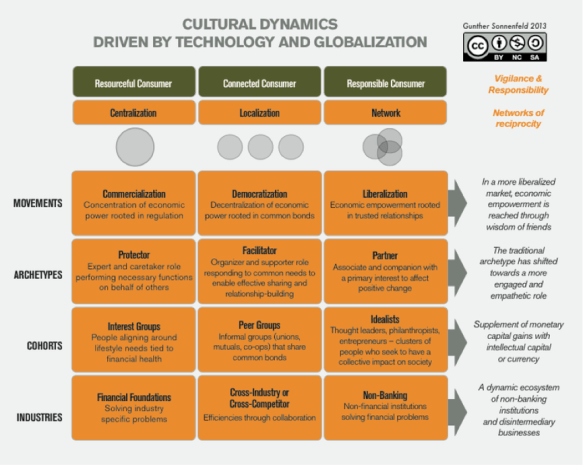



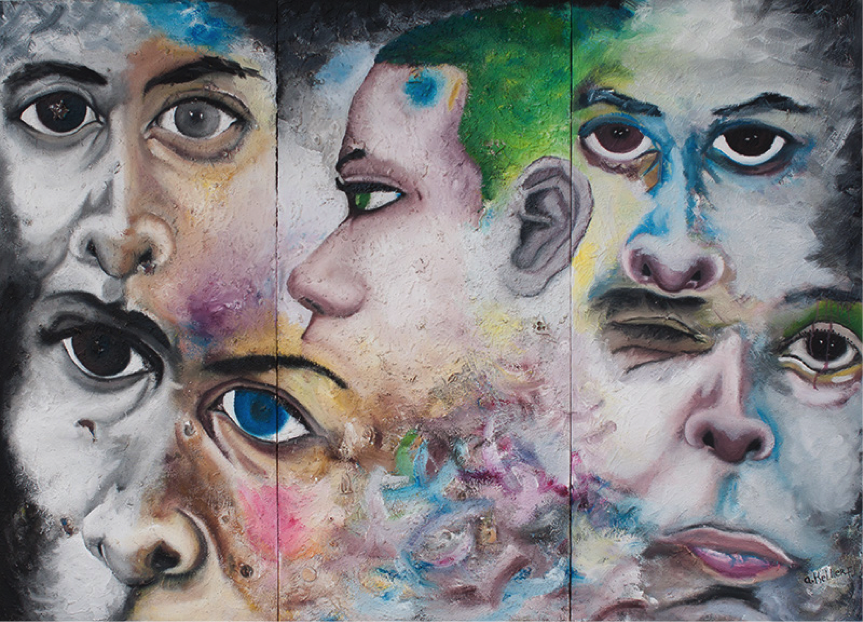

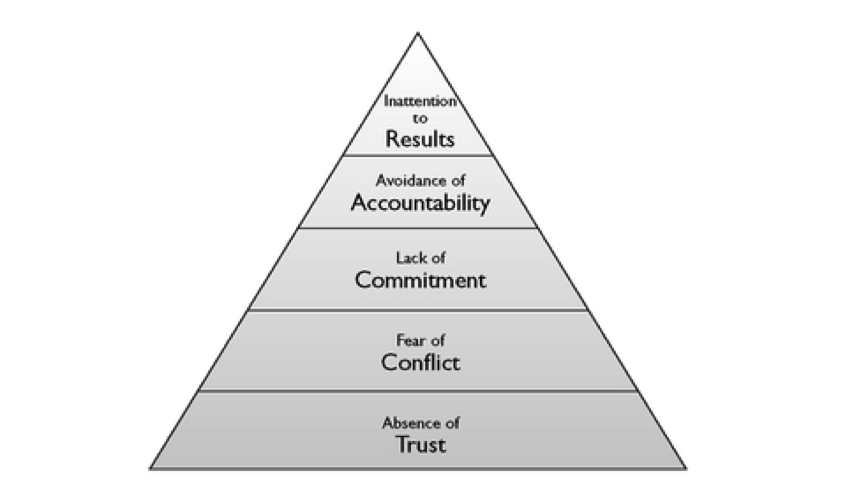











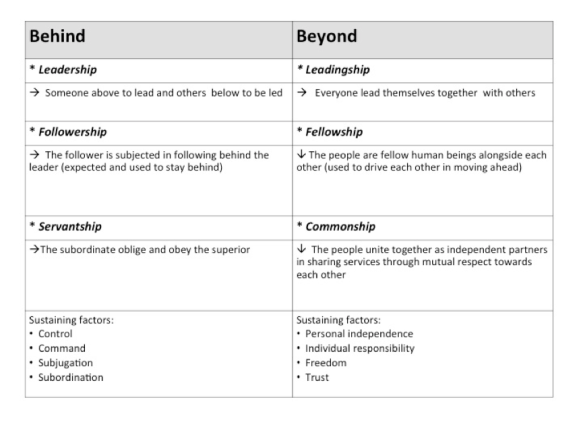


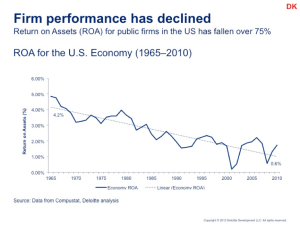








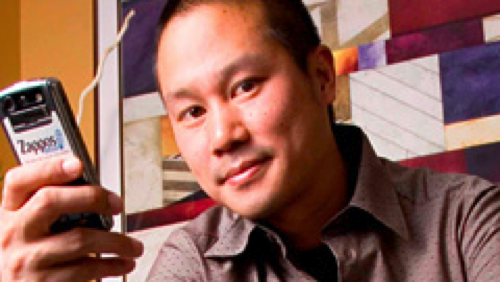


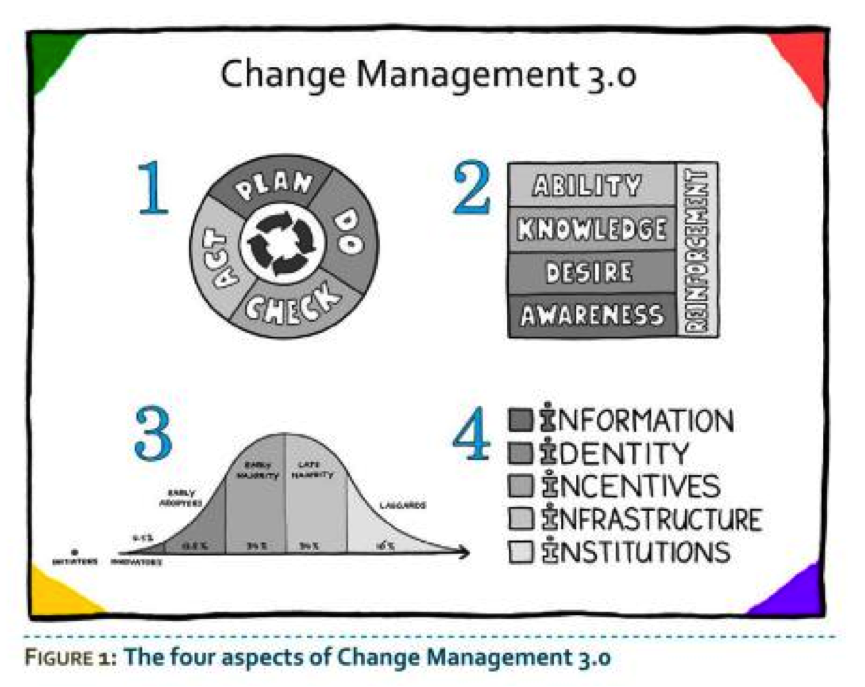
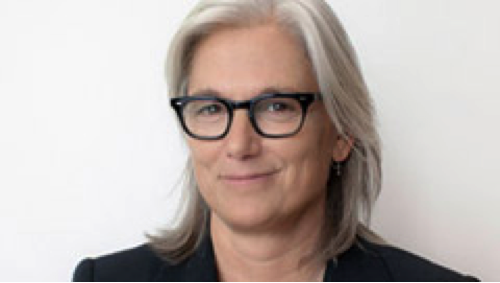

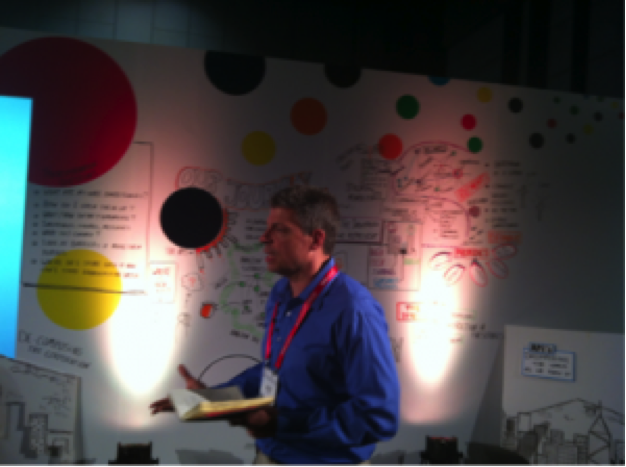










 Petervan Studios