Petervan Studios – Update June 2021 – The Right Balance

Here is the latest update on Petervan Studios. The previous update already goes back to November 2020, that’s more than six months ago, and a lot can happen in half a year.

It looks like we are getting out of the COVID woods. At least in Belgium infection and hospitalization numbers are down, and I got my second Pfizer jab on 5 June 2021, so I think I am good to come out of my cave.

Family is good, Astrid does well at school, Mieke loves the garden now that the summer is back, and I continue my art practice and some freelance projects.

What else?

My Art Practice

Due to COVID regulations, 2021 was a terrible year for doing artwork at the academy. I just can’t work with a mask on. I retreated to my own studio at home, but I miss the coaches, and the discipline/routine of going twice a week to the academy in Ghent.

Most of the specialisation courses of the academy were online via Zoom calls, and nothing beats the dynamic of face-to-face contact, and on-the-floor experimentation.

Not sure yet what I will do next year: back to academy or being super disciplined in my daily routine in my home studio.

I shared most of my recent work via my Facebook page, or on this blog under the heading “Sine Parole”. Some “highlights” if I can say that about my own work:

Petervan Artwork © 2021 – Big Blue – Acryl on Canvas – 100x120cm
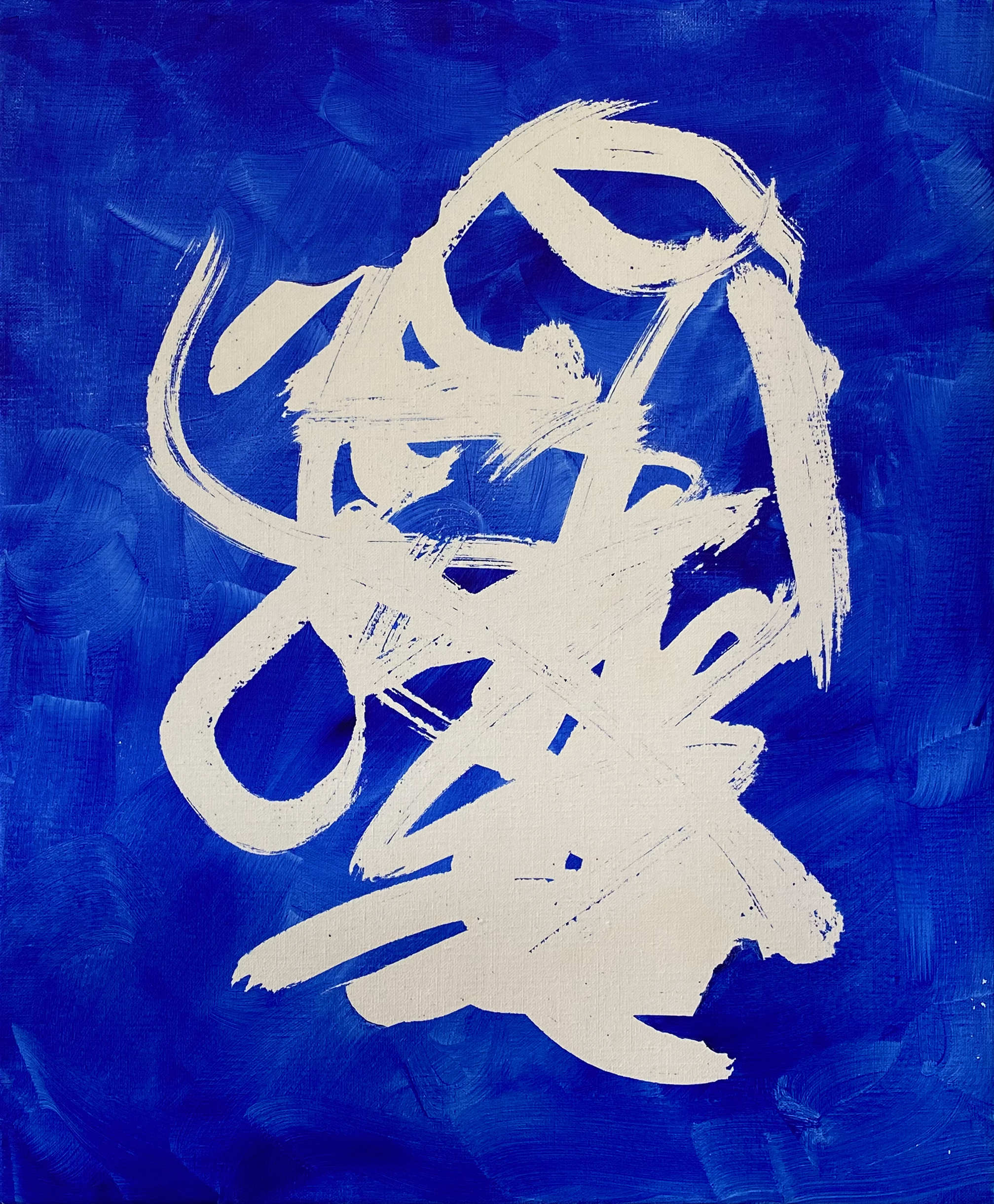
Petervan Artwork © 2021 – Shape on blue – Acryl on Canvas – 60x50cm
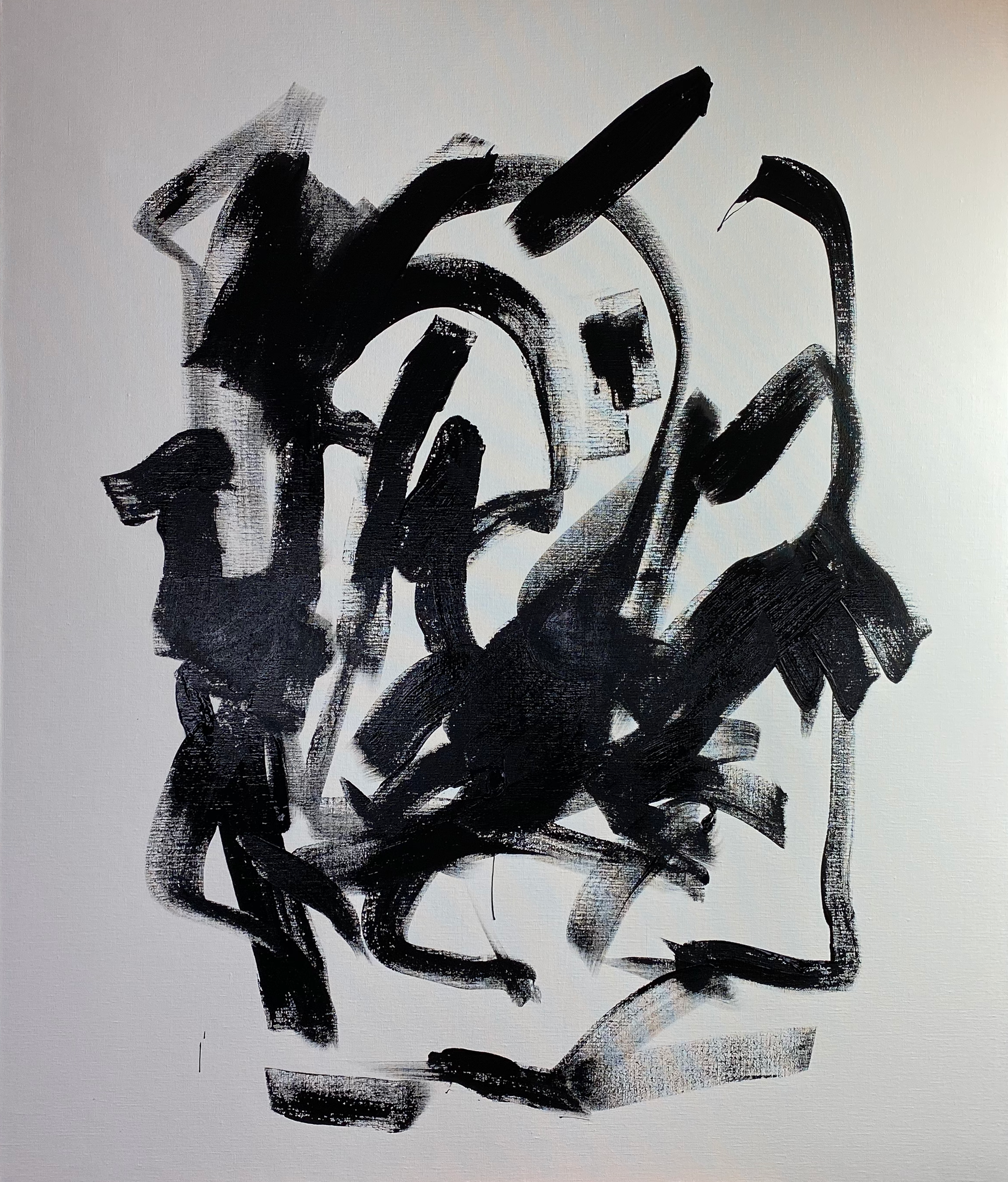
Petervan Artwork © 2021 – Wild Black & White – Acryl on Canvas – 120x100cm

The Bricks Project

Petervan Artwork © 2021 – Drawing – Chinese Ink on Steinbach Paper – A1

Petervan Artwork © 2021 – Video – Brickonomics – Own soundscape

Petervan Artwork © 2021 – Video – Bricks City Animation

Petervan Artwork © 2021 – Video – Zen and the Art of Bricks Drawing

The Cow Project

Introduced as a plan in the Nov 2020 update, I got hooked on cows, if that makes sense. Whatever.

Petervan Artwork © 2021 – Cow-Vid-19 – Acryl on Canvas – 120x150cm

Petervan Artwork © 2021 – Cowonomics – Stop Motion Film
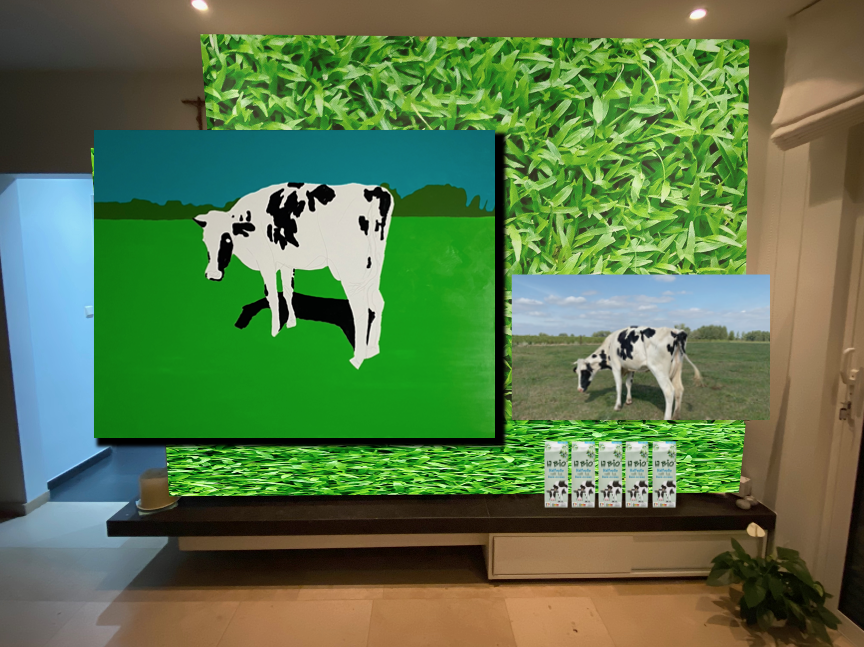
Petervan Artwork © 2021 – Digital CollageCow on chimney on grass with milk tetra packs.

Part of an assignment for the academy specialisation class

Exhibitions

Since last update, I visited following art exhibitions:

C-Mine, Tim Walker, Genk, Jan 2021

Z33, Palms, Hasselt, Jan 2021

Be Modern, Royal Museums of Fine Arts, Brussels, Jan 2021

Danser Brut, BOZAR, Brussels, Jan 2021

Lynne Cohen, FOMU, Antwerp, Jan 2021

Adrian Ghenie, Tim Van Laer, Antwerp, Jan 2021

Kunstuur, Mechelen, March 2021

Alechinsky and Aboriginals, RMFA, Brussels, April 2021

Silence, Axel Vervoordt, Wijnegem, April 2021

Luc Tuymans and AI, BOZAR, Brussels, April 2021

Superstudio Migrazioni, CIVA, Brussels, April 2021

Inge Decuypere, A Joly Boring Thing To Do, Oudenaarde, April 2021

Vincent Geyskens, M-Museum, Leuven, May 2021

Detail of a Karel Appel’s painting “Liggend Naakt” 1957 – Oil on Canvas

The founders of SuperStudio – Painting in Expo Migrazioni

Vincent Geyskens – in M-Museum – Leuven

Outdoors

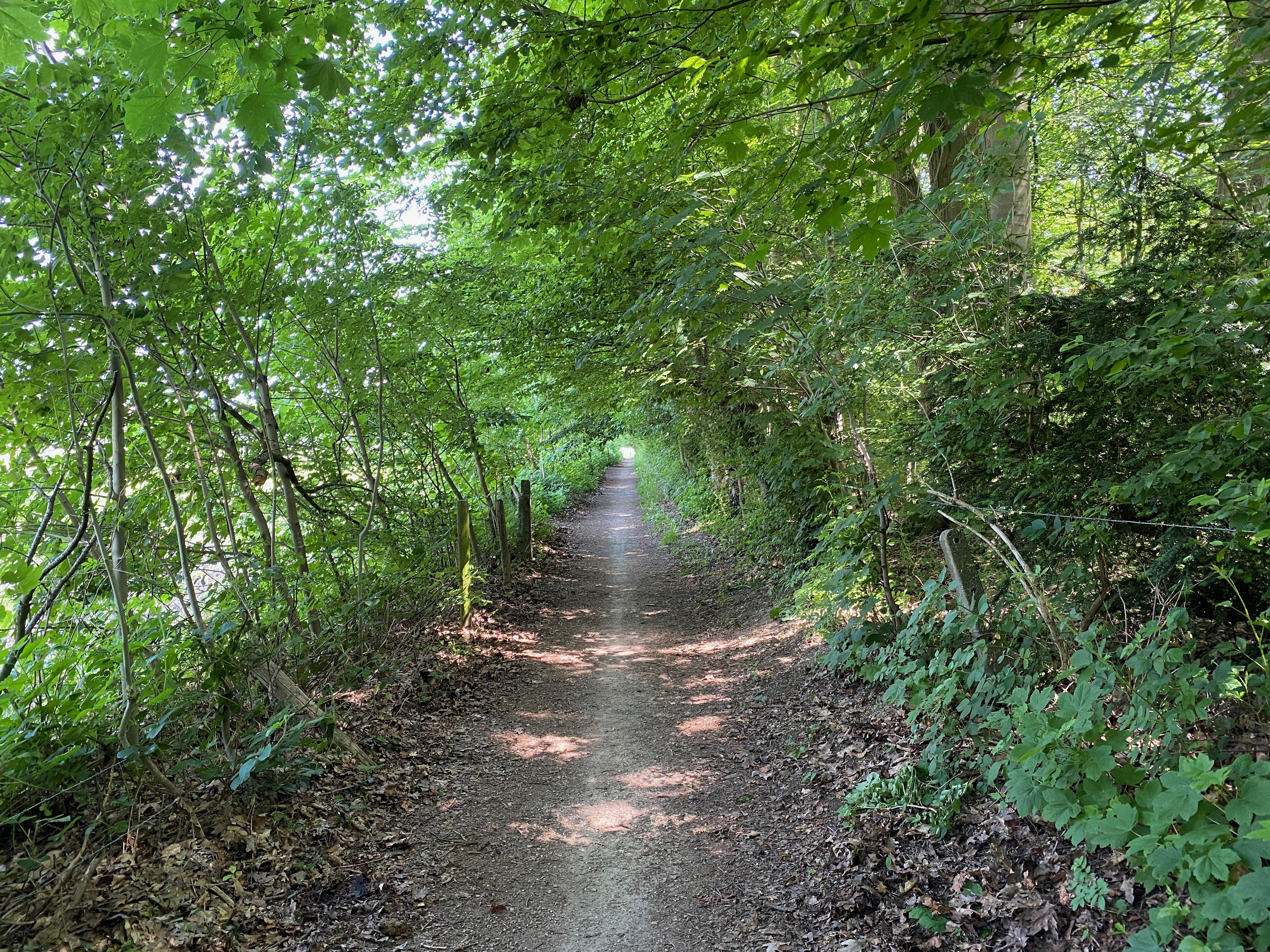
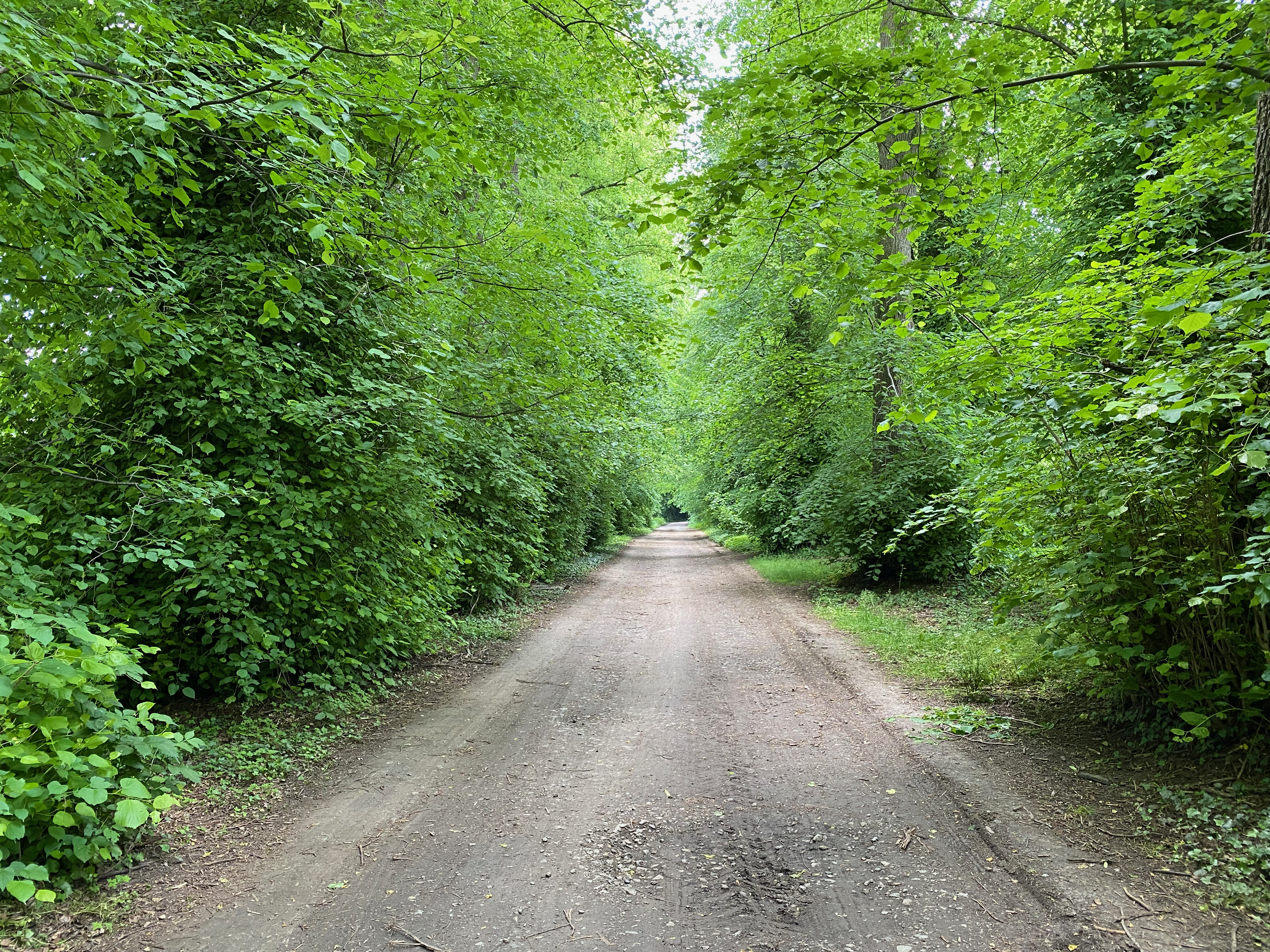
We had a lousy winter in Flanders. I did some walks and bike tours, but not as much as I would love to do. Winter lasted till deep in spring with a super cold and rainy month of May. When June started, the sun was back in full force, up to a point where I started already longing for shadow.
Horses

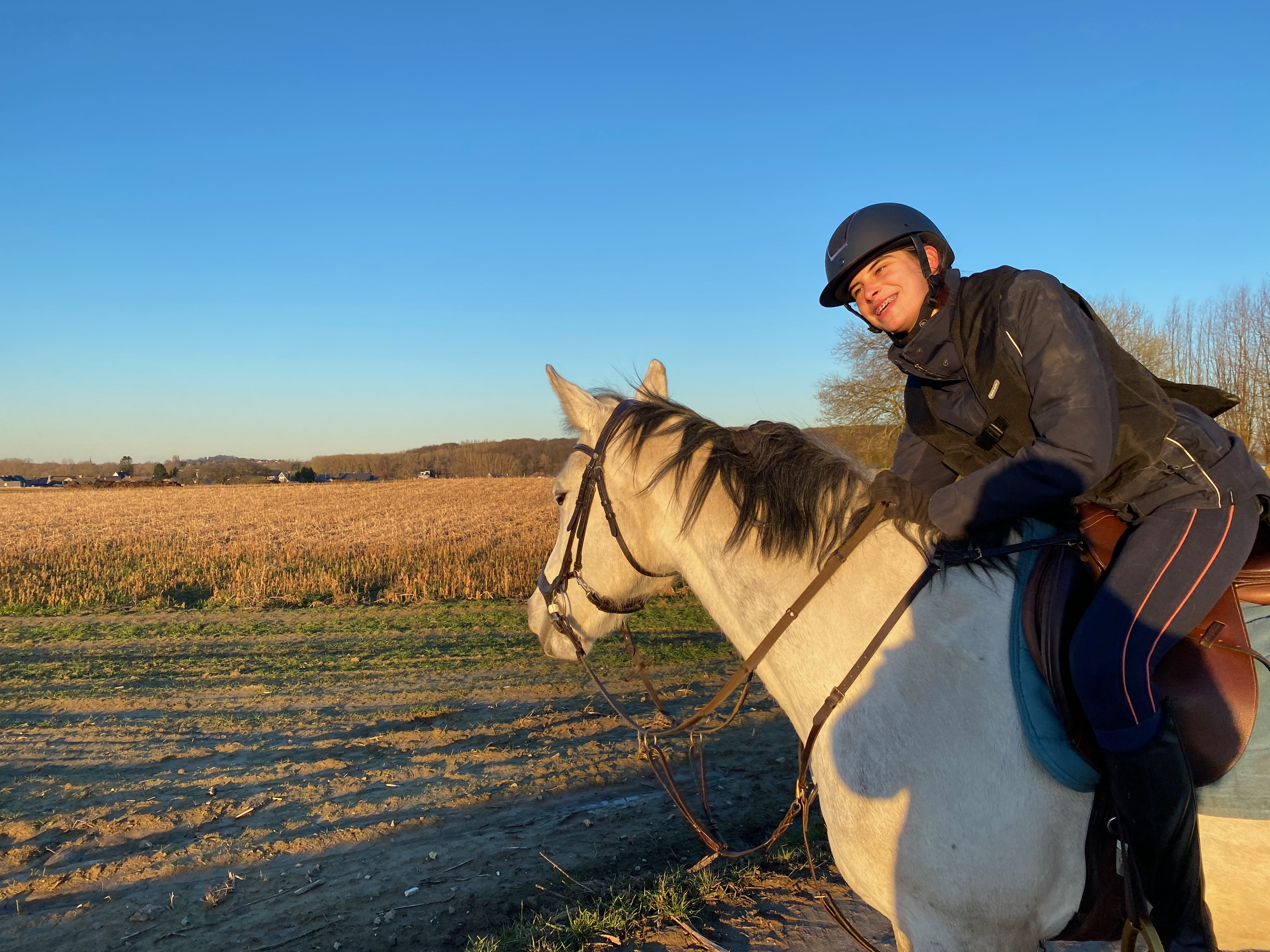
My daughter Astrid loves horses, and that is an understatement. I have become her private taxi driver to/from the stables, and I spend quite some time watching her at the riding school. She needs it very much in this COVID year, and she can really disconnect from school. And on and with the horses, she is in flow. Look at her smile: it makes a father happy too!

Freelance

I am on a new interesting gig for a very respected client. With a small team, we are doing research on what is next-next in financial services, and the research will be followed by several workshops and a private experiential event/tour later in 2021.

This and the previous project in Shenzhen also helped me reflect on different types of workshops: sharing, teaching, mentoring, and inquiry-based workshops, some online, others in real life. I have some concrete ideas on how to bring these to market, together with a supporting team of facilitators, provocateurs, artists, and producers. Contact me privately if interested.

BANI

Already in 2018, Jamais Cascio coined the term BANI. See my post from Aug 2019 and Jamais’ update from April 2020. As mentioned before, I am working with some partners on a virtual multimedia workshop based on this framework, with a specific focus on possible responses to a BANI world. One of our partners got locked in another client project, so we put the project temporarily on hold.

Design Unbound

I am continuing my immersion in the work of Ann Pendleton and her insights in Design Unbound: Designing for Emergence in a White Water World. We have found a way to convey this complex material into a matrix-form, with video vignettes, so that the customer can pick and choose where they enter the learning journey.
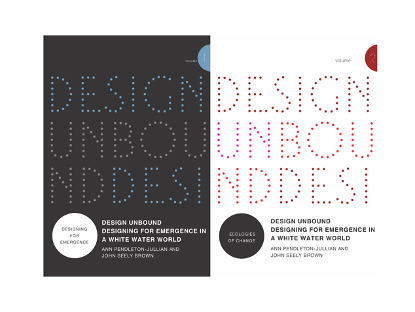
To give you a sense of the intensity of this work: I have now weekly calls with Ann Pendleton to go through the scripts that will form the foundation of the video vignettes.

We have put together a team to design and deliver a corporate curriculum on this topic. Stay tuned on the “we” and the “curriculum”.

Pirate TV

I released the first episode of Pirate TV – Art Tribe Edition, with my friend Frank Poncelet from the Art Academy in Ghent

There is a very nice queue of artists who have agreed to be the guest in the subsequent episodes: some painters, video artist, and photographers. Initially, the plan was to have an episode every month as from March 2021 onwards. Working with artists and original content authors, I have learned to be patient and more careful in setting expectations on the when and what of the final deliverable, although the pressure of a deadline sometimes – but only sometimes – helps to get to a high-quality experience. We are getting there.

There are now two Pirate TV channels in the pipeline: the Art Tribe edition and the Business edition.

Traveling Without Moving project

Travelling without Moving (TWM) is a series of essays documenting my mental and philosophical journey in 2020-2021.

The main outline was published in November 2020, and in the meantime, several episodes have been released. So far, I have posted seven essays:

Silence

Pause

Play

Anxious

Unbound

Foam

(In)appropriate

The next one will be about “Studios”, studios as a proven way of failing and recovering together, a repurposing of the architecture studio practice of practices. Hope you stay on board.

Books

Check out my GoodReads: https://www.goodreads.com/user/show/3085594-peter-auwera

Some highlights:

The Stack, by Benjamin Bratton

Crossover, by Cecil Ballmond

Making Art Work, by Patrick McCray

Ways of Seeing, by John Berger

Petervan Rides

Since July 2019, I publish every month a Spotify List with new releases combined with some oldies from the 60ies, 70ies, and beyond. Search for “Petervan Ride” and select “playlists”. Subjective selection of course, as driven only by my personal taste (or lack thereof). Next month, we’ll celebrate the second anniversary of these Rides. Time flies!

Here is the latest Ride from May 2021

I suggest you play it in shuffle mode, it enhances the surprise experience.

So, whats next?

Since I officially retired from corporate life on 1 Dec 2020, I am completely free to do what I want, what gigs I accept, what clients I choose and reject, what I say and what I write. And if nobody cares, that is fine as well, as then I can really do what I want.

This “interesting” work still leaves me enough room and headspace for my art-practice.  I wrote a post before on what I consider “interesting”. The keywords are: not done before, risky, and sensemaking through sense-breaking. I feel I have found a good balance and feel happy.

The plan for the coming months is to work/play on (random order):

The Fintech Next-Next Project

“Interesting” Freelance Work

Continuing my Art Practice

Release some Pirate TV Episodes

So, that’s it for this edition. If there is something worth reporting, next update is for Dec 2021.

Warmest,

Travelling without Moving – Anxious

This post is part of a series of essays bundled under “Travelling without moving”.

Intro of that series can be found here.

The plan/ambition with this series: to share where I have been the last year, what I learned, where I am going, and what is required.

The broader quest is to discover what is required to enable real change.

After the Play-Post of begin Jan 2021, we continue with “Anxious” in a post-VUCA world.

BANI is what is next after VUCA.

Already in 2018, Jamais Cascio coined the term BANI. See my post from Aug 2019 and Jamais’ update from April 2020.

BANI stands for Brittleness, Anxious, Non-Linear, and Incomprehensible.

Let’s focus on the “A” of BANI.

I suggested that the preferred response to Anxiousness was empathy or agency.

But that felt too open ended.

Empathy with what, and agency in what kind of world?

And was it forward or backward looking?

A possible world or a preferred world?

I went back to the most common definition for anxious:

“being worried about what may happen or have happened”

Like a rabbit caught in the headlights, some people are so frightened or nervous that they do not know what to do. They sometimes remain still because they do not know where the light comes from or which way to go.

Another reaction is to fake that you know what to do, especially if you are in the spotlight for one reason or another. In other words, to bluff yourself out of an anxious situation.

Imagine a workshop where the top executives of a firm are sitting on the first VIP row of a theatre (in COVID-times, it would be a massive Zoom session with all the employees being able to look over the shoulder of their executives).

All the employees are sitting in the rows behind the VIP row to witness how their executives manage a difficult situation, or even more frightening, being able to see inside the heads of those who bluff to know, don’t blink an eye, and confidently steer their troops in the wrong direction, efficiently of course.

Remaining still or bluffing strong are most probably not the wisest responses to anxiety.

A better response would have to do with orientation or some kind of possibility mapping.

I assume many of my readers are familiar with Joseph Voros’ Future Cone.

Great background explanation by Joseph Voros here.

These days, you can buy out-of-the-box possibility mapping workshops from some of the big-4 and many boutique consultancies. Some of them already fully COVID-proof online, with Miro boards of future cones, chatrooms, Clubhouse conversations, Slack and other real-time streams.

But all this online-first coolness can also be distracting. What I am exploring is some kind of new genre, where we also inject artists to resonate with and for the content at a non-cognitive level, not as entertainment, but with an aesthetic that is demonstrative, not just a gimmick overlay.

An aesthetic that has a sense of stillness and serenity that makes the effort and work real, beyond perception and reason, with an anchoring in humanistic relevance.

Without falling for the temptation to add such toolkit to a “Pot-Pourri” of other coolness, as a tapas-bar, a Chinese menu to choose from.

What is missing in the “Pot-Pourri” is a sense of agency, a sense for direction and choice. Choice as in opinion, and direction as in judgment and daring to step forward with preference.

If not, the online-first future cones become a surrogate for analog Post-It-driven brainstorms, just mapping future concepts on the dimensions of possible, plausible, probable, and impossible.

The crux is daring to address the preferrable future. Because that is using the map beyond seeing better what is and what could be. It is using the map for standing for an opinion, a direction, most probably in the space of moral, spiritual, and aesthetical advancement.

That’s of course a more difficult sell.

But for now, let’s summarise, not as a conclusion, but more as a beacon in our developing story that a possible response to anxiousness is possibility mapping with the courage to set direction and preference.

Next time we’ll talk about “Unbound” – Unbound from thingness that is.

Hope you stay on board.

Warmest,

New Babylon – New Frisco – New Cobra – New city to play

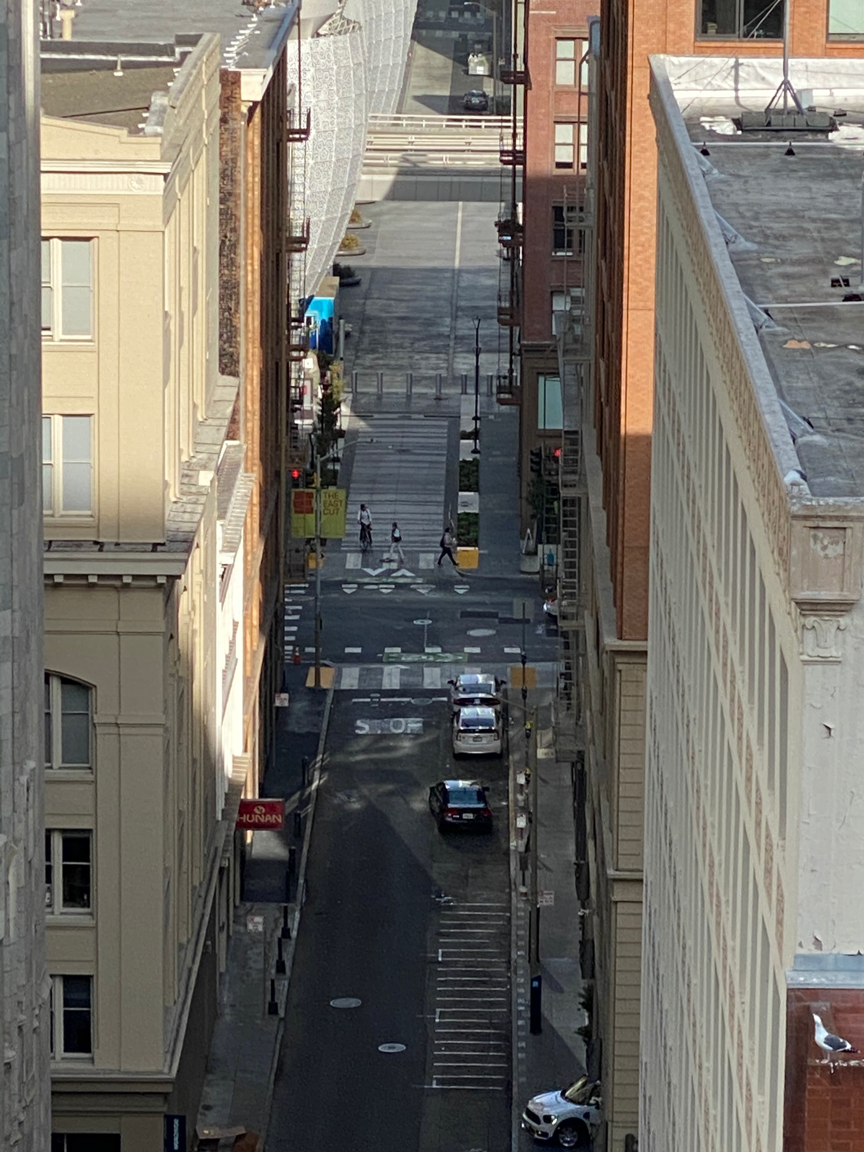
During my visit to SFMOMA on 15 Nov 2019, I was standing on the terrace of the 7th Floor looking North-East into Natoma Street, and wondering what the curved-walled building on the left was about.

SFMOMA

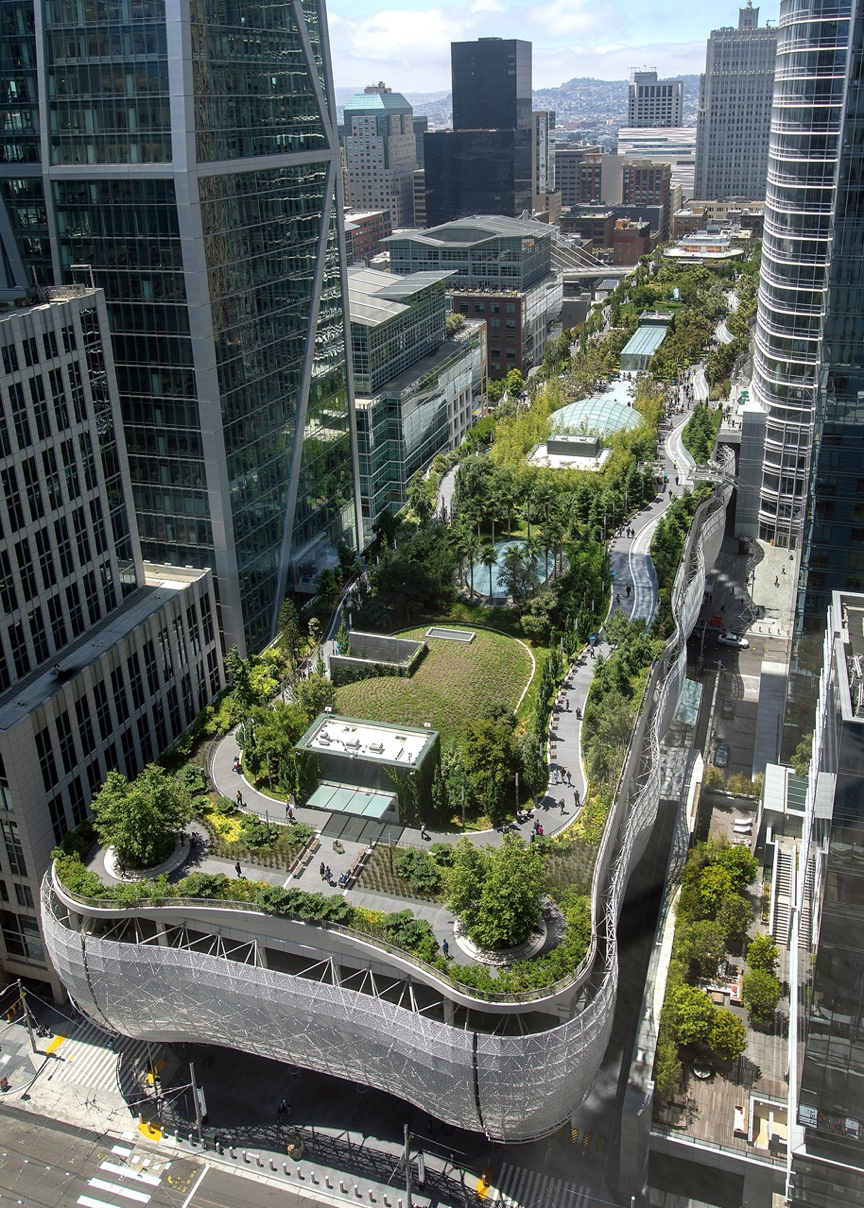
I did not pay much attention until I was reminded of this view in this article about floating utopias in The New-Yorker of 11 Dec 2019. Below is a view from the other side, probably taken from the Providian Financial rooftop on Beale Street, looking South-West. At the far end, you may recognize the SFMOMA building. The building in the front is Salesforce Park, a lush rooftop arcadia of rolling meadows.

Salesforce Park

Salesforce Park.Photograph by Karl Mondon / The Mercury News / Getty

The article in The New-Yorker is about the utopian, surveilled and orchestrated architecture in the middle of the astonishing inequality of homeless people in all the other streets of San Francisco:

Taxpayer-funded, corporately branded, suspended above the homeless, the park is an irresistible metaphor for the city’s socioeconomic tensions. It also feels like a bid, or a prayer, for a certain vision of its future.

Salesforce Park as a model for the rest of San Francisco—vertical, expansive, ecologically minded, expensive, sponsored, and surveilled.

“I feel totally orchestrated,” Cranz said, placing her hand on the railing separating us from the plant life. “I’m acutely aware of how managed everything is.”

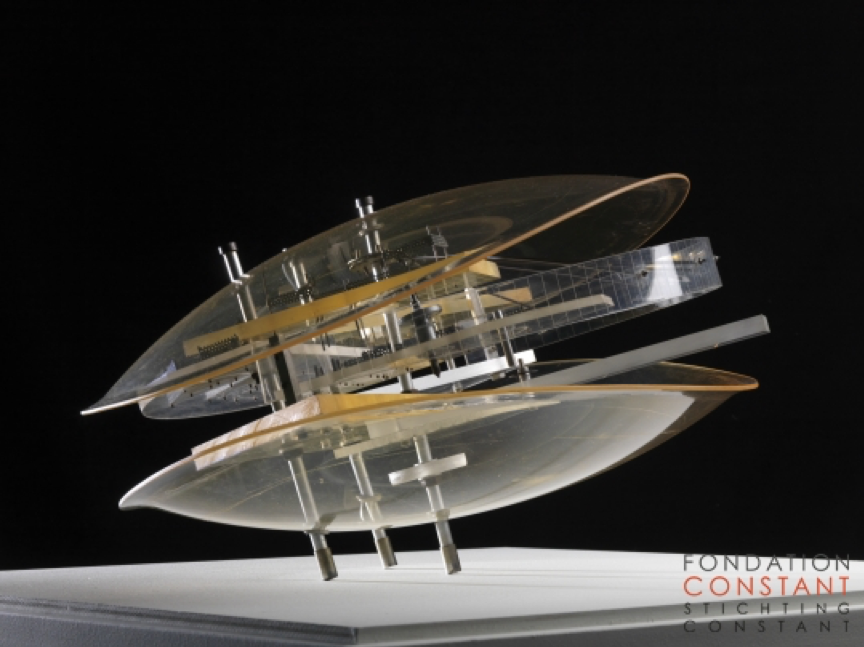
Shuttle Constant

Two days later, I bumped on-line into the magical world of the Dutch artist Constant Nieuwenhuis and especially his Magnus opus “New Babylon”, another utopia, a city designed to respond to Homo Ludens’ need for playing, for adventure, and for mobility.


In New Babylon there are no single houses

The whole city is one immense covered collective house

A house with countless rooms, halls and corridors,

In which one can roam for days or weeks,

But where one can also find

Small spaces for privacy

New Babylon is a labyrinth

Inexhaustible in its variations

A palace with a thousand rooms

timeline art

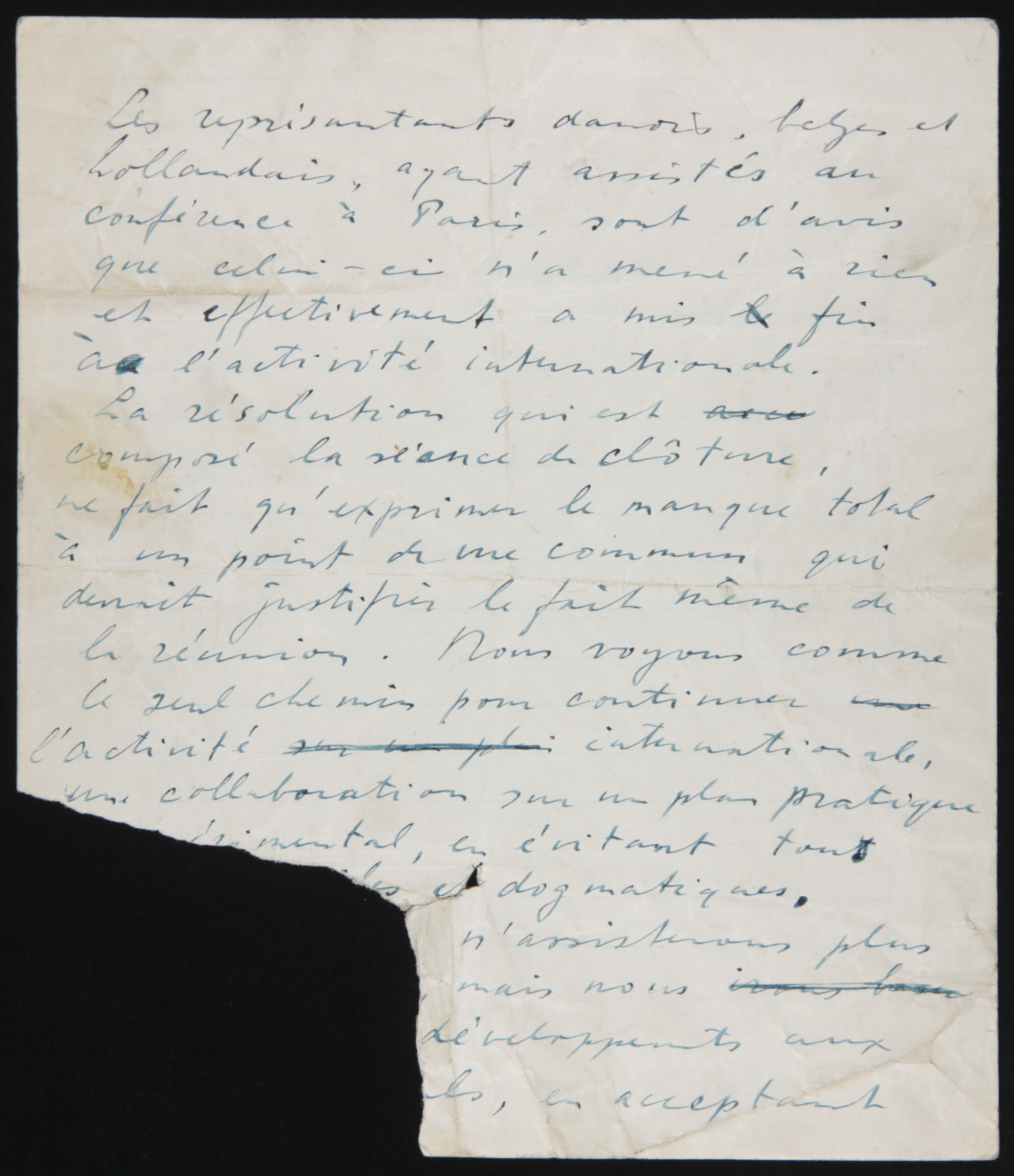
Constant was one of the founders of Cobra, an avant-garde art movement established on 8 Nov 1948. The movement only existed for three years, but forever changed the landscape of postwar European art. Cobra was perhaps the last avant-garde movement of the twentieth century. Constant was the author and co-signee of the initial COBRA Manifesto “La Cause était entendue” – “The Case was Settled”.

Les représentants belges, danois et hollandais à la conférence du Centre Internatiopnal de Documentation sur l’Art d’Avant-Garde à Paris jugent que celle-ci n’a mené à rien.

La résolution qui a été votée à la séance de cloture ne fait qu’exprimer le manque total d’un accord suffisant pour justifier le fait même de la réunion.

Nous voyons comme le seul chemin pour continuer l’activité internationale une collaboration organique expérimentale qui évite toute théorie stérile et dogmatique.

Aussi décidons-nous de ne plus assister aux conférences dont le programme et l’atmosphère ne sont pas favorable à un développement de notre travail.

Nous avons pu constater, nous, que nos façons de vivre, de travailler, de sentir étaient communes ; nous nous entendons sur le plan pratique et nous refusons de nous embrigader dans une unité théorique artificielle. Nous travaillons ensemble, nous travaillerons ensemble.

C’est dans un esprit d’efficacité que nous ajoutons à nos expériences nationales une expérience dialectique entre nos groupes. Si, actuellement, nous ne voyons pas ailleurs qu’entre nous d’activité internationale, nous faisons appel cependant aux artistes de n’importe quel pays qui puissent travailler – qui puissent travailler dans notre sens.

Paris, le 8 novembre 48.

Cobra Manifesto page-1

Cobra Manifesto - Image from Beinecke Digital Collections

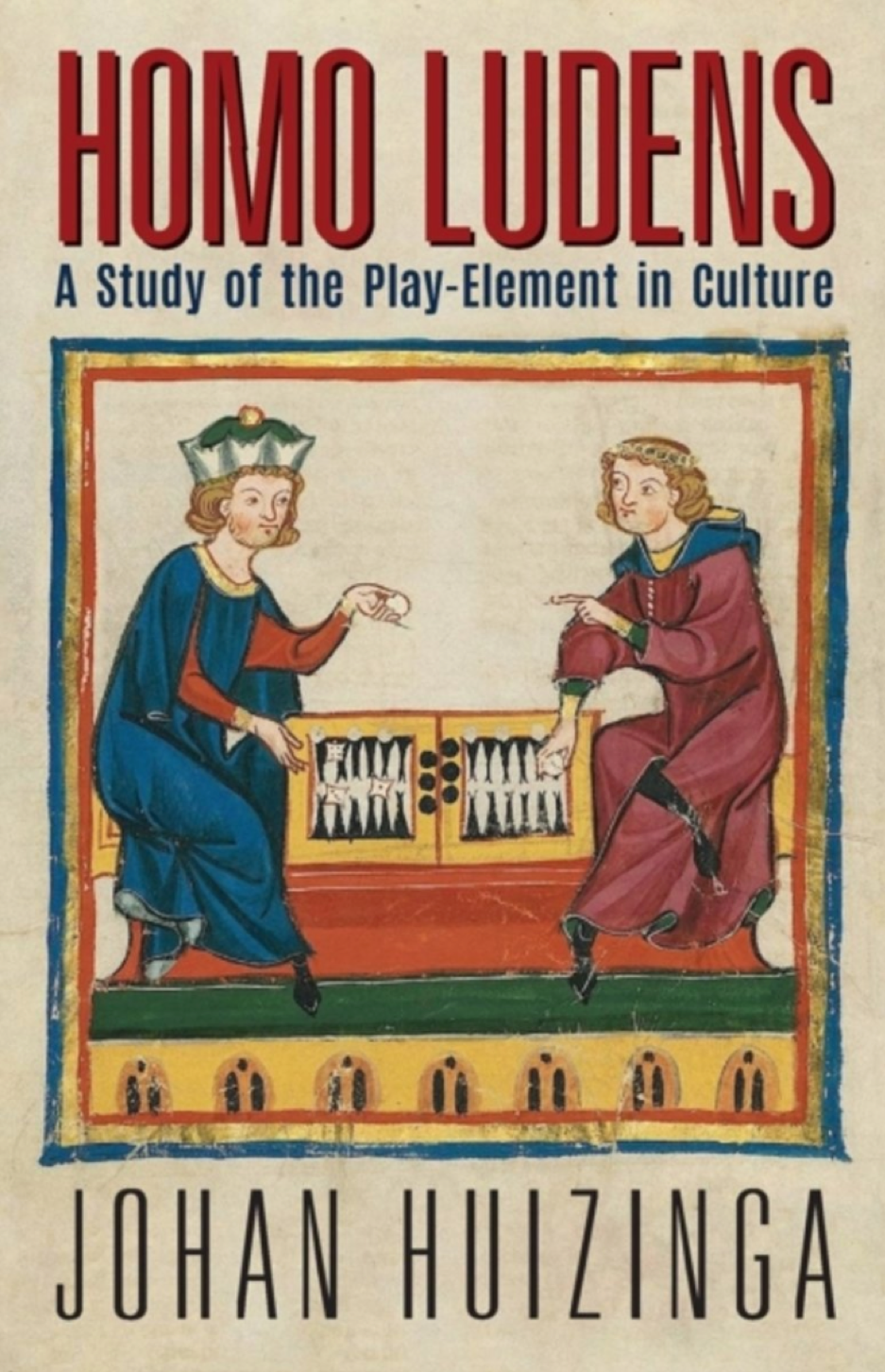
After reading “Homo Ludens – A Study of the Play-Element in Culture” by Johan Huizinga, Constant develops the idea for a futuristic city. He develops this idea by drawing maps, writing texts, building constructions, and models.

Homo Ludens

Constant worked for almost 20 years on New Babylon (1959-1974). Today, there is a foundation to preserve and promote the art collection and intellectual legacy of the artist.

From Wikipedia:

The goal was the creating of alternative life experiences, called ‘situations’

Perched above ground, Constant’s megastructures would literally leave the bourgeois metropolis below and would be populated by homo ludens–man at play.

In the New Babylon, the bourgeois shackles of work, family life, and civic responsibility would be discarded. The post-revolutionary individual would wander from one leisure environment to another in search of new sensations. Beholden to no one, he would sleep, eat, recreate, and procreate where and when he wanted. Self-fulfillment and self-satisfaction were Constant’s social goals. Deductive reasoning, goal-oriented production, the construction and betterment of a political community–all these were eschewed.

It is obvious that a person free to use his time for the whole of his life, free to go where he wants, when he wants, cannot make the greatest use of his freedom in a world ruled by the clock and the imperative of a fixed abode. As a way of life Homo Ludens will demand, firstly, that he responds to his need for playing, for adventure, for mobility, as well as all the conditions that facilitate the free creation of his own life.

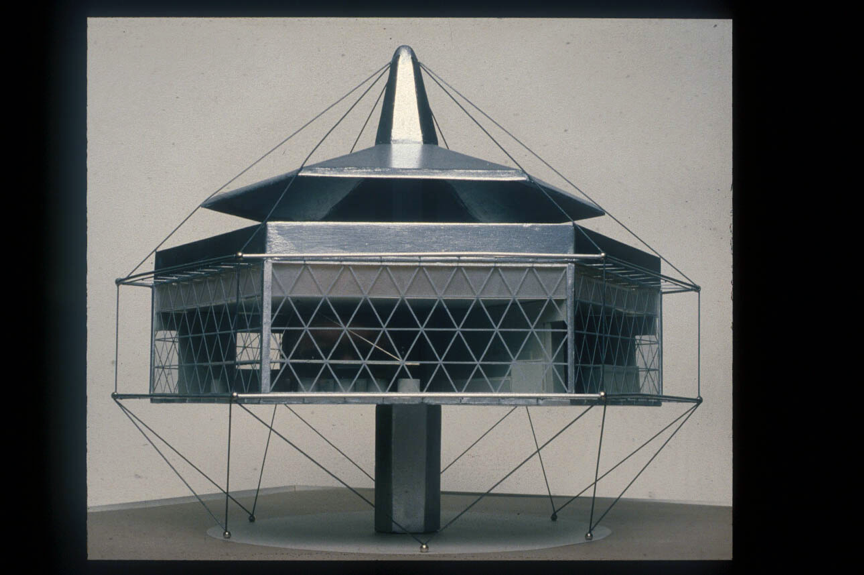
Some of the constructs in Constant’s vision reminded me of the sketches and models of Buckminster Fuller’s Dimaxyon House of 30 years earlier).

Dymaxion House

Buckminster Fuller, Dimaxyon House, Chicago, USA, 1927

Constant passes away in Utrecht on August 1st, 2005, at home with his wife Trudy van der Horst. He is buried at Zorgvlied in Amstelveen on August 6th. On his grave:

In art freedom manifests itself in its highest form.
The creative imagination.
Art creates an image of the world that didn’t exist before.
No. More than that.
An image that was unthinkable before.

I’d love to see a 21st-century version of Cobra, a collective of artists, thinkers, creators, tinkerers, and experimentalists, leading into a movement of fresh thinking. Not necessarily and exclusively an art-movement, but an all-encompassing societal-movement, with more time and air and oxygen for our children to play, where they naturally can grow into what they are best at, with a renewed freshness and renaissance, a new corporate and societal spring, celebrating the power of imagination and creativity, as a response to our dull political landscape of non-zero games.

A new New Babylon, a new city to play, a new avant-garde propelling us into the highest forms of freedom.

petervan-signature


The Foamy Explosion of Everything

larry and sergey

Larry and Sergey in hot tub bubbles in 2005 – picture by William Mercer McLeod

In my previous post, I played with words on Descartes’ “Je pense, donc je suis” – “I think, therefore I am”. In the background, you will notice my always-restless search for who I am. It is an everlasting search for (digital) identity. But maybe “Who” I am is a less critical investigation than “Where” I am?

I always have been intrigued by spheres. From my exposure as an youngster architecture student, through the discovery of Buckminster Fuller’s Geodesic Domes, from my thinking about digital identity being a sphere of fragments of influence that one could share with others, till my recent discoveries in exploring 3D drawing and sculpting software, where meshes of polygon meshes and NURBS primitives can be found and molded-in in abundance.

It should therefore not come as a surprise that – as mentioned in my Dec 2019 update –  I became absolutely fascinated by Sloterdijk’s “Foams”, part-3 of his trilogy on Bubbles, Spheres and Foam.

Foams book

I probably – with a probability of 100% – only understand a very small fraction of what is written and meant by Sloterdijk, or by some of the authors of essays introducing and contextualizing his work. I did some homework for this post by reading and reading again the excellent introduction by Jean Pierre Couture on the work of Sloterdijk in general, and Charlie Huenemann’s “Sloterdijk’s Spheres: Bubbles, Globes, and Foams”. And then starting the real thing by the master himself. It is not a page-turner: 900 pages of solid philosophical writing. I can do a maximum of 5 pages/day and need time to let it all sink in. That should do as far as the disclaimers are concerned.

Indeed, this is just a personal thought experiment – and maybe an art experiment or performance as well in the near future – re my evolution on thinking about (digital) identity, and daring to propose a different, radical and spherical perspective.

It’s a baby-idea, just out of the womb, waiting for parents and caregivers to be nurtured, and made alive. There is no practical application for this as far as I can think of, but it just feels I am onto something.

My latest contribution was The Cambrian Explosion of Identity from February 2019, already intended then as the start of a series on the subject, but other priorities distracted me from further development. Let’s add some “spherology” to the mix now.

„Peter Sloterdijk’s celebrated „Spheres“ trilogy is a 2,500-page „grand narrative“ retelling of the history of humanity, as related through the anthropological concept of the „Sphere”,… a lengthy meditation of Being and Space — a shifting of the question of „who we are„ to a more fundamental question of „where we are.“

Foams are masses of little bubbles, of course. As a metaphor, foams represent smaller zones of inclusion filled with the air of hope.” Huenemann, Charlie.

“And this, in essence, is what Sloterdijk sees as the project of the modernity: the business of constructing bigger and bigger shells, with more Lebensraum for the soul.Huenemann, Charlie.

I used to think of a robot as an entity that has a body, a mind, and sensors for input/output computation. A computational machine. But to me, it seems just a bit too easy to separate the mind and body, and to replace the mind with some form of artificial intelligence.

It feels like Sloterdijk describes “being” – being in the world, coming into the world, creating your own world and make it become alive, worlding – as acting as-a-foam, not as a “body”, a body with a brain on top that thinks. He is after the wholeness of foam and its integration and relationships with upper and lower levels of spheres and bubbles.

blue foam

The metaphor of foam is a very solid one: what was before foam, what happens after the foam disintegrates? Where does foam go, what caveats is it trying to fill? All interesting avenues for research and investigation.

It also made me think of this strange creature – the blob with 720 sexes – that foams over old wood trees as a monster we can all learn from?

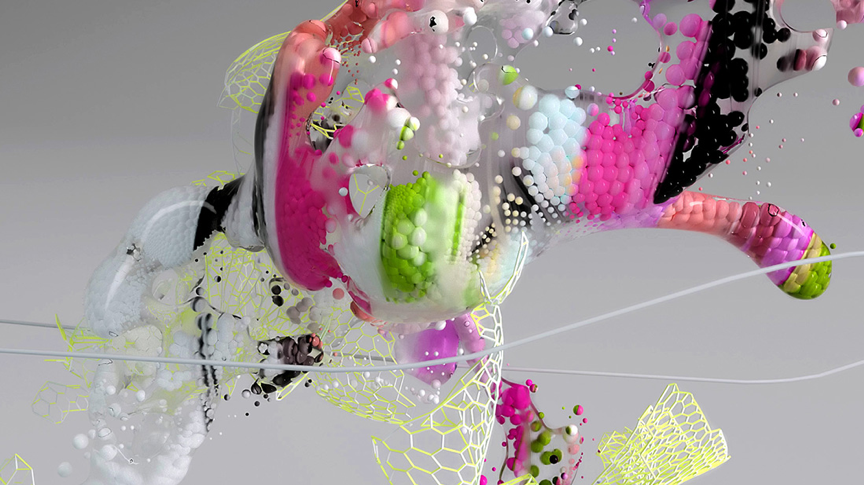
Because of this sudden focus on foamy shapes, I see bubble-structures everywhere. I see foam in this discovery of Christian Mio Loclair’s art installations, interventions, and interpretations. His studio “Waltz Binaire” works for the biggest brands in the world.

He explores the harmonic friction of human bodies, movement, and nature colliding with digital aesthetics. Using cutting edge technology in interactive installations, audio-visual experiences, visual narratives, and dance performances, he continuously illuminates the beauty and drama of human identity.

waltz binaire foam

Enhanced Motion Design - Waltz Binaire Studio

I see foams in Spheres Journal:

“Yet the vision algorithms have of our future is built on our past. What we teach these algorithms ultimately reflects back on us and it is, therefore, no surprise when artificial intelligence starts to classify on the basis of race, class, and gender. This odd ‘hauntology’1 is at the core of what is currently discussed under the labels of algorithmic bias or pattern discrimination.”

Current identity thinking is based on past data. On graphs. On connections and relationships between “nodes”, “end-points” of a relatively fixed and static structure. With the extraction of value built on top of that past, amplified by AI. The past amplified.

But we did not notice that the nodes have become overlapping cells of belonging. The attractiveness of a “foamy” group- or individual-identity is that it is not fixed and static. It is “expansive”, not “extractive”. It adds value. It grows unpredictably into the future. Not like extrapolations of last year’s revenue growth. More like fruit maturing into a juicy ripeness.

Foam is dynamic. Made of bubbles, it lives within and across spheres of influence (both in the sense of actively influencing and passive being influenced).

Foam is not static. It is alive. In search of higher levels of aliveness. Until it dies. And only blobs of dust and air are left.

I see foam in Paul Baran’s network models:

paul baran

Centralized, decentralized and distributed network models
Paul Baran (1964)

What’s the impact of foamy logic on organizational models? How does a foamy organization look like? What’s the shape of D?

Are we moving from Graphs to Foams? From Nodes to Bubbles? What would nodes and endpoints be called in the foam-world anyway? Are we foam? It feels like I am going down a rabbit hole of foam. From fuzzy to foamy logic?

petervan-signature


Ebb and Flow

I am still reflecting on some feedback regarding an event that I recently designed and facilitated. One of the comments was that “there was too much ebb and flow”, and that we should create more “pressure” to keep the highs at maximum volume at all times.

But is ebb and flow such a bad thing? I don’t think so. On the contrary, the tension between ebb and flow is a requirement for growth and creativity. Adding more pressure will not keep the flow on, it could create exhaustion and fractures and breakages.

Instead of pressure, I believe we need to design opportunities for expansion, probably in the form of silence or more in general, reflection moments in the absence of inputs and triggers.

Like in Jan Chipchase’s expeditions: “Long trekking days were spent in meditative solitude or long conversations depending on personal preference, as energies ebbed and flowed

Côte d’Azur

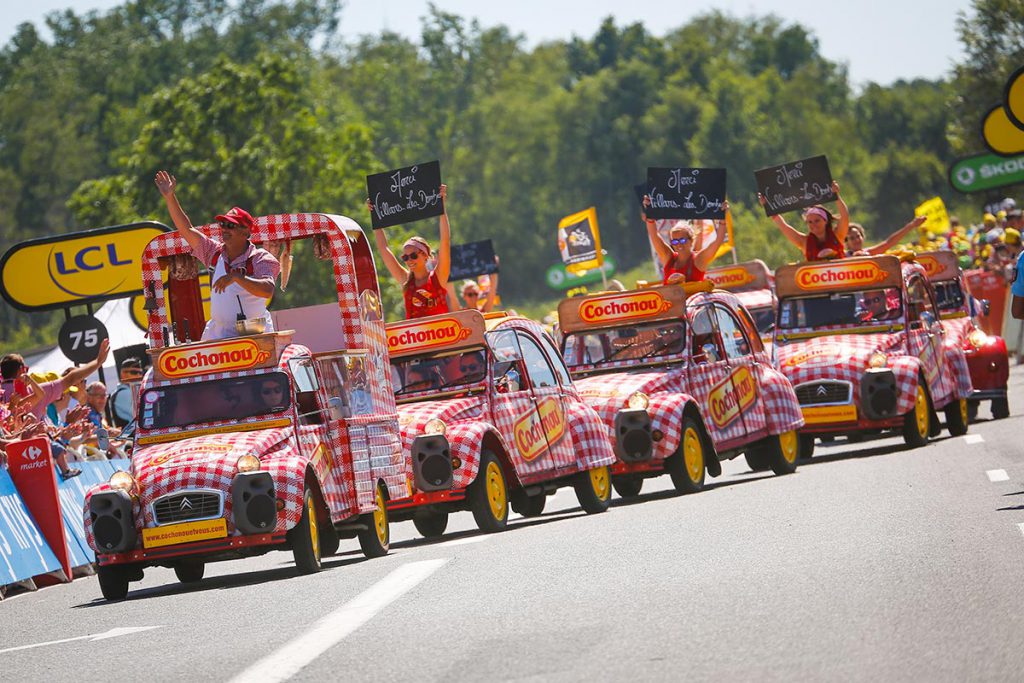
The Tour de France 2019 started in Brussels this year and the route to the south passed by a village at about 20km from where I live. So, I took my bike on that super sunny day to watch the circus passing by, including the publicity caravan 3 hours in advance of the cyclists.

cholet-tour-de-france-2018-caravane-publicitaire-11-1024x683

It all feels like a big summer feast, with all folks – of all ages, gender, race, poor and rich – coming out of their alcoves to enjoy this popular almost festivalesque party. It inspired me to write these couple of lines of somewhat nostalgic reflection:

Lovely girls with red-red lips and short-short shorts waving and smiling at the crowds.

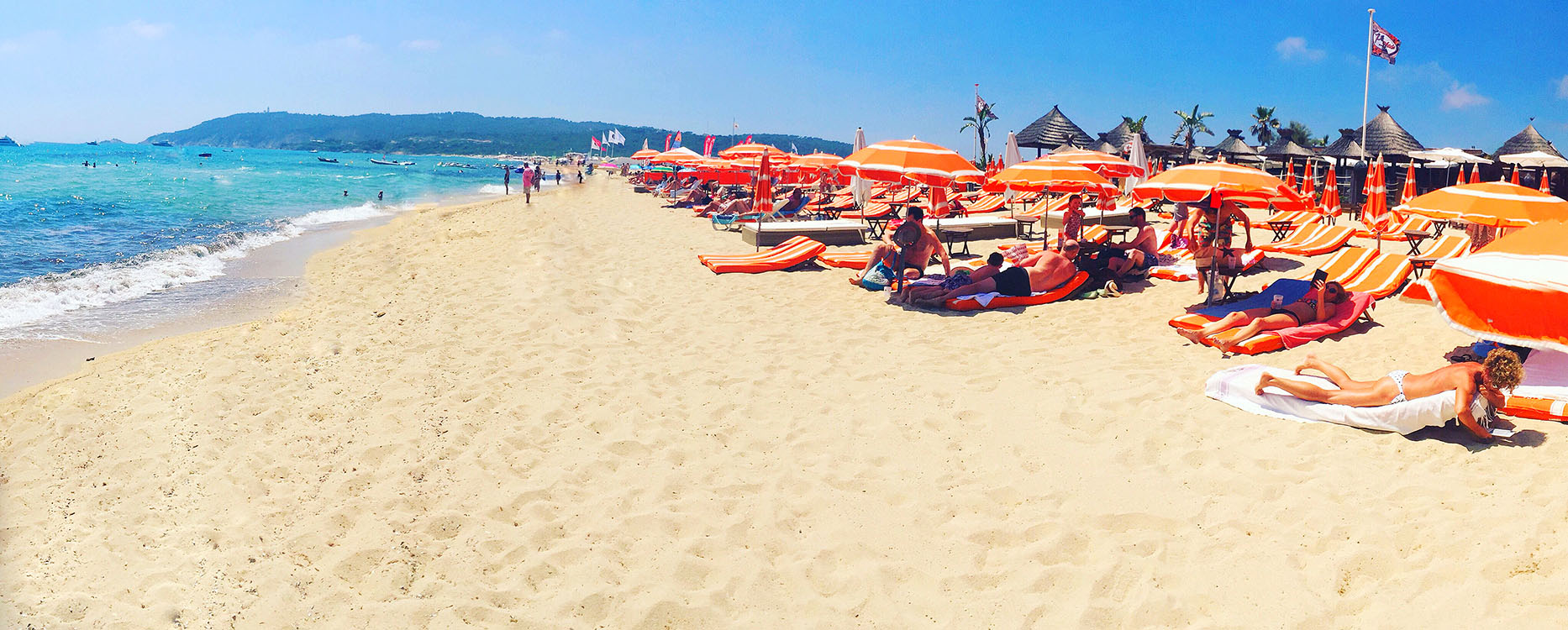
A flashback to the Côte d’Azur, the French Riviera, Saint-Tropez, Claude François, Serge Gainsbourg, and dub reggae. A throwback to the seafood restaurant along the promenade in Nice during a Gartner conference.

Being a flaneur, voyeur, a little bit tipsy, just enough to feel happy with a cold glass of white-white wine and some delicious white-white fish-au-citron, freshly steamed potatoes, and a drip of fine-fine olive oil on a terrace on the beach.

The taste of summer. The taste of vacation.

sttfinal


Neglected sensitivities

I just started reading the briefing for the 2019 exam Art & Culture of the Art Academy in Ghent.

The briefing is so well written – it almost feels like poetry – and it touches some deeper qualities/sensitivities in myself. Qualities/sensitivities that I have neglected for much too long and will keep neglecting as long as I work.

I long for stillness, disconnectedness, alertness, and expression. The keywords are rest and space to breath.

The idea of craftsmanship and the mastery of a technique is becoming more and more seducing. The seduction of exclusive, un-watered noise-free focus.

What is the core of “me”, that part that always stayed the same since I was born? How does that core feel? Soft? Aggressive? Sensitive? Sensual? Seductive? Reflective? Liberated?

(Almost) nobody gives a shit about me and my work and that is at the same time very liberating: it means I can do what I want. I can create what I want. I can create what wants to be created.

Sticks on Water painted cropped

Petervan Artwork © 2019 - No Title - Acryl on Canvas - 50x50cm