
Petervan Artwork © 2021 – Acryl on Canvas – 100x120cm
Inspired by Gaudi’s stained glass windows in Cripte de la Colonia Guell
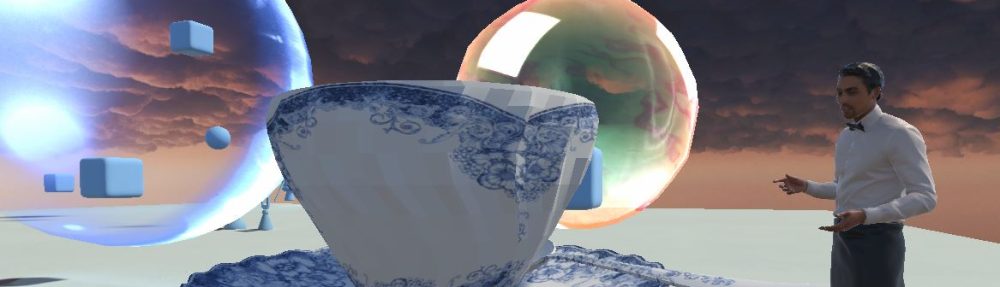
Petervan Artwork © 2021 – Acryl on Canvas – 100x120cm
Inspired by Gaudi’s stained glass windows in Cripte de la Colonia Guell
As usual, an incoherent, irregular, unpredictable collection of interesting sparks. Handpicked, no robots. Minimalism in curation. Enjoy!
If you can’t get enough of these and want more than 5 articles, you can hang on to the firehose, the extended version of Petervan’s Delicacies in REVUE. Also in this edition with loads of videos. Subscribe here: https://www.getrevue.co/profile/petervan
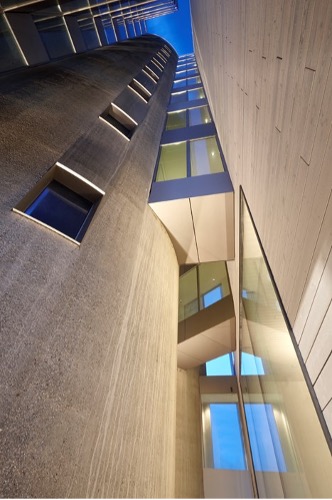
Kanaal Site – Axel Vervoordt – Wijnegem, Antwerp
For the past years, I have been on a quest to discover what is required to enable change. I try to avoid glorifying terms like “deep”, or “meaningful” change. What we are after in the end is just “good” change, right? In my opinion, good change is change that leads to ethical, moral and spiritual advancement. All the rest follows: profit, happiness, communities, and networks of returning customers.
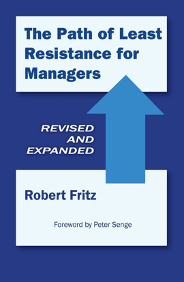
Deeply influenced by the work of Robert Fritz on structural conflict and structural tension, and that structure drives everything – especially behavior – I became dissatisfied by the responsive reaction in many organizations that can be summarized as “what problem are you trying to solve?” It is too solutionist, reductionist to my tasting, and I prefer Robert’s suggestion of the creative orientation of the artist/creator who is not solving a problem but develops mastery to create what she really wants.
So, the key starting point is to know what you want. Let that sink in for a moment. To know what you want.
Once you know what you want, you can create and change the structure that will at least be helpful – not working against you – in letting emerge and amplify the behavior that leads to what you want.
Structure is broader here than hierarchy or reporting lines. Structure includes contexts, vision, vehicles, mechanisms, and networks. Like an architect, you design spaces and structures to enable certain preferred – at time messy – human behaviors. In a corporate environment, you don’t architect buildings, but you architect contexts. You become a context designer. As an architect, you are not only responsible for the imaginative part, but also for seeing through the execution ànd adaptation needed as the context changes throughout time. Structure and contexts drive flows of information. Like water in a riverbed, if you change the course of the riverbed, the water will behave differently.
Structure drives flow drives behavior.
Let’s add Leandro Herrero in the mix. He wrote “Viral Change” and “Homo Imitans”. Key insights: people copy behavior and behaviors drive culture. If you plant people with the desired behavior into your organization, there is a good chance others will start copying that behavior. Hence “Imitans”. Like viruses infecting others – in a positive way. Do I need to make a drawing in this Covid-19 era?
Leandro’s bottom-line: behavior drives change and not the other way. And you can design for certain preferred behaviors. It’s bottom-up. It is not because an executive team defines culture that everybody will start behaving like it. It is because you have seeded infectious behavior that a culture will emerge through imitation.
Like changing and influencing the structure of a building or a riverbed, we can influence the information flows in organizations. These changed flows lead to different behaviors that on their term drive culture. In the end culture drives change and advancement
Structure drives flow drives behavior drives culture drives change.
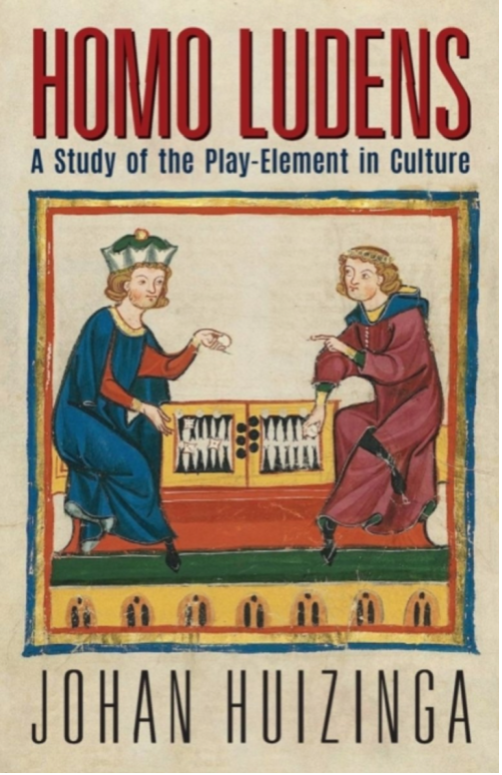
In 1938, the Dutch historian Johan Huizinga wrote a book titled “Homo Ludens: A Study of the Play Element in Culture”. The core message of Huizinga is that play drives culture.
That the disposition of a culture is already embedded in the play preceding it.
“By this we do not mean that play turns into culture, rather that in its earliest phases culture has the play-character, that it proceeds in the shape and the mood of play (Huizinga)”
“There is a third function, however, applicable to both human and animal life, and just as important as reasoning and making—namely, playing. (Huizinga)”
This brings me to the insights of John Seely Brown in “A New Culture of Learning”, who quotes Huizinga extensively.
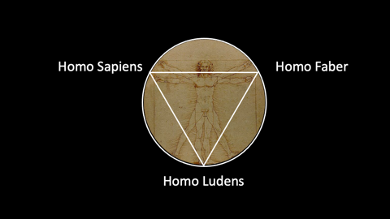
Visual/Insight inspired by John Seely Brown (JSB)
JSB talks about a “21st Century Augmented Imagination”, with a better balance between Homo Sapiens (Man as a Thinker), Homo Faber (Man as a Maker), and Homo Ludens (Man as a Player). Where imagination is triggered, tested, and augmented by play. And discovering the rules of the (future) game to play by playing it.
“In a world of near-constant flux, play becomes a strategy for embracing change, rather than a way for growing out of it (JSB)”
So, by adding “play drives culture”, we get:
Play drives structure drives flow drives behavior drives culture drives change.
Or in simpler, reductionist terms:
Play drives change
This post was written as a guest contributor to nexxworks.
This version includes additional imagery related to the books mentioned.

This post is part of a series of essays bundled under “Travelling without moving”.
Intro of that series can be found here.
The plan/ambition with this series: to share where I have been the last year, what I learned, where I am going, and what is required.
The broader quest is to discover what is required to enable real change.
After the Play-Post of begin Jan 2021, we continue with “Anxious” in a post-VUCA world.
BANI is what is next after VUCA.
Already in 2018, Jamais Cascio coined the term BANI. See my post from Aug 2019 and Jamais’ update from April 2020.
BANI stands for Brittleness, Anxious, Non-Linear, and Incomprehensible.
Let’s focus on the “A” of BANI.
I suggested that the preferred response to Anxiousness was empathy or agency.
But that felt too open ended.
Empathy with what, and agency in what kind of world?
And was it forward or backward looking?
A possible world or a preferred world?
I went back to the most common definition for anxious:
“being worried about what may happen or have happened”
Like a rabbit caught in the headlights, some people are so frightened or nervous that they do not know what to do. They sometimes remain still because they do not know where the light comes from or which way to go.

Another reaction is to fake that you know what to do, especially if you are in the spotlight for one reason or another. In other words, to bluff yourself out of an anxious situation.
Imagine a workshop where the top executives of a firm are sitting on the first VIP row of a theatre (in COVID-times, it would be a massive Zoom session with all the employees being able to look over the shoulder of their executives).
All the employees are sitting in the rows behind the VIP row to witness how their executives manage a difficult situation, or even more frightening, being able to see inside the heads of those who bluff to know, don’t blink an eye, and confidently steer their troops in the wrong direction, efficiently of course.
Remaining still or bluffing strong are most probably not the wisest responses to anxiety.
A better response would have to do with orientation or some kind of possibility mapping.
I assume many of my readers are familiar with Joseph Voros’ Future Cone.

Great background explanation by Joseph Voros here.
These days, you can buy out-of-the-box possibility mapping workshops from some of the big-4 and many boutique consultancies. Some of them already fully COVID-proof online, with Miro boards of future cones, chatrooms, Clubhouse conversations, Slack and other real-time streams.
But all this online-first coolness can also be distracting. What I am exploring is some kind of new genre, where we also inject artists to resonate with and for the content at a non-cognitive level, not as entertainment, but with an aesthetic that is demonstrative, not just a gimmick overlay.
An aesthetic that has a sense of stillness and serenity that makes the effort and work real, beyond perception and reason, with an anchoring in humanistic relevance.
Without falling for the temptation to add such toolkit to a “Pot-Pourri” of other coolness, as a tapas-bar, a Chinese menu to choose from.
What is missing in the “Pot-Pourri” is a sense of agency, a sense for direction and choice. Choice as in opinion, and direction as in judgment and daring to step forward with preference.
If not, the online-first future cones become a surrogate for analog Post-It-driven brainstorms, just mapping future concepts on the dimensions of possible, plausible, probable, and impossible.
The crux is daring to address the preferrable future. Because that is using the map beyond seeing better what is and what could be. It is using the map for standing for an opinion, a direction, most probably in the space of moral, spiritual, and aesthetical advancement.
That’s of course a more difficult sell.
But for now, let’s summarise, not as a conclusion, but more as a beacon in our developing story that a possible response to anxiousness is possibility mapping with the courage to set direction and preference.
Next time we’ll talk about “Unbound” – Unbound from thingness that is.
Hope you stay on board.
Warmest,
Nice little list, mostly new releases – play in shuffle mode > increases happenstance 😉
If you can’t get enough of these and want more than 5 articles, you can hang on to the firehose, the extended version of Petervan’s Delicacies in REVUE. Also in this edition with loads of videos. Subscribe here: https://www.getrevue.co/profile/petervan
This post is part of a series of essays bundled under “Traveling without moving”.
Intro of that series can be found here.
The plan/ambition with this series: to share where I have been in 2020, what I learned, where I am going, and what is required.
The broader quest is to discover what is required to enable real change.
After the Pause-Post of end Nov 2020, we continue with “Play”.
“I’d like to do nothing for some time
be free
flying and gliding
like birds in the sky
left, right, up, down, up, down,…
defying centrifugal forces
unlimited by time, space, distance, force
like free painting
with myself as the paintbrush
and the sky as canvas
4-dimensional
playful like the birds,
showing little tricks,
challenge and pursue
but not limited
by any form of danger”
@petervan
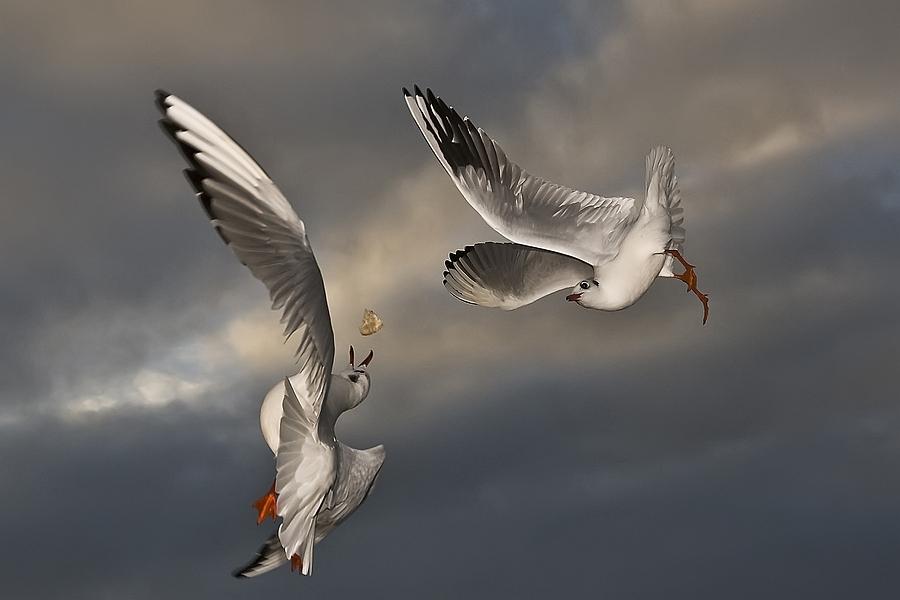
It is a poem I wrote in 2012 laying at a pool at the Paradores Hotel in La Palma (Canary Islands), watching the birds playing in the blue sky…
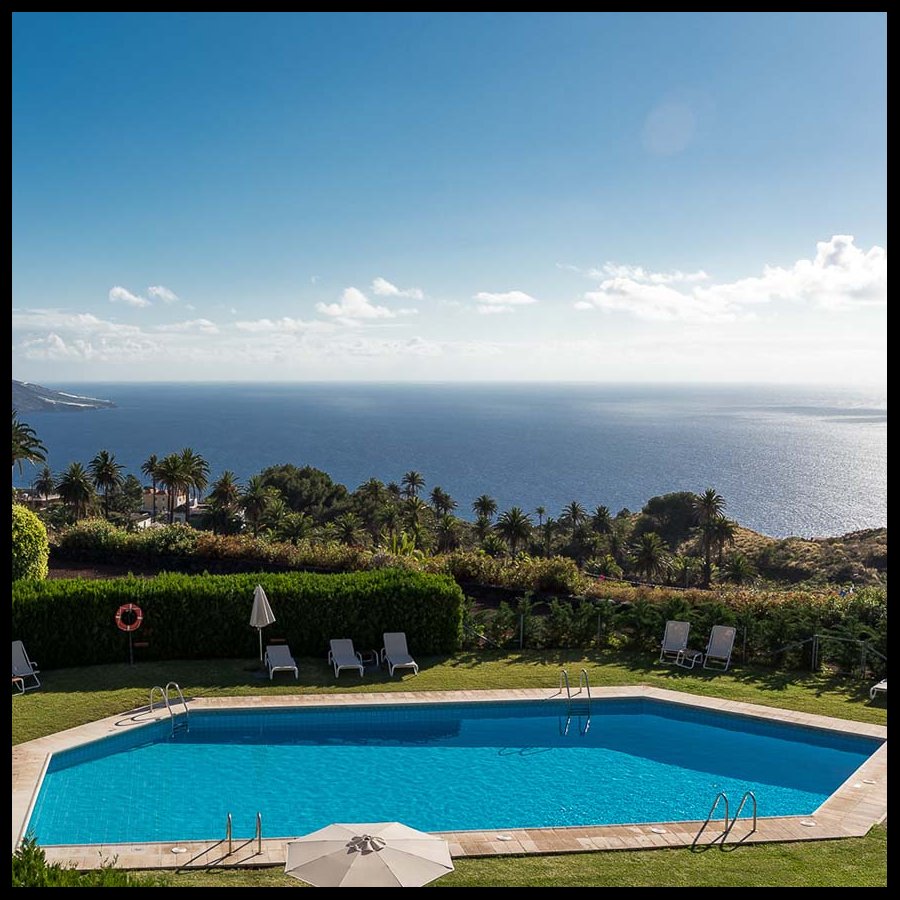
This is the sort of play I would like to write about today.
This is the sort of play written about by Johan Huizinga in Homo Ludens in 1938
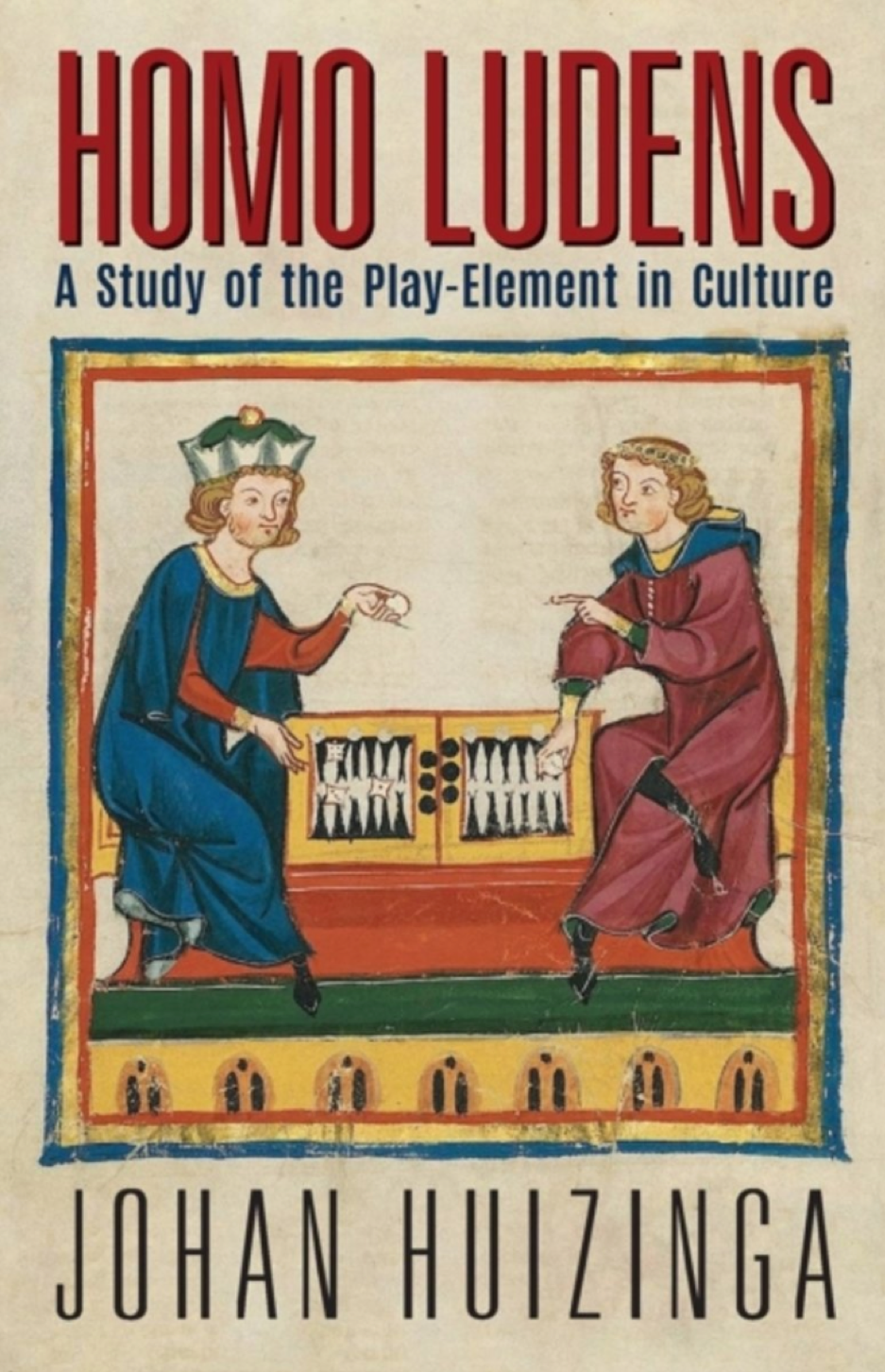
I believe I already mentioned Homo Ludens in my post about a New Babylon
Huizinga believes play is of all times, and not limited to humans.
Animals play also.
A lot.
It is not “play” as in “game”.
Game – at least finite games – hints at some underlying sense for competition.
This is play without competition.
Play just for the pleasure of play.
Like birds in the sky,
cows in the pasture,
dogs on the beach,
humans teasing each other…
The core message of Huizinga is that play drives culture.
That the disposition of a culture is already embedded in the play preceding it.
By this we do not mean that play turns into culture, rather that in its earliest phases culture has the play-character, that it proceeds in the shape and the mood of play (Huizinga)
Play is irrational.
Play is a voluntary activity.
Play has a tendency to be beautiful. It may be that this aesthetic factor is identical with the impulse to create orderly form, which animates play in all its aspects. The words we use to denote the elements of play belong for the most part to aesthetics, terms with which we try to describe the effects of beauty: tension, poise, balance, contrast, variation, solution, resolution, etc.
Play casts a spell over us; it is “enchanting”, “captivating”. It is invested with the noblest qualities we are capable of perceiving in things: rhythm and harmony.
The child plays in complete—we can well say, in sacred—earnest.
But it plays and knows that it plays.
Play is a voluntary activity or occupation executed within certain fixed limits of time and place, according to rules freely accepted but absolutely binding, having its aim in itself and accompanied by a feeling of tension, joy and the consciousness that it is “different” from “ordinary life”.
We do not play for wages, we work for them
@Huizinga
The last one resonates well with my current state of being. For me, and especially since my retirement from corporate life on 1 Dec 2020, “work” has become “paid play”, although most of the work in 2020 was “unpaid play”.
But it is play.
In 2017, in my series “Trends for human advancement”, I strongly believed that structure is driving everything, and landed on the phrase:
“Structure drives flow drives behaviour drives culture drives change”
With the insights of Huizinga, I would complement it as follows:
“Play drives structure drives flow drives behaviour drives culture drives change”
So, to be able to change, we first need to re-learn to play.
“There is a third function, however, applicable to both human and animal life, and just as important as reasoning and making—namely, playing.”
@Huizinga
This brings me to the insights of John Seely Brown in “A New Culture of Learning”, who quotes Huizinga extensively
I rediscovered John Seely Brown (JSB) when reading “Design Unbound” that he wrote together with Ann Pendleton-Jullian. Much (!) more about that book and Ann’s work and how it changed and formed my thinking in 2020 and ongoing.

JSB talks about a “21st Century Augmented Imagination”, with a better balance between Homo Sapien, Homo Faber, and Homo Ludens
Play, questioning, and—perhaps most important—imagination lie at the very heart of arc-of-life learning
In a world of near-constant flux, play becomes a strategy for embracing change, rather than a way for growing out of it
Play fuses the two elements of learning that we have been talking about: the information network and the petri dish (or bounded environment of experimentation). That fusion is what we call the new culture of learning
@JSB
Later in this series, we’ll also talk extensively about the concept of “Studios”, leveraging the practice of practices that is architecture (again, as so well documented by Ann Pendleton-Jullian in “Four Studios (+1)”)
The key point here that play and critique are indispensable tools and skills for collective learning when integrating game play and game design in the scaffolding of the disposition of imagination.
Next time we’ll talk about “Anxious” one of the states of a post-VUCA world. And what a possible response to that anxiety can be.
From there – in subsequent posts – we’ll leave the road of reductionism and will enter a space where we will mix more abstraction and holistic thinking.
Hope you stay on board.
Warmest,
Also in the new year, I will continue with my usual, incoherent, irregular, unpredictable collection of interesting sparks. Handpicked, no robots. Minimalism in curation. Enjoy!
If you can’t get enough of these and want more than 5 articles, you can hang on to the firehose, the extended version of Petervan’s Delicacies in REVUE. Also in this edition with loads of videos. Subscribe here: https://www.getrevue.co/profile/petervan
Musical harvest December 2020 > most are new releases > as usual more fun when played in shuffle mode > more surprise > enjoy
As usual, an incoherent, irregular, unpredictable collection of interesting sparks. Handpicked, no robots. Minimalism in curation. Enjoy!
If you can’t get enough of these and want more than 5 articles, you can hang on to the firehose, the extended version of Petervan’s Delicacies in REVUE. Also in this edition with loads of videos. Subscribe here: https://www.getrevue.co/profile/petervan
 Petervan Studios