Innotribe Special Session at SOFA: The new thinkers

SOFA stands for SWIFT Operational Forum Americas, a yearly event targeted at a typical operational audience. This year’s SOFA is on 8-9 March 2011 in NYC. The theme for SOFA 2011 is “Defining the next generation of financial services”.


marriot marquis NY


Innotribe is SWIFT’s innovation initiative. Innotribe’s mission is ‘Enabling Collaborative Innovation’. Part of our activities includes events: existing SWIFT events like Sibos and SOFA, third party events like CPA in Canada and EPCA in Europe last year. It usually translated into a “special” session, with lots of professionally facilitated interactivity.


Print


With Innotribe events we have the ambition to “unpack” stereotypes, myths and hypes. These Innotribe Events are an energizing mix of education, perspective, collaboration and facilitation. Our success factors for this new type event are organized along the following three axes of “opening-up” our traditional ecosystem: audience, content and brand recognition.

So, what’s up at SOFA this year ? We have two things going on:

  • At the end of day-1, yours truly will give the presentation “How to make babies” a strong metaphor for SWIFT’s Innovation Framework. Prezi version of this presentation is here. Tip: set sound “on”
  • At the end of day-2, our innovation team will animate a Special Session “The New Thinkers”

Building on the Innotribe @ Sibos tradition of exploring “Tectonic Shifts”, this Special Session will be an energizing mix of education, new perspectives, collaboration and facilitation.

Our goal is to stimulate the generation of new ideas by bringing together a powerful mixture of audience members and by enabling freedom of discussion – allowing the conversation to take the participants into any and all areas that open up on the day.


We believe strongly in the potential

of unexpected encounters,

and the magic that can happen

when people from

different background

are brought together


So the innovators and change agents of our industry will be invited to join the SOFA audience (and also to join us in Toronto for Sibos 2011 in September), and we hope this will foster exciting new discussions between them and the traditional SOFA attendees.


skyscraper lunch


Ideas do not typically come out of the blue. Rather, they are usually variations of existing ideas. Sometimes, simply looking at a familiar idea from a different perspective can spark a new idea or the combination of existing ideas to achieve new goals and create radically different value propositions. All the topics we propose to discuss during this Innotribe Special Session at SOFA are also potential subjects to explore in Toronto – but we are looking for your feedback to tell us if these are the right ideas to stimulate your creative thinking!

Presentations from five great modern thinkers will culminate in an interactive exchange between the SOFA audience and the speakers, led by Innotribe facilitation champ Mariela Atanassova. The audience will be able to drive the discussion according to the themes that most interest them – ensuring everyone will have an opportunity to collaborate in the innovation we hope this session will stimulate.

Here are The new thinkers:

introducing_miemis
Venessa Miemis
(http://emergentbydesign.com/about/): Free agent, Master in Media Studies at the New School, NYC, futurist and digital ethnographer, researching the impacts of social technologies on society and culture and designing systems to facilitate innovation and the evolution of consciousness. Venessa will update us on The Future of Money project (world premiere at Sibos 2010) and The Future of Facebook, a new research project sponsored by Innotribe as Corporate Patron.


rushkoffbiosm

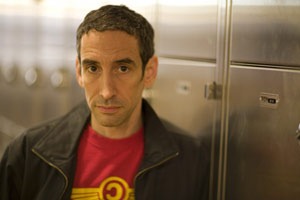
Douglas Rushkoff (http://rushkoff.com/bio/): thought leader and provocateur. Author of best selling books Cyberia : Life in the Trenches of HyperspaceLife, Inc, and Program or be Programmed (all Amazon Affiliate links). Doug will give a talk about New Capitalism, and introduce his latest project on a Summit he is organizing in NYC on 20 October 2011 called “Contact”. Contact Summit will seek to explore and realize the greater promise of social media to promote new forms of culture, commerce, collective action and creativity.


brianzisk

Brian Zisk: organizer of the Future of Money & Technology Summit in San-Francisco (www.futureofmoney.com). Brian will summarise the findings of the Summit that took place on 28 Feb 2011. Psssst ! If you still want to go to Brian’s event, go the the registration page at ttp://futureofmoney.eventbrite.com/ and use the discount code “Innotribe”.


stoweboyd

Stowe Boyd (http://www.stoweboyd.com/ ): probably THE authority on Social media, Stowe is a Social Philosopher and Webthropologist from NY. His work focuses on social tools and their impact on media, business, and society. In 2011, Stowe is focused on a new line of research: Social Cognition. This research is co-sponsored by Innotribe, and we hope to share the final results at Sibos 2011 in Toronto.


kevinslavin

Kevin Slavin (http://about.me/slavin): also from NY, Kevin is founder of AreaCodeInc (recently acquired by Zygna, the undisputed leader of Social Games). Kevin will talk about the New Future and “Those algorithms that govern our lives” – including our personal finances!


5429335705_93ef6aa3cb

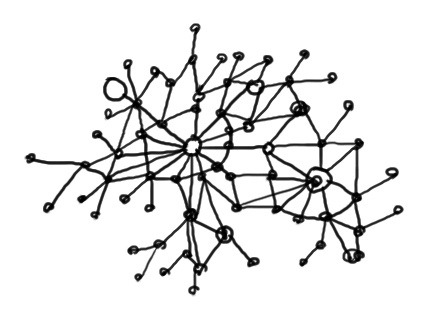
(picture from Dave Gray’s blog)

For the interactive part, we will organise the session around the organic growth aspects of cities. I have written about this before in my post “How to make babies”, and recently there was a fantastic post by Dave Gray on “The Connected Company”.  We invited Dave to SOFA as well, but he unfortunately could not make it.

Dave’s post is a fantastic post – and as far as I am concerned – one of those game changing post already for 2011, and I will definitely come back to it later.

Dave for example says:

And today, thanks to social technologies, we finally have the tools to manage companies like the complex organisms they are. Social Business Design is design for companies that are made out of people. It’s design for complexity, for productivity, and for longevity. It’s not design by division but design by connection.

He is also author of “Gamestorming, A Playbook for Innovators, Rulebrakers, and Changemakers” (Amazon Associate Link)
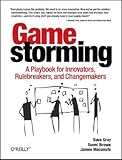


Looks like the book is very much about the principles that our team applies for interactive session design.

And gamestorming

is exactly what we’re going to do

at SOFA

during this special session


What: Innotribe Special Session at SOFA 2011, NYC

When: From 2-5 pm on 9 March 2011 at SOFA (http://www.swift.com/events/2011/SOFA/index.page

Location: Marriott Marquis, Broadway, NYC

Future of Money and/or Value

If you’re interested in discounted tickets for one of the coolest Future of Money conferences of Q1 2011, bear with me and read till the end of this post.

Print

As most of you will remember, SWIFT’s innovation initiative “Innotribe” was one of the Executive Sponsors of Future of Money video production.

image

The Future of Money from KS12 on Vimeo.

The video is in my opinion a milestone. Not only for it’s content and the way it was produced (co-funding), but the whole movement that followed.

It is only now that it became clear to me that the event – in this case Sibos – is not the end-point in a process, but the middle. The post-event discussions and dynamics are at least as important, if not more important. Just check-out for example the animated discussion on Chris Skinner’s blog in November 2010 on “Why banks and socials agree to disagree”.

“Social” – as in Social tools, Social Currencies and Social Capitalism – is in my opinion a very strong force to take into account in our long-term thinking about financial services. It is one of the suggested topics we have in mind for Innotribe at Sibos 2011.

  • I am preparing another blog post “The Long Direction” on this subject and some other deep understreams that are going to change fundamentally how we think about corporations, banks and economy and corporate culture in general.
  • With Innotribe will sponsor a new research on Social Cognition by Stowe Boyd, the most important Social Philosopher and Webthropologist at this moment.

The Future Of Money crew produced post-event the following interesting infographic. I love the sharpness and detail of their analysis. In one view, you see how Creation, Storage and Access of VALUE intersect and how these intersections are each interesting opportunities to be taken up by start-ups or modern capitalists. Some indeed have taken their chances already: see the bottom of the chart with a number of start-ups in this space.

I would like to emphasize that the intersections in the infographic do NOT talk about the Future of MONEY, but about the Future of VALUE. More about this as well in the upcoming “The Long Direction” post. At this stage it’s enough to point you to Umair Hague’s latest book “The New Capitalist Manifesto: Building a Disruptively Better Business” (AmazonAssociates Link).

But I divert… Here is the Future of Money infographic (you can also download a nice PDF version of this by clicking on the graph below).

FOM_infographic_540x764

What an impressive list of start-ups and new contacts ! Indeed,  one of the biggest wins of our Innotribe initiative is the network of people we connect with.

This network is a very powerful force. Here is another example of this network-effect:

Given our work on Future of Money at Sibos, Mike Sigal  – Founder and CEO of Guidewire Group and part of our start-up judge panel at Sibos – introduced me recently to Brian Zisk, founder and organizer of the Future of Money and Technology conference in San-Francisco on 28 Feb 2011.

image

When looking at the conference program and the list of confirmed speakers, I thought “Wow” and two days later I was on a confcall with Brian. Besides being the Executive Producer of this Future of Money & Technology conference, Brian Zisk is a serial entrepreneur and technology industry consultant specializing in digital media, web broadcasting and distribution technologies.

brianzisk

Brian wanted us to speak about Innotribe and Future of Money at Sibos 2010, but unfortunately, given to some other commitments and plans, none of our team could make it to San Francisco on that day.

But we both quickly spotted the possible synergies – wouldn’t it be great to get a subset of these speakers to Sibos into the Innotribe stream for example – and we came to the following pragmatic agreement.

  • I was going to write a blog about his event, and in return my readers could get some discounted tickets for his show. And he would promote our Mumbai and Toronto events later that year. Yes, it can be that dead-easy. No strings attached, pragmatic. Piece of cake if you share the same passion. If you want such a discounted ticket, see the end of this post.
  • But we kept on talking… It suddenly crossed my mind that only 2 weeks later, SWIFT was organizing its SWIFT Operational Forum Americas on 8-9 March 2011 (SOFA). As we had an Innovation slot in the Special Session on day-2 of that event, why not ask Brian to come over and give a wrap-up of his conference ? Btw, watch this space on the Innotribe activities at SOFA: we are working on an impressive list of speakers for this Innovation Slot on 9 March 2011. Will be subject of another post.
  • And why not continue in this direction and see what we can do together for the first stand-alone Innotribe event in Mumbai, later this year on 1-2 June 2011 ? This event – hopefully a first in a long series, will be titled “Unpacked” and this Mumbai edition will focus on Mobile Payments. More on that later as well.
  • And then let the whole movement culminate to a climax at Sibos Toronto from 19-23 Sep 2011 ? I have a first meeting with the Sibos 2011 organizing committee in 2 weeks. Yes, we start early °-)

So how to get a discounted ticket for the Future of Money & Technology conference on 28 Feb 2011 in San-Francisco ?

Enhanced by Zemanta

Digital Identity Tour Part-3: Personal Data “something”

This post is a third in a series on personal digital identity. Part-1 “The unpolished diamond was published here in August 2010 and Part-2 ‘The Digital Identity Tuner” was published here in September 2010.

Today’s post is not reporting about the tour we did in June 2010, but rather some reflections based on a number of serendipitous encounters during the last two months.

D2_G793373VG.1_FC_TRON_OK.jpg.360

I am a strong believer in serendipity or the power of encounters by accident and the resulting idea shifts that can be generated during such meeting of different expertise.

My first encounter was with Azeem Azhar, CEO of Peerindex.

One day I was at a conference, and one of the speakers asked the audience “I would like to know what sort of application you guys want me to built”. It was one of those conferences where folks twitter a lot during the sessions, and I posted a tweet saying: “I would like you to develop my Digital Identity Tuner”.

It got re-tweeted, and in the end got picked-up by Sean Park from Nauiokaspark (he was one of the Innotribe Leaders at Sibos Amsterdam, and he is also an investor in Peerindex), who introduced me to Azeem.

Peerindex helps you understand and benefit from your social and reputation capital online. How much is your online reputation worth ? PeerIndex is a web technology company that is algorithmically mapping out the social web.

The way we see it, the social web now allows everyone endless possibilities in discovering new information on people, places, and subjects. We believe that the traditional established authorities and experts – journalists, academics, are now joined by a range of interested and capable amateurs and professionals. As this locus of authority shifts, many new authorities emerge. PeerIndex wants to become the standard that identifies, ranks, and scores these authorities — and help them benefit from the social capital they have built up

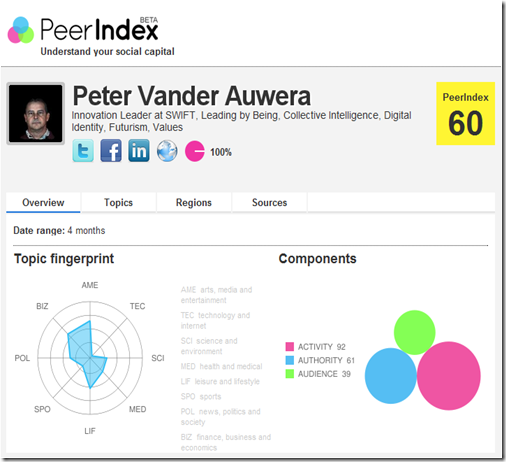
Btw, my Peerindex is 60. That’s based on my digital footprint on Twitter, Facebook, LinkedIn, and my blogging activities. It is obvious to see that this number “60” may one day translate into some virtual social currency.

image

There are similar services like this: Klout is well known. Same principle. Some trend toward social currency of your personal platform. It’s also obvious that this capital will become very important for recruiters to find the people who have real on-line influence and reputation.

image

Like Peerindex, Klout also offers some more drill-down features, showing you influence “style” for example:

image

As you start drilling down in these data, this starts to smell quite a lot like some of the zooming in/out ideas I elaborated on in “Digital Identity Tuner”.

Azeem and I will continue talking about this. What Azeem liked in the “Tuner” were the ideas of control of what pieces of my profile I want to share with whom in what context.


My dream is that we have a prototype/mockup

ready by Sibos Toronto in September 2011,

where we probably will have

an Innotribe theme on Digital Identity

My second encounter was with Phil Windley, CTO and Co-Founder of Kynetx

One day – it was a day after a conference has ended – I was going to have breakfast just before checking out from the hotel and flying back home. At the table next to me, I see a guy working on his PC. I see a big sticker “Kynetx” on the PC. I had heard the name of the company several times before, so I said “good morning” and quickly introduced myself. It happened to be Phil Windley.


image


Kynetx is a private company that provides the first Context Automation Development Platform. This platform, powered by Kynetx Network Services (KNS), provides easy-to-use development tools to create context-sensitive, cross-platform apps that help build relationships between app owners and users.

I would describe it as

an event based integration engine

in the cloud


So we made contact, and once back home we arranged a Webex demo session.

Boy! What I saw really blew me away from my socks ! I saw a demo with a credit card vendor who used Kynetx to establish a new direct channel with the credit card holder, completely disintermediating the banks. I saw another demo with really very deep integration of DBS360 into Salesforce.com

I knew he had something to do with identity, and back home I found out that Phil Windley also co-founded and co-produces the Internet Identity Workshop with “identity woman” Kaliya & VRM-guru Doc Searls.

Phil has a great blog called Technometria

image

He has a great perspective on the key differentiator between today’s social networks and Personal Data Ecosystem the emergence of the personal data store where individuals control their own data.

This is of course very relevant to our eMe winner project of Sibos 2009. As I mentioned already many times before, with hindsight the eMe premise of a single or even distributed Personal Data “Store” or “Locker” is flawed. On Windley’s blog I finally found a good discourse on why it is flowed.

Check out the following two posts:

Like always, there is nothing such convincing like a demo.

The video below shows a conceptual demo illustrating the opportunities that are available for automating the contextual activities that people undertake every day. At the heart of the demo is a personal data store and Kynetx. The interactions are all done using real Kynetx applications that are plumbed in a realistic manner. The scenario uses 5 different APIs and a dozen individual rulesets in the Kynetx system.

In the scenario, Scott Phillips gets bad news from his radiologist: he needs surgery. You’ll see that a personal data store and a collection of loosely coupled Kynetx apps automate the frustratingly disjointed activities associated with Scott’s bad news and focused his attention so he can complete the tasks with the least amount of effort.

image

Kynetx and Personal Data Services from Phil Windley on Vimeo.


My third encounter was with nobody less than Esther Dyson.

She was talking at the last Defrag conference. She was doing a fantastic talk “On Exploration”. It was about “exploring yourself”, “discovering yourself”. With my Leading by Being background, I was super concentrated.

As part of her talk, she showed her personal DNA generated by 23andMe, one of the companies she is investing in.

image

Btw, one of the other investors in 23andMe is Anne Wojcicki, who is married to Sergey Brin of Google. She has an active interest in health information, and together she and Brin are developing new ways to improve access to it. As part of their efforts, they have brainstormed with leading researchers about the human genome project. "Brin instinctively regards genetics as a database and computing problem. In a recent announcement at Google’s Zeitgeist conference, Sergey Brin said he hoped that some day everyone would learn their genetic code in order to help doctors, patients, and researchers analyze the data and try to repair bugs.

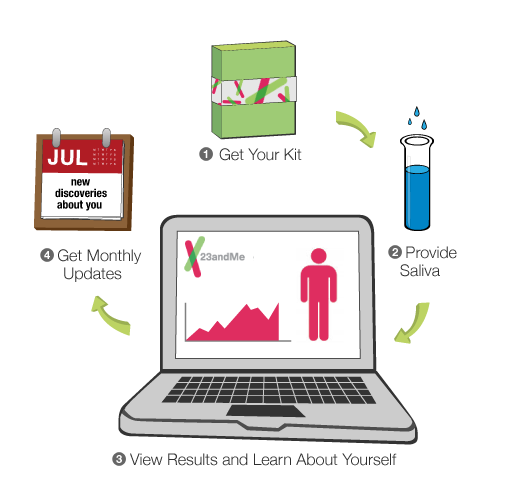
23andMe indeed offers a genetic testing service that provides information and tools to understand your DNA. With a simple saliva sample they’ll help you gain insight into your traits, from baldness to muscle performance. Discover risk factors for 92 diseases. Know your predicted response to drugs, from blood thinners to coffee. And uncover your ancestral origins. These days the promotional rate for such service is 99 USD !

Here is how it works:

image


The system generates personalized reports on your health status, your disease carrier status, your disease risk, your drug response and your traits. In other words,


there is no place to hide anymore


You see the impact of your lifestyle on your DNA. You can change something to your lifestyle, or you can continue to live in a state of denial. As Esther was explaining “its all about motivation” albeit a different motivation than the one meant in Daniel Pink’s latest book “Drive”.

What Esther Dyson was describing was a DNA-version of the Quantified Self, a movement of people who measure all sorts of things about themselves such as heartbeat, blood pressure, time usage, sleep patterns, etc and who put all that information in the cloud.

image

Obviously, it would be great if also these folks would have a Digital Identity Tuner so that they could control in a more granular what what aspect of their identity/footprint they want to share with whom in what context.

For example, you may want to share your heartbeat with your insurance company to get better insurance policy and rates, but maybe you do not want to share this with your bank.

At the end of Esther’s talk, I observed that what she was describing were actually body listeners, sensors about your human “engine”, “machine”. I wonder if there are no similar implementations about the other side of “me”, namely about my mind, my consciousness, my feelings.

I asked Esther Dyson if she was aware of any such consciousness-as-a-service in the cloud thing. She thought it was an interesting question, but that she did not feel ready yet to share all that with the world.

I love the “Know Yourself” theme:

  • From the one hand it takes quantified measurements from the human body, the “engine”
  • On the other hand, it could take quantified (?) measurements from the human mind, the “capabilities” such as social cognition, or capability to be happy, etc


Both will drive status

Both in place and time


Status is all what it is about these days. And being able to share it. And participate to it. And engage with it. What Clay Shirky called “Cognitive Surplus”. What Stowe Boyd calls “Social Cognition”.

So many reasons to start thinking of a Digital Identity Tuner that lets you control status.

Digital Identity, Digital Status, and Digital Footprint start to converge into a personal data “something”. Some started calling the “something” a “store” or a “locker”. Others think more of a “service”.

Others are aware that our vocabulary is very real-world inspired, often based on physical concepts like “storing”, or “location”, or “posting”, etc… They prefer to wait until an appropriate terms pops up and call it “Personal Digital x” with the “x” standing for “something”. I called it Digital Identity Tuner.


tumblr_lckj8mKhNd1qza6bio1_500phil0501


It is clear that this sort of identity is much more than a card, token or PKI certificate.

There is a role for a

neutral, non-for-profit, trustworthy

organization to offer

an identity and trust service

for the financial industry

Who could that be ?


Sean Park’s presentation at next week’s SOFE (SWIFT Operational Forum EMEA) will introduce you to a financial services framework, with trust and identity as foundational services. That’s on 14 December 2010 at 9am in Conference Centre Dolce, close to Brussels.

A number of the above ideas should be part of a Digital Identity Research incubation project that we will probably kick-off at SWIFT in the second half of 2011.

Let the comments flow.

You don’t have to suffer

Have you also noticed ? How many people you see dragging themselves through the office, through their lives ? They seem to have lost sense of engagement.

5131778313_fb1c97decd_z

It makes me so sad. Such a shame not to enjoy life.

Sad in the sense of empathy, and the feeling there is little I can do about it. Maybe just write a blog and hope that some of my readers will get inspired and re-find that spark that makes yourself worthy.

We all know what caused this feeling of uncompleted, not being worthy, being imperfect.

It’s caused by the disconnect between the soft/hardware of your company and the world outside there.

  • The software is what is between your ears. But  even more so about the fine sensors you have in your whole body. This is not about “mind”, this is about “heart” and “feeling”. Deep feeling.
  • The hardware is about how your company is structured. The hierarchies. The power games. The team dynamics. The motivational models. The focus on the optimization engine with efficiency programs like Lean and SixSigma that such the soul out of great companies. At the end there is only efficiency and no soul.

That’s why people are “dragging” their feet. They just FEEL its not right. And they have lost the energy to fight. The hope to regain their souls.

But of course there is something you, we, all of us can do about it.


We can start a movement


From within. Find the peers who care about people, about life, about soul.

And of course we can ask help. Outside help if needed.

Check out the site of TeamPelgrims:

image

The NEW ECONOMY demands speed, creativity, dynamism, perseverance, courage, knowledge and the ability to work with others on a multicultural basis.

The NEW SOCIETY, prompted by the Human Interest movement, demands respect for individuality, freedom, mobility and quality of life

The last thing a fish can see is the water he is in… It’s very difficult to understand the “cultural mechanisms” in which we live and breath. Leaders should be made aware that they are “trapped” in cultural viruses. We see in too many occasions that cultural viruses are multiplying and contaminating substantial parts of the organization or company. Be accountable to manage and master this non-transparent but very present dimension in the engine of the organization.

It brings me to the topic of team dynamics.

album_large_3884809

I am very lucky to be part of a great team.

But due to the stress of the last months, we seem to regress a bit as a team. Just a little bit. In the sense that we start to grow more individualistic.

Luckily some of us have good “consciousness” antennas, and the team is strong enough to 1) bring this to the table and 2) openly discuss them.

My alarm-bell went off when a new team member joined, and I witnessed myself not 100% caring for the newcomer. I said something like “Throw him in the water, and he will learn to swim”. That’s not fair. Because there are so many new things to learn, so many unwritten conventions, rules, habits, cultures.


The problem was

that I did not have any time left

to give quality time to each other


  • Luckily our team is great, and we are working on great inspirational topics.
  • Luckily the newcomer is outspoken and has the courage to send invitations for feedback.

But I can imagine if you are not in such a team, if your have not this courage, if you have lost some of your closest colleagues is the latest restructuring, and you can’t work with your new boss and the new efficiency rules, that you get dragged.

We should not let this happen. We have to redefine, revive the company culture from within. Push it to the next level. Be viral. Infect he company, as it will not work by a top down approach or rolling out a big program.

Live the spark, the energy, the enthusiasm. And hope – be sure – that it will have a rippling effect – no, an unstoppable wave – within your team, spreading out to other teams, to other departments, to other regions, to other companies, to everybody you meet everyday.

n06_freddy-cerdeira

Enthusiasm is contagious.

And don’t be afraid to ask for help. And to offer help. Probably one of the best ways I can offer help is by transferring authority to others. To hold the bike saddle and then let go. But WITH transfer of authority.

Be not afraid to show vulnerability. Create safe harbors for vulnerability. These harbors become like the womb for the fetus.

iStock_000004280142Small

Your team could be a womb.

And especially:

be nice to yourself


It’s ok to be imperfect.

I am excelling in being imperfect by NOT being nice to myself. It has to do with the word “mildness”. Be “mild” for yourself. For yourself first. I used to say to others: “apply mildness to the 3rd degree”. But it did not come across as authentic. As I was not able to be nice for myself. People, human beings just “feel” when you’re not authentic.

Brené Brown has written a whole book about this.

Brené Brown, Ph.D., LMSW is a research professor at the University of Houston Graduate College of Social Work. She has spent the past ten years studying vulnerability, courage, authenticity, and shame. Brené spent the first five years of her decade-long study focusing on shame and empathy, and is now using that work to explore a concept that she calls Wholeheartedness.

Ordinary Courage

Have a look at the “look” of her website. The illustrations have something “round”. The site creates some feeling of safety. Of roundness. Of “womb”-ness. It has a feminine softness/roundness that we seem to have lost in our company hard- and software.

I was very touched and moved by her TEDxHouston talk of June 2010.

The video is a 20 min summary of her book: The Gifts of Imperfection: Let Go of Who You Think You’re Supposed to Be and Embrace Who You Are

The video has subtitles, so the words have more impact. Without trying to make a transcript of her talk, here are some lines that resonated very strong with me:

  • Shame as the fear of disconnection
  • Don’t try to outsmart vulnerability
  • Do you believe YOU are worthy of love and belonging ?
  • Courage, compassion, connection.. who you are with all your heart
  • The courage to be imperfect
  • Be kind to yourself first
  • Connection as the result of authenticity
  • Let go who you think you should be
  • What makes me vulnerable makes me beautiful
  • Do something where there are no guarantees
  • Research is about control and predict
  • You know who you are when you think you need help
  • See a therapist who sees therapists: no family, no childhood shit, I just need some strategies
  • Vulnerability is the care of shame and fear and your struggle for worthiness
  • But also source and birthplace of joy, creativity, belonging, love
  • Vulnerability and tenderness are important
  • We “numb” the vulnerability. We “numb” everything
  • Blame is a way to discharge pain and discomfort
  • But then there is no conversation, discourse
  • We try to perfect our children, but babies are hardwired for struggle
  • We pretend that what we do does not have an effect on people
  • Let ourselves be seen, deeply seen, vulnerably seen
  • “I am enough”

Suddenly it became clear to me:

The difference is in

the (lack of) indifference

It’s about the capability

to be able

to relate to this


I am playing with the idea of building into Innotribe at Sibos 2011 in Toronto a topic on “New Corporate Culture” or “Towards a new corporate culture of difference”. Where we would invite people like Brené Brown, Vineet Nayar, Andre Pelgrims, Keith Yamashita, Marc Dowds and others ?

Something else than technology. Something else than payments. Something that touches our lives everyday. Probably more hours at work than at home. To feel happy, fulfilled, and worthy should resonate with all of us, no ? Or are you not afraid of becoming one of these “dragging” people ?

Let’s put back the “juice” in our companies.

What do you think ? Sibos ? About new corporate culture ? You really don’t have to suffer alone !

Is it really worth daring to be great?

In September this year, I was attending the BIF-6 Summit, in Providence, RI.

Why only report about it now ? Because they finally released the videos of the stories that were told at this year’s edition of BIF.

Next year’s edition BIF-7 dates will be 21-22 Sep 2011, unfortunately the same week as Sibos 2011 in Toronto. Wonder if we can not do something together with BIF that week at Sibos, if only sharing some of the 2011 speakers? I will give a call to Saul Kaplan. Look at the confirmed dream-list of already confirmed speakers: Danah Boyd, Lisa Gansky, John Hagel, Dan Pink, etc. Wow ! What a start, and still almost a year to go!

From this year’s edition, I suggest you take some time to go through my personal top-5:

Absolute topper, world-class, inspiring, moving, energizing, whatever talk came from Keith Yamashita.

Is it really worth daring to be great?

SY Partners chairman Keith Yamashita dares us all in this moving video story crafted as a metaphor from the Charles and Ray Eames video “Powers of Ten.” It’s a remarkable tale that reminds us that the future is here for us to create and it starts one collaborative duo at a time.

It’s worth every of it’s 25 minutes, and it’s a fantastic story about how “twins” in teams are the fuel of great teams.

  • It’s about doing great things like landing the Eagle in the moon, and “turning a bunch of folks blue” back home
  • It’s about having the house full of diagrams
  • It’s about when you start to believe that anything is possible
  • It’s about kids being born with greatness
  • It’s about being fully aware and fully alive
  • Trusting so deeply you can create together remarkable things
  • Duo-ships are about great invitations
  • Going actively after the status quo
  • About systems thinking + creativity
  • Building different type of organizations
  • That there is a better optimum than just the first choice
  • About having deep conversations on how to get smarter
  • To tackle things at a societal level
  • About finite/infinite resource and infinite/no possibility
  • About “then” (pre-crash), and “tomorrow”: finite resource + infinite possibility


About saying

“I trust you implicitly

to do a brilliant job,

and come back

with what  you learned”


About

Ending the tyranny

of false trade-offs


Who is Keith Yamashita ? All the quoted text below comes straight from the BIF site, but I have added my usual color and typographic emphasis:


When Keith Yamashita looks at the world, he sees complexity—a beautiful and rich one, if we can visualize our place within it.

As chairman of SYPartners , a consultancy that has worked with leaders at IBM, Apple, Facebook, Target, Blackstone, Target Financial Services, Bloomberg, Starbucks and The Coca-Cola Company, Yamashita is a master at helping people define themselves against the backdrop of a profoundly shifting business landscape. The task requires tremendous empathy, he says, a singular understanding of what clients need and want.

“The biggest fallacy of business is that it’s only rational,” he says. “All business is personal and all business is human.” Yamashita is intensely curious about what makes people tick. Who are they? What are their deep aspirations? What do they need to be successful? What’s holding them back?


Ambition

Love

Fear

The human component of consulting goes deep. “We hope for people what they wish for themselves,” Yamashita says. “I’d like to think that when we show up in a room, we authentically care about the people in that room and that they sense that.”

Still, it is not enough to simply identify a dream, Yamashita tells his clients. The only way to stand out is to be fully aware of how you fit into a wider spectrum, to figure out what unique part you play, given the circumstances around you.

“Because we live in a world that is more interconnected than it’s ever been, we are particularly susceptible to the dynamics at play,” Yamashita says. “People feel overwhelmed—it’s a natural outcome of the world we live in. There are more systems problems that require creativity than there are creative people in the world.”

To minimize the potential fallout from system shifts and to maximize the positive impact we can have on the world, Yamashita urges a return to authenticity. He says it’s a question of unlearning bad habits and relearning what comes naturally:

I do believe

that people enter this world

with a certain amount of

greatness

So many people,

through the pressures

of society

or the way we’re educated,

unlearn that greatness.

They fritter it away.

They start limiting themselves.

It’s really about

reclaiming that greatness

people learning about

how to be just themselves,

fully alive and aware.”


The positive exponential effect of all this self-awareness arises when individuals begin working together. Yamashita encourages his clients to build “powerful duo relationships” that require one of the trickiest human emotions: trust. “The duo is the smallest atomic unit where trust is built,” he points out. “If there’s only two people, you can’t shovel blame.”

With competent, self-aware individuals who relate to others on the basis of that trust, an organization has the potential to expand by the power of ten, just as in the Eames film. Zooming out, Yamashita sees a universe where companies design their own destinies by connecting purposefully to a wider array of players in order to work on a tougher set of problems.

Other remarkable stories came from:

  • John Hagel, with an even more personal version of his Sibos2010 talk on “The Power of Pull” and the role of passion in high-performance organizations,
  • Carmen Medina, on how one can innovate in a conservative castle like the CIA,
  • Jigar Shah, talking about scale in our Global Warming initiatives, and why everybody buying a Prius is really a drop in the ocean.
  • Kim Scheinberg (no video available yet), who also was interviewed in the FutureofMoney video. She’s an ex-gambler and now a new wave angel investor,
  • Gerard van Grinsven, (no video available yet), a former Ritz-Carlton executive, who became CEO of a hospital where it is all about health-care and not sick-care.

All these speakers indeed confirm, inspire and motivate it is really worth daring to be great.

That it is worth everyday to re-question yourself, and there to re-invent yourself to keep the greatness-bar high, very high.


And greatness is

not good enough anymore.


A program is not good enough anymore. What we need is an agenda.

“For a better world” for example.


Idealistic? Maybe.


Ambitious? Sure.


It is so easy to copy-cat last year’s success formula. But it does not satisfy myself. I believe you – readers, followers, innotribers – you expect more. You want us to surprise you, year after year.

I hope these principles will also guide us when articulating our Innotribe 2011 initiatives.

How to make babies ?

UPDATE: the Prezi version of the SOFA presentation mentioned at the end of this post is now available here.


image


Sibos 2010 is over! It was one of the best ever. After that week I felt completely exhausted. Empty. Because I gave my full self. Went deep. Gave and received loads of energy.

This week, it’s time for reflection. For chilling-out. Took some days off: late breakfast, some power naps. A walk here and there. Still lots of reading. Lots of tinkering. Some up-moments, some down-moments. Flowing.

And the future starts to emerge again.

Soon we have to go back to the salt-mine. Soon the treadmill starts all over again. But it does not have to be a copy-cat.

Soon we have SOFE (SWIFT’s Operations Forum Europe), running from 13-15 December 2010 in Conference Center “Dolce” in our home town La Hulpe (close to Brussels).

I have been asked to organize the Innovation Plenary on 14 December. So, here we go again!

Sean Park from the Anthemis Group will be there as well.

He was one of our VC-coaches and Innotribe Leaders for Cloud at Sibos. He will do a keynote during the plenary (a great Prezi presentation on “Platforms, Markets, and Bytes”) and a viewing of his trailer video on “Financial Reformation”. And he will help us run an Innotribe Lab on Cloud computing. Yammy !

Also for me it’s a great opportunity to refresh/reboot. I will do the second part of the innovation plenary armed with


a brand new presentation titled

 “How to make babies”


It will be one of those presentations that have been breeding in my head from some while, and suddenly materialize. Like a painting on a canvas. Like poetry on a sheet of paper. Like joy and harmony in music. Suddenly, it’s there!


clip_image002


“How to make babies” will bring together numerous thoughts collected during many conferences visited this year and ideas distilled from the books I have been reading recently. If you are interested in the books I am reading, I am inviting you to subscribe to my GoodReads.

In essence my story will start with the collision of two ideas.

The first idea was seeded in my brain by Geoffrey West (Distinguished Professor at the The Santa Fe Institute) in a presentation titled “The Secrets of Scale” delivered during the Techonomy conference in June of this year.


clip_image003

Geoffrey West is a theoretical physicist whose primary interests include elementary particles and their cosmological implications; the theory of companies, cities and global sustainability; and biology, including metabolism, aging and sleep. He served as the Santa Fe Institute’s (SFI) President from 2005 to 2009.

It happens that the folks at Techonomy just put up all the videos, including Geoffrey West’s presentation:

It also happens to be the story that opens chapter one of one of the latest books that made a great impression on me: “Where Good Ideas Come From” by Steven Johnston.

clip_image004

At Sibos, we reflected on the Long Now. In the first chapter of “where ideas come from”, Steven Johnson talks about that vantage point the long zoom.

It can be imagined as a kind of hourglass:


clip_image006

Several years ago, the theoretical physicist Geoffrey West decided to investigate whether Kleiber’s law applied to one of life’s largest creations: the superorganisms of human-built cities

And

the quarter-power law governing innovation was positive, not negative. A city that was ten times larger than its neighbor wasn’t ten times more innovative; it was seventeen times more innovative. A metropolis fifty times bigger than a town was 130 times more innovative.

The essence of Geoffrey West’s story is that cities are intensities. That cities never die. That cities are the ideal womb for idea generation, incubation and execution. That innovation scales differently than the size of the city.


Because

the information and the ideas

flow freely and in high intensity.


But how does one create a culture of intensity, of innovation? How does one create the vibrancies of cities within the walls of a castle?

Here is some additional video material featuring Steven Johnson’s ‘”Where do ideas come from”.

And a TED talk on the same subject:


It brings me to the second idea in the collision: the one of incubators.

clip_image008

Incubators at the Maternity Hospital, Port Royal, Paris (Maternité de Paris, Port-Royal). An engraving by Eugene Froment (1844-1900) from the Illustrated London News, 1884.

Incubators were invented by Stéphane Tarnier in 1880, and documented by Auvard in the historic 1883 article De La Couveuse Pour Enfants. Incubators help us grow babies. Physical babies. What I am talking about are ideas. Baby ideas that need to be prototyped. And then incubated. Many incubator models for ideas and start-ups exist.

Probably one of the more famous ones is MIT Building 20. Building 20 was designed differently. With flexibility in mind. A bit like the Value Web walls that allow you to create spaces of intensities. And when the job is done, you disperse and build new spaces, new teams. Disperse and re-group. A different composition for each new project. Get rid of the one size fits all.


clip_image010

Old Building 20, Vassar Street facade, 1997.

clip_image011

New Building 20 at MIT

The point I am trying to make here is that physical environment is equally important to have a free flow ideas. Ideas will not flow in a castle with long corridors and closed offices.

Once incubated, you need to scale. Which brings us back to Geoffrey West and “The Secrets of Scale”. You need to create intensities. As I already mentioned in a previous post:

Intensities and intentions. City intensities. Platforms of intensities. Physical or virtual. Almost requires an architectural purism and surroundings to make it work. Has to be physical.

I want to create these environments. Where small groups of intense people can meet. Can radiate. Can nurture and inspire each other. Where one hunch leads to another, and ideas cross-fertilize. Where we play the Medici-Effect for 100%.

We need to build some sort of city, some platform of intensities, some sort of campus. Not a “chalet” next to the castle.


Think big

Think scale

Think city

Embedded in the social and economic fabric of our industry. Where experts can meet and weave the next generation solutions.

Where we not only have a fertile environment for funding “only”, but where we also thought about physical housing, novel resourcing models like dedicated teams combined with shared staff from the castle. Or in-residence programs as another way to resource and bring fresh blood.

Where we have a shared infrastructure for support, project management and IT. And where we nurture a culture of experimentation. Where we have reverse-mentorship of our bankers BY the Gen-Y generation.

Venessa Miemis hit us all hard in the face at Sibos:

There is a class of young, intelligent, creative people who are disillusioned with the debt-based monetary system, and are busy building the infrastructures for a commons-based economy, which is emerging, right now, in parallel to what currently exists. The foundation of this economy is built on trust… and transparency…. and the ability of distributed networks to self organize. And using the Web as a grounds for experimentation, we’re learning more effective ways to link unmet needs with unused resources, innovate, generate wealth, and build resilient communities.

This is the prototype of the future. This is where the opportunities are.

I hope that during the Innotribe sessions the remainder of the week, we can explore ways to create bridges between these two worlds and ways of thinking, and co-evolve the next global economy.”

Venessa & friends already followed up post-Sibos with the idea of an in-residence program for bankers. To understand and connect with the new class of young, intelligent, creative people. To learn their language and adapt their values. Yes, you got it right: the bankers get mentored by Gen-Y.

I think it’s a fantastic idea. To think wealth instead of money.


With trust as the currency

of the 21st century


Where we create bridges in a strengths-based society instead of a problem mindset.


We are in a different Zeitgeist,

and most of our bankers

haven’t noticed yet.

The realization that most senior executives in finance (or elsewhere for that matter) would be completely at a loss – “sans moyens” – faced with an articulate and intelligent Gen-Y as personified by Venessa.

Things like this residence program idea: that’s the sort of babies we need to create. That’s the sort of family harbor we want for our children. And when babies become adolescents and adults, when those ideas have matured into successful companies in their own strength, keep thinking about our off-spring. As it never stops.

And despite big hopes from the singularity movement, there is a fair chance that all who read this in 2010 will die sometime. But as Geoffrey West pointed out and proved mathematically:


Biological beings die

Cities never die


The big “contours” of my SOFE presentation are drawn. This post-Sibos holiday & chilling season is ideal to let it mature. To perfect the visuals. To come to the essence. To get to its full purity. To be different by less not more. So that you can feel the full intensity. So that each of you can realize his full potential.

Let’s practice making babies !

Innotribe @ Sibos 2010 : Meet the Jury of Pitch Your Lab !

As you know by now, Thursday 28 October 2010 is our Innotribe Grand Finale day where everything comes together!

Print

Make sure to be in the Interactive Workspace from 9-10:30am on Thursday 28 Oct 2010 when we run the “Pitch your Lab” session .

This session is the culminating point of the all the work that will have happened in the Innotribe Labs throughout the Sibos week.

  • We will open with a 20 min update and reflections on the Long Now Lab by Paul Saffo, who will also be the keynote speaker in the Sibos closing plenary later that day.
  • After that, we’ll have a “Pitch your Lab” competition. The best ideas from the cloud, mobile, and smart data labs will be pitched to a jury who will select the winner of this year’s SWIFT Innovation Awards.

Listen to Kosta Peric who explains what this "Pitch your Lab" session is all about. It is your chance to win the SWIFT 2010 Innovation Award !


Here are the members of our extraordinary jury, also referred as our Buyer’s Panel:

  • Paul Saffo, Professor, Stanford University
  • Jo Van de Velde, Managing Director, Head of Product Management, Euroclear SA/NV
  • Wilco Dado, Head of Global Payments, Royal Bank of Scotland
  • Gary Greenwald, Chief Innovation Officer, Global Transaction Services, Citi
  • Lázaro Campos, CEO, SWIFT
  • Ian Johnston, Chief Executive, Asia Pacific, SWIFT
  • Gottfried Leibbrandt, Head of Marketing, SWIFT
  • Alain Raes, Chief Executive EMEA, SWIFT
  • Kosta Peric, Head of Innovation, SWIFT

The jury will be assisted and advised by a VC (Venture Capitalist) Advisor’s Panel. These VC’s were part of the Innotribe Labs during the week. Here are the members of the VC Advisor’s Panel:
  • Oren Michels, CEO, Mashery (Cloud Lab)
  • Sean Park, Managing Director & Founder, Anthemis Group (Cloud Lab)
  • Eghosa D. Omoigui, Founder & Managing Partner, EchoVC (Smart Data Lab)
  • Nova Spivack, CEO, Lucid Ventures (Smart Data Lab)
  • Jennifer L. Schenker, Founder and Editor-in-Chief, Informilo (Mobile Lab)
  • Matthaus Krzykowski, Mobile Expert, VentureBeat (Mobile Lab)

Each team will have 5 minutes to pitch their Lab-idea to the jury. After each pitch, we will ask the advice of the VC’s.

Then there will be a short Q&A with the judges, and a voice-of-the-public using our latest “high-tech” applause meter.

The winner of this “Pitch your Lab” competition will be announced during the Sibos Closing Plenary at 16:00 later that day.

We run this competition for the second time this year. Last year this session was referred to as “the best session of Sibos 2009”. We have done everything to match last year’s success. We have invested heavily in a solid design of the labs, and have armed the teams with fantastic facilitators from The Value Web, Innotribe Leaders from the business and the technology eco-systems, and matter expert VC’s.

In the true spirit of less push and more pull, we encourage you to engage in a true dialogue with the Innotribe team and the Pitch your Lab finalists. We look forward to seeing you in Amsterdam.

The Innotribe team

www.sibos2010.com
www.innotribe.com
www.swiftcommunity.net/innotribe
innotribe@swift.com
Twitter: http://twitter.com/innotribe
Hash tags: #innotribe and #sibos

Breaking: Lazaro Campos opens Innotribe @ Sibos 2010

Drop everything ! Get up early ! THE session not to be missed at Sibos this year is the Opening Innotribe Keynotes. Be there at 9am on Monday 25 Oct 2010 in Conference Room #1.

Print

Lazaro Campos (CEO SWIFT) will open this session and participate to the following interactive Q&A with the speaker panel.

Matteo Rizzi (Innovation Leader at SWIFT and your master of ceremony) and Kosta Peric (Head of Innovation SWIFT) will guide you through the Innotribe program of the week. Knowing Matteo, he for sure will have some humoristic gimmicks in his sleeve to keep you energized that morning: it will start already when you come in, as you will be “bugged”. More details on-site 😉

Five speakers, thought leaders in their respective domains will thrill you with their latest perspectives on the tectonic shifts that underpin the topics of the rest of the week at Innotribe @ Sibos. Each of them will give a 15 min presentation:

  • John Hagel, Director, Deloitte Centre of the Edge, will follow with “The Power of Pull”, or how business models fundamentally change in our hyper-connected world, and how passionate he is about passion. “The Power of Pull” is also John’s latest best-selling business book.


  • Nova Spivack, CEO, Lucid Ventures is the world-renowned “guru” on Semantic Web. He will entertain you with a talk on “The Present is the Future”, how real-time and “Nowism” is permeating everything.


  • Stephen Ellis, EVP, Wholesale Banking Group, Wells Fargo, will fire you up with his views on tectonic shifts in Banking.


  • Venessa Miemis, Graduating Student NYC, Emergent by Design will speak on “The Future of Money”. Her talk will be spiced-up with a video she produced exclusively for this event in Berlin. We already blogged and twittered a lot about Venessa here


For early birds, there will be a couple of copies of the books of Peter Hinssen and John Hagel.

After these keynotes, Matteo will pick another trick from his sleeves to make sure the audience participates interactively in a short interactive Q&A with the speakers. He will wrap-up the session with the highlights of the Innotribe day and week, and will give you a call for action to keep you engaged with us throughout the week.

Both in content, quality of the speakers, and format of this session, this will be THE not-to-be-missed session on Sibos Monday. We are convinced it will set the bar for any session for the upcoming week.

Innotribe is organized by SWIFT Innovation with the support of financial institutions, vendors and innovation leaders. In the true spirit of less push and more pull, we encourage you to engage in a true dialogue with the Innotribe team.

We look forward to seeing you in Amsterdam.

The Innotribe team

www.sibos2010.com 

www.innotribe.com 

www.swiftcommunity.net/innotribe 

innotribe@swift.com 

innovate@swift.com 

Twitter: http://twitter.com/innotribe

Innotribe @ Sibos 2010: Here are the finalists of the Innotribe Start-up Competition !

Cross-Posted on swiftcommunity.net

Print

As you know by now, Thursday 28 October 2010 is our Innotribe Grand Finale day where everything comes together!

After the “Pitch your Lab” session (9-10:30 am) and the “Open Innovation Best Practices” session (11:00 – 12:30), we launch for the first time a true “Start-Up competition”.

Make sure you book this high-energy session in your agendas!

The competition will start on Thursday 28 Oct 2010 at 12:30 in the Interactive Workspace : a rollercoaster of 11 five-minute pitches by start-ups in front of the full audience and a judge panel of real Venture Capitalists (VCs).

After the pitches, there will be a short Q&A with the judges, and a voice-of-the-public using our latest “high-tech” applause meter.

The winner of the Start-Up competition will be announced in the final Sibos Closing Plenary at 16:00 later that day.

Finalists have been selected based on their professionalism and fit with the one or more of the four themes of Innotribe 2010: Cloud, Mobile, Smart Data, and Long Now.

Here is the list of 11 finalists (in alphabetical order):

• AcceptEmail (www.acceptemail.com ): E-Billing and Payment via e-mail (**)
• BehavioSec (www.behaviosec.com ) : Behavioural analysis of keyboard/ mouse usage (***)
• Canatu (www.canatu.com ) : Printable devices based on nano-technology (***)
• Collibra (www.collibra.com ) : Business Semantics Glossary for Data Management (S)
• Cumulate: Mobile payments based on Cloud and Semantic Web (*)
• Hypios (www.hypios.com ) : Semantic web for finding experts (***)
• Kinamik (www.kinamik.com ) : Data Integrity and in-stream archiving (***)
• MiiCard (www.miicard.com ): Identity and dematerialization of bank account creation (S)
• MyWOT (www.mywot.com ) : My Web of Trust (***)
• FX Capital Group  (www.fxcapitalgroup.co.uk ): The Currency and Payments Platform (S)
• Smartlogic (www.smartlogic.com ) : Semantic analysis of contracts/legal documents (***)

(S) Spotted by our own SWIFT innovation scouts during the year
(*) Winner of the Innotribe Lab at CPA Conference June 2010, Vancouver
(**) Winner of the Florin Award competition at EPCA Conference March 2010, Paris
(***) Selected from Innovate 100 Pitchslams (www.innovate100.com ) sponsored by SWIFT.

All finalists will have the opportunity to get a G/SCORE assessment : a standardized, scalable methodology for the incisive analysis and transparent assessment of startups’ commercial viability, execution, team and business model.

This methodology has been developed by Chris Shipley and the Guidewire Group, the organizers of www.innovate100.com

And here are the VC Judges:

• Jennifer Schenker, Founder and Editor-in-chief – Informilo (www.informilo.com ) with focus on Mobile
• Oren Michels, CEO – The Mashery (www.mashery.com ) with focus on Cloud Computing
• Nova Spivack, CEO – Lucid Ventures (www.lucidventures.com ) with focus on Smart Data
• Guido Jouret, VP CTO Emerging Technologies Group – Cisco (www.cisco.com ). Best Practice Incubation.
• Mike Sigal, Co-Founder, President and Chief Development Officer – Guidewire Group (organiser of Innovate 100 –www.guidewiregroup.com ) and G/SCORE methodology to score start-ups.

The prize:

There is no other prize attached to this competition other than visibility towards the financial community and a group of experienced VC’s who have their own networks with Business Angels, VCs, and Investment Funds.

We run this competition for the first time this year. As such this is an experiment, where our main ambition is to expose the Sibos audience to the typical high-energy dynamics of such a competition and the start-up mindset in general.

Let’s start the conversation:

In the true spirit of less push and more pull, we encourage you to engage in a true dialogue with the Innotribe team and the Start-Up finalists. We look forward to seeing you in Amsterdam.

The Innotribe team

www.sibos2010.com
www.innotribe.com
www.swiftcommunity.net/innotribe
innotribe@swift.com
Twitter: http://twitter.com/innotribe
Hash tags: #innotribe and #sibos

Digital Identity Tour Part-2: Digital Identity Tuner 7.0

This blog post is Part-2 of a series that started as the ongoing thinking after our Digital Identity Tour in June 2010. In Part-1, I developed the idea of the Unpolished Diamond.

Today, I will entertain you on the concept of a Digital Identity Tuner, which in its own is also a further evolution of the Identity Rights System 3.0 post of March 2010.

It all started coming together when – during the tour – we visited PayPal.

This visit was at the end of the tour. We were welcomed by Eve Maler, Distinguished Engineer, Identity Services at PayPal, and Andrew Nash, Senior Director Identity Services at PayPal

Eve MalerAndrew Nash

These folks of PayPal basically told us to forget what we had seen earlier in the week. These are probably some of the smartest identity folks around, so you pay attention.

Indeed, I was amazed how much further ahead they were, not only in their conceptual thinking, but also in the pace at which they define and rapidly test new protocol standards.

The eye-opener for me was that there is no business in identity, but there is some significant potential when flipping the discussion to sharing and managing of user data.


It is not that much about identity,

but more about digital footprint.


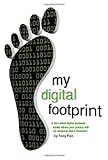
Happens that a couple of weeks later I read Tony Fish’s book My Digital Footprint, where the author explains razor sharp that there is a difference between digital identity and digital footprint.

At about the same time, I saw appearing on the internet all sorts of semantically tagged enabled viewers, like this one from Recorded Future.


Recorded Future lets you search and find for events, based on the WHAT, the WHO/WHERE and the WHEN.


What if we could do this

for a person’s digital footprint ?


Here is where my Digital Identity Tuner comes into the picture:

phil0501

Remember those old radios ? You could “tune” into a radio channel, and there was a big button, and if you turned that button an arrow would move over a “map” of pre-defined radio stations.

What if we could do the same on your digital footprint ?

Petervan Digital Persona AUG 2010

The spectrum above is my “Digital Persona” as generated recently by MIT’s Digital Personas project. Personas shows you how the internet sees you.

Every color in the spectrum is about a certain dimension of your digital footprint: books you read, education, political preferences, musical preferences, professional attributes, etc, etc…

What if you could make that spectrum “clickable” ? Not only via a browser, but also via API’s. What if you could zoom in/out that spectrum or certain aspects of it ?

So far, we have “tuned” in two dimensions:

  • On the horizontal axis, hovering over the different color dimensions
  • On the “depth” axis, zooming in/out to get more or less detail

Let me add the third dimension of Time.

m01_16895561

I could tune into the past, but I could also tune into the future, as my digital footprint does not only contain past behavior, but also contains real-time data (such as devices that I may wear to beam my heartbeat-data to the Microsoft or Google or Wallgreens or whoevers Healthvault when running a couple of miles on my cloud enabled Nike shoes.

PolarS625Ximage

It also contains data about my future, as I keep my calendar in Google Calendar, for example. Or the event for which I bought tickets. Or even on-line streaming events for which I subscribed.


image


UPDATE-2: or check out this TED Video, on the Quantified Self, with Gary Wolf’s intriguing new pastime: using mobile apps and always-on gadgets to track and analyze your body, mood, diet, spending — just about everything in daily life you can measure — in gloriously geeky detail.

image

So, the third dimension is time.


What if I would have a sort of

“Remote Control”


that could let me navigate through my digital footprint on those three dimensions. It’s like steering a helicopter via remote control.


Or maybe more dimensions. You would end-up with something that navigates you through a fractal or so…

Of course, we don’t live alone on this planet.


We are part of tribes

of swarms

with leaders and followers


I love the metaphor of “SWARM”


Imagine that we have a similar digital tuner for navigating the swarm. For seeing links between the WHO’s in the swarm.

UPDATE: just a couple of hours after my initial posting of this blog entry, I came across this great post by Greg on Digital Tonto about “The Story of Networks”. At the end he refers to a great TED talk by Nicholas Christakis “How social networks predict epidemics” 


In essence, it shows the “swarm” of communities, leaders and followers and their relationships. And how germs, ideas, memes, etc spread in a community based on the same S-curves as innovations happen. Nicholas A. Christakis, MD, PhD, MPH, is an internist and social scientist at Harvard University who conducts research on social factors that affect health, health care, and longevity.

So far, we looked at “navigating”. But the system would also allow me to define and manage who gets access to what parts of my digital footprint in what specific contexts or constraints. Not only “access”, but also “usage”.

For all that to happen, we need to fundamentally rethink how we deal with digital footprint.


We have to navigate away from identity systems that mimic our brick-and-mortar world, that are still based on the metaphor of identity cards, or passports, or electronic equivalents based on PKI systems and certificates.


No, we almost need a new semantic tagging language. Not to “tag” pages or servers, but to tag my digital footprint.

And not only “tag” it but allocate and manage “usage” rights to it. And I should be the owner of those data, whether they sit on my computer, in Facebook, or distributed open source models like Diaspora.


image


So that I end up with a collection of different “where’s” where data about me is kept. It may lead to some new form of DNS, but then a DNS of people. Not pages or servers.

Maybe all this is a bit of futuristic/iconoclastic thinking. Maybe. But when reading the book “Iconoclast: A Neuroscientist Reveals How to Think Differently” by Dr. George Berns, I came across the following two sentences and took them a little bit out of … context.

But they are so relevant to our identity context:

There are two paths in spectrum: one for identity/categorization and the other for digital footprint / Trail / history/future (time dimension, recording, in the future,…)

The high road is concerned with extracting where objects are located and throws away the elements related to their identity. The low road, on the other hand, is concerned with identification and categorization, and less so with objects’ spatial locations

As Tony Fish so well articulated in his book: we have to separate identity an footprint.

The discussion

about internet identity

has moved from identity to footprint

how we are going to manage that

with a privacy ethic

that is adapted

to our hyper-connected world


Privacy is not dead. It needs to be redefined.