Innotribe: New Economies

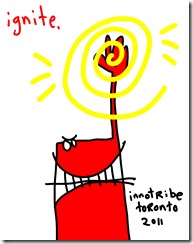
Hugh MacLeod Innotribe Ignite Man

Earlier this week, Kosta Peric and Mariela Atanassova kick-started our blogging campaign for the last 2 remaining weeks before we all head for Innotribe in Toronto.

I also just posted two blogs on Digital Identity and Big Data. These are technology subjects.

But we have taken a risk this year by programming three non-technology subjects:

  • New economies
  • Corporate Culture, and
  • Banks for a Better World

That is because we believe there is deep disruptive impact on our companies’ organizational fabric caused by fast ramping up technologies such as Cloud, Mobile, Social, Location, Big Data, and Digital Identity.

They all transform our companies in what John Hagel calls “Knowledge Flows”.


The new art is

to share, manage and create

these new knowledge flows


So when I proposed these non-technology themes to the Innotribe team, I initially thought that the “fil rouge” in all of this was that of The Connected Company, broken down into Connected Teams, Connected People, Connected “Value” like alternative currencies or reputation or influence.

“Value” was always simmering under hood when curating the program for this year, it now just hit me what is really is that links all our themes together, and suddenly I can “name” it.

I believe the encompassing theme is:


“the redefinition of value”


And the “New Economies” is a good illustration of the signals of this emerging new value paradigm.

Our general blurb on sibos.com for “New Economies” says:

“Is money the only form of transaction value and wealth? What about social currencies? We will expose you to new thinking on new economies such as the trust economy, the intention economy, the relationship economy, the social economy and the ethical economy.”

> but what does that mean ? 🙂

I believe we are witnessing the end of the double accounting system that had its embryonic start long time ago in the Middle Ages.


However

I believe we account

for the wrong things

I believe we “only” account

for what comes in/out

of the corporate walls


But our companies

have become

“porous” companies


What would happen with the balance sheet of our companies, if we also started accounting for the waste passed-on to next generations? If we would really account for waste, the balance sheets would look quite different and few companies would be in a position to present real growth and real profit. Because we don’t want – at least that is what I believe – fake growth like in a Ponzi scheme. We want growth and profit based on a correct value accounting system.

The balance sheet of course also has an asset side. Here we could start accounting for corporate values and skills like autonomy, transparency, fairness in trade, open, agility through hyper-connectedness, relationships, reputation, social attention, captive versus free customers, openness and accessibility, etc

All these asset topics are also inspirations for several new economy models. SO I truly believe this is a positive story about alternatives for doomsday thinking.

Hence this session on New Economies.

The session will run from 9am – 10:30am on Wednesday 21 Sep 2011 in the Innotribe Space of the conference.

This session is – taken into account the crazy interactive stuff we’ll have done in the previous days – a fairly traditional one, but with the speakers/igniters we have invited, it is impossible that this will be a traditional conference session.

As in all other Innotribe Sessions this year, we have “planted” three groups of people in the audience to provoke and challenge the speakers and the audience:

  • We have six students from the Social Data Lab of Stanford University, injecting the Gen-Y energy
  • We have five really cool folks from Laura Merling’s team. Laura is heading “a start-up within an enterprise”, and her team will sprinkle our sessions with start-up agility, energy and coolness
  • And we have Chris Skinner for Financial Services Club, famous blogger and provocateur.

Inspirational keynotes/igniters


JerryPort200

From a content point of view, the session will be conducted by Jerry Michalski from The REXpedition, and probably one of the most connected people I even met in Silicon Valley and beyond. He is a pattern finder, lateral thinker, Gladwellian connector, facilitator and explorer of the interactions between technology, society and business. And he also fun !

  • Gregory J. Rader, Blogger – InTheSpiral (www.onthespiral.com) will open the session. I met Gregory through his blog and we met face to face during one of my trips to the US. He is a really smart young guy, who stepped out of his regular job at a trader’s company to take responsibility for what he loves. He will start with a framework for New Economies for kick-starting our conversation. I want to emphasize it is “a” framework and not “the” framework. As we move through the lenses of the different igniters, we hope that at the end of the session we’ll have a tentative group-sourced model/framework for these new economies. Jerry Michalski, Founder of The REXpedition – this is about the relationship economy – will probably immediately start to challenge the framework.
  • Art Brock, Co-Founder from the Metacurrency Project will put all this in a broader historical and holistic evolutionary perspective; Dan Robles, Founder – Director – The Ingenesist Project will focus on the Sharing Economy. Dan has also been very helpful in promoting this session through his blog. Thank you, Dan !
  • I am particularly proud that we’ll have Umair Haque, Director Havas Media Lab and Author New Capitalist Manifesto. Unfortunately he won’t be able to make it face to face at Sibos, but he will join us via Skype. I strongly recommend that you start exploring his blog on Harvard Business Review , and get an idea of his energizing thinking on new capitalism.
  • Doc Searls, VRM initiative and Alumnus Fellow – Berkman Center for Internet and Society at Harvard and co-author of the Cluetrain Manifesto. Cluetrain was written in April 1999 (!): in here, Doc launched the thesis “Markets are Conversations”. The Cluetrain Manifesto is still as relevant today as in 1999. During this session, Doc will talk about his new and inspiring thinking about the “Intention Economy” also the title for his new upcoming book begin 2012.
  • And last but not least we’ll have Craig Burton, Founder of Novell, and Founder of The Burton Group, and strategic thinker on big infrastructure plays. He deeply believes that SWIFT should open up to the internet in a controlled way – navigating the “Burtonian Innovation Matrix” – and add “accessibility” to its core set of attributes, enabling this way what he calls the “API Economy”.

These value-conversations of course spill-over into our other non-technology themes “Corporate Culture” and “Banks for a better World”. Martine Deweirdt from the Innotribe team well soon update you on these via a subsequent blog/vlog.

I am sure you will very much enjoy “New Economies” and the rest of that values-day. Looking forward to meeting you all at Innotribe Sibos 2011 in Toronto !


Print


Peter @petervan from The Innotribe Team

This post is also cross-posted at http://innotribe.wordpress.com

Innotribe at Sibos: Discovering the new Physics of Big Data

Hugh MacLeod Innotribe Ignite Man


Earlier this week, Kosta Peric and Mariela Atanassova kick-started our blogging campaign for the last 2 remaining weeks before we all head for Innotribe in Toronto.

Today, I also posted a blog on our Innotribe theme “Digital Identity”.

Here is a deep dive on our Innotribe theme “Discovering the new Physics of Big Data”.


lots of people swimming


Our general blurb on sibos.com says

“The quantity of data available to our businesses is sky-rocketing. Data volumes continue to explode, doubling every 14 months. So what tools are out there to enable us to use the patterns that can be identified in huge data sets such as Twitter, blogs, and other forms of social media to make correlations and even predict trends? Also get the lowdown on the SWIFT Index – a research project into how SWIFT traffic data can correlate with economic indicators such as GDP. And find out the latest on SWIFT’s Business Intelligence tools and how they can help you turn data into decisions.”

> but what does that mean ? 🙂

Compared to Digital Identity – where we had 2 separate slots, here we will have one big session on Tuesday from 2pm – 5:30pm in the Innotribe Space.

As in all other Innotribe Sessions this year, we have “planted” three groups of people in the audience to provoke and challenge the speakers and the audience:

  • We have six students from the Social Data Lab of Stanford University, injecting the Gen-Y energy
  • We have five really cool folks from Laura Merling’s team. Laura is heading “a start-up within an enterprise”, and her team will sprinkle our sessions with start-up agility, energy and coolness
  • And we have Chris Skinner for Financial Services Club, famous blogger and provocateur.

For Big Data our “conductor” will be Jeff Jonas, Chief Scientist IBM Analytics Group – IBM Research Labs, Los Angeles.


Jeff Jonas


I am very proud of having Jeff Jonas with us. He is considered as one of if not THE biggest thinker about Big Data worldwide. Besides being our conductor, he has prepared a mind-blowing pitch towards the end of this session (nobody really wants to come after Jeff ;-).

Sean Park from Anthemis Group will be his partner in crime for this session. Almost a yin/yang couple, they will keep each other honest and on-track so that everything remains very relevant to financial services.


The fil rouge in this session is

that deep analysis of big data

leads to

predictive pattern recognition


Those patterns on their term can be predictors of all sorts of indicators. In the case of the SWIFT Index, the SWIFT traffic data analysis can give predictive indicators of GDP of countries. Francis Martin from SWIFT will be our man during this session at Innotribe. (Please also note there is a dedicated SWIFT Index presentation on Tuesday morning 10:00am – 10:45am in the SWIFT auditorium).

We will start from the following assumptions:

  • Banks are vast repositories of Big data.
  • This data is underused, unconnected, un-contextualized.
  • Applying the new physics of big data can solve many data intensive decision problems in the financial industry

Let’s have a look at our other igniters:

  • Michael Chui, Senior Fellow – McKinsey&Company, was one of the co-authors of the May 2011 McKinsey report on big data. Michael will bring a high level overview of what big data is and zoom into specifics for financial services
  • Sean Park, Founder – Anthemis Group, will do a short talk on “Big Data, imagine that…”, primarily but not exclusively on relevance in financial services, and emphasize that all this is “do-able” today

After Sean, we’ll have several top representatives of some of the bigger vendors in this space.

  • Larry Ryan, Chief Technologist Financial Service Industry – HP, will share his deep experience on this topic based on his numerous engagements with clients in the financial industry. Amir Halfon, Senior Director of Technology – Oracle will do same from Oracles point of view with a igniting talk on how to manage large amounts of structured and unstructured data. This is Amir’s third Innotribe at Sibos, so I am sure he will go the extra mile. And we are also very pleased to have David Campbell, Technical Fellow – Microsoft. For those who don’t know, “technical fellow” is a big thing at Microsoft, a sort of reputation and top-expertise title reserved for only 25 out of the 80,000+ employees of Microsoft world-wide.

We have two more igniters, with quite novel and exciting lenses:

  • Michael Ouliel, CEO – Ripple Homeland Security Group, will show some mind-blowing demos on what happens when you release big data power and analytics on video and audio. And Michael Driscoll, CTO – Metamarketsgroup, will focus on the velocity of date, the “movement” of data, the flow. I particularly like his lens of FAST data, BIG analytics and FOCUSED search.

From a format point of view we’ll experiment with “Sequential Conversations”, something we tried out successfully during SOFA in March 2011 in NYC.

Here is how it works: We’ll have invited some of the finest thought leaders in this big data space to give an inspirational igniter talk. The first speaker gives a specific lens on the topic. Right after our facilitation team under the leadership of Mariela will break up the audience in sub-teams and will give them an assignment to help them reflect and condense what they just heard. After that, we have the second speaker with a different lens on the topic. Again, back to the break-outs with a new assignment to digest and complement what was found in the first round. Iterate till all speakers/igniters have passed the revue.


This will be

an immersive learning experience


  • We have created an explorative learning environment, mixing stimulating talks about different aspects of big data and its application in the financial industry, with exercises enabling people to discover the main concepts around what Big data is and how it can be used for better decision making. Since the subject is highly technical, the goal is to create a step by step process by which people can discover themselves the concepts that make Big Data interesting and valuable.
  • We will stimulate thinking and reflection on where the participants could apply what they learned during the session in their job/company/industry.

And the deliverable will be some kind of puzzle.

iStock_000008426465Medium

Curious? Come and join us for this fantastic, engaging and fun Innotribe Session on Big Data.


Print


Looking forward to meeting you all at Innotribe Sibos 2011 in Toronto !

Peter @petervan from The Innotribe Team

Also cross-posted on http://innotribe.wordpress.com

Innotribe at Sibos: Digital Identity

Hugh MacLeod Innotribe Ignite Man


Earlier this week, Kosta Peric and Mariela Atanassova kick-started our Vlogging/Blogging campaign for the last 2 remaining weeks before we all head for Innotribe in Toronto. And yesterday, Matteo posted his vlog on the start-up competition.

Here is a deep dive on our Innotribe theme “Digital Identity”.

Our general blurb on sibos.com says:

This interactive session will explore the edges of the digital identity eco-system, looking into personal data stores, trust frameworks, and multi-channel authentication techniques. We will also present the findings of the research phase of SWIFT’s Digital Identity Incubation project.

> but what does that mean ? 😉

We’ll have 2 sessions, both on Tuesday morning. The first session starting at 9am in the Innotribe Space is a set of “keynotes”, or inspirational igniter pitches. The second session is a deep dive into our Incubation Project about Digital Identity, starting at 12:30pm also in the Innotribe Space.

As in all other Innotribe Sessions this year, we have “planted” three groups of people in the audience to provoke and challenge the speakers and the audience:

  • We have six students from the Social Data Lab of Stanford University, injecting the Gen-Y energy
  • We have five really cool folks from Laura Merling’s team. Laura is heading “a start-up within an enterprise”, and her team will sprinkle our sessions with start-up agility, energy and coolness
  • And we have Chris Skinner for Financial Services Club, famous blogger and provocateur.

Inspirational keynotes/igniters

I recently was reading “Engaging Emergence: Turning Upheaval into Opportunity” by Peggy Holman (Amazon Associates link).


clip_image001

One of the sentences that deeply resonated with me was:


"Take responsibility

for what you love

as an act of service”


“Is an act of service” is one of the key design principles of this year’s Innotribe at Sibos. The Innotribe team is “at your service”. It is not about any of the Innotribe team shining;


it is about you

our audience

being part of the tribe


And being able to keep your own authentic identity as part of the tribe.

That’s also why most sessions are “conducted” by an outside expert, not a Swiftie.

For Digital Identity our “conductor” will be Tony Fish of AMF Ventures. I won’t go through his impressive bio, but one of the reasons that I invited Tony is because he is the author of “My Digital Footprint” – one of the first books that explained so well the difference between “identity” and “footprint”


clip_image003


That difference, that nuance is what we will bring to this session of Innotribe. Because the subject of “digital identity” is so vast, we made a selection, in essence centered around possible facets of (digital) identity, and how can we develop a deep understanding of user centric identity.

  • Michael Ouliel, CEO – Ripple Homeland Security Group and Kevin Sharp, SVP Sales EMEA – DAON Identity X will show how mobile identity has evolved. Highlights are Risk Context identity and “fusion” of multiple authentication methods from simple PIN code up to facial recognition. They will also show a KYC process completely online, without the customer ever having to present herself at the branch of her bank.
  • Then we switch gears with Doc Searls, co-author of the Cluetrain Manifesto and godfather of the VRM initiative (Vendor Relationship Management) with a fantastic talk about Abstraction, Token strategy and Infrastructure. Must see! Must hear!
  • Azeem Azhar, CEO – Peerindex, will go through the identity aspects of his famous reputation and influence engine. I suggest that before this session, you go and check your personal reputation and influence score at www.peerindex.net
  • And Drummond Reed from Connect.me will for sure get into a lively debate with Azeem, as Azeem’s solution is based on algorithms and Drummond is a big believer of social vouching by human beings in a trusted framework. He will bring with him David Scott, Partner – K&L Gates LLP law firm – who is a world authority on Respect Trust Frameworks. These Silicon Valley guys have won the KuppingerCole 2011 European Identity Privacy Award, so fireworks guaranteed.
  • We will close this session with a presentation of our own SWIFT Digital Identity Incubation Project. This is about so much more than identity, it’s about digital assets. That’s why we have re-named the project into the “SWIFT Digital Asset Grid”. Two experts from that project team will present: Gary Thompson, Co-Founder and CEO – CLOUD.Inc and Mary Hodder, Chair – Personal Data Ecosystem Consortium. The full Identity “gang” that was part of this project will be present. You can consider them as the who’s who of modern digital identity thinking.

Deep-Dive

This session will be a super-duper deeply interactive session doing a deep dive in the “SWIFT Digital Asset Grid” project above.


Russia Ice Swimming


For this and all the other Innotribe sessions, we are so indebted to Mariela Atanassova from the SWIFT Innotribe team who has designed the interactive facilitation for these sessions. For Digital Identity, she teamed up with Scott Smith from Changeist.com.


What they have come-up with

is really incredible and is pushing the limits

of what you can imagine

in terms of session format


This will be a truly immersive learning experience session. Together with the audience we will in fact build some sort of 3-dimensional physical installation, so that you get a good “feel” of the deep concepts built into the Digital Identity Grid:

– The client/user tools: Selector and Weaver

– The infrastructure play

– The unique opportunity for banks and other 3rd parties to build services on top of this infrastructure

Somebody described the “Digital Asset Grid” project as


“This innovation

will bring bank-grade

identity, privacy, and security

to the global exchange

of any digital asset

between any parties”


everybody genius


Yes, we truly believe we have a game-changer at our hands.


There is one more thing…

In case you have not noticed, there is a strong synergy between ALL our themes at Innotribe this year.

Although it was always simmering under hood when curating the program for this year, it now just hit me what is really is that links all our themes together, and suddenly I can “name” it.

I believe the encompassing theme is


“the redefinition of value”.


That’s why we will launch throughout the Innotribe event a virtual conference currency called the “Reputone”. I am sure that Mariela – as chief facilitation designer of this Innotribe event – will follow-up on this in a subsequent blog or vlog.


2011-06-29-1DollarBillFaceBook

Looking forward to meeting you all at Innotribe Sibos 2011 in Toronto !


Print


Peter @petervan from The Innotribe Team

Also cross-posted on http://innotribe.wordpress.com

Innotribe at Sibos 2011

Innotribe is SWIFT’s initiative to foster collaborative innovation in financial services – through debating the options (at Innotribe events) and supporting the creation of innovative new solutions (through incubation).

Hugh MacLeod Innotribe Ignite Man

Print

Now in its third year, Innotribe at Sibos, Innotribe’s flagship event, runs throughout Sibos week and offers a comprehensive programme exploring a range of topics crucial to the financial industry. Innotribe at Sibos in Toronto will once again bring together a powerful combination of world experts to participate in an exciting mix of keynote sessions, case studies, and interactive discussions.

image

Some aspects of Innotribe at Sibos in Toronto will be familiar to those who’ve attended before – for example, we are keeping the Innotribe Labs and the magic they create.

But we will also explore new formats and new topics. We will experiment with new facilitation techniques such as game-storming and open space discussions. We will build on our history of creating compelling line-ups of exciting speakers to bring together a set of our most exciting innovators yet to participate. We will close the event with the Innotribe Celebration – our most ambitious interactive experience yet.

Here are Mela and Kosta explaining the high level what and how: http://innotribe.wordpress.com/2011/09/06/innotribesibos-toronto-2011-the-what-and-the-how/

In many sessions we will engage with students from the Social Data Lab from Stanford University and with young entrepreneurs bringing to the table the energy of Silicon Valley. And Chris Skinner will have a very special role: besides blogging, interviewing and tweeting he will also be our professional challenger to keep you and our speakers sharp.

image

This year’s Innotribe technology inspired topics are Social Data and Collaboration, Big Data, and Digital Identity. And for the first time, Innotribe will explore non-technology topics – corporate culture, new economies, and a Start-Up competition .

Two technology topics from previous Innotribe editions now move to the main conference: Cloud and Mobile. For the technology topics above, we have teamed up with our IT colleagues who are launching this year the “Technology Stream”, covering Cloud Computing, Time to Market, and Catastrophic Risk handling. And with our Banking Markets colleagues for the Mobile session on Thursday 22 Sep at 11am. Just another proof, that:

Innotribe at Sibos is the place

where new trends can be discovered

and explored,

before they hit mainstream

Who should attend?

Innotribe at Sibos is open to all who come to Toronto. It brings together strategists, business and technology leaders, trend-setters and trend-watchers, thinkers interested in shaping the future and doers looking to implement it – in short, anyone keen to find out how the world is changing and what that means to our industry.

Why attend?

Join us to discover new business and technology trends; share and discuss ground-breaking ideas for co-investment; and challenge each other to build theoretical concepts into tangible prototypes in professionally facilitated workshops.

Programme

image

Innotribe opening: The Power of the Tribe
In 2010, this session was standing room only. 2011 will be no different. Through a couple of inspiring keynotes, spiced up with some novel interactive formats and techniques, we will introduce this year’s Innotribe topics. A session not to be missed!

Already confirmed:

  • Brett King, Author of Bank 2.0
  • Heather Vescent, Futurist
  • Dan Robles, CEO – Social Flights
  • James Gardner, MD International – Spigit

Discovering the new Physics of Big data
The quantity of data available to our businesses is sky-rocketing. Data volumes continue to explode, doubling every 14 months. So what tools are out there to enable us to use the patterns that can be identified in huge data sets such as Twitter, blogs, and other forms of social media to make correlations and even predict trends? Also get the lowdown on the SWIFT Index – a research project into how SWIFT traffic data can correlate with economic indicators such as GDP. And find out the latest on SWIFT’s Business Intelligence tools and how they can help you turn data into decisions.

Already confirmed:

  • Michael Chui, Senior Fellow – McKinsey&Company
  • Jeff Jonas, Chief Scientist IBM Analytics Group – IBM Research Labs, Los Angeles
  • Sean Park, Founder – Anthemis Group
  • Larry Ryan, Chief Technologist Financial Service Industry – HP
  • Amir Halfon, Senior Director of Technology – Oracle
  • David Campbell, Technical Fellow – Microsoft
  • Michael Ouliel, CEO – Ripple Homeland Security Group
  • Michael Driscoll, CTO – Metamarketsgroup
  • Francis Martin, SWIFT

Related topics:

  • SWIFT Index will be have it’s own deep dive session later that week in the SWIFT Auditorium
  • Other SWIFT colleagues focused on Business Intelligence will have 2 other related sessions in the SWIFT Auditorium:
    • Leveraging SWIFT’s Business Intelligence solutions – Monday 10AM
    • Define the future of your correspondent banking business with SWIFT Business Intelligence – Wednesday 10AM

Social data and Collaboration
Facebook, Twitter, LinkedIn, Quora, Chatter and many other social data and collaboration platforms make it possible for banks to bring customer engagement to new levels of excellence. So far so familiar: but what is the bigger impact of social media on the banking business? What opportunities does this phenomenon enable for reputation and influence, talent discovery and development? And what is the best way to balance the opportunities with managing the inevitable compliance and regulation issues that social media create in the financial world?

Already confirmed:

  • Dan Marovitz, MD – Deutsche Bank
  • Boxley LLewellyn, Director of Growth Initiatives Financial Services – IBM
  • Dion Hinchcliffe, Senior Vice President – Dachis Group
  • Tom Coombes, CEO – Cognito Media
  • Pol Navarro, Head of Direct Channels and Innovation – Banc Sabadell
  • Stanford Students
  • Sarah Carter, Vice-President Marketing, Actiance
  • Drummond Reed, CEO and Founder, Connect.me
  • Doc Searls, VRM initiative and Alumnus Fellow – Berkman Center for Internet and Society at Harvard
  • Azeem Azhar, CEO- Peer Index
  • Howard Lindzon, CEO -StockTweets
  • James Gardner, MD International – Spigit
  • Darius A. Miranda, VP Social Business Strategist – Wells Fargo
Digital identity

This interactive session will explore the edges of the digital identity eco-system, looking into personal data stores, trust frameworks, and multi-channel authentication techniques. We will also present the findings of the research phase of SWIFT’s Digital Identity Incubation project.

Already confirmed:

  • Tony Fish, AMF Ventures, Author of “My Digital Footprint”
  • Drummond Reed, Connect.me
  • Doc Searls, VRM initiative and Alumnus Fellow – Berkman Center for Internet and Society at Harvard
  • Azeem Azhar, CEO – Peerindex
  • Gary Thompson, Co-Founder and CEO – CLOUD.Inc
  • Michael Ouliel, CEO – Ripple Homeland Security Group
  • Mary Hodder, Chair – Personal Data Ecosystem Consortium
  • Craig Burton, Founder of Novell, and Founder of The Burton Group
  • Kevin Sharp, SVP Sales EMEA – DAON Identity X
  • Scott David, Partner – K&L Gates LLP law firm

Corporate culture
We will explore how we can create true company culture change beyond powerpoint and processes. How do we allow for the human in our organisations, and show respect for the passion and vulnerability of the individual? How can you turn your company in to a talent factory? How can we create a community of change agents?

Already confirmed:

  • Mark Dowds, CEO Brainspark
  • Harold Jarche, Principal Life in Perpetual Beta
  • Stowe Boyd, Web Anthropologist and Edgling
  • Tom LaForge, Global Director of Human & Cultural Insights, The Coca-Cola Company
  • Sean Park, Founder Anthemis
  • TA Mitchell, Partner – Co Company

New economies
Is money the only form of transaction value and wealth? What about social currencies? We will expose you to new thinking on new economies such as the trust economy, the intention economy, the relationship economy, the social economy and the ethical economy.

Already confirmed:

  • Jerry Michalski, Founder – The REXpedition
  • Art Brock, Co-Founder – Metacurrency Project
  • Dan Robles, Founder – Director – The Ingenesist Project
  • Umair Haque, Director Havas Media Lab and Author New Capitalist Manifesto > Via Skype
  • Gregory J. Rader, Blogger – InTheSpiral
  • Doc Searls, VRM initiative and Alumnus Fellow – Berkman Center for Internet and Society at Harvard
  • Craig Burton, Founder of Novell, and Founder of The Burton Group

Future of Money: is there still a role for banks ?

New payment schemes are trying to enable peer-to-peer money transfers, dis-intermediating the banks. Money is no longer seen as the sole representation of value. New alternative currencies are being created. Facebook credits are now used by more than 250 million people. New payments schemes are being proposed at the infrastructure level of the internet. Currency is open-sourced. How can we create new systems of wealth generation and abundance? What does the future hold for banks and other financial institutions in the wake of massive peer-to-peer exchange? How do we (re)define the role of banks in this fast moving eco-system of new value providers?

Already confirmed:

  • Udayan Goyal, Founder – Anthemis Group
  • Venessa Miemis, Social Technologies Researcher – Future of Facebook
  • Antonio F. Benjamin, Global Chief Technology Officer – Citi
  • Darrell MacMullin, Managing Director – Paypal Canada
  • Heather Vescent, Futurist
  • Donald Norman, Co-Founder and CEO – Bitcoin Consultancy
  • Shamir Karkal, CFO Banksimple
  • Stan Stalnaker, President and Creative Director – Hub Culture

Banks for a better world

This session will explore how Banks and Financial institutions can create a fund and a framework for supporting sustainable and responsible businesses. Together with several inspiring speakers we would like to engage you, the audience to create a vision of what Banks for a Better World may mean. We would like to engage in a conversation around the following topics: How can we create a new generation of wealth and value platforms and services to support sustainable and responsible business? Could we create a fund to invest in developing and supporting new organisations and business models that focus on delivering different value to society, such as “better banks”, ethical businesses, etc? Could today’s financial institutions play an active role in enabling new value transactions – exchanging social reputation for cash, money for social currency?

Already confirmed:

  • Alain Dresse, CEO – Bamboost.org
  • Stowe Boyd, Web Anthropologist and Edgling
  • Stan Stalnaker, President and Creative Director – Hub Culture
  • Bruce Cahan, Found and CEO – Good Bank

Start Me Up: Innotribe start-up competition
The first round of the ‘Start Me Up’ Start-Up Competition! An invitation-only pre-selection session for start-ups, to elect the best top two of which will receive the Innotribe Award later in the week during the Innotribe Celebration…

image

The 2011 Innotribe $100K Start-up Challenge will introduce the most promising FinTech and Financial Services start-ups to SWIFT’s community of more than 9,700 banking organisations, securities institutions and corporate customers in 209 countries.

image

On September 21, 2011 at Sibos in Toronto, 10 finalists, selected by their peers and expert judges, will present to an invitation-only audience of dozens of decision makers from the world’s largest financial institutions, serial entrepreneurs, investors and media. And on September 22nd, two of those companies will each be presented with a check for $50,000 in front Sibos’ audience of 8000 financial industry. Learn more.

If your start-up is ready for the recognition and rewards it deserves from the global financial services industry, register and apply to the 2011 Innotribe $100K Start-up Challenge today!

Watch Matteo’s intro video here: http://innotribe.wordpress.com/2011/09/08/innotribe-startup-competition-at-sibos-curious/

The Innotribe Celebration
All the 2011 Innotribe themes will come together on the fourth day of the conference in an exciting non-stop “celebration” from 11am till 15:30pm – featuring open-space sessions, prototype and incubation booths, chatrooms, music, video and other animation, and of course the Award winners of our Start-Up Competition. The celebration will explore “the future of everything”. The buzz and excitement of this day at Sibos will set a new standard for interactivity in the conference space.

image

Informilo Media Partner for Innotribe

Informilo is the official media partner of Innotribe, is publishing an independent 16 to 20 page print report at Sibos entitled:

“The Networked Economy:

How Technology

Will Radically Transform Banks

and the Future of Money”

The glossy print publication is being overseen by Jennifer L. Schenker, a journalist with 30 years experience who has worked full-time, at various points in her career, for the Wall Street Journal Europe, Time Magazine, International Herald Tribune, Red Herring and BusinessWeek.

image

The magazine will use first-rate independent journalists who have worked at some of the world’s most prominent newspapers and magazines.  The publication will put business and technological developments in context, explaining how everything from mobile money to cloud computing will forever
change the world of banking.

The outline of the publication is as follows:

  • The future is here: are banks ready for it?
  • Getting the most from Big Data
  • Digital Identity
  • Mobile Money: monetizing a widening digital slipstream
  • Beyond Kenya: mobile money in the developing world
  • The future of money: is there still a future for banks?
  • Top-25: the hottest start-ups in the financial space
  • Re-inventing management in the digital age
  • Banks for a better world?

A range of opportunities are available for sponsors wishing to effectively reach and influence potential clients in this targeted publication.

Conclusion

Innotribe at Sibos 2011 will rock! Make sure to bring your energy pills!

Innotribe is about being infected

by irresistible contagious enthusiasm

of open-minded, curious

and passionate people

image

You can follow the progress of our program as speaker announcements continue between now and September on the Sibos website. Many more speakers and inspirational thought leaders will get confirmed in the coming weeks. Follow our daily tweets at http://twitter.com/innotribe or regularly check-out the Sibos website where we have grouped all sessions that are related to Innotribe at Sibos:

http://www.sibos.com/conferencedata/pages/stream_innovation.page?

We look forward

to seeing you in Toronto!

Download and check-out our latest PDF flyer here:

image

The Innotribe team

www.sibos.com

www.innotribe.com

www.swiftcommunity.net/innotribe

innotribe@swift.com

JP on Gamification, Lipstick and Pigs

And here is another fantastic talk by JP Rangaswami, Chief Scientist Salesforce.com (twitter @jobsworth) on the gamification of companies and why this can’t be something superficial like putting lipstick on a pig.

Was looking for a transcript, did not find it, so decided to do it myself. Below a summary of JP’s talk. Hope I captured the essential, and you appreciate my style of curating/highlighting.

Have asked JP to deliver something similar at Innotribe at Sibos 2011 in Toronto when we will discuss Corporate Cultures. Hope he will accept the invitation.


image

http://cdn.livestream.com/embed/readwriteweb?layout=4&clip=pla_07224833-fd06-42c0-b38f-fc03955fb5a9&autoplay=false

Watch live streaming video from readwriteweb at livestream.com


Some highlights:

  • We have always tried to take a material shift of paradigm by attaching some labels of the past
  • The inflection point is about significant changes in work, rather than significant changes in technology
  • This is not about putting something superficial on tasks that your really don’t want to do
  • Extrinsic rewards have significant risks,
  • Referring to the works of Kathy Sierra.


Have a look at Kathy Sierra’s latest guest-post on Hugh McLeod’s blog about “Pixie Dust & The Mountain of Mediocrity”

  • Find rewards inside yourselves
  • “badges” of excellence should be about reaching levels of mastery


I have no intent or wish

to put

the lipstick of gamification

on the pig of work


  • The control paradigms of the past are being challenged
  • Some assumptions on why the firm exists: Firms exist primarily in order to reduce transaction costs
  • As a result of vertical integration, a number of things used to be possible: easier access to capital,
    • Today, most people in this room have a better credit rating that the bank they use
  • Global reach and scope
    • That with the digital world is again available to everybody in this room
  • The firm was designed against the background of the industrial revolution
  • Knowledge work is in essence “lumpy”

We have such fear

if at work it is not possible to doing nothing,

we take the gaps at work,

and we fill this

with this 20st century mechanism,

called “meetings”

  • If you could fill your days with meetings, then you look busy
  • For real work, you have to stay late, as you filled your white-space
  • You have used up your time for cognitive surplus that Clay Shirky talks about
  • The kind of choices we have today are fundamentally different from the past
  • Everything on the assembly line was predicated by the division of labour

Having 1 person doing

the same thing 16,000 times a day

was felt to be acceptable in those days,

to me it feels inhuman

  • The most expensive thing was the equipment, the switching cost of equipment was very high and the collateral damage done to workers was trivial
  • Now the most expensive asset are the people in this room
  • Because we are able to switch, we are capable of doing non-linear work


It not about an inability to concentrate,

its about the inability

to hold a tension

on the garbage

that is being spewed at them

  • You never have a steady stream of work as a knowledge worker
  • The principles of the assembly line are deeply in our ethos, our very being, we get conditioned to that from our schooling system onwards
  • An ability to switch away from that is not trivial
  • The first thing that you notice about Heroku offices is that there are no desks

–> now think about

what it means

to have

a “desktop” computer


  • That’s change is possible because choice of the edge devices is with the individuals
  • Processes are king only where there are repeatable tasks and the repetition is of value
  • Part of the big shift from the static to the flow is we start spending more time dealing with the exceptions rather than with the core flow
  • The choices today are far to vast to believe in a linear progression
  • Much richer knowledge worker environment in which we must be able to recognize patterns
  • Given enough eye-balls, all bugs are shallow
  • The value of inspection when something is shared in a large group comes to the foreground
  • Wikipedia exists because of cognitive surplus: people are prepared to donate or contribute their time, and their brain, and their knowledge and their effort in order to collaborate for some common good

It strikes me

when I am typing this,

that this is exactly

what I am doing right now:

investing my cognitive surplus

for the common good

  • This truth is a valid in enterprises as it is at home
  • The use of gamification is to help generation that are already at work, because the generations coming in know this already
  • This is the generation born since 1982
  • But we live in a hybrid world
  • Genres are values
  • Hearts, Spades, Clubs and Diamonds
  • Hearts are people that like bonding and teamwork
  • Spades are people who really like to go to the bottom of things and complete their analysis
  • Diamonds are people who after surprises, wealth, aggregation and collection
  • Clubs are people who like beating up on others
  • It is a metaphor for serious thinking on what motivates people in the book “Driven” by Nitin Nohria (Amazon Affiliates link)


The 4 drivers of motivation:

the drive to acquire,

the drive to defend,

the drive to bond,

and the drive to learn


  • When you are looking for a company to work for, then you have to do this sort of “genre matching”
  • The genre of games is in fact the values and ethics of companies
  • When you join, they put you through some form of induction, and the induction is what in a gaming context you would call a sandbox, because you want to minimize damage to the person and environment, while you teach people and allow people to learn more effectively on how the firm operates
  • The discovery process of “how to”, the discovery of how the game works, in a safe sandbox environment
  • We have to think about induction in a deeper way and say “it is a sandbox”

Work has morphed

over the last hundred years,

from hierarchies of products and customers,

to

businesses becoming

networks of capabilities and relationships


  • There is a lot of work to be done on how to value this, how do you value relationships
  • Things like Klout,, influence, reputation, capability to create and maintain a group of followers, a weighted understanding of the value of your network
  • A whole new science of beginning to genuinely measuring relationships
  • Let’s put all this now in context of team selection, and missions and quests
  • Hierarchies existed because the cost of coordination was very high

In today’s world

those coordination costs are trivial,

we are moving from a world

where everybody has to go

through an MBTI or similar

and then somebody

decides about team composition,

to

a world

where the team selection

is carried out

by the individual


  • The tools have to be in place to discover who you would like to work with and what you would like to work on
  • A certificate or badge indicating that that person has the skills and the mastery to perform that task
  • Mastery at work gets meaningful
  • Most video games don’t allow you to go to level-X unless you have acquires the skills for level X-1
  • The reason to keep you at that lower level is to get you to that master level
  • Next: a reasonable understanding of where you are at
  • The idea of “save and replay” when at work

I always wanted to live

in a zero-blame culture


  • And work never has been such a zero-blame culture because of these structural weaknesses
  • Now I can get to the point where I can say “I have not failed, I have found 10,000 ways that do not work”
  • You save that which has not worked, together with the conditions within it did not work, and you can analyze and replay and deeper understand
  • Because – when the conditions change – what did not work may work this time
  • So never say “we won’t do that, we tried it before and it did not work”
  • The value of being able to aggregate any life-stream partially lies in the ability to inspect and make analysis of it
  • Conserving seeds so that they do NOT get naturally selected out
  • What did not work today may work in different conditions tomorrow
  • Somebody smart did not throw away that code of that stupid idea
  • Gamification of the enterprise is not a fad
  • It is not about providing extrinsic rewards for crap work
  • If work is crap, let’s fix that problem


From hierarchical,

linear,

top-down work

to

non-linear,

networked,

personally selected teams,

tasks

and outcomes


  • We are nearly there, but this change is going to require use to learn a lot of new things,
  • And what games can teach us is a smarter way of being able to extract those learning and bring them into the enterprise
  • Thank you

Organizations Fit for the Future

Awesome “Must-see” video by Gary Hamel. Contains a lot of the wisdom of Vineet Nayar of HCL, who wrote the book “Employees First, Customers Second”.

Btw: have invited Vaneet to Innotribe at Sibos Toronto on Corporate Culture. Hope he accepts.

I’d love to get to a stage where

Innotribe is the place

where you discover

what futures emerge

on the fringe


"Modern” management is one of humanity’s most important inventions, Gary Hamel argues. But it was developed more than a century ago to maximize standardization, specialization, hierarchy, control, and shareholder interests.

While that model delivered an immense contribution to global prosperity, the values driving our most powerful institutions are fundamentally at odds with those of this age—zero-sum thinking, profit-obsession, power, conformance, control, hierarchy, and obedience

don’t stand a chance against community, interdependence, freedom, flexibility, transparency, meritocracy, and self-determination.

It’s time

to radically rethink

how we mobilize people

and organize resources

to productive ends

It’s one one-line after the other, this talk is so inspirational. Check-out:

  • Fit for future, but also fit for human beings
  • We have to re-invent management
  • Management legacies
  • Change has changed
  • Hyper-competition
  • You have to earn your place in the market every single day
  • Knowledge itself is becoming a commodity
  • How fast am I creating new knowledge
  • An organization where people are willing to bring the gifts of their creativity and passion
  • Real reverse accountability
  • Holding your managers accountable for you succeeding in your job
  • Challenge management dogma
  • What problem is management trying to solve?
  • How do you turn human beings into semi-programmable robots?
  • You have to have aspiration, you have to be contrarian, you have to be willing learning from the fringe
  • The future happens on the fringe
  • Management is a feudalistic system
  • The web is sort of the global operating system of innovation


We have to bake

into our management values

the deep web values of

Openness,

Meritocracy,

Flexibility,

and Collaboration

  • We have been told that we can’t change our organization: that’s nonsense
  • Being resilient as human beings

We hope

that you become

a champion

for the future

Silence, I am painting

I have a week off, so it gives me some time to reflect and muse about things that are close to my heart.

This is a post about my intensity in creating and curating Innotribe events.


It is about creating

memorable events

that are memorable

because they deliver

an authentic experience


I got inspired when discussing the drive behind my work with a good old friend. At a certain moment, i described event production as some form of composition, like a piece of music, like a painting. It’s where this story starts…

clip_image002

Jan Van Eyck – Arnolfini portret

Flemish painting flourished from the early 15th century until the 17th century. Flanders delivered the leading painters in Northern Europe and attracted many promising young painters from neighboring countries. These painters were invited to work at foreign courts and had a Europe-wide influence. The so-called Flemish "Primitives" were the first to popularize the use of oil paint. Their art has its origins in the miniature painting of the late Gothic period. Chief among them were Jan van Eyck, Hans Memling, Hugo van der Goes, Robert Campin and Rogier van der Weyden.

From the early 16th century, the Italian Renaissance started to influence the Flemish painters. The result was very different from the typical Italian Renaissance painting. The leading artist was Pieter Brueghel the Elder, who avoided direct Italian influence, unlike the Northern Mannerists.

clip_image004

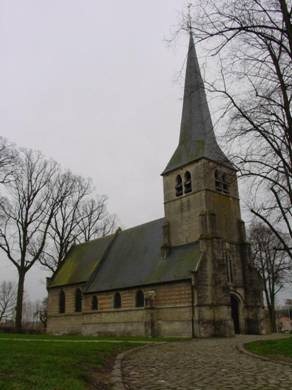
The painting above is by Pieter Breugel the Elder: “The Blind lead the Blind.”

What is interesting in this painting is that the little church actually exists. It is located in a small village “Sint-Anna-Pede”, in the heart of the “Pajottenland”, West South-West of Brussels, and where famous beers like Geuze and Lambic have their origins.

It is also the place where I spent most of my youth till +/- 21 years old.


clip_image006clip_image008

A later generation of Flemish painters were the Flemish Expressionist, with Permeke  from ‘Group of Latem’,  as generally the best known:


clip_image010

Permeke – Laying Farmer

I love the “primitiveness” of Permeke. The primitiveness makes me think about some deep and profound thoughts from Jerry Michalski himself, who planted the seed to go back to the primitive level of our understanding of a bank.

clip_image011

The word “Bank” comes from “Banca” which means “Bench”.

People used to sit on a bench, and had a conversation. It was relationship building avant-la-letter, it as about wealth creation for everybody, it was a community play. The metaphor also applies to “stocks” which originally was a “stick” with carves indicating what values where loaned between parties. See also my blog post “Banks for a Better World”

The Flemish Primitives originated in Flanders. As you all know, Brussels is the capital of Flanders (this statement in itself – albeit factual true – may cause a whole political debate in Belgium, a debate i definitely do not want to get in now ;-).

All the above just to say I was born in Brussels, raised in Flanders, where the Flemish Primitives originated.


It’s sort of back to my roots

It’s somewhere deep in my DNA


And it is the sort of DNA that i want to build into our Innotribe events. This is the sort of deep “primitiveness” i want to be the understream of Innotribe events.

Building on this DNA, I was trained as an architect at the Sint-Lucas School of Architecture in Ghent and Brussels.

Sint-Lucas School of Architecture educates designers in a spirit of critical reflection and personal responsibility. Students question their limits and the limits of the discipline. They gain insight into both material and immaterial, physical and social structures. Teaching and research are organized in a spirit of artistic and intellectual openness, of tolerance and inclusion. 

This is more the artistic direction rather than the engineering section of architecture. It’s about designing space, experiences, total experiences. It’s probably why I often “clash” with engineers. We have a different mind-set, training, framework.

It is probably why i like so much the job that i am doing today. Because in my mind, creating a quality event is about creating a total experience.


Yep,

that’s where I am setting the bar


The end result must be an experience like a very good concert. Or a painting with many layers. Although concerts and paintings are one-directional. To be consumed only. It’s push-only. Modern life has evolved to more pull. Paintings and concerts in general miss the participatory element that we try to build in all our Innotribe events.

Building an event is like doing a production. I’d like to see my role as “written by”. With a team/crew of highly sensitive, critical, creative people, who do not accept compromise. Who do not need always the team to be aligned on everything up-front.

Who can express

their very personal emotions in an emerging landscape

of diversity


When the team is blended, we don’t need alignment up-front. The forces of the understream propel us forward in the right direction. Always. Unless some team members or the enabling organization do not have this deep force, energy. Or when the team you are asking to innovate has to waste its creative energy scrambling to find resources.

Harvard Business Review wrote about this basic idea of building in constraints to instigate innovation (credits to Mela of our team for finding this quote):

Scarcity seems to have replaced necessity as the mother of invention in today’s organizations. Far too many managers believe that depriving projects of resources [such as time – Mela’s comment] will inspire innovation. While that’s true sometimes, you’re better off using constraints rather than starvation. The human brain reacts to stimuli, so while a blank sheet can terrify, one or two constraints can stimulate. Experiment with introducing a clearly defined problem and an urgent need. But, don’t create false urgency by refusing to fund a project [or not giving time to work on it – again Mela’s comment].

Can we push the limit of events further ? Yes, of course. We are just getting started.

In my wildest dreams, an Innotribe event is multi-sensory. Appealing not only to visual and audio senses, but also to smell, touch, and taste. We can have total experiences, with music as a background/foreground canvas,


building and architecting

the rhythm of the event

like a rave


With moveable and touchable walls that give way and light-up when you touch them, with people dancing and raving, sharing a Californian style new-age, un-conference open-space tribe.  OMG, I hear you thinking, what good stuff did he smoke today?


It is about the power of the tribe

The deep power of the tribe

The Innotribe


clip_image013


So it happens that some of the finest Flemish chefs put together this fantastic site and tribe of The Flemish Primitives, which is all about the very-very best of Flemish gastronomic cuisine and experiment. World-class. If you have ever seen the drive, intensity, uncompromising drive of a chef like Peter Goossens of 3-star Michelin Restaurant Hof Van Cleve then you know what i mean.

clip_image014

“It was a great experience to participate in The Flemish Primitives 2010. It’s a high-energy, high-spirited meeting, and a unique mixture of people and points of view. A very stimulating day!”

Having that drive and that result is my inspiration. That’s how we want our audience to come out of an Innotribe event.

We don’t want to go for less!


clip_image016

The atelier – be it an art atelier or a gastronomic kitchen – is a nice metaphor for our group: a couple of artists cooking and painting together. Really together-together, but in the end the composition, the final plate, goes through the hands of the master curator, the “written by” guy, the one who composes.


clip_image018

I do this with

an extreme deep intensity


I have all my antennas “on” for 24 hours a day, 365 hours a year. When i read, tweet, blog, view, listen, taste, etc it looks like i have always that lens of “how can i use this or that for the next innotribe event?”.

For me, writing a new Innotribe composition is like being in a creative flow, my most individualistic expression of my emotions.


When I am in that flow,

I do not want to be distracted

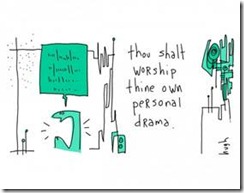
by personal drama


People exposing personal drama usually don’t have anything else better to do.

clip_image020

Hugh McLeod posted a couple of days ago:

Why are some people such drama queens? Why do some people get so obsessed with the little stuff, the gossip, who said what to who, who’s sleeping with who, who’s no longer sleeping with who…? The short answer: Because it gives them something to do. Life is short. You’d think we would have learned by now, how to make better use of our VERY limited time here on Earth.

That’s where i am setting the bar. Workaholic ? Maybe. Arrogant ? Maybe.

“I don’t expect everybody using the same standards” is often a standard phrase used in corporate landscape. But is that really so ? Maybe i DO expect everybody using the same high standards.

Or at least, I expect respect from others when I am trying and getting into this high state of flow and expression.


Respect for my time and space

Respect for my high standards


That’s probably why I hate “enterprise tourists”. The ones that make a lot of noise, but have no content. When they deliver something – if they deliver something – set the bar at creating a ripple where I want a wave.

Why I hate “seagull managers”, who pop-in, drop some comments like seagulls drop shit, and leave you behind alone with the clean-up until they show-up next year for another annual review of KPI’s or whatever artificial measurement criteria.

Why I hate an even worse category of “enterprise rats”. The ones that don’t add any value but only bring process and problems and challenges. The ones that are the messengers, the go-betweens. The ones that forward you mails where they clearly contain actionable items that could have been resolved by the rat herself in the first place. The energy suckers.

So, for you enterprise rats and tourists out there: next time you come into my space and interrupt me in my painting, be aware you are interrupting me in my creative process. Next time you create havoc in my atelier, beware you are messing up the medici effect. I don’t want energy suckers in our atelier

Team is not about celebrating individualism. Team is not the sum of the individuals. Team is about a safe harbor where every individual keeps its own identity. Team is not about dependence. Or about using the team consensus or lack thereof as an excuse.


Team is about “inter-dependence”


The team and each member of the team is one of the conditions for me – and each of us – to develop my/our full potential and make a great painting.

The team is more than the sum of the parts, the individuals. The team should not be a bowling team: where every player is after her personal best score. They miss positive feedback loops. That flows and fuels back the team.

Don’t mess around with/in team.

Messing around with/in the team is messing around with our full potential.

Innotribe Mumbai : Indian Waves and Genuine Smiles

After Kosta’s wrap-up about the event some days ago, i’d like to share with you some personal impressions and lessons learned from this event.

We have been designing this event for a couple of months. Not every day 100% – though that may have been true the last two weeks when everything comes together – but a quite substantial piece of our time.

As many of our events, it all looks a bit like chaos – organized chaos.


It looks like

things happen by magic,

but there is no magic


There is just an awful amount of preparation and design.  We spent quite some time to think through the design of our Innotribe events.

But despite all the preparation, debriefs, visuals from the location, hotel rooms, etc, etc the whole thing comes really alive once you actually are on-site and see/feel the actual space that will be hosting your event.

I landed in Mumbai around 1am the morning of 31st May 2011. Baggage got lost in London Heathrow. It was 2:30am before i was in my hotel room. Tired. The rest of the team already flew in the day or some days before.

After a short night, team briefing. So far everything in pretty good shape. We have hijacked 2 rooms and use them as our headquarters. Don’t have pictures of this, but everybody is crew: Kosta and Matteo sitting on the ground cutting hardboard. In the meantime, the facilitation crew is changing once more the design of the event. It’s getting better and better.

Lessons learned so far:

  • Everybody in the team is crew.
  • I have to let go at this stage. Have the impression my interventions don’t add value anymore. My presence is becoming distracting. Let the team do what they need to do. Don’t intervene. Trust the process

Next checkpoint: room set-up at 7pm. Problems. The previous event has not even started breaking down. And the hotel turned off the airco in the ballroom: no need for airco for night workers… Room is steamy hot. There is nothing we can do. It will take at least till midnight before our audio/visual and stage guys will have set up our stuff. Decision: let’s go to bed early and gather back at 4am for general set-up.

clip_image002

Here is Alex keeping the morale up !

June 1, 4am: room is not ready yet. Some team members worked till 2am. Has hardly 2 hours sleep. You can feel the fatigue and the irritation settling in. 7:30am and we have not done even the sound-check and dry-run. Airco is back on.

clip_image004

Somehow – as by magic – all pieces of the puzzle fall in place. It’s 8:30am and the registration desk open. Quickly to room for shower and changing cloths so i don’t smell on stage.

Here is a picture of the opening session

clip_image006

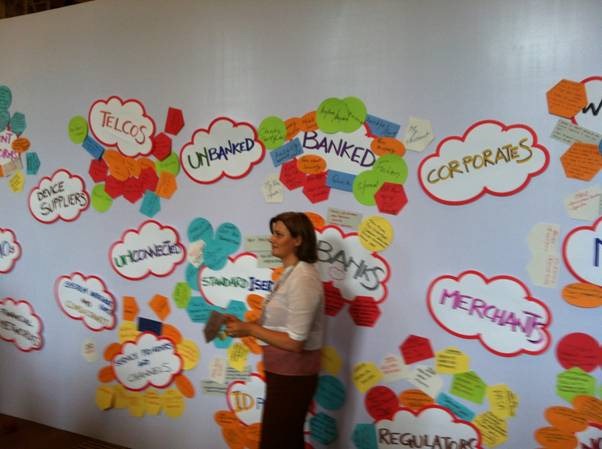
Events runs smoothly for the rest of day. End result is quite cool “knowledge wall”. Again, all team is crew.

clip_image008

clip_image010

17:30pm: Staff de-brief on day-1. Surprising how many folks turn up that i have not seen through the rest of the day. Obviously, those are the people who have most comments on day one. My role:

Assume

Take in

Don’t take it personal


What the hell do i care about the typography on some slides or the size of the coffee cups when this event is about financial inclusion? This is good inspiration for me to prepare another blog on event intensities.

Anyway, team will take comments on board and come-up with a redesign after the dinner.

19:00pm dinner. Have a deep discussion with one of the speakers. He has prepared video for the event, but i am lacking the authentic person behind the video. It looks like a documentary. Suggest speaker not to hide behind the lectern and to come in full vulnerability into the audience. Be vulnerable in saying “i don’t know”.


Be vulnerable in

being and standing there

as your authentic self


Do we all have the courage to do so ?

20:30pm after dinner. Debrief on new design. Don’t like it.


Seems we are having

a big illusion


Is financial inclusion the real agenda, or is it just a smoke-curtain to package a discussion between banks and telcos?

These are the real hard questions. It’s about the integrity and authenticity of the event. Should we put it on the table the next day?

We decide yes. We re-design the bloody thing once more. Late again, not enough hours of sleep. Back next morning at 6am.

The room has been re-arranged. From theatre into semi-circle context.

clip_image012

Have briefed all speakers that i will go into conversation with them during their presentation. Yes, i will interrupt them in their flow if they don’t manage to bring home their message fast and clear enough.

We also “play” with silence. With looking each of the participants in the eyes and call for honesty and integrity.

Highlight of the morning is (designed) conversational talk between Dan Marovitz and Neal Livingston.

clip_image014

Afternoon highlights are The Mixer – i love the station-format where you can go from station to station every 10 minutes.

clip_image016

Crown jewel of the event is the Mobile Arena. Matteo his usual self as master entertainer and master of ceremony of the Mobile Arena. There is lot of video material in Kosta’s previous blog.

But not only Matteo is in top shape. I have seen other people growing during this event.

For example Greet, who we bombarded to Audio/Visual manager: growing from shy and hyper-nervous rabbit with open eyes looking in the white light beam at 4am on day one, to the commander in chief controlling the A/V troops by the end of day-2.

clip_image018

Kosta, now in the crowd – anonymous, almost liberated from his staff – in symbiosis with the Indians, truly enjoying, his genuine smile, his body moving with some latency with the Indian Wave.

We end the day and the event with some powerful “Indian Waves”, sheering to everybody who contributed to the event.

Time to relax. We have a cool evening dinner. Lots of fun, jokes, drinks,… Landing…

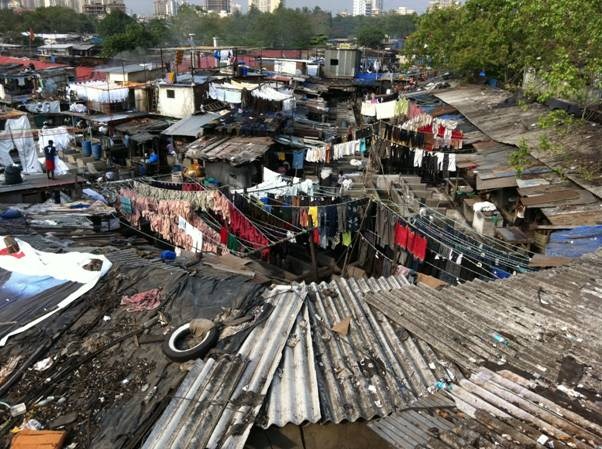
The day after, i go with Muriel on a guided tour in Mumbai. First time i leave the hotel. Amazed by the crowd, the traffic, the contrasts in wealth and poverty.

clip_image020

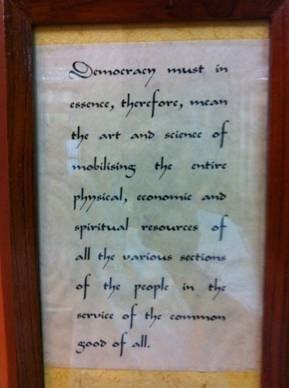
The Ghandi house leaves me deeply impressed.

clip_image022

clip_image024

clip_image026

The days after: I see some shrewd attempts water down what we did at this event. Even questioning whether we should do this at all. They try to hide behind a smoke screen of revenue and pragmatic deliverables.

They won’t succeed.


The genius has left the bottle


What they don’t understand is that we are on a mission. We are at war. Against the old game. For a better world and company. With an enthusiasm and belief seldom witnessed before.


True enthusiasm is irresistible

it’s contagious

So, yes this is about energy. About creating a new dynamic. About enabling a new culture. About reaching new audiences. About bringing new and refreshing content. About a different brand awareness of SWIFT, that makes you look never the same way again at this company.


It’s about

the irresistible

contagious

enthusiasm

that breaks down

rusty structures

and corporate walls


It’s about Indian Waves and genuine smiles.

Banks for a Better World

This is probably the most important blog post I wrote since the start of my blog in April 2009.

It’s about a “big bad idea” that started simmering during Le Web 2010, when listening to Shai Aghassi of Betterplace.com


clip_image001[4]


Shai Agassi was the number two of SAP in 2009, responsible for a budget of more than 1 Billion dollar, but in the CEO succession battle (a finite game, see later) he got bored, resigned, and set his minds on a much bigger thing, now called Betterplace.com

At LeWeb 2010, he told a story on how he took the Japanese challenge to run a 24/7 taxi service in downtown Tokyo for 128 days, without any other power that electric power from batteries, reloaded or switched when needed in “battery stations” in less than 59 seconds each time.

Agassi is very inspiring. Reflecting on his words after his talk during the coffee break, I bumped into one of his strategy guys. I am a strong believer of unplanned encounters and the serendipity that can result from such encounters. I understood Betterplace had a healthy funding of more than 750 Million USD, and I learned that some of the main funders were some of the biggest financial institutions.

The idea started simmering…


What if we with OUR community

could get a fund of 1 Billion dollar together

for a better world?


At first people looked at me with unbelief and wondered “1 Billion Dollar?”

But it is really not that crazy: if you now that our daily traffic is about 18 million messages, it would mean +/- 50 dollar for each message of ONE day. This calculation on a napkin is in no way intended as a “tax” on each message, it is just meant to say that in the end 1 Billion is indeed a lot of money but not unreachable for a community like ours.

I first mentioned the idea in my blog post on “Pump up the (Innovation) Volume”. And I started talking about it at almost every encounter.

People love it.Everybody I talked about it gets sparkles in their eyes and gets excited. Nobody thinks it’s a bad idea.


You know you have a good idea

when suddenly everybody

wants to own and run with it


This is a big bold idea. This one is in the category of:

  • "Change depends on unreasonable people" (Mega investor Vinod Khosla)
  • "If you don’t share your ideas, you’ll remain anonymous and powerless" (Google Evangelist Vint Cerf)
  • Number one, great ideas matter. Number two, find passion. And number three, be tenacious, be irrepressible (Steve Ballmer)

So what is it ?

It’s about a 1 billion non-profit fund and framework for supporting sustainable and responsible businesses for a new type of wealth creation.

It would also lead and propel the community forward into a modern thinking about capitalism, rethinking value, and waste that we produce for the next one in the value chain (for ex bail outs) or even pushing debt towards future generations. It would also help us better understand and articulate what a “better bank” would look like.


It will stimulate a conversation

about a new wealth paradigm

centered on

new type of value services,

instead of

money and cash services only

What sort of sustainable and responsible businesses do we have in mind ?

  • Business that create and/or enable a new type of wealth, based on the full value chain
  • Social entrepreneurs that create financial inclusion solutions
  • Experiments in social and sharing economies
  • Ethical businesses
  • “Better” Banks.

However, the idea is about “Banks for a Better World” and not or not only about “Better Banks for the World”. It does include “better banks”.


But I don’t like “better banks”


Because “better” also means somebody else is “worse”. It’s related to the old game, the finite game where there are winners and losers. I believe we have to shoot for infinite games, where we all together go for the big bold goal, where we have set a direction, where the game does not end when there are winners or losers.

In this context, I really want to recommend a little booklet, written by James Carse in 1986, titled “Finite and Infinite Games – A vision of Life as Play and Possibility” (Amazon Affiliate Link)


clip_image002[4]


“There are at least two kinds of game. One could be called finite, the other, infinite. A finite game is played for the purpose of winning, an infinite game for the purpose of continuing the play.”

“If finite players acquire titles from winning their games, we must say of infinite players that they have nothing but their names.”

My strength

does not come from my title

but because I am me


So, because “better bank” is like a title, I don’t like the concept.

But I do want to share some of the ideas and characteristics that popped-up when discussing the concept of better bank. In no particular order, better bank characteristics would include:

  • Experiments for better corporate culture in banking, based on open mind, open heart and open will
  • Playing an active role in enabling new value transactions – exchanging social reputation for cash, money for social currency?
  • Moving from a money bank to a digital bank
  • Transparent
  • A bank that lets other build “on-top” through API’s
  • Scam advisors, sensors
  • Leveraging personal knowledge of the person in the context of his/her community/ies
  • Digital Asset Stores, info-banks, Social graph bank, community risk Assessment, Values based organized, helps you do your job, exchange social currencies in real dollars and the other way around, offer better picture of my wealth and analytics, an organization that helps me guide my wealth decisions into the future, behavioral economics,

Mind the gap:

this could be new type of organizations,

other than the traditional financial institution,

once known as “bank”


Somebody even suggested to weave in here a new fabric, a new concept of the Digital Bank, where the bank not only is our trusted repository and exchange-enabler for money, but also offers similar services for digital assets, such as social graphs, personas, and even payment intentions in a Vendor Relation Management (VRM) scenario.

Doc Searls (who will be with us at Innotribe Sibos as part of our Digital Identity Incubation project) says about customers using VRM:


“A free customer is better

than a captive customer”


We also can get inspired by folks like  Kevin Doyle Jones? (on twitter @Kevindoylejones). He is the founder of Good Capital, an investment firm that increases the flow of capital to innovative ventures creating market-based solutions to inequality and poverty. He is also involved with Hub Ventures, an innovative funding and support program for early-stage for-profit social ventures – officially launched on January 18th. And cofounder of Social Capital Markets, a multi-platform organization dedicated to the flow of capital towards social good.

It just seems that this guy and his community "get it."

clip_image004[4]

I also asked my friends of the REXpedition (a think-tank on relationship economies, under the leadership of Jerry Michalski) to give me some feedback.

Another example where sharing your idea makes it better.


clip_image006[4]


Here are some of the messages I got back.

  • The "better banks" memetic is a known issue globally – something people really want / reform of finance.


“What is being discussed here

is a larger idea

It is a transcend-and-include-idea”


  • Some REXers suggested me to drop the resistance to the “better bank” twist and maybe to ask “why” we are all so tempted to fall back on this. Maybe we should let go, and let the discussion happen this way, and through putting banks in contact with this sort of new thinking to create a transformation of the banks.
  • Some said that existing banks act as incumbents. As incumbents they probably easier embrace “better banks” as they don’t have to re-invent themselves

One of the deepest and profound thoughts came from Jerry Michalski himself, who planted the seed to go back to the primitive level of our understanding of a bank.

clip_image007[4]

The word “Bank” comes from “Banca” which means “Bench”.

People used to sit on a bench, and had a conversation. It was relationship building avant-la-letter, it as about wealth creation for everybody, it was a community play. The metaphor also applies to “stocks” which originally was a “stick” with carves indicating what values where loaned between parties.

Jerry Michalski will be with us at Innotribe Sibos 2011 in Toronto on the topic of New Economies.


Maybe this whole idea is a discussion

about new forms of wealth,

about a world

where we are not so dependent

on fiat currencies,

where wealth is separated from money.


Check out this Money & Life video:

clip_image009[4]


This video has some very strong messages for our community:

Money has “evolved” from a means to transfer wealth to uplift the poor but overtime money took over not as a means but as a measure of wealth and became a human obsession.

And

The system is systemically unstable

We need new and different types of governance.


Where the sum of the commons

equals

our collective wealth,

and is not the sum of

individual wealth.


Where we talk in terms of community-asset-mapping. With baked-in resilience in the system, like you can have baked-in resilience against floods by allowing mangroves, swamps, etc to overflow.


This is a story about

scarcity versus abundance


Our money was created with a scarcity model in mind. Sharing was not part of the thinking. In fact, it was about anything but sharing. It was a way to protect the already rich and powerful.


This is probably the deeper thought

that led to

“Banks for a Better World”


I still carry some of the naivety that Bankers not want to be greedy, that there are powerful and influential individuals in those organizations that still want to change the world for the better.

Sometimes I think that the ideas we’re discussing here might be too much for the targeted audience, like last year at Sibos, where Venessa Miemis introduced GEN-Y thinking into the Future of Money debate. She was not understood by the financial community.

She was infuriated by our deputy chairman’s reaction: “I wonder, are those convictions strong enough to overcome the realities of what makes the financial industry or system tick today………. My own take on this is that the prevailing values may be stronger than the new values.”

Me too, I feel today like preaching in the desert, like an alien naïve idealist in this world of power games and testosterone. I feel like Venessa after Sibos 2010. Her words still resonate like a furious storm in my head, that makes we wake up angry every morning. In Venessa’s words 2010:


But if “the financial industry” at large, (whoever that is), doesn’t understand that there is a new mindset that is spreading around the planet, how can they expect to tap into it?

It wasn’t lost on me that I got looks of skepticism and cynicism by some of the bankers that week. I also got plenty of looks that made me feel like someone was going to pat me on the head and say “Awwww, well that’s a cute idea! But you obviously have no idea about how the world works.”

Infuriating.

I do get it. Everyone gets it. The wheels are barely being held onto the cart to keep the grand illusion of this dog and pony show going.

The word “vision” means seeing beyond what is. It means a fundamental shift in the way we choose to interpret the world and our place within it. Everything about “the way things work” is, and always has been, an evolution of socially constructed realities. What happens when we change the meaning of reality?

This isn’t a recession. It’s the growing pains of a transformational evolution in how humanity functions.

People are waking up, consciousness is evolving, and the infrastructures are being built to make it easy for people to communicate, connect, collaborate, and build a world that is mutually beneficial FOR ALL. Beyond a zero-sum game. It’s possible. It’s a choice. We can all be a part of it, and everybody wins.

Join the party.


Marti Spiegelman is helping leaders in our culture come awake via the principles of consciousness and restore their businesses to powerful centers of creation, exchange, and distribution of value for the greater good.

She was spot-on in the recent REX call when she said about “Banks for a Better World”:


But maybe the new ideas we talked about are just new expressions of principles that are common to the system we already have, that are common to life and thriving and value creation.

The thought here is that we have to remember that principles are core to what we create, consciousness works through a network of principles .

What if we presented those common principles as a resource – as knowledge people already have about value and abundance and exchanges core to commerce?

And then restate the challenges everyone is familiar with, explaining they are expressions of those principles.

This would shift the atmosphere so when we invite creative discussion to bring forward new expressions of those principles we don’t get the fragmentation that occurs when new ideas are just tossed into a highly structured arena.

Summary

This is about trust and reputation, how do you manage such an organization, about organizations with modern governance.

If you want, it’s like an Ashoka for sustainable and social innovation in financial services and wealth creation.


clip_image010[4]


We partnered with Ashoka for this week’s Innotribe Mumbai on 1-2 June 2011, where they bring a couple of Ashoka Fellows to The Mixer on day-2 of our conference. If it makes sense in the flow of the discussions, we will float the “Banks for a Better World” idea, and see where it goes.

We also partnered with Askoka for their Changemakers’ week in Paris on 21-22 June 2011, where our facilitation crew will lead some Innotribe Labs introducing the subject of Banks for a Better World to see if the idea has any wings to fly and to collect feedback on how you want to shape it.


clip_image012[4]


Here are some draft descriptions of the Innotribe labs we are going to run there:

Banks for a Better World, Part I

Imagine that we had a way to value wealth not just in return on investment, not just in money, cash flow and balance sheets, but in the worth we bring to society. Imagine if our financial systems were able to provide a platform to transact with, transform, deal in different kinds of value: social benefits, reputation, ecological footprint, etc. Together with several inspiring speakers we would engage you, the audience to create a vision of what Banks for Better World may mean. Be part of this change by joining us for a highly interactive dialogue on scoping this vision and thinking of how we could make it a reality.

Banks for a Better World, Part II

As follow-up to the morning’s banking session, this workshop will provide an interactive platform for diving deeper into some of issues involved in reimagining our banking sector, such as R&D, infrastructure, reaching unbanked populations, and more. Break-out groups will enable participants to design the beginning blueprints for banks for a better world.

The birth of Banks for a Better World is probably very similar to the birth of Ashoka itself. Check-out the video below, by clicking on “Everyone is a Changemaker”

clip_image014[4]

We’ll keep on seeding the idea in our build-up towards Innotribe at Sibos, and are closely in synch with our colleagues of CSR at SWIFT.


I can’t help it,

but to me there seems to be

some sweet spot where

innovation,

talent,

and sustainable business

come together 


It’s probably the corporate structures and silos that withhold us of tapping this full potential of passionate people coming together and doing really bold things. But by now, you know this guy, and corporate structures is the last thing that is going to stop us 😉

Maybe it is time for me to move on beyond Innotribe event content curator, or technology watcher. Maybe this is my thing. Maybe this is how I can leave a legacy. Maybe this is my purpose in life. Maybe this is what will me lead by being. Raising the question is answering it.

So, what do you think ? Do you get excited by the idea of “Banks for a Better World” ? Do you want to join our Infinite Game ?

Let me know your thoughts, observations, criticisms, suggestions. I am hungry and curious to read your reactions.

Is SWIFT a Railway station ?

Recently had a good discussion with Tony Fish, author of My Digital Footprint, and entrepreneur/investor with AMFventures. The discussion was in the context of our digital identity incubation project (more about that project in an upcoming blog post).

clip_image001

Not sure who invented it, but he came up with a really good metaphor based on the railway systems, that we could use very well in a lot of our discussions on innovation and how we have to position new services on top of or adjacent to our core messaging infrastructure.


“Infrastructure”

There we have it


With credits to Tony, a classic railway system is made up from:

  • Infrastructure (rails, connection);
  • Enablers (signaling and control);
  • Ticketing (collection of money, the market place/ exchange);
  • Platforms (access – something to get customers in and out the service), and;
  • Trains (the service – what I am actually paying for in the mind of the customer).

SWIFT in this model already delivers critical parts of the international payments infrastructure.

  • From an innovation point of view, I believe the core of our innovation focus should be to extent our current remit to offer industry wide services that will enable Banks and Corporates to offer new services to its customers (signaling and control)
  • The Banks will provide the services (ticketing, platforms and trains)

In that sense, the SWIFT 2015 strategy is spot on by stating there is still enough juice and room for innovation in the core.

But I believe a lot of thinking in the industry about innovation at SWIFT is “limited” to the messaging paradigm, and anything that goes beyond messaging seems to make some of our shareholders nervous, as it may be the space where they compete for business with each other.

The railway system metaphor is in my opinion a great help to get rid of the pure emotions in this debate, and to well articulate the roles of the different players in a “system”.

In other words

to do some system-thinking


And metaphors always help in system thinking.

Another metaphor is the operator of a horse-track: you offer the infrastructure, and the horses (or rather the horse owners) compete on the horse-track.


clip_image003


The worst thing the horse-track operator can do is to have horses of his own and put them in the race in competition with the other horses.

Better is to think of the horse-track as something exciting with lots of new enabling services giving horses a better experience, and enabling new merchants to offer new services to the horse-owners. And the ticketing: you can run it yourself, or outsource it.

Just one more thought. Railways make me think of old, messy, noisy, rusty environments and coaches.


clip_image005


Unless you take the Thalys/Eurostars in First class, or Shanghai Maglev train that propels you forward at 431 Km/hour.

I’d prefer something that “smells” like the infrastructure and ecosystem described in the book “Aerotropolis” by John D. Kasandra. (Amazon Affiliate link)


clip_image007


Most of my readers are probably familiar with my addiction to cities. Because they never die. They create “intencities”. Platforms of intensities where ideas can flow freely.

Now

we add the city transportation

to the mix,

and how that can be

a real catalyst

for systemic growth


Some quotes from the Aerotropolis book:


“Look for yesterday’s busiest train terminals and you will find today’s great urban centers. Look for today’s busiest airports and you will find the great urban centers of tomorrow.”

“Cities are always created around whatever the state-of-the-art transportation device is at the time.”

“The shapes and fates of cities have always been defined by transportation. Today, this means air travel”.


clip_image009


Aerotropolis. It’s just sounds so much better than railway station or infrastructure:


Modern

Fresh

Fast

Convenient

Transparent


So, is SWIFT a Railway Station ? You should be able to cook up the answer yourself now.