Innotribe goes centre stage at Sibos 2015

Exactly one month from the start of Innotribe@Sibos 2015, we issued a press release about our program. It is the kick-off of our campaign for our 7th edition of a four-day FinTech immersive learning experience.

singapore-networking-event-page

This year, Sibos is taking place at the Sands Expo and Convention Centre, Marina Bay Sands, Singapore, from 12-15 October.

“Innotribe is not about pitching anything in particular, but rather trying to take a helicopter view of what we see at the edge of our ecosystem – things we believe have the potential to enter the mainstream in three to five years time”

As I already mentioned in our July inaugural post, our tagline this year is “the right mix”.
Sibos_visual_alldays

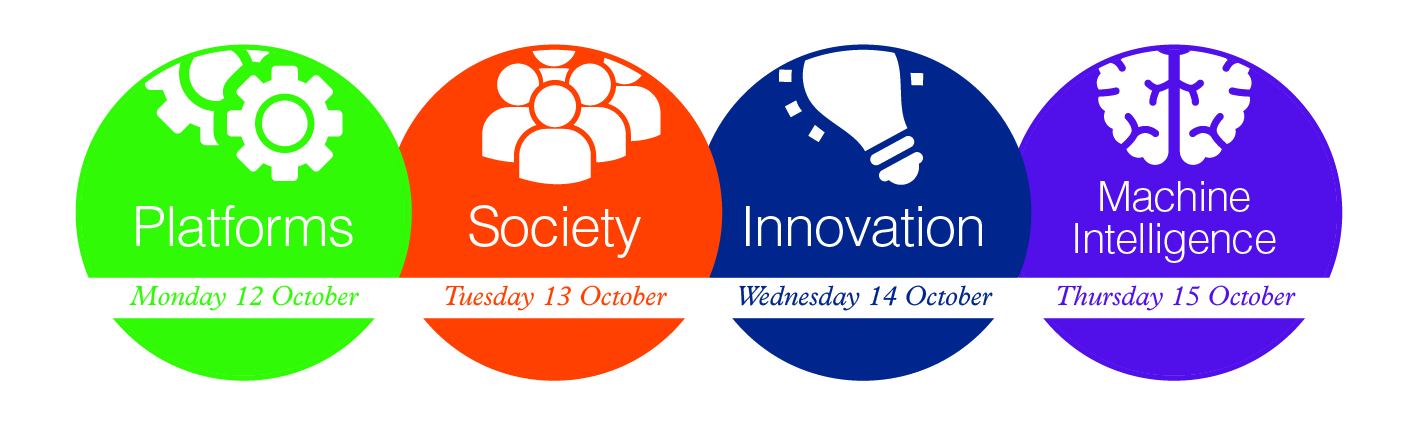
Each day the Innotribe programme will focus on a specific theme, throughout which both Millennials and Power Women in Fintech will play an important role participating in all sessions. In the next two weeks, we will produce a more detailed blog per theme of each day. The daily themes are as follows:

  • Monday – what platforms want: Platform economics and business models are foundational capabilities for innovation. Throughout the day, we will cover a wide range of topics from distributed ledger technologies, automated credit, API community strategies, the rapidly changing financial industry in China and its global impact, and real world disruption scenarios.
  • Tuesday – what society wants: The platform theme continues, covering topics from Millennials who are born digital and mobile, to refugees who are forced to be on the move and have no access to financial services, and financial inclusion for the 2.5 billion unbanked people. These issues will be intersected with a ‘what if’ session on re-inventing regulation for the digital era.
  • Wednesday – what innovation wants: The highlight of the day is the Innotribe Startup Challenge Finale. It will be preceded by a session on novel ways of progressing innovation throughput, and a highly interactive session with seven FinTech Hubs.
  • Thursday – what machine intelligence wants: Thursday will showcase highly immersive demonstrations of cognitive analytics (e.g. analytical strategies to help derive insights from big data and improve decision making) for a real-time world. The day will include sufficient critical voices on the impact of machine intelligence on the future of jobs and human / machine interaction.

We ensured diversity across the different thought-leaders joining us throughout the week. The notable list of 70+ experts, men, women, Millennials, investors, accelerators and contrarians who will join us throughout the week includes:

  • Akhtar Badshah, PhD, Chief Catalyst, Catalytic Innovators Group
  • Mark Buitenhek, Global Head of Transaction Services, ING
  • Claire Calmejane, Director of Innovation, Lloyds Banking Group
  • Neal Cross, Chief Innovation Officer, DBS Bank
  • Christine Duhaime, Founder, Digital Finance Institute
  • Leda Glyptis, Head of EMEA Innovation Centre, Bank of New York Mellon
  • Matthias Kroener, Co-Founder, Shareholder and CEO, Fidor Bank
  • Sopnendu Mohanty, Chief FinTech Officer, Monetary Authority of Singapore (MAS)
  • Dr. David Nordfors, CEO and Co-Chair, i4j (Innovation for Jobs)
  • Anju Patwardhan, Group Chief Innovation Officer, Standard Chartered Bank
  • Scarlett Sieber, Senior Vice President, Open Innovation and Ecosystem Builder, BBVA

Activities will be centred on the Innotribe Stand (A20), directly adjacent to the SWIFT stand (A50) on the Exhibition floor. This innovation hub will host a circular workshop room, where the majority of sessions will take place. Given the success of previous years, the session “The Future of Money” and the Innotribe Startup Challenge Finale will move to the biggest main conference room, Conference Room 2. We will see 12 early-stage finalists pitch and showcase their business ideas to Sibos delegates who will select this year’s winner.

All together, it’s becoming quite a big production that starts feeling more and more like a non-stop four-day late night television show. We use professional facilitators to engage the “circle” and the audience, and inject sound and light landscapes with our fantastic new 2,5 meter high LED Wall running all around the workshop space. With a big thanks to our partners Georges P. Johnson and Collective Next.

“We are not in the events business, that we are in the business of creating high quality feedback loops to enable immersive learning experiences”

The Innotribe Stand is also designed to welcome delegates in a networking area and offer them the opportunity to visit the exhibition booths of the growth-stage finalists from this year Startup Challenge and some of Innotribe’s Alumni who will be giving live product demos.

As in 2014, the event will also include a number of book signings.

And on Wednesday evening we’ll mix even further with the vibrant local FinTech scene of Singapore for a Networking Event in town. 250 invitees will have the chance to network at BASH, the new startup hub in Singapore, for a joint event organised by Innotribe and the following Singapore’s FinTech communities.

Networking-event-partners2

This FinTech Meet-up is kindly sponsored by Wells Fargo and Standard Chartered Bank. Register for the FinTech Meet-Up via this link. Innotribe Sibos attendees will get an invitation card on-site.

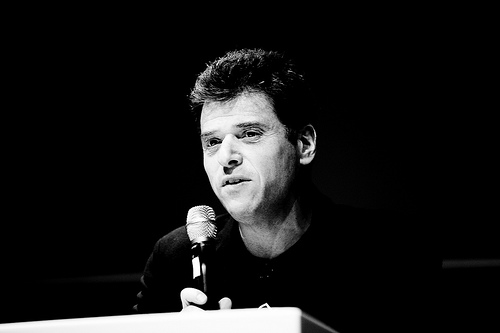
The Innotribe closing keynote this year will come from Andrew Keen, one of the world’s best-known and controversial commentators on the digital revolution.
keen_new_profile

He is the author of three books: Cult of the AmateurDigital Vertigo and his current international hit The Internet Is Not The Answer which the London Sunday Times acclaimed as a “powerful, frightening read” and the Washington Post called “an enormously useful primer for those of us concerned that online life isn’t as shiny as our digital avatars would like us to believe”.

After Andrew Keen, you are all invited to join the Sibos Closing Keynote in the plenary room.

Innotribe is open to all Sibos delegates willing to drive change and embrace innovation for the benefit of the financial industry, by understanding its trends, opportunities, and challenges: business analysts, product managers, strategists, marketing/branding/innovation managers, transaction bankers, securities managers, corporates, standards experts, payment professionals, investment managers, regulators, policy makers.

Other resources:

Looking forward to meeting you in person in Singapore!

Petervan Delicacies – Week 31 August 2015

Week-35 of Delicacies: Max 5 articles that i found interesting and worth re-reading. Handpicked, no robots. Minimalism in curation. Enjoy!

If you can’t get enough of these and want more than 5 articles, I have created an extended version of Petervan’s Delicacies in REVUE. If you want more than 5 links, you can subscribe here: https://www.getrevue.co/profile/petervan

The Essence of Work – Part 5 – Craftsmanship

This post is part-5 of a series of ten essays on the essence of work. For an introduction and overview of previous posts, check here.

IMG_5664

Artwork by Tania Derijcke – 3rd year painting – BKO Academy

The initial inspiration for this post was an article about robots being able to make your dinner.

Video about Moley Robotics

According to the company, the mechanical chef, which incorporates 20 motors, 24 joints and 129 sensors, learns how to cook by watching a plain old human chef, whose movements are turned into commands that drive the robot hands. Moley hopes to eventually create a product that can do everything from preparing the ingredients to cleaning up the kitchen, and include a built-in refrigerator and dishwasher. The idea is to support the robot with thousands of app-like recipes, and it would allow owners to share their special recipes online.

At the same time I was immersed in Matthew Crawford’s great book “The World Beyond Your Head: How to Flourish in an Age of Distraction”, already mentioned some time ago in my post “Moments of Enchantment”. The whole book is about attention and agency and tangible results of your agency.

It suddenly dawned to me that

making dinner is a matter of attention.

And that “they” – the robot tribes – don’t get it. As we have seen already in our series’ post about belief systems, “They don’t get it” is a strong indicator of living in a different belief system.

peter goossens

Peter Goossens - Hof Van Cleve

Let’s contrast this with the craftsmanship of Peter Goossens and his team, who are running Hof Van Cleve, one of the best restaurants in the world. Best like in world-class: a 3-star Michelin and much more, bringing them into the top-25 of the world.

Hof Van Cleve - Craft

“In order to cook at the highest level every day and guarantee an exceptional experience for our guests, it is important that the interior of our restaurant exudes the same traditional spirit and identity that our kitchen does. Our preparations are, after all, in my opinion, the result of a great deal of effort at all levels. Indeed, we handle the best local products that the gardeners, farmers, growers, fishermen, hunters and cheese refiners can provide. Out of respect for their passionate work and thanks to their fantastic ingredients, we are able to provide our guests with a unique culinary experience. This makes cooking a true craft.”

You can take this wonderful definition of the Essence of Work, and apply it to your own domain. Note the emphasis on guests, tradition, respect, experience, and craft.

Cooking is much more than executing a recipe.

The essence of work is much more

than building to spec

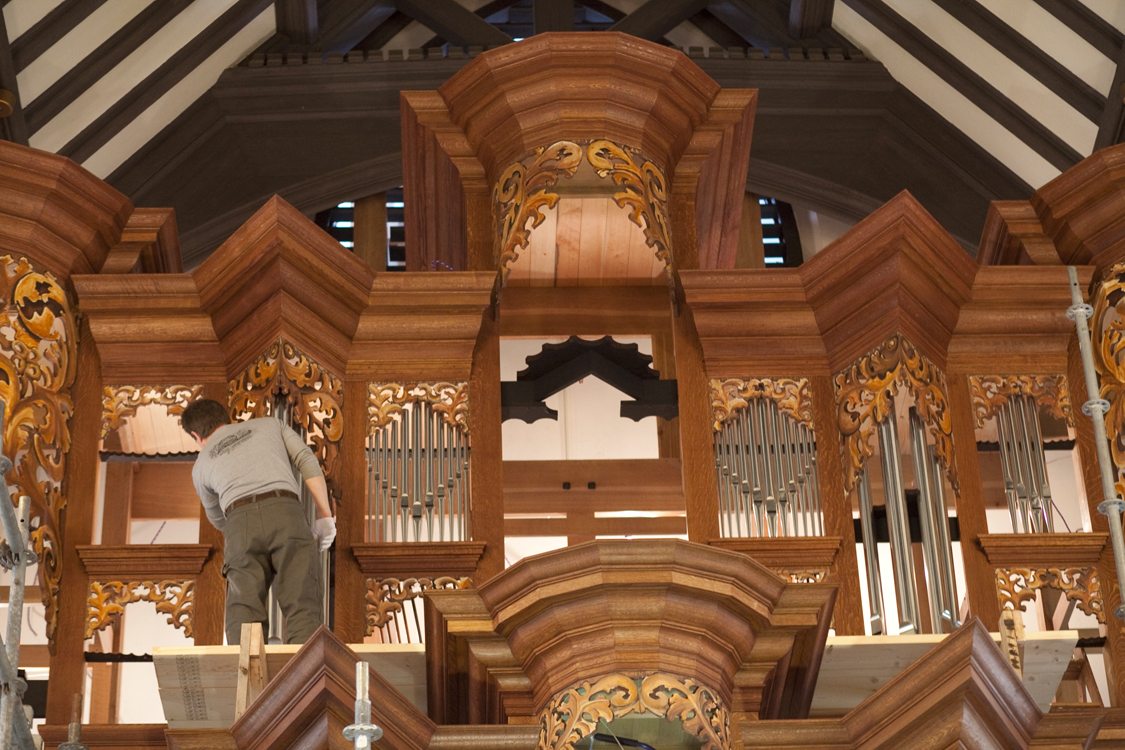
In “The world beyond your head… “, there is a great chapter about a small family-run business that is specialized in restoring and building from scratch old baroque organs.

0008_10_A_337.jpg

A New Organ for Anabel Taylor Chapel

Like Peter Goossens, these organ builders don’t content themselves with restoring or building to spec. What they aim for is a dramatically superior musical experience by the musician who will play the organ.

Tradition is about building on the shoulders of giants, a bit of a simplistic statement. The author goes at length to “craft” deep into the meaning of tradition, to internalize tradition, and to pass it on in your work and onto next generations.

Tradition

is not seen as non-authentic,

but a source for energized work.

“Unlike a space shuttle, the pipe organ is a species that comes to us through cultural traditions, and serves aesthetic purposes that would be unintelligible without reference to those traditions.”

“the historical inheritance of a long tradition of organ making seems not to burden these craftspeople, but rather to energize their efforts in innovation.”

What is driving these people to strive for unconditional excellence? Wouldn’t it be easier to componentize and modularize the different elements of work and cast them in a repeatable process, so we can be more efficient and produce more at less cost? Yes, that would be possible, but I think some of us don’t get excited anymore by the efficiency game and we are aiming for a higher quality and awareness of quality of our work and the experience it delivers to our customers, or should I call them “guests”?

“There were also electronic organs available. But there’s a part of the population that will only take this.

“It’s a totally handcrafted, handmade object, and some people are willing to pay an enormous premium for it. They realize the performance musically is superior. And that’s the only justification.”

“We’re weird: we’re trying to make a living, for one thing, and make this whole thing practical, so we have to make the parts in good order and build to the contract price, which is an insane thing to do for what we’re producing, and we have to make something that’s going to perform technically or our customers are going to be coming back and getting on us. At the same time the ethos of the instrument has to be authentic—that’s why people are paying big money for us to do the work. So we’re jammed in the cracks, trying to make a realistic business out of this and at the same time be as authentic as we can. The thread of what we’re doing is totally authentic.

The author leads us into two criteria that are essential for the Essence of Work:

  • Historical coherence: The work is enlivened by a sense of going further on a trajectory they have inherited.
  • Musicality: Timeless standards of engineering, specifically as they contribute to musicality.

So, we are getting into something called

The timeless demands of musicality.”

Wow! This is getting pretty close to Christopher Alexander’s “Timeless way of building” and his passion for “pattern languages”, much more profound ways of communicating, integrating, and passing on of patterns of tradition and craftsmanship.

How would you define “musicality” in your work, even if your work has nothing to do with organs or music?

I would now like to mix-in two other criteria for our Essence of Work:

  • Constraints: Constraints have to do a lot with craftsmanship, tradition, and musicality.
  • Authentic observation: perceiving as a baby does, liberated from conventionality

Constraints. Good work is usually performed within the boundaries of timeless tradition and qualities. You have to respect the scheme, the pitch, tone, the rhythm and other musical traditions to create the right “musical experience”. Very well trained musicians, who have superior mastery of their instruments, and respect the tradition canvas of conventions, usually perform a good jazz jam.

The Essence of Work is about producing a good jazz jam. Grounded and building upon the conventions and traditions of the thousand of years before us.

The other “constraint” is the audience: the public, the commissioner, the customer, the guest. Where the context of the host and the guest meet, where host and guest get into a dance, not a fight. Host and guest: much better than the transactional supplier and buyer, or producer and consumer.

Like Rem Koolhaas about architecture in When Architects Swim:

Architecture is not at all about letting your imagination go. You must confront your imagination again and again with the request and desire of your customer

Then there is “authentic observation”.

In my art classes last year, I learned to observe. To draw what I see and not to draw what I think. This has helped me a lot to get the basics more or less right: arms and legs in the right proportion vis-à-viz the body, that sort of basics. I only got a feel for the basics. Much more work to before i am getting any good at it, let’s not even think yet about mastery or even mystery. It’s still something very tactical, mechanical for me. So much more to learn.

This week-end the 2015-2016 art class started.

IMG_5659

Picture of my art class – season 2015-2016

I will try painting this year. I never did painting, never worked with color. I am completely novice here, and open and receptive to anything that comes my way. No clue what will happen. No plan in mind.

It was thus a happenstance when my art teacher showed this as the main guiding principle for this academy year:

IMG_5666

We were asked to “observe”, to look through a frame and let ourselves surprise by the shapes in the frame. Just see. But it is more than non-judgmental observation. It’s more than the facts and the spec.

  • An historian looks at the world adopting an non-judgmental stance towards the facts.
  • A preservationist adopts a deferential stance towards the world

What we are talking about in the Essence of Work is the “Artist’s Way” of looking at the world.

IMG_5667

“This is what an artist does. She must defamiliarize herself with her everyday perceptions, which depend on—are conditioned by—her past experiences, including the experience of inhabiting a world that is thoroughly conventional. She has to try to perceive as a baby does, or as the empiricist supposes we all do, but this is a subtle and extraordinary accomplishment. There is nothing infantile about good art, but it does show us the world as viewed by a consciousness that has, for a spell, liberated itself from conventionality” (from the World beyond your head…)

Craftsmanship, Historical Coherence, Musicality, Authentic Observation, and Creating The Dance between host and guest are critical components of the Essence of Work.

Petervan’s Delicacies – Week 24 August 2015

Week-34 of Delicacies: Max 5 articles that i found interesting and worth re-reading. Handpicked, no robots. Minimalism in curation. Enjoy!

If you can’t get enough of these and want more than 5 articles, I have created an extended version of Petervan’s Delicacies in REVUE. If you want more than 5 links, you can subscribe here: https://www.getrevue.co/profile/petervan

The Essence of Work – Part 4 – Caring

This post is part-4 of a series of ten essays on the essence of work. For an introduction, check here.

ae00ebd4-3f6a-11e5-8a79-8c62088bb3b9_web_scale_0.0520833_0.0520833__

Innovators and Change Agents are probably the most frustrated people in a company’s workforce.

That is because they care. That is because they refuse to look at their work “as a job”, and refuse just “to live with it” or “get over it”

seth godin

Seth Godin recently posted a short post “In search of your calling” in essence about “What is your caring?” in stead of “What is your calling”

I don’t think we have a calling.

I do think it’s possible to have a caring.

A calling implies that there’s just one thing for you, just one thing you’re supposed to do.

What we most need in our lives, though, is something worth doing,

worth it because we care.

There are plenty of forces pushing us to not care.

Bosses, systems, bureaucracies and the fear of mattering.

None of them are worth sacrificing something as important as caring.

And elsewhere on his blog

Caring is unpredictable, hard to command and regulate and sometimes expensive in the short run.

When your organization punishes people for caring, don’t be surprised when people stop caring.

When you free your employees to act like people (as opposed to cogs in a profit-maximizing efficient machine)

then the caring can’t help but happen.

Caring is about making interventions at a dimension of societal progress, the dimension of meaning making, the dimension of societal context, and the dimension of sense making.

Ocean Atlas Jason deCaires Taylor

Artwork: Ocean Atlas Jason deCaires Taylor

Caring is the higher and deeper dimension after purpose, objectives and tactics.

Caring gets closer to needs.

Purpose is closer to intention and beliefs, and values

Objectives are closer to outcomes

Tactics are closer to building to spec, read instructions and apply them

The ambition is to find a “Life worked well”, where needs, purpose, objectives and tactics of the individual and the organization are maximum aligned and self-enforcing. A “Life worked well” is growing on the ladder of:

Caring

Calling

Passion

Job

Once your reach the caring dimension, you don’t want to go back. Design serendipities with others who care. Avoid the people who try to reduce your caring back into thinking about your work as a job. They are in a different belief system. Have empathy, take note, but move on and continue on your path to greatness.

Petervan’s Delicacies – Week 17 August 2015

Week-33 of Delicacies: Max 5 articles that i found interesting and worth re-reading. Handpicked, no robots. Minimalism in curation. Enjoy!

If you can’t get enough of these and want more than 5 articles, I have created an extended version of Petervan’s Delicacies in REVUE. If you want more than 5 links, you can subscribe here: https://www.getrevue.co/profile/petervan

The Essence of Work – Part-3 – Values and Needs

This post is part-3 of a series of ten essays on the essence of work. For an introduction, check here.

Alexa Meade Art-1 - Aligned with Alexa (2010)

Artwork by Alexa Meade - Aligned with Alexa (2010)

In Part-1, we learned how my needs inform my beliefs. My beliefs inform my actions. My actions result in effects. And those effects confirm or adjust my needs. We ended Part-1 with the promise to dive deeper into values and needs and how they are the fundamental building blocks of the essence of good work.

There is much taxonomy of needs, and I just picked this one by Shasta Nelson in Huffington Post some years ago. The needs are nicely grouped in the following categories: Connection, Physical Well-Being, Honesty, Play, Peace, Autonomy, Meaning.

How does your work allow you to progress on these dimensions? I tried to highlight below for myself some of the needs that are not fully met, where I could use some stretch, where there is room for progression and growth.

  • Connection: affection, appreciation, belonging, intimacy, safety, warmth
  • Physical well-being: air, shelter, touch
  • Honesty: presence
  • Play: joy
  • Peace: beauty, harmony
  • Autonomy: space
  • Meaning: awareness, clarity, discovery, self-expression, to matter

This list I share here is not an exhaustive list of my met or unmet needs. They are just some examples. There are other ones that are too personal, and don’t feel right to share on a public blog.

The bottom-line is that we have to be honest and sincere about our needs, and definitely not try to change them, or to lie to yourself about them, as Dave Gray suggests in Liminal Thinking:

“There is nothing you can’t lie to yourself about very convincingly, including covering up that you are lying. You do this naturally and unconsciously.”

“This is self-sealing logic at work. New information from outside the bubble of belief is discounted, or is distorted, because it conflicts with the version of reality that exists inside the bubble.”

So what is inside/outside of our bubble?

I believe it is common knowledge that happiness at/in work happens when your personal values and the values of your employer/customer are aligned. Values are part of the bubble.

The areas of alignment are much broader and diverse than just “values”. We have to align at the level of beliefs; and because our beliefs are informed by our needs, we have to look into whether your “job” is satisfying your needs.

There was a great paragraph 6) in James Altucher’s 2013 post “10 reasons why you have to quit your job this year”:

I will define “needs” the way I always do, via the four legs of what I call “the daily practice”. Are your physical needs, your emotional needs, your mental needs, and your spiritual needs being satisfied?

The only time I’ve had a job that did was when I had to do little work so that I had time on the side to either write, or start a business, or have fun, or spend time with friends. The times when I haven’t is when I was working too hard, dealing with people I didn’t like, getting my creativity crushed over and over, and so on. When you are in those situations you need to plot out your exit strategy.

Your hands are not made to type out memos. Or put paper through fax machines. Or hold a phone up while you talk to people you dislike. 100 years from now your hands will rot like dust in your grave. You have to make wonderful use of those hands now. Kiss your hands so they can make magic.

One can argue, “not everyone is entitled to have all of those needs satisfied at a job.” That’s true. But since we already know that the salary of a job won’t make you happy, you can easily modify lifestyle and work to at least satisfy more of your needs. And the more these needs are satisfied the more you will create the conditions for true abundance to come into your life.

Your life is a house. Abundance is the roof. But the foundation and the plumbing need to be in there first or the roof will fall down, the house will be unlivable. You create the foundation by following the Daily Practice.

Aha! The Daily Practice! James must have been reading Integral Life Practice 😉

IFL Book cover

A good starting point indeed to look further into our needs – starting point is a little bit of an understatement here – is the work of Ken Wilber on Integral Life and the use of the AQAL (All Quadrants, All Levels) model for personal growth.

ILF the 4 AQAL quadrants 2

From Ken Wilber’s Integral Life Practice

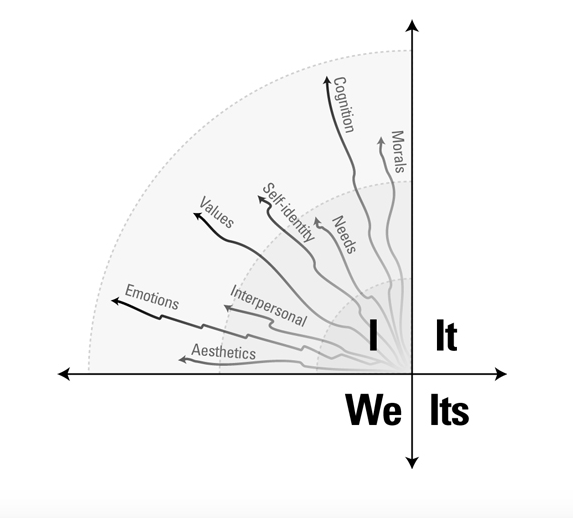
And within each quadrant, you have many lines of growth possible. Let’s have a look where Ken Wilber puts “needs”:

IFL needs in quadrant

From Ken Wilber’s Integral Life Practice

The curvy lines/arrows labeled “needs”, “values”, etc are specific areas in which growth can occur.

Levels are higher-order structures that reflect different altitudes of consciousness. In the quadrant above, the concentric circles give an indication of those different levels growth. The more to the outside of the quadrant, the more you have progressed. Sometimes those levels of progression are indicated in colors (more on that later in this post).

The point I am trying to make here in the context of the “essence of work” is that alignment of personal values (the “I” quadrant) with the values of the organization (the “Its” quadrant) is limiting our experience.

For work being rewarding, satisfying, and meaningful, we have to do the same mapping/alignment between the “I” quadrant and “Its” quadrant for other lines of growth such as needs, but also morals, cognition, self-identity, interpersonal relating, emotions, aesthetics, kinesthetics, and spirituality.

Each line is unique in that it can develop relatively independently from each other. In other words, you can have progressed a lot on the interpersonal relation line, but be mediocre on your needs- or value-consciousness. This is very similar to the work on multiple intelligences by Howard Gardner at Harvard University and his work on Project Zero. From Wikipedia:

The goal of his research is to determine what it means to achieve work that is at once excellent, engaging, and carried out in an ethical way.

Project Zero’s mission is to understand and enhance learning, thinking, and creativity in the arts, as well as humanistic and scientific disciplines at the individual and institutional levels.

Alexa Meade Art-5 - Hesitate (2012)

Artwork by Alexa Meade - Hesitate (2012)

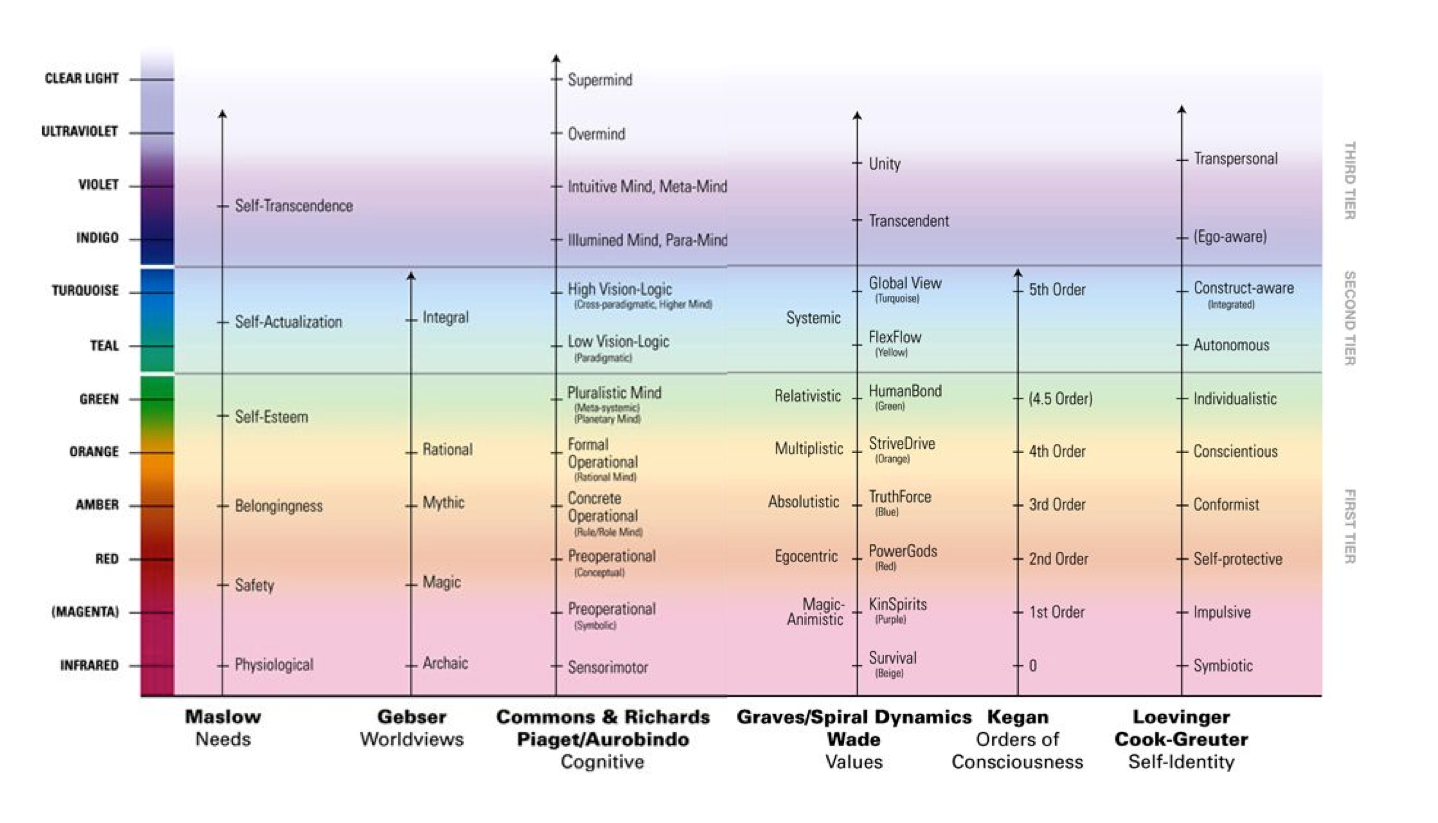
In that sense, the well-known Maslow’s Hierarchy of Needs is just one particular lens on our needs, and only on our needs.

Wilber’s book does a great job in putting Maslow in context, and comparing different lines of development and related models and research.

ILF levels together

From Ken Wilber’s Integral Life Practice

Across the different lines of development, the levels of consciousness/awareness are indicated in colors of the rainbow, from infrared at the bottom up to ultraviolet and clear light at the top. Most readers will recognize the color code from Spiral Dynamics, the Teal Organization, etc.

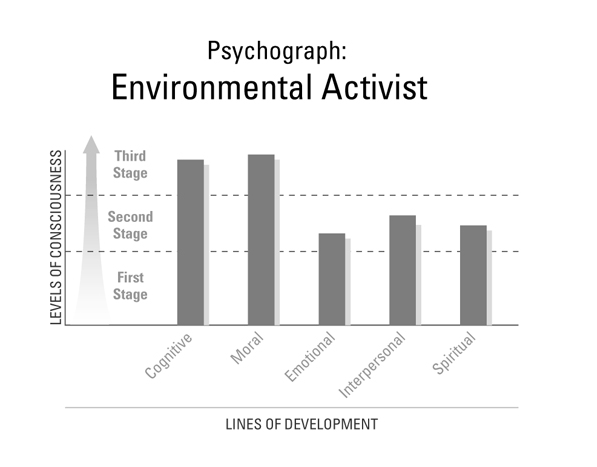
Picturing your own more integral self-image of yourself is called a psychograph. Here is an example of a partial psychograph an Environmental Activist.

Psychograph example

From Ken Wilber’s Integral Life Practice

You can decide to focus on your strength-lines or your weakness-lines of growth.

Good work – not only the end result, but also the journey of making/creating it – is work that allows you to stretch your lines of development and to become an integral human being.

The essence of work goes beyond fulfilling your needs. The essence of work is to inspire yourself and others to produce work that has those eternal qualities of life.

The essence of work is about systems alignment.

The Essence of Work – Part 2 – Fundamental Questions

This post is part-2 of a series of ten essays on the essence of work. For an introduction, check here.

This video is the record of a talk by Santiago Ortiz at EYEO Festival in 2014. Santiago is a visualization artist, and that is what triggered my attention first, but listening to the talk, I realized if was about the essence of work.

The description of the video starts with:

“Six Months – The last 6 months of 2012 happened to be the most stressful and creative of my life. Here’s the story.”

It’s a great way to create perspective of where you are now, your last six months, and to see why you were meant to be here, and what you’re going to do with the rest of your life. It’s a great way to re-assess what the essence of your work should be for YOU.

The first 6 minutes is a fantastic way on reflecting what is boring or not, whether you are boring or not. A narrative that is first looking at “before the 6 months”, then looking at “after the 6 months”, and then looking at what really happened “during his 6 months”.

It’s a different form of curriculum. In the case of Santiago’s talk, the real core of the curriculum of the last 6 months starts at min 11, where he shows how his visualization work lead to a different visualization of a curriculum.

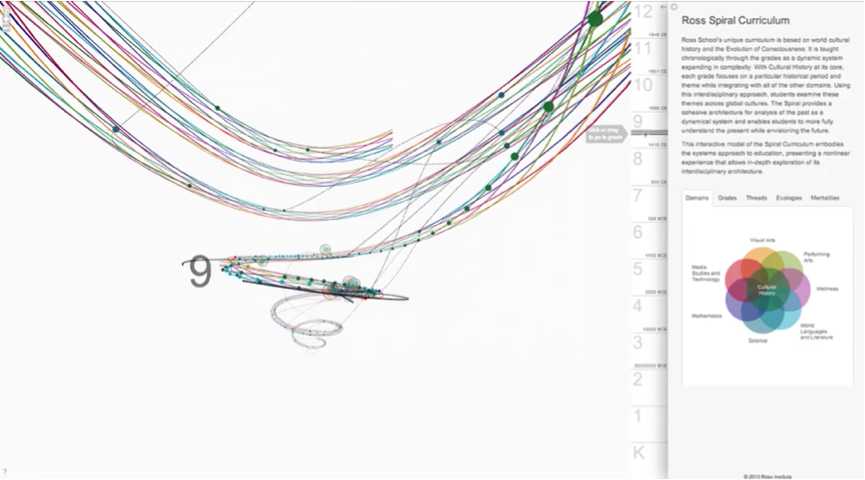
It is called the “Ross Spiral Curriculum”

Ross Spiral Curriculum

It makes me think about “Spiral Dynamics” of John Beck. It makes me think of the “Teal Organizations” by Frederic Laloux, who got inspired by Spiral Dynamics and Integral Life Practice of Ken Wilber (Ken will come back in Part-3 about “Needs”).

But instead of the Spiral Dynamics of an organization, a culture, a worldview, it feels like the Spiral Dynamics of a person, documenting the specific evolutionary complexity of the narrative of a person, beyond any specific grade or self-aggrandizement.

At minute 10:30, he gets into the fundamental questions:

“I am alone, I am living in Argentina, and I have to build something. In order to create a work-life, a business”.

It’s a deep reflection:

the essence of work is to create a work-life.

Think about that…

What are his assets at the start of the 6 months:

Assets 6 Months

There is an interesting one under reputation. “My company was well known, but not my name, my reputation”.

The essence of work in the very near future (if not already here) is working your personal brand.

The isolation topic is interesting as well, as it is about having “access to the opportunities” that are of interest to YOU, not your company.

Thinking about it, with the six categories above Santiago invented a great way of making your personal assessment, and – maybe without knowing it – Santiago created a framework and model for self-assessment and personal growth, where you stand and want to be in terms of:

  • Your financial savings
  • Your personal brand
  • Your access to opportunities
  • Your existing portfolio (like a artist’s portfolio, or a model’s portfolio – quite different than your LinkedIn profile that is more about bragging then anything else)
  • The toolkit that you currently master
  • Your contextual environment

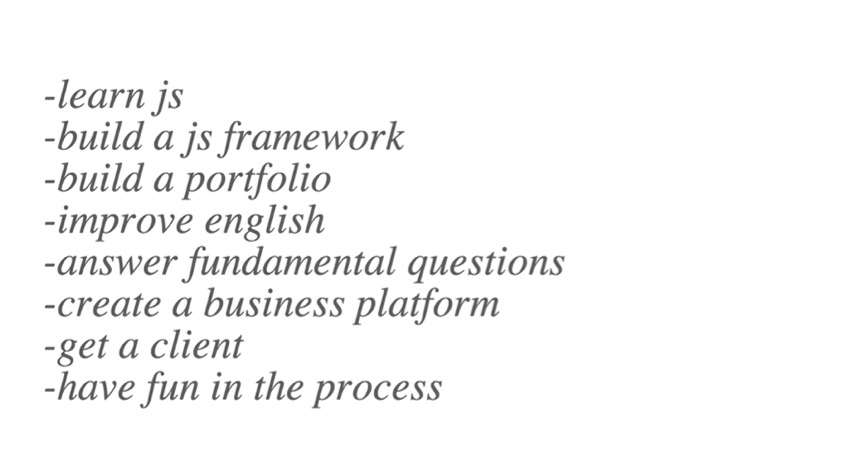
Next is to look into what can I do in “the next 6 months”, to improve yourself dramatically on all of these axes to create a place where you can “live a life well worked”. In the case of Santiago, that was:

What can i do 6 months

What is yours?

How will you improve dramatically

on the axes of the self-assessment framework

to get to your “essence of work”?

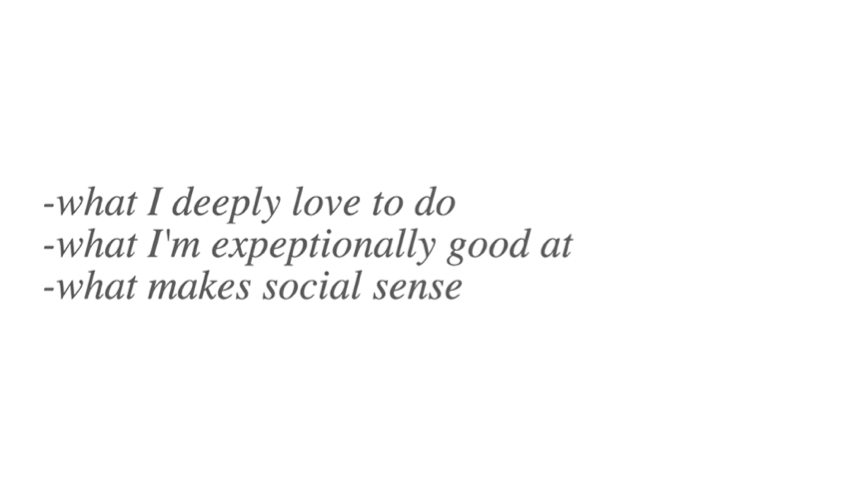
You have – like Santiago – ask yourself these fundamental questions:

what i love

  • “What I deeply love to do?” should be answered with action not with thought!!! It is really asking the question what gives me dopamine, what makes me happy when I am DOING that. It is probably in the realm of developing new techniques, and the pure joy that doing something from zero is very good.
  • In the “What I am exceptionally good at?” the keyword is “exceptionally”.
  • “What makes social sense?” is asking the question “What could be a business for me?”. In the sense as mentioned above: “what could be a good work-life?” But first make sense. Once you made sense, it is easier to make a business out of it.

It is all about meeting yourself, seeing yourself in the mirror of the magic tension of stress, fear, health, and fun.

fairburn-7

Map art by Fairburn

Santiago ends by saying that what he does NOT want to do is ART. He wants to work with people who have real problems, not just experimental stuff that is food for thought, inspiration, etc. That is his choice. All respect.

But it seems that for me, the “essence of work” is almost becoming the opposite of that:

  • I want to create an environment for my clients where we deliberately stay way from the day-to-day problem solving, as that is what you already do all year long.
  • I want to create an environment where we make deeper connections with our purpose, our caring in life, and the deep underlying narratives of our personal and corporate mission statements and intentions.

It’s “basically” connecting with each other at another level than the pure cognitive, staying away from the unbearable lightness of tactics.

At the end of the talk – really in the epilogue at minute 36 – there is the short appearance of the “System Maps of Life”. I love it: reflecting about your life, not as a linear curriculum, but a dynamic spiral of many narratives that come together in one person, that make that person unique.

The key question of this all is of course how to create a “life well worked” around the essence of you as a person, with that rich spiral dynamic. How you create the essence of work for your “onlyness” (a term coined by Nilofer Merchant)

Petervan’s Delicacies – Week 10 August 2015

Week-32 of Delicacies: Max 5 articles that i found interesting and worth re-reading. Handpicked, no robots. Minimalism in curation. Enjoy!

If you can’t get enough of these and want more than 5 articles, I have created an extended version of Petervan’s Delicacies in REVUE. If you want more than 5 links, you can subscribe here: https://www.getrevue.co/profile/petervan

The Essence of Work – Part 1 – Belief Systems

This post is part-1 of a series of ten essays on the essence of work. For an introduction, check here.

How many times does it happen to you that you say/think:

“They don’t get it,

they really don’t get it!”

This happens to me when sharing ideas about my work as an event creator, or should I say “créateur d’expériences”, like Renaults famous advertising tag line: “créateur d’automobiles” which is quite different than “car manufacturer”. The elegance of the French language of course helps.

I keep on trying to explain that we are not in the events business, that we are in the business of creating high quality feedback loops to enable immersive learning experiences, and my employer keeps calling what we do “events”. I have come to a point where I stop trying to explain, and just do.

Part of this “not-getting-it” is probably due to a different (therefore not better or worse) vocabulary used by business people and creative people. But most of the non-connection is there because we live in, are inspired by a different belief system.

The subject of belief systems really started resonating with me when I discovered a video of Dave Gray’s presentation “Liminal Thinking: Sense-Making for systems in large organizations”, his closing keynote at Enterprise UX 2015 Conference.

Dave Gray is author of the fantastic “The Connected Company” and many more, and there is a fair chance that his next book will include “Liminal Thinking” in its title. Dave is a good fried, and he shared with me a preview of his next book.

I read it and gave some feedback, so I believe I really have internalized his message. In respect of Dave’s work, nothing in this post is a cut and past from his preview edition, I just distilled it from the public video.

The core message in the video/book is that of the “Self-Sealing Bubble”. The bubble of a belief system, the bubble where one is only receptive to the obvious, the belief system, the DNA that the organization has been trained for, and sometimes like in religions, brainwashed for.

Belief systems and self sealing bubble

Where it becomes even more interesting is when Dave starts connecting needs, beliefs and actions.

To be more precise:

“Needs create beliefs that create rules for action”

And if my need is not fulfilled, I will create a belief, a story that will give reason for my actions, also called rationalising.

needs inform belief systems

“Why are we here?”

asks Dave, and his answer is the mind-blowing “To meet our needs and to help others meet their needs”. Wow!

Say that again.

“To meet our needs and to help others meet their needs”

The model presented, can also be used for reverse engineering of needs in case of conflict of belief systems: what would I do if I believed in the belief system of the other party? What would happen if I act as if that belief system were true? What if I would adapt, even fake my behaviour to give the other belief system a chance.

To give the other belief system a chance

is sometimes also called

an “experiment”

But giving the other belief system a chance, is very different than changing your needs. Dave does not recommend you change your needs.

On the contrary. And he  leads to a very interesting reflection whether security is at all possible at work.

For me security at work would mean to have

“an environment where nothing needs to be protected”

An environment where the quality level of “being a group”, being a team is such that there is no competition between team members, where there are no egos, where there are no posers, losers, clueless and Sociopath pathologies as described in the magic post by Venkatesh Rao “Executive Engagement”.

Where there no classes and hierarchies, and where everybody is respected for the value and insights they bring to the table. And classes is not only about hierarchies. A class could also be associating people with the past, and isolating them deliberately from the future thinking.

An environment without organizational pathologies or self-conforming belief systems.

“Most enterprises are not emotionally safe places”, says Dave Gray, and he is unfortunately so damn right.

In many organizations, people are encouraged to leave their emotions at the door.

“But that is impossible”

It even is more impossible when you get promoted in senior leadership positions, where it really gets schizophrenic, and nobody dares to challenge you. Where most will say yes or whatever latest buzzword to please and charm and schmooze you.

“The more senior, the more difficult it is to leave your emotions at the door, because everybody else will conform to your self sealing logic, and your needs will always get met”

But the key lesson learned from Dave Gray keynote for me is to go and search and discover my deeper needs for a healthy functioning of myself in and outside the organization.

Because needs inform my beliefs. My beliefs inform my actions. My actions result in effects. And the effect confirm or adjust my needs.

That is why in part-3 we will dive deeper into value and needs and how they are the fundamental building blocks of the essence of good work.