Petervan Artwork © 2019 - 3D Sculpture in Forger for iPAD
Texture own painting acryl on canvas 50x50cm

Petervan Artwork © 2019 - 3D Sculpture in Forger for iPAD Texture own painting acryl on canvas 50x50cm
An irregular update on what happened since my previous August 2019 post and some updated plans. With lots (!) of images and videos 😉 Looks like I have been busy, but it did not feel that way.
The Artschool Project
The Artschool academy year started again in Sep 2019, and I decided to do a cross-over year combining Painting and Digital Visual Arts. Progress has been a bit slow as I need to find a good rhythm to combine these two areas, and the abundance in creative apps has overwhelmed me a bit, to be honest. Some examples:
Canvas work
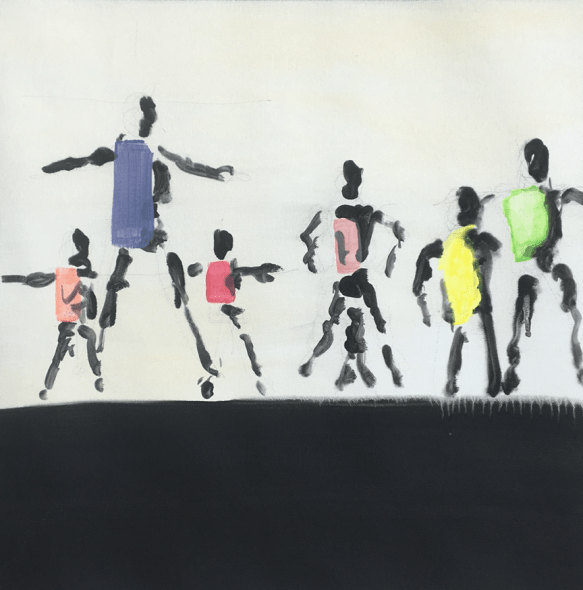
Petervan Artwork © 2019 – Dancers – Acryl on canvas – 50x50cm
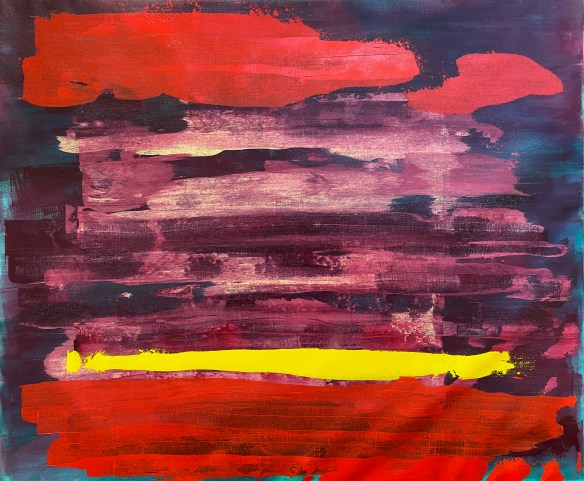
Petervan Artwork © 2019 - Abstract#1 – Acryl on Canvas – 120x100cm
Combined Canvas-Digital work
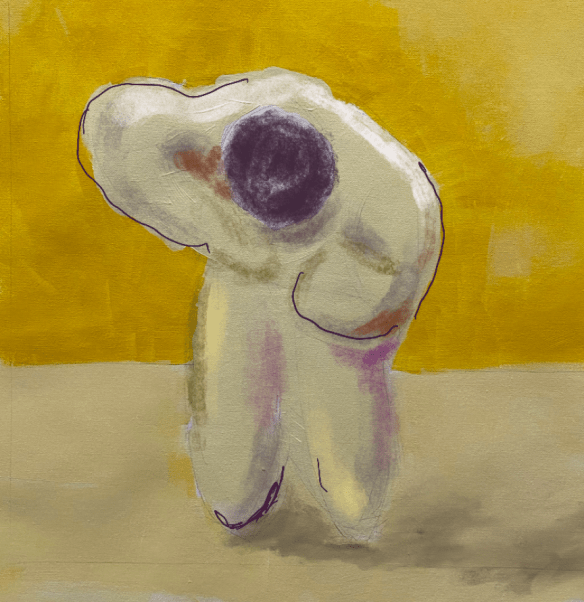
Petervan Artwork © 2019 – The Boxer – Canvas and Digital – 50x50cm
Videoscapes
Some other videoscapes here (playlist):
With thanks to my Academy coaches Chris, Inge, and Patrick
Time Capsules Project
The Time Capsules Project (see my previous update) is still on hold. The plan is still to have at least a prototype of our Beyoncé project, before further engaging with other commissions
Delicacies
Delicacies is an irregular, unpredictable, incoherent, unfocused publication of mind-sparks that got me thinking. There have been three issues of Delicacies since Aug 2019. Check-out them out here:
https://www.getrevue.co/profile/petervan/issues/petervan-s-delicacies-issue-124-188170
https://www.getrevue.co/profile/petervan/issues/petervan-s-delicacies-issue-125-193906
https://www.getrevue.co/profile/petervan/issues/petervan-s-delicacies-issue-126-205279
Blogs
I published a number of reflections related to ambiguity, worlding, and hierarchies:
https://petervan.wordpress.com/2019/08/09/on-the-ambiguity-of-kayakers/
https://petervan.wordpress.com/2019/08/17/imagining-worlds-you-believe-in/
https://petervan.wordpress.com/2019/08/24/who-is-the-composer-who-wrote-the-score/
https://petervan.wordpress.com/2019/08/30/breaking-hierarchies/
https://petervan.wordpress.com/2019/10/30/ebb-and-flow/
I also queued up a huge list of reflections, and there are some juicy pieces in preparation for identity and – what is he now thinking – about “foam”. I will try to post them at a rhythm of 1-2 per month.
Petervan Rides
Lots of fun putting together some monthly Spotify Lists. Most fun when you choose shuffle play:
Petervan Ride July 2019
Petervan Ride August 2019
Petervan Ride September 2019
Petervan Ride October 2019
Petervan Ride November 2019
https://open.spotify.com/playlist/0I3BQot79HxMHF0gHd0VmE?si=l0FFPNl8R9Sbs9YL6YsCPQ
Petervan Mixes

https://soundcloud.com/peter-vander-auwera/petervan-mix-james-brown-david-bowie-25-nov-2019
Mix by Petervan Scapes © 2019 – With algoriddim DJ Pro Version 1.4.5
More music
Check out Neil Young’s book “To Feel Music”: the book is related to his efforts to let you re-discover high-res sound, as most existing streaming services only offer low quality sound. These days, young people who never heard vinyl analog sound through a decent HiFi kit, have no idea what really good sound sounds like. Neil Young wants to fix that.
With his book and the Neil Young Archives, you can enjoy again his full collection and much more in high-res. There is also a dedicated App for iPhone, iPad, and Android, but the best listening experience is on your PC/Mac connected to a good amplifier and speakers. Highly recommended.

Visual Collisions
I started collecting a number of “visual collisions”. Most of these are videos, a minority are pictures. These visual collisions are intended to de-frame an audience before introducing something new.
Check out this YouTube Channel:
New toys
I added some new toys to my studio, most of it is software (and most of it free of charge, at least for art students):
Books
I have been reading quite a lot. Noteworthy are “The Aesthetic Imperative” by Peter Sloterdijk, and “How to Speak Machine” by John Maeda.
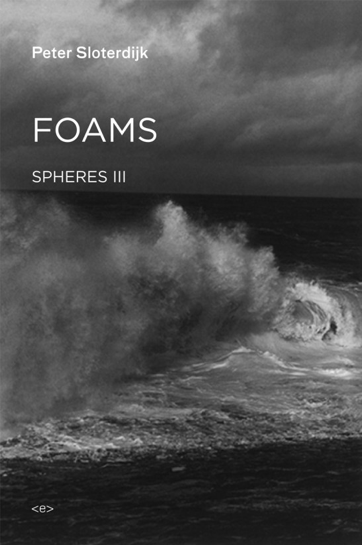
I am fascinated by Sloterdijk’s “Foams” (more about that later)
„Foams „completes Peter Sloterdijk’s celebrated „Spheres“ trilogy: his 2,500-page „grand narrative“ retelling of the history of humanity, as related through the anthropological concept of the „Sphere.“ For Sloterdijk, life is a matter of form, and in life, sphere formation and thought are two different labels for the same thing. The trilogy also together offers his corrective answer to Martin Heidegger’s „Being and Time,“ reformulating it into a lengthy meditation of Being and Space — a shifting of the question of „who we are „to a more fundamental question of „where we are.“
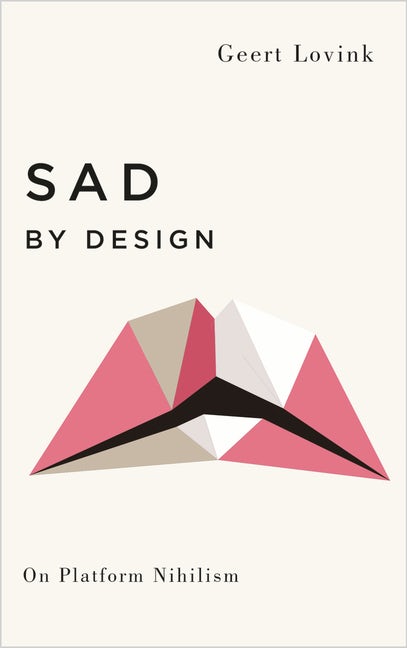
The absolute #1 recommendation is Sad by Design by Geert Lovink. If you want to go beyond the worn-out opinions of Silicon Valley libertarians vs. Humanity, this is your book.
You can find a link to all the books I am reading in my Goodreads
Exhibitions
I visited a couple of art exhibitions:
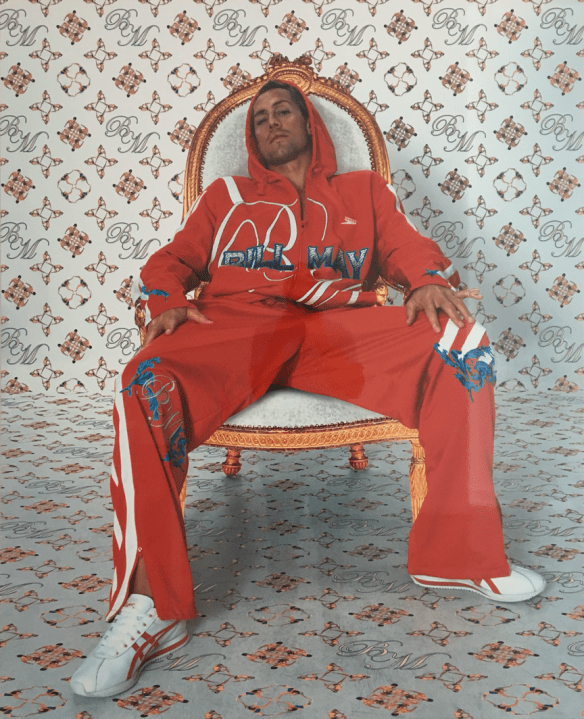
Sarah Baker – Portrait of Bill May – Museum Dhondt Dhaenens
End Aug 2019 – Picture by Petervan
Lace is more – PiKANT exhibition about Lace in Aalst.
Video and soundscape by Petervan
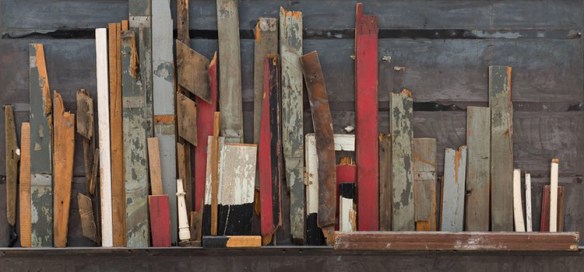
Jannis Kounellis – Untitled – 1983 - Arte Povera – SFMOMA Nov 2019
My own exhibition

Angel in Chapel of Mater
Location of my upcoming exhibition end May 2020
Since I started academy some years ago, I produced something like 500 drawings, paintings, sketches, soundscapes, and video experiments. Many have asked whether I even thought of setting up an exhibition of my own work. That’s going to happen end May – beginning June 2020:
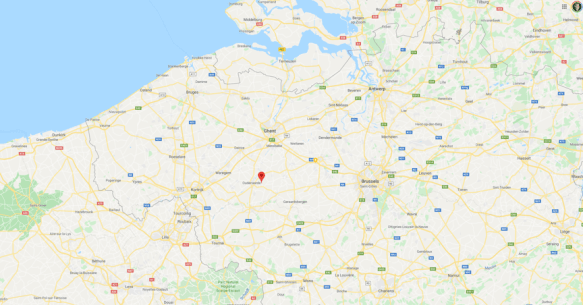
Location: Chapel of Mater (a small village in the Flemish Ardennes, Tour de Flanders territory)
For regular updates on this exhibition via a mailing list, you can subscribe here.
Outdoors
Great summer morphing into rainy Sep-Oct-November. Not too bad. We visited a vineyard close to Aalst (Belgium) and biking tours continued at irregular intervals; small distances (20-40 km) at a very low speed. Maintenance of the garden also kept me busy. I have about 150 meters of hedges (x2 both sides), so by the time you get to the end, you can start again 😉
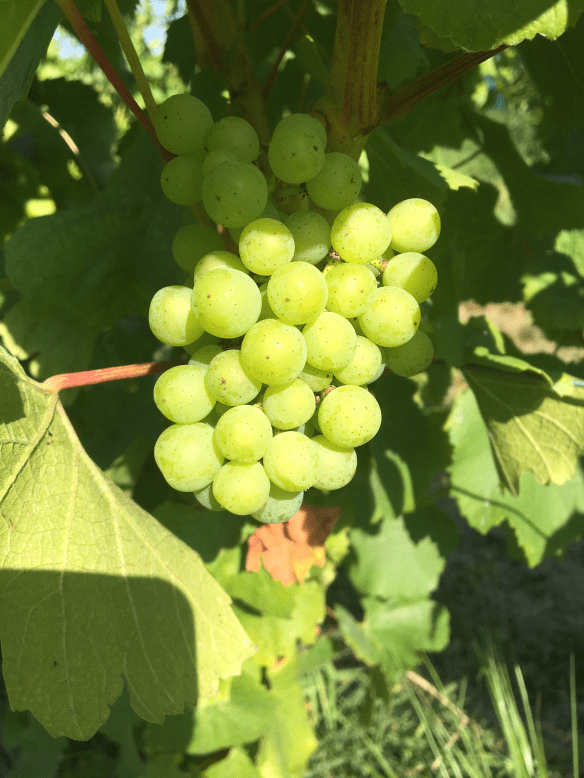
Vineyard in Aalst, Belgium - August 2019 - Picture by Petervan
Life of a Sunflower from 26 Aug till 30 Sep 2019 - Montage by Petervan

Bike tour along a very green Dender (river crossing Aalst)
Freelance
Main project was a leadership immersion for a client that took us to Shenzhen and Hong Kong the first week of October 2019. Think of an Innotribe @ Sibos but then in a intimate retreat format for small private audiences; with artists of course. A good example of Imagining Worlds That You Believe In – aka “Worlding”, a term coined by Ian Cheng in his book.

Hong Kong Peak Tram Oct 2019 – Picture by Petervan
Reflections
Retirement is coming closer. I will be officially retired as from 1 May 2020. Not that I plan to stay idle, on the contrary. Within limits, I will stay available for interesting freelance work and plan to stay very focused on my artwork.
In other words, no time for too much social media engagement (I put some blockers on most of my devices) or making selfies.

Graffiti in Ghent Citadel Park 16 Sep 2019 – Picture by Petervan
All the above helped me getting sharper on what I am and what I do: create artistic interventions, interruptions, and provocations that lead to higher states of alertness and aliveness. Formats can be analog and digital artwork, performances, writings, poems, blogs, installations, exhibitions, immersions, soundscapes, recordings, documentaries, and time capsules.
So, what’s next?
The plan for Jan – Mar 2020 is to work on:

As you can see, a labyrinth of choices. The red thread may be the solution: stay hungry, stay foolish, stay focused.
So, that’s it for this edition. If there is something worth reporting, the next update is for Apr 2020.
Merry Christmas and Happy New-Year!
Video play with Videoleap by Petervan – Music James Brown “I feel good”
Warmest,
Petervan Artwork © 2019 - Abstract#1 - Acryl on canvas - 100x120cm

There is a new edition of Delicacies out. You can read it here: https://www.getrevue.co/profile/petervan/issues/petervan-s-delicacies-issue-126-205279
I believe the file-rouge of this edition’s collection is the challenging of “traditional” internet critics. Forget what you know, unlearn, and develop your own new insights.
As a teaser, check out Utopian Overreach, a great counter-narrative to the narrative of staying human by being disconnected.
The digital-wellness movement, though it seems to counter the grandiose schemes of the tech industry, shares a similar aspiration of fixing people for their own good, prescribing a specific one-size-fits all relationship with technology as a way to build an ideal society. This movement is typified by former Google employee Tristan Harris’s Center for Humane Technology, books like Georgetown computer science professor Cal Newport’s Digital Minimalism and Catharine Price’s How to Break Up With Your Phone, and software such as the Before Launcher and Google’s new suite of experiments aimed at “balancing life and tech,” including a counter that tells you how many times you’ve unlocked your phone in a day.
What these interventions all have in common is how they frame our problems with technology as a matter between the individual and a specific device or app rather than the social, moral, and infrastructural relations that ultimately bind them together.
Petervan Artwork © 2019 - Walk In The Park
Video mix based on Insta360 One capture
I am still reflecting on some feedback regarding an event that I recently designed and facilitated. One of the comments was that “there was too much ebb and flow”, and that we should create more “pressure” to keep the highs at maximum volume at all times.
But is ebb and flow such a bad thing? I don’t think so. On the contrary, the tension between ebb and flow is a requirement for growth and creativity. Adding more pressure will not keep the flow on, it could create exhaustion and fractures and breakages.
Instead of pressure, I believe we need to design opportunities for expansion, probably in the form of silence or more in general, reflection moments in the absence of inputs and triggers.
Like in Jan Chipchase’s expeditions: “Long trekking days were spent in meditative solitude or long conversations depending on personal preference, as energies ebbed and flowed”
Petervan Artwork © 2019 - iPhone 11 Pro - Soundscape in Garageband
Petervan Artwork © 2019 - Insta360 ONE camera - Soundscape in Ableton Live

The latest version of Delicacies is here: https://www.getrevue.co/profile/petervan/issues/petervan-s-delicacies-issue-125-193906
Enjoy!
Following my post “Who is the composer?”, I got the opportunity to have a conversation with the man himself: Ozark. He told me the story of what happened when he tried to conduct a philharmonic orchestra for a film soundtrack he had written. I did not know he wrote a score for a film, but he did. It is the score for the film Crusade in Jeans and the music is performed by with the Metropole Orchestra from The Netherlands. All professional musicians used to work with artists in residence.

There is some real classical music stuff going on here
As a composer, he knew exactly what needed to be played when and how. He could as well conduct the orchestra himself, no? Or so he thought… But he learned the hard way that doing so was breaking hierarchies. He stepped out of his role as the composer when he tried to be the conductor of the orchestra.
An orchestra is like a ministry. Every unit has a role. The conductor does not communicate directly with the violist, no he/she speaks to the lead of the violin ensemble who speaks to the violist. Ozark brought also copies of the score with him, ignoring that copying the score was the job of somebody from the orchestra team. He could as well have said: “You know what? I found this great tribe of horn players, so they will play the horns this time.” Basically putting the original team in unemployment.
In a reaction of self-defense, the orchestra started playing – well-intentioned – games, sabotaging what Ozark tried to achieve. These games were well-intentioned because the intention was the care of the team.
In Dutch, there is a word “bezorgdheid” usually translated into “concern”, mostly an anxious type of concern. In my sense of Dutch language (my mother tongue), there is also an almost “mother-care” type of concern encapsulated in that word. A team-mother-care about what the orchestra is concerned about, the cohesion they wish to protect. This is not about care for the team, but care/bezorgheid of the team.
I often think back to the old Innotribe days, where we had a fantastic team. In my 2013 post Breaking and Making Teams, I described with quite some cynicism the recipe for breaking successful teams successfully. Remember: cynicism is a knot in the heart.

It is a paradox: to innovate, one must have the courage to challenge the status quo, the existing processes, and hierarchies. But on the other hand, a team and a hierarchy have a built-in DNA-like patrimony of craftmanship and care-manship. Breaking that patrimony is a recipe for failure.
One can cut-and-paste the breaking hierarchies metaphor straight into corporate mergers and acquisition scenarios, for example when a successful team is acquired into a new company. Instead of looking how the strengths of an acquired team and its internal language, proceedings, and patrimony can help to imagine new worlds – in other words, making the team even more successful in its new environment – in many cases the CEO is only interested in how that team can help him/her be more successful.
In such cases, we wonder why the team is not willing to share its secrets, wondering why the best folks leave, wondering why there is no team left at all after 1-2 years. We shouldn’t be surprised: we just broke the team hierarchies.
 Petervan Studios