Virtual Worlds

Thanks to my job, i get in contact with interesting people. As preparation for the Innovation track at Sibos (called www.innotribe.com), our team is focusing on 3 themes:

  1. Cloud
  2. Crowd
  3. Mash-ups

In total we’ll have more than 40 speakers during one week, combined with speedlabs, debates, and R&D pitches. And during the last day, Guy Kawasaki will be part of our VC debate and Buyers Panel.

Detailed agenda available here.

As you have probably noticed, in my private life and endeavors (such as the Think Tank for Long Term Future), i am blurring the lines between real and virtual, between flesh & bone human and robots.

As a matter of fact, i am also blurring the lines between job and private here, and i  don’t see anything wrong with it.

What about virtual reality in a business context ?

Welcome to project Wonderland from Sun Microsystems. They will do during Innotribe @ Sibos a demo on the Virtual Bank Branch Office. In the meantime , have a look at below 2 videos, that once again proof how fast our real and virtual worlds are merging.

First listen to the project manager, Nicole Yankelovich. What’s really interesting is that the sort of people that work on this are true hybrids: a mix of nerds, psychologists, anthropological and ethnographic R&D…

This video is a hidden job advertisement, so you’re warned 🙂

But this sort of stuff and skills is really were we as a society should put stimuli and scholarships for our net.generation to be ready for 2030. Those who are 20 today will be 40 by then and our next leaders.

Then enjoy to this wonderful Wonderland scenario tour based on the preview of version 0.5 in their labs:

First time i see things like federation of worlds. I already heard about federated identities, federated clouds, federated services, but this ? No, not yet.

Oh yes, you can also restore a world in his previous state.

However, i still find that the user is forced into the developers mind of properties, cells, etc. No way i can explain this to my dad. It’s like the first time you see Windows: only if you get used to it, you start making sense out of it. You adapt to the programmer’s mind.

Think.

Tank.

Thanks to Amir for providing me the links.

Augmented Reality in iPhone 3GS

Thanks to my twine.com subscription to “Technology Trends”, i found this.

You can read the related article here.

In case you doubted that man-machine are blurring more and more everyday.

The (ir)relevance of the desktop


How relevant will the desktop be in the next 5 years ? I don’t know about you, but I do more an more in online tools such as hotmail, gmail, googledocs, etc

I want to offer you 3 perspectives to this trend:

– A business to business point of view (Salesforce)

– A 2007 (!) vision by Aza Raskin from Mozilla Labs

– The announcement of Google Wave and OS

I have included 3 video is this post. The first one is short (1:54), the others are longer (1 hour 20 min) and (1 hour 20 min) respectively. But i can assure you they are worth every minute.

Let’s start with Salesforce. On 9 June 2009, I attended the free Salesforce-event “CloudTour 2009” in Eindhoven, Netherlands.


This was a very, very professionally run event with very professional speakers (drilled like an army). They flew over a number of hotshots from San Francisco for this event.

Some key facts about Salesforce:

  • 1,2 Billion $ revenue in FY 2009
  • 59,000+ customers
  • 1,5 Million users
  • 100 Million API transactions per day
  • Average response time: 300 Milliseconds
  • 3 releases per year, without any disruption for customers
  • Customers: big to small. Some examples: Solvay, VUM, Polycom, DELL, Corporate Express

All this to say this is not Mickey Mouse business: these folks exist for 10 years. This is mature business.

Their tag-line is: NO SOFTWARE.

Everything runs in the cloud.

There was a great demo on deep integration in Services Cloud of Twitter, Facebook discussions in Salesforce app, direct visibility in Google search. All in real-time.

Another demo was about “Building an app in 30 minutes”. They built in essence an expense report app like most companies have. Built and on-line in 30 minutes: With currency conversions, linked to accounts for which the expenses are incurred, with approval workflow, access management etc. All this was point and click. Not one single line of coding.

Peter Coffee, Director Platform Research had some strong messages about the economics of cloud. He stated that all of the following is commodity and does not add business value, and is ready to go to the cloud: Email, twitter, backup, security, virtualization, OS patches, running an Operating Centre, messaging. He also stated that SaaS, IaaS, PaaS are not relevant in itself. It’s about the apps and the business value add you create with that. And that cloud is NOT about IT budget cost reduction !

It is about moving from “less low level people on less value tasks” to “high value level people on high value tasks”

Your IT budget may go UP over the years, as you spent more on high value tasks

Beware of the expectation it is easy or cheap

When strolling through the exhibitor space, picked up a comment from a customer:

Now that I have this, I never want to go back to on-premise. This works. Never any probs of crashes and alike or things that do not work. Unbelievable I ever accepted doing business the old way.

Let’s have a  look at what Aza Raskin had to say about the desktop.

“Had” because this is dated May 2007, more than 2 years ago.

I am a big fan of Aza. See also my post on Mash-ups and Cloud and Semantic Web.

His bio is fantastic:

Aza is currently the Head of User Experience for Mozilla Labs, where he works on crafting the future of the web. He’s led projects ranging from semantic language-based interfaces (Ubiquity), to redesigning the Firefox extension platform (Jetpack). Aza gave his first talk on user interface at age 10 and got hooked. At 17, he was talking and consulting internationally; at 19, he coauthored a physics textbook because he was too young to buy alcohol; at 21, he started drinking alcohol and co-founded Humanized. Two years later, Aza founded Songza.com, a minimalist music search engine that had over a million song plays during it’s first week of operation. In another life, Aza has done Dark Matter research at both Tokyo University and the University of Chicago, from where he graduated with degrees in math and physics.

His GoogleTalk in 2007 was titled “Away with Applications: The Death of the Desktop”. On the opening picture, he looks even a bit like the very young Bill Gates ;-). Aza was born in 1984. So 25 years old now !

And it is NOT about bashing on Microsoft. He is explaining why it does not make sense anymore to follow what has been.

He is using some pretty powerful metaphors: the shovel analogy, “it’s not Microsoft’s fault”, Analog vs. Digital watch, “Start with the manual”.

If you don’t have the time to view the full video, go straight to minute 21 or so. In essence most user interfaces force the user to adhere to the program hierarchy of the developer.

He goes on with seeing natural language as a universal access to application: like you search the web, you could also search services. Basically, there are 4 “do this” commands: create, select, navigate, and transform.

Aza will this week also speak at TEDGlobal 2009 in the Connected Consequences track. I have also invited Aza to speak at SWIFT’s Sibos 2009, in the Innotribe track for which i am the overall content owner.

Enjoy Aza !

The other announcement that created a twitter & blog storm on the internet was Google Wave. Just google “Google Wave” and you will see what i mean 😉

I don’t get all the criticasters. This is really very cool stuff and it is going to change fundamentally how we think of online communication. I strongly recommend to watch every minute of this launch event video.

On May 29, a couple of days after the announcement, i spotted a Facebook comment from a person with a quite high-level position in the Belux Microsoft organization: "Not impressed by Google Wave. More of the same in a different jacket. Ever watched conversations in Outlook 2010 ?"

As i am an ex-Microsoft employee, and still have some friendly contacts there, i wrote him an e-mail and explained that i was soon going to write something on my blog on this and the relevance of the desktop.

I asked to share some links to Outlook 2010 to be able to link my readers to what Microsoft has to offer in this area so that my readers can make up their own mind ? This is the answer i got: “Outlook 2010 is in Technical Preview – we cannot show outside. But if you look on the web you will find a couple of things about it.”

So it’s “help yourself” at http://www.microsoft.com/office/2010/. Oh yeah, you probably will have to pay for Office 2010. Last week, Microsoft also announced they will offer a FREE on-line version of Office as part of the upcoming Microsoft Office 2010 release.

To close this post, a really good opinion on this in Hutch Carpenter’s blog “I’m actually not a geek”. One of his latest posts relate to SaaS and also relates to Google’s more recent announcement of the Chrome OS.

He positions all this in the context of Clayton Christensen’s “disruptive innovation” model, and goes on:

Which brings us to the PCs of today. They are marvels, providing a slick experience for users and able to accommodate a host of new applications. But if I were a betting man, I’d say the most common activities people do with their computers are:

  • Surf the web, engage in social media
  • Email
  • Write documents
  • Build spreadsheets
  • Create presentations
  • Consume and work with media (video, music, graphics)
  • Use web-based business apps

Among those activities, what’s the magic of client-based computing? The media-related activities perhaps require the horsepower of a client app. But even those are getting better with web apps.

I recently decided to switch from hotmail to gmail.

Competition is good.
Mash-up, Cloud, Semantic Web

Have been on the road quite a lot with a bag full of new ideas.

In all the discussions, it became clear for me that the end-game is about superior and dramatically better user experience.

The end-game is not cloud, the end game is not Web 3.0 or 4.0 for the matter. These are just enablers. The end-game is user experience.

And much of that experience will come from Mash-ups, real-time and giving the power for creating in the hands of the end-user.

We all have seen the Google map mash-ups with addresses of best bars in town. For sure a life-critical application, but what i have seen the last couple of week is a bit more impressive.

I will NOT cover Google Wave announcement, as already all over the place, and this blog is not intended as just an echochamber of other sites.

It all started at the iMinds conference some weeks ago, where i saw a presentation by Ben Cerveny from Stamen Design. Ben used to be one of the founders of Flickr.

Ben was really mis-casted in a political-themes-debate, but did well anyway. He gave a pitch about the importance of web-literacy of our population, and about identity in a special way. For ex everybody recognizes the New-York skyline. But would you also identify yourself with the traffic visualization map of your own city ? Ben showed some great visualization examples. Have a look at http://delicious.com/benstamen. I most like the swarm example and the cab-spotting. The swarm shows you real-time visualizations of chat/twitters/social media conversations. The cab-spotters is also real-time, and the resulting visualization shows most used street patterns.

Thanks to my sponsors, I also was lucky to be able to attend Semantic Web3.0 in NY some weeks ago. Many good stuff, but i would like to share at least 3 examples: Aza Raskin from Mozilla Labs, Dan Willis from Sapient and Alex Karp from Palantir Technologies.

Aza Rasking (have a look at his bio on wikipedia, the guy was already a star at the age of 17 😉 is Head of User Experience at Mozilla Labs, and gave a preview of some cool things that will come out of the box in Firefox. And yes, I know IE8 Accelerators can do similar things but not quite yet.

Aza gave demo of Ubiquity and TaskFox.

Here is Ubiquity:

And here is TaskFox, a bit slimmed down version of Ubiquity in Firefox:

Dan Willis from Sapient gave a presentation on what happens when machines talk to machines. He did a great pitch illustrating with some sort of Kindle device with transparent screen capturing signals from semantically enabled objects. I love the very last example about taxis that radiate their traffic violation history. His presentation is on slideshare below, but you should really have heard Dan’s voice-over during the conference which makes it much more lively.

Last one for today comes from Palantir Technologies. At Web3.0, Alex Karp gave an amazing demo about a mortgage fraud investigation system, build as a mash-up of many different data-sources that were exposed with semantic techniques.

Here is the video of the Mortgage Fraud Investigation app. http://www.palantirtech.com/government/analysis-blog/mortgage-fraud. Many other staggering mash-up videos from Palantir are at http://www.palantirtech.com/government/videos

The point i am trying to make is not that these are cool videos. The point i am making is that all these use the principles of the semantic web (which is essence is about giving meaning to data, meaning that can be exploited via APIs by a computer), ideally run in a cloud (where integration is done these days at data-level), enabling great user experience.

NUI, XUI, TUI ?

No, this is not the name of the latest song i have been teaching to my 3 1/2 year old daughter.

I am just going completely crazy these days about touch-driven devices, and found some new acronyms in this space:

  1. NUI: Natural User Interface. Examples are Surface and Jeff Han’s touch interfaces
  2. XUI: XML User Interface

So, i decided to invent my own. TUI: “Touch User Interfaces”, but a check in Wikipedia revealed somebody else already coined that acronym. I just wanted to add more touch or even no-touch as in gestures.

As i have some days off this week, I have some extra time to introduce the topic with some parodies on well know advertisements. This will also please my readers who ask me questions such as “why do we need all these computers ?”

Please enjoy the advantages of the Mac Air:

Why spent 300 € on a Wii Fit, if 3 € would give you the real thing ?

Surface on its best:

Or this one: Put a Surface in your pocket:

But seriously, how could these devices used in Business ? Let’s have a look at what Barclays is doing with it:

Or at Identity Mine: a Touch-catalogue and Blackberry becomes check-out for Elektra, a big electro-shop in South-America (sorry did not succeed to embed that video).

Or let’s throw in some “gestures” at GestureTek:

And from the same GestureTek: full body Avatar control. Check out this link with plenty of other demos.

But what if real and virtual get really mixed together. Have a look at the concept videos below:

XUI/NUI/TUI at Home

XUI/NUI/YUI at Work:

Or get completely immersed. Check out how EonReality is pushing the limits. Here on their homepage and here in this video. It’s getting so real that you almost get sea-sick.

Amazing 3D immersion technology from IDEO Labs on Vimeo.

Who said that singularity (the moment man & machine truly blend together) will happen in 2030 ?

I think it will be much sooner.

In 2030, having a brain implant will be as cool as having an iPhone today. Who in his right mind would have predicted in 1990 more than one cell phone per person ? That’s also only 20 years ago.

My new desktop: touch and 3D of course

There are so many things going on in desktop space.

In a previous blog, i already pointed to some examples on how touch, screen, and gestures are coming together.

I am an ex-Microsoft employee and still have some Redmond blood in my veins – so I am biased.

At home, I am currently on a Vista Home Basic, running on an HP-Mini, but i have to confess the temptation to switch to Mac. But it is so more expensive, and as far as i am personally concerned, not worth it (yet).

So yes, the UI of the Mac is cooler than Vista. Haven’t seen Windows 7 yet.

In the meantime some other guys have great ideas that Microsoft should jump upon.

Here is BumpTop 1.0 – You can download it  today if you want to and find more info at BumpTop.

And there seems to be something cooking in Redmond. Have a look at the following trailer on the Copenhagen Project.

A warning: this looks like a typical very commercial Microsoft launch video.

However, it’s not done by Microsoft.

Copenhagen is a User Experience concept designed by Cullen Dudas and it’s done in Flash.

In his own words: “It is unique in the fact that it manages to bring together classic design, contemporary design, usability, and art.
Copenhagen shatters the composite prototypical event patterns people have developed for their OS, Windows. It is a collision of months of research, high visibility, proper affordance, accurate conceptual models, visceral experience, behavioral experience, and reflective experience, all coming together to create an amazing user experience.”

You can Google Cullen Dudas for yourself, but in case you are lazy, Here is an interesting interview with Cullen Dudas. And this is his LinkedIn profile.

Oops ! He’s a student ! He’s not even working for Microsoft ! Hire that guy ! Or imagine what would happen if Microsoft went open-source and tapped into the creativity well.

Solar or Human/Kinetic Phone: a “k-Phone” ?

This is one for gadget people.

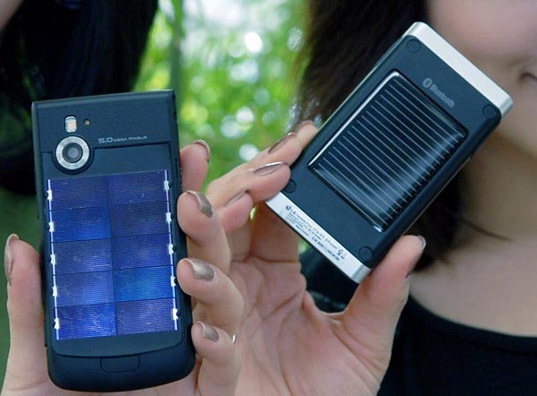
Below LG’s Solar Phone. Does look a bit industrial, no ?

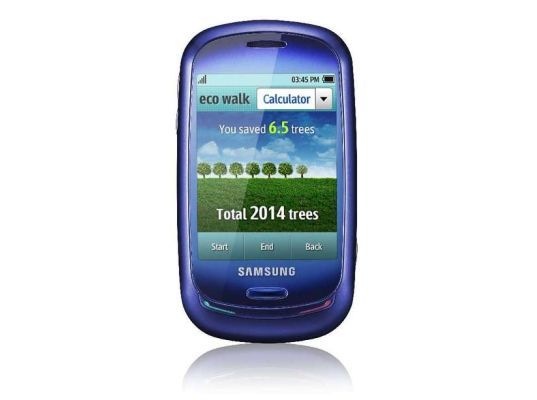
Then i prefer Samsumg’s latest solar power eco-mobile phone that really has the looks:


samsungblueearth2

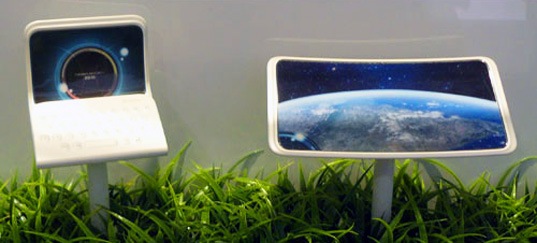
But what about the latest concept from Kyocera: a kinetic energy-powered phone that is capable of folding up like a wallet.

foldphone-ed01

The phone consists of a soft, semi-rigid polymer skin surrounding a flexible low-energy OLED display.

Shape memory allows the phone’s keys to pop up when in use and blend in with the surface during downtime.

foldphone-ed02

The Kyocera EOS can be used in its folded-up shape for simple phone calls, unfolds to reveal a wide screen, and it derives its energy from human interaction. The more you use the phone, the more kinetic energy is turned into an electric charge through an array of tiny piezoelectric generators.

In other words, you’ll never have to worry about leaving the house with a semi-charged cell phone again.

Fasten your Seatbelts for a trip to AlloSphere


Stunning data visualization.

JoAnn Kuchera-Morin demos the AlloSphere, an entirely new way to see and interpret scientific data, in full color and surround sound inside a massive metal sphere. Dive into the brain, feel electron spin, hear the music of the elements …

Publishing Revisited

I guess you are all familiar with mainstream on-line offerings such as Hotmail, Gmail, Skydrive, GoogleDocs, WordPress, YouTube, etc, etc. I guess you are also familiar with more advanced on-line end-user software such as Slideshare, iStockphoto and Vimeo.

These apps are getting better every day.

Recently, I really stumbled upon Issuu. Maybe i was living on another planet, but i never saw any real good coverage of this in most frequent magazines, news-sites or blogs.

Issuu Landing page

Issuu (pronounced ‘issue’) is a dedicated team who strive for excellence in online publishing. They launched the first public version of their service in December 2007. Since February 2007, they are  venture-backed by Sunstone Capital.

First of all, the site experience is fantastic. But then the content ! All the finest magazines, creative works, sorted and filtered by all sorts of criteria.

You can publish yourselves in basically any format, and once uploaded you have a fantastic on-line reader with Silverlight/Adobe like Rolodex experience. And of course, their site has standard Facebook, Twitter, Delicious, FriendFeed, MySpace option. Looks and feels all very very professional, including a nice press-kit.

Small detail: these guys are still in Beta ! Sets the bar for anybody planning to offer some on-line experience, and gives you an idea how fast this sort of SaaS software will become a real competitor for on-premise software.

Some people us Issuu to publish niche creative initiatives or are trying to promote new creative talents through this channel. Good example is the AddictLab, the brainchild of yet another Flemish guy Jan Van Mol, who recently re-launched LabFiles via this on-line Issue Publishing platform.

Issuu.com is also a real recommendation if you have one of those “off” days: go a stroll around on this site, and get fueled with fresh creative ideas and energy. You’ll feel revitalized !

Tom Cruise Wall

Who has the real Tom Cruise touch-screen wall of Minority Report ?

Recently i had the chance to see ànd touch ànd play-around with Microsoft’s Surface Table. That was fun. Made me think of the video wall in Minority Report ;-).

Microsoft already showed some wall like this from their R&D group back in 2006

But what’s next ? Is the Tom Cruise Wall reality or still in the R&D labs ? Or is our vision of User Interface (UI) getting even better or fundamentally different ? Found in the meantime following cool stuff:

  1. Jeff Han’s http://www.perceptivepixel.com/ company. Jeff created havoc  at TED 2007
  2. Pattie Maes’ TED 2009 appearance without screen and based on gestures:
  3. More gestures: the QB1 computer from OZWE: http://www.ozwe.com/
  4. In stead of flat screens and Tablet PC’s, check out the Pulse Smartpen at http://www.livescribe.com/
  5. Or throw into this things like PopFly, Yahoo Pipes, Adobe AIR, Silverlight, etc

In other words: how will we interface with the computer in 5 years ? In 10 years ? Will we all have at home a 15 m³ wall-screen in our living room, connected to a Terabit Internet Connection ?

This must be fun: let’s share what other Tom Cruise Walls are available in the market today, or that you have seen on the web or in R&D labs.