The Innovator’s Risk

Here is a mail i received today from a colleague.

I wrote up my idea and since my boss wanted to review it, I sent it to him. But, he is unwilling to look at it saying he is busy. I can send you the rough draft but then will be breaking my trust with him. I wanted to keep you posted just so that you know.I wish people were not so hung up on making success stories for themselves. It really makes idea conception and execution very sluggish.

I made it anonymous.

As there is still the “Innovator’s Risk”.

The difference between theory and practice.

That’s why we need a Corporate Rebels United.

To protect each other. To help each other. To encourage each other. To discover the hidden pearls in our companies.

To fight the barriers that make blossoming of ideas and people impossible.

We want to incubate people not ideas.

Who wants to help me fight these situations ? Who has tips and tricks and strategies to eradicate this from our organizations ? What are best practices to eliminate Innovator’s Risk ?

@petervan from the Innotribe team

Wilson Miner – When We Build

Wilson Minor inspires, explains and amazes. Via Tom LaForge. Awesome presentation from Build2011 conference.

“Interconnectivity” is not about electronics. It’s about how seven billion people are changing how they see the world and live their lives. This is the definition of a macroforce and nothing bigger is happening on the planet right now.

Super presentation design and delivery.  Forty minutes of poetry. Sine parole.

Open Source currencies

Very interesting video interview about Bitcoin, Ripple Project, etc

Watch till the end: about monoculture of currency, profit vs purpose, how the open source revolution and P2P networks and open source currencies have the potential on medium/long term to create the same sort of disruptions we have seen in music, software, etc

“And unless we see draconian centralized policing of the internet, or fundamental redesign of the internet, these system are technically unstoppable”

The future of touchscreens

Awesome video of innovation in glass by Corning. Everything becoming touch based interface: from your cupboards to car dashboards.

When the video shows health data visualizations, please start thinking big data in financial services and how this could change your financial and personal data services. Imagine doing VRM (Vendor Relationship Management) from an environment/interface like this.

The future rarely arrives when planned

The title for this blog post comes from a 2010 talk by Mark Pesce. He adds to it:

it rarely arrives in the form that we expect

it is too hard to grasp, a bridge too far

the seeds of the future are always with us in the present

I have referred many times already to Mark Pesce in my previous posts:

He keeps inspiring me, by the challenging content and his oratory skills. And yes, I am trying very hard to get Mark to one or more of our main Innotribe events as core anchor/igniter of some of our conversations.

I also recommend my readers to have a look at some of his recent work, especially about “hypereconomics”, Flexible Futures, and last but not least his upcoming book “The Next Billion Seconds”. The chapters of the books are being released now on an almost weekly basis, and here are some of the catchy titles with associated content:

  • Initiation
  • Introduction
  • Articulation
  • Replication
  • Duration
  • Revelation
  • Revolution
  • Origin

It reads like an “Origin of Species”, looking back and projecting us in the future of the Next Billion Seconds, aka the next several ten thousand of years. A fascinating read indeed.

But I wanted to use his 2010 talk as guidance to some of the work our Innotribe team is doing in our incubation project called the “Digital Asset Grid” (DAG)

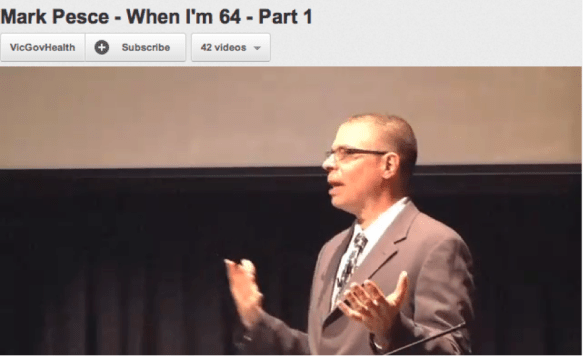
In this talk, Mark Pesce talks to  a group of Human Service folks and Health officials. Although it is about health, I encourage you to listen with holistic ears, as everything he says is applicable for any vertical.

The talk is titled “When I am 64” and is looking forward 17 years from 2010. The “64” is a wordplay on the famous Beatles song.

Here is the link to the first part of the talk. The talk was split into 3 separate videos.

I will avoid the temptation to do an ad-verbatim transcript, and will just use a couple of quotes to illustrate my own points.

Highlights first video

Somewhere half-way, Mark Pesce mentions how his team went open source with their 3D Mark Up language and how surprised they were with the amazing ideas people came up with on what they could do with it.

  • He mentions and Austrian project that made a 3D encyclopedia, like a tree of knowledge, and
  • a 3D visualization of NYSE stock data.

The latter one makes it possible to see 5,000 times more information than on could see with the standard flatlanders’ Bloomberg terminal. Mind you, this was in 1997, that now 15 years ago.

My lessons learned for DAG:

  • The DAG story is a story of value propositions. That is what the prototype we are building will focus on. It is NOT a technology showcase.
  • We play with the idea of an open source DAG server. There is some hesitation. We should not hesitate. We should look at it like IBM looked at Apache Server at the time. Our core competence is to operate a high-available, secure and resilient infrastructure. Probably less in building server software. We know more than me.
  • There is so much innovation in the ecosystem. Our current thinking is to bring the APIs of the infrastructure in a controlled open. So that Banks and other 3rd parties can be on the bleeding edge of innovation.
  • On the longer term, this whole concept of stream-servers makes me think a lot about the Metacurrency.org software project of Art Brock and Eric Harris-Braun. The idea is to build a basic communication later to be able to deal with stream-scapes.

I can assure you that “streams” and “scapes” will be commongood in some years time. Another very cool initiative in this space is Nova Spivack’s latest start-up BottleNose.

Highlights second video

It really gets interesting when Mark Pesce starts unfolding how the power of our communities shape our behavior. Somewhere at minute 09:10, Mark develops an extremely interesting banking scenario:

  • Imagine someone steals your identity, walks into bank, and takes a loan in your name (if they are able to present the proper documentation)
  • The problem is that once you present stolen proof documents at the entry of the process, the process usually kicks off perfectly and delivers the programmed results
  • Better would be to be proofed by others, by your community. “An identity that is confined and constrained by those you are connected to”, by your on-line context
  • At minute 10:35, Mark suggest

that you should be able to handing the bank your social graph!

You really would expect your bank to be able to write some piece of software which could confirm your identity

Bank validating your identity strength based on who vouched for you !!!

This really comes very-very close to some of the use cases we have in mind for DAG.

This would result in a system with greater resilience, much harder to fool, because:

  • Identity is a function of community
  • And not just identity > even TALENT is a function of and a recognized value of a community
  • The social graph is the foundation of identity

In my opinion, all this is leading towards “interest based connections”.

The relationship economy, the reason why REXpedition is so important, is the next battlefield of competition; after most organizations squeezed all the juice out of SixSigma, Lean, and similar programs for increasing productivity and efficiency.

  • The focus of these programs was on doing better what we already did (sometimes doing bad things better)
  • Now its’ about doing new things, the right things. And those right things have all to do with better managing our trustful relationships

Therefore, Mark’s thesis that “a group of well connected highly empowered individuals is a force to be reckoned with” is one of the biggest forces in place. It has always been, but now returning in force thanks to our hyper-connectivity and information abundance.

Highlights third video

This part, entitled “Senior Concessions” really got my attention when Mark Pesce starts talking about “Personal Broadcasting”, networks of trust and sharing of social graphs.

Sharing of social graphs will enable us to identify who brings real value, who brings insight, who bring wisdom. And also those who seek to confuse, who are confused, or who are self-seeking.

This smells very much like reputation and influence like:

  • the reputation score in eBay
  • the thinking of Andreas Weigend’s from the Stanford Social Data Lab
  • Doc Searls VRM (Vendor Relationship Management) thinking
  • Drummond Reed’s Social Vouching start-up connect.me with its underlying Respect Trust Framework.

Mark continues how boundaries of expertise are becoming more and more fuzzy. The patient now often knows more than the specialist. The student knows more than the teacher. It reminded me to one of the first books I read about fuzzy logic by Bart Kosko in 1994. “The new science of fuzzy logic

Reading that book so very early in my career was probably meant to be part of my life and my purpose.

Anyway, Pesce puts the patient in the center, like Doc Searls put the user in the center of his user-centric intention economy.

In my opinion, banks have a similar huge opportunity to put the customer back in the center and offer unprecedented high-quality data services.

And Mark Pesce goes on:

  • This is about user centric “social” graph
  • Knowledge will pass from one user to another (similar to John Hagel’s knowledge flows)
  • As knowledge is passed on to the community, the community empowers itself
  • Person as agency of his own data, deciding who gets access
  • Privacy of medical data is about making these data freely available to those who need it in context, but make them secret to those who do not need those data
  • Only if person has agency for his data and authorizing access to his (medical) records, and tools to track that access (and give/release access)
  • Without those tools we will loose track of who owns what etc and becomes easier for those who shouldn’t to have a look in
  • As our medical records spread through our networks of medical expertise, we will feel less fear, and more to surrender our privacy
  • There is power in releasing our privacy because we gain connections

It’s almost going back to Doc Searls (and others’) 1999 ClueTrain Manifesto where the authors declare in one of their 95 thesis that “Markets are Conversations”.

It’s also going back to Buckminster Fuller’s geodesic domes, where the each element is weak, but where the combined structure is stable.

As a matter of fact, the 3D space of the geodesic dome perfectly illustrates what the DAG is all about. Look at it as a certified map of where the data are located with their associated usage rights. Sharing as utility. P2P sharing with certified pointing infrastructure. It’s moving us from a Flatlanders 2D thinking of the physical world to a 3D thinking of the graph. That is what the DAG is really all about.

I put this blog together during one of my weeks off, weeks that are completely un-planned and un-structured. For me these are weeks where I refresh my brain, new ideas pop-up during moments of organized boredom. You could call it my Boredom Weeks.

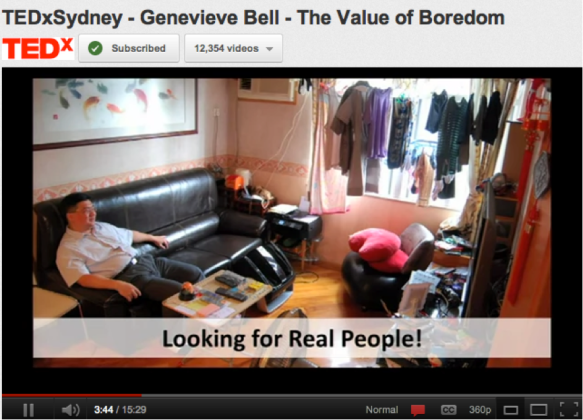
It can therefore not be a co-incidence that Mark Pesce ends with a referral to Genevieve Bell, Intel Fellow and director of the Interaction and Experience Research Group within the Intel Labs. Just on that same day, I received a tweet from one of my followers referring to Genevieve Bell’s TEDxSydney 2011 talk on boredom.

The video basically illustrates that ideas come in moments you don’t expect, when you are not focused, when you have this blissful moments of boredom. Its back to the start and title of this blog post: “The future rarely arrives when planned and it rarely arrives in the form that we expect”

I can already see now how DAG will take off from and into un-expected directions. And we are just at the start of the prototype phase. Exciting times

@petervan from the #innotribe team

Poem: Be Free, Like Birds in the Sky

I’d like to do nothing for some time

be free

flying and gliding

like birds in the sky

left, right, up, down, up, down,…

defying centrifugal forces

unlimited by time, space, distance, force

like free painting

with myself as the paintbrush

and the sky as canvas

4-dimensional

playful like the birds,

showing little tricks,

challenge and pursue

but not limited

by any form of danger

Compass Summit: can we win the race?

Last week, I attended Compass Summit.  After Contact Summit in NYC the weekend before, the contrast could not be bigger. Whereas Contact Summit was held in a worn-out synagogue, Compass was held in a 5 star luxury resort close to LA.

Also the audience was fundamentally different: in NY we saw a group of activists and revolutionaries (a good representation of the 99%): and the theme was “the evolution will be social”. In LA, scientists and economist – probably a subset of the 1% – shared the space for a couple of days under the overall tag line “What’s possible, What matters, What’s ahead?”

Innotribe was sponsoring both events. In Compass Summit, we also acted as co-curator and facilitator for 1 plenary on Future of Money, and 4 breakouts (see later)

Agenda and program

The Compass agenda was packed.

For a minute-by-minute coverage of the conference, I suggest to check out the #compass11 Twitter stream or Kosta Peric’s coverage by live e-scribing here.

UPDATE: all videos of all talks are now available here.

Instead of doing a vertical or chronological report on this conference, I will try to give you a horizontal report-cut of the topics discussed, and add some personal opinions to the mix.

The conference was a very high quality event, with super speakers from science and economy.

I left the conference with a mixed feeling: who will win, the positive scientists or the dooming economists? My overall take-away was that we are in a very deep crisis of everything, much deeper than most newspapers let us believe. I am worried for our children and what will happen the next 2-5 years.

Format

Compass Summit is a traditional conference, in the sense of  the format: speakers on stage, 20 min talks, fireside chats, and panel debates. The general sessions felt like a TED, but then one with audience interactions. Which gave the organizers a timing-headache as all the Q&A’s ran out time and so the whole conference program. No problem for me: as long as the content is as interesting as at Compass, I could stay there the whole night ;-). Towards the end of the conference, there was some experimentation with a “sequential conversation”, but there was more potential in that: it just requires more scripting and preparation. The Innotribe breakouts and wrap-up were – how would I say? – very “Innotribe”J . We always try to do something special, and you expect no less from us (more about this at the end of this blog post)

Science

The overall message was positive, although many questions were raised on the impact of the increasing human-machine blurring, and whether real life implementations of great ideas in current R&D will reach us in time to save the planet.

Danny Hills from Applied Minds and one of the originators of the Long Now indicated that “we are already in The Matrix” right now. “Nobody really knows how the Internet works” and “we overestimate the human ability to control and underestimate its adaptability” were some reflections leading to his conclusion “Forget the Enlightenment, we now live in the era of “the Entanglement.”

We also saw some great progress on Solar Energy production and photosynthesis Fuel. To put things in perspective: the energy needs for 2050 are such that if we want to cover it with nuclear energy, we would need to install one nuclear plan per day. The conclusion of the energy debate was clearly solar is the way forward and that energy storage was the Holy Grail for the immediate future.

David Gelernter stood out with a milestone presentation.

His talk was completely scripted, no slides. But it sounded like a novel, a piece of science poetry. So many beautiful metaphors, play of words, and fine humor! The content was mind-blowing as well. His starting premise was that we are witnessing the transition from a space-based organization of information to a time-based organization of information. Search starts smelling like value-based search, with time as just one of the values. The concept of a stream-browser instead of a web-browser was no less than brilliant, and I loved his evolutionary insight from “cybersphere” to “cyberflow”.

This was quite consistent with the messages form Brian Arthur and E. Stevenson: everyone is connected and it’s getting deeper and deeper…the grid starts to look like an organism, neural network. The underlying grid of machines talking to each other was described by Brian Arthur as “the second economy” that will soon be bigger than the real economy. The question “Who will win?” in the session “Race against the machine” – and also title of a new book by Andrew McAfee and Erik Brynjolfsson – was therefore spot on.

Cities and their dynamics and their impact on growth and innovation were also a recurring theme: Geoffrey West – world famous since his memorable TED talk – did his fantastic thing on “Cities never die”. Saskia Sassen added a new dimension for me: “a city talks back”, suggesting that a city tells us in immediate feedback loops what works and what not

Economy

The overall message was extremely negative. I was shocked by some of the facts presented.

Although we still see a growth in wealth creation, the wealth is more and more concentrated with the happy few. The 1% starts looking more and more like the 0.01%. The world is also turning younger, more urban, and more impatient for accountability, in both democracies and authoritarian states. We need a different diplomacy where also NGO’s, Philanthropies like the Bill & Melinda Gates Foundation, and companies like Google and Wall-Mart are represented. I believe that is a good starting point, as the concept of “country” is really dead. But the real question is what are the criteria for who can sit at that table: will be allow organizations like Goldman Sachs, who claims to rule the world, but is creating fake value through speculation, value outside of the real wealth system in my opinion. And whereas countries and UN are as good as dead, there is no transition in governance model between now and then, and we risk falling into a governance no-mans land.

Corporations are piling up cash that is sitting idle. Someone summarized this signal as “between fear and opportunity is paralysis”. In the meantime, the center of power and control is further moving East-wards: 2009 was the first year in 200 years where emerging markets outgrew developed ones. We aren’t going back.

Bernard Lietaer (author of “The Future of Money” and more recently “Creating Wealth: Growing Local Economies with Local Currencies”) was no less than impressive.

He showed that he had empirical evidence that the financial system is systemically instable. He pointed to some solutions to the monoculture of fiat state currencies. The most frightening was probably his statement that “we have 5-10 years to fix this, if not the game is over”.  This was the first (and not the last) time that the idea of war (as in world war) was uttered as a very possible scenario, and although Lietaer did not mention this, I interpreted his message as a warning for fascist behavior and polarizations.

And one day later, Mark Anderson painted a super confrontational picture between the USA and China, and indicated that the IP war was already going on, stronger even, that phase-1 of the war was over and we are already doing corporate body counting.

Add to this the Saudi Arabian oil situation, where the monarchy is a) paying it’s citizen from the oil reserves to avoid a Saudi Arabian spring and where the oil reserves will more and more be used for internal needs. Pierre Larroque added that Saudi Arabia is now in essence a supplier of China, and asked the question “why should we defend them?” Quite a statement!

Add to this water scarcity. Add to these big dysfunctions in education systems. Add to this the fact that the current young generation is the first generation that will enjoy LESS wealth than their parents. Add to this the #occupy movement, Middle East spring, etc. and the picture is not very rosy, the least to say

Values

Following his discourse in currency value debate, Bernard Lietaer also mentioned the need for more “feminine energy, presence and softness”, echoing a message from John Hagel in his blog a week earlier.

“Quod Demonstrandum Est” must have thought Caroline Stephens.

She gave the audience a wake-up call when stating “I have stopped talking about poverty in a 5 star hotel”. Her testimonials of future-less generations in South-America moved everybody in the audience, except the moderator who showed a pedantic lack of empathy and moved to the next point on the agenda by stating “now that we have solved a couple of world-problems…”

A genuine tweet from Heather Vescent sparked the Innotribe team to rally for an ad-hoc session to give Caroline the space needed for her message. It was interesting to see how people quickly tried to recuperate strong personalities like Caroline for their own agenda. It’s a very fine balance to walk. In the end, we failed to get such an ad-hoc session squeezed into the already busy Compass agenda. But we won’t give up: Caroline, we will contact you directly for one of next year’s Innotribe events.

The rest of the conference value discussions debated the rhetorical question whether value-based thinking is eroded by output concentration.

As a lot of the identity discussions were related to privacy, I quickly cover this under this value-section. One participant reacted somewhat sarcastic by saying that during the panel debate she almost believed that Google and Facebook were philanthropic organizations. We were probably closer to the truth when the moderator said “facial recognition will dramatically change what it means to show your face in public”.

Organization

Mark Bonchek introduced the notion of “Social Architecture” and gave a great example how this relates to networks and nation building during warfare. And how the US military has realized that shared situational awareness enables self-synchronization. It appears that the army’s counter-insurgency Field Manual (PDF Link) is “the best single guide for driving large scale corporate change.” After the conference we had a really interesting chat with Mark on corporate change and whether you really can steer change or whether it is just as effective to drop a seed bomb of corporate activists, and just watch what happens and emerges. That will be the subject of another blog

An interesting Risk Management debate revealed that trade-offs have to and are being made whether one should implement latest technology or proven technology only, and that the relentless push for efficiency pushes towards latest technology. If one would take the brain scan of the most adventurous CEO, one would see “40% risk taking, 60% risk aversion”.

Brian Arthur spoke about the “second economy” (see earlier). With some hindsight, I would like to suggest even a third economy underneath (or overlaying) that: “the values/spiritual economy”. What are the real values and intentions we have when completing a transaction? Values like transparency and fairness. Like belonging. Like intrinsic drivers of motivation such as the drive to acquire, to defend, to bond and to learn. Which brings us to education.

Education

It looks to me that the USA has a bigger problem with education than other continents. Or they focus more on it. I don’t think it is the latter. Michael Crow from Arizona State University was inspiring when stating “in stead of exclusion (to the education system), our metrics should be based on the output of our education system”. Other speakers insisted that the education system should celebrate from failure instead of exclusively focusing on and measuring success. Jack Hidary was passionate in his plea to “educate to innovate”.

But by the end of the conference, I got a bit tired of the so generic term “innovation”, used as the deus-ex-machina for world hunger problems, without specifying what the solution exactly is.

Innotribe sessions

In addition of the (rather traditional) plenary session on Future of Money with Bernard Lietaer, Innotribe was also responsible for 4 breakout sessions. Our team really went the extra mile in decorating the rooms, and using sound and visual landscaping to further add to the immersive learning experiences that have become the trademark of Innotribe sessions.

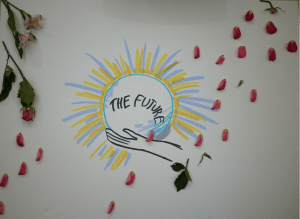
For the identity breakout we repeated our Sibos trick with the music from Tron. For the future of value, our ladies Mela and Martine almost created a zen-like experience with candles, rose leafs, and spiritual music.

From a content point of view, I would like to summarize each of them with a couple of tweet-like statements

–       The Future of Banking

  • “Money is the memory of value”
  • “Trust will define the future of banking”
  • “There are huge opportunities for banks in the unregulated space”

–       The Future of Transactions

  • “From the gift economy to the re-gifting economy”
  • “Transactions are the fuel to the relationship economy”

–       The Future of Identity and Trust

  • “Digitization of identity good or bad?”
  • “Identity should be part of digital inclusion”

–       The Future of Value

  • “The poverty of financial metrics prevents full wealth recognition”
  • “Right conduct + truth + peace +non-violence + love = living system of wealth”

Conclusion

Our economic, financial, energy, and wealth distribution problems are huge. The problems seem bigger and more insurmountable than the general press makes us believe. Scientists try to picture of optimism, but I could not resist the discomfort that the implementation of their inventions will come too late. Fear for war can turn any moment into a real possibility. And still our politicians don’t get it. We witness an aversion against the establishment in general. The cry to do without them gets louder.

But current problems and solutions are still presented as a game of winner and losers, with polarization leading to simplification, populism, and possibly fascism. I would prefer a model based on infinite game thinking. The world is the opposite of flat, and the role of black swans is not included in any of the models discussed today. It’s all about redefining a new value context, new value movement, less re-active, less “protest” than OWS, more pro-active.

It is about a collective awakening, where flow reveals structure. You can’t just start with structure and force everything to fit into it. It would be far better to create a parallel positive: a much safer way that just saying “nuke the system”.

Maybe I should close this blog post with the quote by Leonardo da Vinci that was printed on the back of the Compass Summit conference program:
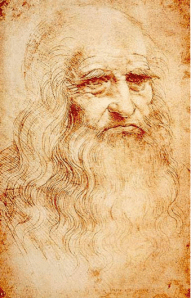
I have been impressed with the urgency of doing. Knowing is not enough; we must apply. Being willing is not enough; we must do.

That’ s probably why the title of this blog post is “Can we win the race?” and why the Innotribe wrap-up ended with “It is only up to us to act”.

@petervan from the Innotribe team

Cross-posted on Innotribe blog here.

Contactcon Conference: the cry for freedom

I am still digesting the Contact Summit, a conference with the tagline “the evolution will be social”. The conference was announced as:

The net is more than a marketing platform. Connect with the people who are building what comes next, and celebrate the potential of networking to transform commerce, learning, and society.

The event was hosted by Douglas Rushkoff and Venessa Miemis is the Executive Director. Here is an quite artistic picture of Doug by Venessa just before the start of the conference.

The conference was held in a fantastic location: the Angel Orensanz Foundation, the oldest surviving synagogue building in New York.

The day started with some short 2-3 minutes statements by “provocateurs”. People like Steven Johnson, R.U.SIRIUS, and all sort of activists from early and current internet days. It was clear upfront that the event would be highly influenced by the OccupyWallstreet protests going on a couple of blocks away from the event.

In essence, the event was one big un-conference, but one of the most chaotic ones i ever experienced. And there was also a sort of start-up competition going on, with three 10K$ prices for the winners, sponsored by PepsiCo.

The audience was a mix of activists, revolutionaries, alternatives, lots of young people, but also some older faces, and also some big thinkers like Nigel Cameron, Michel Bauwens, Jennifer Sertl, and many others.

This was inspiring and confusing at the same time for me, and i tweeted about my confusion.

In a subsequent tweet-conversation i clarified my confusion: i was missing some overarching theme, the glue that was keeping together all this energy. By the end of the day, when the winners were announced the glue became clear for me.

There were also so many messages and tweets that it was difficult for me to see the forest through the trees. Check out the #contactcon twitter stream to embed yourself a little bit in what was going on…

Douglas Rushkoff opened strong with announcing the objective of this day:

What concrete steps can we take to realize the true potential of the network era?

It was heartwarming to see how Doug was pushing the audience to come to concrete steps. There was at times a stunning lack of people able to articulate what they will do concretely. Many voiced very broad ideas, they really need to focus, to scope them,..

A lot of people just wanted to have a chat, do a talk, have a brainstorm. Rushkoff insisted:

“We are here to DO stuff, to BUILD stuff, specific concrete ideas you want to MAKE.

It is NOT for discussion here, we have the internet for that!”

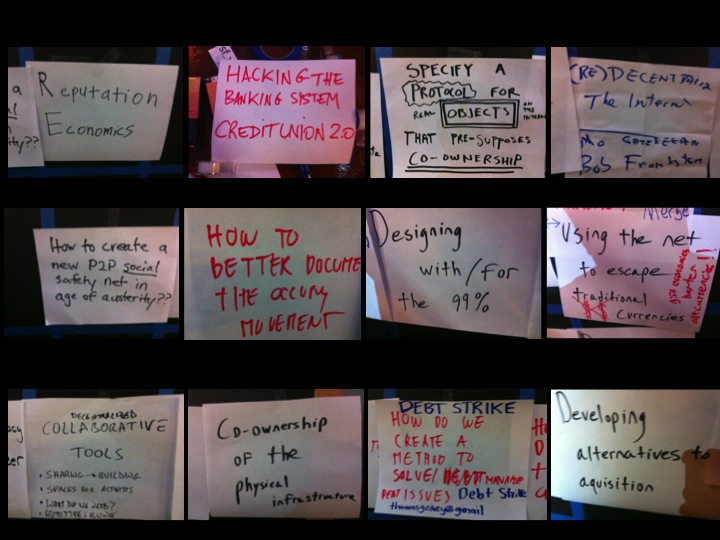
The list of ideas was a mix of #occupy supporting ideas, anti bank initiatives, alternative facebooks, public ownership of (internet replacing) infrastructures, build a currency for #occupy. I took some pictures of the idea-tiles on the un-conference agenda and made a collage of it, so you get a better idea of the sort of ideas.

Read with me: Reputation Economics, Hacking the Banking System > Credit Union 2.0, Specify a protocol for objects that pre-supposes co-ownership, Re-decentralize the internet, How to create a new P2P social safety net in the age of austerity, how to better document the #occupy movement, designing for/with the 99%, using the net to escape the traditional currencies, Collaborative tools, co-ownership of the physical infrastructure, organizing a massive debt strike attack against the banks, developing alternatives to acquisition,…. and this is just a snapshot!

I had a chat with one of the debt-strike guys, and asked with open mind what they tried to achieve. The answer was astonishing: “a debt-free society”. And he recommended me to read “Debt, the first 5,000 years” by David Graeber. (Amazon Affiliates link), apparently a book that is very influential to this movement.

A lot of the ideas nominated were about being AGAINST something… Debt-strike, OWS support, general assembly software for OWS, see the list above. The only positive one nominated was about creating a VEN-COOP, a sort of cooperative VC based on VEN currency.

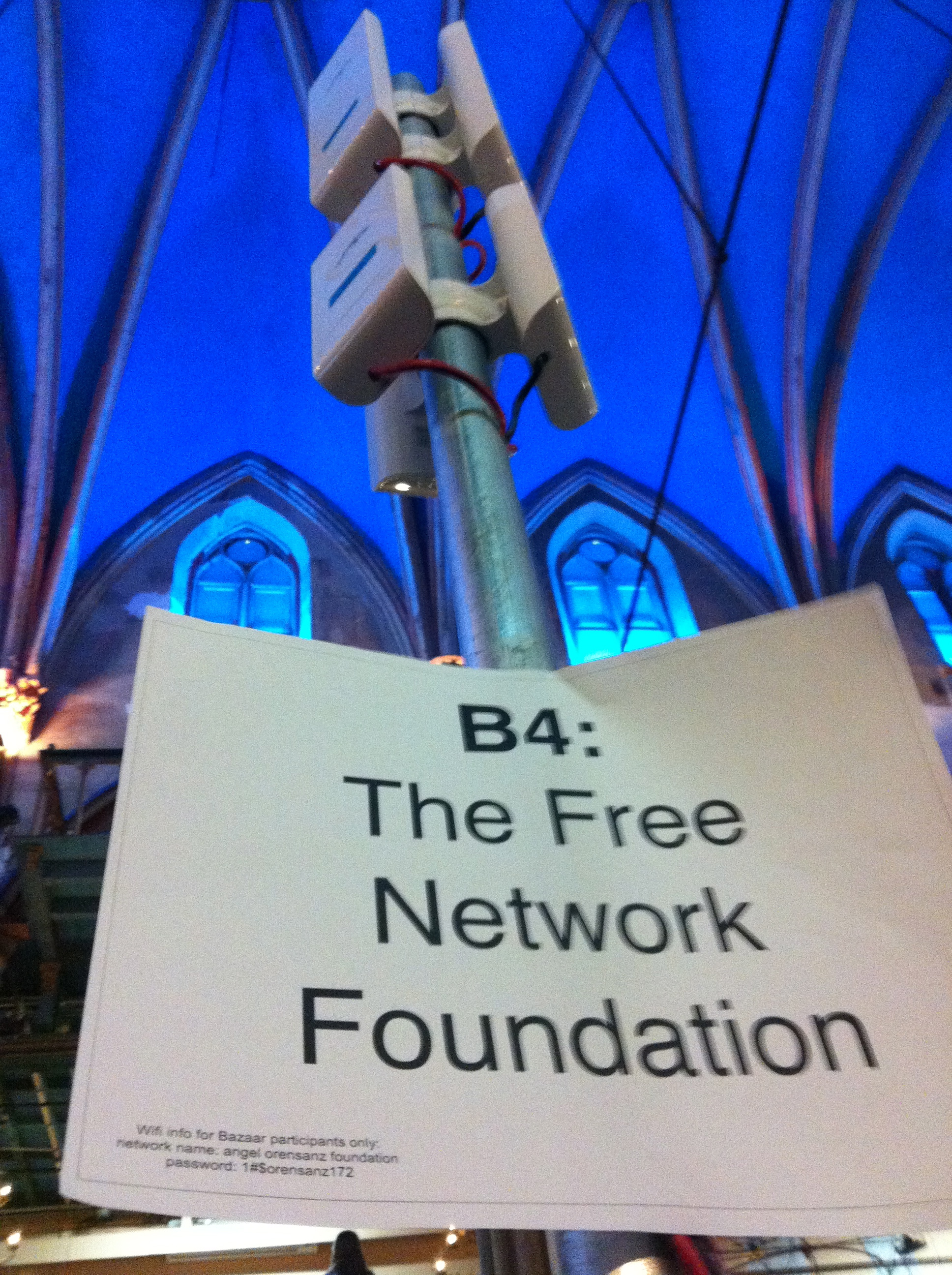
An image that remains burned in my memory is that of the Freedom Tower

The Freedom Tower is the work of The Free Network Foundation. What they try to do? I copied the following from their website:

  • We envision communications infrastructure that is owned and operated cooperatively, by the whole of humanity, rather than by corporations and states.
  • We are using the power of peer-to-peer technologies to create a global network which is immune to censorship andresistant to breakdown.
  • We promote freedomssupport innovations and advocate technologies that enhance and enable digital self-determination.
I had a chat with Isaac Wilder (imw) is the co-founder and Executive Director of the Free Network Foundation. I really had an Aha! moment when he explained me that this is not another group of rebels or activists. Rebels made him think about something reactive. In his opinion, all this was more about something very pro-active, and he preferred the term “inversion”, an inversion like the magnetic poles, in this case an inversion of power.
It made me think of the work of Doc Searls on the intention economy, where users are in the power to signal THEIR terms and conditions to service providers.
Later in the day, The Free Network Foundation was declared one of the 3 winners of a 10K$ prize. The other winners were Freedom Box & Fayetteville FabLab. Freedom Box looks like a box that you can plug in a power socket and allows you to set up a P2P node network independent of the internet. Fayetteville FabLab is about a free library.
For me this made clear that the understream that glues all this together is an unbelievable strong cry for freedom.
The event ended on a satirical tone with Reverend Billy blessing the winners of the competition in a true Hallelujah style. Really funny. More introspective and hartwarming was Reverend Billy’s closing preach where he made 200 attendees softly sing “we are the 99%” and dubbing it with some gospell’ish sermon.
What should we all remember from all this ?
In my opinion, we are witnessing the birth of a very strong movement, calling for a reboot of our society grounded in a new value system. As i already quoted Dan Robles in my previous post “A New Value Movement”, people will re-organize around new value and directly challenge financial currency with social current (currency).
This is a movement that should not be underestimated by the ruling class. But somebody also said during Contact Summit that the activists and enthusiasts of this movement should not underestimate the “legacy” of our current institutions.
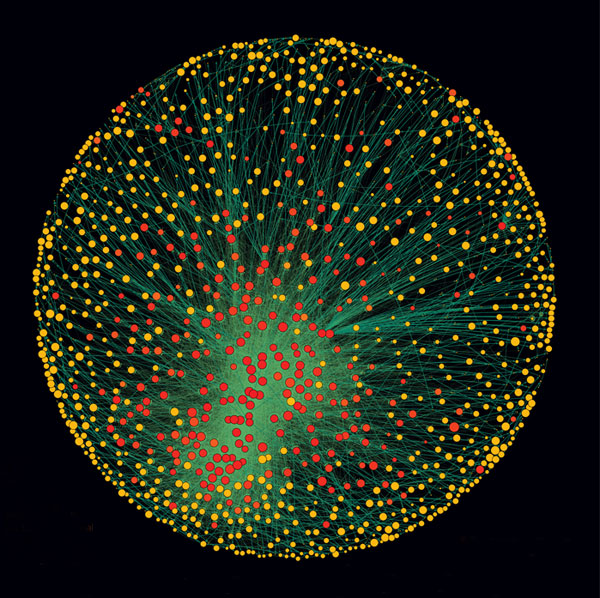
I believe this person has a point, especially if you look at the recent study by the Swiss Federal Institute of Technology in Zurich, revealing the network that runs the world.
The generation at Contact Summit feels intuitively that this model does not work anymore. They are trying and failing to change it, but failing fast and getting organized.
Instead of a head to head confrontation, i would like to see a dialogue starting. Our institutions may be pleasantly surprised by genuine hunger for a better world of this sparkling group.

My Uncle Roger

Last week, my Uncle Roger passed away in a car accident. He was 82.

I will always remember Uncle Roger for go-carts.

He made them himself.

When he was young and just married, he was working in a big metal factory. But he got bored by factory life and rules, and decided to start up his own business.  His niche was the production of high precision metal moulds.

He started with one milling machine in his backyard. I believe he ended up with 20 or more machines when he retired 15 years ago.

The workshop and the backyard was also our play territory. I still very well remember the garden and the big sandbox he has made for children.  And he could do amazing things with metal waste, such as building go-carts by welding old tubes, adding old bicycle spare parts to it, such as chains, pedals, and wheels. It was as if he could paint with waste. These go-carts were rock-solid, and if it happened that during one of the races a wheel went off, Uncle Roger was there are the technician in the pit stop to fix it immediately.

When I think about Uncle Roger, I also think about one of his daughters, about my age. She was the first girl I fell in love with. She was lovely, a bit boy-ish in her game and really taking care of me as her nephew when we were on family visit. I wanted to marry her, but unfortunately marrying your niece is not something you do. I think I was 8 or so.

We were a bit late for the funeral due to traffic jams around Brussels. The funeral was held in Flanders, about a 1 ½ hour drive from where I live. The morning was a bit grey, a bit misty, already a bit sad, with fog over the fields. It was a bit chilly when my spouse and me entered the church.

It took me some time to be in full presence during the ceremony.

It’s a long time ago I entered a church. Usually only for marriage or funeral ceremonies, and on a very rare occasion, I step in when I need silence. I sometimes do this when traveling for business.

As the ceremony went on, i looked around the church. From an architecture point of view, this church was fairly straightforward, nothing special really. But the stained glass in the main chapel of the church distracted my attention and musings.

They were beautiful paintings with glass, and each of those stained glasses was labeled with the name of the rich family that had offered this to the institution church; probably it would buy them eternal life in heaven one day.

It made me think of the stained glass artwork by Flanders artist Wim Delvoye, using x-rays of human beings as elements of eternal life. He is very intense, and an absolute innovator.

The artist is from the same region as where the funeral was held. This region of Flanders is also where some of the fiercest battles in World War I and II were fought. It’s deep in Flanders’ DNA, and we have a culture of respect for the war veterans, of which there are not many left these days.

What I did not know is that Uncle Roger was the chairman of one of the local war veterans associations. He never fought the war, but he was volunteered for the position, as known for the social work he did in that area of Flanders.

I was therefore surprised that during the funeral there was a delegation of Belgian war veterans, with flags, and a really good trumpet player honoring my Uncle Roger with the last post and the Belgian national hymn.

It was a simple and serene ceremony. With the same serenity as the family exposes: no frills, with a lot of warmth, respect, love and belonging.

In Flanders, it is the habit that after the funeral, the family relatives are invited for a cosy get together, with a bite and a drink. In some families this is a full three-course lunch, in others – like ours – it is a simple sandwich lunch with fresh soup. It is a moment where the family can re-connect.

I sat in front of my nephew Joost, about my age, which is main curator at one of the most famous art museum in Brussels. He is deeply specialized in medieval paint art, with a deep niche expertise on Rubens and Pieter Breughel the Elder.

He is that much expert, that he is asked by very wealthy families and investors worldwide to do assessments on paintings to make sure they don’t buy copies etc.

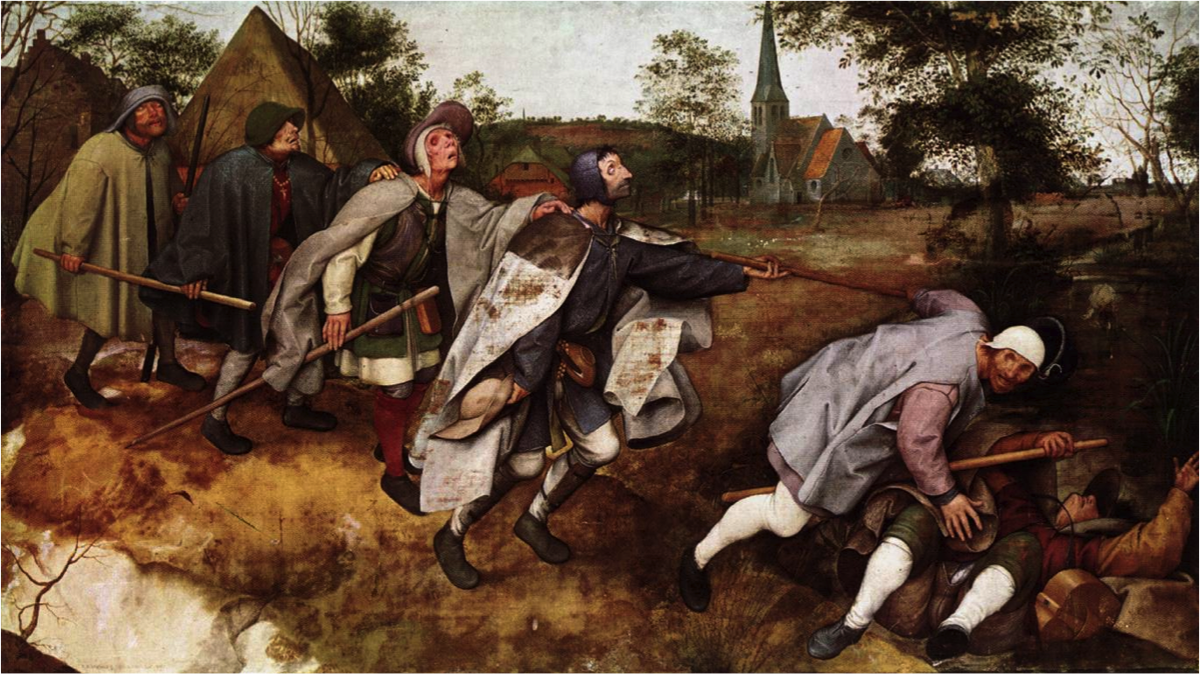
The painting above is called “The Blind lead the Blind”, and I use it in a brand new upcoming presentation about innovation and the roles of rebels. The painting was made in 1568 and you can read everything about it on Wikipedia.

I asked Joost if he knew some anecdotes about the painting. I think he went on for more than an hour.

I was impressed with Breughel’s as an innovator, as a rebel and an influencer on many next generations of painters. For his technique, but also as for being one of the first who took art out of the religious context.

My Uncle Roger was not a painter. He was not a rebel. But he definitely is one of my influencers. He was a simple metal worker, self-made made. He worked with hard and steel metal, but he was a very soft man. For me he was the innovator and artist of go-carts. I will remember his soft smile and his endless caring for children playing in the backyard. I will remember him forever.

Farewell, Uncle Roger !

Thank you, Steve !

I just opened my on-line newspaper, and there was Steve’s picture page wide.

Immediately felt something happened. Tears fill my eyes. I am moved by Steve’s passing away. That may sound strange from an ex-Microsoft employee, but it isn’t.

First of all, i am not religious.

Secondly, in my previous life, I had the privilege to spend some hours face to face with Bill Gates. I remember how much respect Bill showed for Steve. And i believe it was both ways. There is no doubt that both are great business men, as both have created a garage business into a two digit multi billion dollar business. Bill was unbelievable tense and sharp, and reading the press and publications, Steve was no different.

Both are great leaders. Both are great persons. Both are authentic. Both care about the world at large. But Steve had the charisma, and could time after time touch me emotionally with a every new product launch, quote, humor, “there is one more thing”, thinking differently, and celebrating the corporate rebels and the crazy ones:


We will have to miss all that. I am hungry for the next leader who can inspire me spiritually and emotionally, beyond the mere bottom-line.

Thank you, Steve. We will miss you. Farewell…